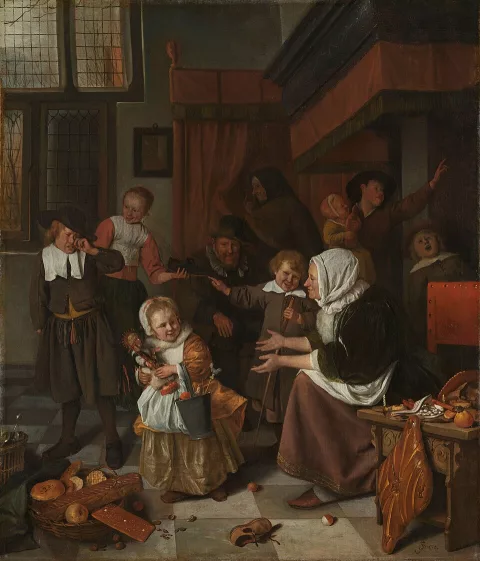
Jan Steen — La Fête de saint Nicolas, vers 1665–1668 · Rijksmuseum, Amsterdam (SK-A-385). Reproduction : Wikimedia Commons, domaine public.SourceDomaine public (Wikimedia Commons)Redimensionnement proportionnel et compression WebP par Swiss Art Gallery, sans recadrage.
Jan Steen’s The Feast of Saint Nicholas, painted around 1665–68, belongs to the Rijksmuseum in Amsterdam as SK-A-385. Members of a household react to gifts, hopes and disappointments. Small gestures build a genre scene that gradually reveals its story to the attentive viewer.
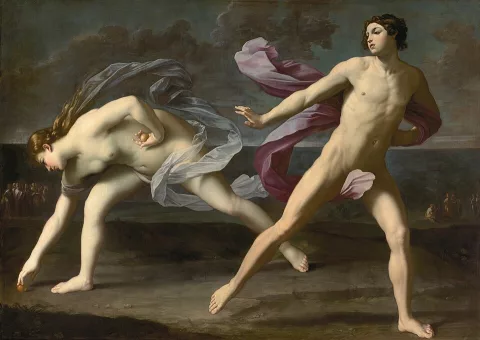
Guido Reni — Atalante et Hippomène, vers 1618–1619 · Museo Nacional del Prado, Madrid. Reproduction : Wikimedia Commons, domaine public.SourceDomaine public (Wikimedia Commons)Redimensionnement proportionnel et compression WebP par Swiss Art Gallery, sans recadrage.
Guido Reni depicts the race of Atalanta and Hippomenes at the moment when golden apples interrupt its progress. The version held by the Prado, generally dated around 1618–19, sets the figures in opposing directions, creating an almost choreographic tension.
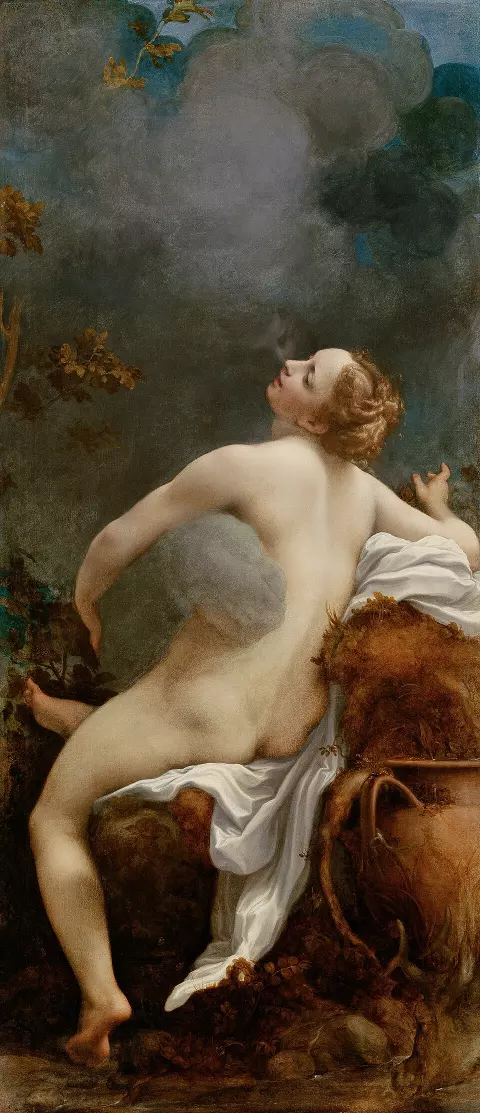
Le Corrège (Antonio Allegri) — Jupiter et Io, vers 1530 · Kunsthistorisches Museum, Vienne (GG 274). Reproduction : Wikimedia Commons, domaine public.SourceDomaine public (Wikimedia Commons)Redimensionnement proportionnel et compression WebP par Swiss Art Gallery, sans recadrage.
Around 1530 Correggio painted Jupiter and Io for the Loves of Jupiter cycle associated with Federico II Gonzaga. The picture held by the Kunsthistorisches Museum in Vienna turns mythology into an encounter between a human figure and a divine presence depicted as a cloud.
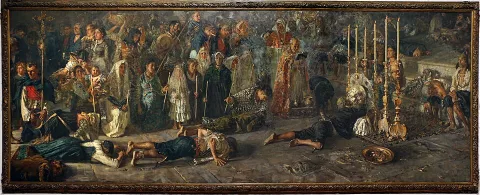
Francesco Paolo Michetti — Il voto, 1883 · Galleria Nazionale d’Arte Moderna, Rome. Photographie : Sailko / Wikimedia Commons, CC BY-SA 4.0.SourceLicenceCC BY-SA 4.0Redimensionnement proportionnel et compression WebP par Swiss Art Gallery, sans recadrage.
Francesco Paolo Michetti’s Il voto, painted in 1883, belongs to Rome’s Galleria Nazionale d’Arte Moderna e Contemporanea. The monumental oil canvas measures 245 × 695 cm and bears inventory number 992. Its crowd and gestures combine observation of religious ceremony with a carefully staged composition.
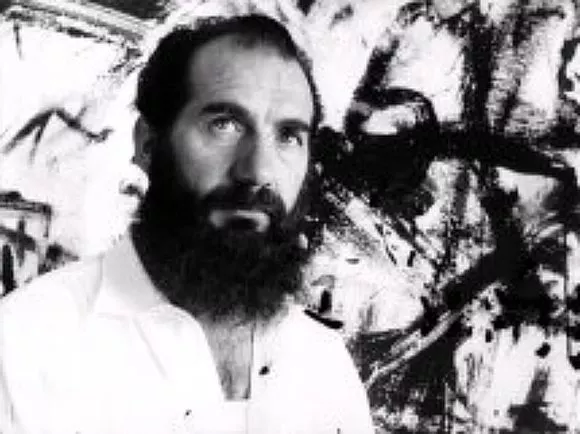
Franz Kline’s Chief, painted in 1950 and held by New York’s Museum of Modern Art, places broad black forms against a pale background. The title refers to a locomotive, but the picture is not simply an illustration of a machine. It belongs to the painter’s development of Abstract Expressionism.
Blinky Palermo’s To the People of New York City, made in 1976, consists of forty acrylic-on-aluminium panels arranged in fifteen parts. The Dia Art Foundation holds the ensemble. Its arrangement creates rhythms of colour in space rather than the fixed composition of one canvas.
Trento Longaretti worked as a figurative painter across twentieth-century Italy. The Second World War interrupted his artistic practice; later paintings addressed wandering, family and vulnerability. His documented life chronology should nevertheless be kept separate from the subject of any particular painting.
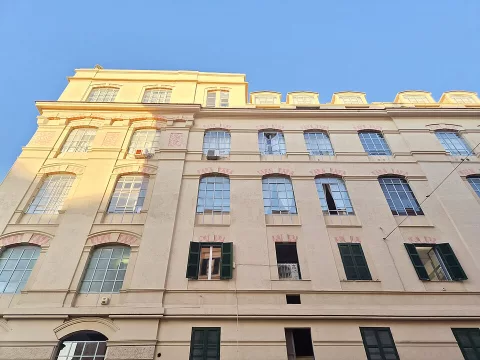
Melaxxa — Façade de la Fondazione Pastificio Cerere, Rome (2026) · Wikimedia Commons · CC BY-SA 4.0SourceLicenceCC BY-SA 4.0Redimensionnement proportionnel et conversion WebP par Swiss Art Gallery, sans recadrage.
During the 1980s Giuseppe Gallo moved into the former Pastificio Cerere in Rome’s San Lorenzo district. The building became associated with a generation of contemporary Italian artists. Its significance lies partly in the material conditions and proximity of their working studios.
In the La Défense district near Paris, Raymond Moretti covered a 32-metre ventilation chimney with 672 fibreglass tubes in nineteen colours. Inaugurated in 1995, the work turns technical infrastructure into a public landmark. Architecture becomes both support and setting.
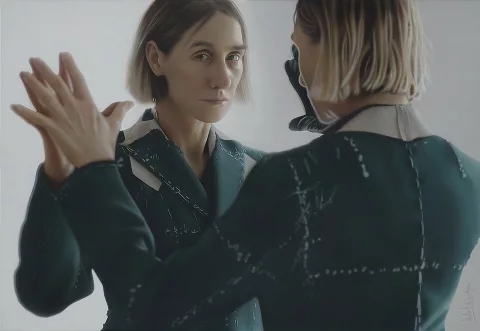
Hubert de Lartigue — Le reflet (2022), acrylique sur toile · Wikimedia Commons · CC BY-SA 4.0SourceLicenceCC BY-SA 4.0Redimensionnement proportionnel et conversion WebP par Swiss Art Gallery, sans recadrage.
Hubert de Lartigue applies acrylic paint to canvas with an airbrush, working from photographs he takes himself. The process enables subtle transitions among skin, light and shadow. A photographic appearance is the outcome of painted work, not evidence that the image was mechanically printed.
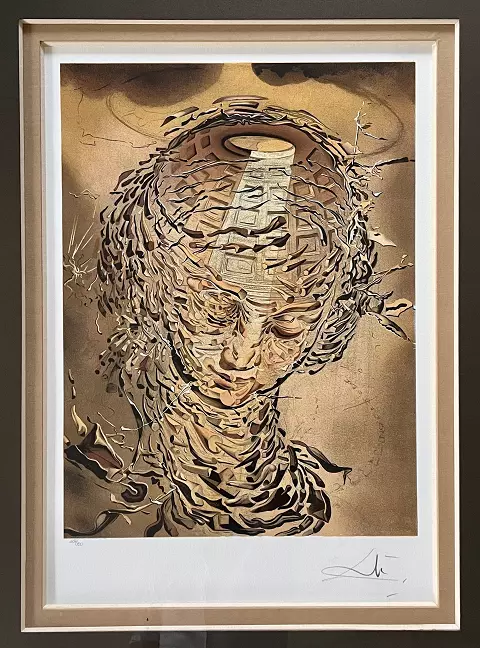
Tête raphaélesque éclatée is an oil painting made by Salvador Dalí in 1951. The official Fundació Gala-Salvador Dalí catalogue records it as P 661, measuring 43.2 × 33.1 cm. It combines a reference to Raphael with a figure fragmented into geometric elements.
Le Muse inquietanti, a composition associated with Giorgio de Chirico in 1918, is central to Metaphysical painting. The Fondazione Giorgio e Isa de Chirico documents later versions and repetitions as well as authenticity disputes. Title and composition alone cannot identify a particular object.
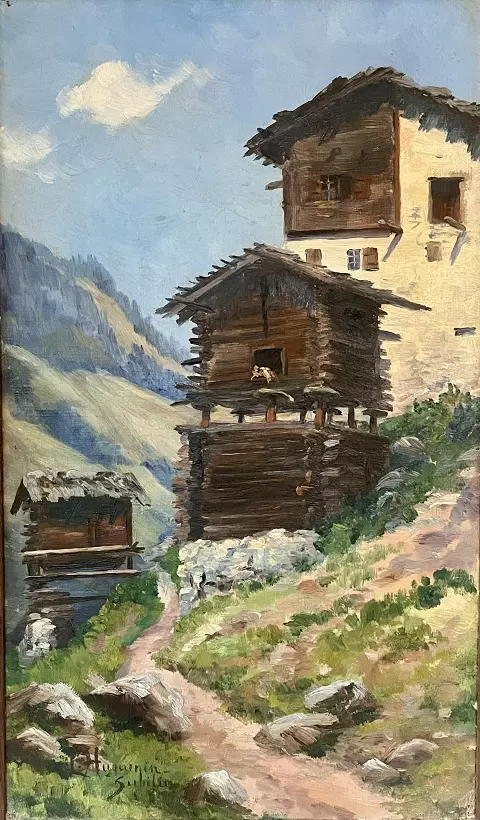
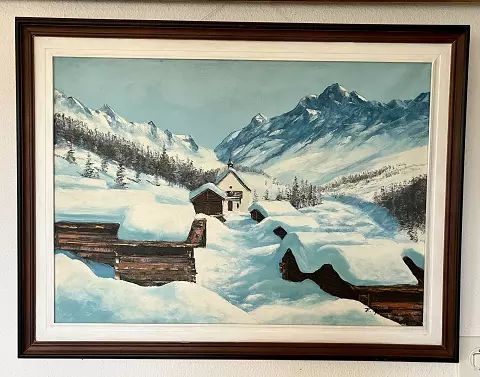
Chalets, livestock and mountain paths recur in SwissArtGallery’s listings. Works by Line Huguenin-Subilia, M. Huguenin, Jacques Fuchs and Claudio Melioli invite comparisons of people, animals, buildings and the Alpine landscape.
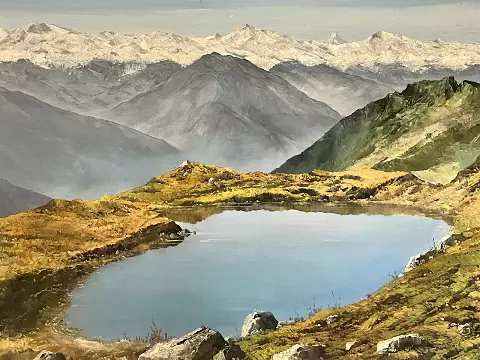
Blausee, the road to Zinal and Alpine winter landscapes provide different subjects in the gallery catalogue. Several works bear the name E. Rosset, while another is catalogued under Boll. A landscape subject alone cannot establish authorship: composition, documentation and signatures matter.
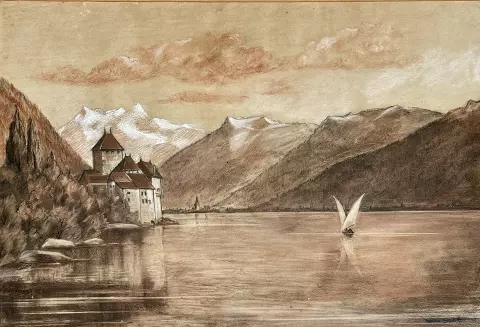
Swiss Art Gallery · Photograph in the catalogue: Unidentified artist — illegible signature — Château de Chillon au bord du Léman — grand tableauSourceMiniature existante de la galerie, sans recadrage
Chillon Castle beside Lake Geneva appears in different media: a large charcoal drawing by an unidentified artist and an oil painting catalogued under C. Baertschy. Another view of the lake and Saint-Saphorin provides a regional landscape comparison.
Lake Geneva and Lake Lucerne inspire contrasting paintings listed by SwissArtGallery. Oils by Hermann Werner, Walter Küng and Armand Piot may be compared with a view catalogued only under J. Märki. Each has its own framing, atmosphere and level of documentary identification.
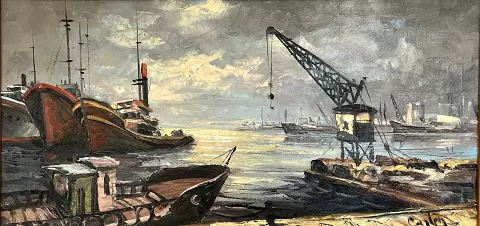
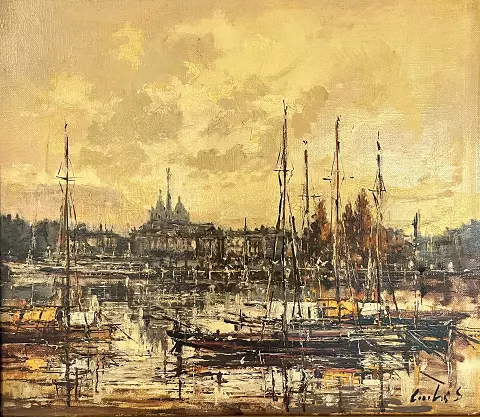
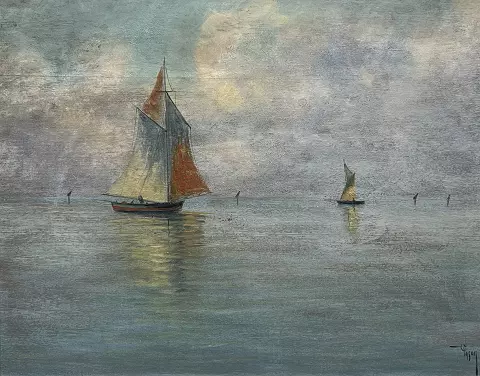
Industrial harbours, fishing ports and sailors are distinct subjects within SwissArtGallery’s catalogue. A watercolour by H. Chevalet and oil paintings listed under Carlen, M. Baret and W. Weiss invite comparison of boats, evening light and human presence.
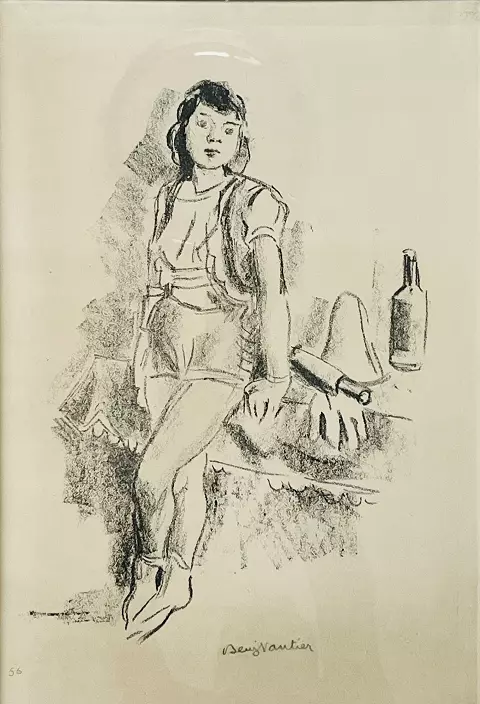
Not all works on paper are prints. SwissArtGallery lists a charcoal drawing by Benjamin Vautier, an etched and engraved print by Charles-Louis Lingée and a lithograph catalogued under Grenier. Three distinct media raise different questions about line, texture and edition.
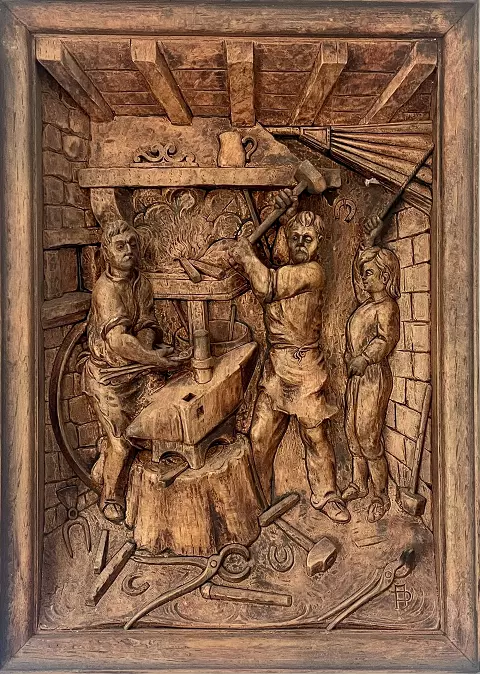
Swiss Art Gallery · Photograph in the catalogue: Unidentified artist — signed AP — Atelier de forgeSourceMiniature existante de la galerie, sans recadrage
SwissArtGallery lists four carved wooden reliefs titled Atelier de forge, Le Maître de chai, La Vie des humbles and Le Pain quotidien. They depict labour and everyday gestures, but their makers remain unidentified. Assigning them to a named sculptor without evidence would be misleading.
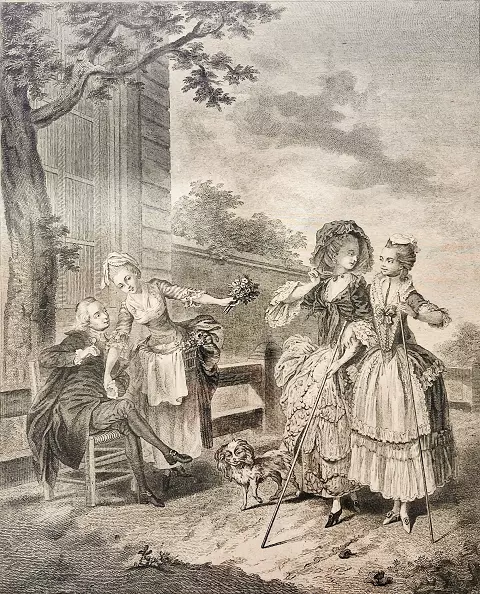
Swiss Art Gallery · Photograph in the catalogue: Charles-Louis Lingée, engraver after Sigmund Freudenberger (1745–1801) — La promenade du matinSourceMiniature existante de la galerie, sans recadrage
A print by Charles-Louis Lingée, Cousin et cousine listed under Grenier and a Japanese festival image by Shunichi Kadowaki are offered as printed works. Their subjects involve everyday life and celebration, but their media and cultural settings differ.
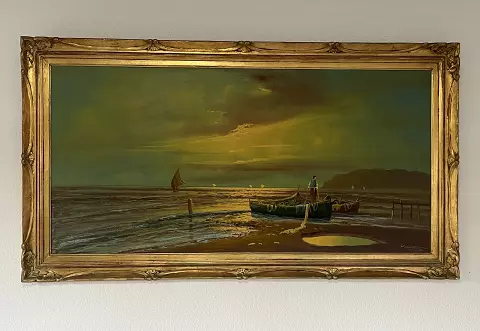
Swiss Art Gallery · Photograph in the catalogue: Unidentified artist — signed Remo Testa — Pêche au crépusculeSourceMiniature existante de la galerie, sans recadrage
Pêche au crépuscule, Promenade en forêt, Chemin forestier and Les Rives du silence are offered by SwissArtGallery without identified makers. These oil landscapes can be considered for composition, colour and condition without inventing a famous name to justify their appeal.
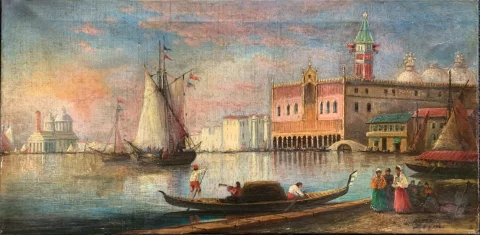
Swiss Art Gallery · Photograph in the catalogue: Unidentified artist — Venise — Vue du bassin de Saint-Marc et du Palais des DogesSourceMiniature existante de la galerie, sans recadrage
Saint Mark’s Basin, waterfronts and lagoon boats feature in different SwissArtGallery listings. An oil view is offered anonymously, a print depicts Venice at dusk and a painting by Luigi Pagan shows sailboats. Their link is geographical rather than evidence of shared authorship.
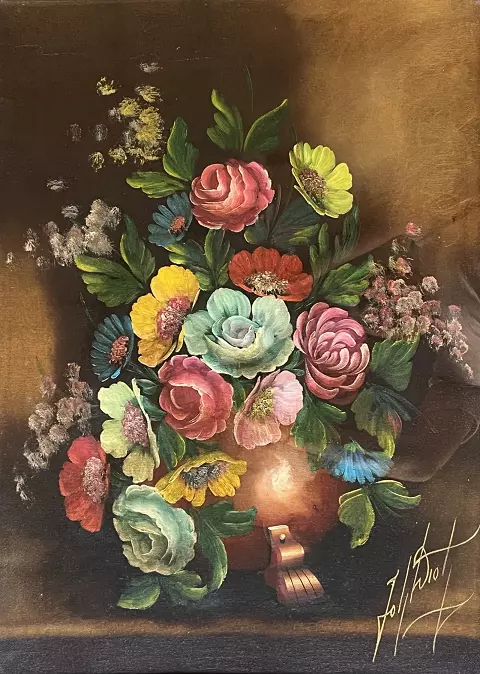
A floral still life by Diot, a bouquet of carnations by Lafont and a scene beneath a flowering tree catalogued under N. Cuenin appear in the gallery’s listings. These oil paintings allow a comparison between close-up flowers and vegetation used within a broader composition.
Hiver alpin by E. Rosset, Walter Küng’s Le printemps au bord du lac des Quatre-Cantons and an anonymous Chemin forestier are three SwissArtGallery landscape listings. They invite comparisons of seasons, trees, light and atmosphere without suggesting that they depict the same place.
SwissArtGallery lists a work on paper bearing the subject Tête raphaélesque éclatée under Salvador Dalí’s name. The Fundació Gala-Salvador Dalí, however, documents the original 1951 oil painting as P 661. These are two objects with different media and dimensions and must not be conflated.
Walter, Christophe, tireur de photographiesSourceLicenceCC0Miniature WebP générée par Swiss Art Gallery : redimensionnement proportionnel, sans recadrage
The painter and stage designer Jean Hugo worked across theatre, music and the visual arts in twentieth-century France. In 2024 the Musée Fabre in Montpellier brought together more than 330 pieces for its exhibition Le regard magique, highlighting activities often separated in catalogues. Costumes, stage models and paintings reveal different purposes for an image.
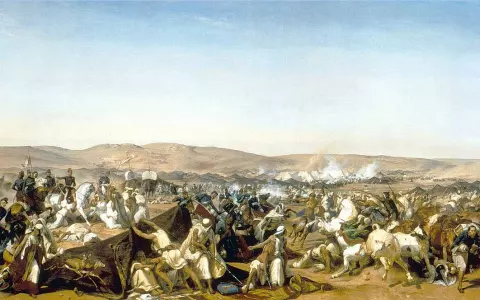
Horace Vernet — Prise de la smalah d’Abd el-Kader par le duc d’Aumale, vers 1844 · Château de Versailles (MV 2027). Détail dans la vignette, tableau entier dans le parcours. Source : Wikimedia Commons · Domaine public.SourceDomaine public (Wikimedia Commons)Redimensionnement proportionnel et compression WebP par Swiss Art Gallery ; la vignette présente un détail recadré, le dossier montre le panorama complet.
Commissioned for Versailles by King Louis-Philippe, The Capture of Abd el-Kader’s Smalah depicts an episode in the French conquest of Algeria in 1843. Horace Vernet constructed a panorama of horses, soldiers, families and possessions. Painted between 1843 and 1845, it calls for scrutiny of both its narrative power and the colonial circumstances of its commission.
Born in 1900, Gregorio Sciltian moved from early engagement with the Russian avant-garde towards meticulous realism influenced by Italian painting. The Banca d’Italia art collection documents a still life with pomegranates, pumpkin and pears. Examining it reveals trompe-l’œil as a carefully constructed way of guiding perception.
Anonymous Unknown author , no author disclosureSourcePublic domainMiniature WebP générée par Swiss Art Gallery : redimensionnement proportionnel, sans recadrage
Both scientist and painter, Charles Lapicque developed a distinctive approach to space and colour. His time aboard ships as an official painter of the French Navy informed images of vessels, waves and harbours. Works in the Centre Pompidou and Brest’s Musée des Beaux-Arts invite comparison of oil, watercolour and lithography within this maritime world.
In his urban landscapes of the 1920s, Mario Sironi painted imposing buildings, empty streets and factory chimneys. Milan’s Museo del Novecento holds a Paesaggio urbano of 1924, exhibited at the Venice Biennale in 1928. Muted colours and solid volumes turn the outskirts of the city into something almost monumental.
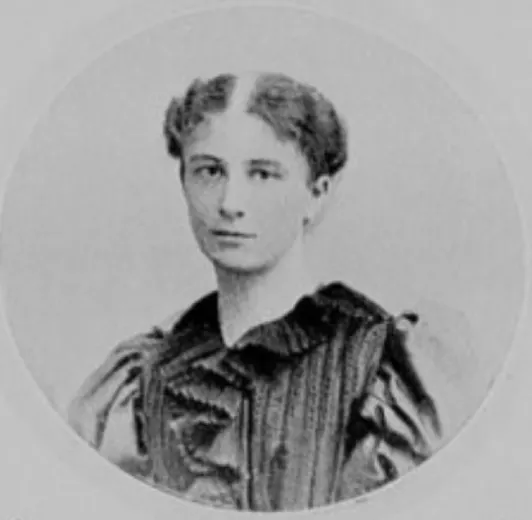
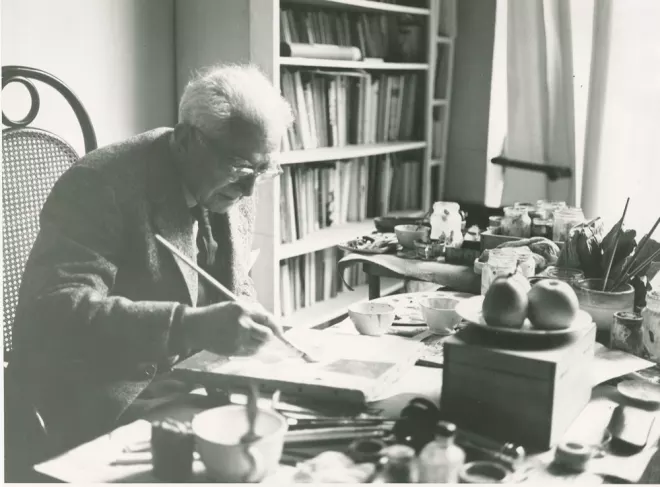
photography of Blanche Odin, unknown photographerSourceLicenceCC0Miniature WebP générée par Swiss Art Gallery : redimensionnement proportionnel, sans recadrage
Flowers occupy a central place in the work of Blanche Odin, a watercolour painter born in Troyes in 1865. The Musée Salies in Bagnères-de-Bigorre holds a substantial group of drawings and watercolours donated by the artist in 1938. Looking at her bouquets reveals how paper, transparency and background help create the impression of light.
Jaume Plensa’s Crown Fountain, installed in Chicago’s Millennium Park in 2004, combines two illuminated towers, images of faces and a shallow expanse of water. Its public setting is accessible to people who might never enter an art exhibition. Portraiture, architecture, light and shared experience come together in the work.
The Indian contemporary artist Atul Dodiya uses the metal shutters of shops as surfaces for images. Opening and closing a shutter alters the relationship between the street outside and the interior. A 2002 exhibition at Madrid’s Museo Reina Sofía documented this exploration of boundaries among painting, popular culture and urban space.
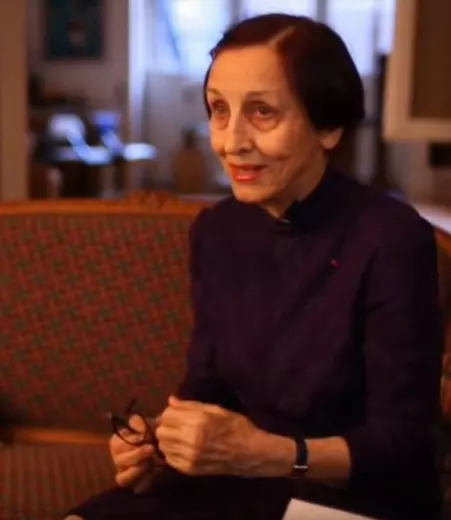
Françoise Gilot (1921–2023) developed an independent body of painting, drawing and printmaking. Her name is frequently linked to Pablo Picasso, but the Bates College Museum of Art notes that she had begun her artistic career before they met. Understanding her means examining her forms, dated works and creative choices on their own terms.
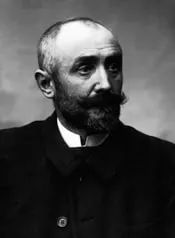
Henry Moret worked in Brittany in the late nineteenth century and for a time took part in the artistic experiments around Pont-Aven. The Musée de Pont-Aven holds Rochers au bord de l’Aven, painted around 1891, where a diagonal organises forms and colour. The painting shows how simplifying a landscape can become an intentional pictorial structure.
Cyprien Gaillard’s Nightlife, created in 2015, is a three-dimensional video installation with colour and sound. The Musée d’art contemporain de Montréal documents scenes filmed in Berlin, Cleveland and Los Angeles. Plants, buildings and traces of the past form a temporal experience rather than a straightforward narrative.
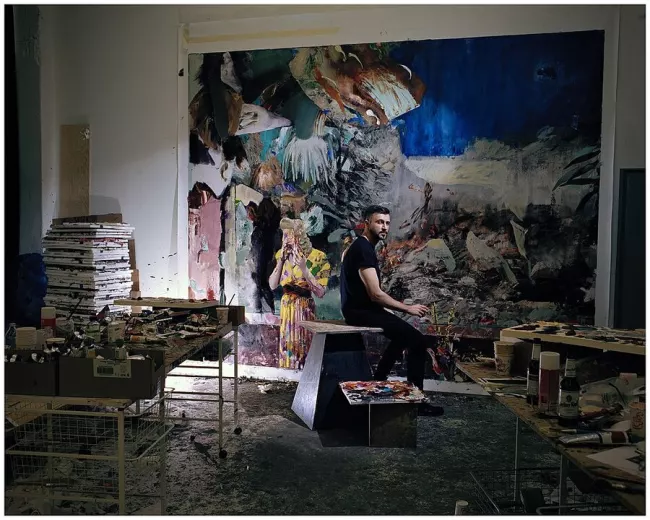
Adrian Ghenie’s The Sunflowers in 1937, painted in 2014, revisits a motif associated with Vincent van Gogh while engaging with memories of twentieth-century violence. The 280 × 280 cm canvas appeared in a Sotheby’s sale in February 2016. Its history links painterly appropriation, historical interpretation and the art market.
During the 1970s Pino Pinelli pushed painting beyond the conventional rectangle. From 1976 he placed separate painted elements on walls, as though the surface of a canvas had broken apart. Naples’s Madre museum documents this development and holds a loaned work entitled Pittura GR from 1976.
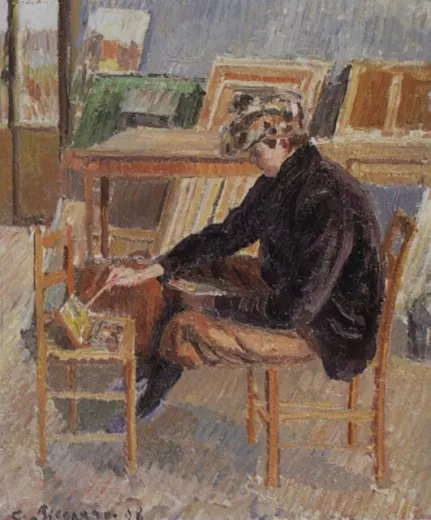
Paul-Émile Pissarro, son of Camille Pissarro, lived from 1884 to 1972 and pursued an independent painting career. The Musée d’Orsay artist directory also records the name form Paulémile Pissarro. Such details help prevent confusion between related artists and their works in catalogues.
Around the turn of the twentieth century Cesare Maggi focused on high mountain landscapes and light on snow. The Museo del Paesaggio in Verbania holds Mattina d’inverno (1908), Neve (1909) and Nevicata (1911). These paintings allow comparison of texture, palette and different ways of simplifying a winter landscape.
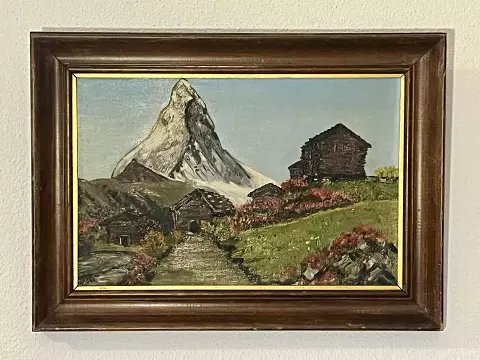
The Matterhorn appears in several SwissArtGallery listings, whether framed by chalets, made the main subject or placed near a glacier landscape. Works catalogued under Jaggi, A. Bagnoud and E. Rosset invite comparison of framing, light and technique, revealing how one recognisable mountain can become different pictorial subjects.
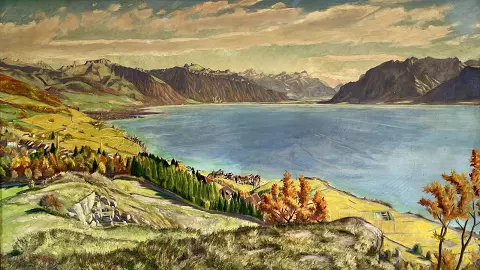
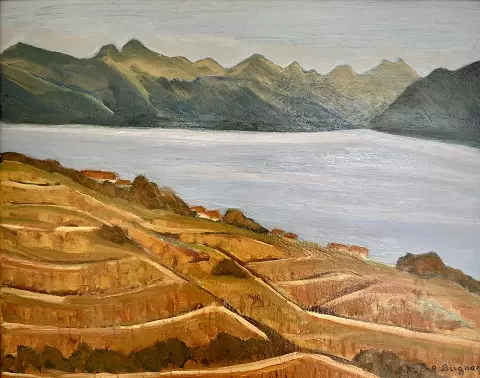
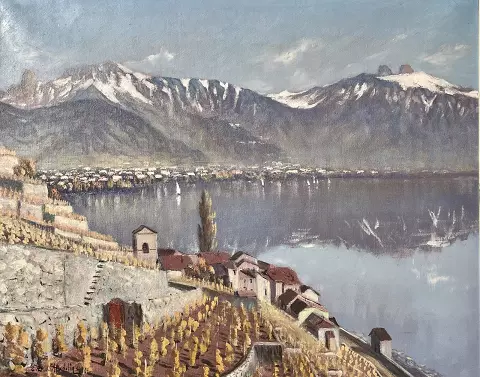
Lavaux’s vineyards and villages above Lake Geneva recur in Swiss landscape painting. The SwissArtGallery catalogue includes works by P.-A. Bugnard, A. Cornaz and Ernest Meinen. Comparing them reveals different arrangements of slopes, rooftops and water rather than reducing every view to one postcard image.
Swiss Art Gallery · Photograph in the catalogue: Sergio Cecchi — La rade de Genève, lumière d’orSourceMiniature existante de la galerie, sans recadrage
The Geneva region appears in different forms in SwissArtGallery listings: Sergio Cecchi’s luminous harbour, a boat at Versoix catalogued under M. Buess, and a Lake Geneva view by Eugène Devaud de Madelin. This route focuses on place and technique without claiming that the painters belonged to one school.
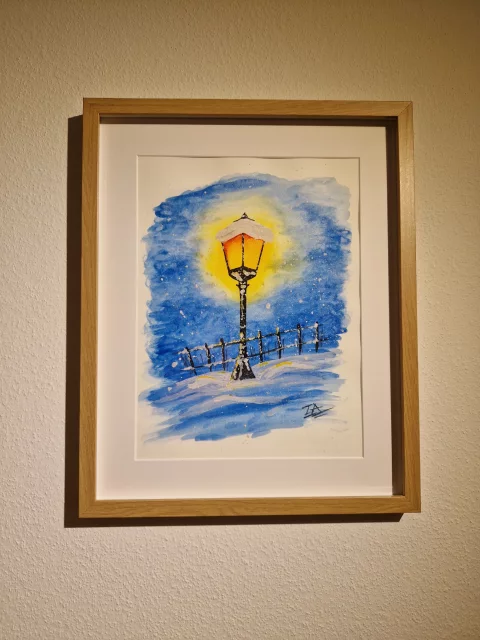
An original watercolour is shaped by pigments, its paper support and the effects of water on the image. SwissArtGallery lists watercolours by artists including AZAR, Christiane Pogany-Abächerli, Thomas Shannon and Gerald Auer. Examining them together reveals the variety of subjects and techniques within this medium.
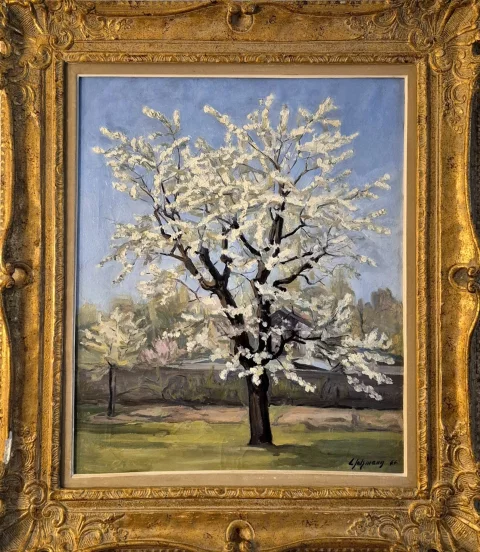
Swiss Art Gallery · Photograph in the catalogue: Attributed to Louis Henri Salzmann — L’Arbre en fleursSourceMiniature existante de la galerie, sans recadrage
SwissArtGallery lists L’Arbre en fleurs under the name Louis Henri Salzmann and describes its medium as oil painting. The flowering tree offers a way to explore branches, light and pictorial space. This route stays close to the listed work and does not invent an undocumented date or ownership history.
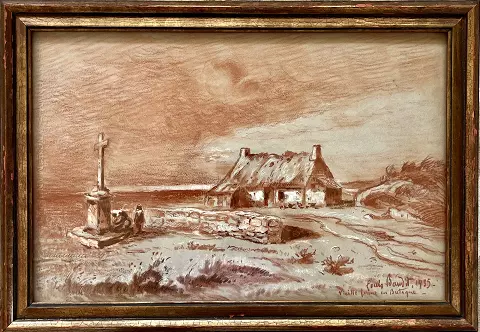
Swiss Art Gallery · Photograph in the catalogue: Louis Amédée Baudit — Vieille Ferme en BretagneSourceMiniature existante de la galerie, sans recadrage
SwissArtGallery lists Vieille Ferme en Bretagne under Louis Amédée Baudit’s name, describing its medium as red and white chalk. The work invites attention to the relationships among lines, shadows and light in a landscape created without oil paint.
SwissArtGallery describes Kady Hoffman’s So Be It as a mixed-media work. That term indicates the use of more than one material or process without identifying every component. This pathway begins with the object, its surface and the available record rather than inventing an undocumented artistic intention.
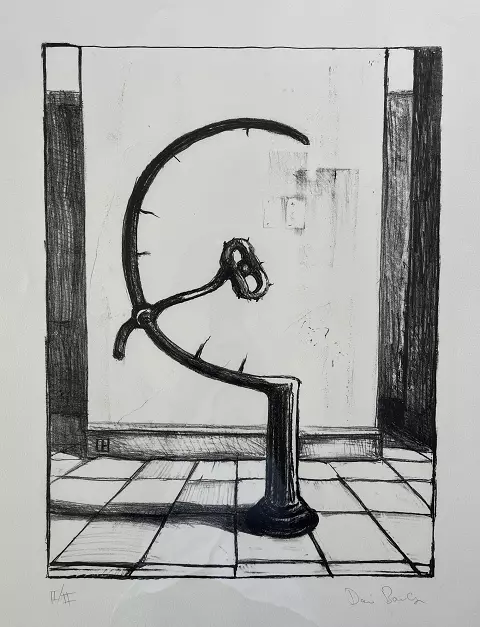
SwissArtGallery lists David Bowes’s Prométhée as a lithograph and Adam & Ève as a gouache. The titles refer to mythological and biblical traditions without, on their own, explaining every aspect of the images. The distinct media invite direct comparison of the works as objects.
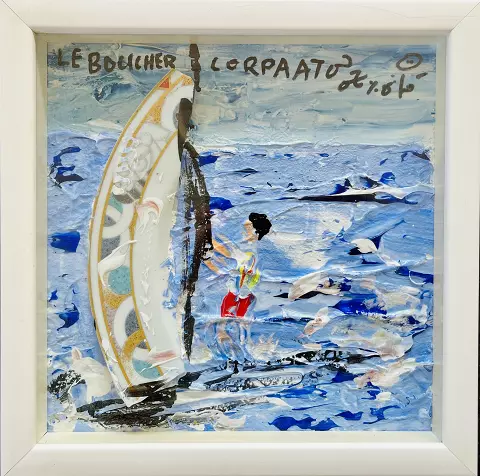
Le Surfer and La Plage, listed under the artist name Le Boucher Corpaato, appear in the SwissArtGallery catalogue. The former is described as mixed media; the latter as mixed media with acrylic and collage. Their comparison concerns coastal imagery and materials, not an undocumented chronology of the artist’s career.
Swiss Art Gallery · Photograph in the catalogue: Dardo Gattelli — Gandria, éclat suspendu sur le lac de LuganoSourceMiniature existante de la galerie, sans recadrage
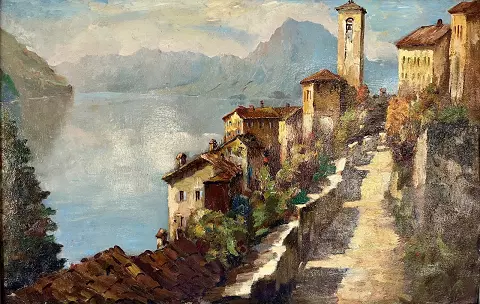
SwissArtGallery lists Gandria, éclat suspendu sur le lac under Dardo Gattelli’s name and describes it as an oil painting. Gandria, a village by Lake Lugano, provides a lakeside subject distinct from views of Lake Geneva. This route distinguishes the place represented, effects of light and identification of the actual artwork.
Working in Venice, Emilio Vedova moved postwar abstraction towards artworks that occupy physical space. His Plurimi of the early 1960s join painted, hinged panels with the viewer’s movement: the composition changes as one walks around it. They are a key example of painting understood as an environment.
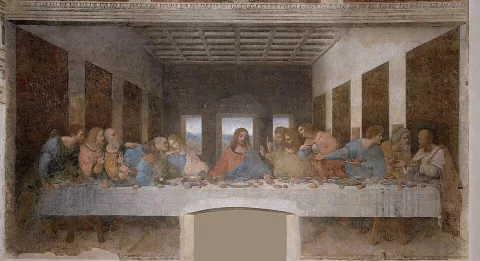
Léonard de Vinci — La Cène, vers 1495–1498 · Réfectoire de Santa Maria delle Grazie, Milan. Reproduction : Wikimedia Commons, domaine public.SourceDomaine public (Wikimedia Commons)Redimensionnement proportionnel et compression WebP par Swiss Art Gallery, sans recadrage.
Leonardo da Vinci painted The Last Supper in the refectory of Santa Maria delle Grazie in Milan between 1494 and early 1498. The figures do more than share a table: hands, glances and groupings convey reactions to an announcement. Perspective and the study of human feeling are central to the work.
Touring Club Italiano ; photographe inconnuSourceLicenceCC BY-SA 4.0Miniature WebP générée par Swiss Art Gallery : redimensionnement proportionnel, sans recadrage
Felice Casorati painted Meriggio in 1923; the Museo Revoltella acquired it at the Venice Biennale of 1924. Figures, objects and space are organised with a precision that turns an everyday moment into a suspended scene. This pathway follows both the painting’s construction and its entry into a public collection.
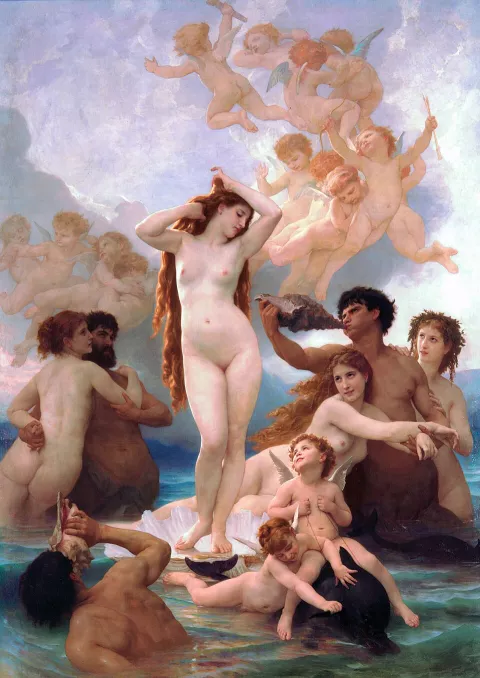
William Bouguereau — La Naissance de Vénus, 1879 · Musée d’Orsay, Paris (RF 253). Reproduction : Wikimedia Commons, domaine public.SourceDomaine public (Wikimedia Commons)Redimensionnement proportionnel et compression WebP par Swiss Art Gallery, sans recadrage.
William Bouguereau exhibited The Birth of Venus at the Salon of 1879, when the French state acquired the large oil painting. The work demonstrates the emphasis on drawing, modelling and mythological ambition in academic painting. Its later travels through museums also reveal changing institutional tastes.
In Pastry Chef, painted around 1923, Chaïm Soutine transforms a uniform and a face into an energetic portrait. The National Gallery of Art in Washington documents the painting, whose dense brushwork and colour contrasts give the sitter a presence beyond an ordinary description of a profession.
From the 1960s Hermann Nitsch connected painting with collective actions, sound and theatrical settings. A major figure in Viennese Actionism, he developed his Theatre of Orgies and Mysteries as a project engaging several senses. A canvas emerging from that context cannot always be understood as a conventional easel painting.
Alighiero Boetti’s Mappe transformed political maps of the world into textile artworks. From the early 1970s, he commissioned Afghan craftswomen to embroider designs incorporating borders, national flags and written inscriptions. The maps bring collective labour, political change and the time required to make an object into the work itself.
Inside his Hanover home, Kurt Schwitters gradually built the Merzbau, an environment of forms, objects and constructions that filled entire rooms. Begun around 1923, it remained an ever-changing work. Its history shows how collage could expand from the scale of paper into architecture.
Aurélie Nemours explored squares, lines, colour and rhythm as elements of an autonomous pictorial language. Her abstract compositions may appear systematic, yet the Centre Pompidou emphasises the role of intuition in their preparation. Repetition becomes a sensory experience rather than a mere exercise in geometry.
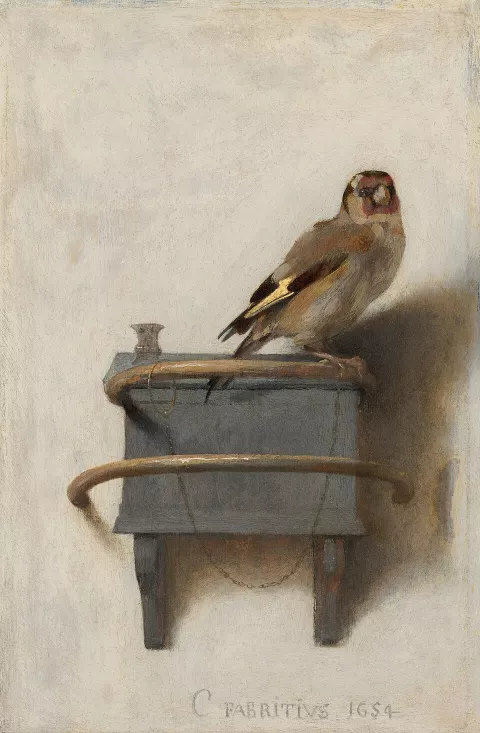
Carel Fabritius — Le Chardonneret, 1654 · Mauritshuis, La Haye (inventaire 605). Reproduction : Wikimedia Commons, domaine public.SourceDomaine public (Wikimedia Commons)Redimensionnement proportionnel et compression WebP par Swiss Art Gallery, sans recadrage.
Carel Fabritius painted The Goldfinch in 1654 on a panel measuring just 33.5 × 22.8 cm. The tethered bird appears against a pale wall with very few other details. The Mauritshuis explains how thick brushstrokes, colour and viewpoint create a convincing illusion with remarkably economical means.
In Evening over Potsdam, painted in 1930, Lotte Laserstein gathered figures around a table on a terrace. The painting now belongs to Berlin’s Neue Nationalgalerie. The sitters’ postures and gazes lend the group scene a tension that invites reflection on the years before political upheaval in Germany.
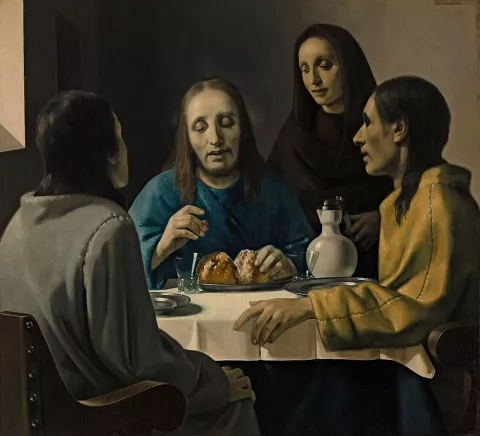
Han van Meegeren — Le Souper à Emmaüs, 1937 · Musée Boijmans Van Beuningen, Rotterdam (St 1). Tableau réalisé par Van Meegeren et présenté à tort comme un Vermeer. Reproduction : Wikimedia Commons · Domaine public.SourceDomaine public (Wikimedia Commons)Redimensionnement proportionnel et compression WebP par Swiss Art Gallery ; sans recadrage.
Han van Meegeren produced paintings presented as works by Johannes Vermeer. His Supper at Emmaus was sold as a genuine Vermeer and exhibited at Museum Boijmans Van Beuningen. The case shows why stylistic resemblance cannot replace provenance research and technical examination.
Swiss Art Gallery · Photograph in the catalogue: Eugène Devaud de Madelin — Vue sur le Lac Léman et les Rochers de NayeSourceMiniature existante de la galerie, sans recadrage
A view of Lake Geneva can give prominence to clouds, shores, boats or reflections. SwissArtGallery lists contrasting compositions by artists including Eugène Devaud de Madelin, Ernest Meinen and Max Theynet. This pathway connects the listings with documented stories of lake painting without inventing a shared school or personal collaboration.
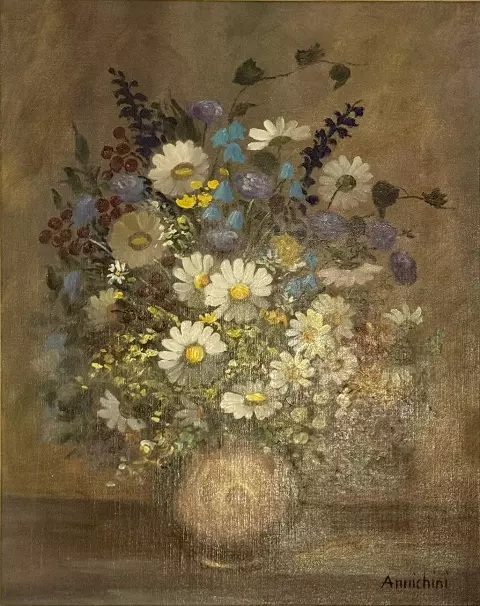
Floral subjects connect several SwissArtGallery listings: a bouquet by Aimé Barraud, oils by Armando Annichini and Sergio Cecchi, and an acrylic composition by Gertrudis Munk. Setting them side by side reveals differences in volume, light, backgrounds and medium rather than treating all flower still lifes as interchangeable.
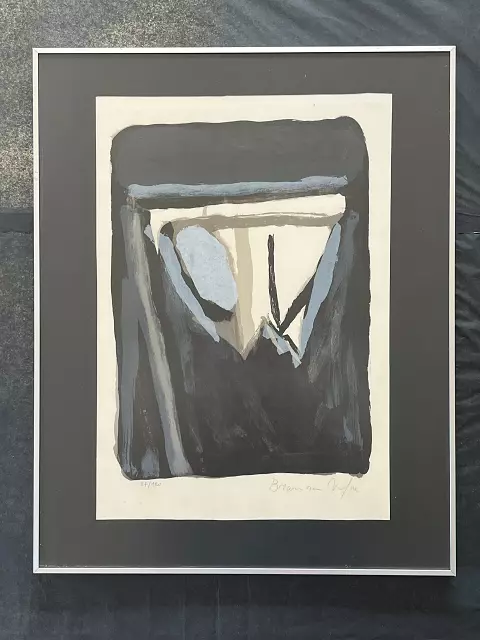
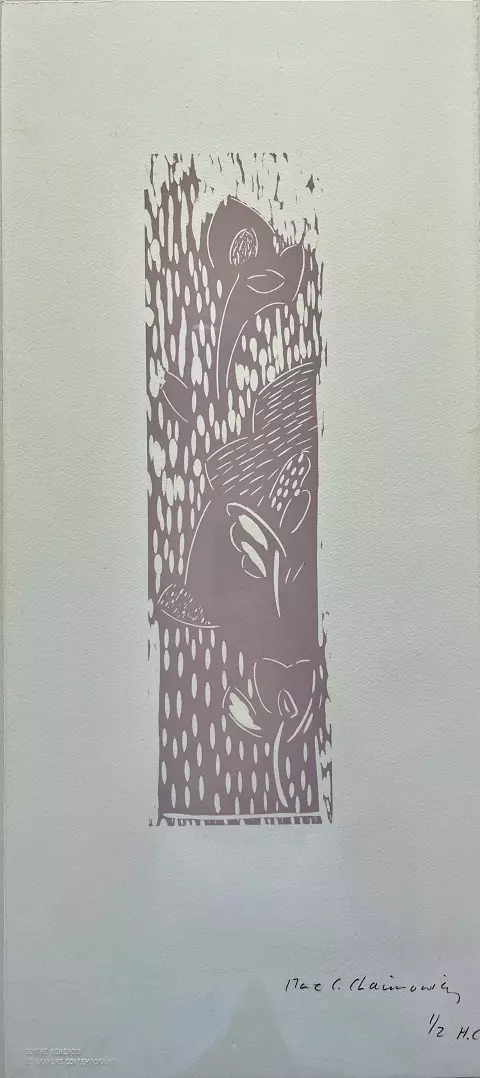
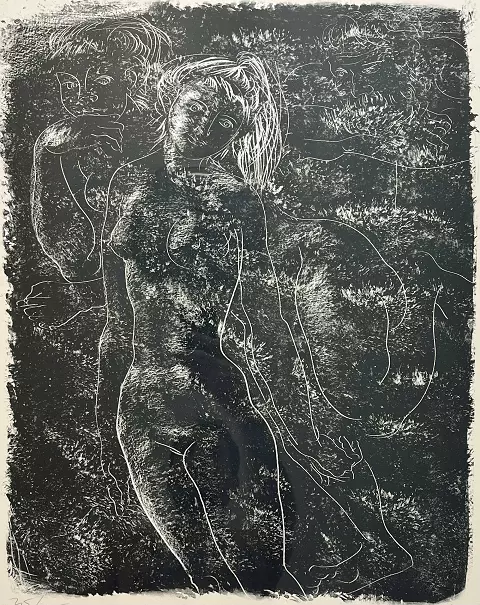
SwissArtGallery lists works on paper described as lithographs or other prints, including pieces by Hans Erni, Frédéric Rouge, Bram van Velde and Marc Camille Chaimowicz. Collectors should distinguish the stated technique, edition, inscriptions, signature and paper condition. An artist’s name alone does not establish what kind of impression is being offered.
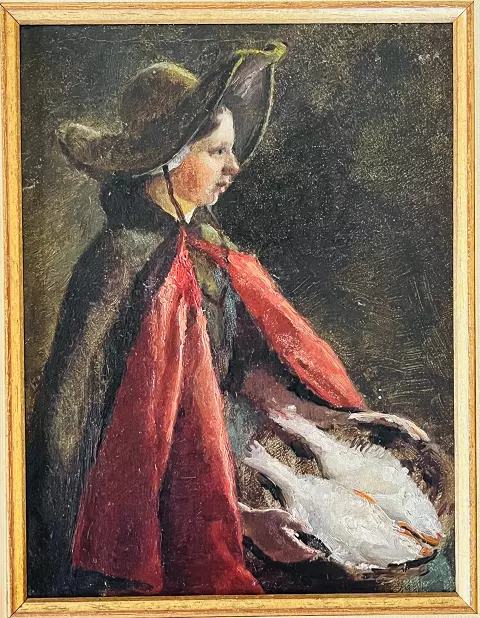
Swiss Art Gallery · Photograph in the catalogue: Attributed to Edmond-Jean de Pury — Jeune fille au poissonSourceMiniature existante de la galerie, sans recadrage
Portraits and figurative scenes listed by SwissArtGallery invite comparison between monochrome drawing, modelling in oil and the role of setting. A portrait catalogued under Firmin Massot can be considered visually alongside works by Émile François Chambon and Edmond-Jean de Pury without implying a personal connection.
A sailing boat may be the main subject, a silhouette in the light or a small detail in a harbour. SwissArtGallery lists contrasting interpretations by Luigi Pagan, W. De Conti, R. Piuk and Max Theynet. This route groups water and navigation while respecting the differences among lagoon, sea and lake.
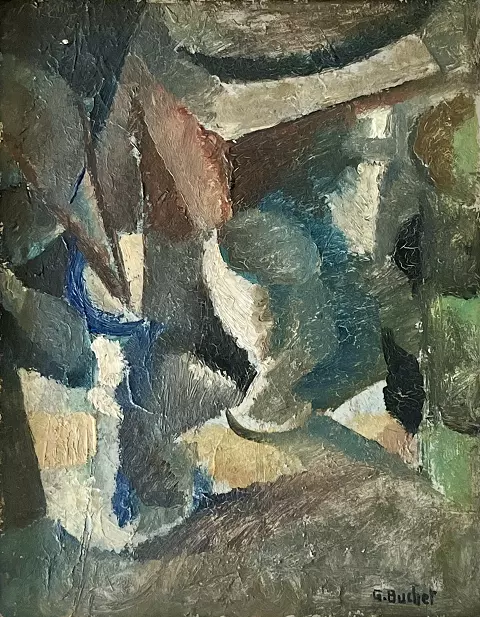
Abstraction is not confined to one medium. SwissArtGallery lists an oil painting by Gustave Buchet, a lithograph by Bram van Velde, prints by Marc Camille Chaimowicz and a work by Roger Boubenec. Comparing them helps reveal how support and technique shape gesture, reproduction, colour and the viewer’s experience.
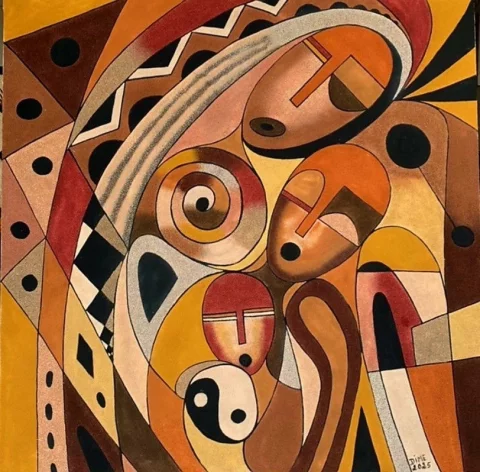
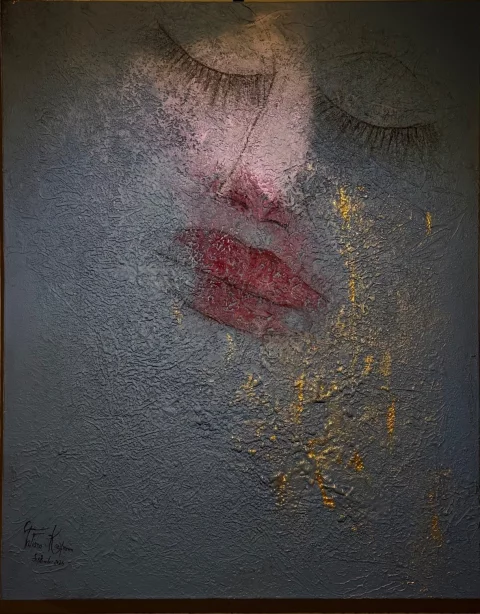
Materials sometimes contribute directly to the meaning of a painting. In the SwissArtGallery catalogue, works by Alioune Dime incorporate sand, while Tatiana Kaufmann combines acrylic and fabric on canvas to produce relief. These processes differ from a texture that is merely suggested by brushwork.
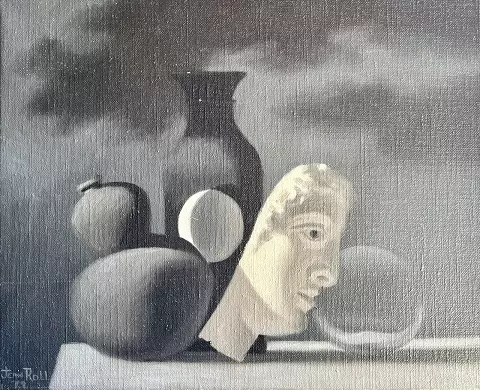
SwissArtGallery lists paintings by Jean Roll entitled Le Masque étrusque, Le Mariage Secret, Abandon and Le Tourment. The titles invite reflection on figures and emotions, but they cannot by themselves reconstruct the artist’s private life or identify the sitters. This pathway brings the works together without inventing a biographical story.
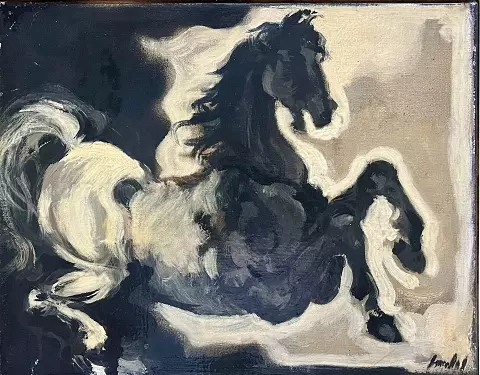
SwissArtGallery offers contrasting sides of Sergio Cecchi through Chevaux Gris, La rade de Genève, Bouquet de roses or, Les Amants, Fleurs et fruits dans la lumière and La cascade embrasée. Subjects range from figures to landscape and the stated media vary. This route provides an overview without inventing an undocumented chronology.
Tatiana Kaufmann’s Moments, Glamour, Goldene Mitte and Modern are described in the gallery catalogue as acrylic and fabric on canvas with textile relief. The support is more than a neutral ground: attached elements alter the surface and may respond differently to light and viewing angle.
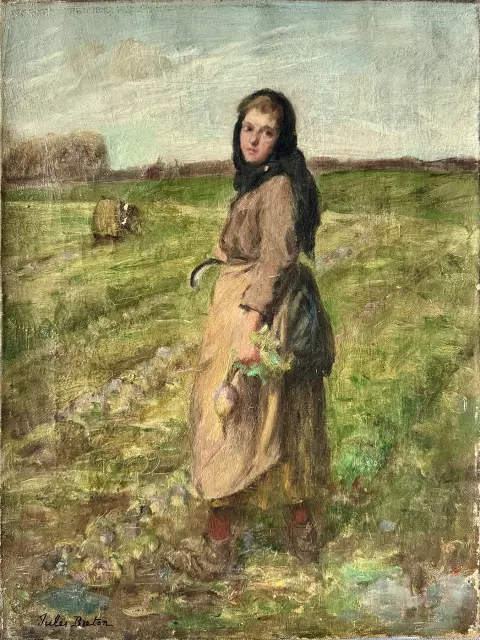
An artwork entitled Jeune paysanne au pré is listed in the SwissArtGallery catalogue under Jules Breton’s name. Its subject invites comparison with documented scenes of rural labour in his body of work. To evaluate the listing, the composition, support and available identification evidence matter more than a price taken in isolation.
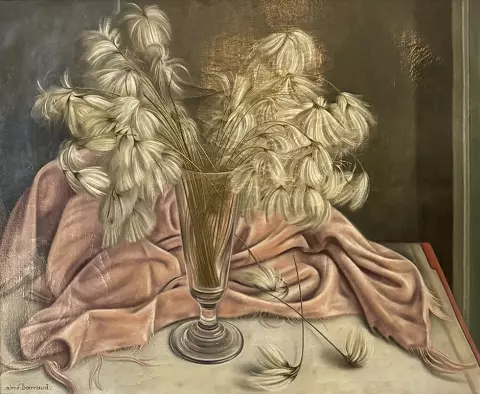
An oil painting entitled Bouquet d’aigrettes blanches appears in the SwissArtGallery catalogue under Aimé Barraud’s name. The still life invites close attention to pale flowers, background contrasts and the arrangement of forms. Beginning with a specific object complements general accounts of the artist and Swiss painting.
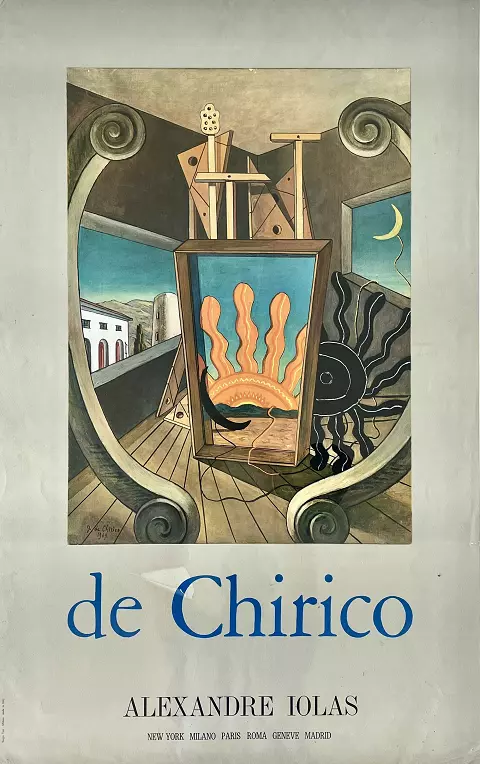
A printed poster and a screenprint do not necessarily give the image they carry the same artistic status. SwissArtGallery lists a screenprinted poster catalogued under Giorgio de Chirico and a Loterie Suisse Romande poster attributed in its catalogue to Pierre-Alexandre Junod. Precise descriptions of technique and edition matter.
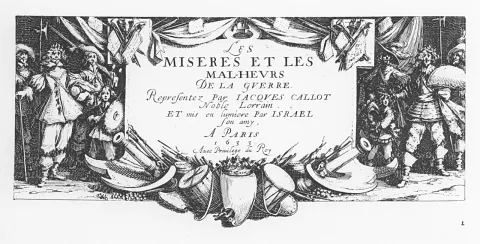
Jacques Callot — Frontispice de la suite « Les Misères et les Malheurs de la guerre » (1633). Reproduction d’une carte postale du Musée lorrain via Wikimedia Commons · Domaine public.SourceDomaine public (Wikimedia Commons)Redimensionnement proportionnel et compression WebP par Swiss Art Gallery ; sans recadrage.
Published in 1633, Les Grandes Misères de la guerre comprises eighteen etchings. Jacques Callot did more than represent battles: his sequence moves through recruitment, plunder, punishment and the consequences of violence. The series rewards a reading that distinguishes historical circumstances, graphic invention and the different states of individual prints.
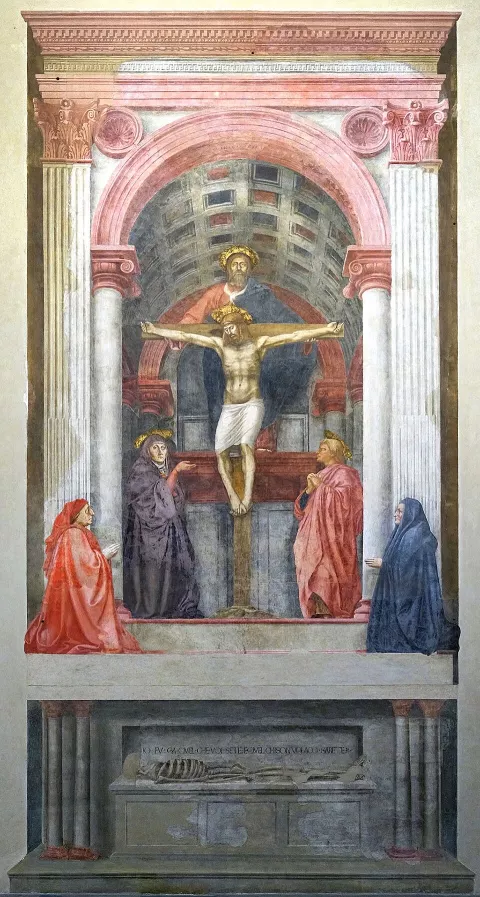
Masaccio — La Trinité, vers 1425–1428 · Basilique Santa Maria Novella, Florence. Reproduction : Wikimedia Commons, domaine public.SourceDomaine public (Wikimedia Commons)Redimensionnement proportionnel et compression WebP par Swiss Art Gallery, sans recadrage.
In Florence’s Santa Maria Novella, Masaccio’s Holy Trinity, painted around 1425–1426, creates the illusion of architecture receding beyond the wall. The Early Renaissance fresco offers a direct explanation of how linear perspective makes a painted surface appear to contain a coherent, measurable space.
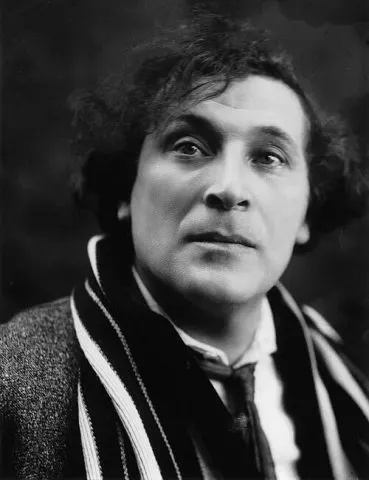
The Musée national Marc Chagall, opened in Nice in 1973, grew out of the Biblical Message cycle. Originally intended for a chapel in Vence, the ensemble was donated to the French state in 1966. Twelve paintings inspired by Genesis and Exodus are joined by five based on the Song of Songs: the museum emerged from an artist’s coherent project.
Fabienne Verdier trained with Chinese masters between 1983 and 1992. She later developed large brushes and custom tools that engage the whole body in mark-making. Her work connects the discipline of gesture, exchanges between artistic traditions and experiments with surfaces, beyond a simple contrast between East and West.
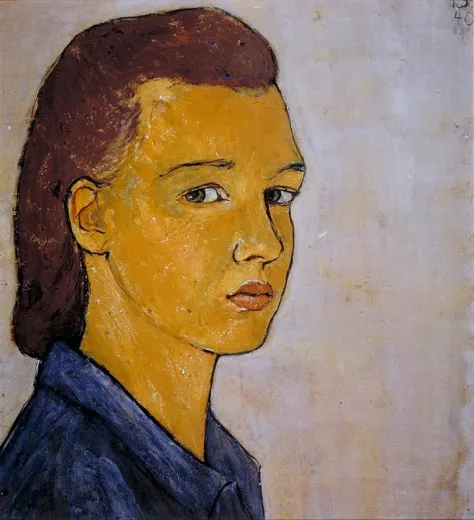
In the early 1940s Charlotte Salomon created Life? or Theatre?, an extensive cycle combining gouache paintings, words and musical references. It is neither simply a private diary nor an ordinary comic strip. Personal memory, invented characters, visual composition and historical circumstances interweave throughout this singular work.
Marlene Dumas often begins her portraits with personal photographs, press pictures or archival imagery. Rather than faithfully reproducing a face, she changes the source through brushwork, colour and the title she gives the work. The South African-born painter, based in the Netherlands, questions representation, emotion and the ways we look at other people.
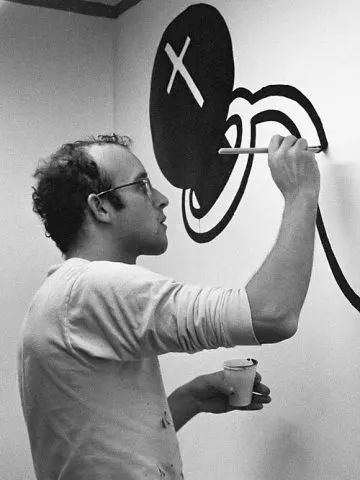
In the early 1980s Keith Haring turned empty advertising panels in the New York subway into surfaces for white-chalk drawings. They were quick, public and often ephemeral. Their apparent simplicity masks a sustained interest in signs, the circulation of images and encounters with people who may never choose to enter a museum.
Yvaral investigated grids, lines and optical phenomena within the Groupe de Recherche d’Art Visuel (GRAV), active from 1960 to 1968. An artwork may appear flat, yet change as the viewer moves. Some movement is real; some is only perceived. The experience depends on the eye and the body’s position.
Nicola Samorì draws on forms inherited from older painting traditions but does not simply reproduce them intact. He cuts, lifts and alters painted surfaces. What can appear destructive becomes a way of bringing a new image into being, in a tense dialogue with the history of Western art.
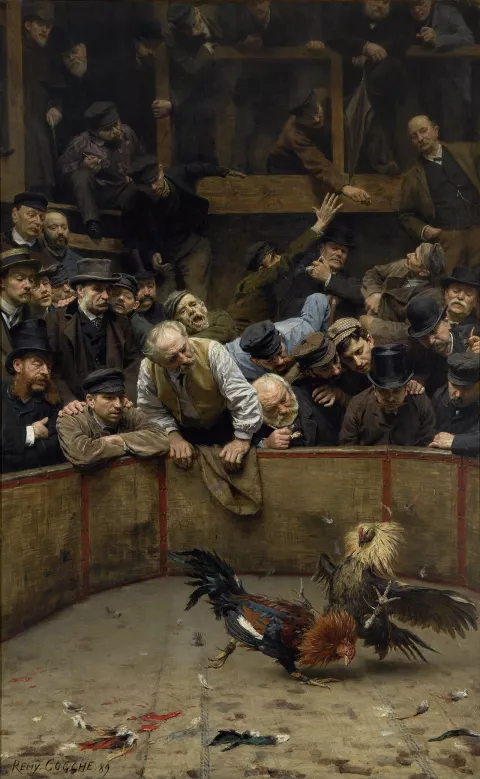
Rémy Cogghe — Combat de coqs en Flandre, 1889 · Musée La Piscine, Roubaix. Reproduction : Wikimedia Commons · Domaine public.SourceDomaine public (Wikimedia Commons)Redimensionnement proportionnel et compression WebP par Swiss Art Gallery ; sans recadrage.
Rémy Cogghe’s 1889 Combat de coqs en Flandre is a landmark work at La Piscine museum in Roubaix. The genre scene gathers figures connected with the region’s industrial and social life. An apparently anecdotal image can therefore become a historical source about a city and the people who posed for its painter.
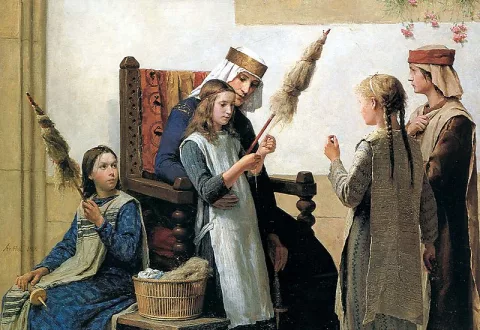
Albert Anker · La reine Berthe et les fileuses · Wikimedia Commons · Public domainSourceLicenceLicence du visuelRedimensionnement proportionnel et conversion WebP, sans recadrage.
A distaff, a quill, a basket of strawberries: familiar objects play central roles in several paintings by Albert Anker. They guide the viewer’s reading but can also carry historical or literary stories layered onto the image. Three documented accounts invite us to look closely at those details before interpreting the whole scene.
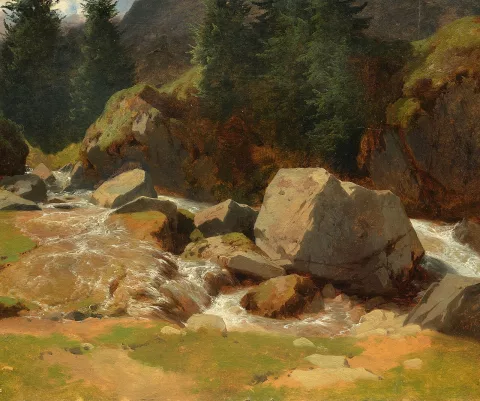
Alexandre Calame · Torrent de montagne · Wikimedia Commons · Public domainSourceLicenceLicence du visuelRedimensionnement proportionnel et conversion WebP, sans recadrage.
Alexandre Calame’s torrents, mountains and storms are not always straightforward studies of nature. Research into one painting revealed a human figure concealed beneath a later alteration of the painted surface. The case reminds us that landscape paintings have material histories that can change how their subjects are understood.
Émile Chambon’s training also tells a story of the practical obstacles facing an aspiring artist. A grant helped him continue his studies in the early 1920s, and another stay took him to the Louvre in 1928. Copying paintings and dealing with limited financial means reveal a career less straightforward than a simple narrative of early success.
Émile Chambon was more than a painter: his collecting and donations left traces in several Geneva institutions. An exhibition at the Musée Rath in 1966 brought together his own work and collected objects. Later gifts opened further histories of preservation and the transfer of cultural material.
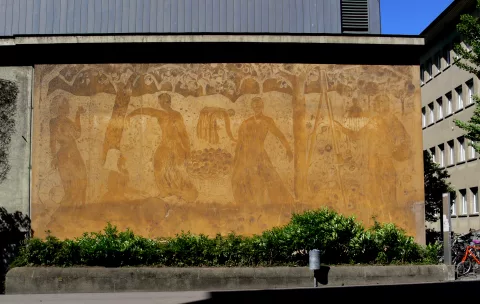
Émile Chambon’s drawings deserve attention as a practice in their own right, not merely preparation for painting. A Geneva exhibition in 1971 focused on them. Other works, from a mural to compositions bringing together animals and objects, reveal the variety of materials and settings in which he worked.
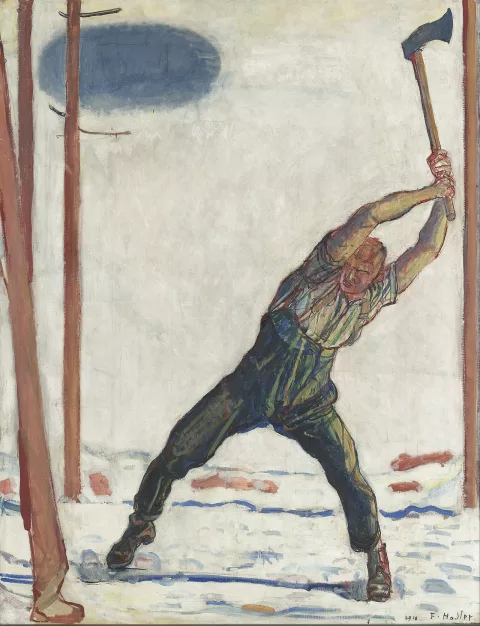
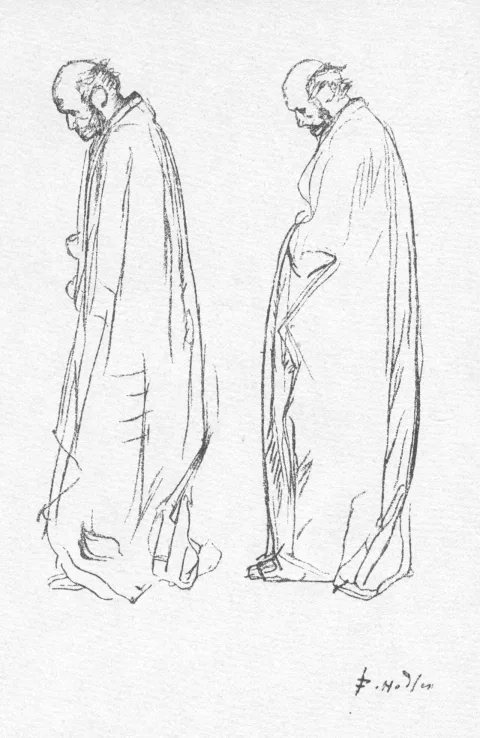
Ferdinand Hodler · Le Bûcheron · Wikimedia Commons · Public domain · Fernidand Hodler (1853 - 1918) – Painter (Swiss) Details on Google Art ProjectSourceLicenceLicence du visuelRedimensionnement proportionnel et conversion WebP, sans recadrage.
A motif designed for a fifty-franc banknote can become a monumental painting. A poster, meanwhile, can stand for an entire career outside a museum. These stories explore how Ferdinand Hodler worked across very different functions: commissions, exhibitions, large-scale images and symbolic compositions.
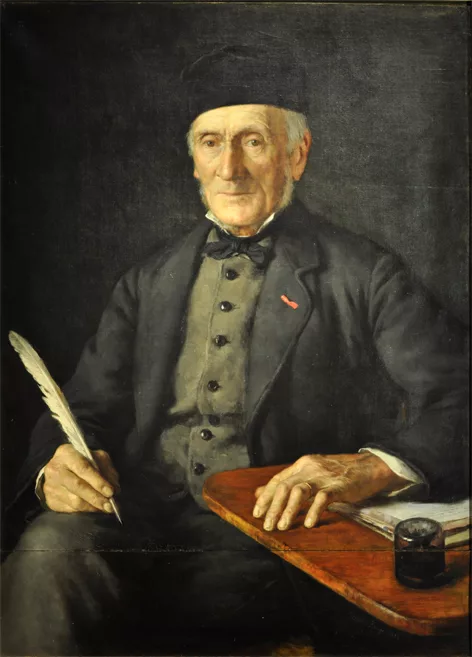
Frédéric Rouge · Portrait d’Urbain Olivier · Wikimedia Commons · Public domainSourceLicenceLicence du visuelRedimensionnement proportionnel et conversion WebP, sans recadrage.
A portrait is not always completed in a few hours. Letters from Urbain Olivier describe long sittings for the young Frédéric Rouge, allowing the painter’s work to be reconstructed without inventing undocumented details. The testimony offers a concrete perspective on portraiture in French-speaking Switzerland.
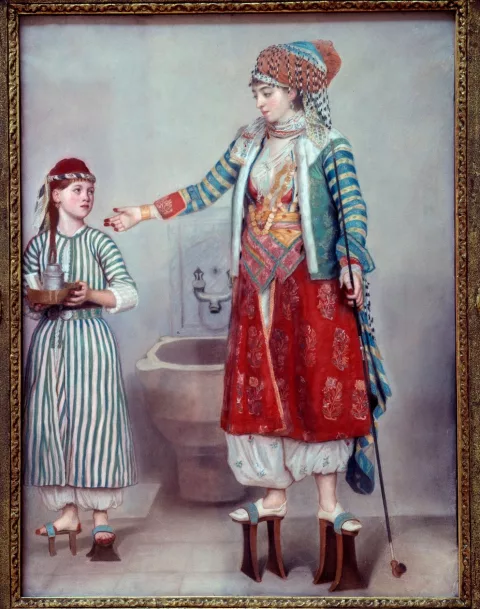
Jean-Étienne Liotard · Dame française en costume turc et sa servante · Wikimedia Commons · Public domain · Jean-Etienne Liotard (1702-1789=SourceLicenceLicence du visuelRedimensionnement proportionnel et conversion WebP, sans recadrage.
Jean-Étienne Liotard’s career crossed cities and European and Ottoman cultural settings. Drawings made in Constantinople contributed to a print published in 1745 in collaboration with Giuseppe Camerata. The episode shows that a portraitist’s reputation depends partly on the circulation of images, not only on originals preserved in collections.
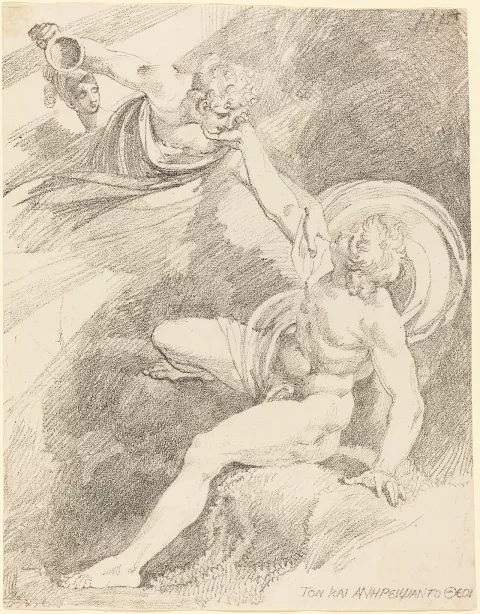
Johann Heinrich Füssli · L’Enlèvement de Ganymède · Wikimedia Commons · CC0 · Henry FuseliSourceLicenceLicence du visuelRedimensionnement proportionnel et conversion WebP, sans recadrage.
Johann Heinrich Füssli’s dramatic figures are not confined to large paintings. A concert can become a concentrated scene on paper, while a lithograph of Ganymede dated 1804 offers another way to circulate an image. These examples invite a closer look at movement and the distinct possibilities of each technique.
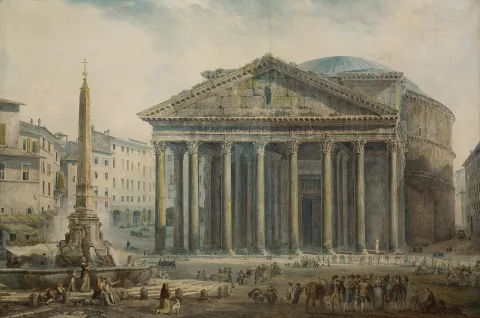
Louis Ducros · Vue du Panthéon · Wikimedia Commons · Public domain · Abraham-Louis-Rodolphe Ducros (Moudon, 1748 - Lausanne, 1810), Swiss engraver and watercolouristSourceLicenceLicence du visuelRedimensionnement proportionnel et conversion WebP, sans recadrage.
Swiss painter and traveller Louis Ducros worked in watercolour on a scale far beyond that of a travel sketchbook. For a view of the Arch of Titus he joined several sheets of paper to canvas. Another story follows a print arising from his artistic collaborations in Rome. The two techniques offer different ways of circulating images.
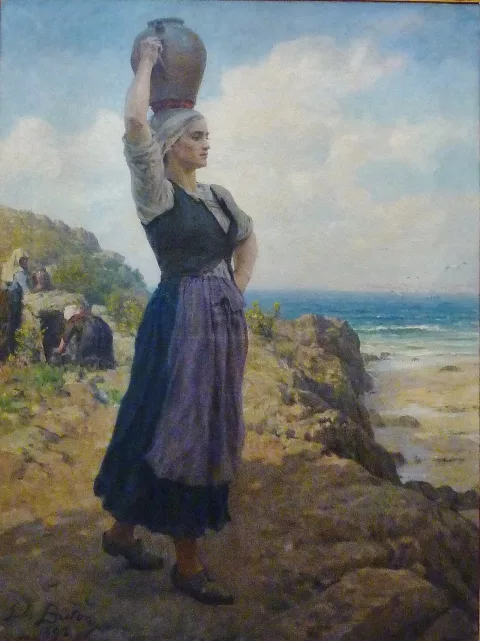
Jules Breton · À la fontaine · Wikimedia Commons · Public domainSourceLicenceLicence du visuelRedimensionnement proportionnel et conversion WebP, sans recadrage.
A painting’s history does not end when it leaves the studio. Works by Jules Breton have been exhibited, collected by museums and sometimes placed on long-term loan elsewhere. À la Fontaine, Le Soir and La Falaise invite us to explore the movements of paintings, their changing titles and the many contexts in which they have been seen.
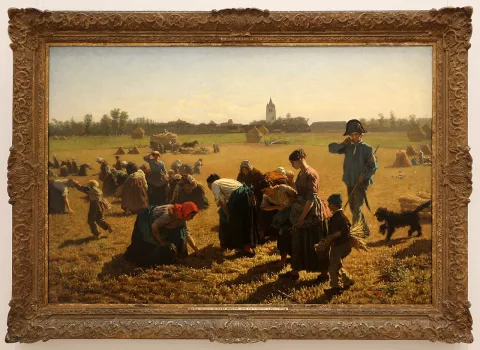
Jules Breton · Les Glaneuses · Wikimedia Commons · CC BY 3.0 · SailkoSourceLicenceLicence du visuelRedimensionnement proportionnel et conversion WebP, sans recadrage.
Jules Breton depicted everyday rural labour, yet his sitters were not always anonymous. In Les Glaneuses of 1854 one figure is linked to Élodie de Vigne, the painter’s future wife. Other canvases return to knitting and weeding, granting dignity and sustained attention to activities often passed over.
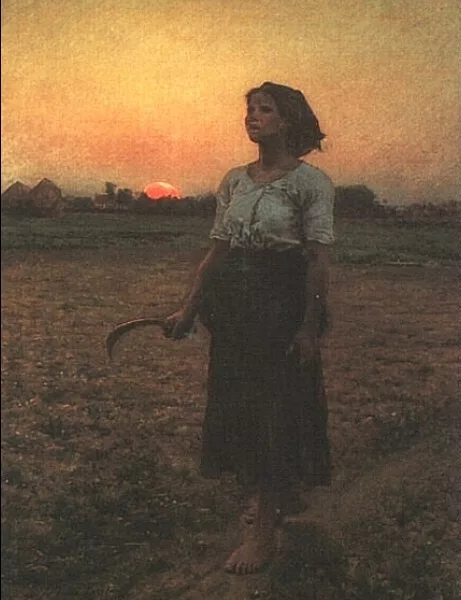
Jules Breton · Le Chant de l’alouette · Wikimedia Commons · Public domainSourceLicenceLicence du visuelRedimensionnement proportionnel et conversion WebP, sans recadrage.
A painting is silent, yet its title can suggest a sound. Le Chant de l’alouette, painted in 1884, offers one example. Other compositions by Jules Breton bring together harvest activities or a procession across several metres of canvas. This pathway explores how collective time, rhythm and movement become forms within painting.
For Marc Camille Chaimowicz an interior may resemble both a real room and an imagined stage. Worn shoes painted silver, arranged objects or a room invoking Cocteau are not simply props. They become ways of thinking about presence, absence and the relationships among art, design and memory.
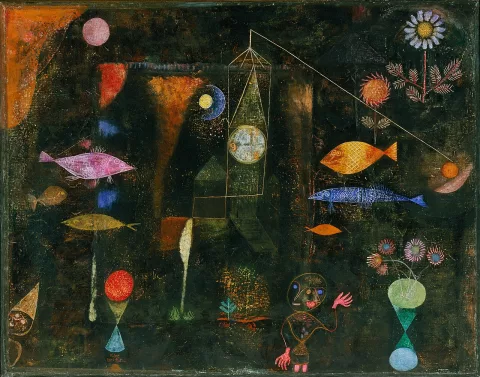
Paul Klee · Magie des poissons · Wikimedia Commons · Public domainSourceLicenceLicence du visuelRedimensionnement proportionnel et conversion WebP, sans recadrage.
Paul Klee made images whose apparent lightness rests on precise material decisions. In Fish Magic (1925), forms emerge through work on a dark surface; in Twittering Machine (1922), birds seem attached to an improbable mechanism. Angelus Novus (1920) later acquired a remarkable intellectual afterlife.
Cuno Amiet · La Récolte des pommes, 1936 · Kunstmuseum Bern · Photographie Andreas Praefcke / Wikimedia Commons · CC BY 3.0SourceLicenceLicence du visuelRedimensionnement proportionnel et conversion WebP, sans recadrage.
Why can a harvest turn red, and how can a small skier transform a winter landscape? Two documented stories offer an accessible introduction to Cuno Amiet. Colour, framing and light do more than describe a scene: they direct attention. The route then leads to Giovanni Giacometti, his friend from their years of training, and another Swiss approach to modern painting.
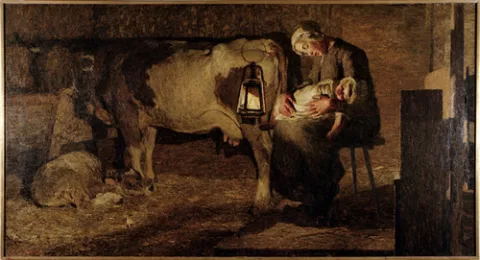
Giovanni Segantini · Les Deux Mères · Wikimedia Commons · Public domainSourceLicenceLicence du visuelRedimensionnement proportionnel et conversion WebP, sans recadrage.
Cuno Amiet and Giovanni Giacometti met during their training; in 1894 Giacometti met Giovanni Segantini. This route follows those documented relationships without treating the painters as stylistically interchangeable. From Amiet’s reds to Segantini’s exploration of light, their work asks how a landscape can be felt as well as represented.
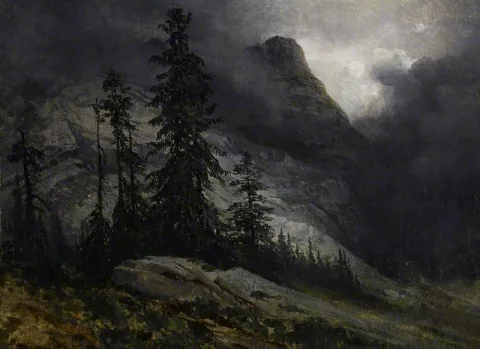
Alexandre Calame · Orage à la Handeck · Wikimedia Commons · Public domainSourceLicenceLicence du visuelRedimensionnement proportionnel et conversion WebP, sans recadrage.
Storms, glaciers, fallen trees and light on Lake Brienz: nineteenth-century painters turned Swiss landscapes into carefully constructed pictures. Alexandre Calame and François Diday offer complementary perspectives on the mountains. These stories reveal how motifs were composed, exhibited, collected and sometimes disputed, far beyond the appeal of the scenery itself.
Swiss Art Gallery · Photograph in the catalogue: After Ferdinand Hodler — Le lac Léman depuis St-PrexSourceMiniature existante de la galerie, sans recadrage
A lake can become a study of light, space or rhythm. François Bocion observed the shores, harbours and details of Lake Geneva; Ferdinand Hodler gave the landscape an almost musical structure. This is a thematic comparison, not a claim that they worked together. Documented stories lead naturally towards related lake paintings offered by the gallery.
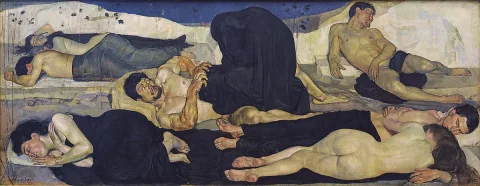
Ferdinand Hodler · La Nuit · Wikimedia Commons · Public domainSourceLicenceLicence du visuelRedimensionnement proportionnel et conversion WebP, sans recadrage.
The Night, excluded from a Geneva exhibition in 1891, raises questions about representation and public reception. Other stories examine Hodler’s grouped figures, mourning and Valentine Godé-Darel. This route keeps documented events distinct from interpretation: emotional pictures still call for careful attention to artworks, dates and circumstances.
Ferdinand Hodler · Figures d’Eurythmie · Wikimedia Commons · Public domainSourceLicenceLicence du visuelRedimensionnement proportionnel et conversion WebP, sans recadrage.
Walking, raising an arm, forming a line: Ferdinand Hodler turned human gesture into a principle of composition. These stories bring different works into conversation through movement, repetition and preparatory drawing. How the image was made is part of how it communicates. This route invites readers to observe structure before concentrating on subject matter.
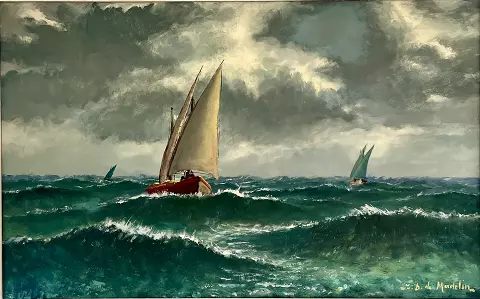
Swiss Art Gallery · Photograph in the catalogue: Eugène Devaud De Madelin — Tempête sur le LémanSourceMiniature existante de la galerie, sans recadrage
Before the lake became a tranquil image, it was a place of work and travel. François Bocion’s boats, fishing nets, stones and quays evoke human life as well as scenery. Four documented stories teach readers to notice those telling details. Related lake and maritime paintings in the gallery extend the visit without implying an undocumented artistic relationship.
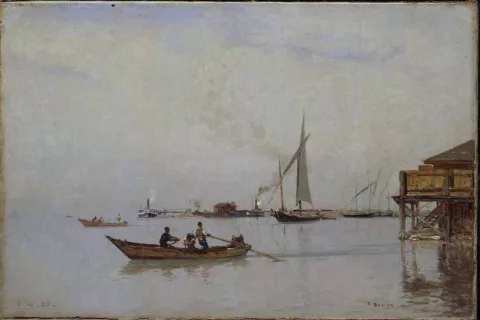
François Bocion · Le Port d’Ouchy · Photo Mlafarge / Wikimedia Commons · CC BY-SA 4.0SourceLicenceLicence du visuelRedimensionnement proportionnel et conversion WebP, sans recadrage.
Le Port d’Ouchy appears at the beginning of the Musée Jenisch inventory, before the museum opened in Vevey. Its records give different acquisition dates, and the story preserves that uncertainty. Guy Baer offers another connection with the same institution through donations and bequests. These are separate historical links to the museum, not evidence that the artists collaborated.
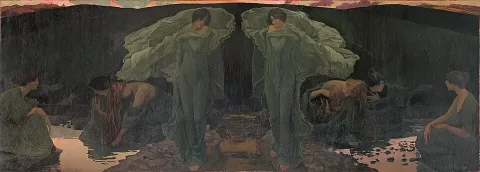
Ernest Biéler · Les Sources · Wikimedia Commons · public domain (CH/EU life+70)SourceLicenceLicence du visuelRedimensionnement proportionnel et conversion WebP, sans recadrage.
Ernest Biéler is closely associated with painting in the Valais region around Savièse. Yet his works also travelled through exhibitions and collections, where they acquired new contexts. These stories explore sitters, titles and the movements of particular paintings. They offer a way to see the artist beyond the label of a regional school.
The Dents du Midi recur in Frédéric Rouge’s work, but mountains are not his only subject. Portraits and regional scenes show the same close attention to people and landscapes in Vaud and Valais. These stories follow individual works and their documentary trails. An artwork in the gallery may extend the discovery when it is actually available.
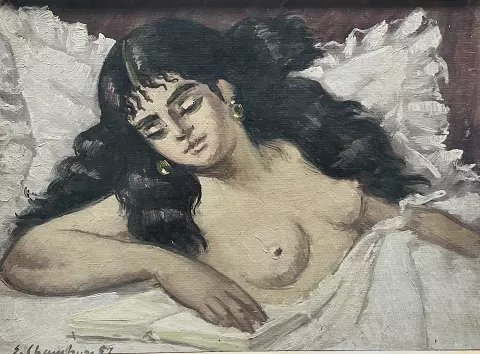
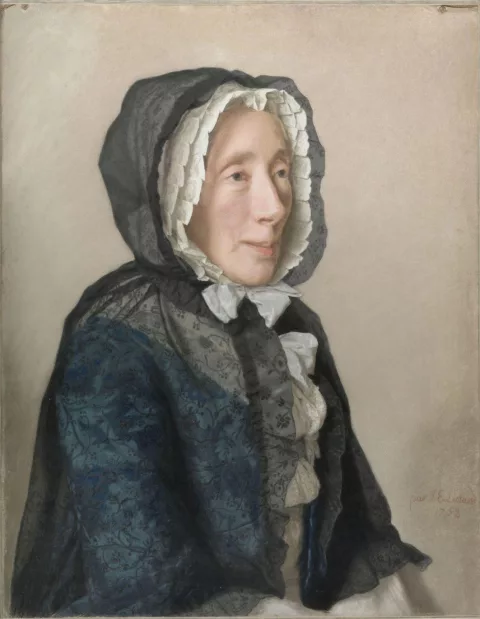
Geneva’s portrait tradition took many forms. The story of the Demoiselles Mégevand documents a collaboration involving Firmin Massot, Jacques-Laurent Agasse and Wolfgang-Adam Töpffer. Another story examines a pastel by Jean-Étienne Liotard. These artists belong to different generations: the comparison is about ways of portraying people, not an invented encounter.
Jean-Étienne Liotard · Madame Jean Tronchin · Wikimedia Commons · Public domainSourceLicenceLicence du visuelRedimensionnement proportionnel et conversion WebP, sans recadrage.
How can pastel make metal gleam? What does clothing communicate in a portrait? Stories about Jean-Étienne Liotard move from a coffee cup to a self-portrait and images of people around him. This route concentrates on documented details: texture, gaze, dress and presentation. Portraiture becomes a history of objects as much as faces.
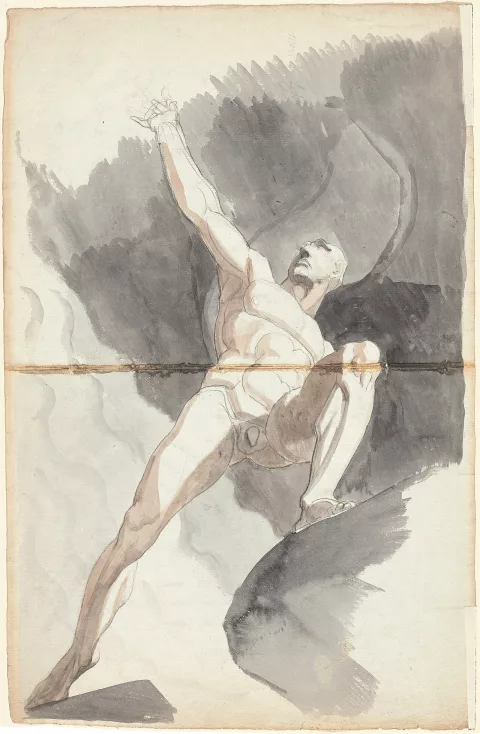
Johann Heinrich Füssli · Satan défiant les puissances du ciel · Wikimedia Commons · CC0 · Henry FuseliSourceLicenceLicence du visuelRedimensionnement proportionnel et conversion WebP, sans recadrage.
For Johann Heinrich Füssli, a theatrical or mythological scene is more than its plot. Bodies, light, gazes and gesture create psychological tension. Four stories examine individual works, their sources and visual choices. The route offers ways to read complex images while keeping the story represented separate from the documented history of the artwork itself.
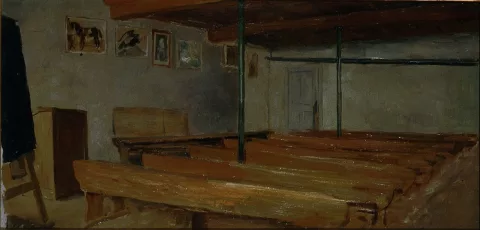
Albert Anker · Salle de classe · Wikimedia Commons · Public domainSourceLicenceLicence du visuelRedimensionnement proportionnel et conversion WebP, sans recadrage.
A classroom, a cradle, a walk, women embroidering: Albert Anker’s subjects may look familiar. Yet these stories raise questions about dates, costume, versions and interpretation. He was not simply recording an unchanging Switzerland. This route offers clues for seeing his pictorial choices and the documentary evidence behind apparently ordinary scenes.
Giovanni Giacometti ; photo Paradise Chronicle, Portrait d’Alberto, 1910 ; photo 21 septembre 2023 · Wikimedia Commons · CC BY 4.0SourceLicenceLicence du visuelRedimensionnement proportionnel à 1200 pixels maximum et conversion WebP, sans recadrage ni retouche.
A walking figure, a nose projecting beyond its cage, a structure that encloses without sealing: Alberto Giacometti’s sculptures ask how figures occupy space. The chosen stories distinguish versions, installations and exhibition contexts. They also lead to Diego, a central presence in his work. This is a route through specific objects rather than a general summary of his style.
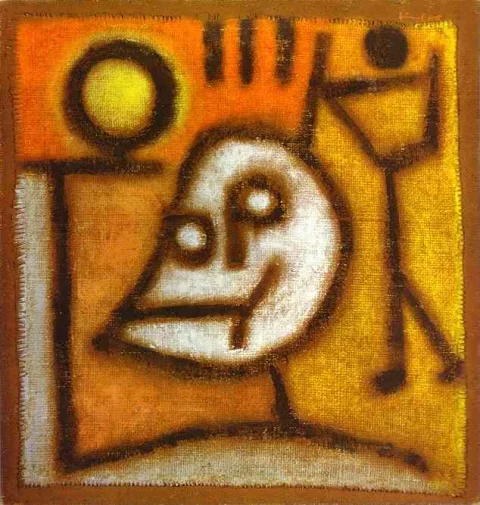
Paul Klee · Mort et Feu · Wikimedia Commons · Public domainSourceLicenceLicence du visuelRedimensionnement proportionnel et conversion WebP, sans recadrage.
A face can be built from a few shapes; a fish can sit at the centre of a network of signs. Paul Klee gives viewers images to read as well as to see. These stories examine identified works, their techniques and sources. The route explores how abstraction can remain connected to recognisable objects and the experience of drawing.
Sophie Taeuber-Arp ; photo : Danielle Jansen — CC BY-SA 4.0 (redimensionnement et conversion WebP).SourceLicenceLicence du visuelRedimensionnement proportionnel et conversion WebP, sans recadrage.
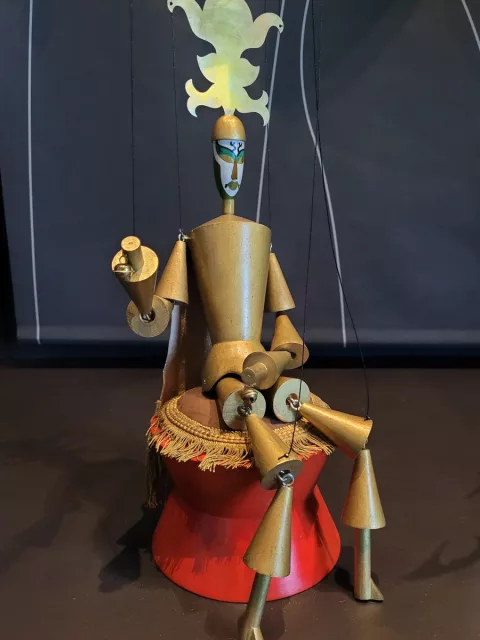
In Zurich in 1918, Sophie Taeuber-Arp turned a theatrical fantasy into geometric forms and articulated figures. Two stories in the library examine the same episode from different documentary perspectives; they should not be counted as separate events. Theatre, applied art and the avant-garde meet here, within the wider circumstances of the influenza epidemic.
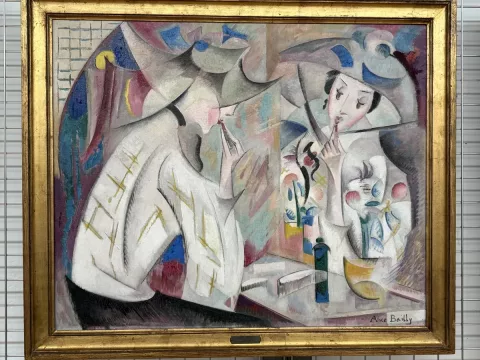
Alice Bailly · Photo Uto / Wikimedia Commons · CC0 1.0SourceLicenceLicence du visuelRedimensionnement proportionnel et conversion WebP, sans recadrage.
During the First World War, Alice Bailly created pictures in which wool, silk and metallic papers did more than decorate. Material became part of the image itself. Another story explores upheaval in her activity between Paris and Geneva. Together they reveal a Swiss avant-garde that crossed boundaries between painting, textiles and modern art.
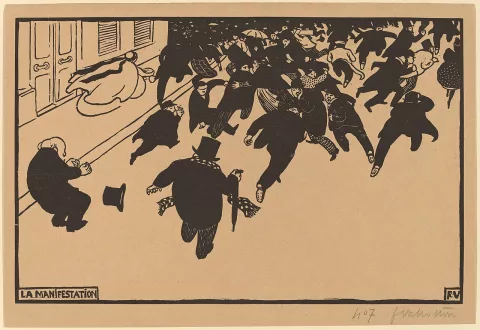
Félix Vallotton · La Manifestation · Wikimedia Commons · CC0SourceLicenceLicence du visuelRedimensionnement proportionnel et conversion WebP, sans recadrage.
A crowd becomes legible through stark contrasts; a glance can change the meaning of an intimate scene. Félix Vallotton used drawing, printmaking and painting to compress visual narratives. Four stories about individual works examine preparation, reception and the force of a few lines. The route keeps the artistic techniques distinct rather than treating them as interchangeable.
In 1918 Gustave Buchet submitted a Futurist Entombment to the Concours Diday. Soon afterwards he came into contact with Dada circles and pursued painting beyond traditional Swiss conventions. Two documented stories illuminate these phases without reducing his entire career to one movement. A Buchet composition offered by the gallery extends the exploration through a specific artwork.
In spring 1935 Hans Erni organised These, Antithese, Synthese in Lucerne, focusing on abstraction and Surrealism. The documented story examines the exhibition and the painter’s subsequent development. A work by Paul Klee then offers another way to consider modern pictorial construction. The comparison does not imply that they collaborated on the exhibition.
Futurism in Geneva, abstraction in Lucerne, paintings made with wool: the Swiss avant-garde never followed a single path. Gustave Buchet, Hans Erni and Alice Bailly each reconsidered form and materials. These documented episodes belong to three distinct careers and do not imply a personal relationship. Available works by Buchet and Erni provide a further point of encounter.
For Émile Chambon, a figure in a room, a flower arrangement or a snowy courtyard could become an arresting subject. Four stories return to specific objects and works, documenting their settings and sources. Attention to interiors does not displace the human figure: it helps explain how the painter situates it. An artwork offered by SwissArtGallery extends this figurative route.
A shop becomes almost a theatre; a curtain transforms a façade; ribbons change the experience of a museum. Marc Camille Chaimowicz connects art, design and everyday encounters with places. The stories trace documented installations and their contexts. They show how an artwork can take the shape of an interior rather than a picture hanging on a wall.
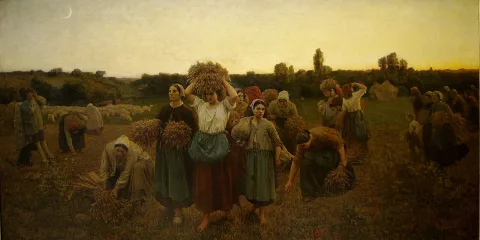
Jules Breton · Le Rappel des glaneuses · Wikimedia Commons · Public domainSourceLicenceLicence du visuelRedimensionnement proportionnel et conversion WebP, sans recadrage.
Jules Breton’s rural scenes travelled between fields, salons, collections and exhibitions. A gleaner could become monumental, while harvest gestures convey more than a picturesque view. Four documented stories trace individual paintings and their journeys. This European perspective complements the Swiss directory and helps visitors compare genre painting and its market.