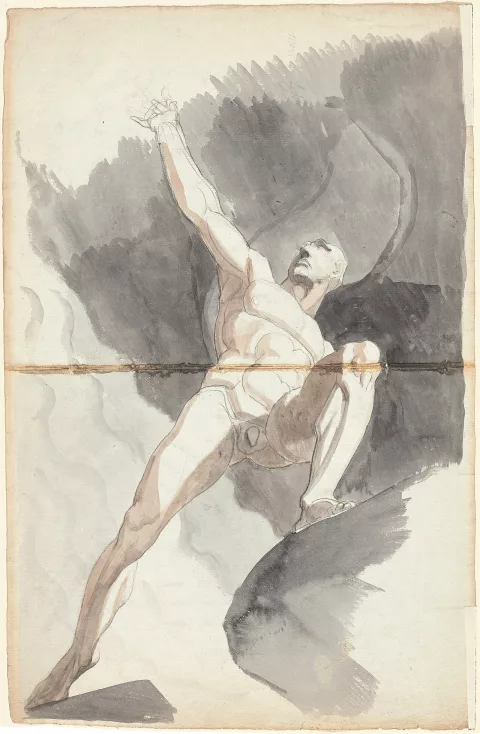
Ganymede enters lithography
In 1804, Fuseli brings Ganymede into an experiment in lithography. The mythological action takes the form of moving bodies and drapery, preserved in a print in Washington.
Read the story →Johann Heinrich Füssli’s dramatic figures are not confined to large paintings. A concert can become a concentrated scene on paper, while a lithograph of Ganymede dated 1804 offers another way to circulate an image. These examples invite a closer look at movement and the distinct possibilities of each technique.
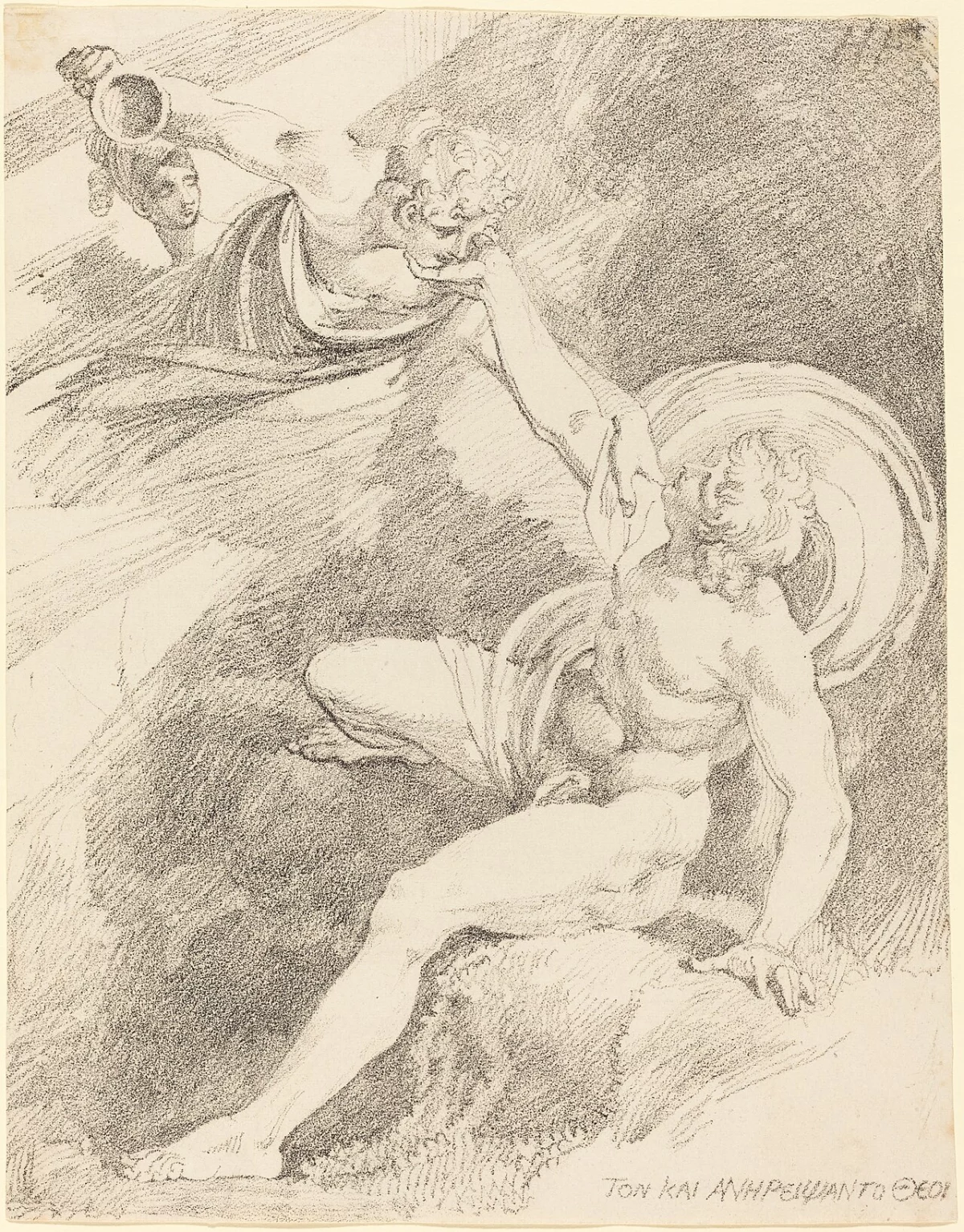 Illustration from a story
Johann Heinrich Füssli · L’Enlèvement de Ganymède · Wikimedia Commons · CC0 · Henry Fuseli
Printmaking is not merely an inferior reproduction of painting. Prints have distinct materials, states, papers and publishing histories. In the early nineteenth century lithography was still a relatively new means of making images.
Comparing the works shows how Füssli uses drapery and bodies to construct movement. Yet the mythological subject must be distinguished from the surviving object; a drawing is not automatically a study for a print. The documentary sources allow those differences to be checked.
In 1804, Fuseli brings Ganymede into an experiment in lithography. The mythological action takes the form of moving bodies and drapery, preserved in a print in Washington.
Read the story →A drawing of 1814 brings two figures together around an instrument. The concert becomes a question of proximity, retraced lines and movements held on paper.
Read the story →