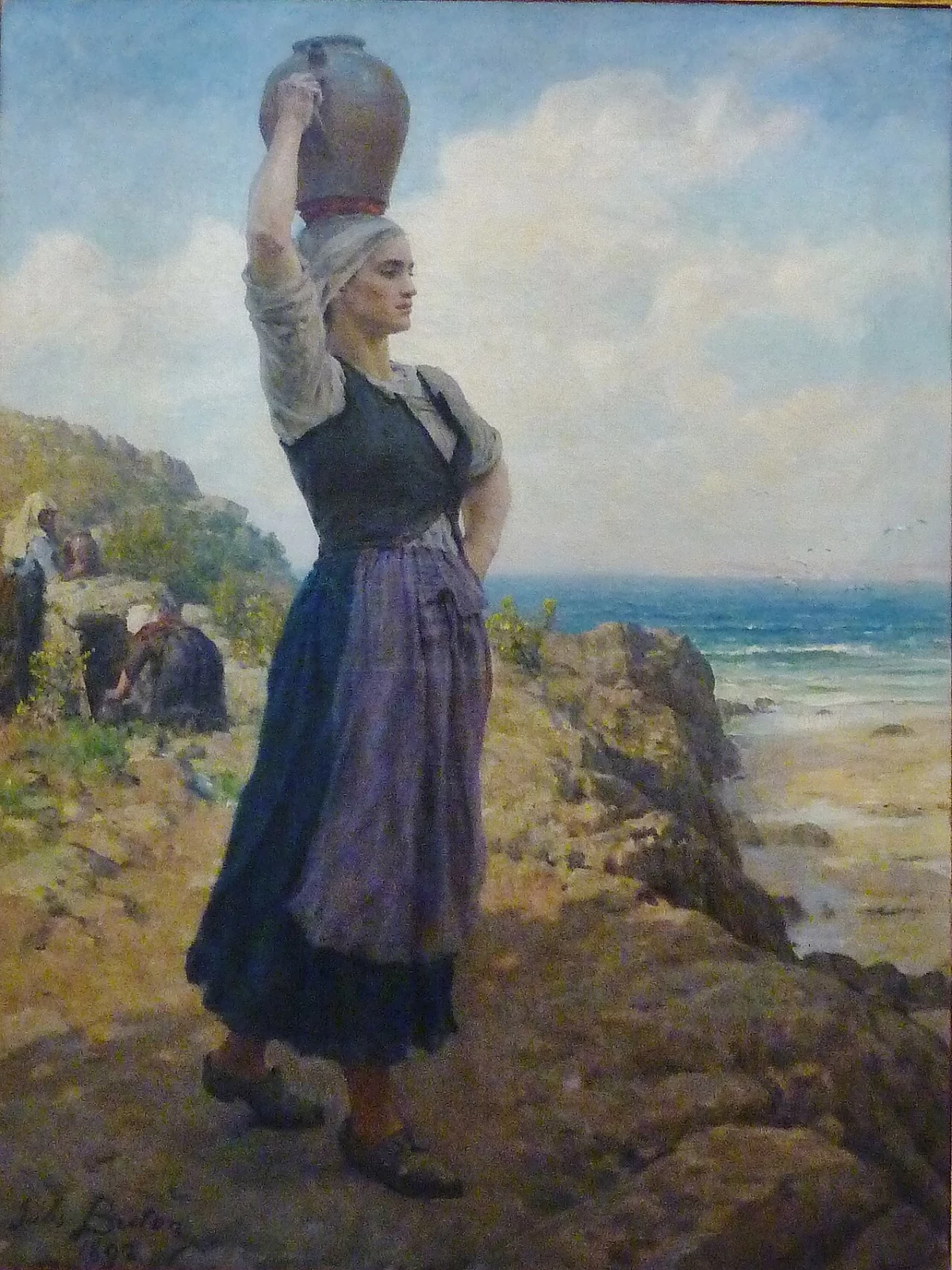
Jules BretonAt the Fountain, painted in 1892, belongs to the museum in Quimper. Its entry gathers stages showing how a work with a Breton subject can enter very different exhibition narratives.
Read the story →Jules BretonPainted in 1860 and acquired the following year, Le Soir has a surprising institutional life. Its long loan to Cuisery reminds us that a painting in a national collection can be encountered far from the museum with which we associate its name today.
Read the story →Jules BretonA reclining woman turns her attention towards the sea in the canvas of 1874. The historical title Waiting illuminates the scene without delivering its figure’s story.
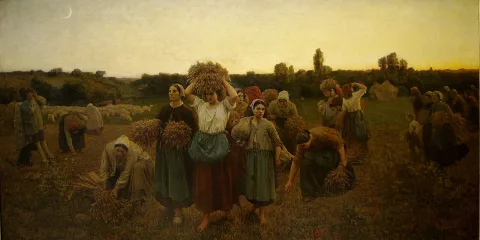
Read the story →Jules BretonJules Breton’s catalogue documents an old confusion between Across the Fields and The End of the Working Day. Following the titles reveals a creative process made of revisions, decisions and written traces.
Read the story →Jules BretonThe Petit Palais drawing of 1890 shows another facet of Breton. Dense marks and more open areas give the woodland the depth of a walk.
Read the story →