Skip to content
Swiss Art Gallery
Gallery & collection
Swiss Art Gallery · Research and discovery

Jacques Callot: what do the eighteen Miseries of War etchings reveal?

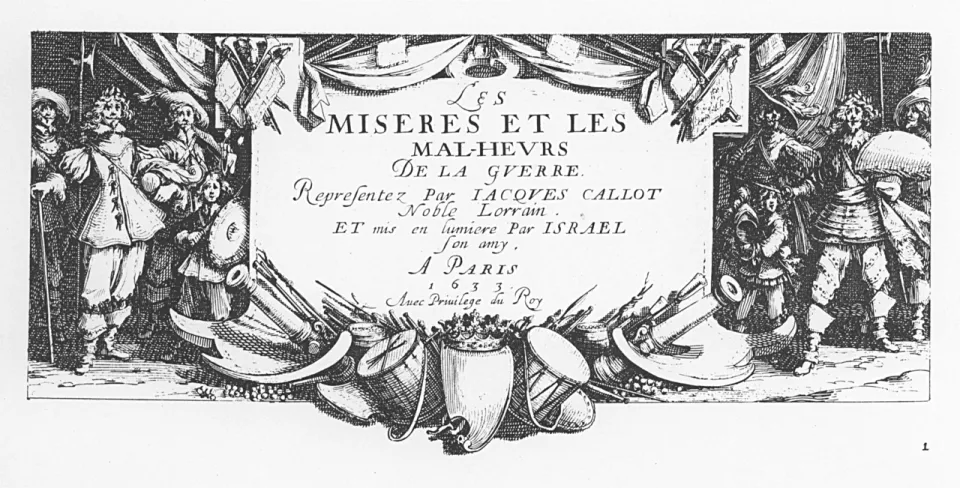
Published in 1633, Les Grandes Misères de la guerre comprises eighteen etchings. Jacques Callot did more than represent battles: his sequence moves through recruitment, plunder, punishment and the consequences of violence. The series rewards a reading that distinguishes historical circumstances, graphic invention and the different states of individual prints.

Jacques Callot — Frontispiece of The Miseries and Misfortunes of War, 1633Museum artwork
Image credit and source

Jacques Callot — Frontispice de la suite « Les Misères et les Malheurs de la guerre » (1633). Reproduction d’une carte postale du Musée lorrain via Wikimedia Commons · Domaine public.

View image source · Domaine public (Wikimedia Commons)
View artist profile →

Context and interpretation

The Louvre preserves the title page and several plates from the series. Its records identify techniques, publishers, inscriptions and print states—all crucial when studying or acquiring historic prints.

Callot’s achievement also lies in the ordering of the narrative. The small scale of the plates contrasts with the magnitude of the events they depict. A scene read on its own can mean something different within the complete sequence. The pathway leads to the artist’s reference profile and invites comparisons with other forms of storytelling in print.

International artist profiles and documented auction records

Historical sources