Image credits
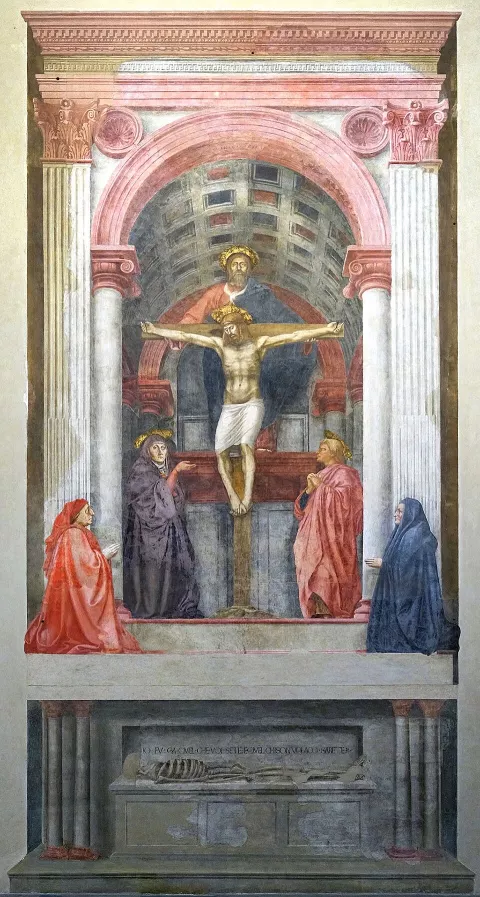
Masaccio — La Trinité, vers 1425–1428 · Basilique Santa Maria Novella, Florence. Reproduction : Wikimedia Commons, domaine public.SourceDomaine public (Wikimedia Commons)
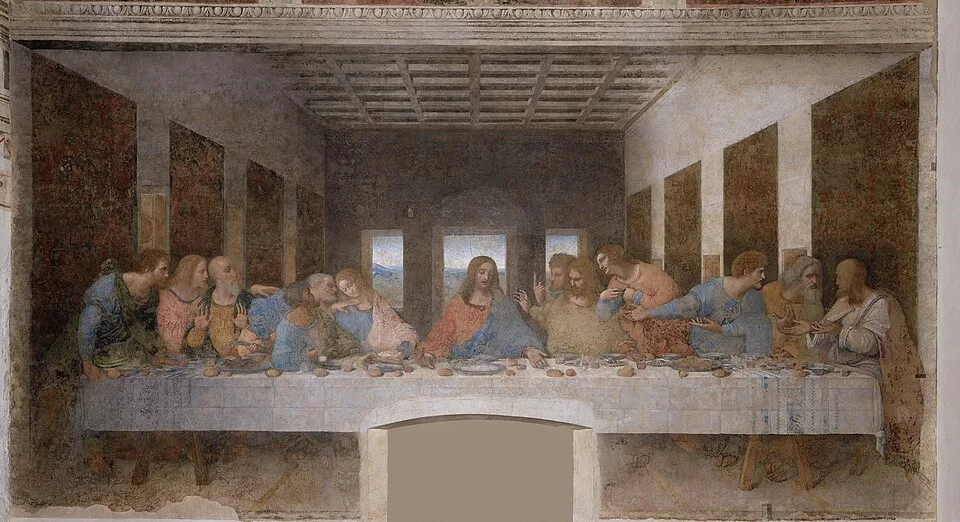
Leonardo da Vinci painted The Last Supper in the refectory of Santa Maria delle Grazie in Milan between 1494 and early 1498. The figures do more than share a table: hands, glances and groupings convey reactions to an announcement. Perspective and the study of human feeling are central to the work.
 Museum artwork
Léonard de Vinci — La Cène, vers 1495–1498 · Réfectoire de Santa Maria delle Grazie, Milan. Reproduction : Wikimedia Commons, domaine public.
The Museo del Cenacolo Vinciano explains that Leonardo was then investigating light, motion, emotions and their bodily expression. The placement of the figures can be read as a sequence of distinct reactions, while the painted architecture directs the eye towards the centre.
The painting’s material history is equally important. Leonardo’s experimental method contributed to difficult conservation problems. It cannot be approached as an untouched traditional fresco: original invention, deterioration and later restoration need to be distinguished.