Skip to content
Swiss Art Gallery
Gallery & collection
Swiss Art Gallery · Research and discovery

Jean-Étienne Liotard in Pera: portraits, dress and circulating images

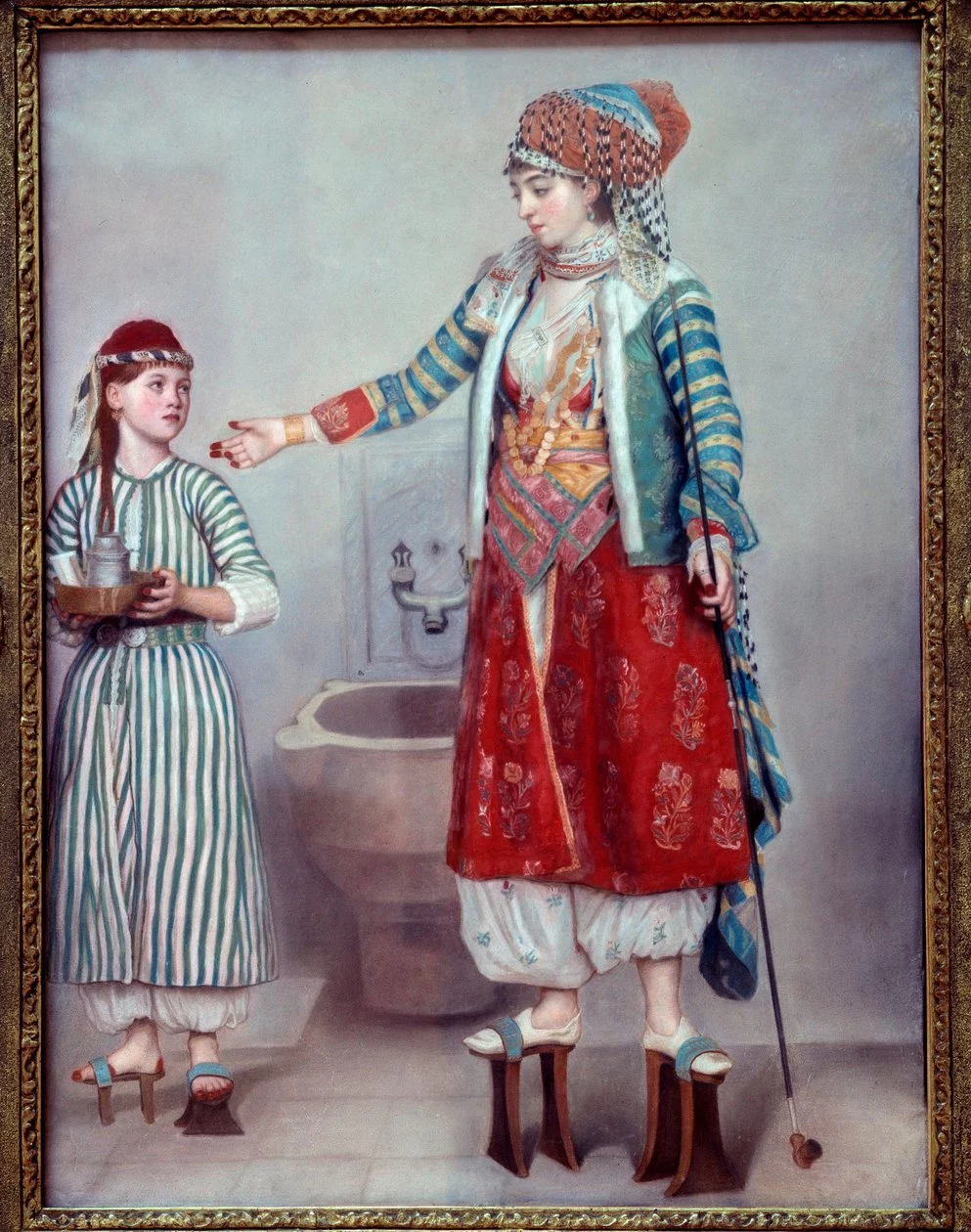
Jean-Étienne Liotard’s career crossed cities and European and Ottoman cultural settings. Drawings made in Constantinople contributed to a print published in 1745 in collaboration with Giuseppe Camerata. The episode shows that a portraitist’s reputation depends partly on the circulation of images, not only on originals preserved in collections.

Jean-Étienne Liotard — Dame française en costume turc et sa servanteIllustration from a story
Image credit and source

Jean-Étienne Liotard · Dame française en costume turc et sa servante · Wikimedia Commons · Public domain · Jean-Etienne Liotard (1702-1789=

View image source · View licence · Licence du visuel
Read the illustrated story →

Context and interpretation

The sources distinguish the contributions of the two artists: faces, clothing and furnishings form one image through collaboration. It would therefore be misleading to attribute every part of the composition indiscriminately to just one of them.

Portraits with Turkish dress demonstrate how garments, carpets and furniture help construct a scene. The pathway keeps costume, a sitter’s origin and place of production separate—essential distinctions when studying a travelling eighteenth-century artist.

Documented stories

Jean-Étienne Liotard

Receiving visitors in the city of Pera

In 1745, Liotard and Giuseppe Camerata share the work on a print originating in drawings made in Constantinople. One handles the faces, the other the clothing and carpet: an artist’s reputation also circulates through this cooperation.

Read the story →
Jean-Étienne Liotard

A Turkish dress in a European portrait

Around 1751–1752, Liotard returns to a female figure dressed in Turkish clothing. The costume, carpet and sofa organise a scene that reveals the circulation of objects as much as the repose of the person depicted.

Read the story →
Jean-Étienne Liotard

The coffee whose metal pastel makes shine

In Lyon in 1754, Jean-Étienne Liotard composes a breakfast whose objects shine almost as much as the faces. Nineteen years later, he revisits this large pastel in oil: the same instant becomes another experience of material.

Read the story →

Explore the artists

Historical sources