
Keith Haring: why draw in the New York subway?
In the early 1980s Keith Haring turned empty advertising panels in the New York subway into surfaces for white-chalk drawings. They were quick, public and often ephemeral. Their apparent simplicity masks a sustained interest in signs, the circulation of images and encounters with people who may never choose to enter a museum.
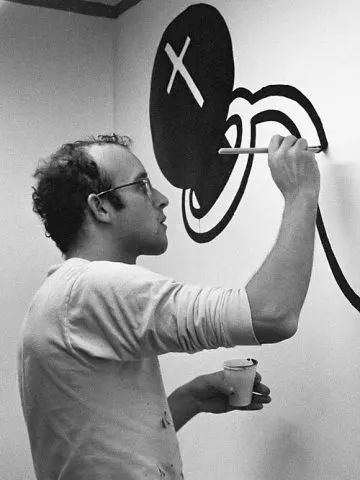 Artist portrait
Image credit and source
View artist profile →Rob Bogaerts (Anefo) · SAG: resized
Context and interpretation
MoMA documents thousands of subway drawings and their encounters with commuters. These interventions were not merely rehearsals for gallery work: public space was integral to their form and meaning.
Haring’s graphic language—energetic outlines, figures in motion and instantly recognisable signs—later appeared in different media. He also used art to engage with social causes. Understanding a work therefore requires attention to date, medium and the context of its circulation, rather than recognition of a motif alone.
International artist profiles and documented auction records
Historical sources
Keep exploring

Image credits
Swiss Art Gallery · Illustration graphique originale, sans reproduction d’œuvreCréation graphique Swiss Art Gallery