The harvest where everything turns red
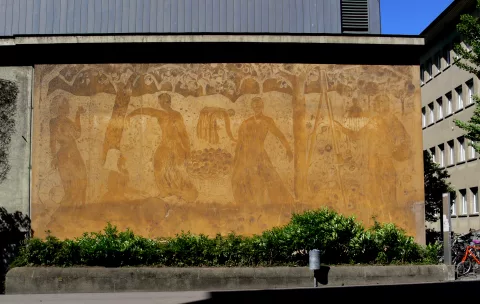
In 1912, Amiet brought three women and fruit together in an almost entirely red range. The harvest held in Solothurn transforms rural work into an exercise in colour of great intensity.
Read the story →Cuno Amiet and Giovanni Giacometti met during their training; in 1894 Giacometti met Giovanni Segantini. This route follows those documented relationships without treating the painters as stylistically interchangeable. From Amiet’s reds to Segantini’s exploration of light, their work asks how a landscape can be felt as well as represented.
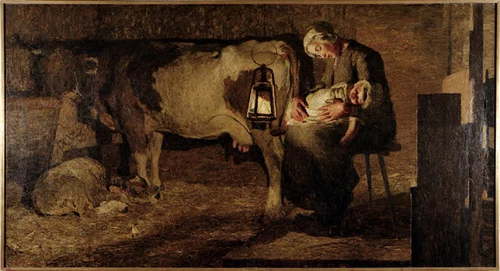 Illustration from a story
Giovanni Segantini · Les Deux Mères · Wikimedia Commons · Public domain
In 1912, Amiet brought three women and fruit together in an almost entirely red range. The harvest held in Solothurn transforms rural work into an exercise in colour of great intensity.
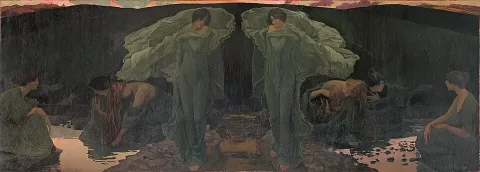
Read the story →In The Evil Mothers of 1894, Segantini brings human figures into an unsettling winter landscape. The Belvedere has related this work to the history of trees in art, revealing the strength of the motif carrying the scene.
Read the story →With The Two Mothers, Segantini brings a woman and her child close to a cow and her calf. This 1889 painting, held in Milan, makes sharing space a relationship stronger than any spectacular action.
Read the story →