Two sides of a revolt against heaven
Two drawings preserved on the sides of a single sheet give Satan’s defiance different gestures. Fuseli works on the tension of a body, a hand and a space of wash.
Read the story →For Johann Heinrich Füssli, a theatrical or mythological scene is more than its plot. Bodies, light, gazes and gesture create psychological tension. Four stories examine individual works, their sources and visual choices. The route offers ways to read complex images while keeping the story represented separate from the documented history of the artwork itself.
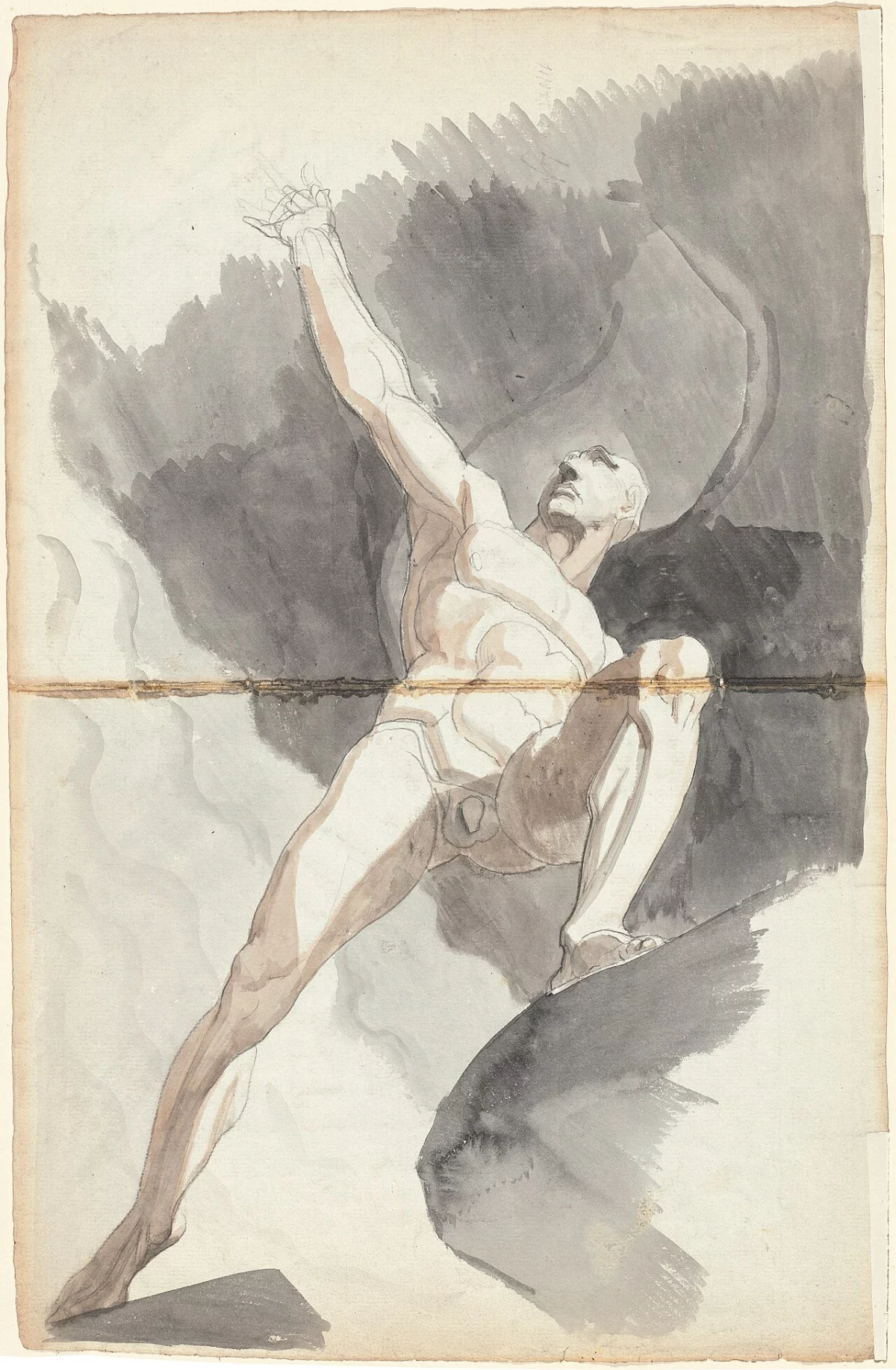 Illustration from a story
Johann Heinrich Füssli · Satan défiant les puissances du ciel · Wikimedia Commons · CC0 · Henry Fuseli
Two drawings preserved on the sides of a single sheet give Satan’s defiance different gestures. Fuseli works on the tension of a body, a hand and a space of wash.
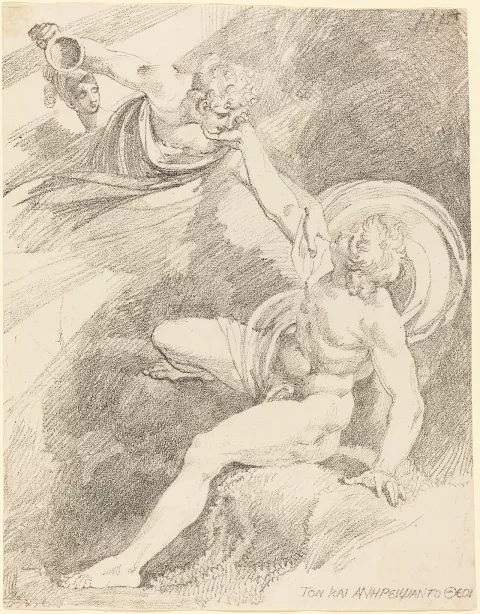
Read the story →In 1786, Fuseli presents a curse drawn from Sophocles in London. The four figures in Oedipus Cursing His Son Polynices turn tragic speech into a network of arms, hands and bodies holding one another back.
Read the story →A lithograph of 1802 shows a woman turned towards a window. The back, outstretched arm and fabrics allow Fuseli to construct a presence without a frontal portrait.
Read the story →A drawing of 1814 brings two figures together around an instrument. The concert becomes a question of proximity, retraced lines and movements held on paper.
Read the story →