Image credits
Swiss Art Gallery · Illustration graphique originale, sans reproduction d’œuvreCréation graphique Swiss Art Gallery
Working in Venice, Emilio Vedova moved postwar abstraction towards artworks that occupy physical space. His Plurimi of the early 1960s join painted, hinged panels with the viewer’s movement: the composition changes as one walks around it. They are a key example of painting understood as an environment.
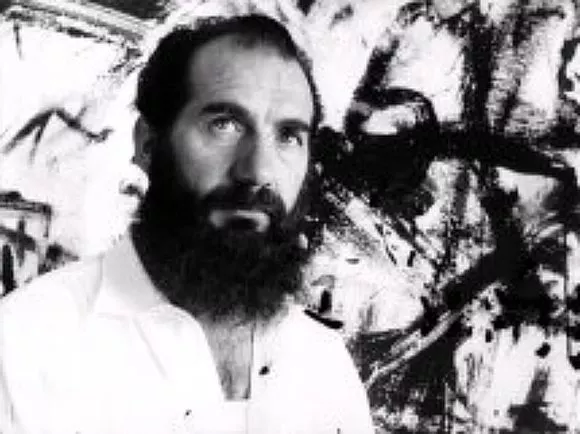 Artist portrait
Rober l
The Peggy Guggenheim Collection traces the first Plurimi to 1961–63, following Vedova’s work on lighting and stage elements for Luigi Nono’s opera Intolleranza ’60. The connection among painting, music and scenography is therefore documented in the artist’s working chronology rather than inferred from a visual resemblance.
Violent contrasts of black, white and colour can suggest spontaneous action, but the hinged formats and the viewer’s path require deliberate construction. The artwork’s history extends beyond the marks on its surface: assembly, exhibition conditions and individual versions matter.