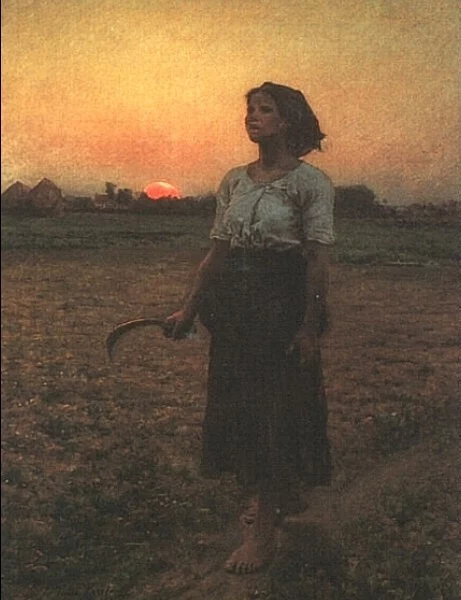
Jules BretonThe Song of the Lark, painted in 1884, carries a sound in its title and a journey in its provenance. This meeting between the image’s silence and the painting’s circulation leads from Courrières to Chicago.
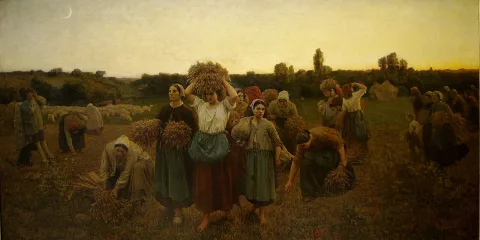
Read the story →Jules BretonIn the painting of 1860 preserved in Washington, Jules Breton brings together sifting, carrying and work on the stalks. The field becomes a network of human activities.
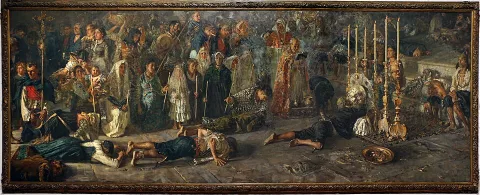
Read the story →Jules BretonThe Blessing of the Wheat in Artois paints a collective rite. Its very wide format invites reflection on the presence of a community in an image, without reducing that community to a pleasant landscape.
Read the story →