Image credits
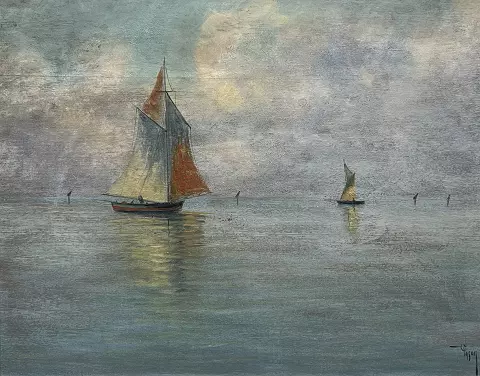
Swiss Art Gallery · Photograph in the catalogue: Luigi Pagan — Voiliers dans la laguneSource
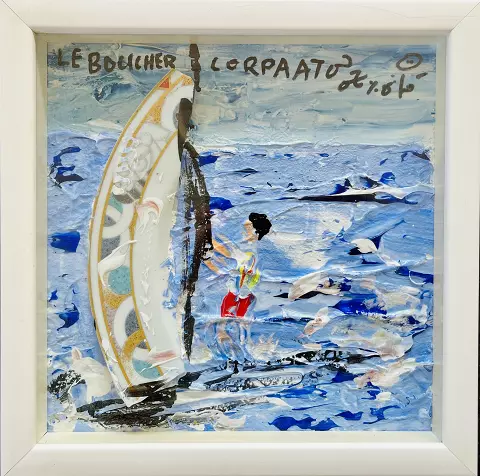
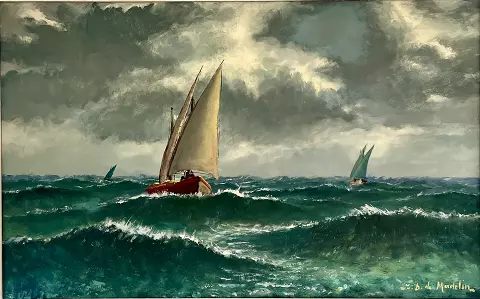
Both scientist and painter, Charles Lapicque developed a distinctive approach to space and colour. His time aboard ships as an official painter of the French Navy informed images of vessels, waves and harbours. Works in the Centre Pompidou and Brest’s Musée des Beaux-Arts invite comparison of oil, watercolour and lithography within this maritime world.
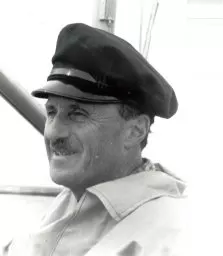 Artist portrait
Anonymous Unknown author , no author disclosure
The museum in Brest holds the colour lithograph Officier en mer and notes his continuing interest in figuration despite new colour structures. The Centre Pompidou documents Croiseur vers les débuts du siècle (1929) and Canot à voile (1950), works from different periods and in different media.
Lapicque’s achievement lies in the interplay of physical observation and visual invention, not in turning every painting into a scientific demonstration. Warm and cool colours, lines describing water and the position of the boat offer ways of looking, not rules for attribution.