Skip to content
Swiss Art Gallery
Gallery & collection
Swiss Art Gallery · Research and discovery

Jules Breton: the people behind the gestures of rural work

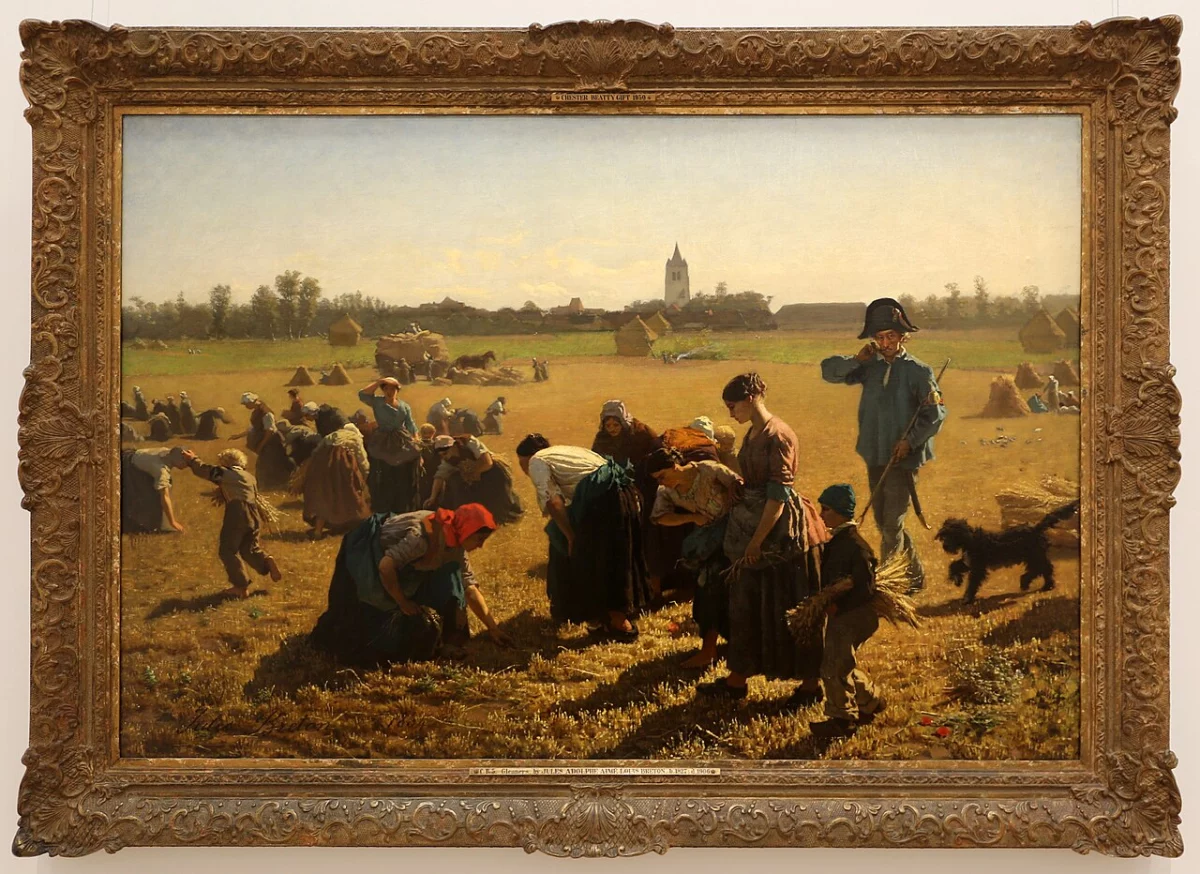
Jules Breton depicted everyday rural labour, yet his sitters were not always anonymous. In Les Glaneuses of 1854 one figure is linked to Élodie de Vigne, the painter’s future wife. Other canvases return to knitting and weeding, granting dignity and sustained attention to activities often passed over.

Jules Breton — Les GlaneusesIllustration from a story
Image credit and source

Jules Breton · Les Glaneuses · Wikimedia Commons · CC BY 3.0 · Sailko

View image source · View licence · Licence du visuel
Read the illustrated story →

Context and interpretation

The documented presence of Élodie as a sitter does not mean that all Breton’s gleaning scenes were private memories. Genre painting constructs images for viewers even when it draws on familiar experience.

His return to The Weeders several years later also shows how a motif could be recomposed. Sitter, study, variant and finished picture should be kept distinct. This route considers people and artistic process rather than simply offering nostalgia for rural life.

Documented stories

Jules Breton

The future wife enters the fields

Les Glaneuses of 1854 contains a precise biographical link: Élodie de Vigne, Jules Breton’s future wife, models for one figure. This information brings the painting closer to his life without turning its characters into private memories.

Read the story →
Jules Breton

The weeds return eight years later

The Metropolitan Museum’s weeders revisit an earlier composition in 1868. Between two paintings, a farming task becomes a subject the painter can return to, reduce in scale and circulate differently.

Read the story →

Explore the artists

Historical sources