Sixty sittings for a writer who preferred his pen
Urbain Olivier’s letters illuminate the long sittings for his portrait by the young Frédéric Rouge, then the painting’s first presentation in Lausanne.
Read the story →A portrait is not always completed in a few hours. Letters from Urbain Olivier describe long sittings for the young Frédéric Rouge, allowing the painter’s work to be reconstructed without inventing undocumented details. The testimony offers a concrete perspective on portraiture in French-speaking Switzerland.
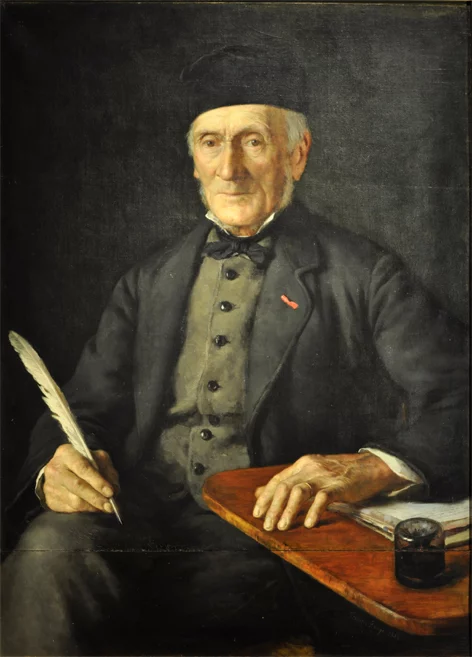 Illustration from a story
Frédéric Rouge · Portrait d’Urbain Olivier · Wikimedia Commons · Public domain
The story connects correspondence with the painting’s public presentation. It shows the patience required of both sitter and painter: portraiture involves the negotiation of time, presence and composition.
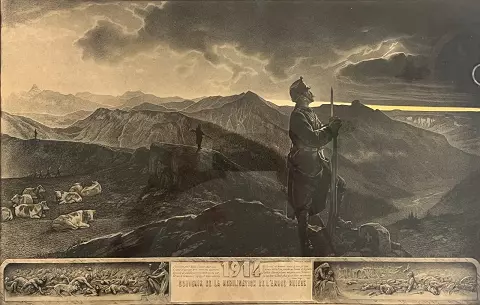
Other works by Rouge, including designs and stained glass from 1926, show how a drawing can become an image activated by light. The comparison is about the role of drawing, not a claim that the techniques are identical. A gallery work can extend the visit when its availability is confirmed.
Urbain Olivier’s letters illuminate the long sittings for his portrait by the young Frédéric Rouge, then the painting’s first presentation in Lausanne.
Read the story →The cartoons and stained-glass windows of 1926 reveal another destination for Rouge’s drawing: a figure prepared on paper becomes a presence traversed by light.
Read the story →