The donation that helps Carouge open its museum
The Musée de Carouge recalls that its creation in 1984 was made possible by a donation from Chambon. The act joins a municipal project and gives the city’s works a new framework.
Read the story →Émile Chambon was more than a painter: his collecting and donations left traces in several Geneva institutions. An exhibition at the Musée Rath in 1966 brought together his own work and collected objects. Later gifts opened further histories of preservation and the transfer of cultural material.
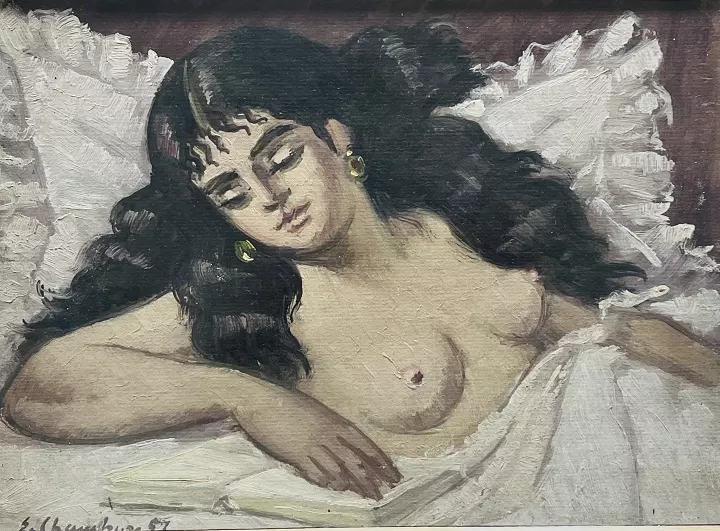 Gallery artwork
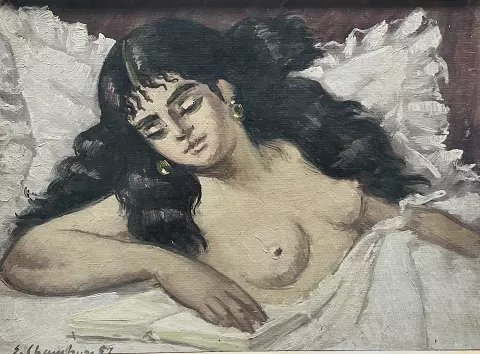
Swiss Art Gallery · Photograph in the catalogue: Émile François Chambon — Jeune femme au lit
In 1981 a significant part of his collection entered the Musée d’ethnographie de Genève. Collected objects must not be mistaken for artworks made by Chambon himself, and provenance questions remain important.
The City of Carouge also records that a gift from Chambon helped make its museum possible in 1984. Three documentary episodes show how institutional history emerges from concrete events. They connect the painter to museums without inventing additional exhibitions or holdings.
The Musée de Carouge recalls that its creation in 1984 was made possible by a donation from Chambon. The act joins a municipal project and gives the city’s works a new framework.
Read the story →In 1981 Chambon donates a substantial part of his collection to Geneva’s Musée d’ethnographie. The move opens a history distinct from his paintings, one that also requires questions of provenance to be retained.
Read the story →The 1966 exhibition at the Musée Rath bears a revealing title: Chambon’s works stand alongside his collections. This gathering proposes two ways of looking at an artist’s material life.
Read the story →