Skip to content
Swiss Art GalleryArt gallery & salesSt-Prex · Switzerland
Gallery journal
Swiss Art Gallery · The story library

Artists’ stories

An encounter with art every day. Stories to read, listen to and rediscover.

The story library

115 stories

Find stories by artist, title or subject.

Show all
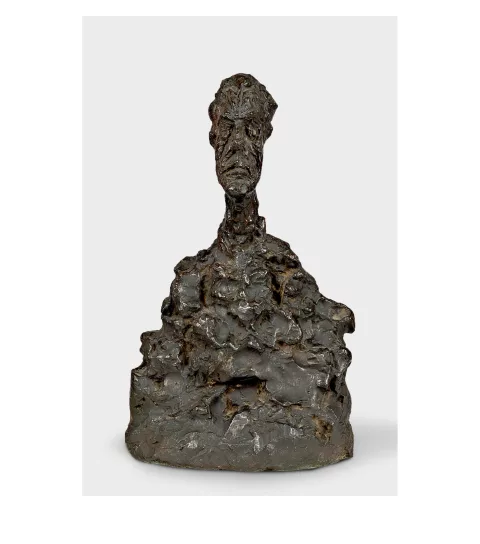
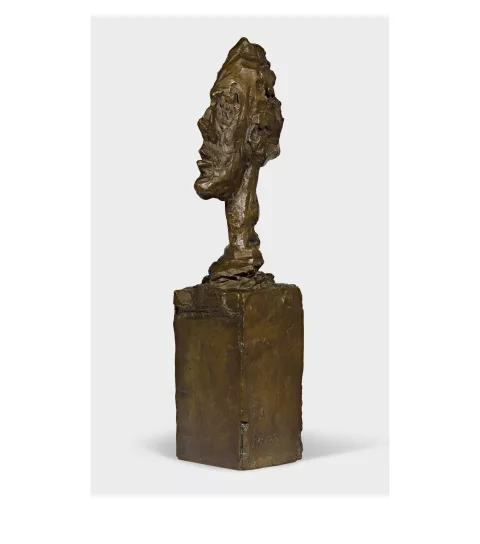
Alberto Giacometti — Buste de Diego
Image creditsAlberto Giacometti · Buste de Diego · Image : Galerie Kornfeld Auktionen

Alberto Giacometti — « Buste de Diego ». A work by the artist, selected for its visual connection to the story.

Alberto Giacometti · Buste de Diego · Image : Galerie Kornfeld Auktionen

Image source

Proportional resizing and WebP conversion, without cropping.

Alberto Giacometti · 5 min read

Diego, always to be recognised anew

A Bust of Diego made around 1954 bears the first name of Giacometti’s brother. Yet his familiar presence does not end the exploration: volume obliges visitors to rediscover the face with every change of viewpoint.

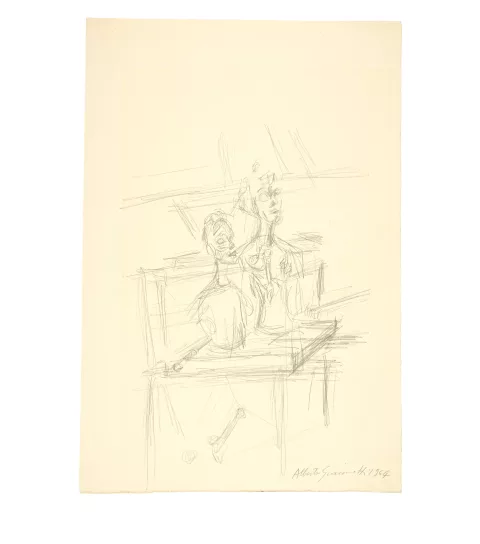
Alberto Giacometti — Sculptures dans l’atelier
Image creditsAlberto Giacometti · Sculptures dans l’atelier · Image : Galerie Kornfeld Auktionen

Alberto Giacometti — « Sculptures dans l’atelier ». A work by the artist, selected for its visual connection to the story.

Alberto Giacometti · Sculptures dans l’atelier · Image : Galerie Kornfeld Auktionen

Image source

Proportional resizing and WebP conversion, without cropping.

Alberto Giacometti · 5 min read

The cage of 1949 that holds without closing space

Giacometti began a new cage composition in 1949. The figure, head and open structure give this sculpture a space where visitors can see limits without ceasing to look through them.

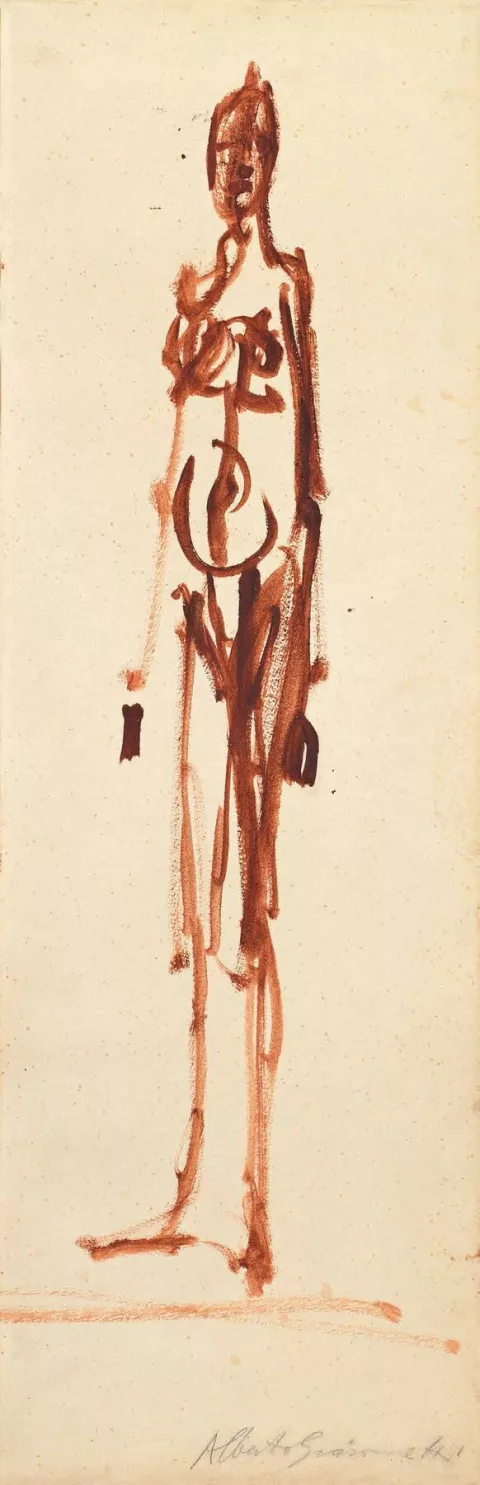
Alberto Giacometti — Homme debout
Image creditsAlberto Giacometti · Homme debout · Image : Galerie Kornfeld Auktionen

Alberto Giacometti — « Homme debout ». A work by the artist, selected for its visual connection to the story.

Alberto Giacometti · Homme debout · Image : Galerie Kornfeld Auktionen

Image source

Proportional resizing and WebP conversion, without cropping.

Alberto Giacometti · 5 min read

The walker who found his place in a courtyard

The large sculptures conceived for the Chase Manhattan Bank were not installed there. Walking Man continues its history at the Fondation Maeght, where Giacometti himself adjusted relationships between the bronzes and their surroundings.

Alberto Giacometti — Tête de Diego sur socle
Image creditsAlberto Giacometti · Tête de Diego sur socle · Image : Galerie Kornfeld Auktionen

Alberto Giacometti — « Tête de Diego sur socle ». A work by the artist, selected for its visual connection to the story.

Alberto Giacometti · Tête de Diego sur socle · Image : Galerie Kornfeld Auktionen

Image source

Proportional resizing and WebP conversion, without cropping.

Alberto Giacometti · 5 min read

The nose that never stays inside its cage

Giacometti’s The Nose seems an immediate image, but its versions evolve from 1947 to 1964. The suspended head and metal frame tell of an exploration in which sculpture’s limits remain open.

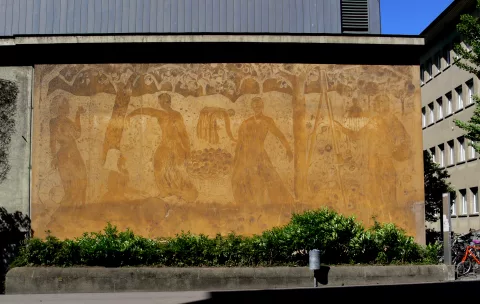
Cuno Amiet — La Récolte des pommes, sgraffito de la façade du Kunstmuseum Bern
Image creditsCuno Amiet · La Récolte des pommes, 1936 · Kunstmuseum Bern · Photographie Andreas Praefcke / Wikimedia Commons · CC BY 3.0

Cuno Amiet — « La Récolte des pommes, sgraffito de la façade du Kunstmuseum Bern ». Another work by the artist, chosen as a visual connection to the story.

Cuno Amiet · La Récolte des pommes, 1936 · Kunstmuseum Bern · Photographie Andreas Praefcke / Wikimedia Commons · CC BY 3.0

Image source Licence

Proportional resizing and WebP conversion, without cropping.

Cuno Amiet · 5 min read

The harvest where everything turns red

In 1912, Amiet brought three women and fruit together in an almost entirely red range. The harvest held in Solothurn transforms rural work into an exercise in colour of great intensity.

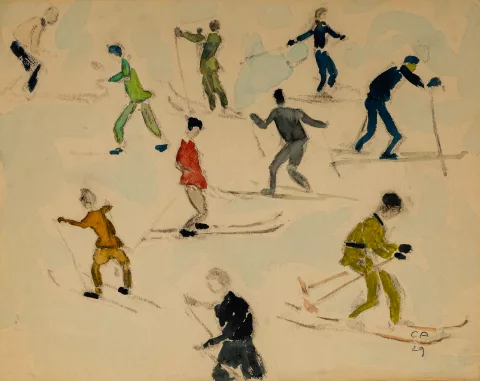
Cuno Amiet — Skifahrer — Skieurs
Image creditsCuno Amiet · Skifahrer — Skieurs · Image : Auktionshaus Zofingen

Cuno Amiet — « Skifahrer — Skieurs ». A work by the artist, selected for its visual connection to the story.

Cuno Amiet · Skifahrer — Skieurs · Image : Auktionshaus Zofingen

Image source

Proportional resizing and WebP conversion, without cropping.

Cuno Amiet · 5 min read

A skier small enough to make the whole winter grow

Amiet’s Great Winter gives snow an immense surface. In this 1904 painting, a dark skier and his track are enough to transform the whites into a space the gaze must cross.

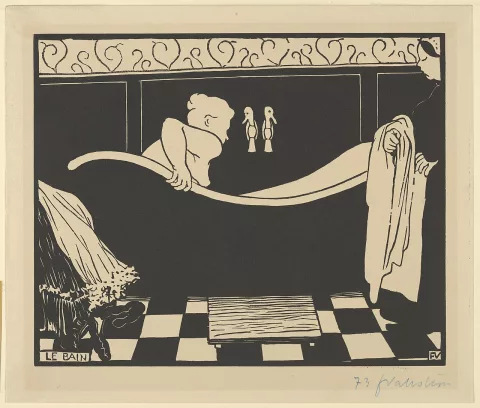
Félix Vallotton — Le Bain
Image creditsFélix Vallotton · Le Bain · Wikimedia Commons · CC0 · Félix Vallotton / André Édouard Marty

Félix Vallotton — « Le Bain ». Another work by the artist, chosen as a visual connection to the story.

Félix Vallotton · Le Bain · Wikimedia Commons · CC0 · Félix Vallotton / André Édouard Marty

Image source Licence

Proportional resizing and WebP conversion, without cropping.

Félix Vallotton · 5 min read

The bath that made a Salon laugh

Bathing on a Summer Evening was shown at the Indépendants in 1893 and provoked laughter. Yet this group of bathers gave Vallotton the means for a singular painting in which bodies and setting resist tranquil viewing.

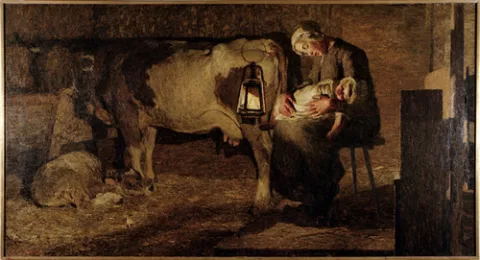
Giovanni Segantini — Les Deux Mères
Image creditsGiovanni Segantini · Les Deux Mères · Wikimedia Commons · Public domain

Giovanni Segantini — « Les Deux Mères ».

Giovanni Segantini · Les Deux Mères · Wikimedia Commons · Public domain

Image source Licence

Proportional resizing and WebP conversion, without cropping.

Giovanni Segantini · 5 min read

Two maternities in the light of a single stable

With The Two Mothers, Segantini brings a woman and her child close to a cow and her calf. This 1889 painting, held in Milan, makes sharing space a relationship stronger than any spectacular action.

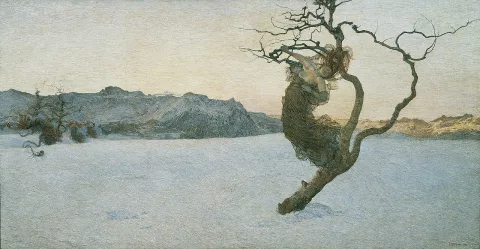
Giovanni Segantini — Les Mauvaises Mères
Image creditsGiovanni Segantini · Les Mauvaises Mères · Wikimedia Commons · Public domain

Giovanni Segantini — « Les Mauvaises Mères ».

Giovanni Segantini · Les Mauvaises Mères · Wikimedia Commons · Public domain

Image source Licence

Proportional resizing and WebP conversion, without cropping.

Giovanni Segantini · 5 min read

The tree that ceases to be a simple landscape

In The Evil Mothers of 1894, Segantini brings human figures into an unsettling winter landscape. The Belvedere has related this work to the history of trees in art, revealing the strength of the motif carrying the scene.

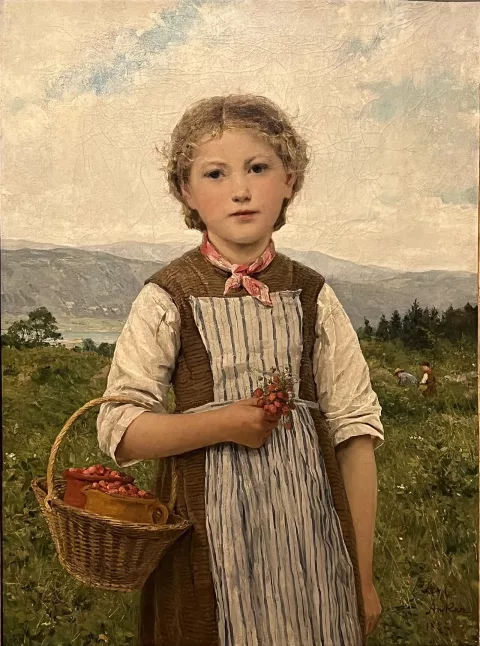
Albert Anker — La Mariette aux fraises
Image creditsAlbert Anker · La Mariette aux fraises · Wikimedia Commons · Public domain · Paradise Chronicle

Albert Anker — « La Mariette aux fraises ».

Albert Anker · La Mariette aux fraises · Wikimedia Commons · Public domain · Paradise Chronicle

Image source Licence

Proportional resizing and WebP conversion, without cropping.

Albert Anker · 5 min read

The strawberry picker whose title changed

Painted in 1884 with Rosa Zesiger as its model, Mariette with Strawberries received a name evoking Gotthelf. Distinguishing portrait, village scene and literary memory makes this painting by Anker more precise and more endearing.

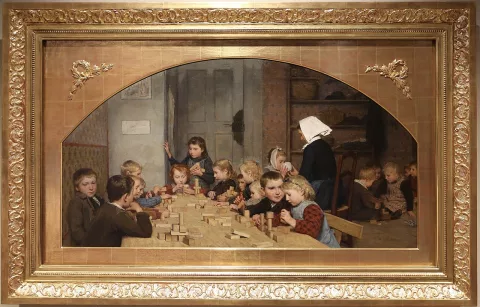
Albert Anker — La Crèche II
Image creditsAlbert Anker · La Crèche II · Wikimedia Commons · Public domain · Paradise Chronicle

Albert Anker — « La Crèche II ». Another work by the artist, chosen as a visual connection to the story.

Albert Anker · La Crèche II · Wikimedia Commons · Public domain · Paradise Chronicle

Image source Licence

Proportional resizing and WebP conversion, without cropping.

Albert Anker · 5 min read

The walk resumed eight years later

Anker set The Nursery on a Walk aside in 1892, then returned to the canvas in 1900. His dated notes and the children crossing the Kirchenfeld bridge bring a lively scene into dialogue with the painting’s patient time.

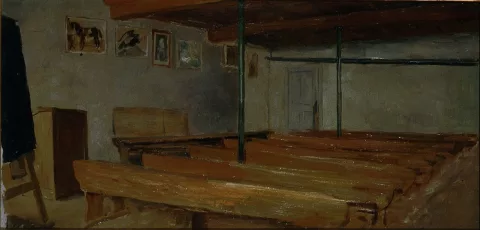
Albert Anker — Salle de classe
Image creditsAlbert Anker · Salle de classe · Wikimedia Commons · Public domain

Albert Anker — « Salle de classe ». Another work by the artist, chosen as a visual connection to the story.

Albert Anker · Salle de classe · Wikimedia Commons · Public domain

Image source Licence

Proportional resizing and WebP conversion, without cropping.

Albert Anker · 5 min read

The school that did not look like a reassuring image

In 1858, Anker observed life in a Black Forest village. The classroom he derived from it entered the Paris Salon the following year, with a vision of education far less peaceful than his reputation might lead us to expect.