Skip to content
Swiss Art GalleryArt gallery & salesSt-Prex · Switzerland
Gallery journal
Swiss Art Gallery · The story library

Artists’ stories

An encounter with art every day. Stories to read, listen to and rediscover.

Search results

15 stories

Find stories by artist, title or subject.

Show all
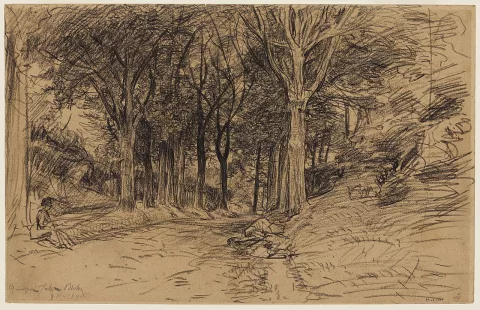
Jules Breton — Sous-bois à Quimper
Image creditsJules Breton · Sous-bois à Quimper · Wikimedia Commons · CC0 · Breton, Jules (Courrières, 01–05–1827 - Paris, 05–07–1906), dessinateur

Jules Breton — « Sous-bois à Quimper ».

Jules Breton · Sous-bois à Quimper · Wikimedia Commons · CC0 · Breton, Jules (Courrières, 01–05–1827 - Paris, 05–07–1906), dessinateur

Image source Licence

Proportional resizing and WebP conversion, without cropping.

Jules Breton · 4 min read

A charcoal path in Quimper

The Petit Palais drawing of 1890 shows another facet of Breton. Dense marks and more open areas give the woodland the depth of a walk.
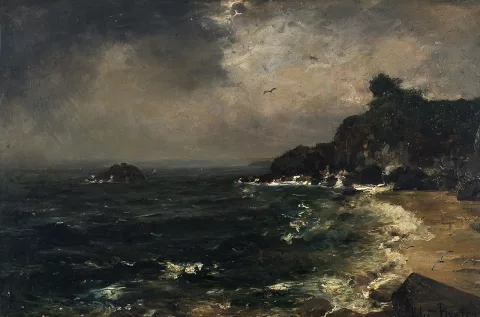
Jules Breton — Falaises côtières par temps d’orage
Image creditsJules Breton · Falaises côtières par temps d’orage · Wikimedia Commons · Public domain

Jules Breton — « Falaises côtières par temps d’orage ». Another work by the artist, chosen as a visual connection to the story.

Jules Breton · Falaises côtières par temps d’orage · Wikimedia Commons · Public domain

Image source Licence

Proportional resizing and WebP conversion, without cropping.

Jules Breton · 4 min read

The Cliff, or the gaze that waits

A reclining woman turns her attention towards the sea in the canvas of 1874. The historical title Waiting illuminates the scene without delivering its figure’s story.

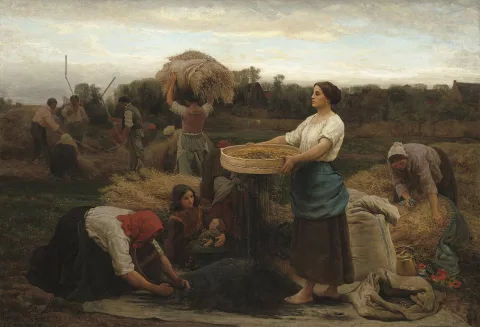
Jules Breton — La Récolte du colza
Image creditsJules Breton · La Récolte du colza · Wikimedia Commons · CC0

Jules Breton — « La Récolte du colza ».

Jules Breton · La Récolte du colza · Wikimedia Commons · CC0

Image source Licence

Proportional resizing and WebP conversion, without cropping.

Jules Breton · 4 min read

Colza, a harvest made of several gestures

In the painting of 1860 preserved in Washington, Jules Breton brings together sifting, carrying and work on the stalks. The field becomes a network of human activities.

Jules Breton — La Fin du jour
Image creditsJules Breton · La Fin du jour · Wikimedia Commons · Public domain

Jules Breton — « La Fin du jour ».

Jules Breton · La Fin du jour · Wikimedia Commons · Public domain

Image source Licence

Proportional resizing and WebP conversion, without cropping.

Jules Breton · 4 min read

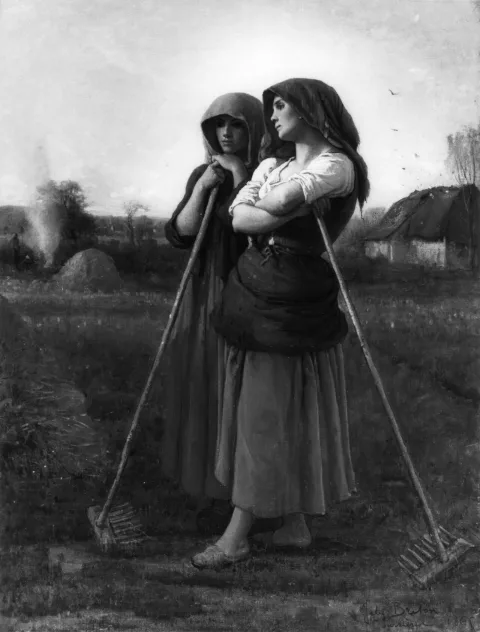
Rakes become supports in the evening

Two women rest in The Close of Day of 1865. The painting preserves a moment when tools indicate past work and support bodies coming to a halt.

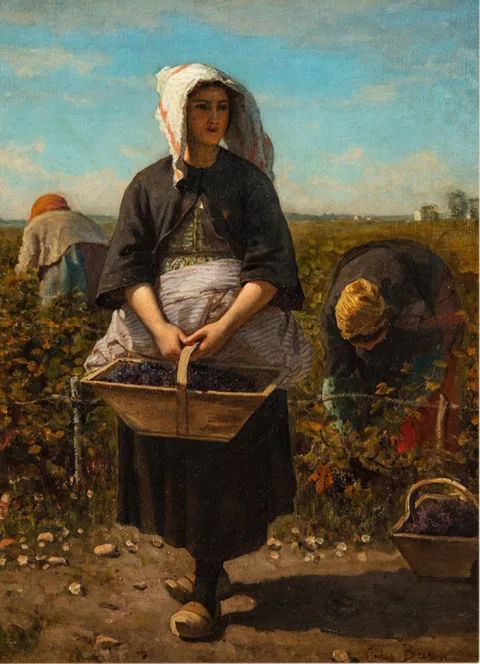
Jules Breton — Étude pour Les Vendanges à Château-Lagrange
Image creditsJules Breton · Étude pour Les Vendanges à Château-Lagrange · Wikimedia Commons · Public domain

Jules Breton — « Étude pour Les Vendanges à Château-Lagrange ». Another work by the artist, chosen as a visual connection to the story.

Jules Breton · Étude pour Les Vendanges à Château-Lagrange · Wikimedia Commons · Public domain

Image source Licence

Proportional resizing and WebP conversion, without cropping.

Jules Breton · 4 min read

The grape harvest leaves the château for Omaha

Commissioned in the nineteenth century for Count Duchâtel, Breton’s painting passes through collections, fails to sell, then joins a public initiative in Omaha.

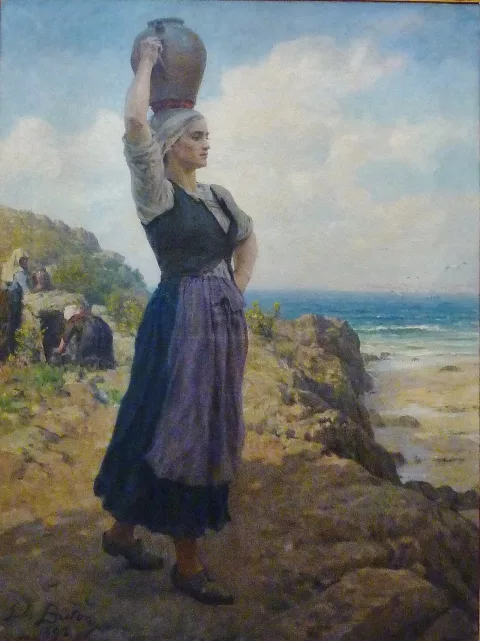
Jules Breton — À la fontaine
Image creditsJules Breton · À la fontaine · Wikimedia Commons · Public domain

Jules Breton — « À la fontaine ».

Jules Breton · À la fontaine · Wikimedia Commons · Public domain

Image source Licence

Proportional resizing and WebP conversion, without cropping.

Jules Breton · 5 min read

At the Fountain, a painting travels between exhibitions

At the Fountain, painted in 1892, belongs to the museum in Quimper. Its entry gathers stages showing how a work with a Breton subject can enter very different exhibition narratives.

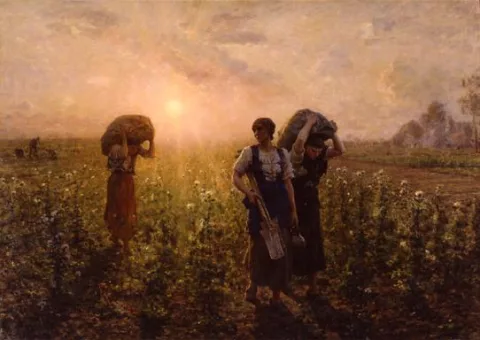
Jules Breton — À travers champs
Image creditsJules Breton · À travers champs · Wikimedia Commons · Public domain

Jules Breton — « À travers champs ».

Jules Breton · À travers champs · Wikimedia Commons · Public domain

Image source Licence

Proportional resizing and WebP conversion, without cropping.

Jules Breton · 5 min read

Two titles cross at the end of the work

Jules Breton’s catalogue documents an old confusion between Across the Fields and The End of the Working Day. Following the titles reveals a creative process made of revisions, decisions and written traces.

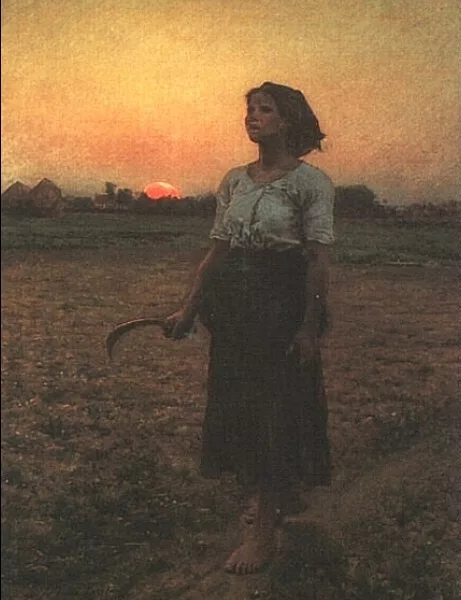
Jules Breton — Le Chant de l’alouette
Image creditsJules Breton · Le Chant de l’alouette · Wikimedia Commons · Public domain

Jules Breton — « Le Chant de l’alouette ».

Jules Breton · Le Chant de l’alouette · Wikimedia Commons · Public domain

Image source Licence

Proportional resizing and WebP conversion, without cropping.

Jules Breton · 5 min read

The song crosses the Atlantic without making a sound

The Song of the Lark, painted in 1884, carries a sound in its title and a journey in its provenance. This meeting between the image’s silence and the painting’s circulation leads from Courrières to Chicago.

Jules Breton — Les Glaneuses
Image creditsJules Breton · Les Glaneuses · Wikimedia Commons · CC BY 3.0 · Sailko

Jules Breton — « Les Glaneuses ».

Jules Breton · Les Glaneuses · Wikimedia Commons · CC BY 3.0 · Sailko

Image source Licence

Proportional resizing and WebP conversion, without cropping.

Jules Breton · 5 min read

The future wife enters the fields

Les Glaneuses of 1854 contains a precise biographical link: Élodie de Vigne, Jules Breton’s future wife, models for one figure. This information brings the painting closer to his life without turning its characters into private memories.

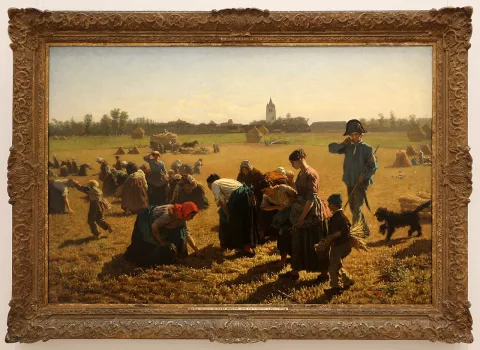
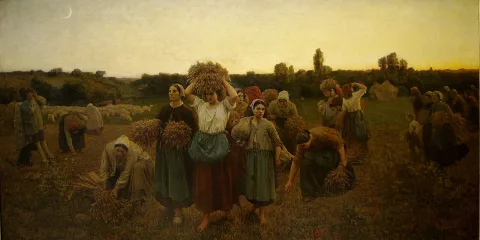
Jules Breton — Le Rappel des glaneuses
Image creditsJules Breton · Le Rappel des glaneuses · Wikimedia Commons · Public domain

Jules Breton — « Le Rappel des glaneuses ».

Jules Breton · Le Rappel des glaneuses · Wikimedia Commons · Public domain

Image source Licence

Proportional resizing and WebP conversion, without cropping.

Jules Breton · 5 min read

The signal that brings a day of gleaning to a close

In Le Rappel des glaneuses, Jules Breton chooses departure rather than work. The painting turns a collective signal into a succession of individual presences, before leaving the fields itself for an imperial and then a public collection.

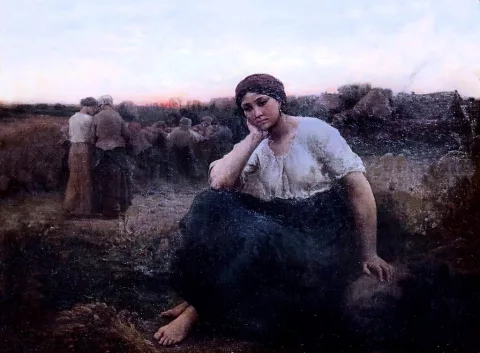
Jules Breton — Le Soir
Image creditsJules Breton · Le Soir · Wikimedia Commons · Public domain

Jules Breton — « Le Soir ».

Jules Breton · Le Soir · Wikimedia Commons · Public domain

Image source Licence

Proportional resizing and WebP conversion, without cropping.

Jules Breton · 5 min read

Le Soir spends seventy-six years in a town hall

Painted in 1860 and acquired the following year, Le Soir has a surprising institutional life. Its long loan to Cuisery reminds us that a painting in a national collection can be encountered far from the museum with which we associate its name today.

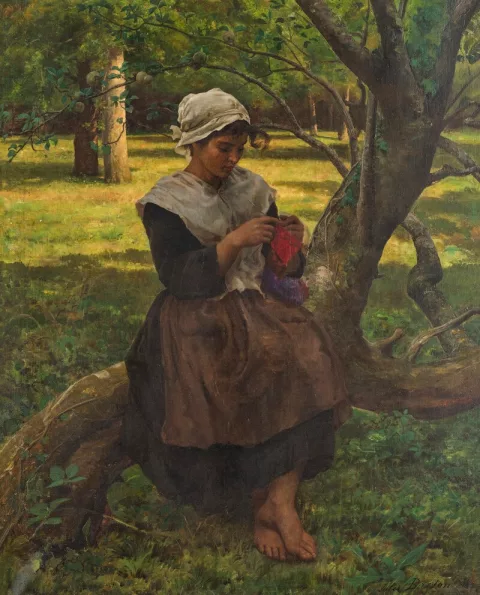
Jules Breton — Jeune paysanne tricotant
Image creditsJules Breton · Jeune paysanne tricotant · Wikimedia Commons · Public domain

Jules Breton — « Jeune paysanne tricotant ».

Jules Breton · Jeune paysanne tricotant · Wikimedia Commons · Public domain

Image source Licence

Proportional resizing and WebP conversion, without cropping.

Jules Breton · 5 min read

Knitting keeps a different rhythm

A young peasant woman knits in a canvas by Jules Breton dated around 1870. The Metropolitan’s small painting gives a modest task a duration of attention beyond its apparent simplicity.