Jules Breton · 5 min read
The song crosses the Atlantic without making a sound
The Song of the Lark, painted in 1884, carries a sound in its title and a journey in its provenance. This meeting between the image’s silence and the painting’s circulation leads from Courrières to Chicago.
Published on October 3, 2026
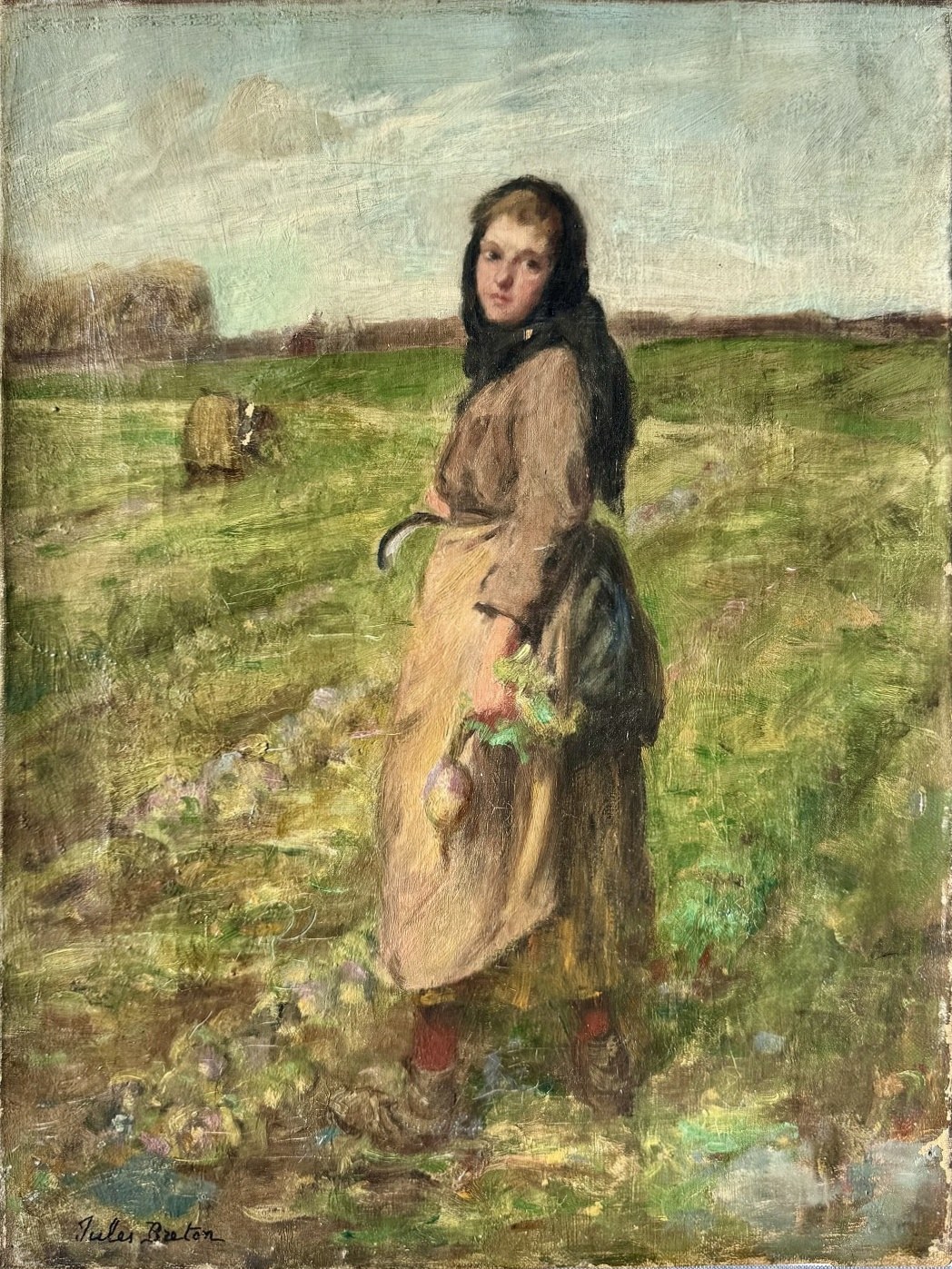
The Song of the Lark has a title that painting cannot fulfil literally. In 1884 Jules Breton paints a silent image, but its words propose that we associate listening with it. This difference between name and material is not a defect to be remedied. It is an invitation: how can a gaze receive a sonic event without hearing it? Before any anecdote about the artist or the painting’s famous visitors, the title already opens an experience anyone can revisit through the image.
The catalogue of the Breton family archives identifies an oil on canvas bearing the artist’s signature and the place-name Courrières. It connects it with the Henry Field Collection at the Art Institute of Chicago. These details establish the object we are following. We must retain this precision, because a famous title circulates easily independently of the painting that bears it. A reproduction, poster or memory does not possess the same material history as the canvas. The catalogue helps us maintain this distinction while allowing the visual encounter to develop.
The word song draws attention to something unfolding in time. A sound begins, lasts and then disappears. A painting, by contrast, retains the same surface as we look at it. This opposition can prove fruitful. The visitor does not need to create an exact soundtrack to understand that an invisible event is being evoked. They can observe what the painting makes available, then assess what remains entrusted to the title and their imagination. The reading develops in this passage between two ways of perceiving.
This opening nevertheless gives us no right to recount all the figure’s thoughts. We can associate a sound with the subject without knowing a precise emotion or a biography. An image permits hypotheses of viewing; it does not automatically confirm an inner story. The title therefore remains a guide rather than psychological evidence. By allowing it this function, we preserve the freedom of our encounter without assigning the model words that no consulted document reports. Silence can remain active instead of being filled immediately.
The provenance opens a second movement, this time well documented. The painting passes through Samuel Putnam Avery, with George Lucas as intermediary, then enters Henry Field’s collection in Chicago in 1885. After the collector’s death, it remains connected with his widow Florence Lathrop Field, then with the Art Institute, where the catalogue associates it with the Henry Field Collection. A painting associated with Courrières thus finds a lasting American destination. This movement concerns the object and its owners; it does not imply that the depicted scene left its place to experience an adventure.
The distinction between the two journeys is useful. One belongs to the title: a suggested song seems to cross the space of the image. The other belongs to preservation: a canvas circulates between people and joins a museum. The account can bring them together without merging them. The rural world depicted has not become American because the painting is in Chicago. Its audience, however, has changed location. Visitors far from the initial context can encounter a subject that remains identifiable, then bring to it their own experiences of listening and looking.
We should not reduce this circulation to simple proof of fame. Public preservation also transforms the possibilities of returning. A work that can be seen again welcomes successive gazes, each with a different duration. The evoked song remains the same, while the people receiving it change. We do not need to recount famous reactions to recognise this capacity. Provenance and title are enough to reveal a painting that remains motionless in its image but continues to encounter new readers.
Leaving The Song of the Lark, we can retain a paradoxical memory: that of a sound we have not heard. The painting imposes neither melody nor volume. It allows us to hold together a painted surface and an event evoked by words. Its journey to Chicago adds a precise material history to this experience. Courrières, a studio, collectors and a museum form the canvas’s route; the song remains available in the space opened between the silent image and our attention.