Marc Camille Chaimowicz · 4 min read
Celebration?: a party returns in another time
Created in 1972, the installation takes form again in 2000. Music, light and objects let an artistic situation survive without confusing it with a party actually recovered.
Published on October 3, 2026
The question mark matters. Celebration? Realife does not promise an unreserved party; its title places a question at the threshold of experience. Marc Camille Chaimowicz presents the installation in 1972 at Gallery House in London as part of 3 Life Situations. The WIELS guide recalls that he is then present beside visitors, offering tea and conversation. The work is not limited to an object fixed to a wall. It engages duration, an environment and a possibility of encounter between people.
Light and music belong to this environment. Presentation documents evoke silver walls, scattered objects, a mirror ball and lighting, among other elements. This vocabulary can recall a party space, but the artist emphasises the constructed character of the proposition in the words reported by the guide. Ordinary elements enter the work; they do not automatically make it identical to everyday life. The title’s question allows the gap between a familiar situation and its artistic transformation to be maintained.
The artist’s presence also changes the viewer’s role. Serving a cup of tea or talking does not resemble the usual protocol of a silent visit. This does not mean every visitor in 1972 participates in the same way or that we can reconstruct conversations. The document allows attention to hospitality to be recognised. Artistic space can become a place where a relationship occurs rather than somewhere people cross only before a finished thing. This relationship belongs to the time of presentation.
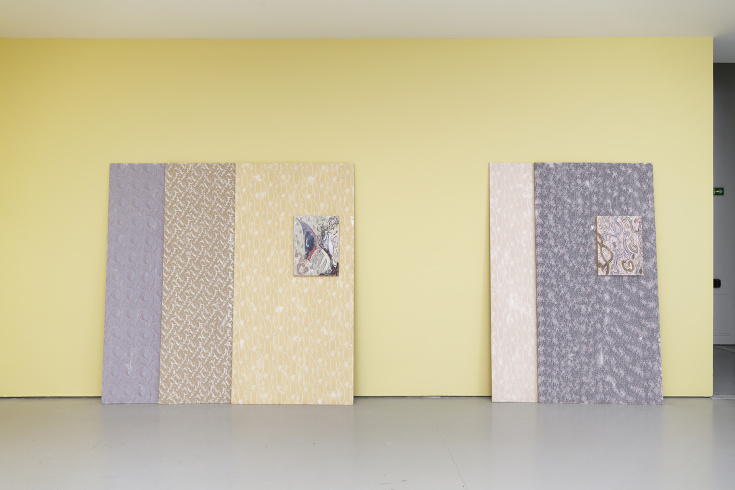
In 2000, the work receives a new form and the word Revisited appears in its title. The Migros Museum record designates it as Celebration? Realife Revisited.1972-2000, an assemblage of materials with variable dimensions. These two dates do not give a simple duration of continuous manufacture. They signal a return. An old proposition is revisited in another situation. Visitors, institutions and context have changed. The work therefore cannot return as though almost three decades had left no distance between its two presentations.
This distance is precisely what makes the reprise interesting. An environment includes material elements that can be installed again, but also conditions that do not repeat identically. A sound played today is not received with every reference of 1972. Light may be similar without the people crossing it being the same. The work thus becomes a relationship between times. Memory is not merely recounted by a label; it enters the way audiences discover a proposition that has returned.
The collection record mentions several Migros Museum exhibitions, notably in 2002, 2006 and 2016. It shows that a work of this kind can be preserved while being presented repeatedly. The museum does not simply preserve the remains of a finished event. It provides opportunities to receive an ensemble whose installation participates in its public existence. Variable dimensions recall this ability to adapt. Name, materials and history allow the work to be identified; its experience also depends on the place hosting it.
Celebration? therefore leaves us in a double situation. We can feel the closeness of objects, music and lights associated with ordinary uses. Yet we encounter an artistic composition whose history and reprises remain active. The question mark prevents this relationship from being closed too quickly. Can a party be preserved? Can a work welcome people without erasing its framework? Chaimowicz does not answer with a dry definition. He constructs a space in which these questions take a sensory form. The installation returns, and each return gives audiences another opportunity to experience its distances.