Skip to content
Swiss Art GalleryArt gallery & salesSt-Prex · Switzerland
Gallery journal
Swiss Art Gallery · The story library

Artists’ stories

An encounter with art every day. Stories to read, listen to and rediscover.

The story library

115 stories

Find stories by artist, title or subject.

Show all
Marc Camille Chaimowicz — Celebration? Realife Revisited, 1972–2000
Image credits© Marc Camille Chaimowicz · Sammlung Migros Museum für Gegenwartskunst · Photo : Stefan Altenburger Photography, Zurich

Marc Camille Chaimowicz — Celebration? Realife Revisited (1972–2000), installation view: objects, lights and reflections spread across the floor.

© Marc Camille Chaimowicz · Sammlung Migros Museum für Gegenwartskunst · Photo : Stefan Altenburger Photography, Zurich

Image source

Marc Camille Chaimowicz · 4 min read

Celebration?: a party returns in another time

Created in 1972, the installation takes form again in 2000. Music, light and objects let an artistic situation survive without confusing it with a party actually recovered.

Marc Camille Chaimowicz — Curtains for MvdR, 2008
Image credits© Marc Camille Chaimowicz · Photo : A. Mole / MAMC+ · Courtoisie de l’artiste et Cabinet, Londres

Marc Camille Chaimowicz — Curtains for MvdR (2008), on the right, with Silk Scarf (1984) and Parasol (2009). Exhibition view at MAMC+.

© Marc Camille Chaimowicz · Photo : A. Mole / MAMC+ · Courtoisie de l’artiste et Cabinet, Londres

Image source

Marc Camille Chaimowicz · 4 min read

Curtains for Mies’s façade

In 2008 Chaimowicz’s fabrics encounter the large glazed surfaces of Berlin’s Neue Nationalgalerie. A decorative gesture changes how architecture is seen.

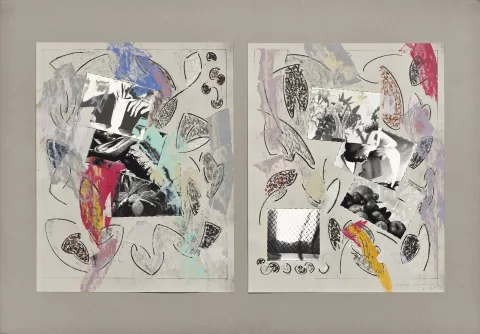
Marc Camille Chaimowicz — Two works
Image creditsMarc Camille Chaimowicz · Two works · Image : Christie’s

Marc Camille Chaimowicz — Two works, two mixed-media works on paper. Other works by the artist, chosen as a visual connection to the story.

Marc Camille Chaimowicz · Two works · Image : Christie’s

Image source

Marc Camille Chaimowicz · 4 min read

Doubts: twenty-five minutes for two audiences

A performance of 1977, recorded at the Paris Biennale, becomes a video work preserved at the Centre Pompidou. Its subtitle already distinguishes camera and audience.

Marc Camille Chaimowicz — Four Rooms, 1984
Image credits© Marc Camille Chaimowicz · Photo : A. Mole / MAMC+ · Collection Schöder · Courtoisie de l’artiste et Cabinet, Londres

Marc Camille Chaimowicz — Four Rooms (1984) on the wall; on the floor, Desk… on Decline (model, 1982–1984) and Sideboard (1983).

© Marc Camille Chaimowicz · Photo : A. Mole / MAMC+ · Collection Schöder · Courtoisie de l’artiste et Cabinet, Londres

Image source

Marc Camille Chaimowicz · 4 min read

Four Rooms: entering a shop, looking at a theatre

In 1984 Chaimowicz participates in a commission for Liberty in London. His interior is presented at a distance, with furniture designed to create an image.

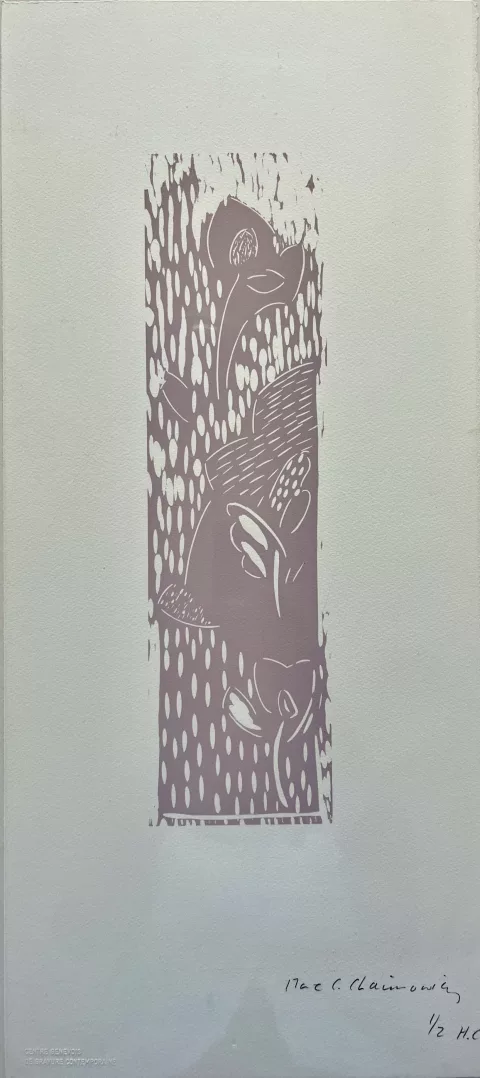
Marc Camille Chaimowicz — Gravure 3
Image creditsMarc Camille Chaimowicz · Gravure 3 · Swiss Art Gallery · Photographie de la galerie

Marc Camille Chaimowicz — « Gravure 3 ». Another work by the artist, chosen as a visual connection to the story.

Marc Camille Chaimowicz · Gravure 3 · Swiss Art Gallery · Photographie de la galerie

Image source

Proportional resizing and WebP conversion, without cropping.

Marc Camille Chaimowicz · 4 min read

Almost a thousand metres of ribbons for the museum

Chaimowicz’s collaboration with Neyret in Saint-Étienne transforms six motifs into ribbons. The result connects an exhibition with its territory’s industrial history.

Marc Camille Chaimowicz — Jean Cocteau, 2003–2014
Image credits© Marc Camille Chaimowicz · Photo : Andrea Rossetti · Courtesy Fondazione ICA Milano, Nicoletta Fiorucci Foundation et les artistes

Marc Camille Chaimowicz — Jean Cocteau (2003–2014), view of the room presented at Fondazione ICA Milano in 2026.

© Marc Camille Chaimowicz · Photo : Andrea Rossetti · Courtesy Fondazione ICA Milano, Nicoletta Fiorucci Foundation et les artistes

Image source

Marc Camille Chaimowicz · 4 min read

A room for Cocteau, without reconstructing his room

The Cocteau Room composes an indirect portrait of the writer through furniture, objects and works. The interior is real as an installation, fictitious as a historical dwelling.

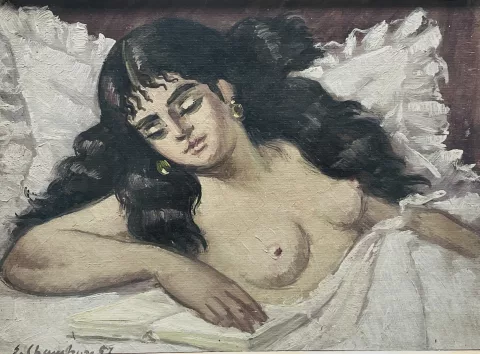
Émile Chambon — Jeune femme au lit
Image creditsÉmile Chambon · Jeune femme au lit · Swiss Art Gallery · Photographie de la galerie

Émile Chambon — « Jeune femme au lit ». Another work by the artist, chosen as a visual connection to the story.

Émile Chambon · Jeune femme au lit · Swiss Art Gallery · Photographie de la galerie

Image source

Proportional resizing and WebP conversion, without cropping.

Émile Chambon · 5 min read

At the Rath, works encounter collections

The 1966 exhibition at the Musée Rath bears a revealing title: Chambon’s works stand alongside his collections. This gathering proposes two ways of looking at an artist’s material life.

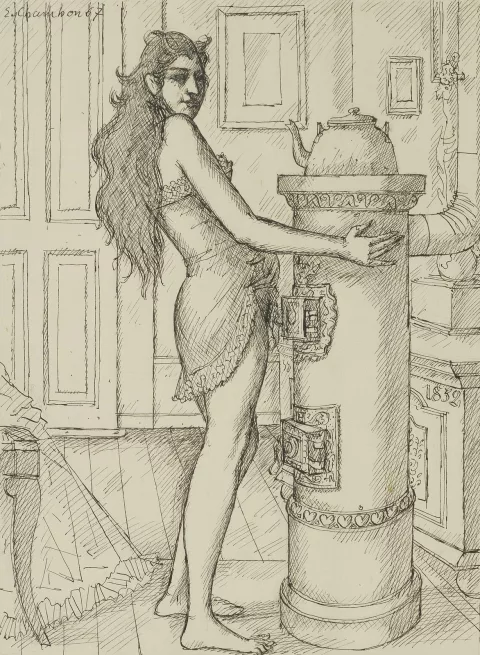
Émile Chambon — Femme au coin du poêle
Image creditsÉmile Chambon · Femme au coin du poêle · Image : Genève Enchères

Émile Chambon — « Femme au coin du poêle ». A work by the artist, selected for its visual connection to the story.

Émile Chambon · Femme au coin du poêle · Image : Genève Enchères

Image source

Proportional resizing and WebP conversion, without cropping.

Émile Chambon · 5 min read

In 1971, drawings take the foreground

An exhibition at Geneva’s Cabinet des estampes is devoted to Chambon’s drawings in 1971. This choice invites us to look at works on paper as an independent practice, beyond their possible preparatory role.

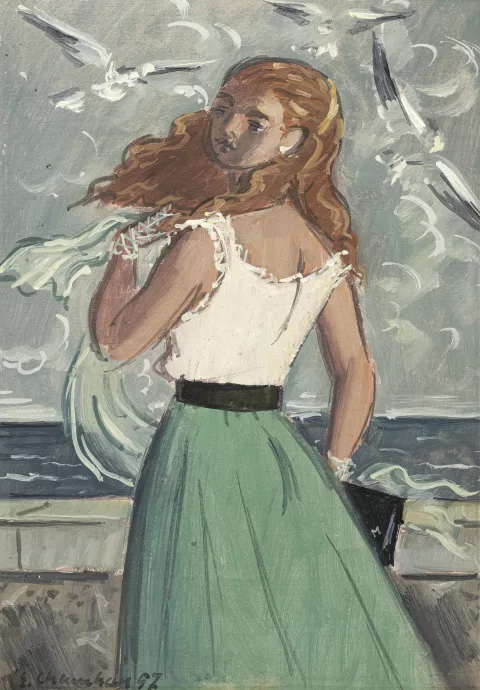
Émile Chambon — Marina Doria — Les mouettes
Image creditsÉmile Chambon · Marina Doria — Les mouettes · Image : Piguet Hôtel des Ventes

Émile Chambon — « Marina Doria — Les mouettes ». A work by the artist, selected for its visual connection to the story.

Émile Chambon · Marina Doria — Les mouettes · Image : Piguet Hôtel des Ventes

Image source

Proportional resizing and WebP conversion, without cropping.

Émile Chambon · 5 min read

The donation that helps Carouge open its museum

The Musée de Carouge recalls that its creation in 1984 was made possible by a donation from Chambon. The act joins a municipal project and gives the city’s works a new framework.

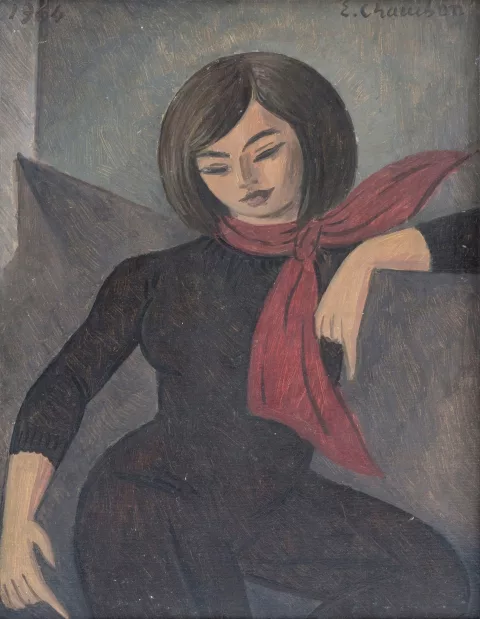
Émile Chambon — Le pullover noir et l’écharpe rouge
Image creditsÉmile Chambon · Le pullover noir et l’écharpe rouge · Image : Piguet Hôtel des Ventes

Émile Chambon — « Le pullover noir et l’écharpe rouge ». A work by the artist, selected for its visual connection to the story.

Émile Chambon · Le pullover noir et l’écharpe rouge · Image : Piguet Hôtel des Ventes

Image source

Proportional resizing and WebP conversion, without cropping.

Émile Chambon · 5 min read

Mathilde finds a place in the painting

Mathilde in the Yellow Waistcoat, painted in 1946, bears the name of Chambon’s sister. The portrait allows a documented family presence to be recognised without assigning her words or a role the sources do not specify.

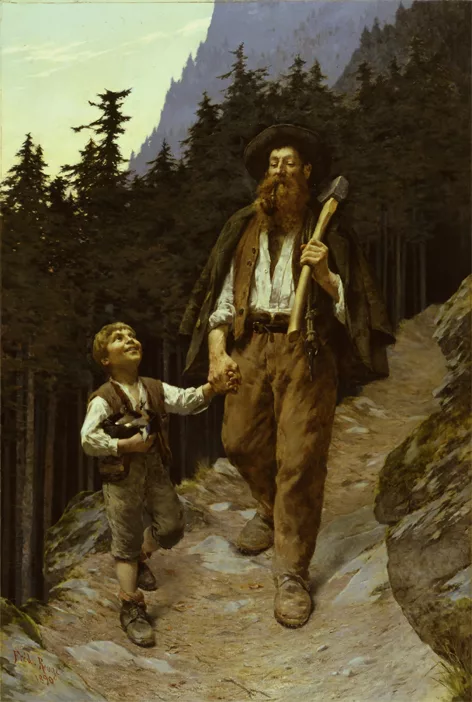
Frédéric Rouge — Retour du bûcheron
Image creditsFrédéric Rouge · Retour du bûcheron · Wikimedia Commons · Public domain

Frédéric Rouge — « Retour du bûcheron ». Another work by the artist, chosen as a visual connection to the story.

Frédéric Rouge · Retour du bûcheron · Wikimedia Commons · Public domain

Image source Licence

Proportional resizing and WebP conversion, without cropping.

Frédéric Rouge · 4 min read

Two lights for the same Dents du Midi

In 1922 Rouge paints the Dents du Midi at sunrise and sunset. The mountain becomes a subject to compare over time rather than an immobile emblem.

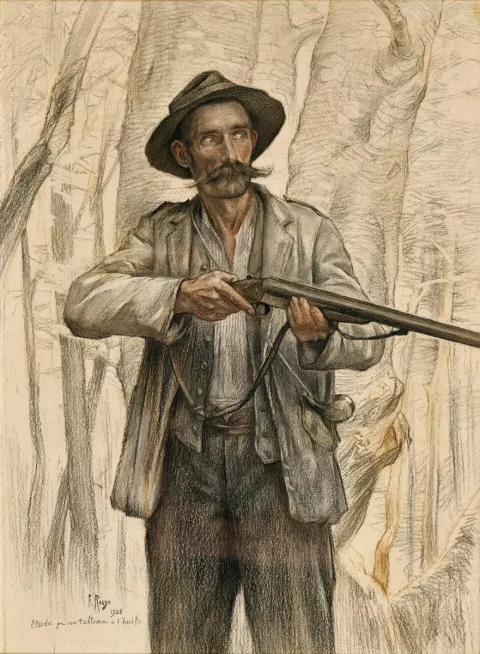
Frédéric Rouge — Le Chasseur
Image creditsFrédéric Rouge · Le Chasseur · Wikimedia Commons · Public domain

Frédéric Rouge — « Le Chasseur ». Another work by the artist, chosen as a visual connection to the story.

Frédéric Rouge · Le Chasseur · Wikimedia Commons · Public domain

Image source Licence

Proportional resizing and WebP conversion, without cropping.

Frédéric Rouge · 4 min read

When the painter gives Bitter des Diablerets a face

Rouge’s advertising images put his practice at the service of a regional brand. Their circulation reveals another possible life for his drawing.