Émile Chambon · 5 min read
Two rivers in a school hall
The catalogue dates The Seasons: the Rhône and the Arve to 1950. This mural is documented in a Geneva educational establishment; its everyday setting changes how a work can accompany its visitors.
Published on October 3, 2026
A work in a hall is encountered between two movements. We do not always arrive with the time and attention prepared for a museum visit. The Fondation’s catalogue dates The Seasons: the Rhône and the Arve to 1950, a mural located in the hall of Geneva’s Ella-Maillart establishment, formerly the Collège de Candolle according to this entry. The title associates rivers with a cycle of time. Its destination adds another rhythm: that of a building crossed for study, work or an activity.
We must not imagine every gaze that has crossed this painting. The entry provides no pupils’ testimonies or details of successive presentations. It nevertheless establishes a place, and that place is enough to open reflection on the conditions of encounter. A hall is a space of passage. A work placed there can be glimpsed quickly, then found again on another occasion. This possible return produces a different relationship from that of a painting seen once in an exhibition we may never revisit.
The words seasons, Rhône and Arve unite different temporalities. Seasons designate a cycle; the river names designate presences within a territory. Painting can thus propose a link between what returns and what remains recognisable in a place. This observation begins with the title, without claiming to describe every figure or colour in the work. It leaves the visitor a precise task: seek how a cycle is associated with rivers, then consider what that association changes in their perception of space.
A mural also differs from an object easily moved from one room to another. Its relationship with the building belongs to the conditions in which it is presented. The source does not document every detail of production or every transformation of the hall here. It is nevertheless useful to retain this designation as a mural. It indicates that an artist can work with a surface directly entering the architectural environment. The image is then encountered as part of a place, even if it retains its own subject and its own logic.
The school adds a dimension of learning to this encounter. We should not assume the painting was accompanied by specific teaching when we have no record of it. We can simply notice the proximity: a work is available in a building devoted to study. The rivers and seasons do not automatically become a lesson. They propose an image that viewers may discover, forget and then find again. This availability can have its own value without needing to become an educational programme whose every effect would be measured.
Everyday attention is rarely constant. Someone passing the same work may notice a detail one day and barely see it the next. This variation does not prove the image has lost its interest. It reminds us that the relationship to a painting also depends on the time given to looking. In a hall, that time must sometimes be found within movement. Visitors can choose to stop, then resume their journey. The work gives this small pause an object unnecessary for their immediate destination.
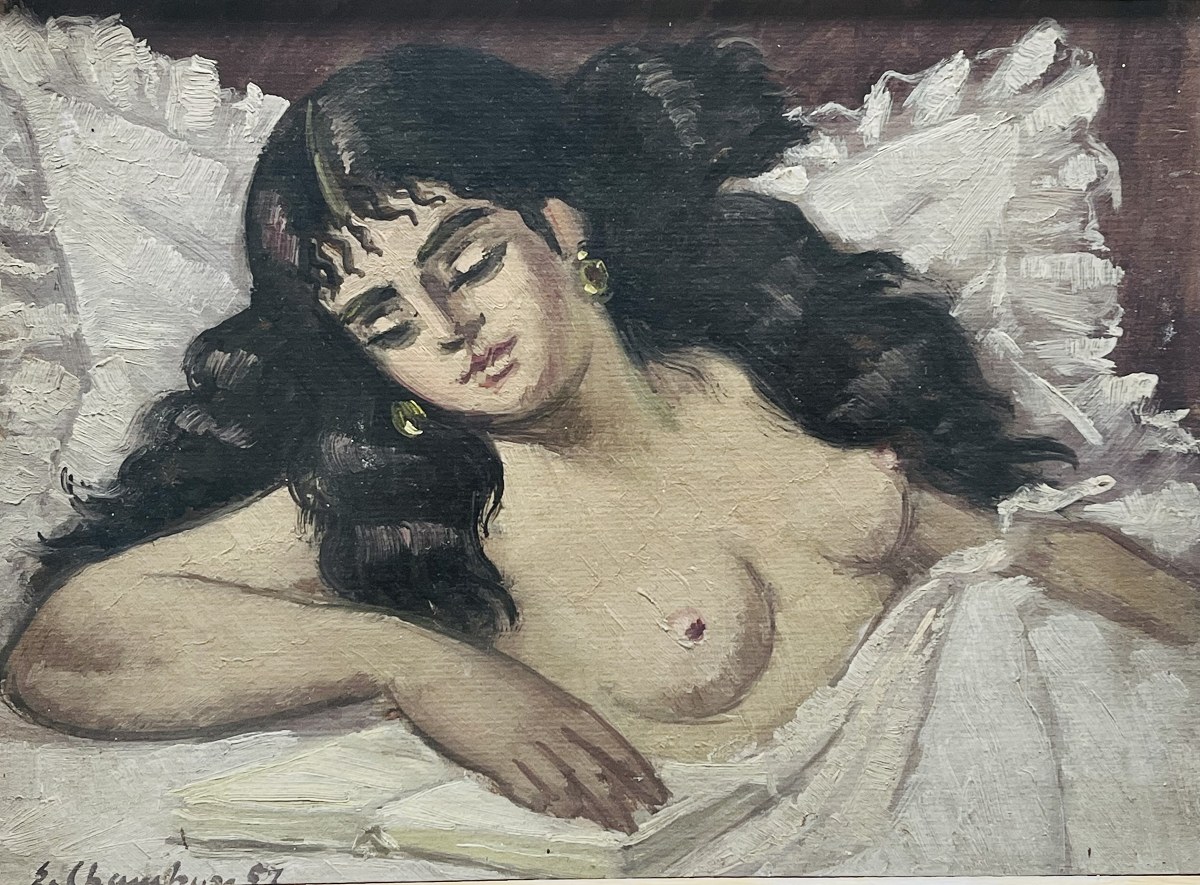
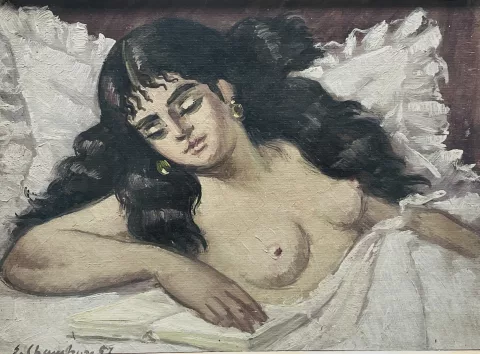
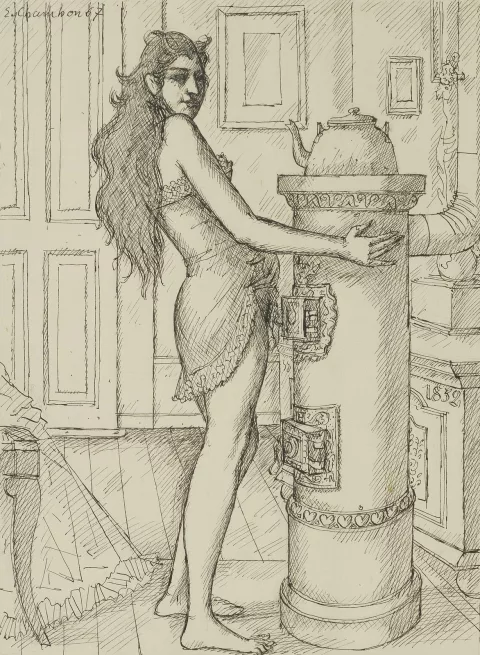
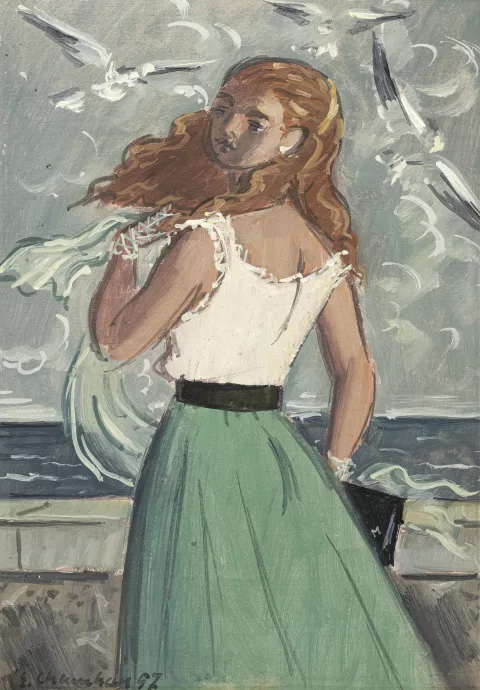
The date 1950 allows the execution to be connected with a period of Chambon’s work. It should not serve as a pretext for reconstructing an entire commission without documents. What we know is enough to distinguish this work from his portraits and small paintings. Subject, wall support and location form a particular combination. A figurative painter can thus participate in an institution’s environment and leave an image whose period of preservation mingles with the history of a building used by several generations.
The two rivers of the title finally do not require us to leave the school before beginning to look. They already have a place in its hall, associated with the return of the seasons. The work’s account can remain as concrete as this encounter: a place, a surface, a title and a date. Starting from these reference points, visitors can let their attention slow down. A mural sometimes offers this within an ordinary day: an instant when a space being crossed also becomes a space we take time to see.