Skip to content
Swiss Art GalleryArt gallery & salesSt-Prex · Switzerland
Gallery journal
Swiss Art Gallery · The story library

Artists’ stories

An encounter with art every day. Stories to read, listen to and rediscover.

The story library

115 stories

Find stories by artist, title or subject.

Show all
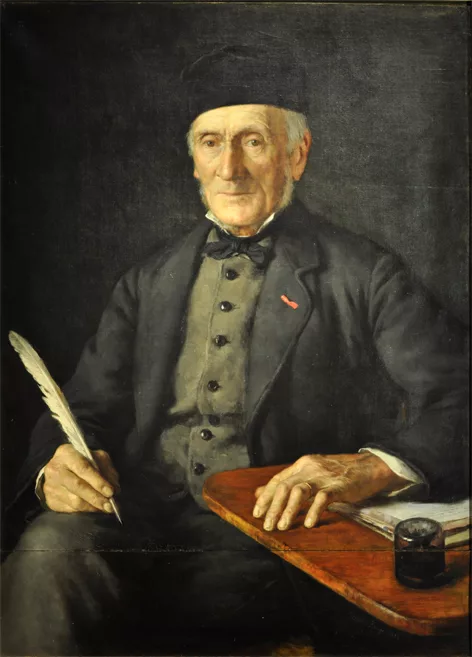
Frédéric Rouge — Portrait d’Urbain Olivier
Image creditsFrédéric Rouge · Portrait d’Urbain Olivier · Wikimedia Commons · Public domain

Frédéric Rouge — « Portrait d’Urbain Olivier ».

Frédéric Rouge · Portrait d’Urbain Olivier · Wikimedia Commons · Public domain

Image source Licence

Proportional resizing and WebP conversion, without cropping.

Frédéric Rouge · 4 min read

Sixty sittings for a writer who preferred his pen

Urbain Olivier’s letters illuminate the long sittings for his portrait by the young Frédéric Rouge, then the painting’s first presentation in Lausanne.
Frédéric Rouge — Le Braconnier
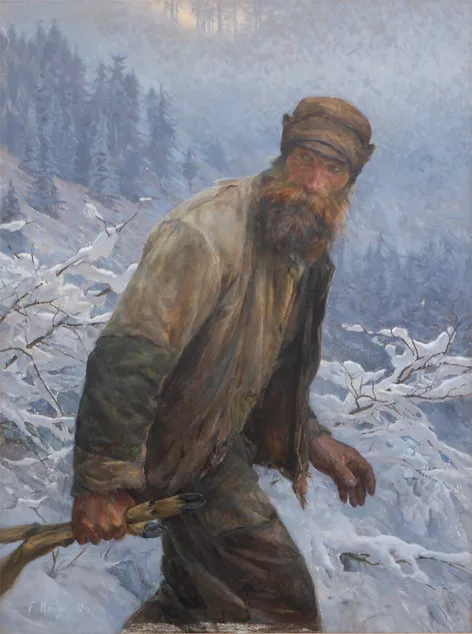
Image creditsFrédéric Rouge · Le Braconnier · Wikimedia Commons · Public domain

Frédéric Rouge — « Le Braconnier ».

Frédéric Rouge · Le Braconnier · Wikimedia Commons · Public domain

Image source Licence

Proportional resizing and WebP conversion, without cropping.

Frédéric Rouge · 4 min read

A poacher in the public collection

The Poacher, painted in 1908 and preserved at the Musée Jenisch, allows us to follow Rouge’s rural figure to an exhibition questioning its idealisation.

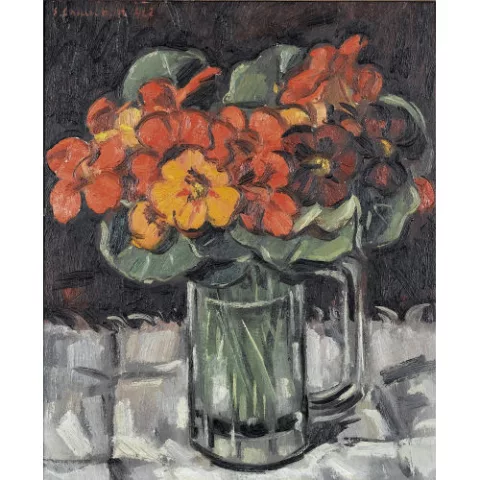
Émile Chambon — Nature morte aux capucines dans une chope
Image creditsÉmile Chambon · Nature morte aux capucines dans une chope · Image : Dobiaschofsky Auktionen AG

Émile Chambon — « Nature morte aux capucines dans une chope ». A work by the artist, selected for its visual connection to the story.

Émile Chambon · Nature morte aux capucines dans une chope · Image : Dobiaschofsky Auktionen AG

Image source

Proportional resizing and WebP conversion, without cropping.

Émile Chambon · 5 min read

Nasturtiums encounter a spoon

Nasturtiums and an African Spoon, a work of 1948, unites two elements whose difference the title emphasises. The painting opens a question about objects brought together by painting and information still to be sought.

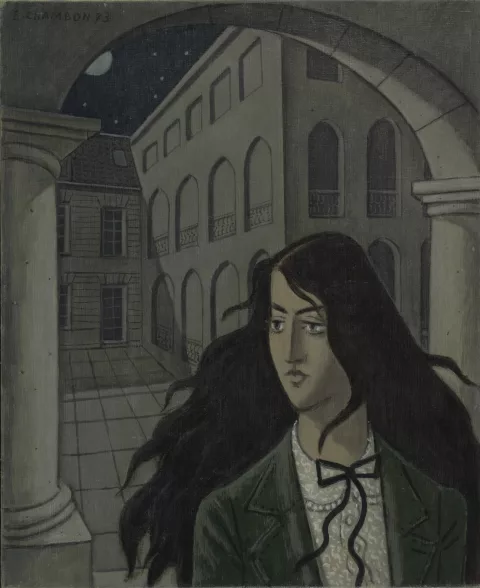
Émile Chambon — Cour de l’Hôtel-de-Ville (Nocturne), 1973
Image creditsÉmile Chambon · Cour de l’Hôtel-de-Ville (Nocturne), 1973 · Image : Sotheby’s

Émile Chambon — « Cour de l’Hôtel-de-Ville (Nocturne), 1973 ». A work by the artist, selected for its visual connection to the story.

Émile Chambon · Cour de l’Hôtel-de-Ville (Nocturne), 1973 · Image : Sotheby’s

Image source

Proportional resizing and WebP conversion, without cropping.

Émile Chambon · 5 min read

Snow makes a courtyard a subject

Courtyard in Carouge under Snow, painted in 1936, combines an urban place with a passing condition. The title invites us to look at what a change of season can make new in an everyday space.

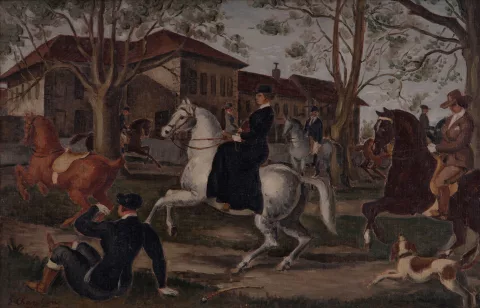
Émile Chambon — Manège
Image creditsÉmile Chambon · Manège · Image : Piguet Hôtel des Ventes

Émile Chambon — « Manège ». A work by the artist, selected for its visual connection to the story.

Émile Chambon · Manège · Image : Piguet Hôtel des Ventes

Image source

Proportional resizing and WebP conversion, without cropping.

Émile Chambon · 5 min read

The horse that never leaves its wood

The Wooden Horse of 1948 transforms a familiar object into an independent subject. In Chambon’s work, the boundary between collection, play and representation opens a space for reading without requiring an invented childhood.

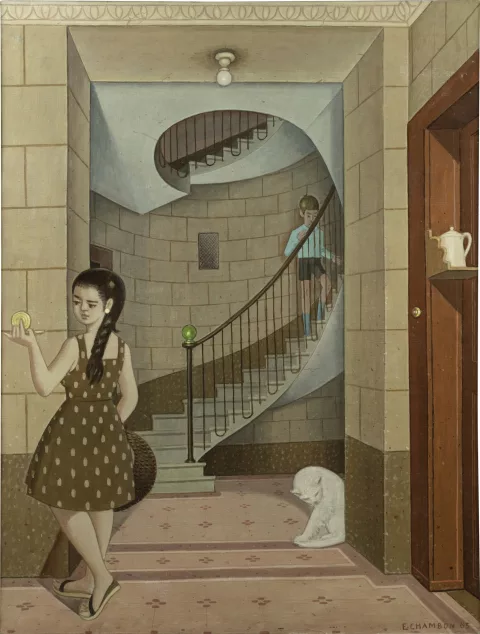
Émile Chambon — L’Escalier tournant, 23 boulevard de la Cluse, 1965
Image creditsÉmile Chambon · L’Escalier tournant, 23 boulevard de la Cluse, 1965 · Image : Sotheby’s

Émile Chambon — « L’Escalier tournant, 23 boulevard de la Cluse, 1965 ». A work by the artist, selected for its visual connection to the story.

Émile Chambon · L’Escalier tournant, 23 boulevard de la Cluse, 1965 · Image : Sotheby’s

Image source

Proportional resizing and WebP conversion, without cropping.

Émile Chambon · 5 min read

The staircase keeps its address

With The Winding Staircase, 23 Boulevard de la Cluse, Chambon names a passage and an address. This choice transforms a place of movement into an object of attention, without claiming to reconstruct the building’s life.

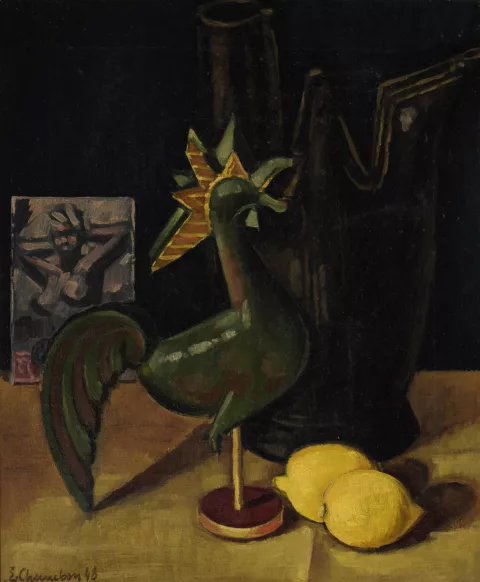
Émile Chambon — Le coq de Java
Image creditsÉmile Chambon · Le coq de Java · Image : Piguet Hôtel des Ventes

Émile Chambon — « Le coq de Java ». A work by the artist, selected for its visual connection to the story.

Émile Chambon · Le coq de Java · Image : Piguet Hôtel des Ventes

Image source

Proportional resizing and WebP conversion, without cropping.

Émile Chambon · 5 min read

A falcon and an egg, two arrested presences

The Falcon and the Ostrich Egg of 1974 brings together two elements associated with birds. The work allows us to question how a collection and a painting retain forms without confusing their histories.

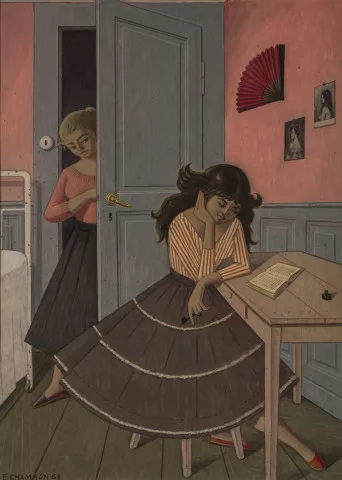
Émile Chambon — La lecture interrompue, 1963
Image creditsÉmile Chambon · La lecture interrompue, 1963 · Image : Beurret Bailly Widmer

Émile Chambon — « La lecture interrompue, 1963 ». A work by the artist, selected for its visual connection to the story.

Émile Chambon · La lecture interrompue, 1963 · Image : Beurret Bailly Widmer

Image source

Proportional resizing and WebP conversion, without cropping.

Émile Chambon · 5 min read

A friendship gives painting a Paris address

Chambon’s meeting with Louise de Vilmorin in 1961 is followed by an exhibition at the Galerie Motte. A documented preface and initiative allow this support to be recounted without inventing their private relationship.

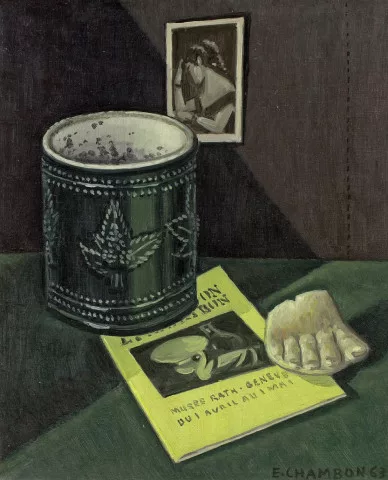
Émile Chambon — Le pied de marbre, 1963
Image creditsÉmile Chambon · Le pied de marbre, 1963 · Image : Beurret Bailly Widmer

Émile Chambon — « Le pied de marbre, 1963 ». A work by the artist, selected for its visual connection to the story.

Émile Chambon · Le pied de marbre, 1963 · Image : Beurret Bailly Widmer

Image source

Proportional resizing and WebP conversion, without cropping.

Émile Chambon · 5 min read

A collection leaves the studio for the museum

In 1981 Chambon donates a substantial part of his collection to Geneva’s Musée d’ethnographie. The move opens a history distinct from his paintings, one that also requires questions of provenance to be retained.

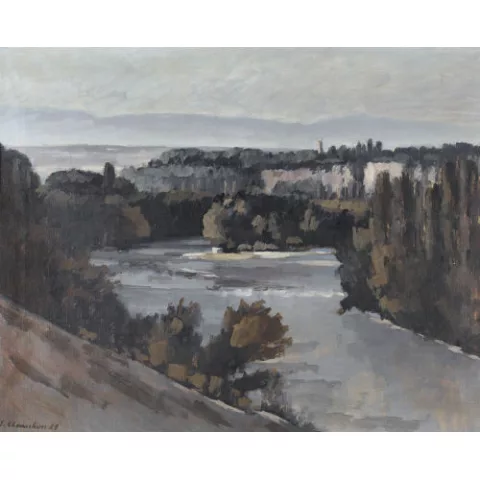
Émile Chambon — Le Rhône près de Genève
Image creditsÉmile Chambon · Le Rhône près de Genève · Image : Dobiaschofsky Auktionen AG

Émile Chambon — « Le Rhône près de Genève ». A work by the artist, selected for its visual connection to the story.

Émile Chambon · Le Rhône près de Genève · Image : Dobiaschofsky Auktionen AG

Image source

Proportional resizing and WebP conversion, without cropping.

Émile Chambon · 5 min read

Two rivers in a school hall

The catalogue dates The Seasons: the Rhône and the Arve to 1950. This mural is documented in a Geneva educational establishment; its everyday setting changes how a work can accompany its visitors.

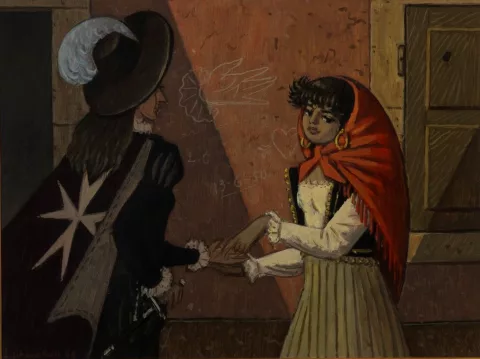
Émile Chambon — Hommage au Caravage
Image creditsÉmile Chambon · Hommage au Caravage · Image : Piguet Hôtel des Ventes

Émile Chambon — « Hommage au Caravage ». A work by the artist, selected for its visual connection to the story.

Émile Chambon · Hommage au Caravage · Image : Piguet Hôtel des Ventes

Image source

Proportional resizing and WebP conversion, without cropping.

Émile Chambon · 5 min read

Ten weeks at the Louvre, then the return

A second scholarship takes Émile Chambon to Paris in 1928. His stay making copies at the Louvre ends earlier than planned: the period of study again encounters the limits of available resources.

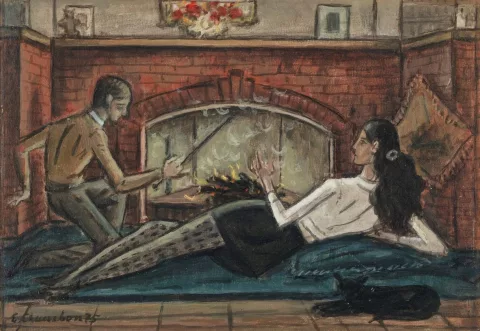
Émile Chambon — Autoportrait et son modèle devant la cheminée
Image creditsÉmile Chambon · Autoportrait et son modèle devant la cheminée · Image : Piguet Hôtel des Ventes

Émile Chambon — « Autoportrait et son modèle devant la cheminée ». A work by the artist, selected for its visual connection to the story.

Émile Chambon · Autoportrait et son modèle devant la cheminée · Image : Piguet Hôtel des Ventes

Image source

Proportional resizing and WebP conversion, without cropping.

Émile Chambon · 5 min read

Entering art school when money is short

In 1921 Émile Chambon encounters a difficulty that precedes painting: the material possibility of entering an artistic career. A scholarship also opens the way to a first stay in Paris.