Émile Chambon · 5 min read
Entering art school when money is short
In 1921 Émile Chambon encounters a difficulty that precedes painting: the material possibility of entering an artistic career. A scholarship also opens the way to a first stay in Paris.
Published on October 3, 2026
Before the first painting is exhibited, it is sometimes necessary to succeed in entering the school. The biography published by the Fondation Émile Chambon reports that his admission to Geneva’s art school in autumn 1921 does not happen without difficulty. The management doubts whether his family possesses sufficient resources to allow him a career as an artist. This detail places a very concrete question at the beginning of his path: how does the possibility of painting also depend on the material conditions imagined necessary to live from this work?
It would be tempting to turn this moment into a spectacular confrontation, with a young man delivering a memorable reply. No remark of this kind is given by the source consulted. The documented fact is enough. An institution assesses access to training by taking a family’s means into account. Behind a candidate’s presumed talents lie questions of time, funding and professional prospects. The account benefits from retaining this reality, less theatrical than an invented scene but potentially wider in its significance.
An art school does not only provide instruction. It also makes possible a period devoted to learning, trying and starting again. That period must be supported in one way or another. In Chambon’s case, the biography notes a reservation expressed about the family. We do not know all the exchanges or every criterion used here. We can nevertheless recognise that entering an artistic practice involves a social and institutional decision, not only the personal desire to pick up a brush.
In the same year, a first federal scholarship allows Chambon to spend time in Paris with his father. The obstacle therefore does not mark the end of his path. Concrete support opens another experience, that of travel and the discovery of works of art. The contrast between these two facts is instructive: on one side, doubt about the material possibility of a career; on the other, funding that makes a study stay accessible. We do not need to identify winners to see what this assistance changes.
The journey with his father also introduces a family presence without authorising us to recount all their conversations. Companionship is established; emotions and words are not. This restraint nevertheless reveals another way of beginning an artistic life. The young painter does not travel as an isolated hero. His experience develops with people close to him and arrangements for support. The story of his training can accommodate these relationships, which do not always appear in the simplified memory of an artist’s name.
In Paris, Chambon becomes familiar with the Cubist painters, according to the Fondation. This contact does not oblige us to regard all his later works as the immediate application of a programme. Discovering a kind of painting and choosing one’s own practice are two different operations. Training is enriched by encounters whose effects can be varied and difficult to measure precisely. The information is enough to open the field of what becomes visible to him. It reminds us that a figurative career can begin in an environment where several ways of representing coexist.
The episode of 1921 can then be read at the appropriate scale. It does not summarise Chambon’s entire trajectory or prove by itself a theory about access to schools. It shows a documented case in which family means and a scholarship enter a painter’s history. This particular scale gives the account its strength. Rather than making a legend of the difficulty, we can seek the conditions that allow it to be overcome and recognise the contribution of support to the beginning of work.
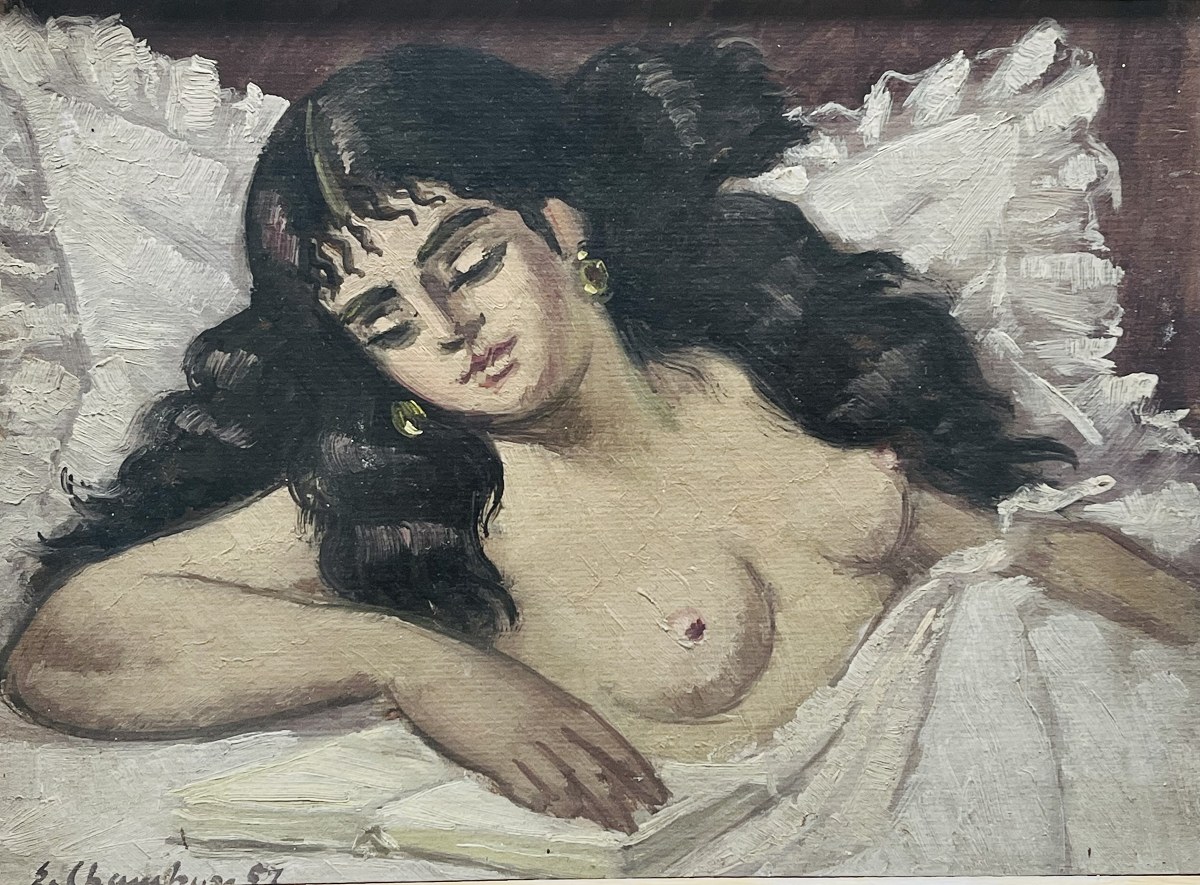
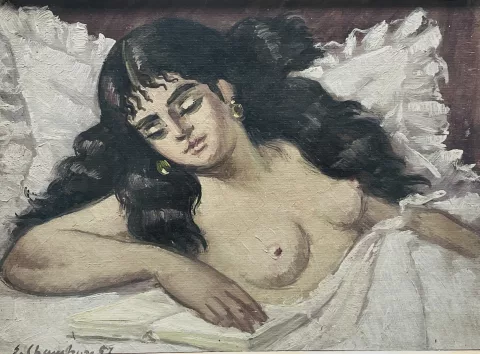
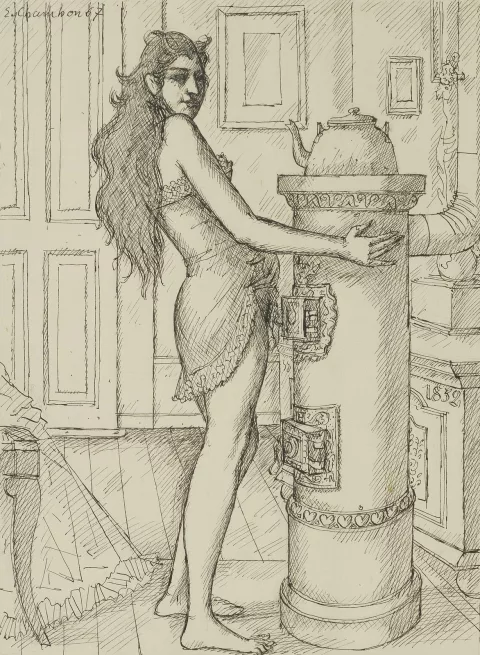
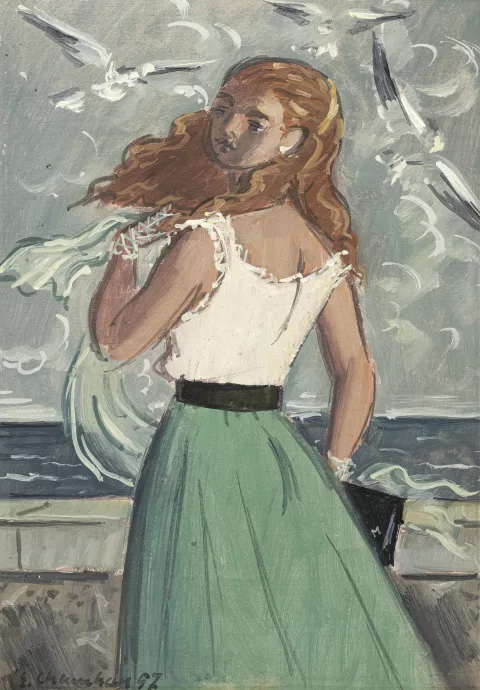
When we later look at a work by Chambon, this knowledge can remain unobtrusive. It is not necessary for seeing a face or a landscape. Yet it reminds us that the painting available before us needed an initial possibility: learning, travelling and devoting time to a practice. The year 1921 contains both a reservation and an opening. Within this interval begins a path whose reality rests not only on an individual’s will but also on what becomes accessible to him.