Émile Chambon · 5 min read
A friendship gives painting a Paris address
Chambon’s meeting with Louise de Vilmorin in 1961 is followed by an exhibition at the Galerie Motte. A documented preface and initiative allow this support to be recounted without inventing their private relationship.
Published on October 3, 2026
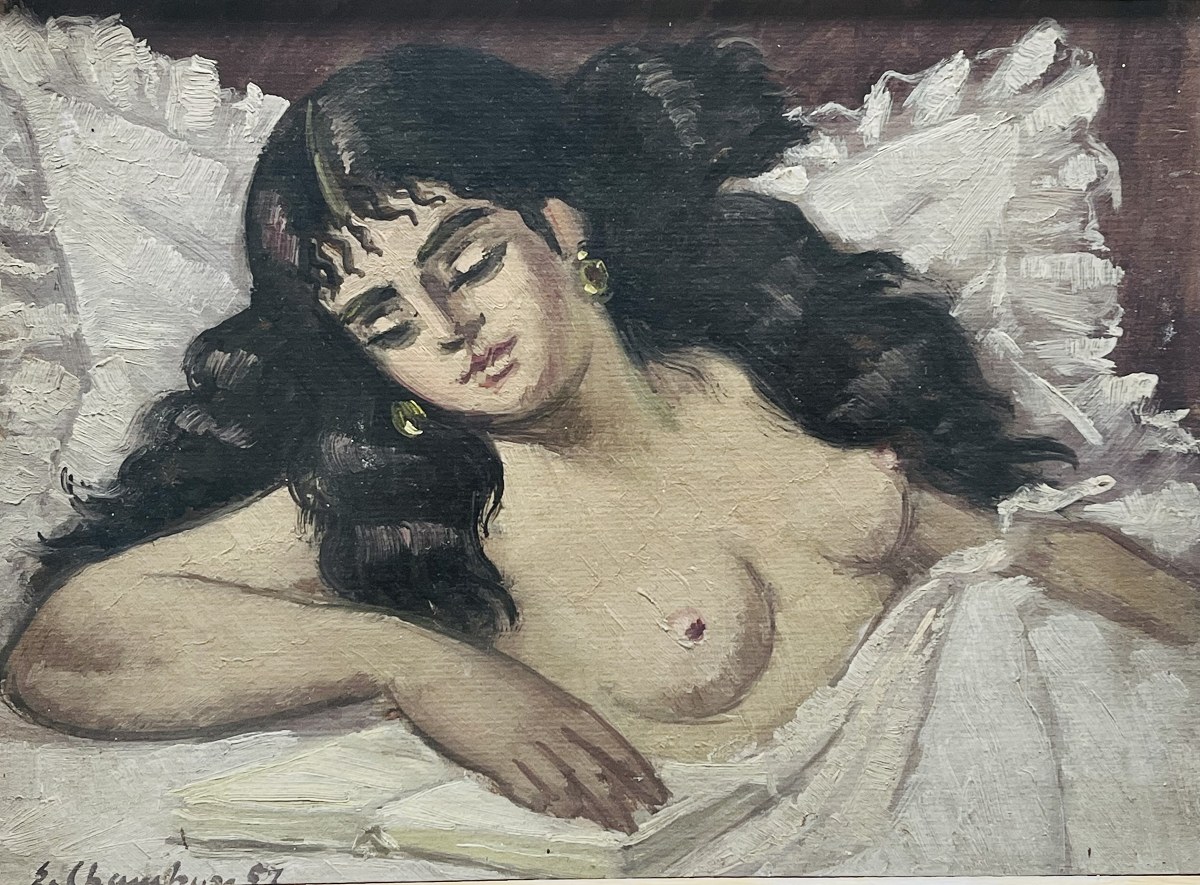
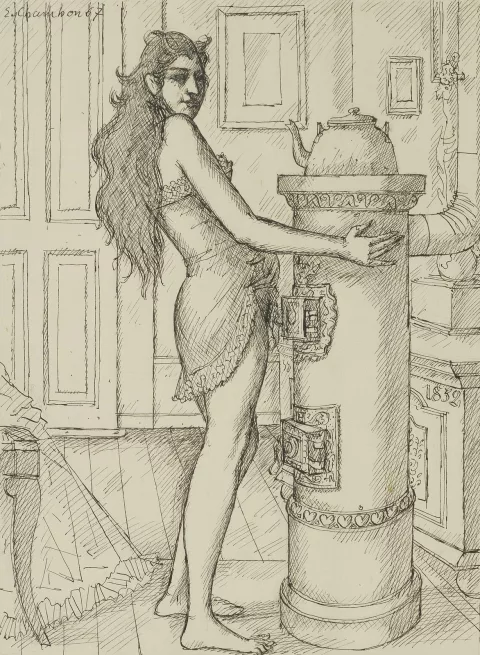
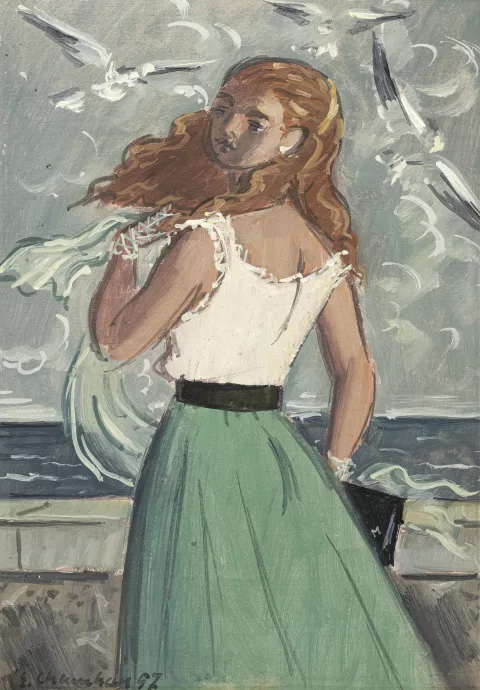
A painting can find a new audience because someone wants to make it known. The biography of the Fondation Émile Chambon reports his meeting with Louise de Vilmorin in Geneva in 1961. The writer admires his work and becomes his friend. The following year, an exhibition is organised at the Galerie Motte in Paris at her instigation, and she writes the catalogue’s preface. These facts give support a visible form: an initiative, an exhibition address and a text accompanying the works.
The account does not need to reconstruct the first conversation. We do not know the words they exchanged or the order in which the paintings were shown here. The meeting and its consequences are precise enough to establish a relationship. One person looks at another’s work and acts to offer it a setting for presentation. This action differs from an admiring judgement remaining private. It participates in the way works become available to visitors, with a place to see them and a document to accompany them.
A preface is not the same as the painting it presents. It introduces a voice, a choice of words and a relationship to the artist’s work. We must not attribute sentences to it when we have not consulted the full text. Its existence is nevertheless enough to pose an interesting question: how can literature prepare an encounter with images? The catalogue brings together elements of two practices. The works remain paintings, while a text proposes a way for readers to enter the exhibition and give time to looking.
The move towards Paris provides another context. It does not remove Geneva from Chambon’s path, but adds a place where his work can be encountered. An exhibition is an opportunity limited in time. It assembles works, makes them visible together and puts them at an audience’s disposal. The source does not describe every visitor or their reactions. It would therefore be excessive to announce a general transformation of his reputation on the basis of this single event. We can recount the opening of a possibility and recognise that it is well documented.
Friendship and public action meet here without either allowing us to infer everything about the other. The personal connection is mentioned by the Fondation; the exhibition and preface provide known manifestations of it. We can retain this relationship at the appropriate scale. It does not turn Vilmorin into the paintings’ author or Chambon into the illustrator of her books. Two people have their own practice and meet around an act of attention. The support is all the more interesting because it allows this difference to exist while enabling collaboration in presenting the work.
This history also changes how we recount the circulation of art. Works do not find places only through an impersonal sequence of institutions. Gazes, relationships and initiatives can contribute to their paths. We must not make every success the result of a single intervention. Here, a particular episode shows how a writer participates in an exhibition of paintings. The precision of the case keeps us from constructing a general legend and allows us to recognise a concrete role in the conditions of an artist’s visibility.
The catalogue remains a useful object after an exhibition closes. It preserves names, texts and a trace of the ensemble presented. Vilmorin’s preface therefore belongs to two times: that of opening to the public and that of a later reading. Without copying her words, the account can retain this continuity. A temporary initiative produces a document that remains available for research. The exhibition ends; the relationships it made visible can still be examined, provided we distinguish what the sources attest from what we imagine.
The Paris address of 1962 finally offers a solid point of reference for speaking of this friendship. Someone sees paintings, devotes a text to them and helps present them. We can recount these acts without fabricating what happened behind the scenes. Support then acquires its full value: it does not need a fictional scene to be recognised. Before a work by Chambon, visitors can remember that another gaze helped open a public space for it. Painting’s history also includes these acts of attention that give it opportunities to be encountered.