Skip to content
Swiss Art GalleryArt gallery & salesSt-Prex · Switzerland
Gallery journal
Swiss Art Gallery · The story library

Artists’ stories

An encounter with art every day. Stories to read, listen to and rediscover.

The story library

115 stories

Find stories by artist, title or subject.

Show all
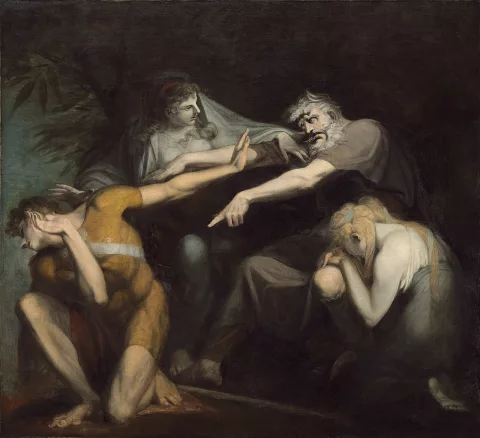
Johann Heinrich Füssli — Œdipe maudissant son fils Polynice
Image creditsJohann Heinrich Füssli · Œdipe maudissant son fils Polynice · Wikimedia Commons · CC0 · Henry Fuseli

Johann Heinrich Füssli — « Œdipe maudissant son fils Polynice ».

Johann Heinrich Füssli · Œdipe maudissant son fils Polynice · Wikimedia Commons · CC0 · Henry Fuseli

Image source Licence

Proportional resizing and WebP conversion, without cropping.

Johann Heinrich Füssli · 5 min read

Oedipus turns speech into gesture

In 1786, Fuseli presents a curse drawn from Sophocles in London. The four figures in Oedipus Cursing His Son Polynices turn tragic speech into a network of arms, hands and bodies holding one another back.
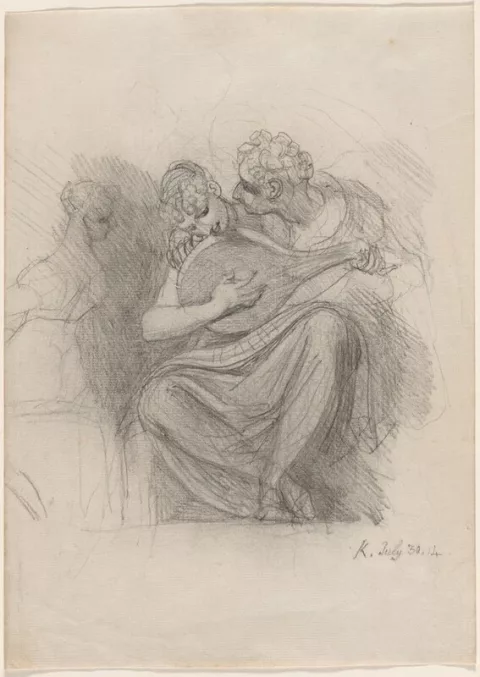
Johann Heinrich Füssli — Un concert intime
Image creditsJohann Heinrich Füssli ; image : National Gallery of Art, Washington — CC0 1.0 / domaine public, NGA Open Access ; réduction proportionnelle et conversion WebP.

Johann Heinrich Füssli — « Un concert intime ».

Johann Heinrich Füssli ; image : National Gallery of Art, Washington — CC0 1.0 / domaine public, NGA Open Access ; réduction proportionnelle et conversion WebP.

Image source Licence

Proportional resizing and WebP conversion, without cropping.

Johann Heinrich Füssli · 5 min read

A concert fits inside a drawing

A drawing of 1814 brings two figures together around an instrument. The concert becomes a question of proximity, retraced lines and movements held on paper.

Jules Breton — Sous-bois à Quimper
Image creditsJules Breton · Sous-bois à Quimper · Wikimedia Commons · CC0 · Breton, Jules (Courrières, 01–05–1827 - Paris, 05–07–1906), dessinateur

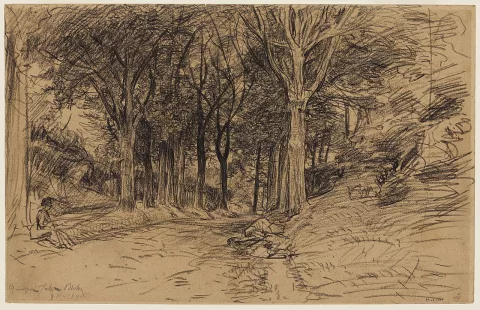
Jules Breton — « Sous-bois à Quimper ».

Jules Breton · Sous-bois à Quimper · Wikimedia Commons · CC0 · Breton, Jules (Courrières, 01–05–1827 - Paris, 05–07–1906), dessinateur

Image source Licence

Proportional resizing and WebP conversion, without cropping.

Jules Breton · 4 min read

A charcoal path in Quimper

The Petit Palais drawing of 1890 shows another facet of Breton. Dense marks and more open areas give the woodland the depth of a walk.

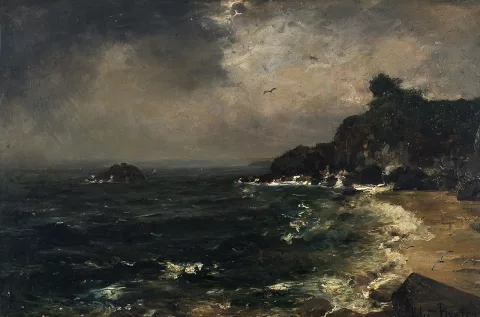
Jules Breton — Falaises côtières par temps d’orage
Image creditsJules Breton · Falaises côtières par temps d’orage · Wikimedia Commons · Public domain

Jules Breton — « Falaises côtières par temps d’orage ». Another work by the artist, chosen as a visual connection to the story.

Jules Breton · Falaises côtières par temps d’orage · Wikimedia Commons · Public domain

Image source Licence

Proportional resizing and WebP conversion, without cropping.

Jules Breton · 4 min read

The Cliff, or the gaze that waits

A reclining woman turns her attention towards the sea in the canvas of 1874. The historical title Waiting illuminates the scene without delivering its figure’s story.

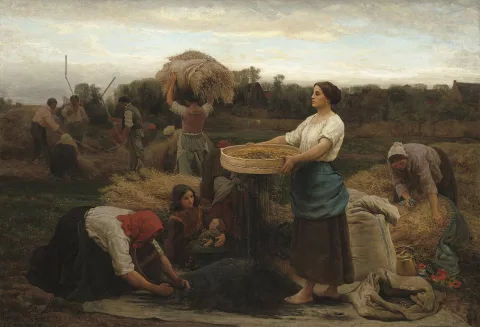
Jules Breton — La Récolte du colza
Image creditsJules Breton · La Récolte du colza · Wikimedia Commons · CC0

Jules Breton — « La Récolte du colza ».

Jules Breton · La Récolte du colza · Wikimedia Commons · CC0

Image source Licence

Proportional resizing and WebP conversion, without cropping.

Jules Breton · 4 min read

Colza, a harvest made of several gestures

In the painting of 1860 preserved in Washington, Jules Breton brings together sifting, carrying and work on the stalks. The field becomes a network of human activities.

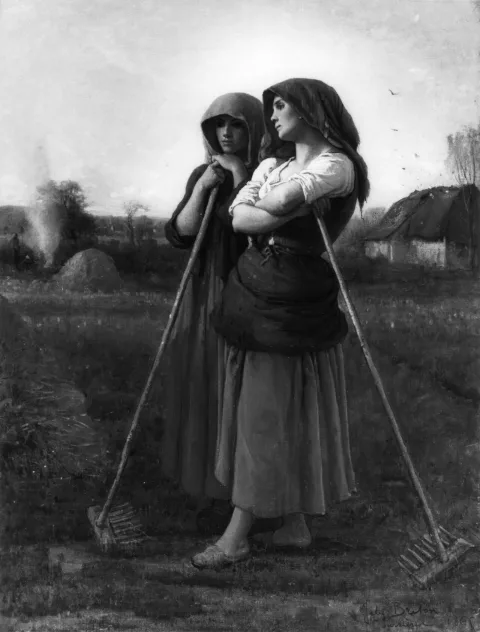
Jules Breton — La Fin du jour
Image creditsJules Breton · La Fin du jour · Wikimedia Commons · Public domain

Jules Breton — « La Fin du jour ».

Jules Breton · La Fin du jour · Wikimedia Commons · Public domain

Image source Licence

Proportional resizing and WebP conversion, without cropping.

Jules Breton · 4 min read

Rakes become supports in the evening

Two women rest in The Close of Day of 1865. The painting preserves a moment when tools indicate past work and support bodies coming to a halt.

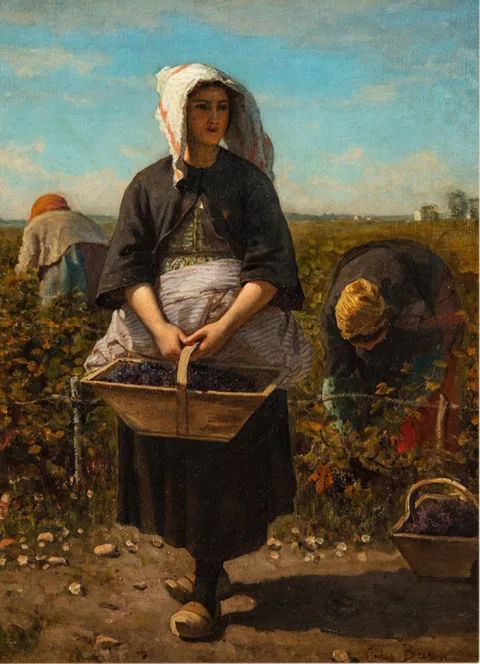
Jules Breton — Étude pour Les Vendanges à Château-Lagrange
Image creditsJules Breton · Étude pour Les Vendanges à Château-Lagrange · Wikimedia Commons · Public domain

Jules Breton — « Étude pour Les Vendanges à Château-Lagrange ». Another work by the artist, chosen as a visual connection to the story.

Jules Breton · Étude pour Les Vendanges à Château-Lagrange · Wikimedia Commons · Public domain

Image source Licence

Proportional resizing and WebP conversion, without cropping.

Jules Breton · 4 min read

The grape harvest leaves the château for Omaha

Commissioned in the nineteenth century for Count Duchâtel, Breton’s painting passes through collections, fails to sell, then joins a public initiative in Omaha.

Marc Camille Chaimowicz — Shoe Waste?
Image credits© Marc Camille Chaimowicz · Fonds d’art contemporain – Paris Collections · Photo : Julien Vidal / Parisienne de Photographie

Marc Camille Chaimowicz — Shoe Waste? (1971–2005), photograph from the series held by Paris Collections.

© Marc Camille Chaimowicz · Fonds d’art contemporain – Paris Collections · Photo : Julien Vidal / Parisienne de Photographie

Image source

Marc Camille Chaimowicz · 4 min read

Shoes without their pairs

Shoe Waste? gathers worn shoes painted silver. Losing the pairs transforms an object attached to the body into a collective presence on the floor.

Marc Camille Chaimowicz — La Suite de Varsovie, 1993–1994
Image credits© Marc Camille Chaimowicz · Collection FRAC Bourgogne, Dijon · Photo : A. Mole / MAMC+ · Courtoisie de l’artiste et Cabinet, Londres

Marc Camille Chaimowicz — La Suite de Varsovie (1993–1994), detail shown at MAMC+: decorative patterns and painting brought together on large panels.

© Marc Camille Chaimowicz · Collection FRAC Bourgogne, Dijon · Photo : A. Mole / MAMC+ · Courtoisie de l’artiste et Cabinet, Londres

Image source

Marc Camille Chaimowicz · 4 min read

The Warsaw Suite brings painting back

Movable panels and paintings brought together give Chaimowicz’s return to painting a form that remains close to installation.

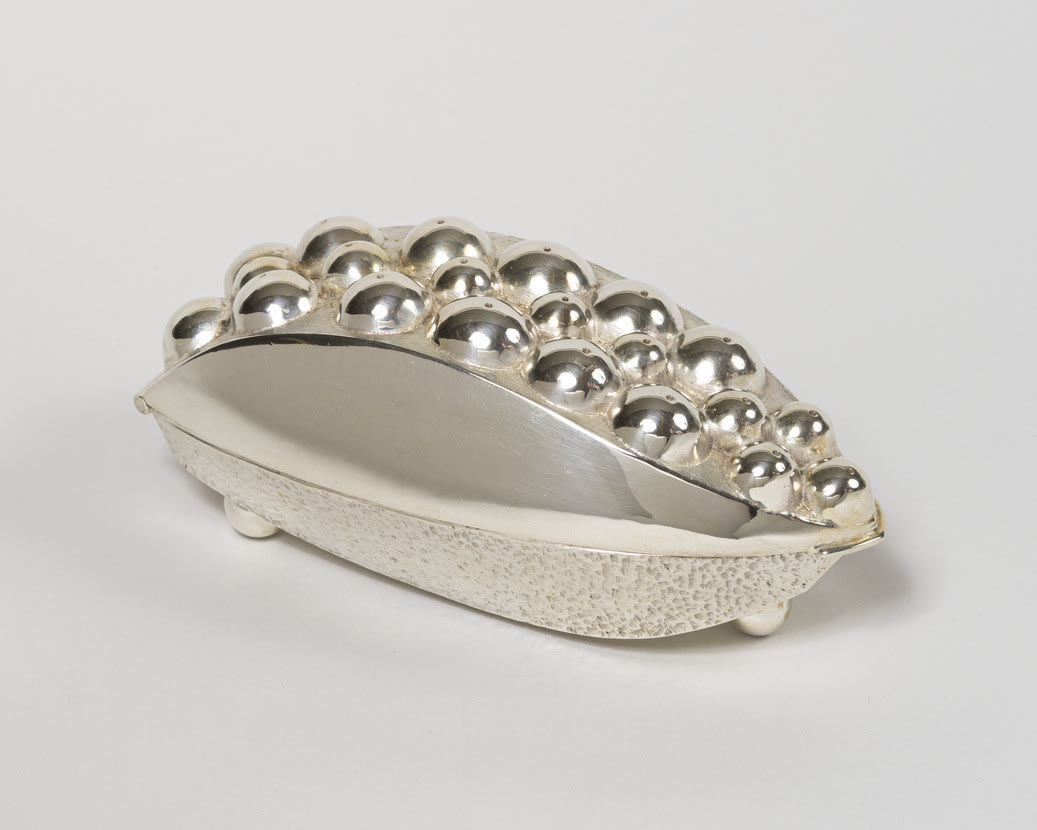
Marc Camille Chaimowicz — Spice Container, 2018
Image credits© Marc Camille Chaimowicz · The Jewish Museum, New York · Collection 2019-35

Marc Camille Chaimowicz — Spice Container (2018), silver spice container. The Jewish Museum, New York.

© Marc Camille Chaimowicz · The Jewish Museum, New York · Collection 2019-35

Image source

Marc Camille Chaimowicz · 4 min read

Fourteen centimetres of silver, between London and Mexico

Spice Container, designed in 2018, makes cooperation between an artist and manufacture visible. The Jewish Museum preserves this small-scale object.

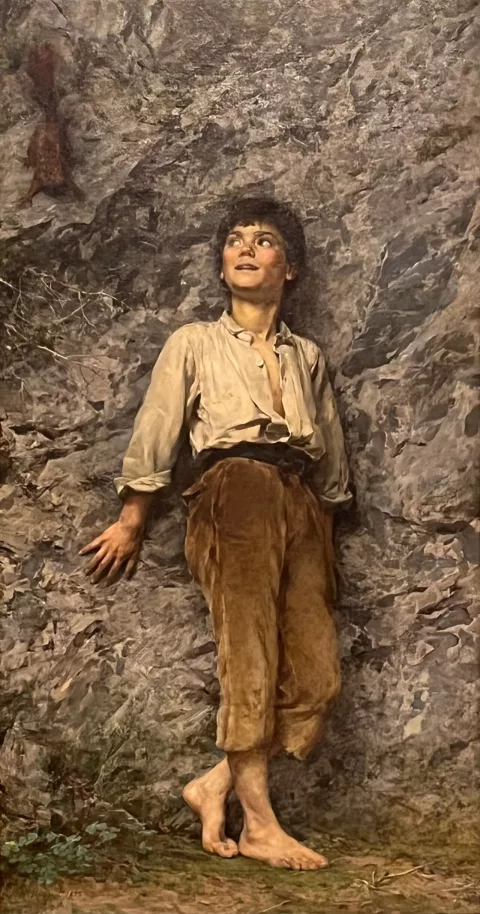
Frédéric Rouge — L’Enfant des bois
Image creditsFrédéric Rouge · L’Enfant des bois · Wikimedia Commons · Public domain

Frédéric Rouge — « L’Enfant des bois ». Another work by the artist, chosen as a visual connection to the story.

Frédéric Rouge · L’Enfant des bois · Wikimedia Commons · Public domain

Image source Licence

Proportional resizing and WebP conversion, without cropping.

Frédéric Rouge · 4 min read

From the model in Ollon to the light of Vionnaz

The cartoons and stained-glass windows of 1926 reveal another destination for Rouge’s drawing: a figure prepared on paper becomes a presence traversed by light.

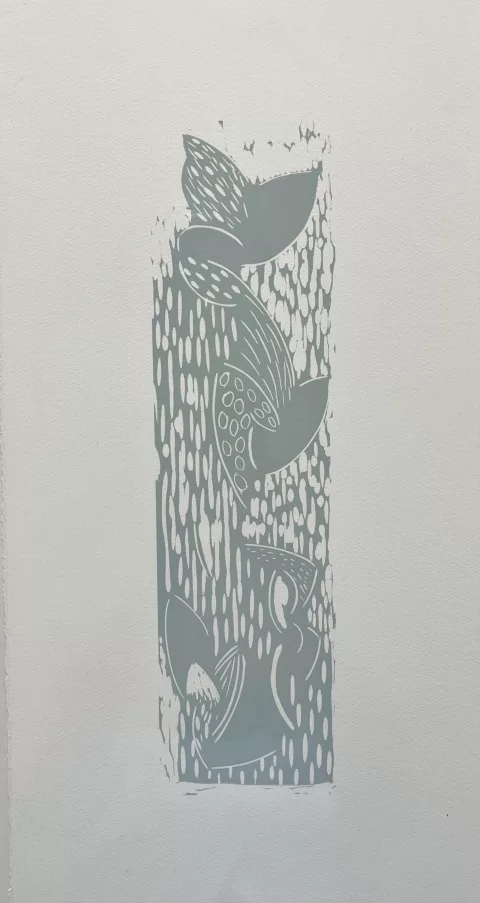
Marc Camille Chaimowicz — Gravure 4
Image creditsMarc Camille Chaimowicz · Gravure 4 · Swiss Art Gallery · Photographie de la galerie

Marc Camille Chaimowicz — « Gravure 4 ». Another work by the artist, chosen as a visual connection to the story.

Marc Camille Chaimowicz · Gravure 4 · Swiss Art Gallery · Photographie de la galerie

Image source

Proportional resizing and WebP conversion, without cropping.

Marc Camille Chaimowicz · 4 min read

Basel Sequence: the motif becomes a wall

Five painted panels of 2011 place decorative motif between painting and architecture. Their scale transforms the viewer’s relationship to painting.