Skip to content
Swiss Art GalleryArt gallery & salesSt-Prex · Switzerland
Gallery journal
Swiss Art Gallery · The story library

Artists’ stories

An encounter with art every day. Stories to read, listen to and rediscover.

The story library

115 stories

Find stories by artist, title or subject.

Show all
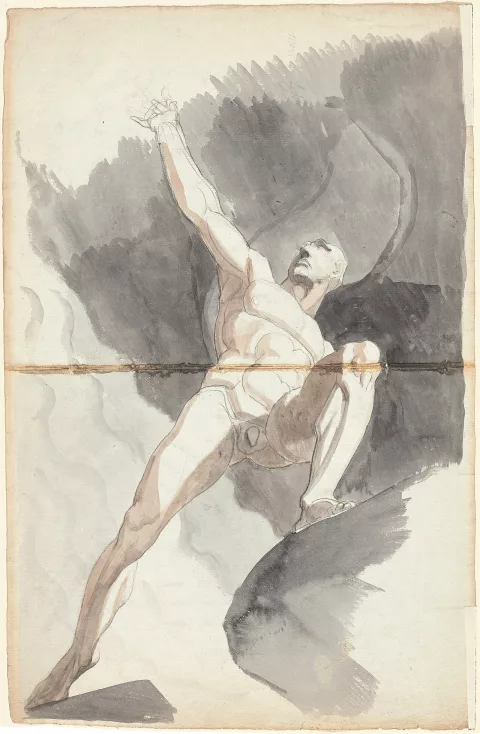
Johann Heinrich Füssli — Satan défiant les puissances du ciel
Image creditsJohann Heinrich Füssli · Satan défiant les puissances du ciel · Wikimedia Commons · CC0 · Henry Fuseli

Johann Heinrich Füssli — « Satan défiant les puissances du ciel ».

Johann Heinrich Füssli · Satan défiant les puissances du ciel · Wikimedia Commons · CC0 · Henry Fuseli

Image source Licence

Proportional resizing and WebP conversion, without cropping.

Johann Heinrich Füssli · 5 min read

Two sides of a revolt against heaven

Two drawings preserved on the sides of a single sheet give Satan’s defiance different gestures. Fuseli works on the tension of a body, a hand and a space of wash.
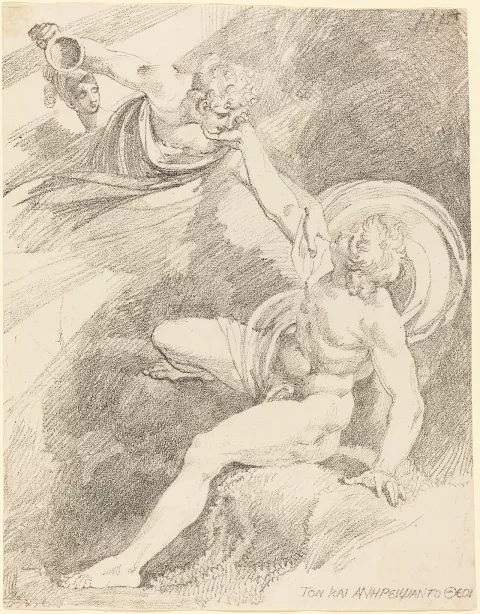
Johann Heinrich Füssli — L’Enlèvement de Ganymède
Image creditsJohann Heinrich Füssli · L’Enlèvement de Ganymède · Wikimedia Commons · CC0 · Henry Fuseli

Johann Heinrich Füssli — « L’Enlèvement de Ganymède ».

Johann Heinrich Füssli · L’Enlèvement de Ganymède · Wikimedia Commons · CC0 · Henry Fuseli

Image source Licence

Proportional resizing and WebP conversion, without cropping.

Johann Heinrich Füssli · 5 min read

Ganymede enters lithography

In 1804, Fuseli brings Ganymede into an experiment in lithography. The mythological action takes the form of moving bodies and drapery, preserved in a print in Washington.

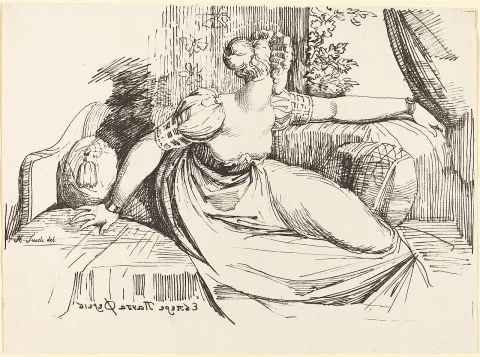
Johann Heinrich Füssli — Femme assise près de la fenêtre
Image creditsJohann Heinrich Füssli · Femme assise près de la fenêtre · Wikimedia Commons · CC0 · Henry Fuseli

Johann Heinrich Füssli — « Femme assise près de la fenêtre ».

Johann Heinrich Füssli · Femme assise près de la fenêtre · Wikimedia Commons · CC0 · Henry Fuseli

Image source Licence

Proportional resizing and WebP conversion, without cropping.

Johann Heinrich Füssli · 5 min read

The window behind a figure seen from the back

A lithograph of 1802 shows a woman turned towards a window. The back, outstretched arm and fabrics allow Fuseli to construct a presence without a frontal portrait.

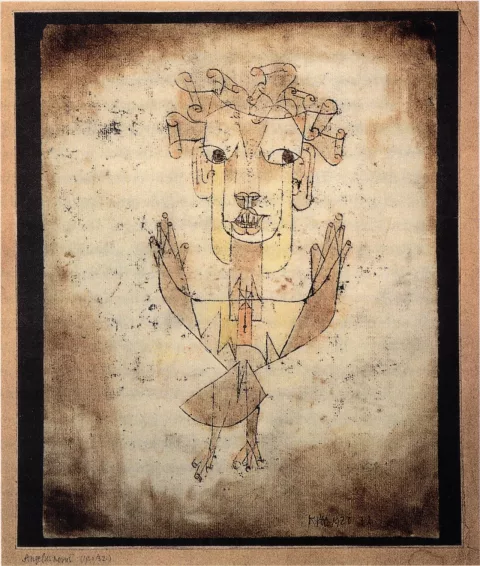
Paul Klee — Angelus Novus
Image creditsPaul Klee · Angelus Novus · Wikimedia Commons · Public domain · Christian Mantey ( photographer ), Kulturagent

Paul Klee — « Angelus Novus ».

Paul Klee · Angelus Novus · Wikimedia Commons · Public domain · Christian Mantey ( photographer ), Kulturagent

Image source Licence

Proportional resizing and WebP conversion, without cropping.

Paul Klee · 5 min read

The angel whose destiny was changed by a small sheet of paper

Angelus Novus was a work of 1920 before it became a philosophical image. Its encounter with Walter Benjamin and the precautions taken to preserve it tell of two ways to prolong the life of a drawing.

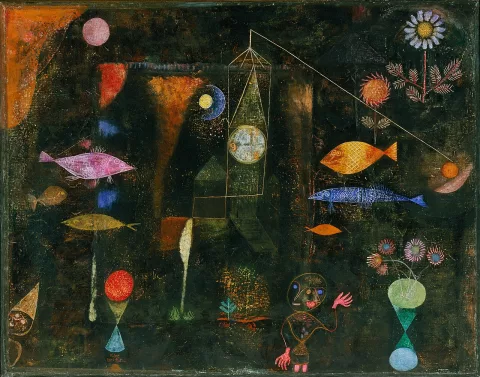
Paul Klee — Magie des poissons
Image creditsPaul Klee · Magie des poissons · Wikimedia Commons · Public domain

Paul Klee — « Magie des poissons ».

Paul Klee · Magie des poissons · Wikimedia Commons · Public domain

Image source Licence

Proportional resizing and WebP conversion, without cropping.

Paul Klee · 5 min read

The black you must scrape away to discover a world

Fish Magic brings together fish, flowers and celestial signs in a dark space. Beneath this 1925 scene, Klee arranges a real material discovery: colours appear by breaking through the black layer.

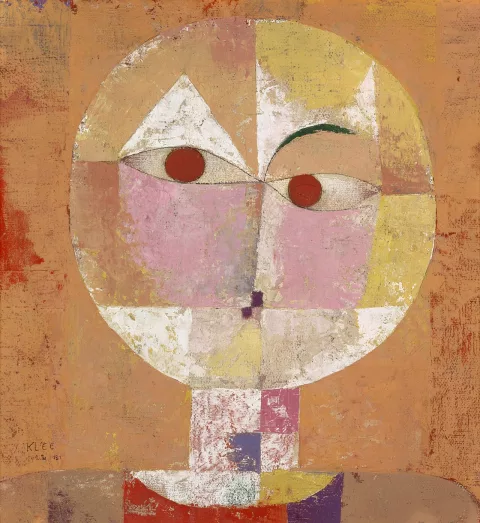
Paul Klee — Senecio
Image creditsPaul Klee · Senecio · Wikimedia Commons · Public domain

Paul Klee — « Senecio ».

Paul Klee · Senecio · Wikimedia Commons · Public domain

Image source Licence

Proportional resizing and WebP conversion, without cropping.

Paul Klee · 5 min read

A face constructed from geometric shapes

Senecio transforms a face into a meeting of circles, triangles and colours. In this 1922 painting held in Basel, apparent simplicity calls for a surprisingly precise gaze.

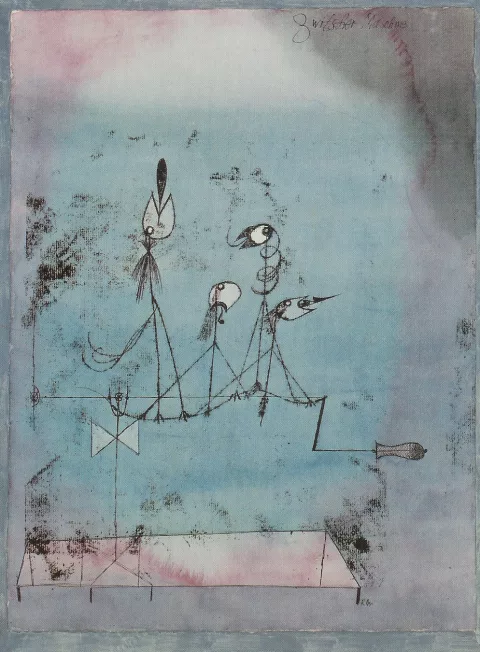
Paul Klee — La Machine à gazouiller
Image creditsPaul Klee · La Machine à gazouiller · Wikimedia Commons · Public domain

Paul Klee — « La Machine à gazouiller ».

Paul Klee · La Machine à gazouiller · Wikimedia Commons · Public domain

Image source Licence

Proportional resizing and WebP conversion, without cropping.

Paul Klee · 5 min read

A crank to make birds sing

In Twittering Machine, Klee attaches birds to an improbable device. The 1922 drawing joins technical invention with unease, while its own making already separates line from colour.

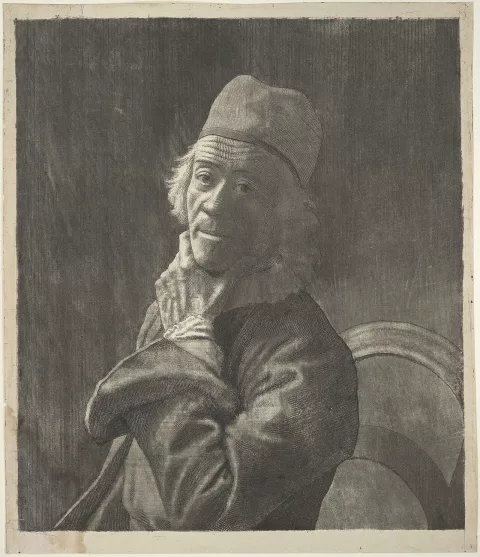
Jean-Étienne Liotard — Autoportrait
Image creditsJean-Étienne Liotard · Autoportrait · Wikimedia Commons · CC0

Jean-Étienne Liotard — « Autoportrait ». Another work by the artist, chosen as a visual connection to the story.

Jean-Étienne Liotard · Autoportrait · Wikimedia Commons · CC0

Image source Licence

Proportional resizing and WebP conversion, without cropping.

Jean-Étienne Liotard · 5 min read

The self-portrait whose gaze does not play the hero

Around 1778–1780, Liotard turns a pastel self-portrait into a black-and-white print. Mezzotint, engraving and roulette allow him to seek, without colour, a presence he had first conveyed in pastel.

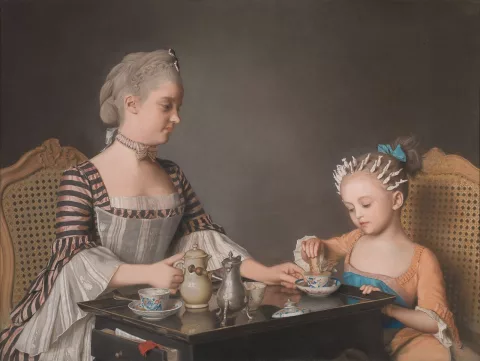
Jean-Étienne Liotard — Le Déjeuner de la famille Lavergne
Image creditsJean-Étienne Liotard · Le Déjeuner de la famille Lavergne · Wikimedia Commons · Public domain

Jean-Étienne Liotard — « Le Déjeuner de la famille Lavergne ».

Jean-Étienne Liotard · Le Déjeuner de la famille Lavergne · Wikimedia Commons · Public domain

Image source Licence

Proportional resizing and WebP conversion, without cropping.

Jean-Étienne Liotard · 5 min read

The coffee whose metal pastel makes shine

In Lyon in 1754, Jean-Étienne Liotard composes a breakfast whose objects shine almost as much as the faces. Nineteen years later, he revisits this large pastel in oil: the same instant becomes another experience of material.

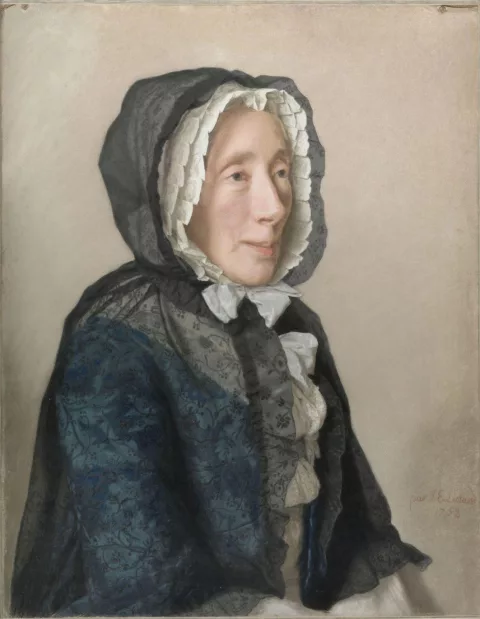
Jean-Étienne Liotard — Madame Jean Tronchin
Image creditsJean-Étienne Liotard · Madame Jean Tronchin · Wikimedia Commons · Public domain

Jean-Étienne Liotard — « Madame Jean Tronchin ».

Jean-Étienne Liotard · Madame Jean Tronchin · Wikimedia Commons · Public domain

Image source Licence

Proportional resizing and WebP conversion, without cropping.

Jean-Étienne Liotard · 5 min read

Madame Tronchin keeps her place in the pastel

In August 1758, Liotard paints Anne de Molesnes, the wife of Jean Tronchin, in Geneva at the age of seventy-four. On the back of the parchment, he reinforces certain features so that the transparency of the support also works on the face.

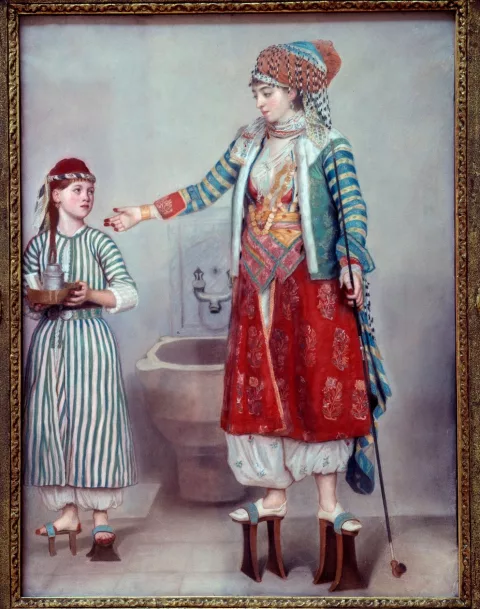
Jean-Étienne Liotard — Dame française en costume turc et sa servante
Image creditsJean-Étienne Liotard · Dame française en costume turc et sa servante · Wikimedia Commons · Public domain · Jean-Etienne Liotard (1702-1789=

Jean-Étienne Liotard — « Dame française en costume turc et sa servante ». Another work by the artist, chosen as a visual connection to the story.

Jean-Étienne Liotard · Dame française en costume turc et sa servante · Wikimedia Commons · Public domain · Jean-Etienne Liotard (1702-1789=

Image source Licence

Proportional resizing and WebP conversion, without cropping.

Jean-Étienne Liotard · 5 min read

Receiving visitors in the city of Pera

In 1745, Liotard and Giuseppe Camerata share the work on a print originating in drawings made in Constantinople. One handles the faces, the other the clothing and carpet: an artist’s reputation also circulates through this cooperation.

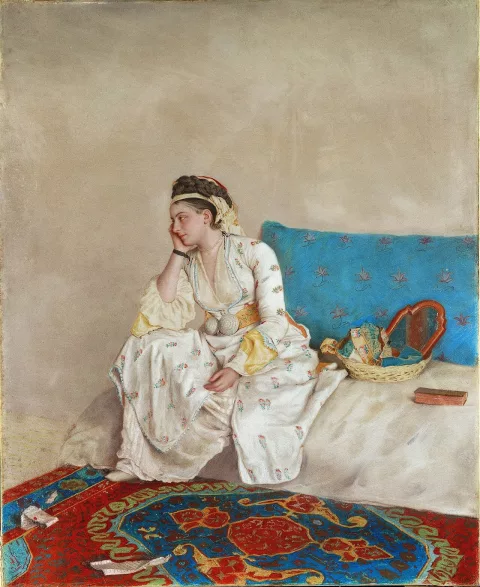
Jean-Étienne Liotard — Femme en costume turc assise sur un sofa
Image creditsJean-Étienne Liotard · Femme en costume turc assise sur un sofa · Wikimedia Commons · CC0

Jean-Étienne Liotard — « Femme en costume turc assise sur un sofa ».

Jean-Étienne Liotard · Femme en costume turc assise sur un sofa · Wikimedia Commons · CC0

Image source Licence

Proportional resizing and WebP conversion, without cropping.

Jean-Étienne Liotard · 5 min read

A Turkish dress in a European portrait

Around 1751–1752, Liotard returns to a female figure dressed in Turkish clothing. The costume, carpet and sofa organise a scene that reveals the circulation of objects as much as the repose of the person depicted.