Skip to content
Swiss Art GalleryArt gallery & salesSt-Prex · Switzerland
Gallery journal
Swiss Art Gallery · The story library

Artists’ stories

An encounter with art every day. Stories to read, listen to and rediscover.

The story library

115 stories

Find stories by artist, title or subject.

Show all
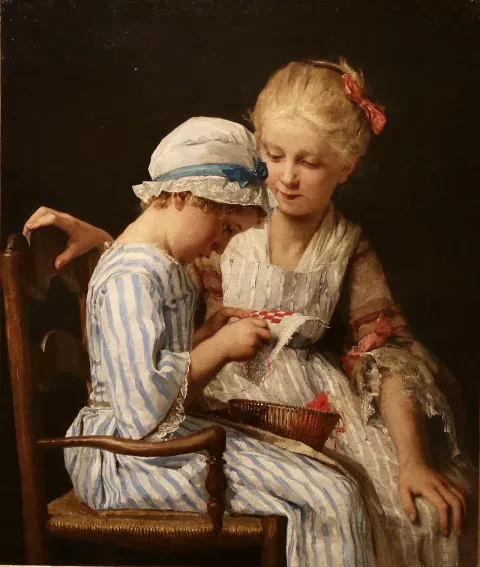
Albert Anker — Les Petites Brodeuses
Image creditsAlbert Anker · Les Petites Brodeuses · Wikimedia Commons · Public domain · Paradise Chronicle

Albert Anker — « Les Petites Brodeuses ».

Albert Anker · Les Petites Brodeuses · Wikimedia Commons · Public domain · Paradise Chronicle

Image source Licence

Proportional resizing and WebP conversion, without cropping.

Albert Anker · 5 min read

The embroiderers wore dresses from another century

In The Little Embroiderers of 1875, Anker had children pose in Louis XV dresses. The painting held in Lausanne tells of a meeting between learning a gesture and the Parisian taste for eighteenth-century painting.
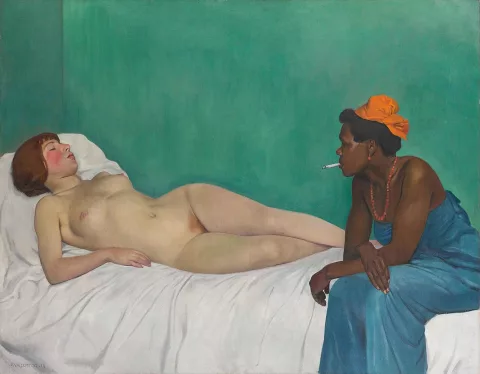
Félix Vallotton — La Blanche et la Noire
Image creditsFélix Vallotton · La Blanche et la Noire · Wikimedia Commons · Public domain

Félix Vallotton — « La Blanche et la Noire ».

Félix Vallotton · La Blanche et la Noire · Wikimedia Commons · Public domain

Image source Licence

Proportional resizing and WebP conversion, without cropping.

Félix Vallotton · 5 min read

Two women and a gaze that changes place

The White Woman and the Black Woman, painted by Vallotton in 1913, brings repose and vigilance together. Its history in the Hahnloser collection and recent rereadings invite us to examine the relationships the image constructs between two presences.

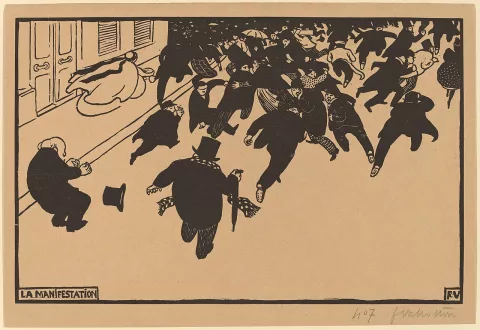
Félix Vallotton — La Manifestation
Image creditsFélix Vallotton · La Manifestation · Wikimedia Commons · CC0

Félix Vallotton — « La Manifestation ».

Félix Vallotton · La Manifestation · Wikimedia Commons · CC0

Image source Licence

Proportional resizing and WebP conversion, without cropping.

Félix Vallotton · 5 min read

The crowd running in a single black

The Demonstration of 1893 transforms a Parisian crowd into a construction of silhouettes. Published in L’Estampe originale, Vallotton’s woodcut circulates street agitation with a remarkable economy of means.

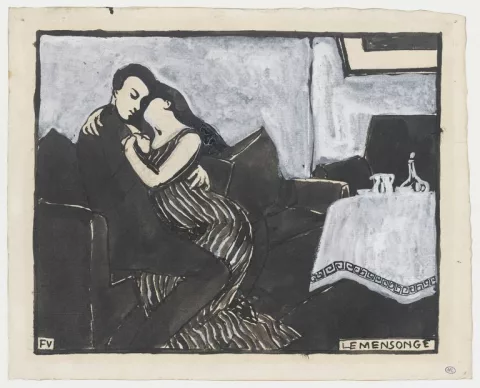
Félix Vallotton — Le Mensonge, dessin préparatoire
Image creditsFélix Vallotton · Le Mensonge, dessin préparatoire · Wikimedia Commons · Public domain

Félix Vallotton — « Le Mensonge, dessin préparatoire ».

Félix Vallotton · Le Mensonge, dessin préparatoire · Wikimedia Commons · Public domain

Image source Licence

Proportional resizing and WebP conversion, without cropping.

Félix Vallotton · 5 min read

The lie begins on a preparatory sheet

Before the woodcut, Vallotton prepares The Lie in a drawing. The sheet held in the Musée d’Orsay’s collection lets us follow how an intimate scene becomes a powerful arrangement of blacks and light reserves.

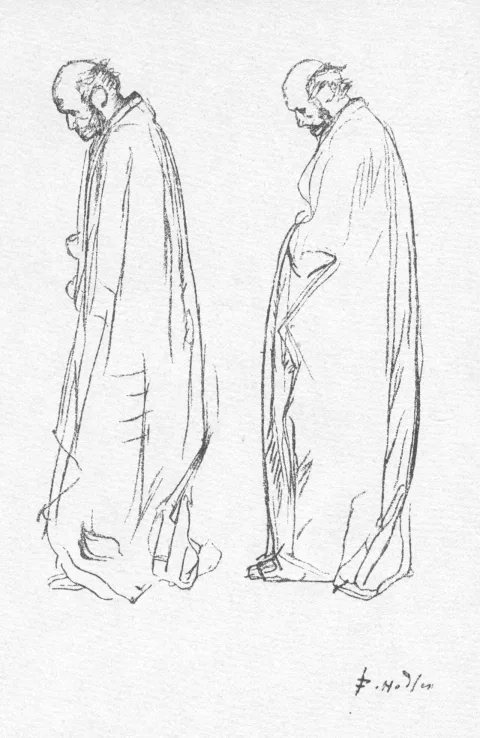
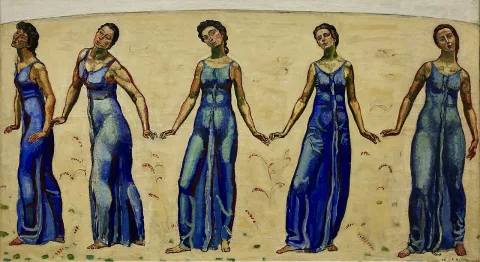
Ferdinand Hodler — Figures d’Eurythmie
Image creditsFerdinand Hodler · Figures d’Eurythmie · Wikimedia Commons · Public domain

Ferdinand Hodler — « Figures d’Eurythmie ». Another work by the artist, chosen as a visual connection to the story.

Ferdinand Hodler · Figures d’Eurythmie · Wikimedia Commons · Public domain

Image source Licence

Proportional resizing and WebP conversion, without cropping.

Ferdinand Hodler · 5 min read

Five walkers, a movement nothing hurries

With Eurhythmy, Hodler turns human movement into a composition of great slowness. Completed in 1895 and acquired in Bern in 1901, the work asks us to follow differences at the heart of a group.

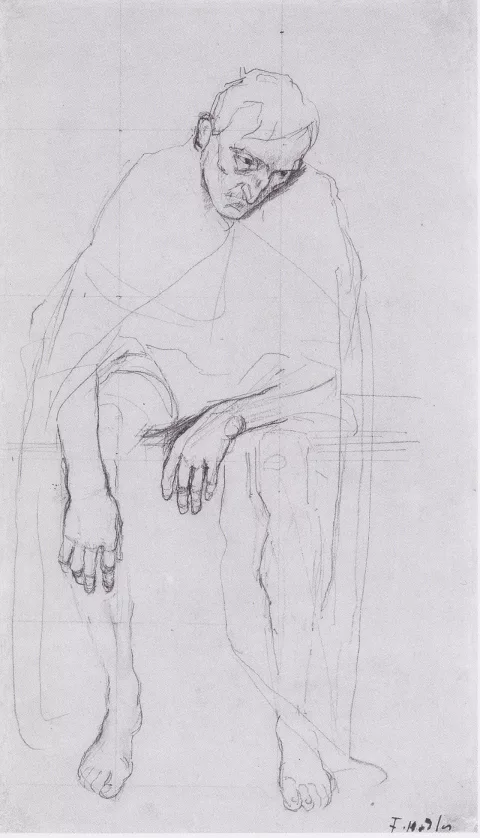
Ferdinand Hodler — Vieillard assis, étude pour Les Âmes déçues ou Les Las de vivre
Image creditsFerdinand Hodler · Vieillard assis, étude pour Les Âmes déçues ou Les Las de vivre · Wikimedia Commons · Public domain

Ferdinand Hodler — « Vieillard assis, étude pour Les Âmes déçues ou Les Las de vivre ». Another work by the artist, chosen as a visual connection to the story.

Ferdinand Hodler · Vieillard assis, étude pour Les Âmes déçues ou Les Las de vivre · Wikimedia Commons · Public domain

Image source Licence

Proportional resizing and WebP conversion, without cropping.

Ferdinand Hodler · 5 min read

Souls brought together without consolation

The Disappointed Souls presents a group of old men whose attitudes answer one another. This 1892 painting, acquired in Bern in 1901, makes the proximity of bodies an experience without an easy solution.

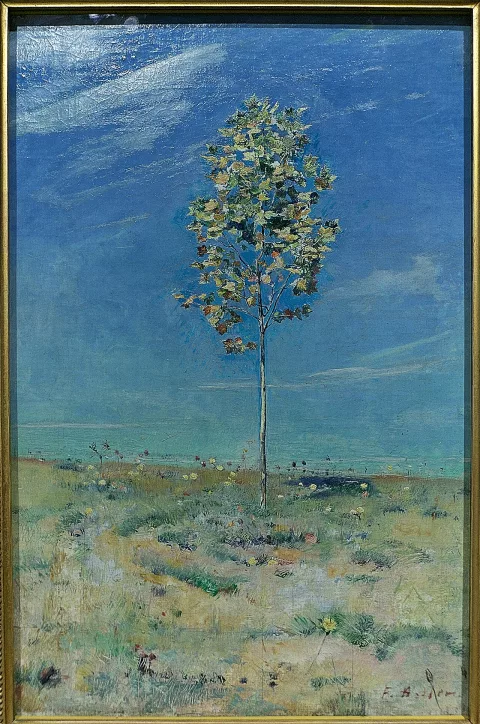
Ferdinand Hodler — Le petit platane
Image creditsFerdinand Hodler · Le petit platane · Wikimedia Commons · CC BY-SA 4.0 · Jl FilpoC

Ferdinand Hodler — « Le petit platane ». Another work by the artist, chosen as a visual connection to the story.

Ferdinand Hodler · Le petit platane · Wikimedia Commons · CC BY-SA 4.0 · Jl FilpoC

Image source Licence

Proportional resizing and WebP conversion, without cropping.

Ferdinand Hodler · 5 min read

The walker entering the order of the trees

Around 1885, Hodler painted a walker among tree trunks. This small scene invites us to follow the passage between an individual presence and the rhythm of a forest, long before the great Symbolist decorations.

Ferdinand Hodler — L’Élu, seconde version
Image creditsFerdinand Hodler · L’Élu, seconde version · Wikimedia Commons · Public domain

Ferdinand Hodler — « L’Élu, seconde version ». Another work by the artist, chosen as a visual connection to the story.

Ferdinand Hodler · L’Élu, seconde version · Wikimedia Commons · Public domain

Image source Licence

Proportional resizing and WebP conversion, without cropping.

Ferdinand Hodler · 5 min read

The little boy at the centre of a circle of expectation

In The Chosen One, Hodler gives a child a singular place amid figures arranged around him. The 1893–1894 work lets us look at how a symbolic title becomes an organisation of bodies.

Ferdinand Hodler — Regard dans l’infini, version Hahnloser
Image creditsFerdinand Hodler · Regard dans l’infini, version Hahnloser · Wikimedia Commons · Public domain · Paradise Chronicle

Ferdinand Hodler — « Regard dans l’infini, version Hahnloser ». Another work by the artist, chosen as a visual connection to the story.

Ferdinand Hodler · Regard dans l’infini, version Hahnloser · Wikimedia Commons · Public domain · Paradise Chronicle

Image source Licence

Proportional resizing and WebP conversion, without cropping.

Ferdinand Hodler · 5 min read

A great painting prepared down to the fingers

View into Infinity grows out of a monumental commission and numerous studies. A hand painted on paper lets us approach the precise work supporting the figures’ grand deployment.

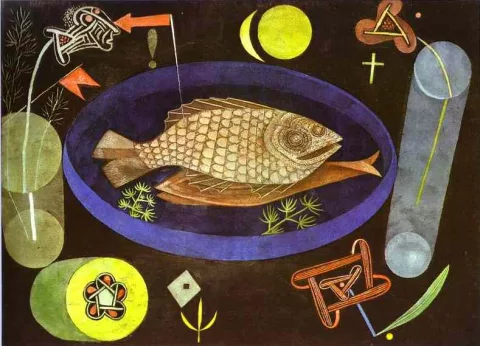
Paul Klee — Autour du poisson
Image creditsPaul Klee · Autour du poisson · Wikimedia Commons · Public domain

Paul Klee — « Autour du poisson ».

Paul Klee · Autour du poisson · Wikimedia Commons · Public domain

Image source Licence

Proportional resizing and WebP conversion, without cropping.

Paul Klee · 5 min read

The fish that gathers signs around itself

Around the Fish, painted in 1926, retains the appearance of a still life and opens it to an array of signs. Its journey from Berlin to New York gives this enigmatic scene a second history.

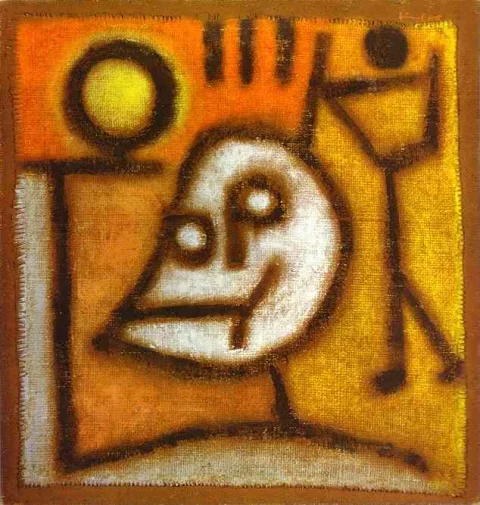
Paul Klee — Mort et Feu
Image creditsPaul Klee · Mort et Feu · Wikimedia Commons · Public domain

Paul Klee — « Mort et Feu ».

Paul Klee · Mort et Feu · Wikimedia Commons · Public domain

Image source Licence

Proportional resizing and WebP conversion, without cropping.

Paul Klee · 5 min read

When a face also becomes a word

In Death and Fire, Klee combines painting, signs and letters. A late work from 1940 holds the question of ending within a face that can be looked at, but can also be read.

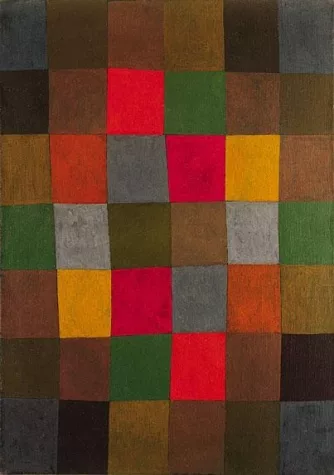
Paul Klee — Nouvelle Harmonie
Image creditsPaul Klee · Nouvelle Harmonie · Wikimedia Commons · Public domain · Paul Klee († 1940)

Paul Klee — « Nouvelle Harmonie ».

Paul Klee · Nouvelle Harmonie · Wikimedia Commons · Public domain · Paul Klee († 1940)

Image source Licence

Proportional resizing and WebP conversion, without cropping.

Paul Klee · 5 min read

A harmony that owes nothing to a landscape

New Harmony, painted in 1936, distributes colour within a geometric construction. Klee lets the relationships between surfaces become the true subject of the painting held at the Guggenheim.