Born in Kratzau, Bohemia, in 1800 and died in Vienna in 1876, the painter Joseph von Führich devoted himself to religious subjects in Rome. This direction earned him the nickname “Theologian with the Pen”; his depictions of the Stations of the Cross, disseminated as copper engravings, made him known throughout Europe and served as models for other painters. In Prague, the frescoes on Laurenziberg were executed by Josef Holzmaier after his designs.
The son of the painter Wenzel Führich, he received his first art lessons from his father. After exhibiting two paintings in Prague in 1819, he was awarded a scholarship to study at the city’s Academy of Fine Arts, where he was a pupil of Joseph Bergler. His first independent work was the altarpiece Maria im Grünen, placed on a side altar in St Lawrence’s Church in Kratzau in 1868; the source indicates that it no longer appears to be extant. In 1829, drawings inspired by Tieck’s tragedy Genoveva opened up the possibility of a study trip to Rome, granted by Metternich. Friedrich Overbeck then enabled him to take part in the design work for the Villa Massimo from the outset. The source links his religious commitment to his encounter with the Nazarenes and notes that in Rome he devoted himself exclusively to depicting religious themes.
Among the documented works is Moses Praying with Aaron and Hur on Mount Horeb, an oil on panel dated 1832, held at the Österreichische Galerie in Vienna. The Journey to Emmaus, an oil on canvas measuring 29 × 44 cm, dated 1837, is held at the Kunsthalle Bremen. In 1838, he travelled to Venice with the painter Eduard Engerth to acquire works for the gallery. He published a brief autobiography in the Almanach Libussa in 1844.
The March Revolution of 1848 interrupted his work and forced him to flee to northern Bohemia; he returned to Vienna in 1851. In his book Von der Kunst, he criticised contemporary art with non-religious motivations; according to the source, his position was received very negatively by his contemporaries. Raised to the hereditary rank of knight in 1861, he retired in 1872 with the approval of the court. Rudolf von Habsburg and the Priest, an oil on canvas measuring 111 × 135 cm, dated 1870, is held at the Österreichische Galerie in Vienna.
This profile brings together identity references for Joseph von Führich and paintings, drawings and works on paper documented in auction catalogues.
Documented auction references
2auction references
2auction houses
1documented result with a price
Dobiaschofsky · Schuler
References include catalogue entries and available results; they do not all represent completed sales. Attributed works and special lots are excluded from the priced results.
Works recorded at auction
Photograph : Schuler · Enlarge image ↗
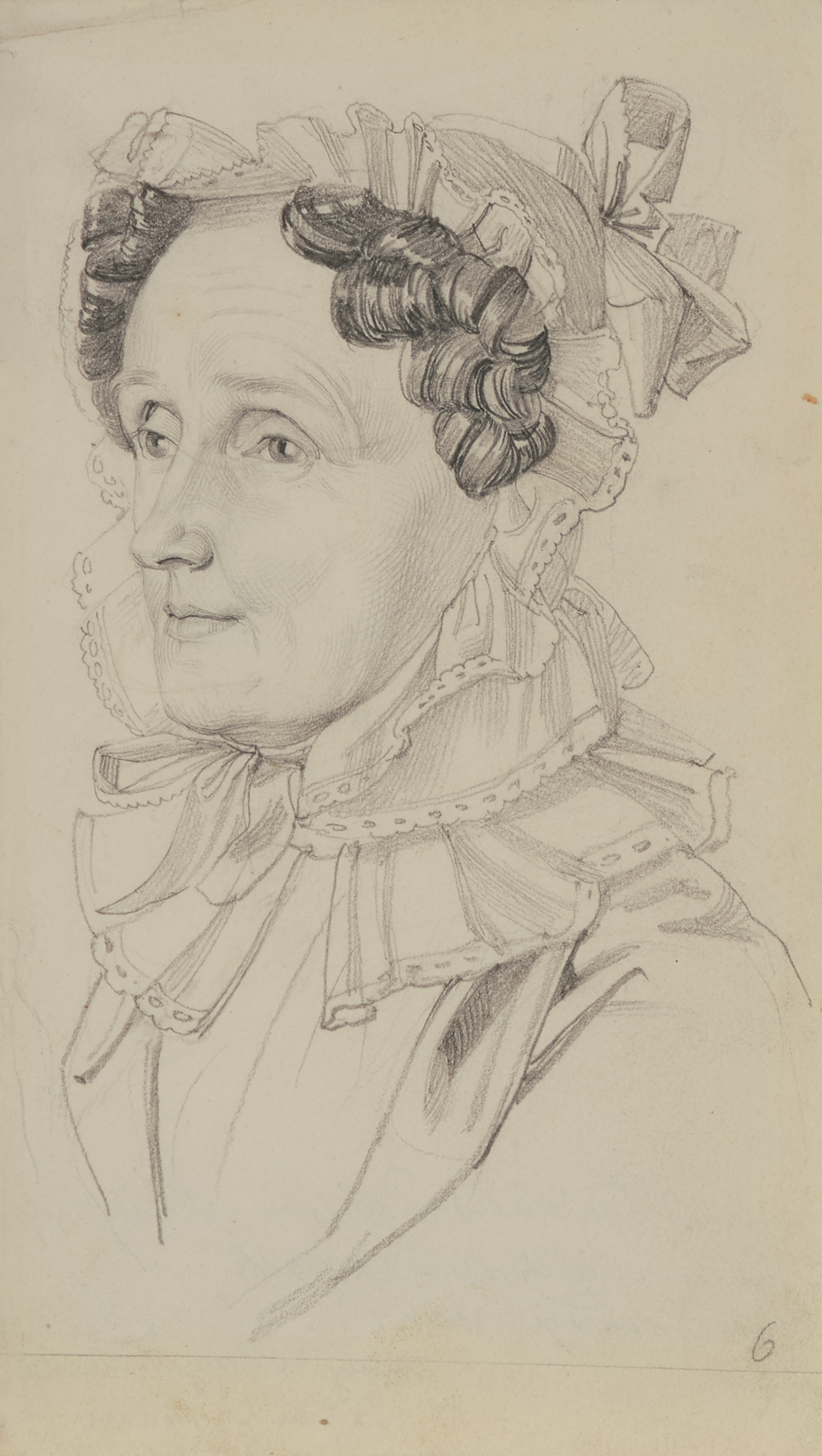
Schuler · Lot 3050
Portrait der Mutter des Künstlers
Pencil drawing
Original catalogue wording
Portrait der Mutter des Künstlers Bleistiftzeichnung
SwissArtGallery documentary note based on the cited sources. Titles, media and qualifications are provided in the profile language; the original catalogue wording remains available in each record. Profile updated :
Jan Schoonhoven (1914–1994), a Dutch artist born and died in Delft, moved from early abstract explorations to a body of work in which relief and repetition occupy a central place. In…
The British painter Nicholas Matthews Condy, born in Plymouth in 1816, died in that city on 20 May 1851. He is associated with marine painting and numerous views of the Thames. His f…
Born in New Jersey in 1955, the American artist Philip Taaffe studied at Cooper Union in New York, where he received a BFA in 1977. His first solo exhibition was held in New York in…