Walter Grab
Born in 1927.
Died in 1989.
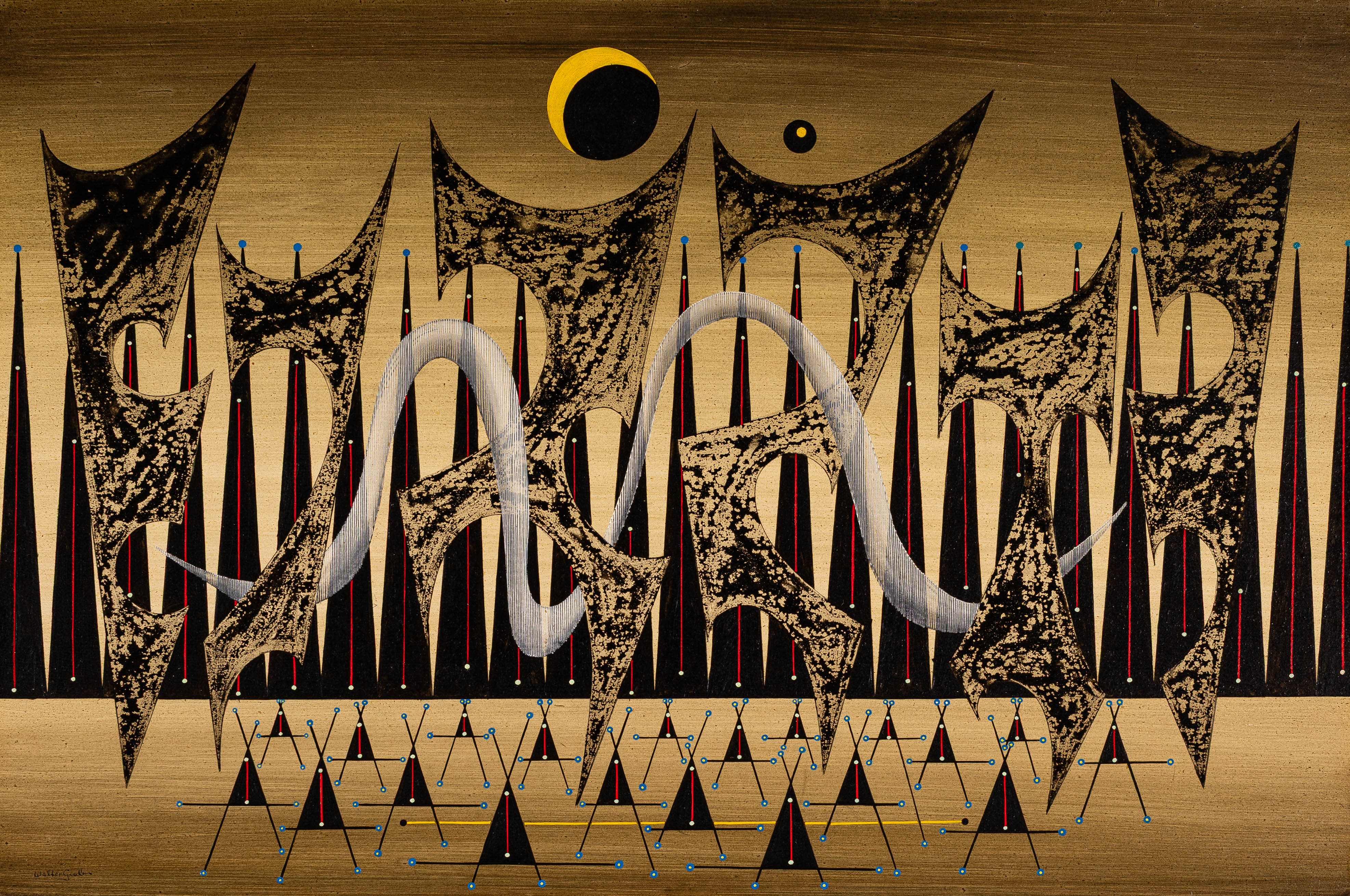
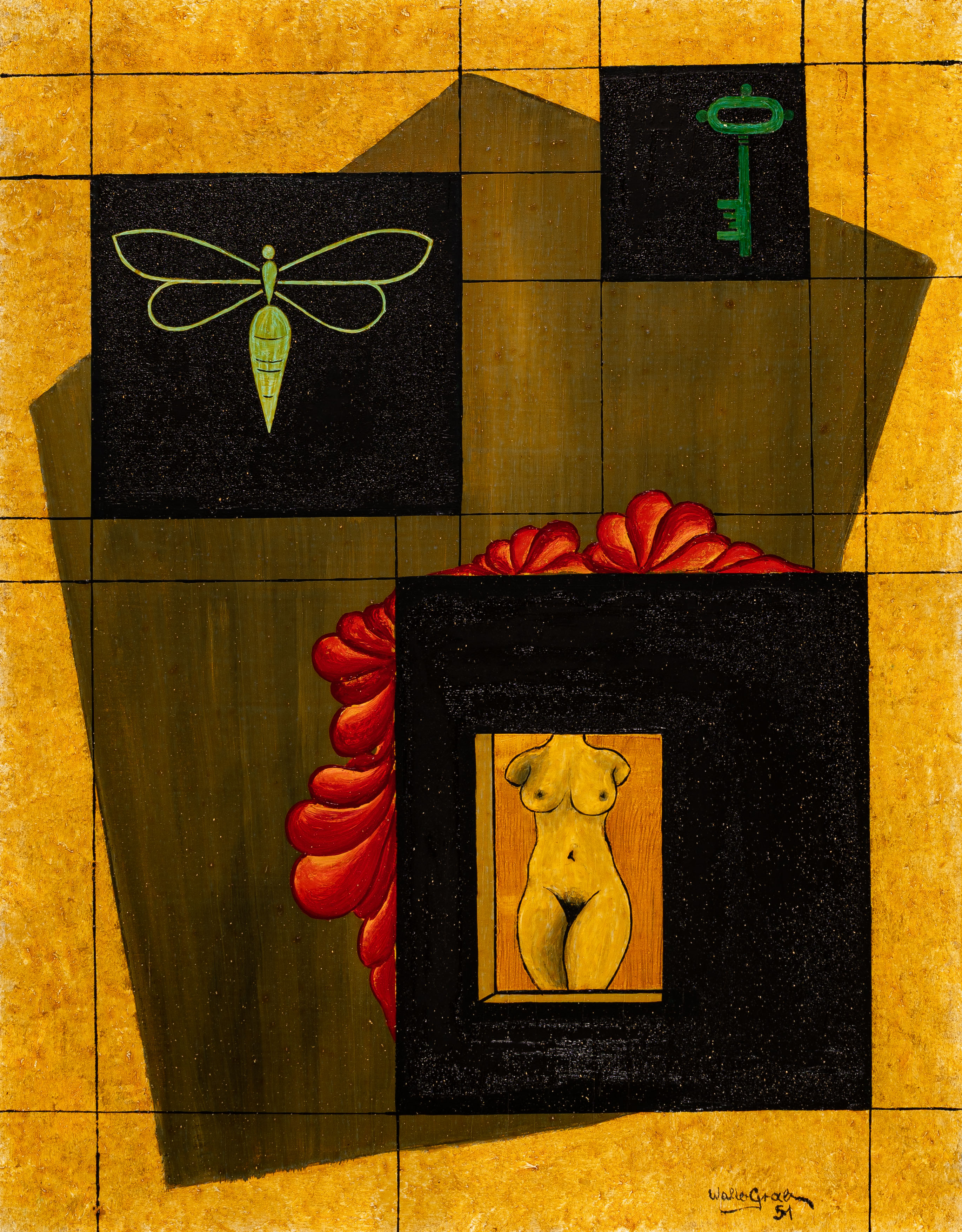
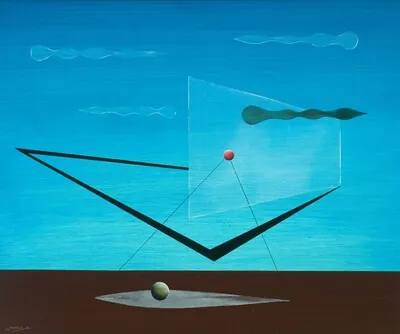
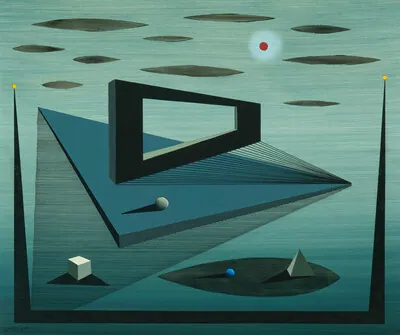
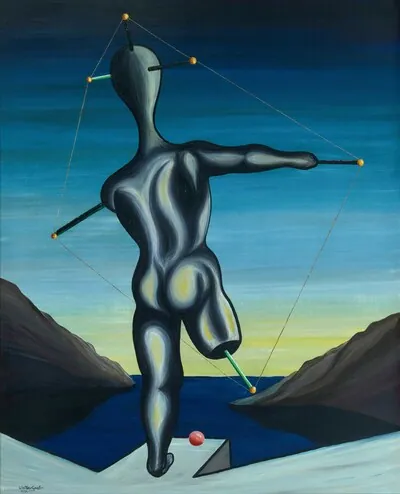
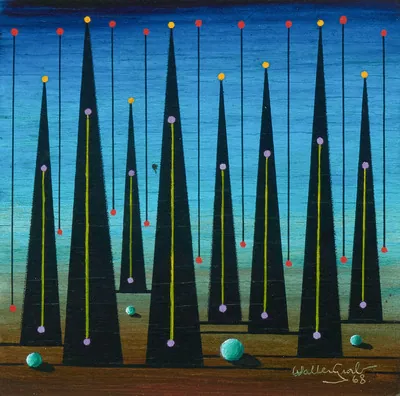
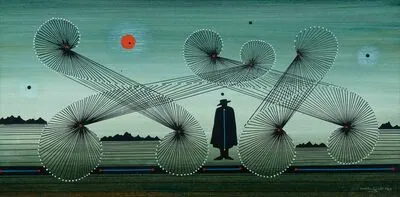
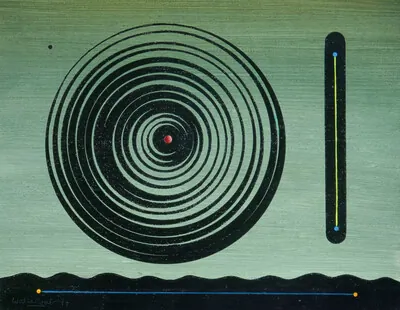
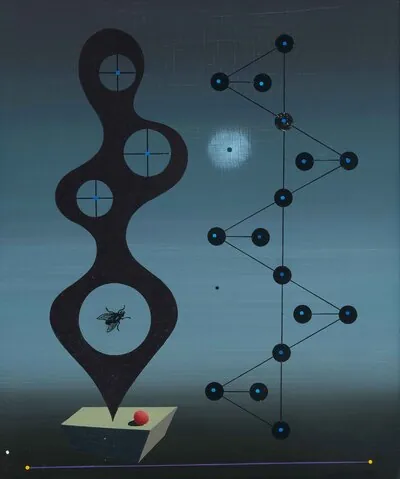
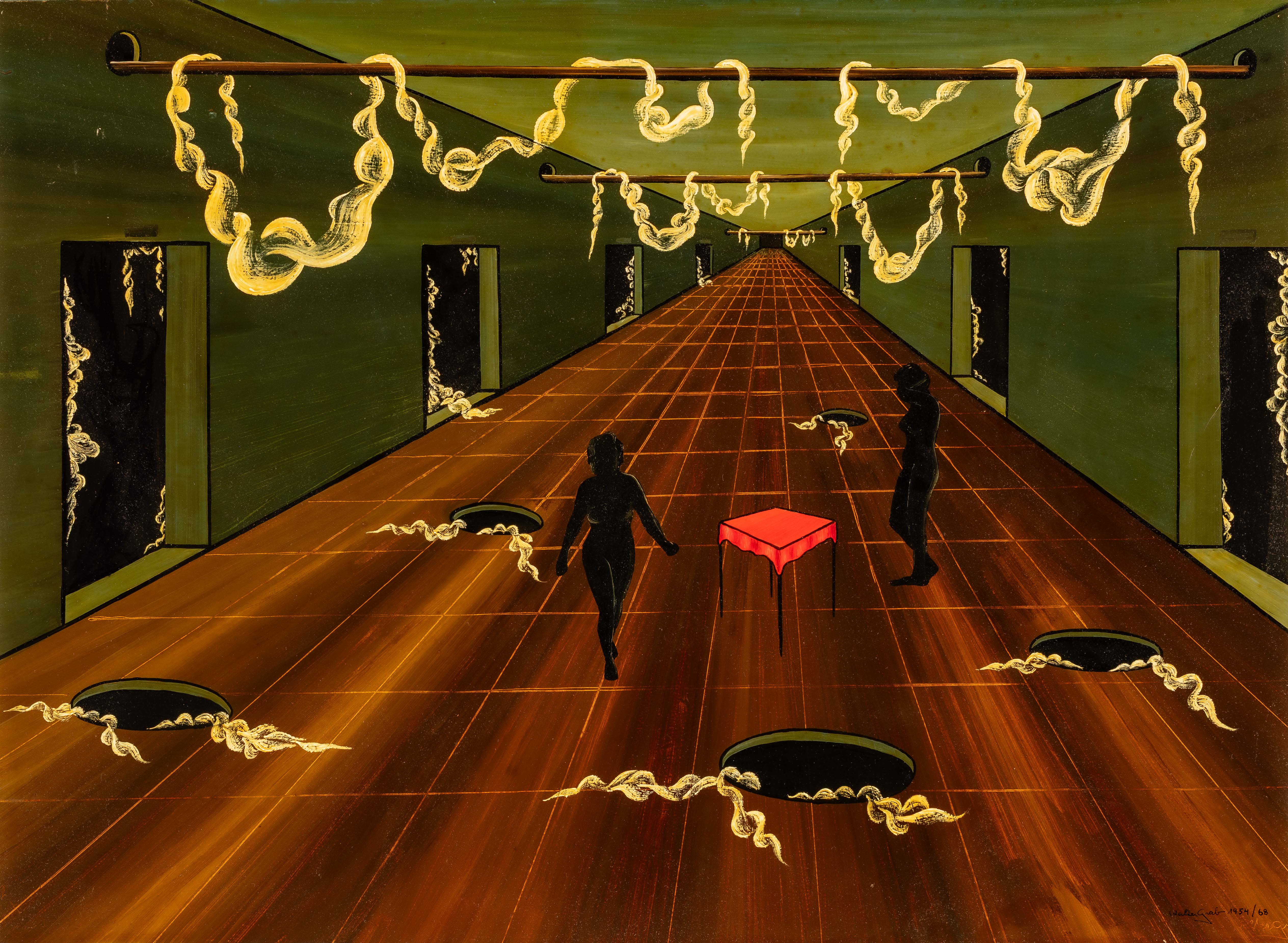
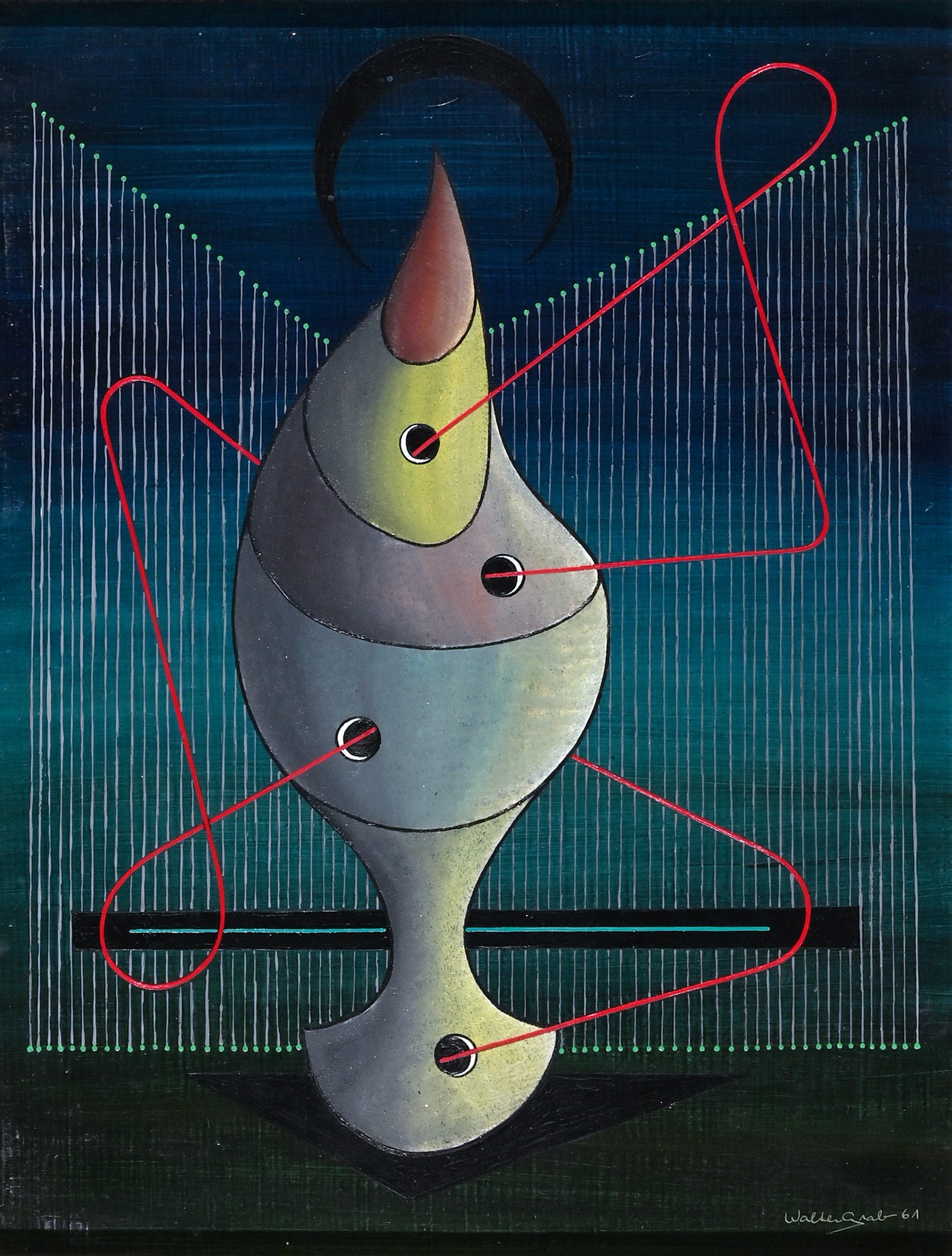
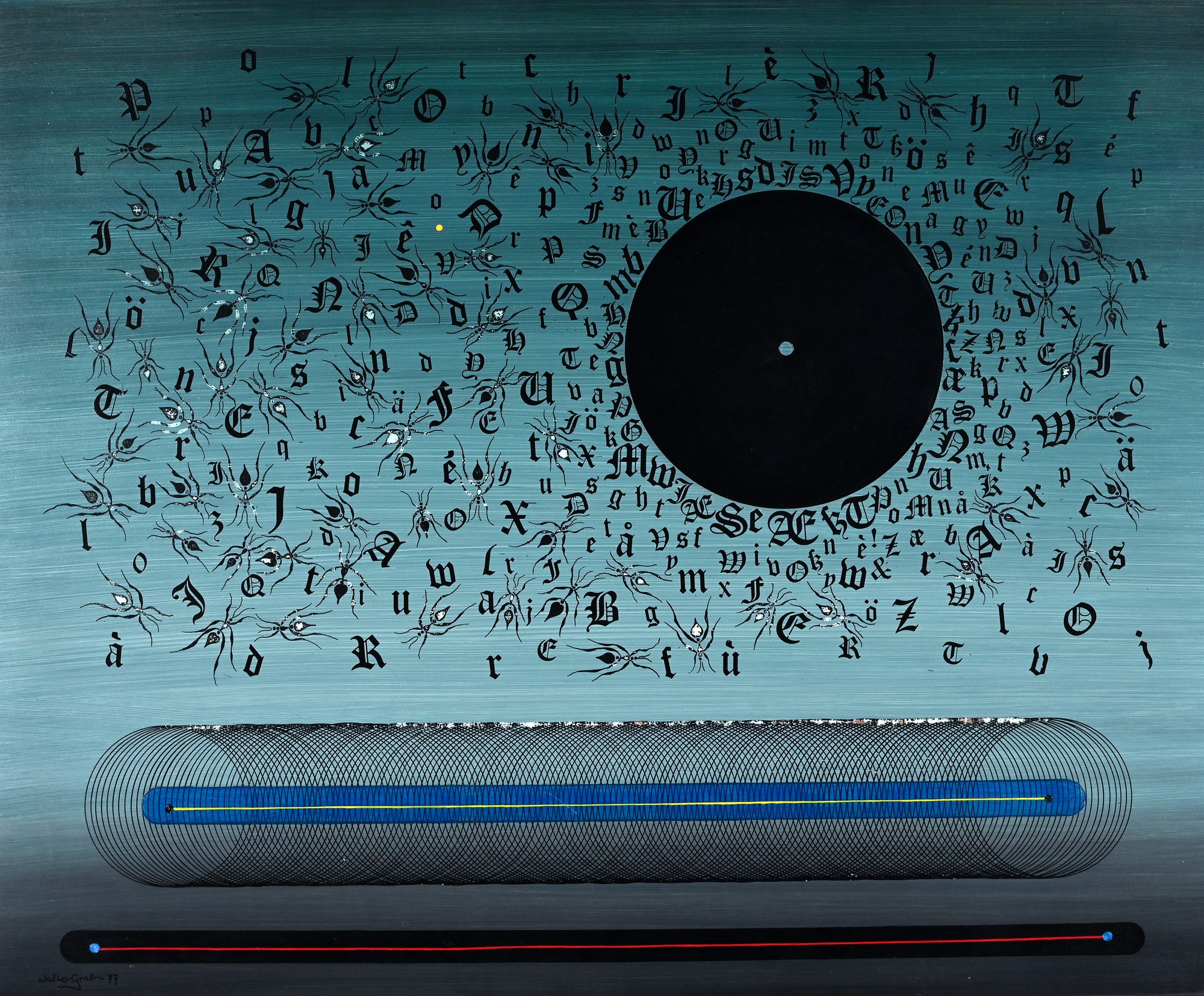
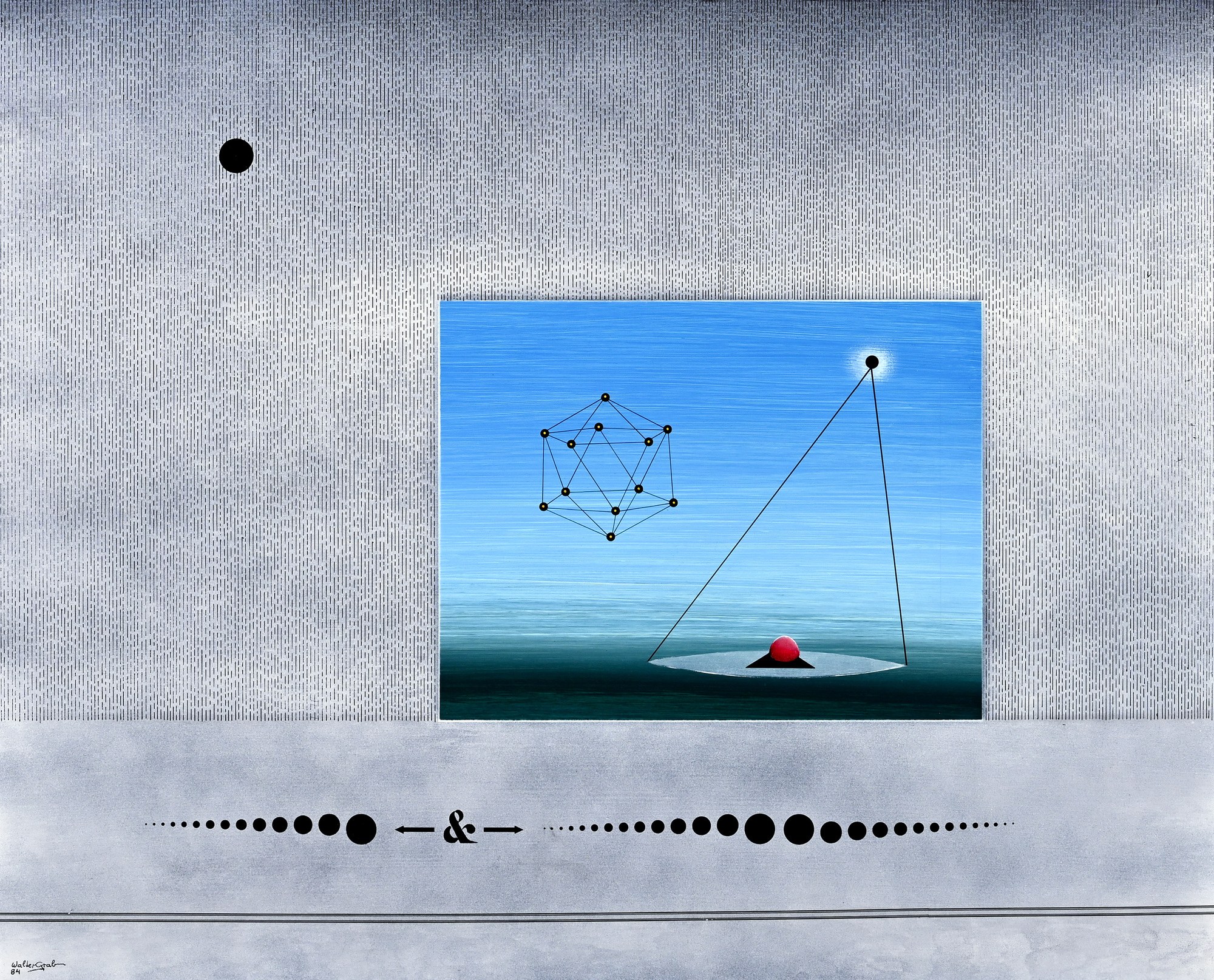
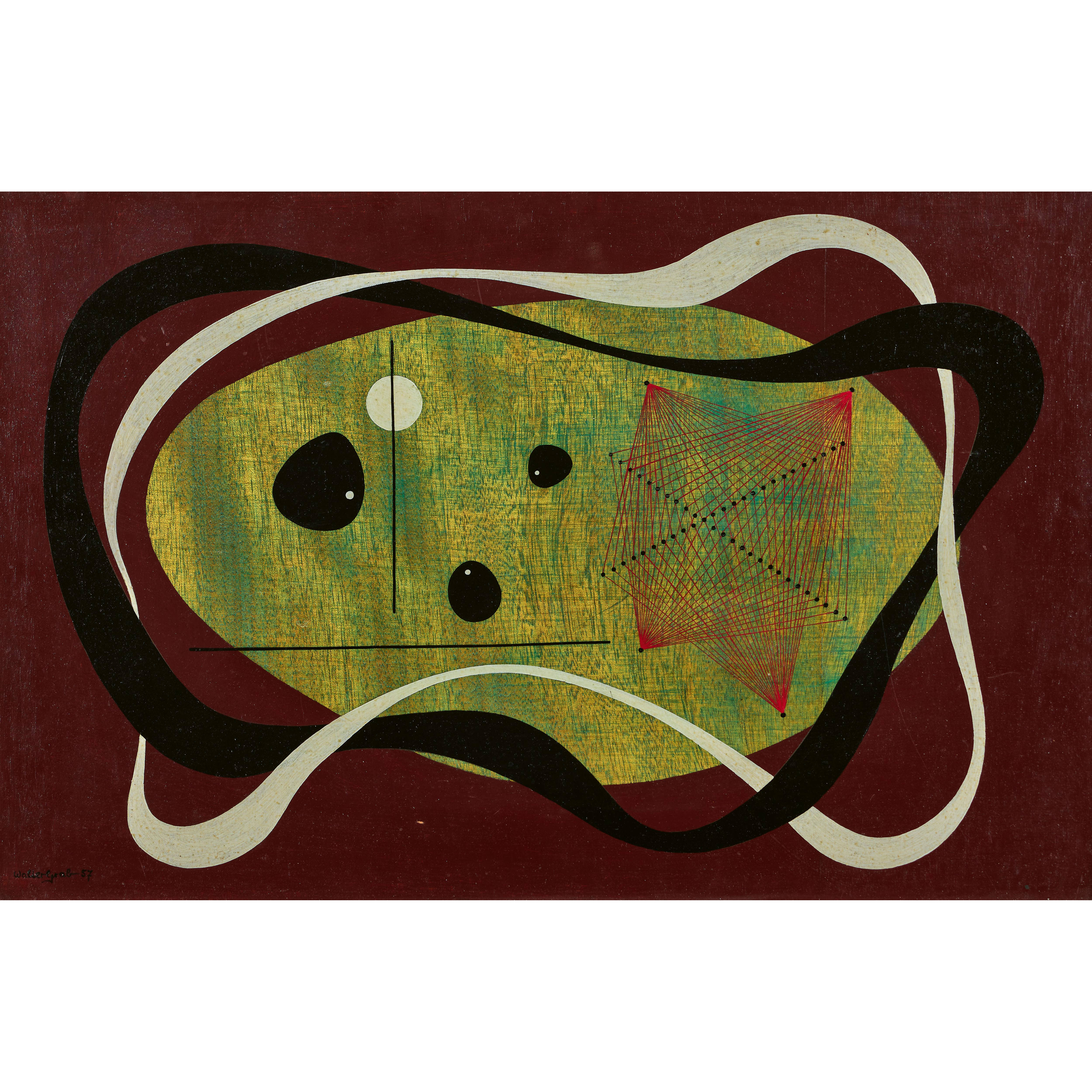
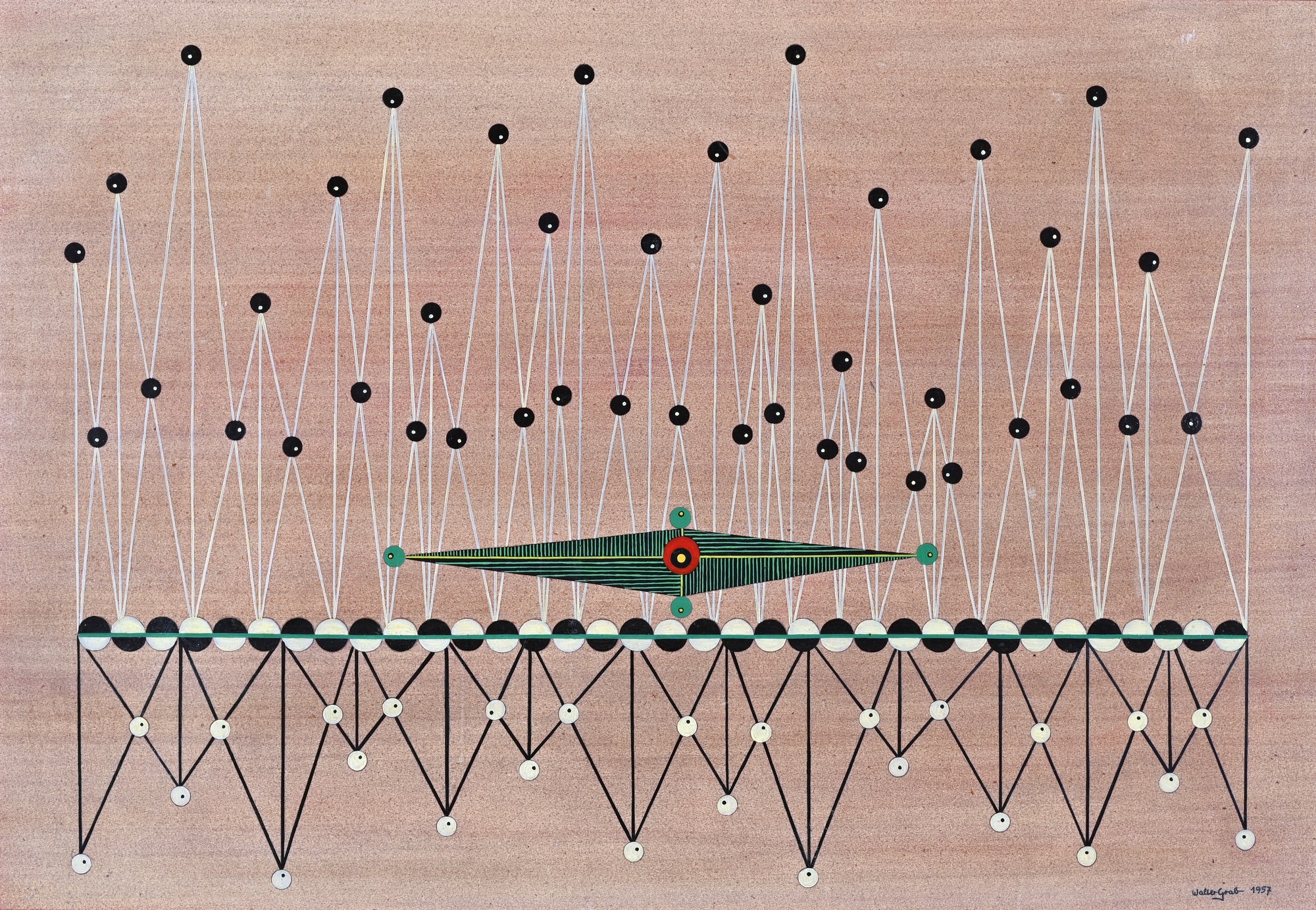
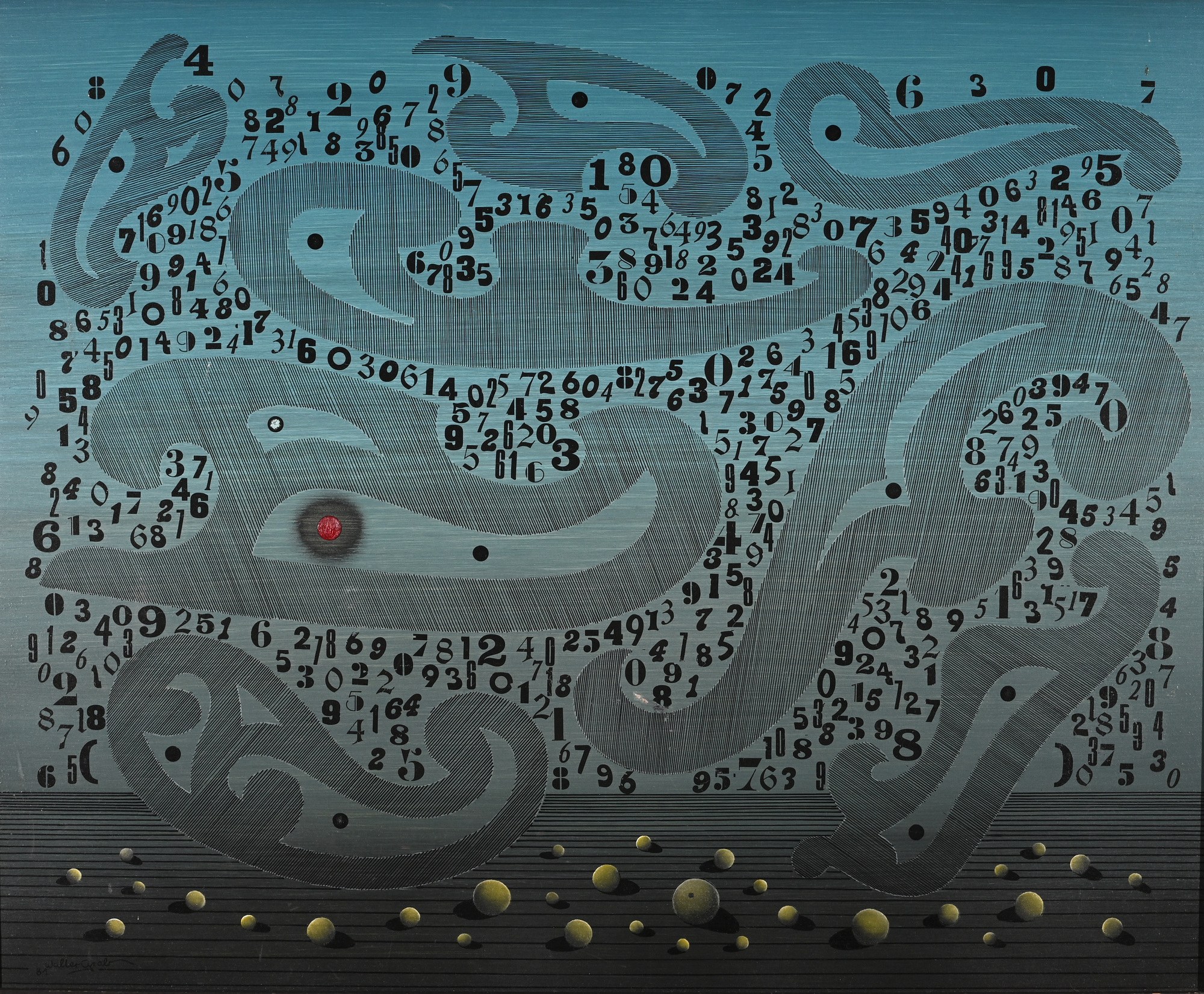
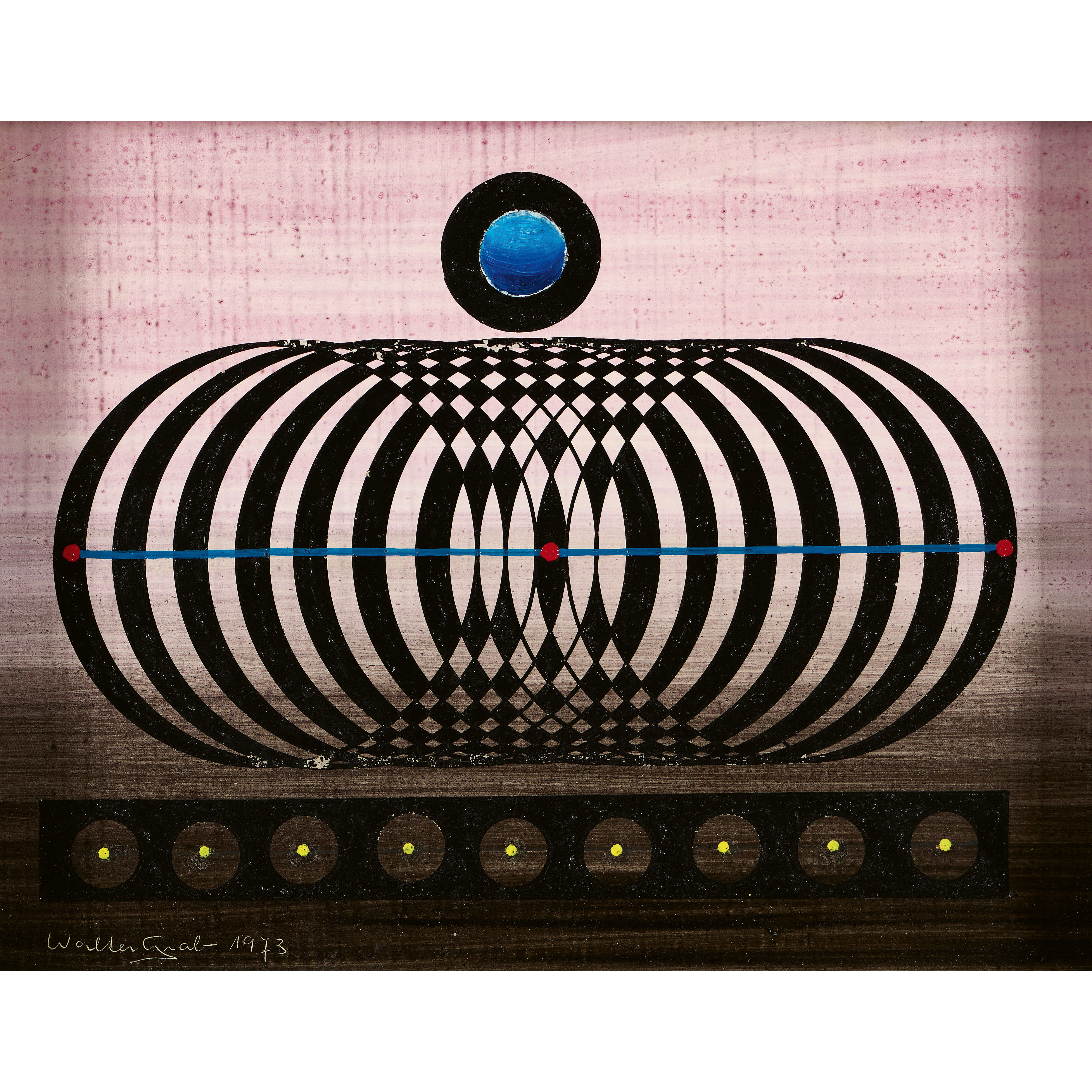
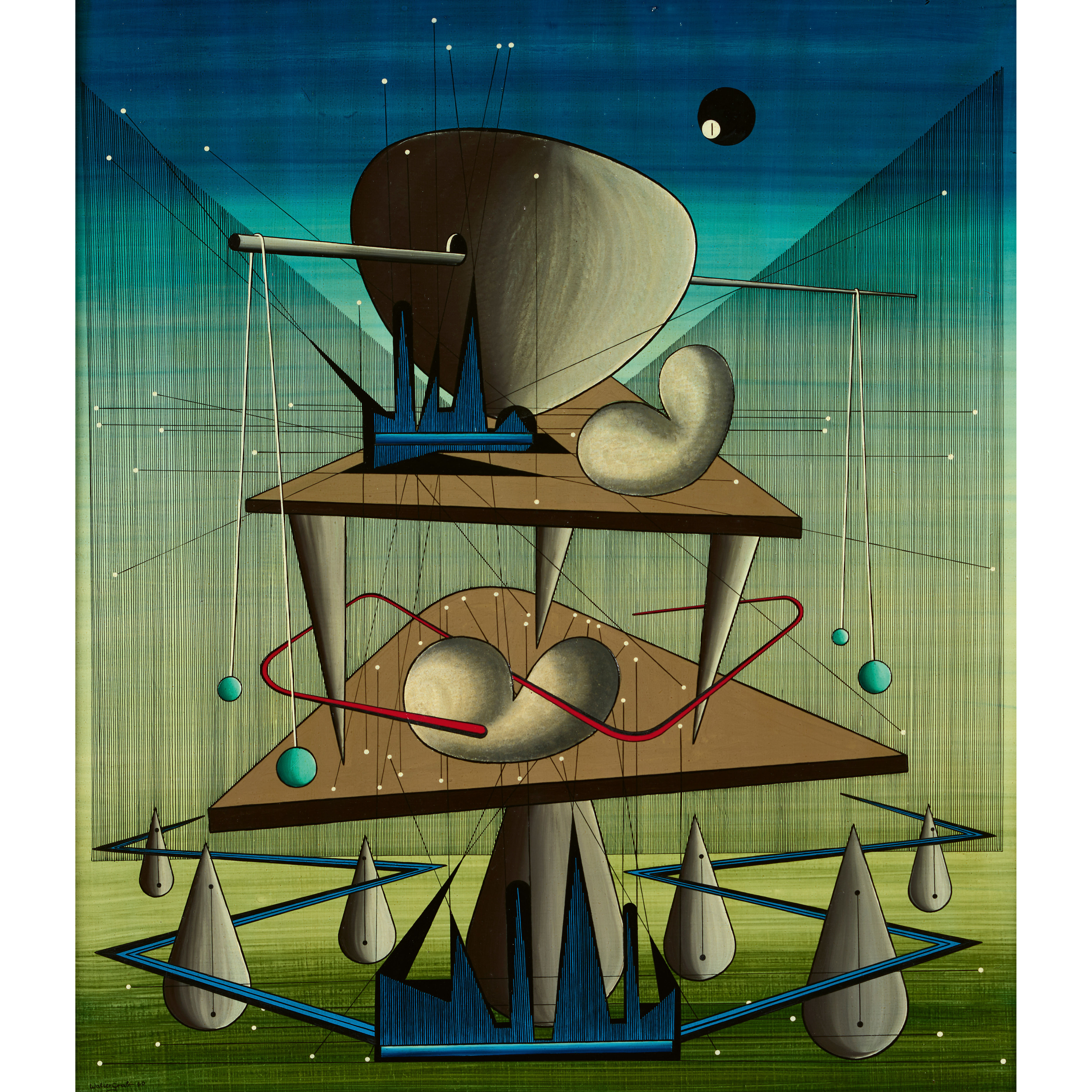
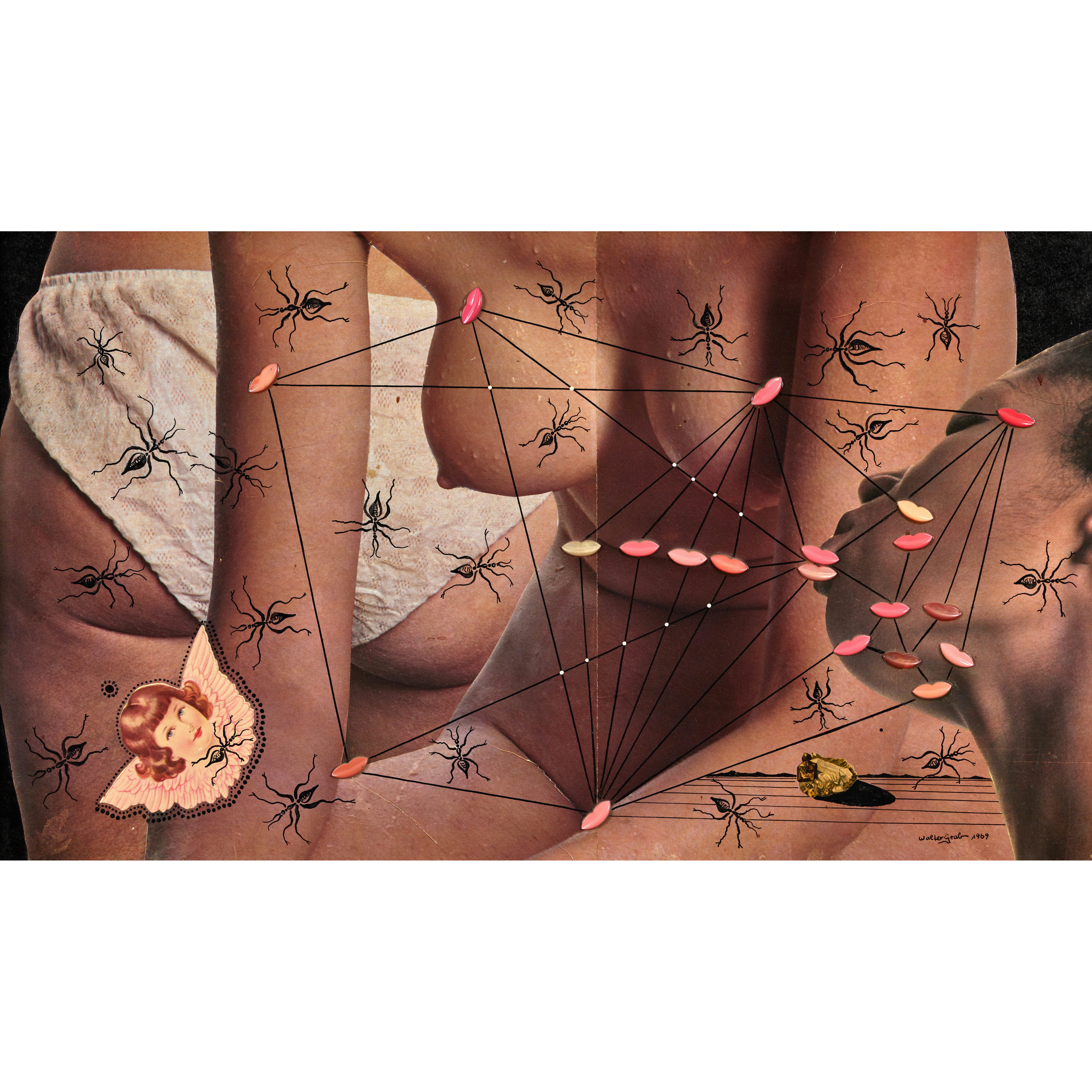
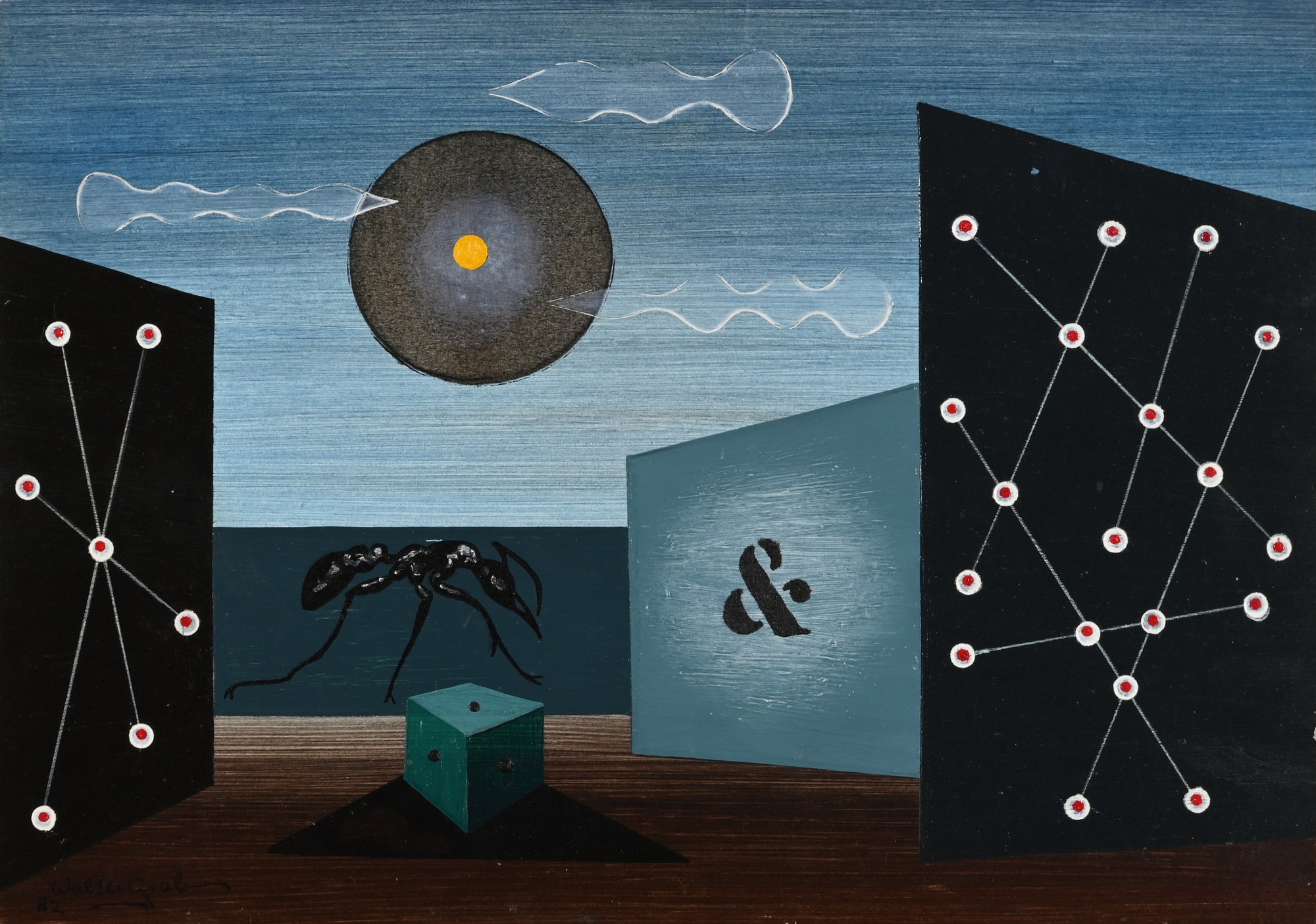
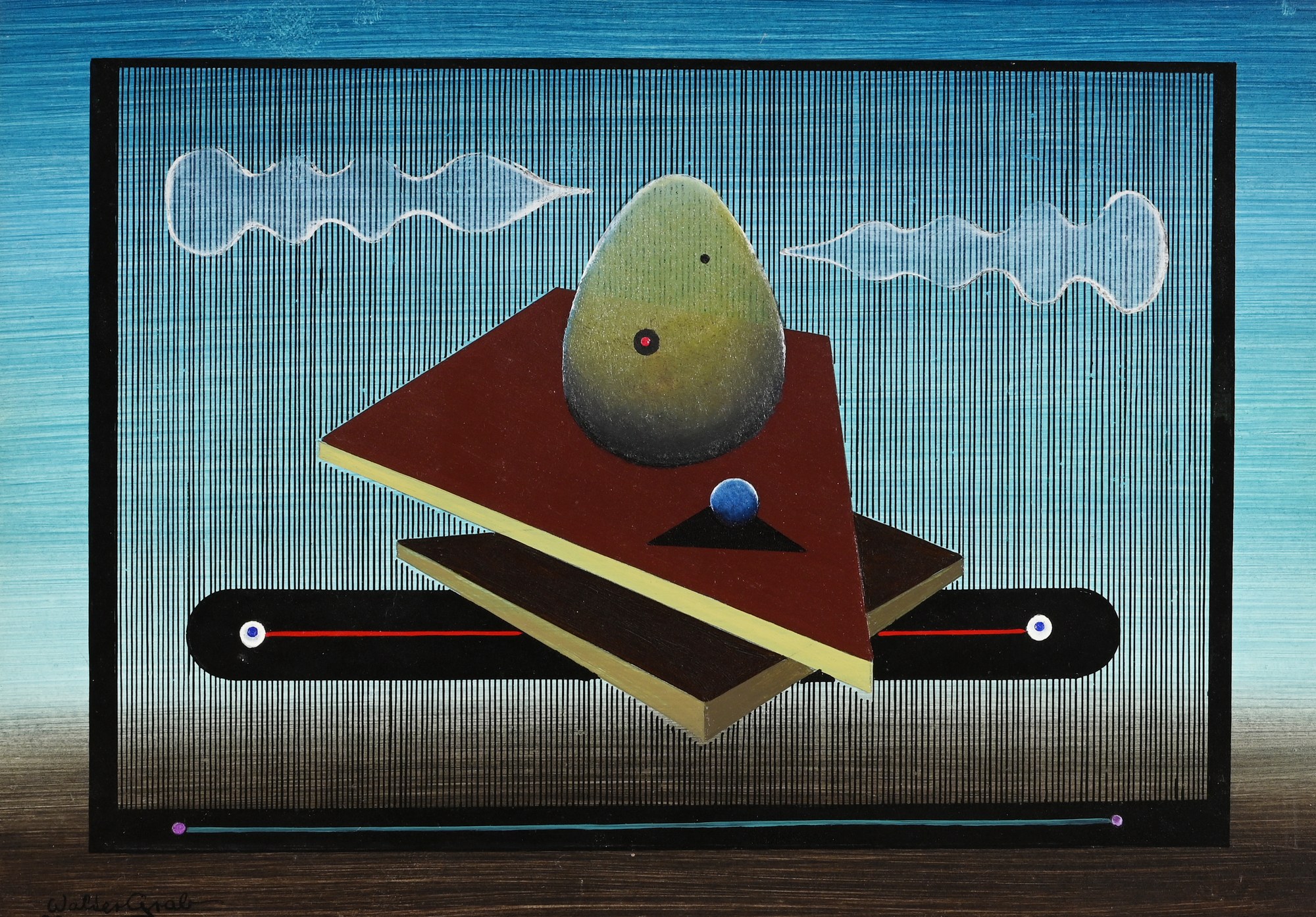
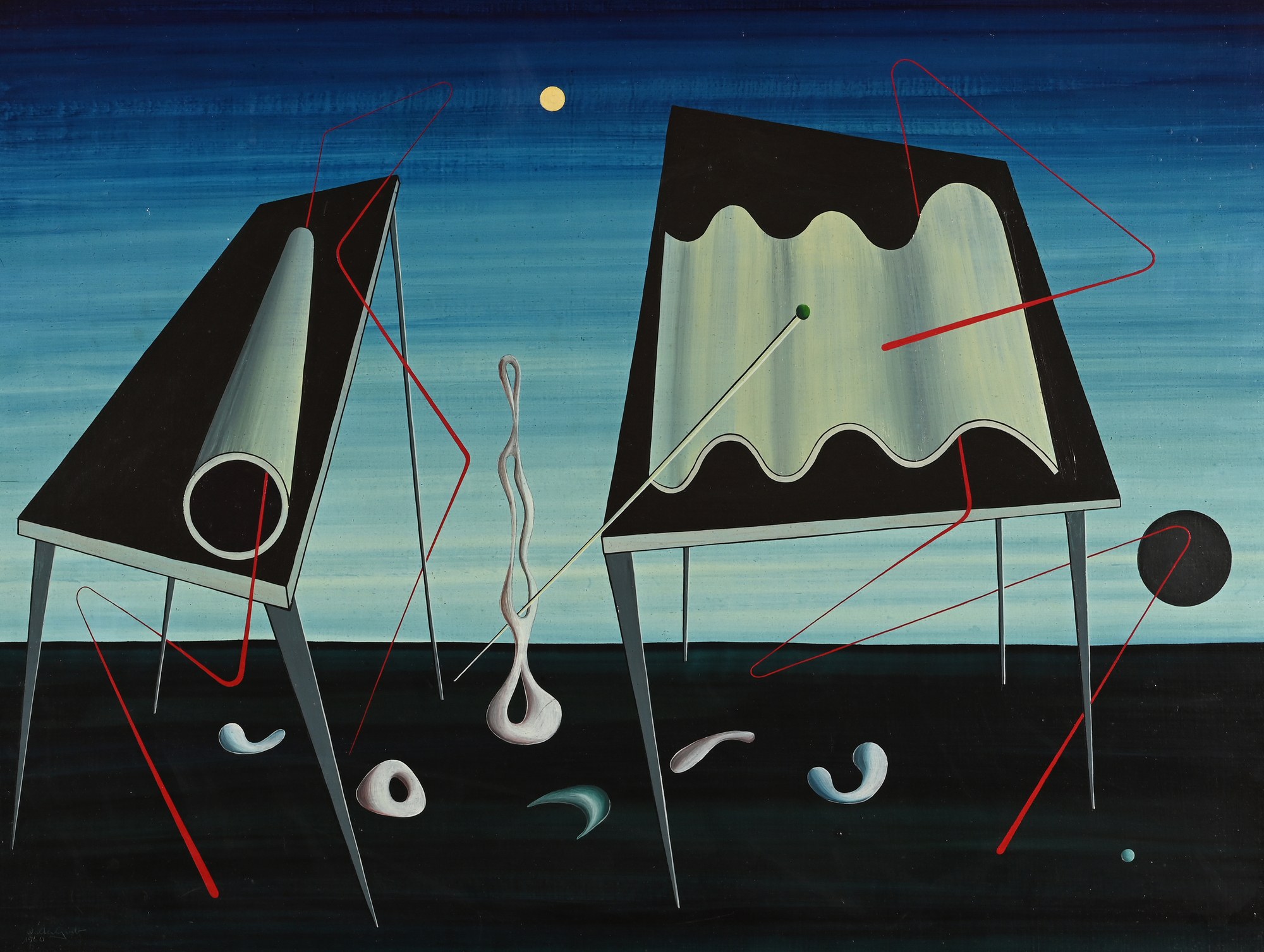
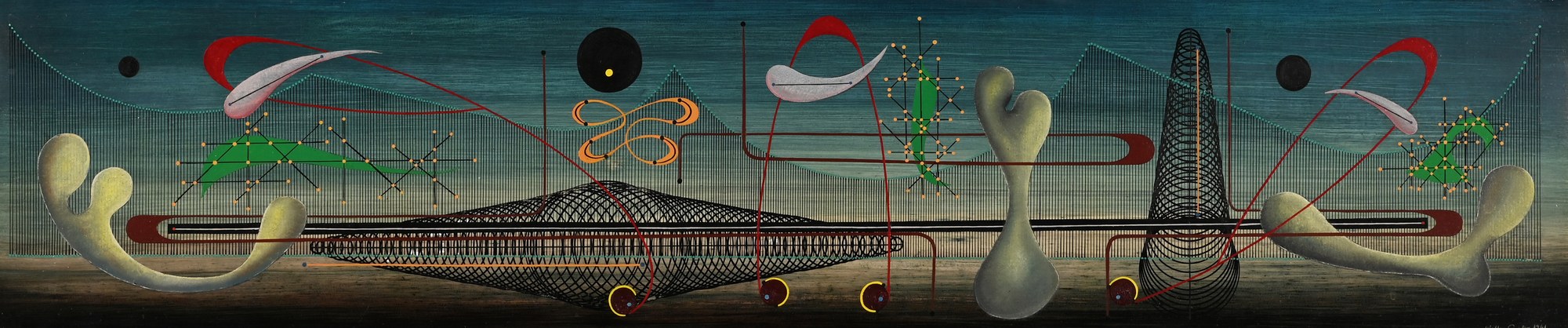
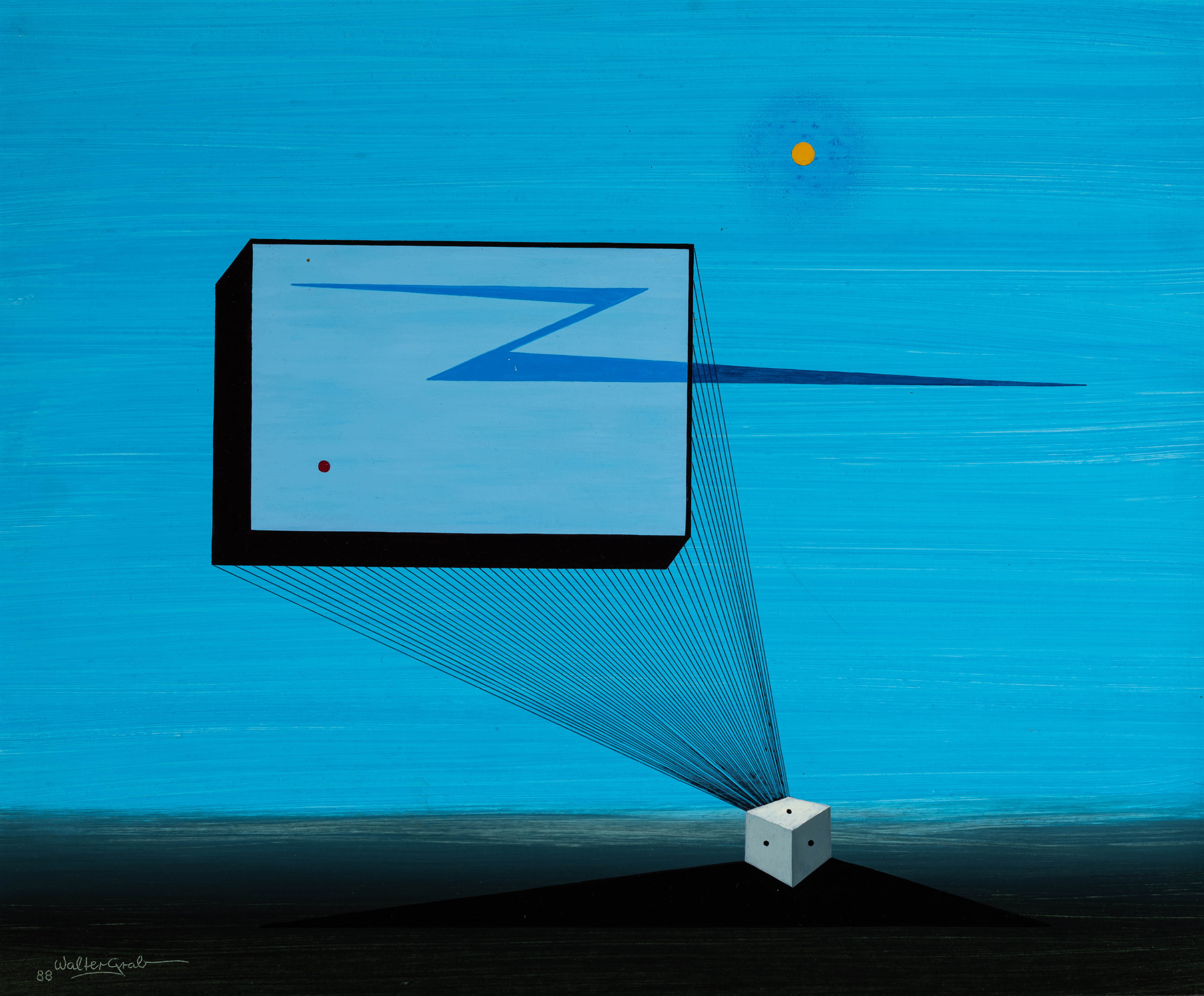
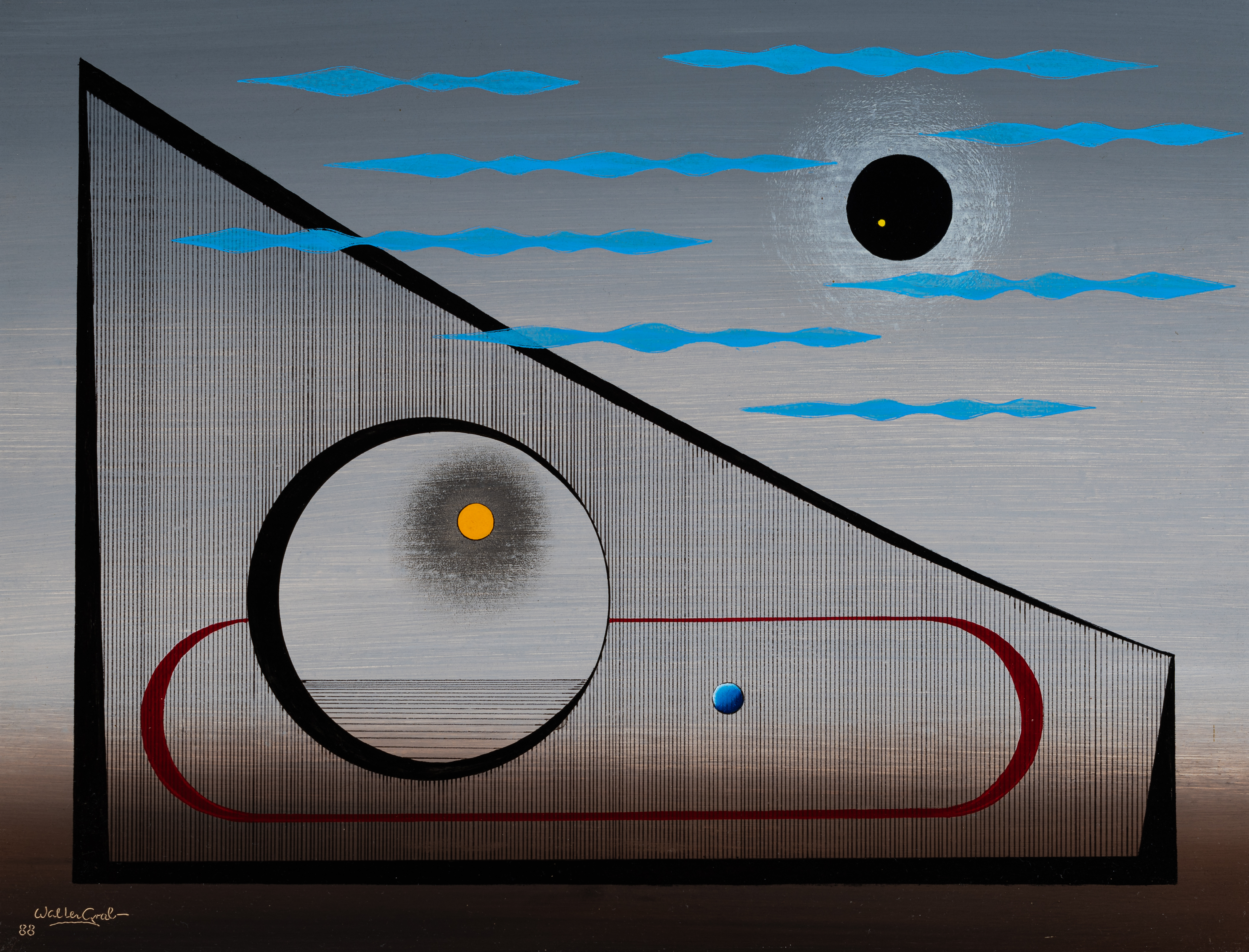
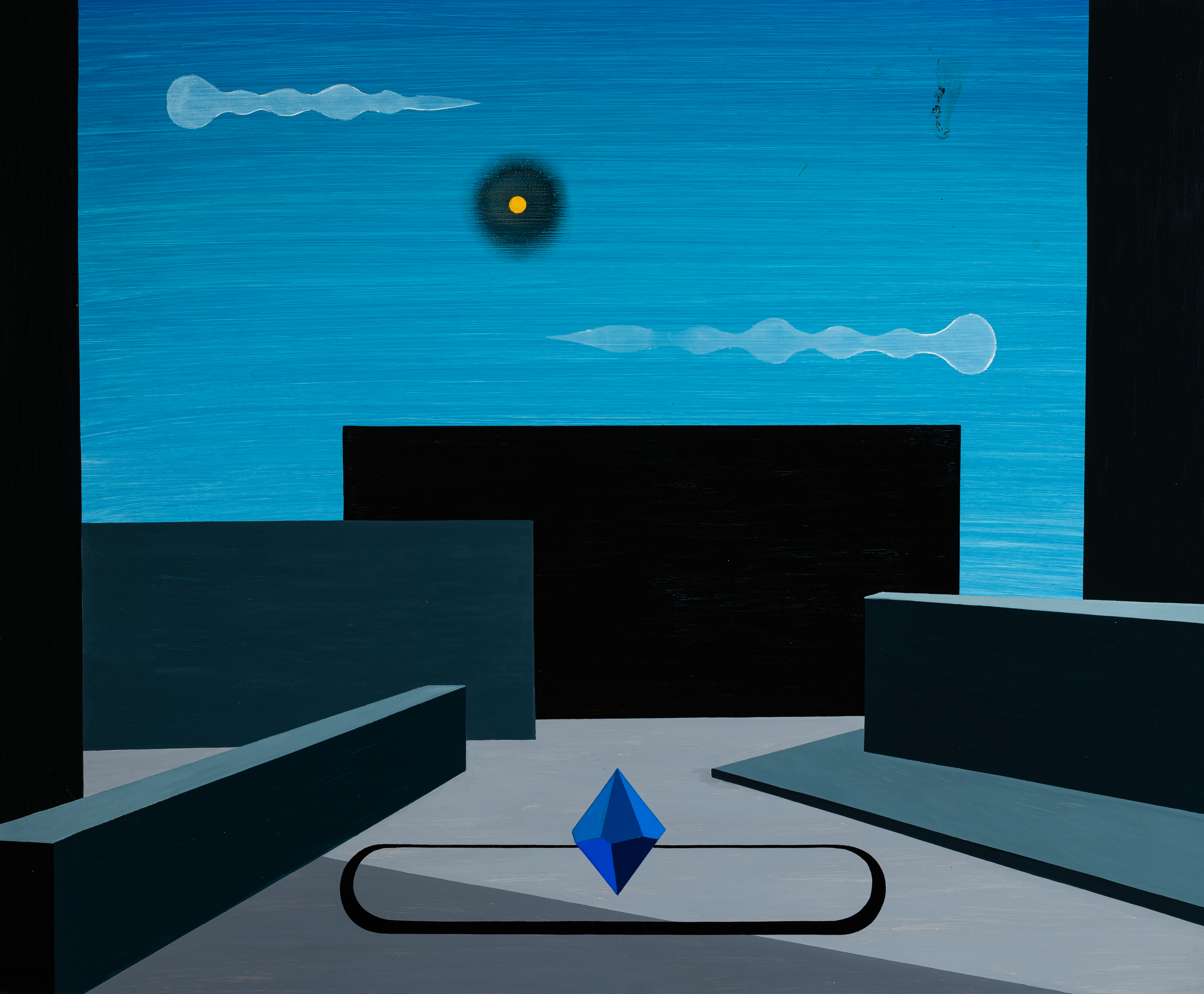
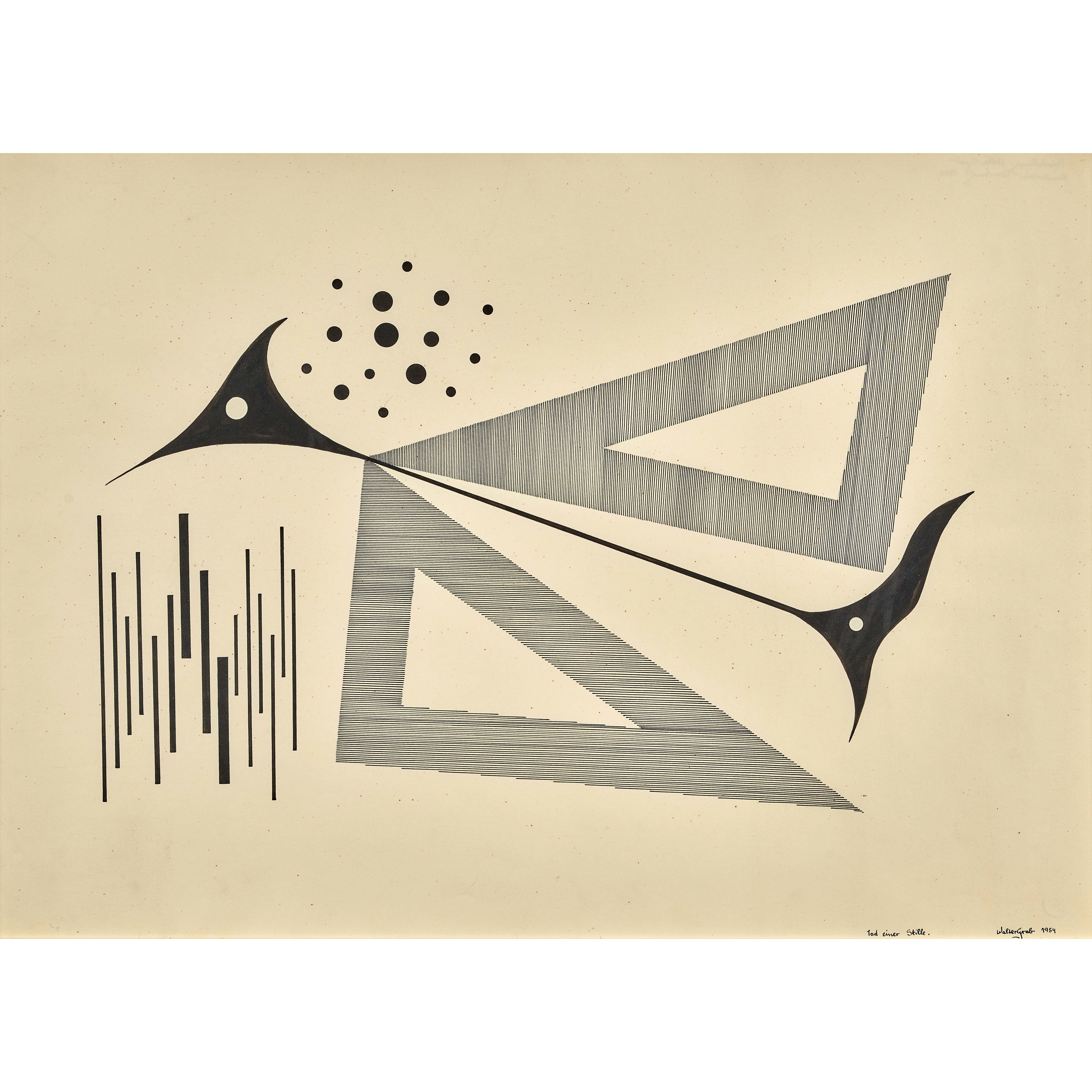
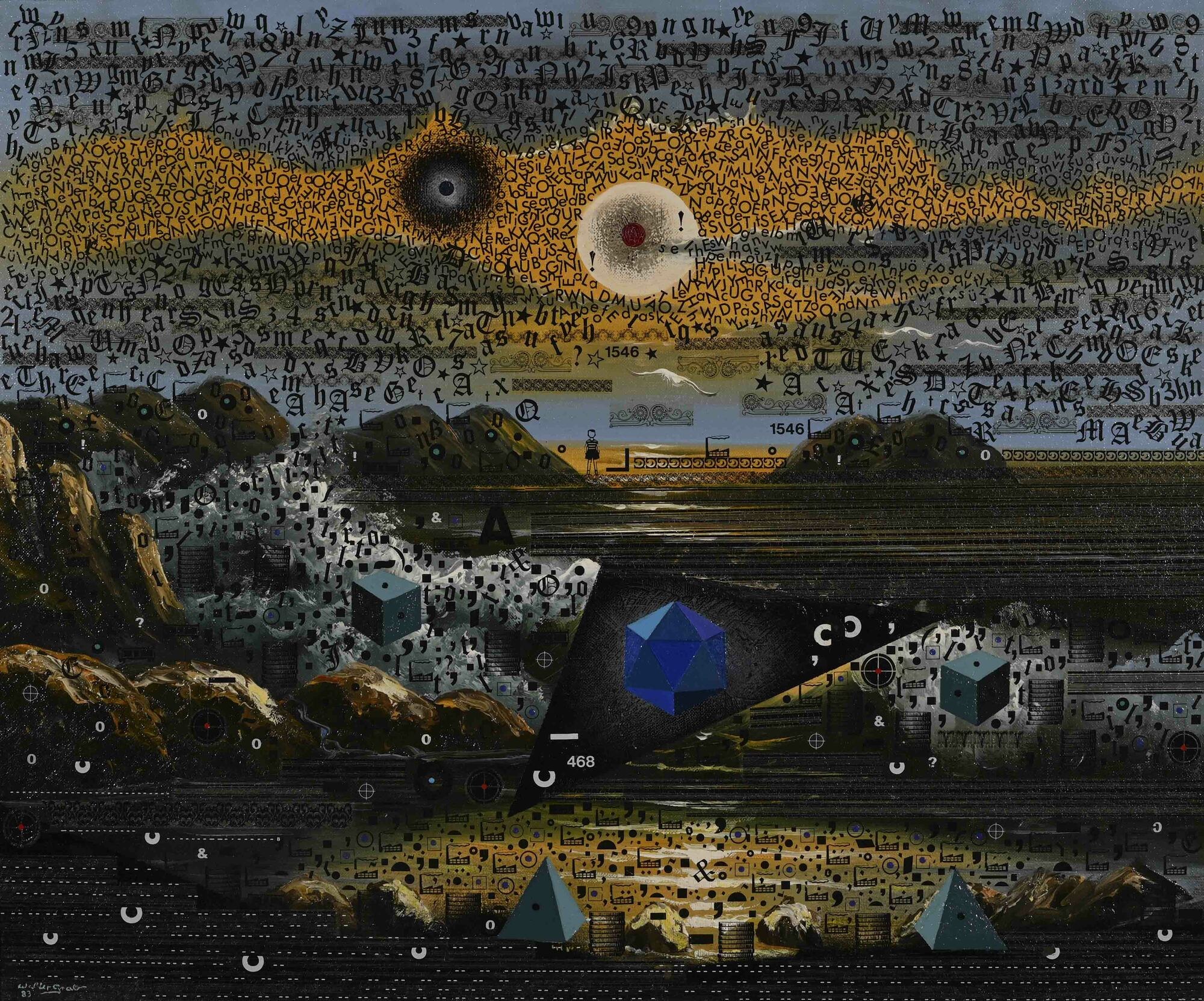
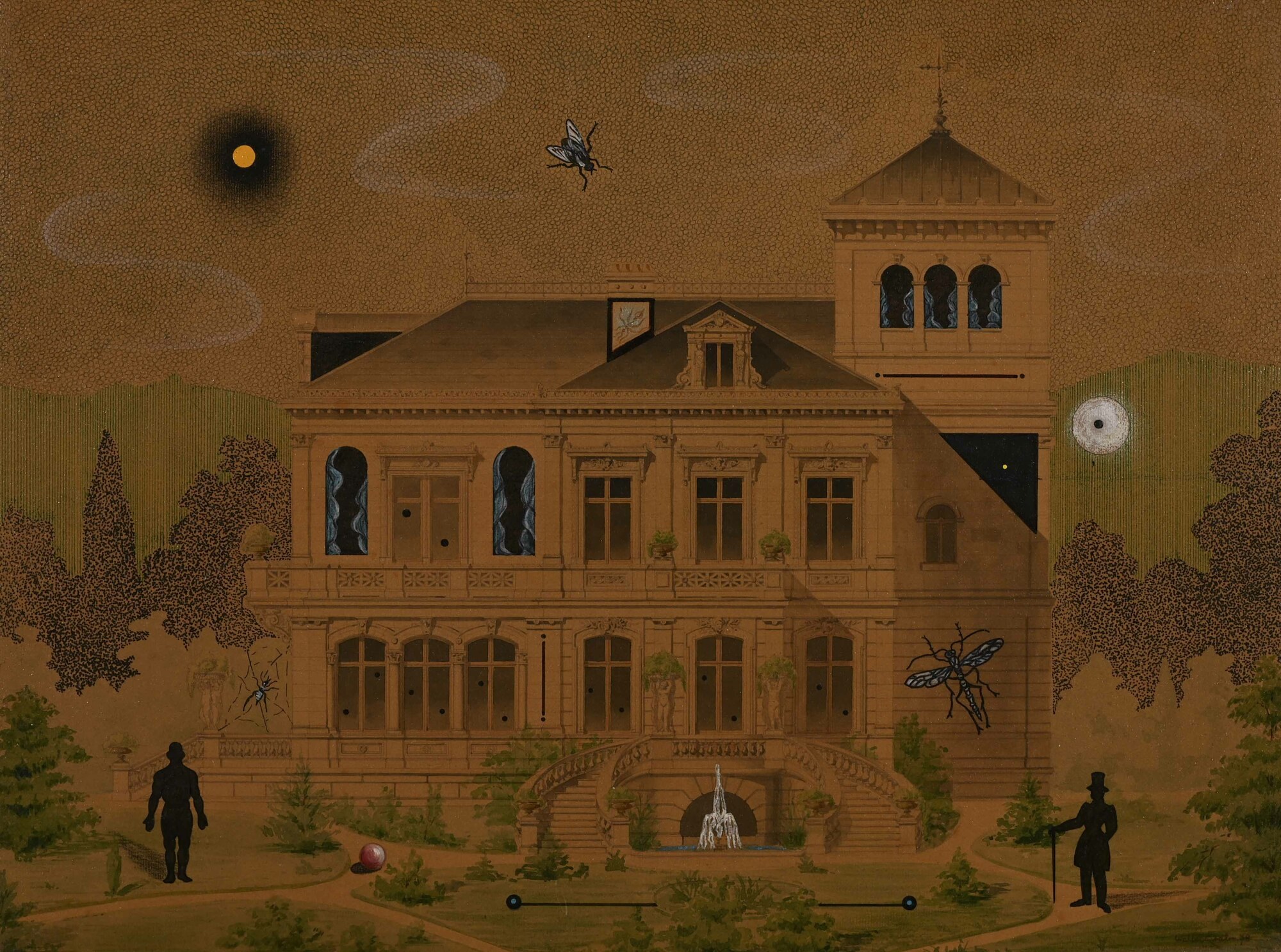
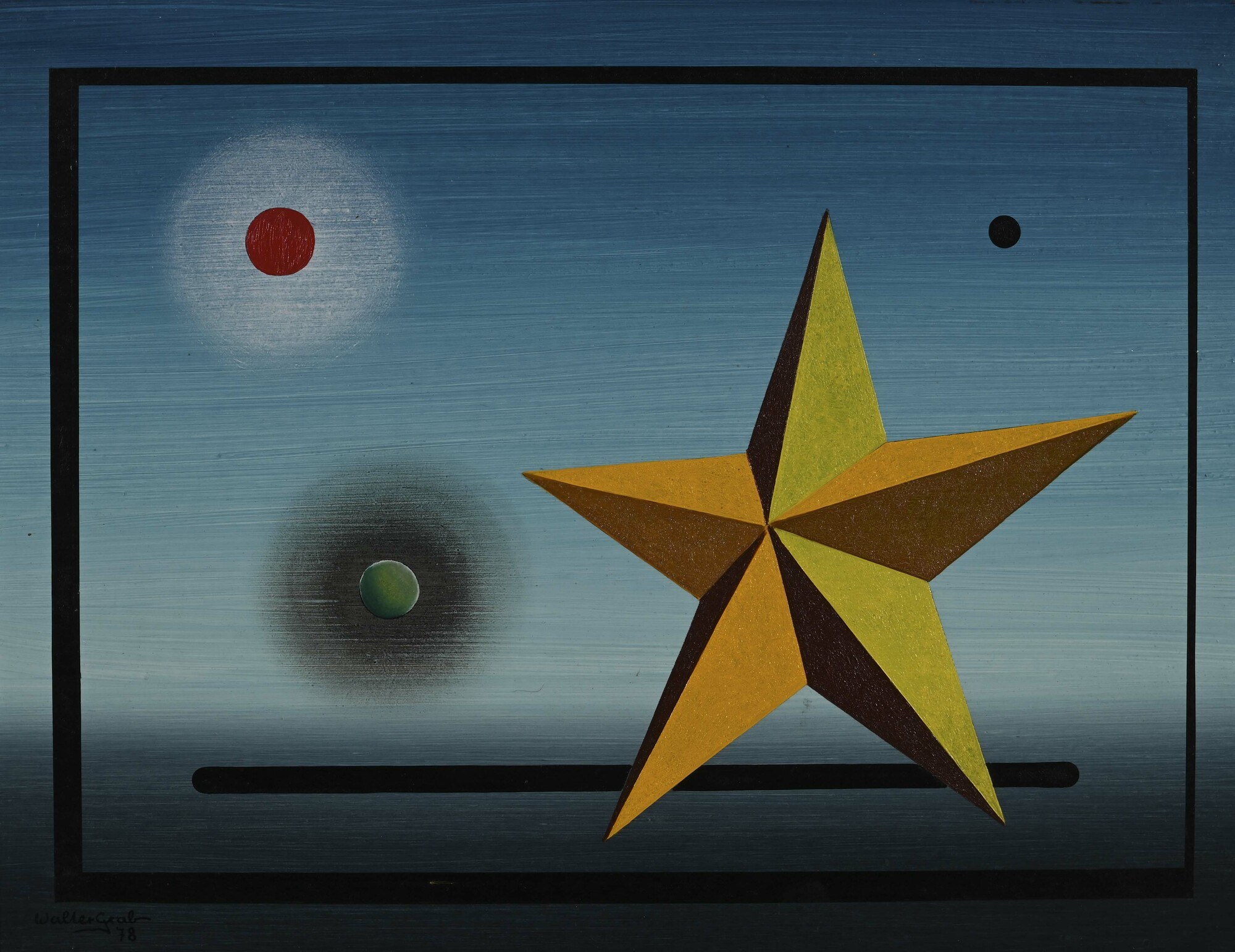
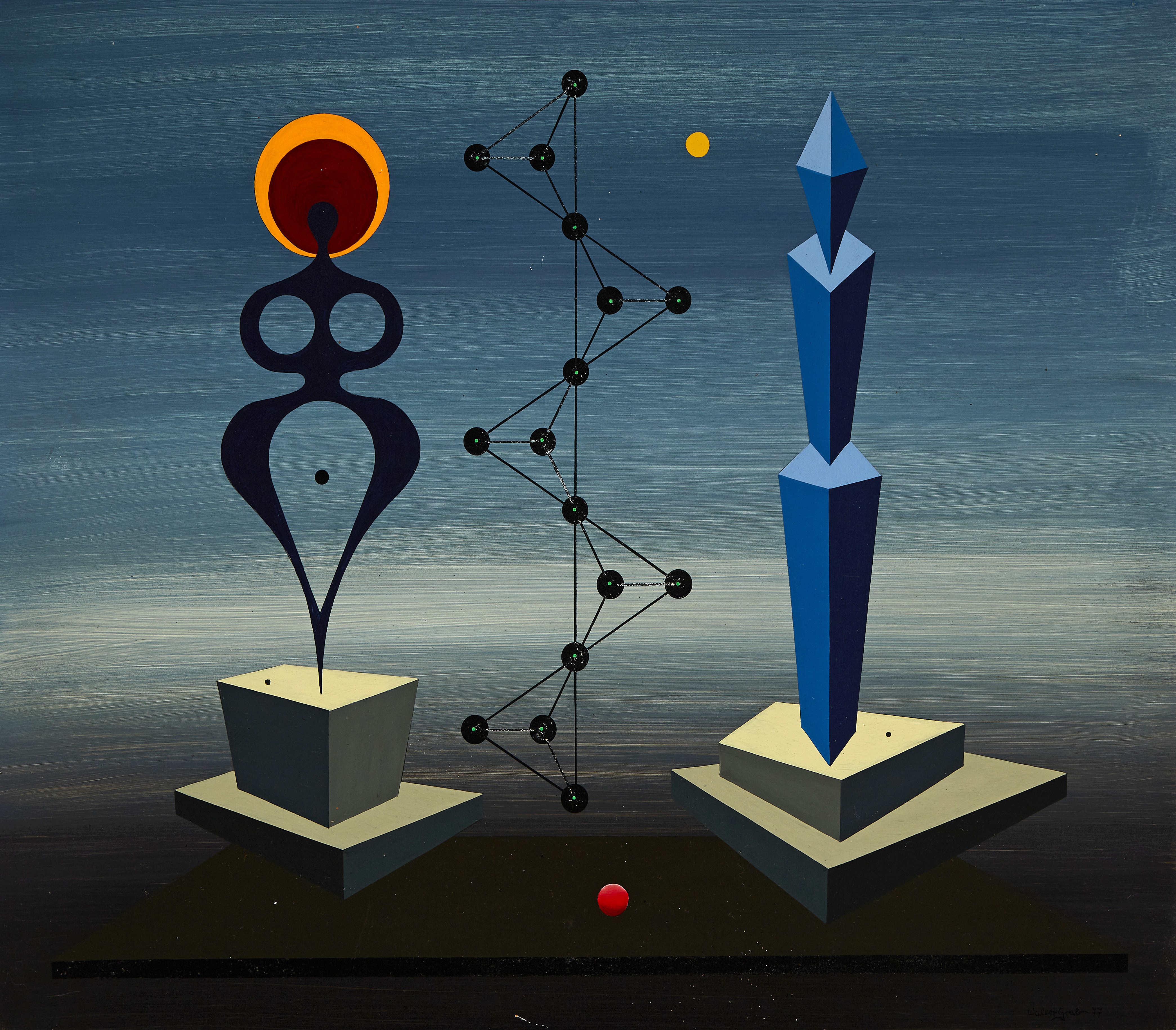
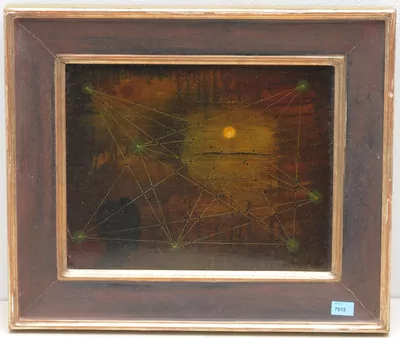
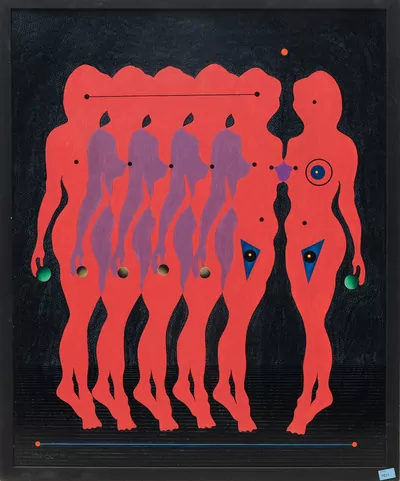
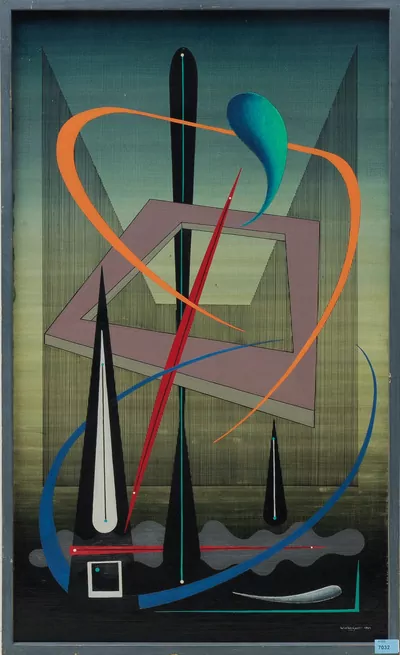
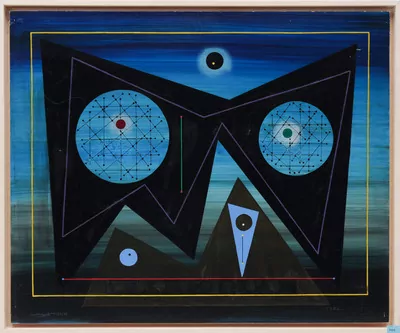
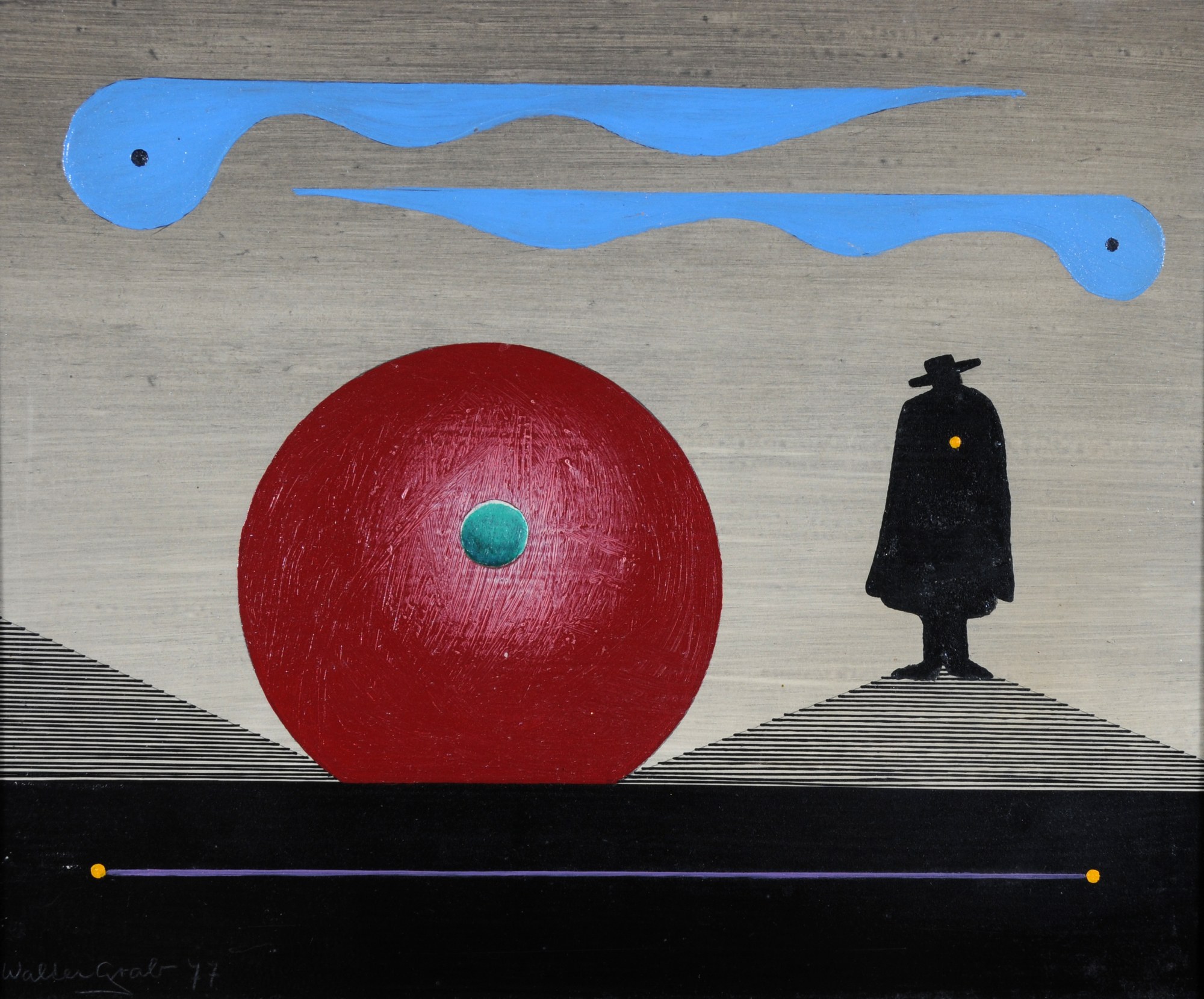
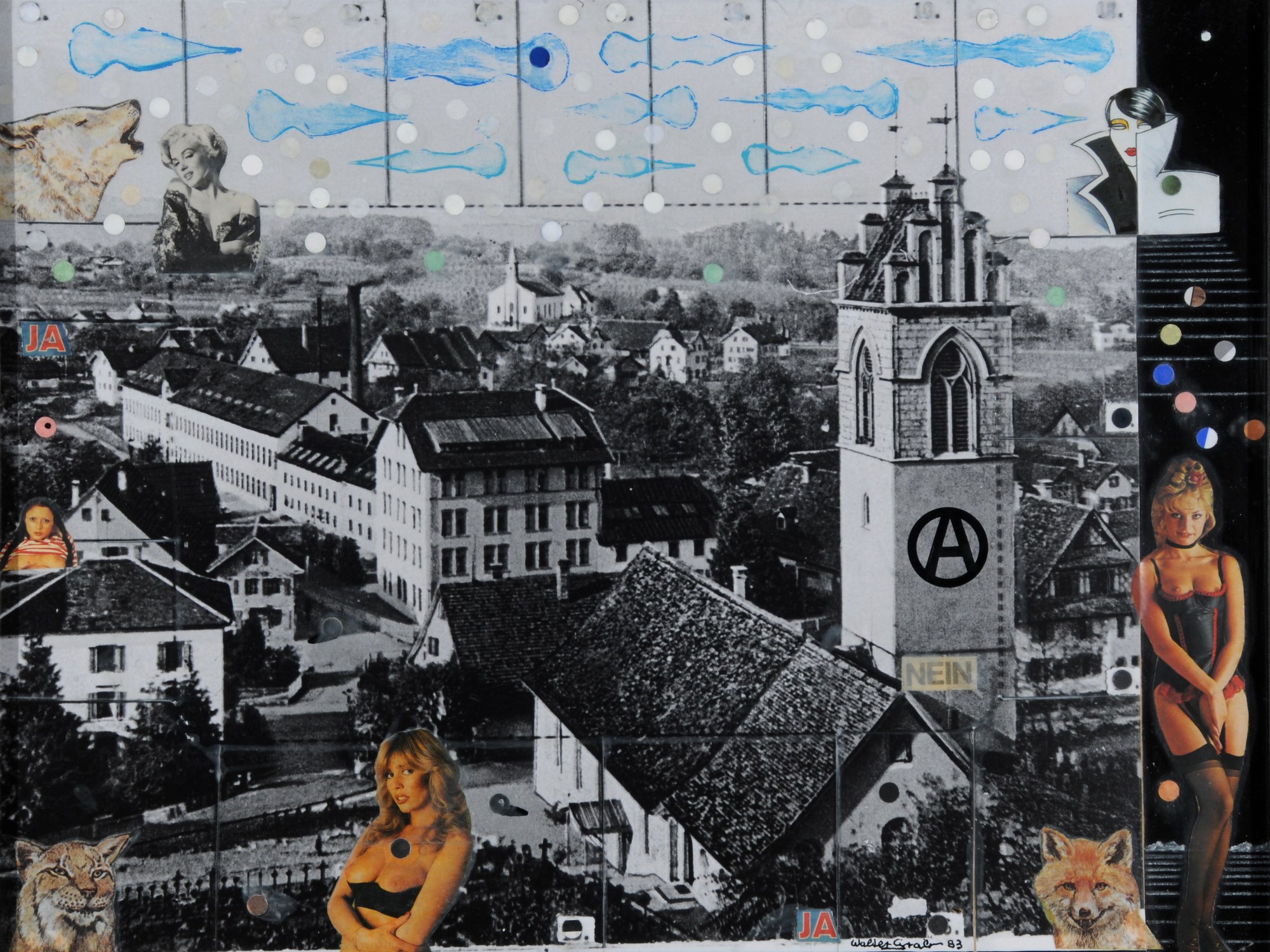
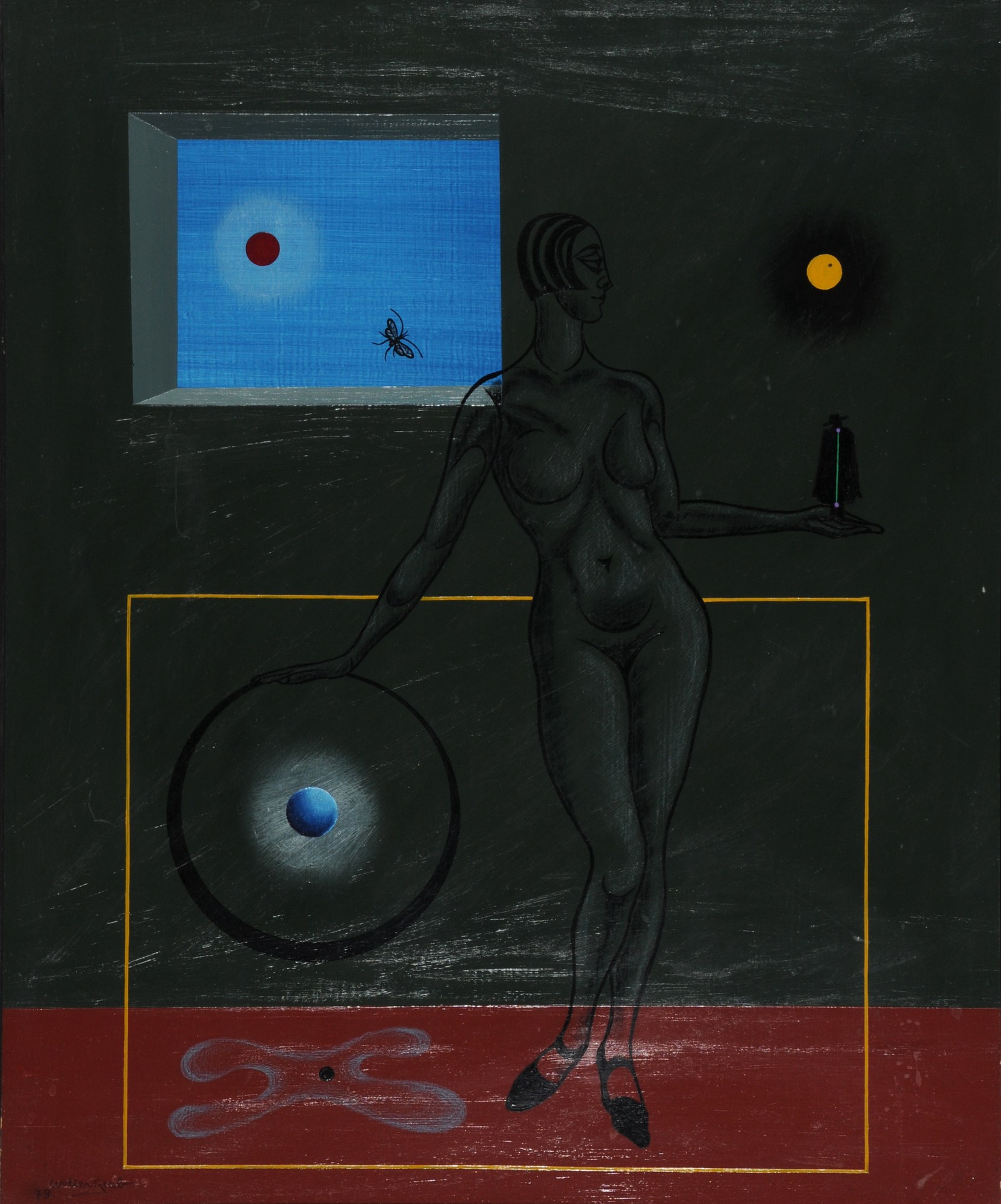
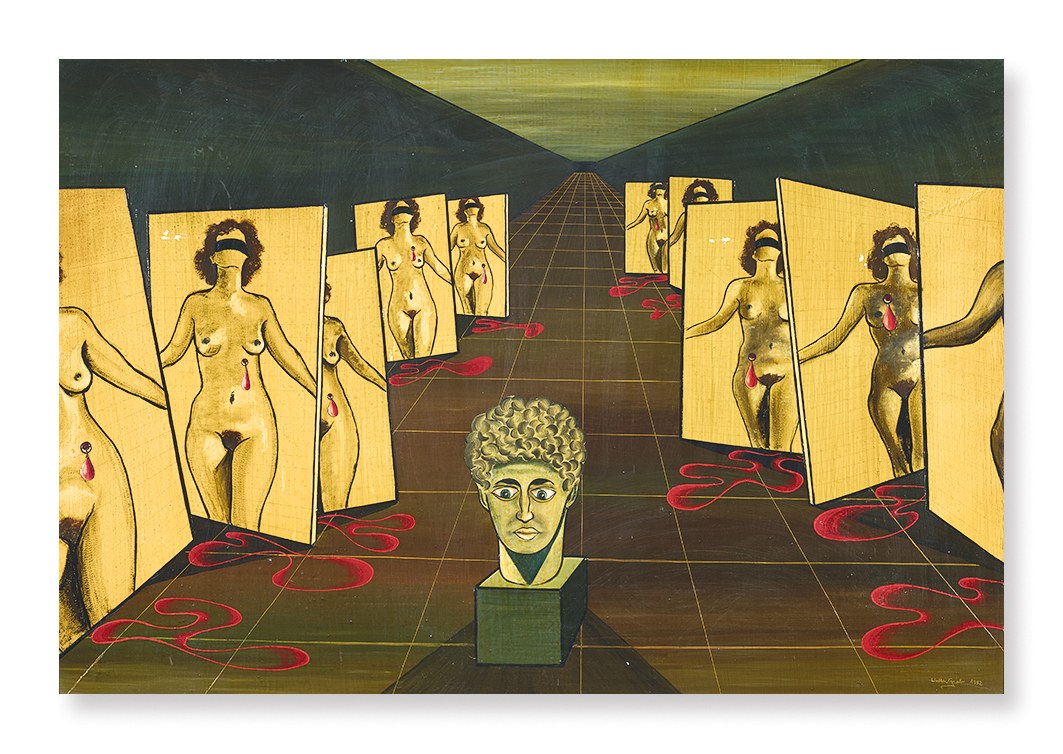
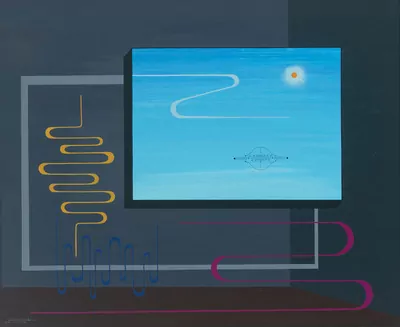
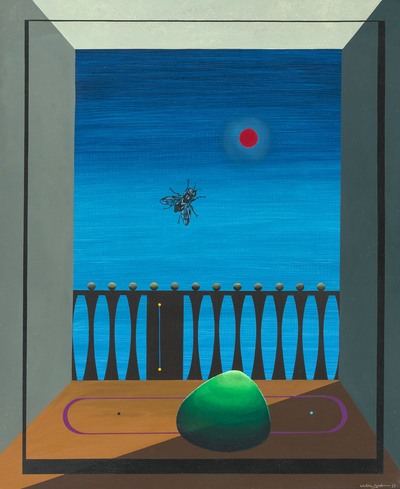
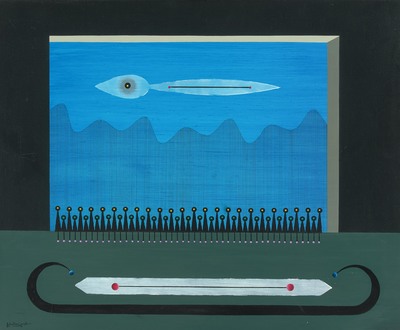
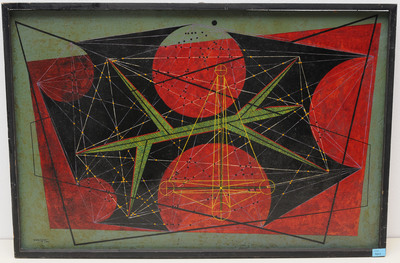
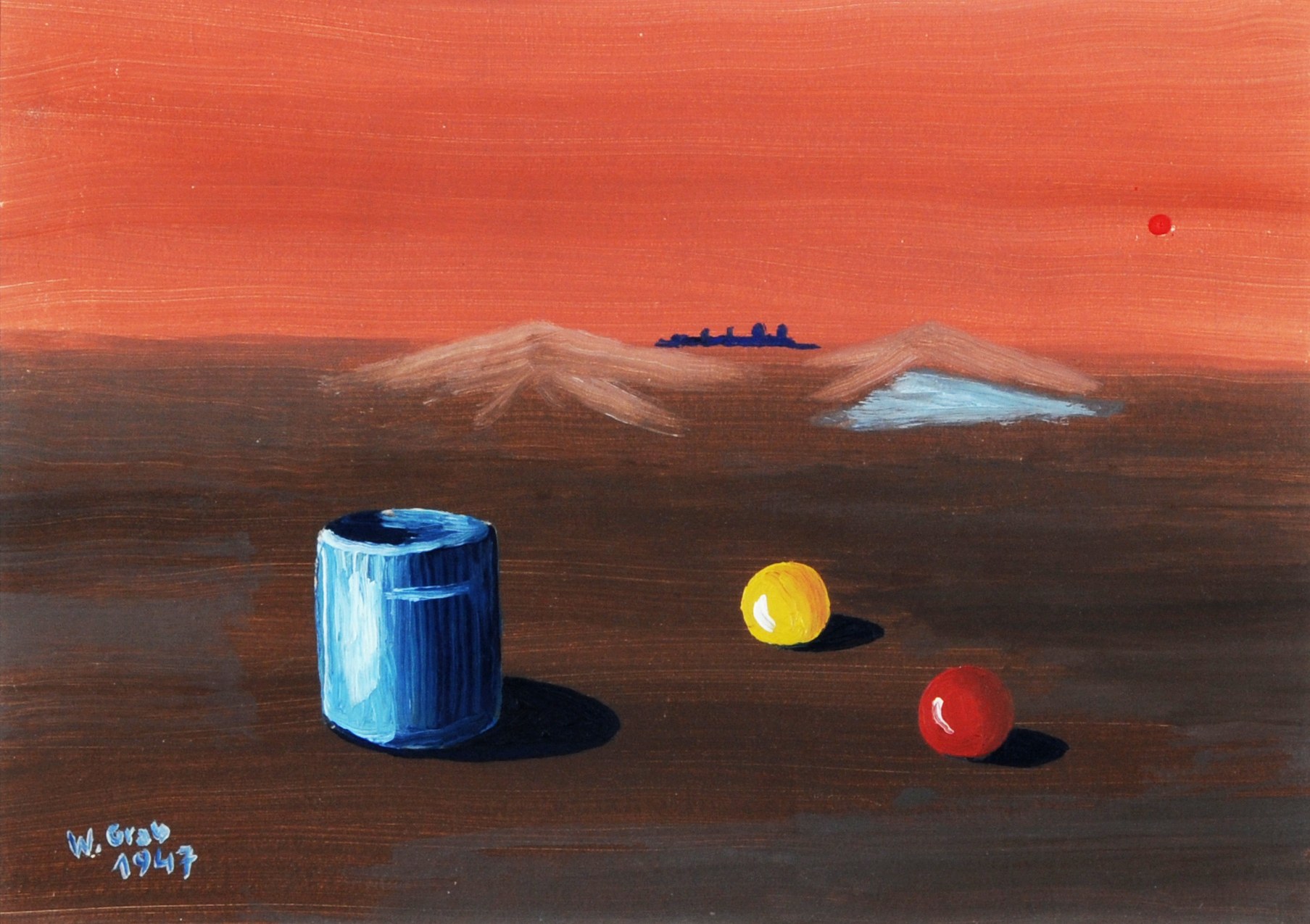
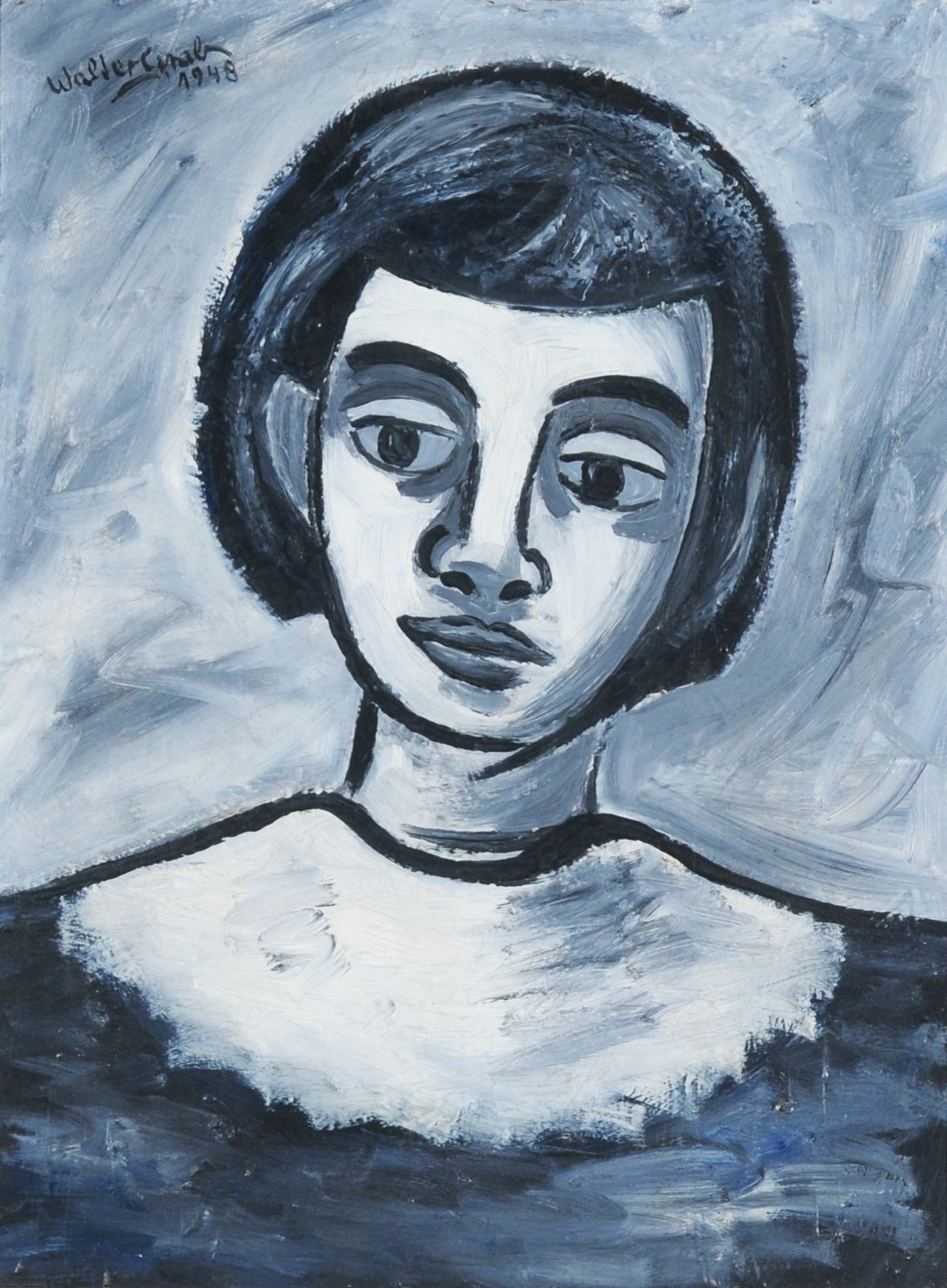
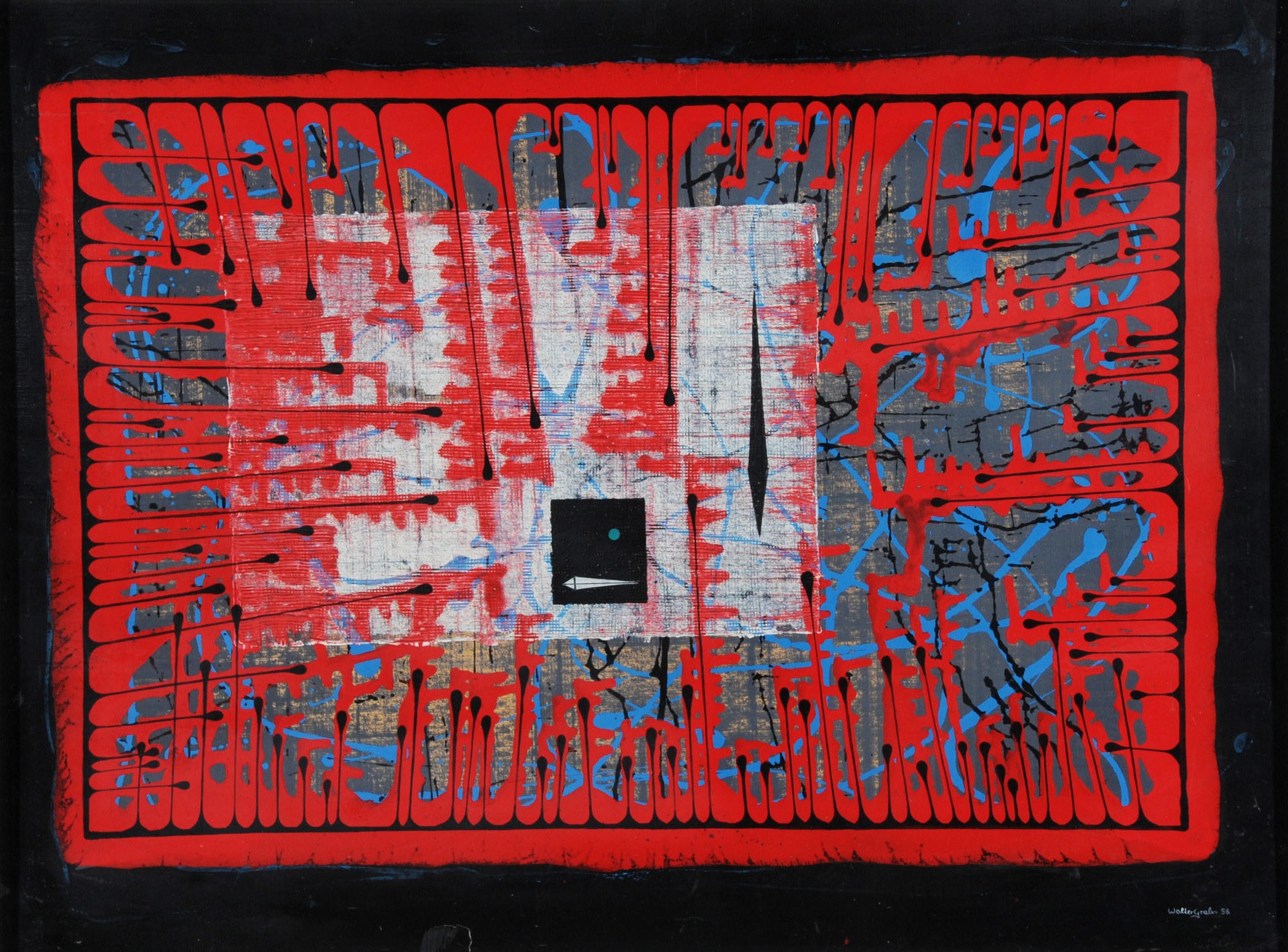
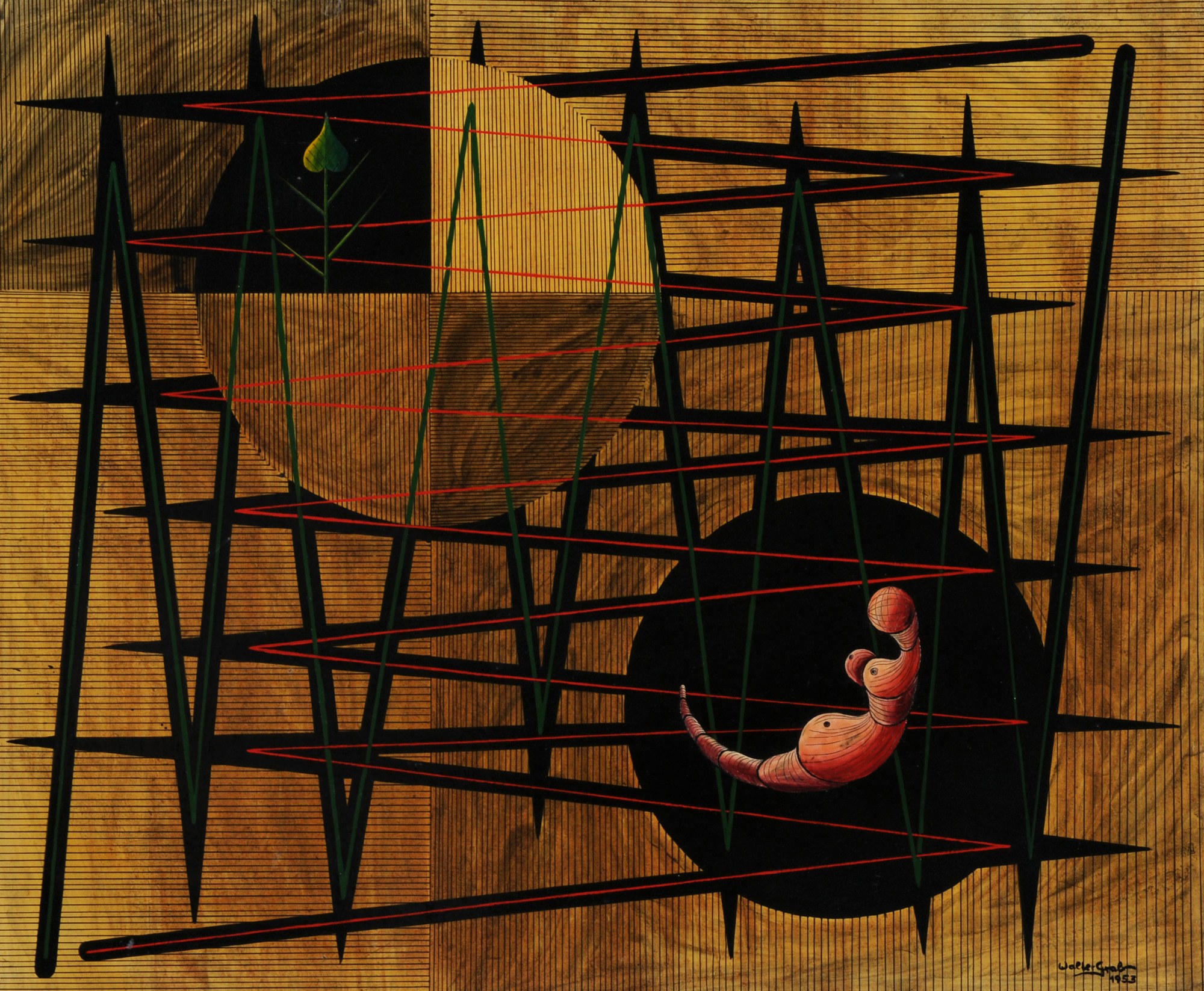
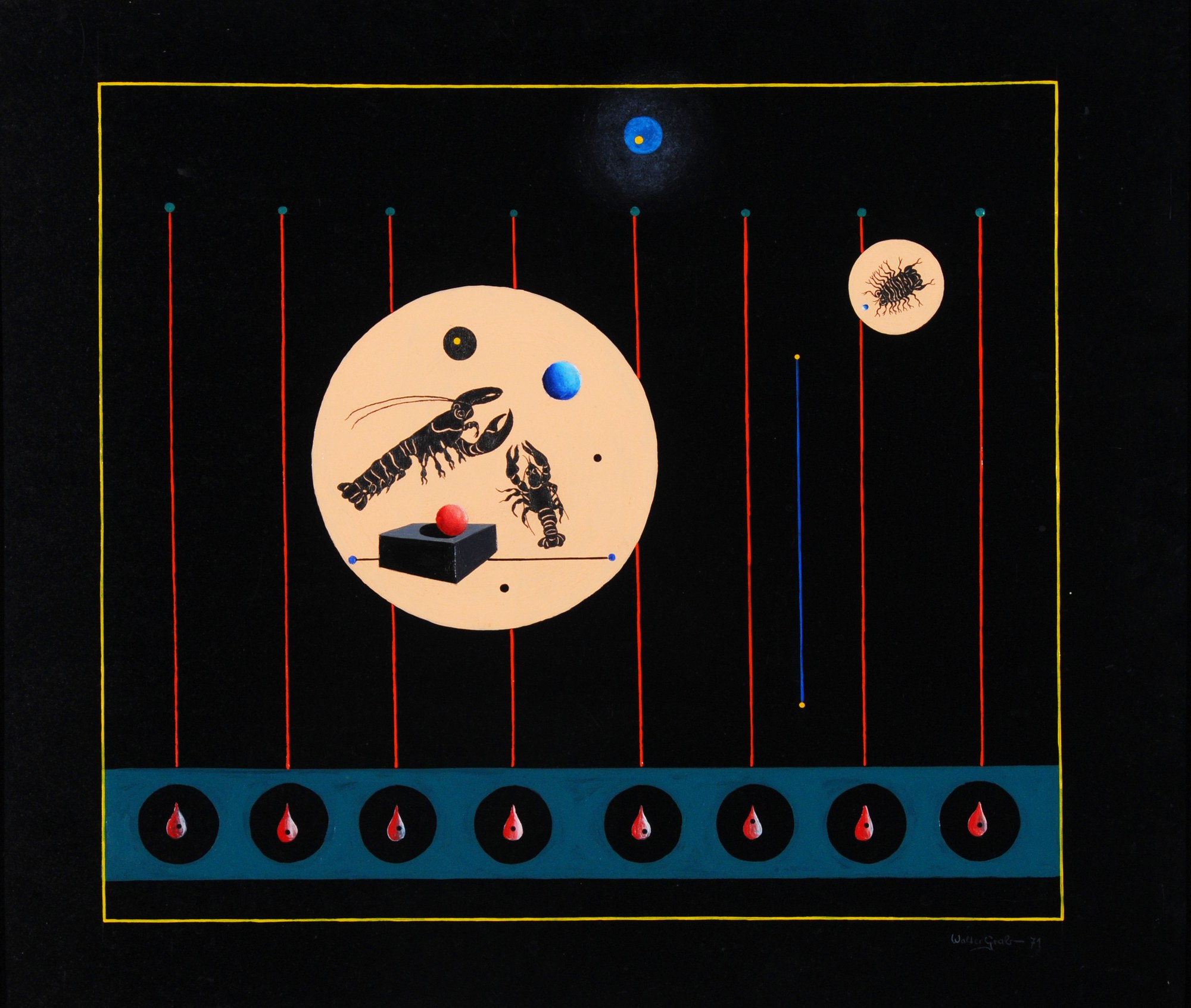
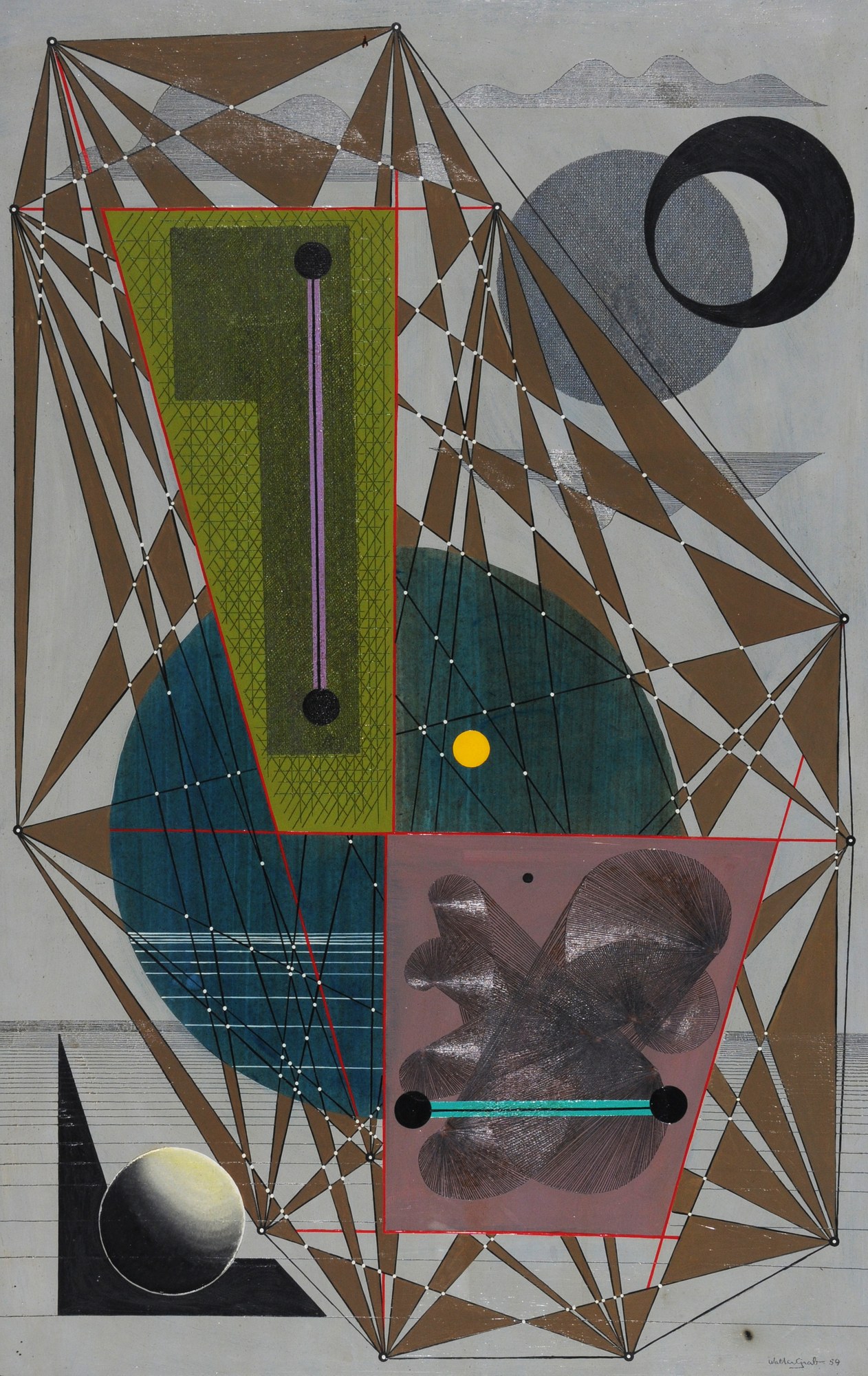
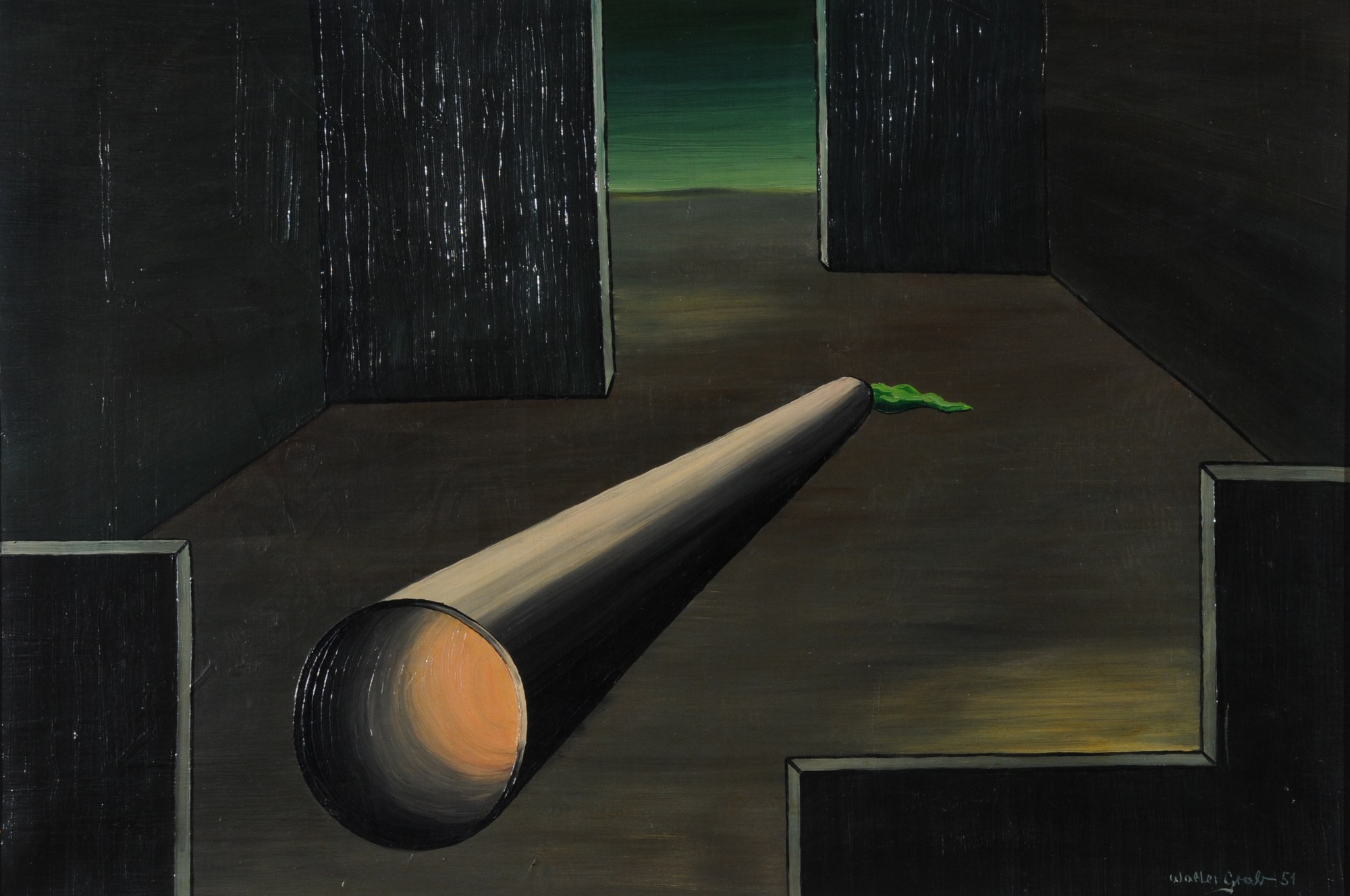
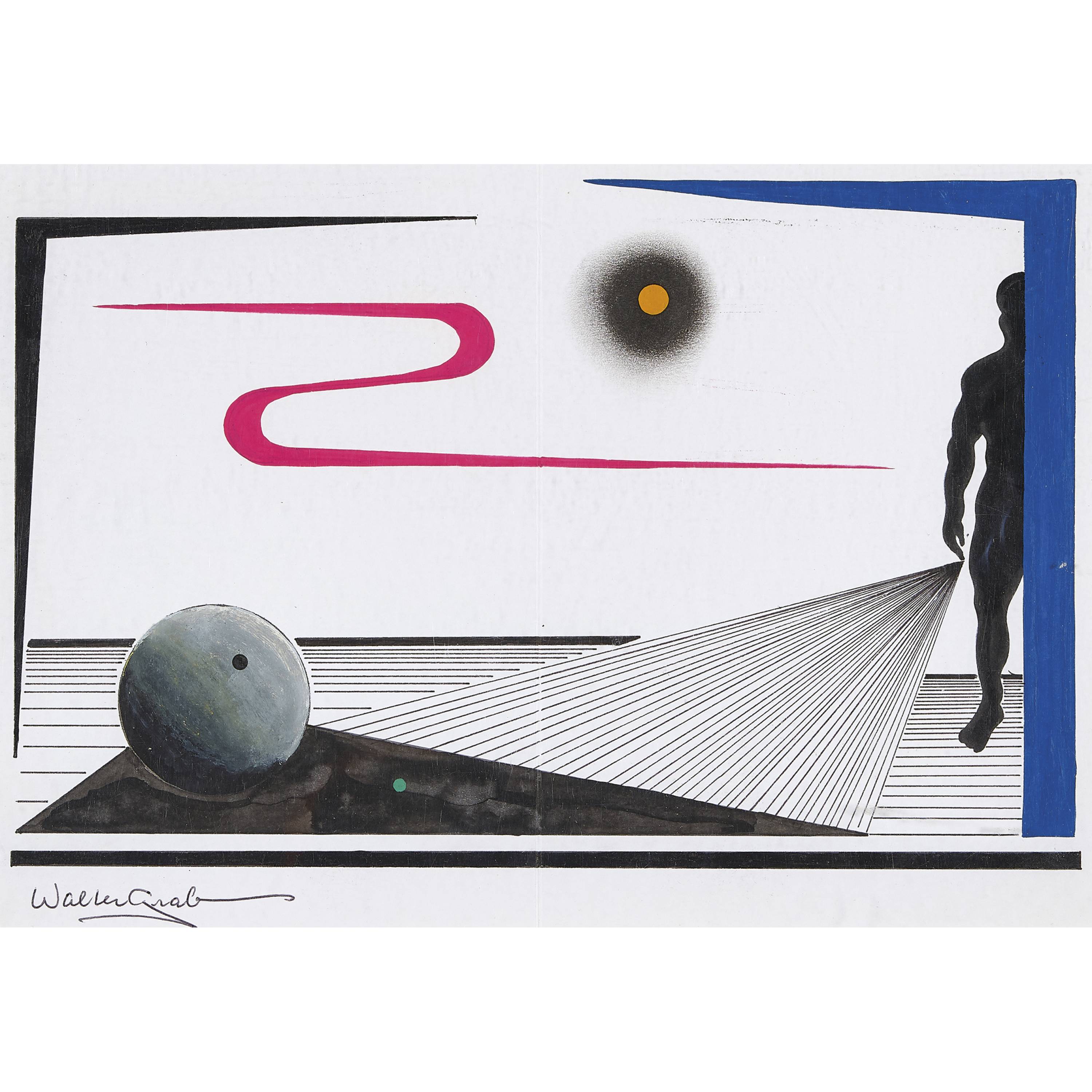
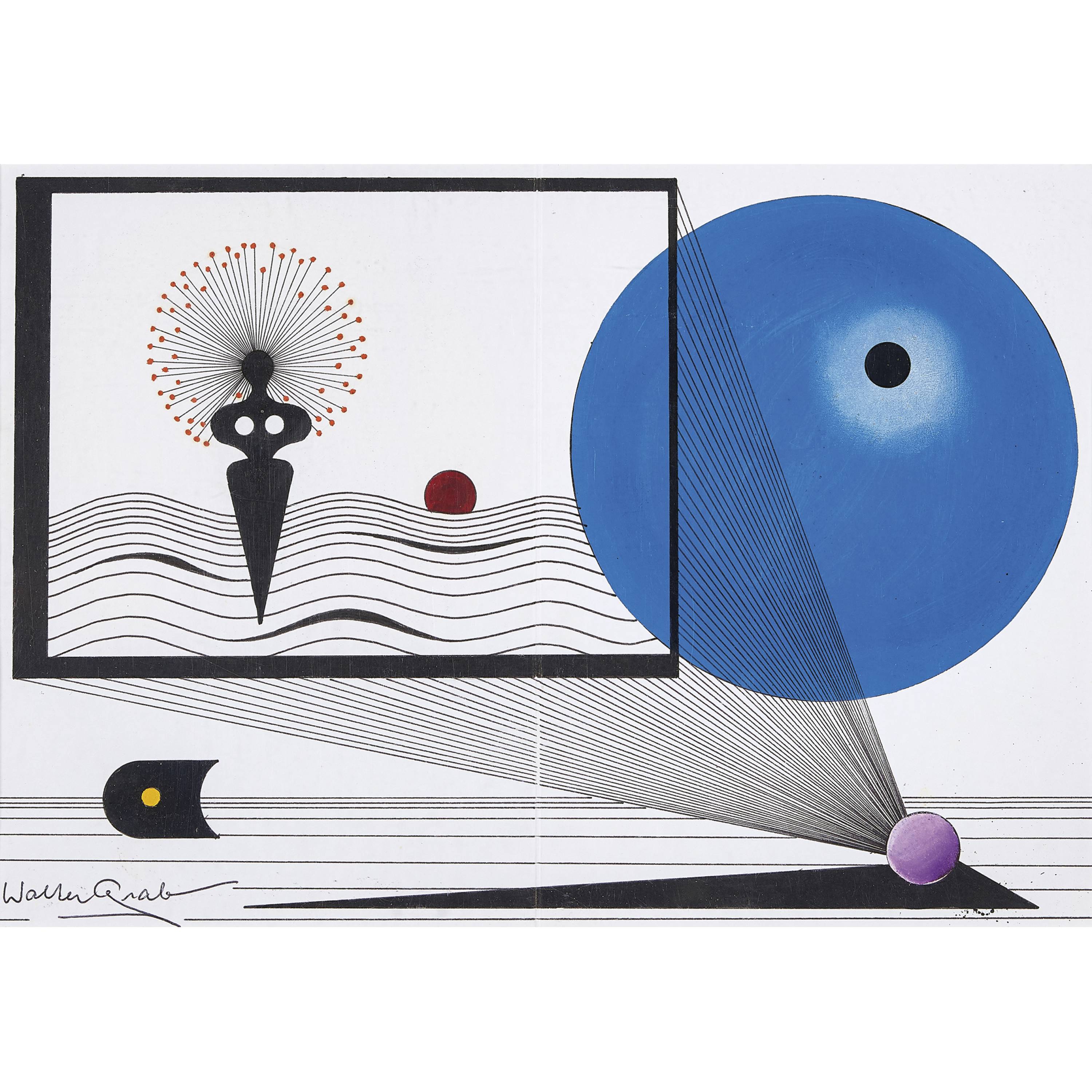
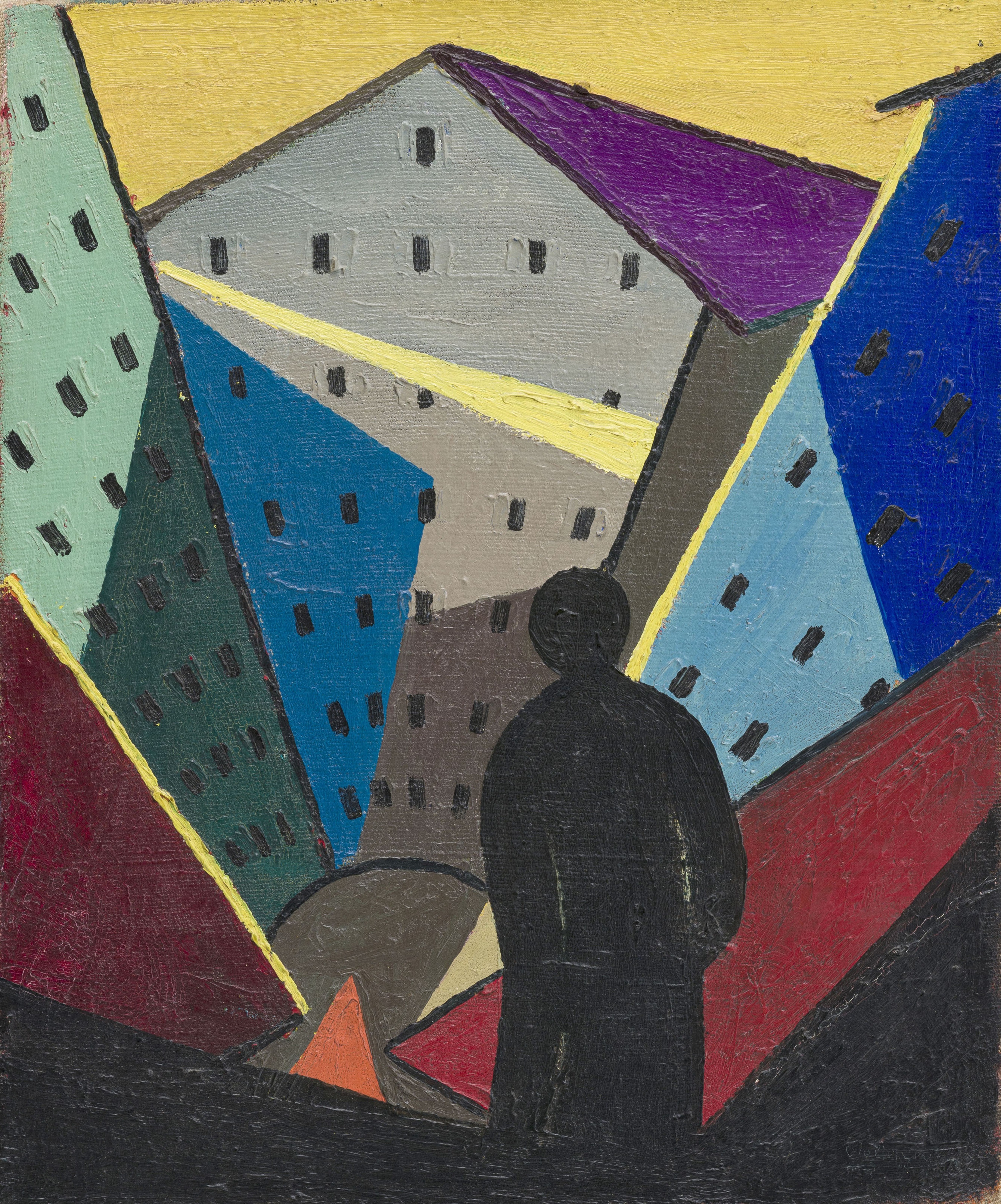
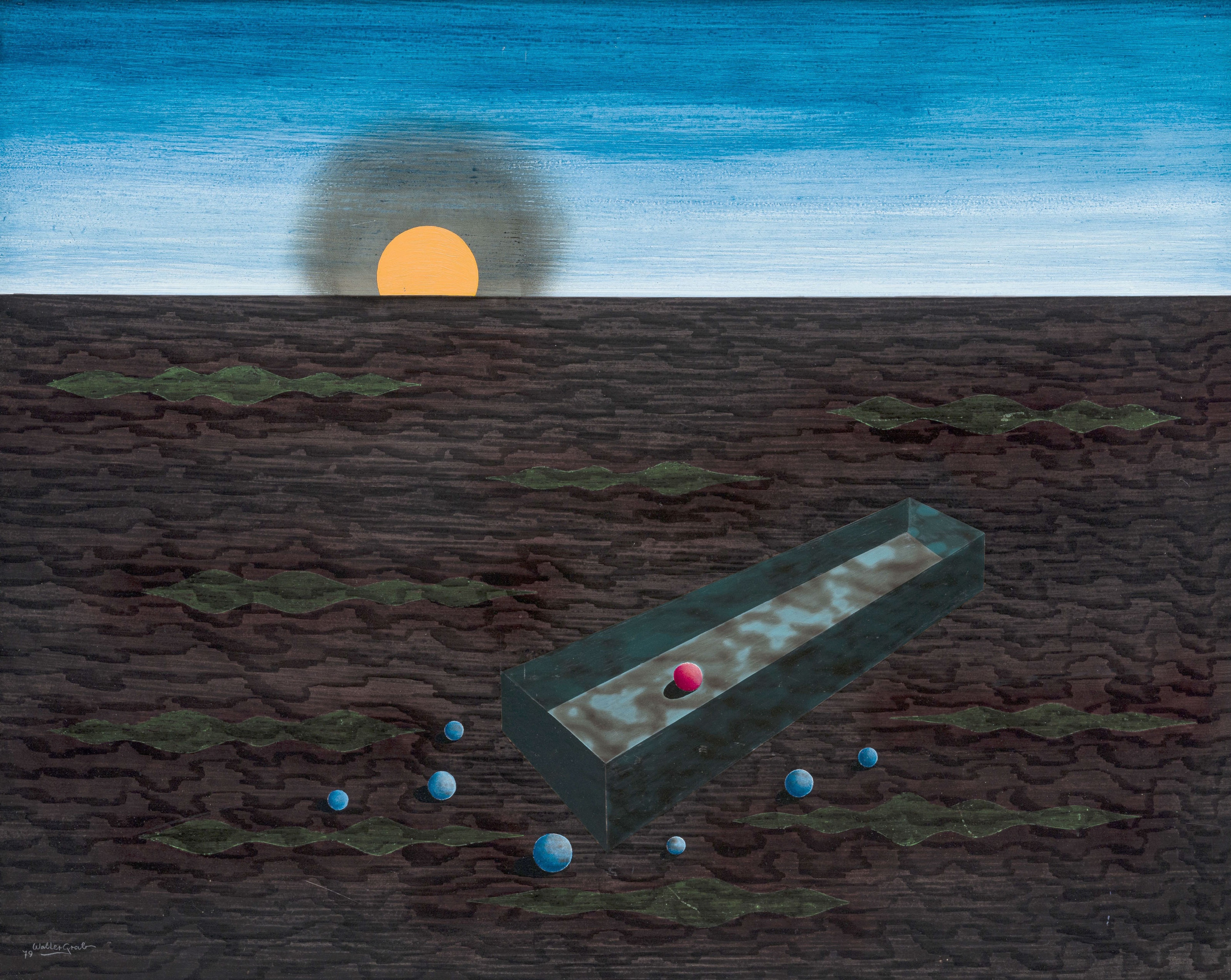
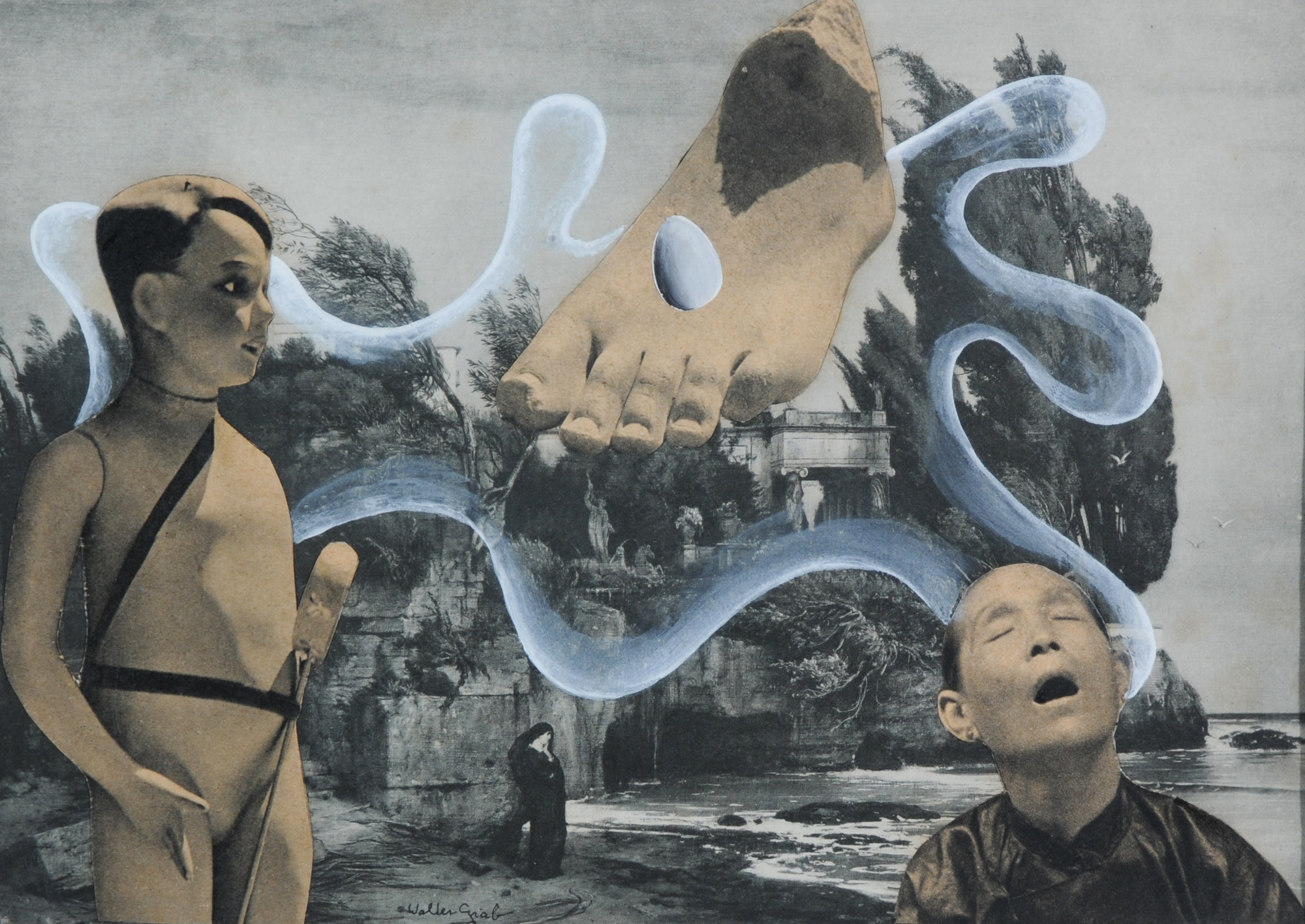
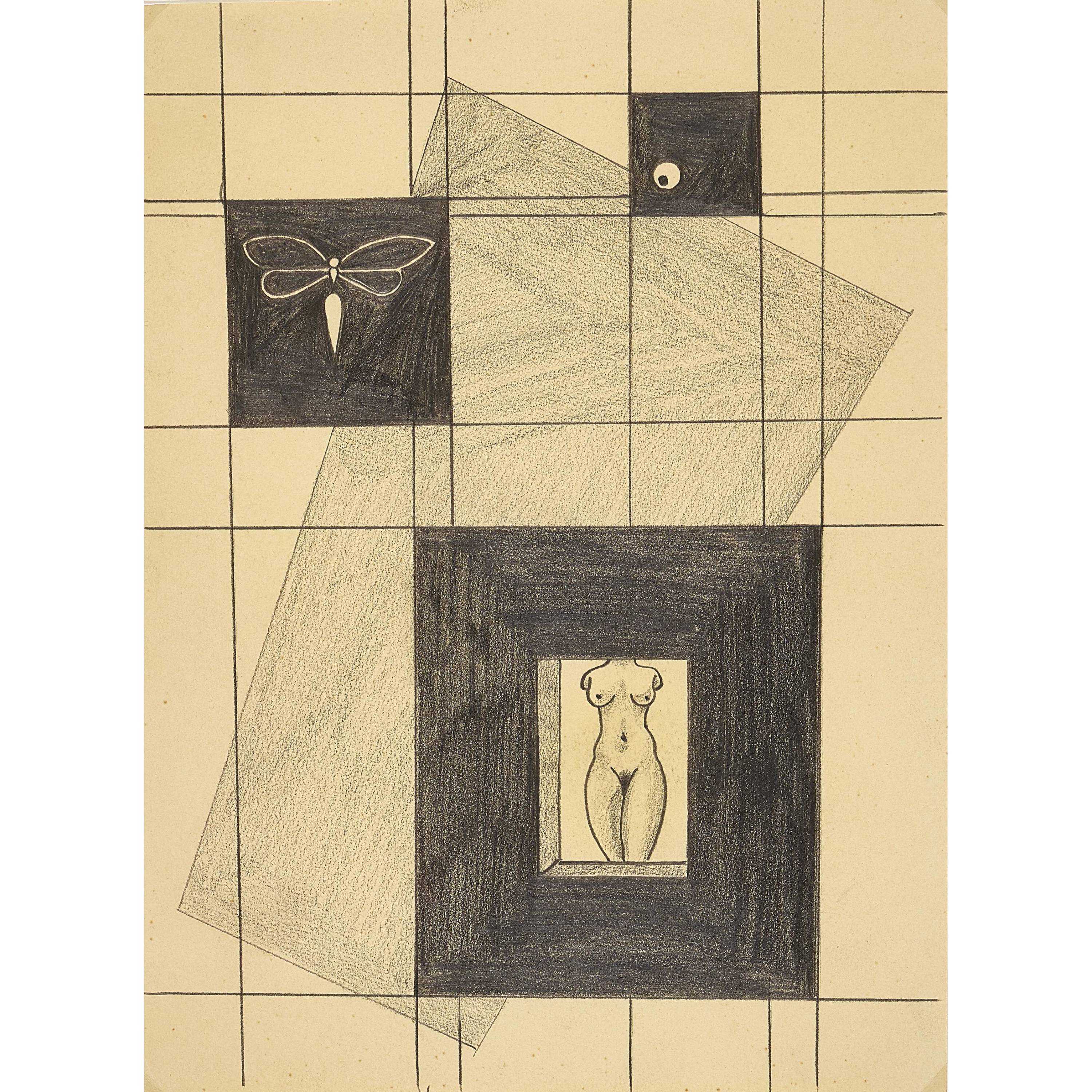
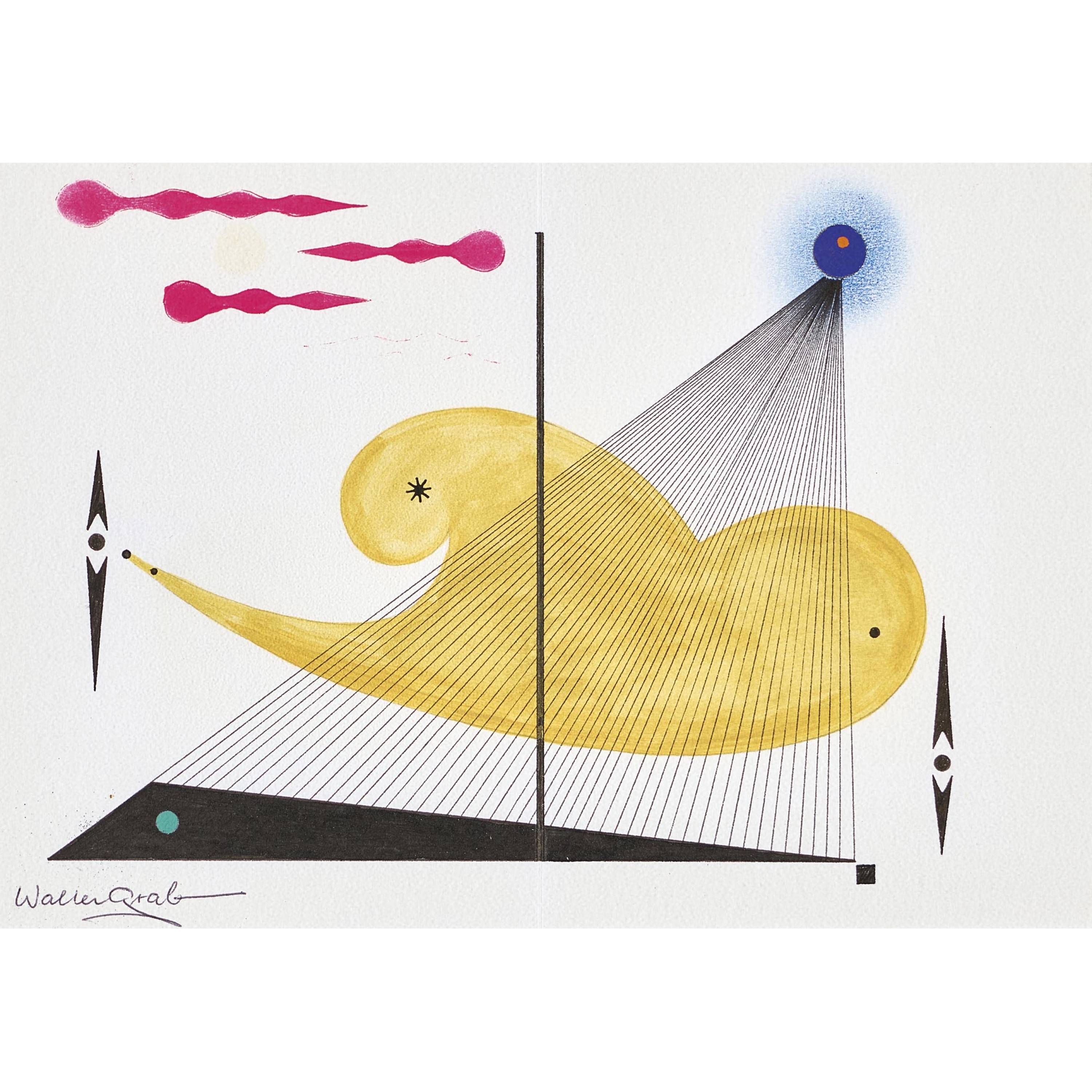
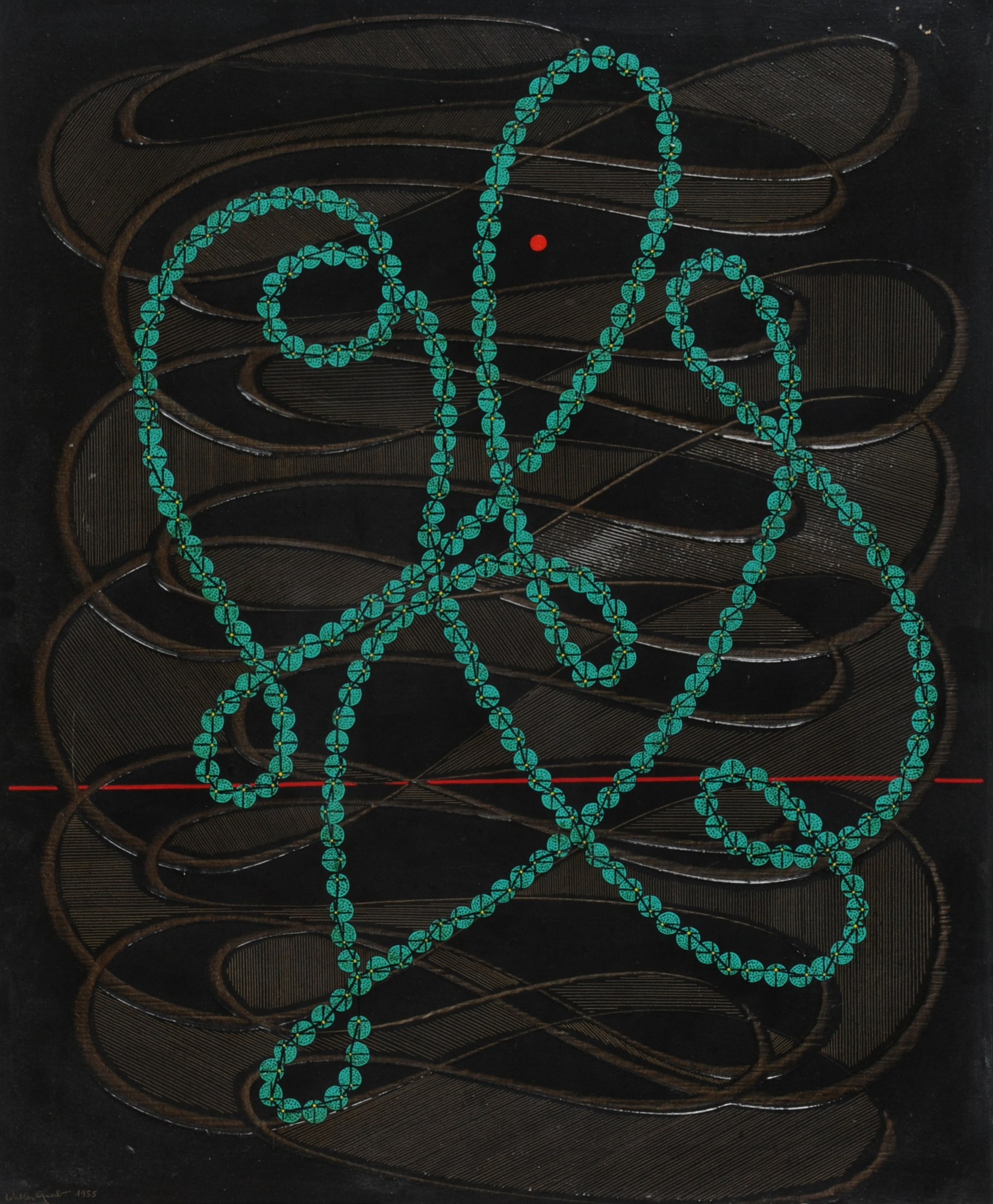
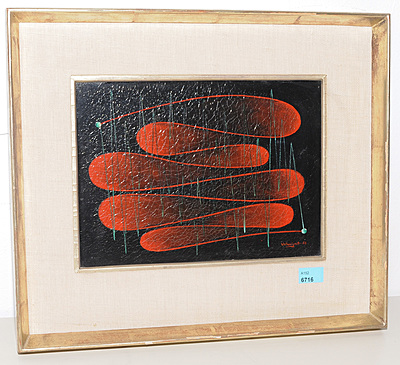
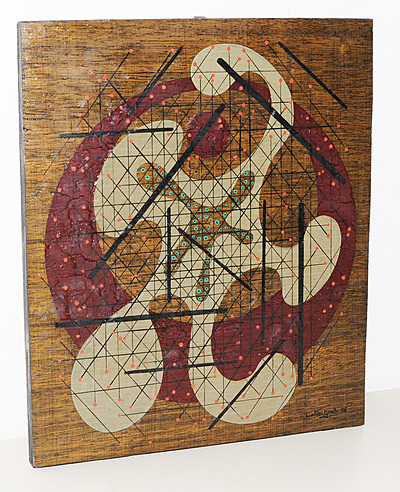
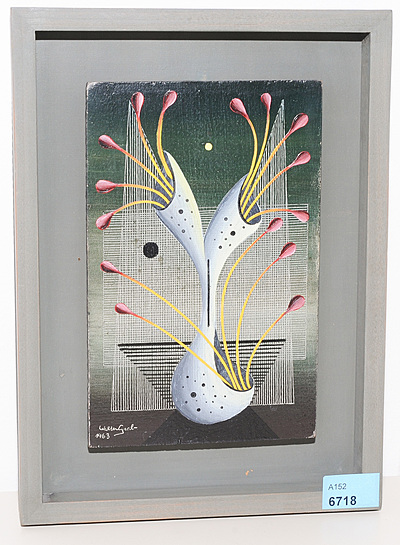
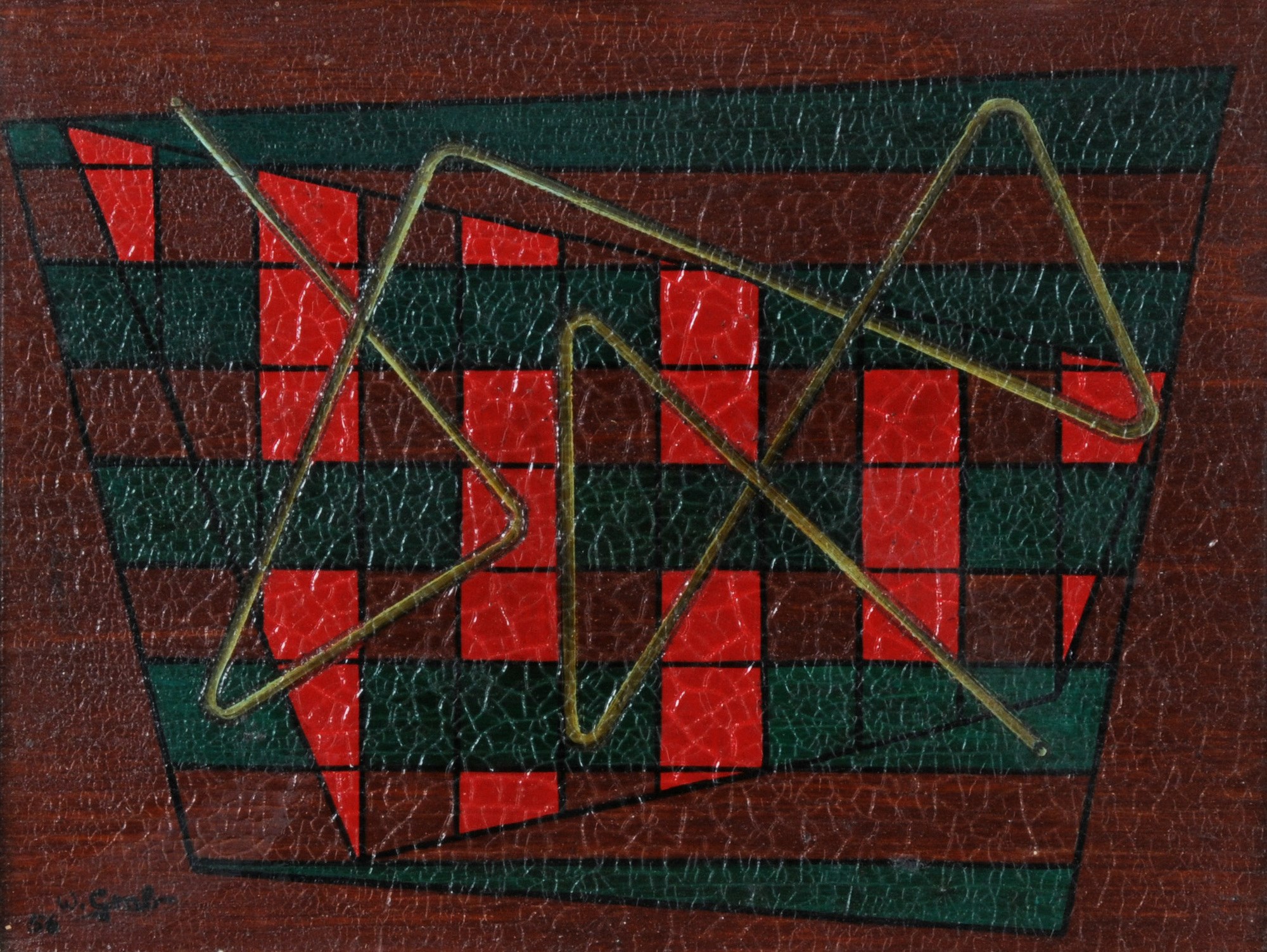
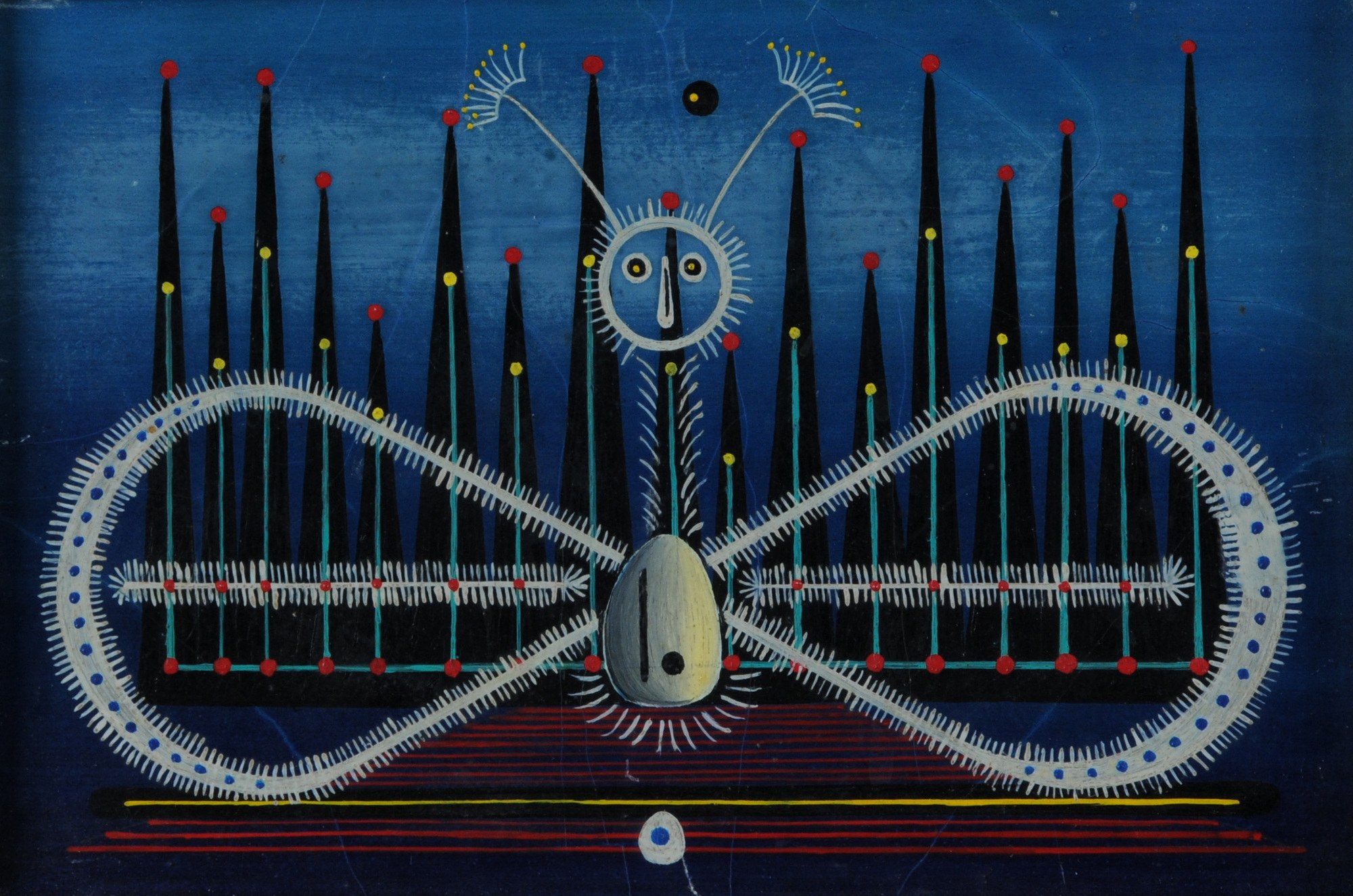
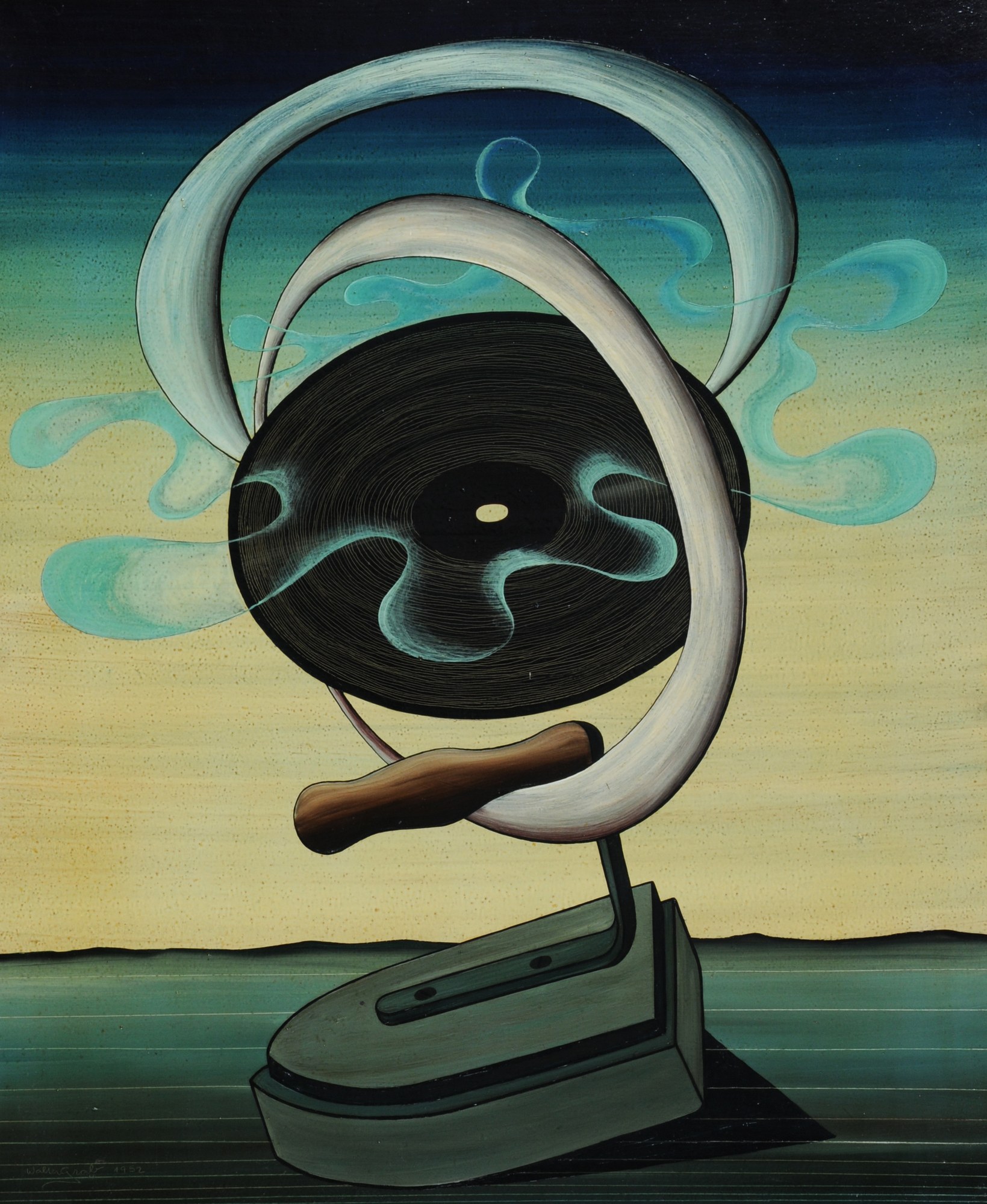
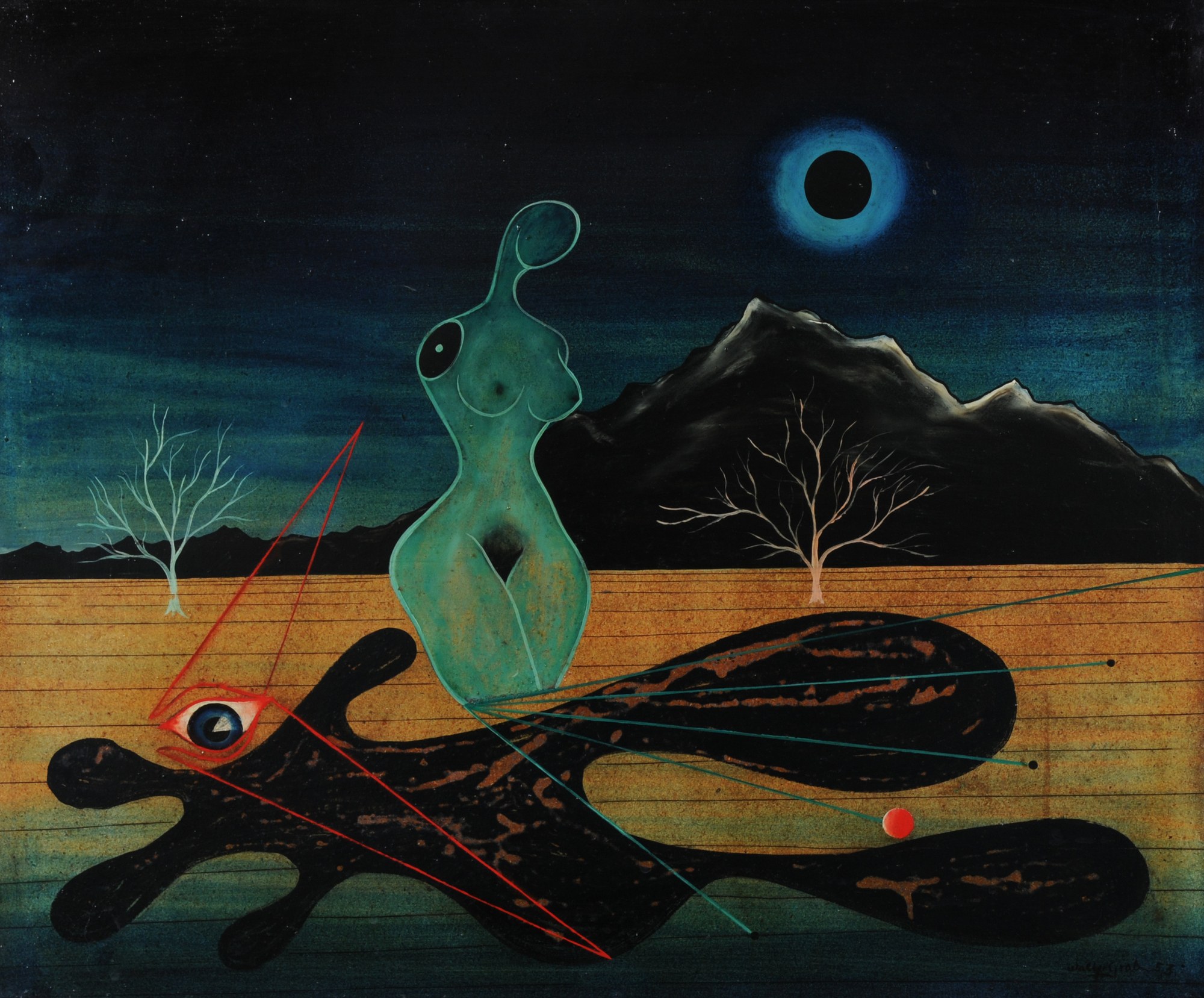
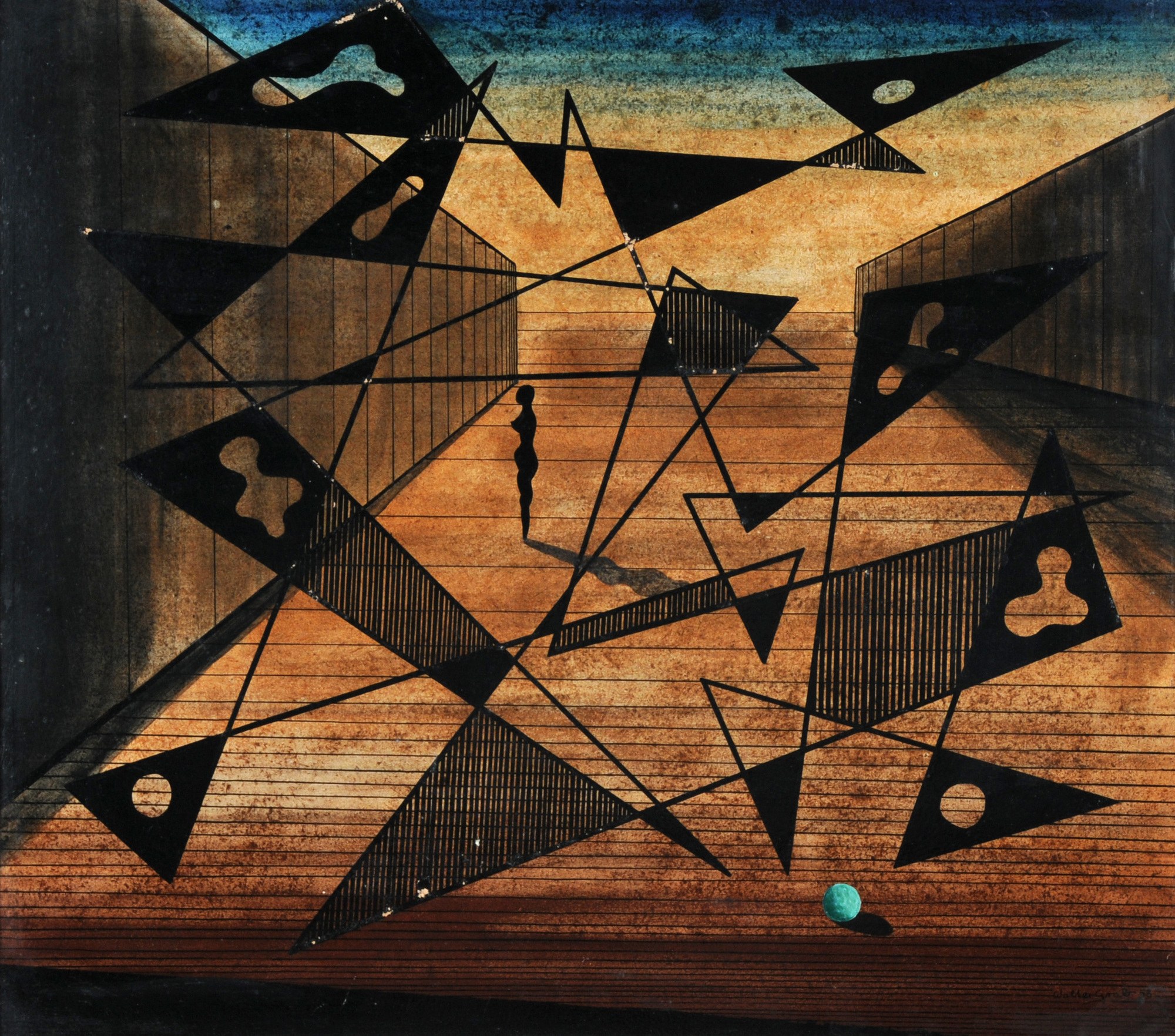
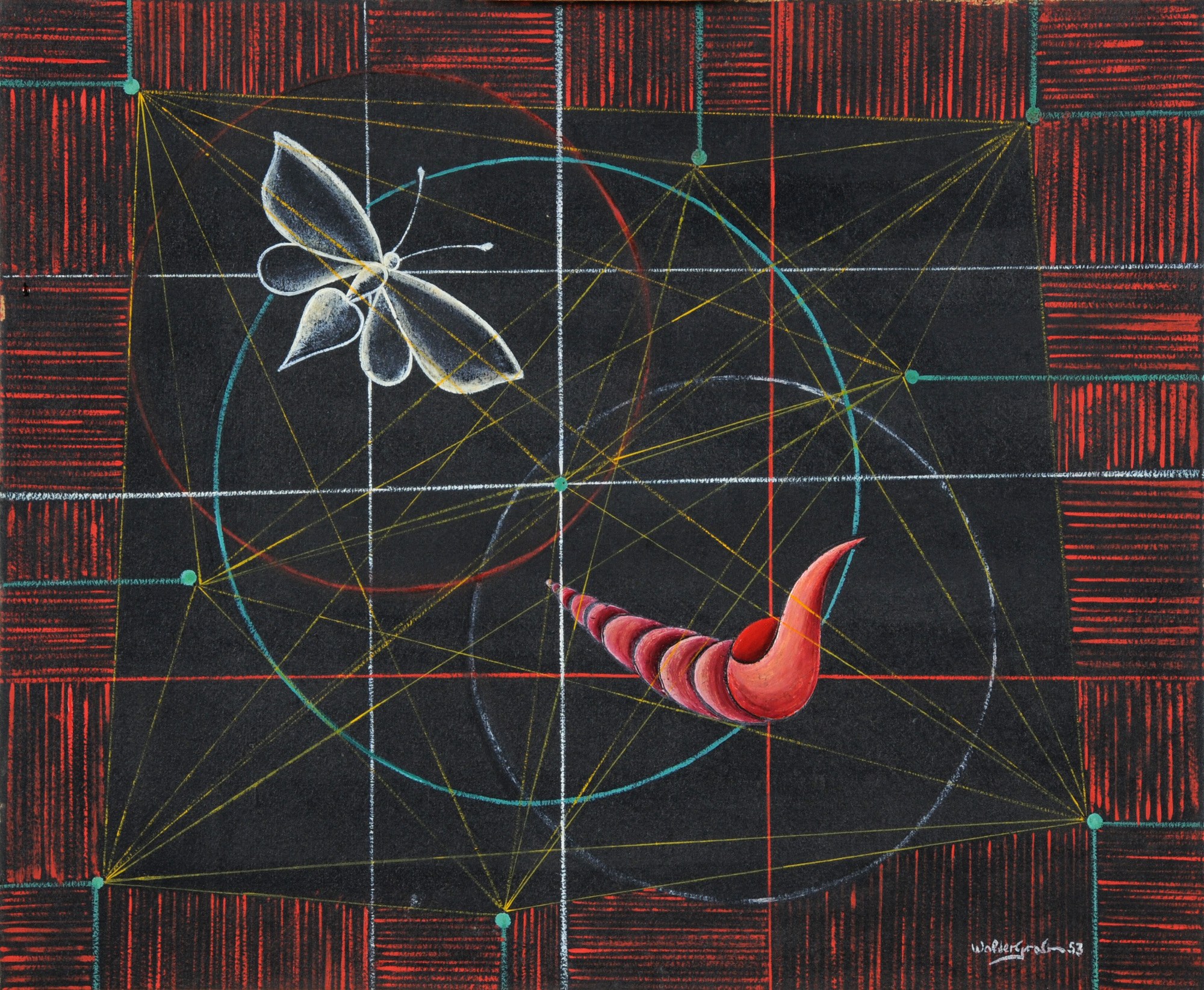
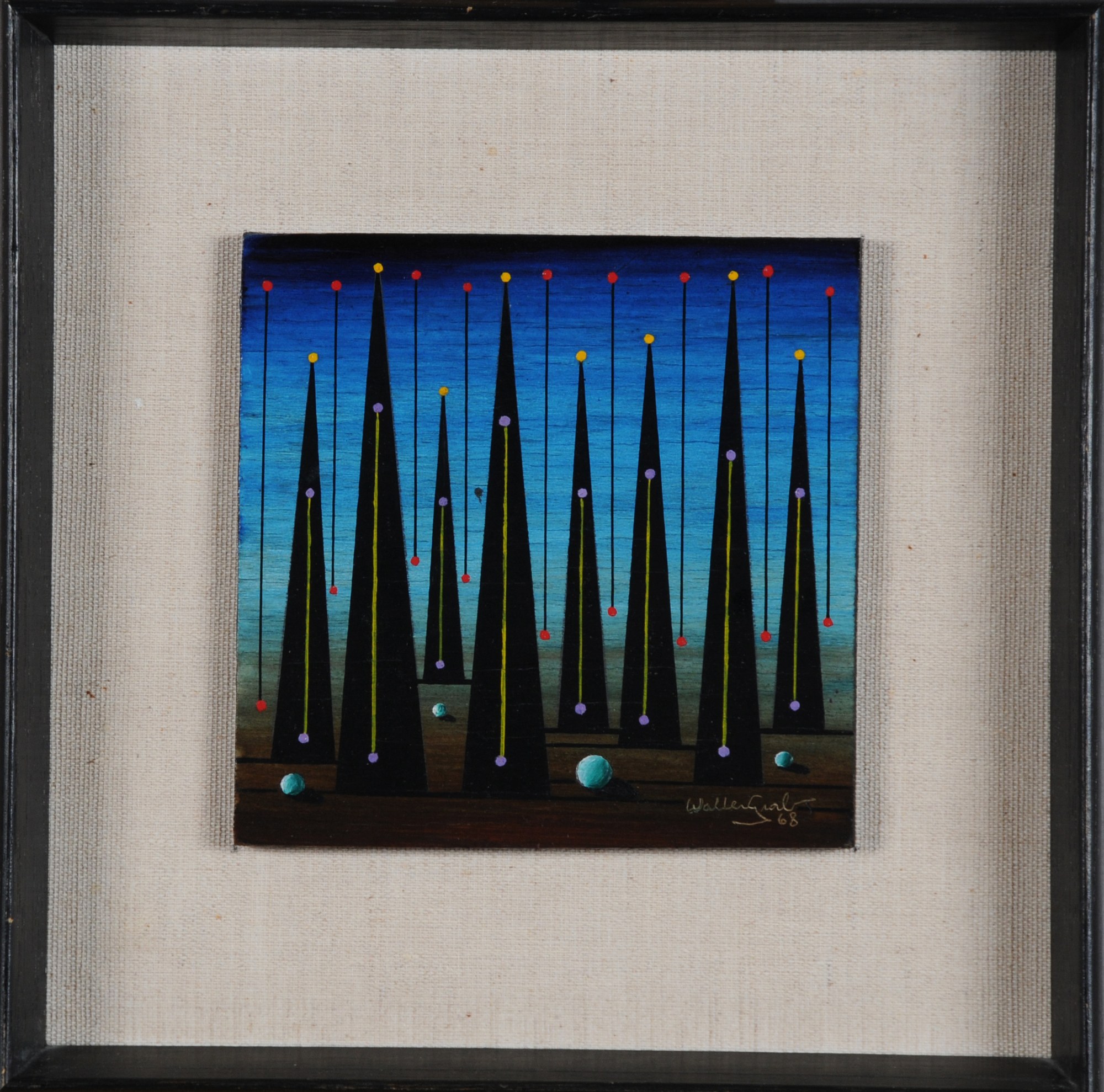
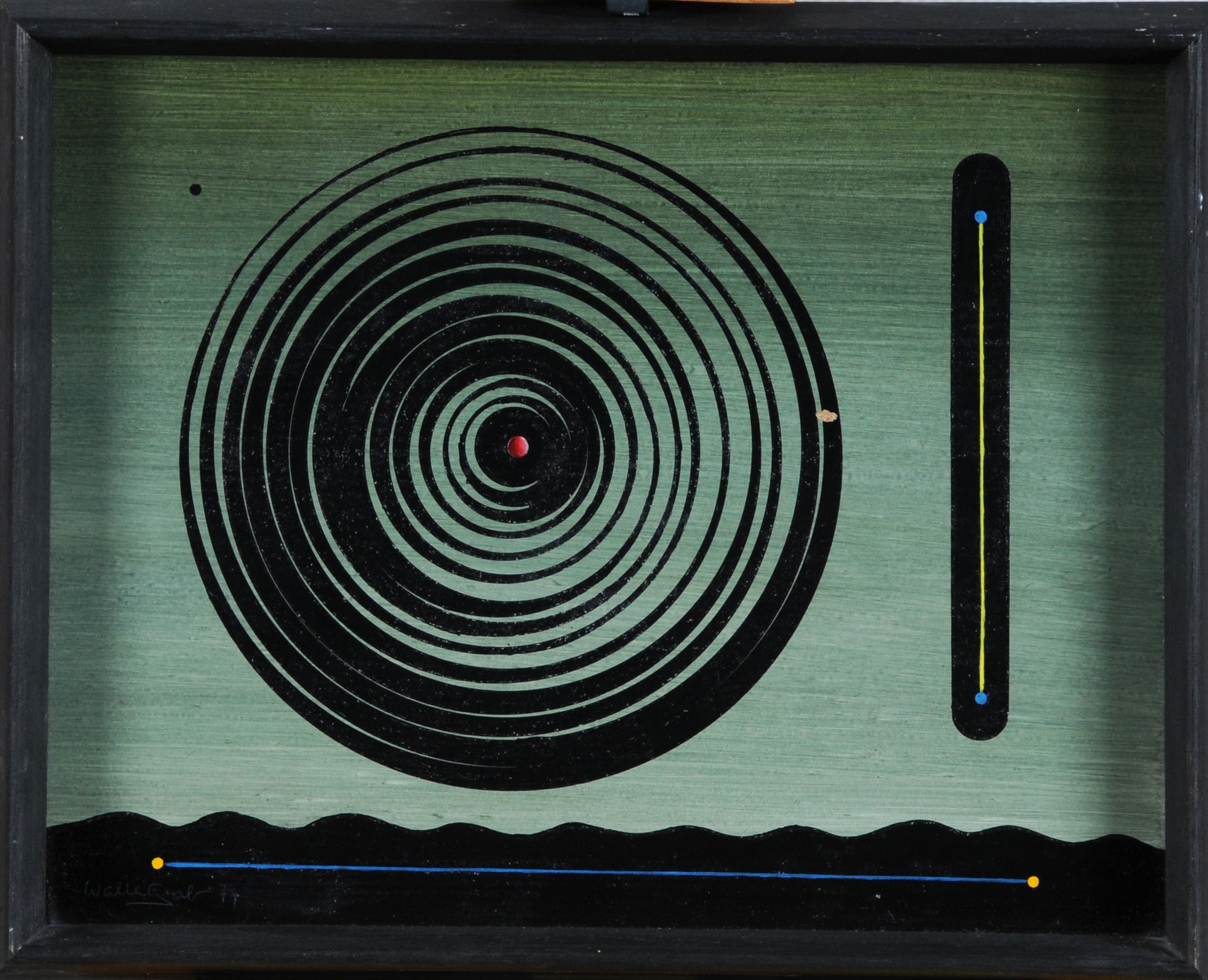
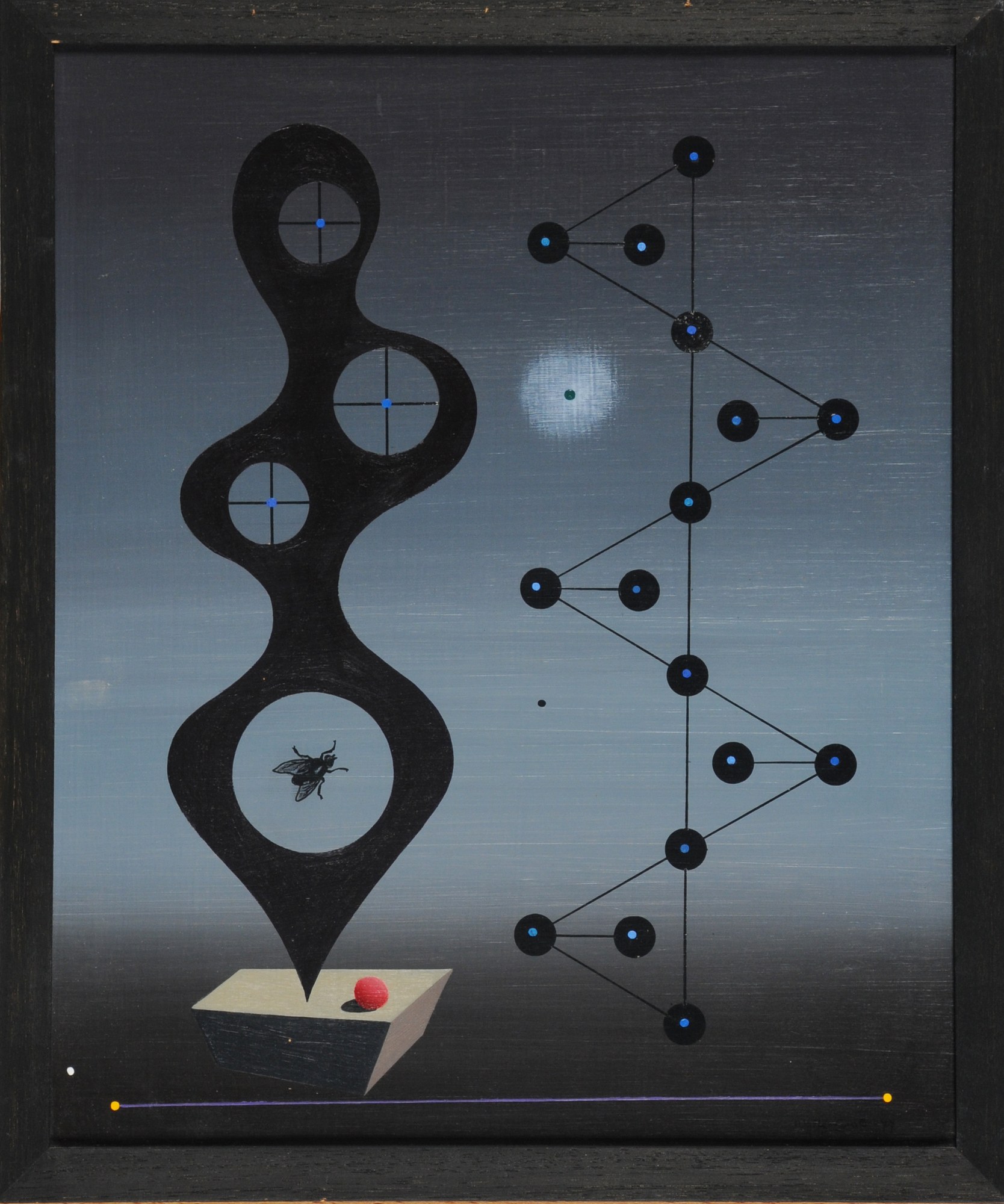
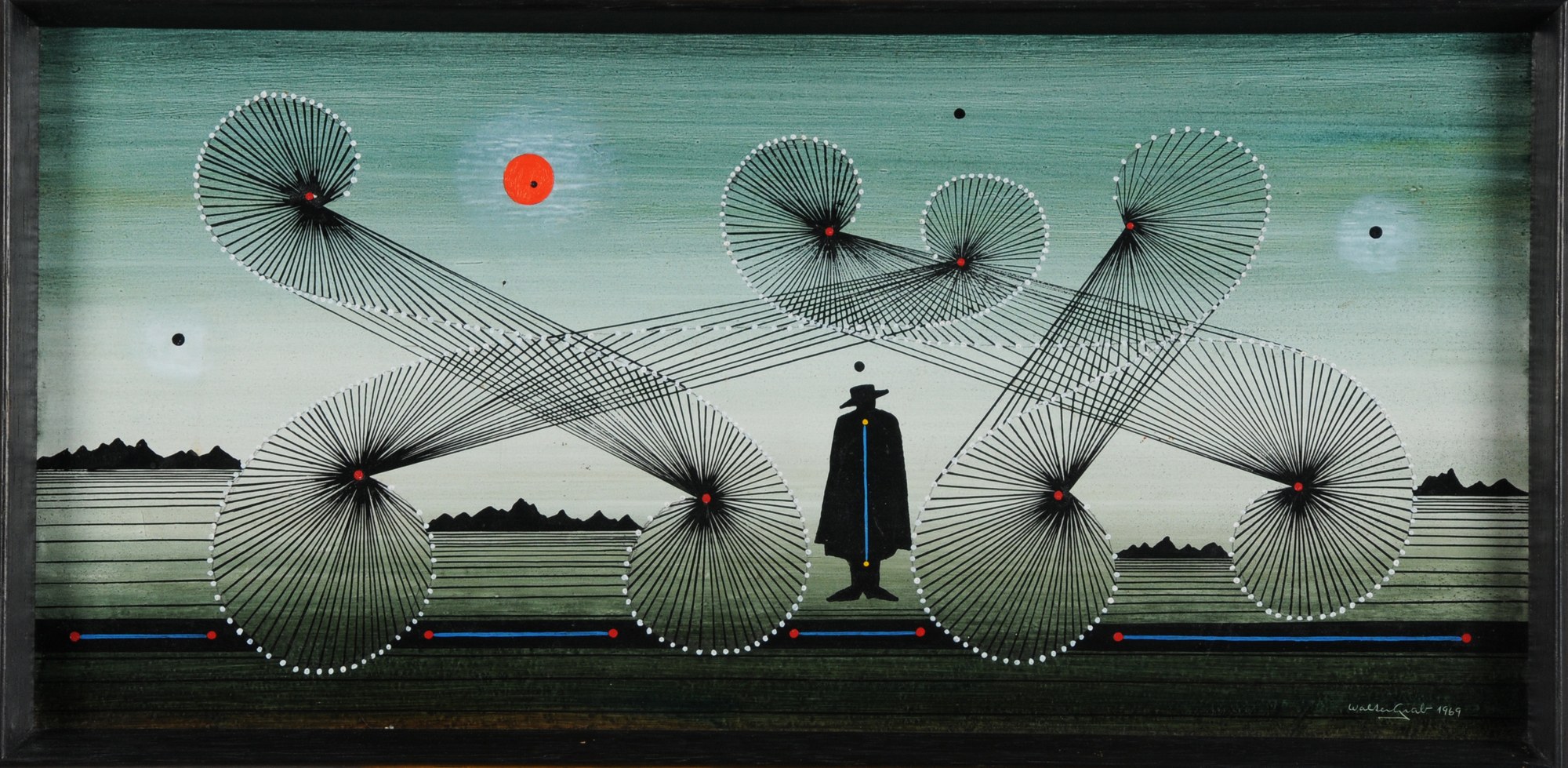
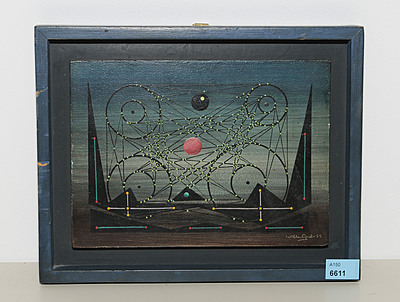
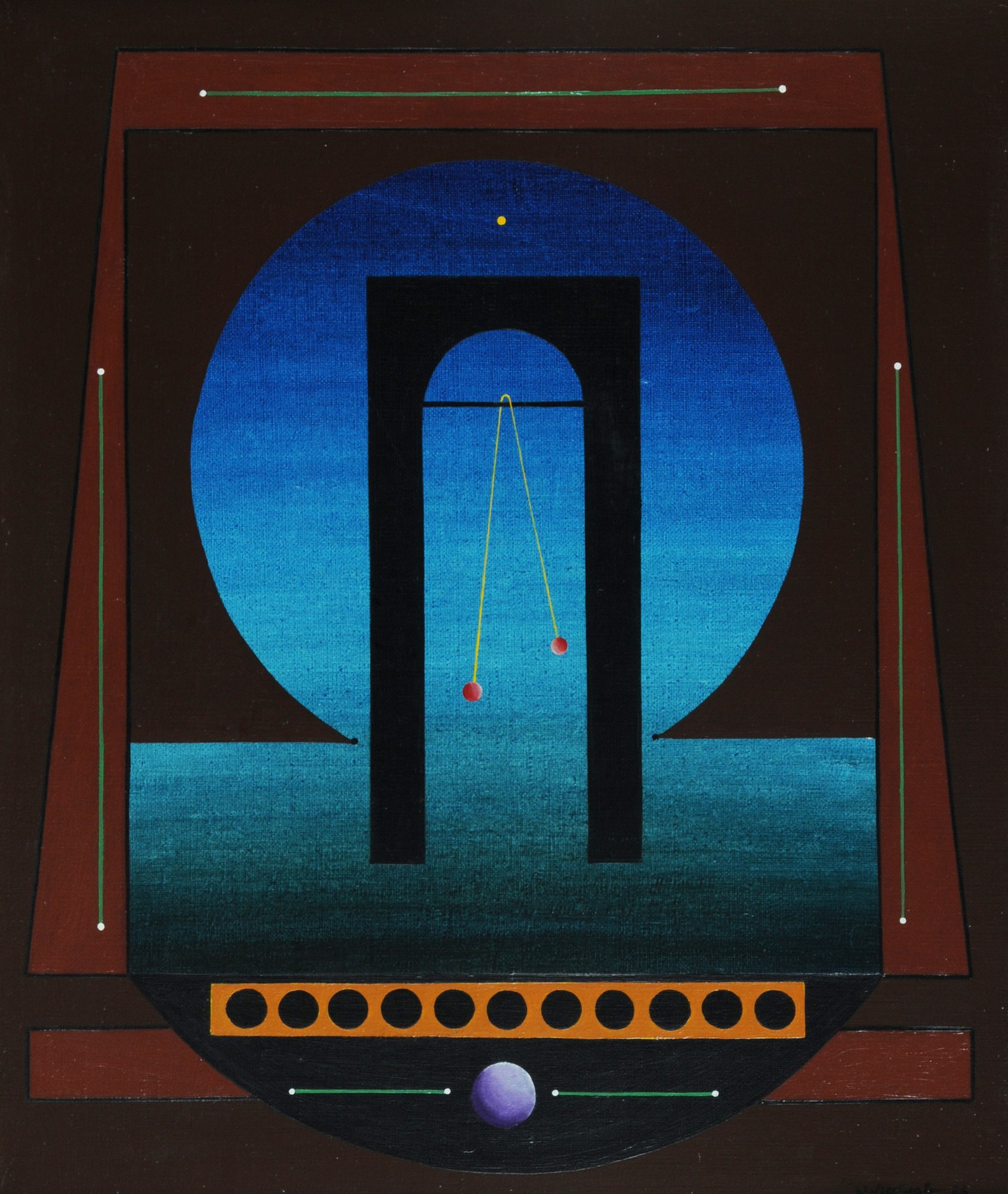
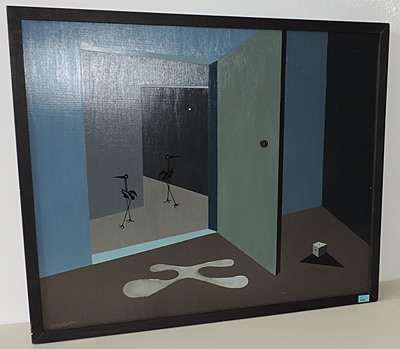
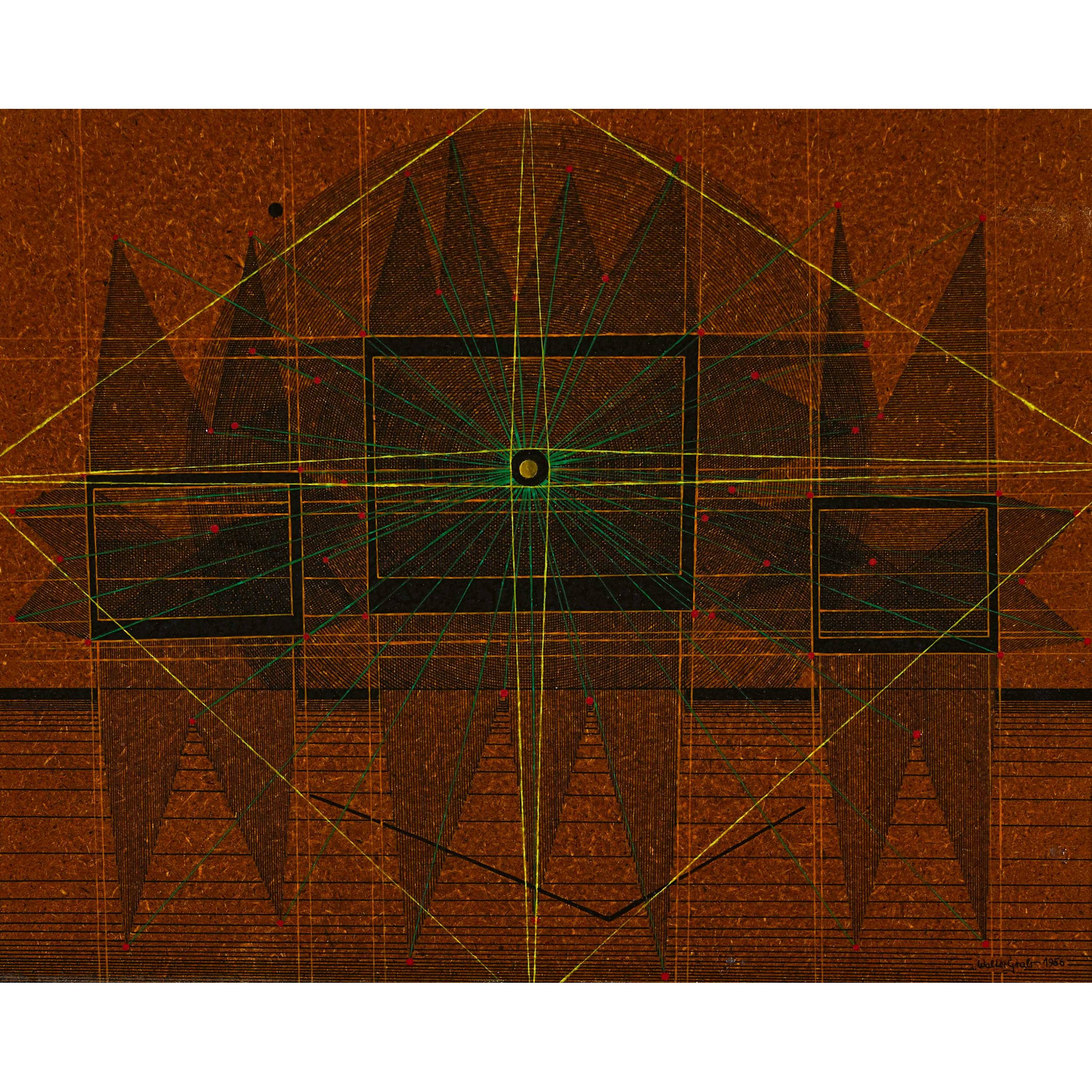
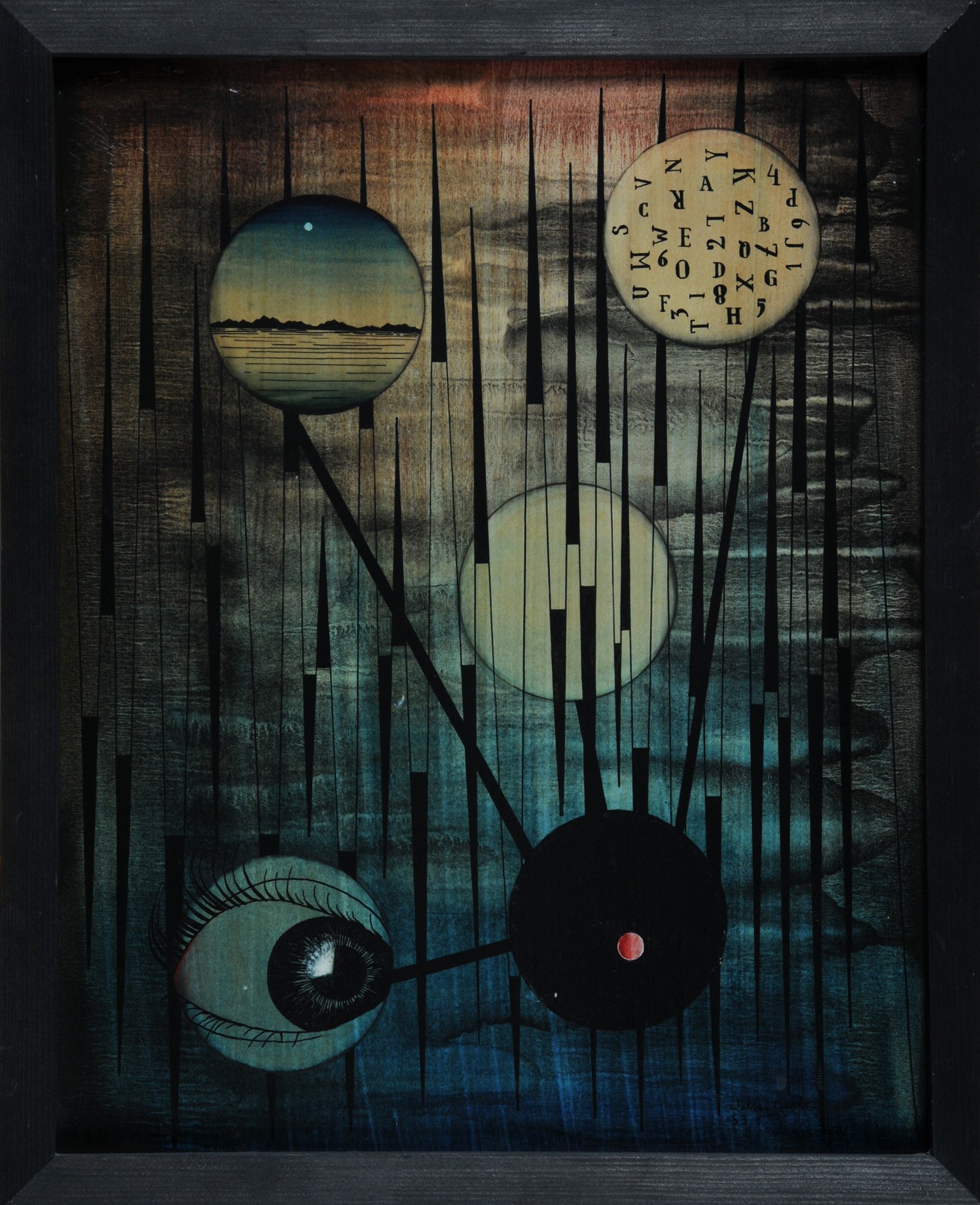
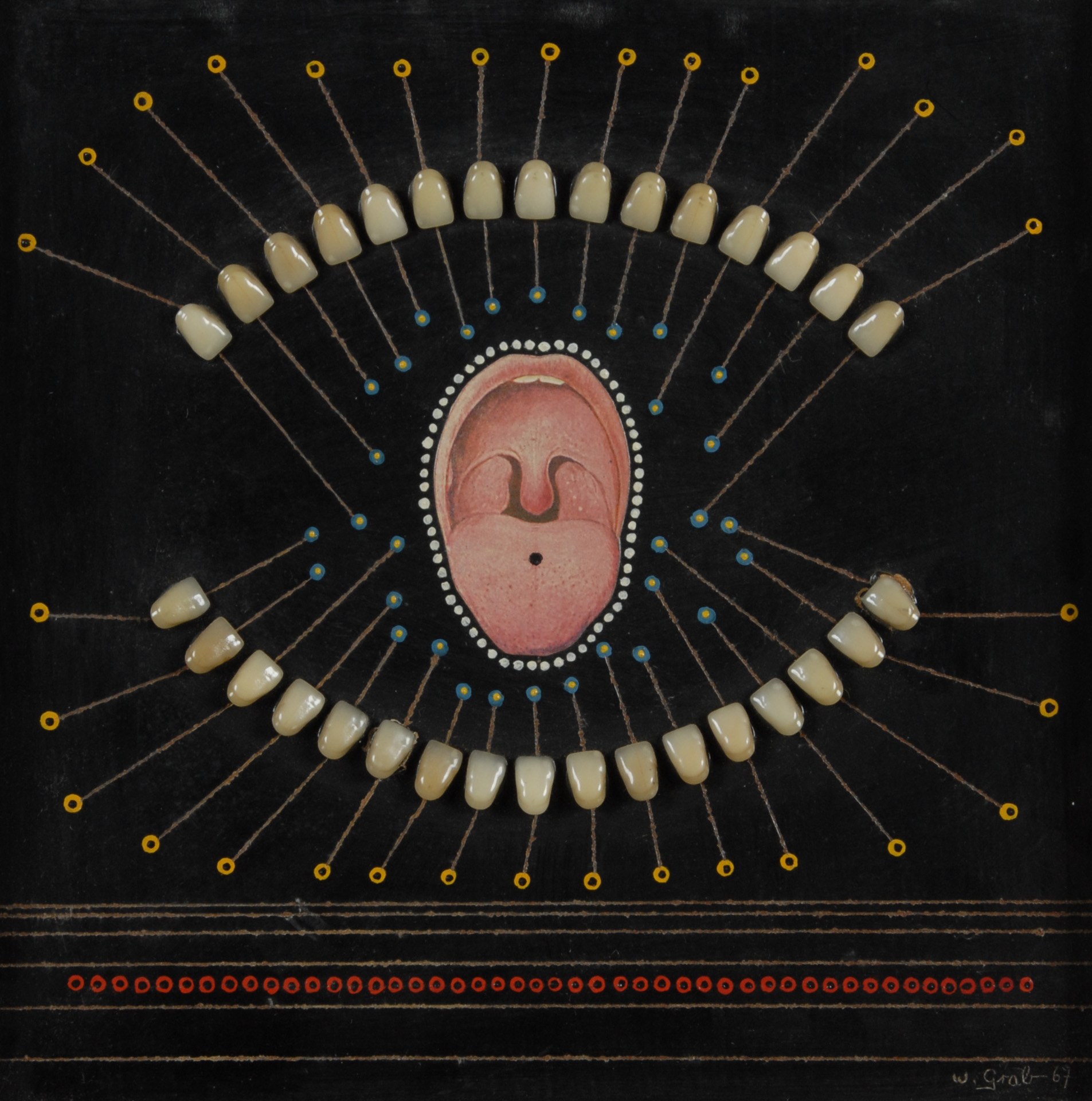
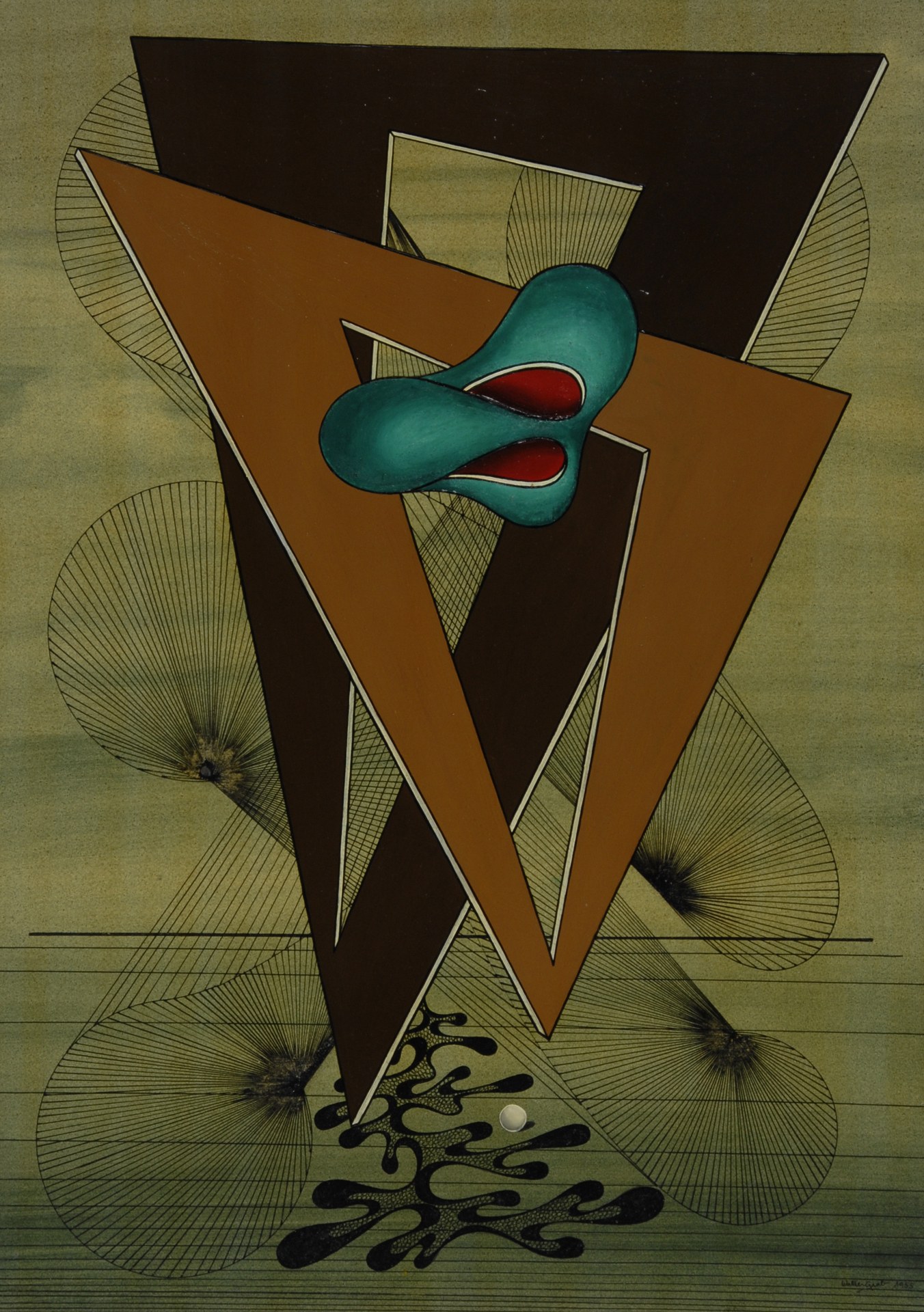
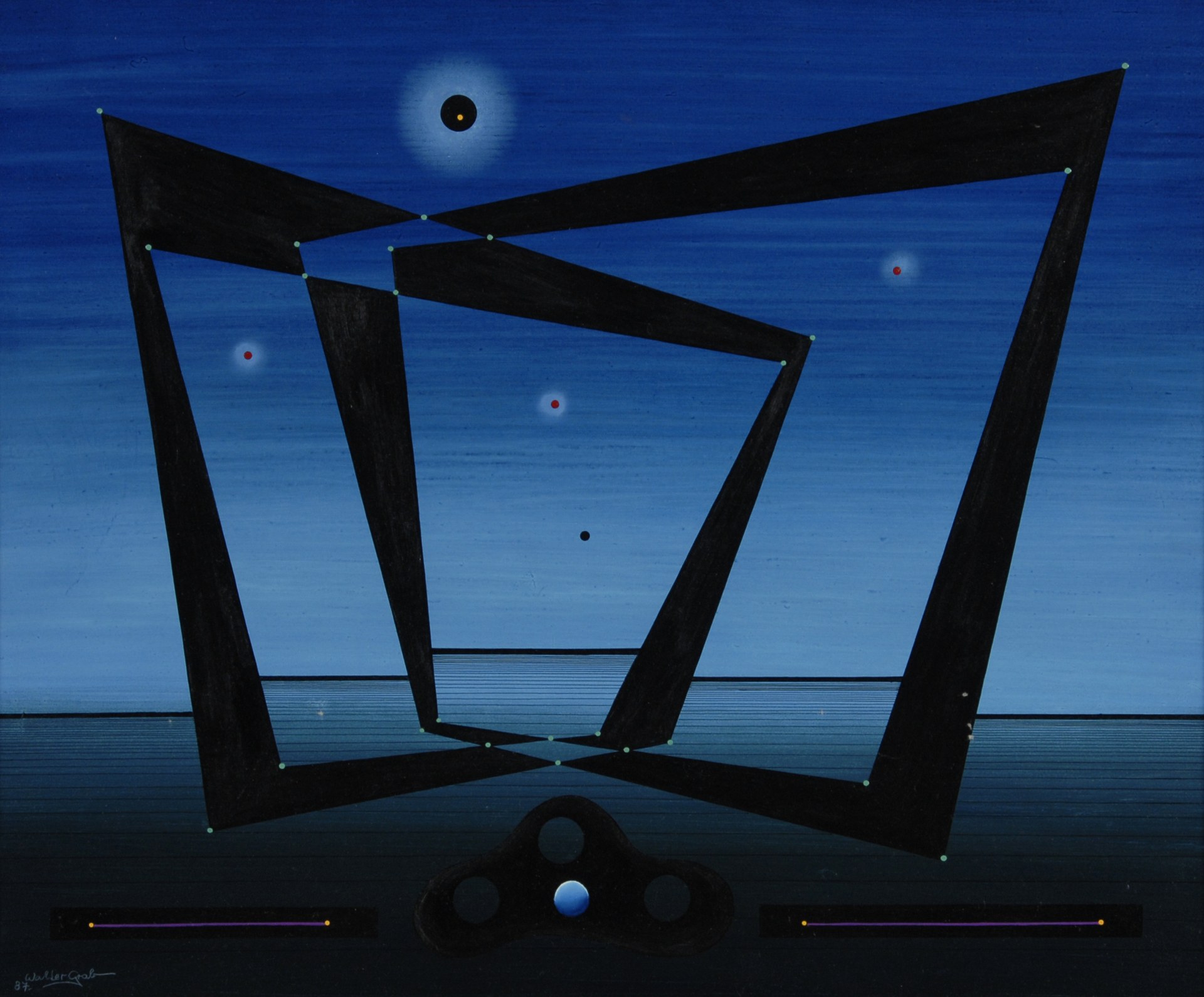
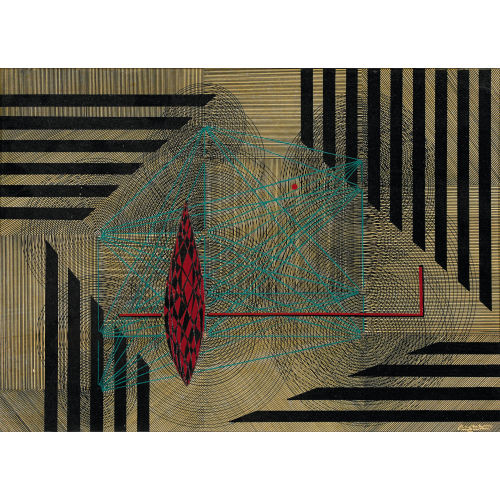
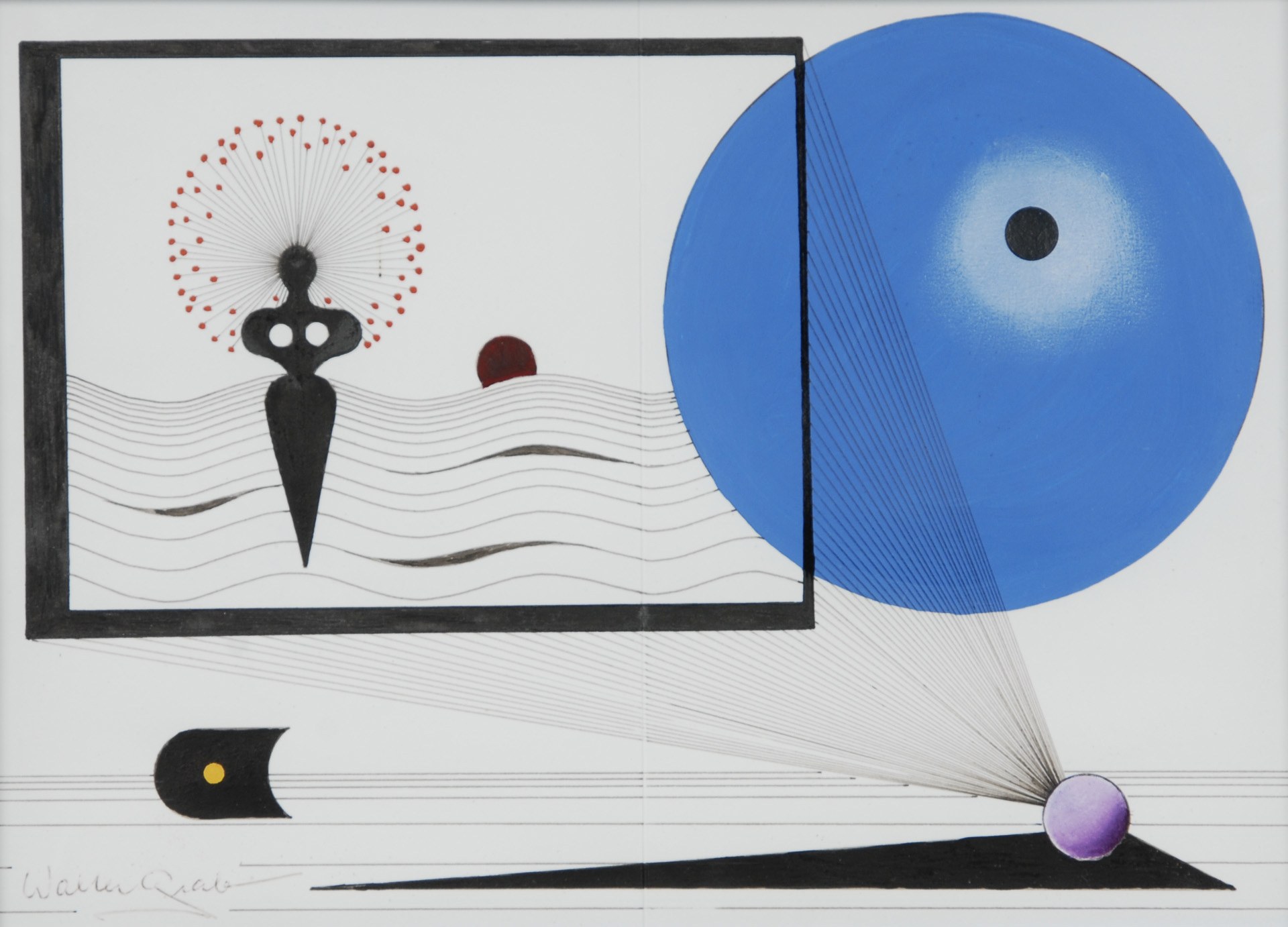
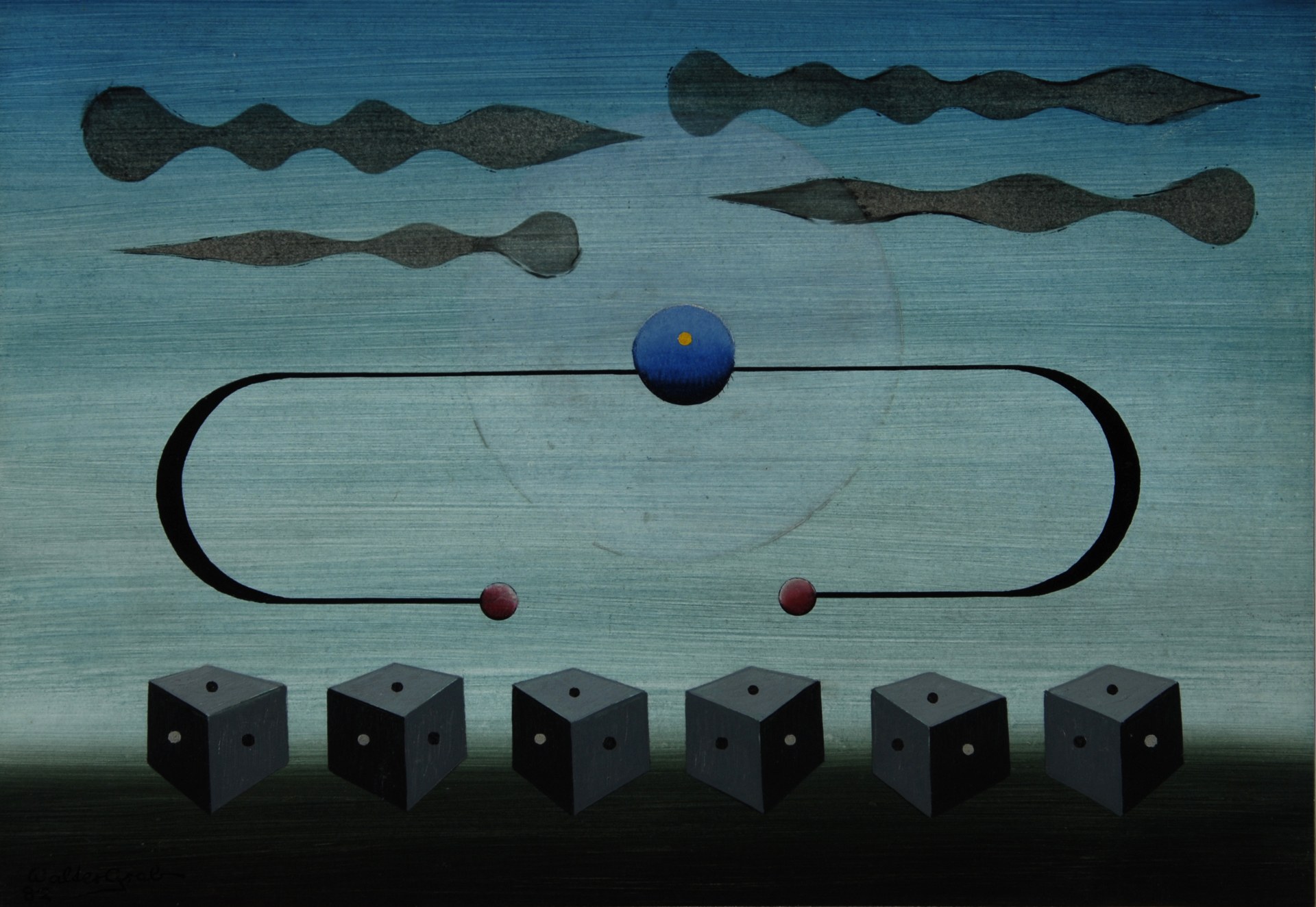
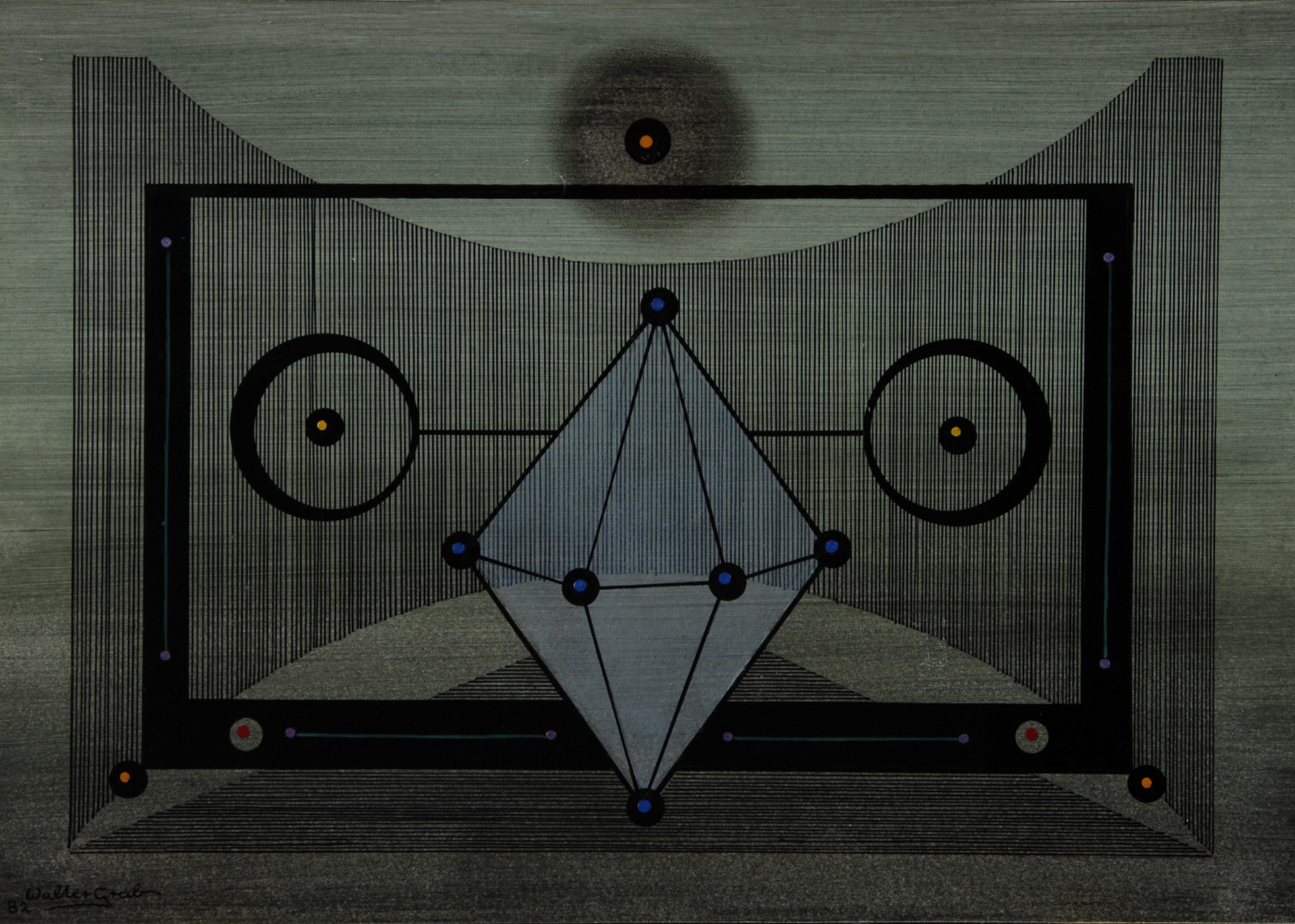
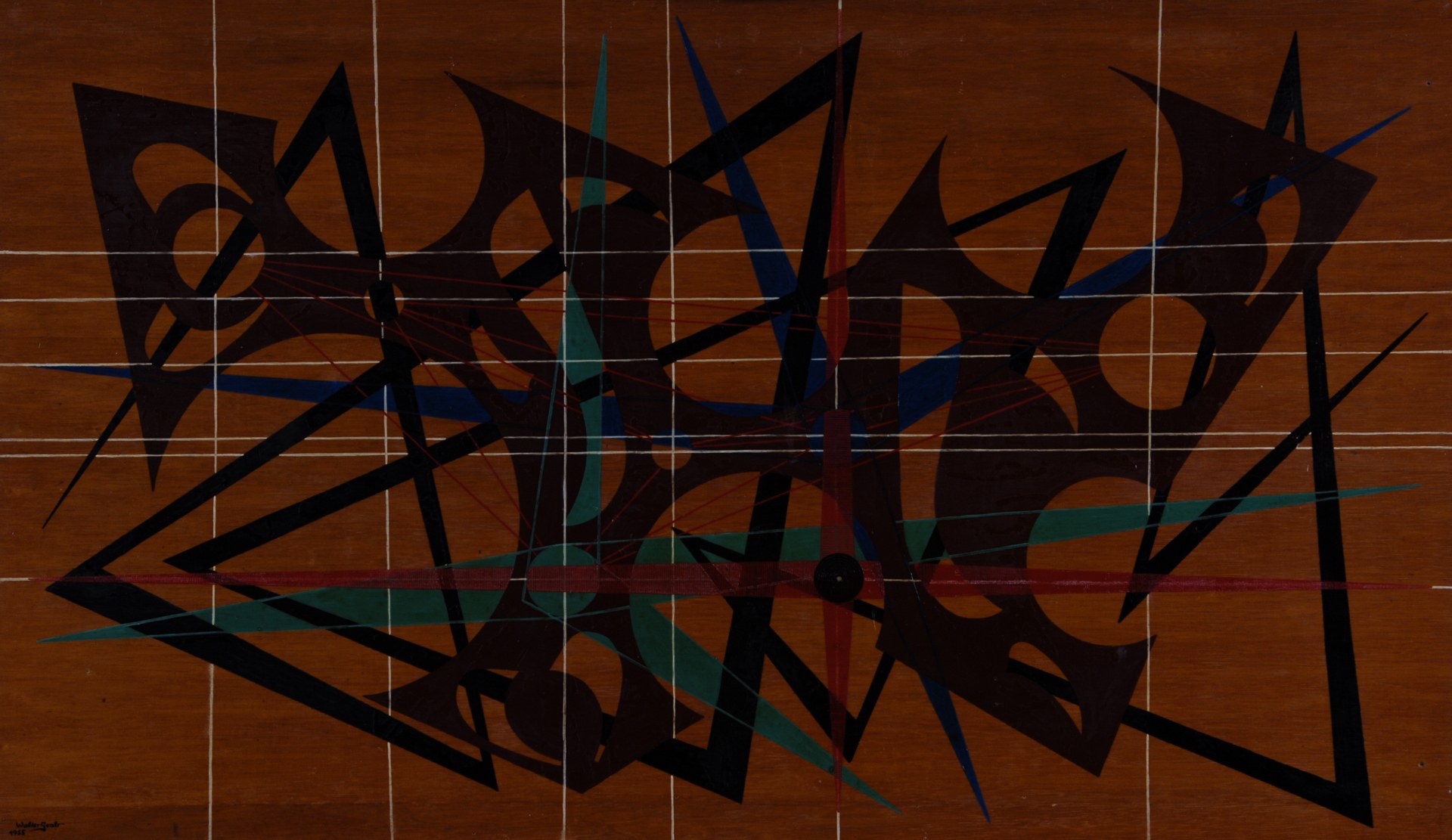
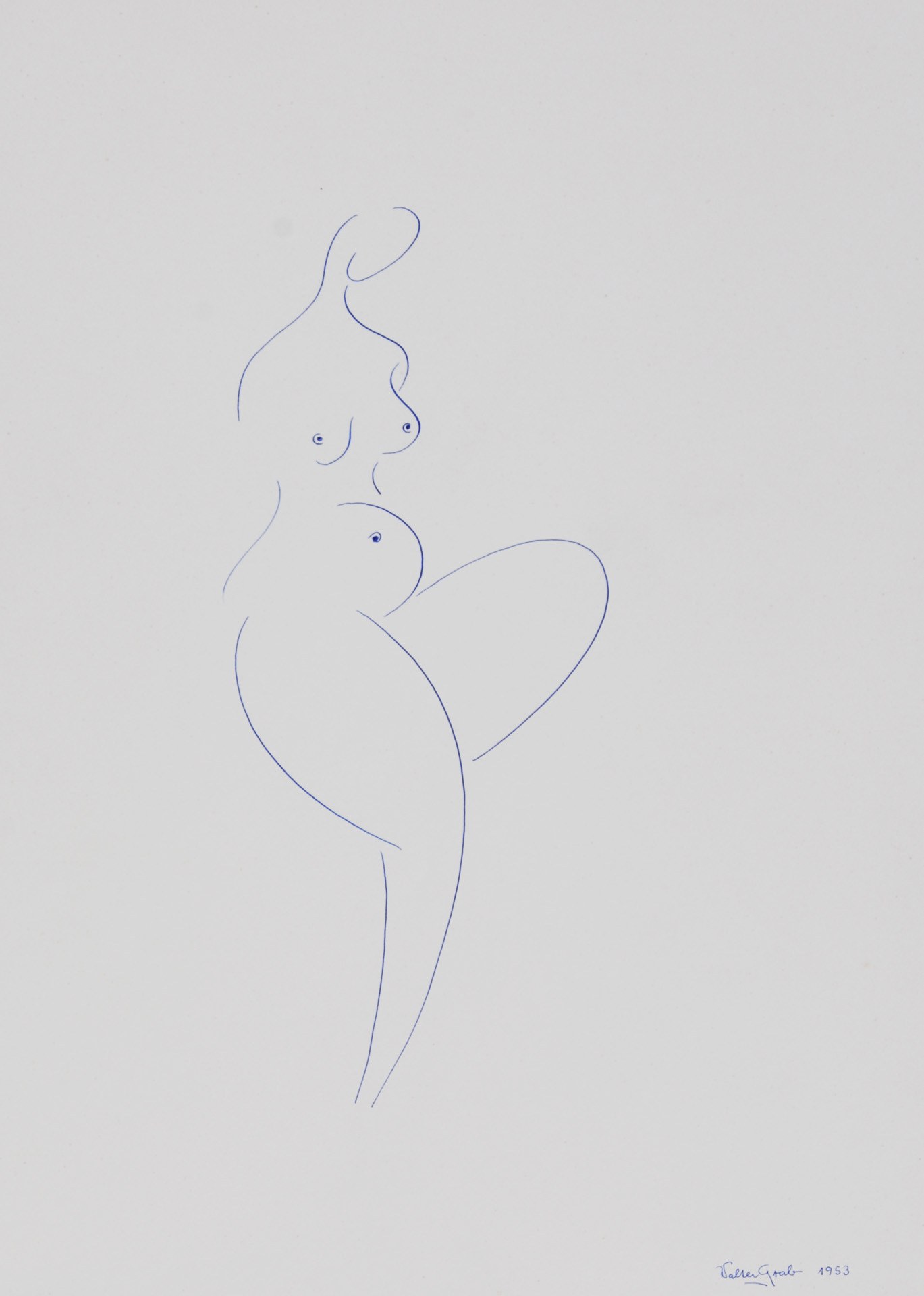
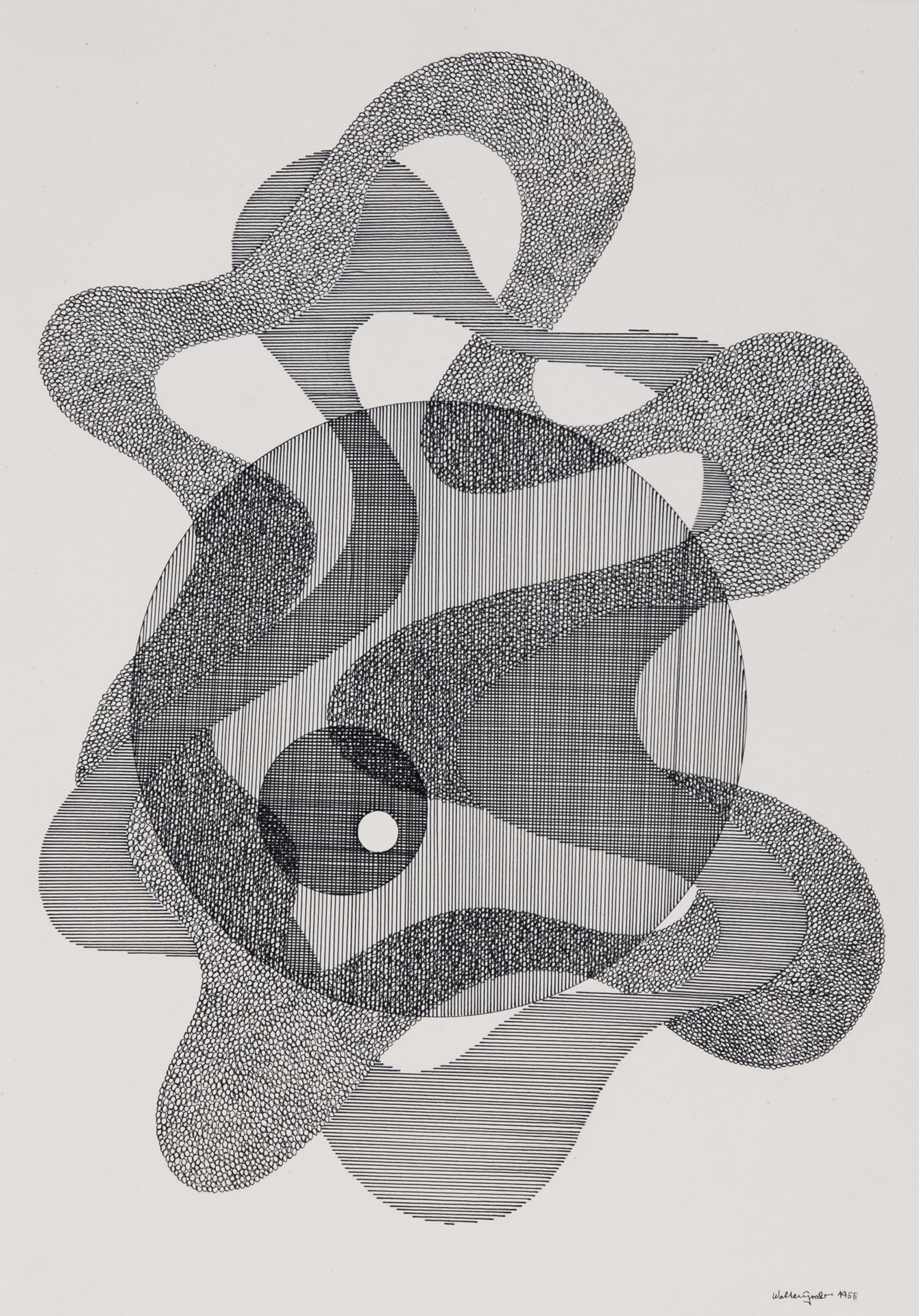
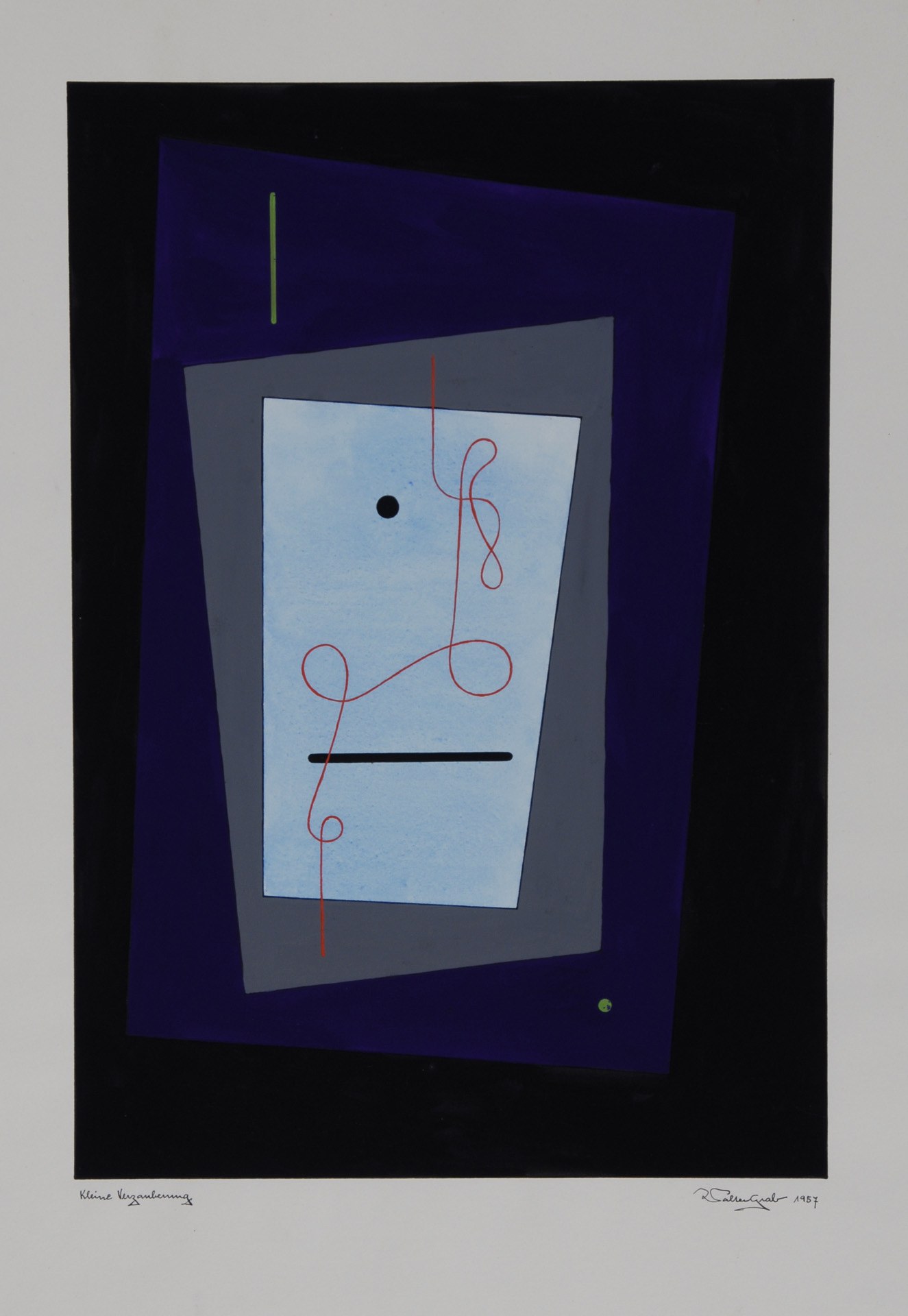
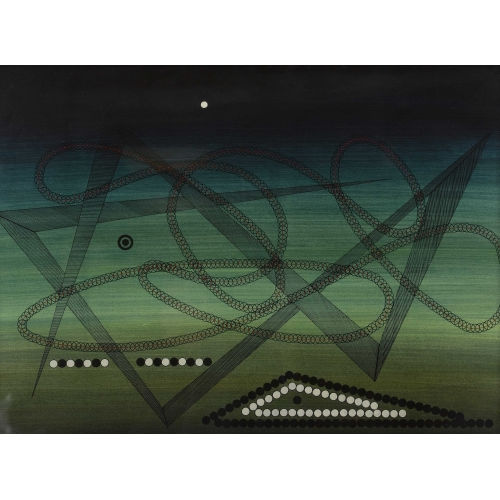
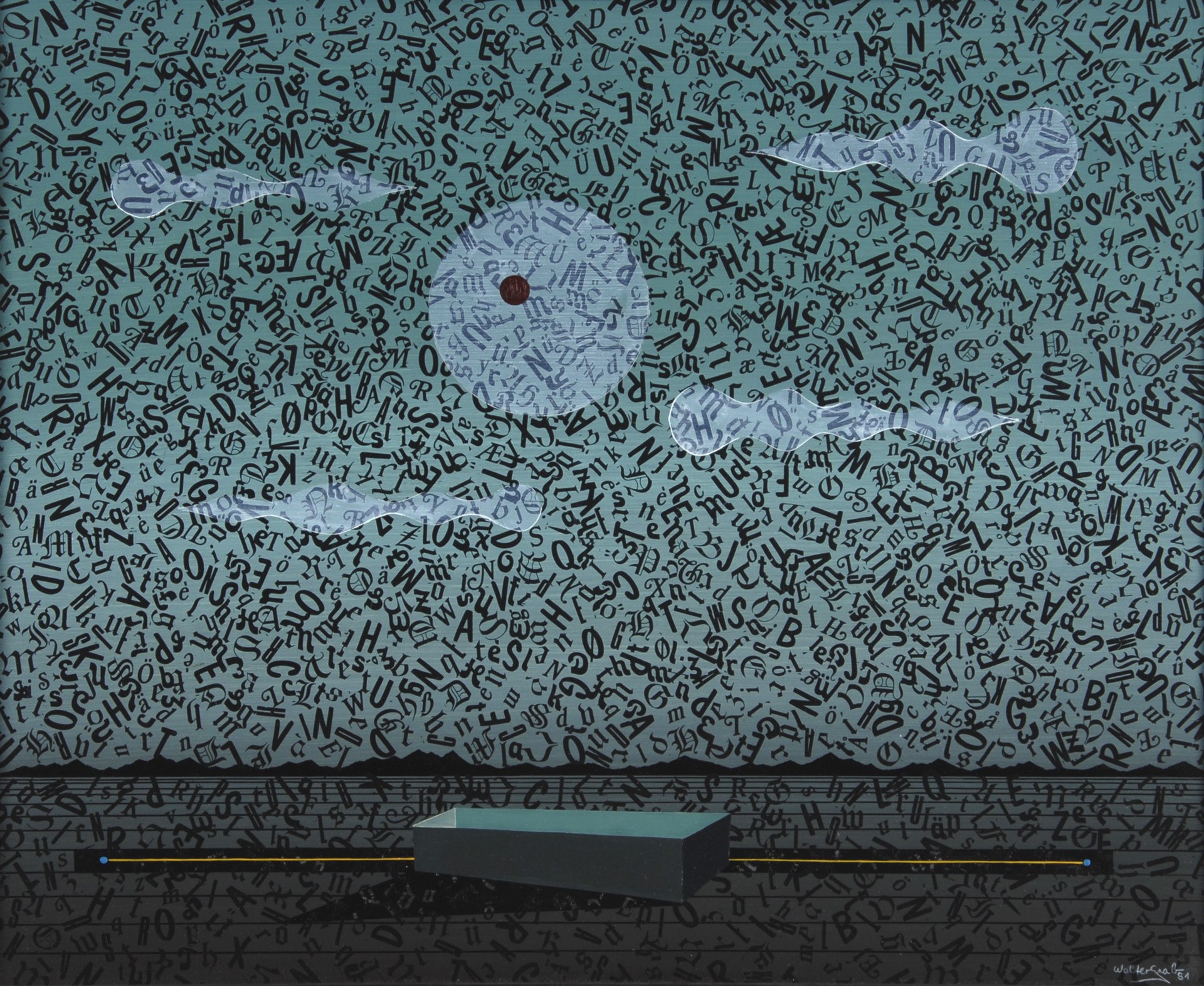
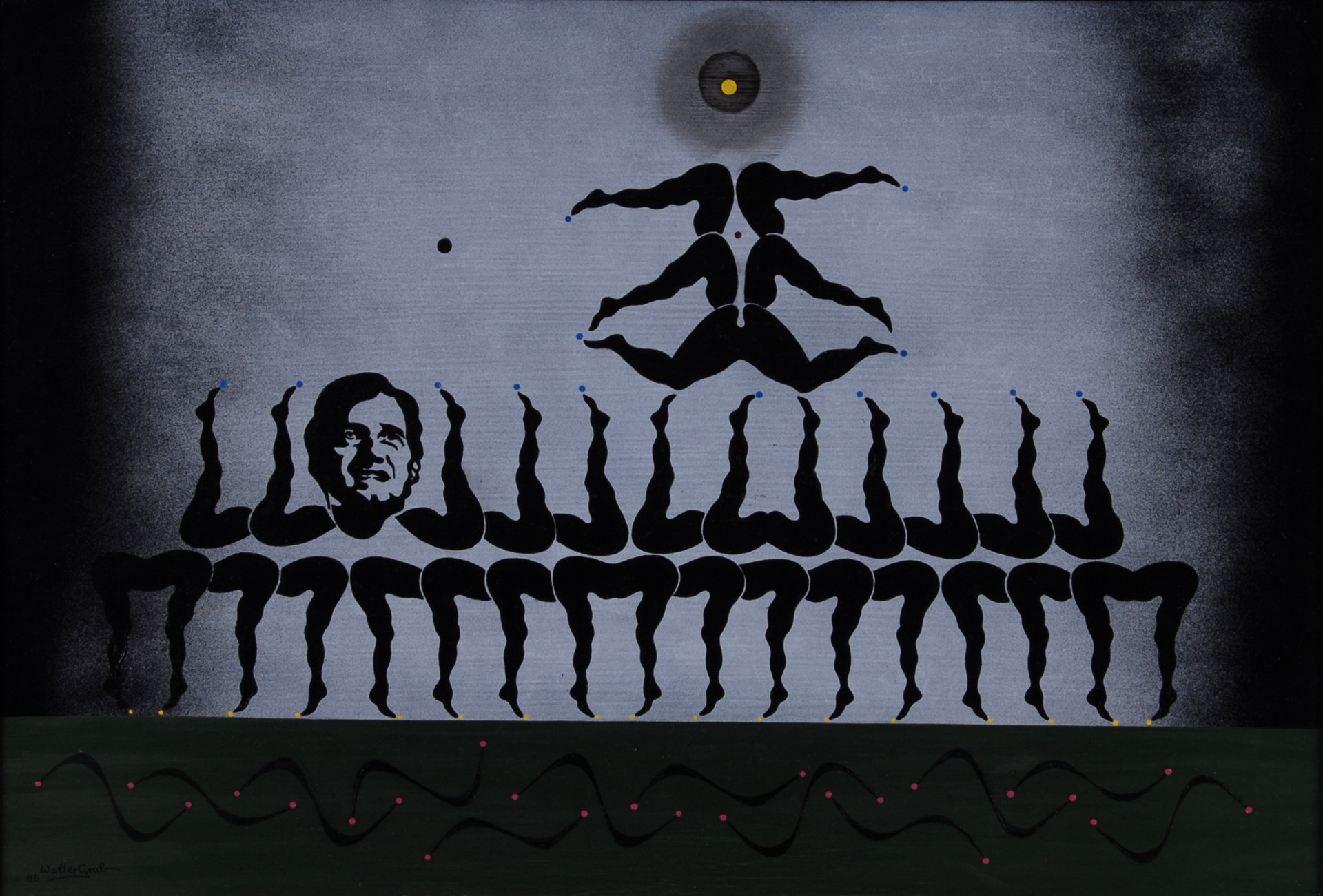
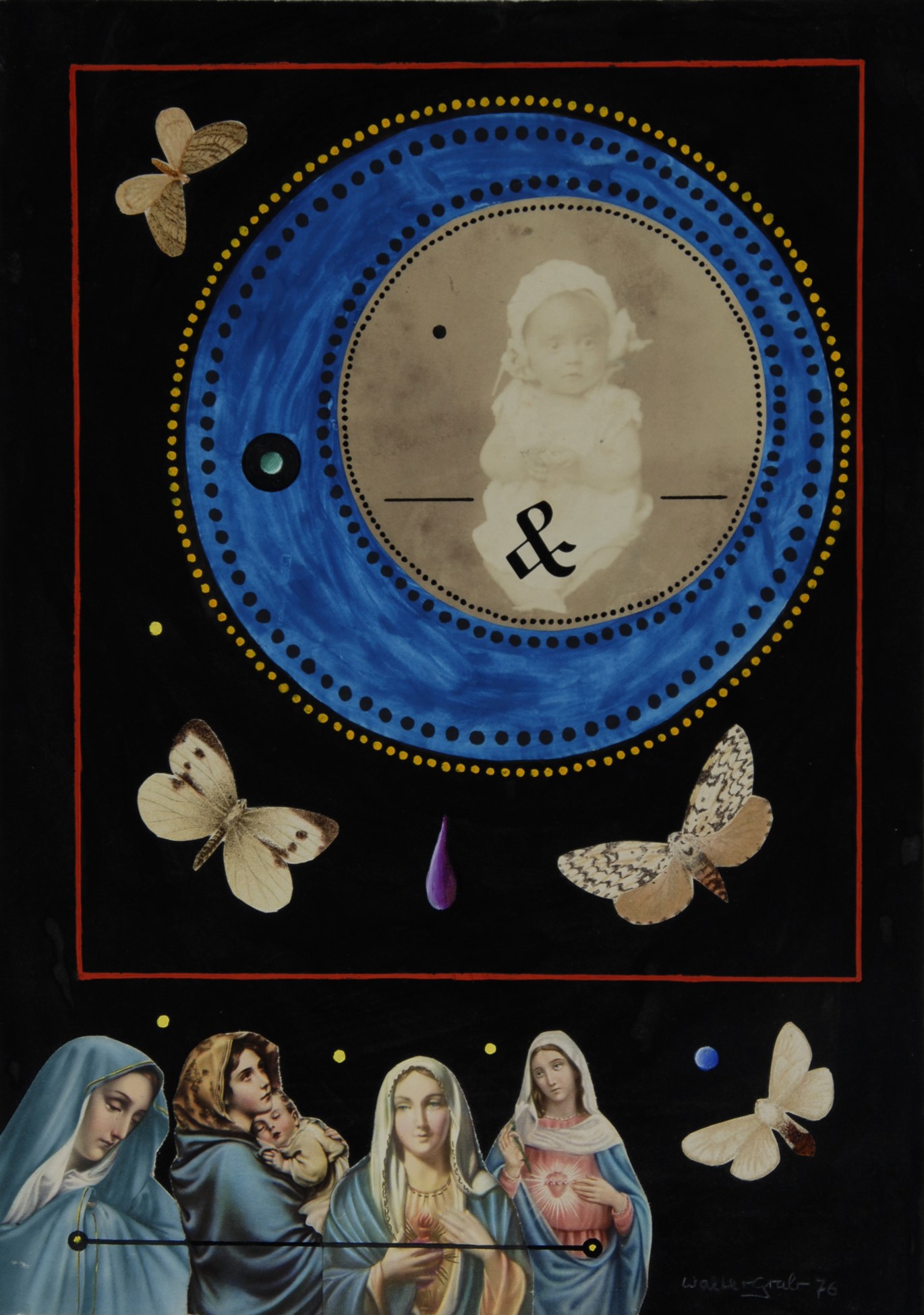
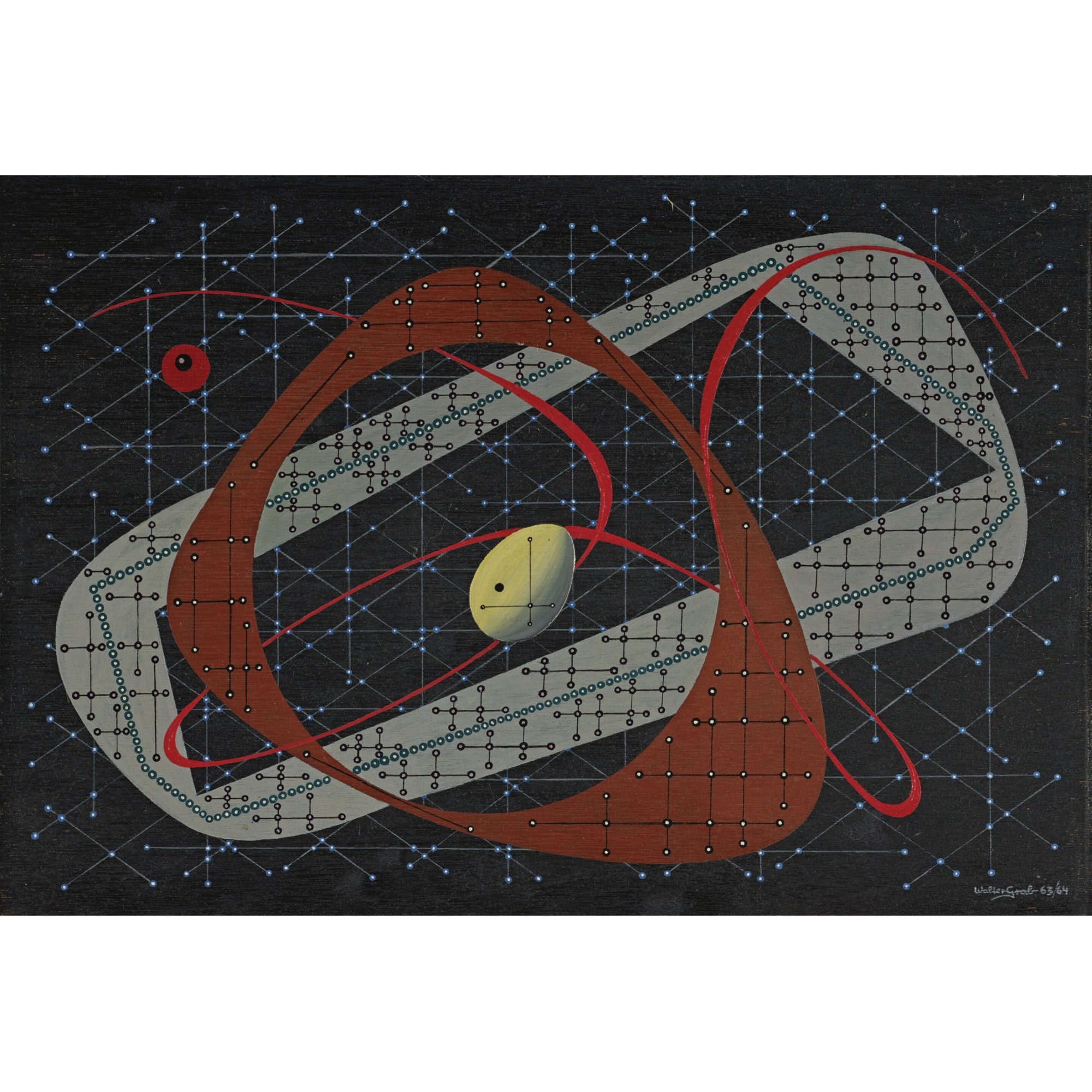
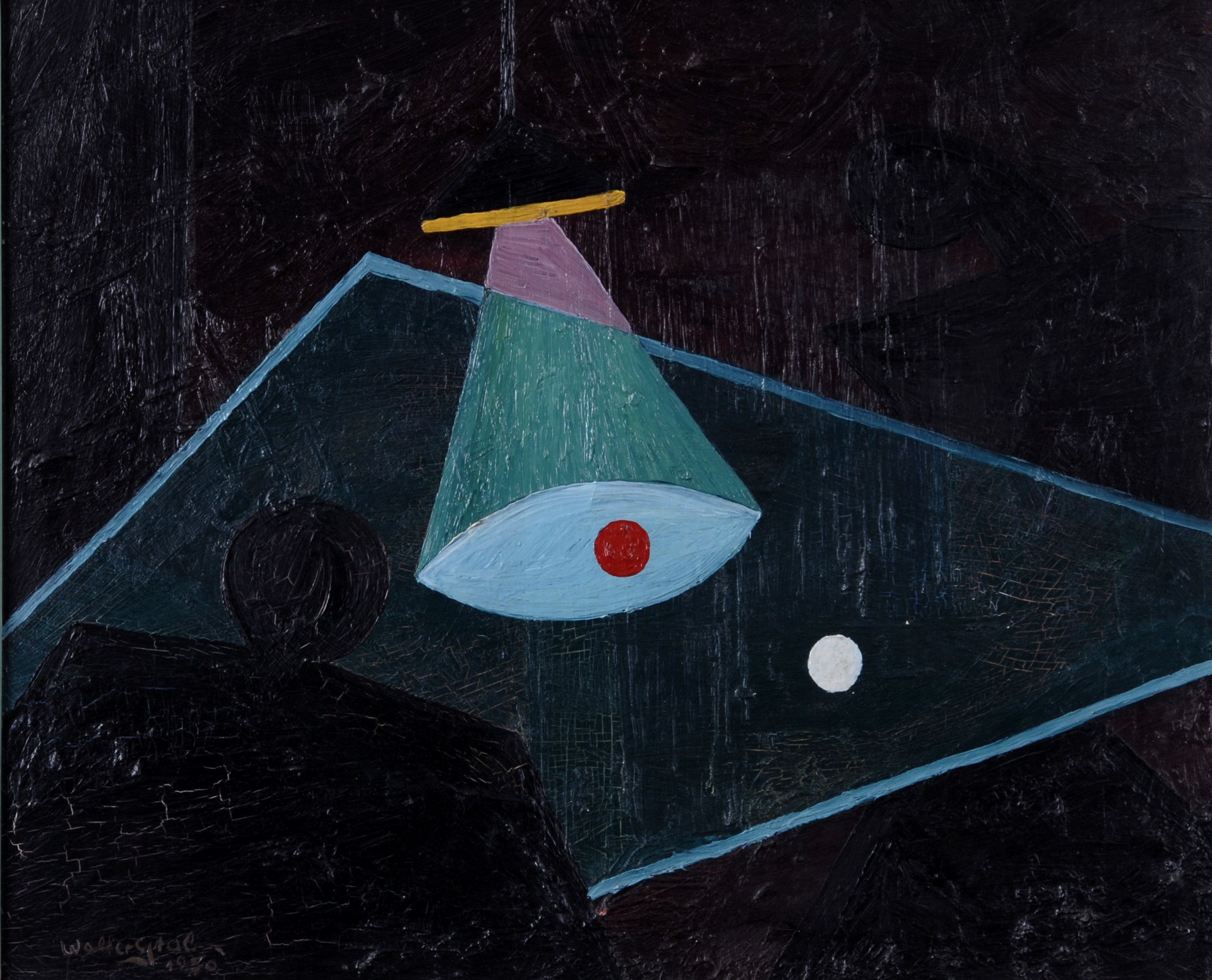
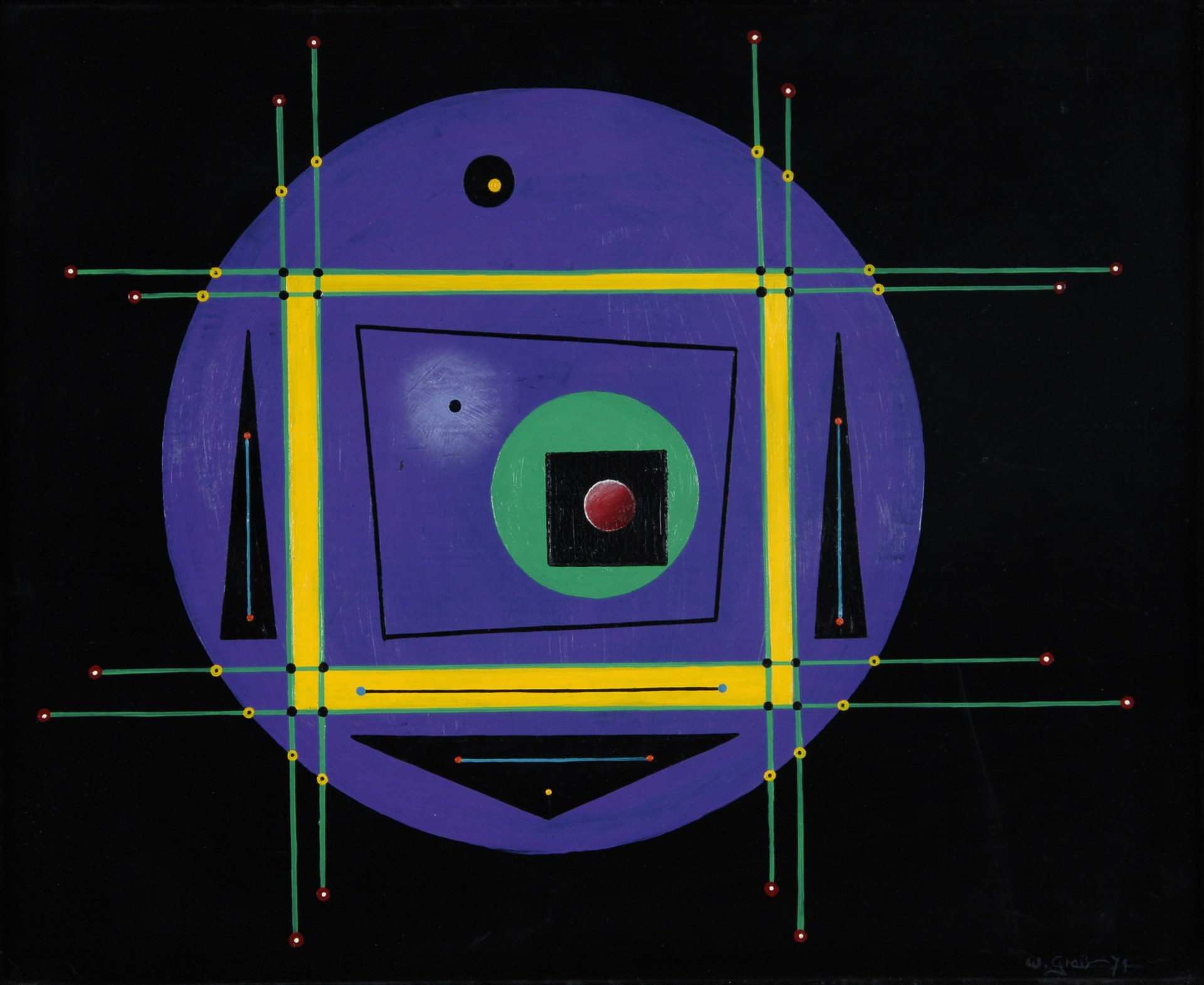
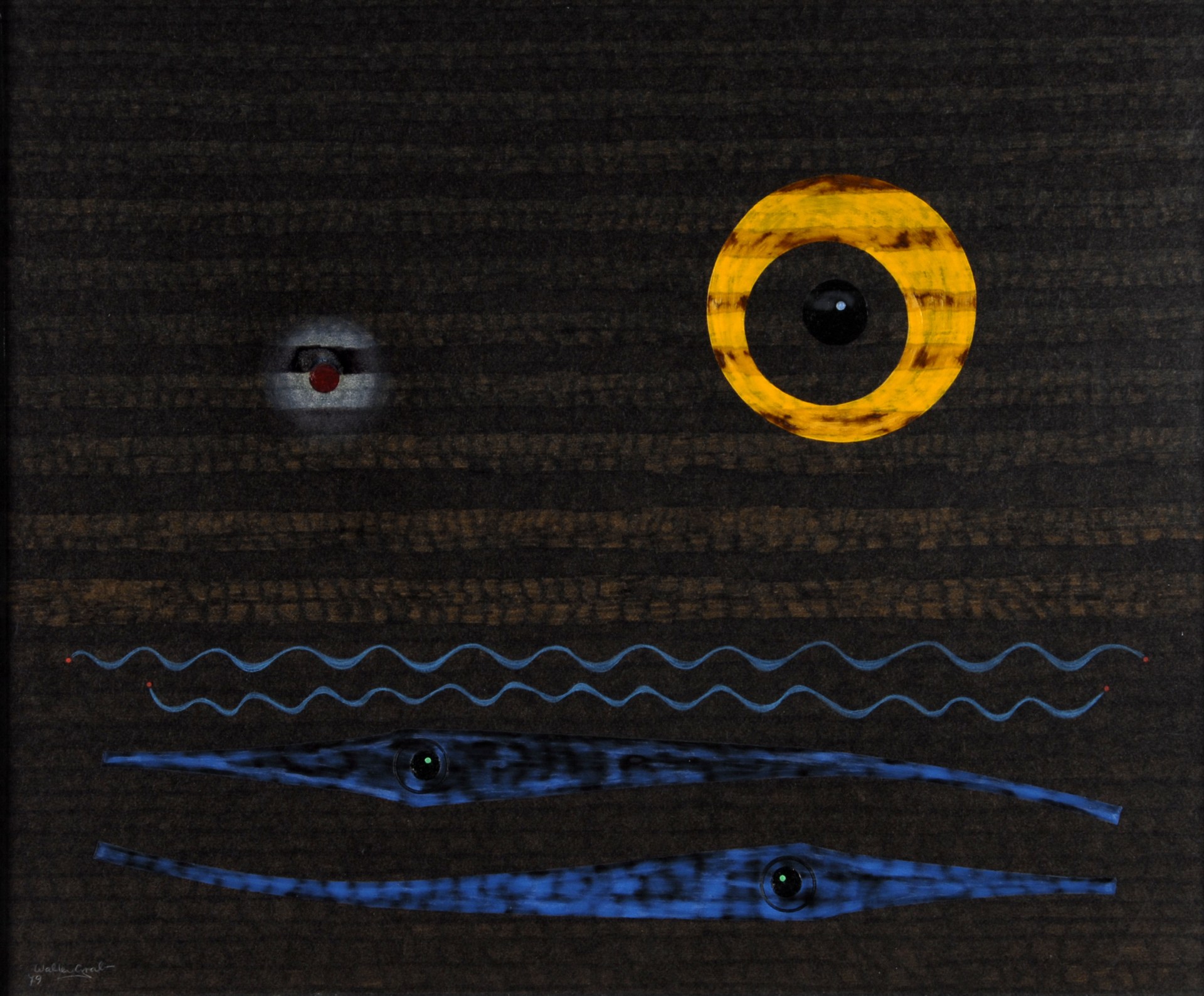
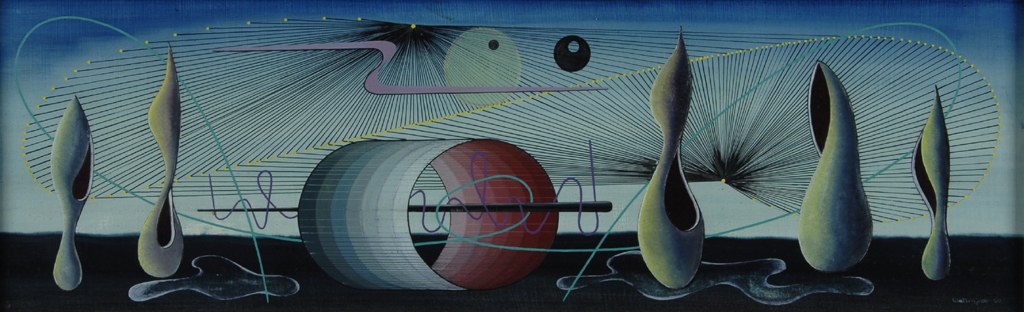
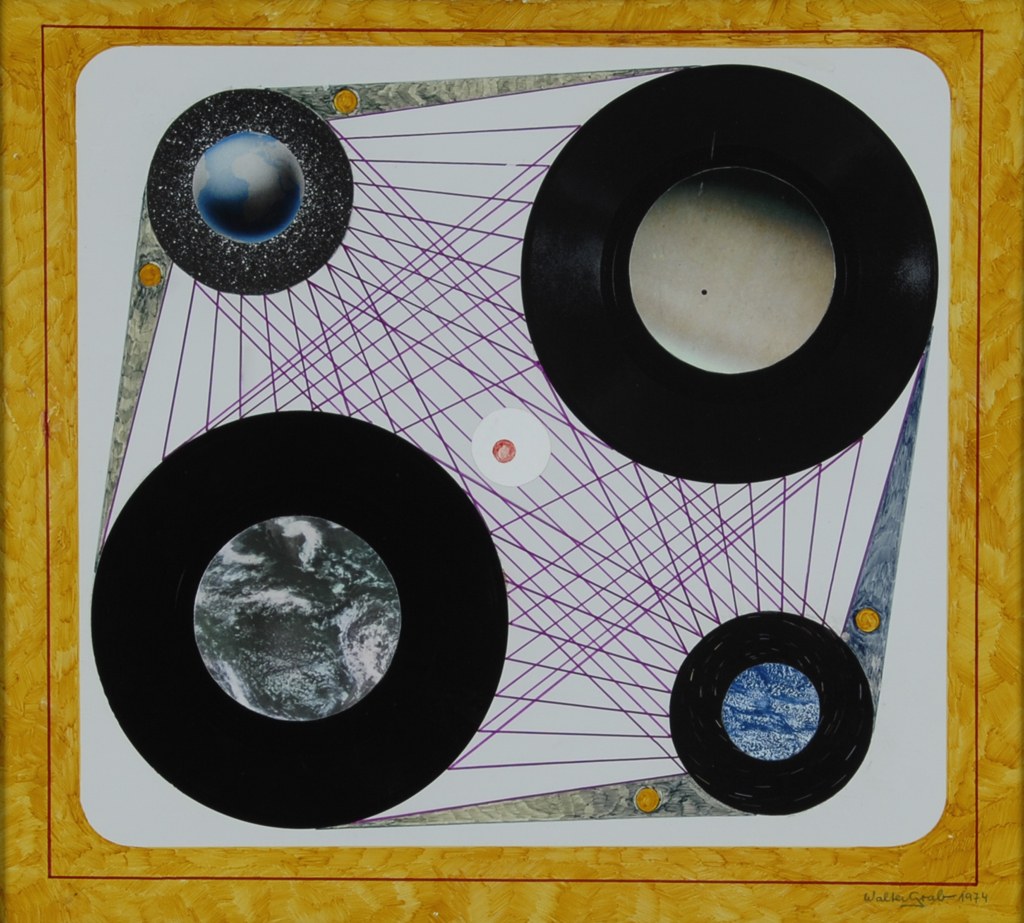
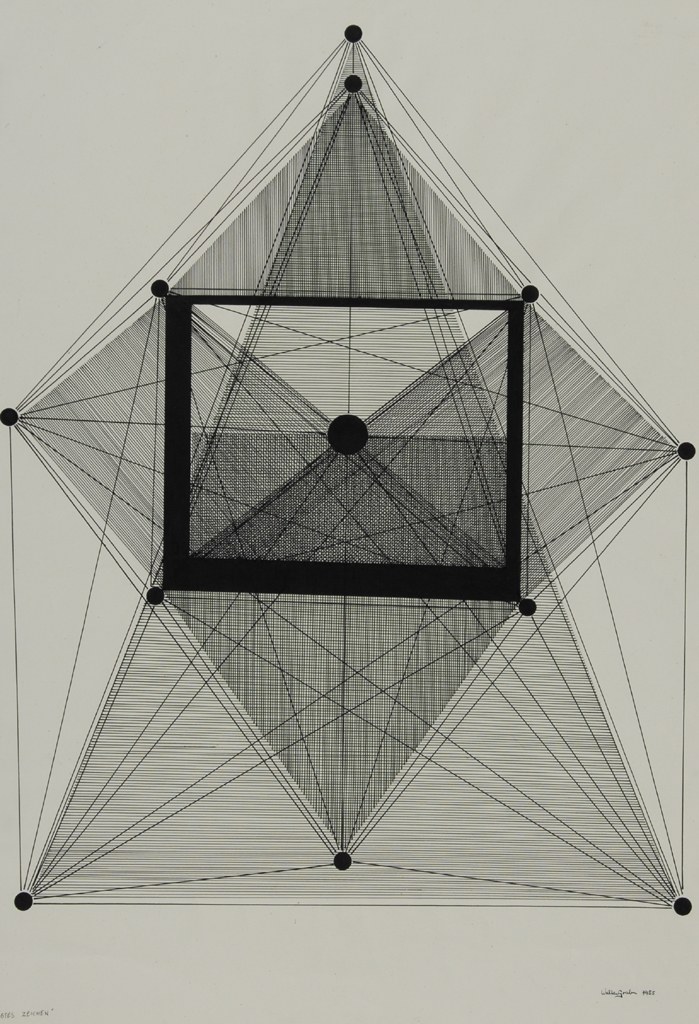
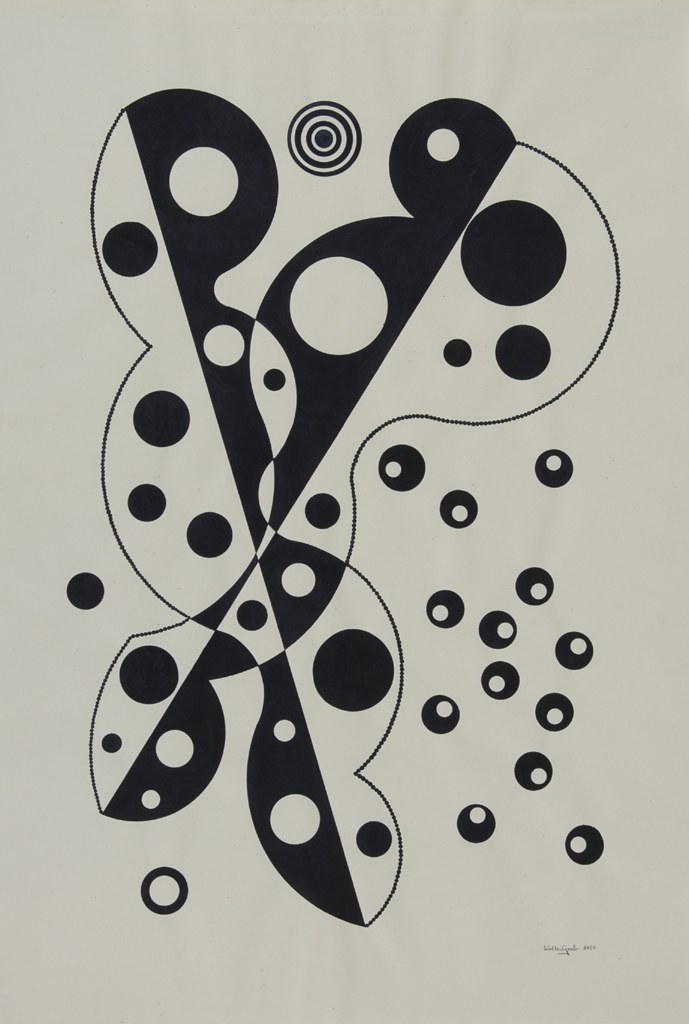
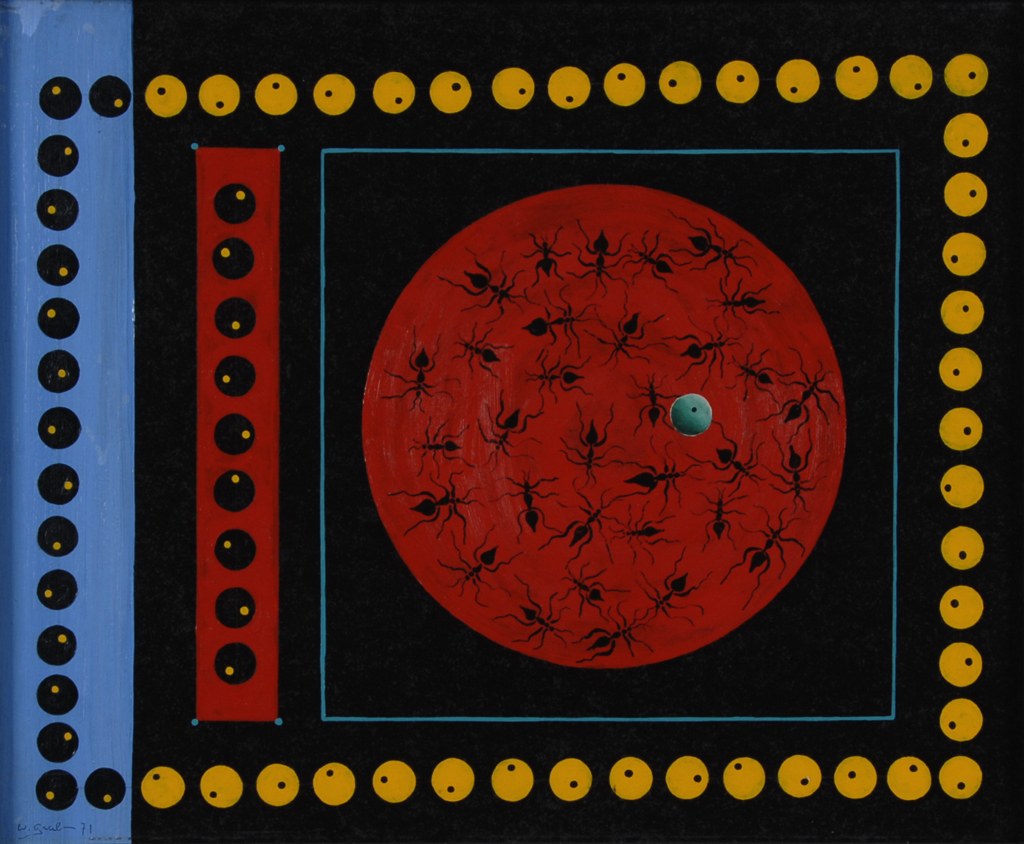
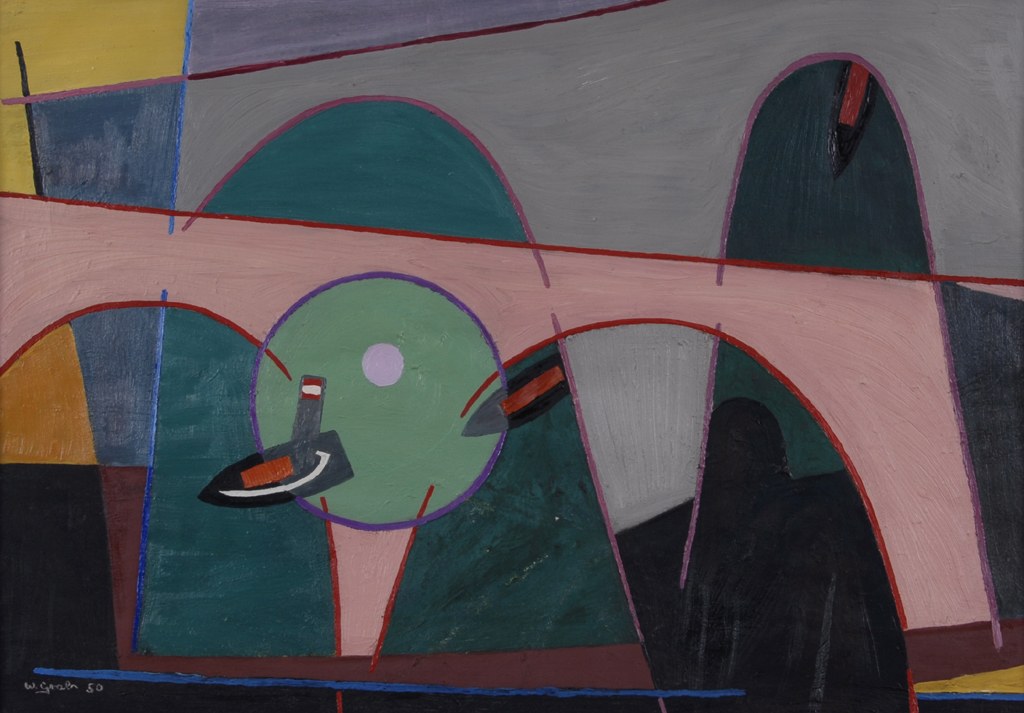
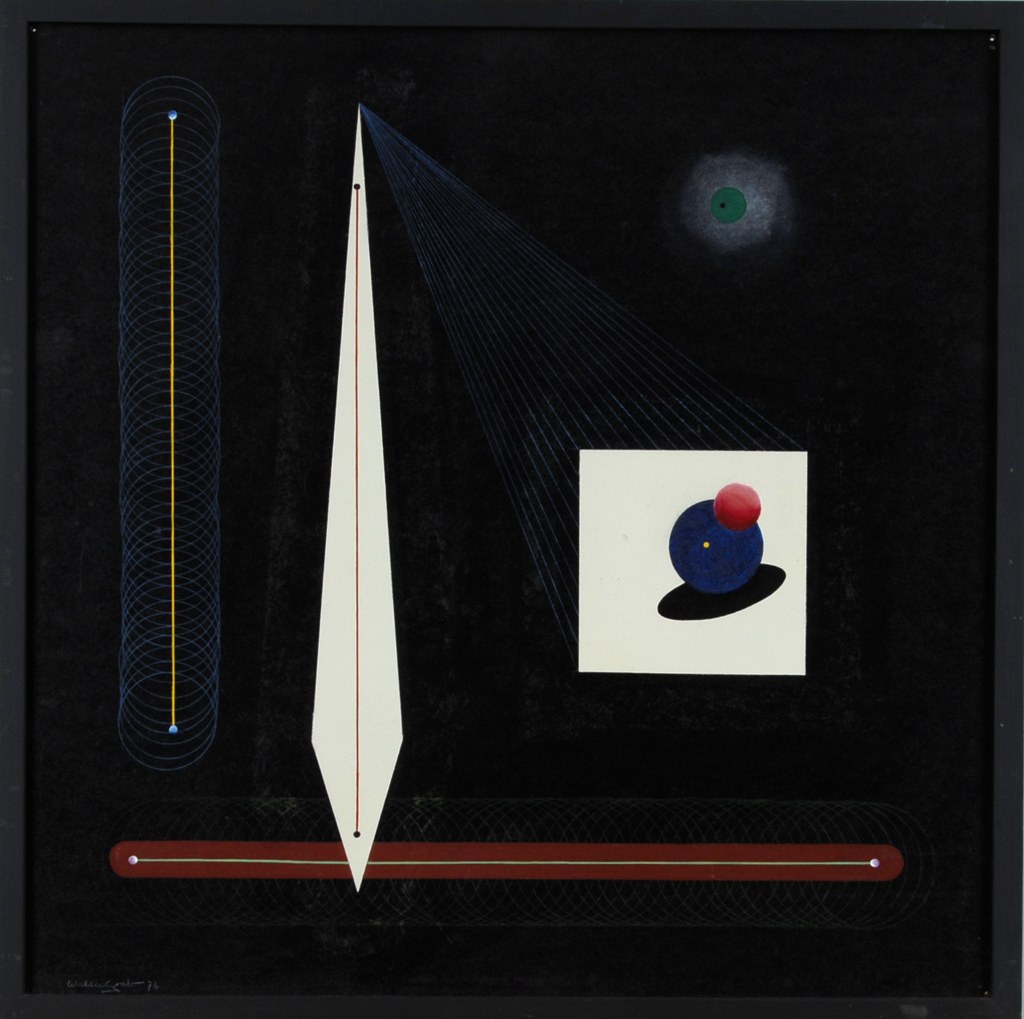
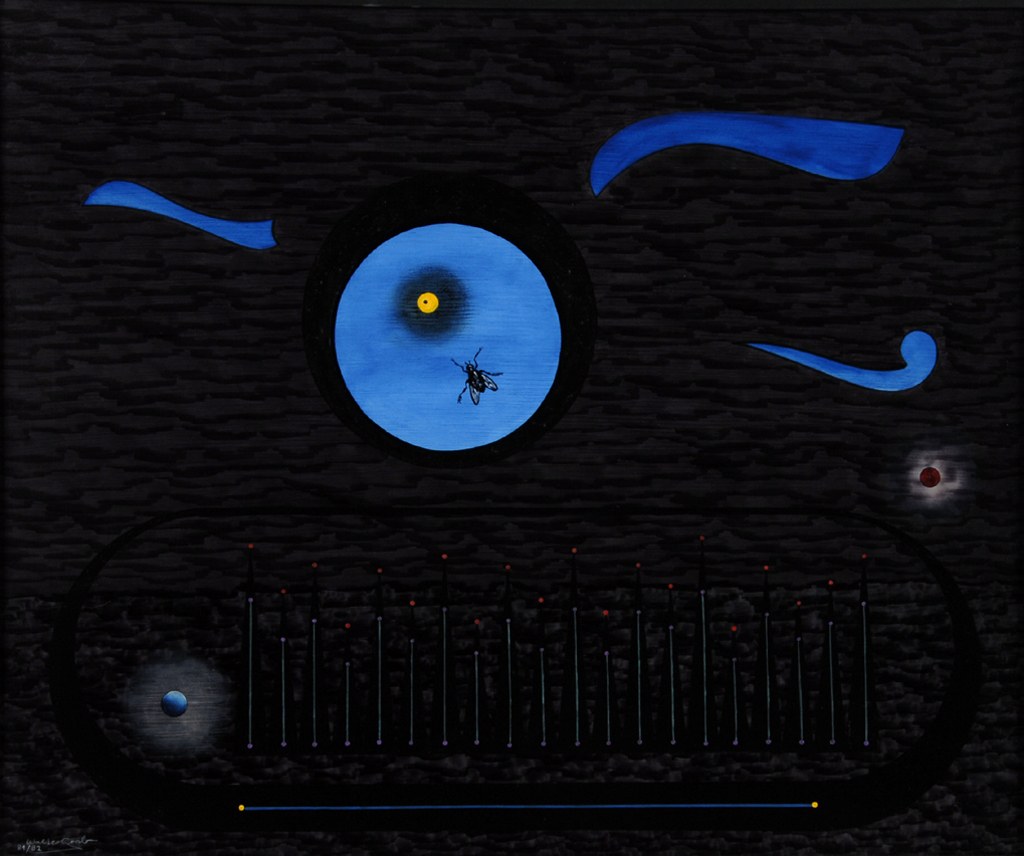
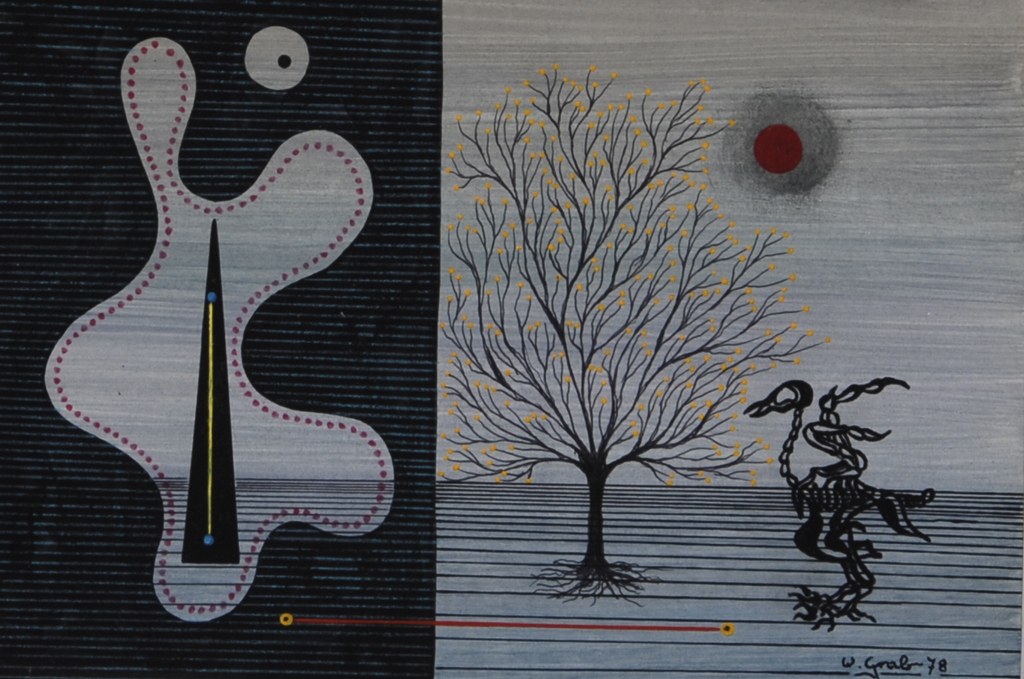
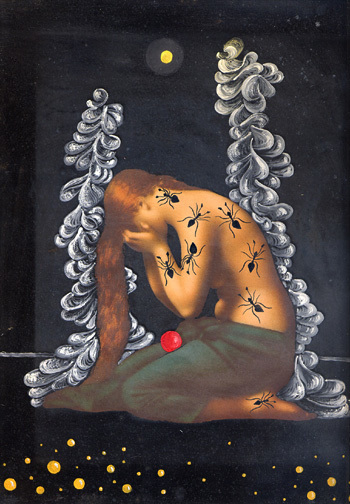
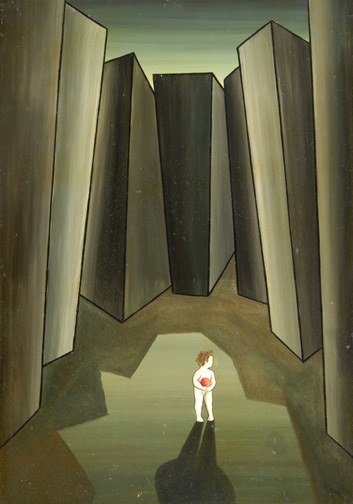
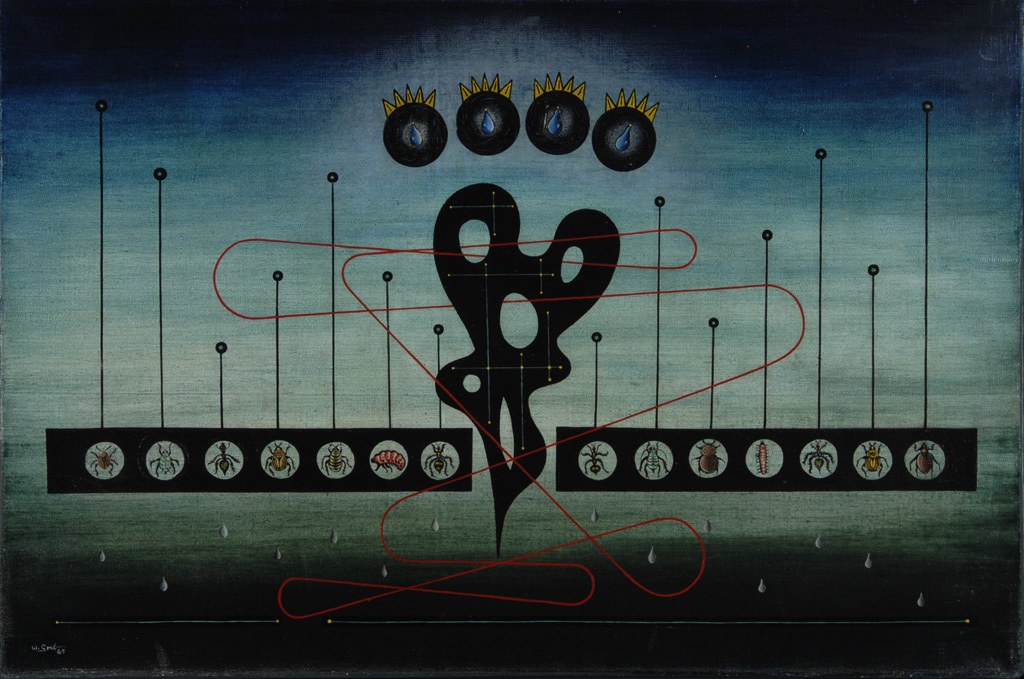
In the work of Walter Grab (1927–1989), pictorial space becomes the stage for improbable encounters. Organic forms stand alongside geometric constructions; signs, diagrams or formulae introduce an appearance of reasoning into a world that eludes ordinary logic. In this way, the Swiss painter developed a personal path within post-war Surrealism.
Born in Affoltern am Albis, Grab initially trained in commerce and briefly worked in an office. He subsequently deepened his practice with the painter and printmaker Walter Jonas. His stays in Paris, in 1948 and 1950, accompanied his turn towards Surrealism and his work as an independent artist.
In 1950, he took part in founding the Phoenix group, which brought together Swiss, Austrian and German artists. Over the course of the decade, he participated in international exhibitions. In 1965, he represented Switzerland with Meret Oppenheim at the São Paulo Biennial.
His visual language combines backgrounds of gradually modulated colour with elements whose precision heightens their strangeness. The eye hesitates between an imaginary landscape and an abstract composition. In Waldsymphonie, in 1985, Grab once again took up his dialogue with Max Ernst’s forests, while giving them a highly structured organisation.
His work has been the subject of renewed museum interpretations: in 2013, MAMCO devoted Du peu de réalité to him; the Kunstmuseum Olten subsequently presented Ein Kind der Nacht in 2024–2025. The latter exhibition draws on the extensive research undertaken for its catalogue of his work.
To discover his paintings, it is interesting to observe what initially appears intelligible, and then what begins to disrupt that reading. A geometric detail, a silhouette or a sign can become the starting point for several narratives. Painting thus retains its enigmatic power without imposing a definitive interpretation on the visitor.