John Torcapel
Born in 1881.
Died in 1965.
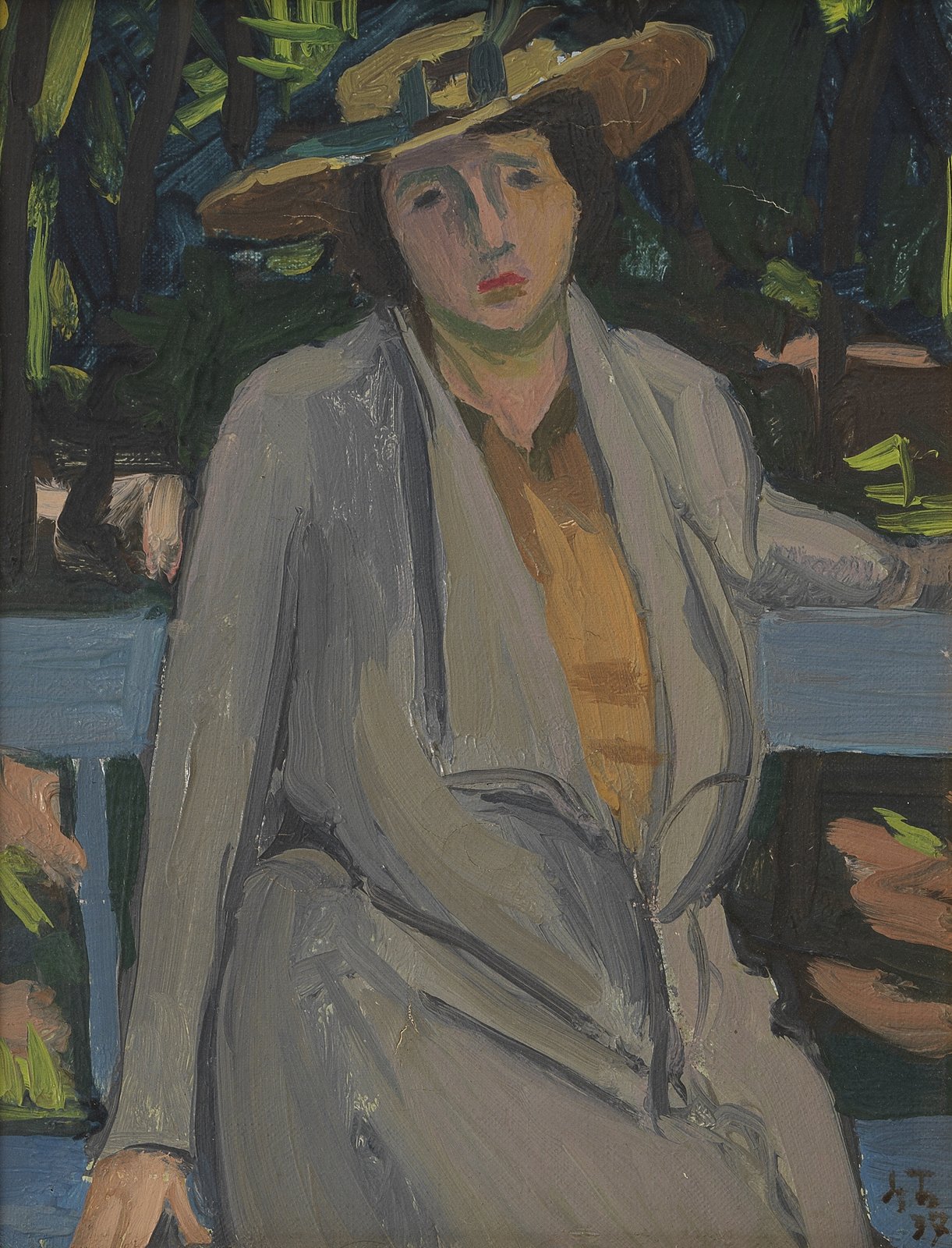
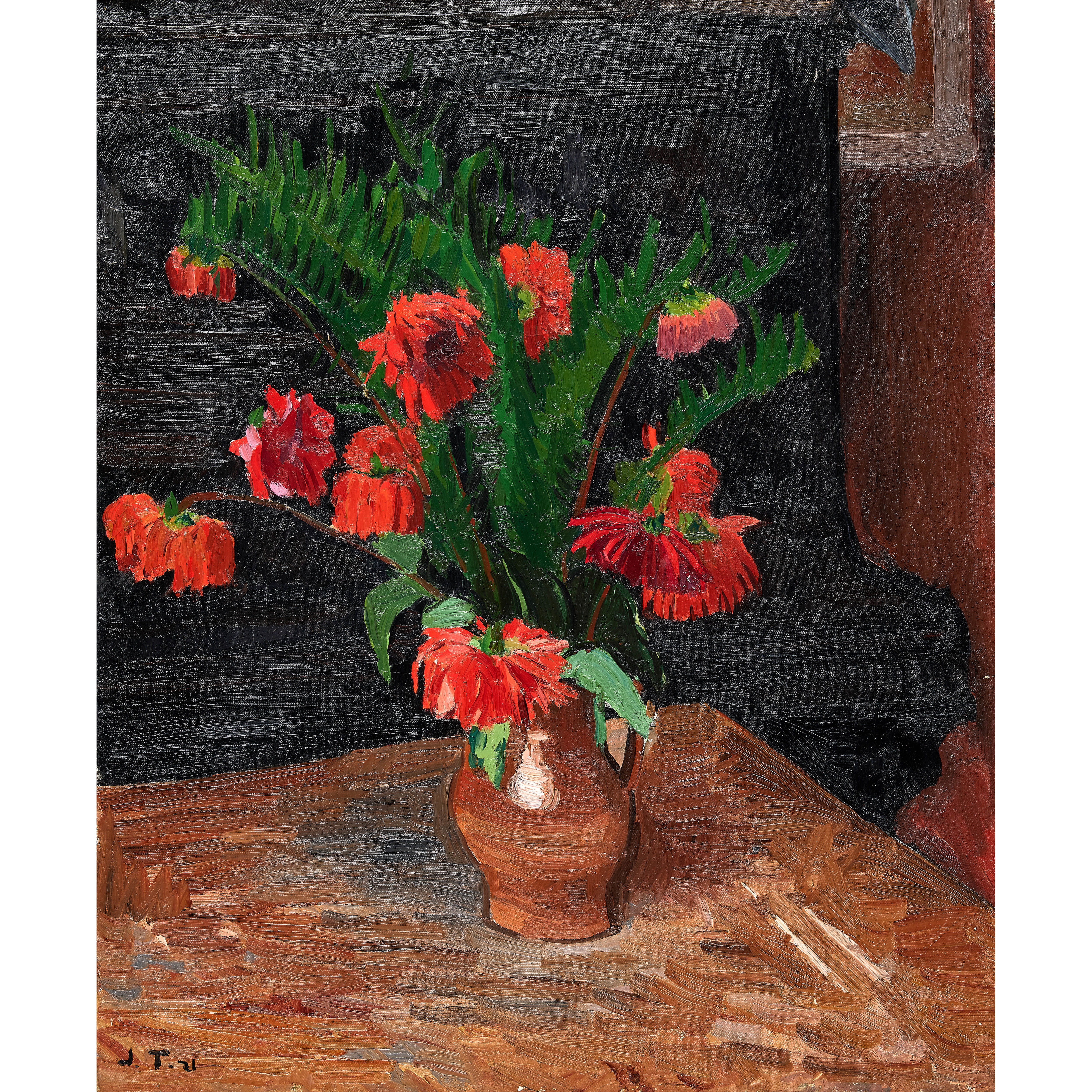
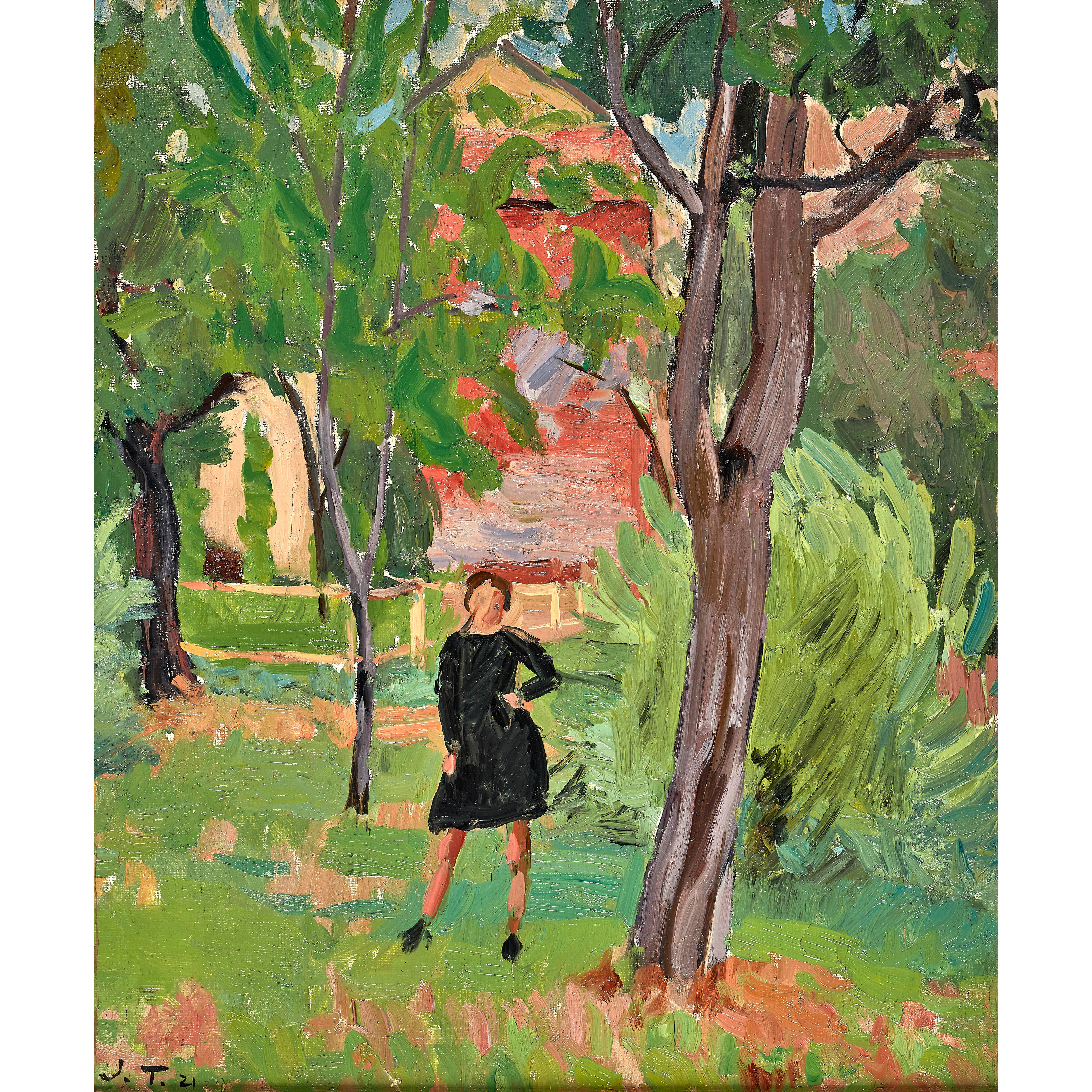
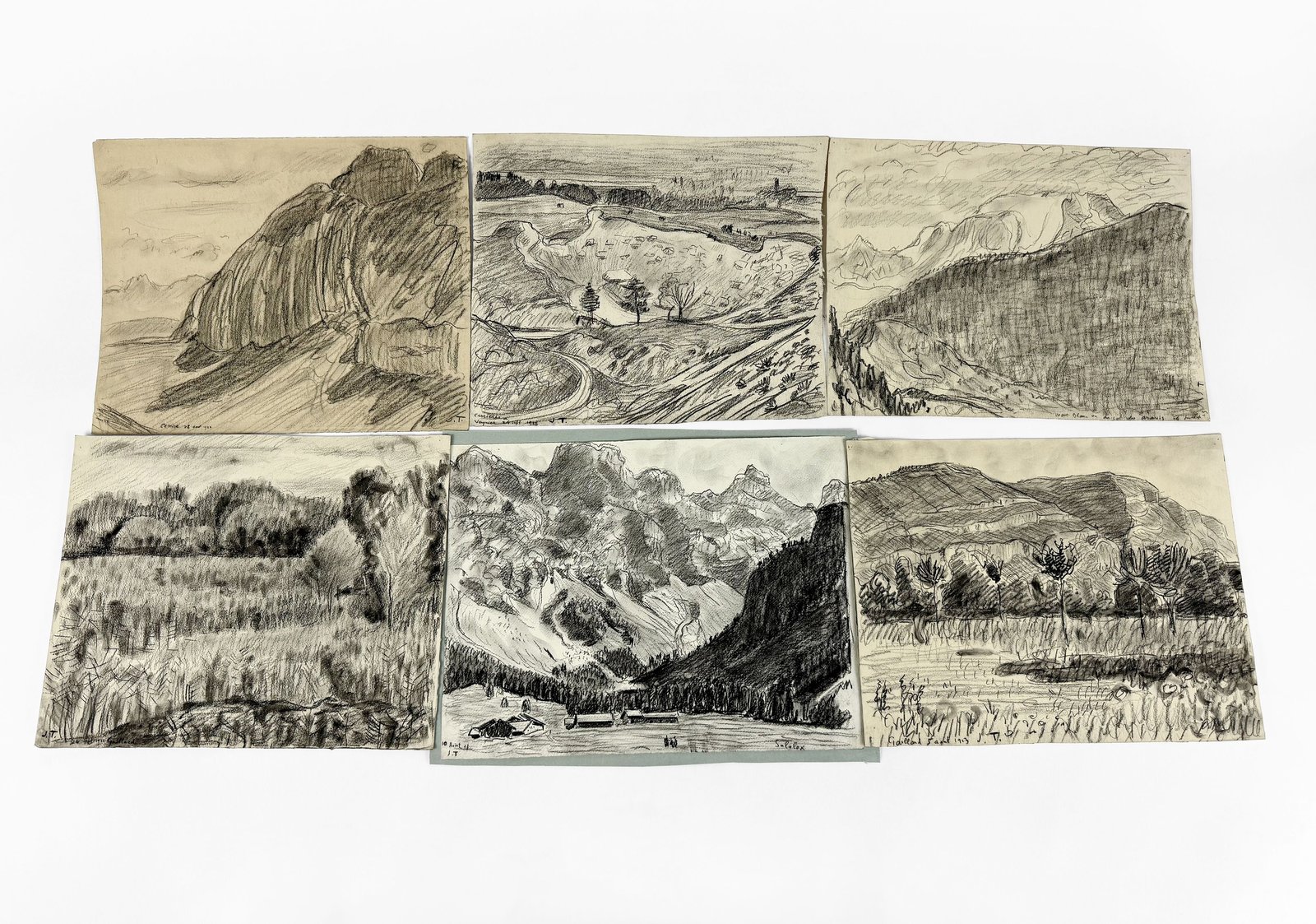
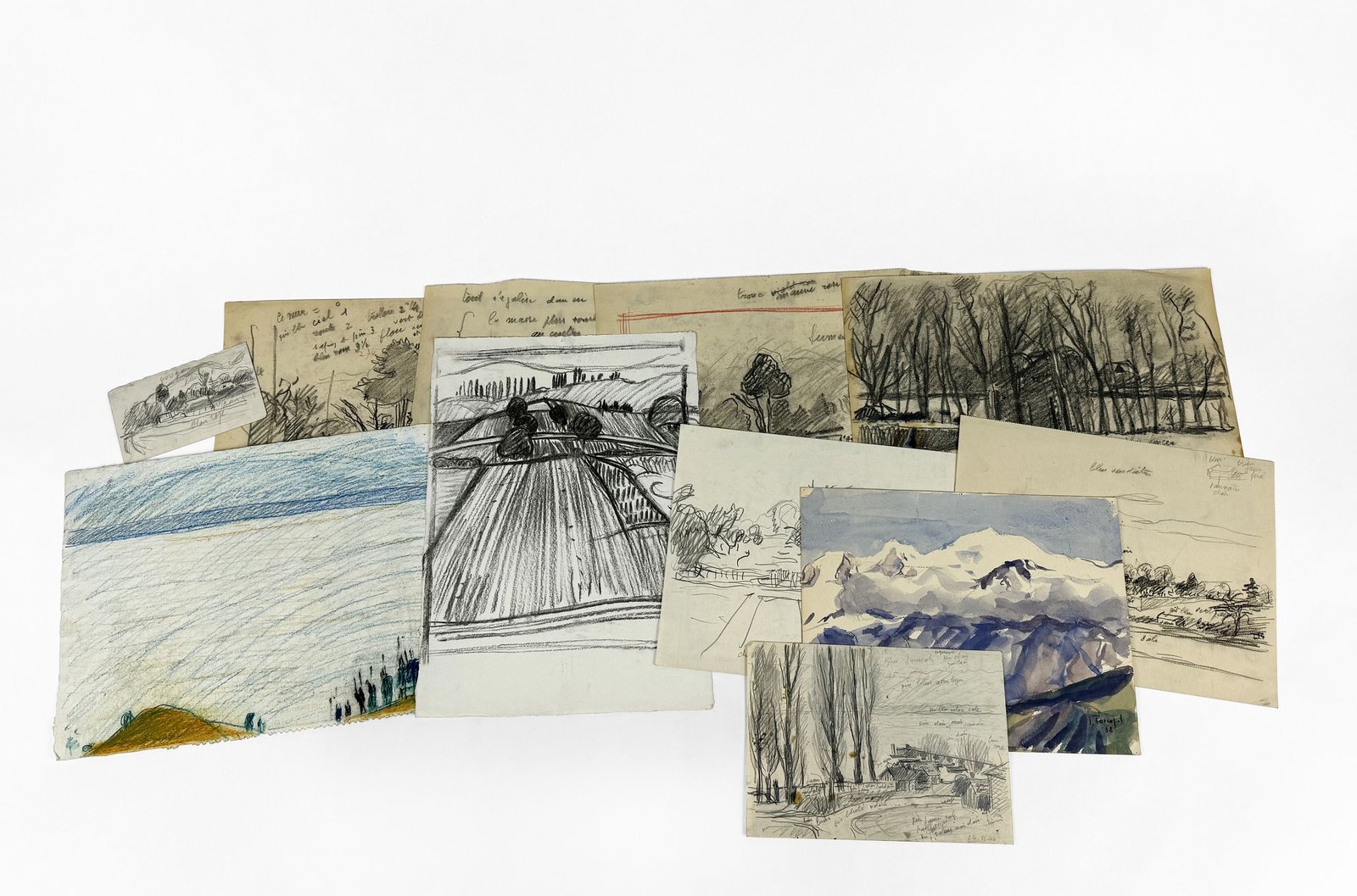
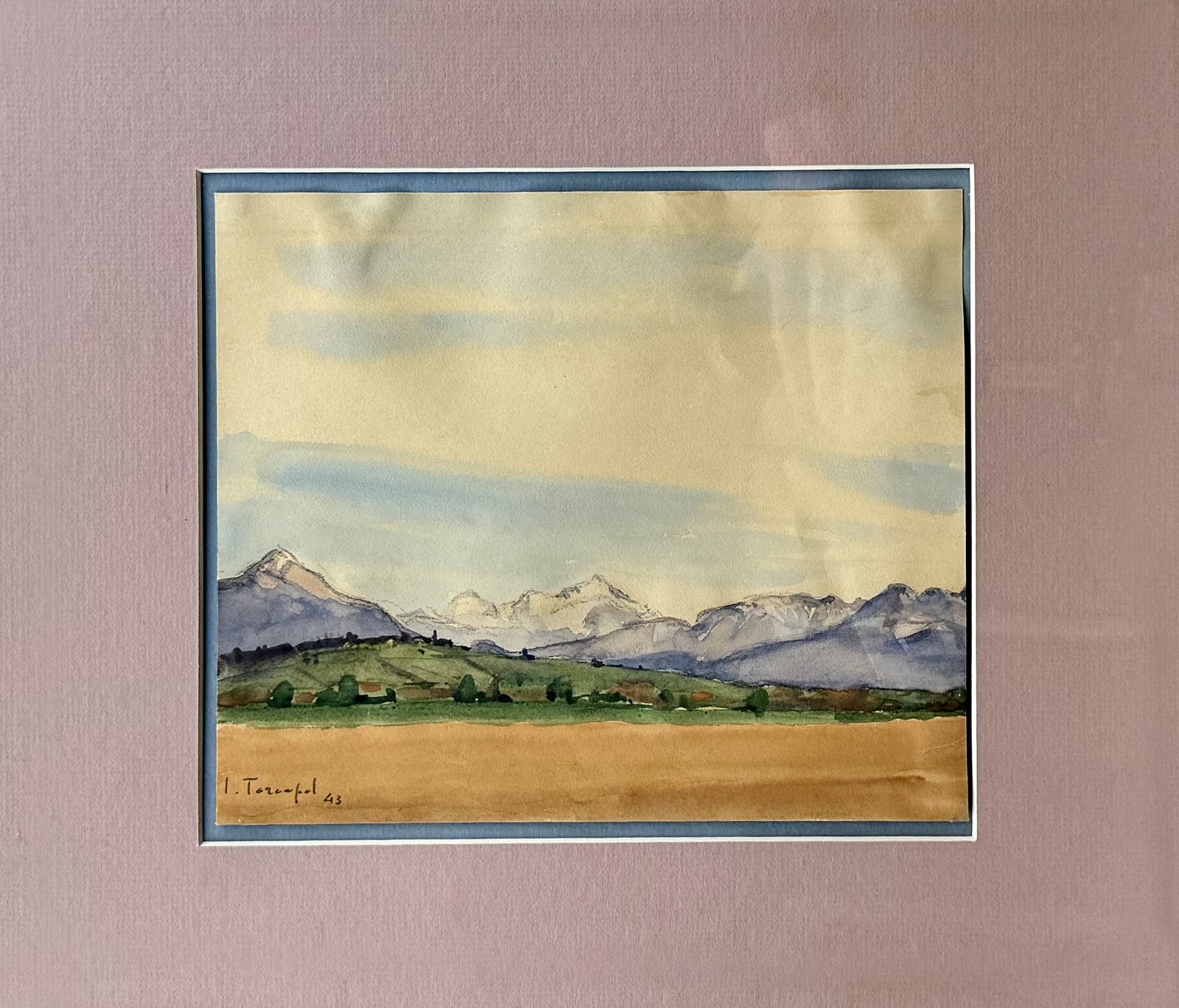
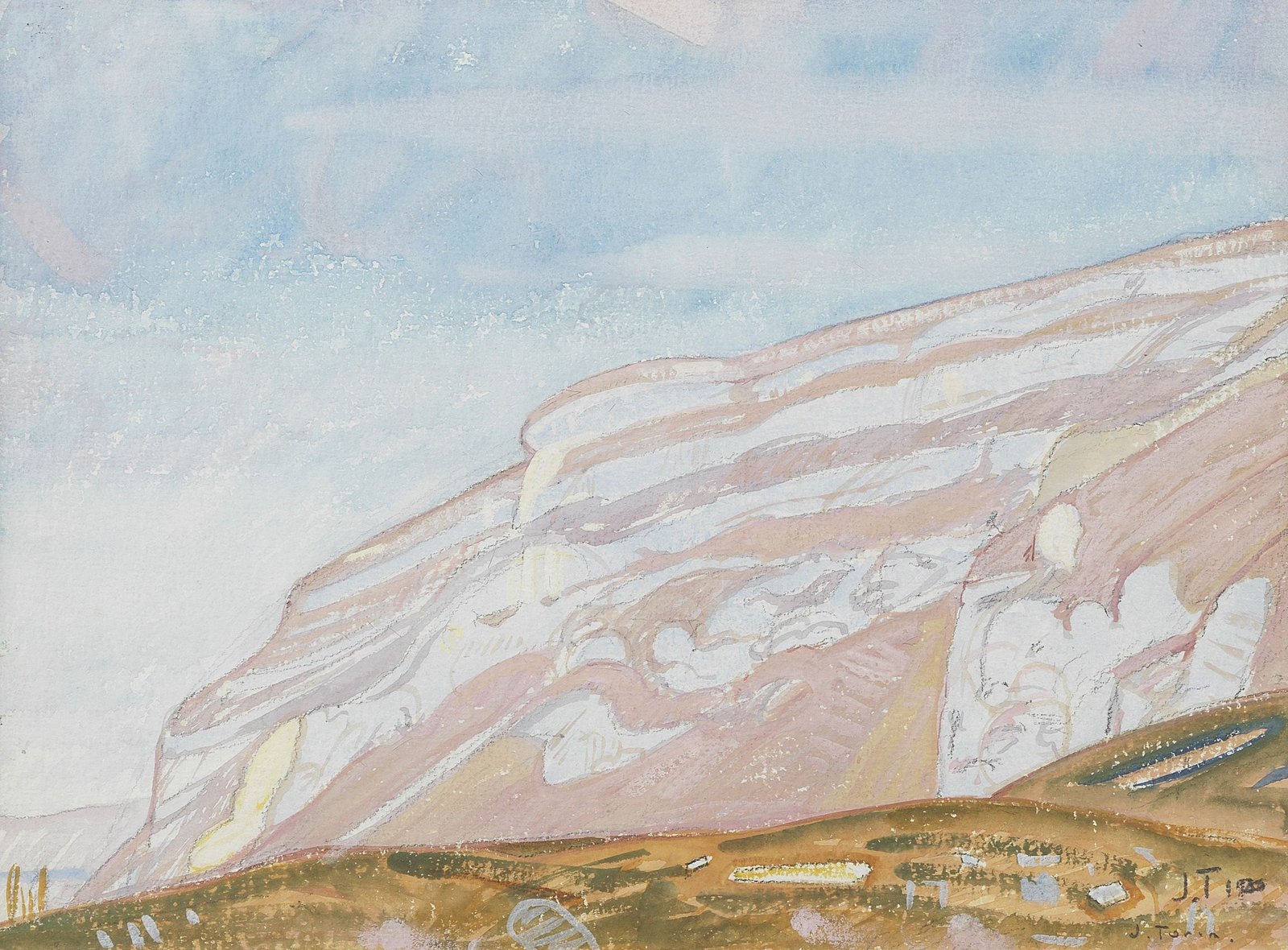
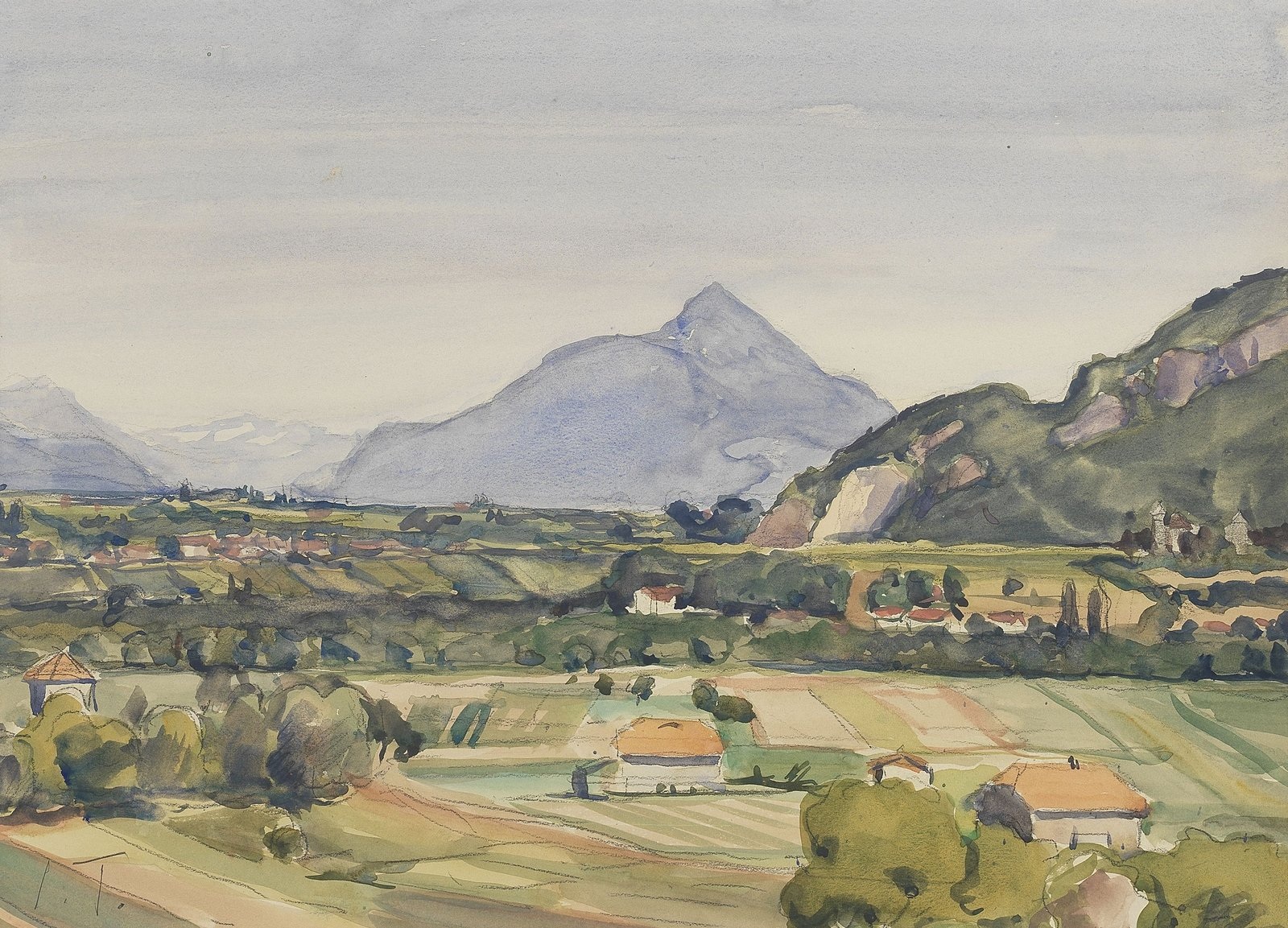
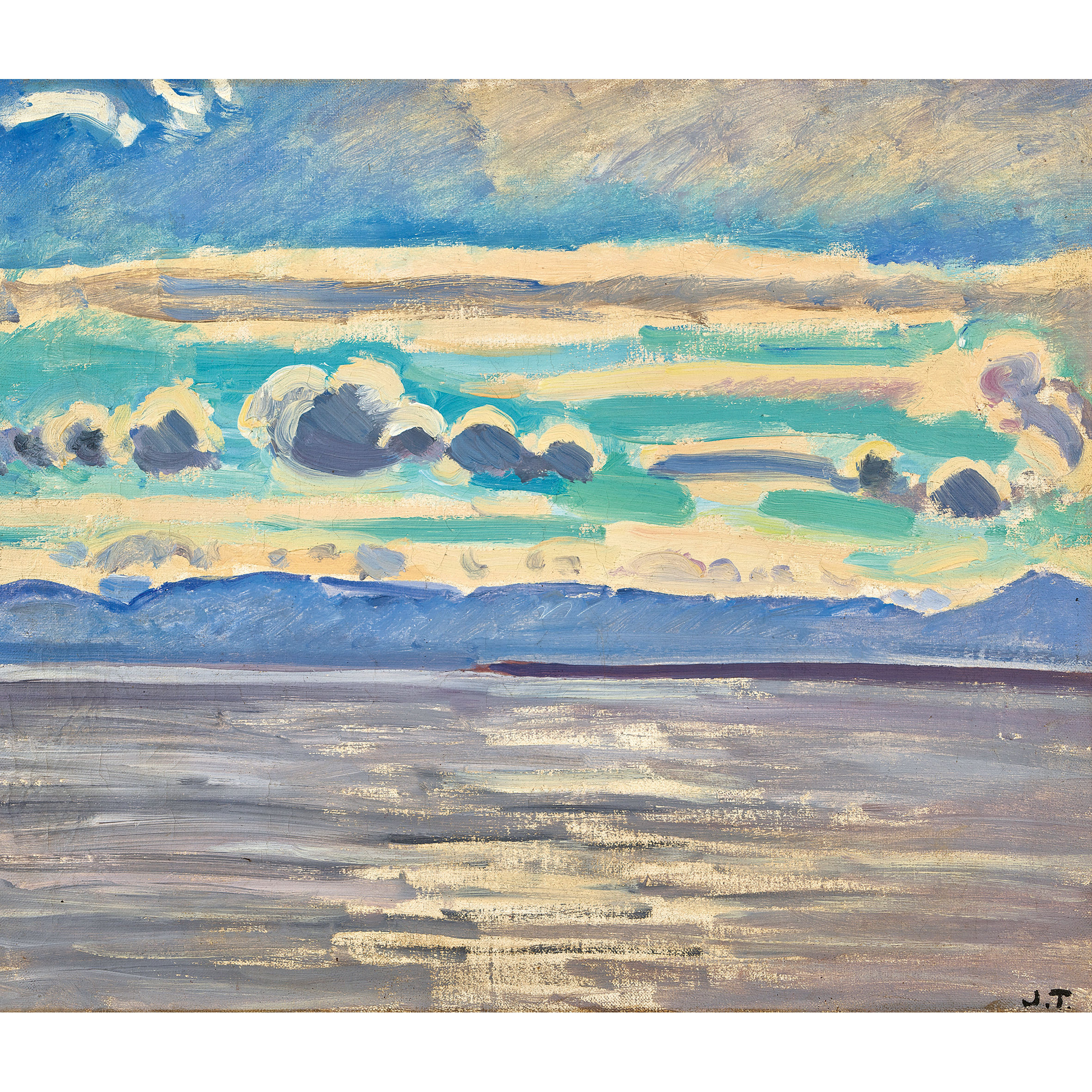
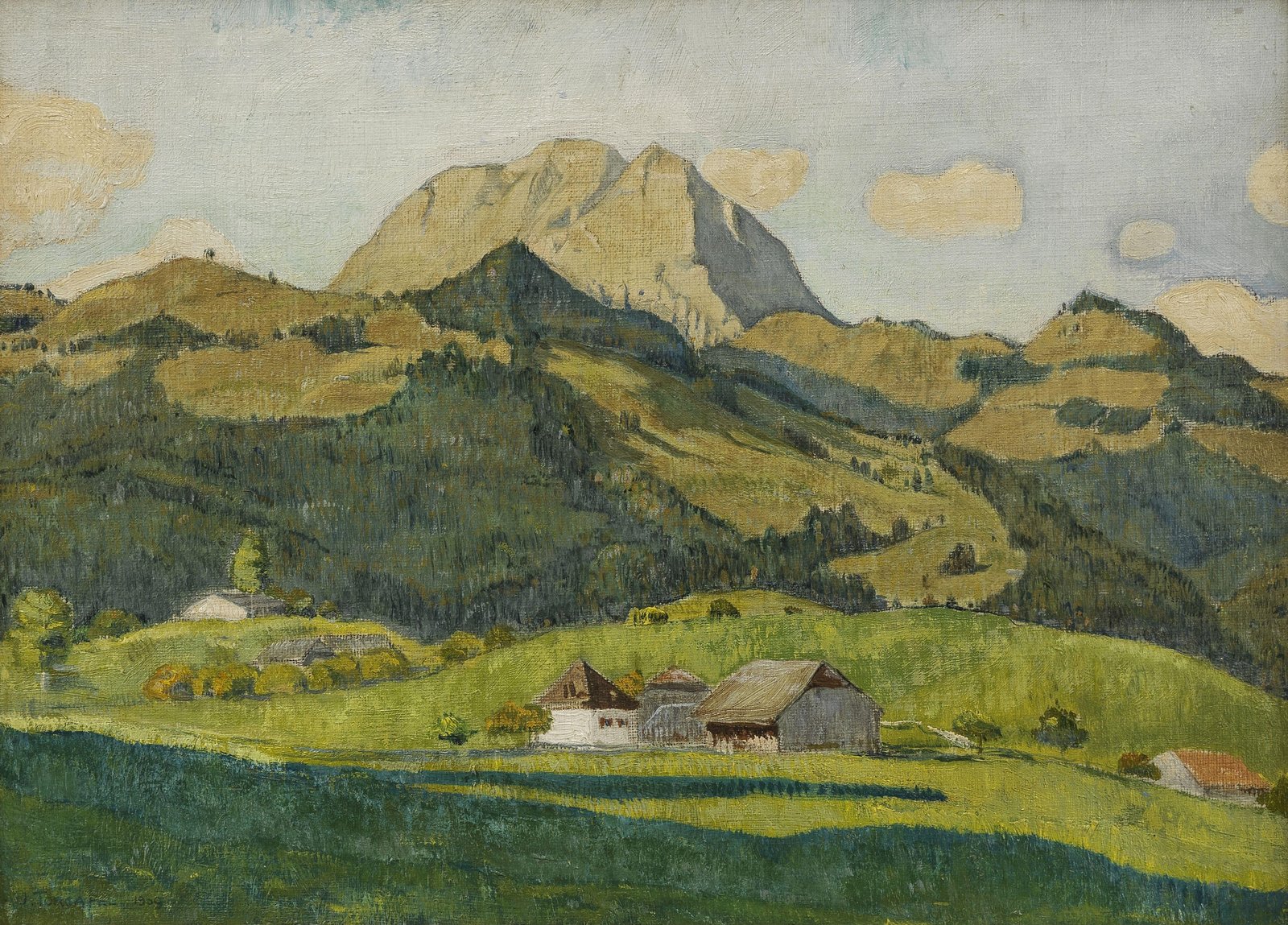
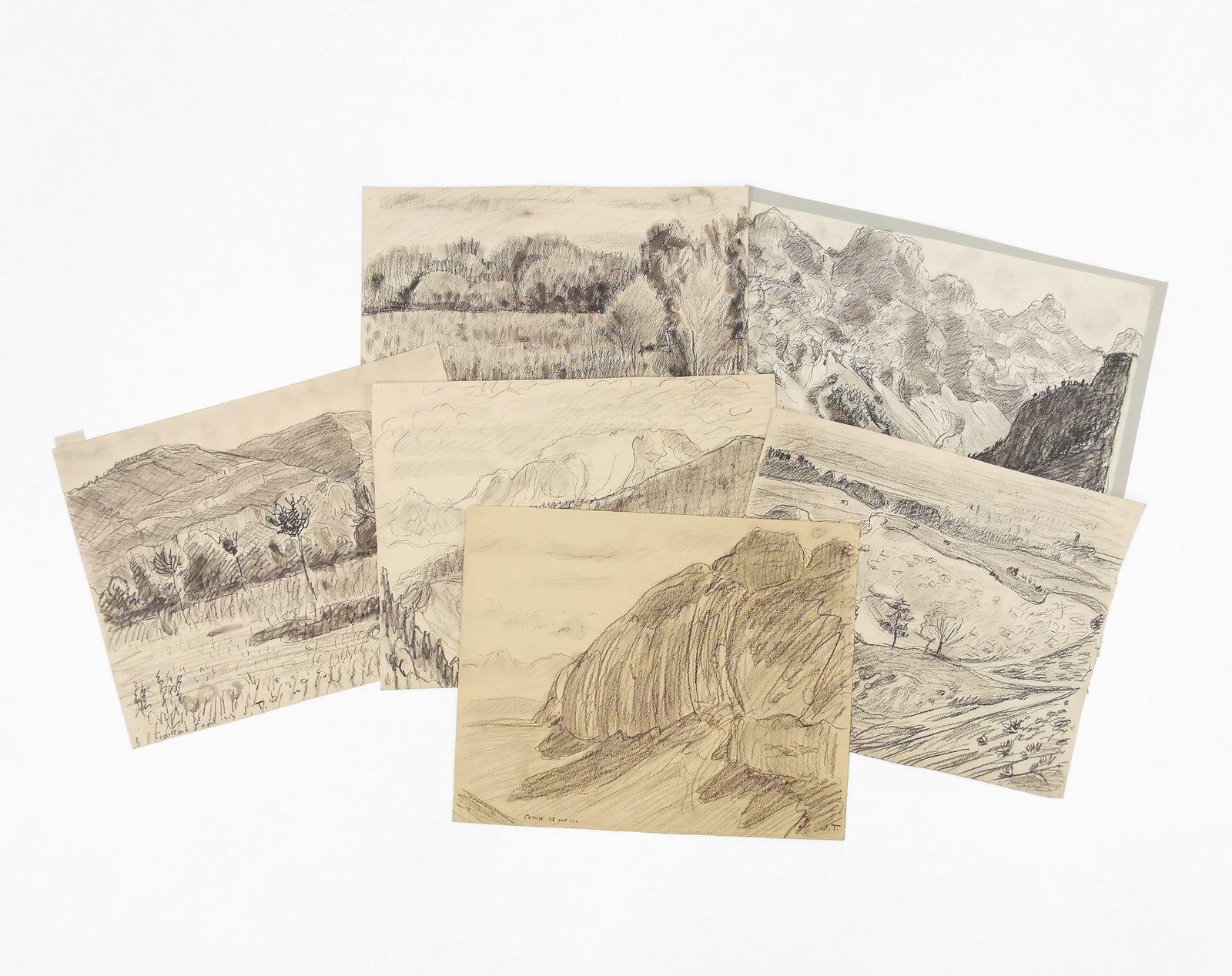
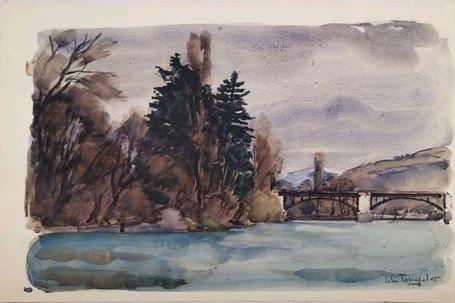
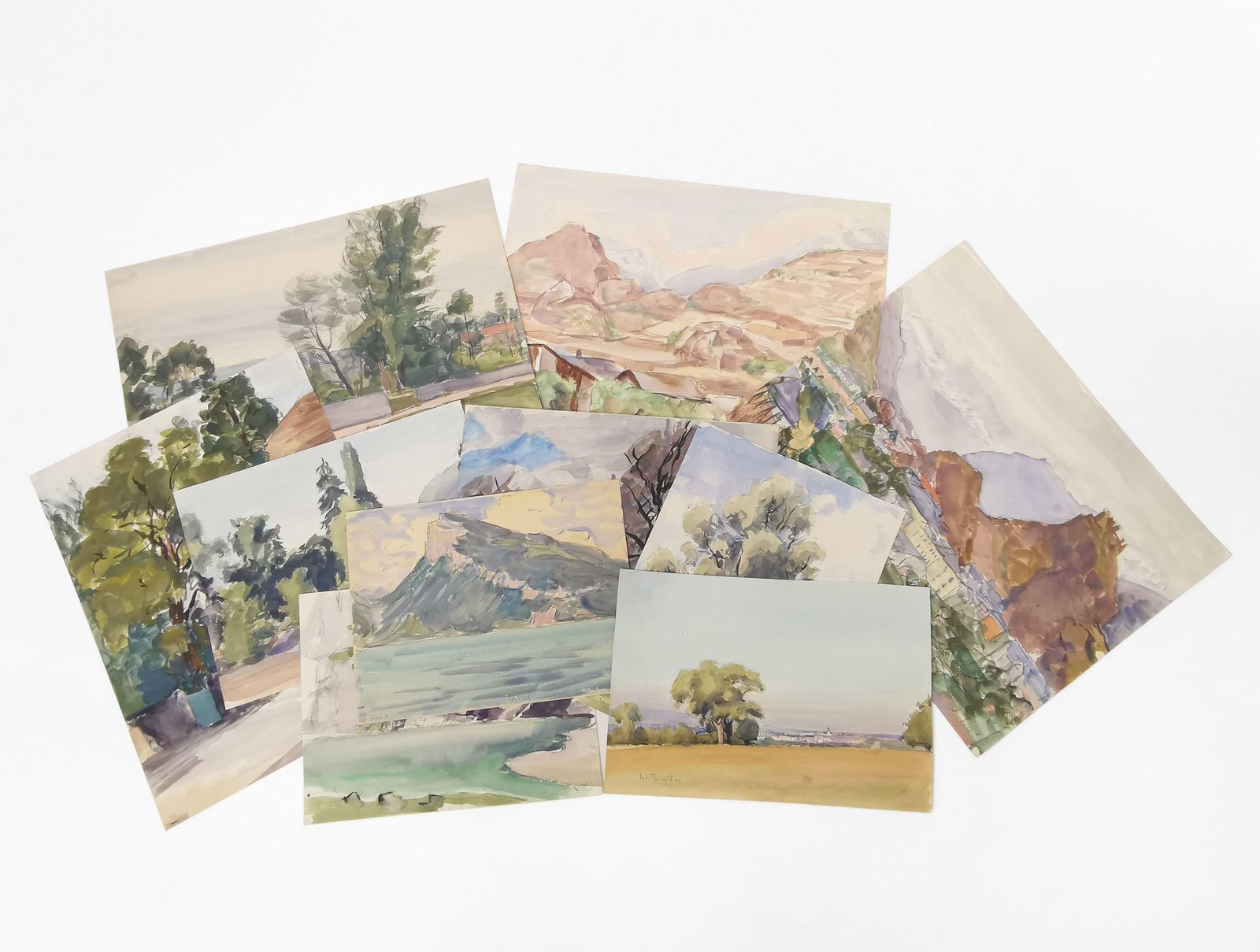
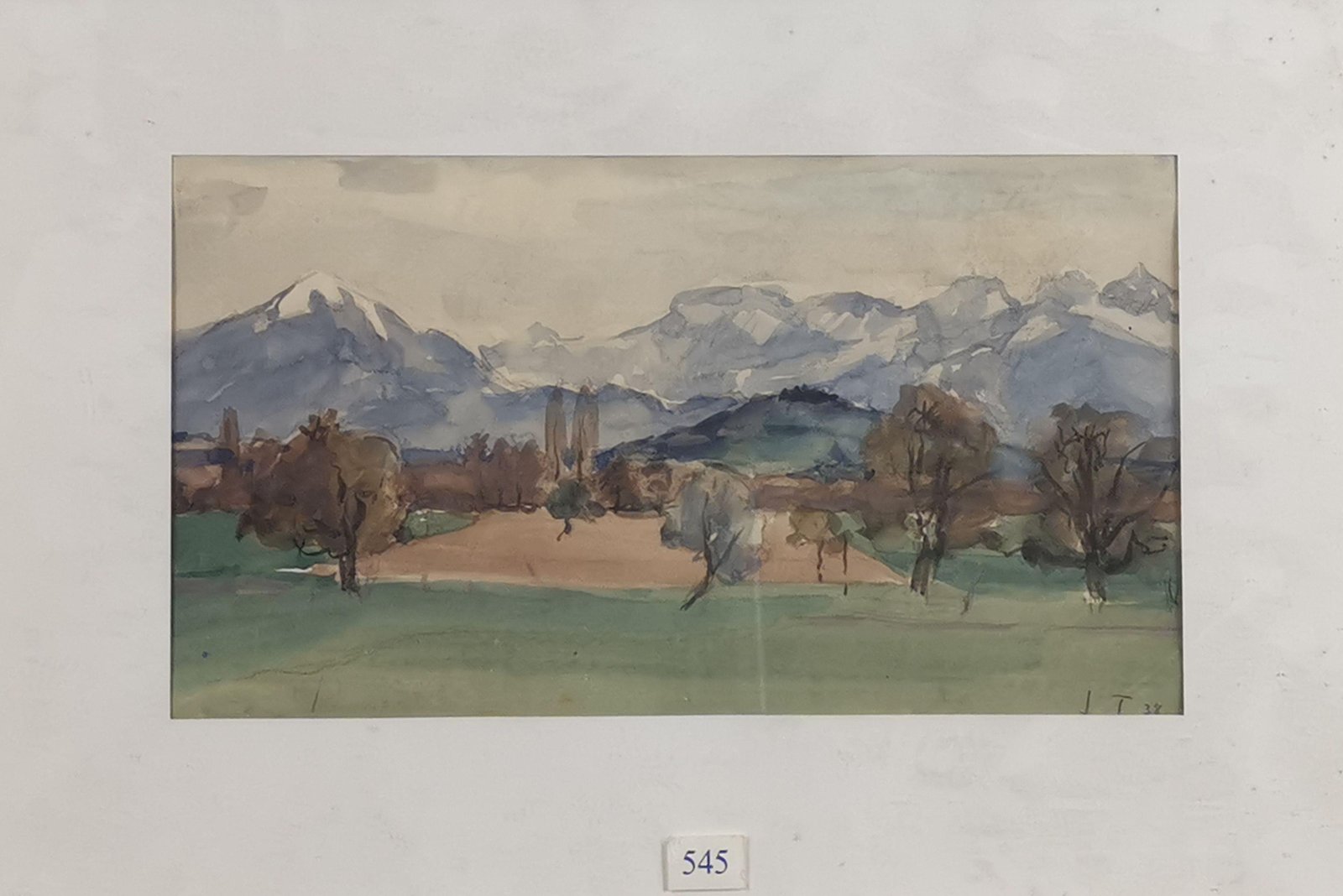
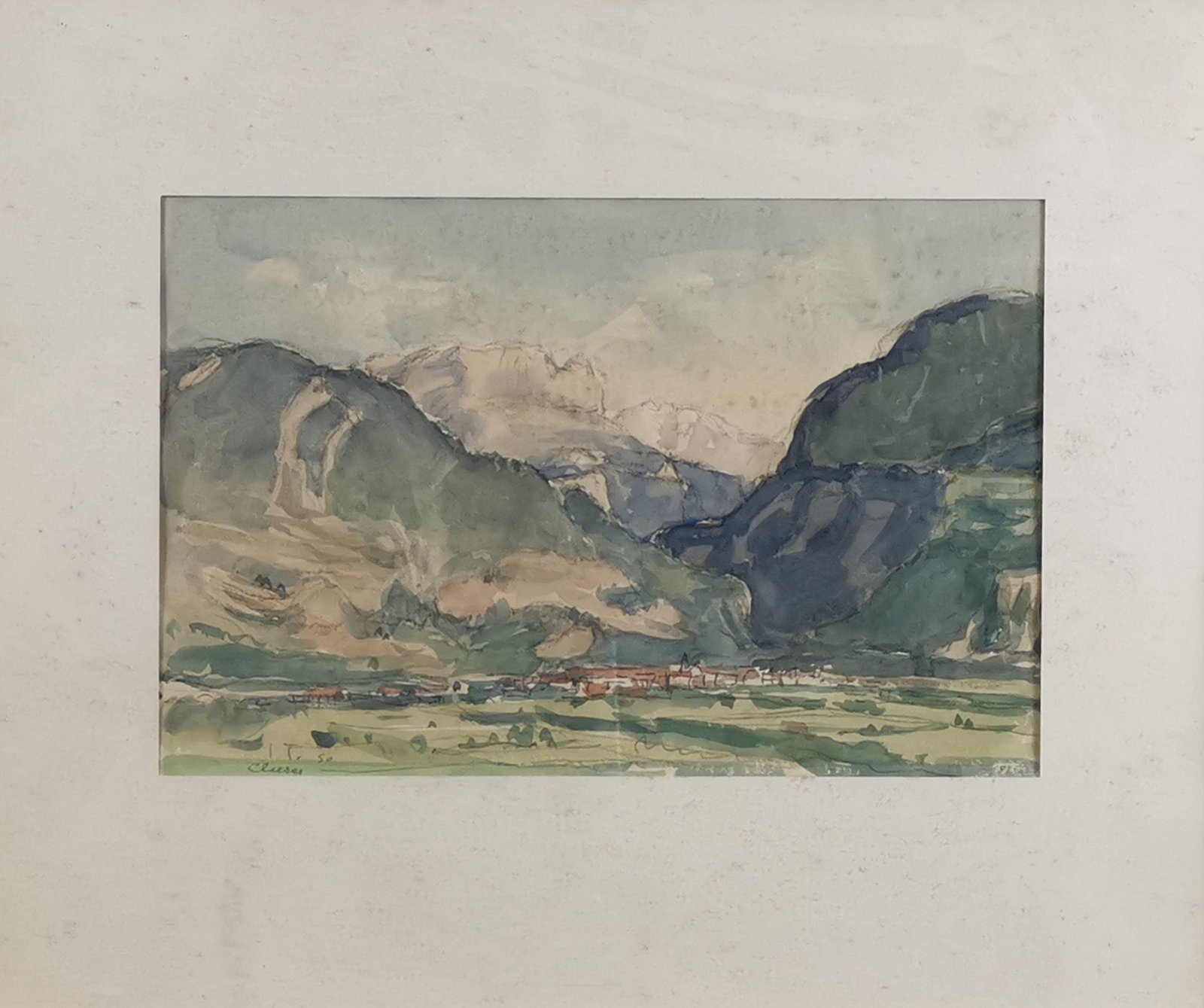
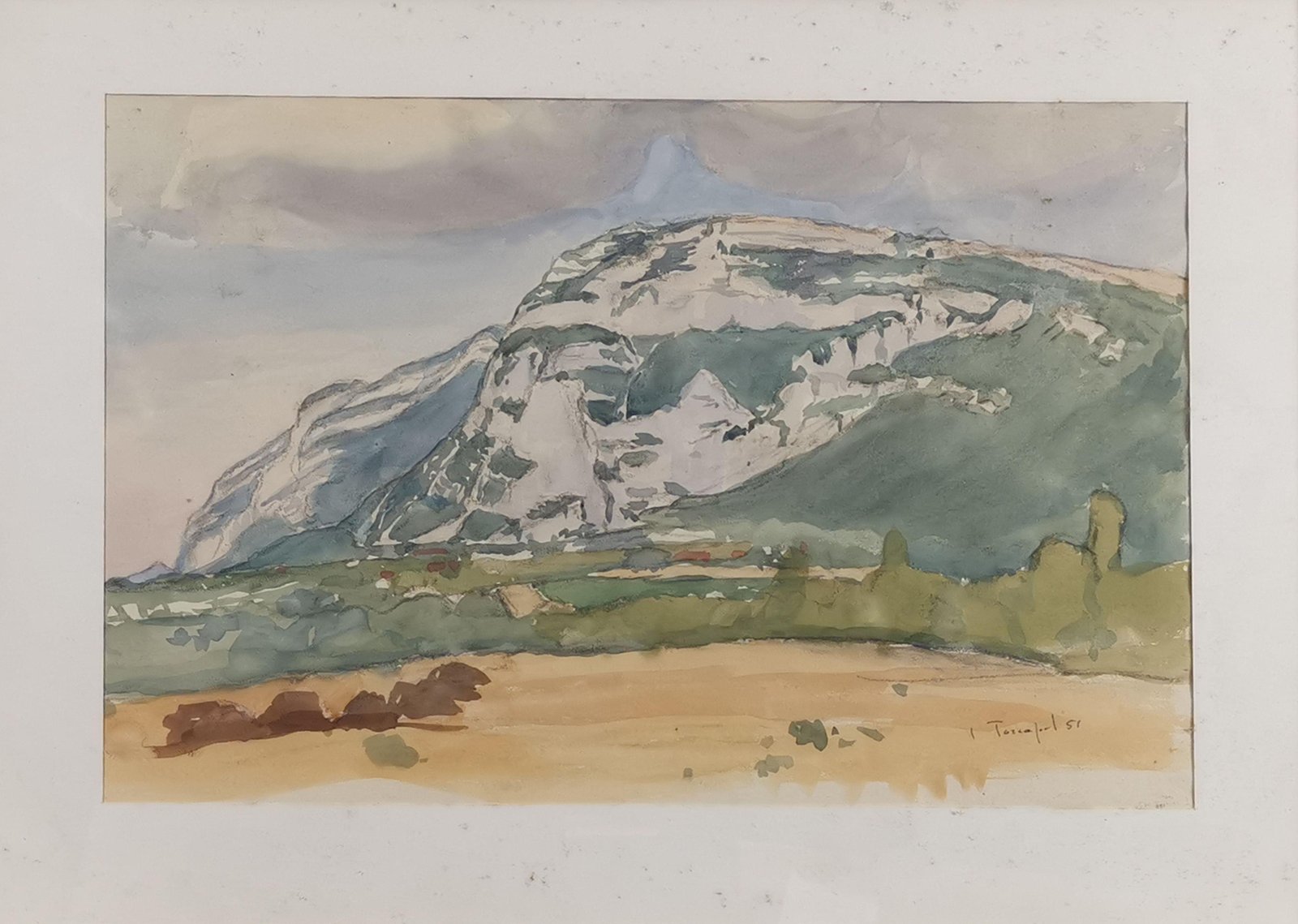
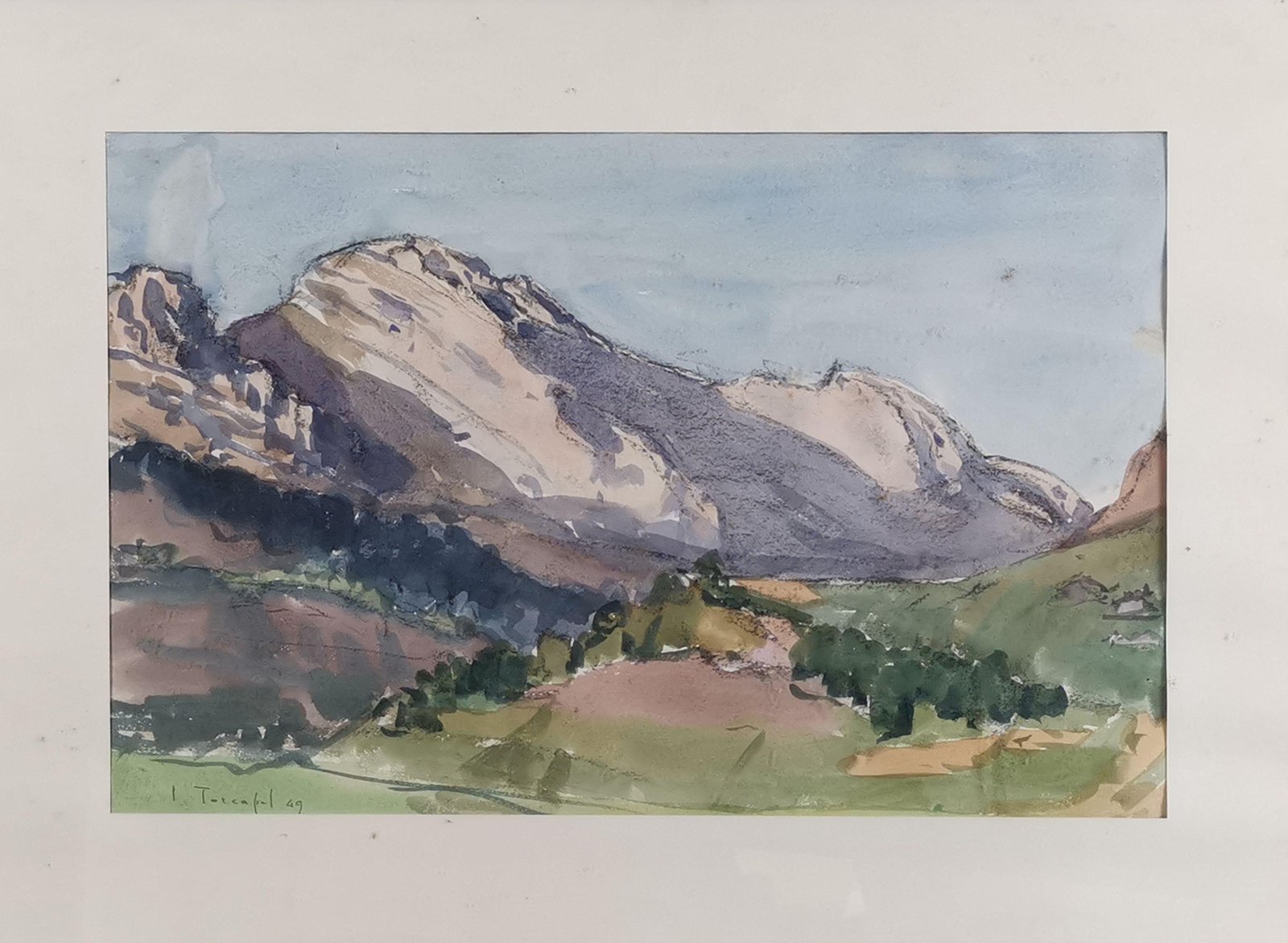
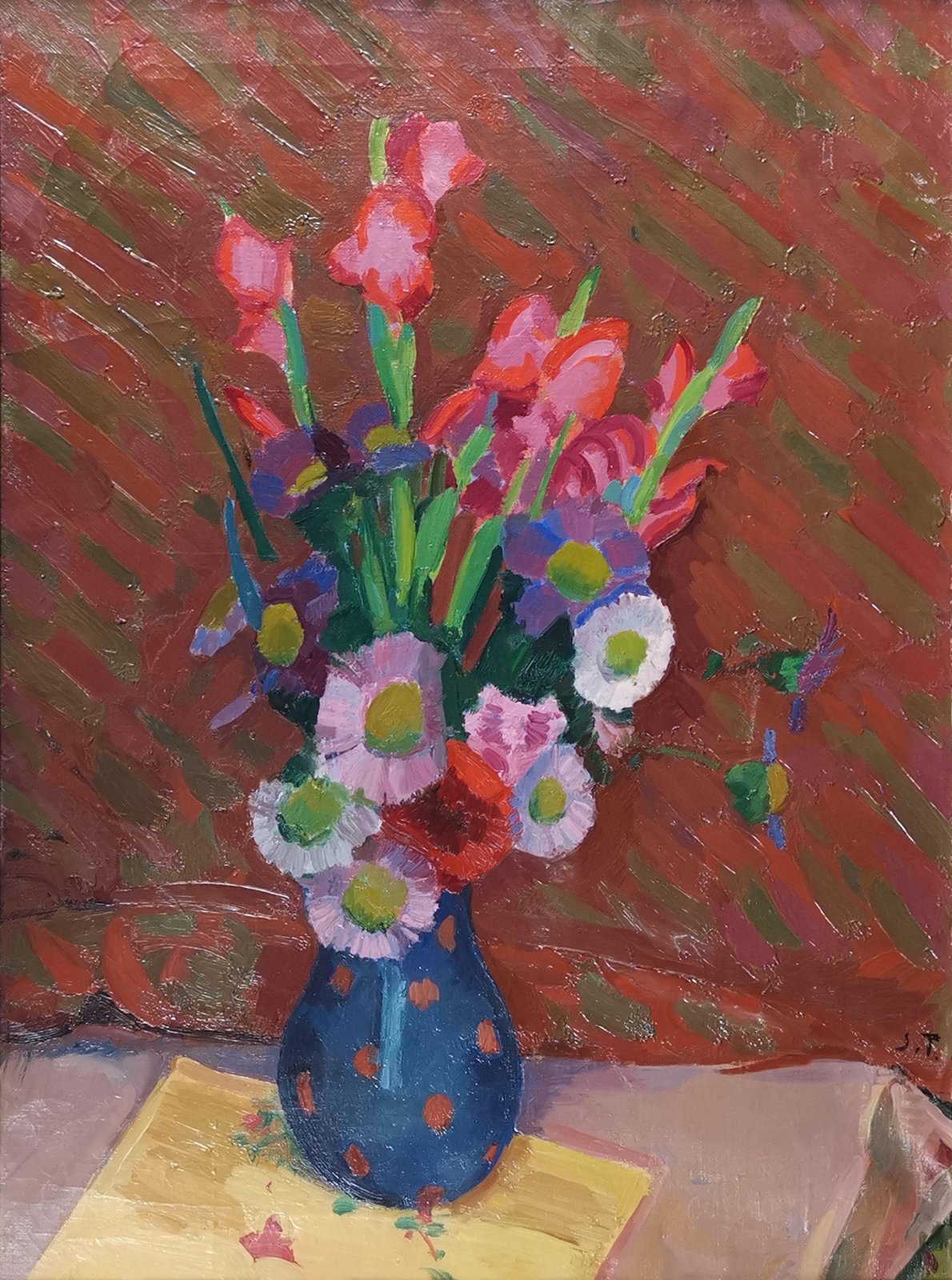
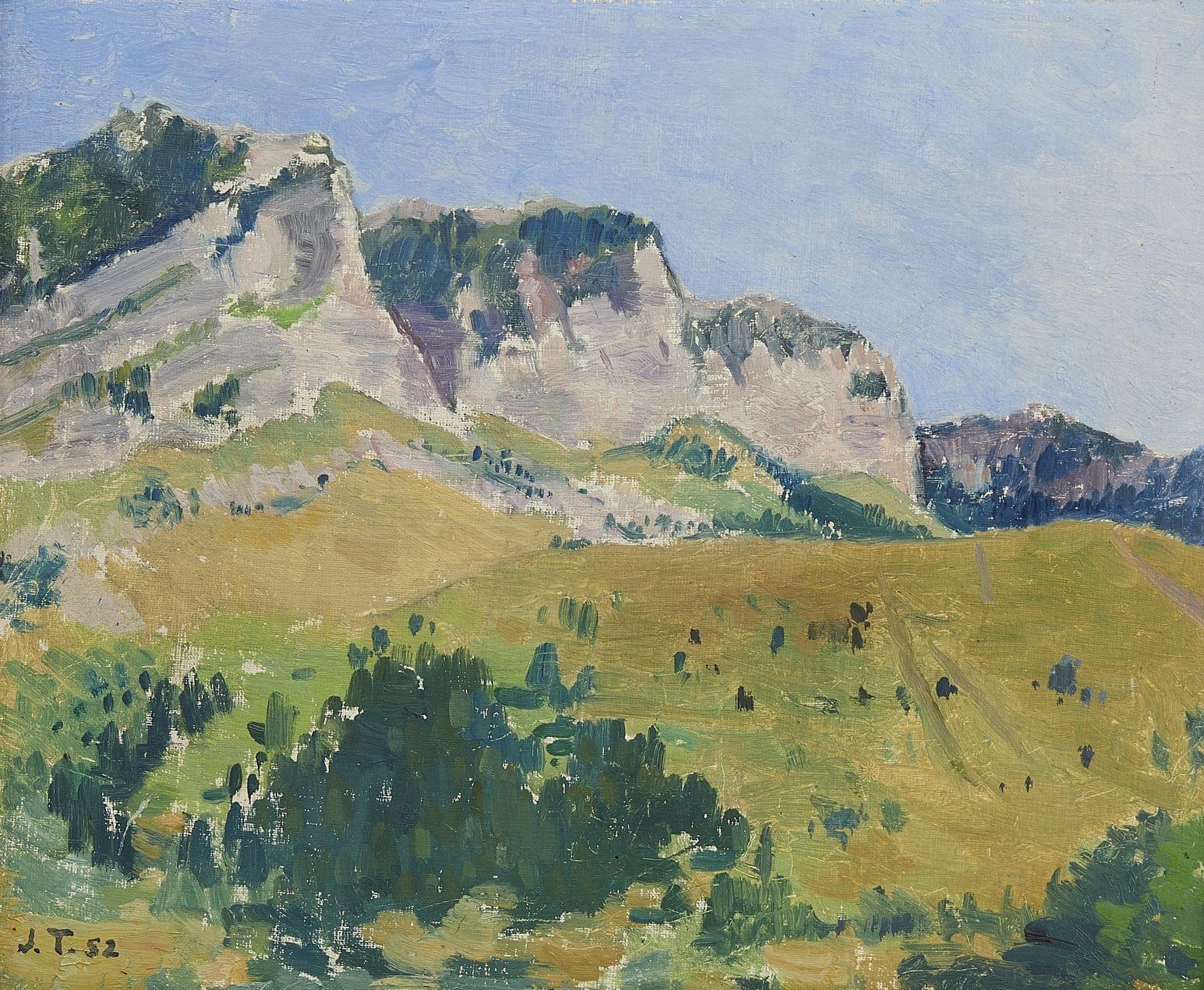
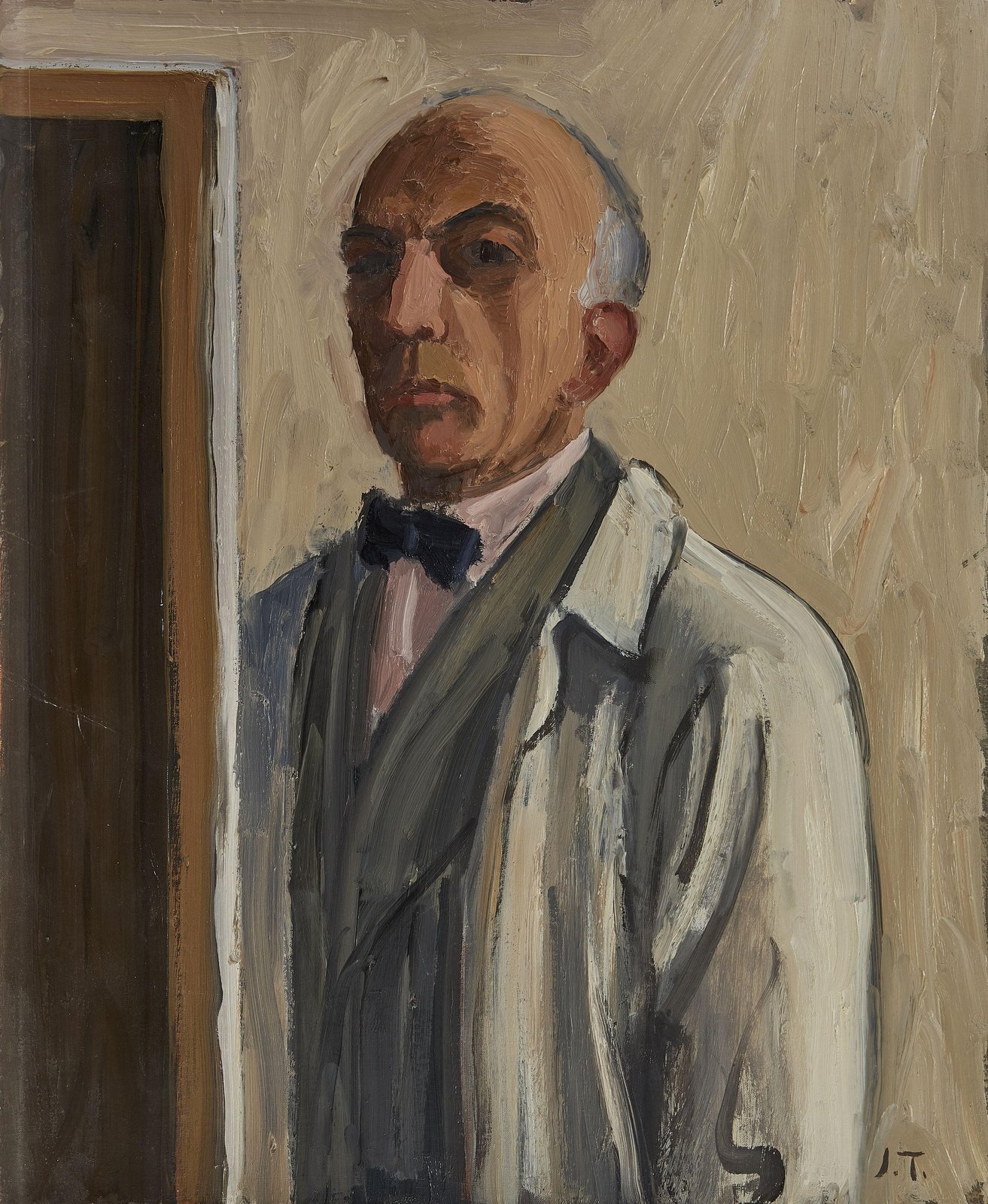
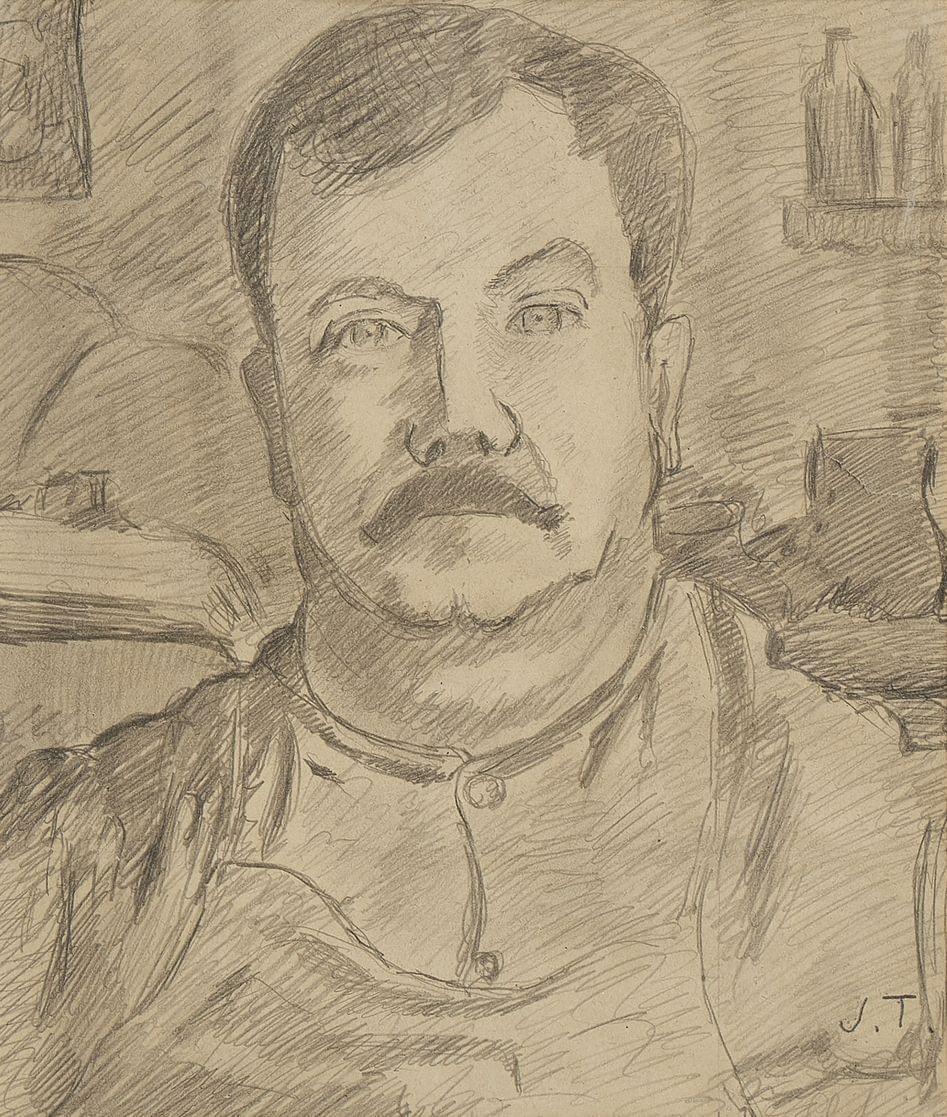
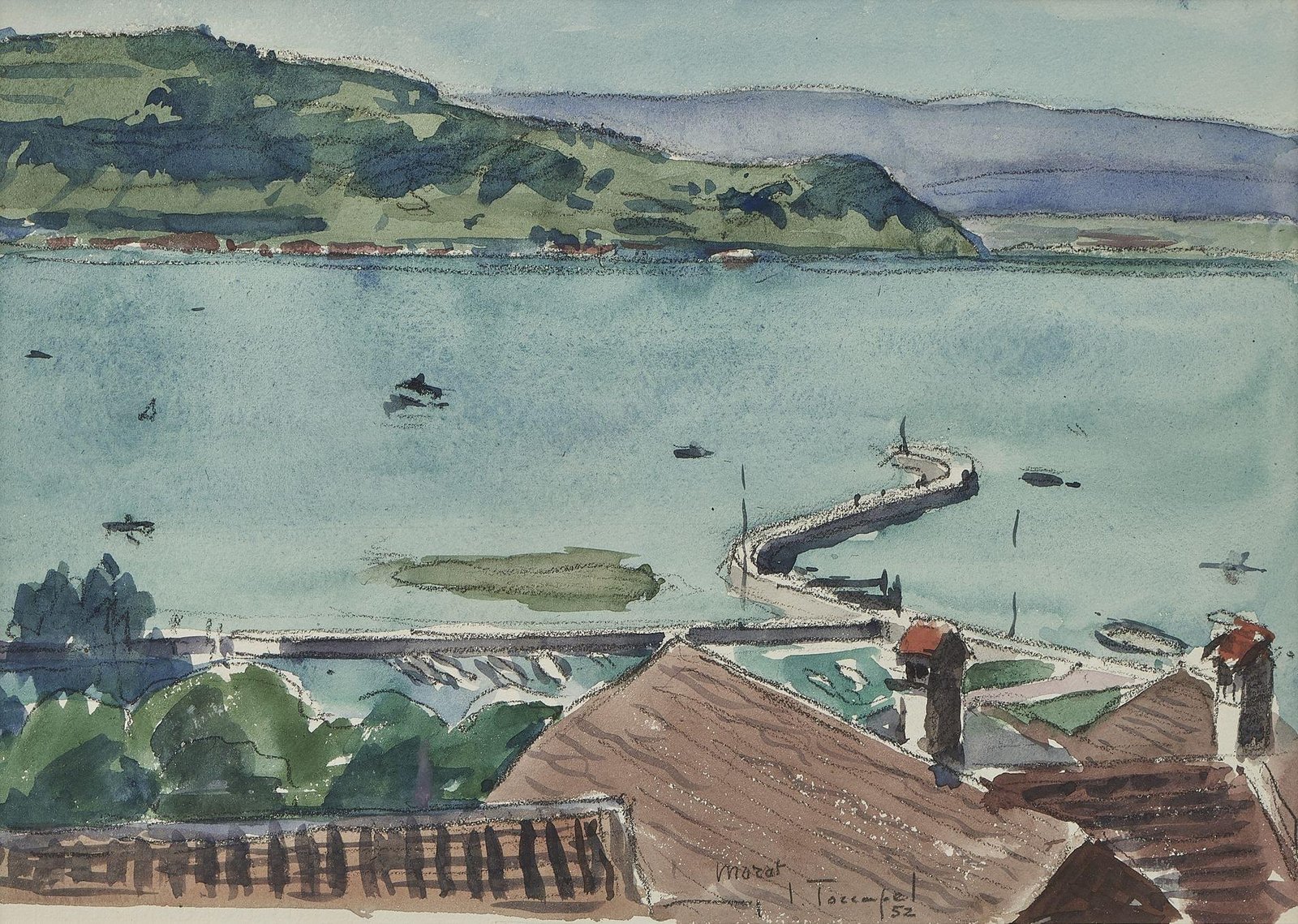
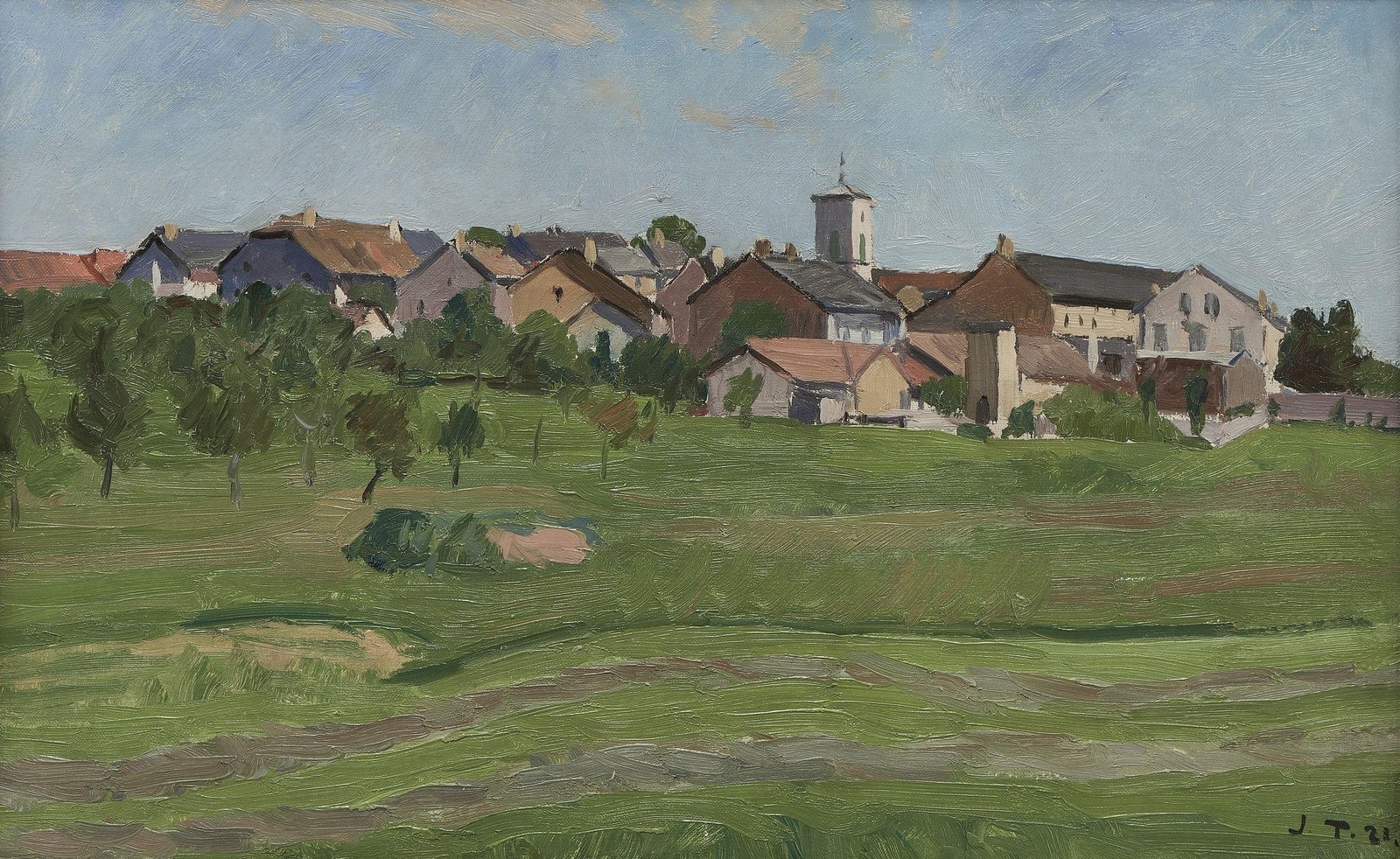
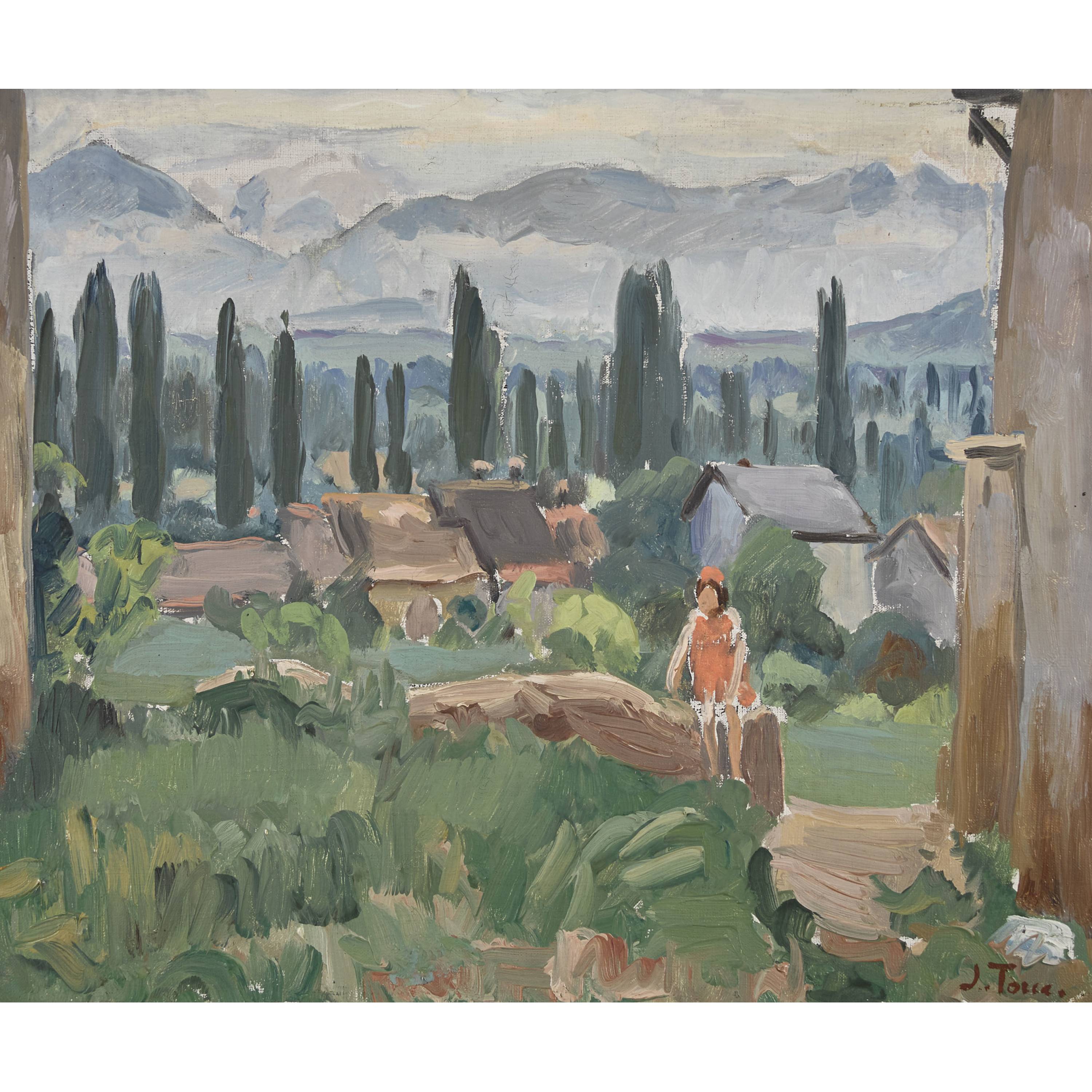
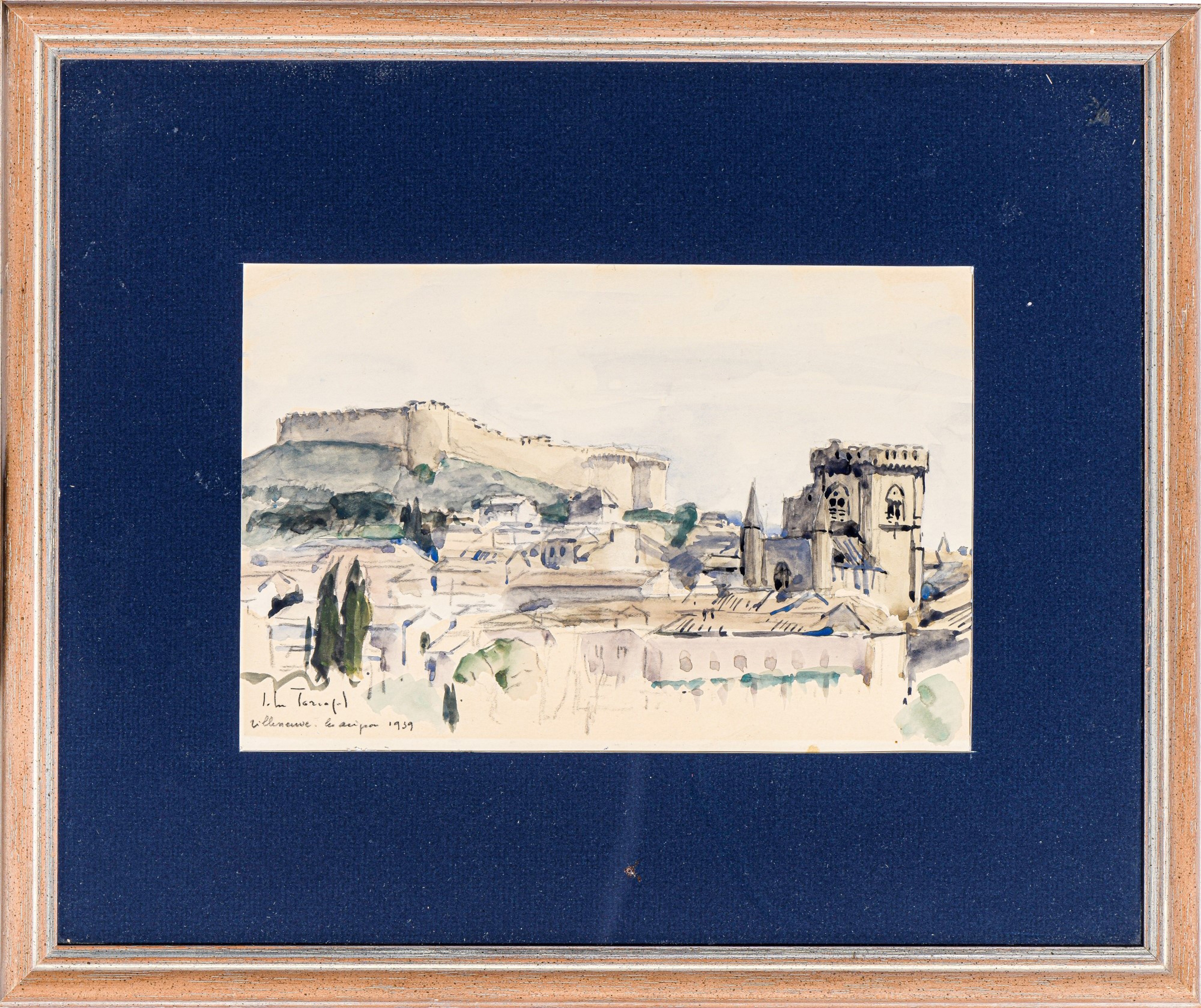
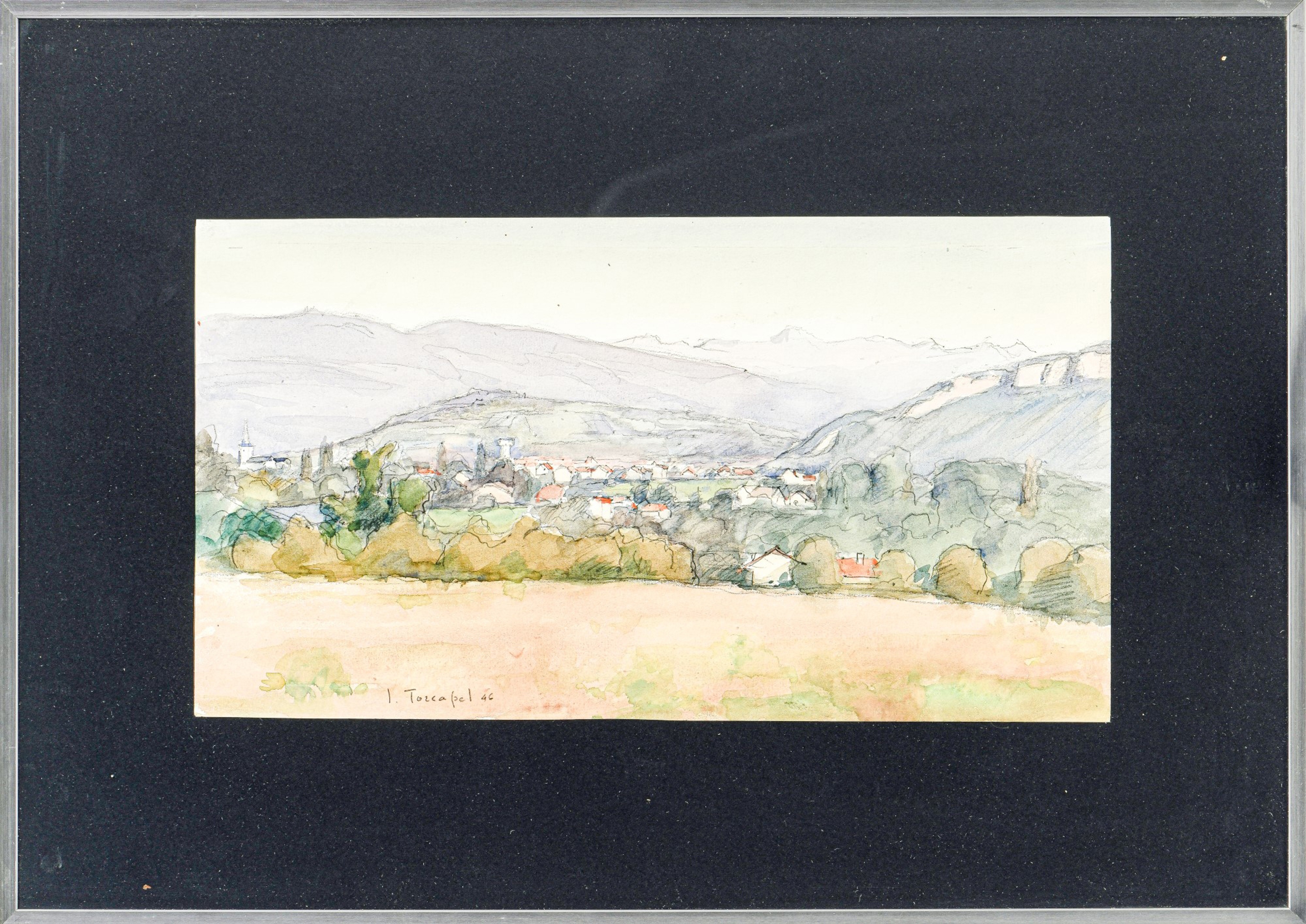
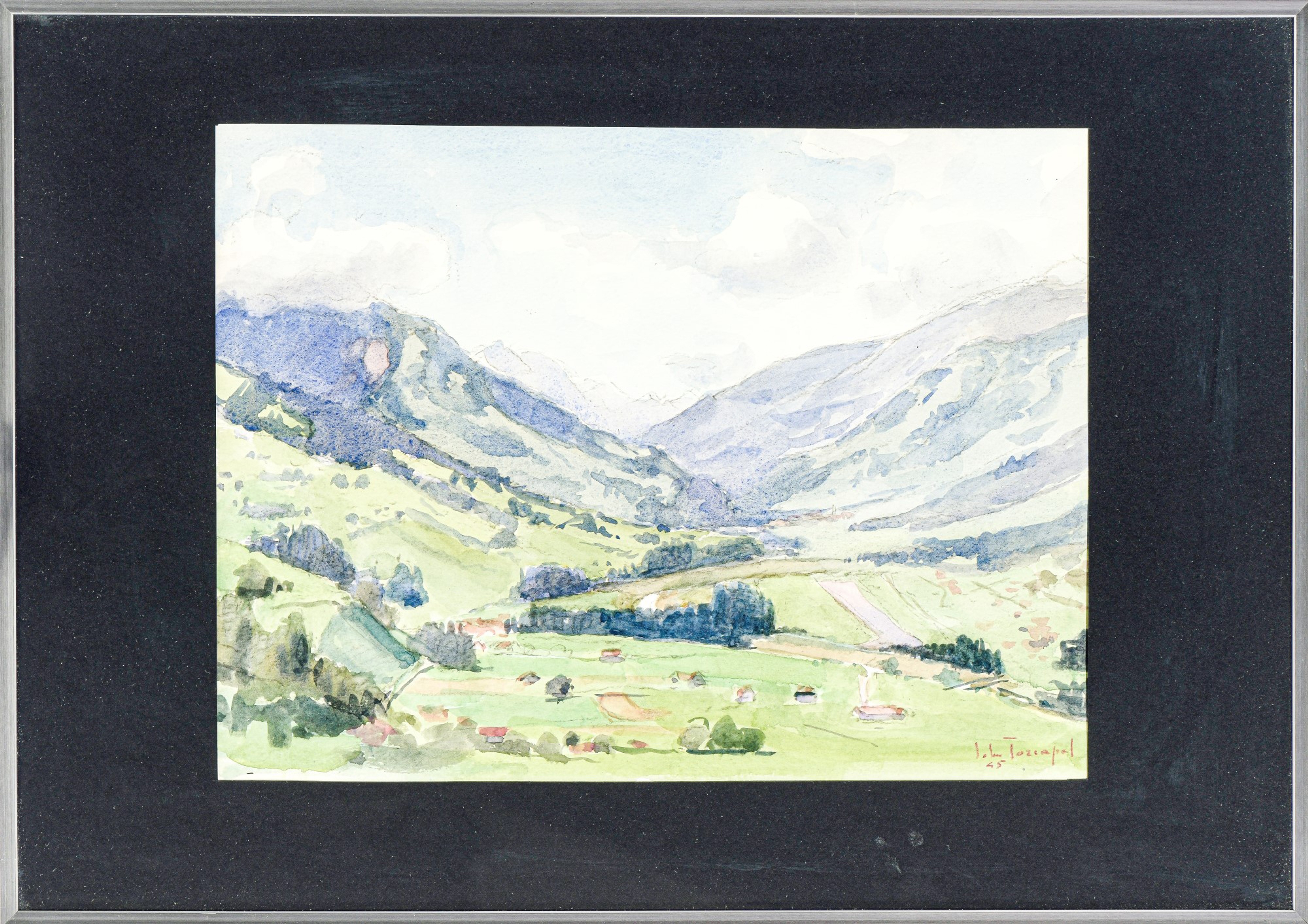
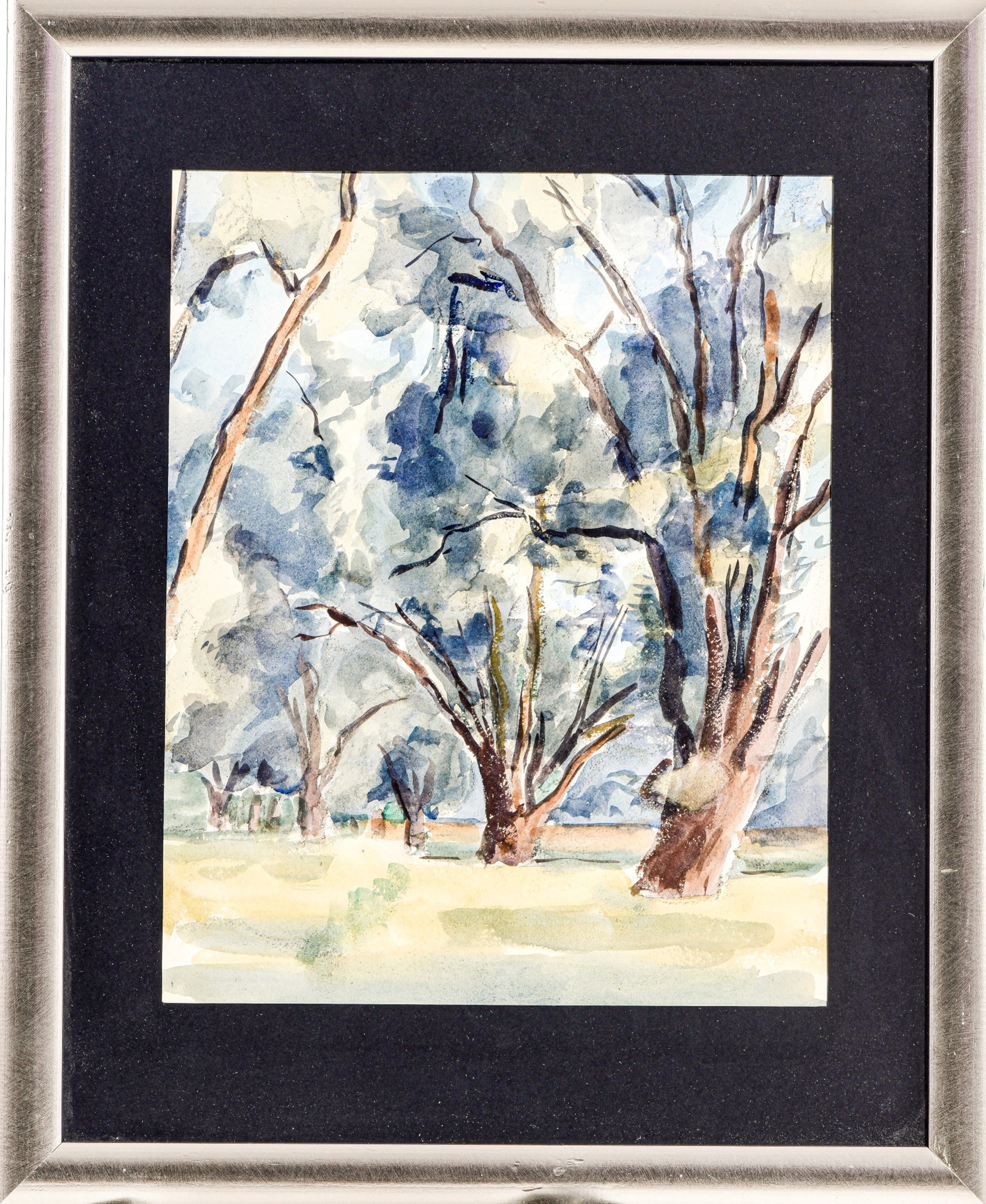
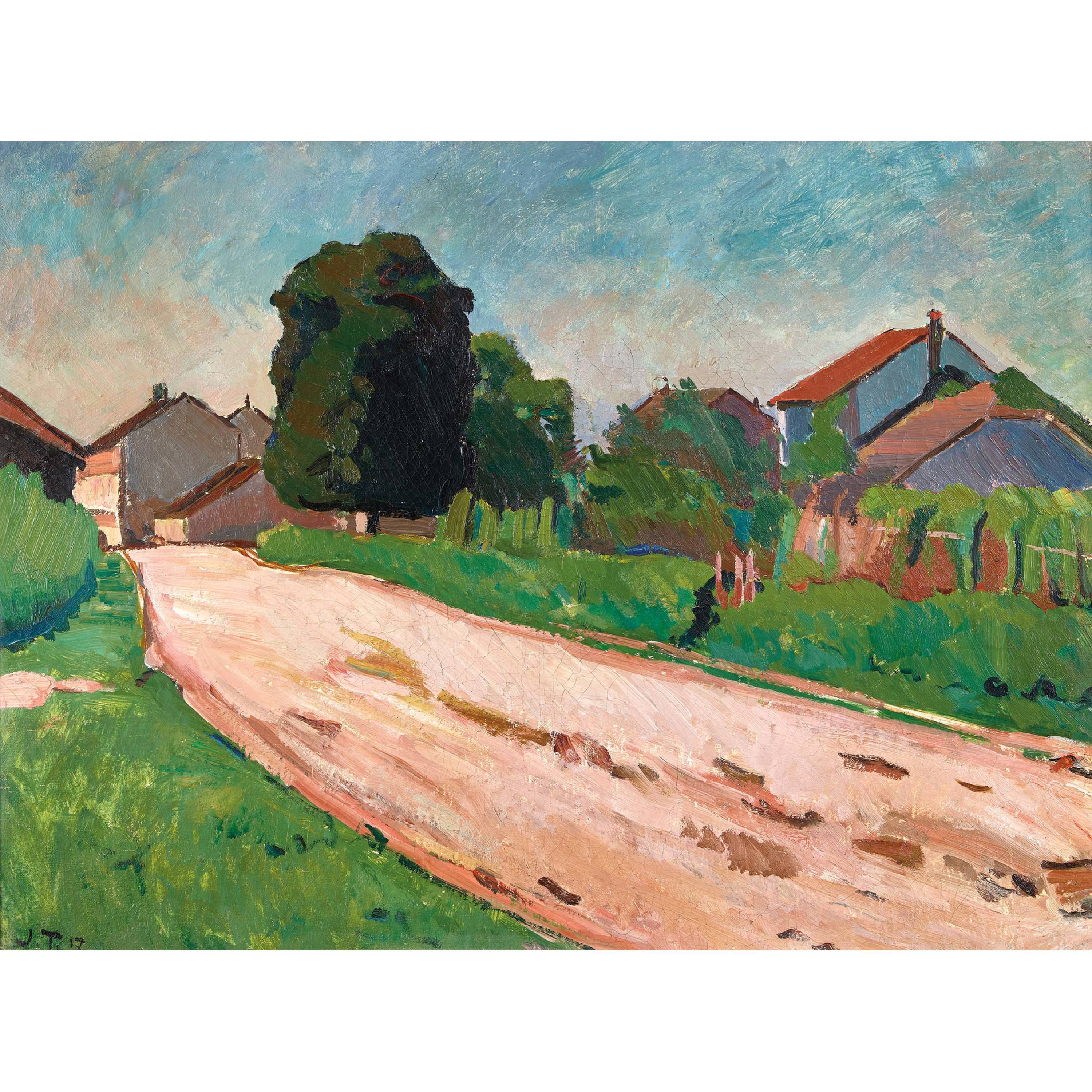
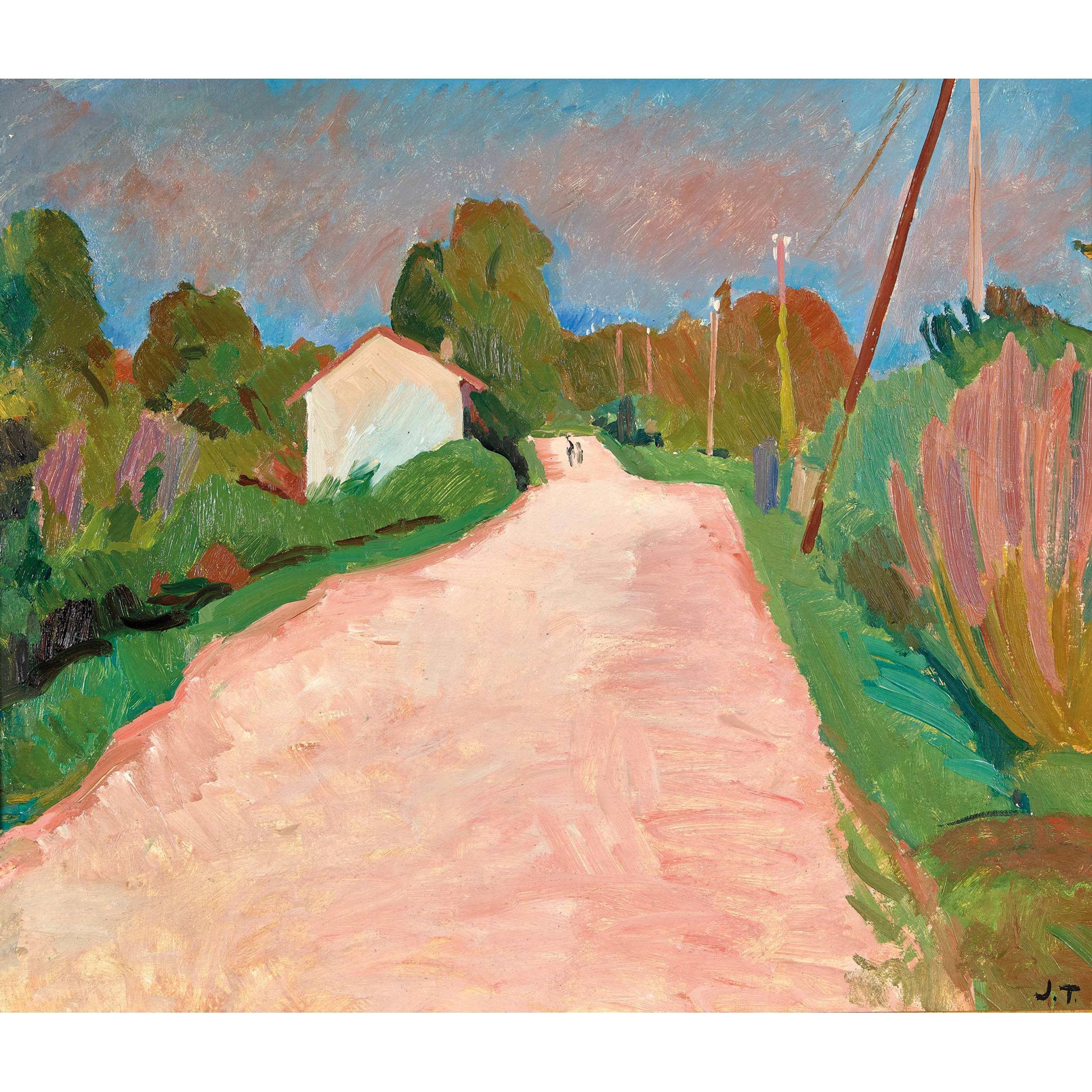
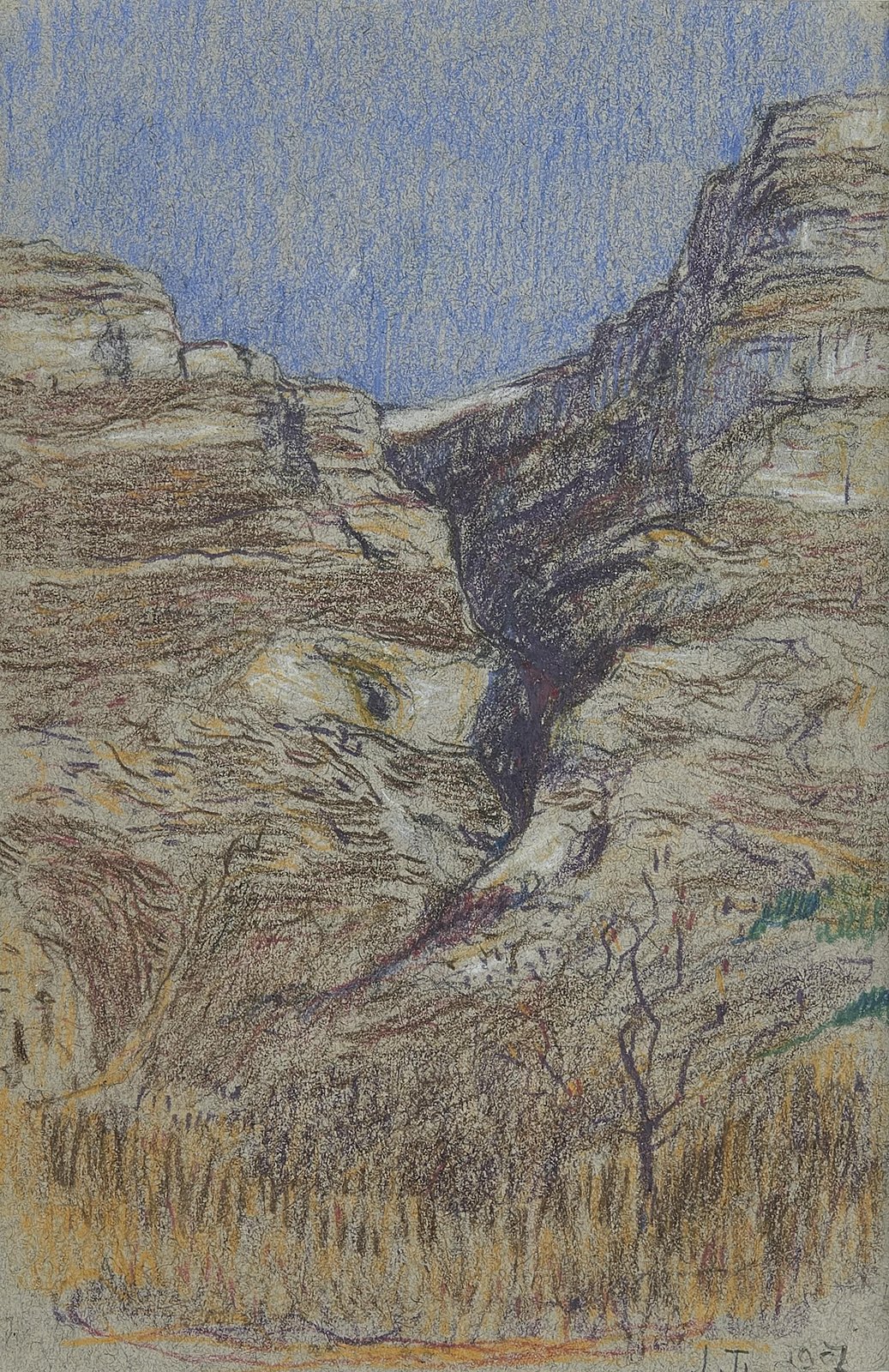
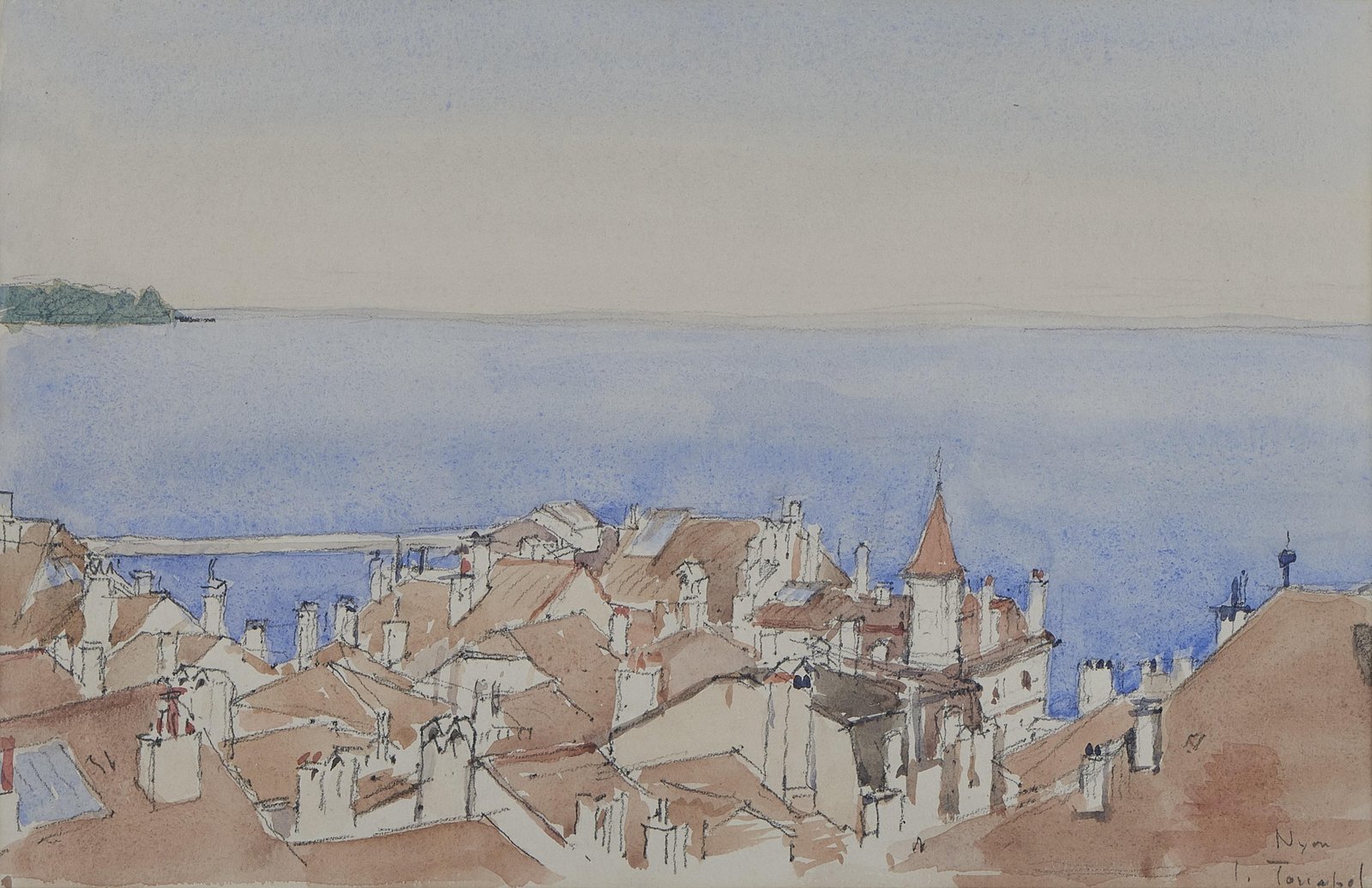
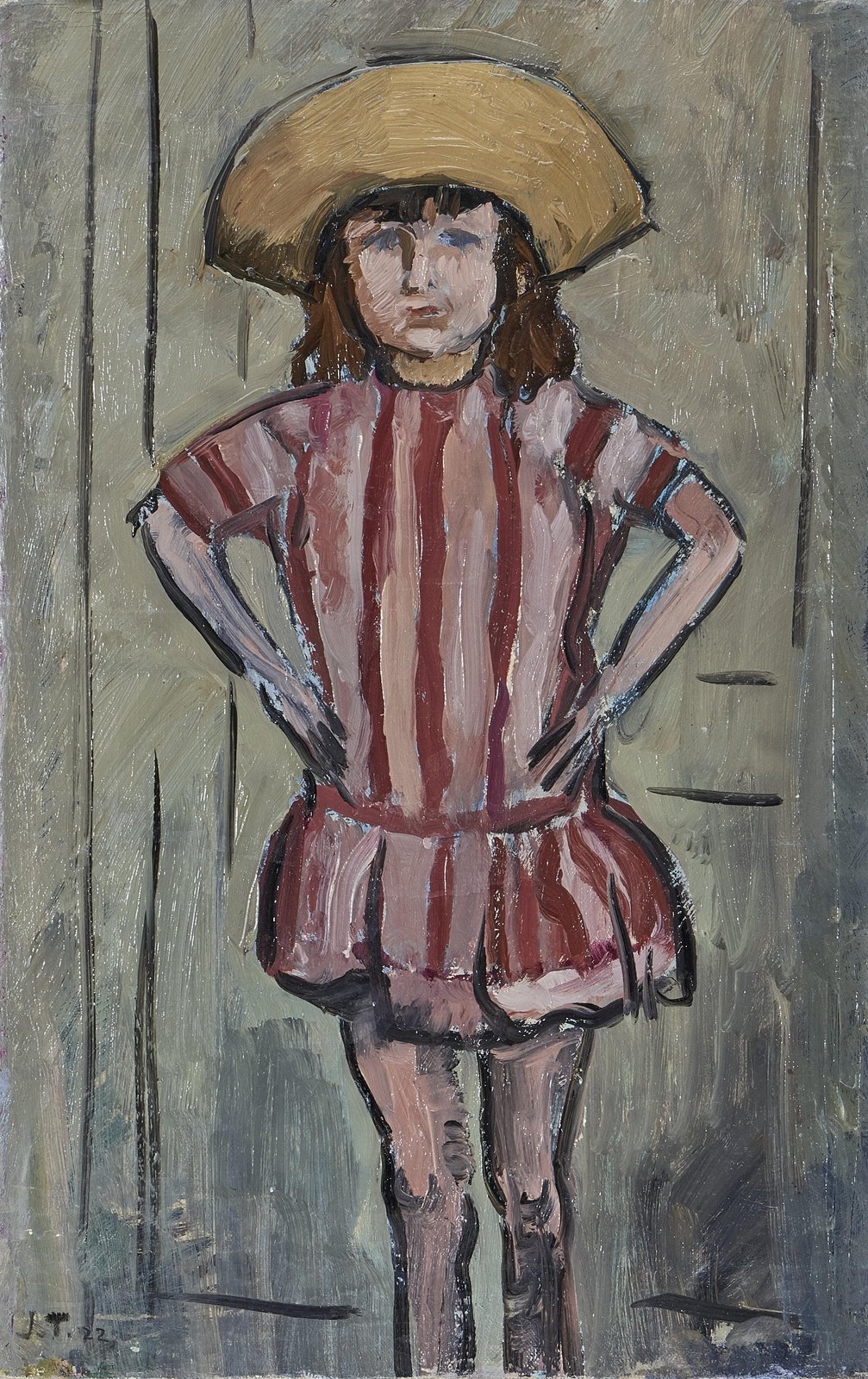
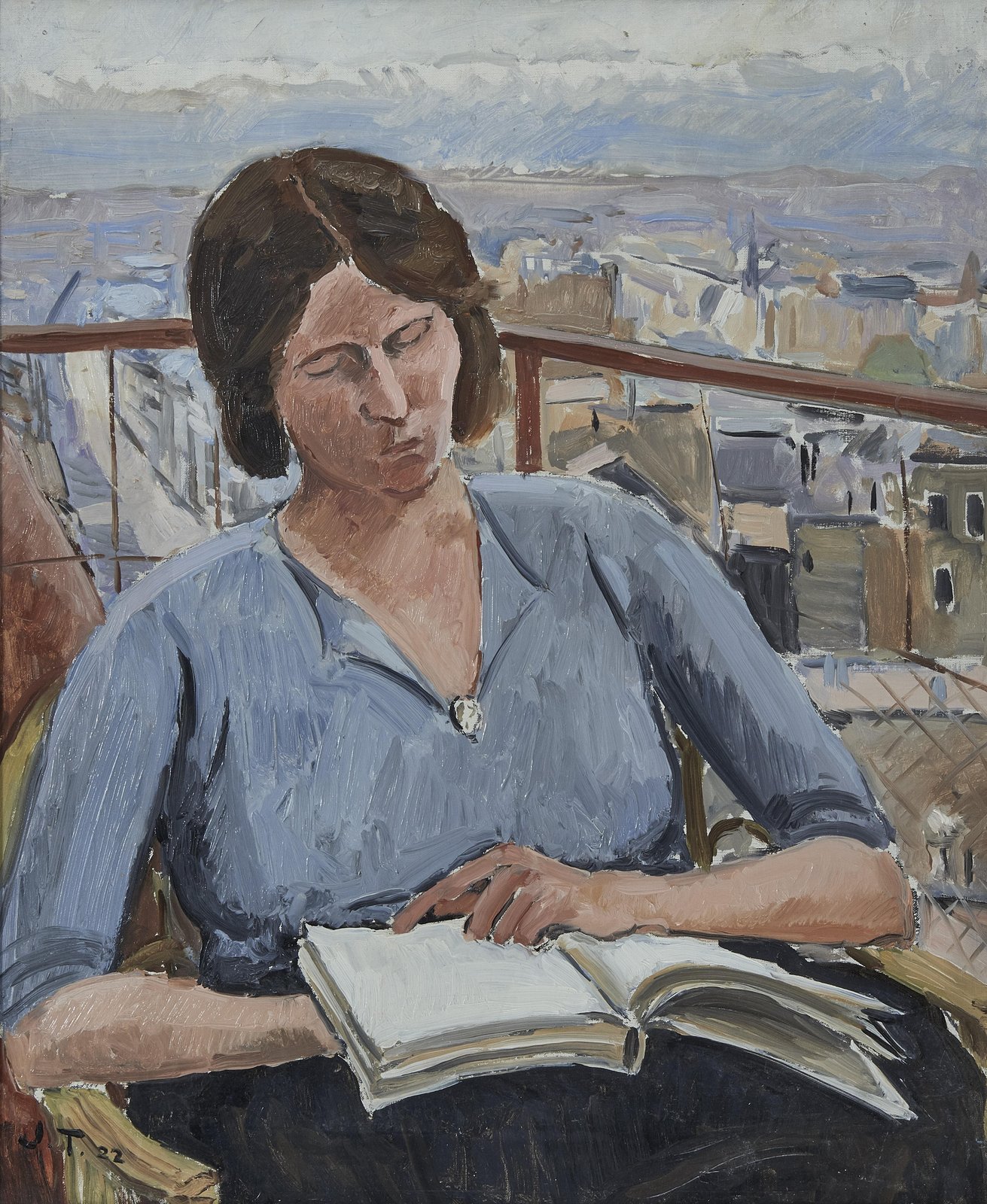
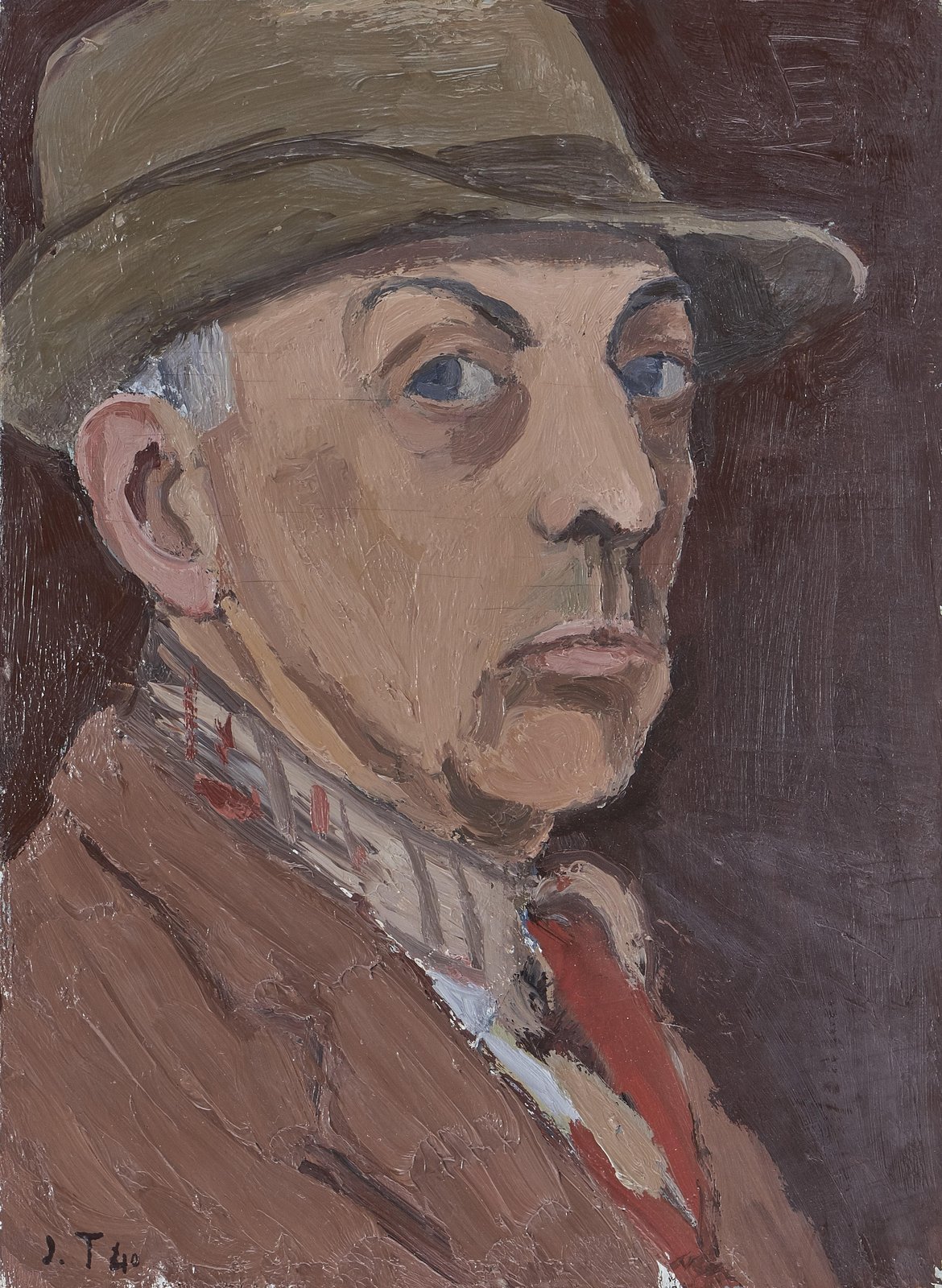
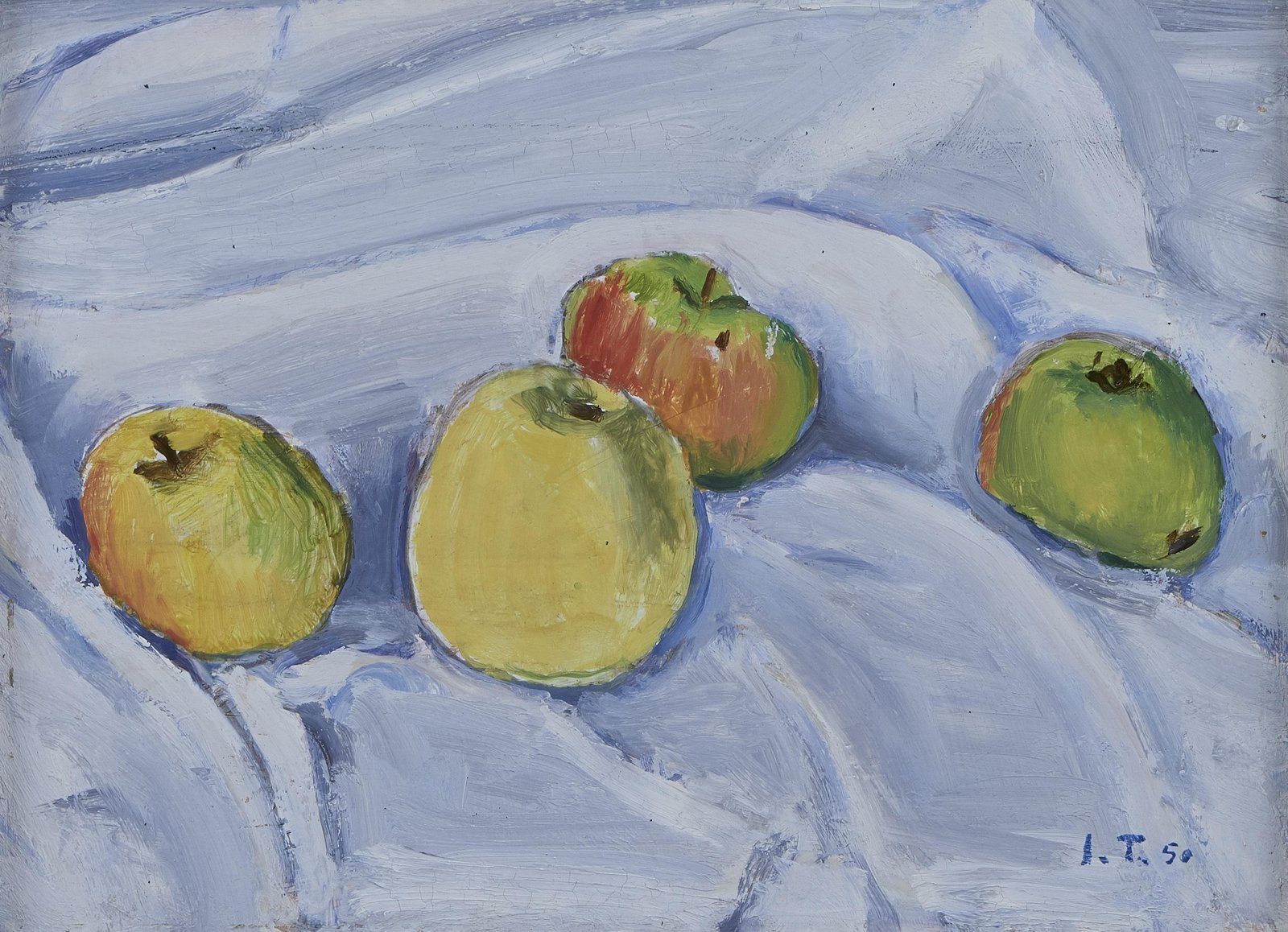
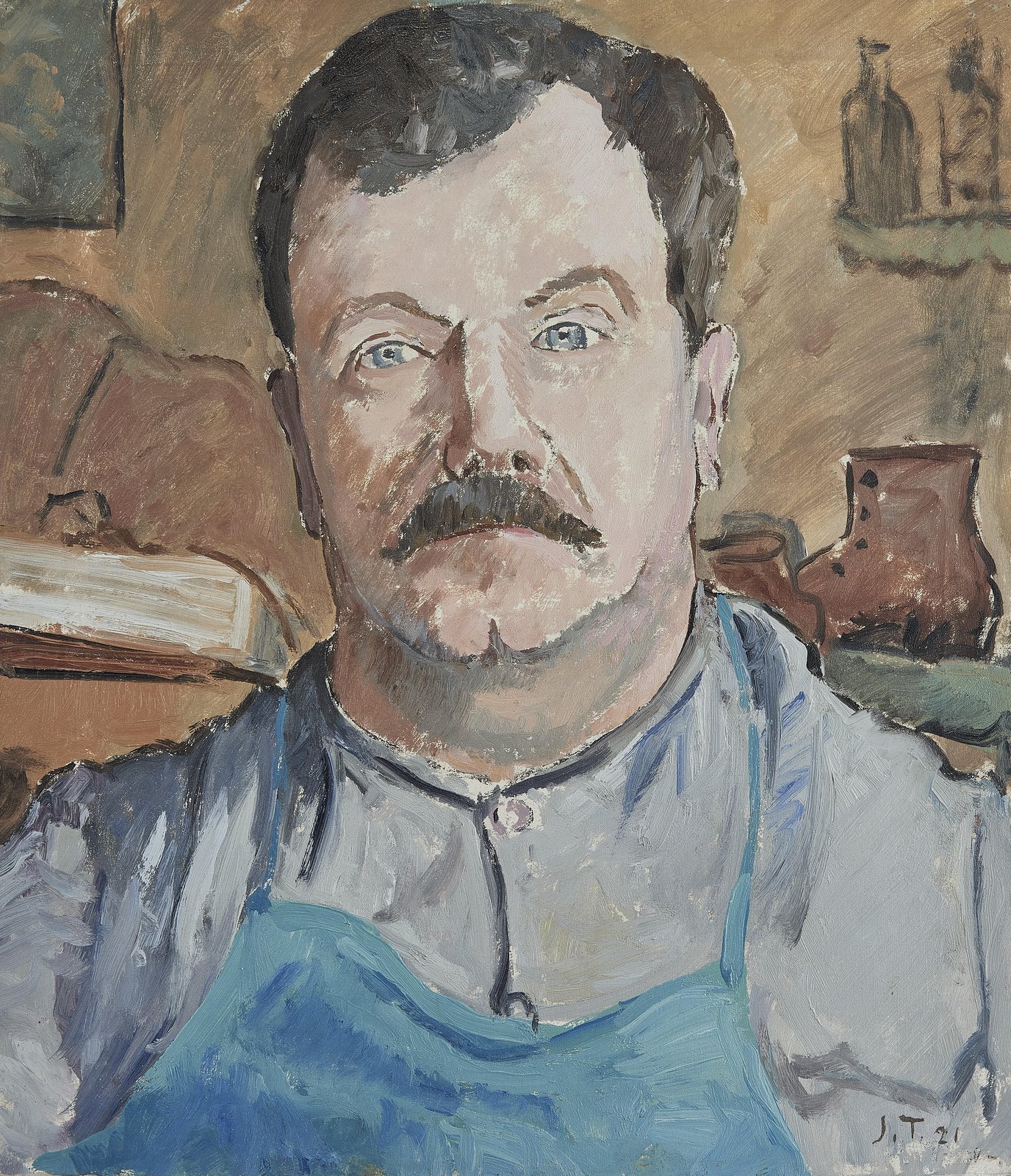
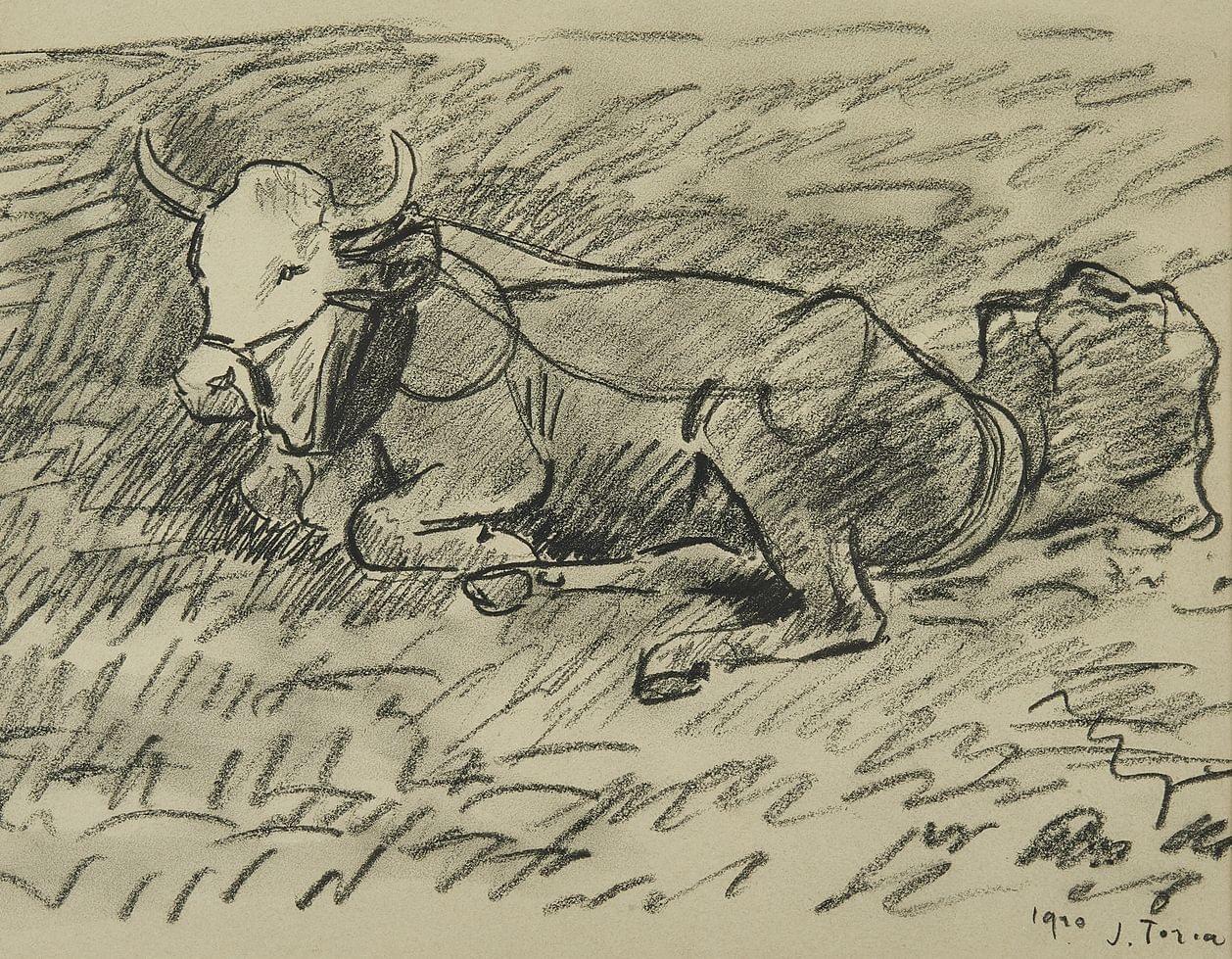
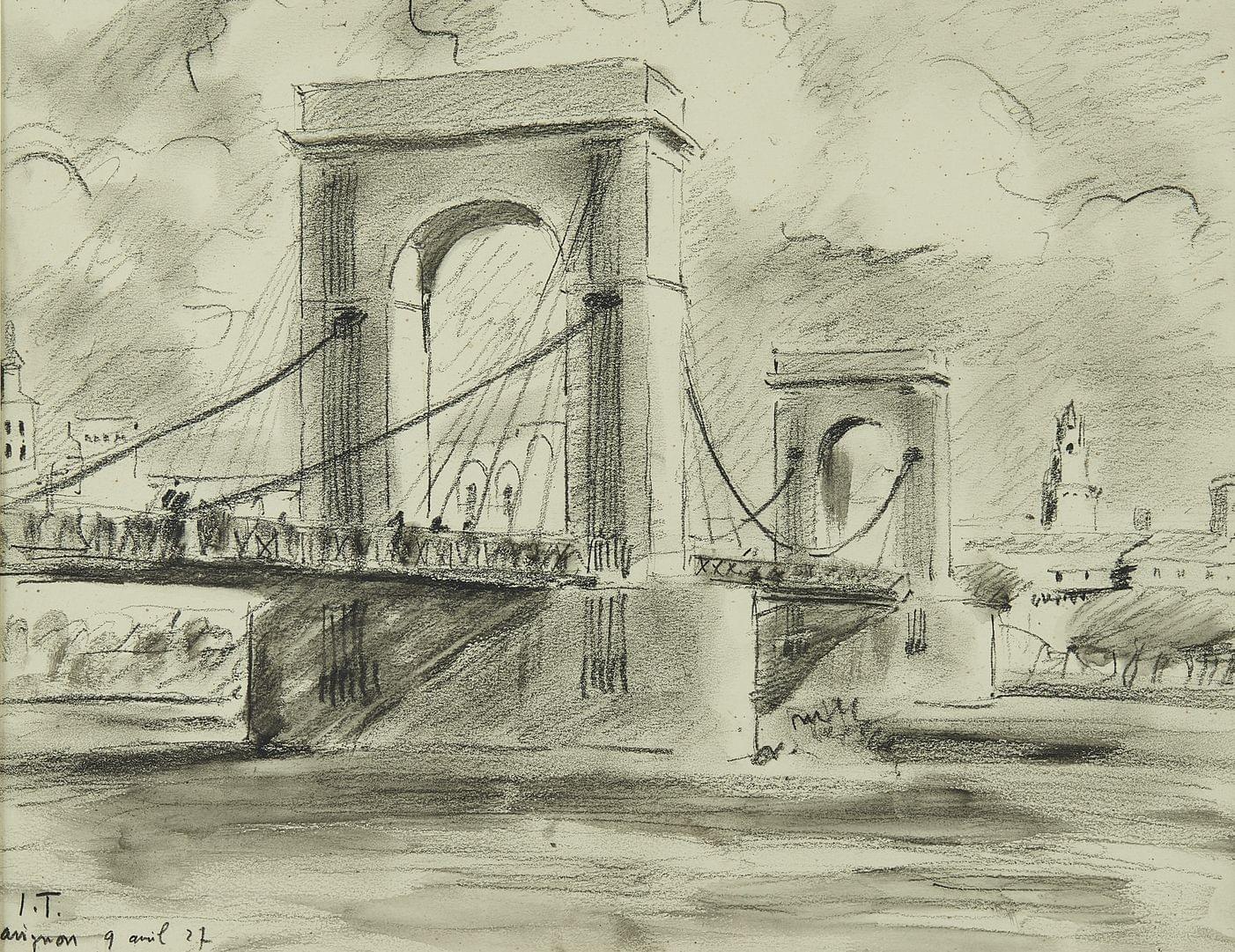
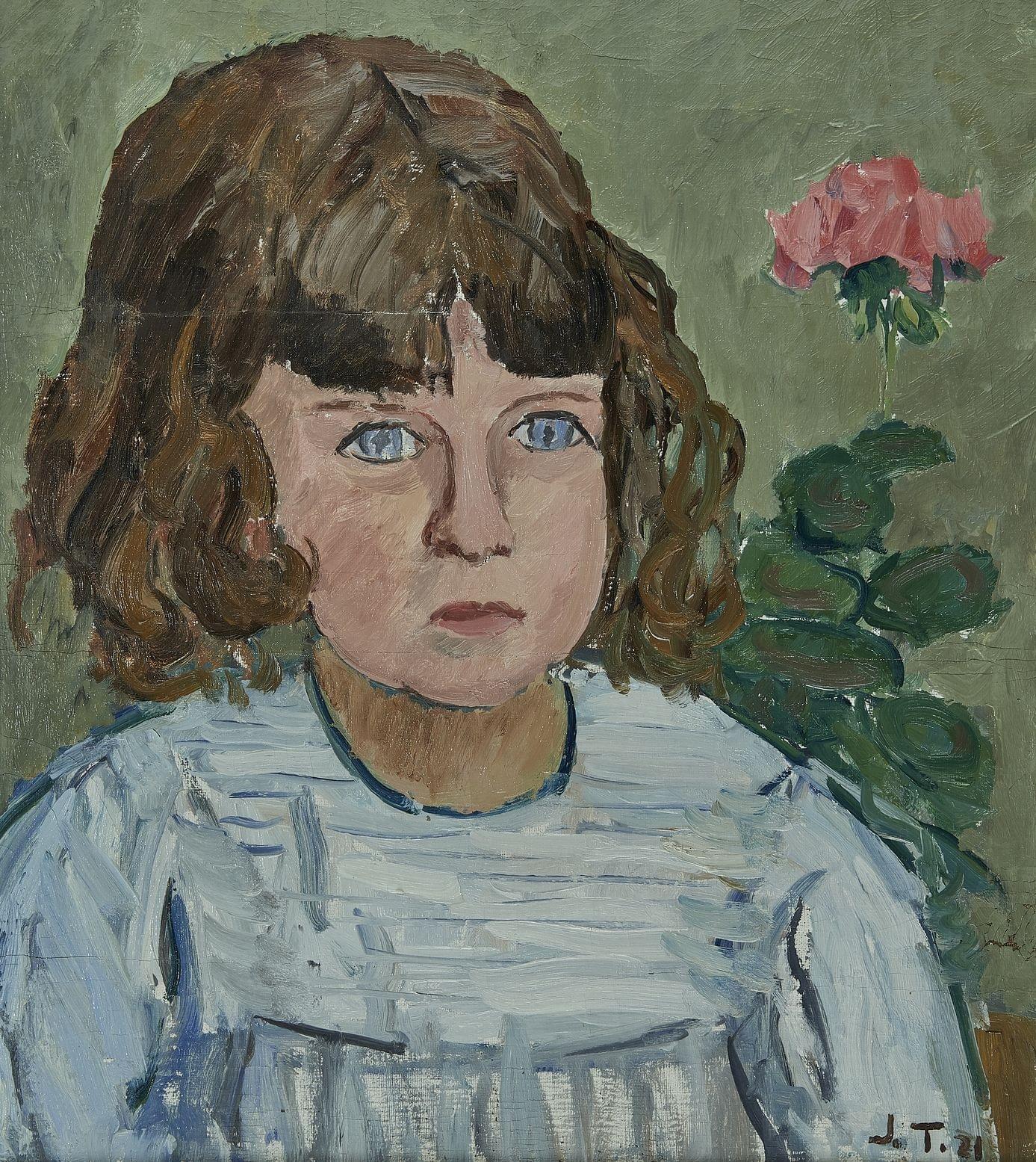
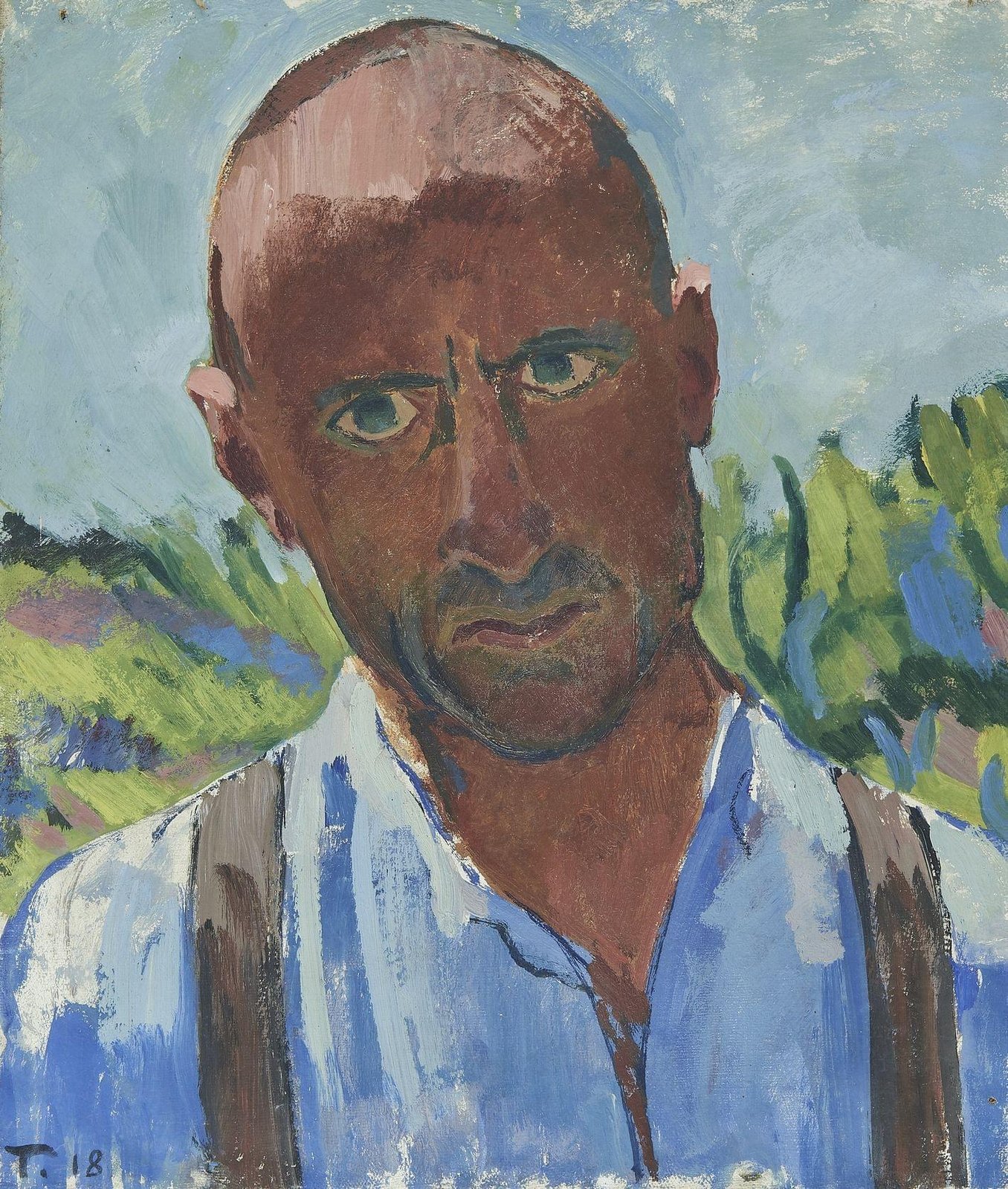
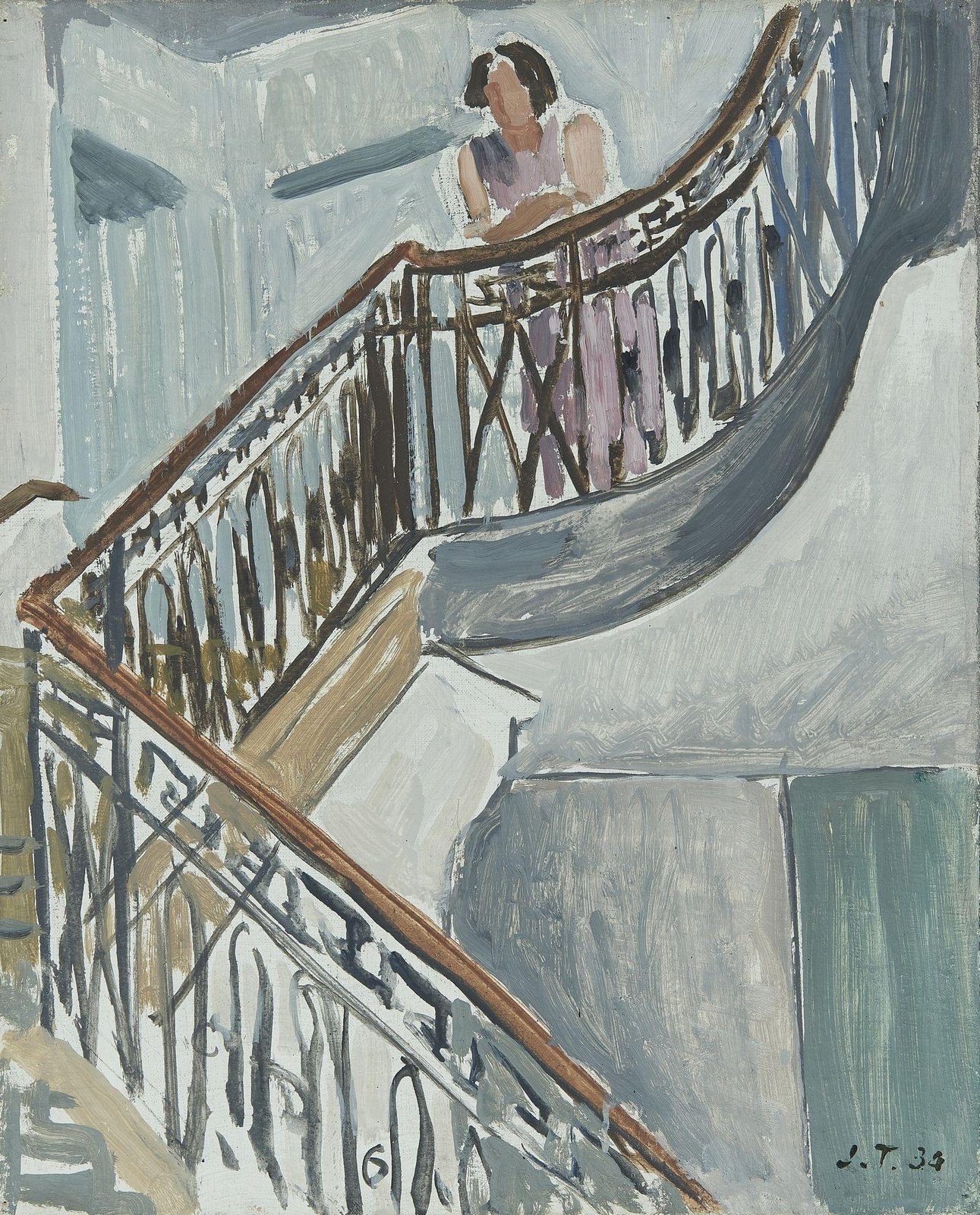
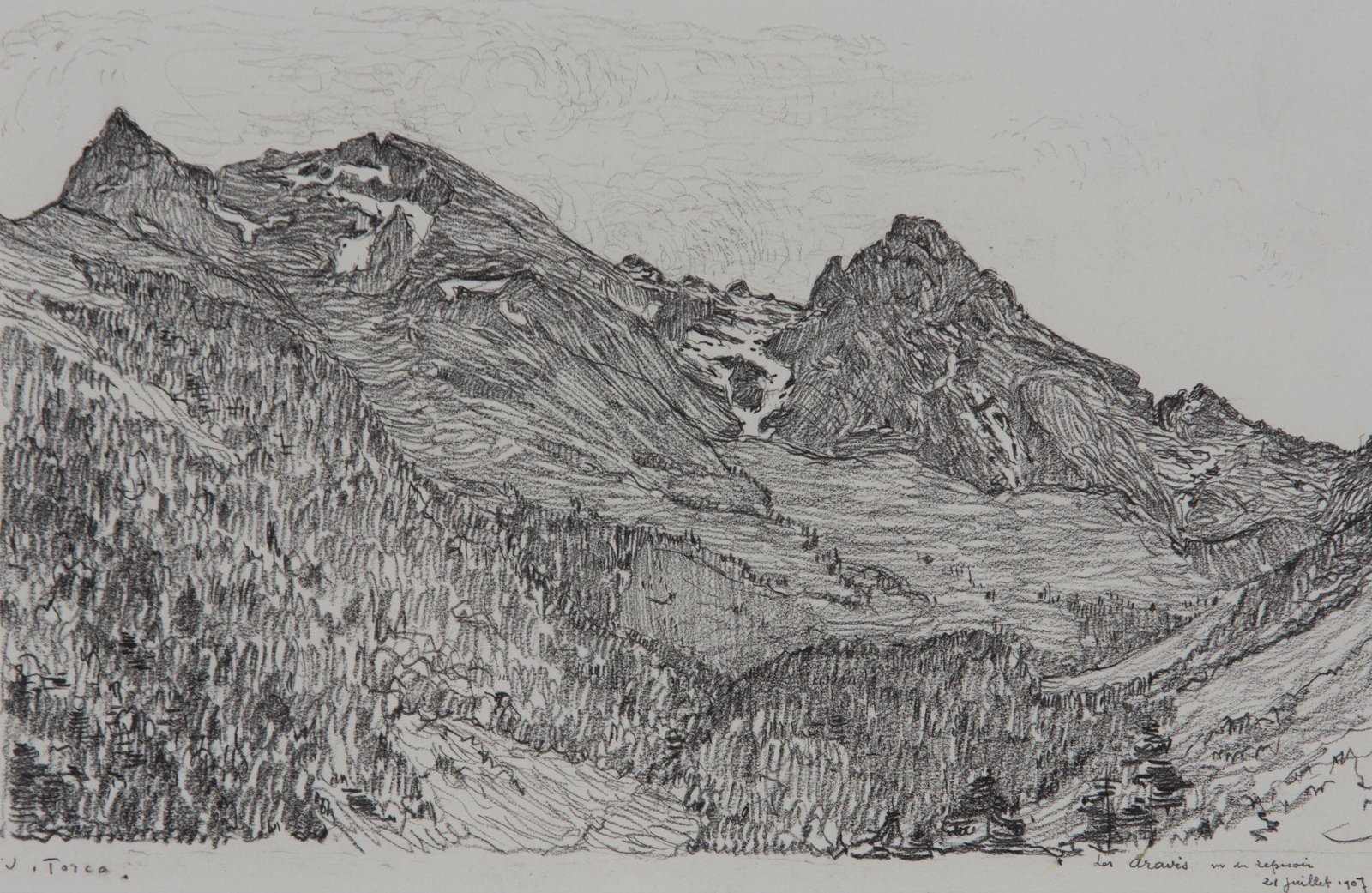
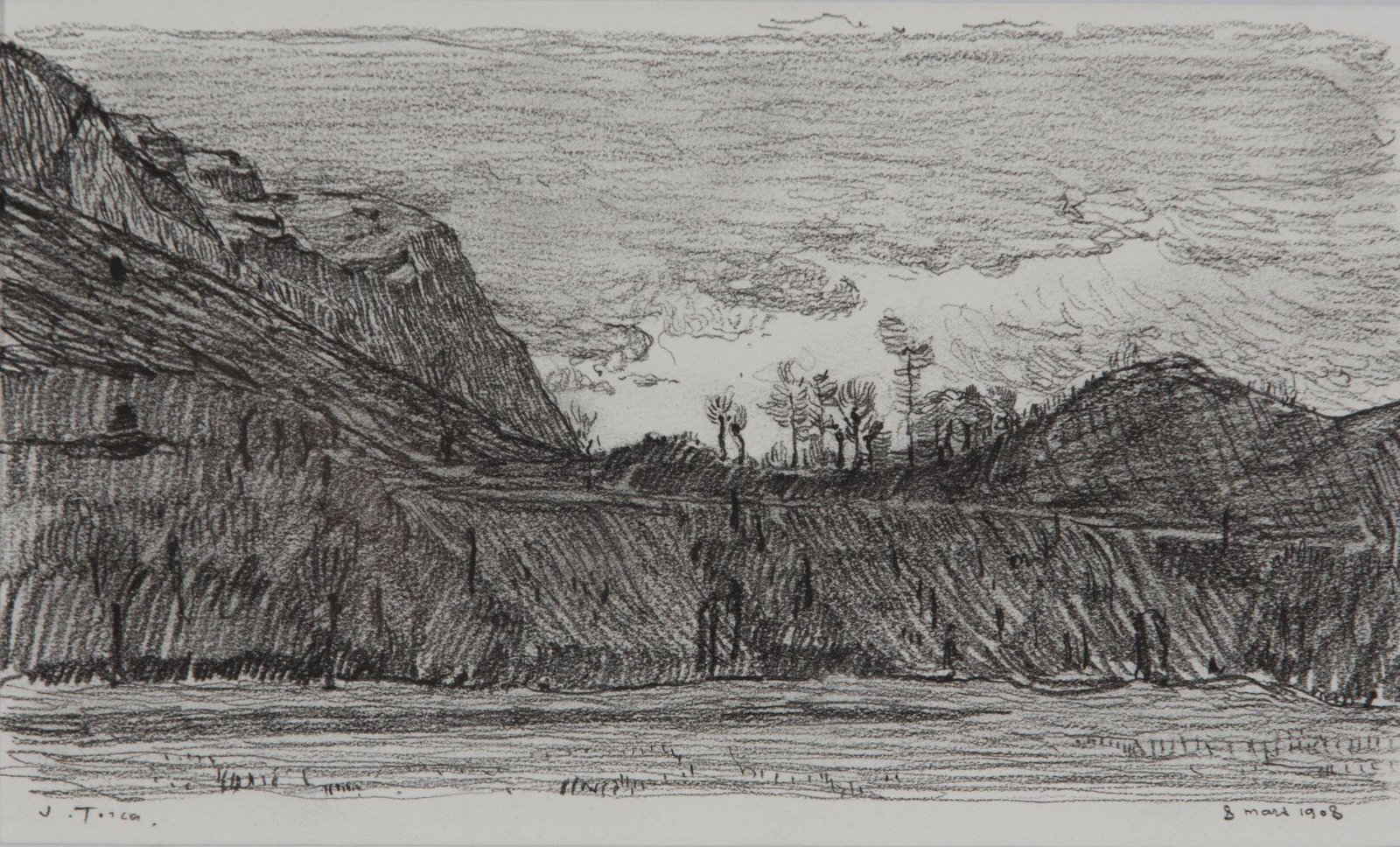
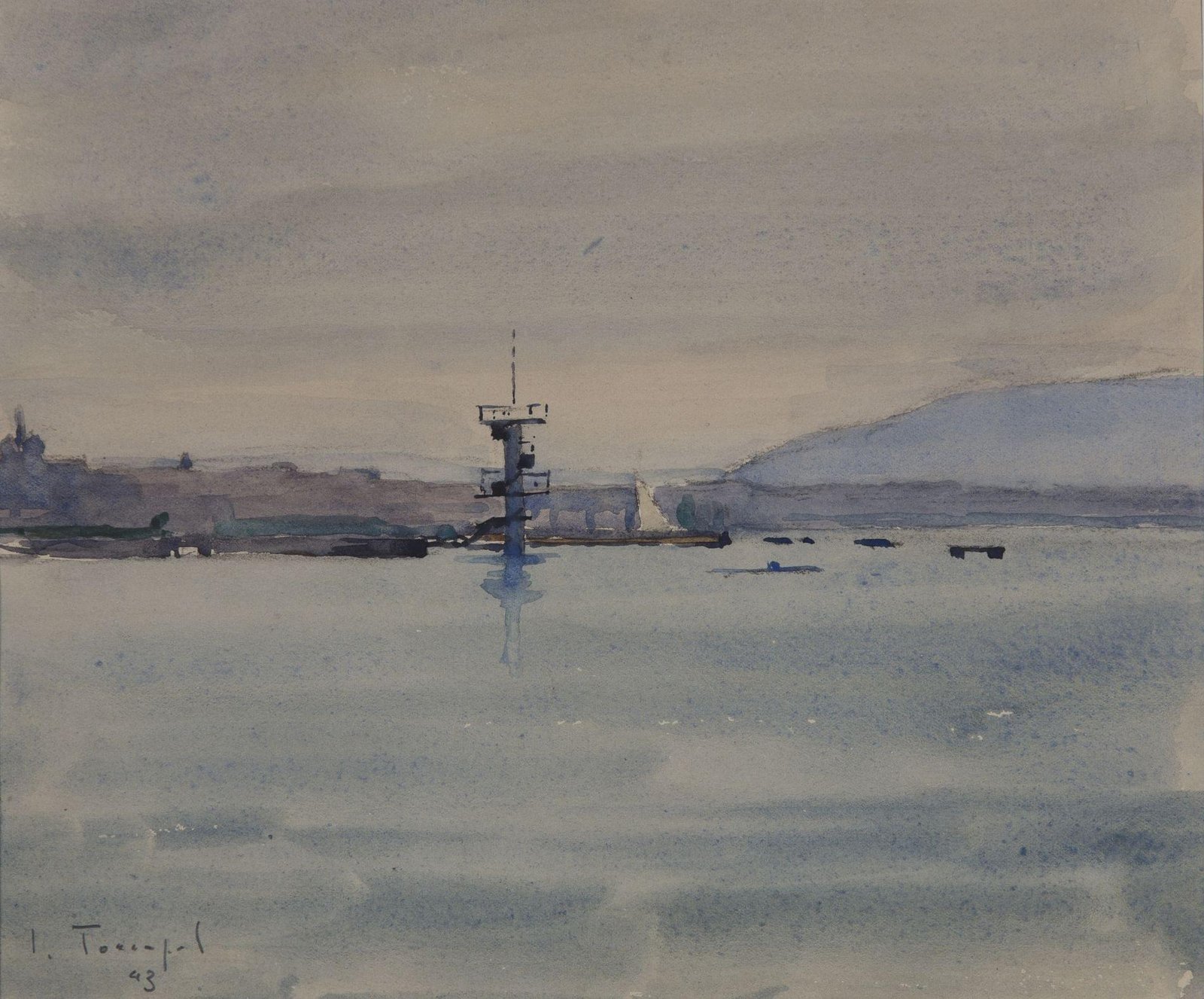
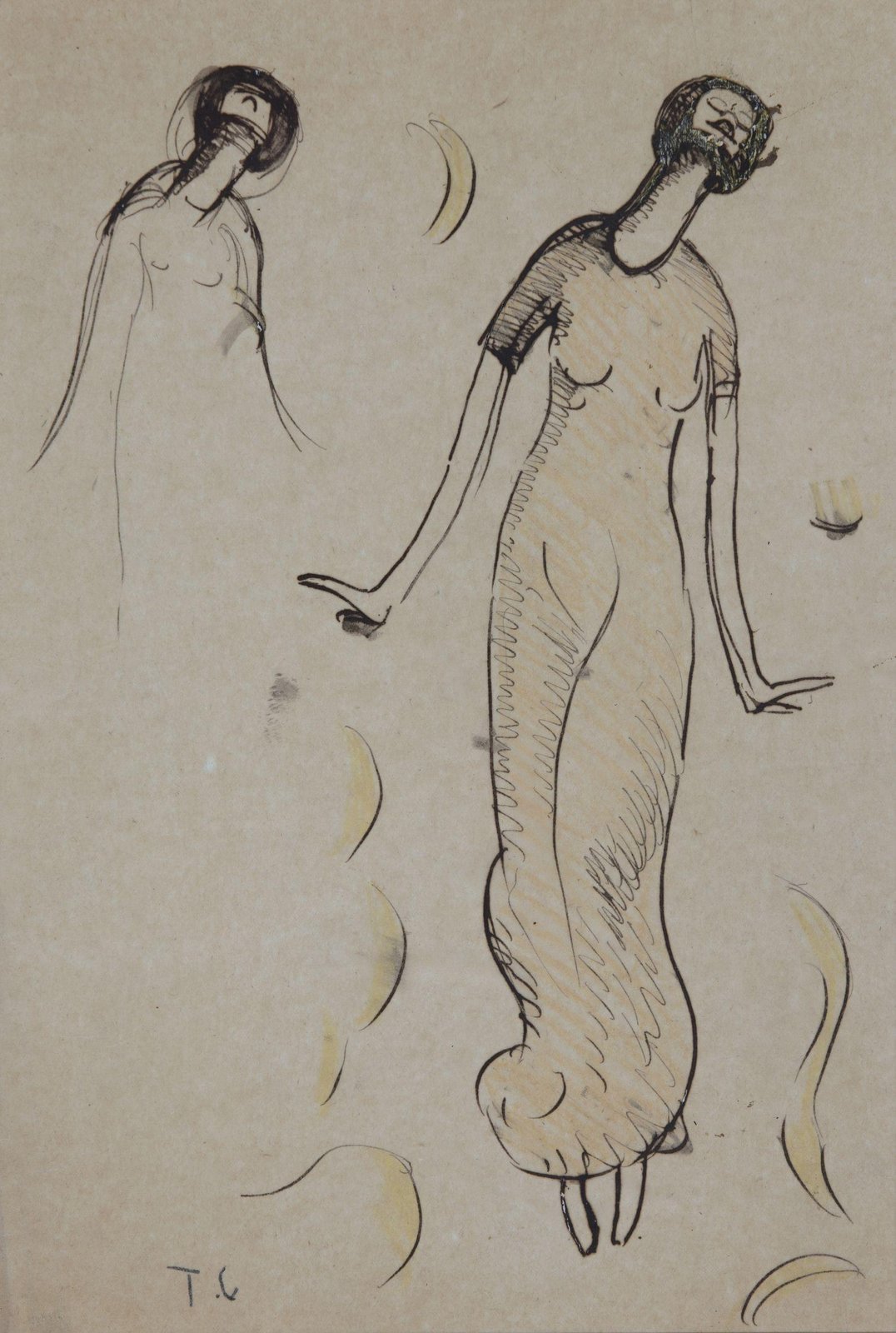
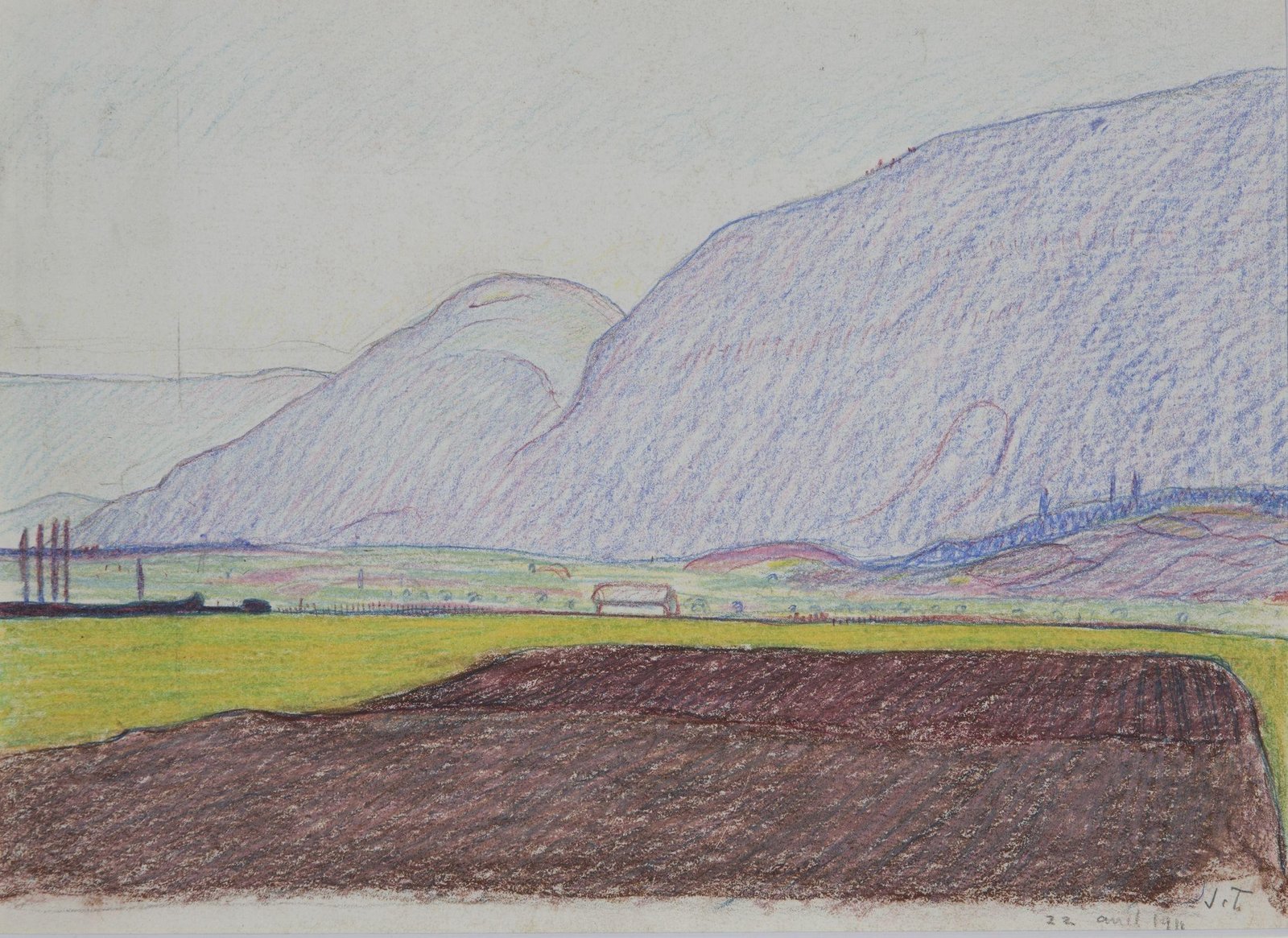
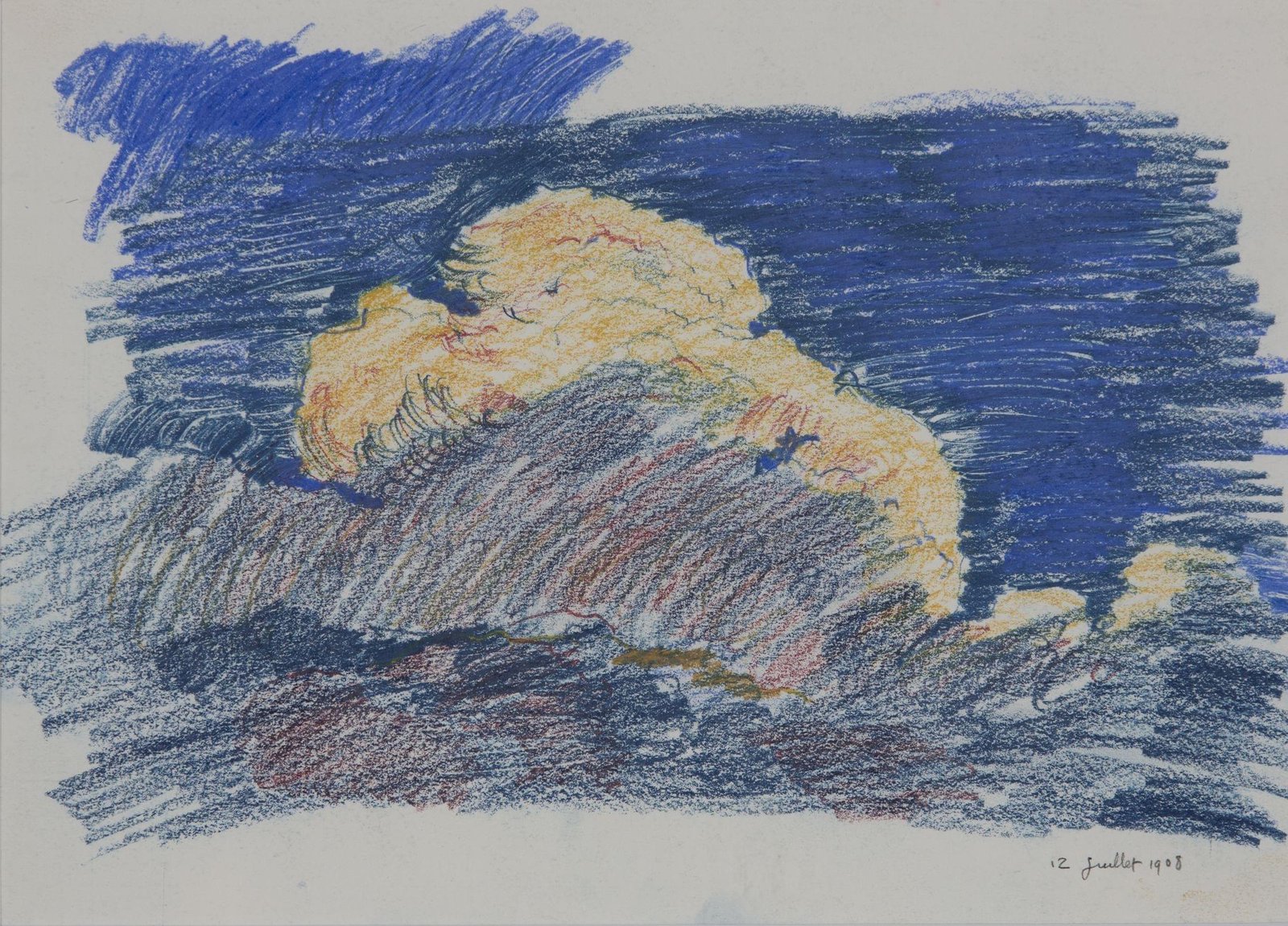
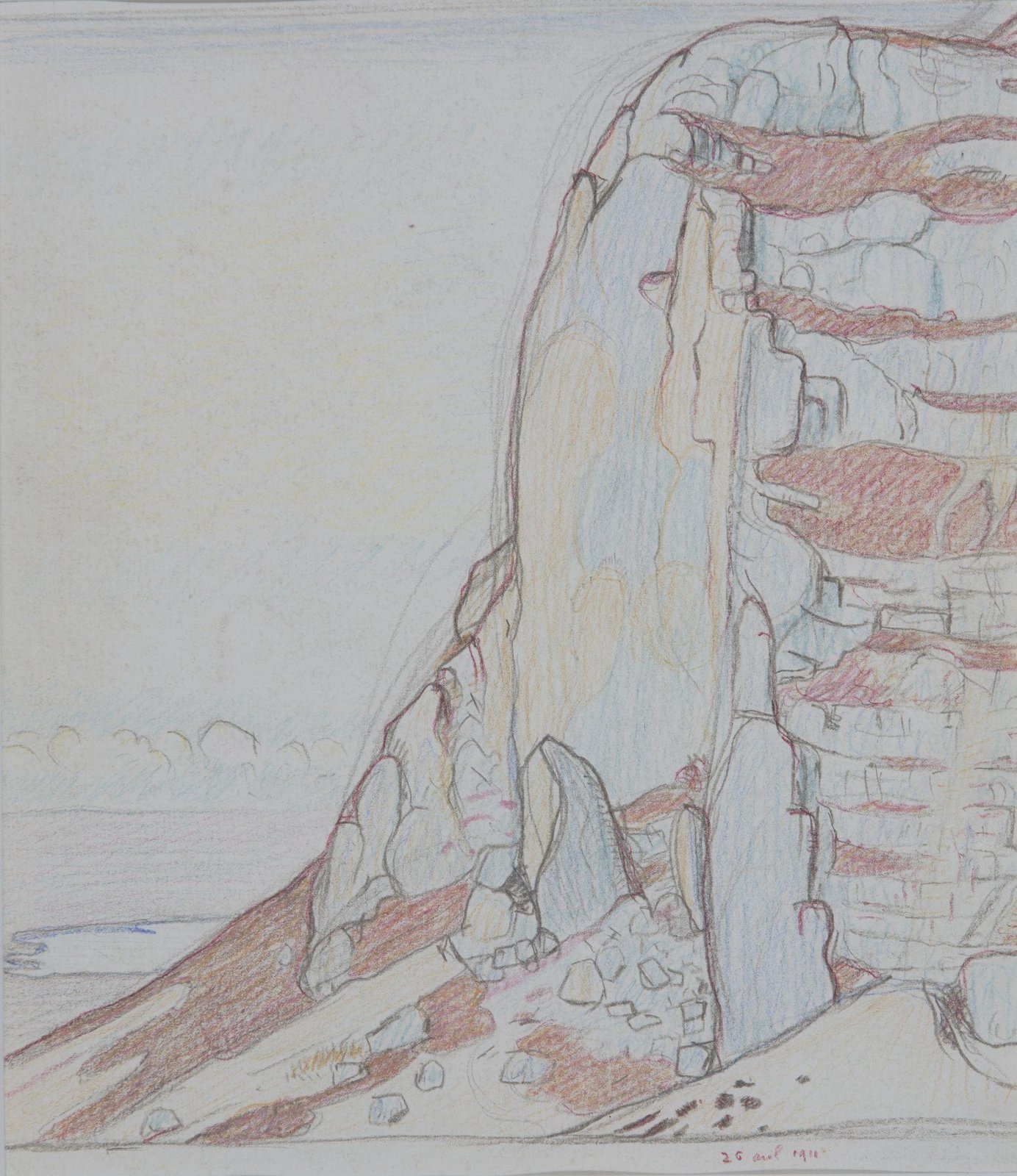
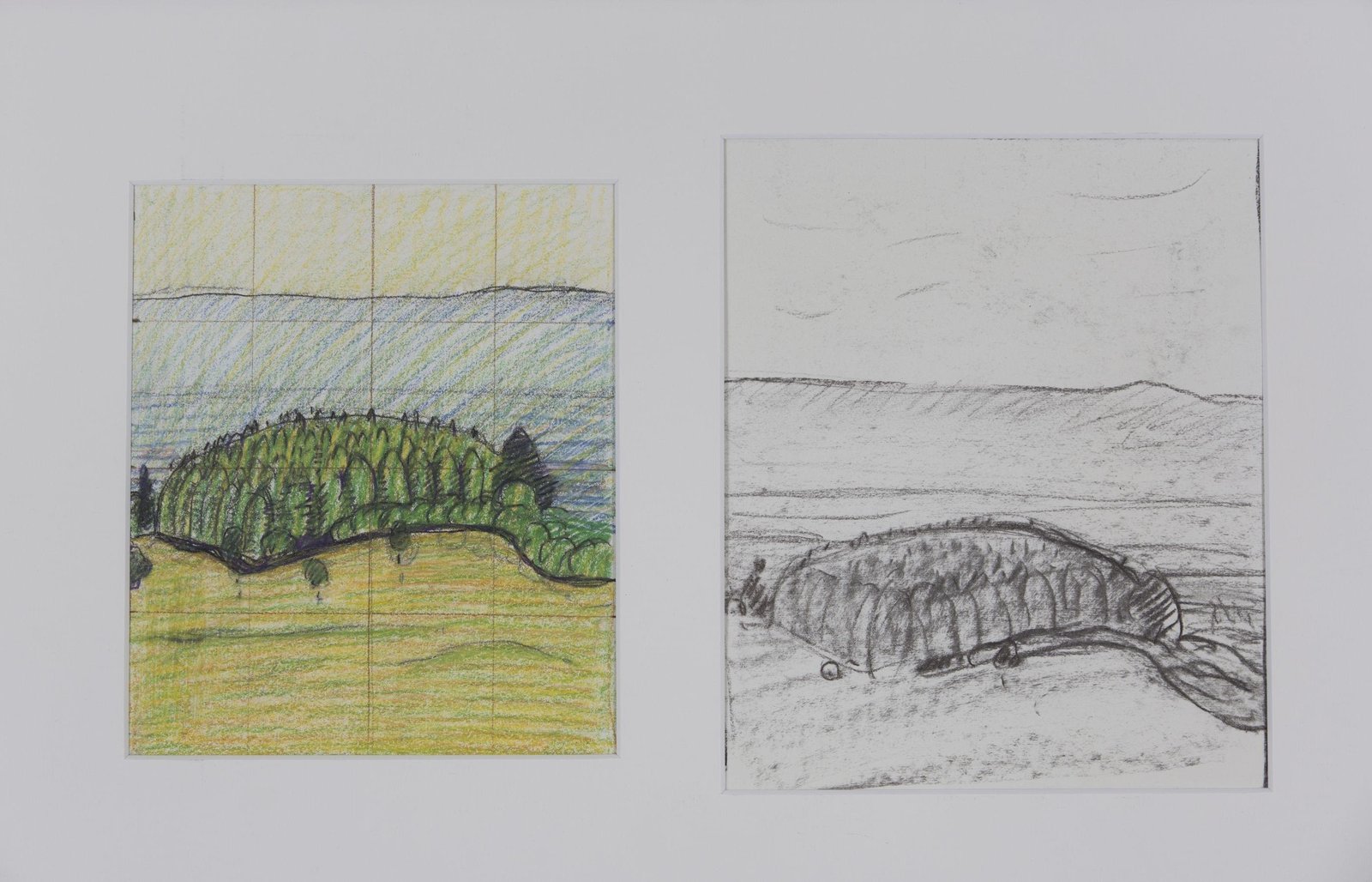
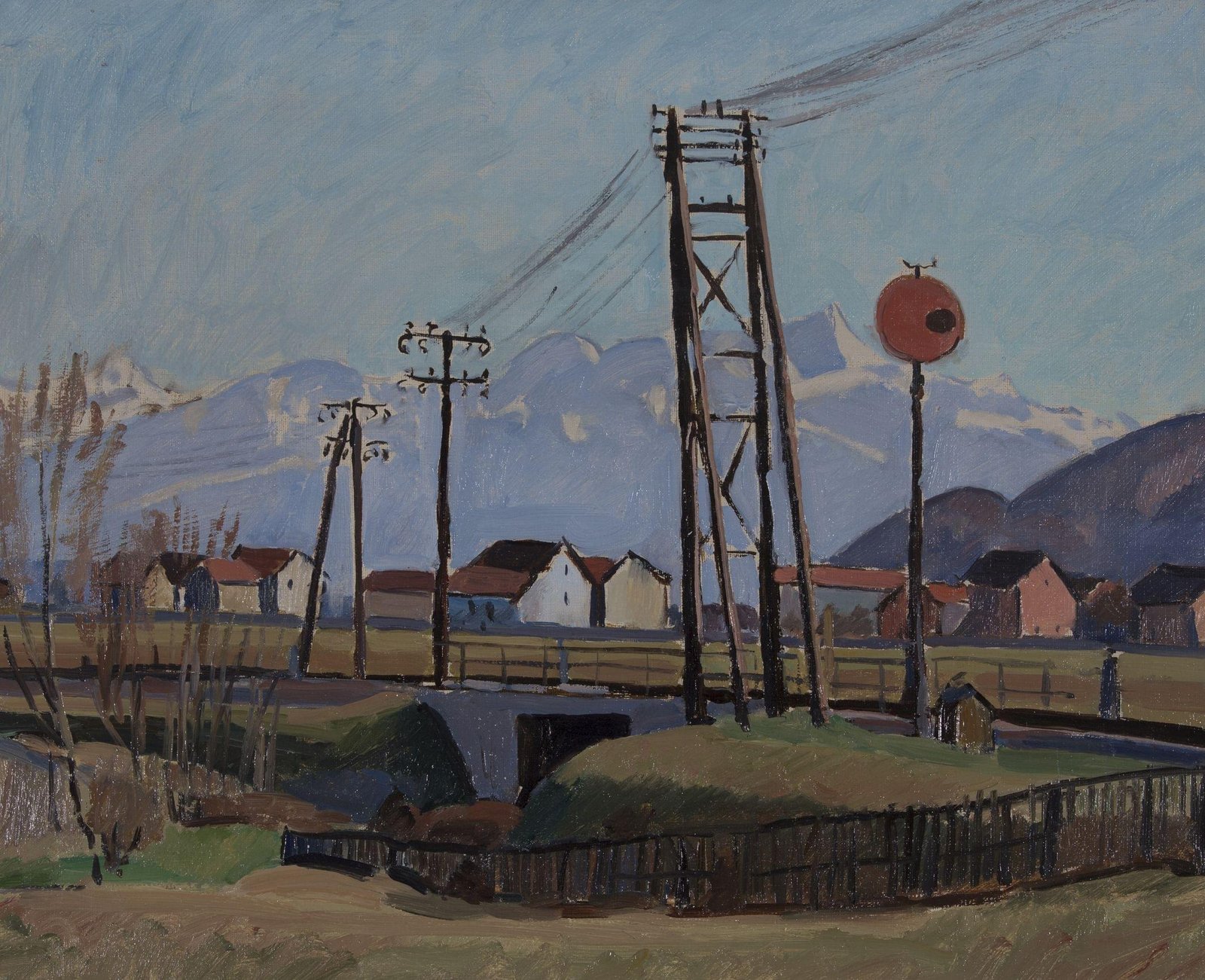
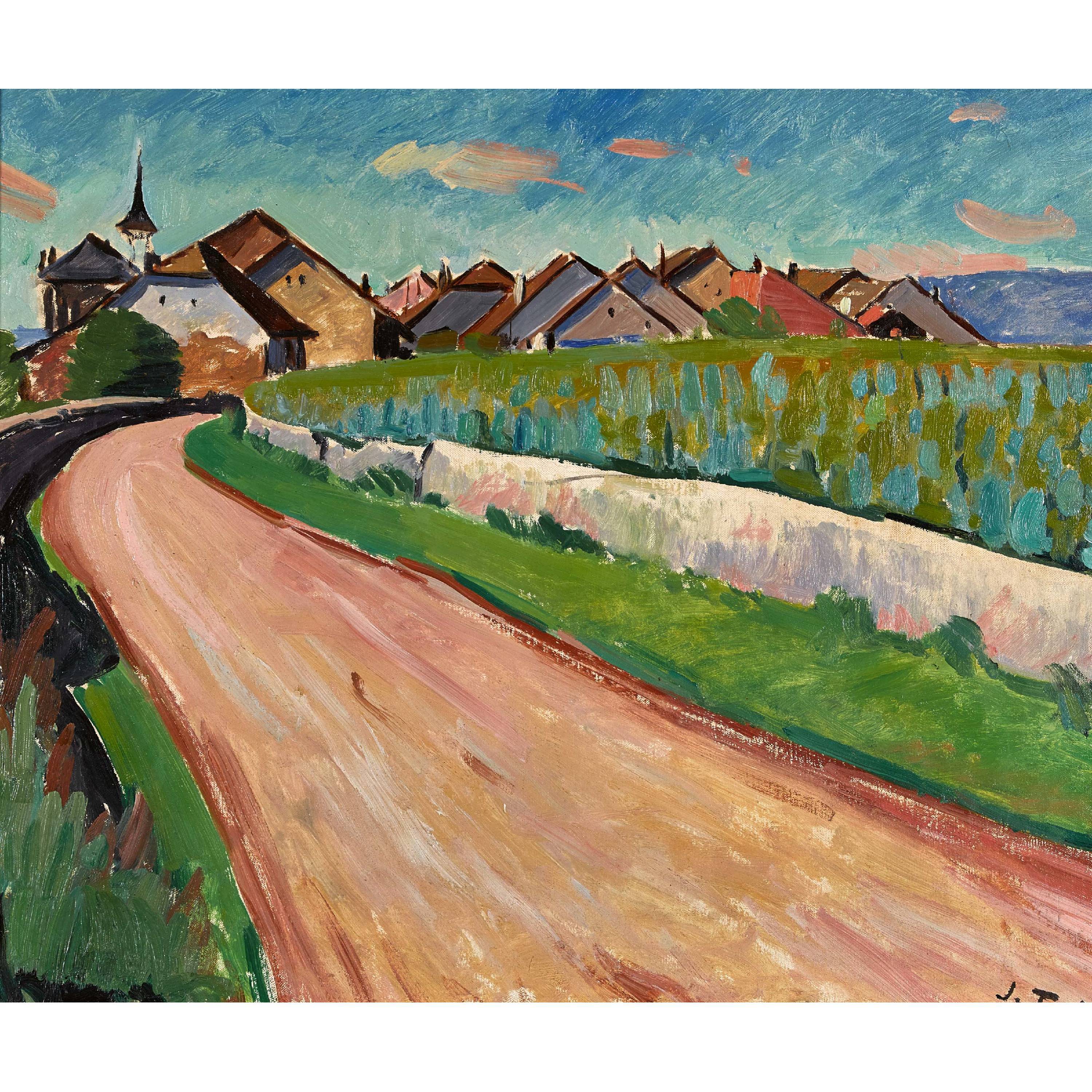
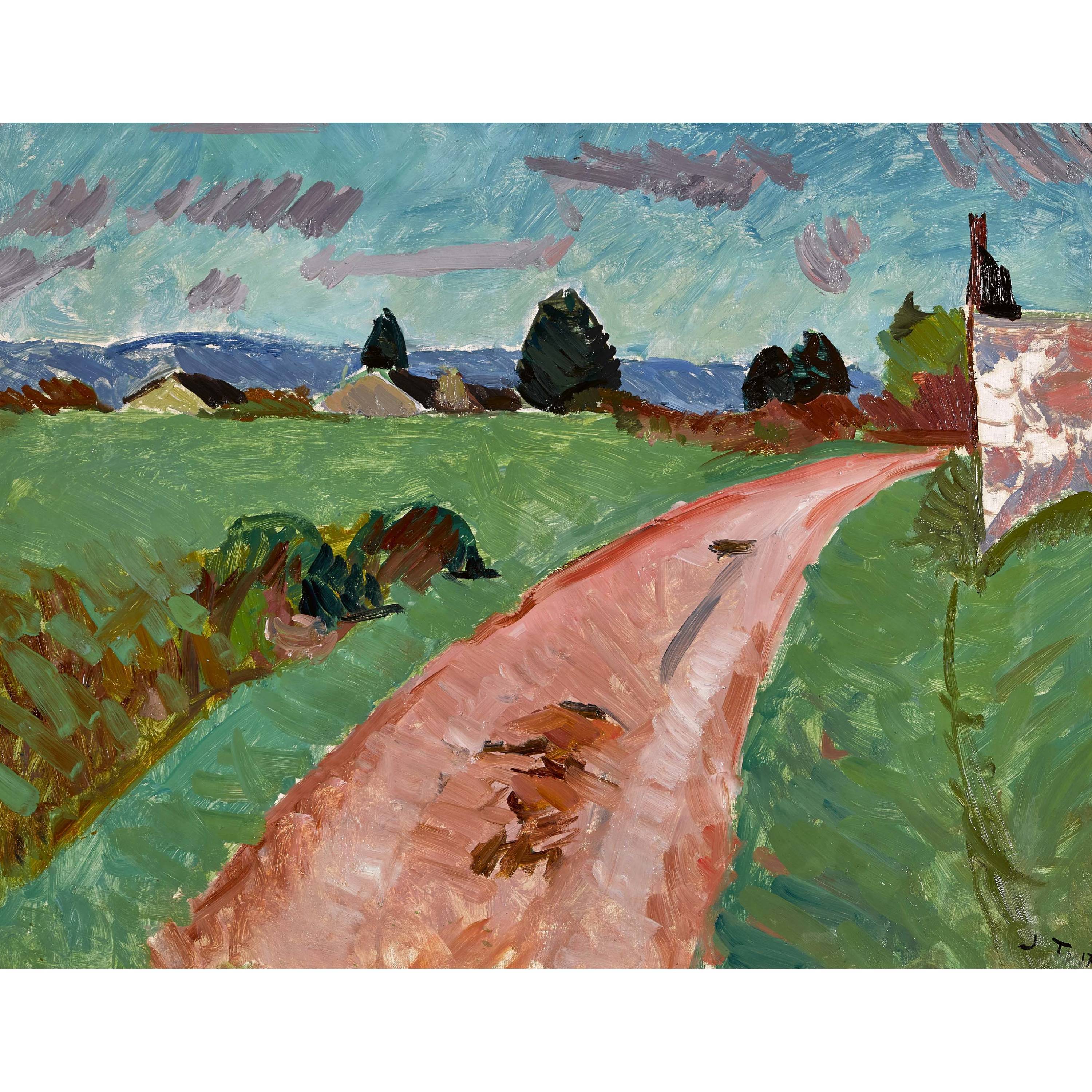
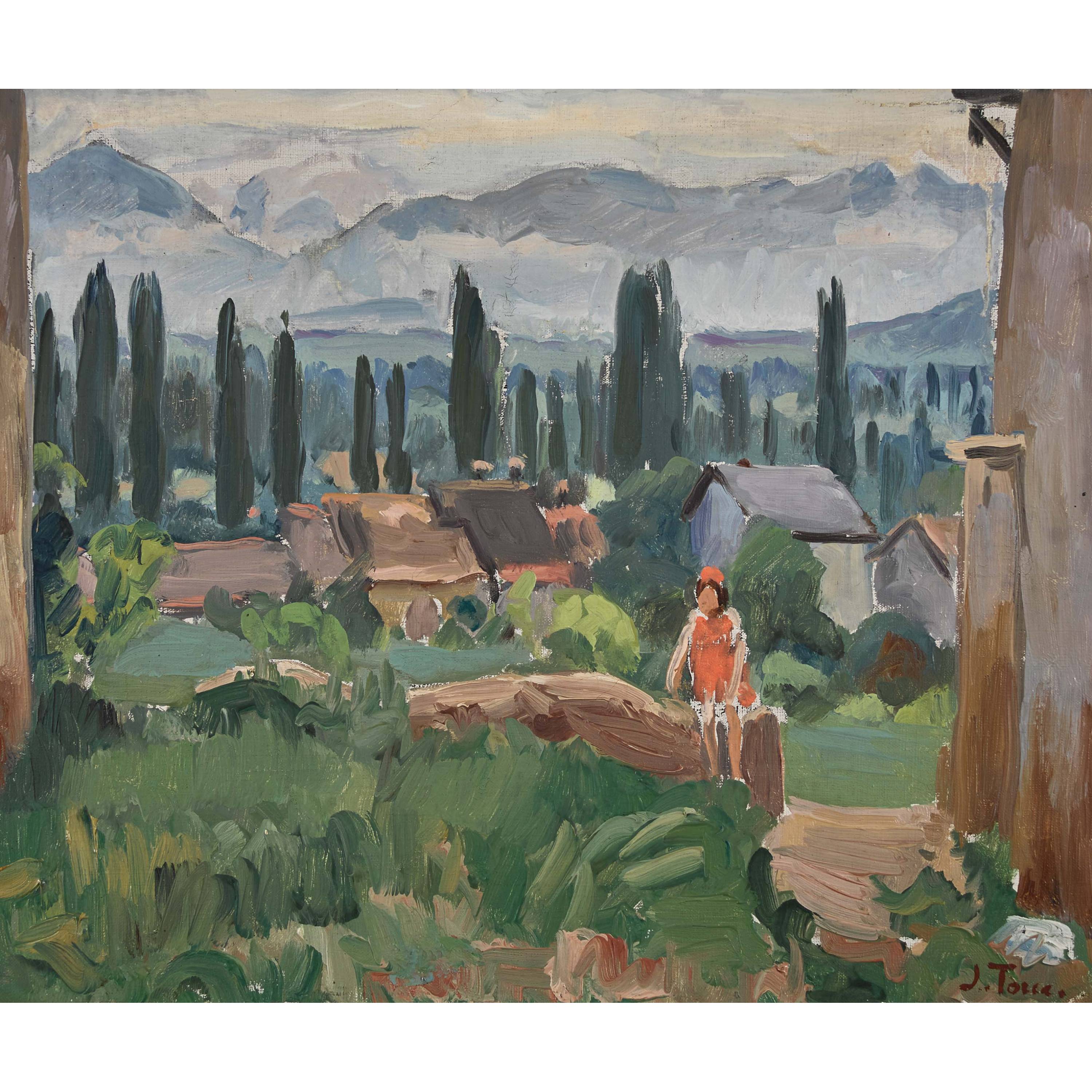
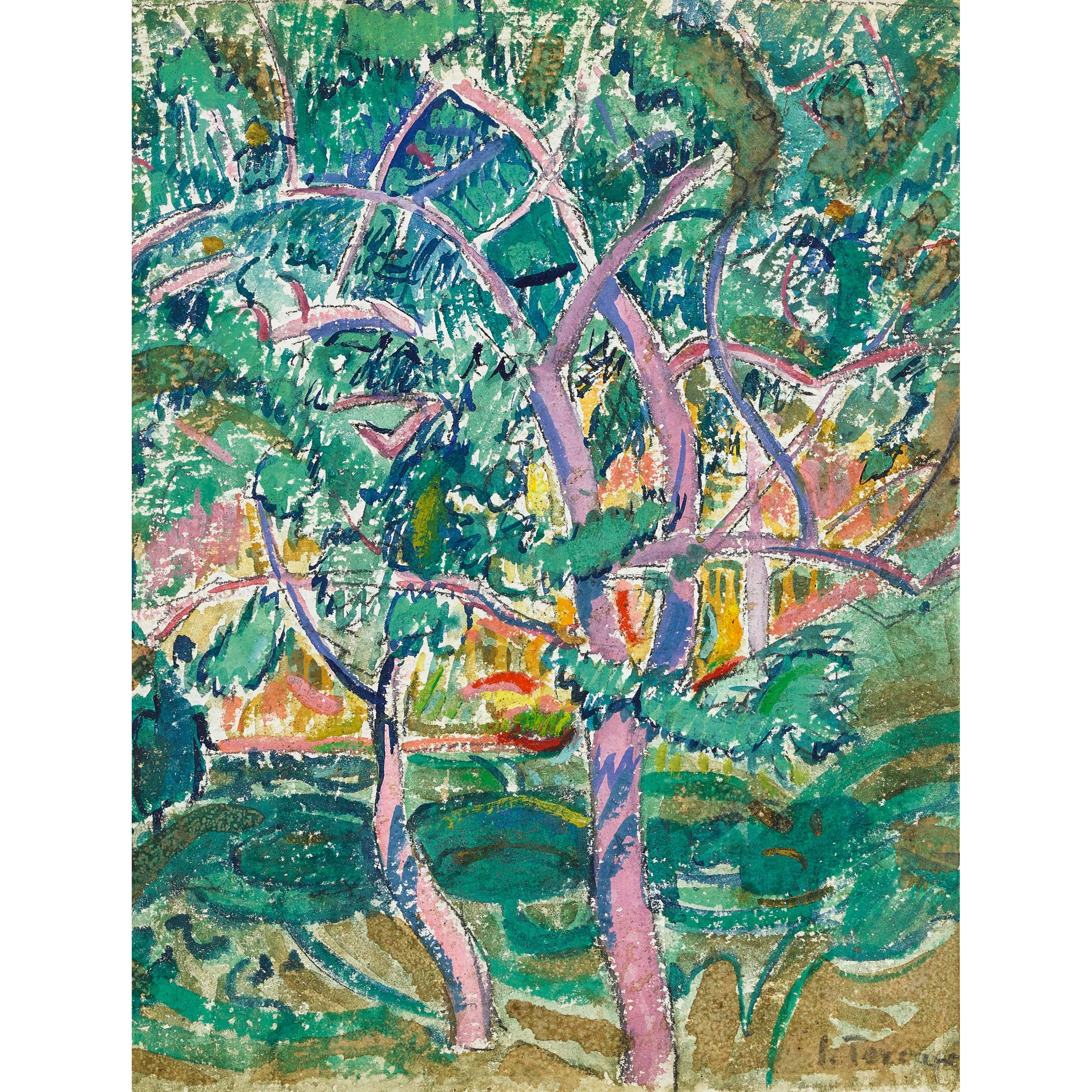
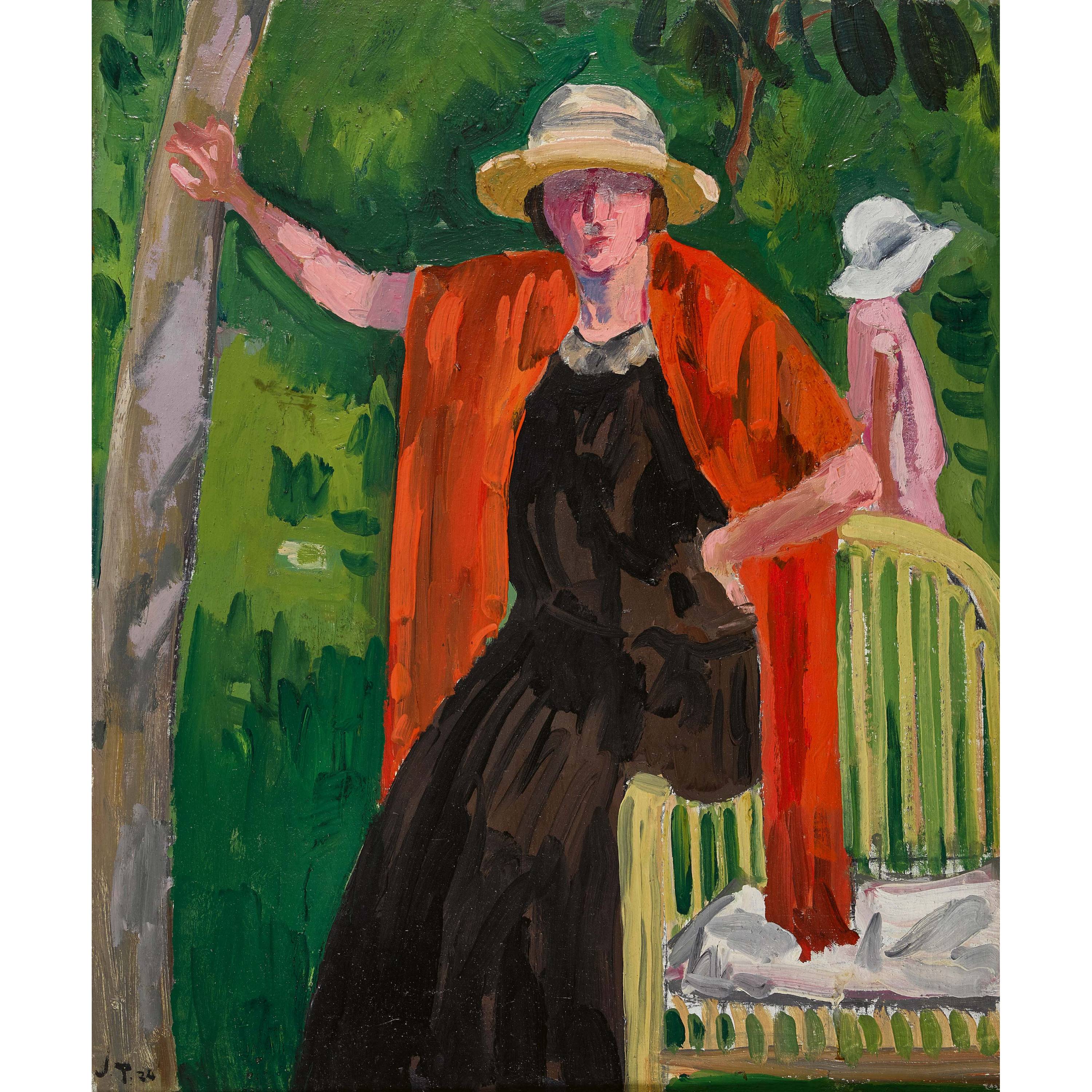
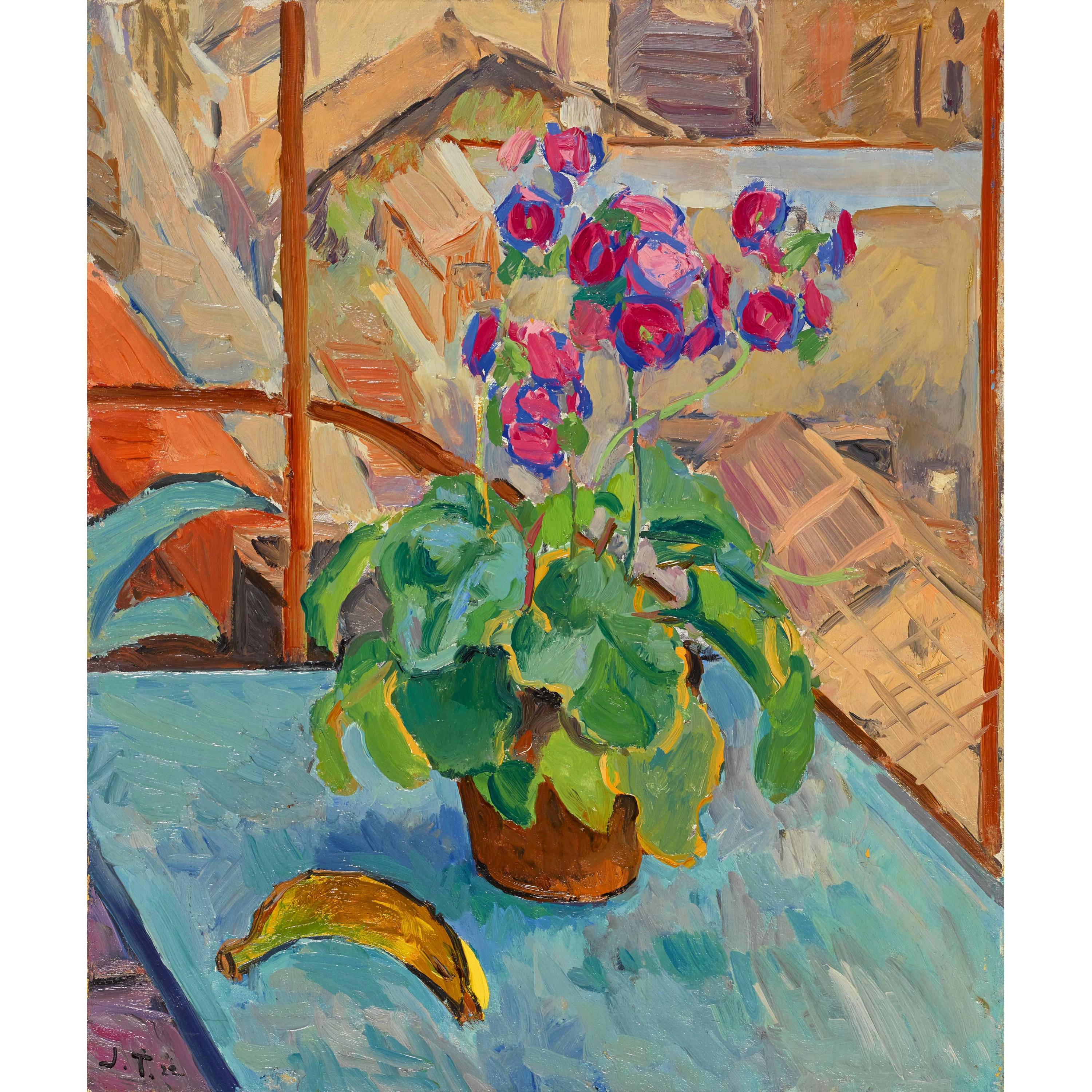
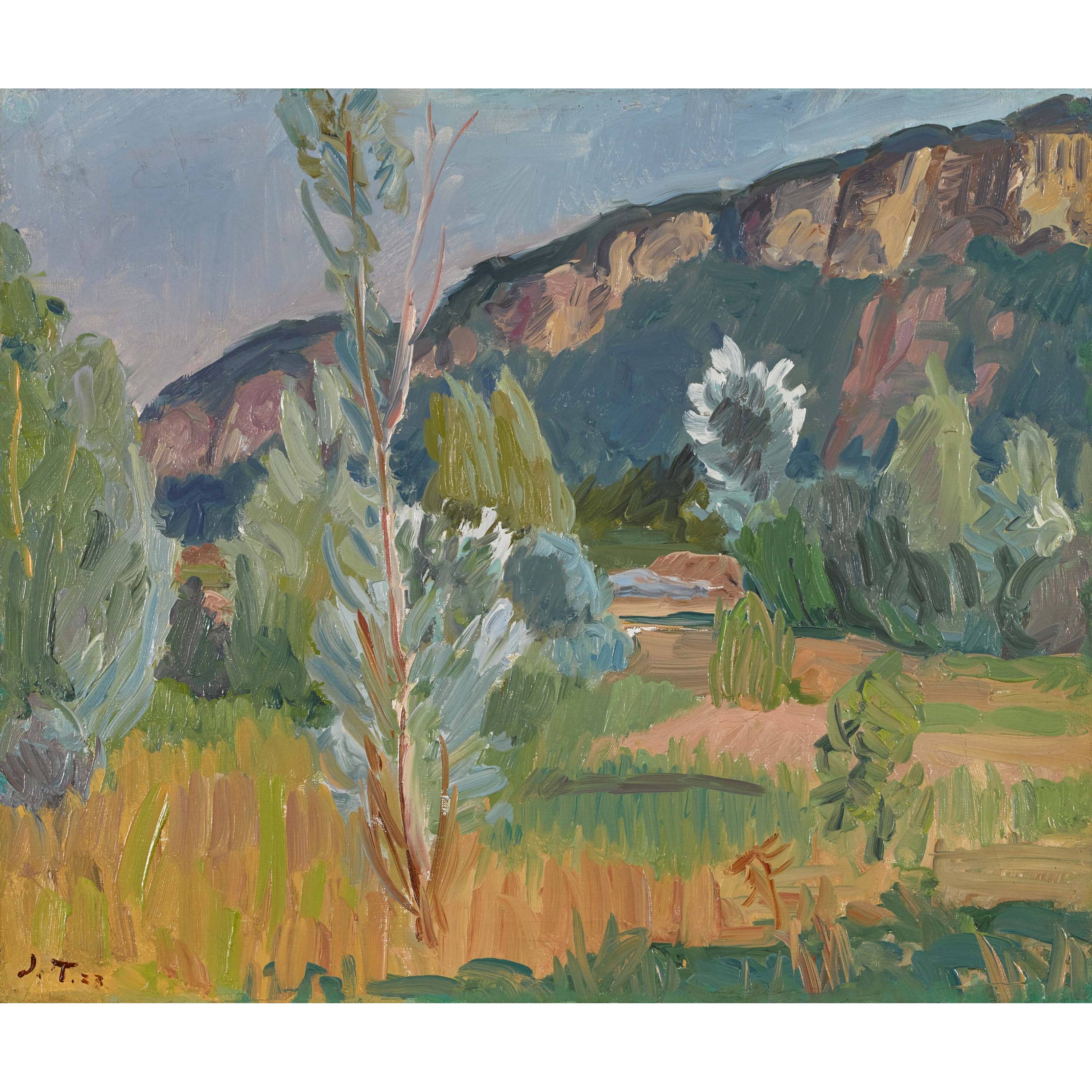
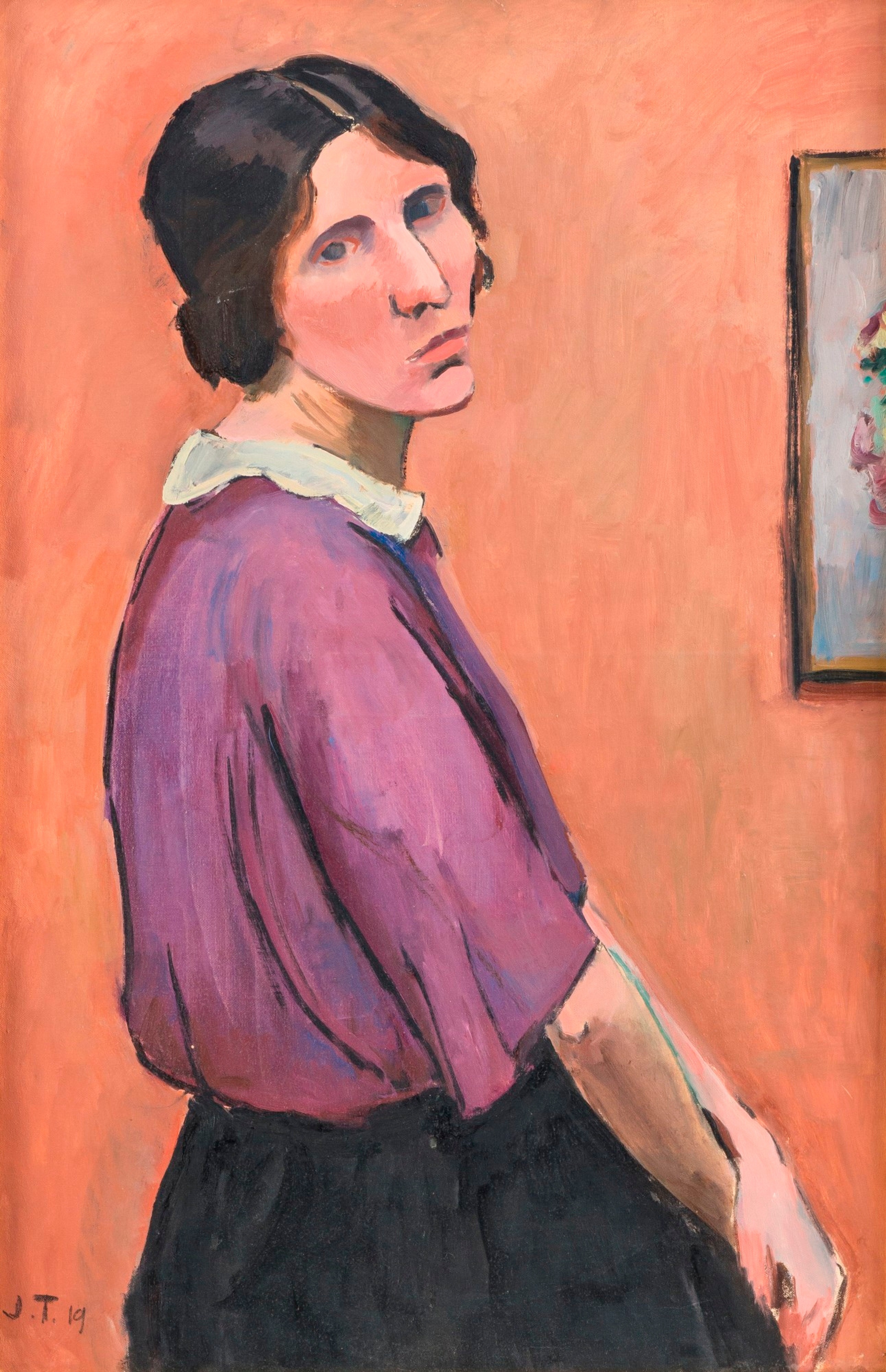
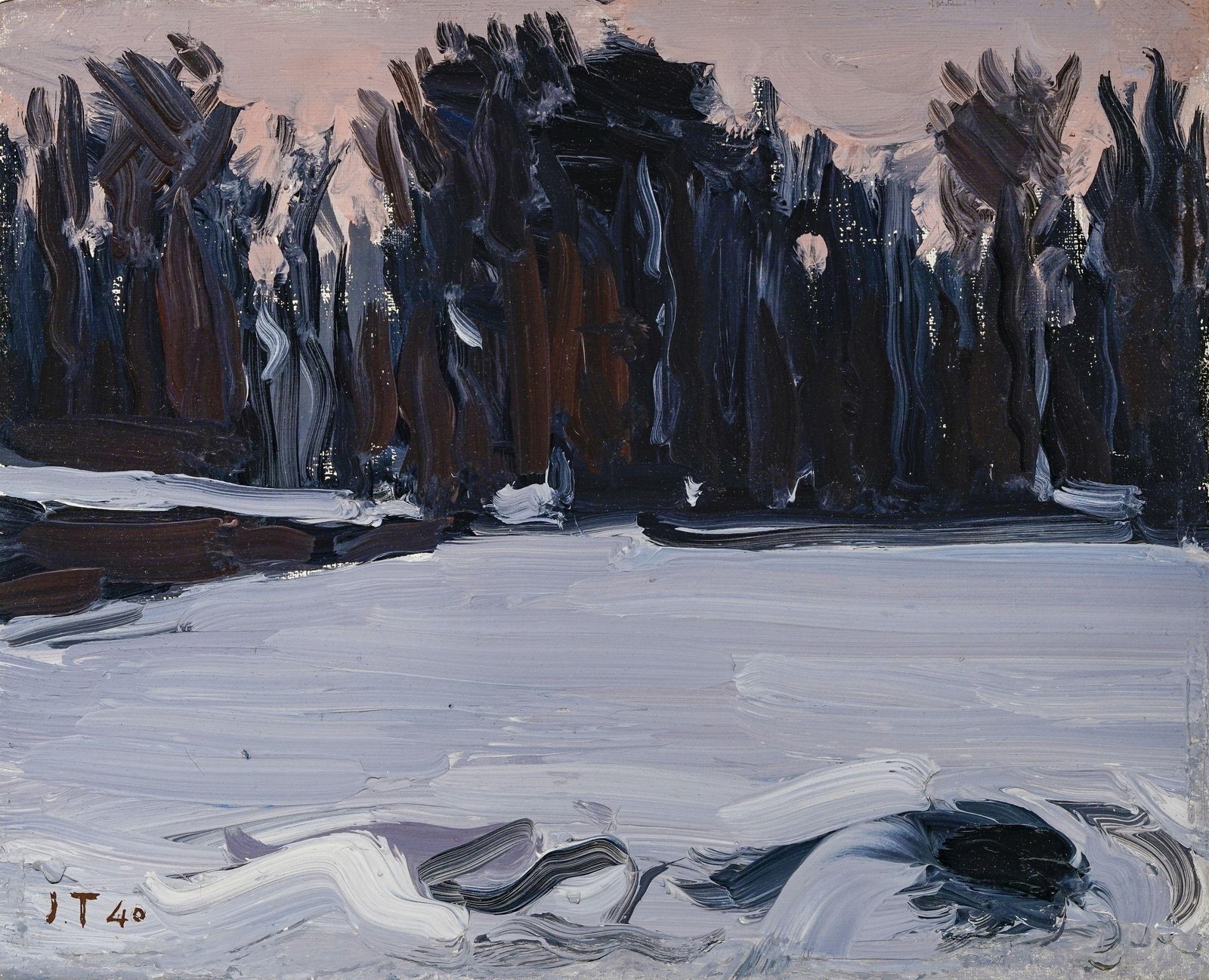
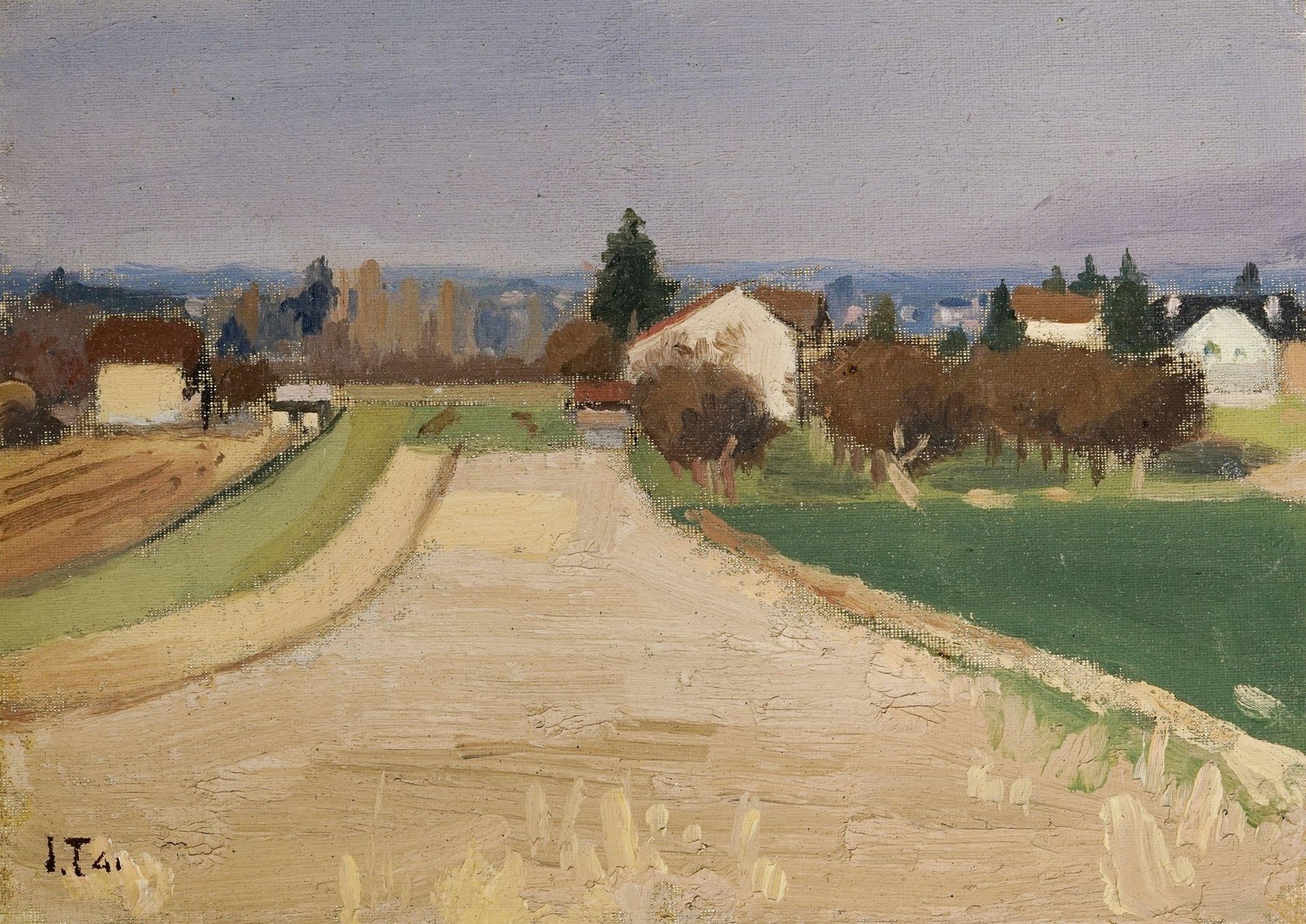
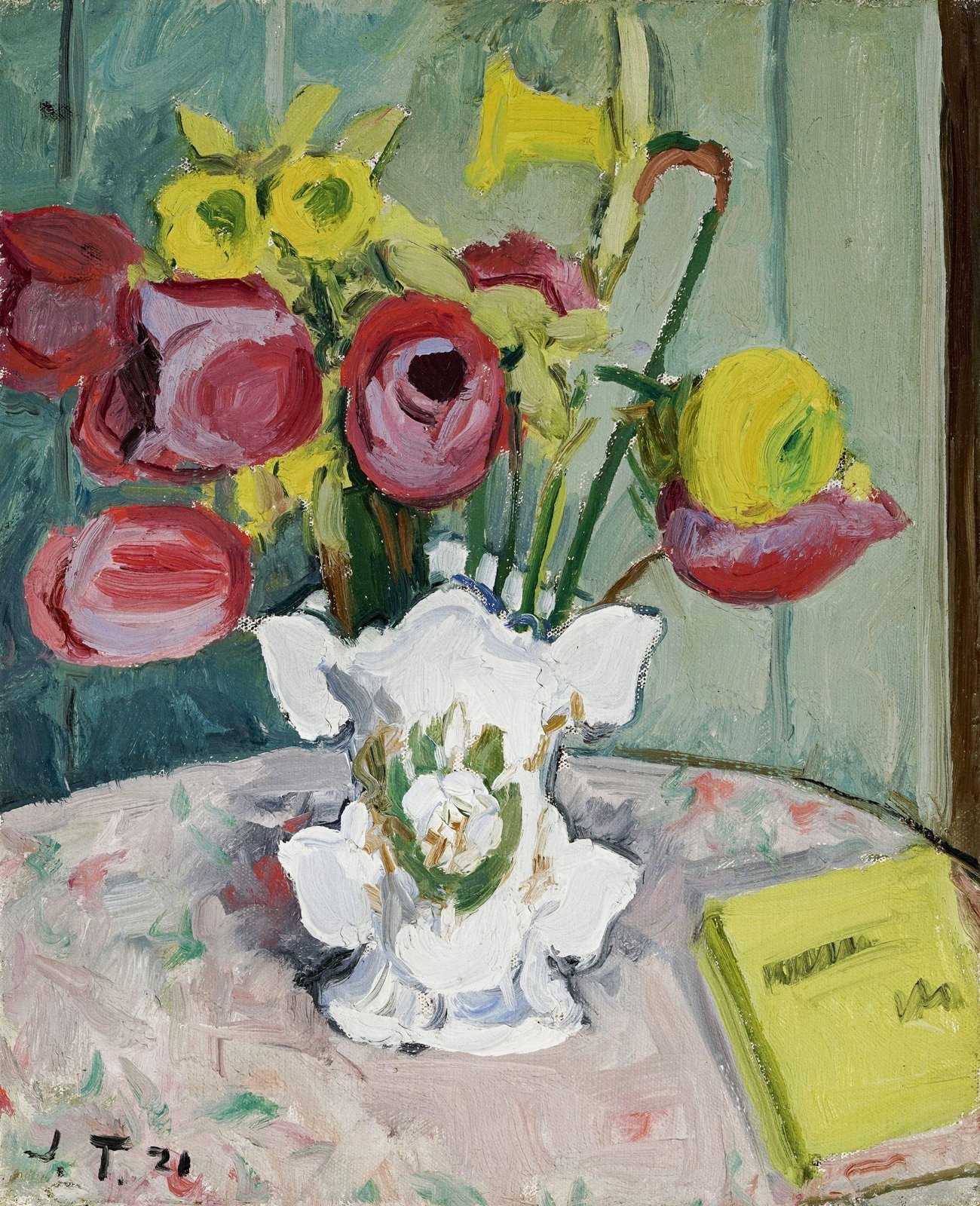
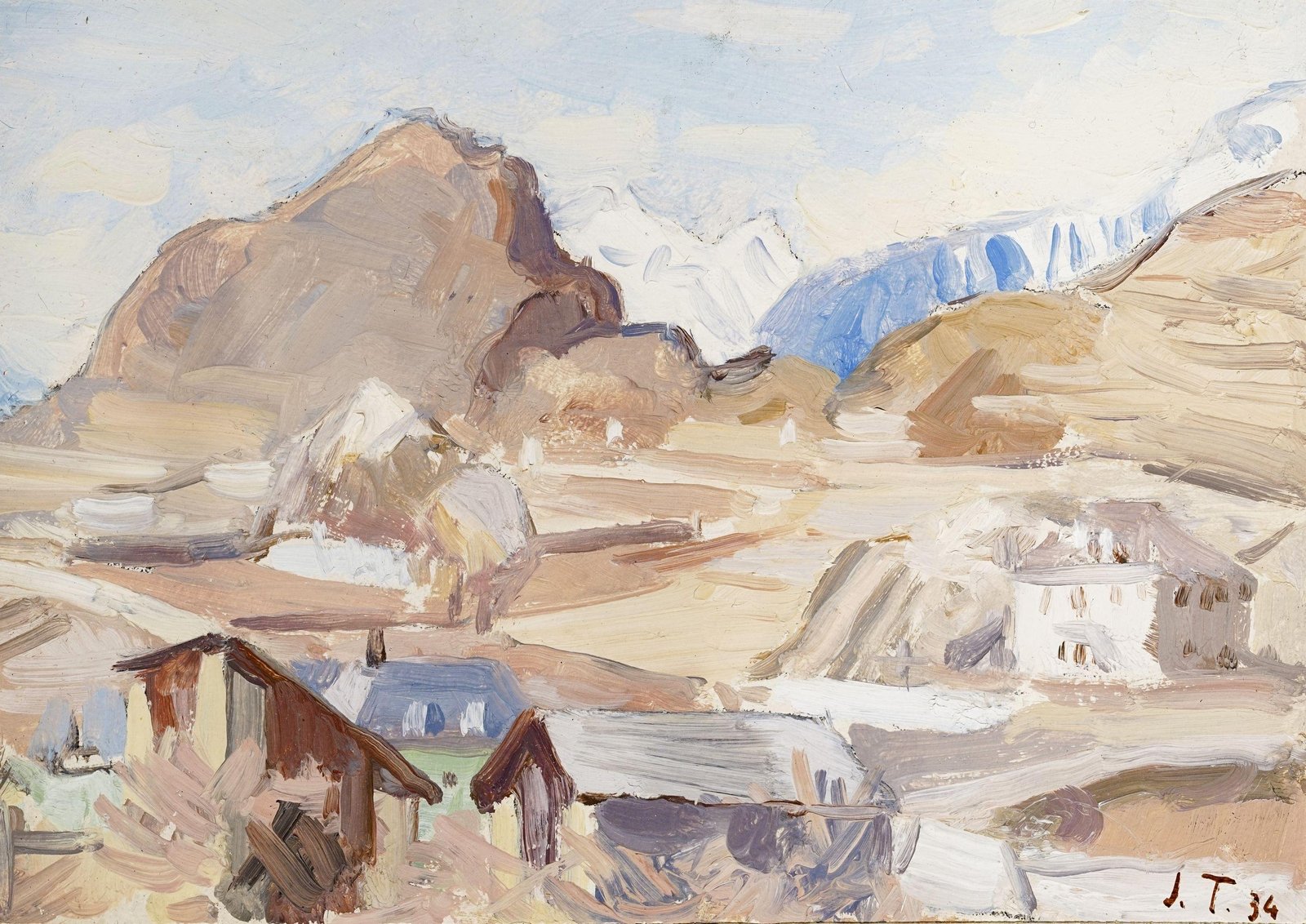
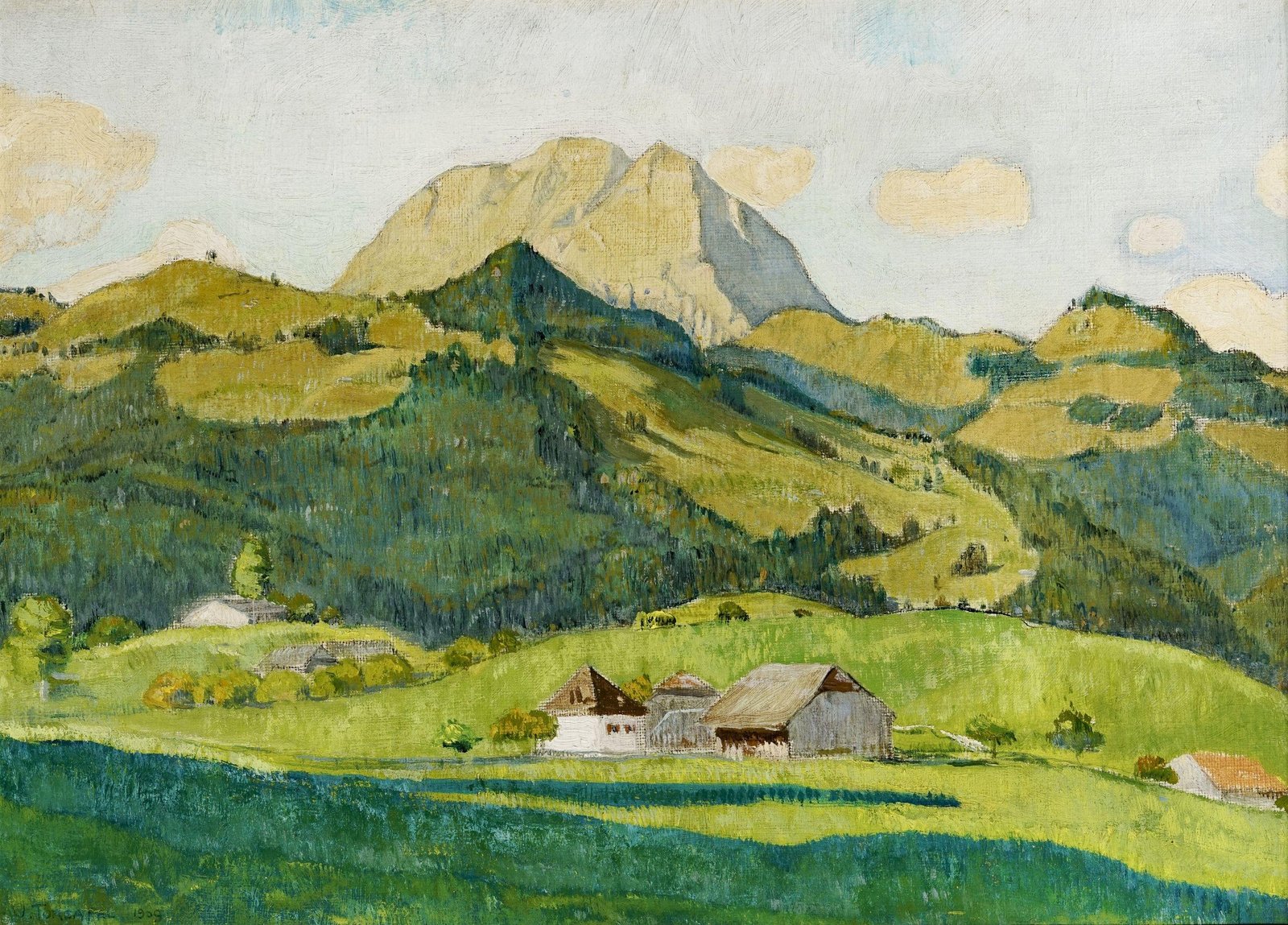
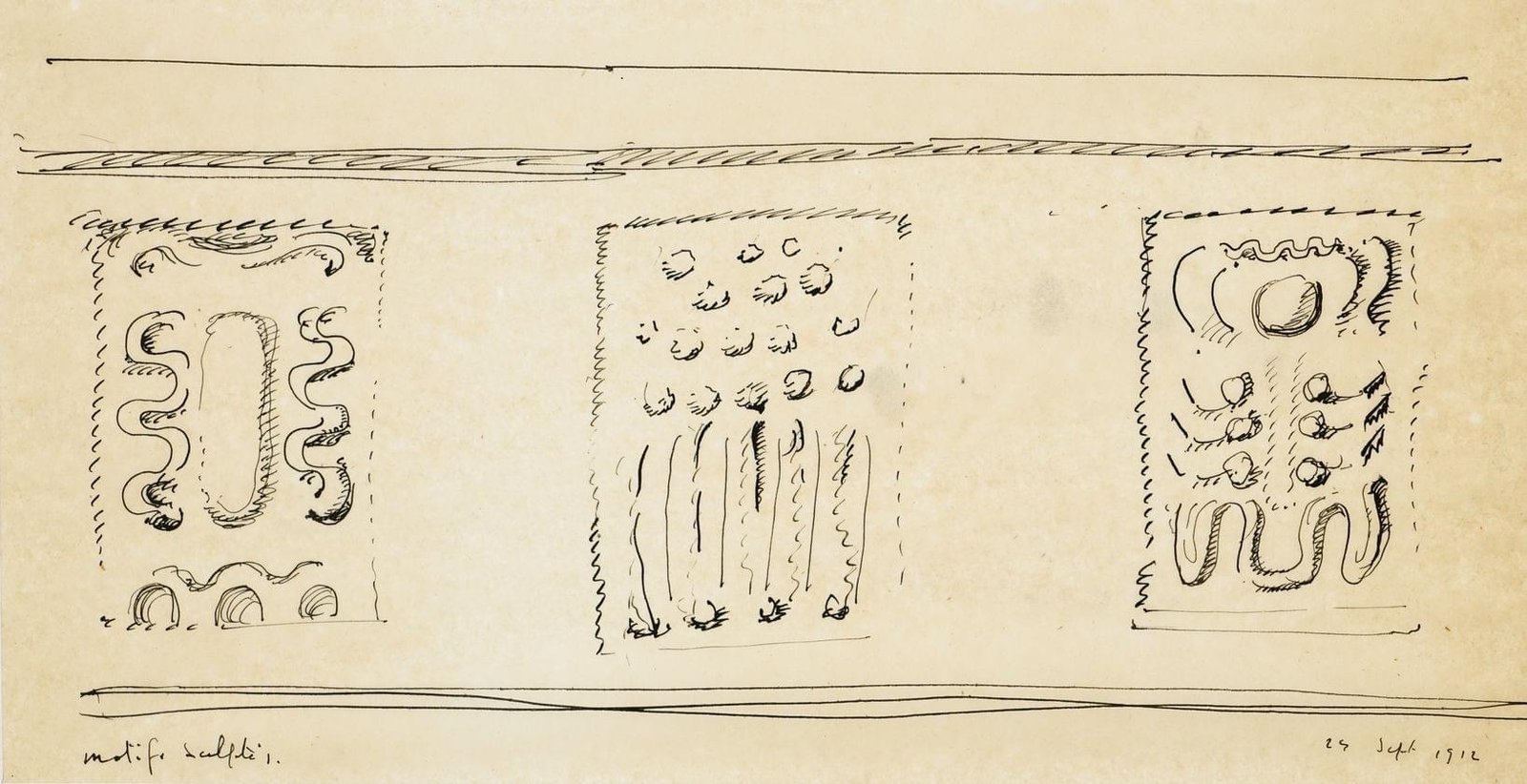
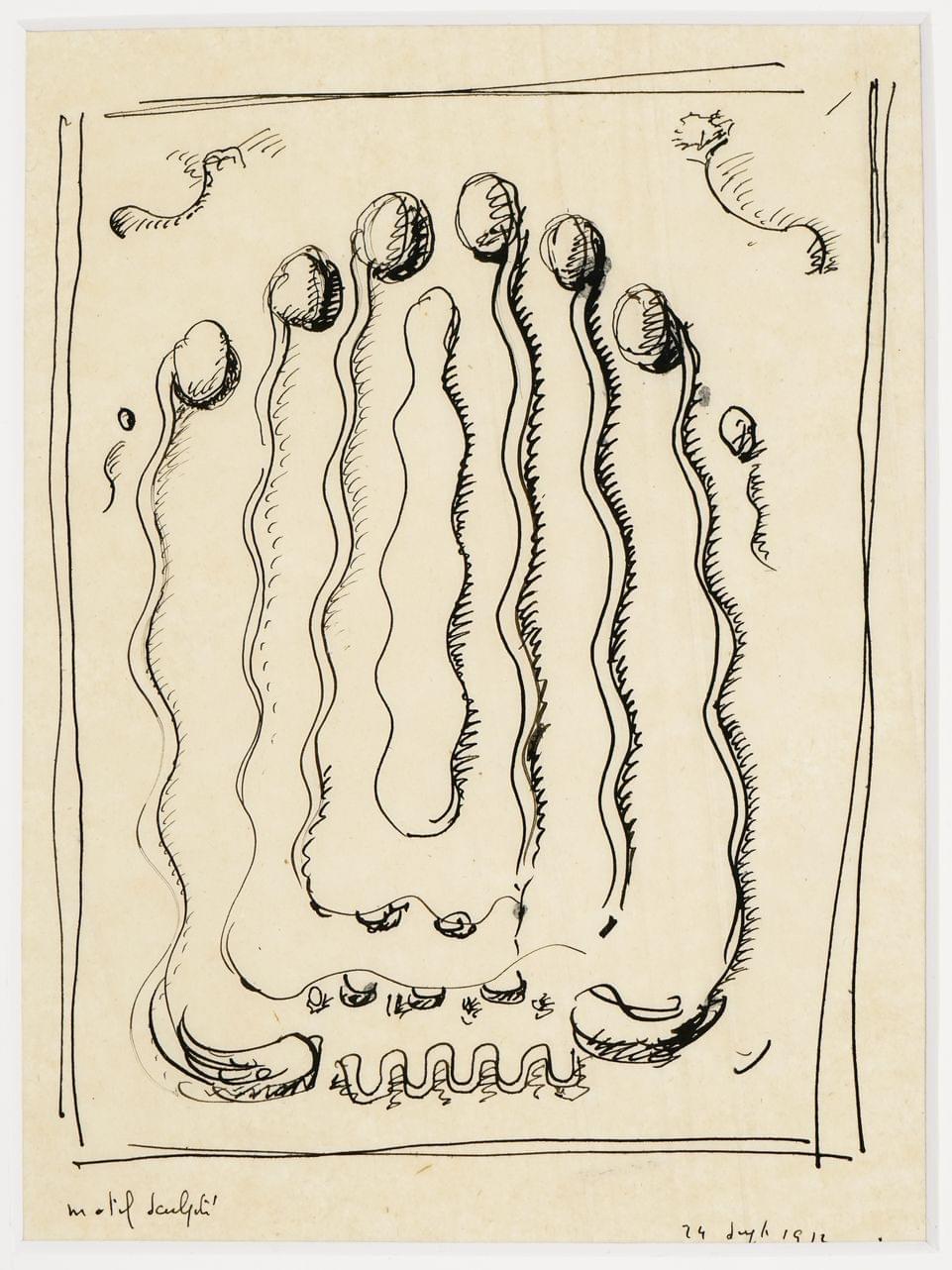
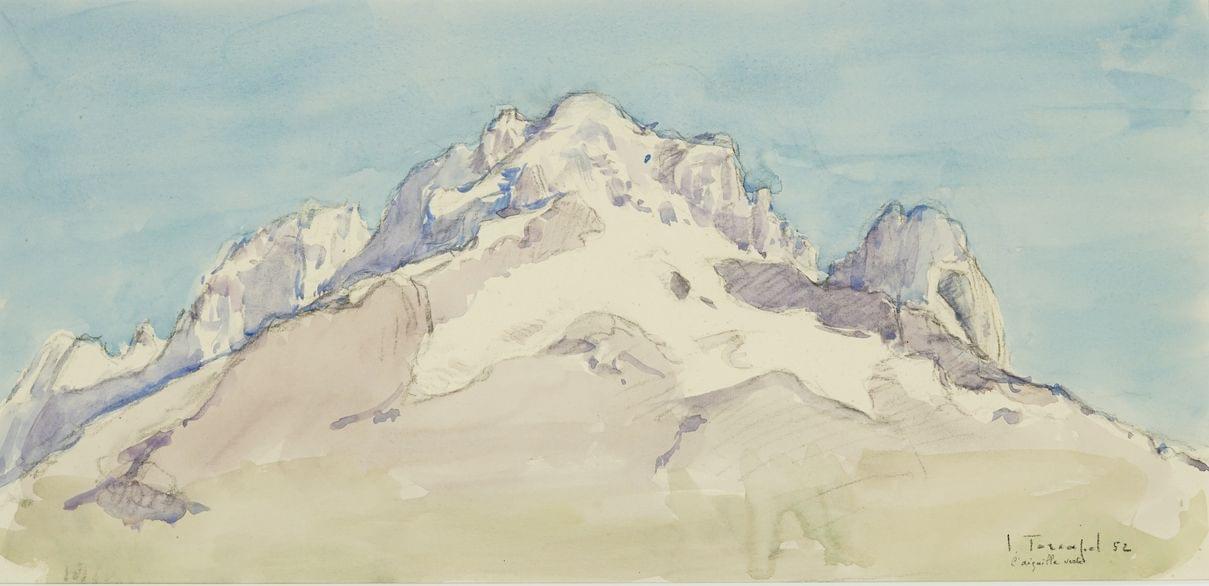
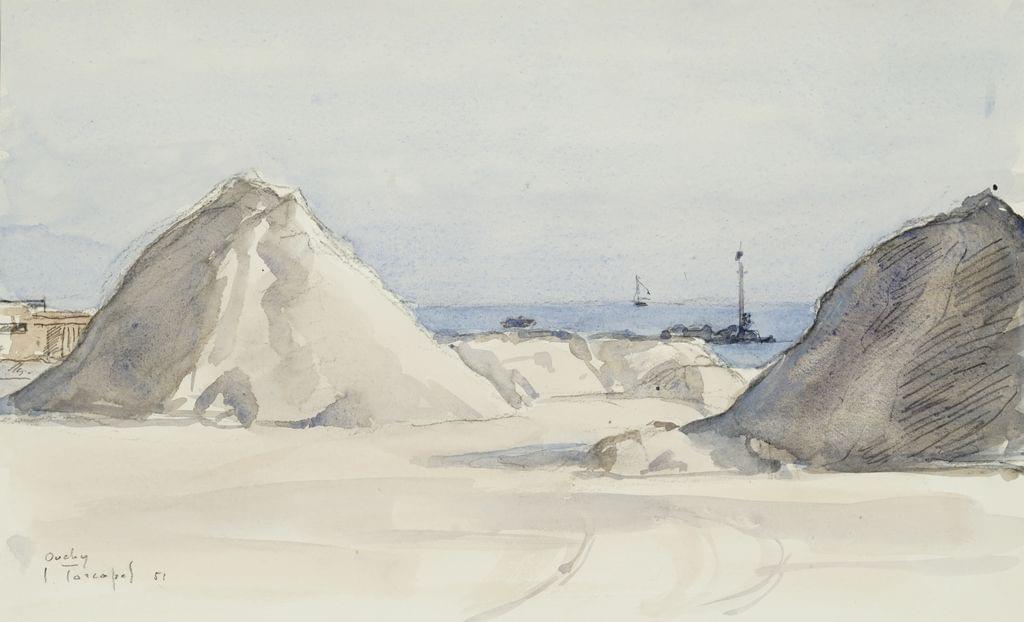
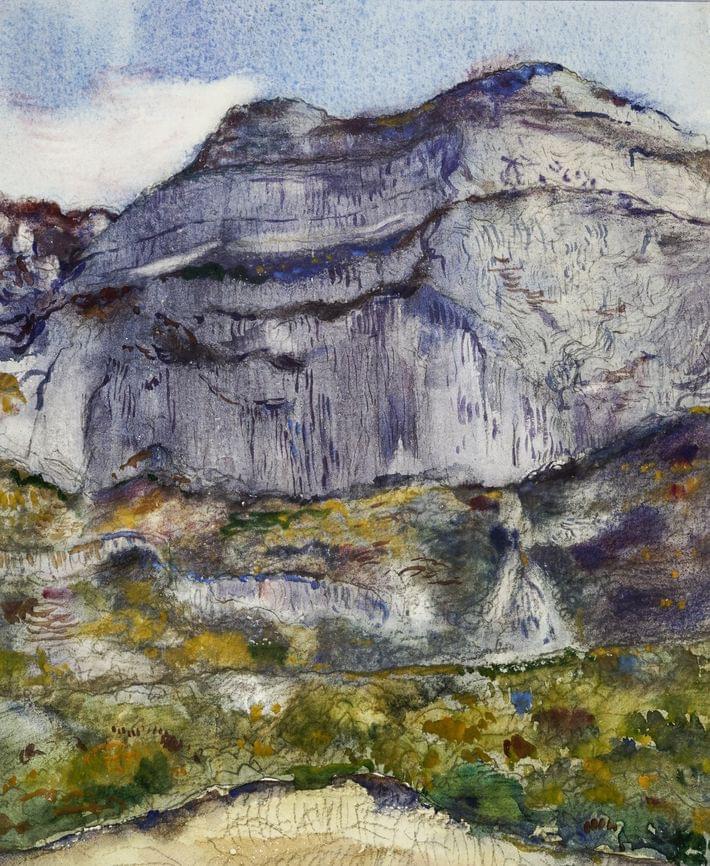
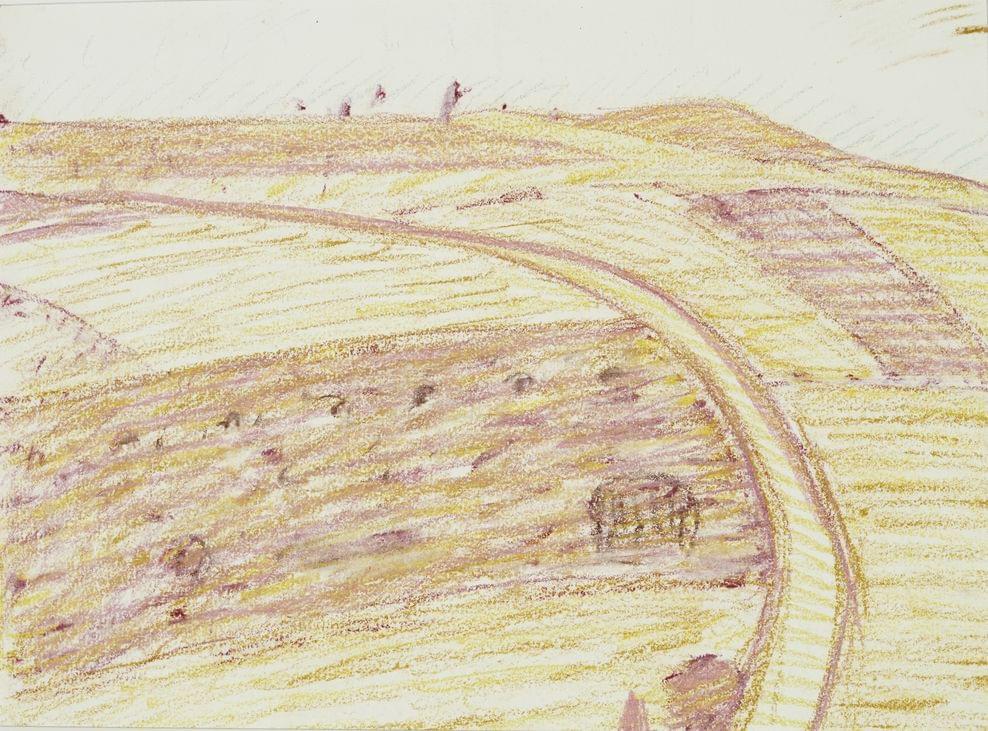
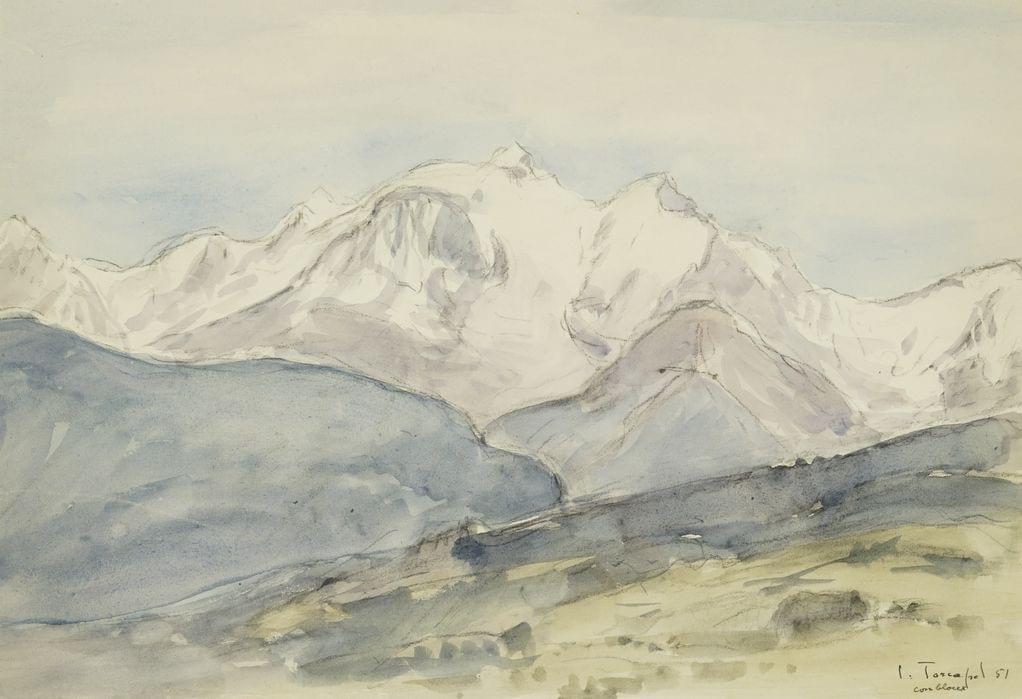
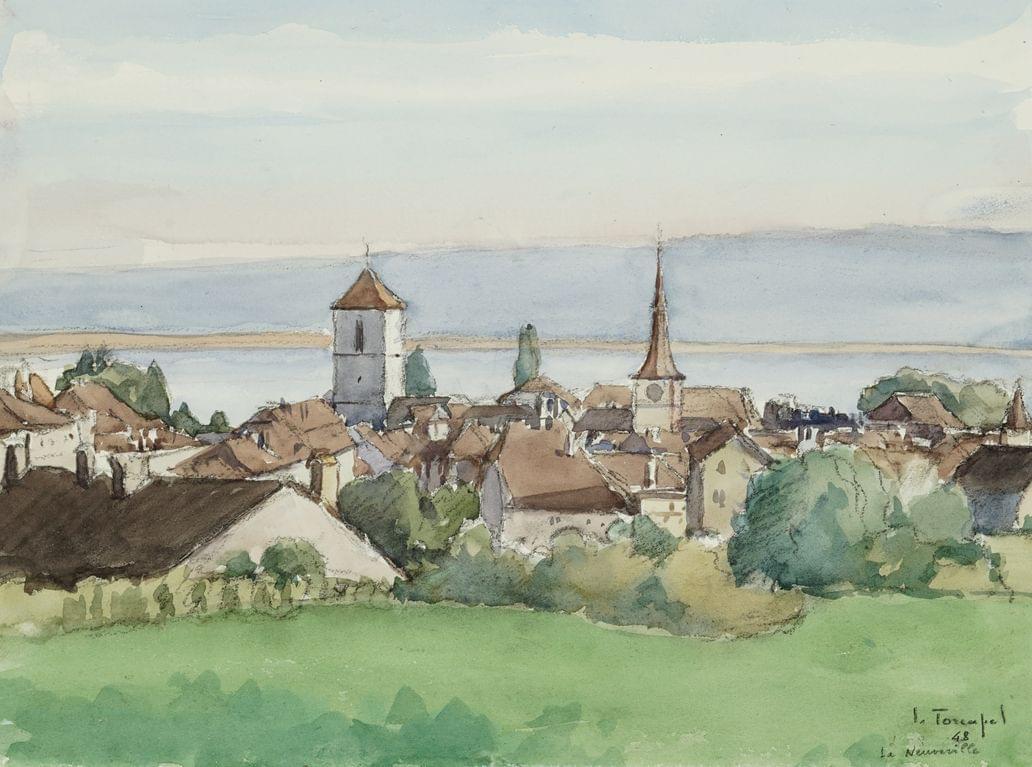
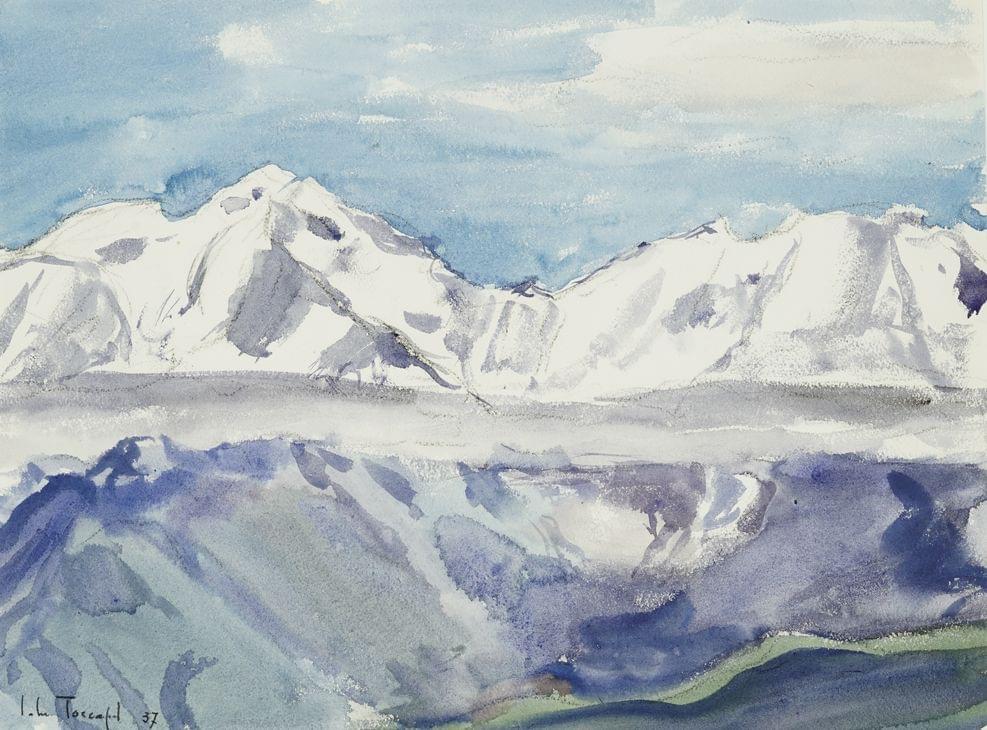
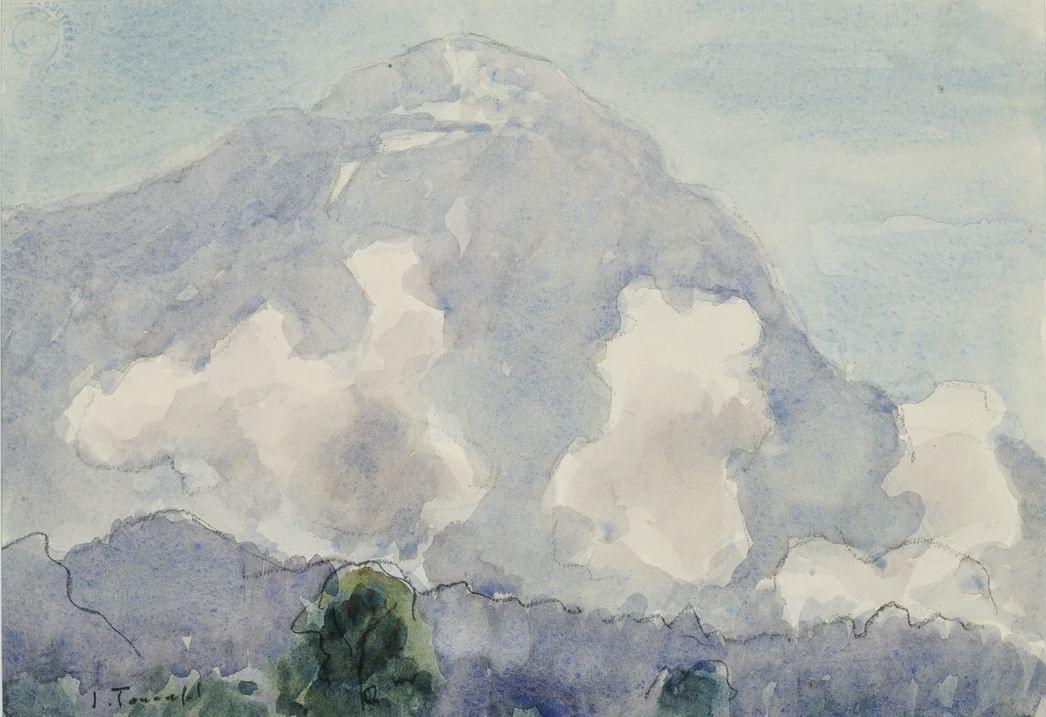
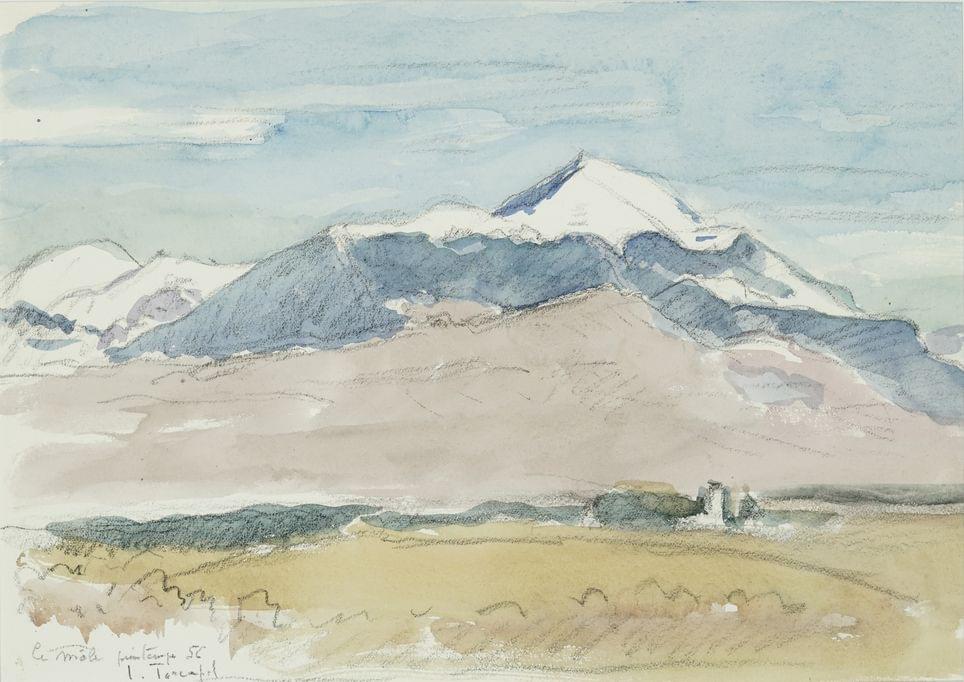
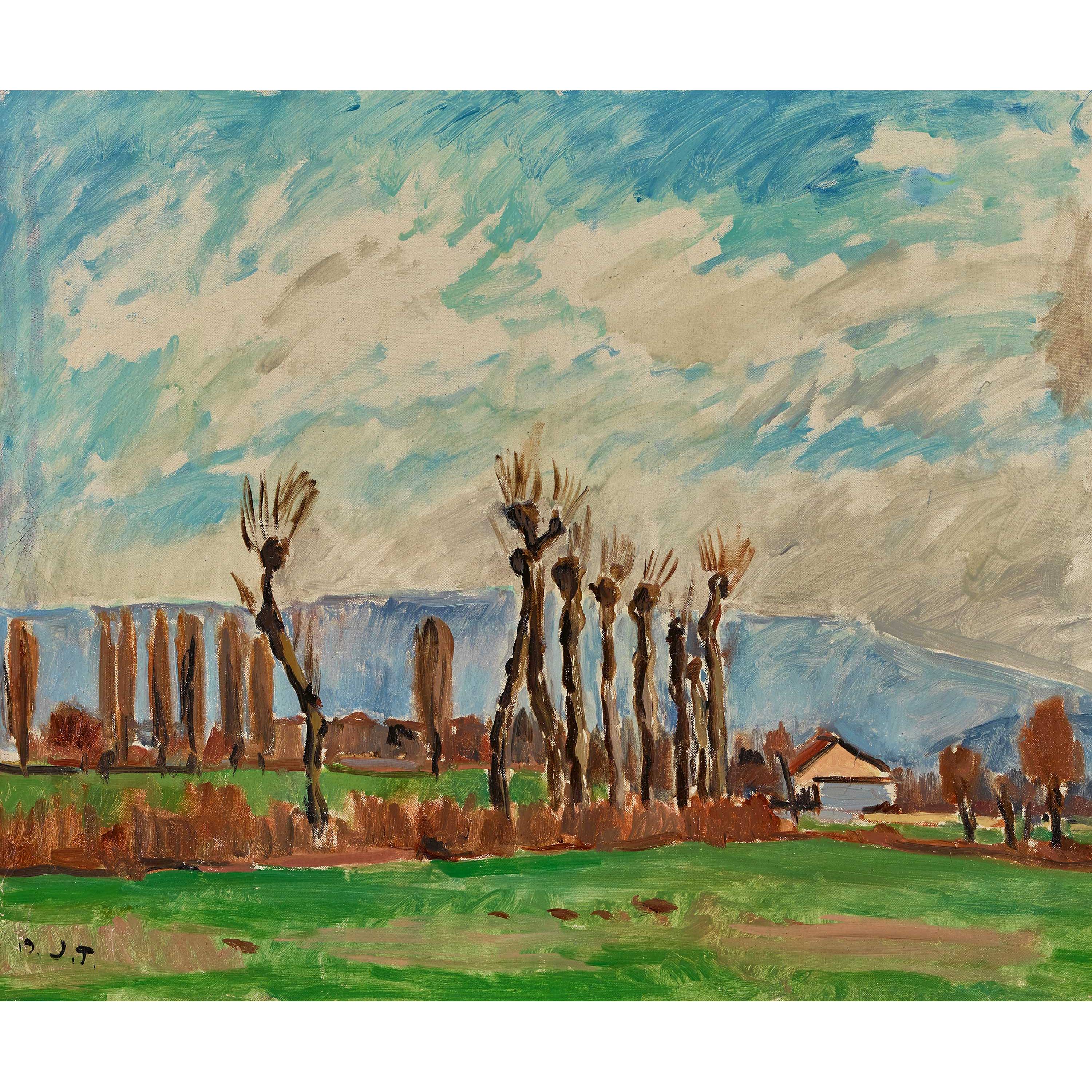
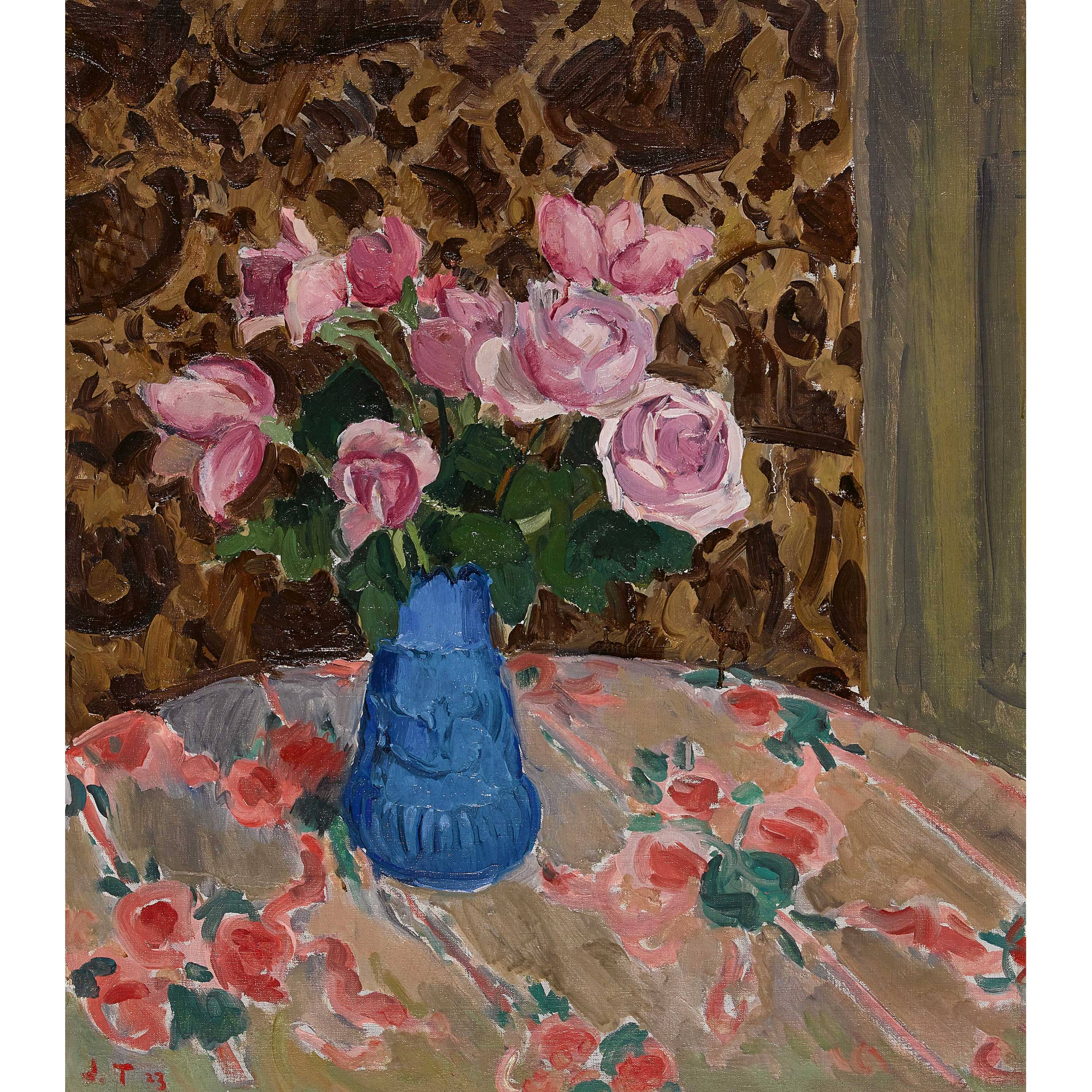
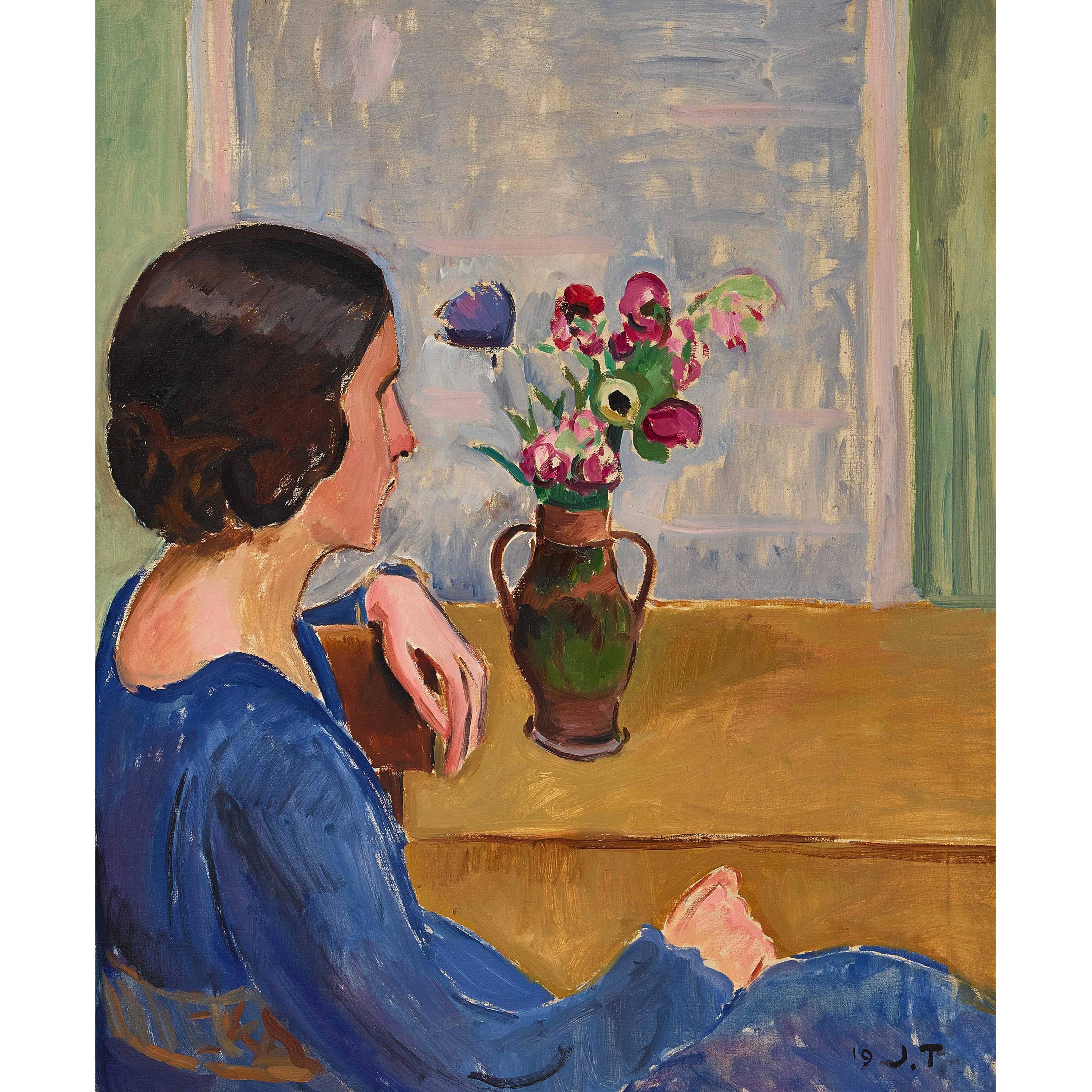
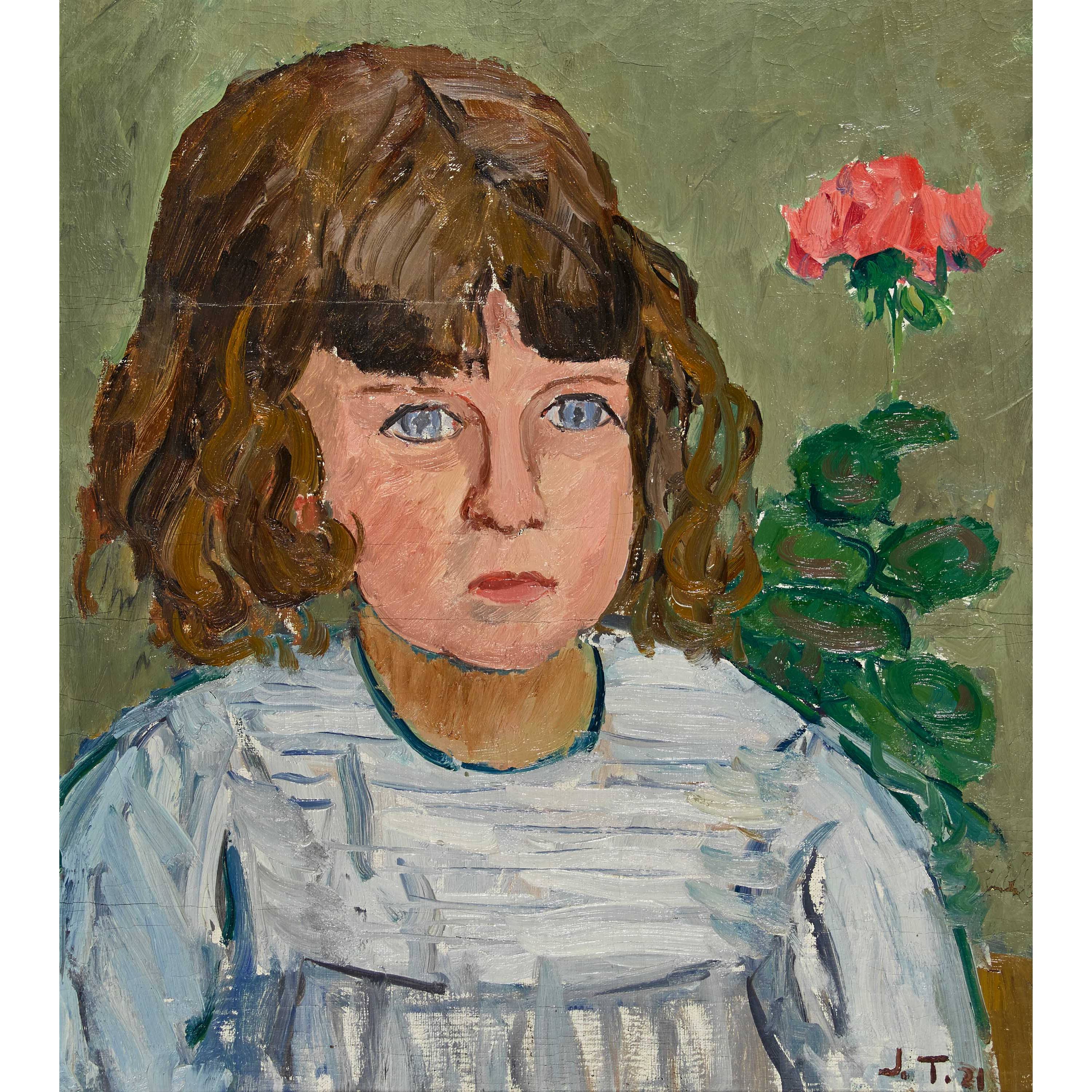
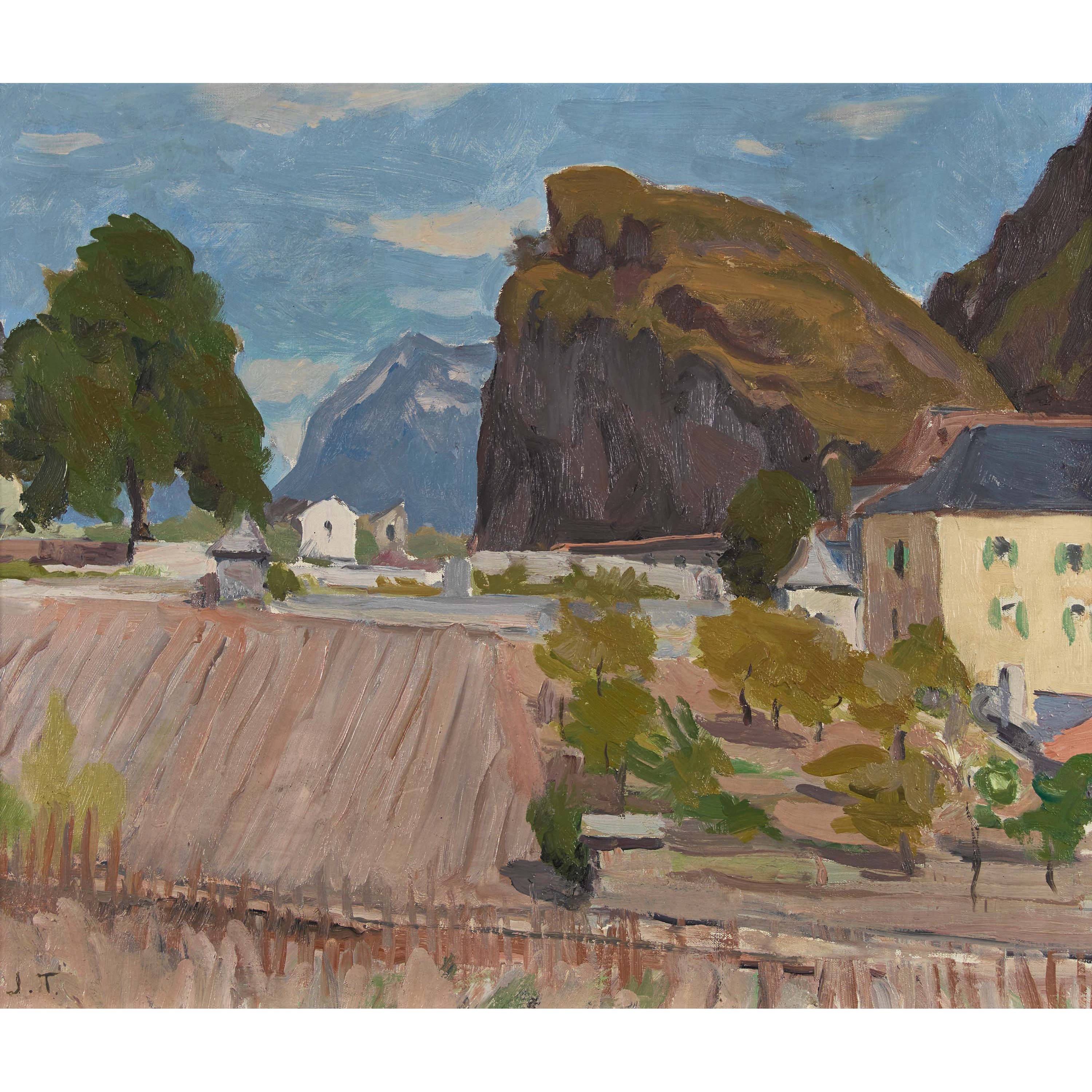
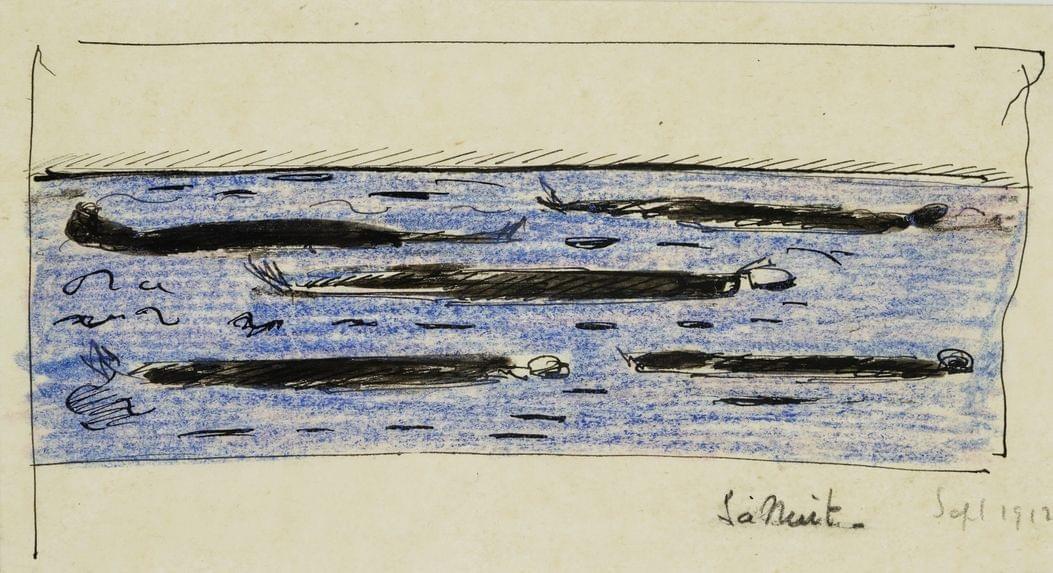
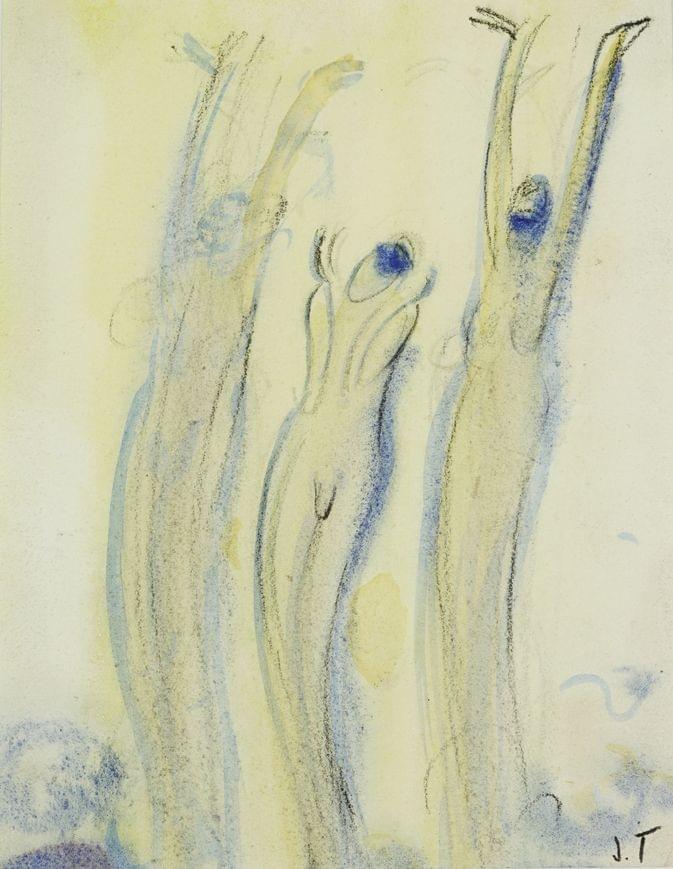
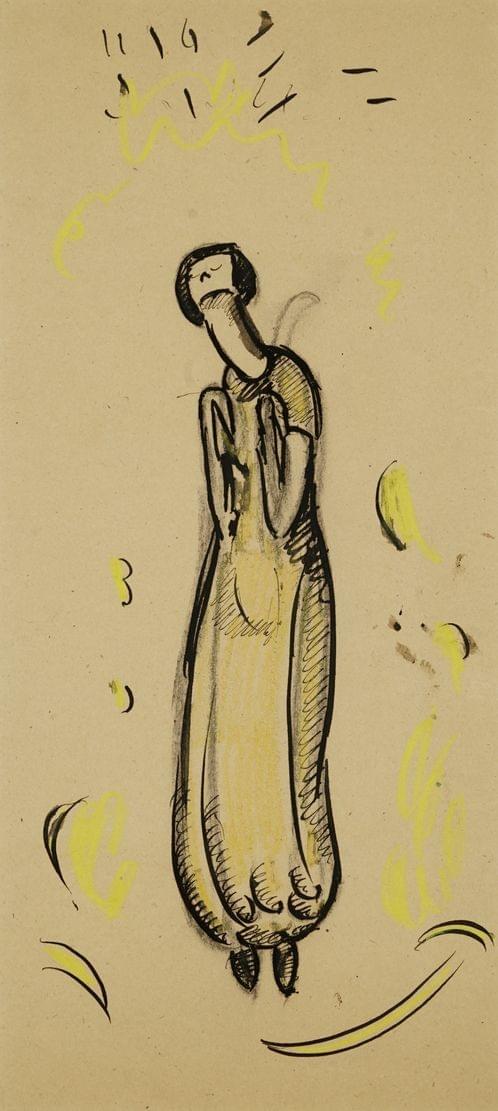
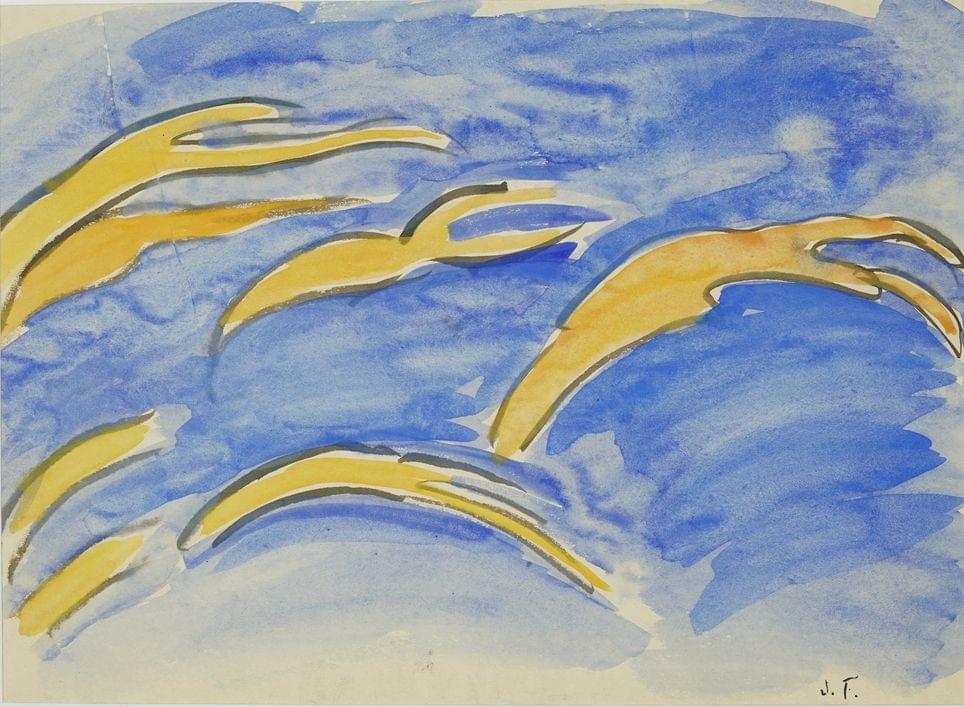
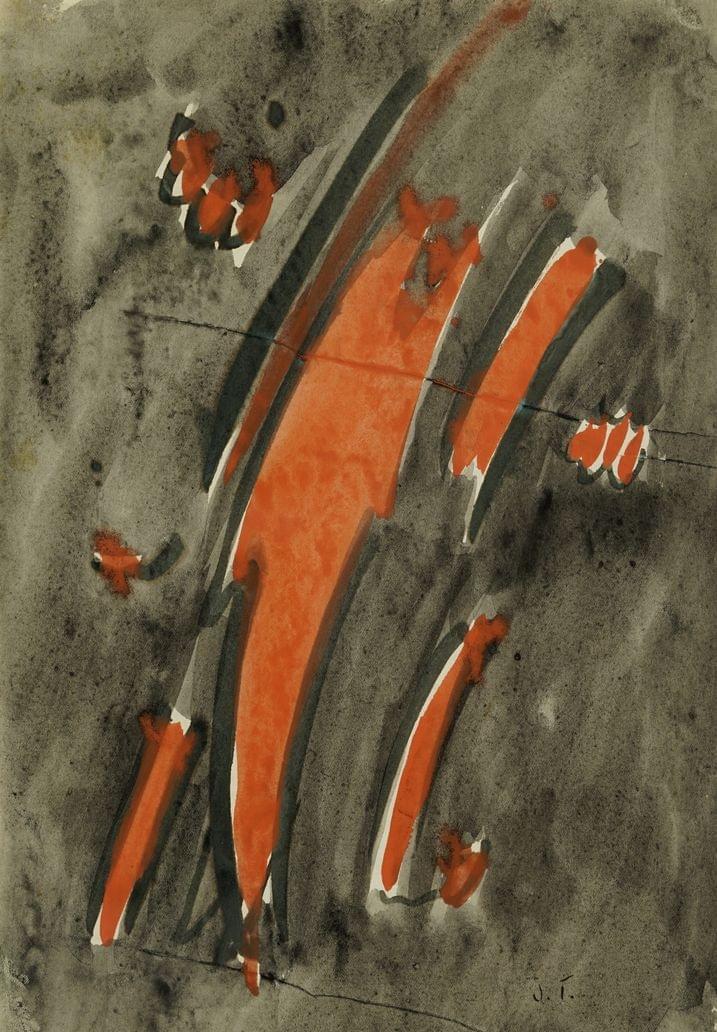
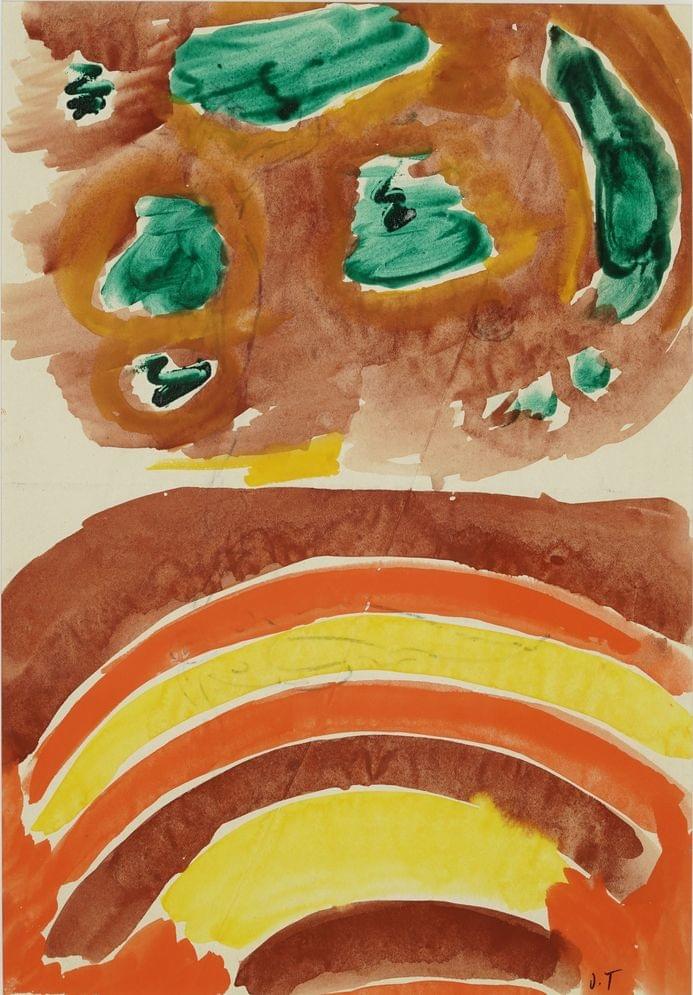
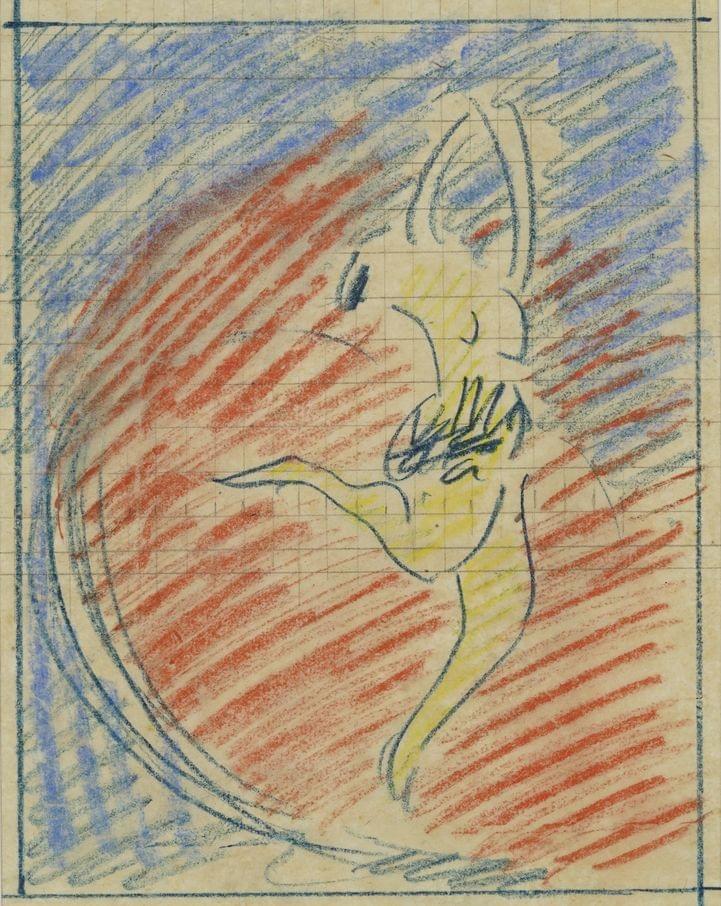
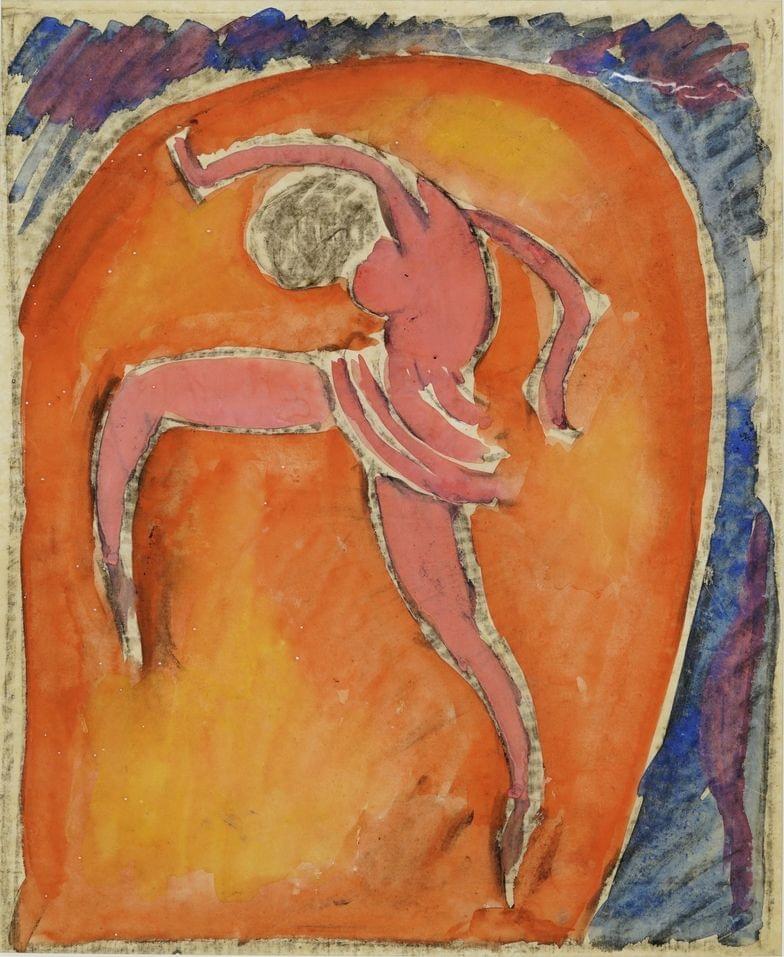
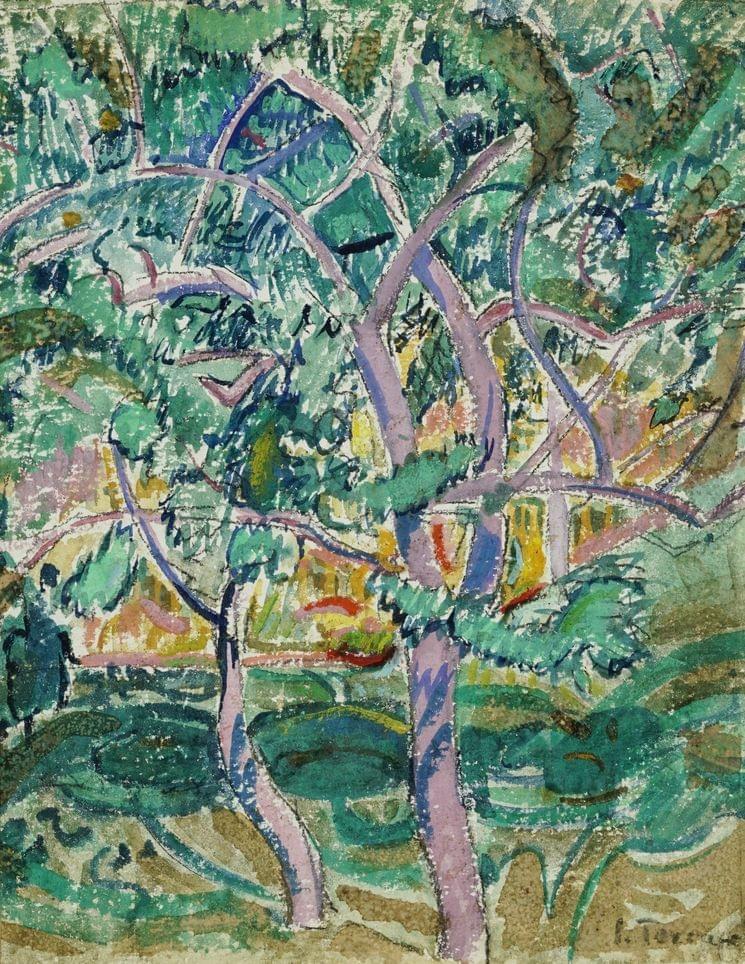
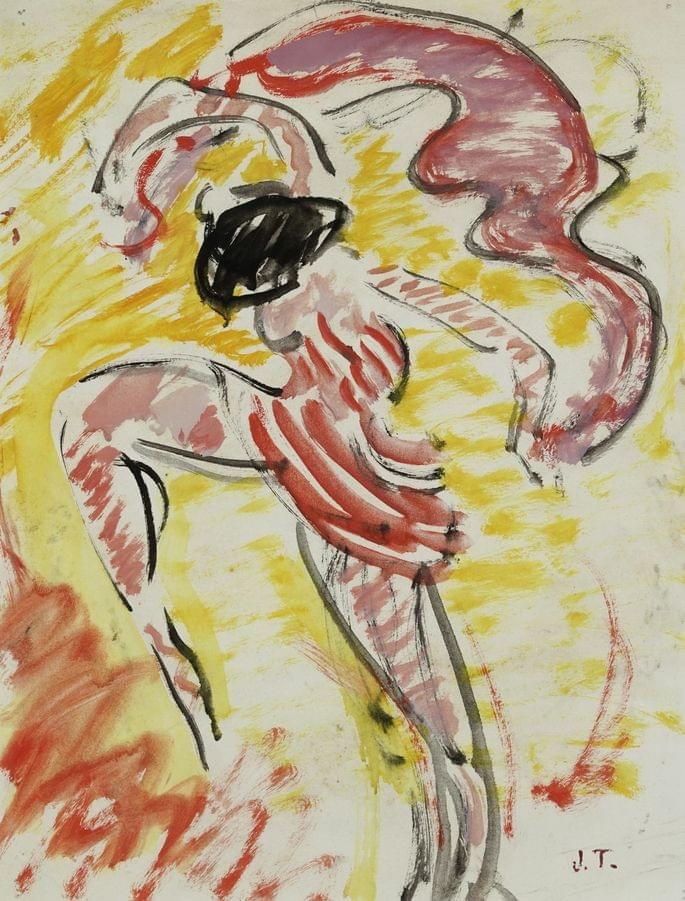
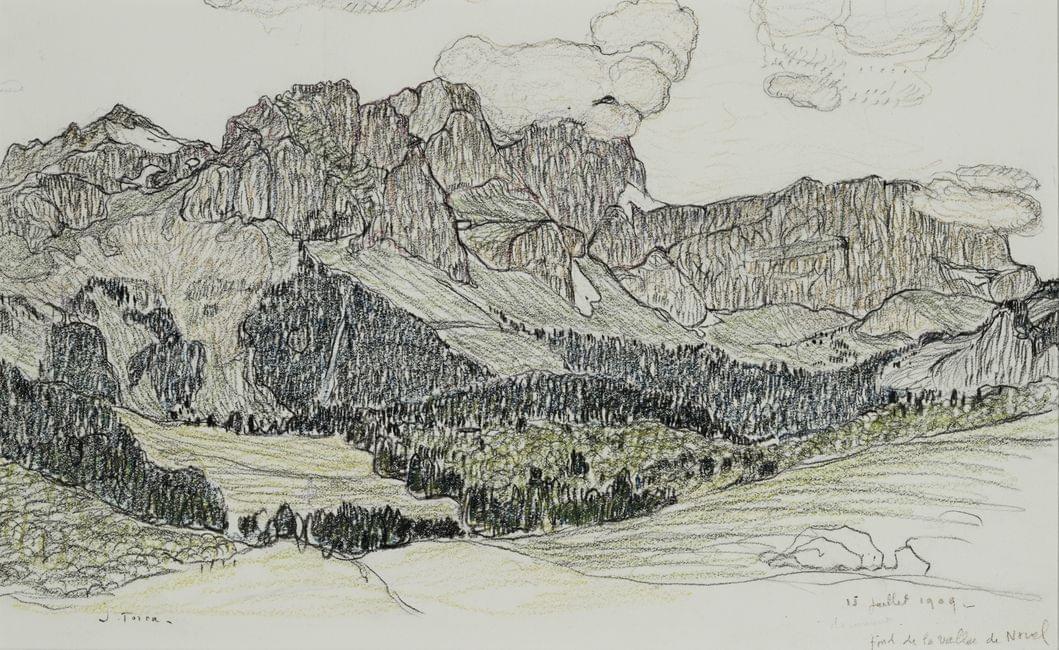
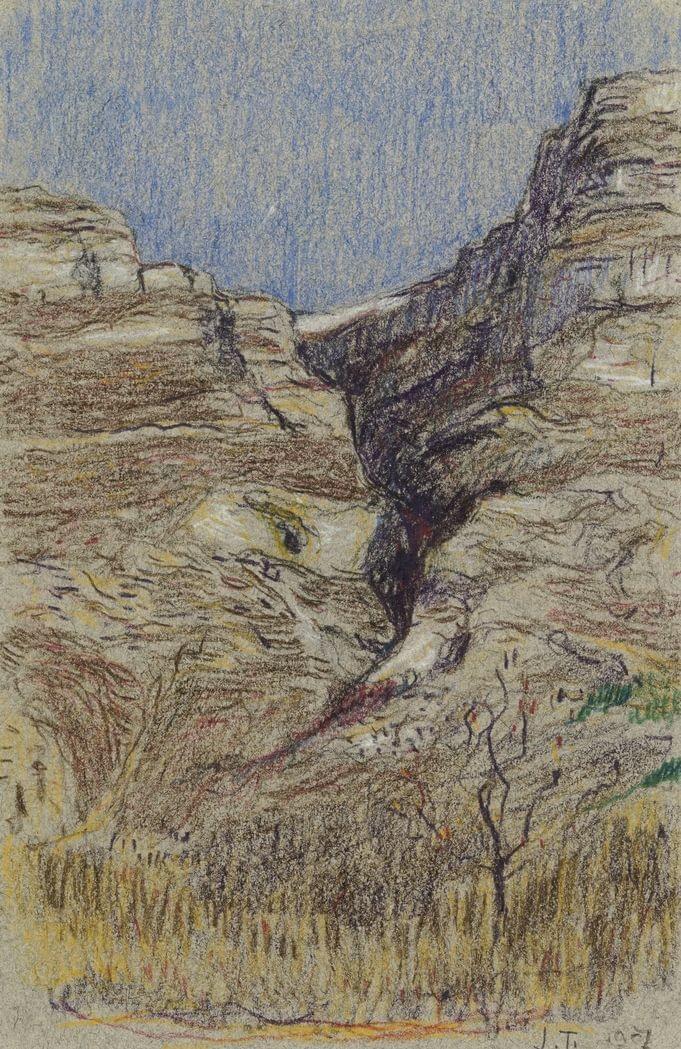
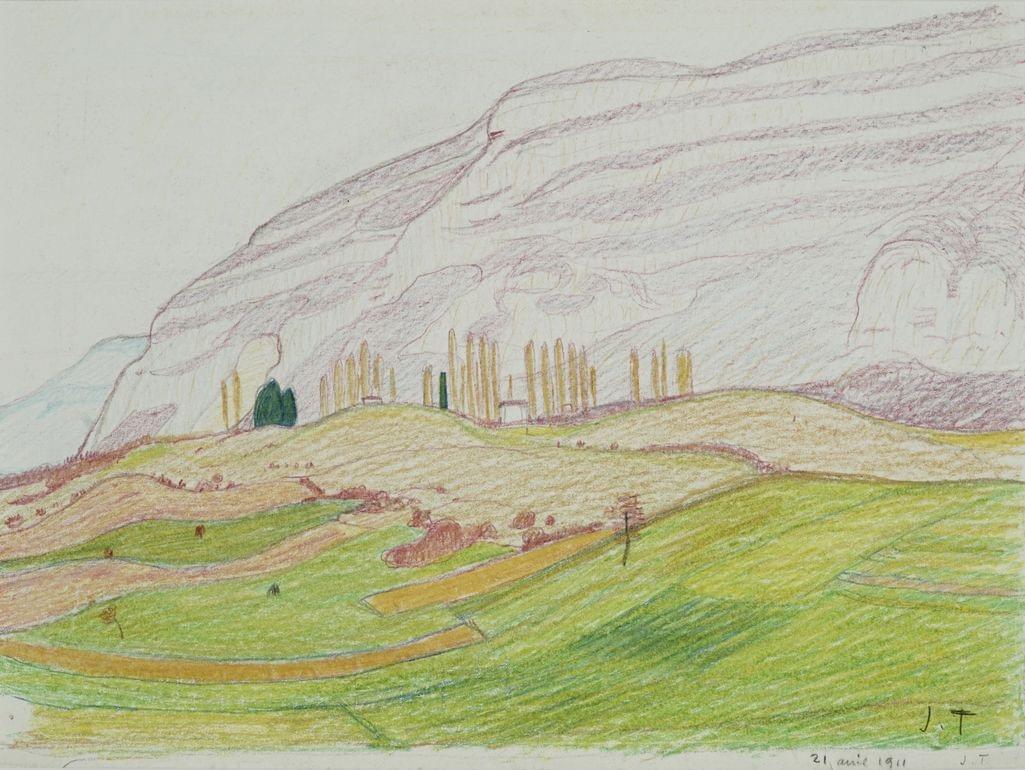
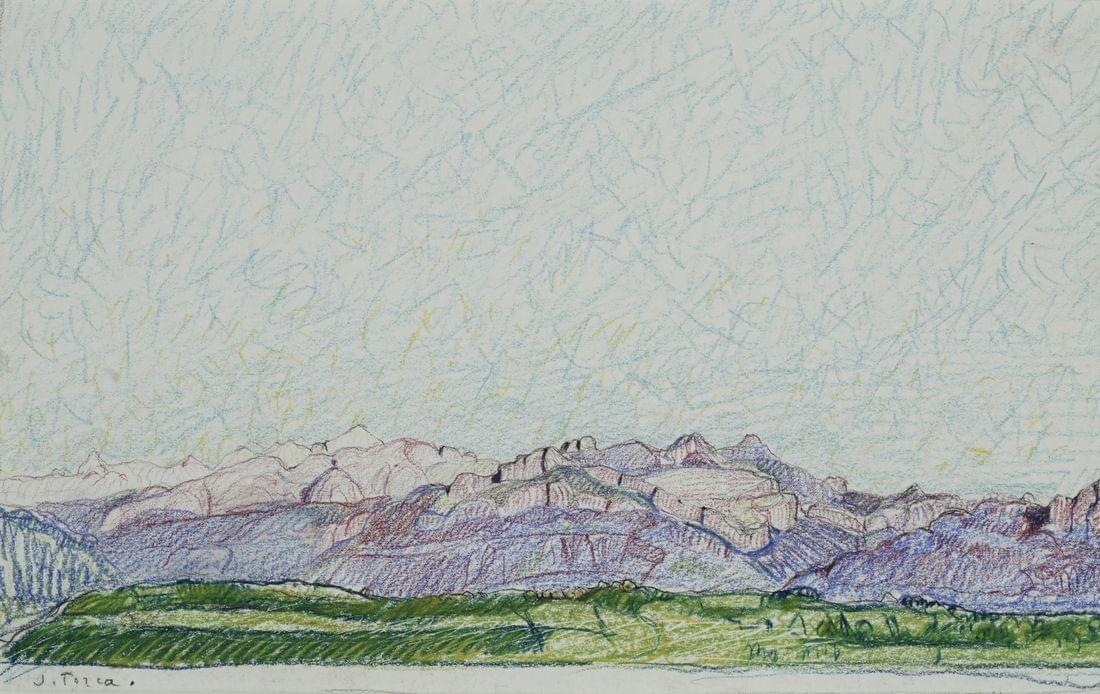
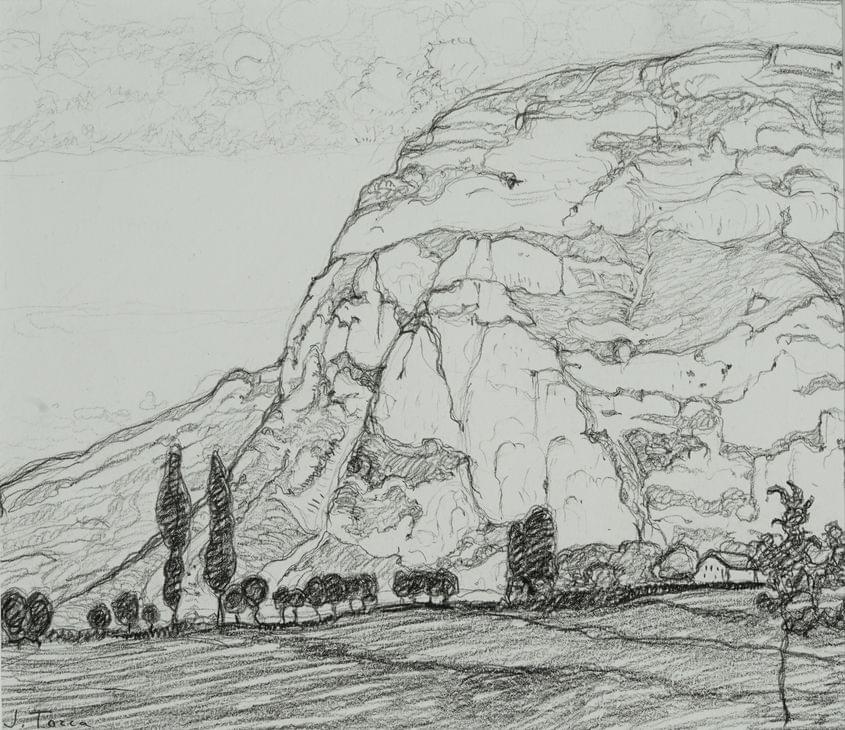
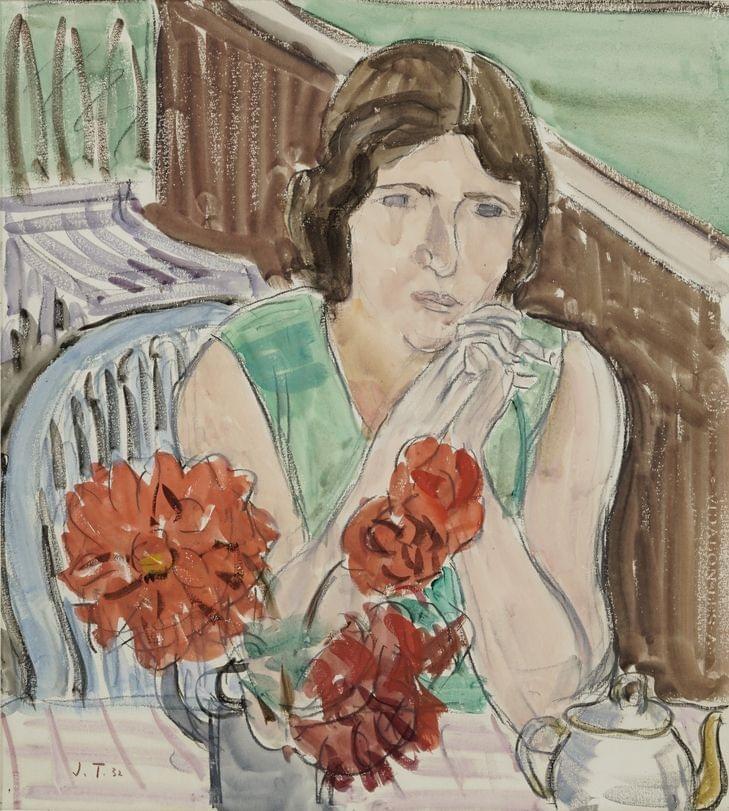
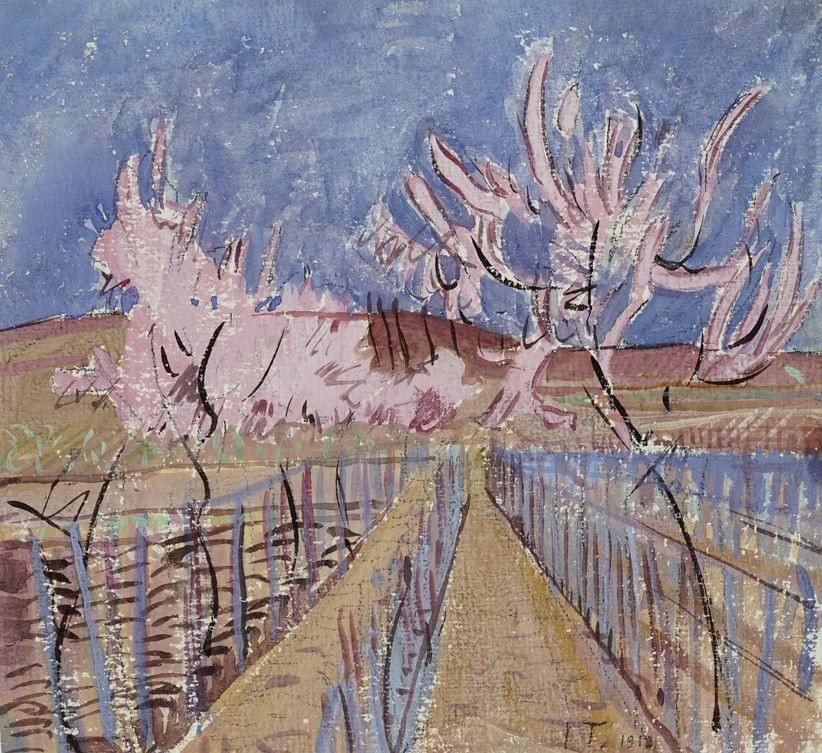
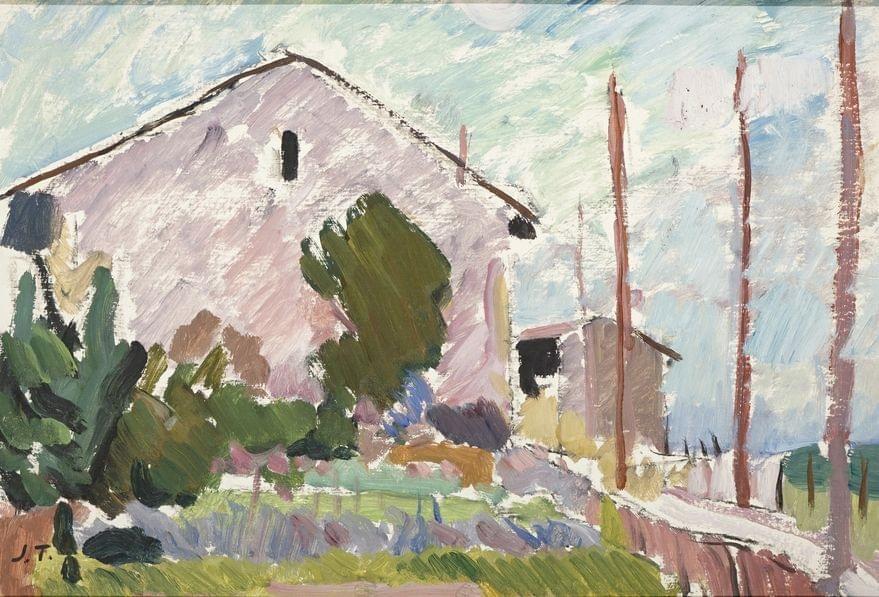
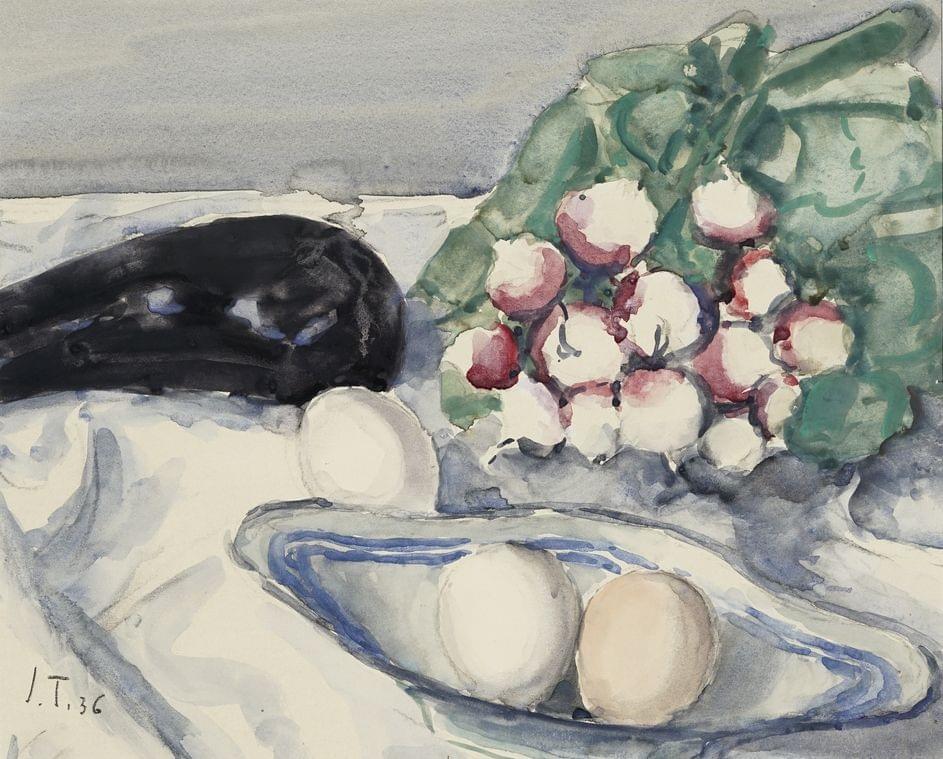
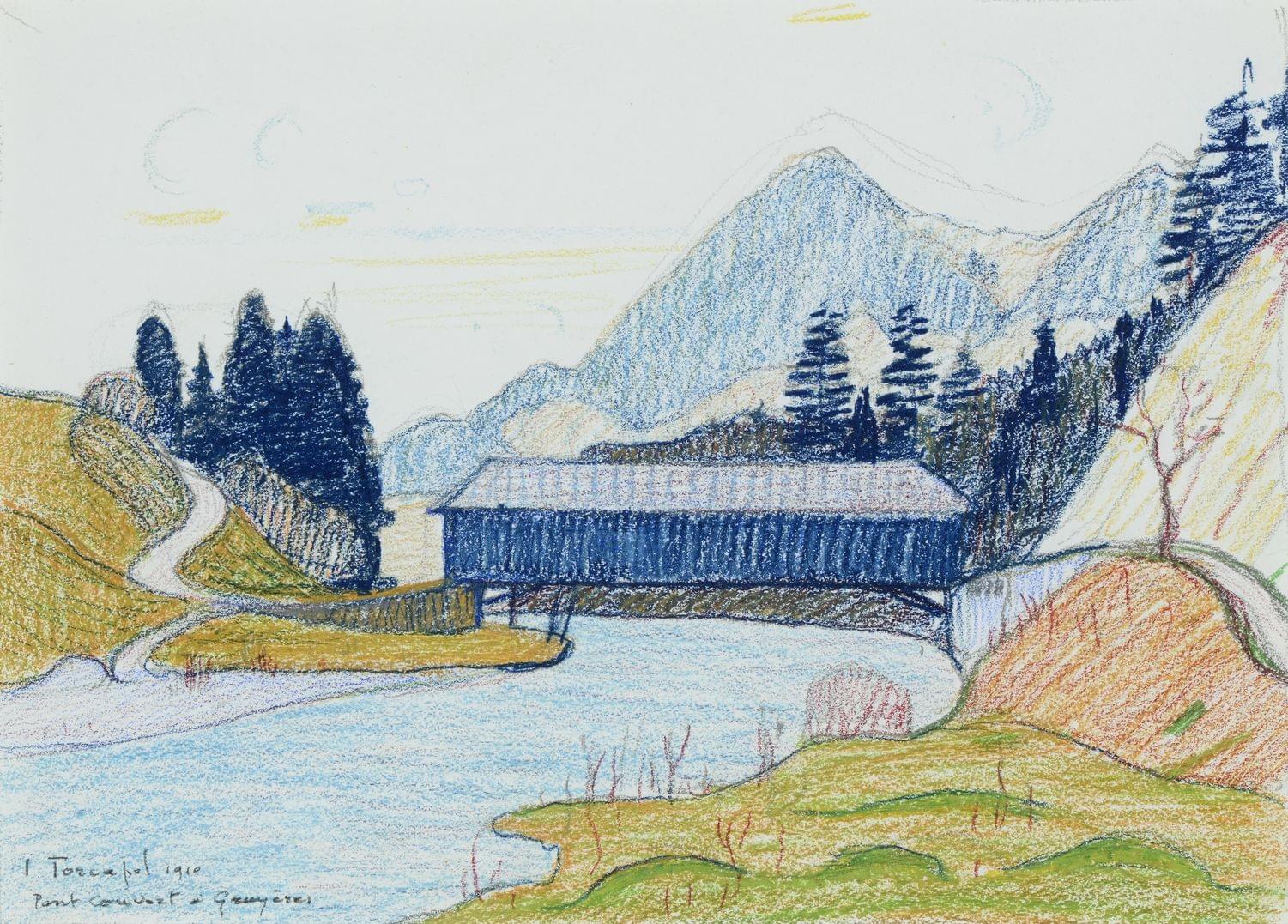
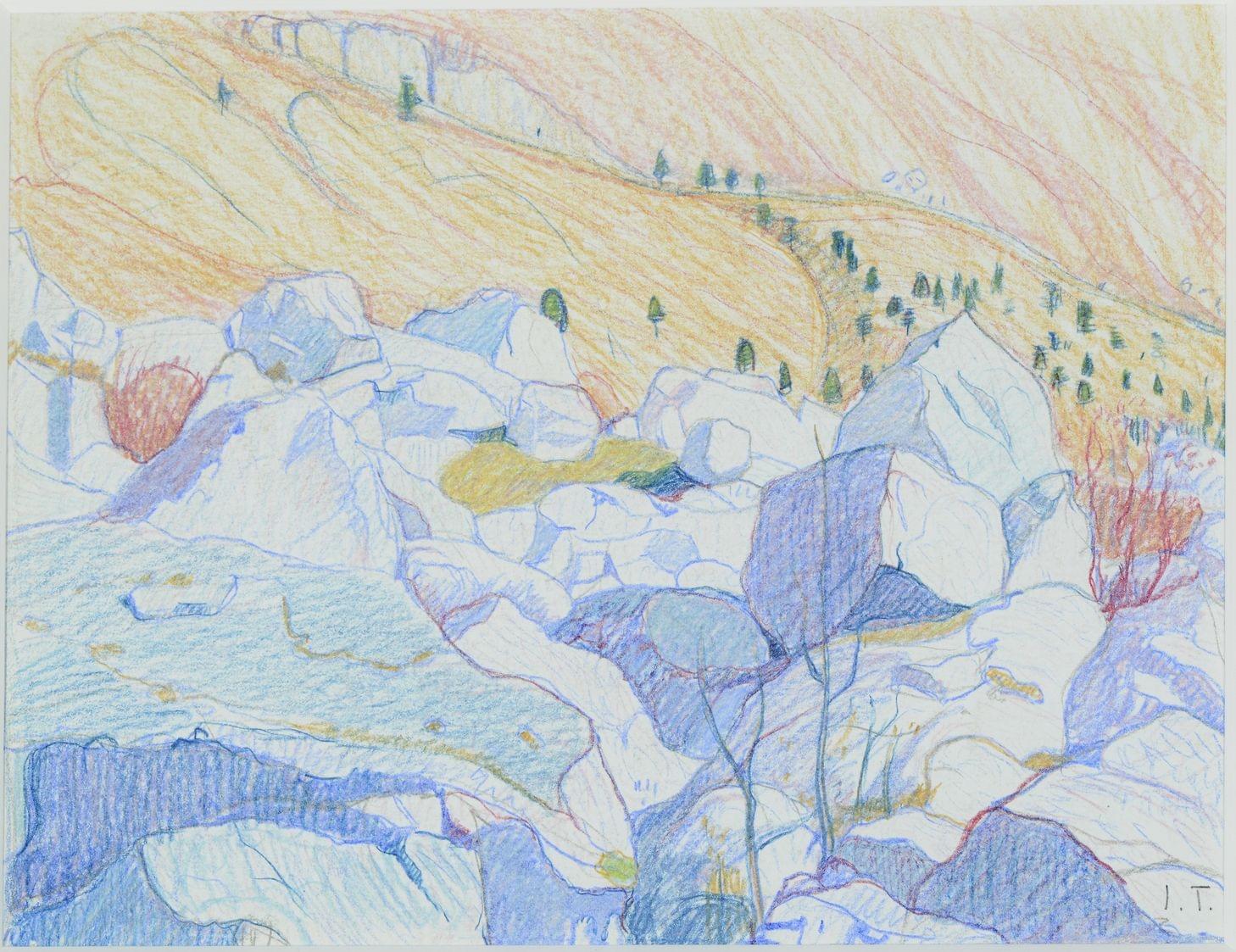
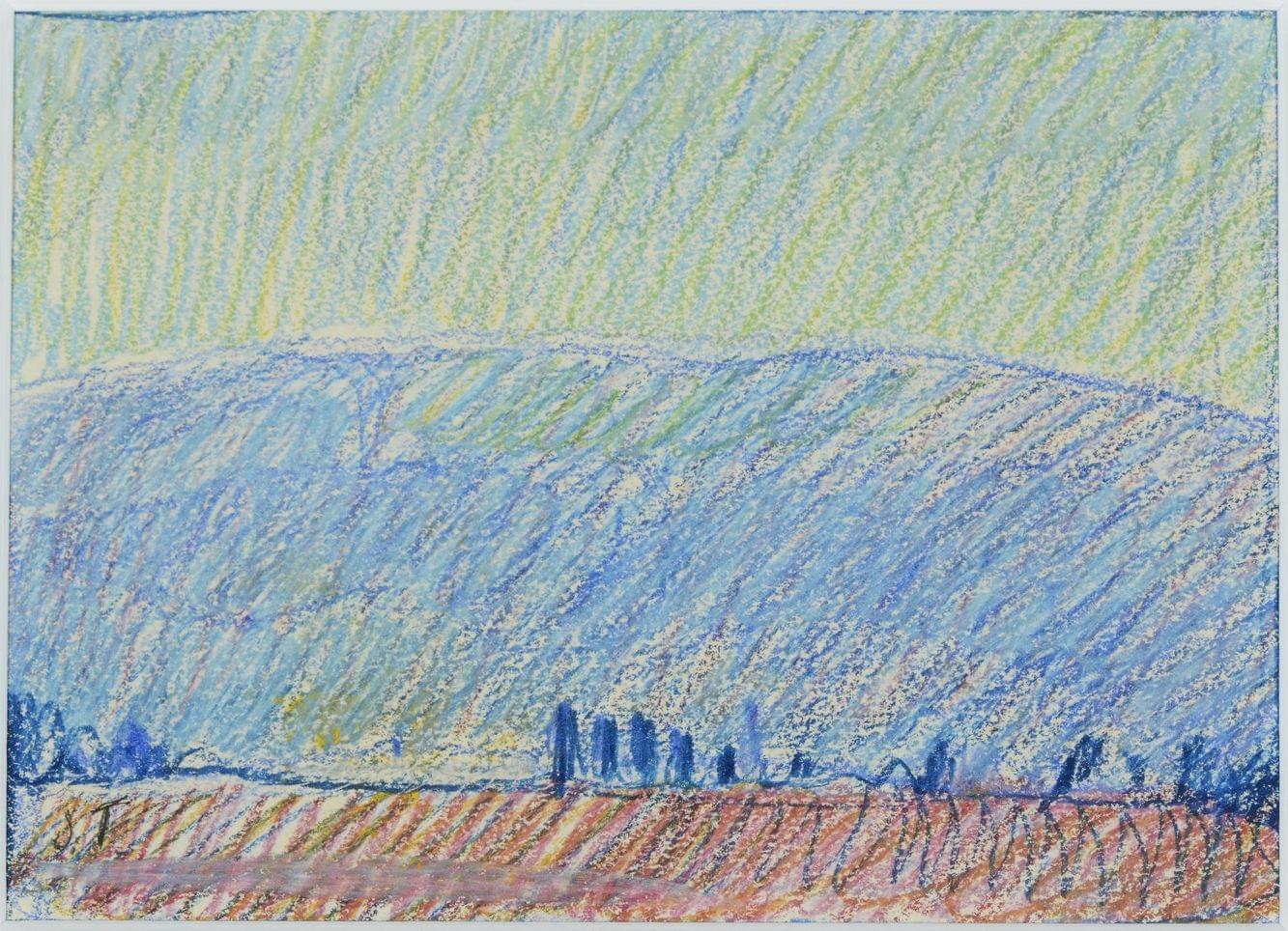
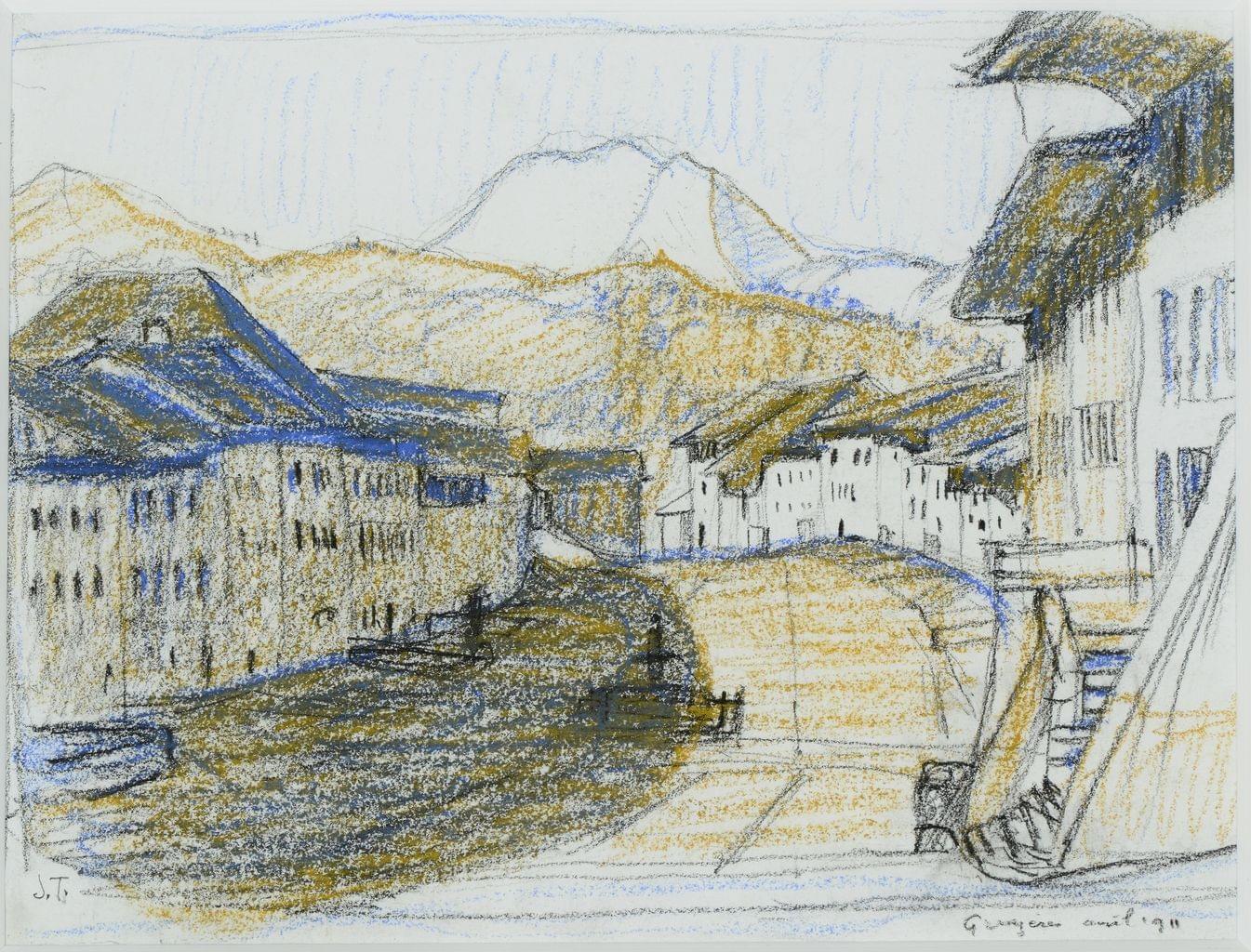
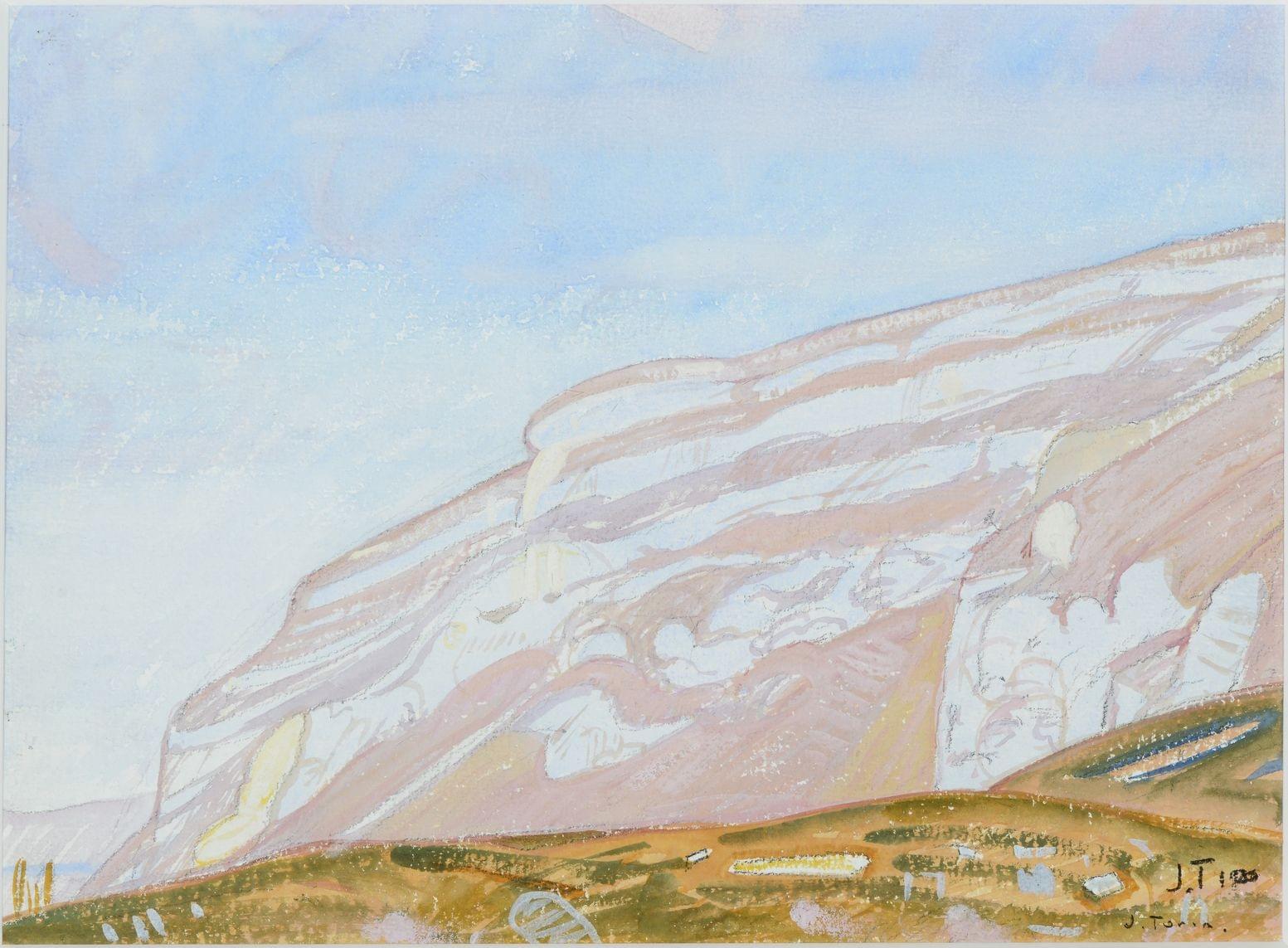
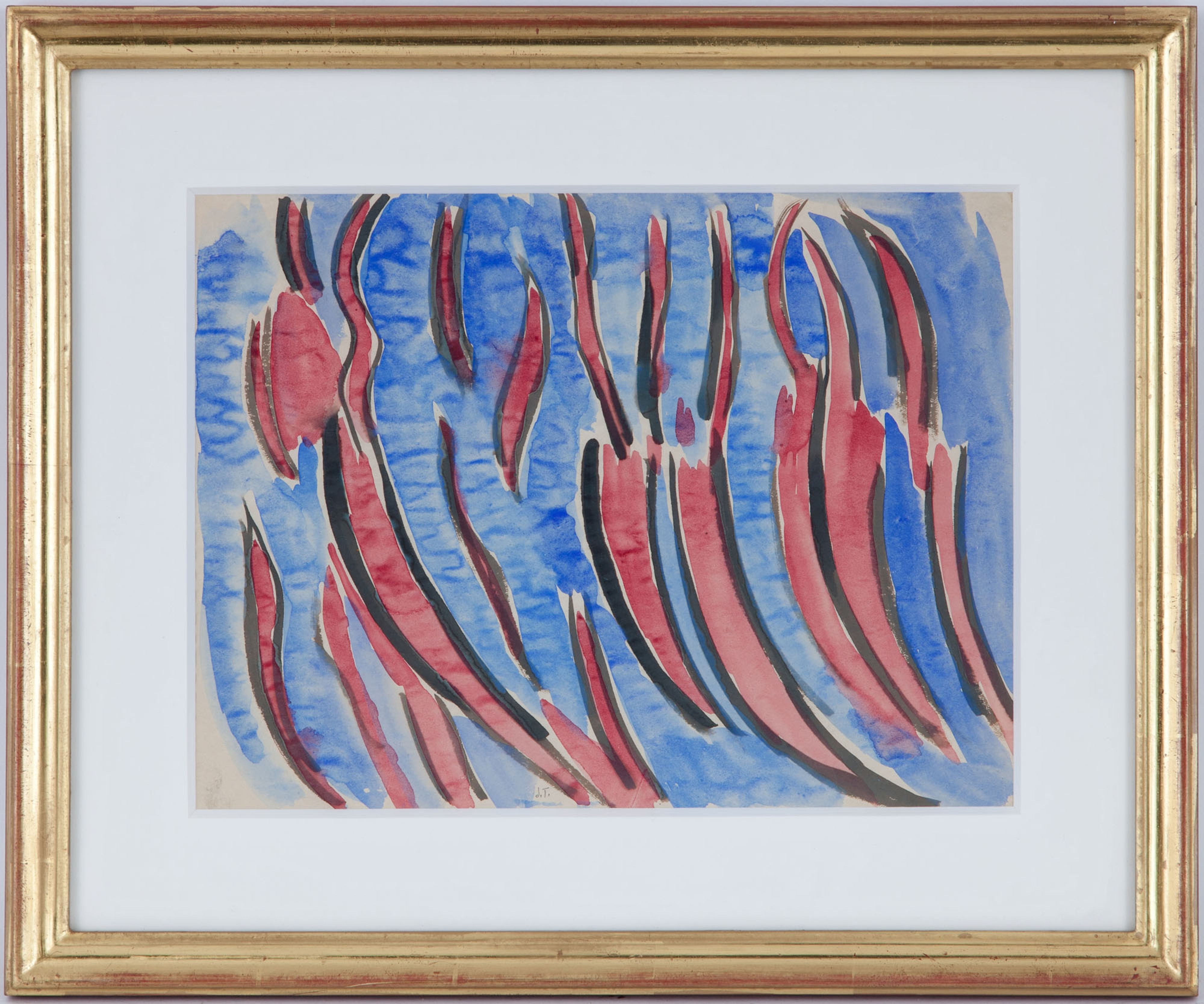
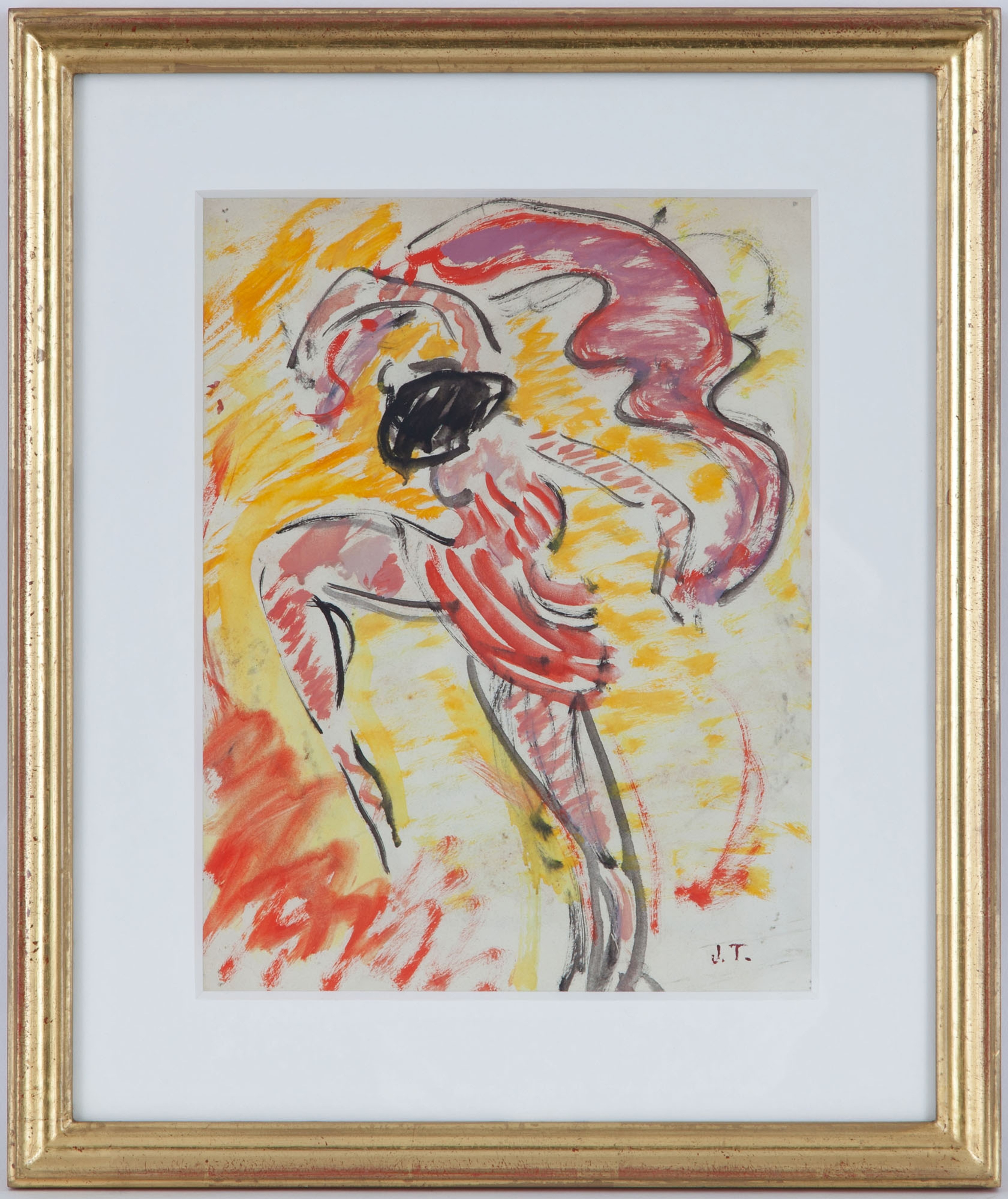
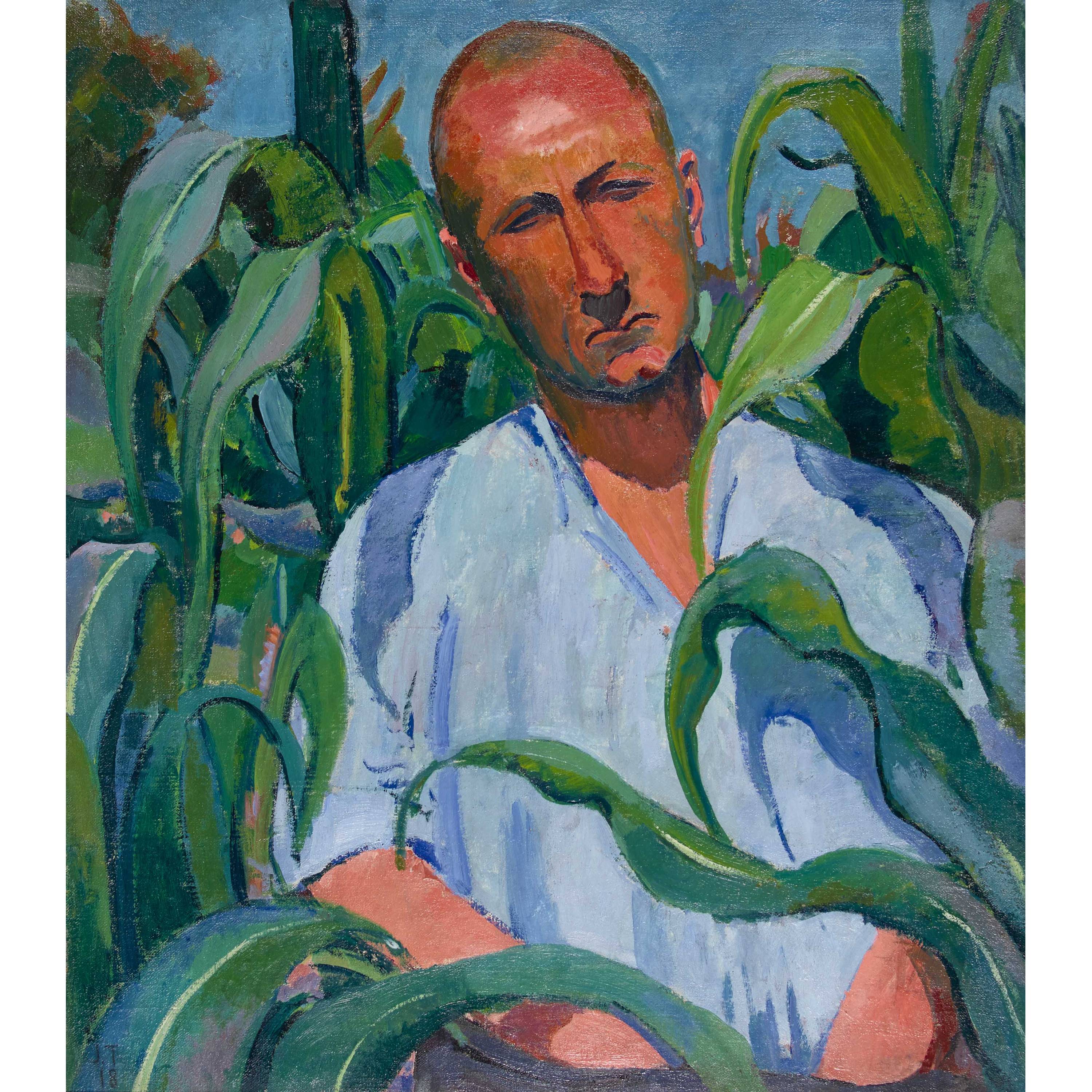
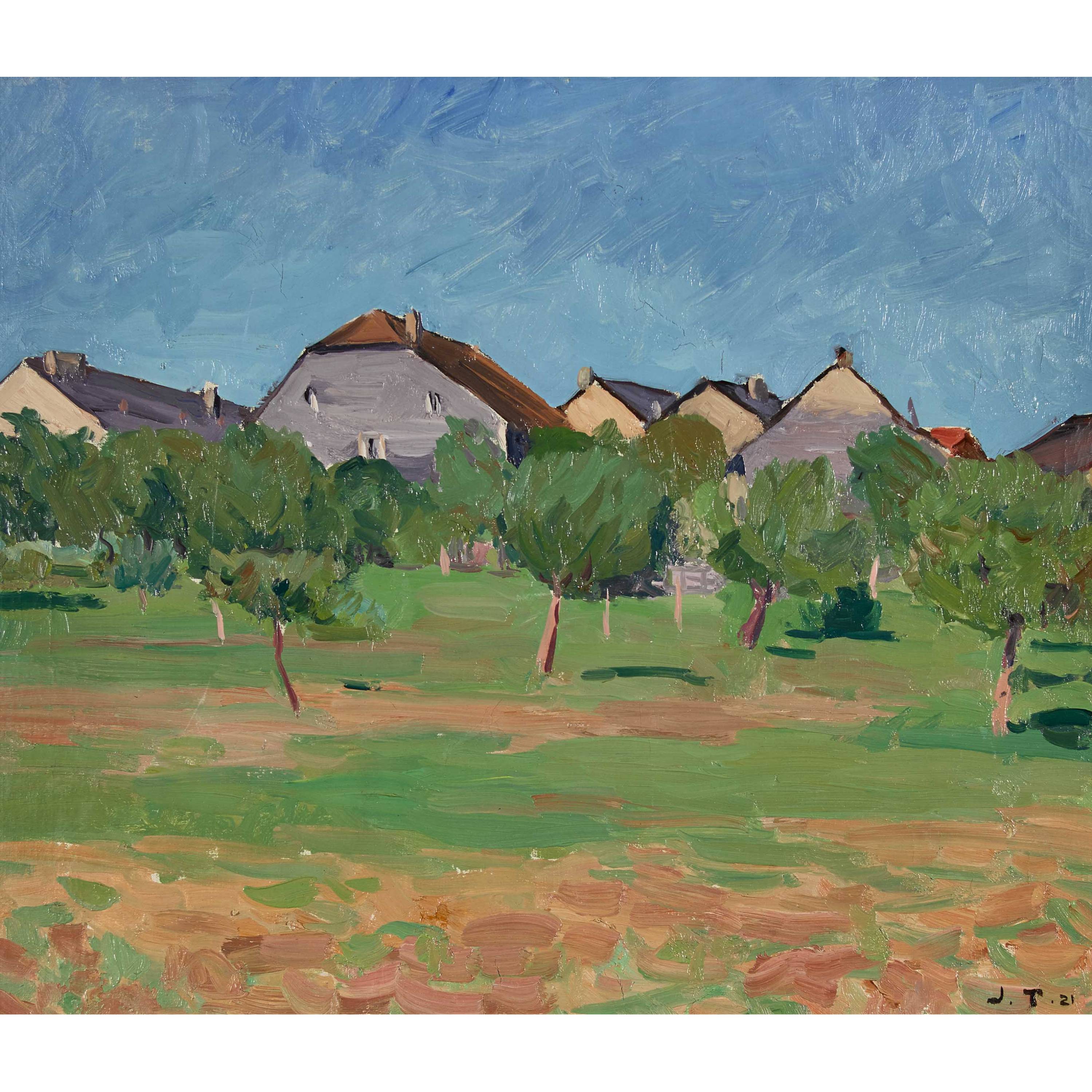
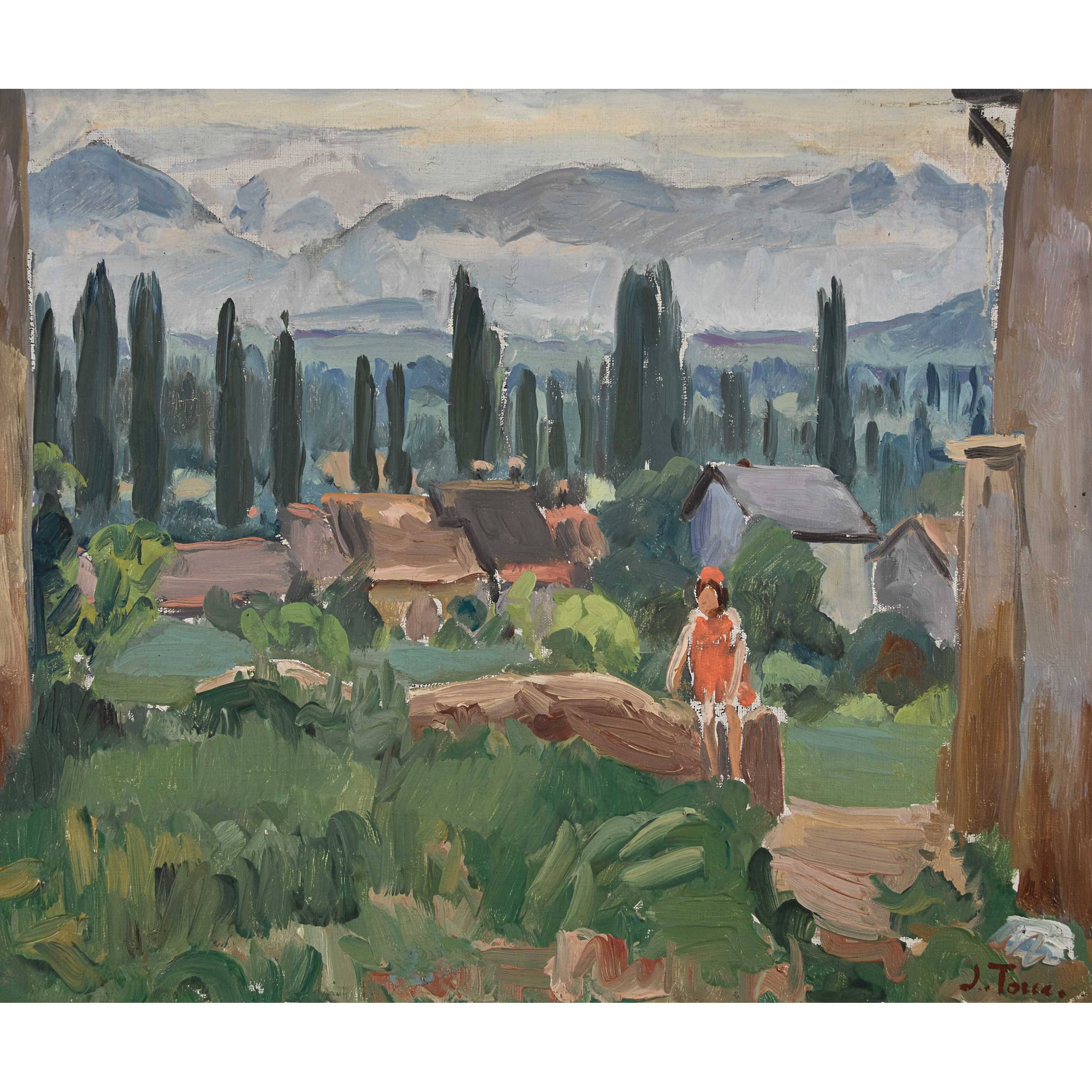
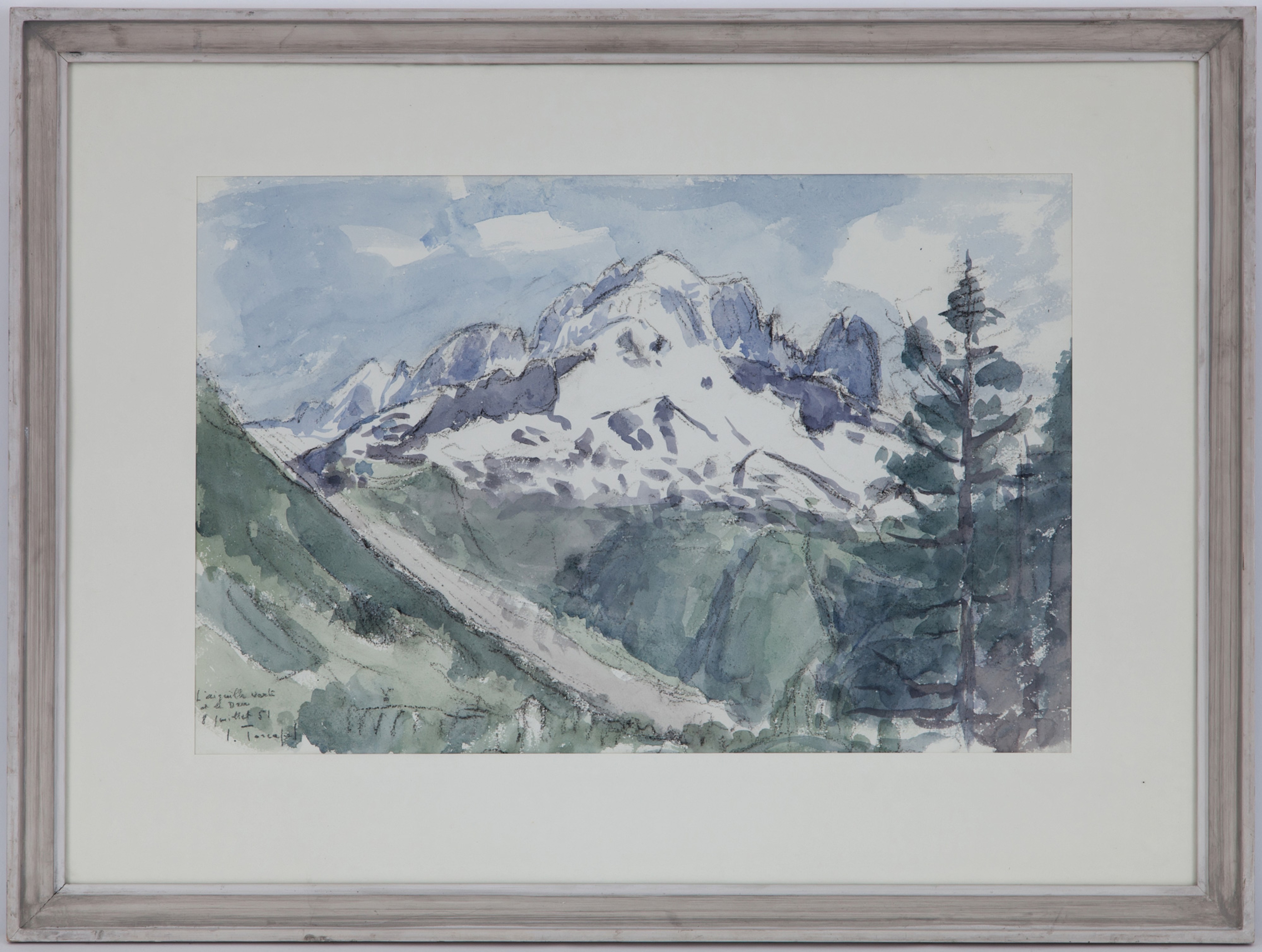
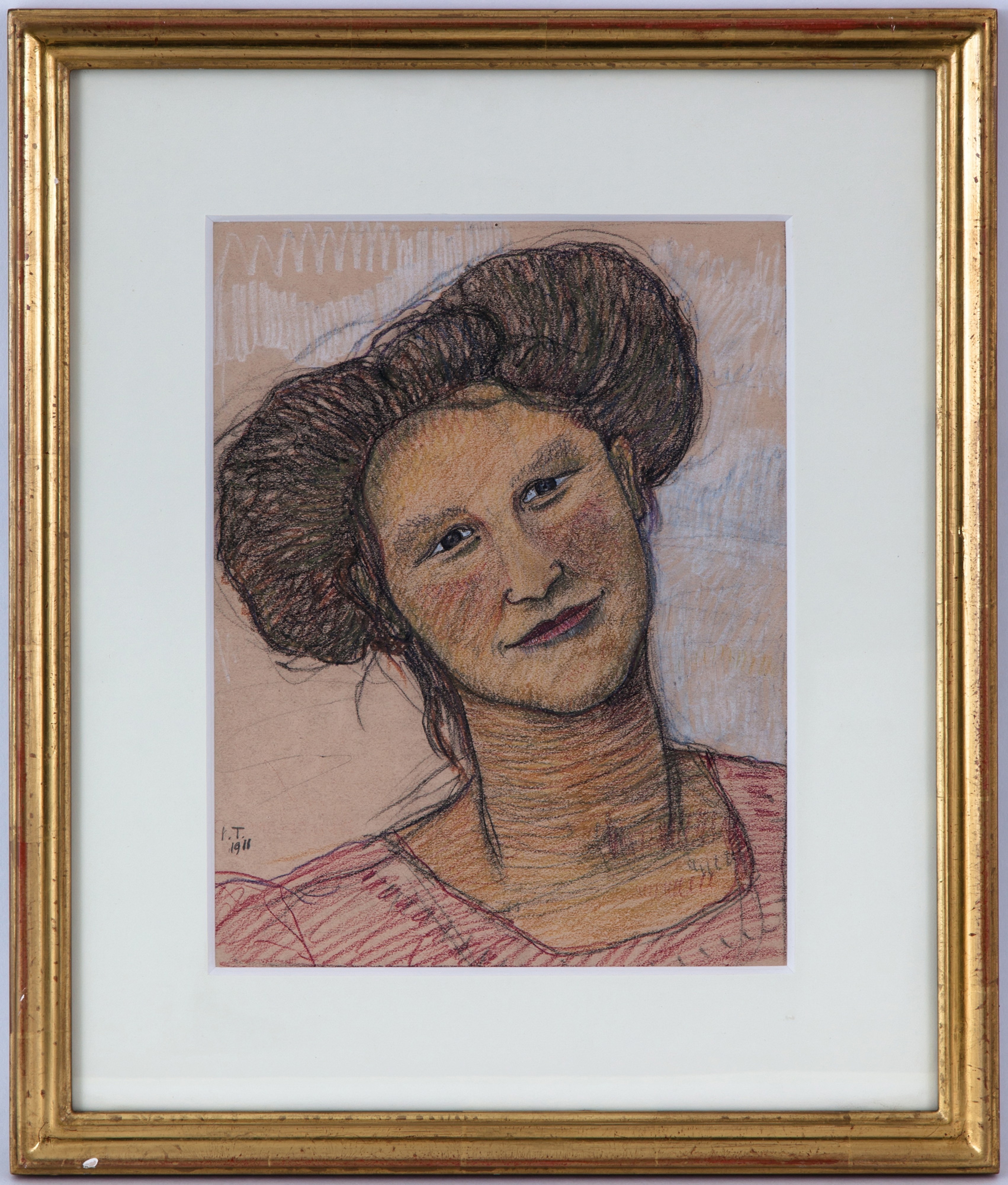
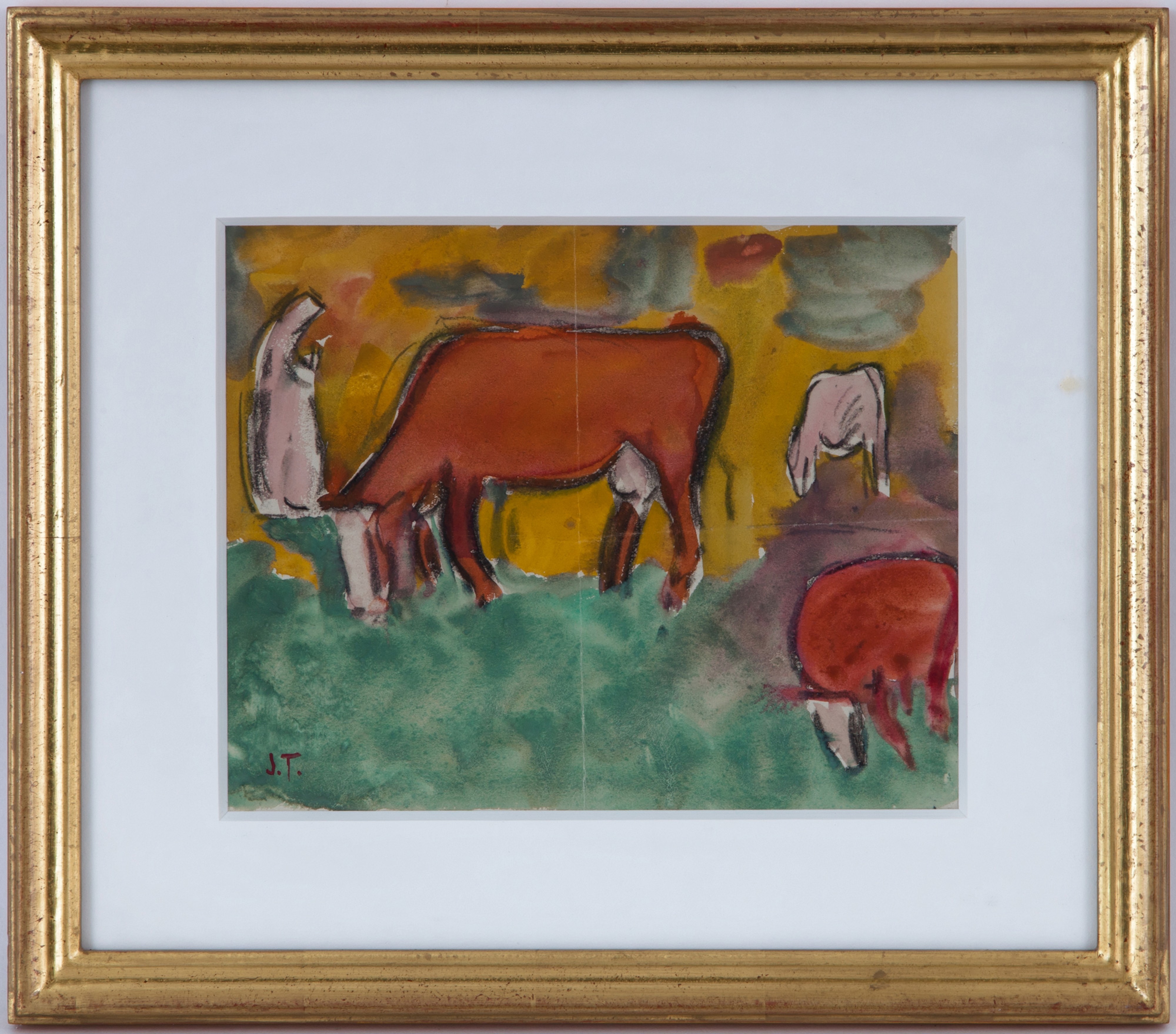
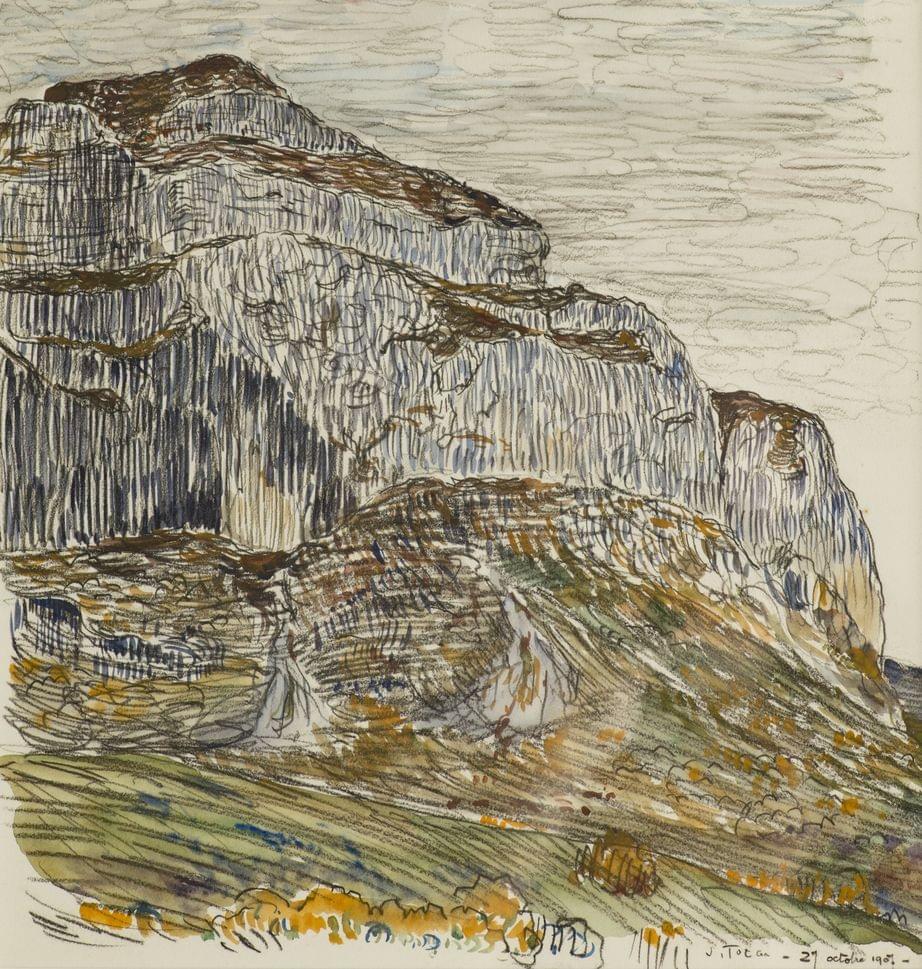
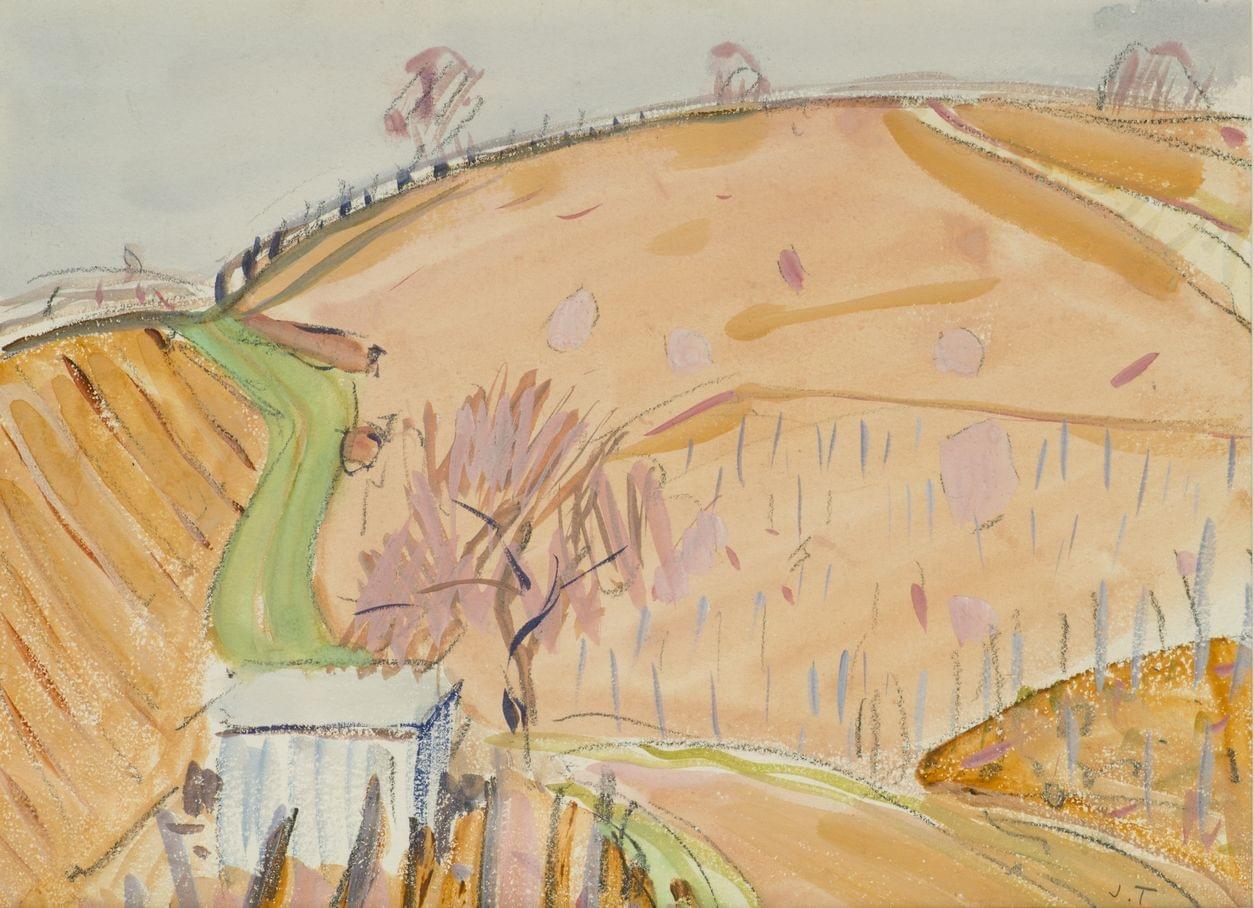
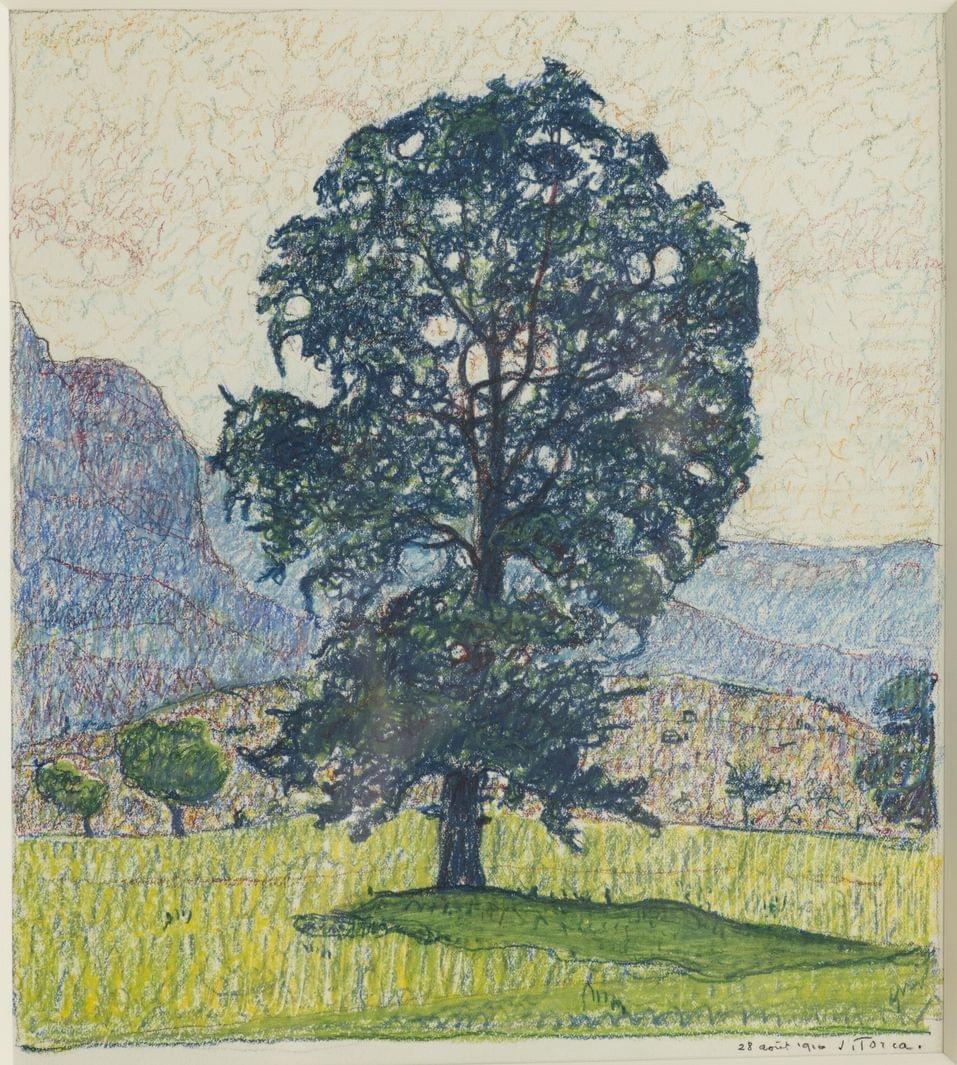
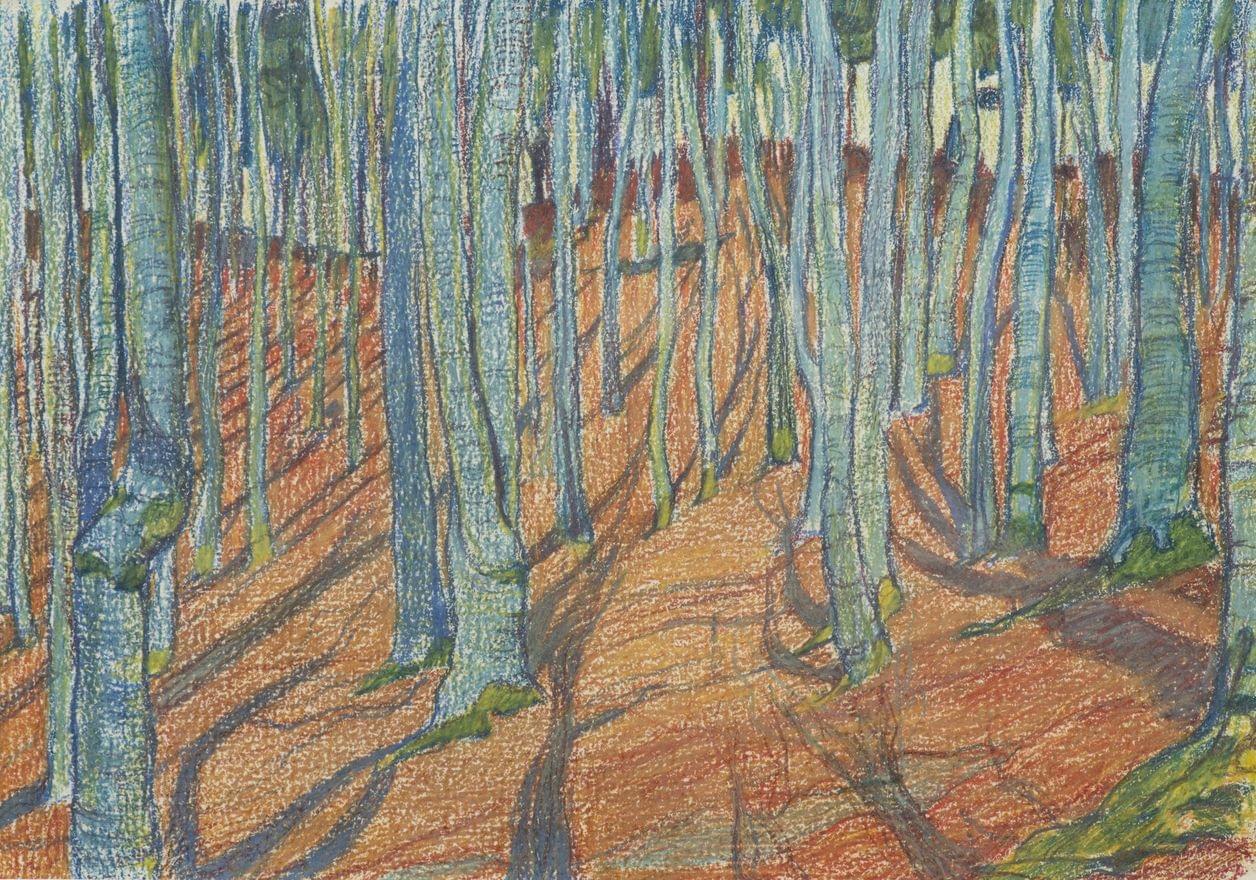
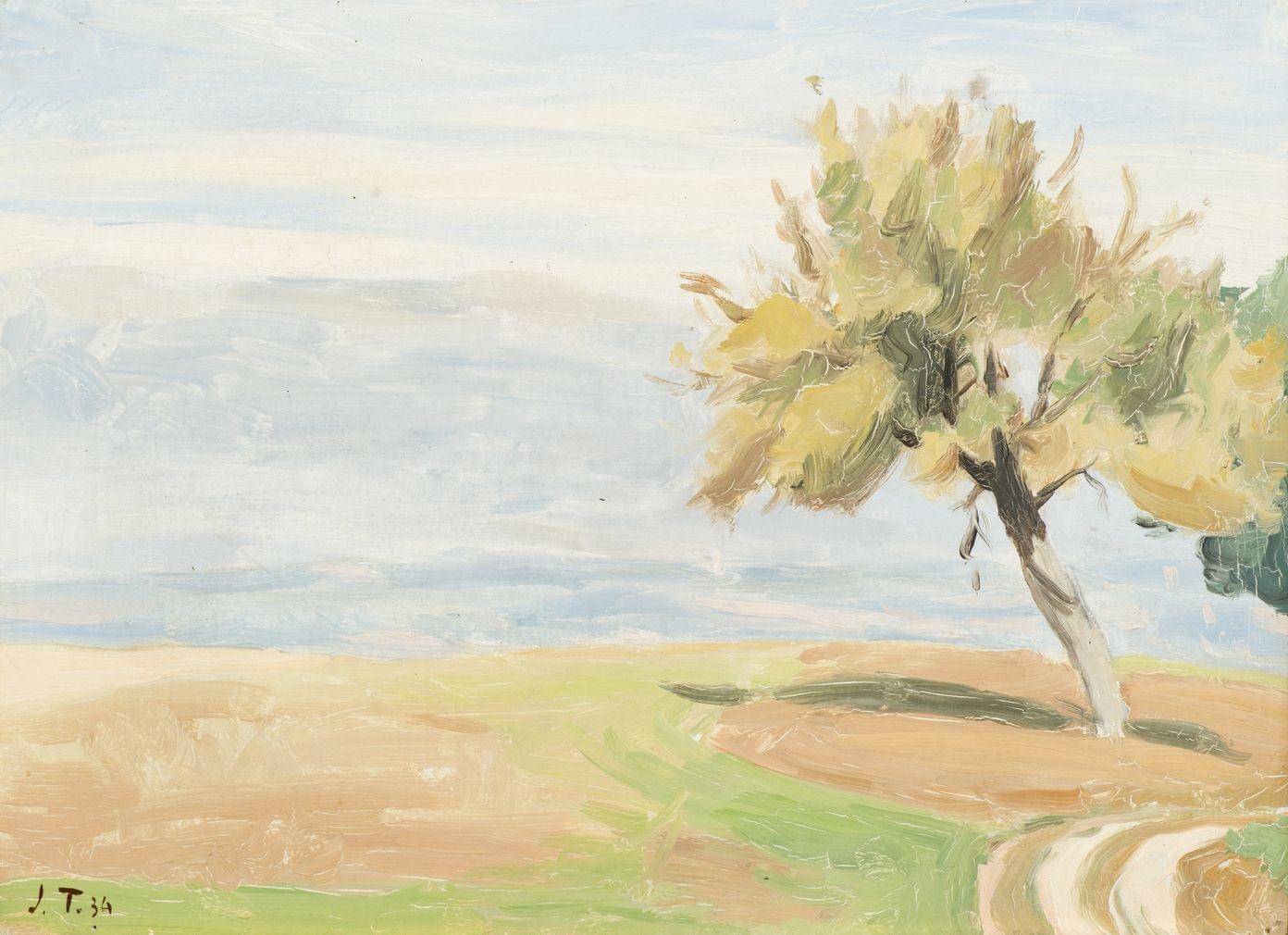
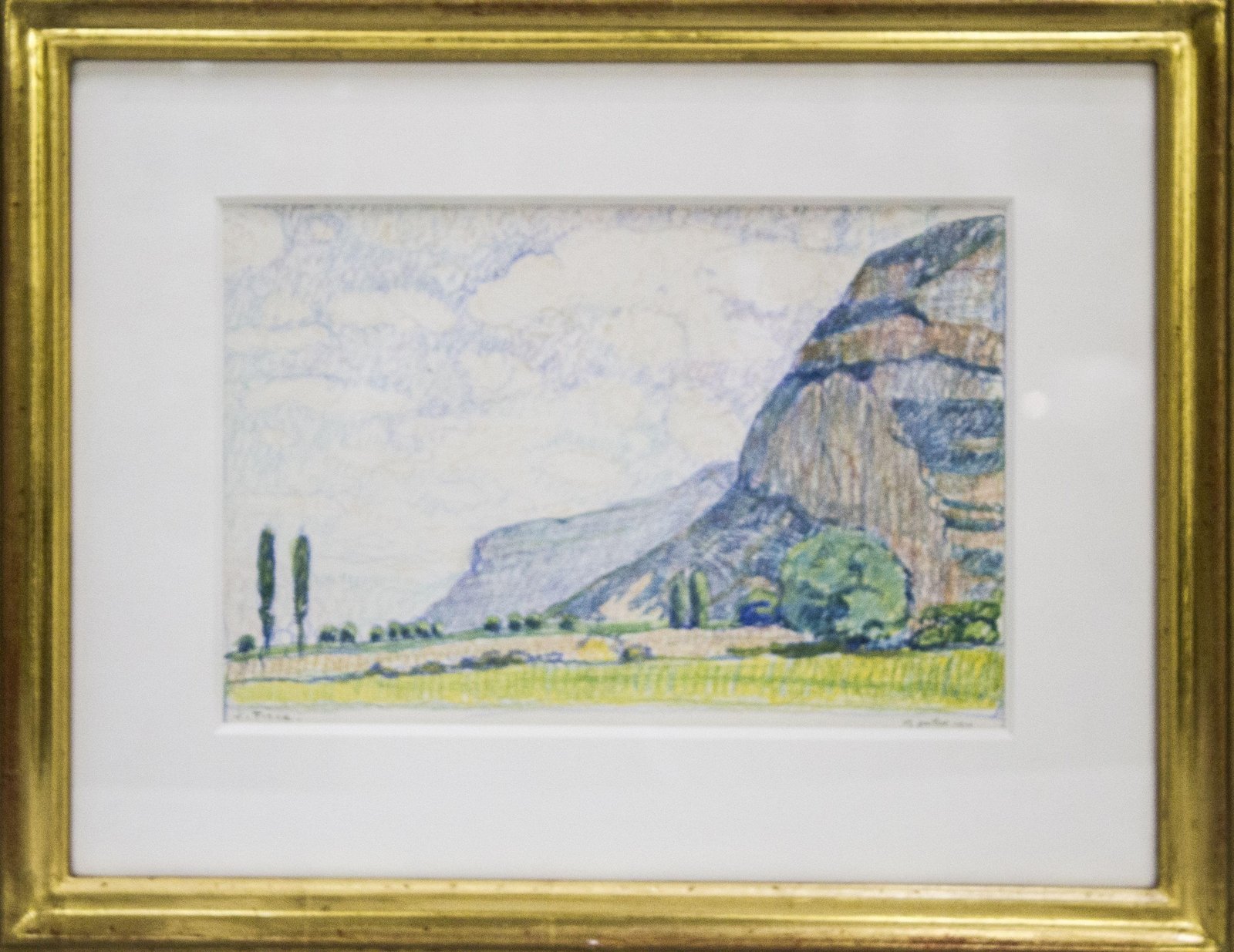
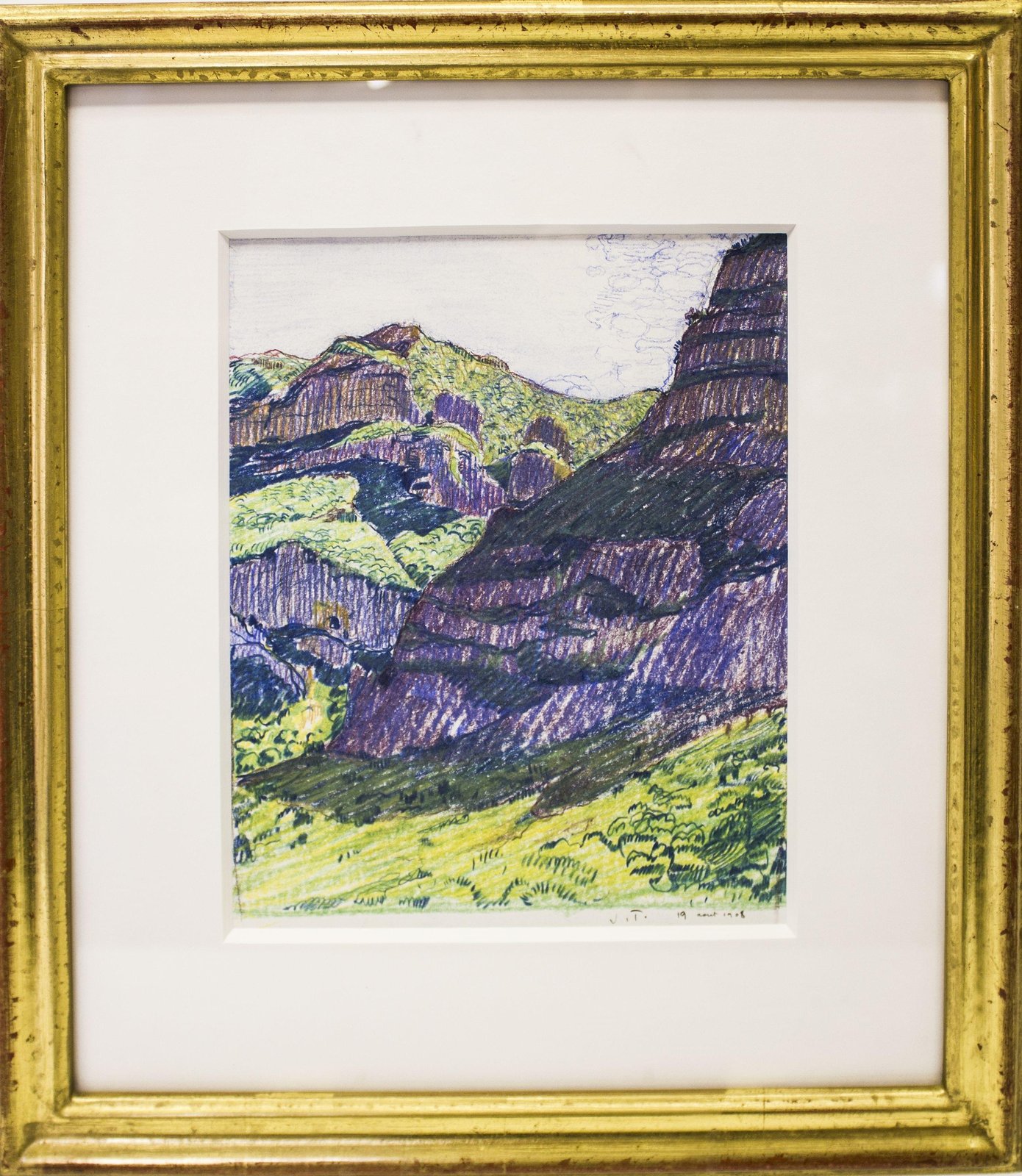
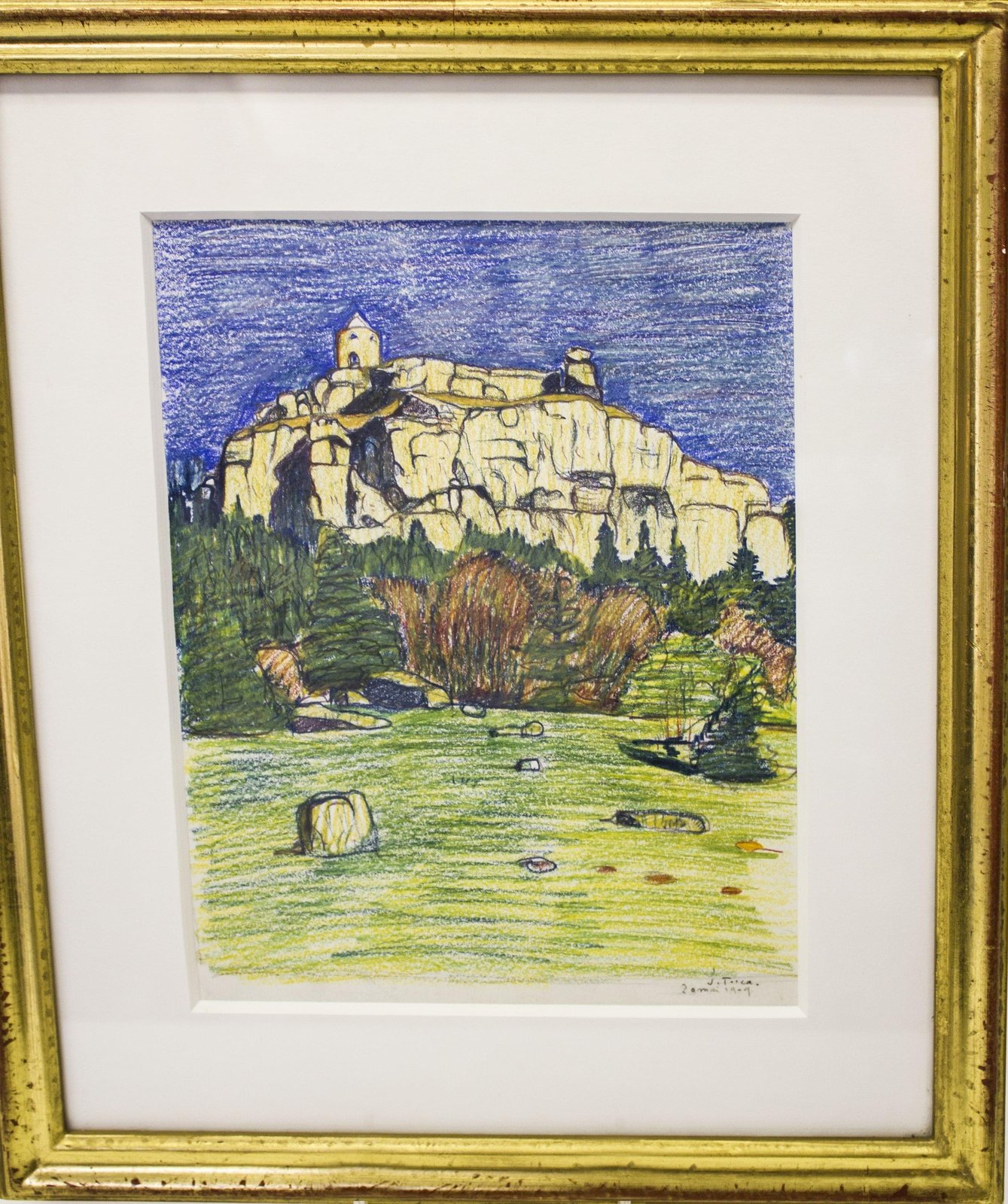
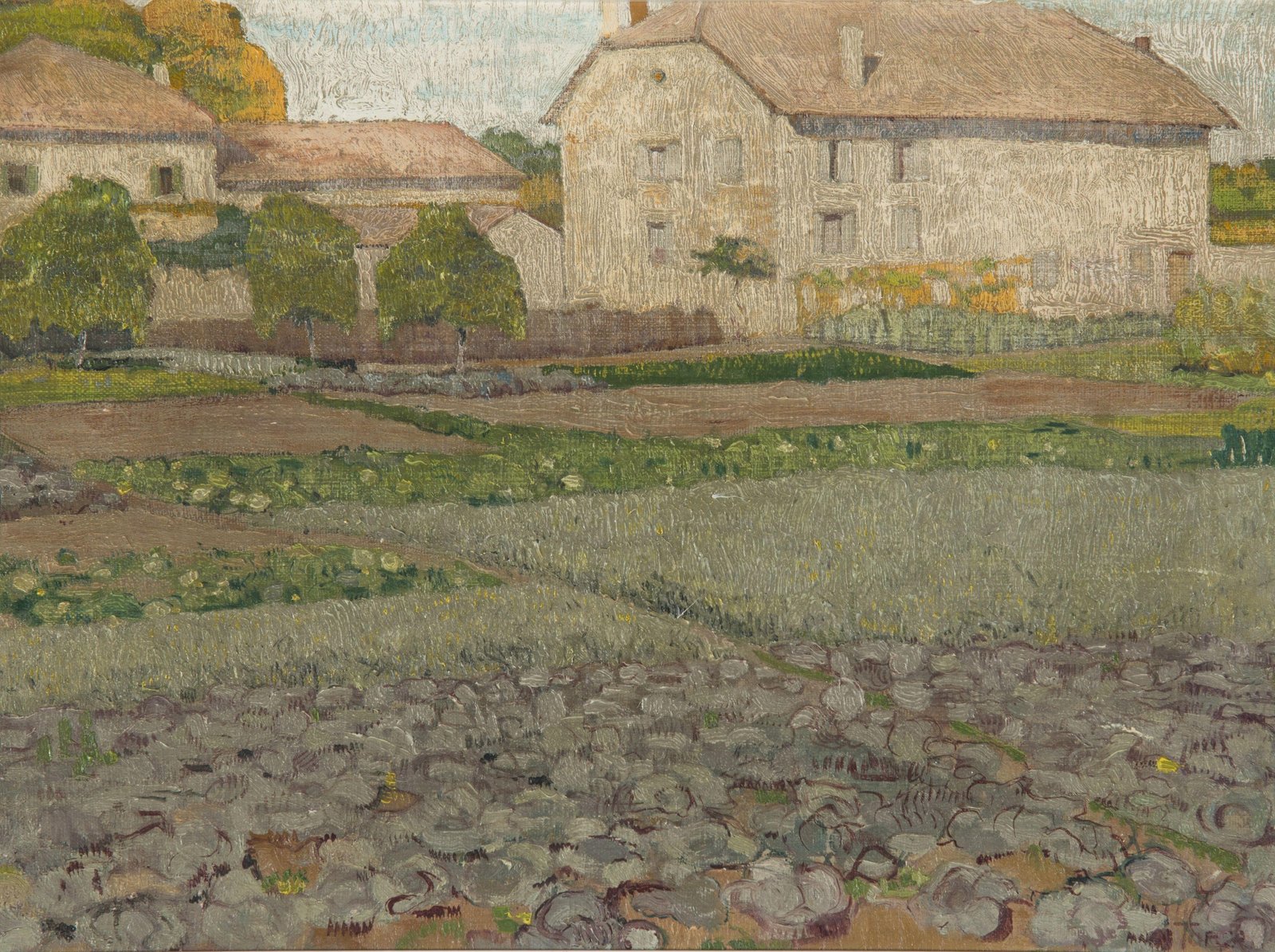
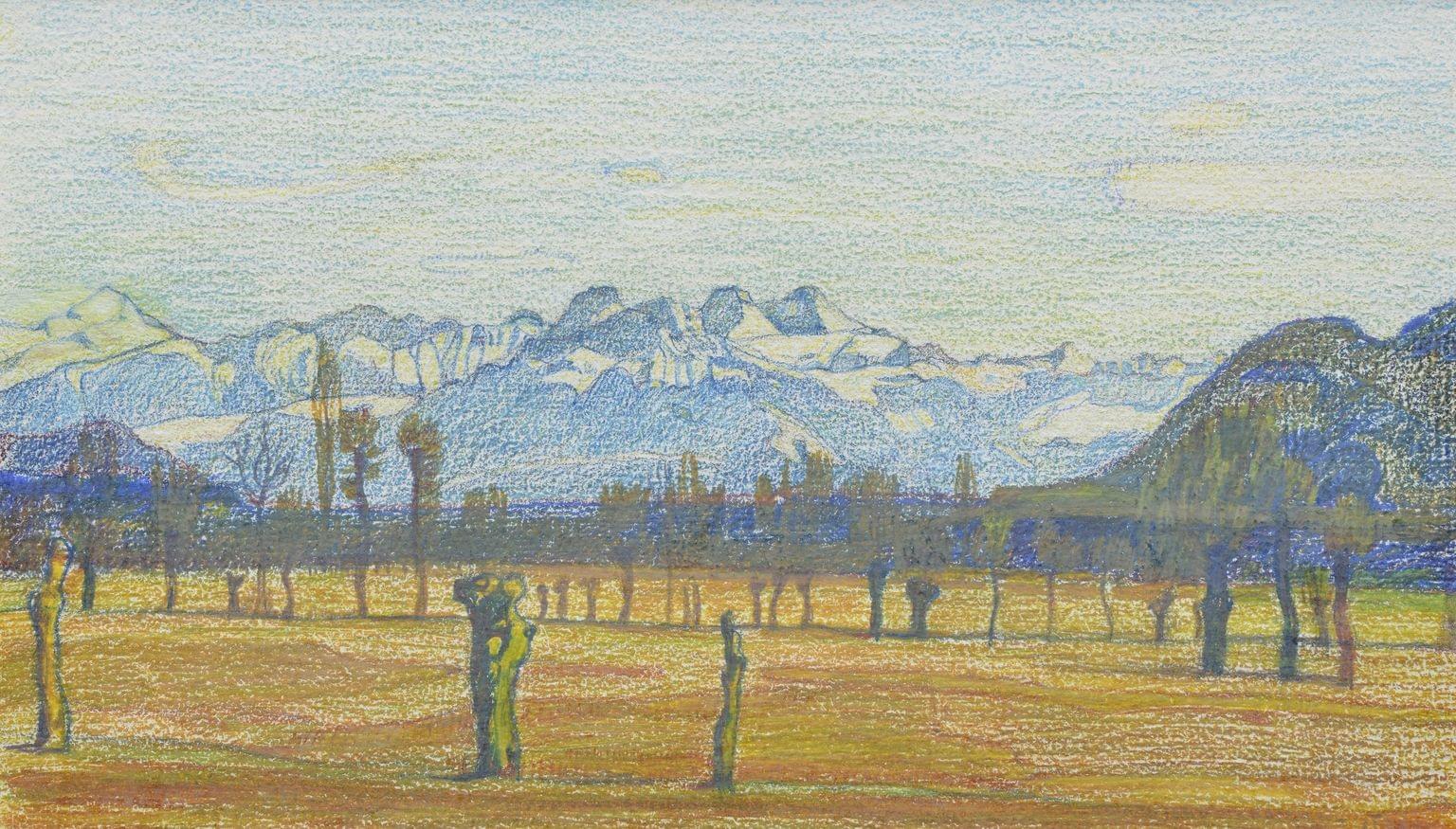
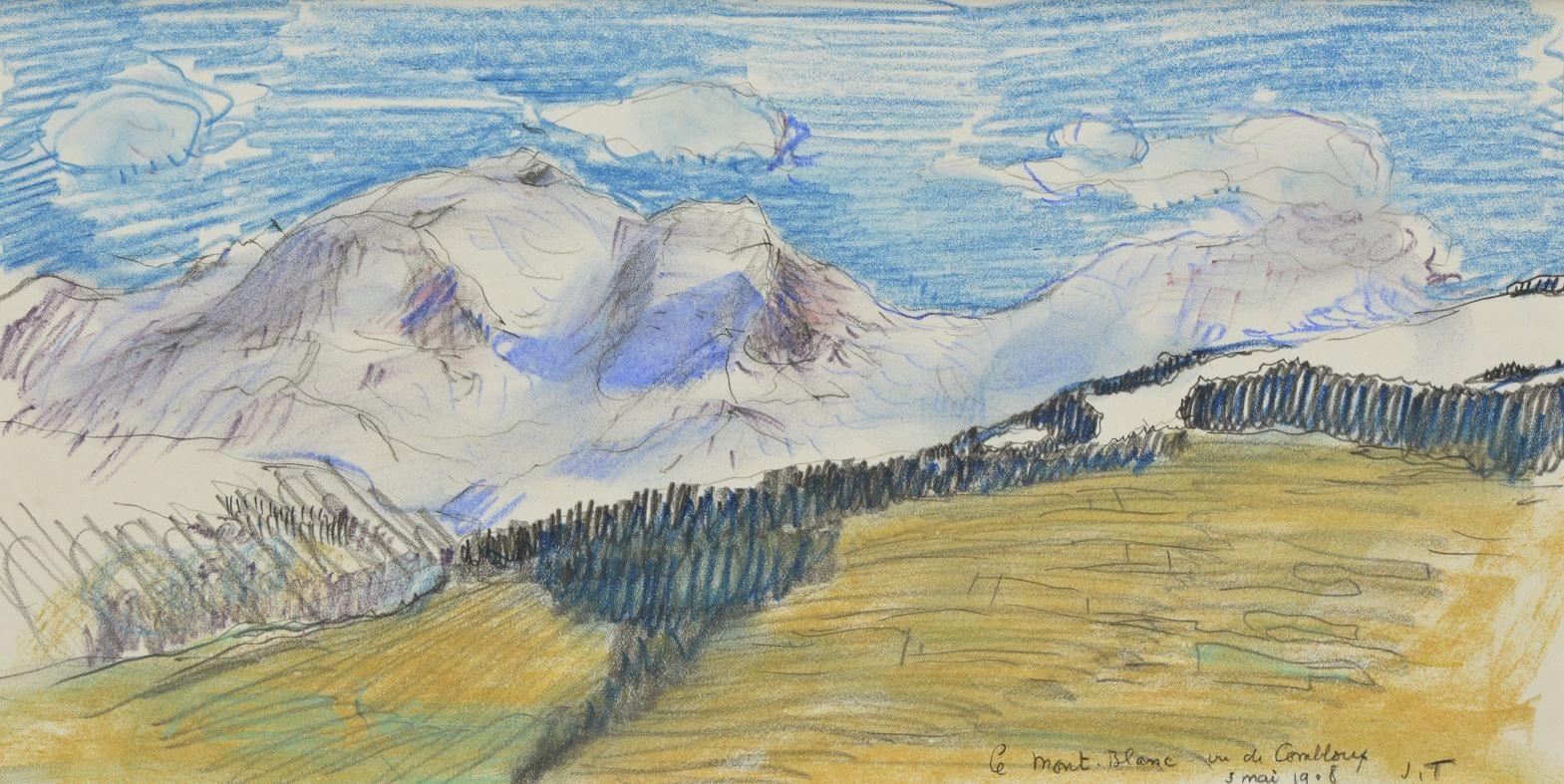
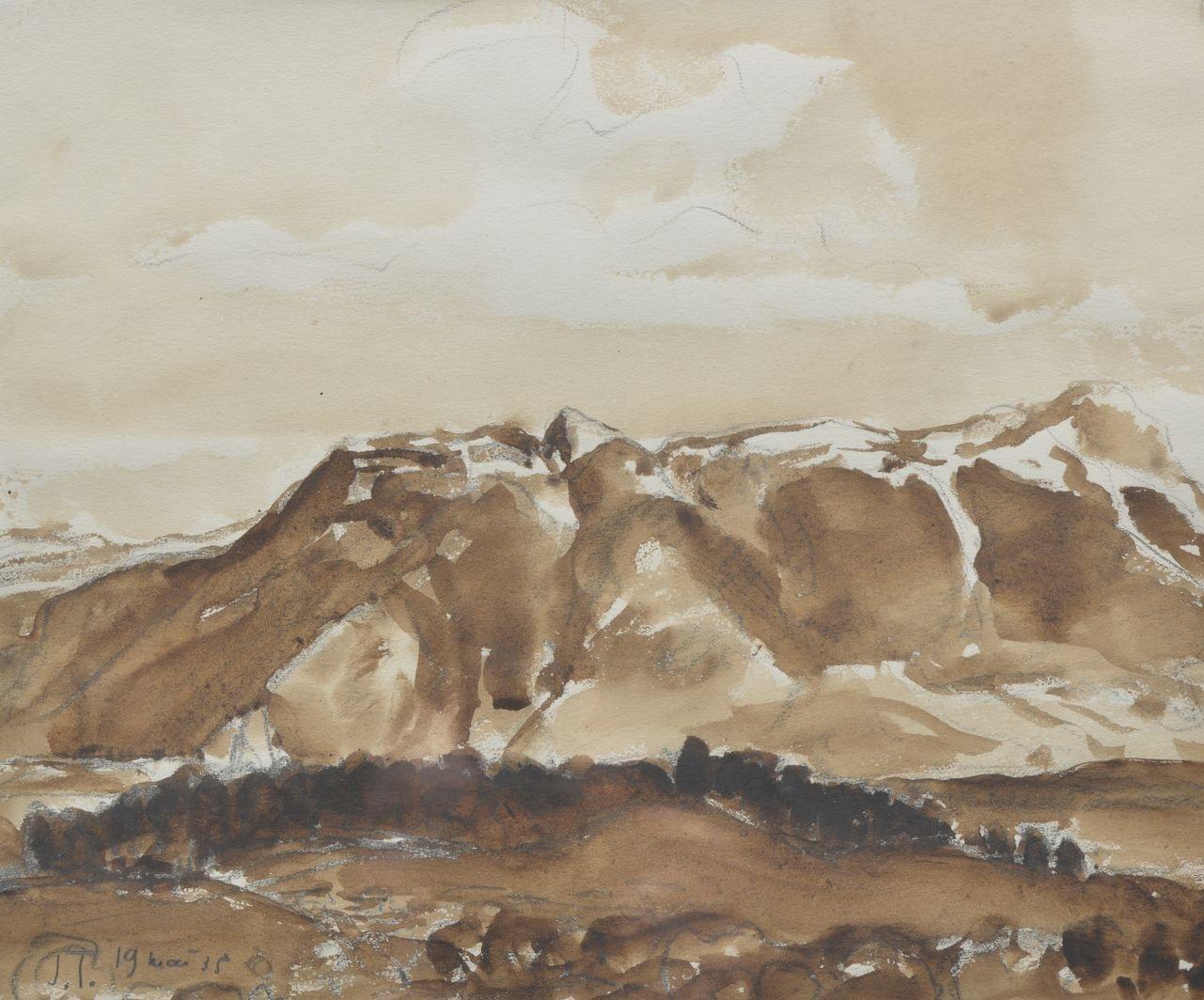
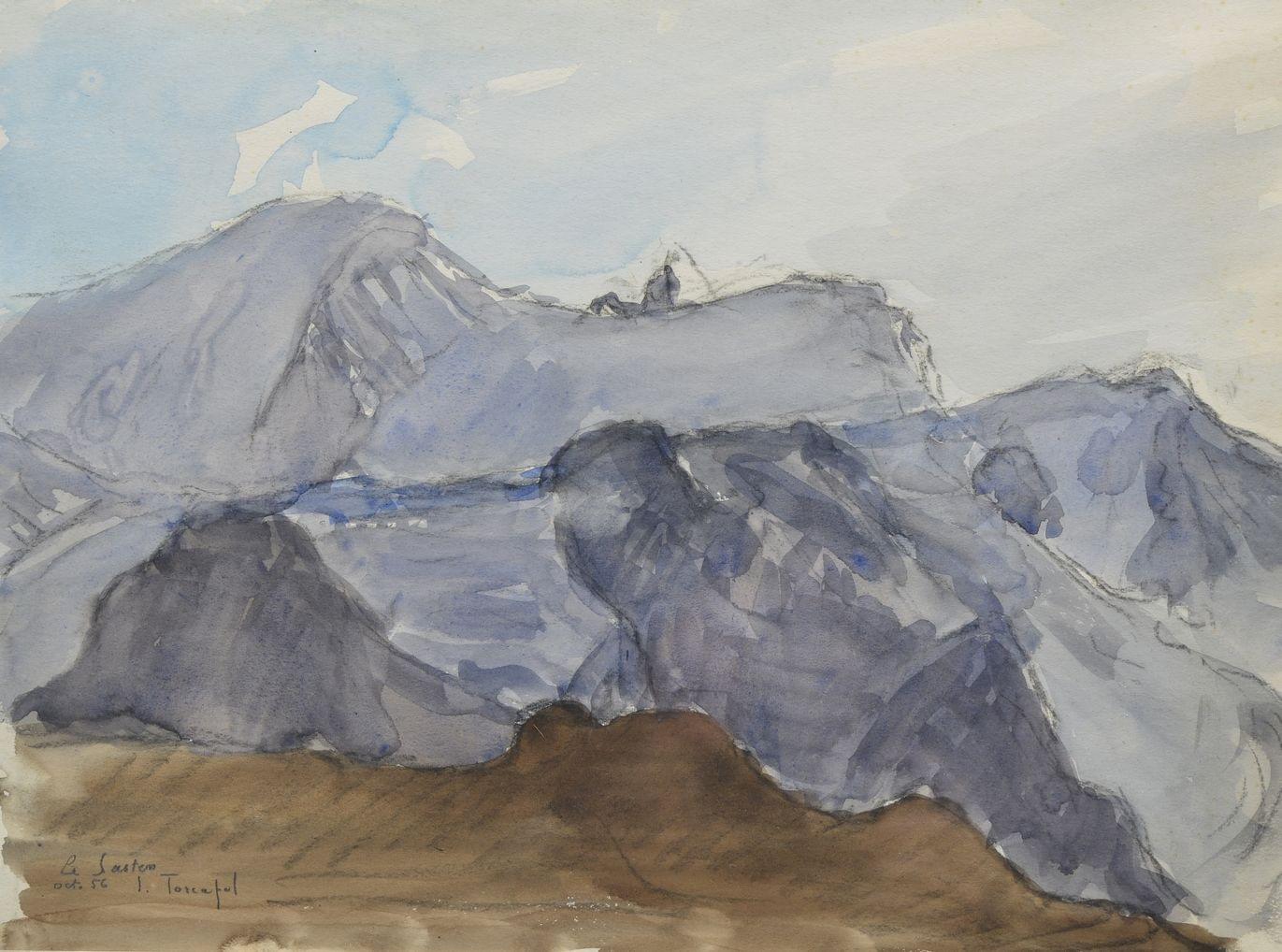
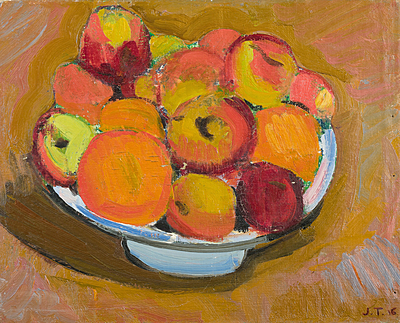
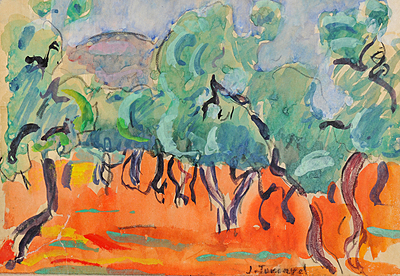
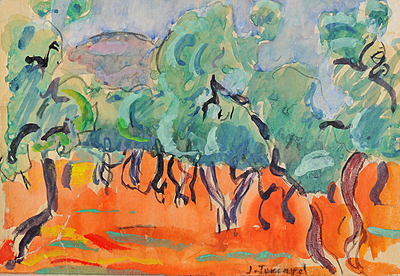
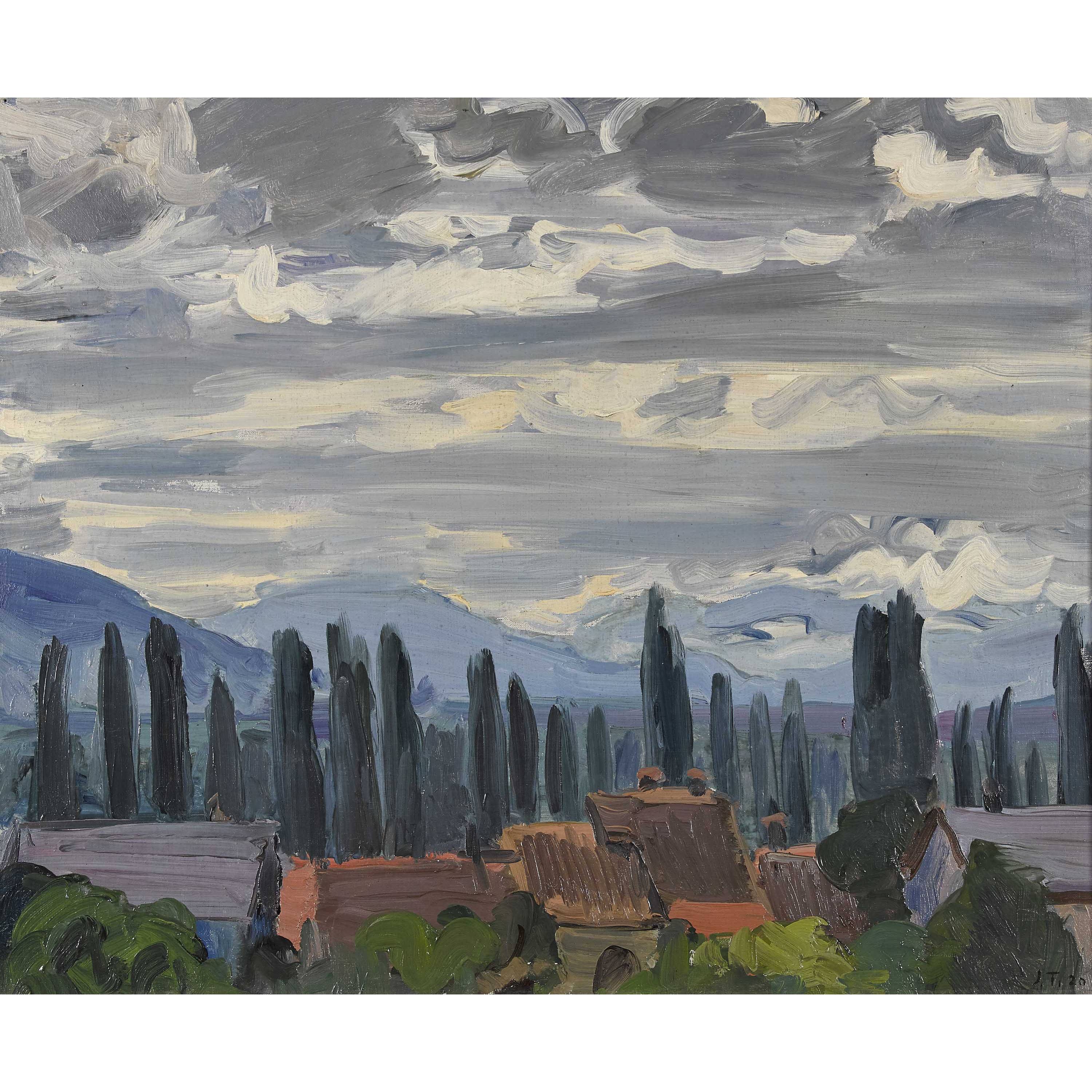
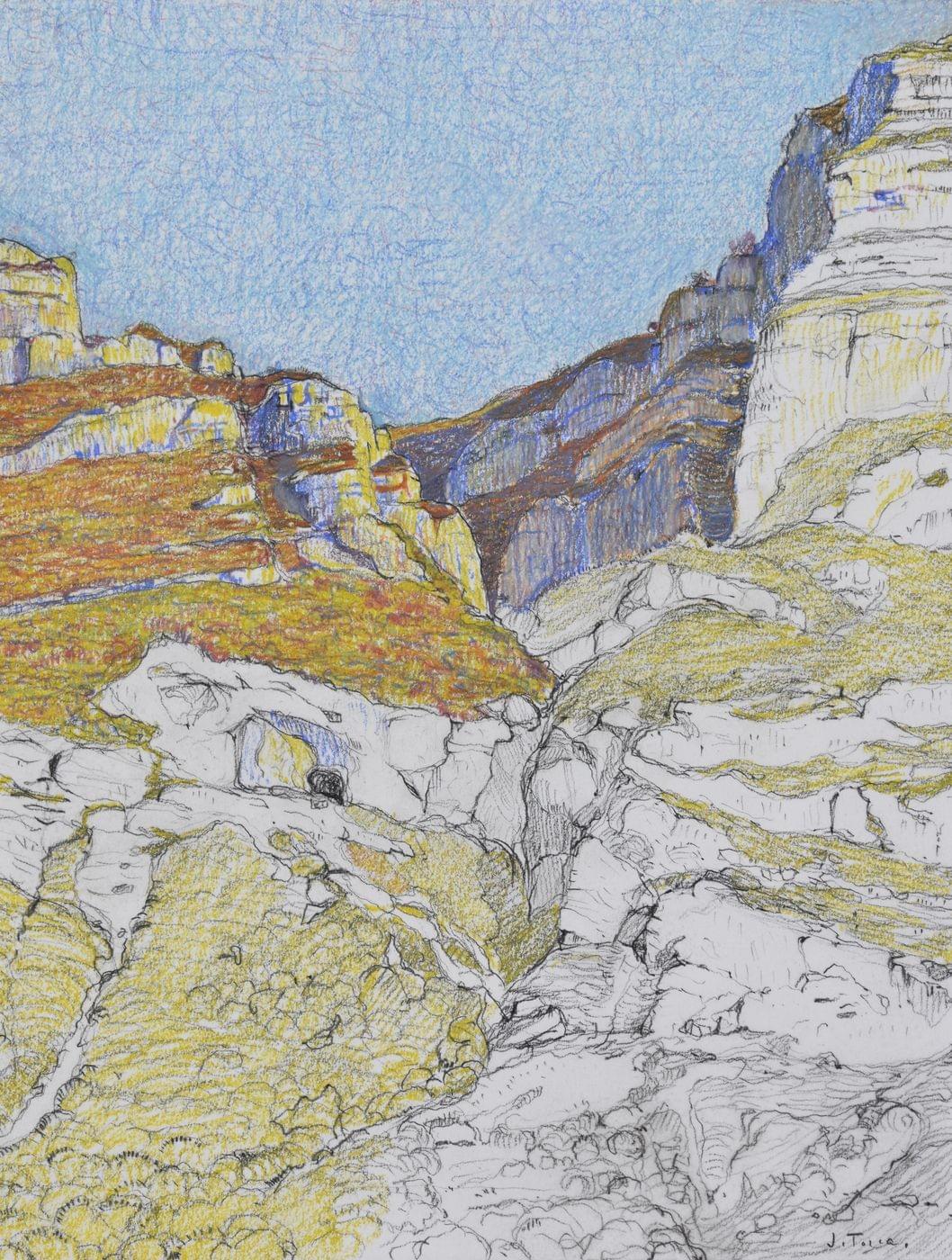
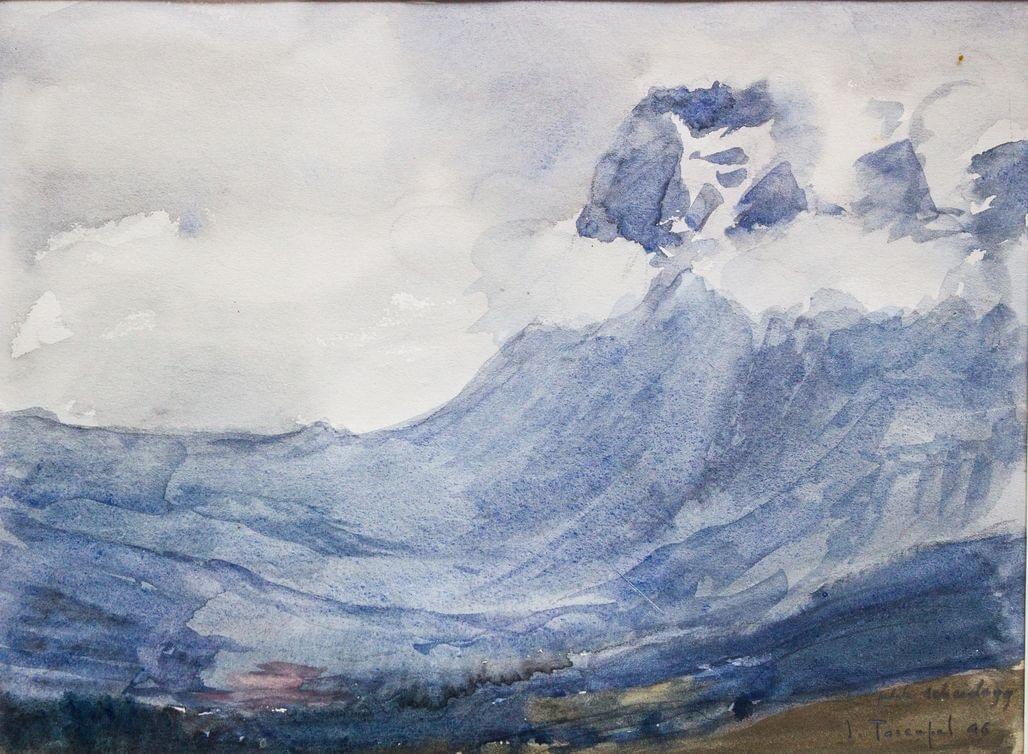
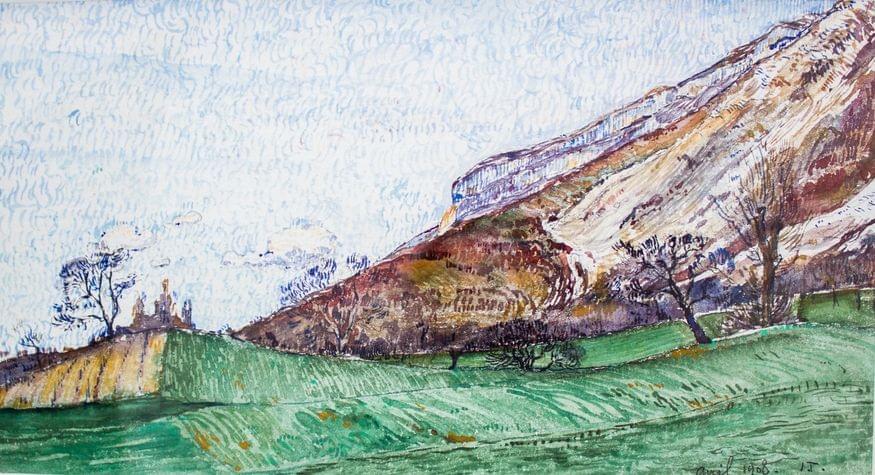
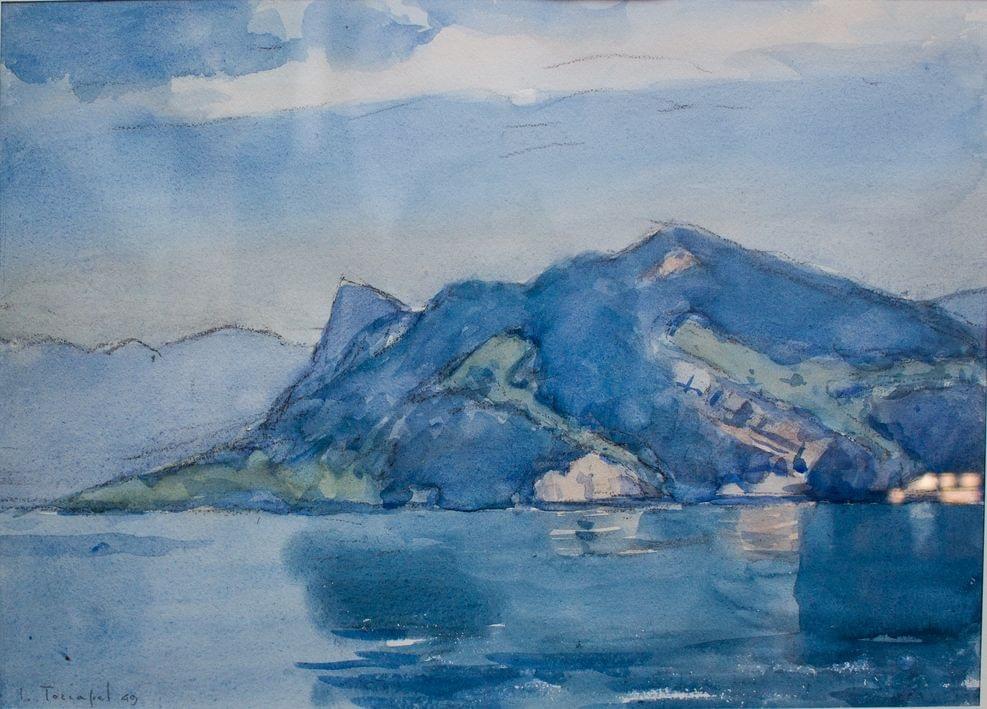
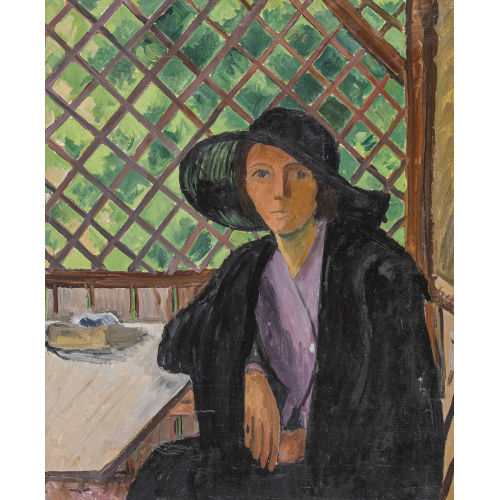
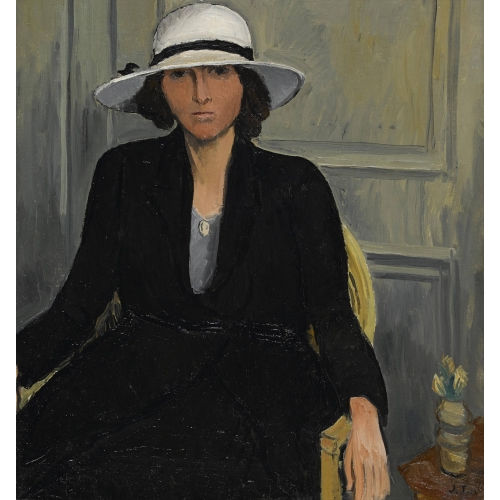
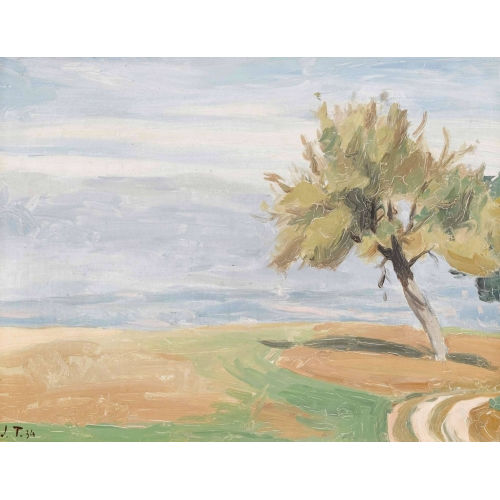
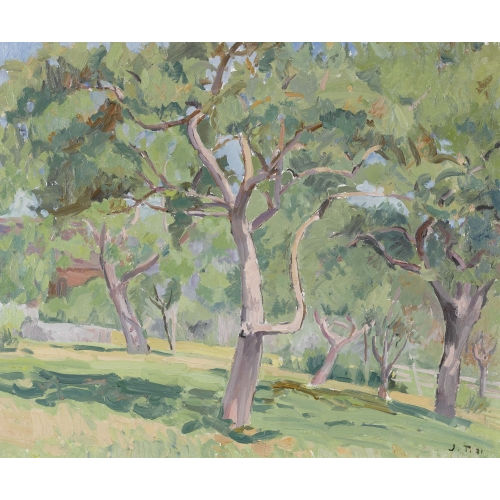
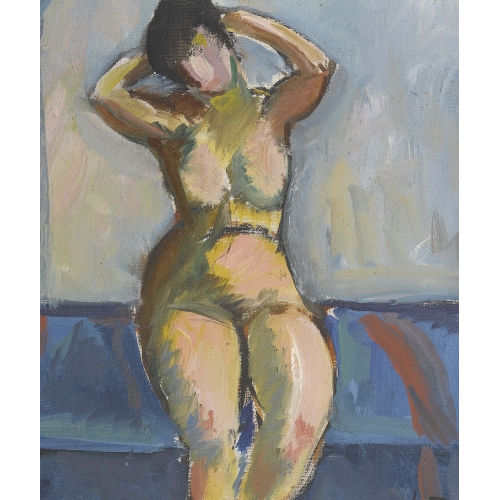
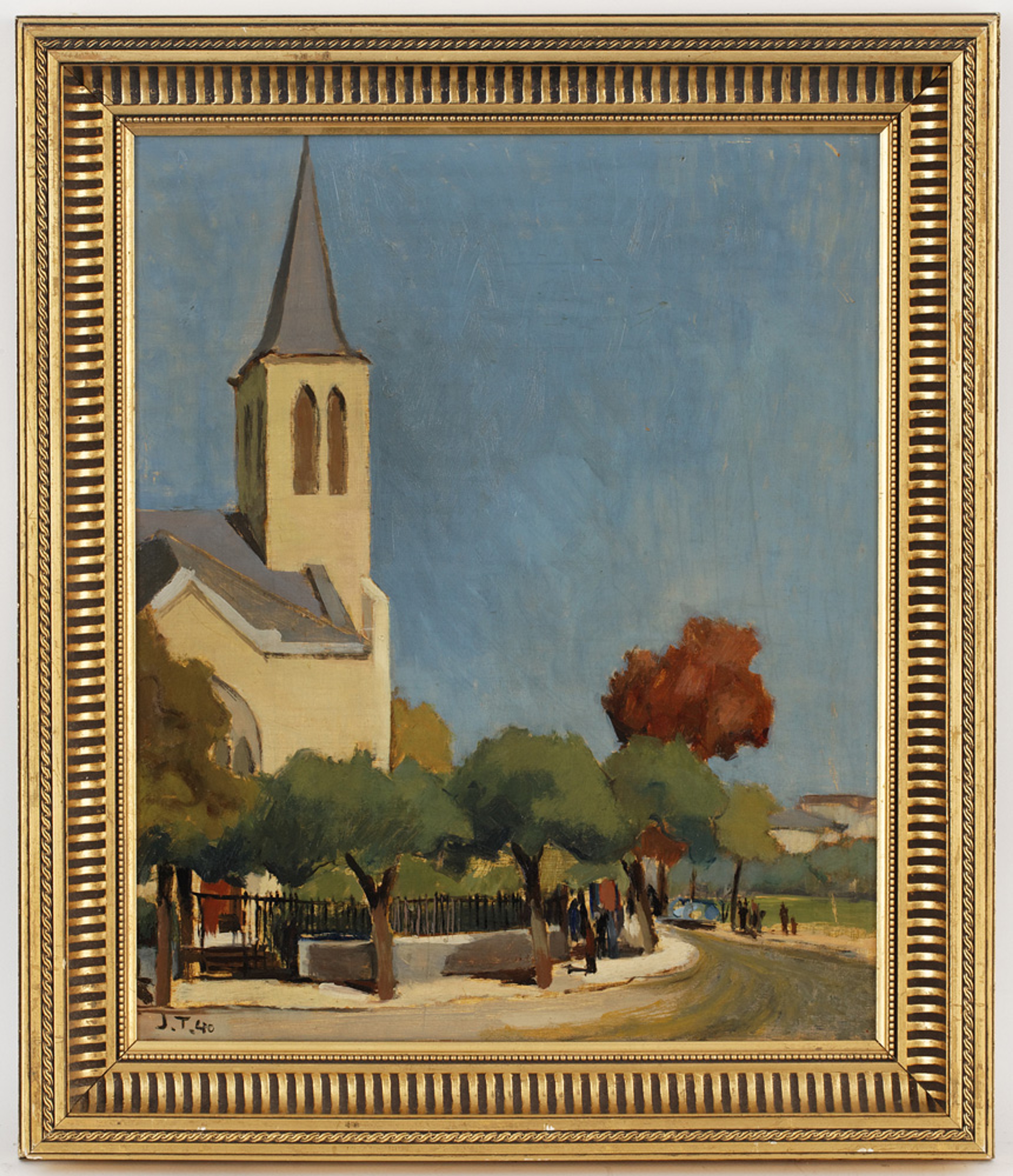
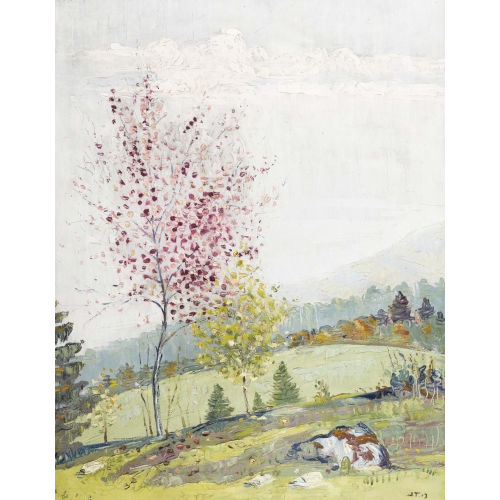
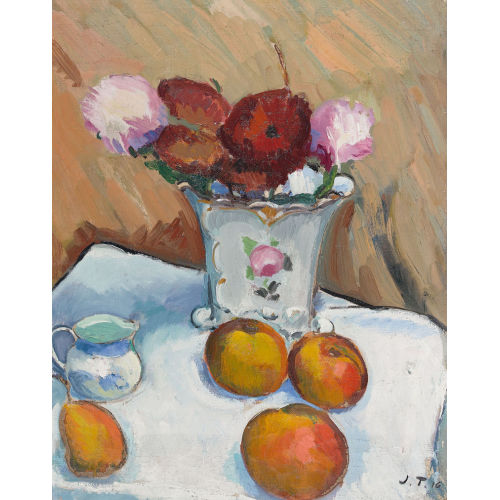
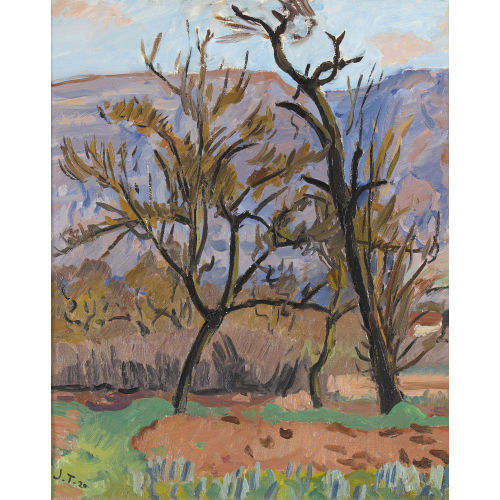
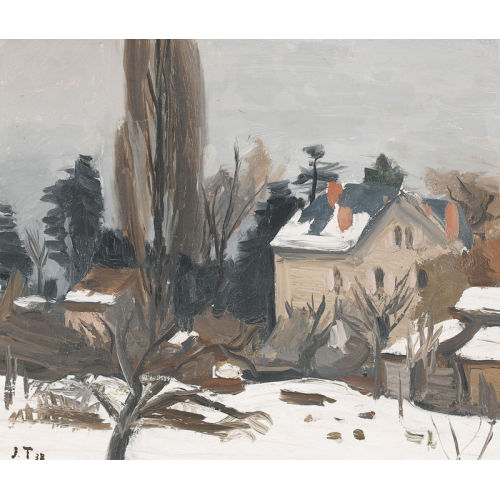
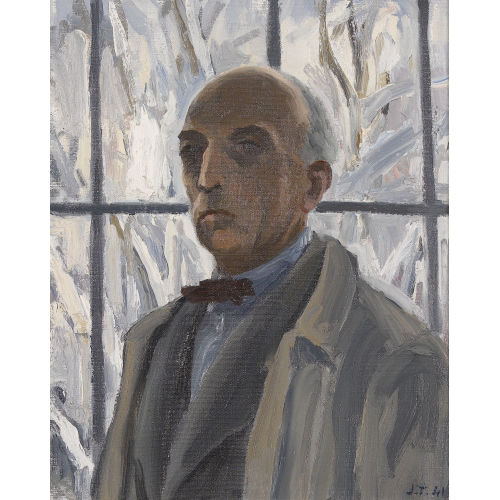
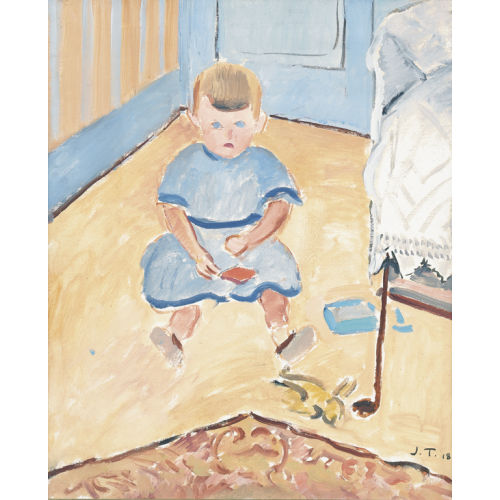
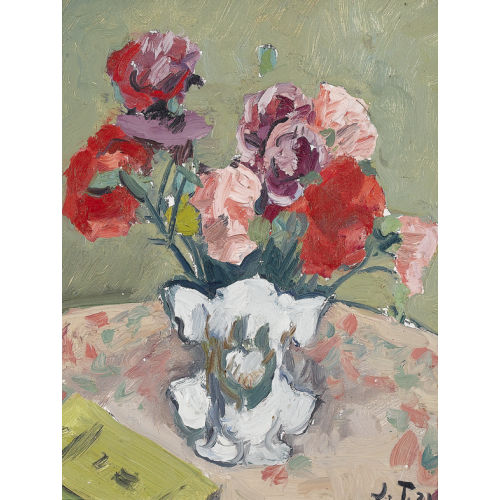
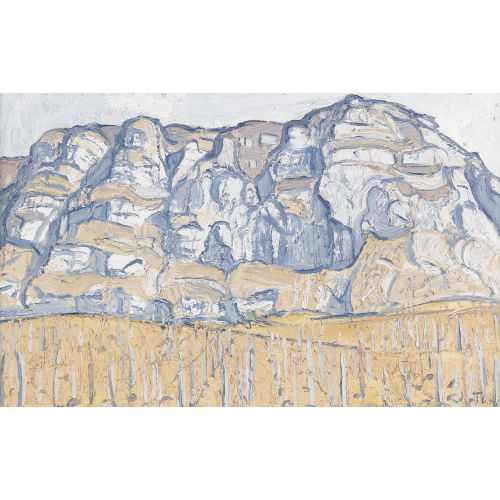
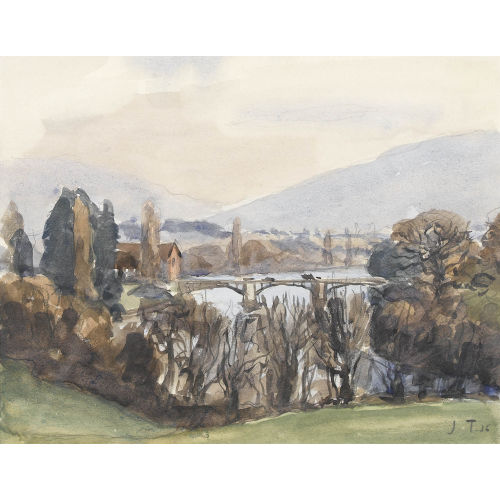
Born and deceased in Geneva (1881–1965), John Torcapel pursued painting and architecture side by side. Drawing connects these two practices: it serves to imagine a building as much as to observe the profile of a mountain or the rhythm of the trees. His pictorial oeuvre finds a privileged field in the landscapes of Geneva, which he transforms into constructed compositions rather than simple topographical views.
Salève bleu et peupliers (1911), a painting held by the Collection du Crest and lent for an exhibition at the Palais Lumière d’Évian, offers a concrete point of reference for this work. The title brings together Geneva’s familiar mountain relief and the verticality of the trees; it invites us to consider how these elements organise the surface. The Musée d’art et d’histoire de Genève included Torcapel in the exhibition L’Esprit de Hodler, devoted to the master’s presence in Geneva painting.
This lineage sheds light on his interest in the rhythms and forms of the landscape, without exhausting the scope of his personal approach.
His work as an architect places him just as firmly within the city. The collection preserved in the gta Archives of ETH Zurich brings together plans, correspondence and photographs relating to the Clarté building, designed by Le Corbusier and Pierre Jeanneret. Torcapel served as its site manager: his role here concerned the execution of the construction work, not the design of the project.
The collection entered the archives through a donation from his daughter Anne, herself an architect. In Onex, the temple built in 1964–1965 bears witness to their collaboration: John designed the building, while Anne supervised its construction. Between the canvas and the built space, Torcapel maintained a constant attention to the relationships between lines, volumes and light.
His career allows Geneva’s landscape and architecture to be read as two facets of a single visual culture.