Giorgio de Chirico
Born in Volos (Grèce) on 10 July 1888.
Died in Rome (Italy) on 20 November 1978.
Italian, born in Greece · Metaphysical Art · Neo-Metaphysical painting (from about 1968).
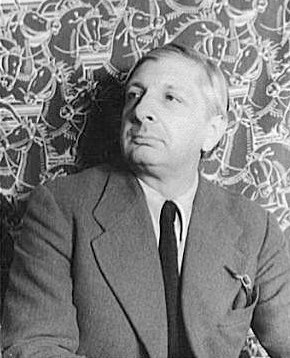
Giorgio de Chirico fashioned one of the most arresting visual languages of European modernism. Through metaphysical painting, he created a world of silent squares, vertiginous perspectives, statues, distant trains, mannequins, and objects detached from their ordinary purpose. His training at the Athens Polytechnic and at Munich’s Academy of Fine Arts was informed by classical culture and by his engagement with Arnold Böcklin, Max Klinger, Schopenhauer, and Nietzsche.
After Florence, Paris became the decisive setting for his early development. He exhibited at the Salon d’Automne and the Salon des Indépendants, while Guillaume Apollinaire recognised the originality of an art that turned the modern city and memories of antiquity into enigmatic pictorial spaces. There, the historic core of Metaphysical Art took shape, exerting a profound influence on the Surrealists and on twentieth-century visual culture more broadly.
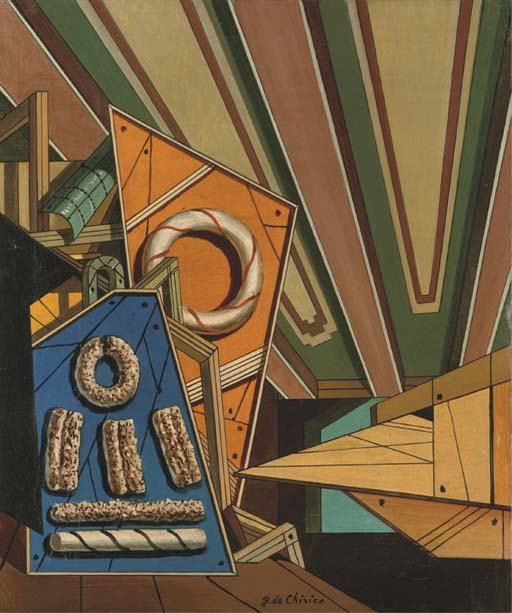
His Ferrara period expanded the repertoire of metaphysical interiors, still lifes, and imagined architectures. In Rome, de Chirico participated in the debates around “Valori Plastici” while pursuing parallel activities as a writer, theorist, stage designer, and illustrator; literary thought and visual practice remained closely connected throughout his work.
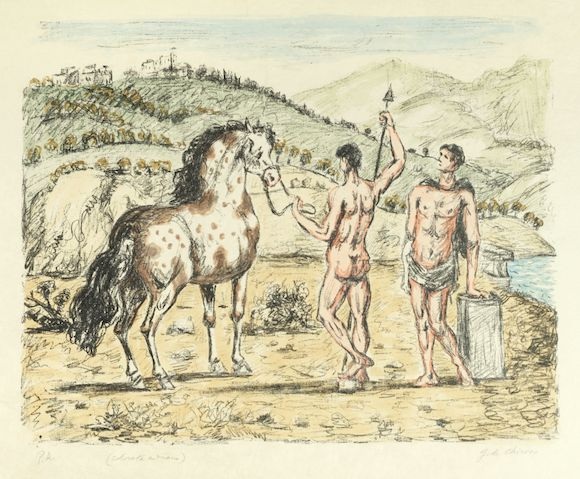
From the 1920s onward, his oeuvre encompassed a range of approaches: returns to the Old Masters, portraiture, landscape, still life, horses, classical myth, and theatrical design. Its international reception followed this wide-ranging career, from Paris exhibitions and American presentations to the major museums that preserve key examples of his art.
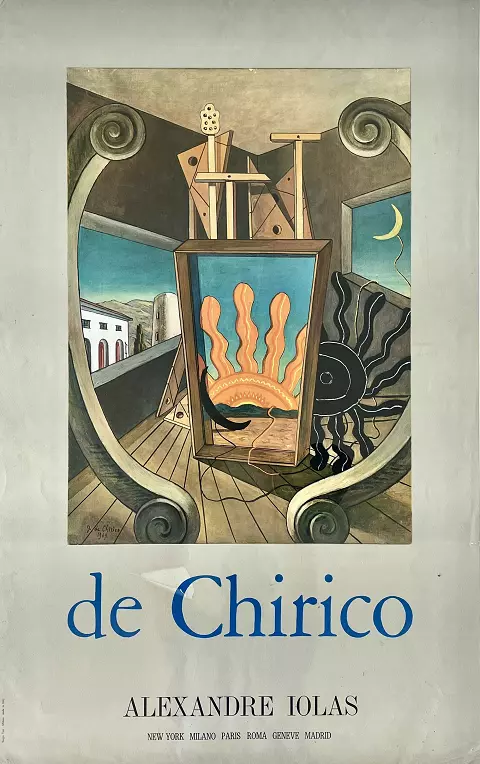
In his late Neo-Metaphysical phase, he revisited mannequins, archaeologists, Muses, piazzas, and interiors in a brighter palette and a more serene mood. The 1969 lithograph Intérieur métaphysique belongs naturally within this body of work.
The works by Giorgio de Chirico presented by Swiss Art Gallery extend this artistic journey and take their place naturally within this corpus.