Carl Theodor Meyer-Basel
Born in 1860.
Died in 1932.
He received his initial training from the copper engraver Friedrich Weber. His earliest public appearances include the National Exhibition in Zurich in 1883 and the International Exhibition in Berlin in 1891.
Having settled in Munich at the end of the nineteenth century, he was among the founders of the Verein für Original-Radierung in 1891 and, from 1892 onwards, emerged as an active member of the Münchener Secession. He is also recorded as a member of the Deutscher Künstlerbund and exhibited repeatedly with the Münchener Secession, notably during the periods 1893–1896 and 1905–1916. In 1893, a portfolio of prints featuring motifs from Marburg and its surroundings was published in collaboration with Otto Ubbelohde.
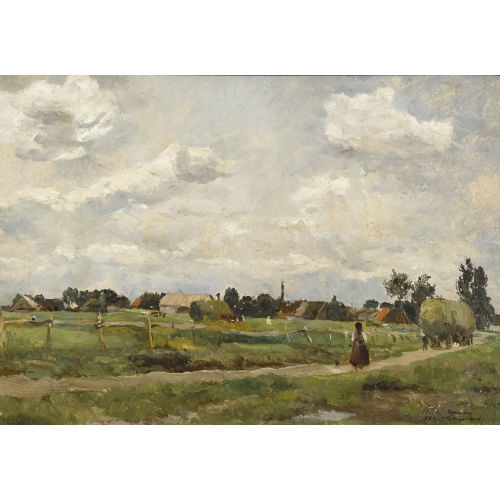
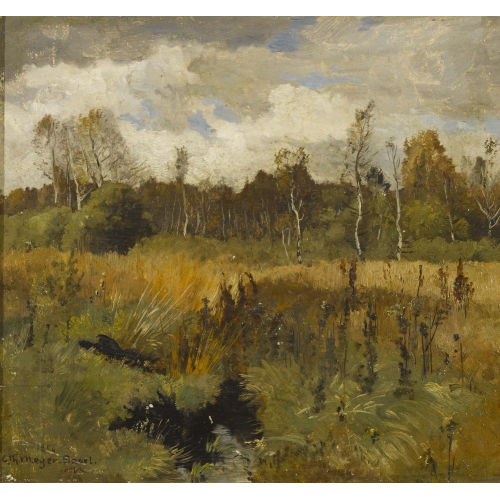
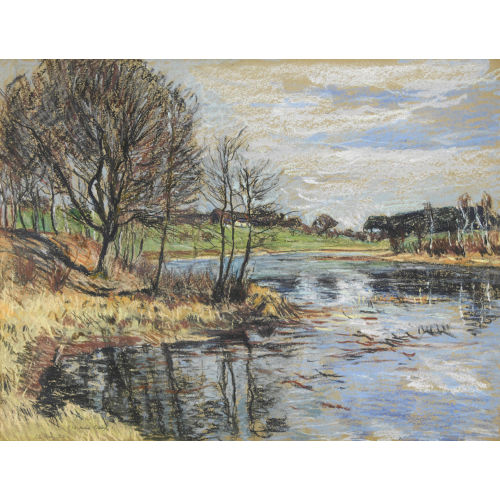
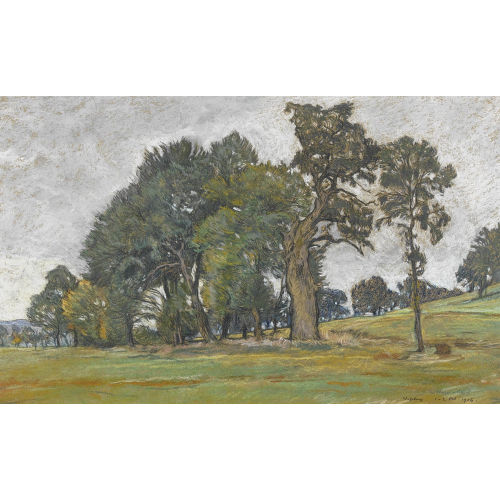
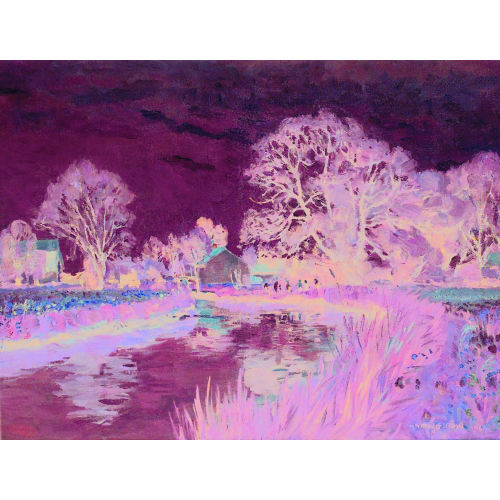
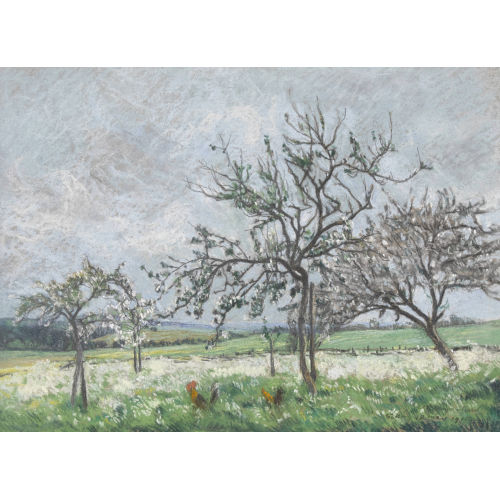
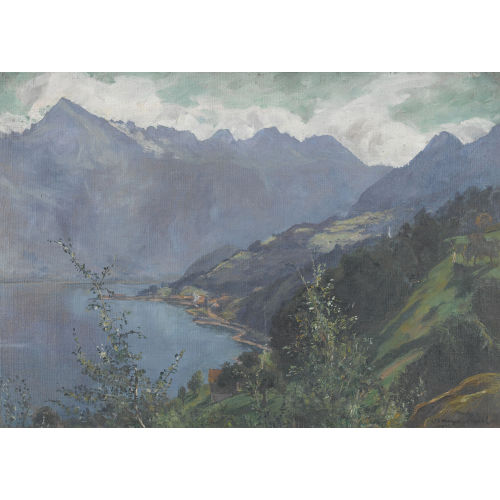
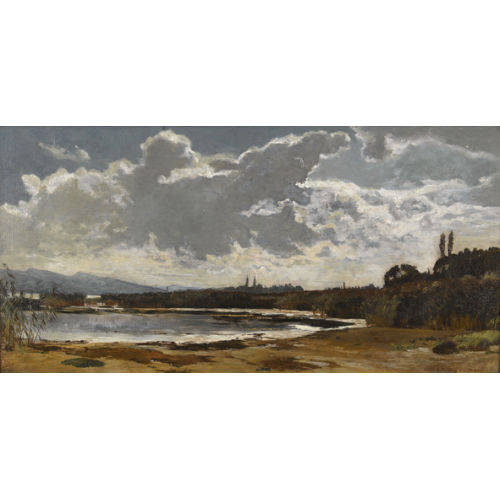
Meyer-Basel’s work focuses on the depiction of landscapes, favouring tranquil motifs whose particular atmospheric quality he sought to convey. He worked in several graphic and painterly techniques: etchings (Radierungen), lithographs, pastels and oil paintings. At the same time, he produced a large number of postcards executed in chromolithography.
According to the documentation, his etchings are distinguished by a strong sense of volume, an expressive interplay of light and shadow, and nuanced tonal gradations.
After several decades of activity in Germany, he returned permanently to Switzerland in 1919 and settled in Hauptwil in the canton of Thurgau. A 1930 publication of the Kunsthalle Basel includes a text signed by C. Th.
Meyer-Basel.