August Babberger
Born in Hausen im Wiesental (Germany) on 8 December 1885.
Died in Altdorf (Switzerland) on 3 September 1936.
German · Symbolism and Expressionism · Alpine landscape and monumental painting.
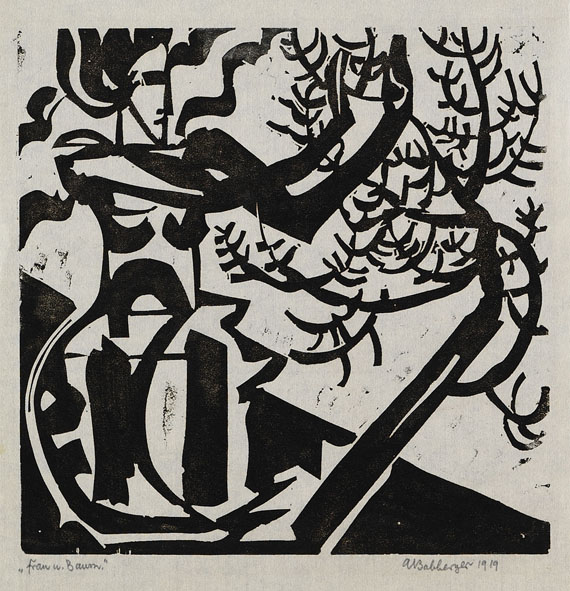
August Babberger was a German painter and printmaker whose career linked Baden with Central Switzerland. His family moved to Basel in 1895, where he trained in decorative painting and attended the school of arts and crafts. With support from Hans Thoma, he studied with the etcher Walter Conz in Karlsruhe in 1908–1909, before continuing his training with Augusto Giacometti in Florence between 1909 and 1911.
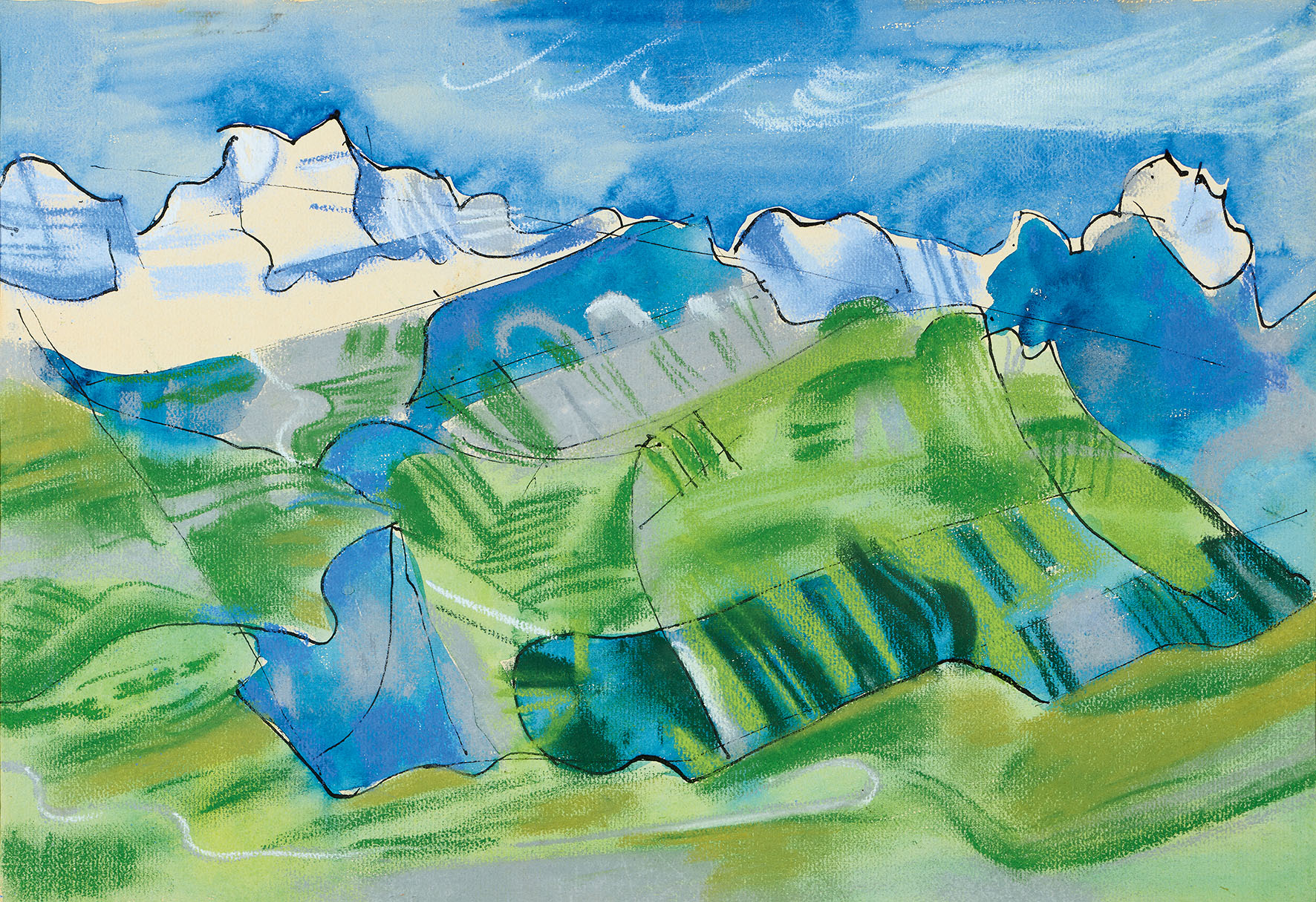
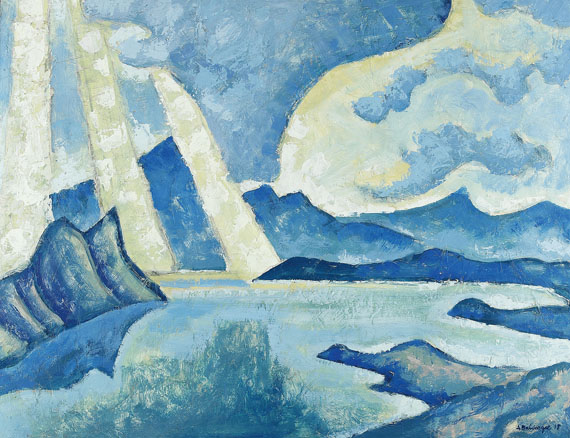
Based in Frankfurt from 1912 to 1920, he married the Lucerne artist Anna Maria Tobler, known as Anna Babberger-Tobler, in 1912. Lake Lucerne, the mountains of Uri and the Klausen Pass became central subjects. Drawing in particular on Ferdinand Hodler’s example, his visual language combined simplified forms, rhythmic composition and expressive colour.
Appointed professor at the Badische Landeskunstschule in Karlsruhe in 1920, Babberger became its director in 1923. His teaching connected painting with monumental and decorative techniques, including fresco, mosaic and sgraffito. Heinrich Danioth attended his classes in 1925.
The paintings executed for the Reformed church in Wolhusen that same year document his work in Central Switzerland.
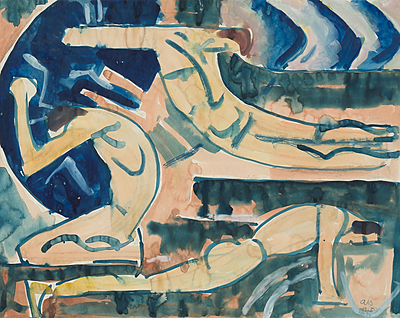
Alongside mountain landscapes, he explored the human figure, portraiture and still life. His monumental compositions sought a unity of humanity and nature rather than a purely topographical description of landscape. Dismissed from his teaching post under the National Socialist regime in 1933, he continued working in Switzerland.
A substantial body of his work entered the Staatliche Kunsthalle Karlsruhe as a gift in 1962.
Museum holdings trace this development: Kunsthalle Karlsruhe owns Knabenkopf “Walter”, 1908, inventory 2414, while the Städel Museum holds Frauen im Grünen, 1931, inventory SG 1174. His reception is also documented by the Kunstmuseum Luzern exhibition of 1958, the Kunstmuseum Hohenkarpfen exhibition of 2000 and his inclusion in Lucerne’s schön?! collection exhibition in 2025–2026.
Gloggner’s archive records hammer prices of CHF 4,200 for Blick auf den Pilatus in 2001, CHF 5,000 for Sommerblumen in 2003 and CHF 1,700 for a view of the Schächental in 2025. Schuler offered Figurenstudie, 1915, in December 2016 with an estimate of CHF 1,500–2,200; the consulted page displays no result. These references concern different works, techniques and sizes, rather than a uniform market value.