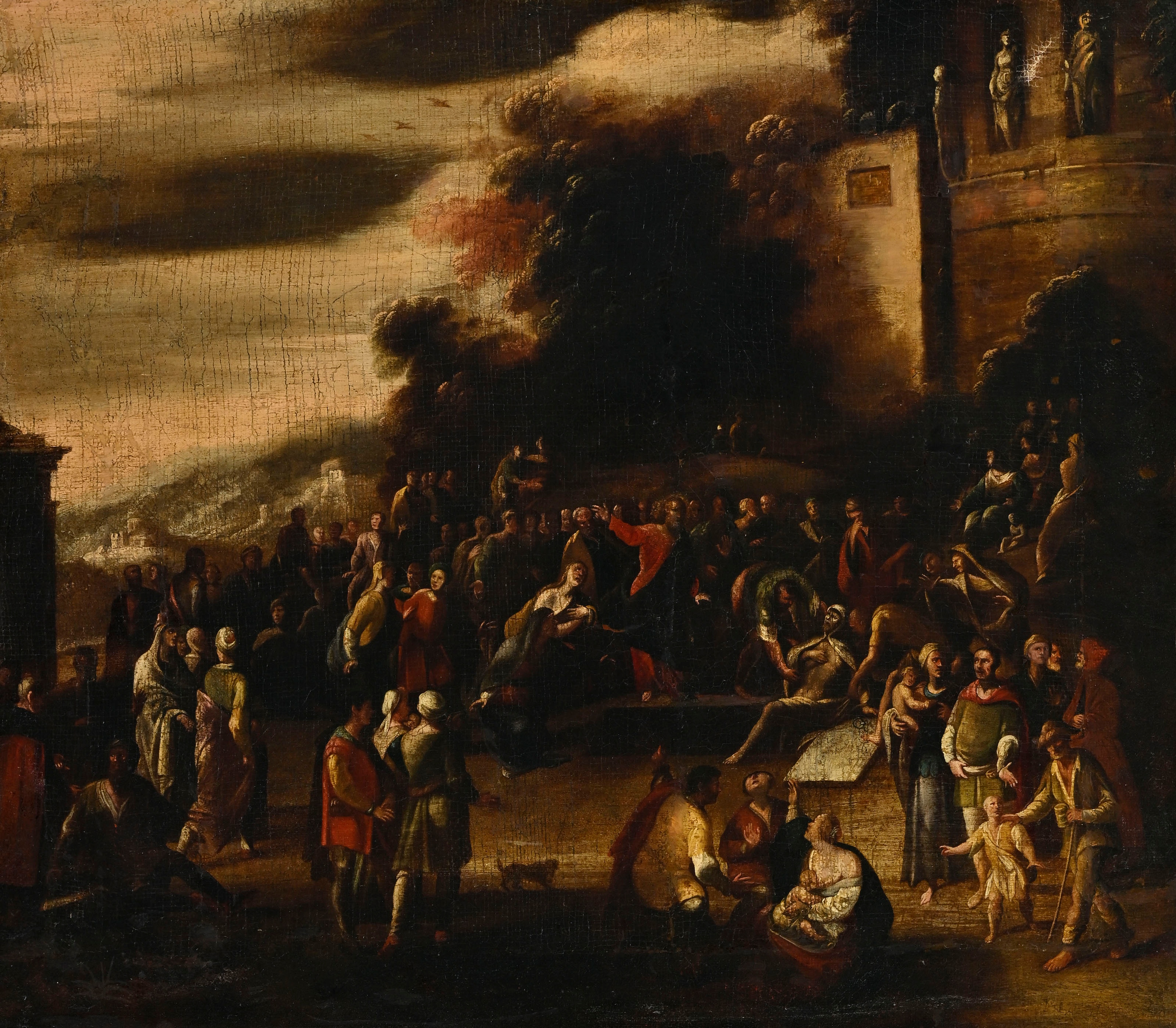
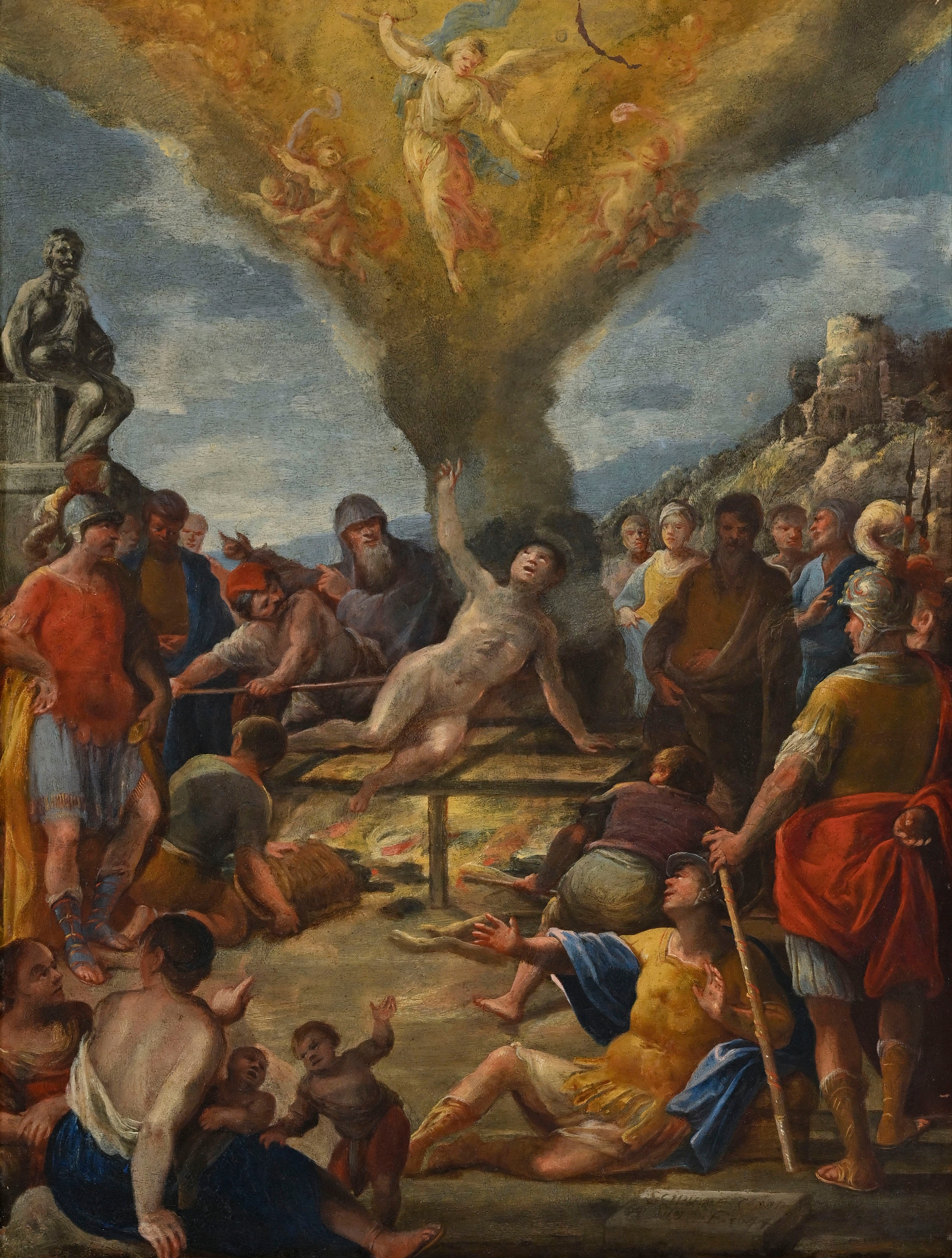
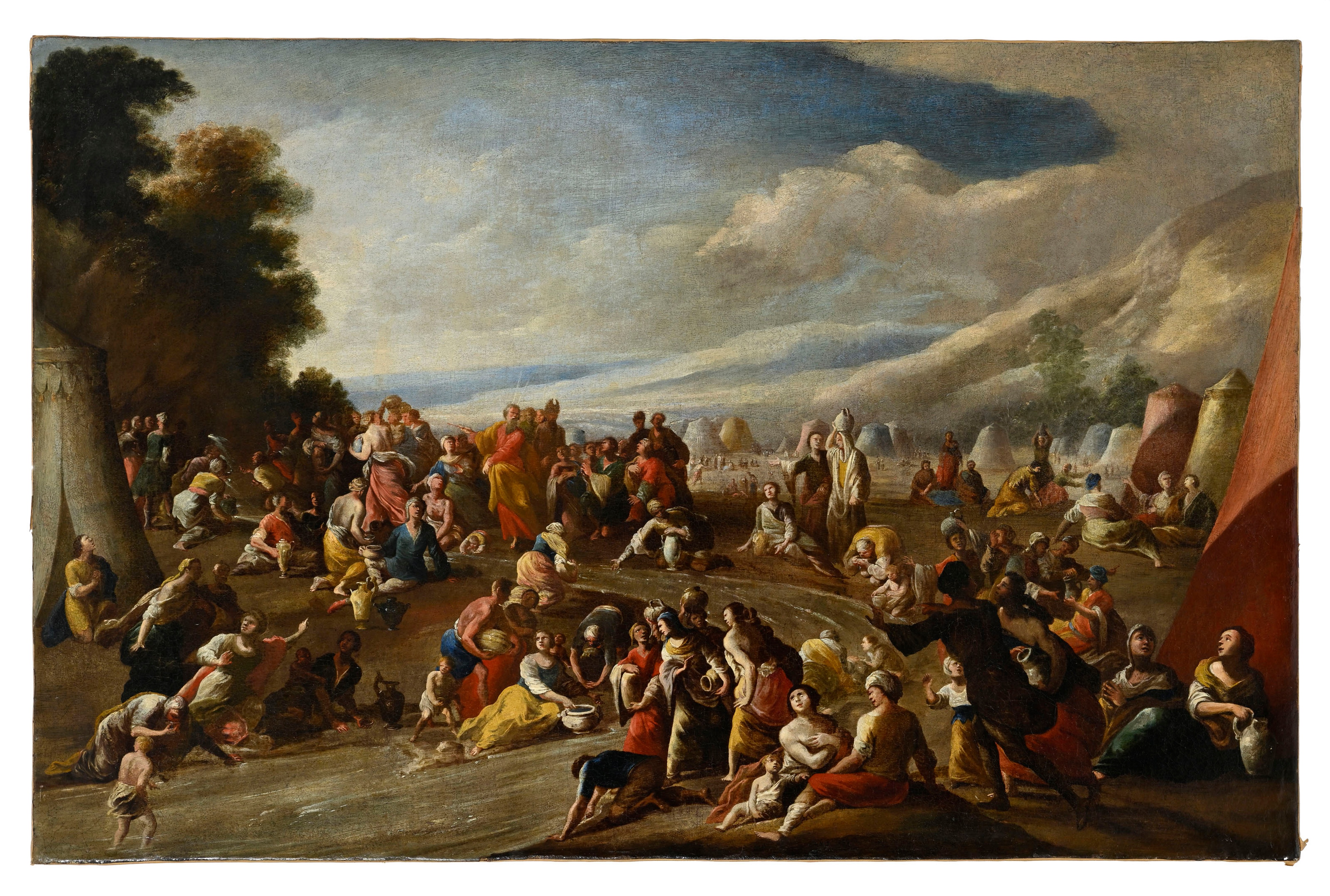
Scipione Compagno belongs to the artistic milieu of seventeenth-century Naples. His works encompass religious episodes and secular gatherings, favouring subjects that bring several figures together within a shared space. The Beheading of Saint Januarius at the Kunsthistorisches Museum in Vienna, painted on copper around the middle of the century, bears his signature. Its support distinguishes this work from his compositions on canvas.
The Fair at Impruneta, held at the Palazzo Reale in Genoa, demonstrates his interest in collective scenes. The Multiplication of the Loaves and Fishes, a signed canvas dated 1646 and documented by the Fototeca Zeri, places this narrative approach within a biblical setting. These works illuminate the thematic range of his painting, between sacred history and the spectacle of social life.
This profile brings together identity references for Scipione Compagno and paintings, drawings and works on paper documented in auction catalogues.
Documented auction references
3auction references
1auction house
1documented result with a price
Piguet
References include catalogue entries and available results; they do not all represent completed sales. Attributed works and special lots are excluded from the priced results.
SwissArtGallery documentary note based on the cited sources. Titles, media and qualifications are provided in the profile language; the original catalogue wording remains available in each record. Profile updated :
George Ricard-Cordingley (1873–1939), also known as Georges Ricard-Cordingley, was born in Lyon to a French father and an English mother. He trained in Lyon and at the Académie Julia…
Arcangelo Salvarani (1882–1953) was born in Quartirolo di Carpi and died in Modena. He worked mainly in watercolour, alongside mural decoration and teaching at the Fermo Corni instit…
Jac Martin-Ferrières (1893–1972), born Jacques-Auguste Martin, was the son of painter Henri Martin. Abandoning scientific studies, he developed an initially pointillist practice befo…