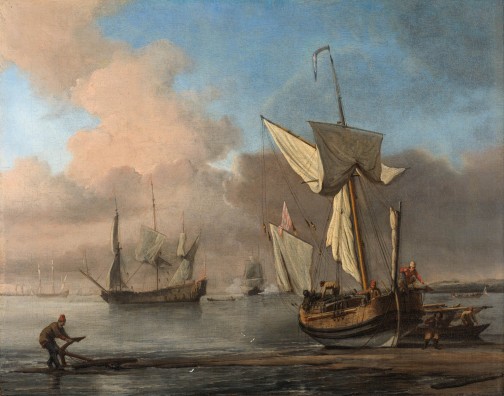
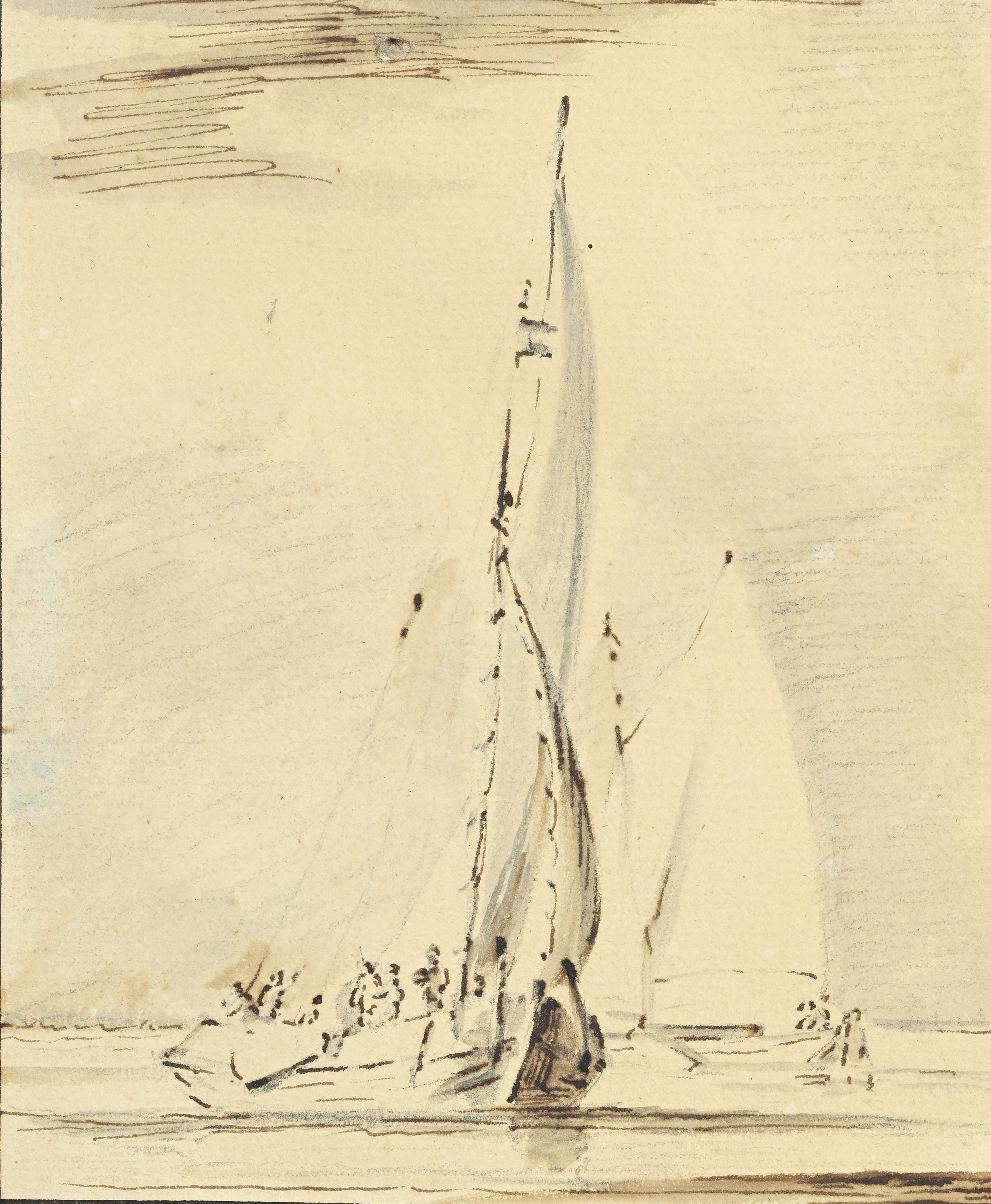
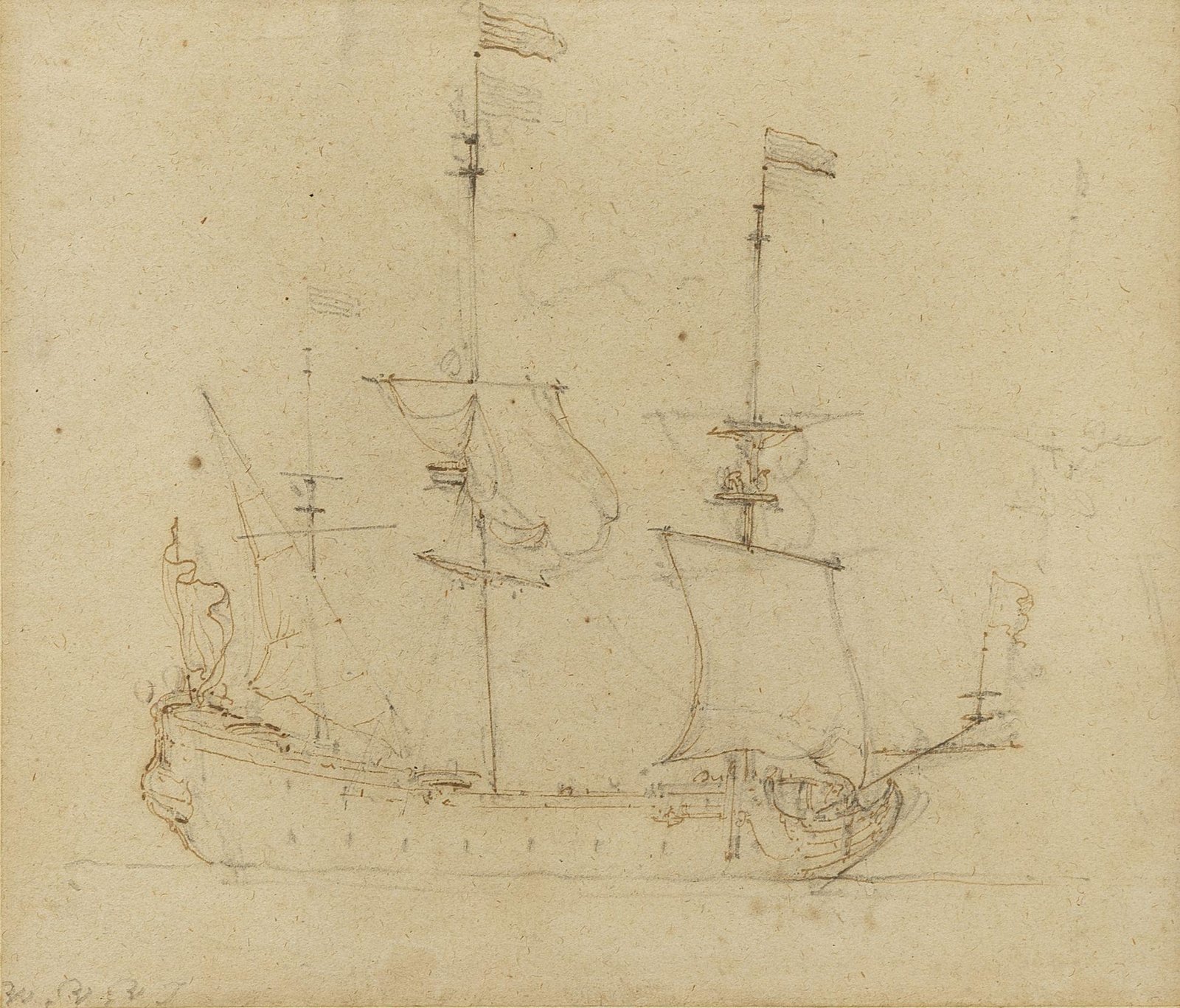
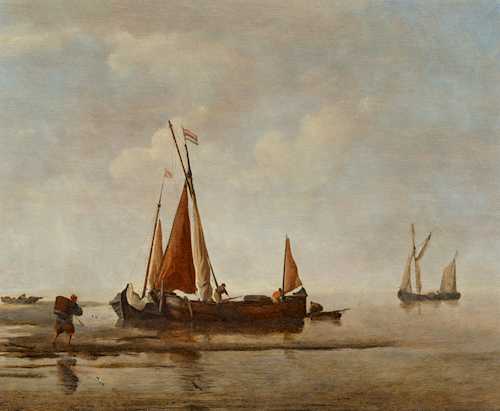
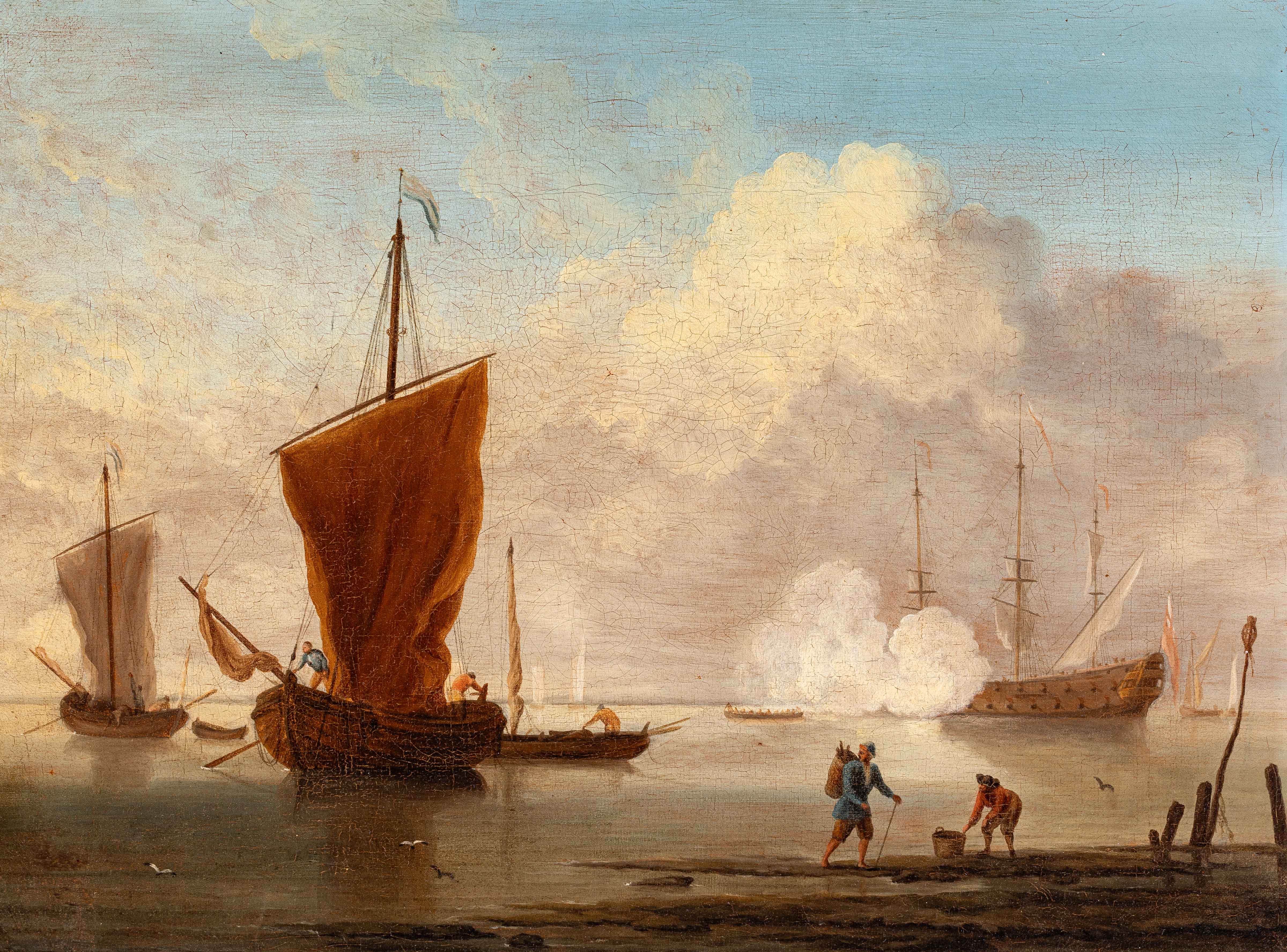
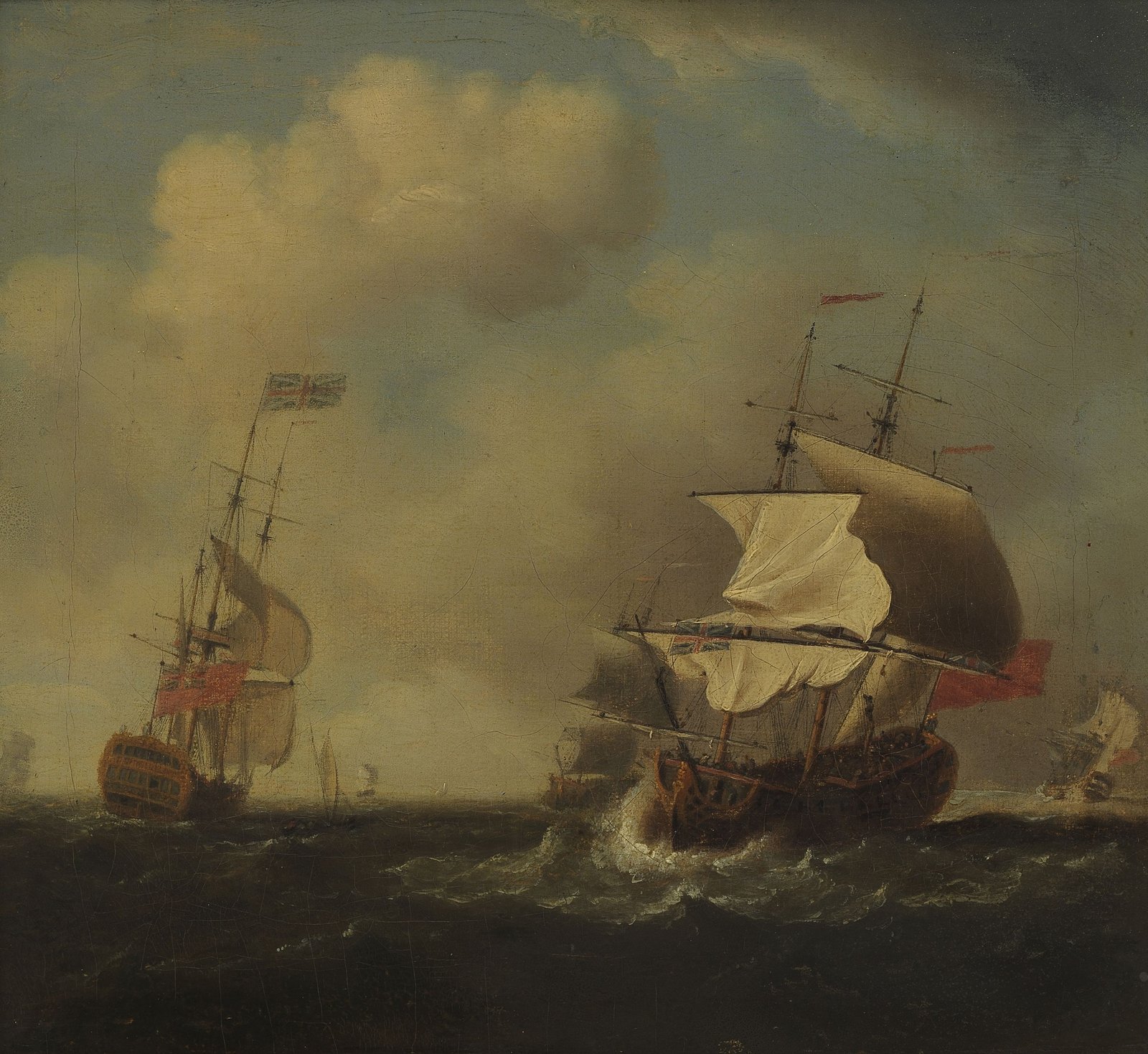
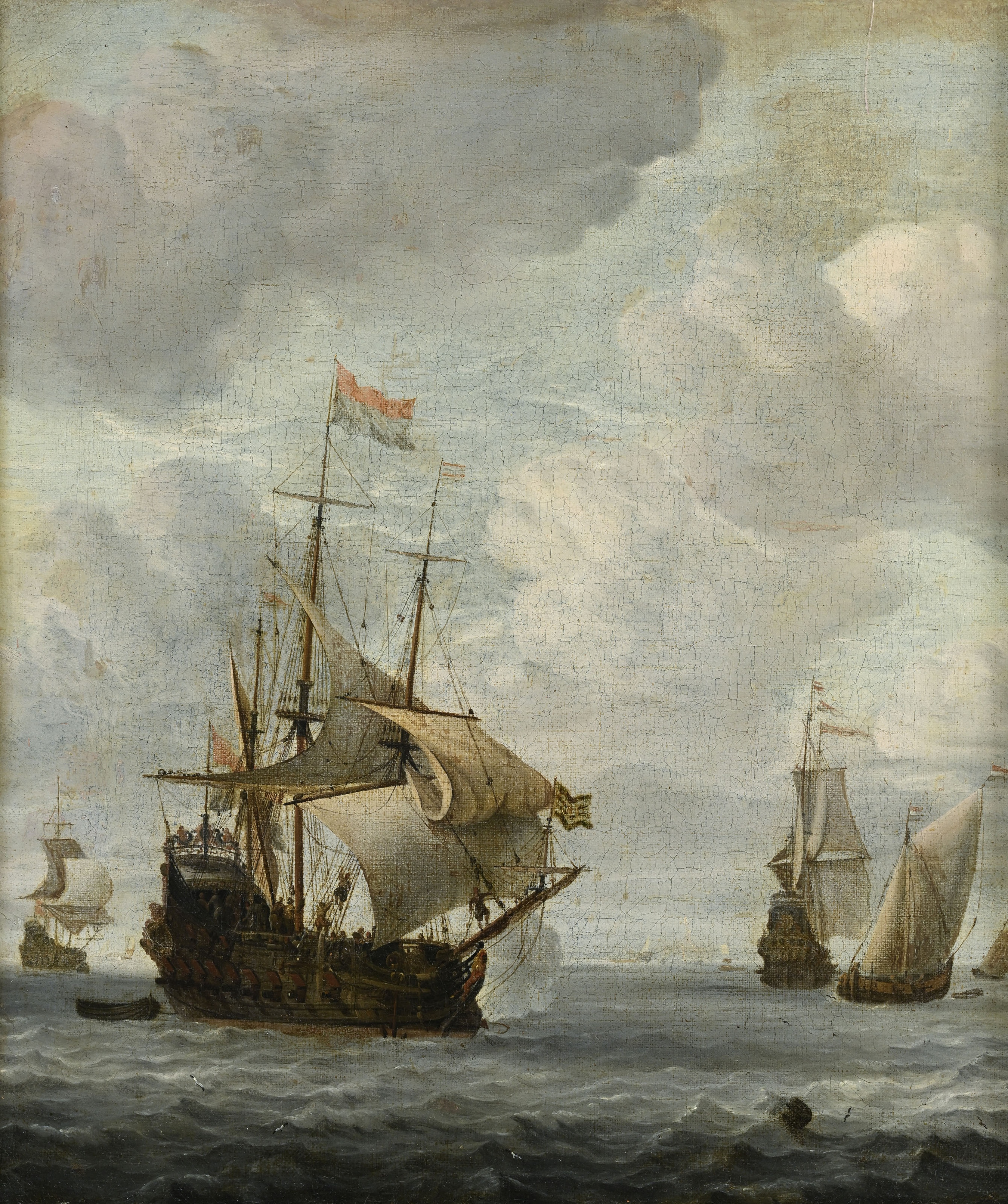
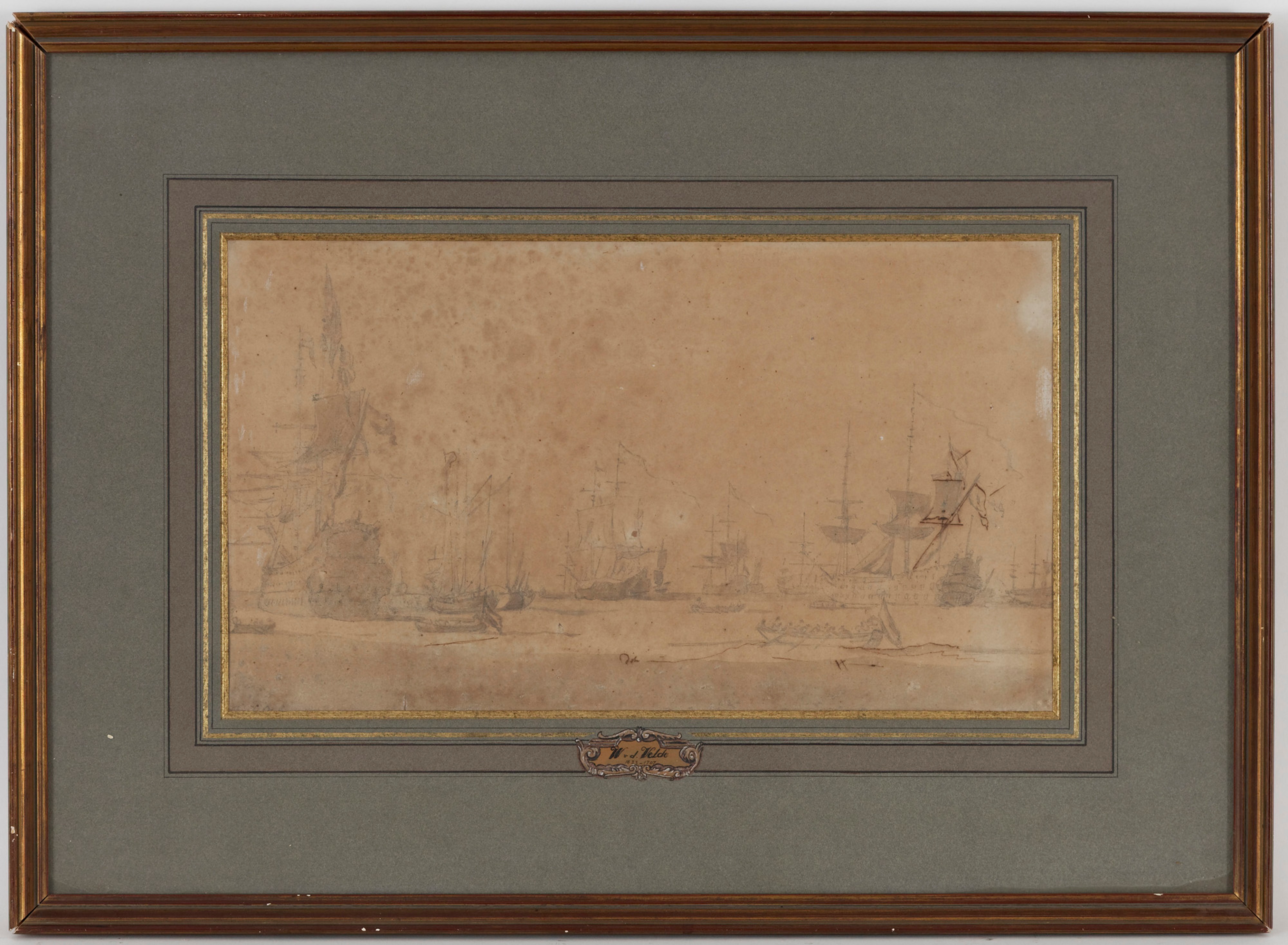
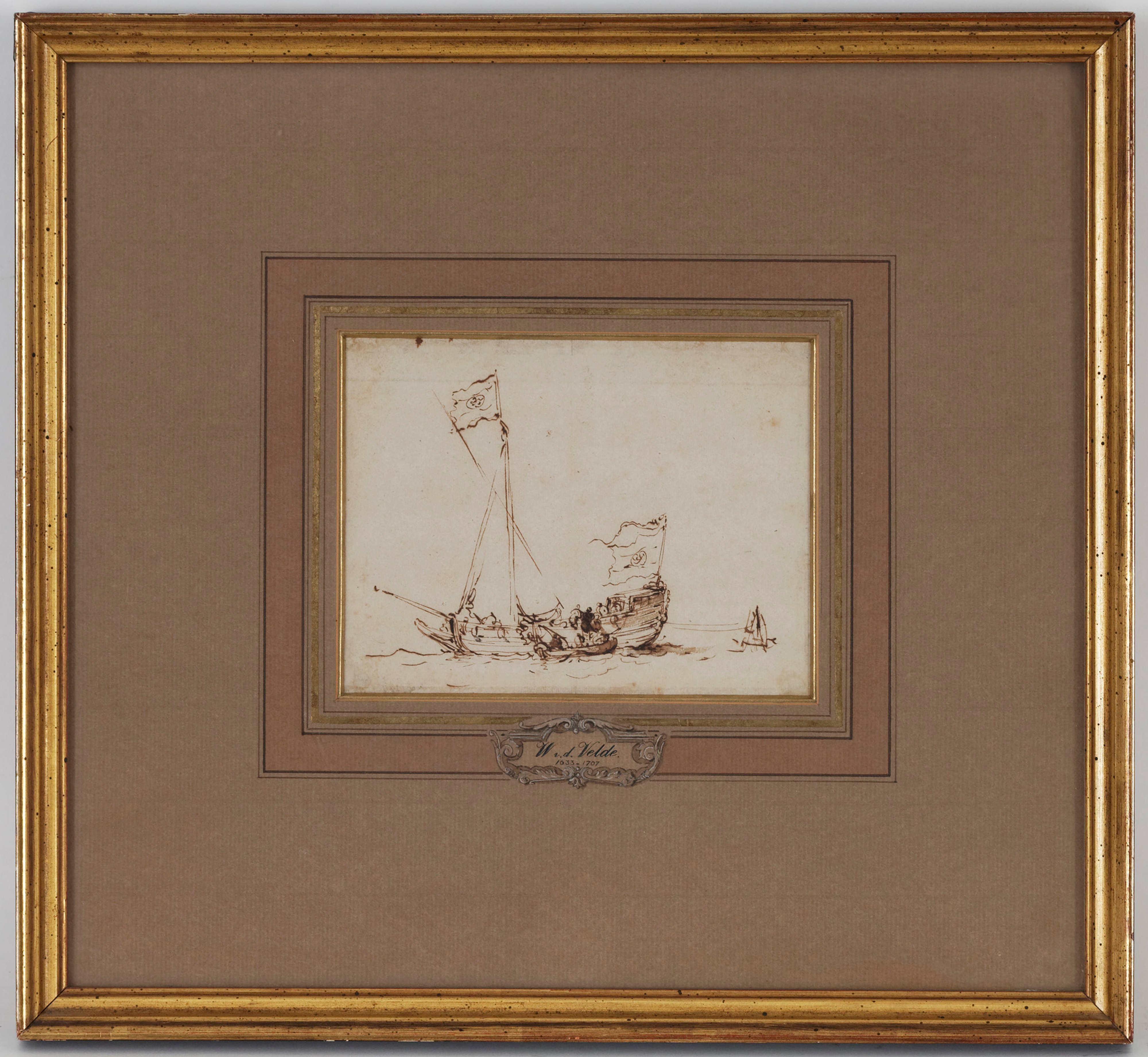
Willem van de Velde the Younger, a marine painter born in Leiden in December 1633 and who died in London in 1707, is associated first with calm maritime scenes and later with battle compositions commissioned in England. His Dutch seascapes have been described as “marine landscapes”; in his final period, his style became more fluid, in contrast with the precision of his early work. The son of the marine painter Willem van de Velde the Elder and the older brother of Adriaen van de Velde, he received his first painting lessons from his father. Around 1648, he went to study with Simon de Vlieger; according to Houbraken, this stay probably took place in Weesp.
In 1652, he joined his father’s workshop in Amsterdam, where his early works were co-signed by his father. In the 1650s and 1660s, he became known for his calm maritime scenes, before English commissions gave increasing prominence to naval battles. In England, Charles II, the Duke of York and Dutch clients commissioned battle scenes from him, which had previously been painted only occasionally and took the place of calm subjects. From 1674, he served Charles II alongside his father, then worked for James II. Employed by the king, he received a salary of 100 pounds, had accommodation in Greenwich and a studio in the Queen’s House. In 1673, he also worked at Ham House, where he painted overdoors.
Settling in Westminster with his father in 1691, he took on the official role of painter of maritime events alone after his father’s death in 1693. In 1694–1695, he spent a year in the Mediterranean with the English fleet commanded by Admiral Russell. The shift towards a more fluid manner in his final years contrasts with the extreme precision noted in his early work. Several works in public collections illustrate the range of his subjects. The Rijksmuseum in Amsterdam holds, among others, The Squall, dated around 1680, and The Cannon Shot. The Wallace Collection in London includes numerous seascapes, among them The Embarkation of King Charles II of England at Scheveningen, dated 1661. The Musée Fabre in Montpellier holds The Little Fleet, dated 1657.
This profile brings together identity references for Willem van de Velde the Younger and paintings, drawings and works on paper documented in auction catalogues.
References include catalogue entries and available results; they do not all represent completed sales. Attributed works and special lots are excluded from the priced results.
SwissArtGallery documentary note based on the cited sources. Titles, media and qualifications are provided in the profile language; the original catalogue wording remains available in each record. Profile updated :
The Italian painter Arturo Ricci (1854–1919) is documented here through his identity and information relating to a work, La supplique. A sale notice states that the painting was purc…
The German artist Hannah Höch uses photomontage and cut-and-paste collage as means of social and political critique. Her compositions parody bourgeois life and question representatio…
Abstract sculptor, painter and graphic artist, Otto Herbert Hajek (1927–2005) developed a body of work that also extends into public space and is particularly visible in Stuttgart, h…