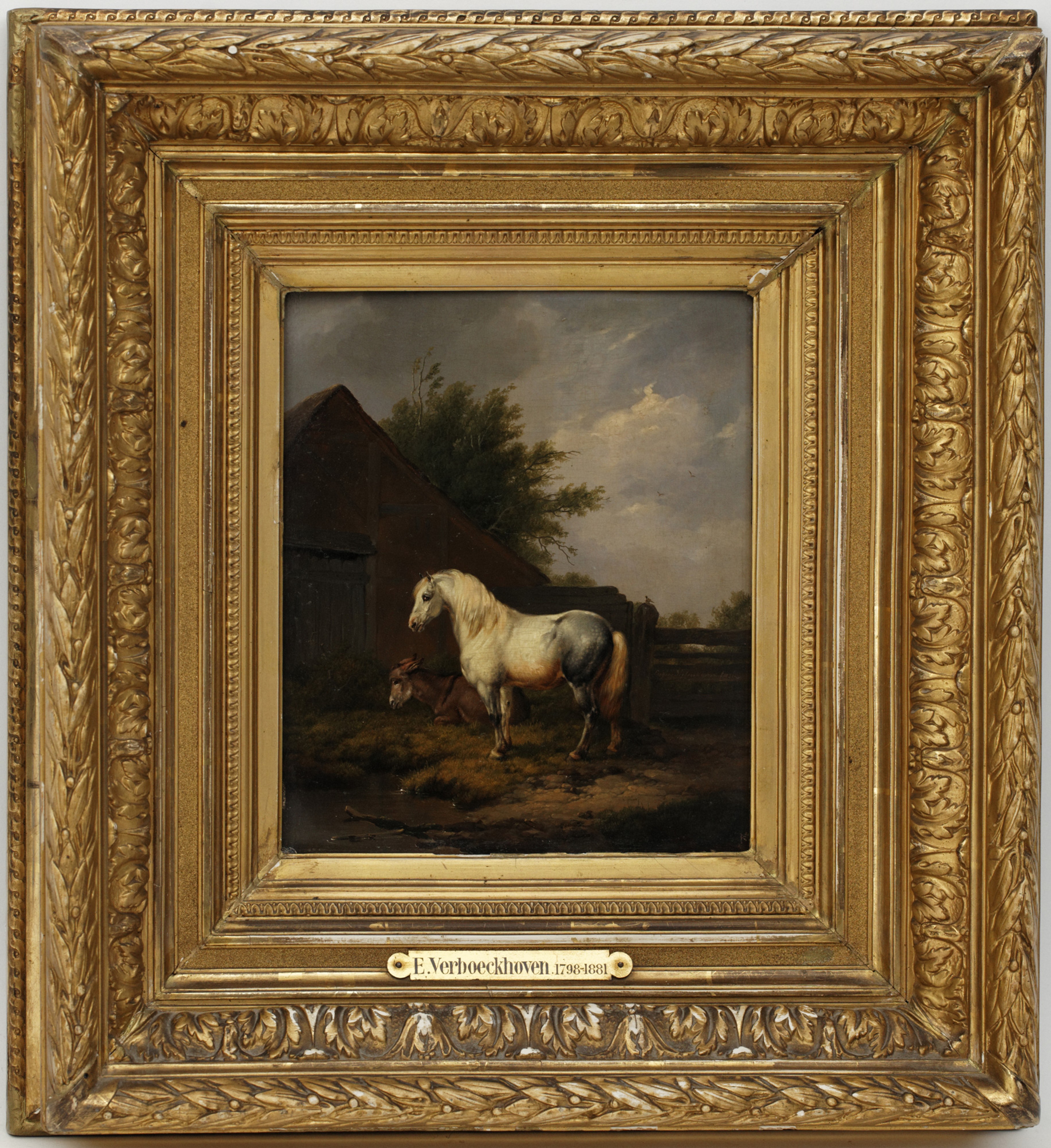
Born : 1798Died : 1881Documented citizenships : Belgium
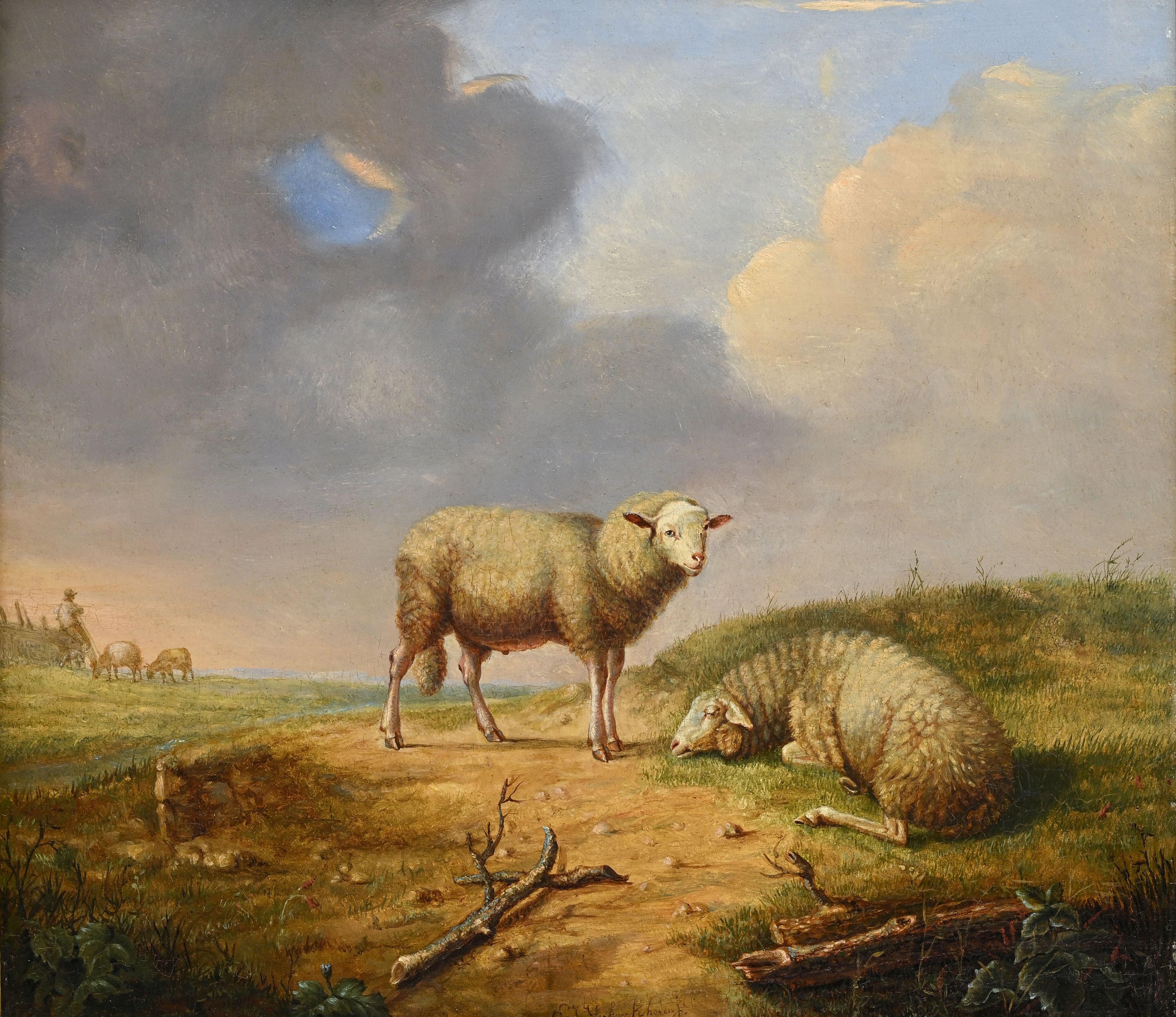
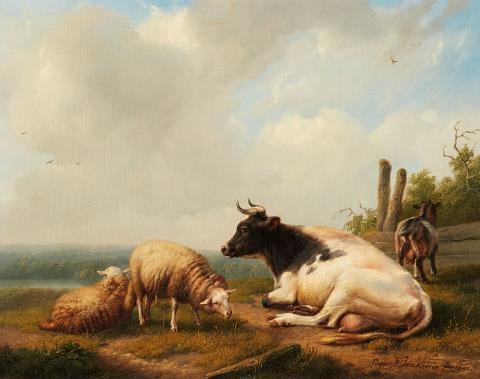
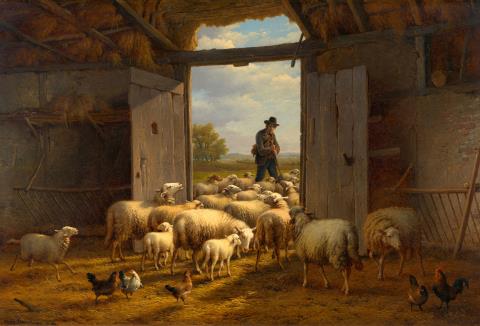
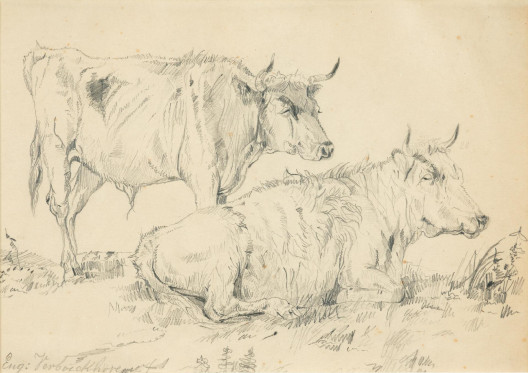
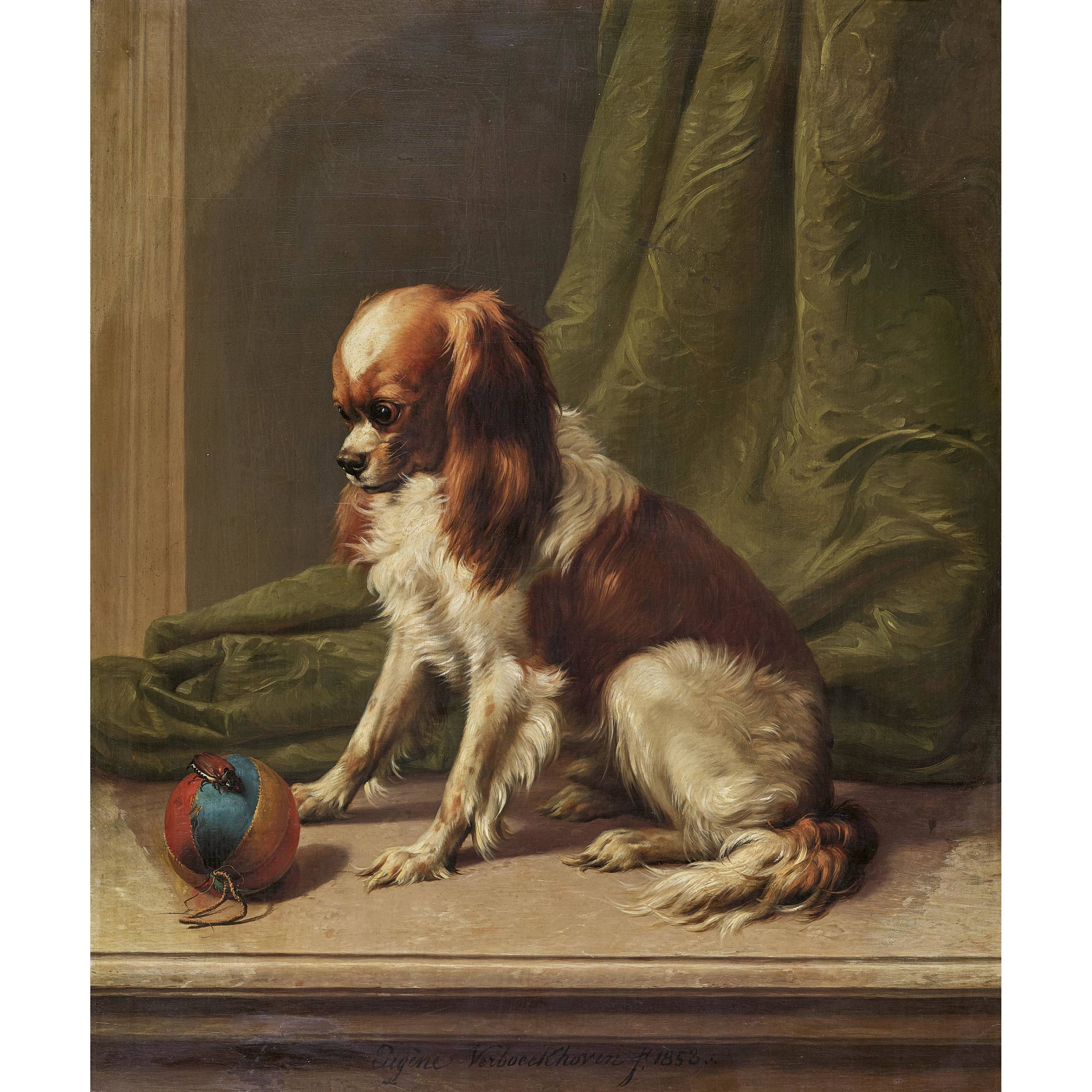
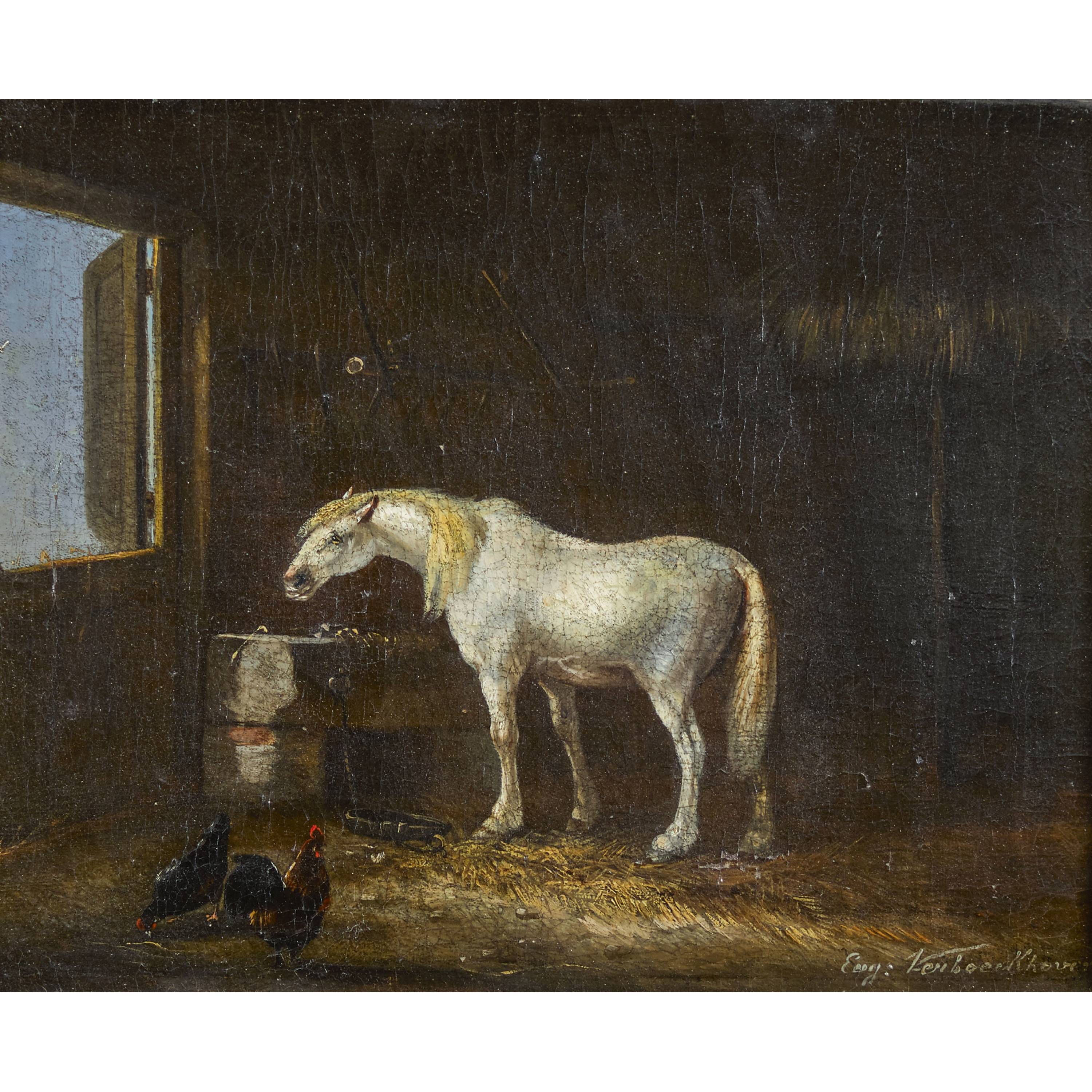
Eugène Joseph Verboeckhoven, also known as Eugène Verboeckhoven, develops a body of work devoted primarily to animal painting and animated landscapes. He is first trained by his father, the sculptor Barthélemy Verboeckhoven, who teaches him drawing and modelling, and in 1818 becomes a pupil of the painter Balthasar Ommeganck. His first painting, dated 1816, depicts two cows near a tree in a meadow; Albert Voituron acquires it. At the 1820 Ghent Salon, he presents A Winter with Figures and Arcadian Landscape.
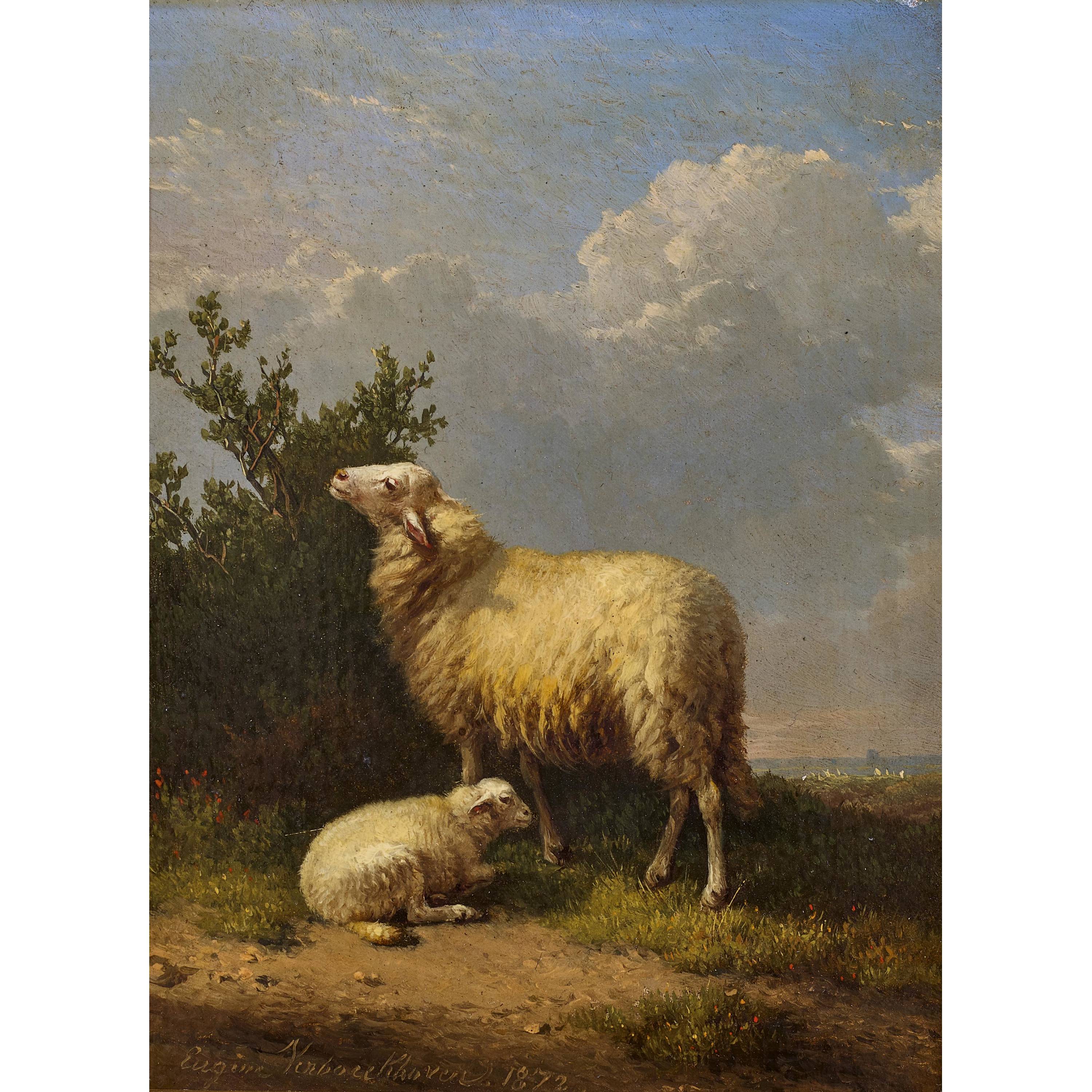
His pastoral scenes combine animals — cattle, sheep or goats — with a landscape; one source notes the anatomical precision of the animal figures. After leaving Ghent with his family, his father and his brother, he settles in Brussels in 1827; in 1841 and 1842, he travels notably to Switzerland and Italy, including a stay in Florence. By royal decree on 27 February 1840, the Belgian government commissions him to paint Animals in the Roman Campagna, which it acquires in 1847.
His pupils include Louis-Pierre Verwée and Louis Robbe. In 1830, he joins the combatants of the Belgian Revolution. In 1845, he acquires a plot of land on rue de Haecht in Schaerbeek, where he has a villa and a studio built in 1853.
This profile brings together identity references for Eugène Verboeckhoven and paintings, drawings and works on paper documented in auction catalogues.
References include catalogue entries and available results; they do not all represent completed sales. Attributed works and special lots are excluded from the priced results.
SwissArtGallery documentary note based on the cited sources. Titles, media and qualifications are provided in the profile language; the original catalogue wording remains available in each record. Profile updated :
Regina Bogat, an American abstract artist born in 1928, is represented by an untitled work from 1964, executed in oil and collage on cardboard. The work measures 53.5 × 38.5 cm. A de…
Lee Ungno’s practice develops at the intersection of ink painting and calligraphy, which informs his creative process through both signs and formal elements. In 1920, he learns the f…
American artist and printmaker Kenneth Price devoted most of his work to ceramic sculpture. He is particularly associated with abstract forms shaped from fired clay. His sculptures a…