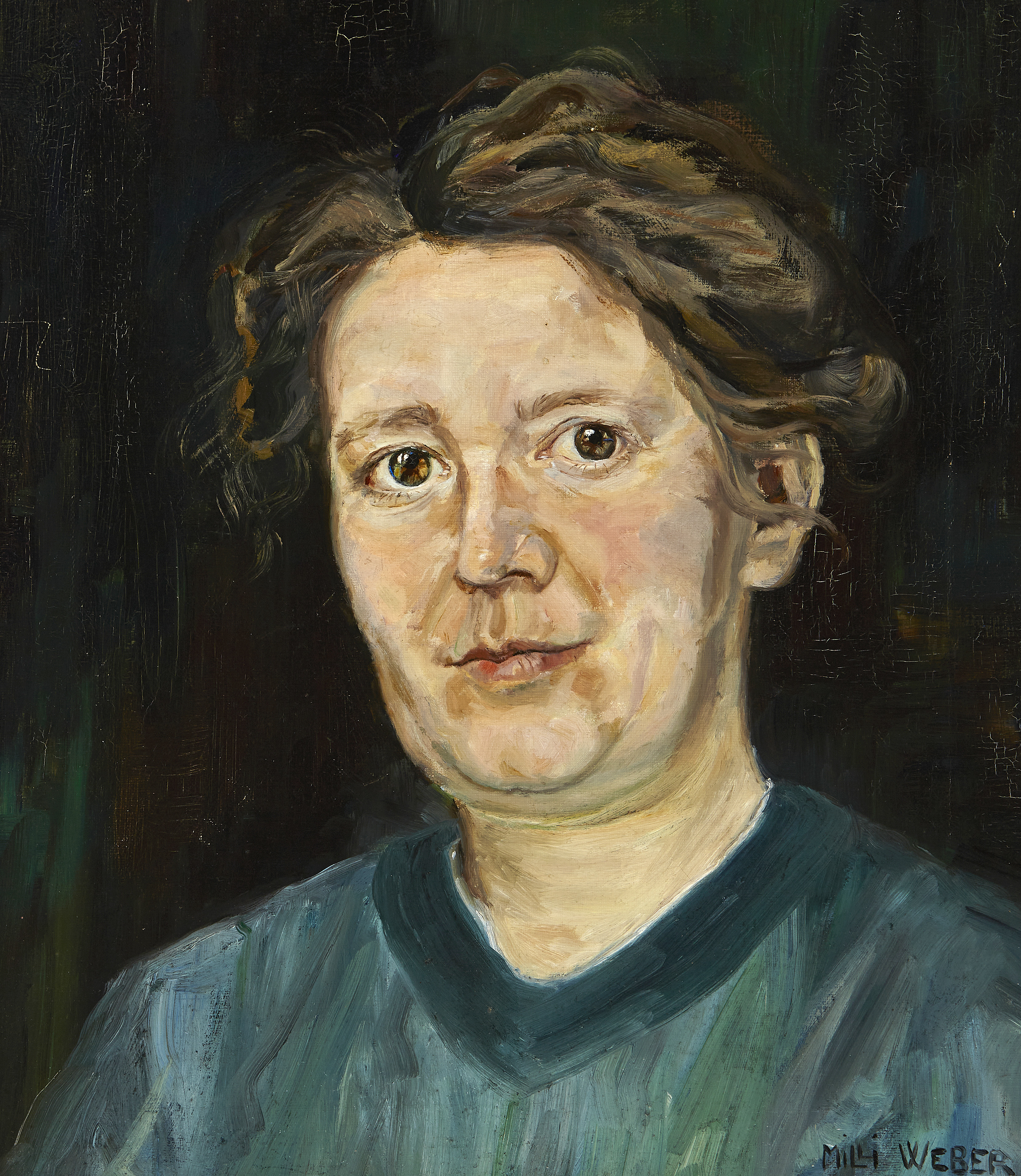
Mili Weber
Born in 1891.
Died in 1978.
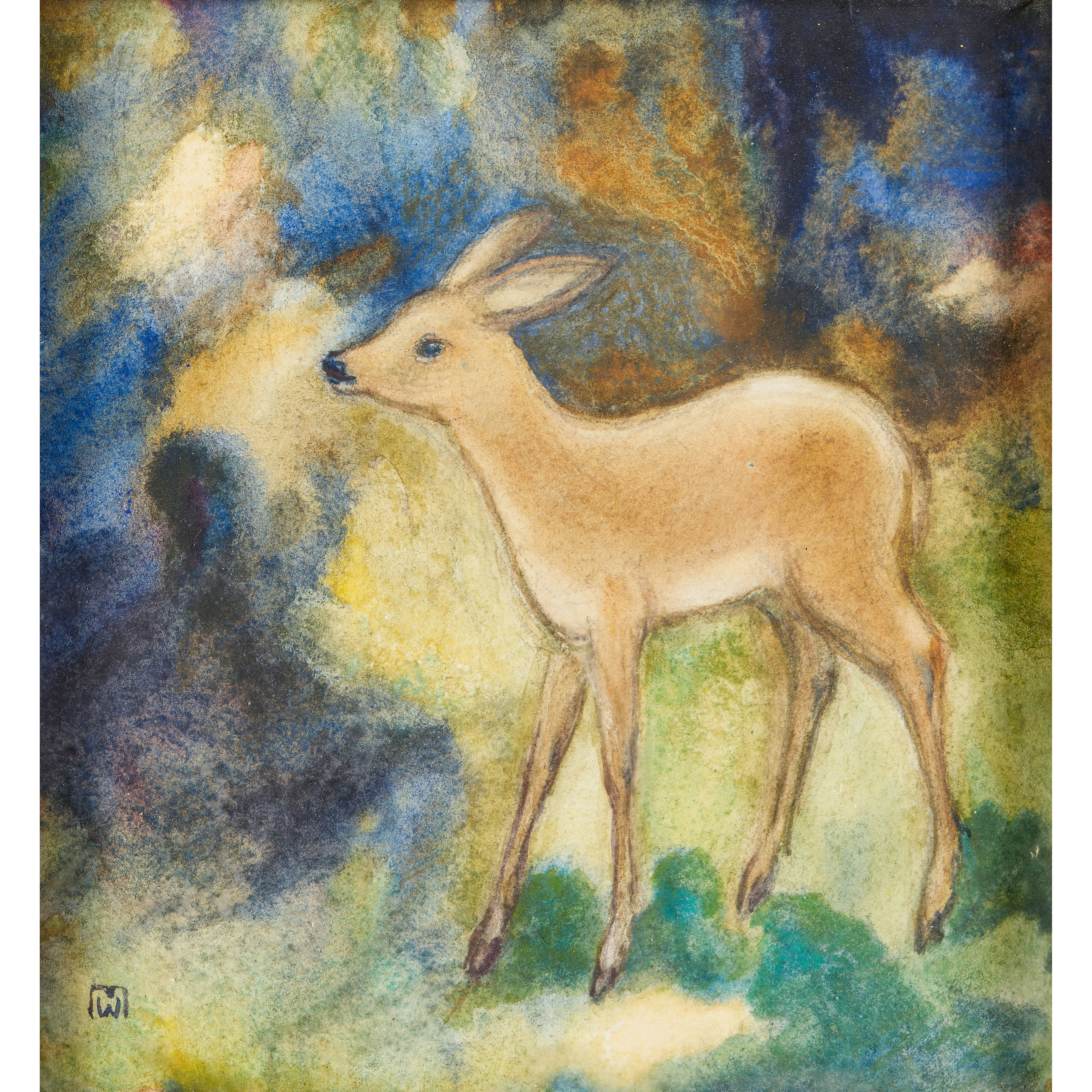
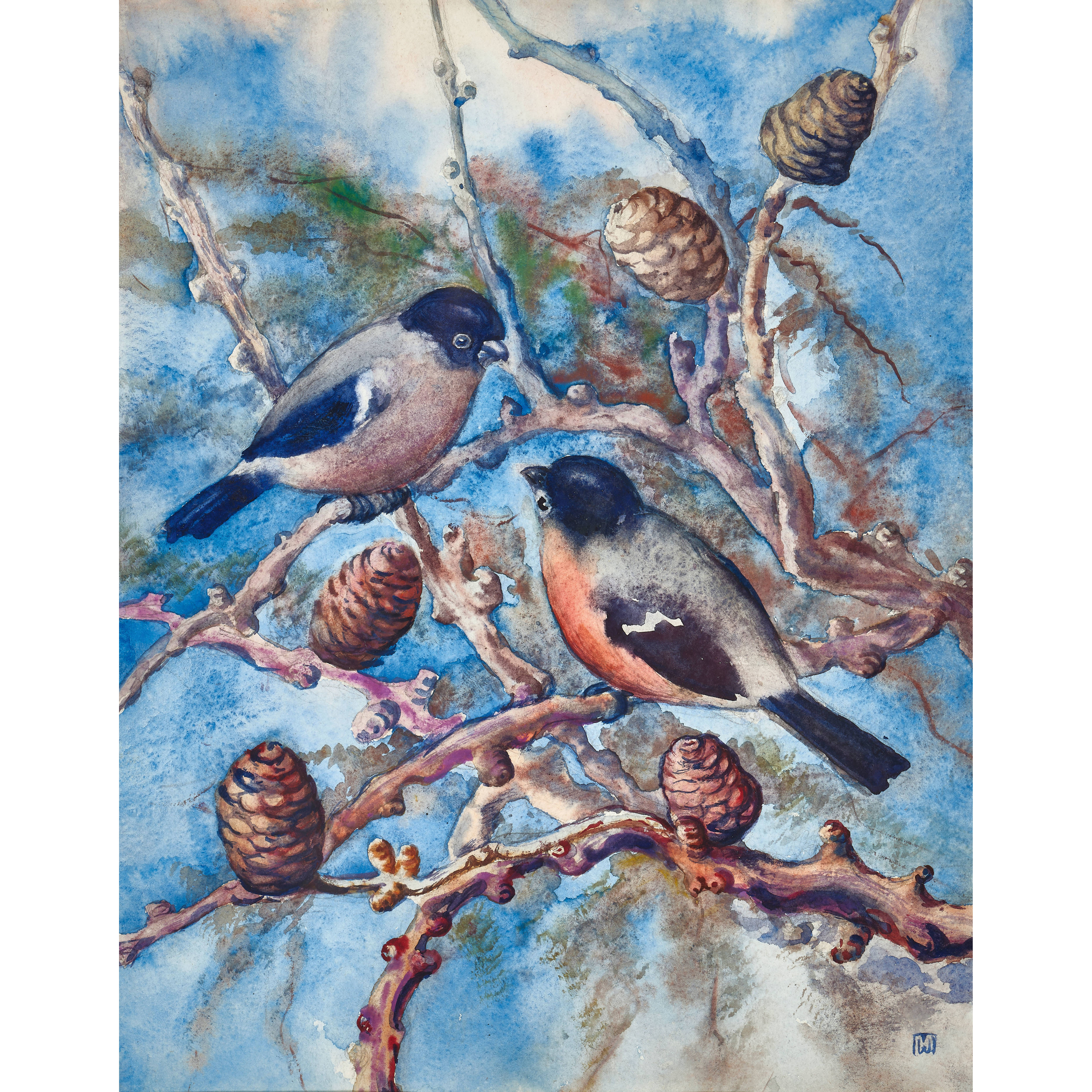
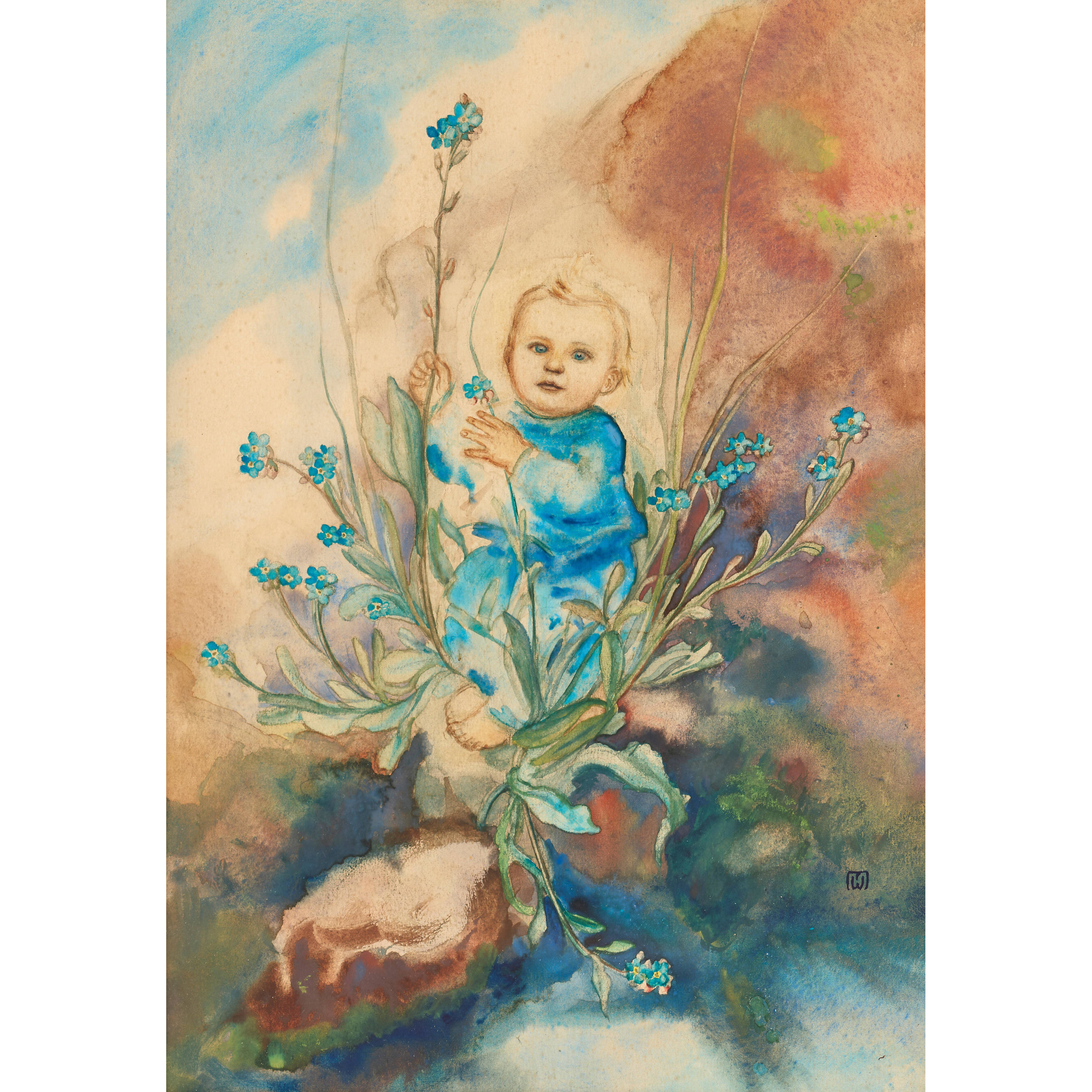
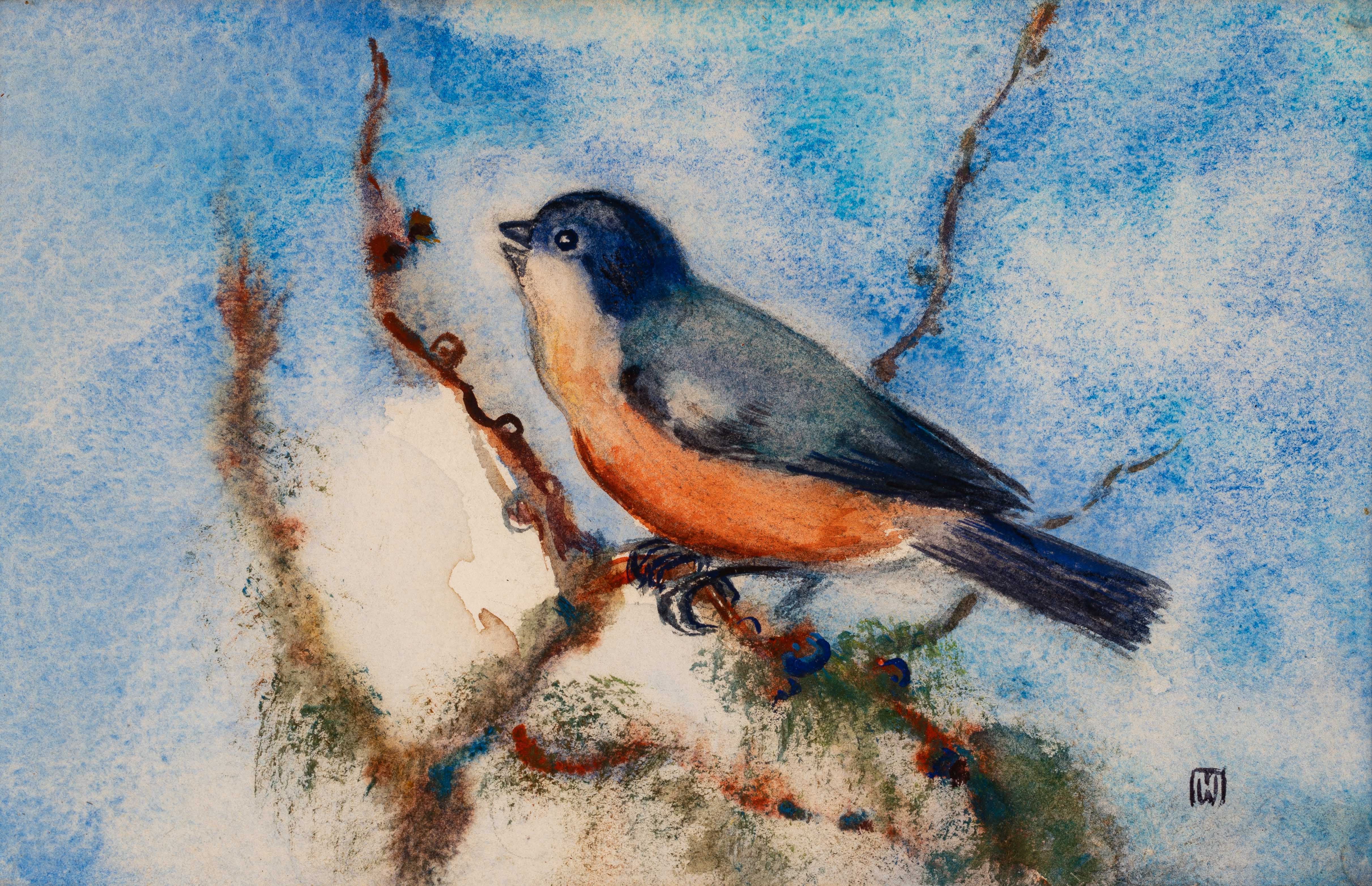
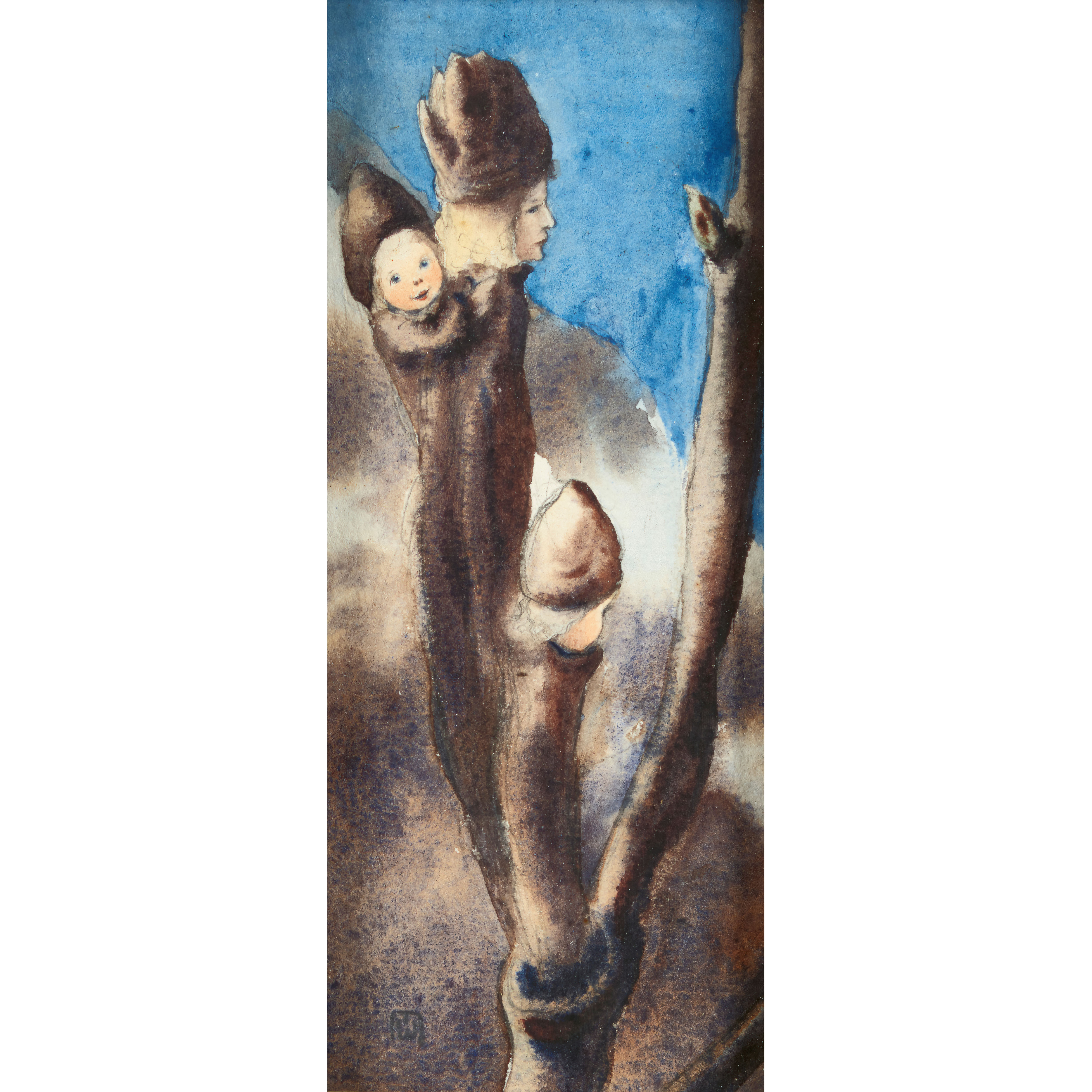
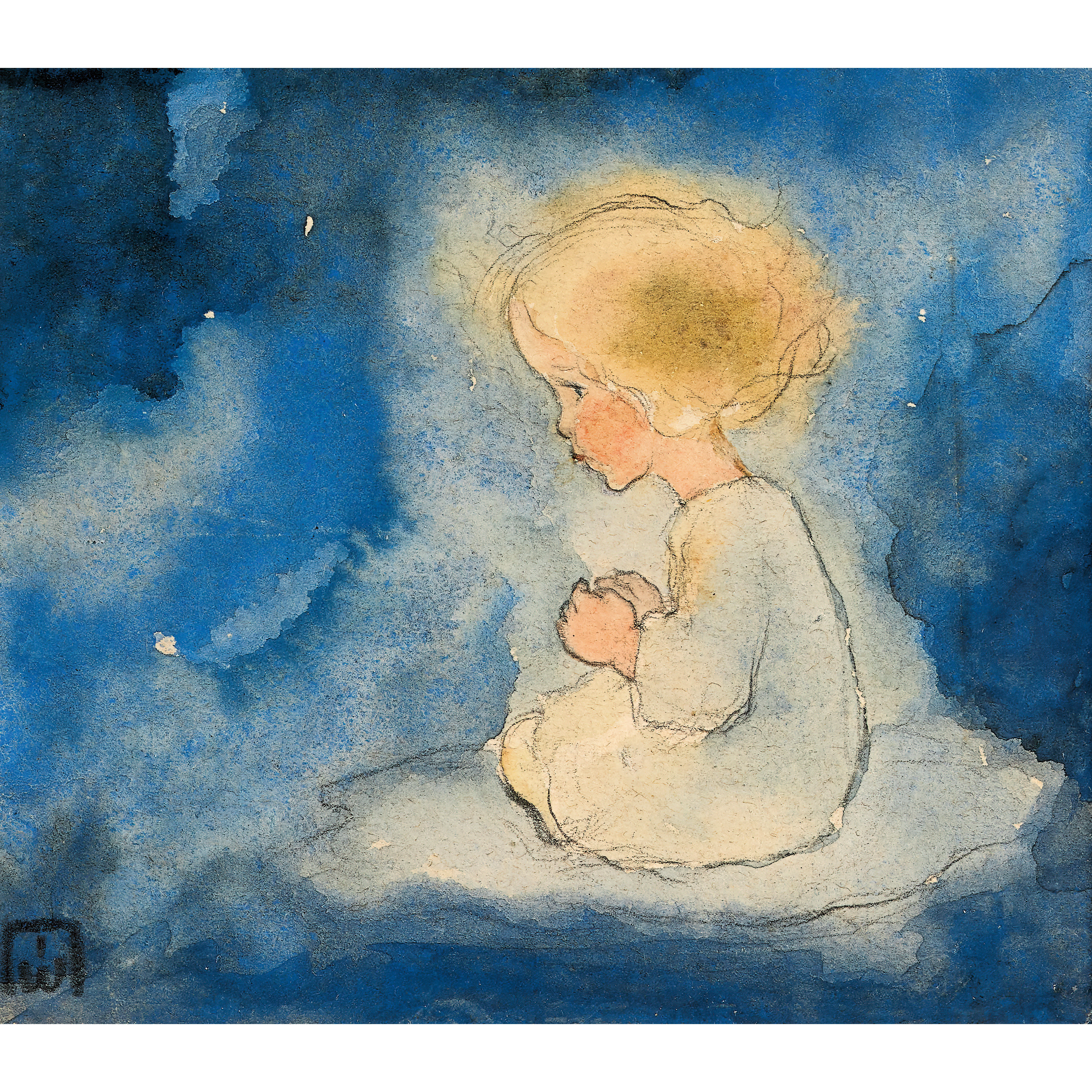
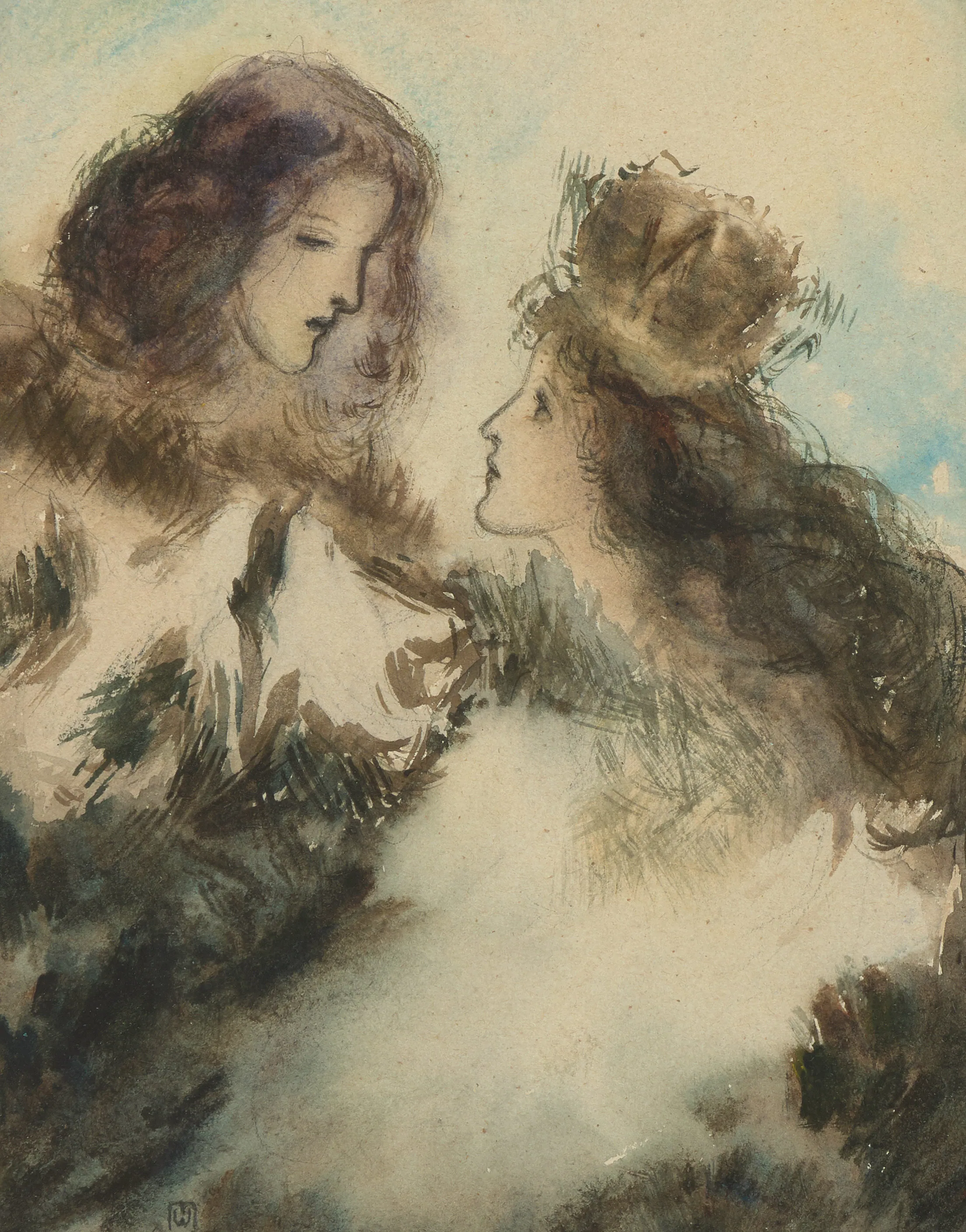
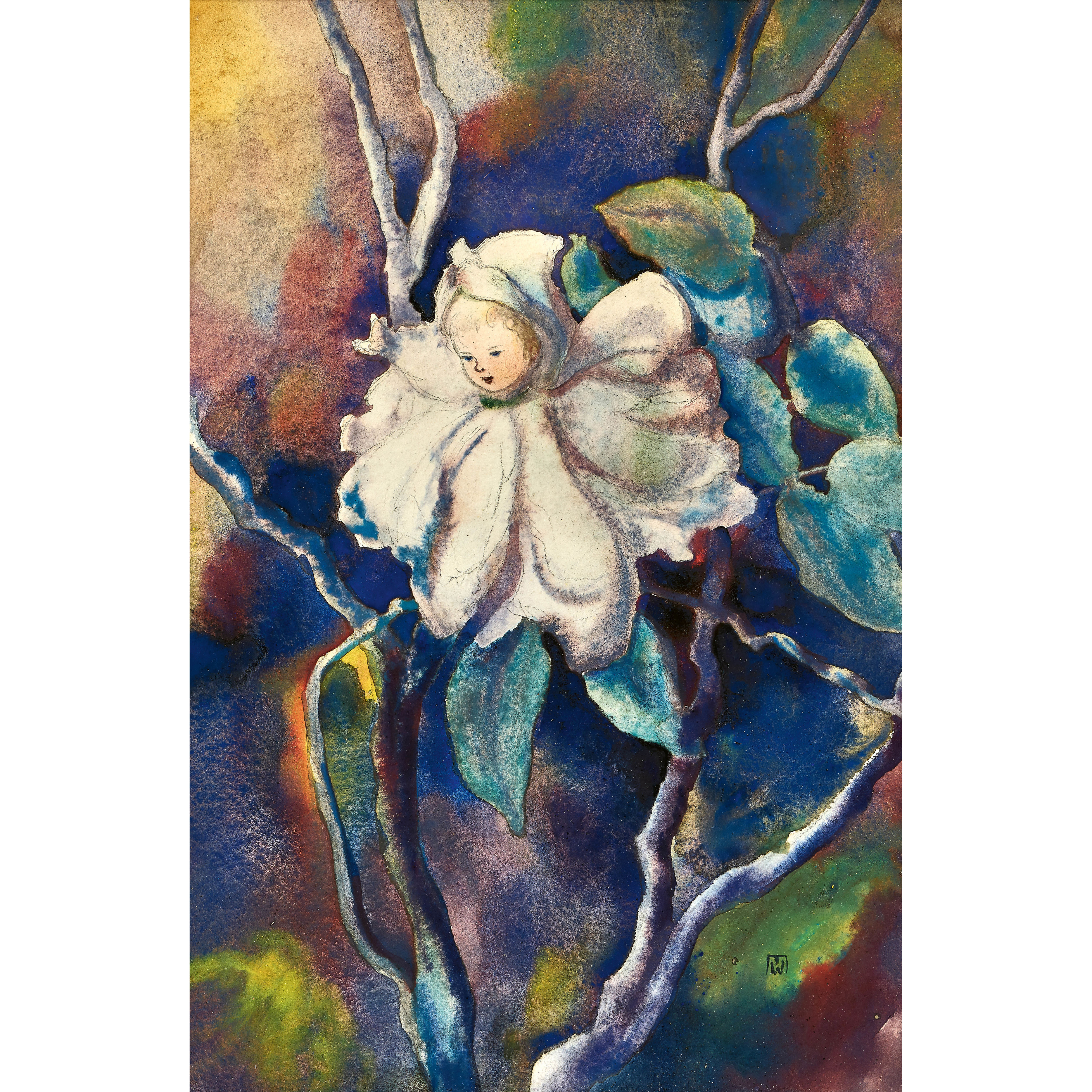
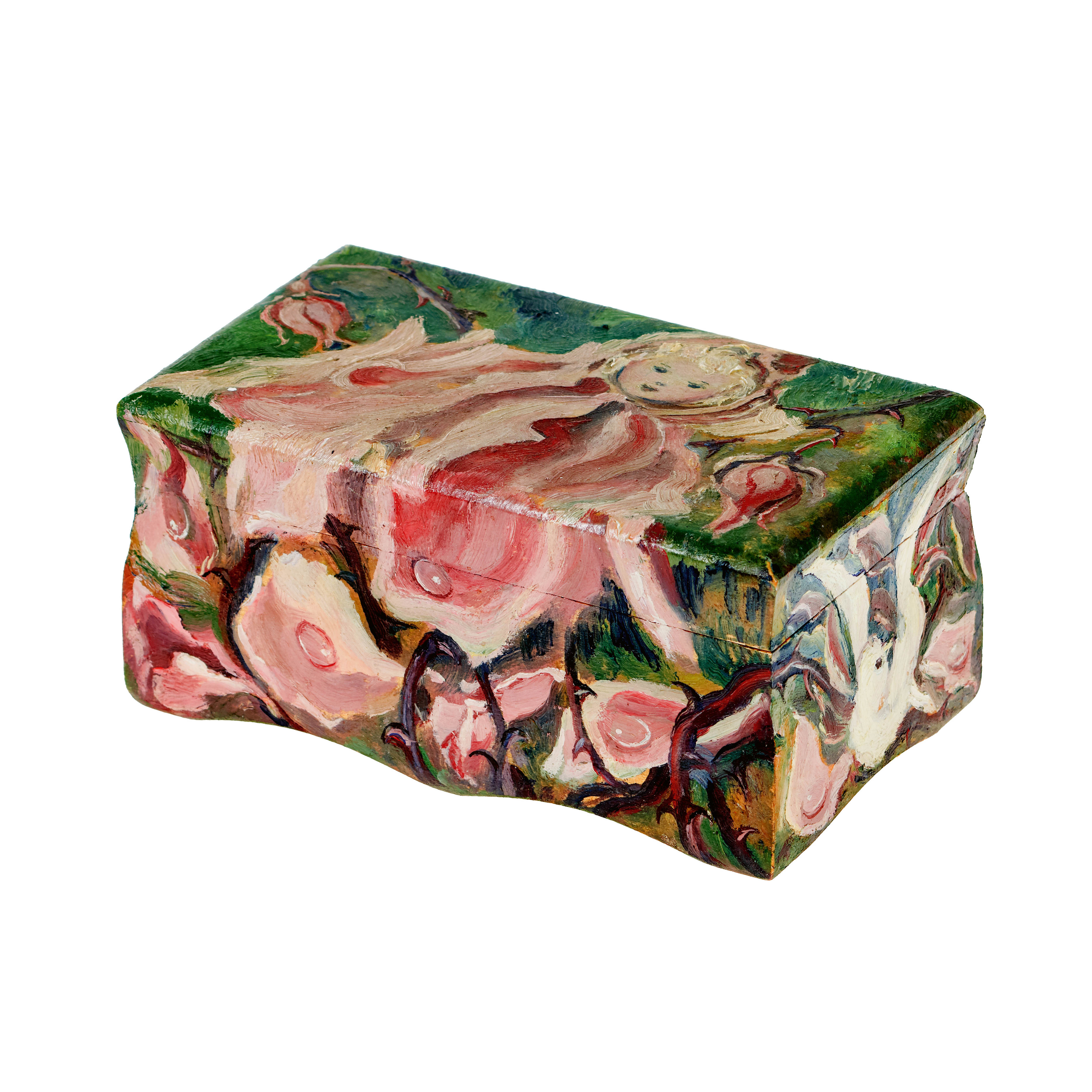
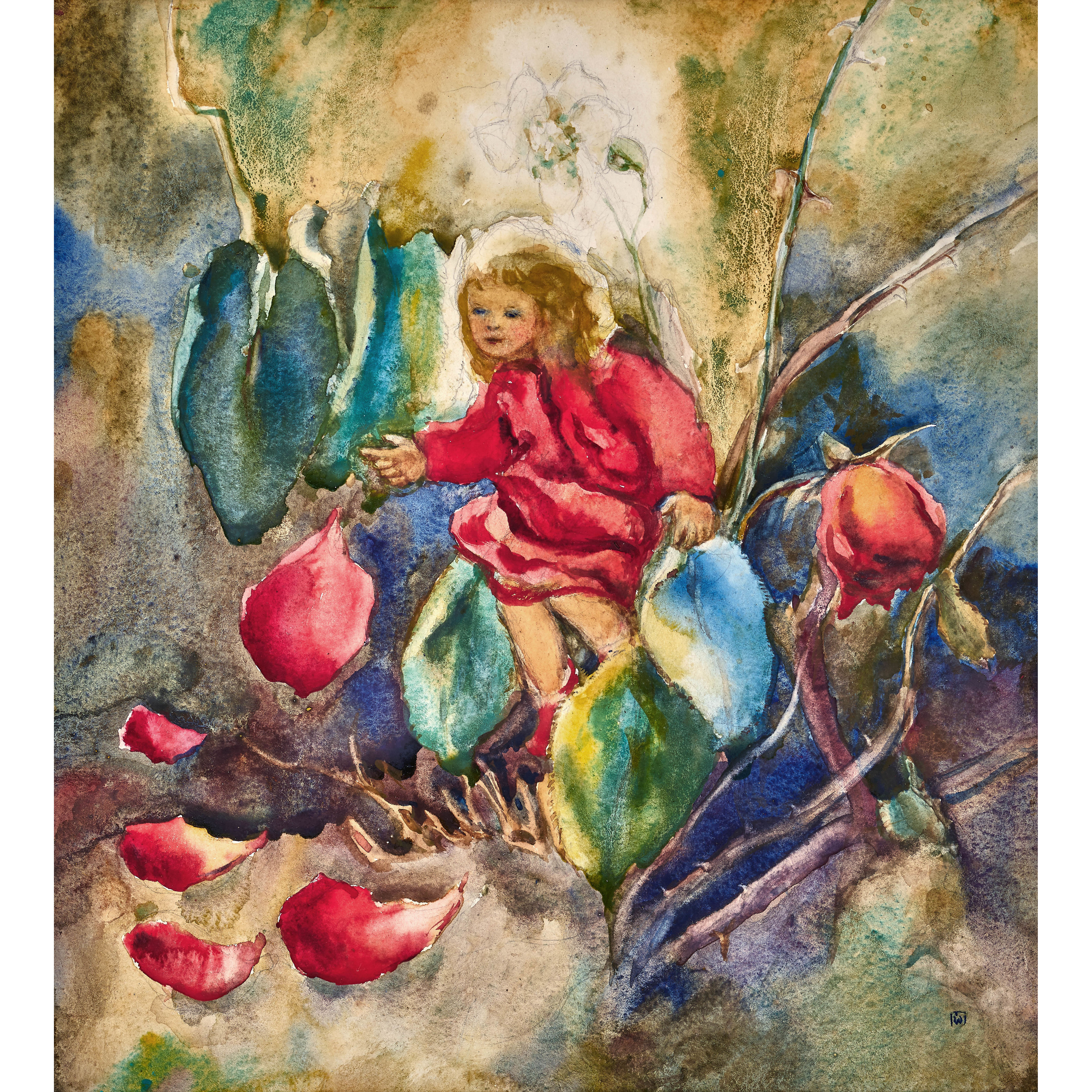
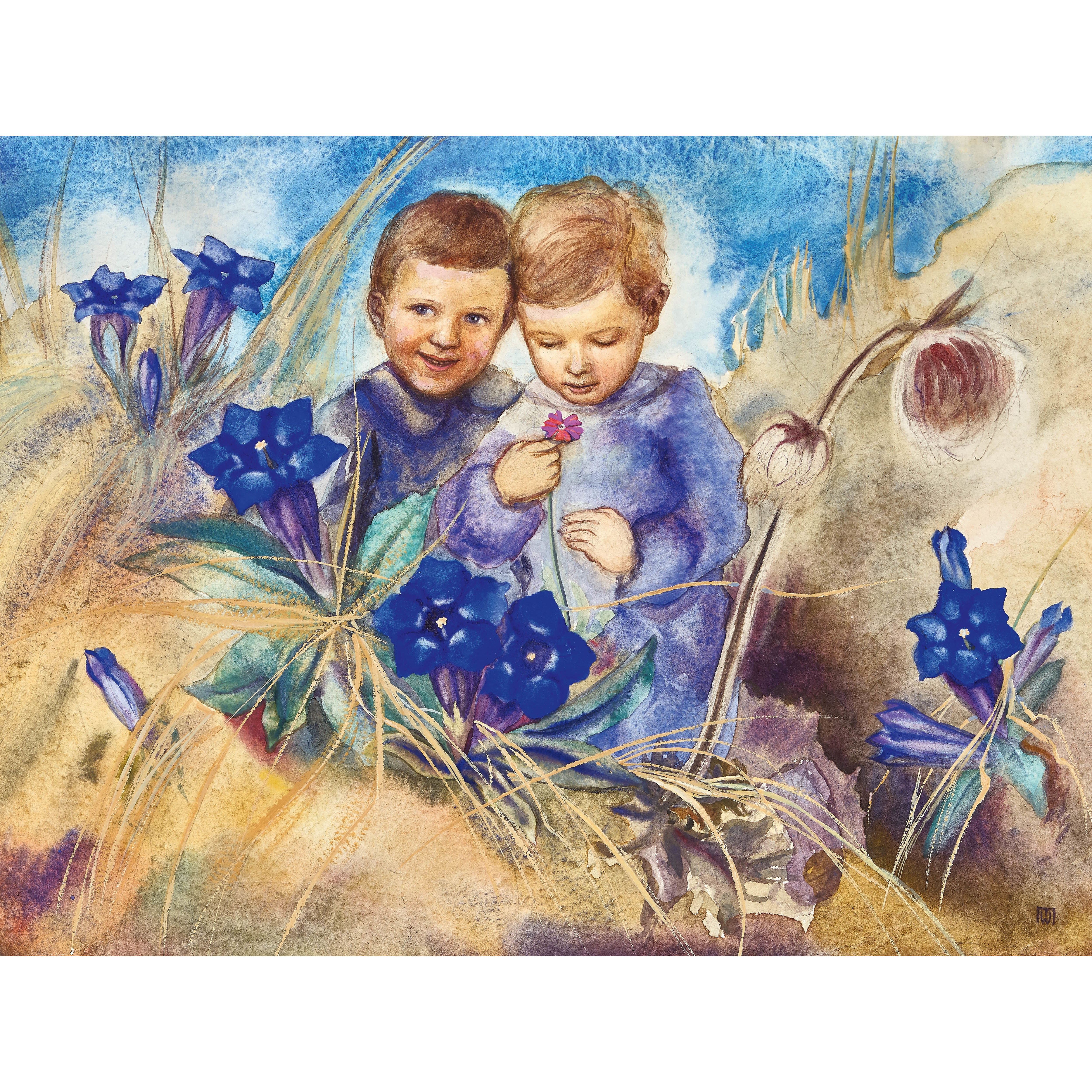
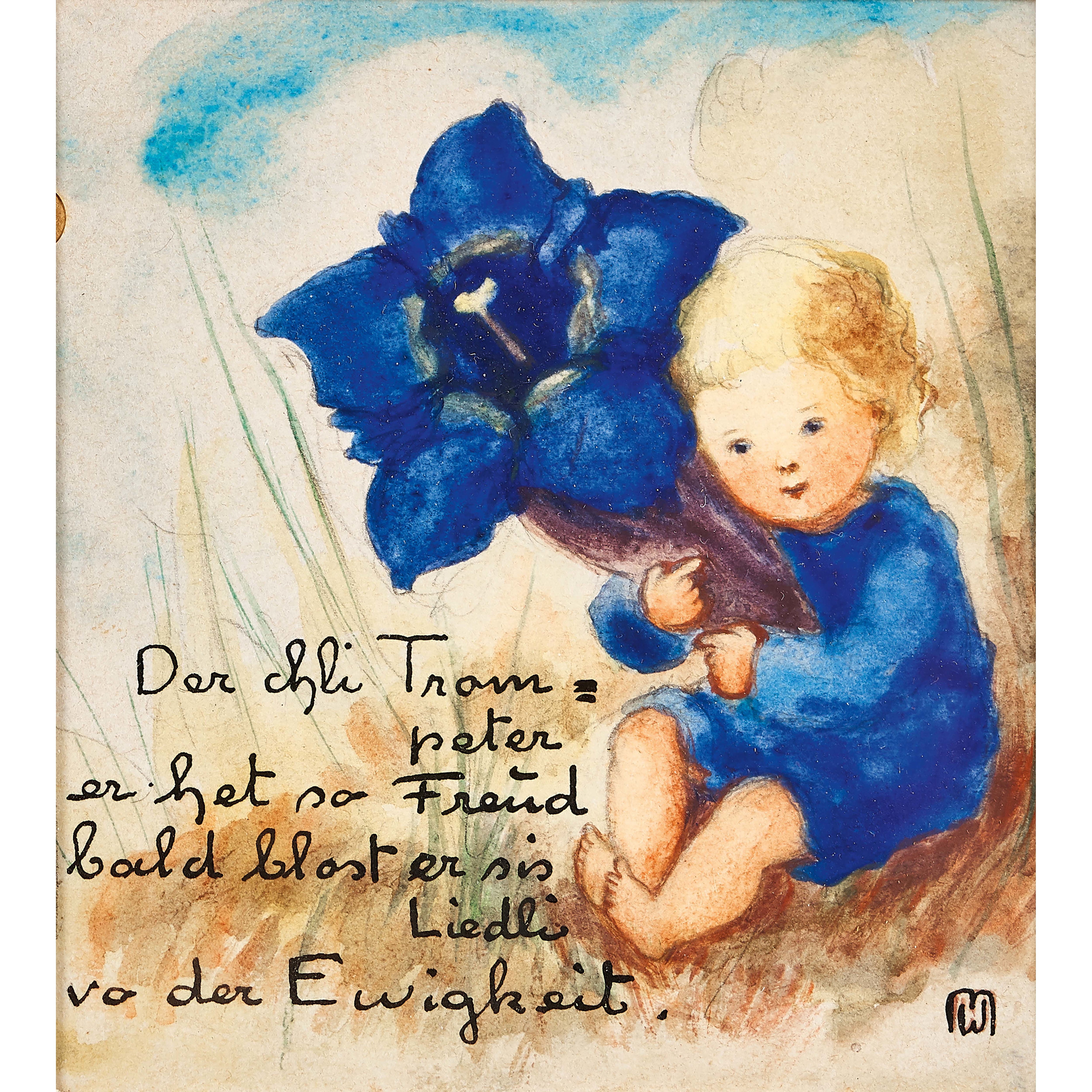
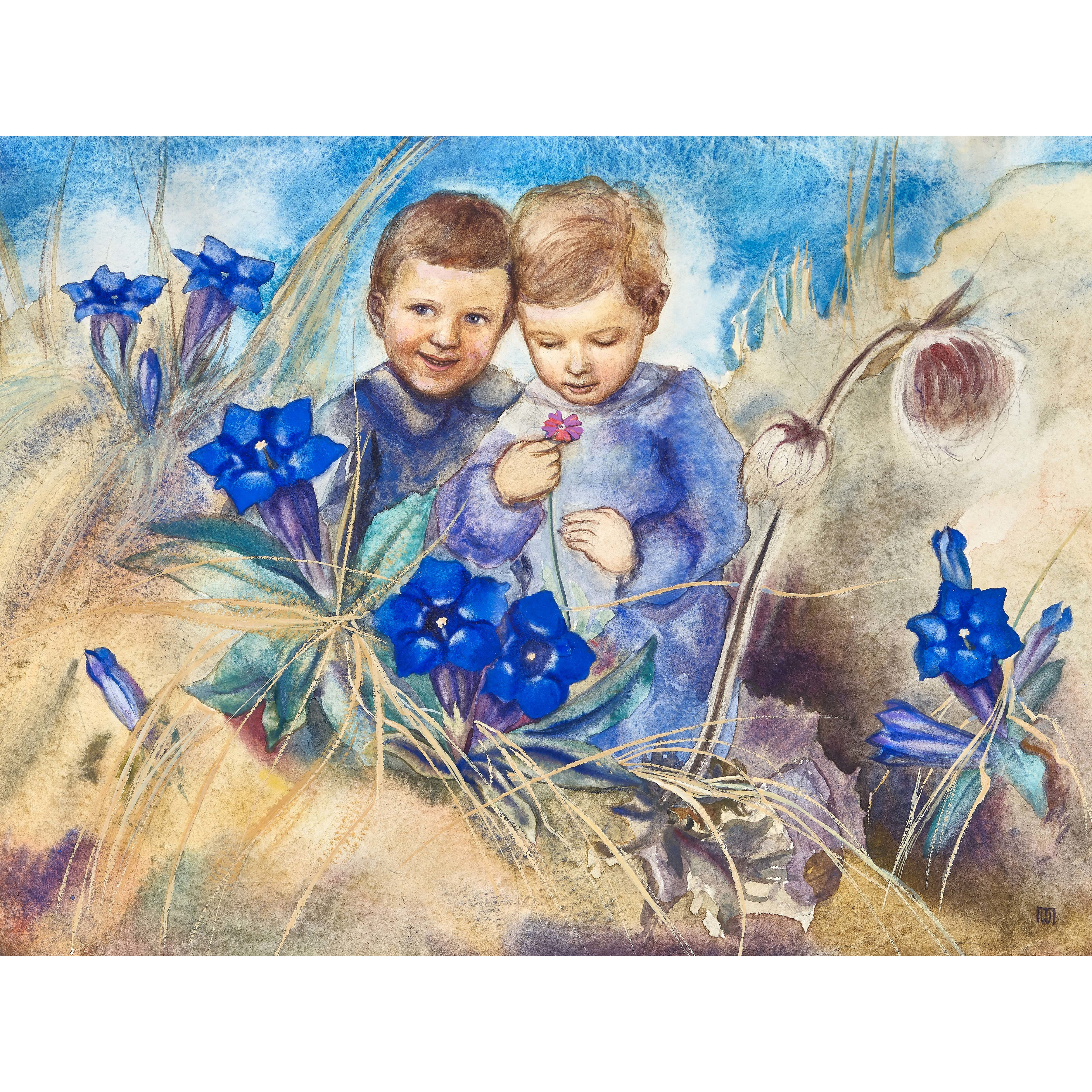
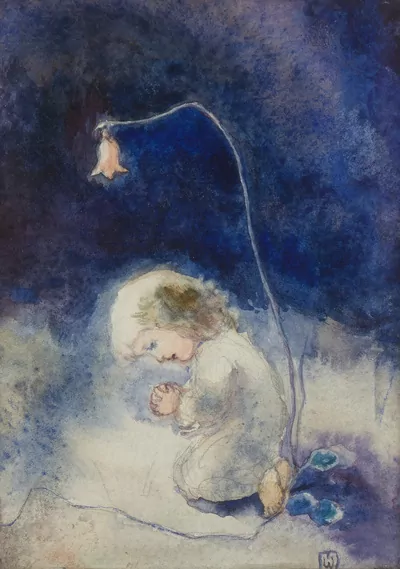
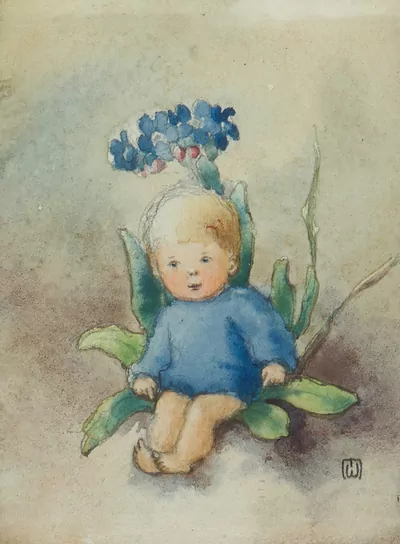
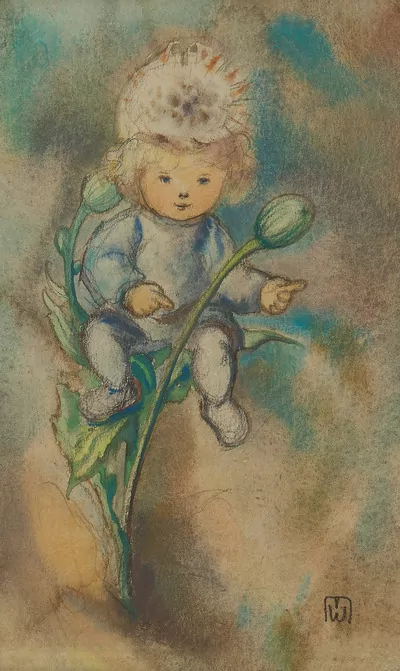
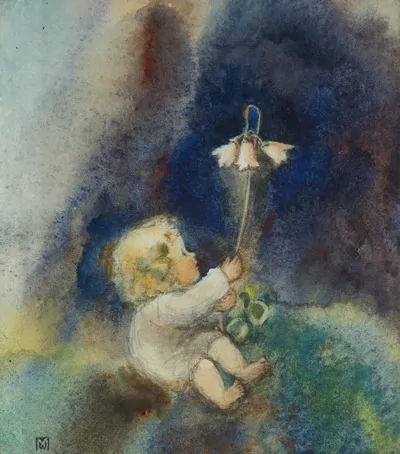
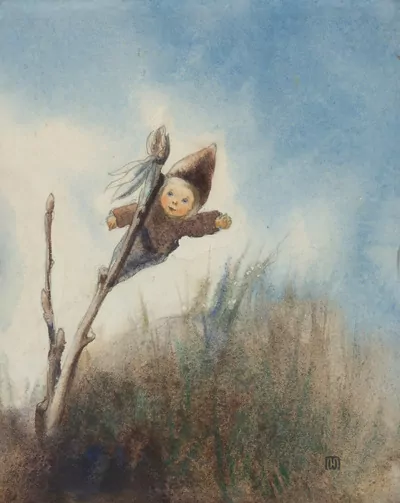
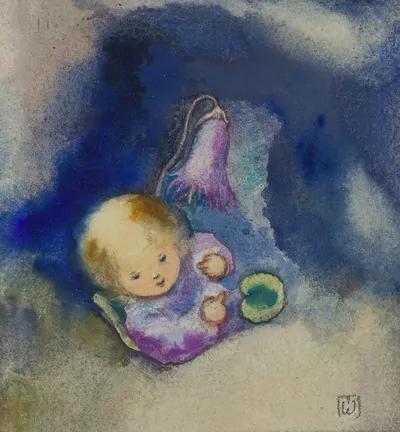
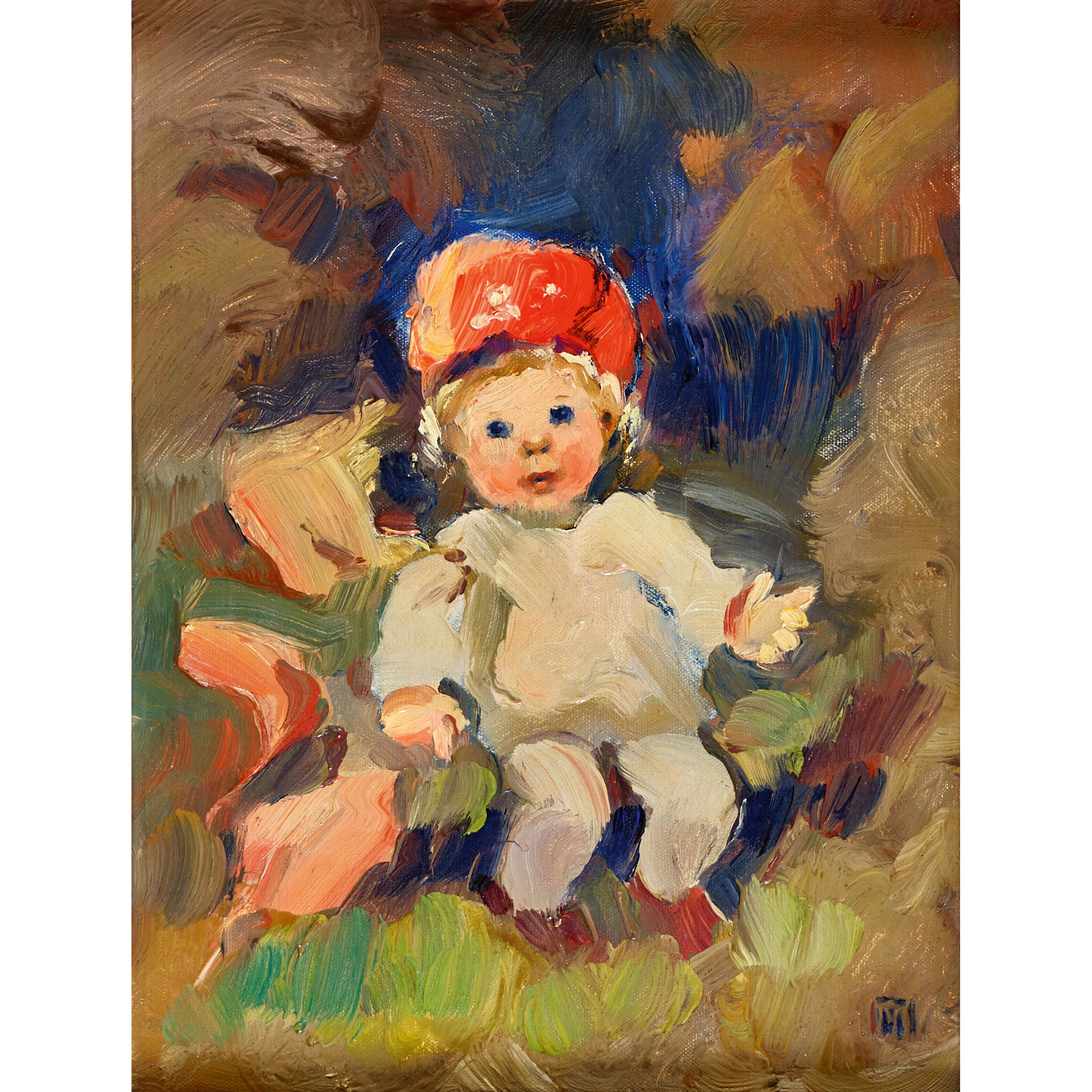
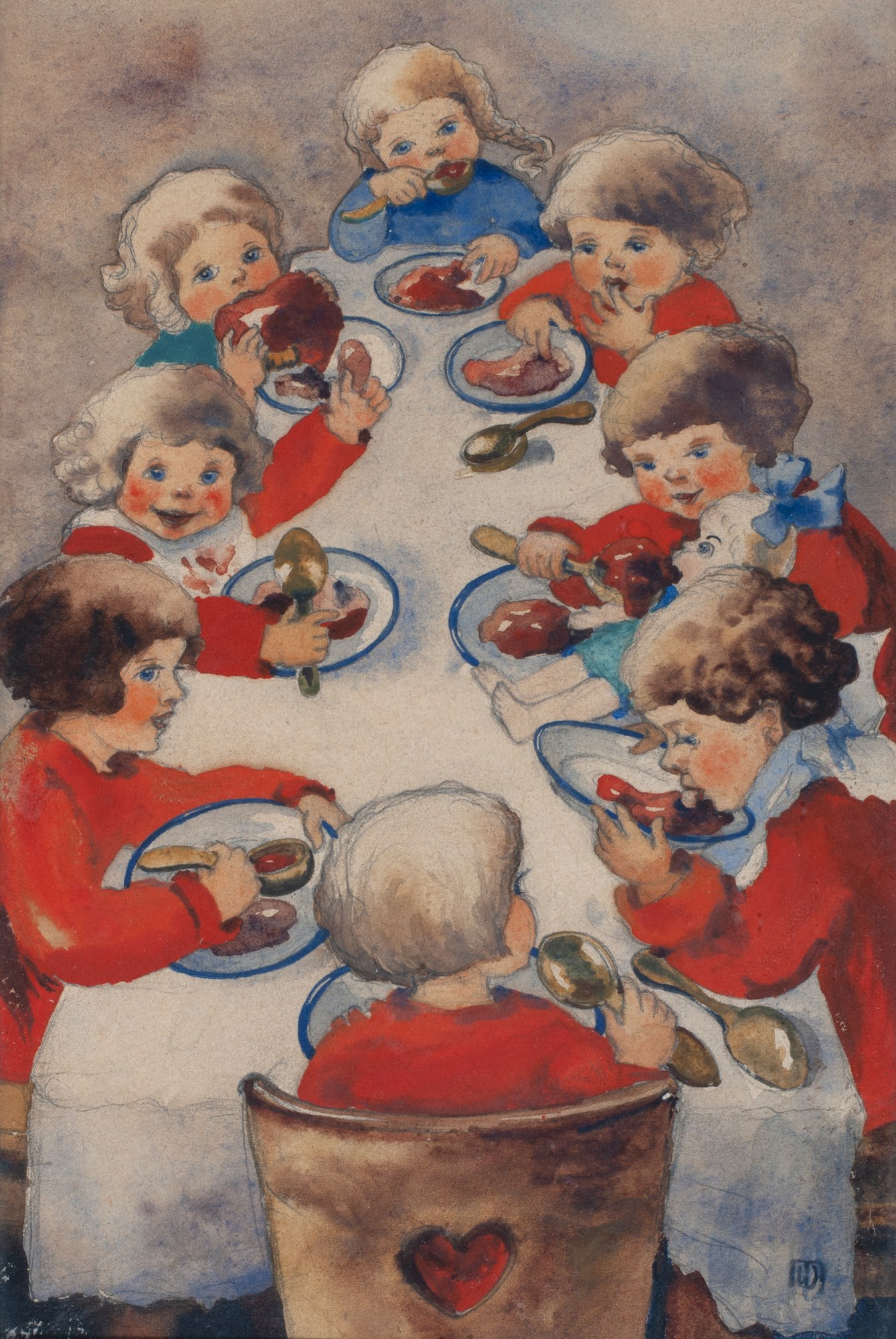
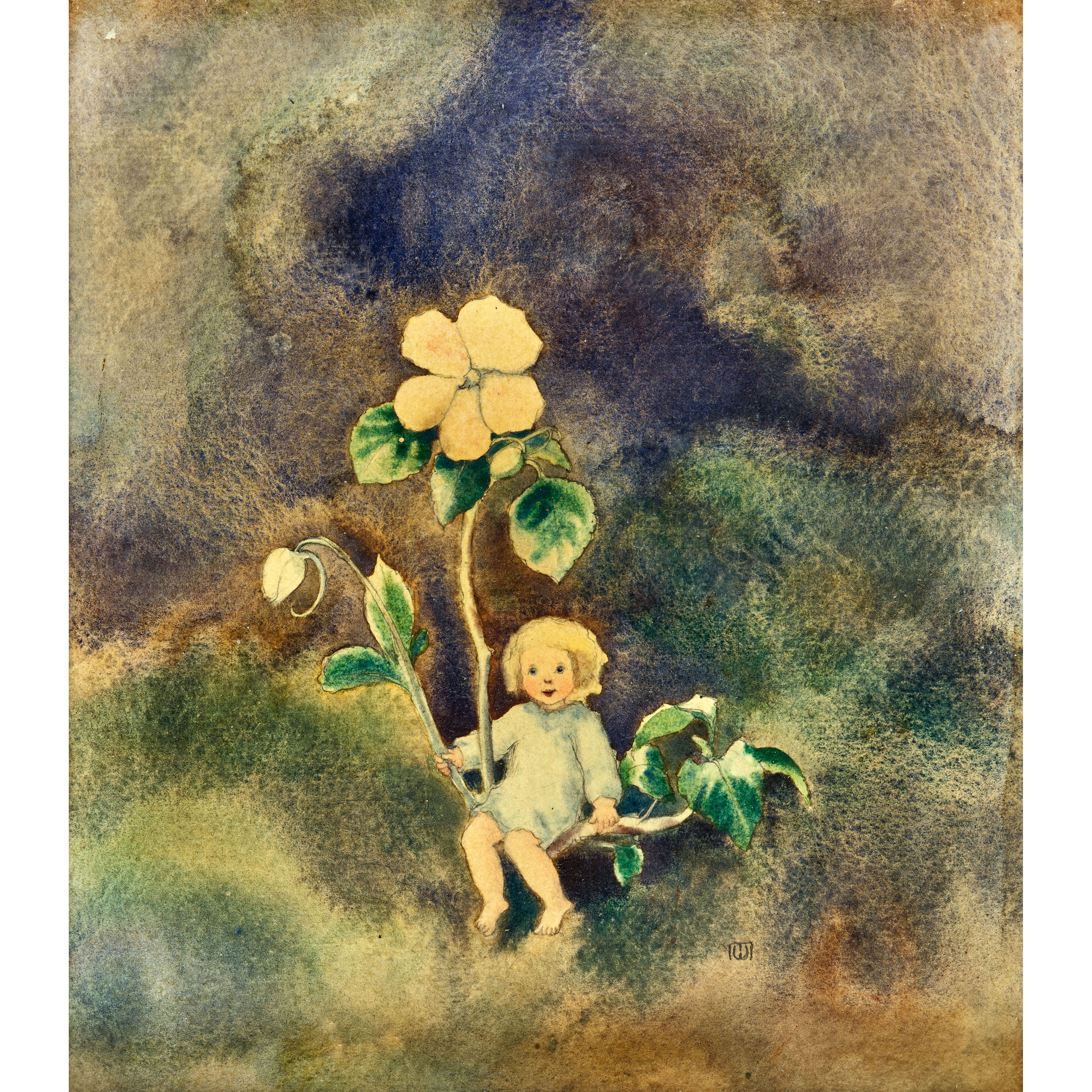
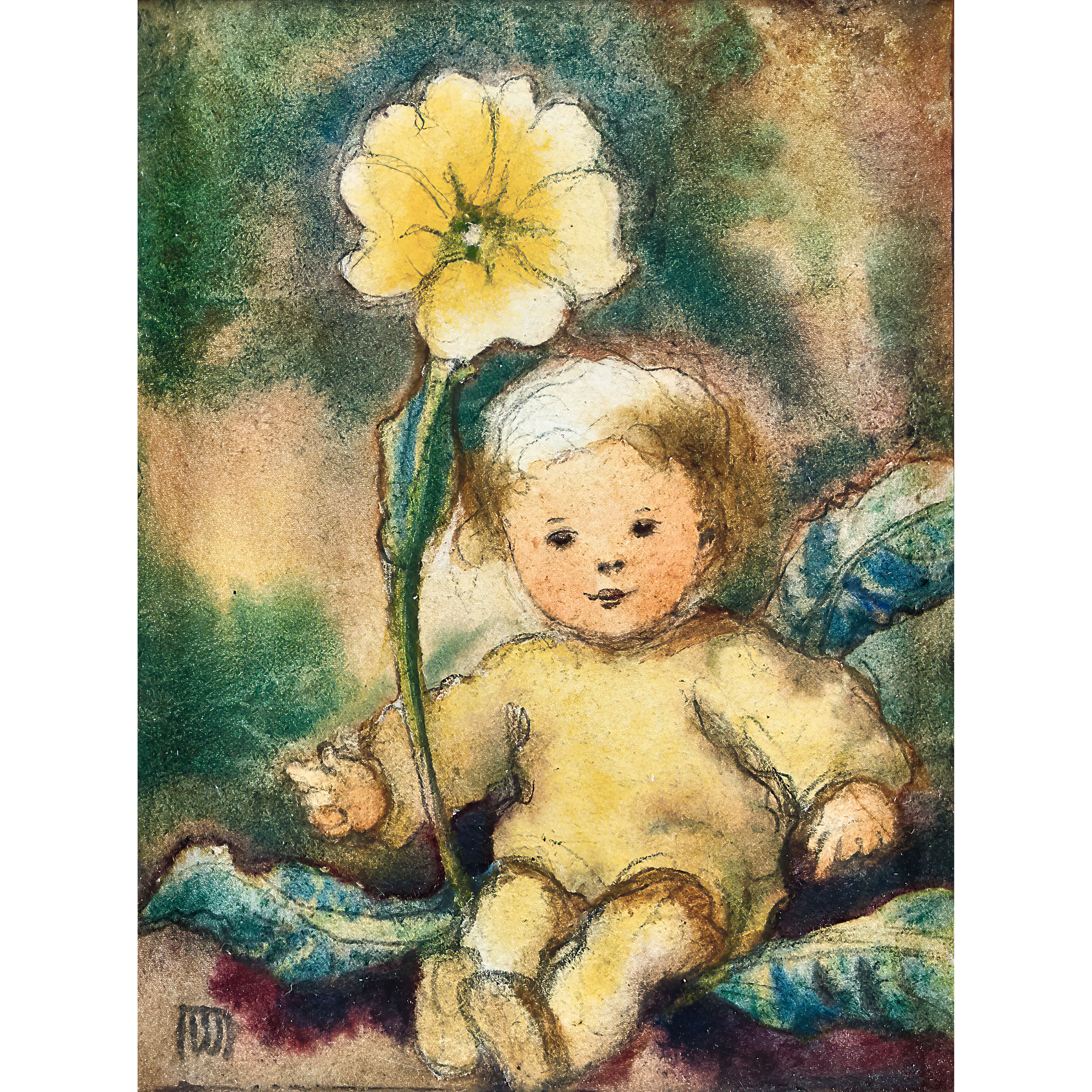
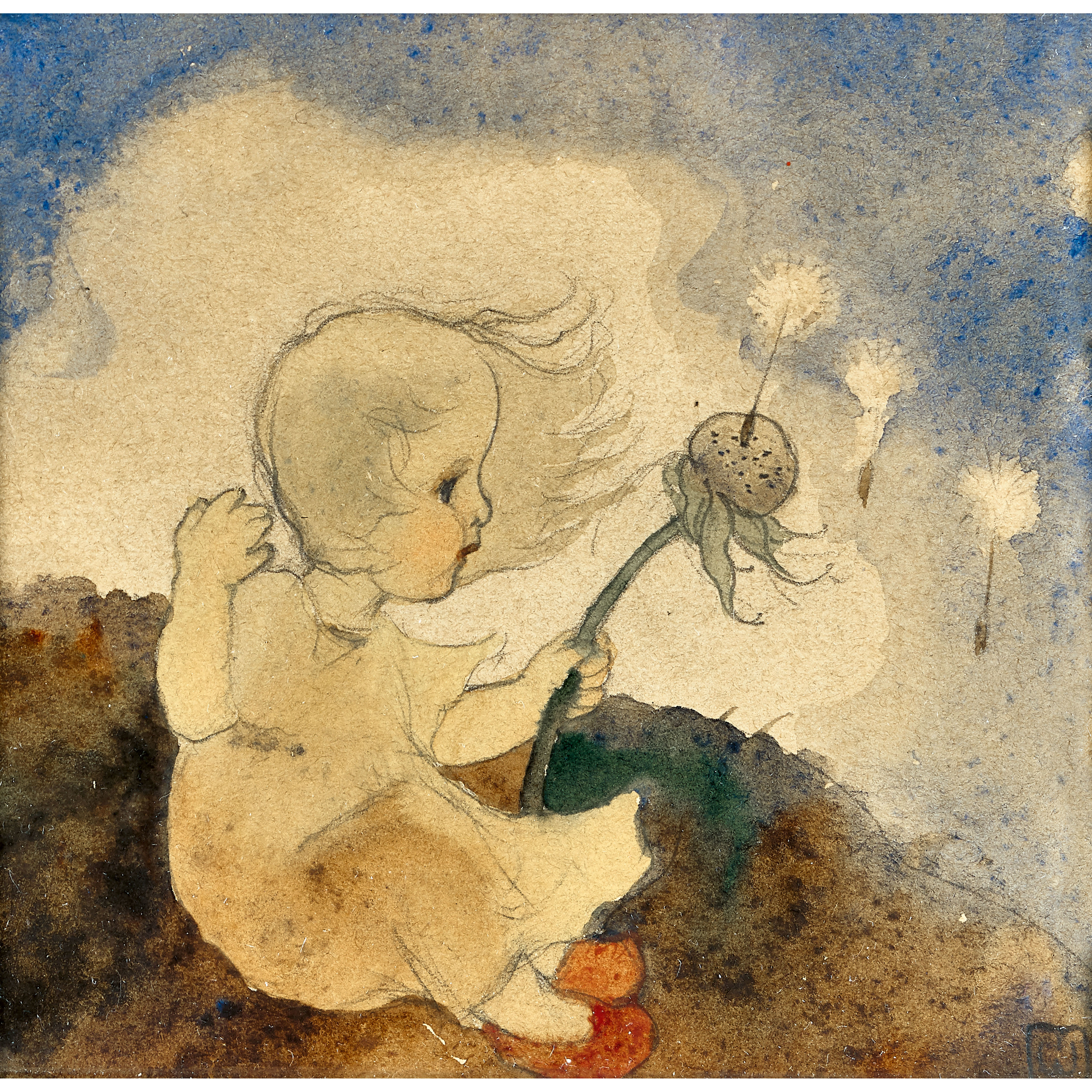
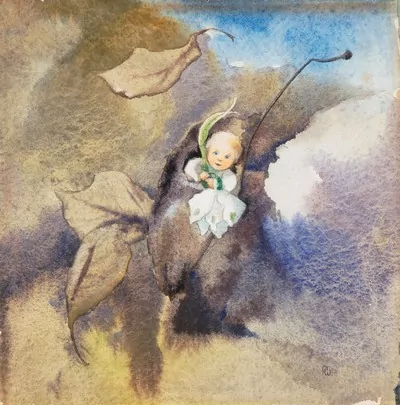
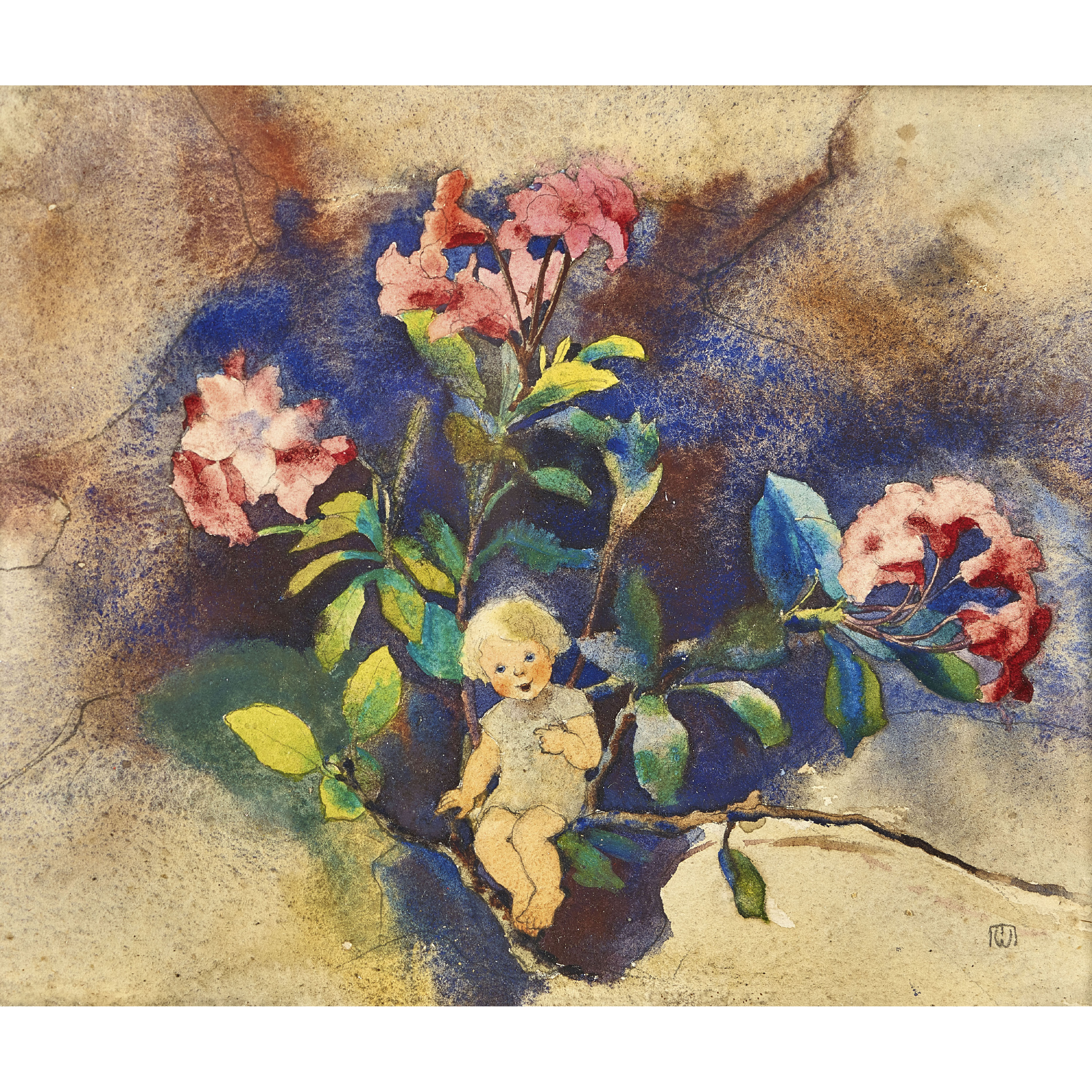
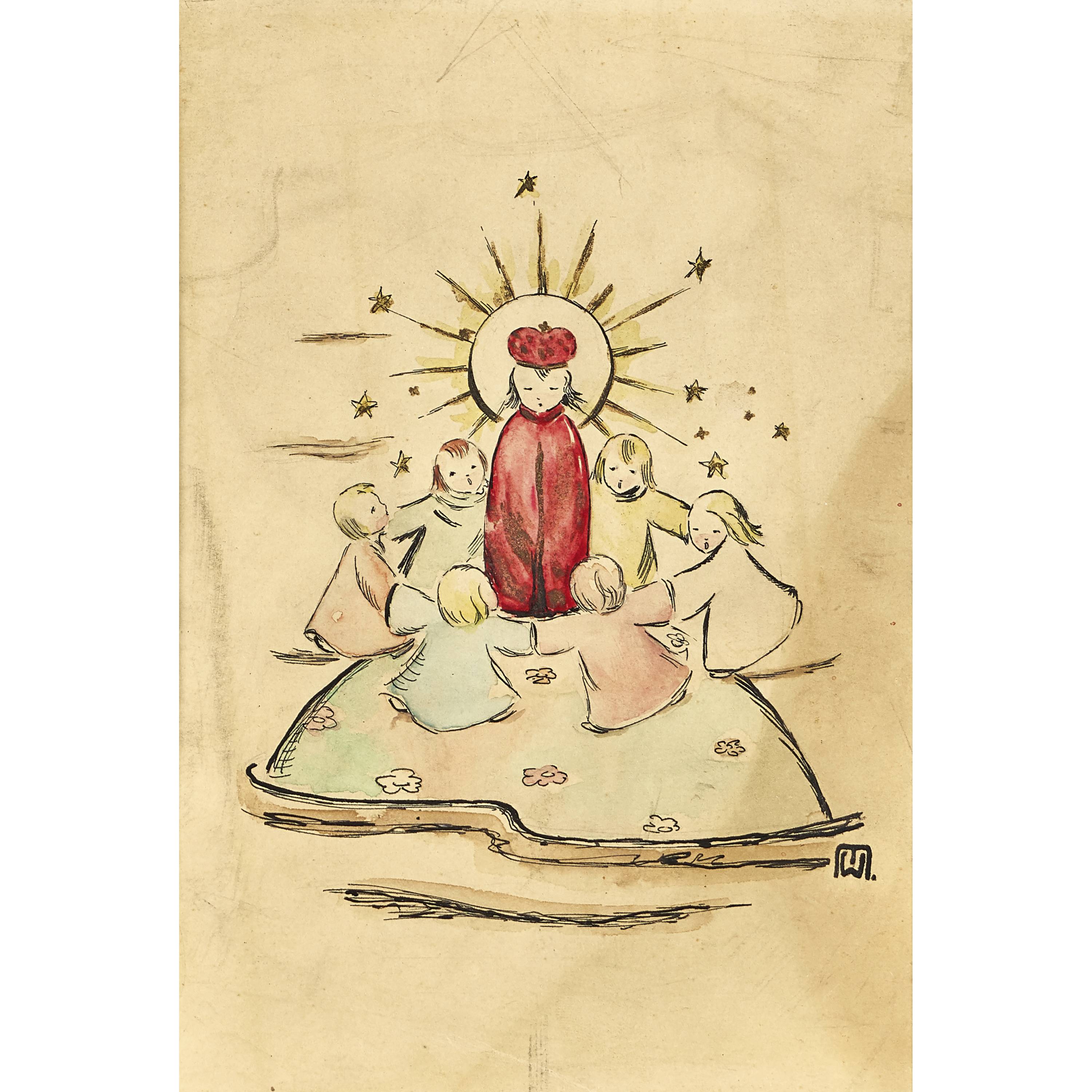
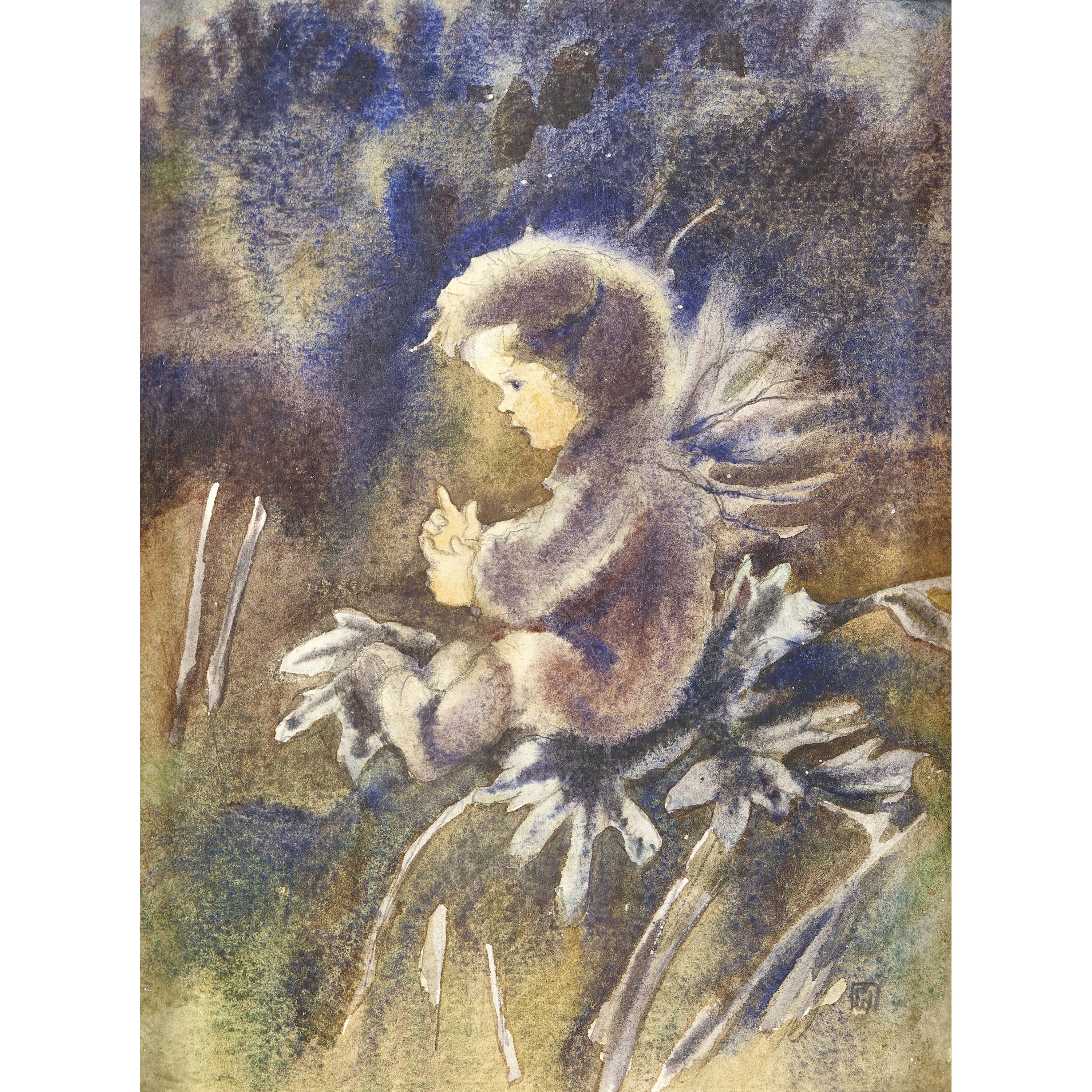
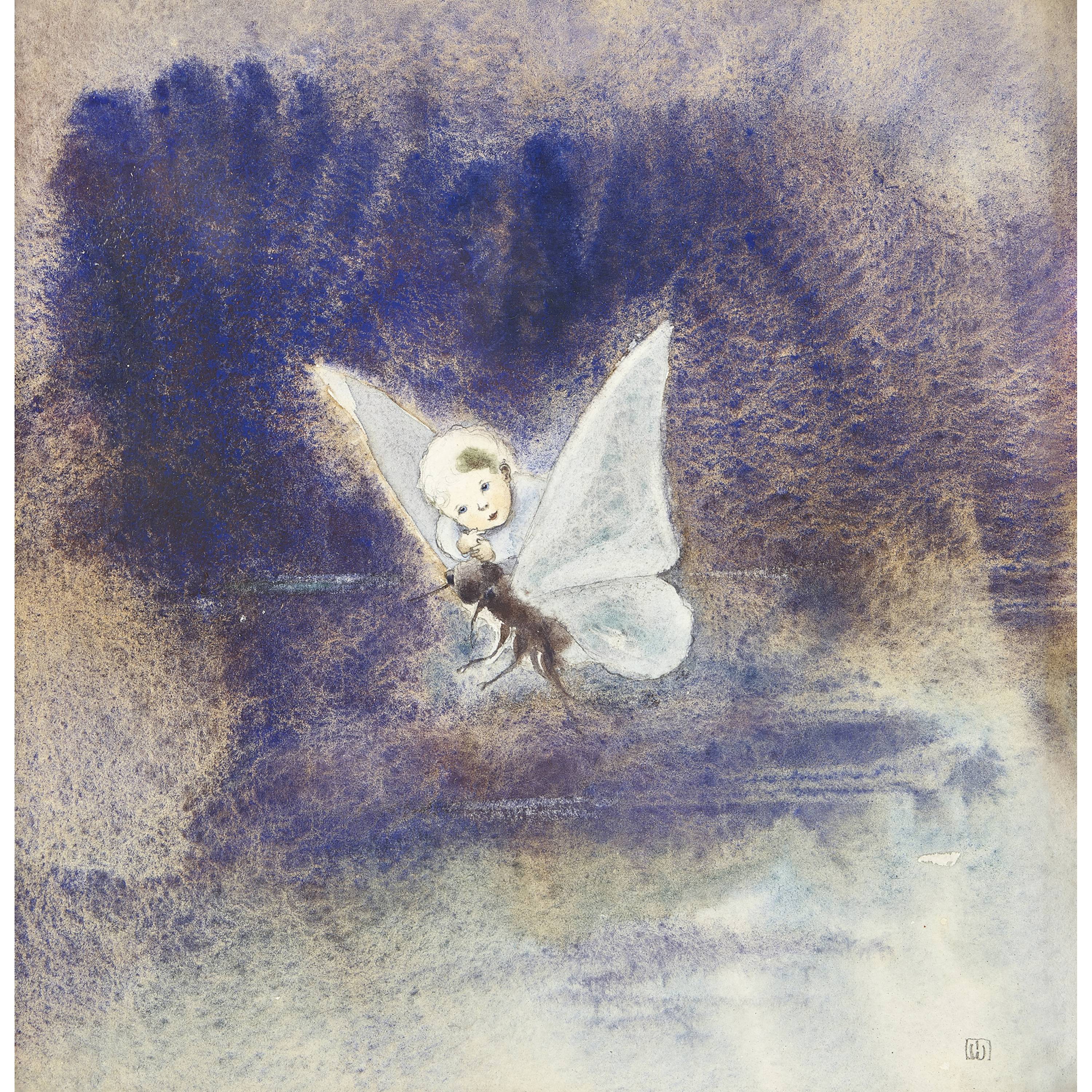
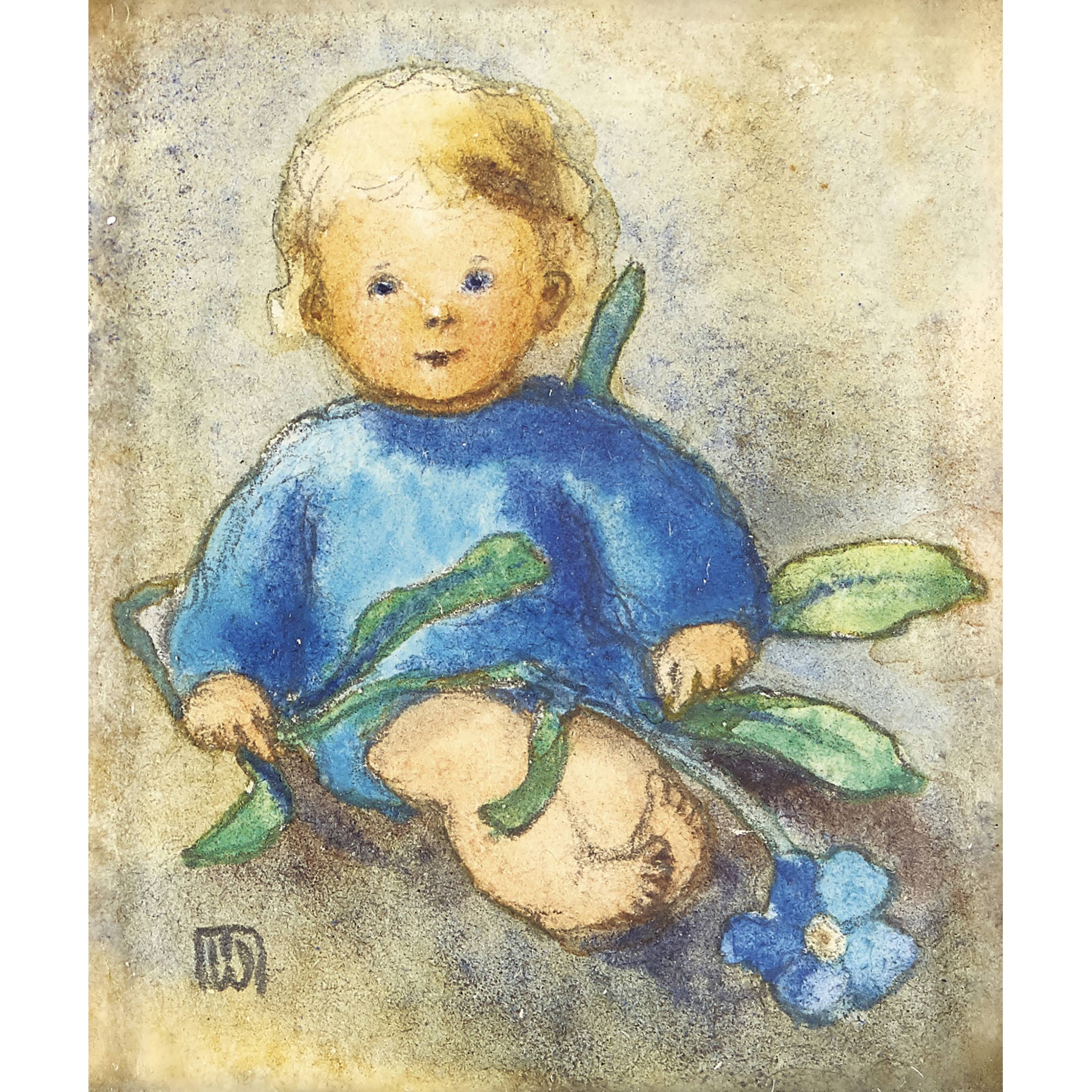
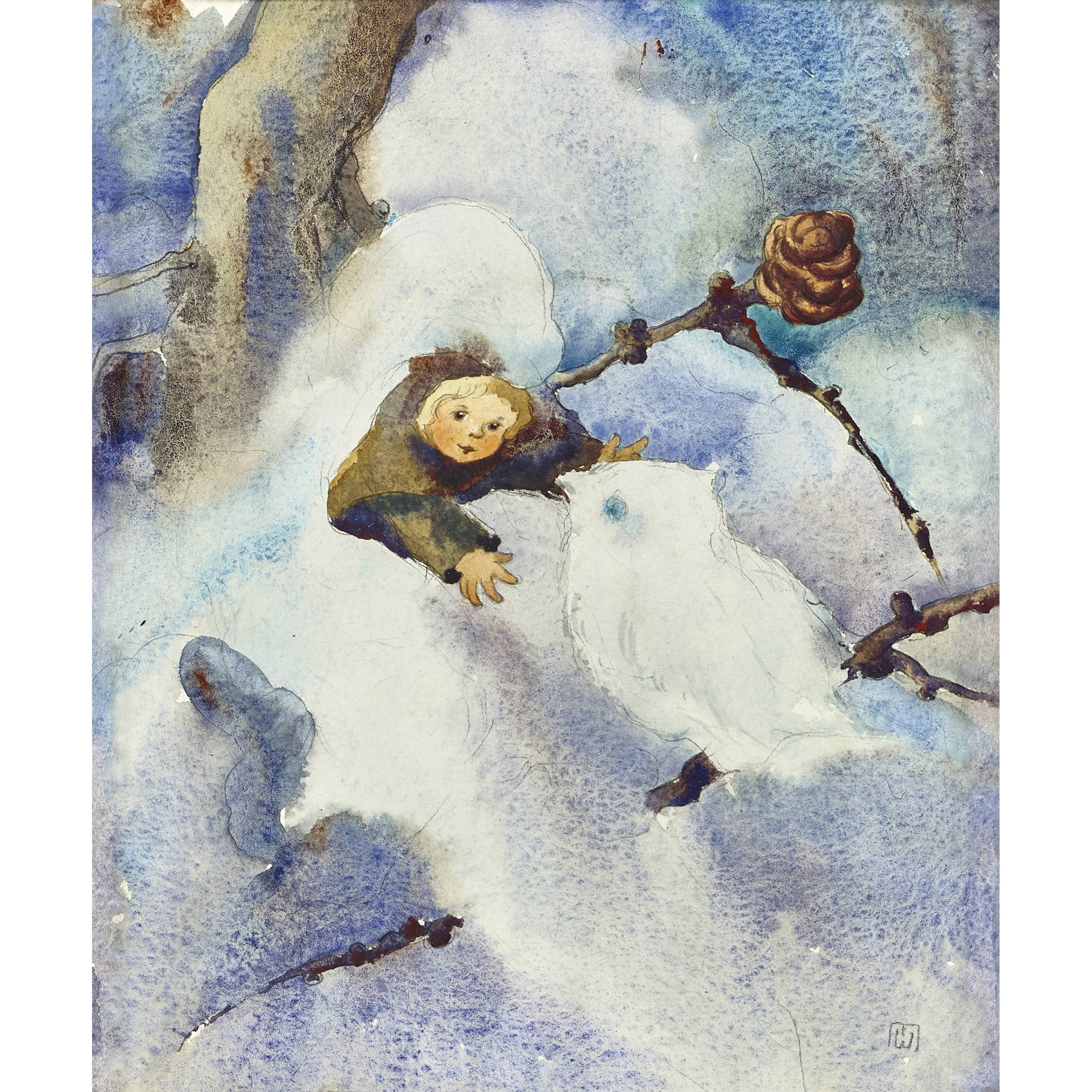
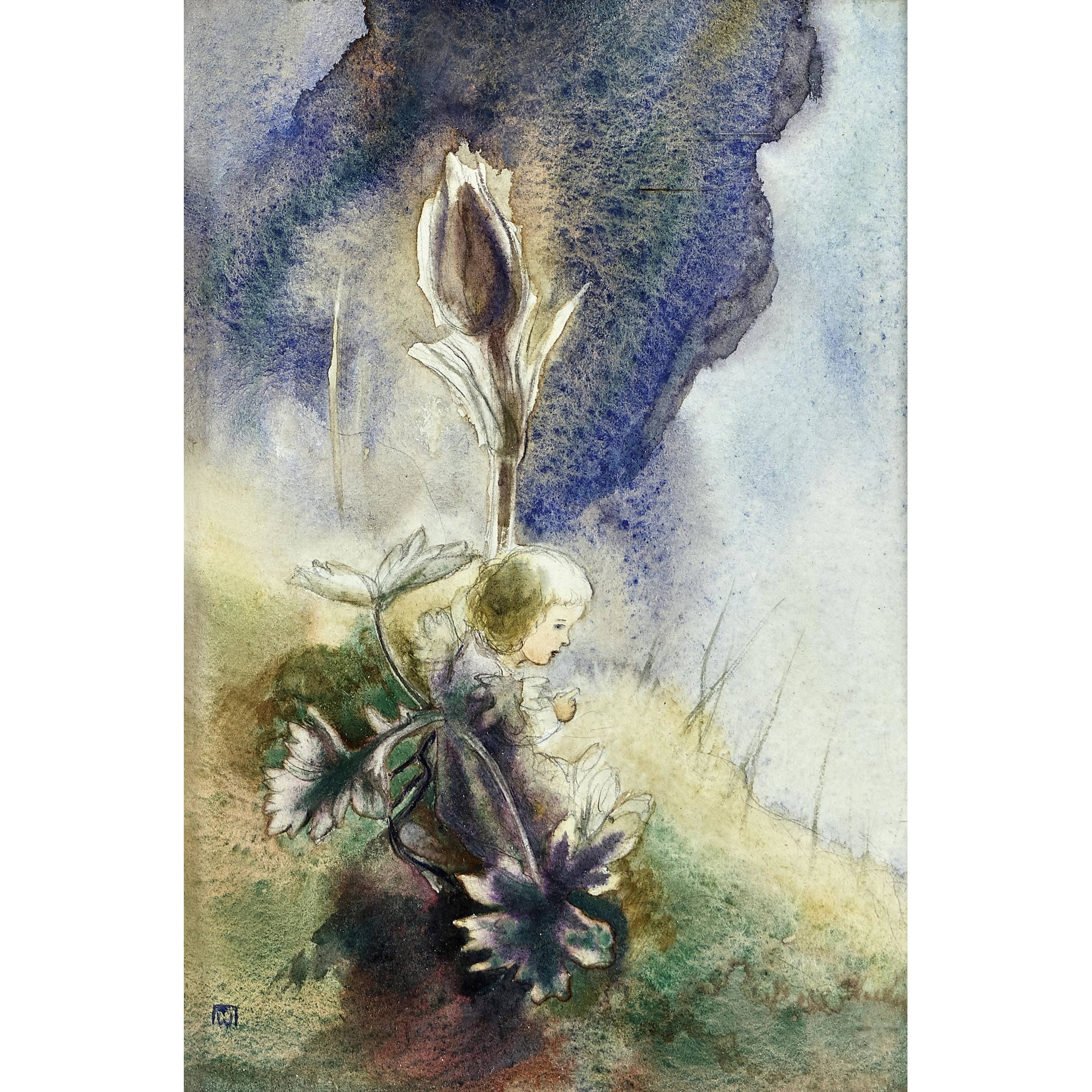
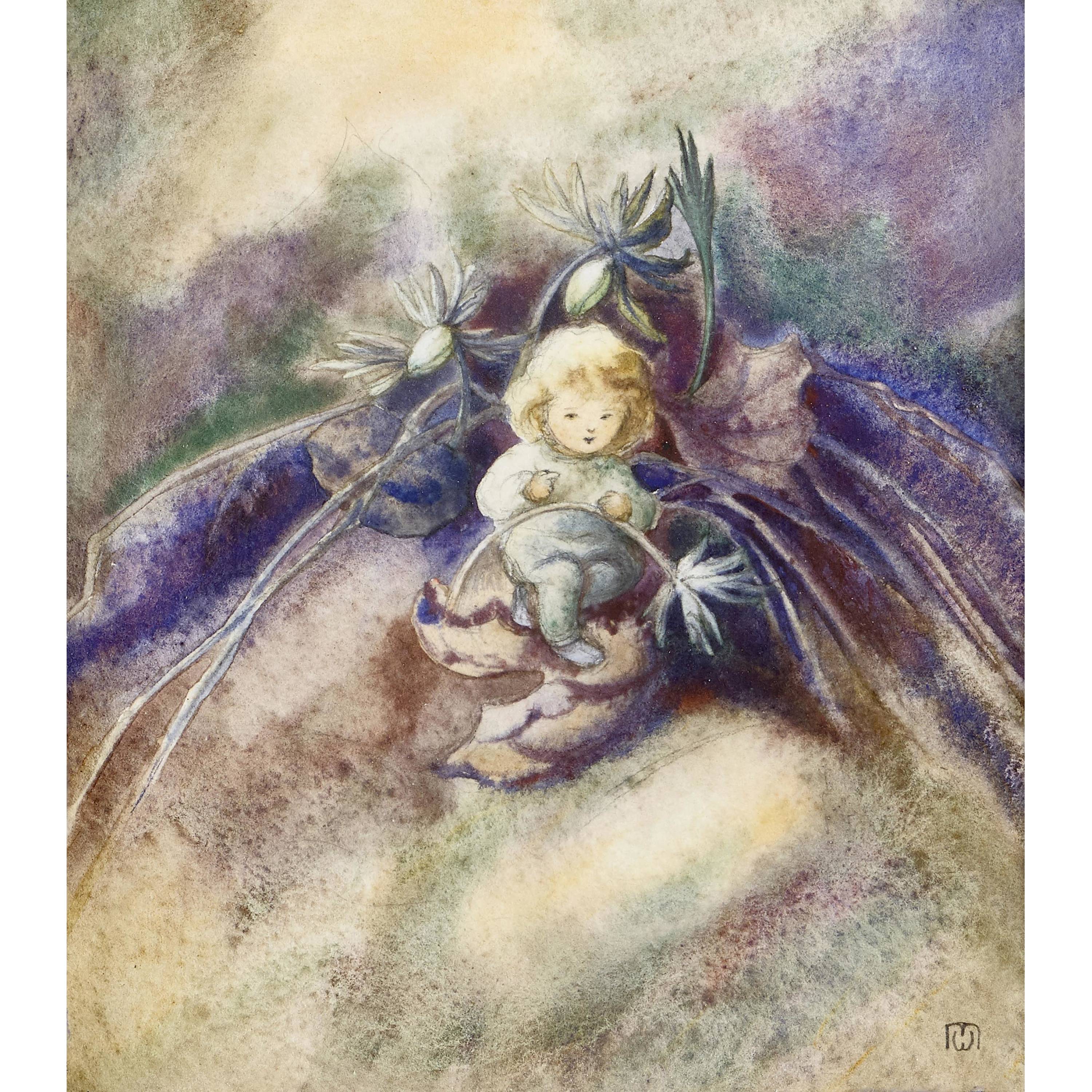
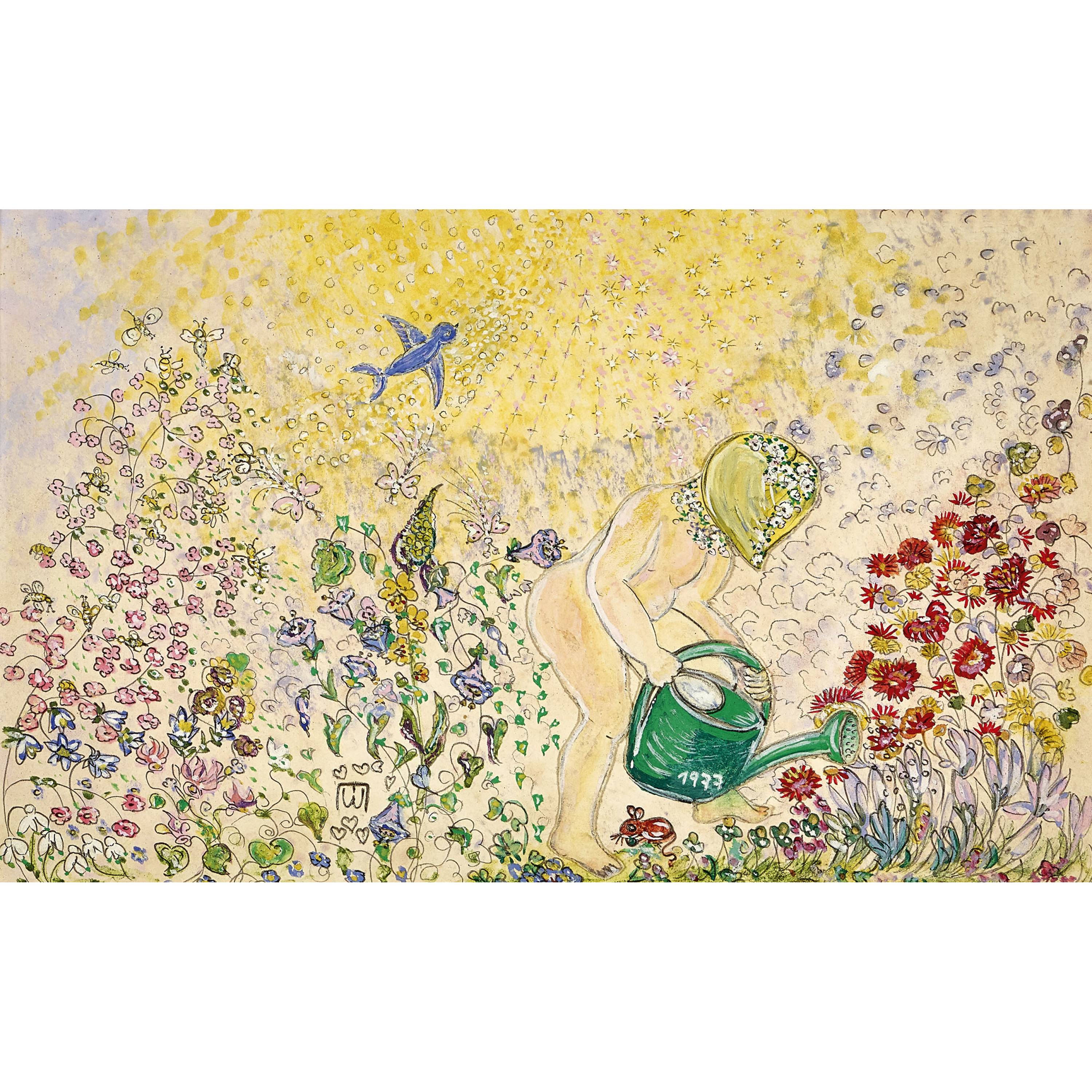
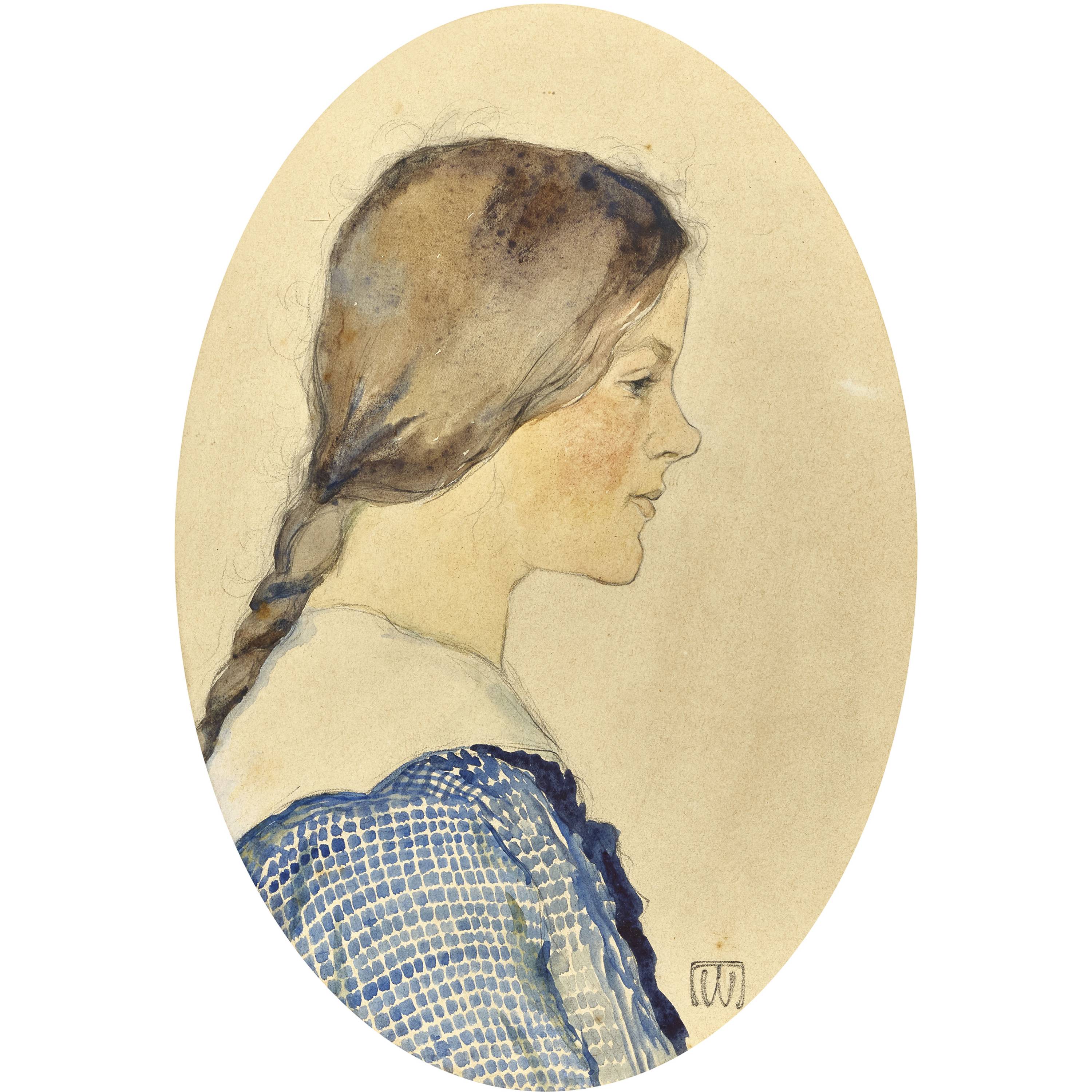
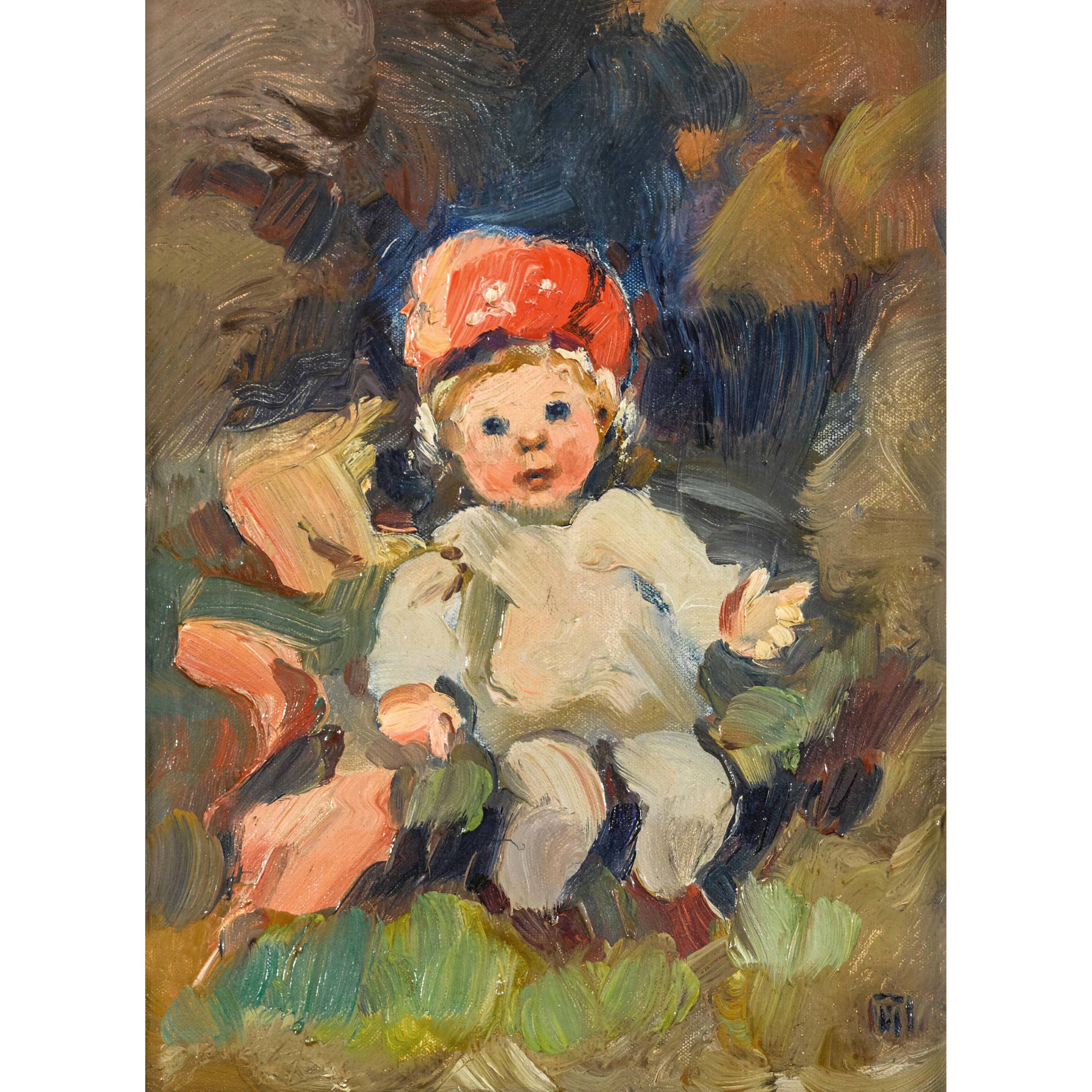
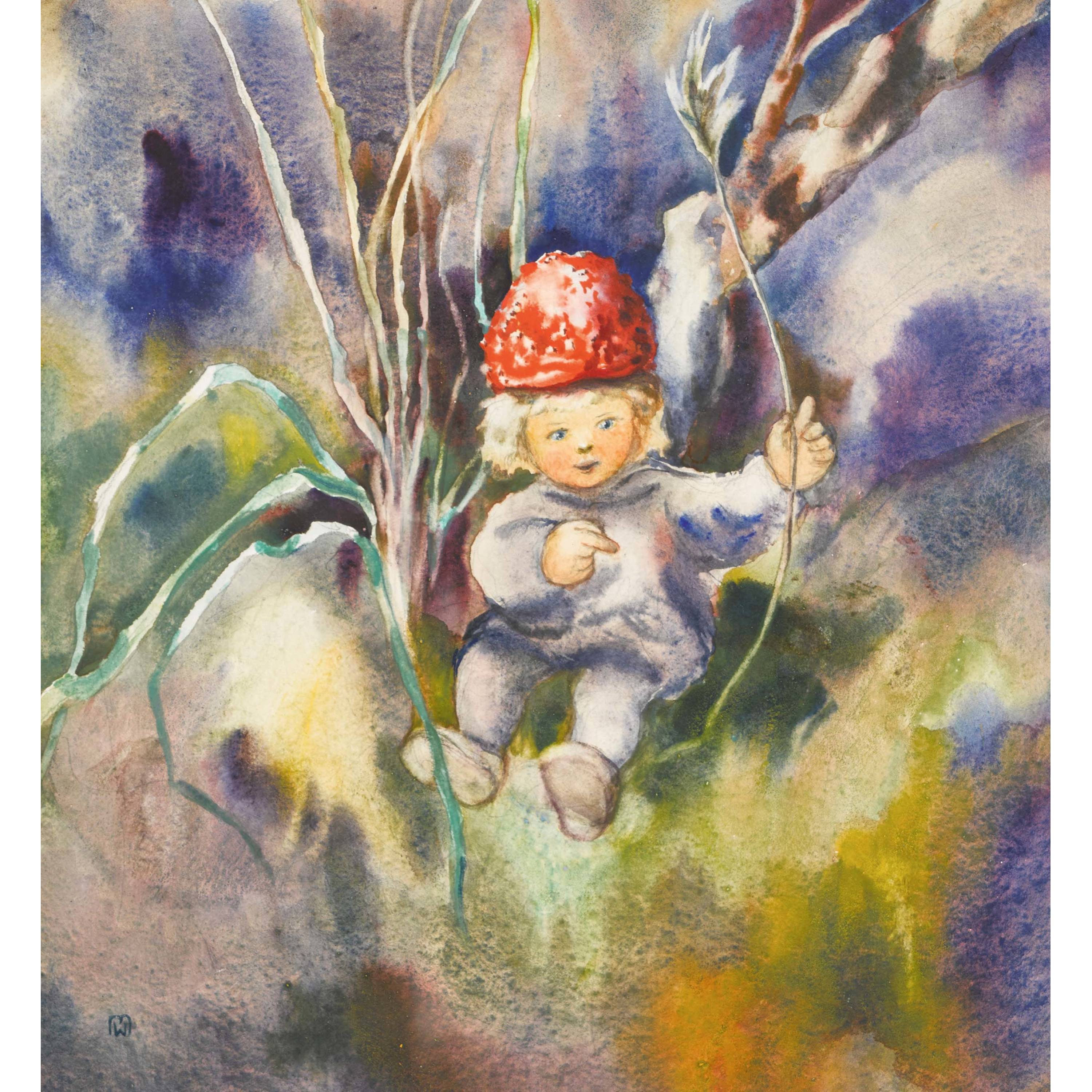
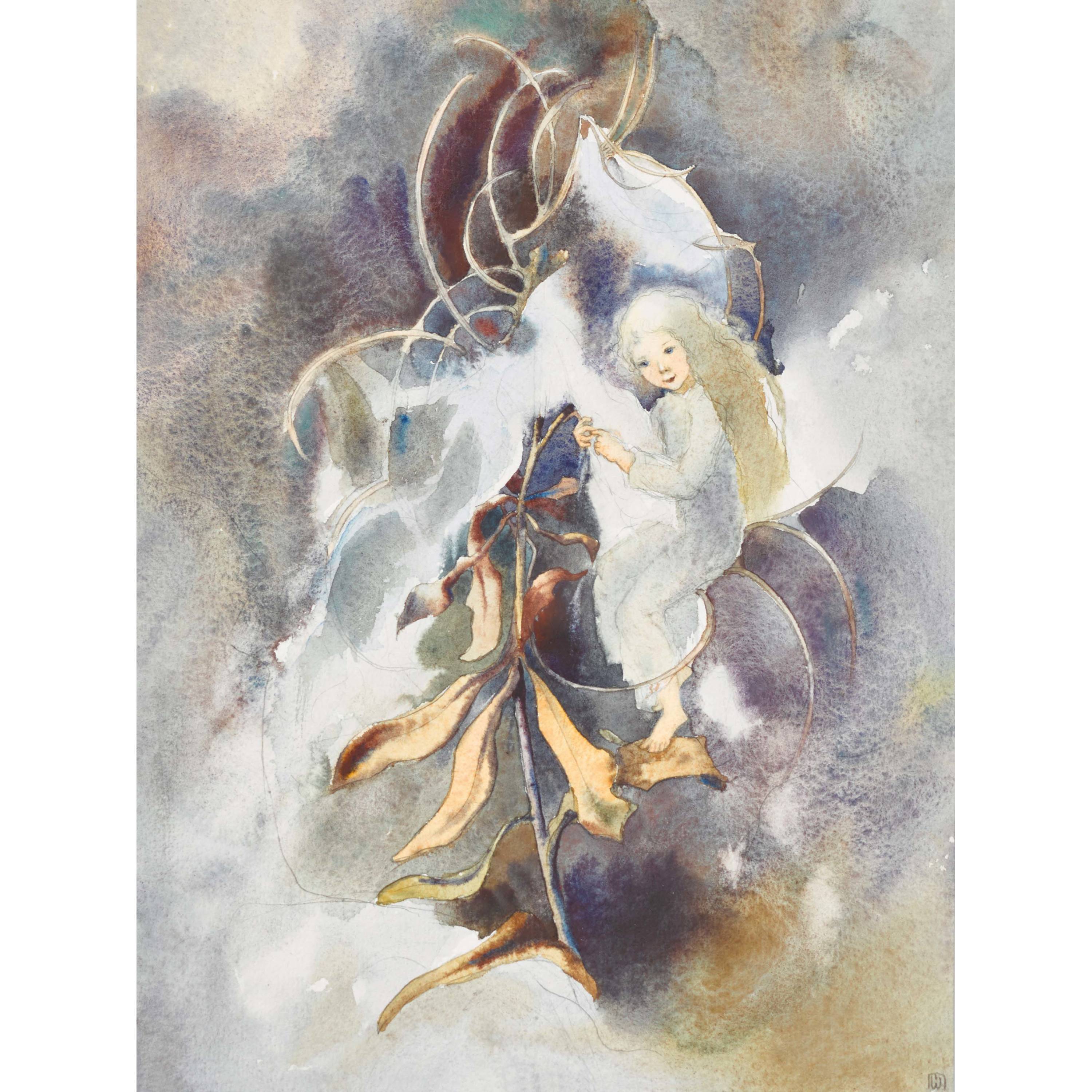
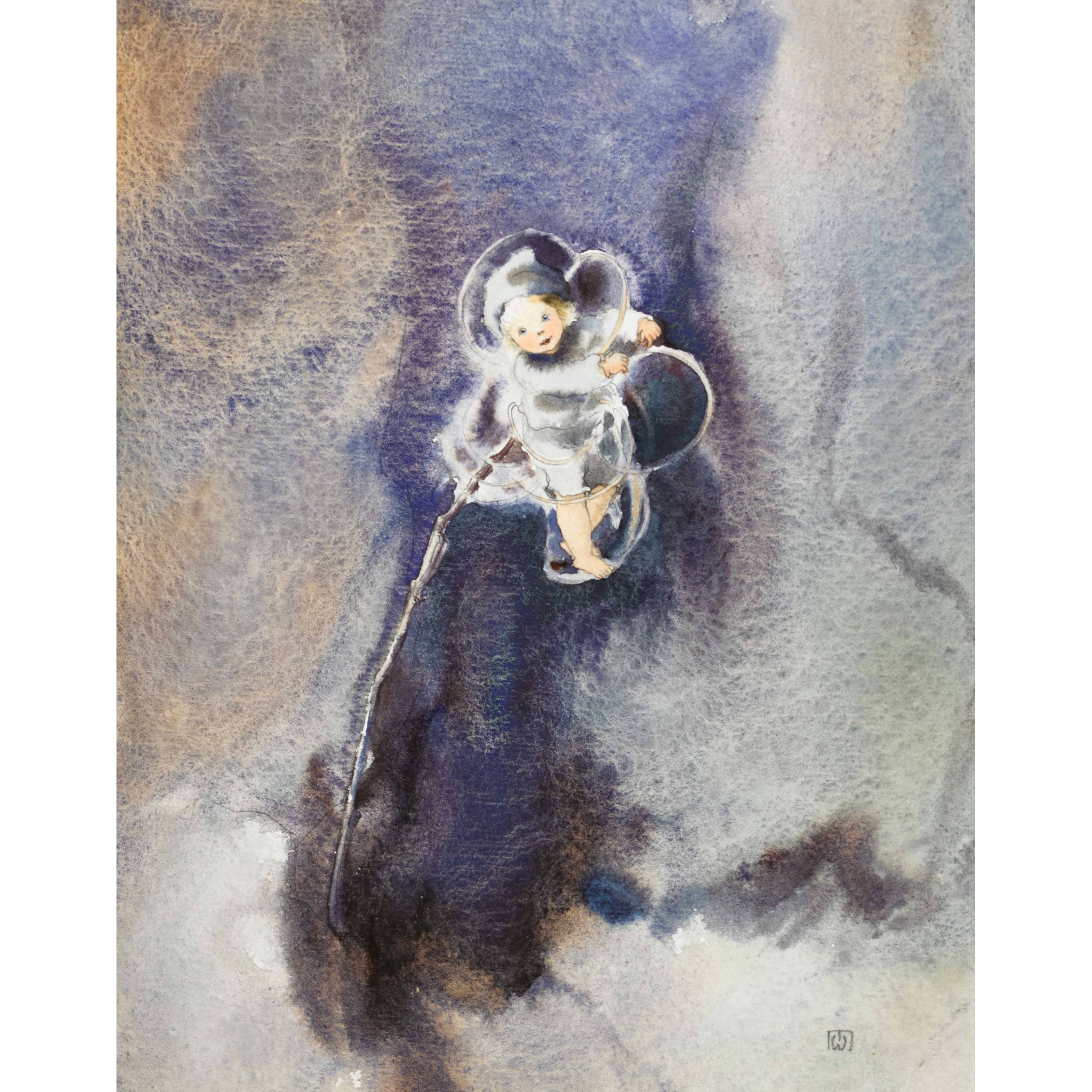
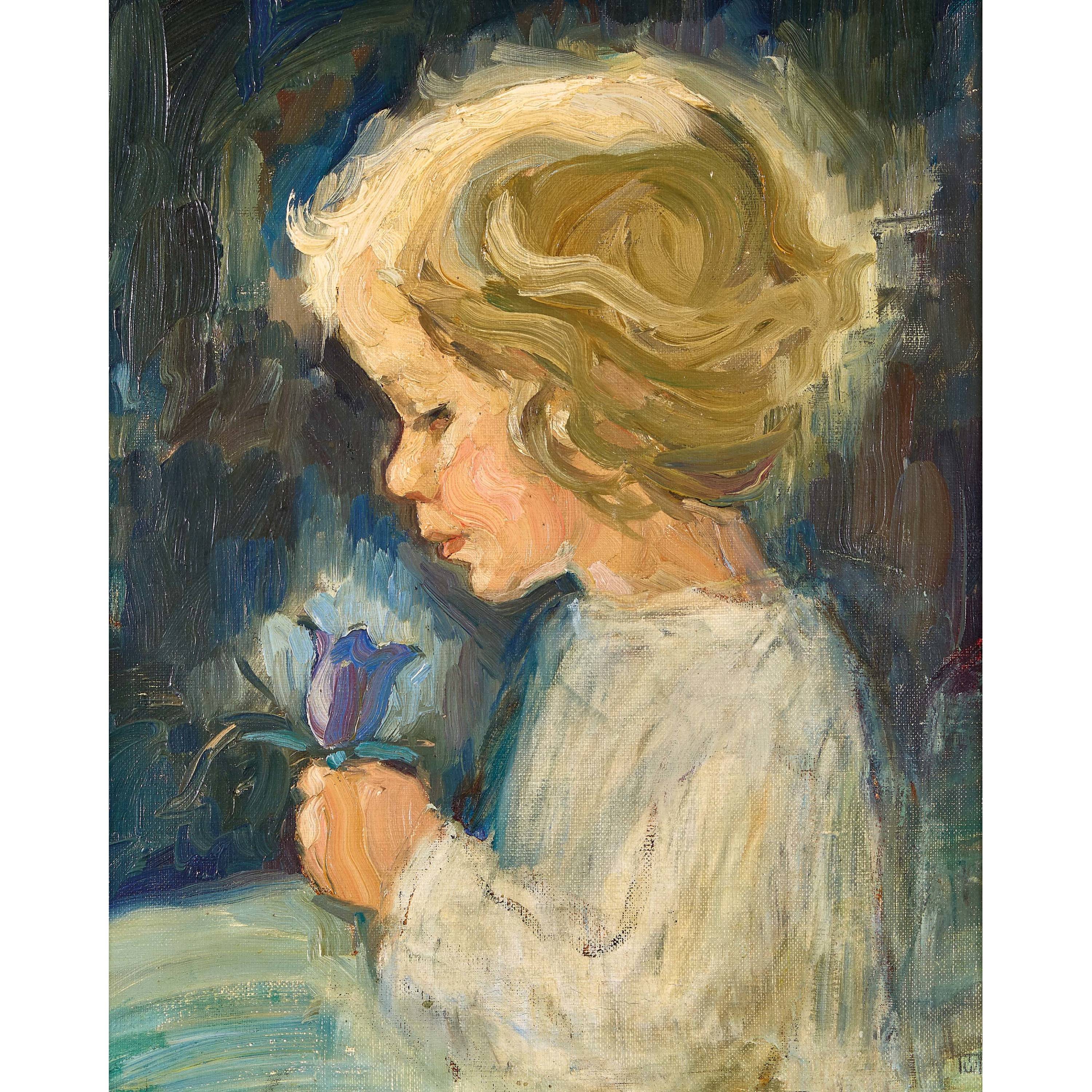
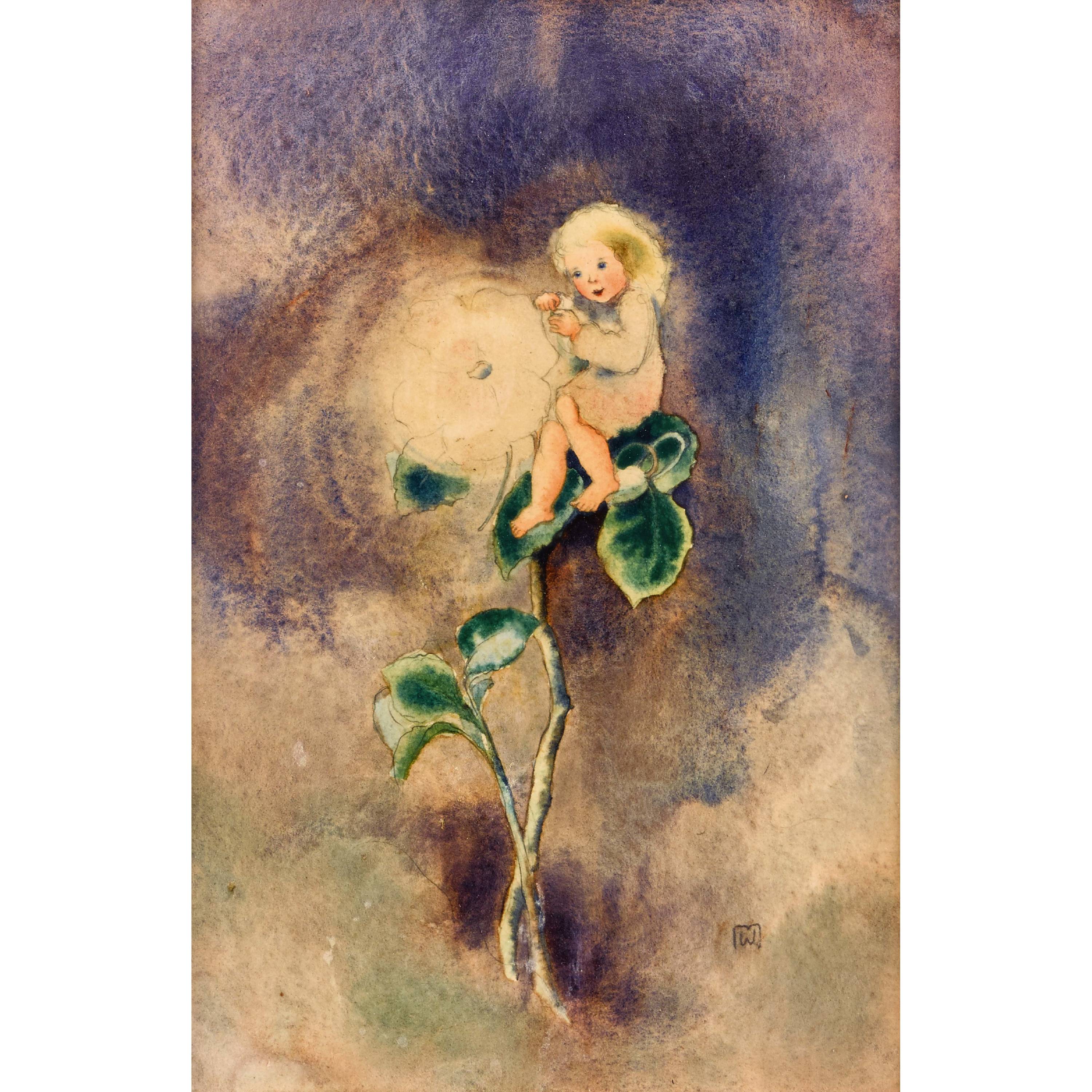
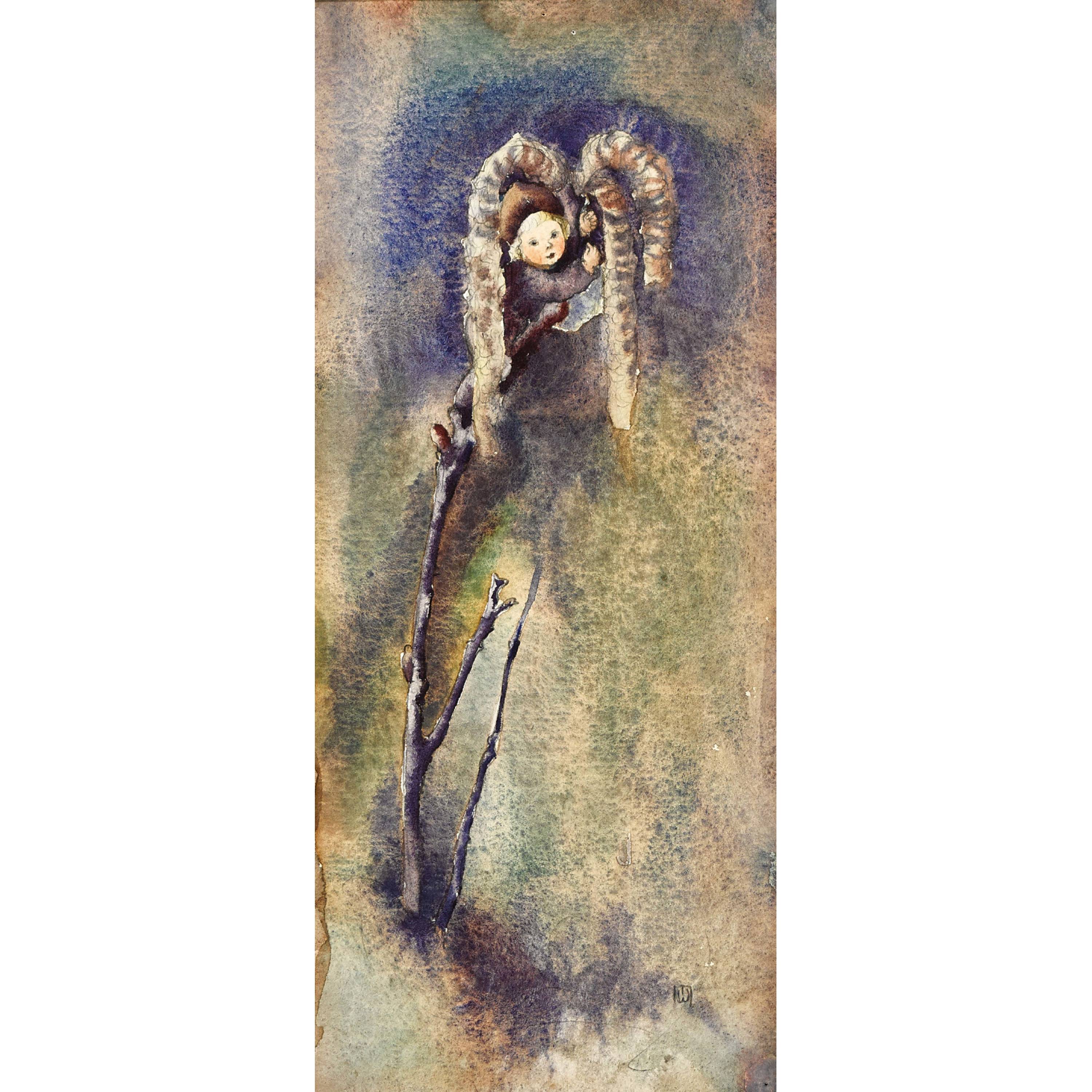
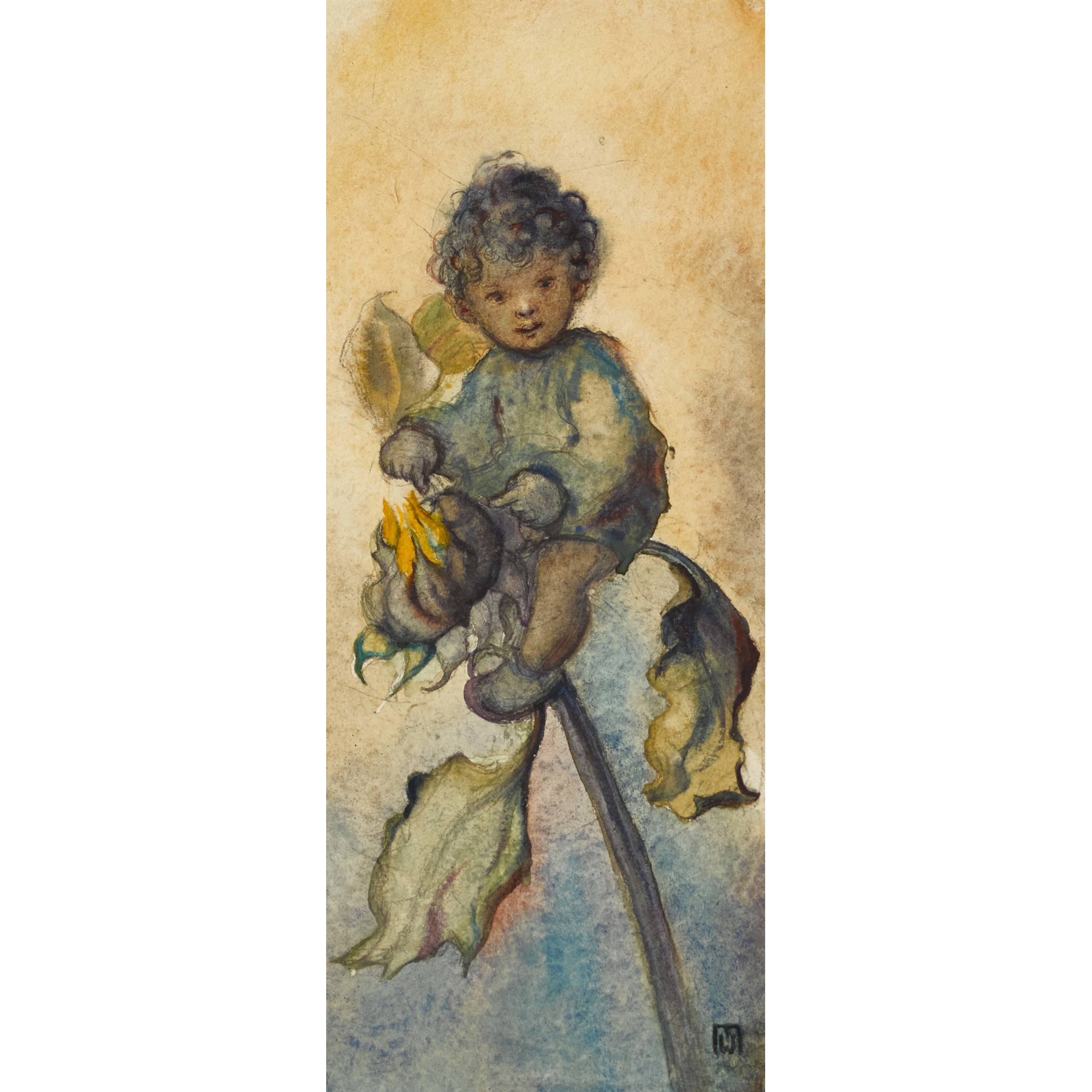
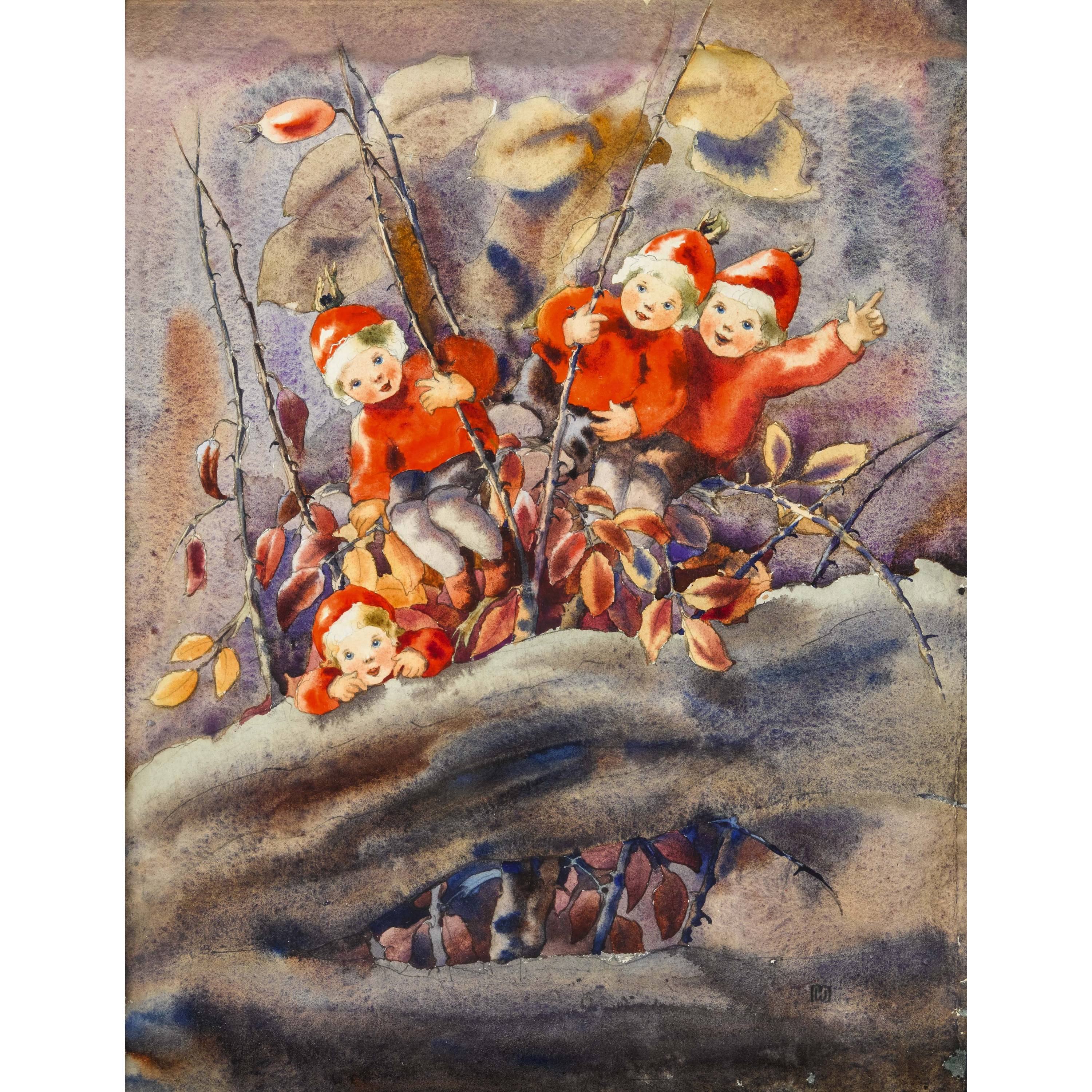
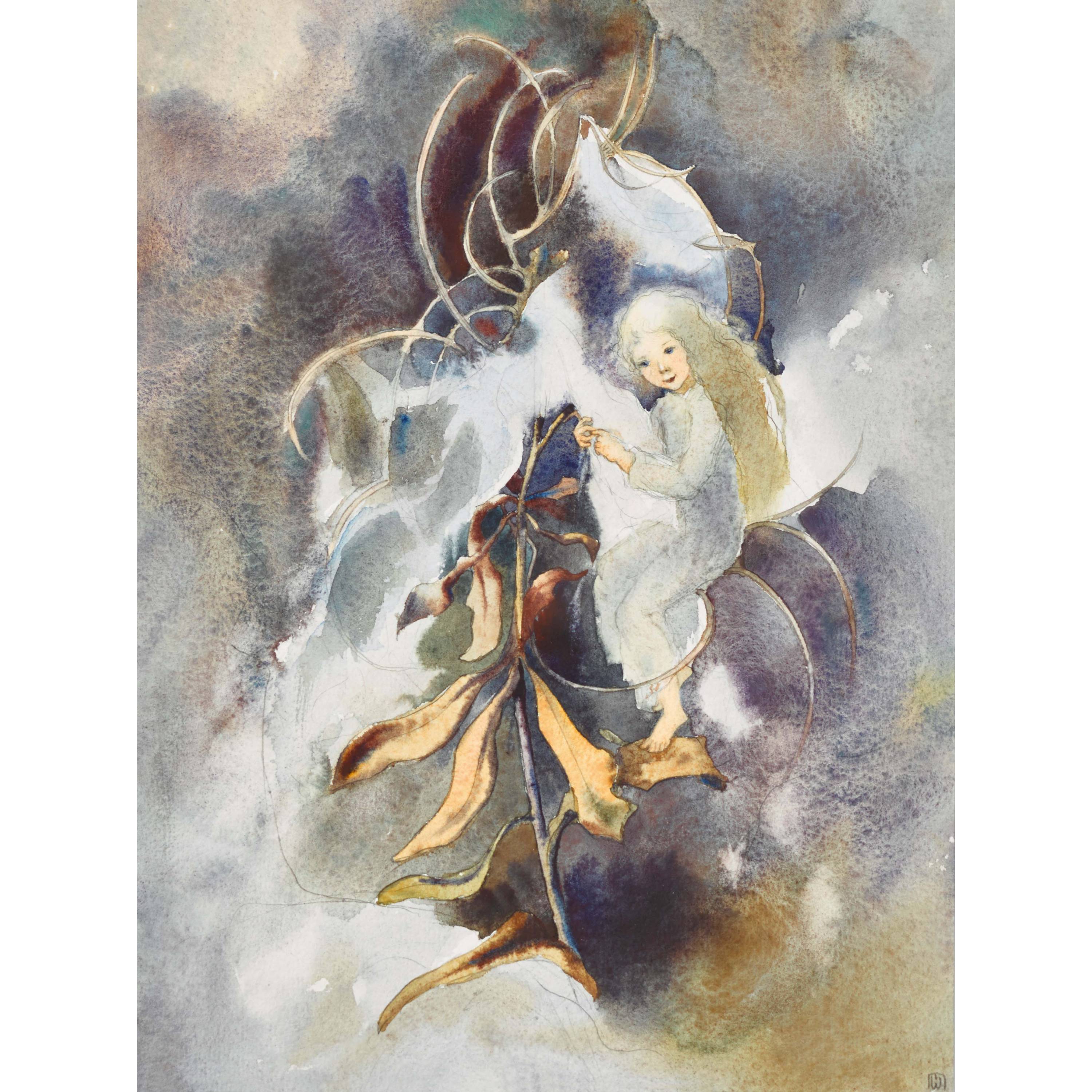
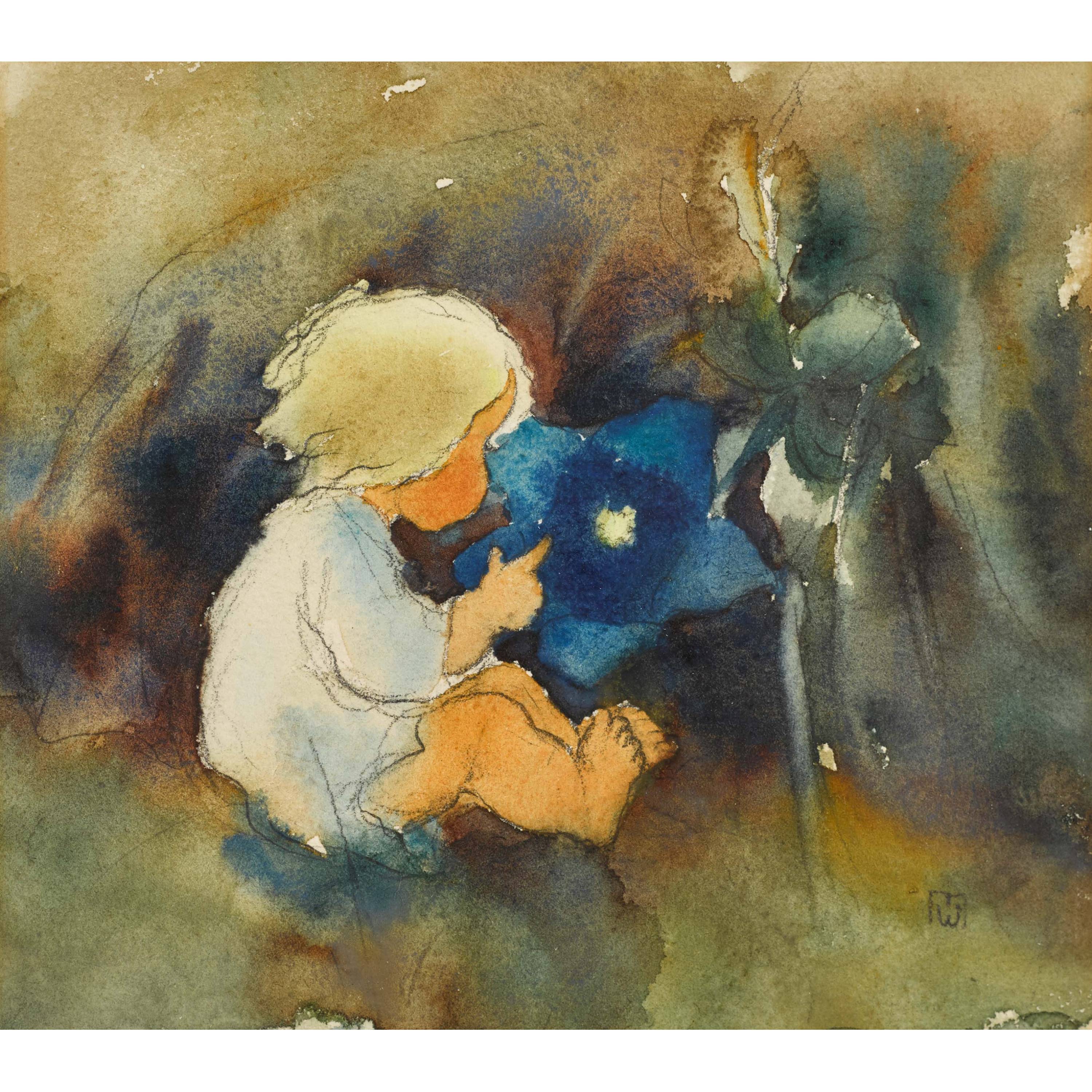
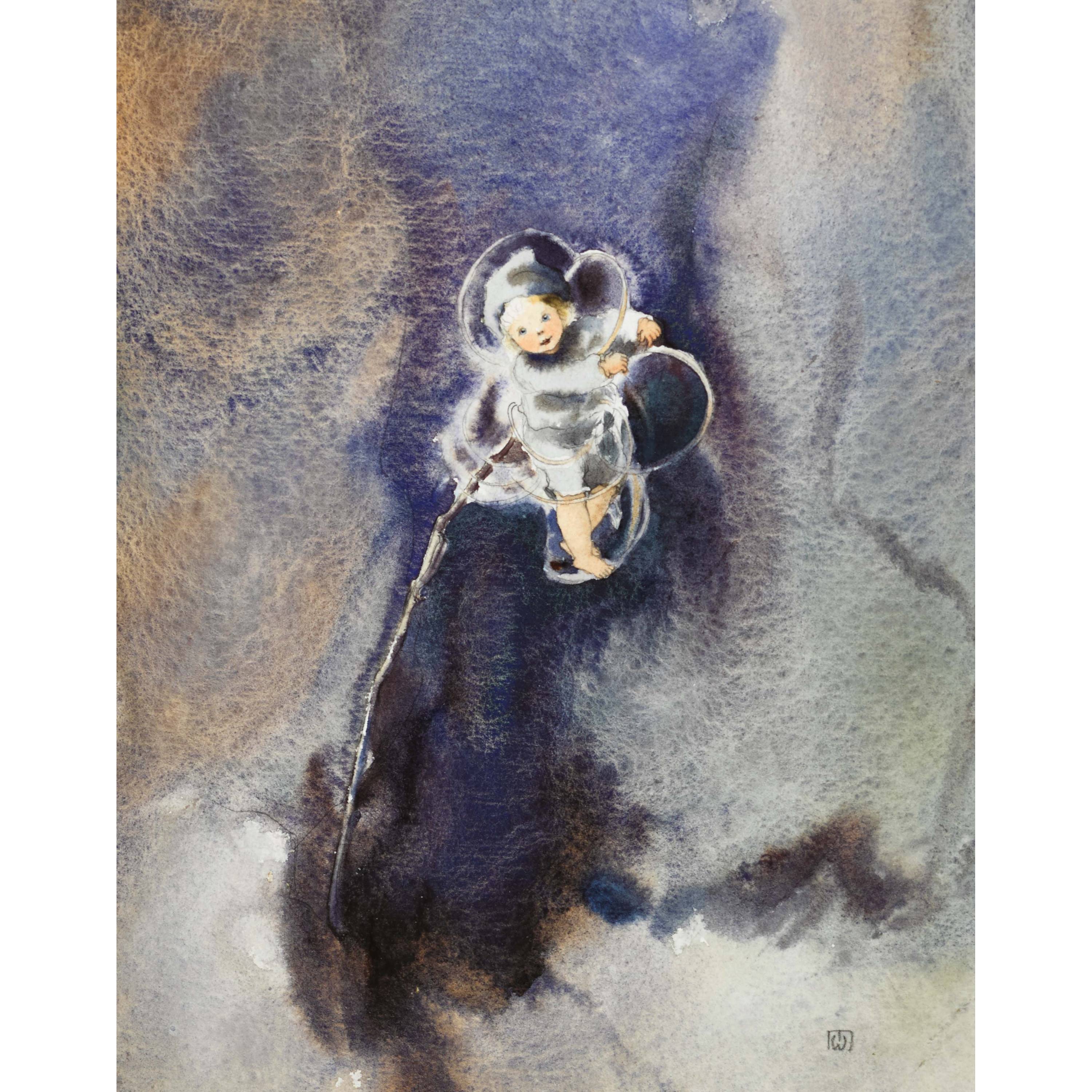
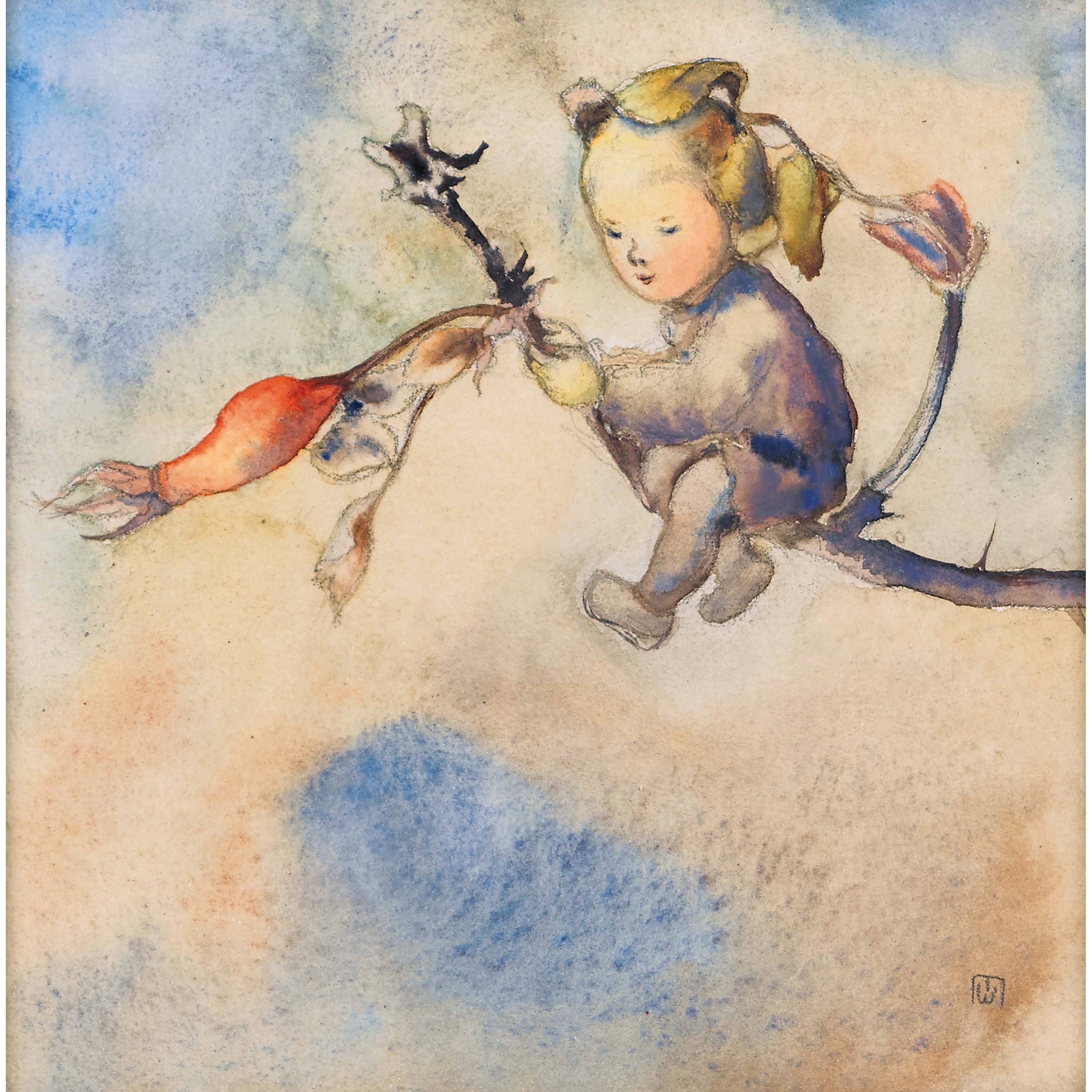
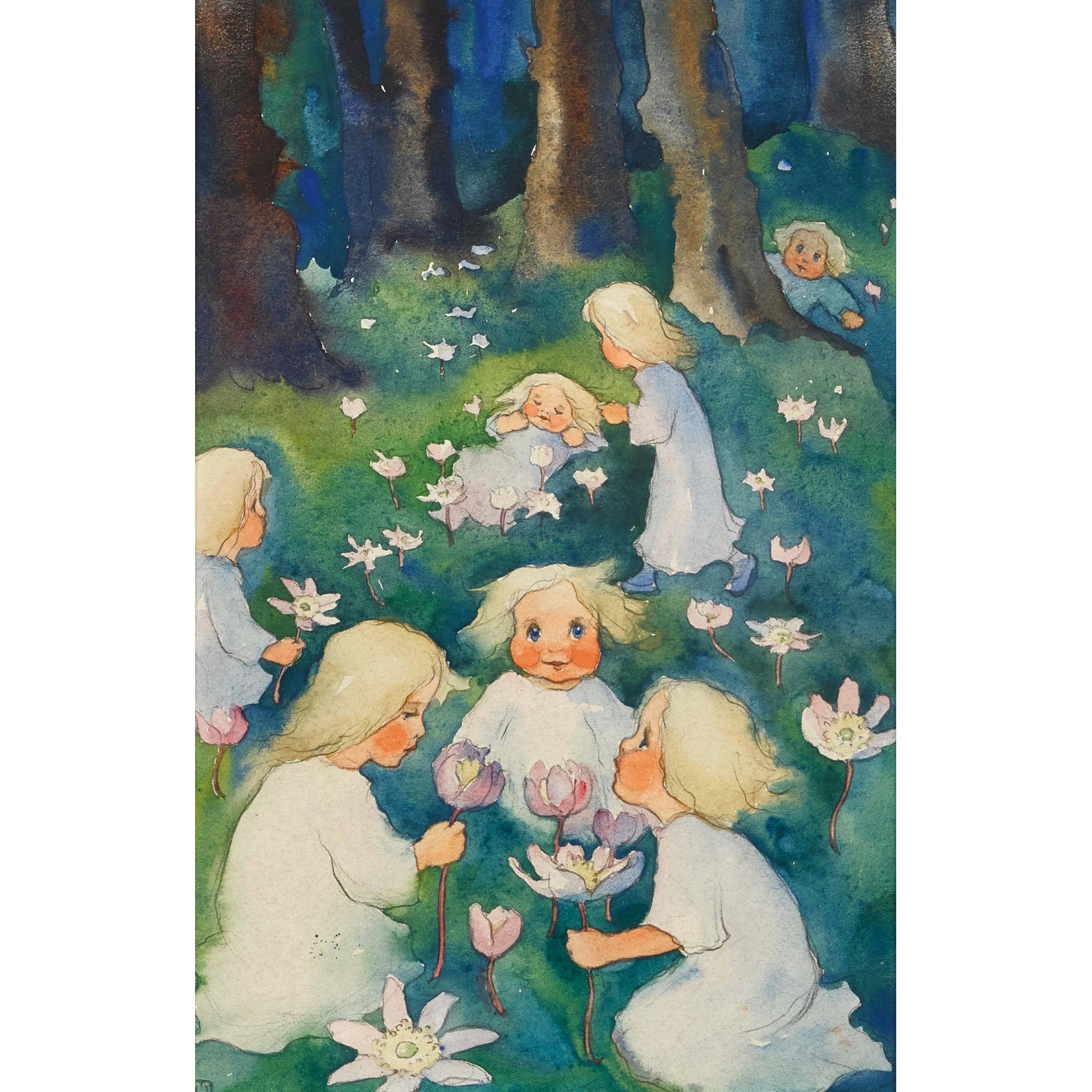
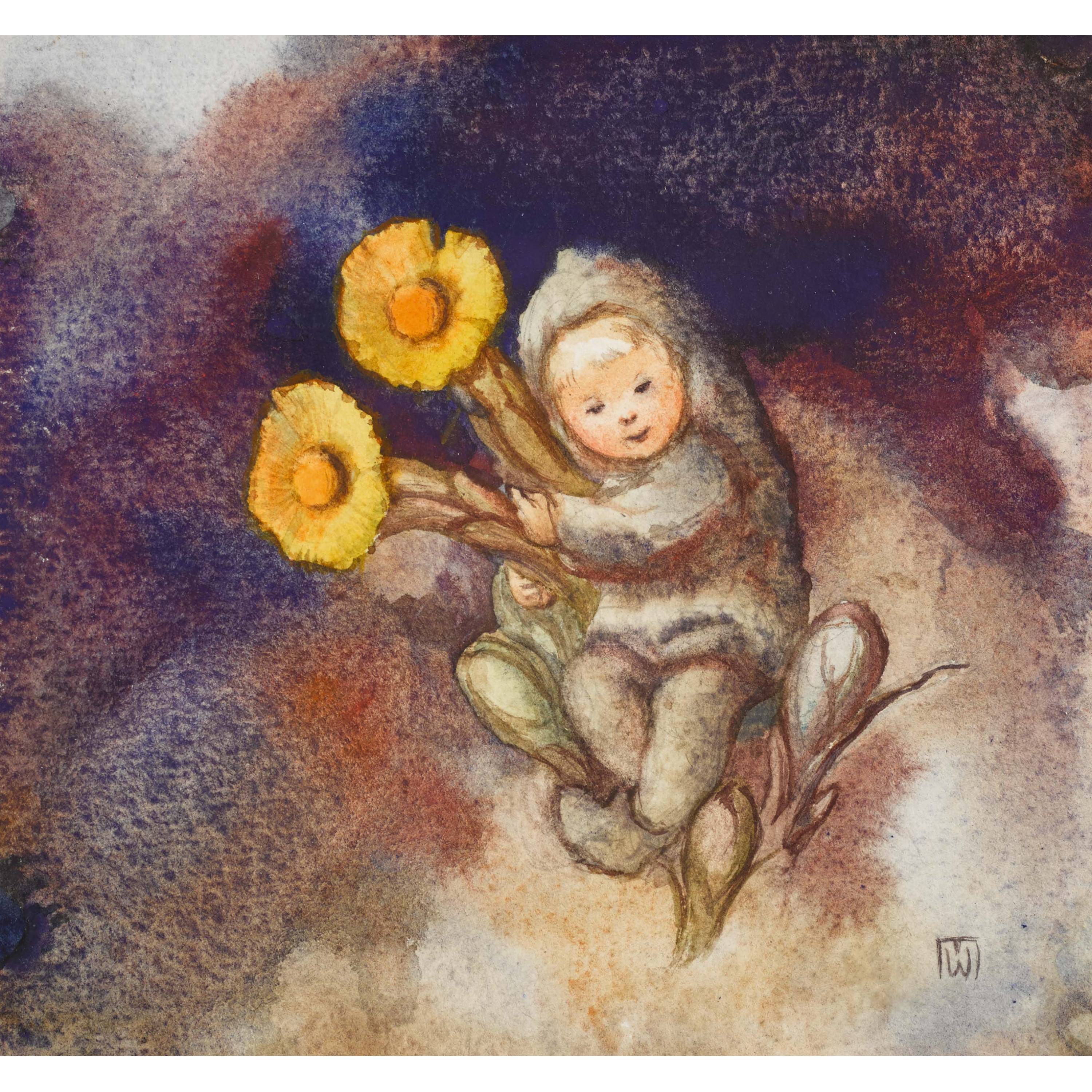
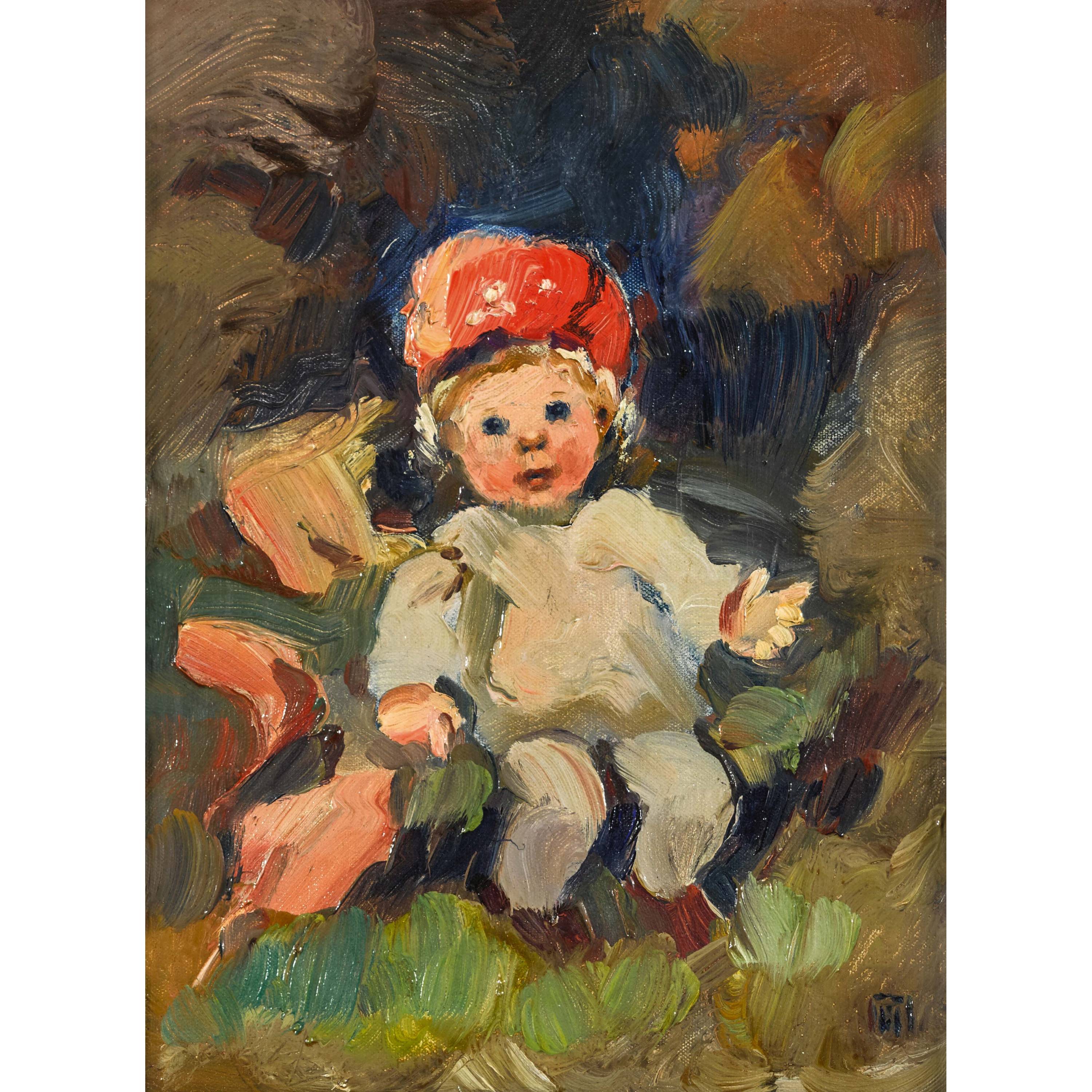
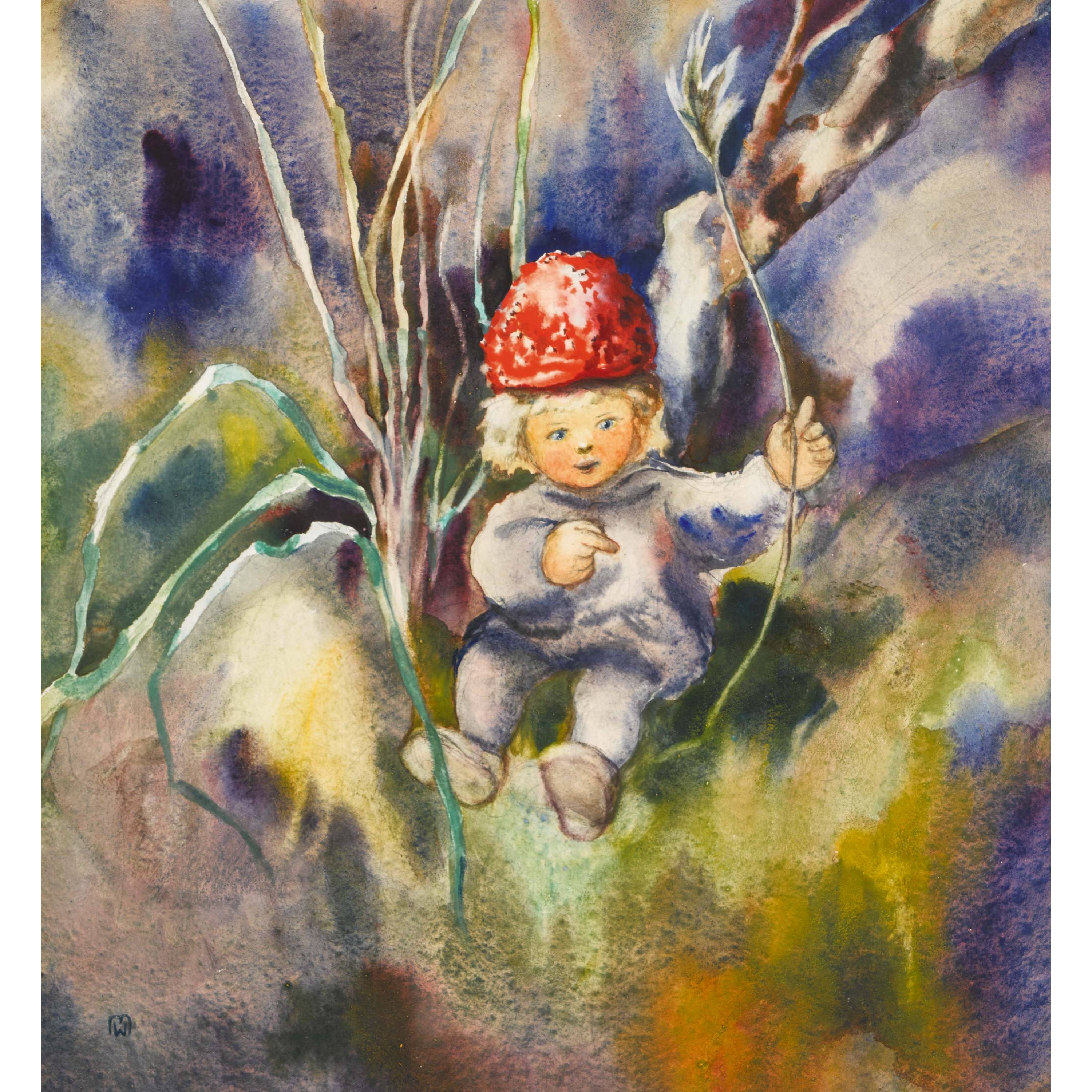
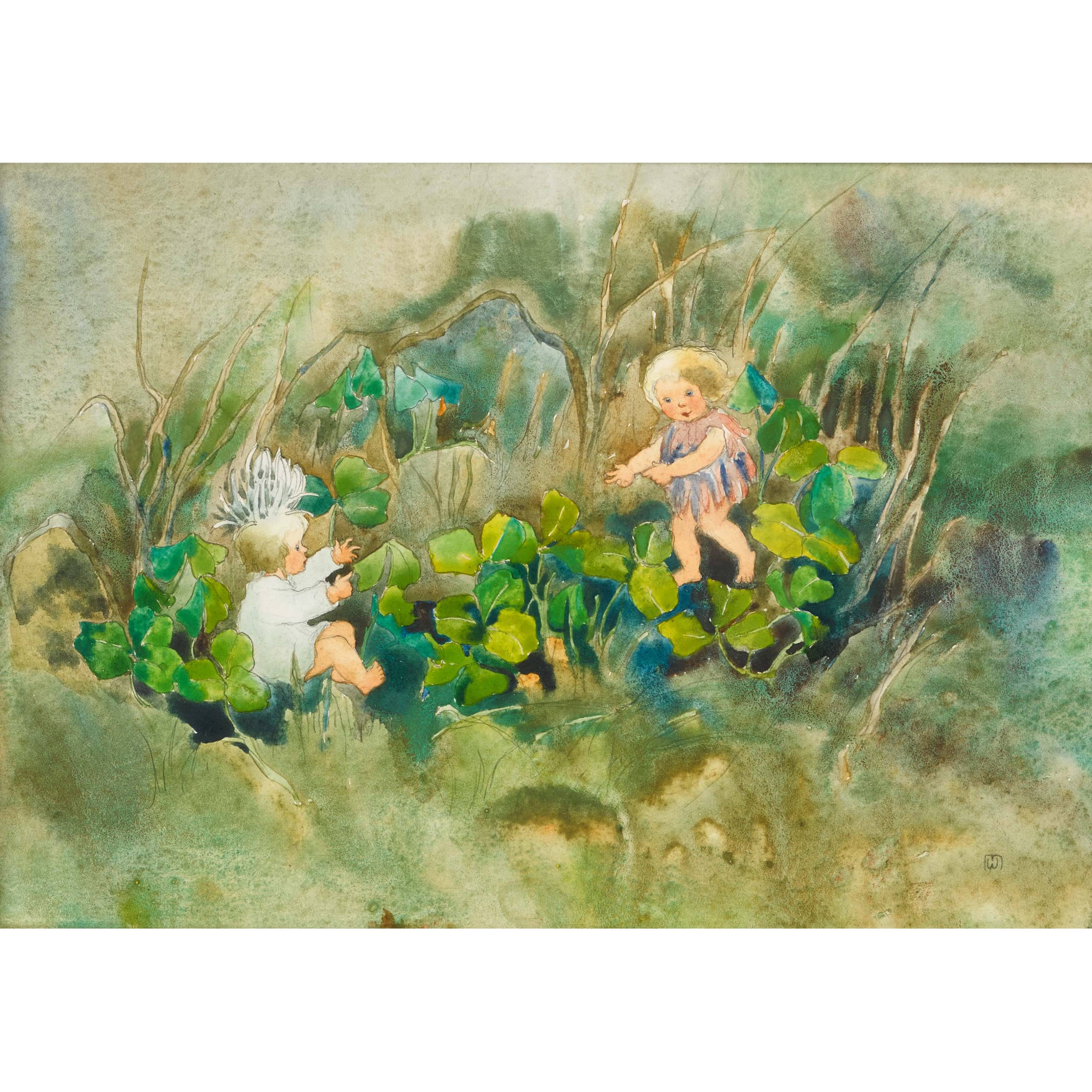
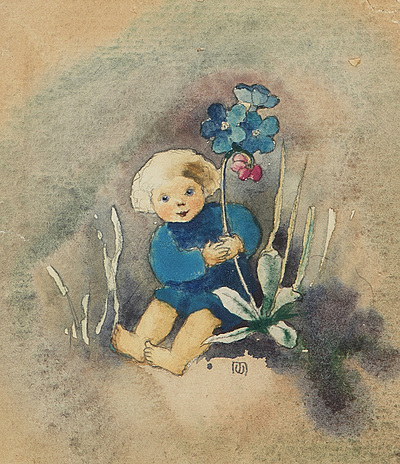
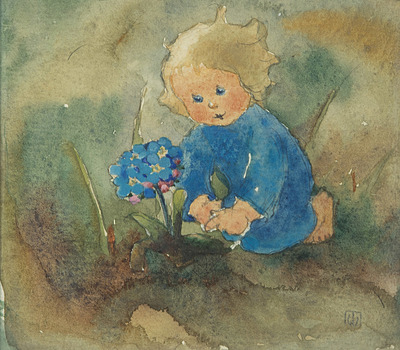
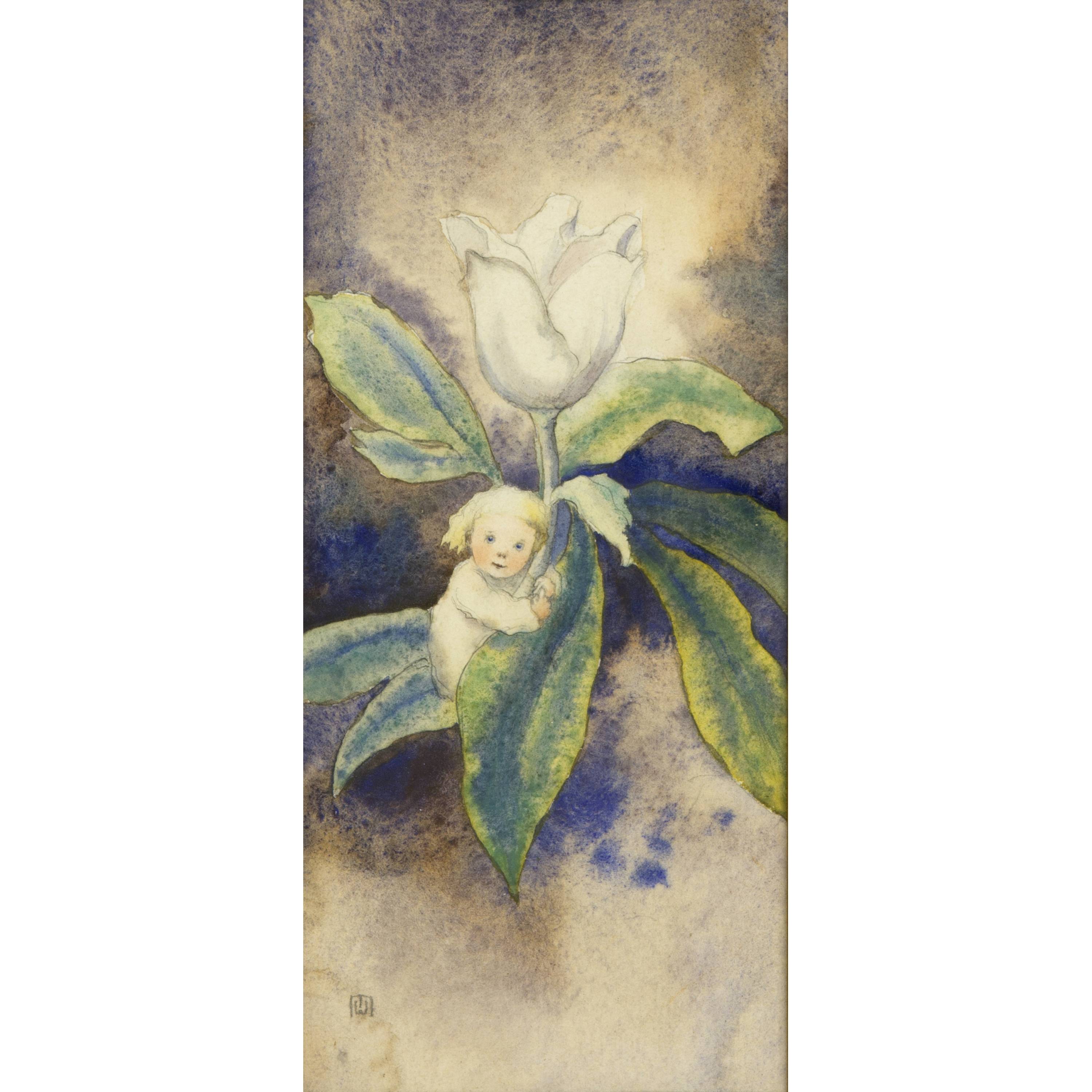
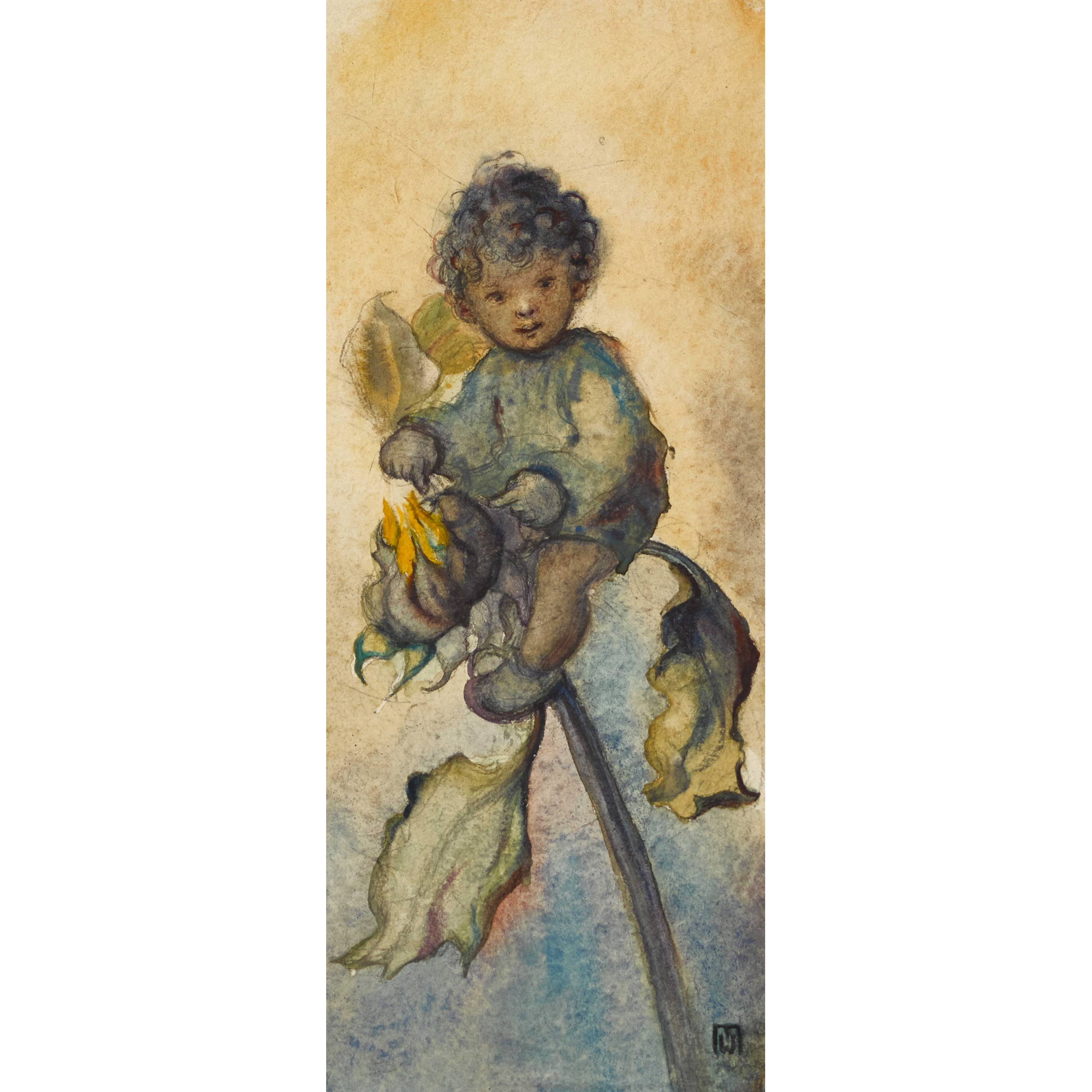
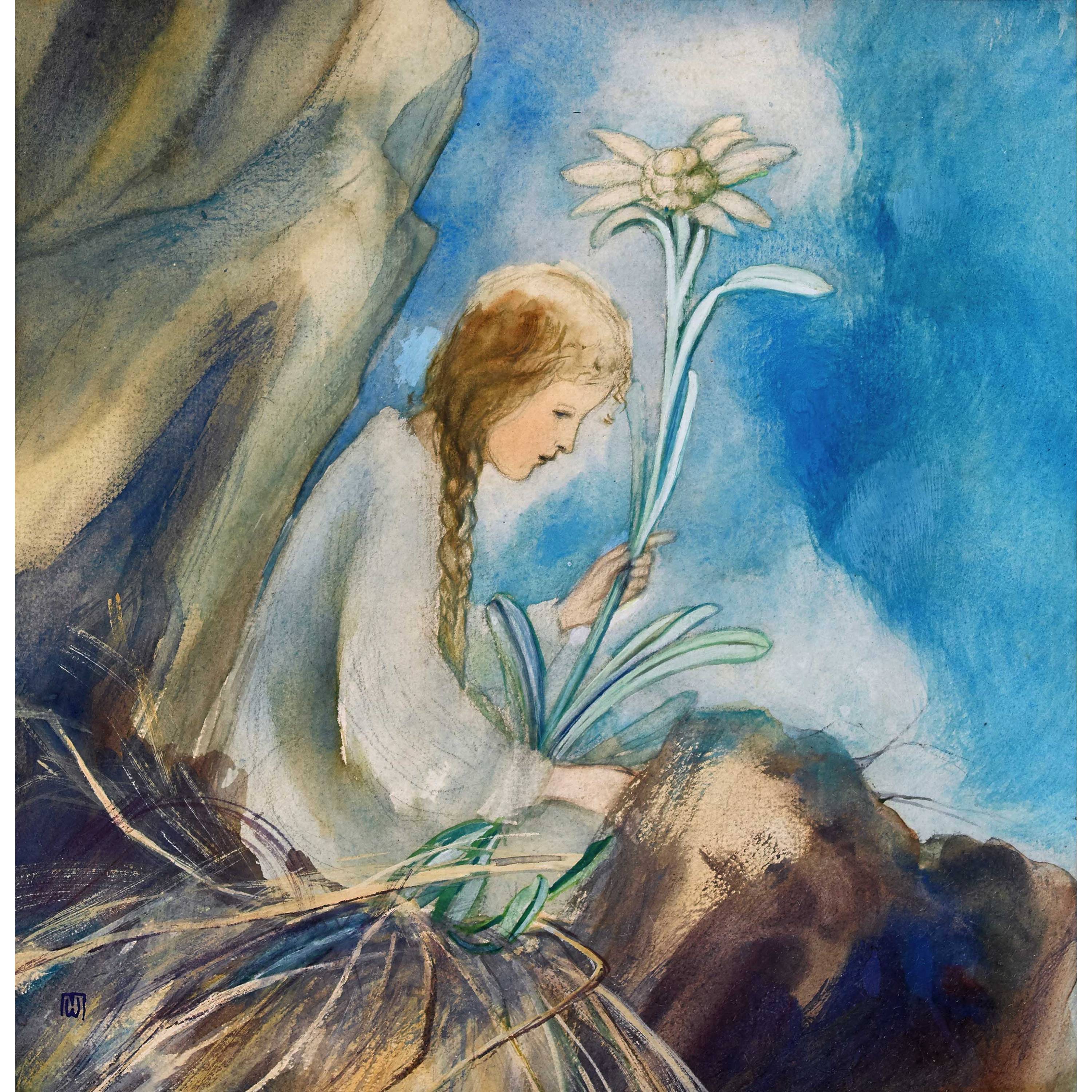
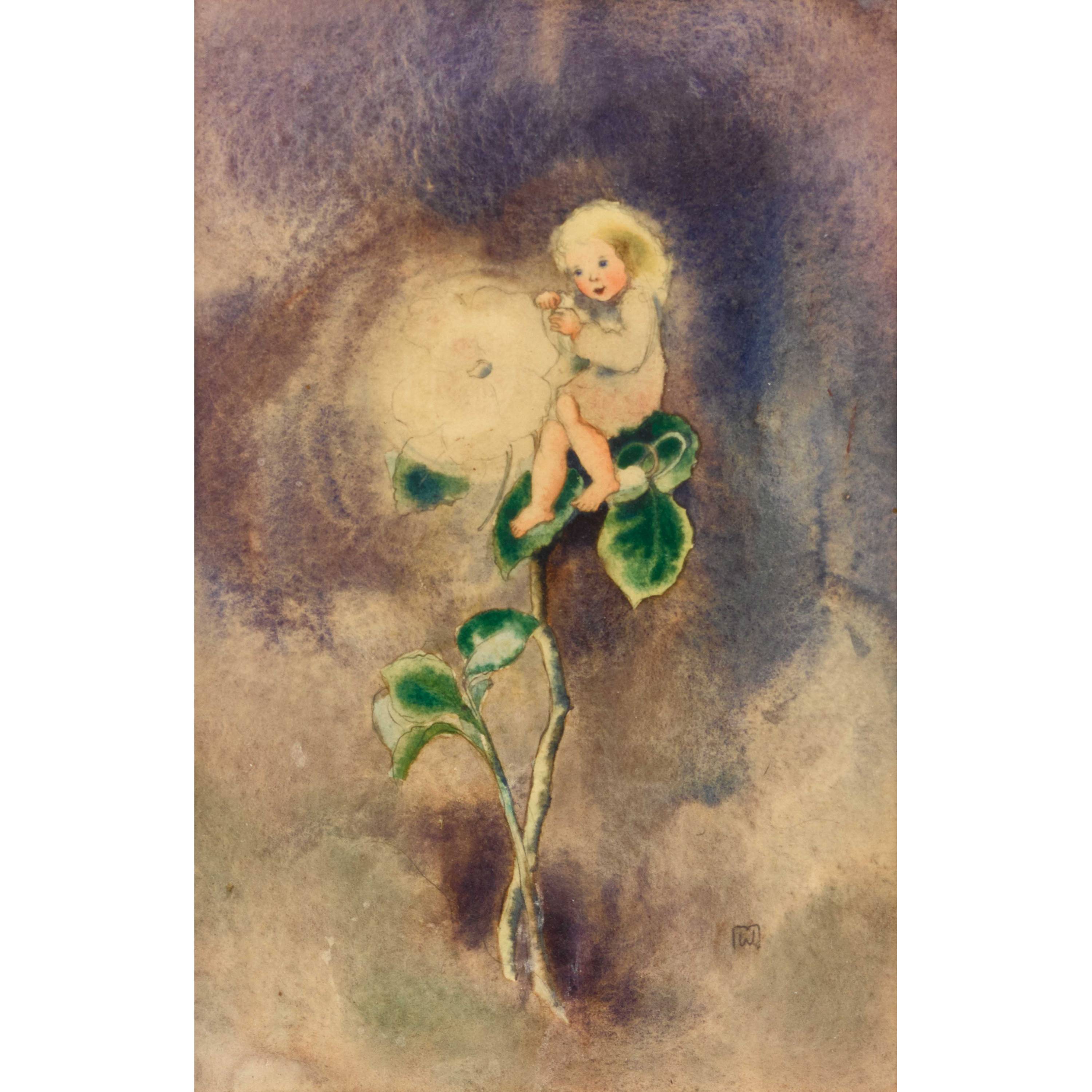
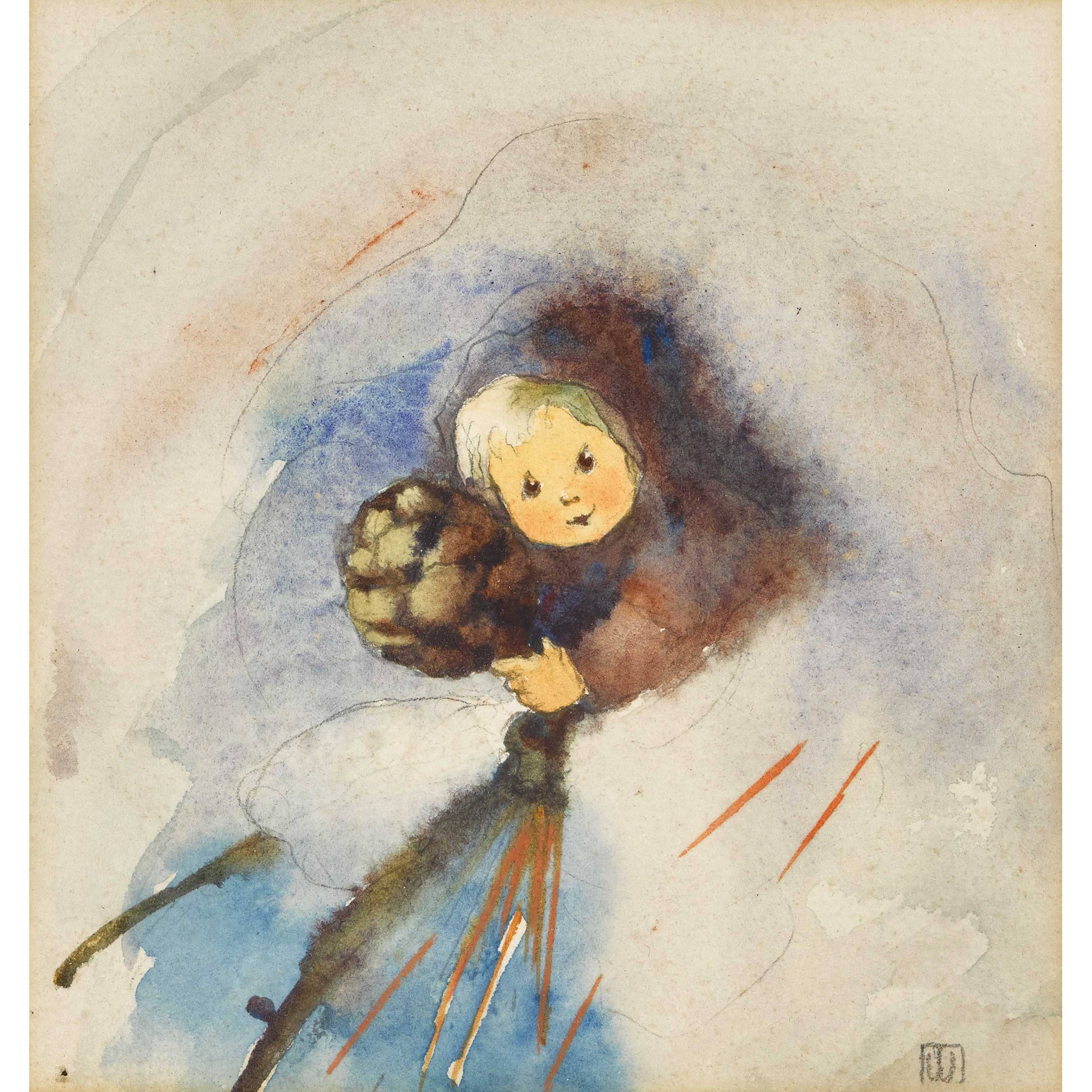
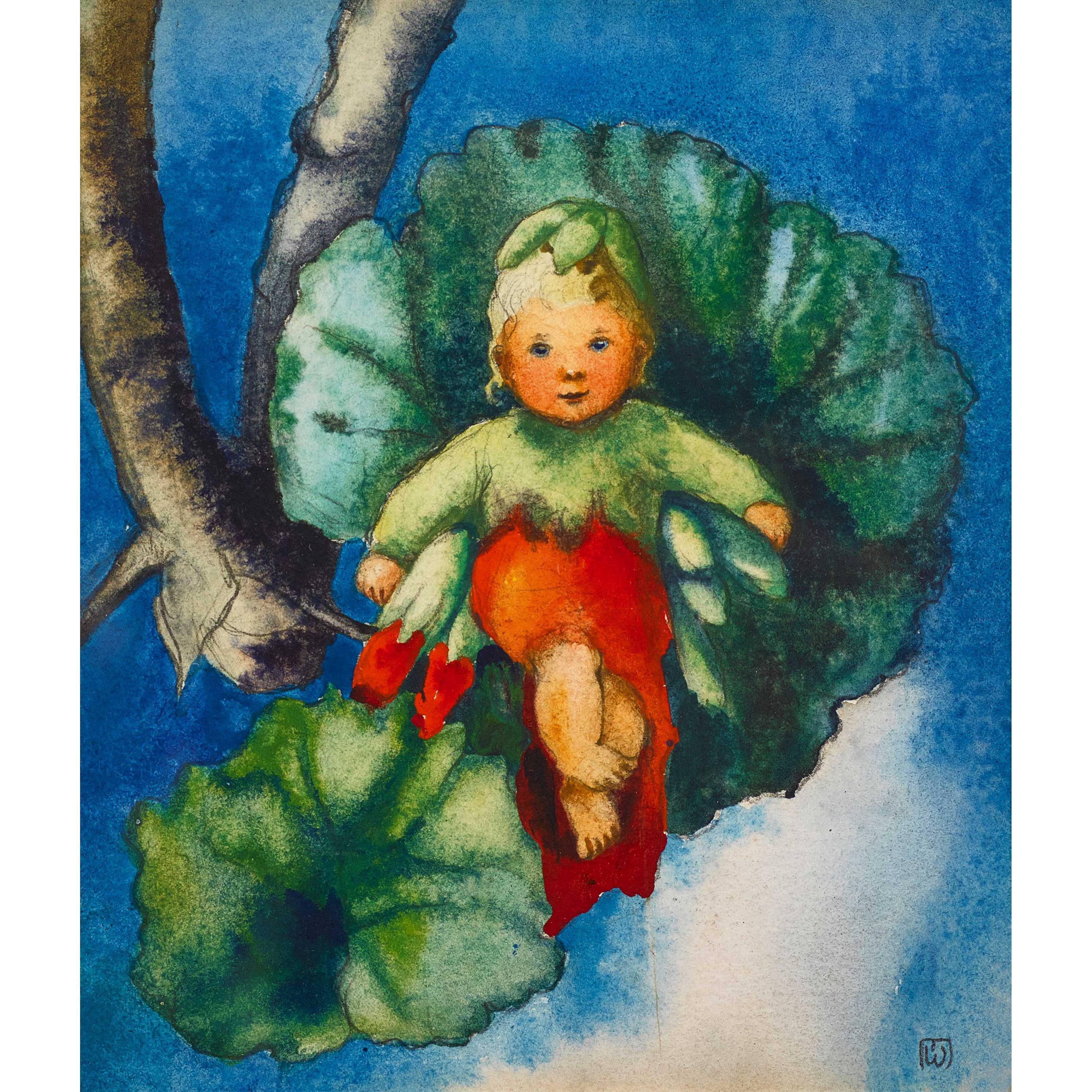
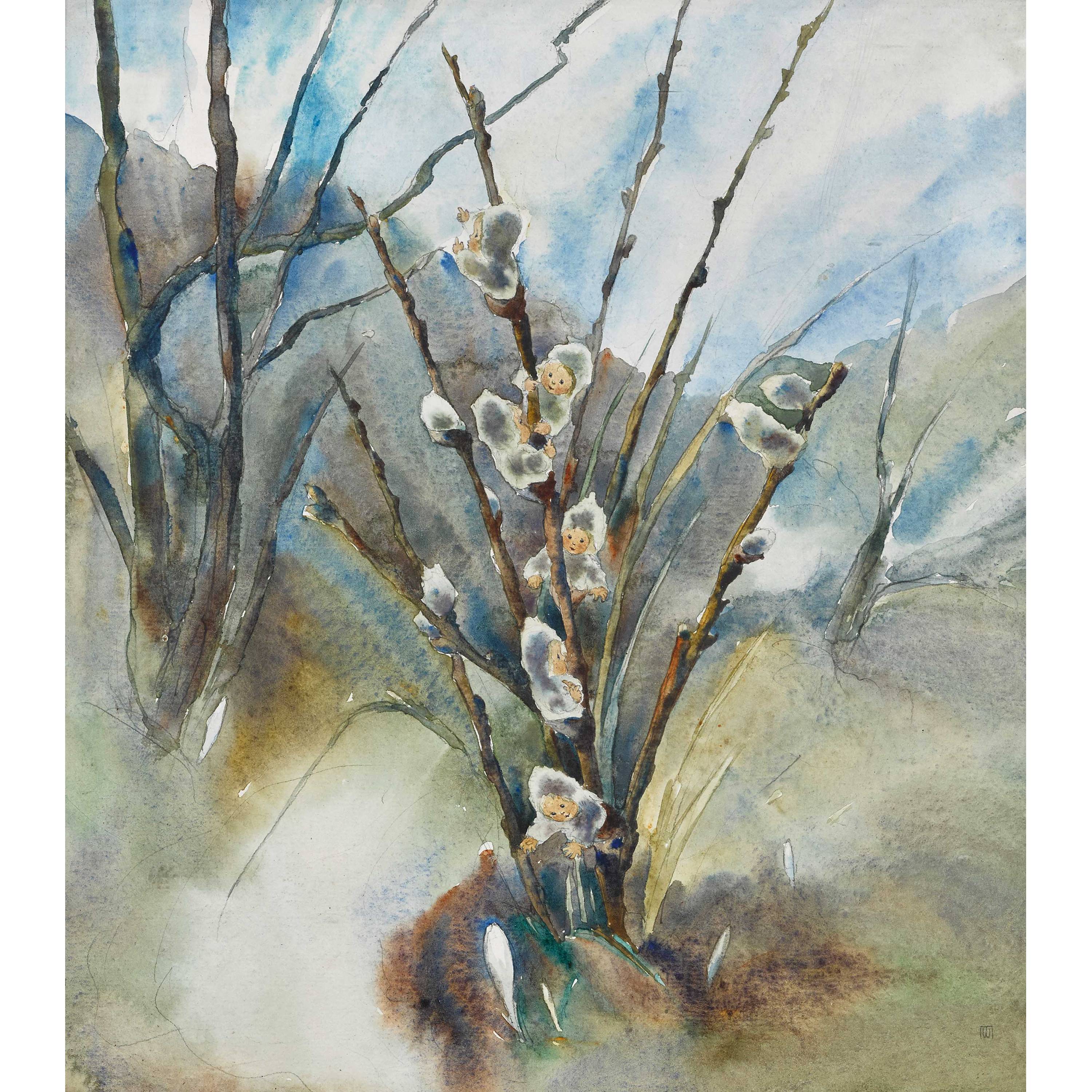
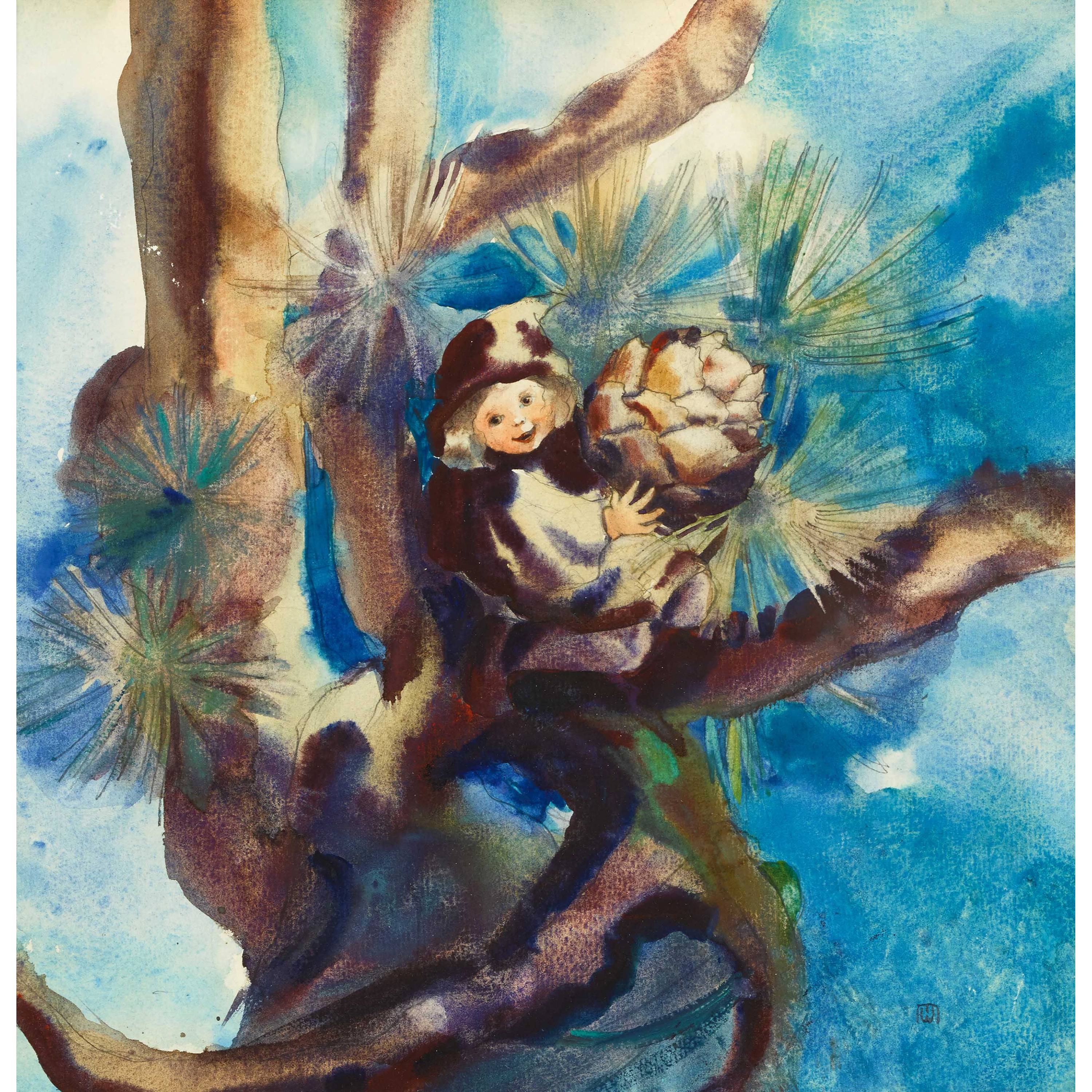
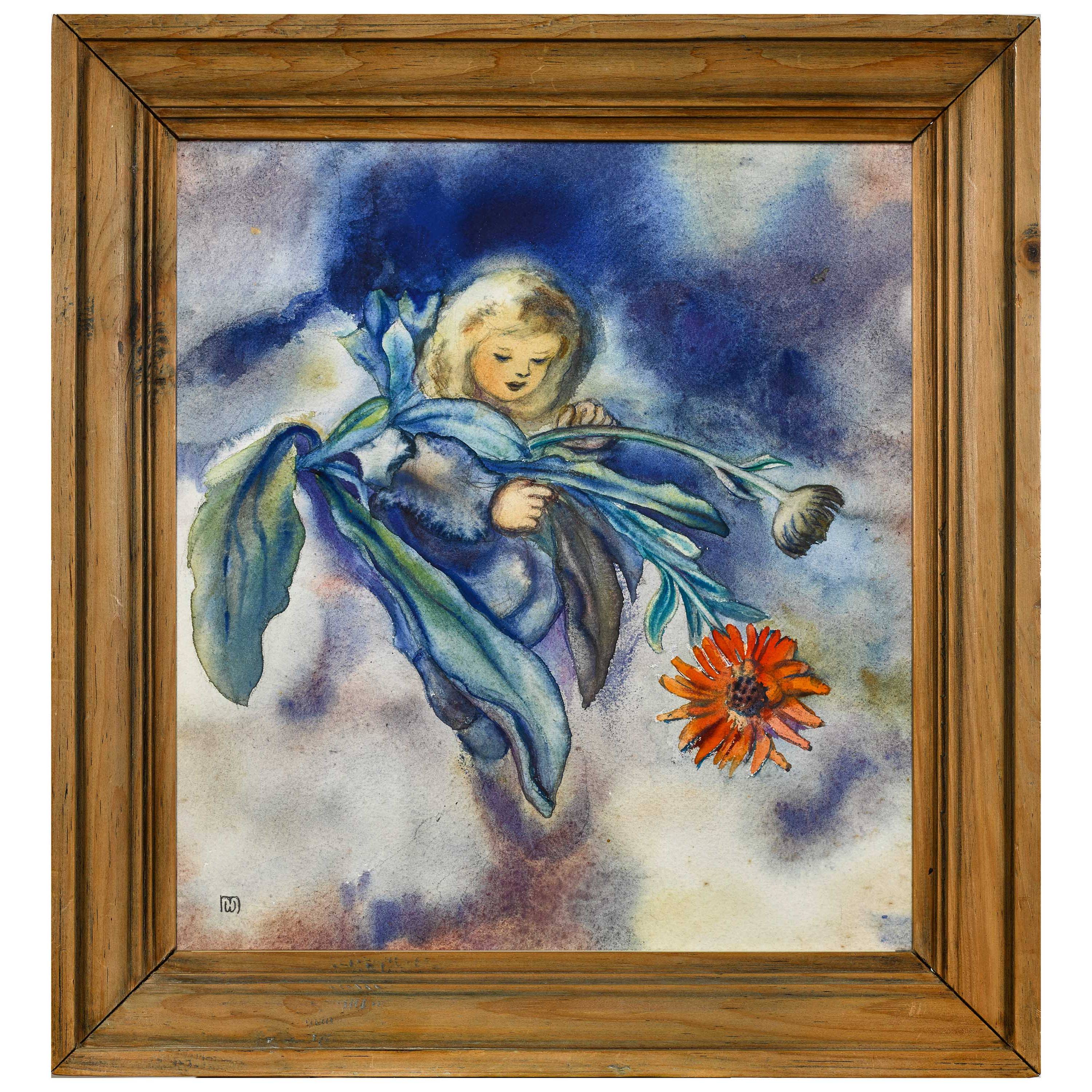
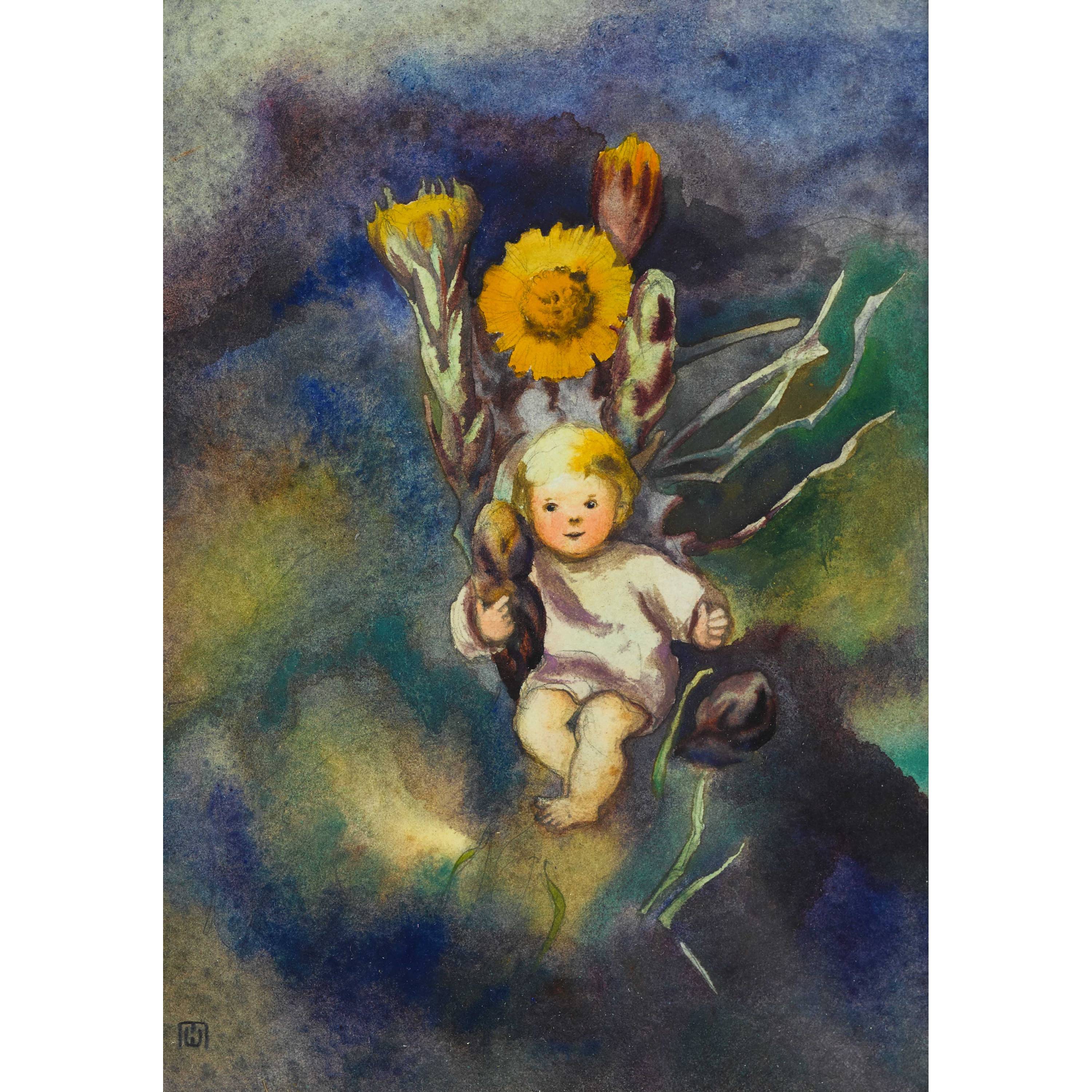
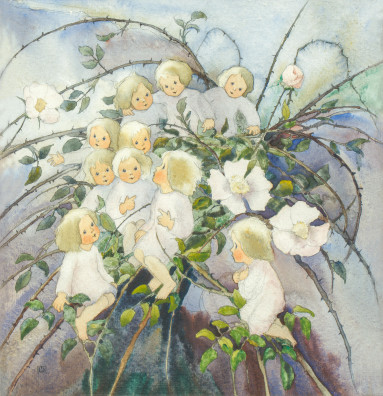
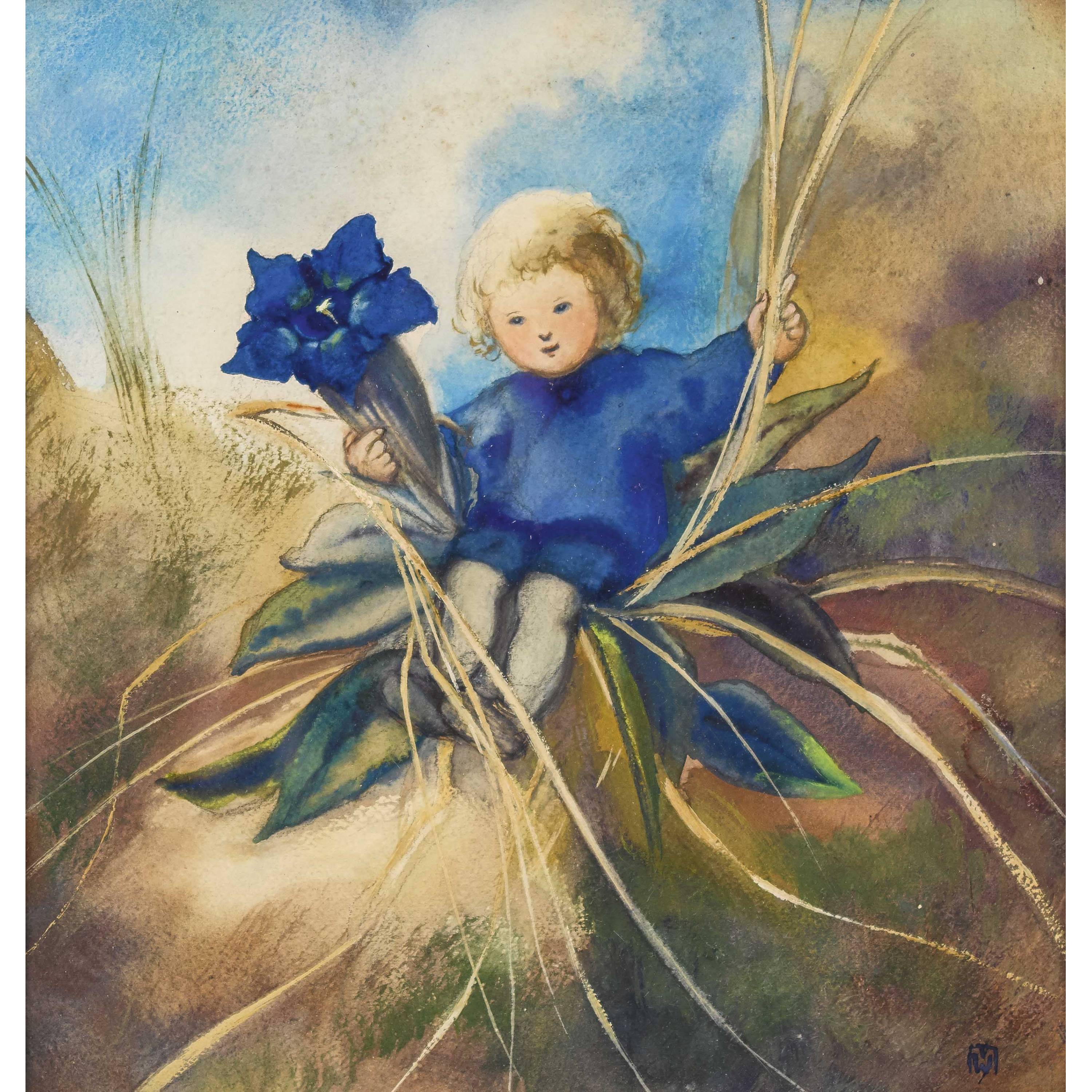
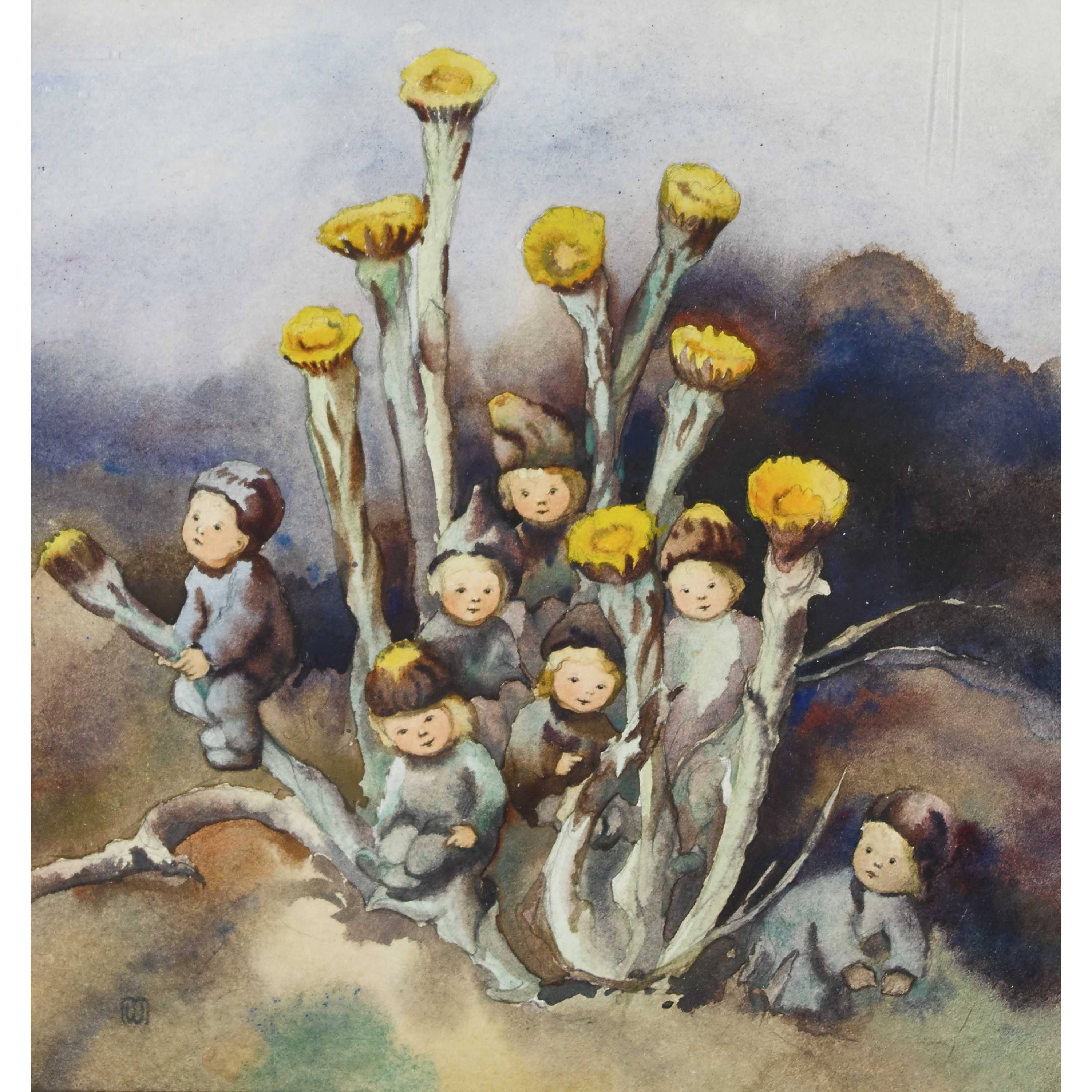
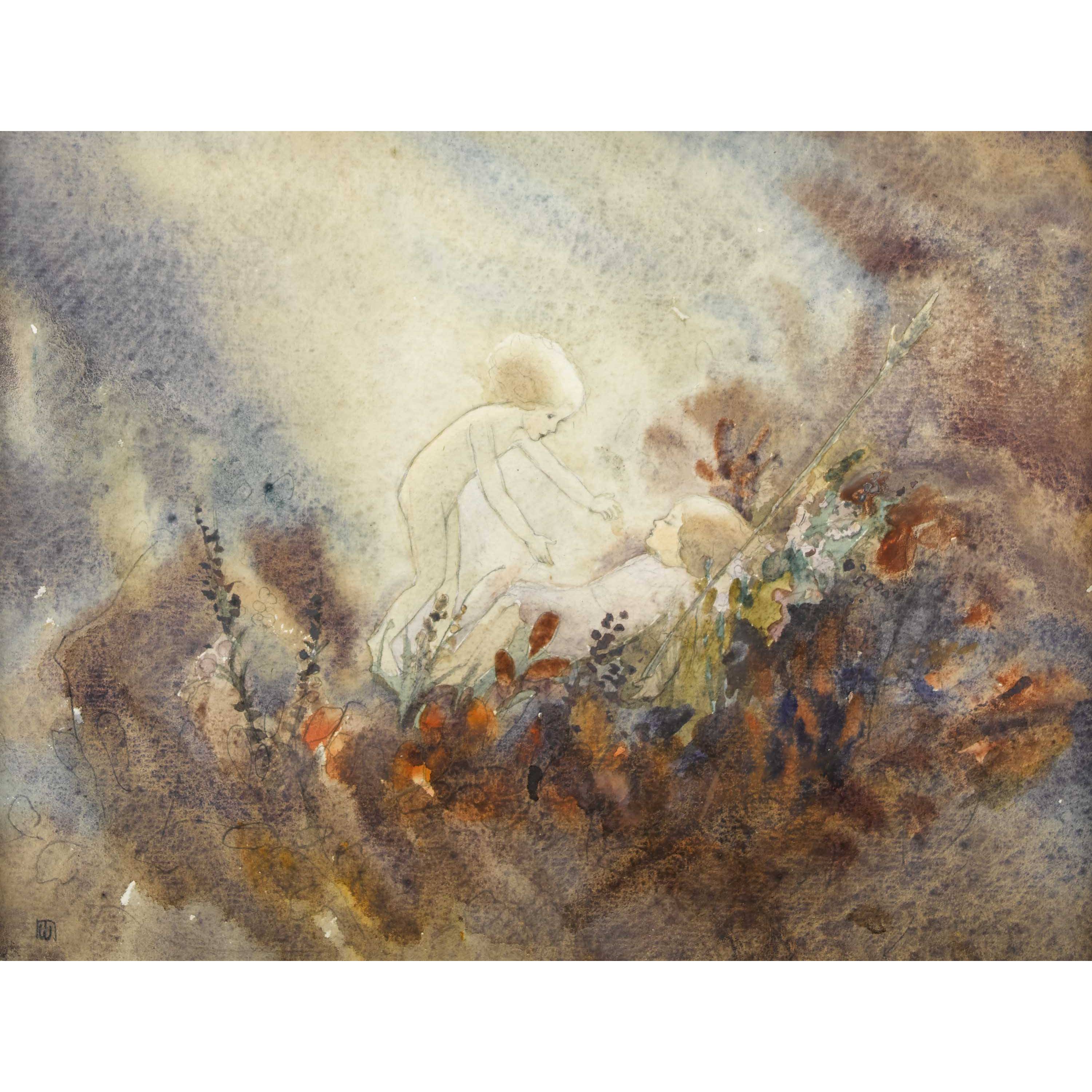
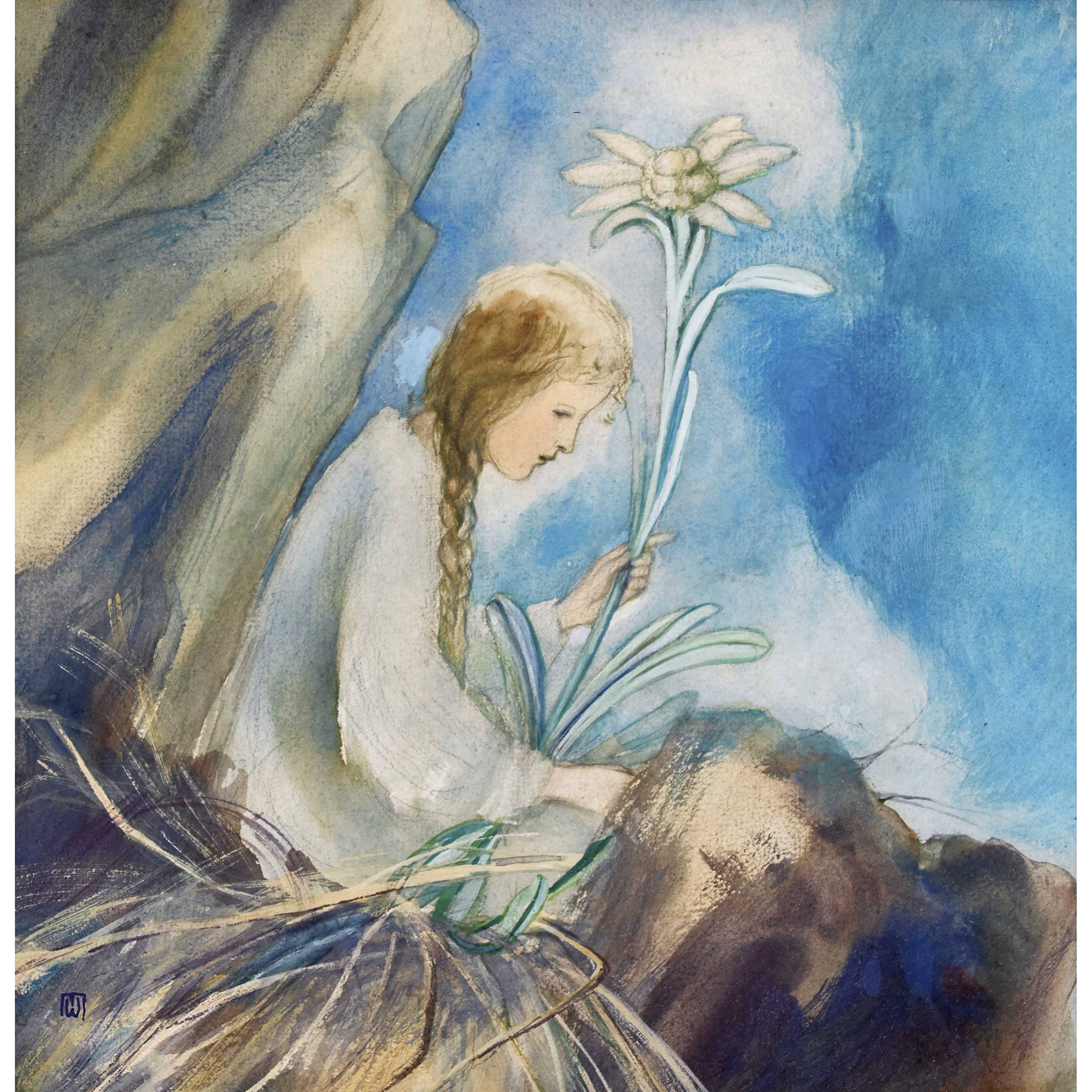
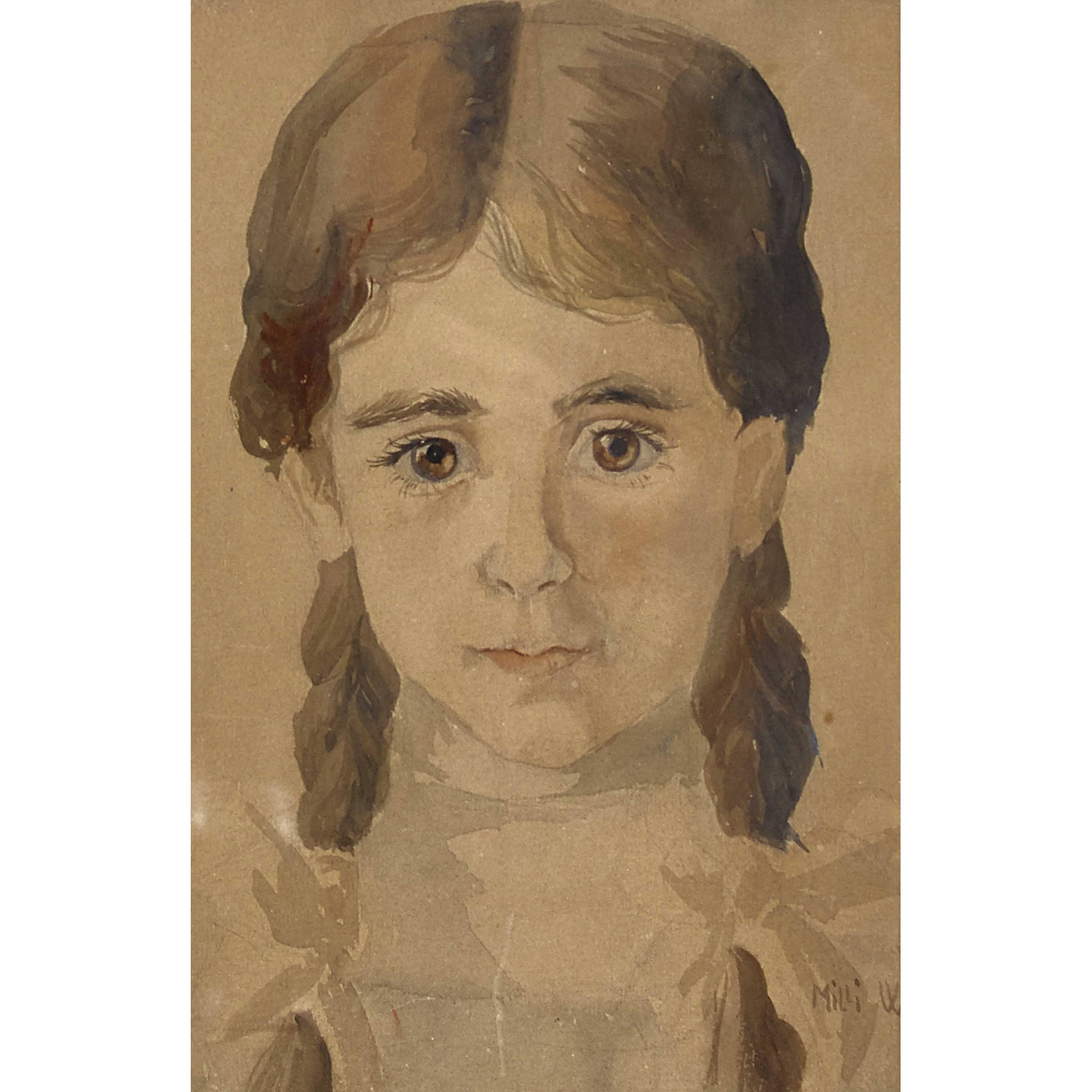
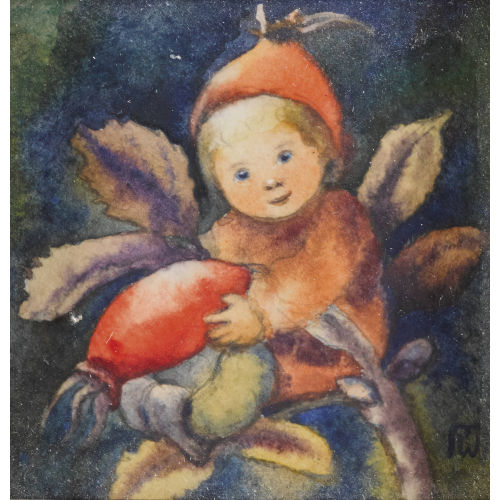
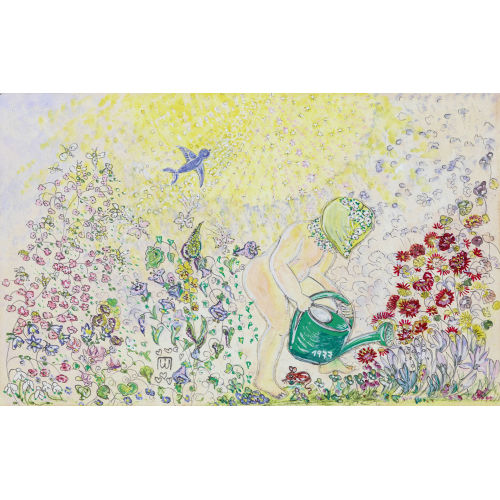
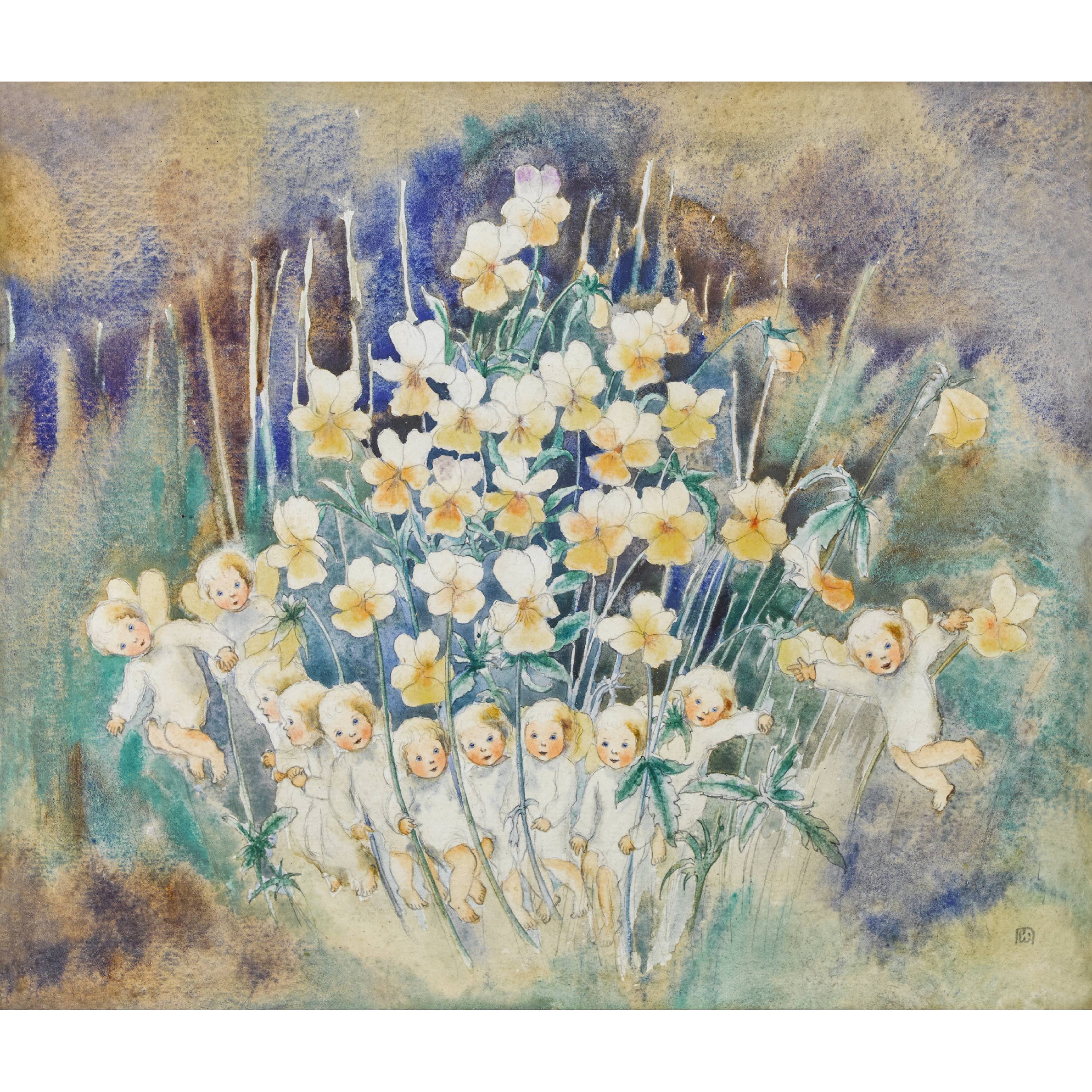
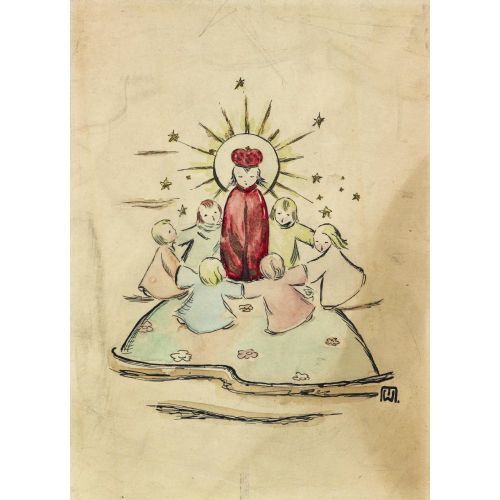
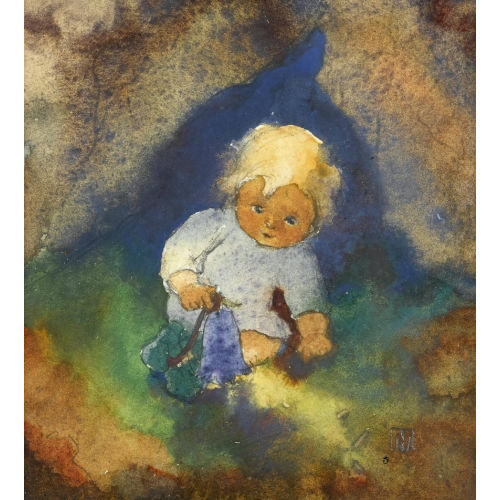
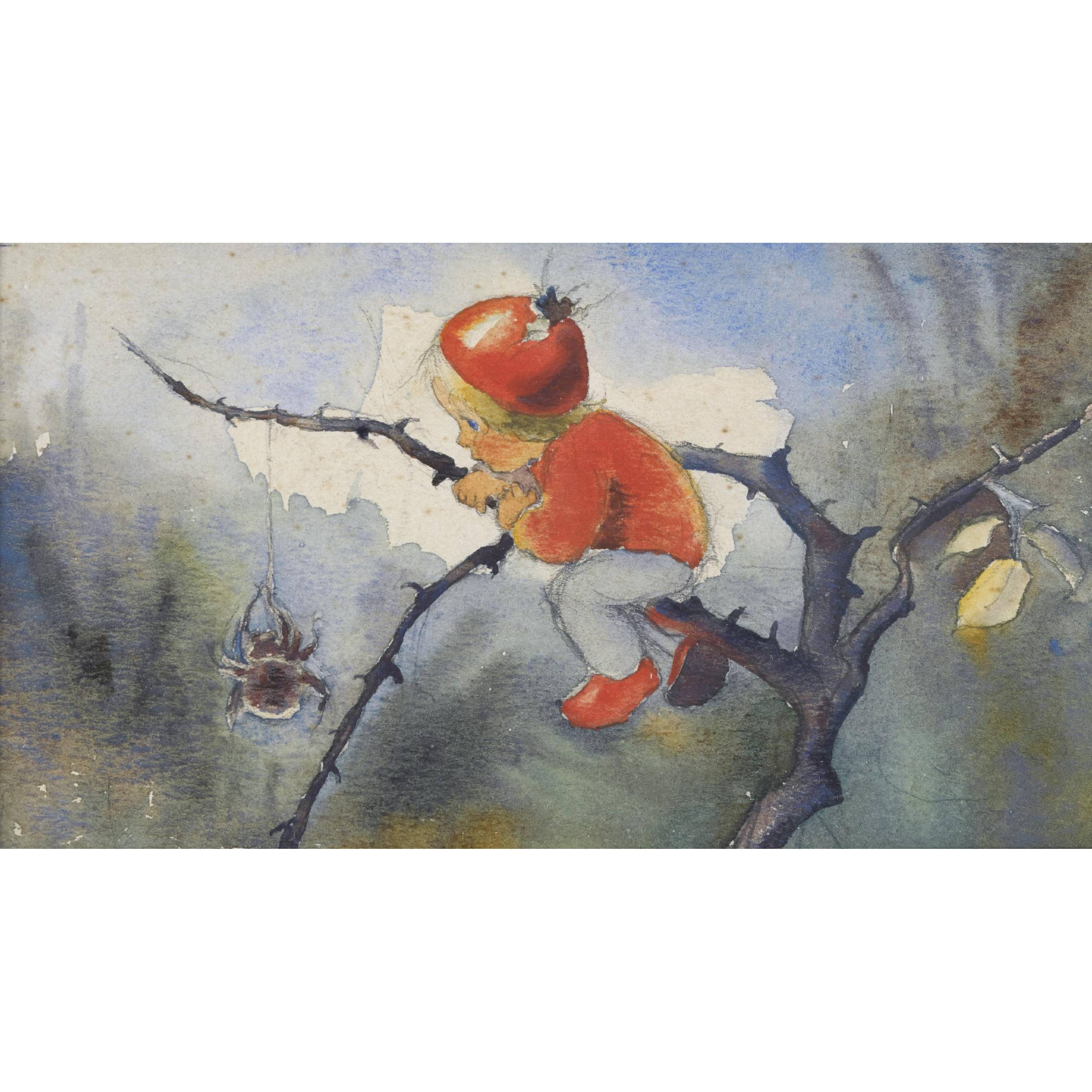
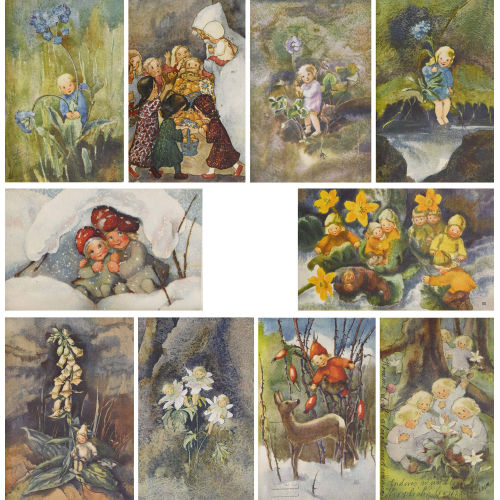
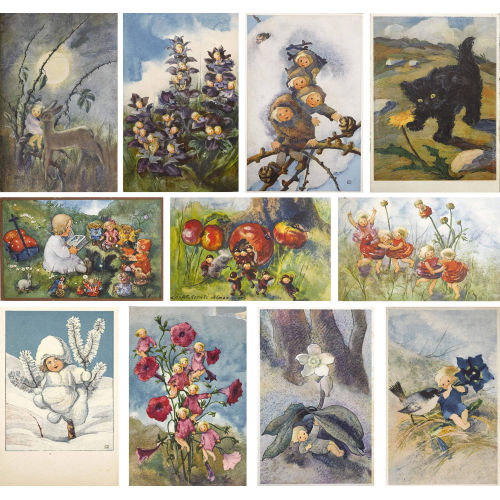
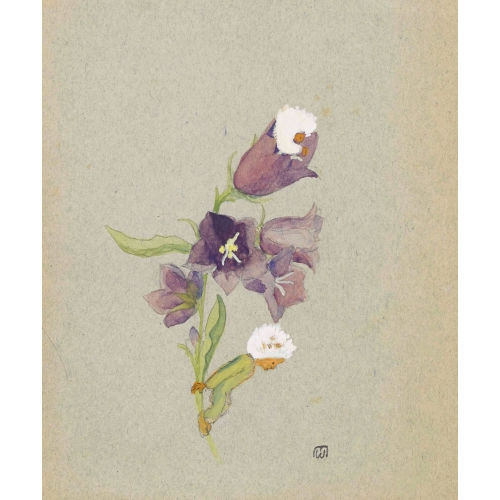
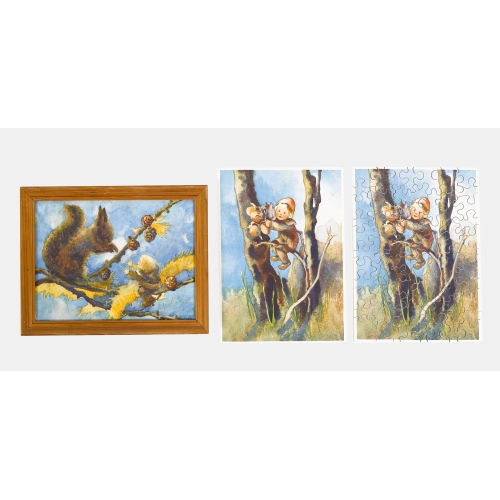
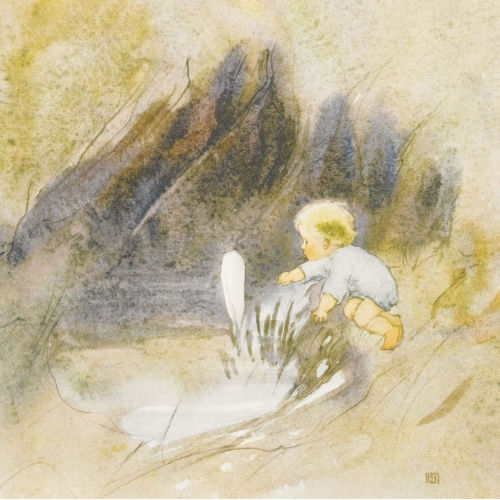
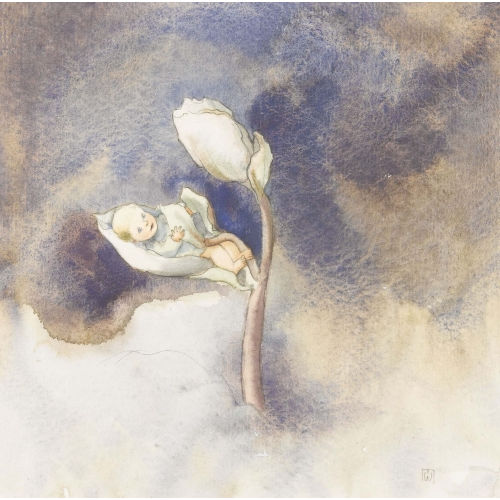
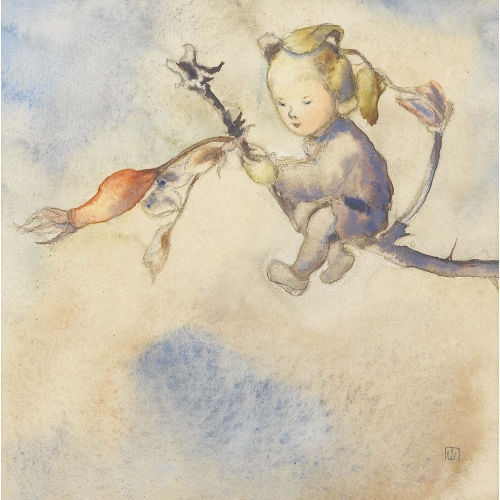
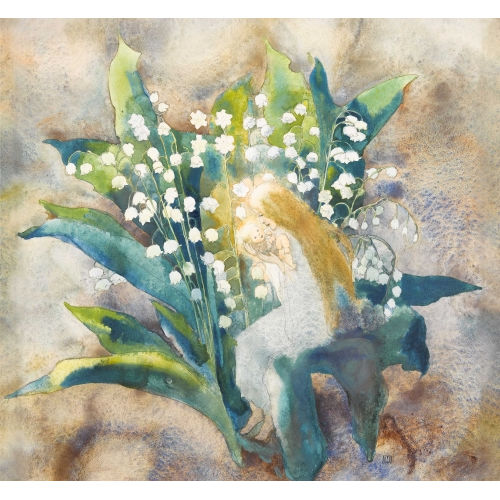
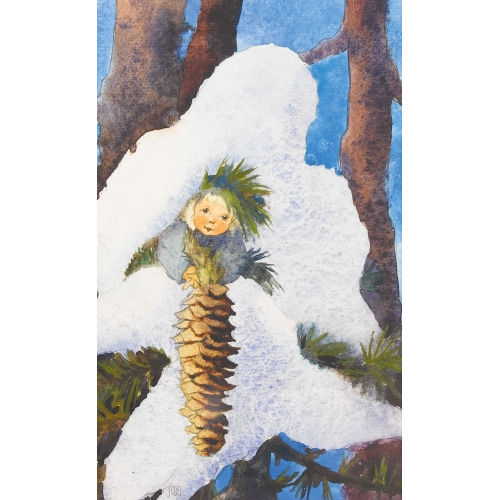
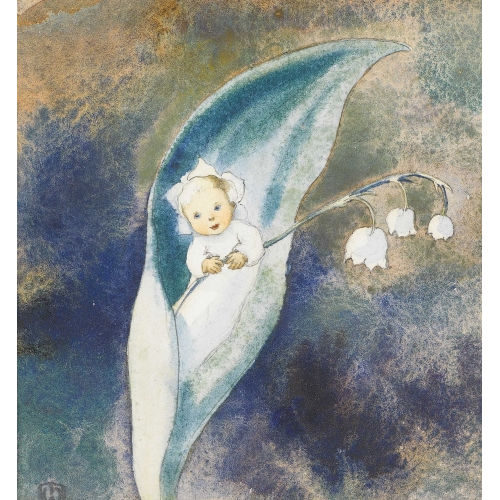
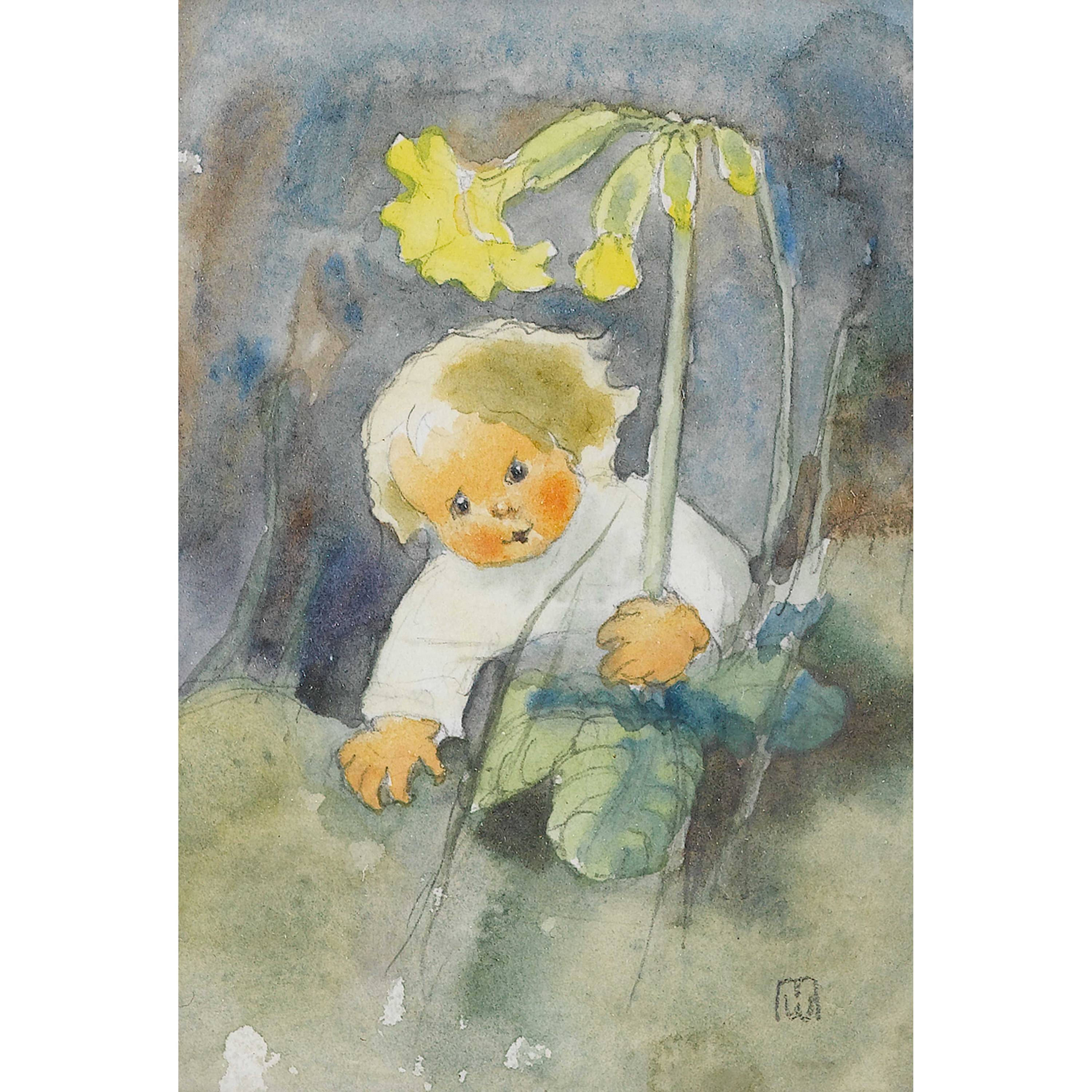
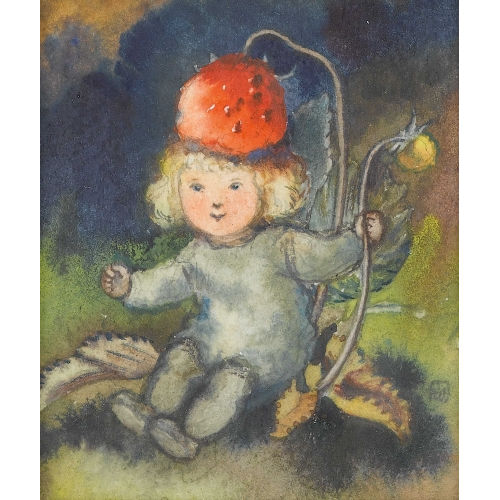
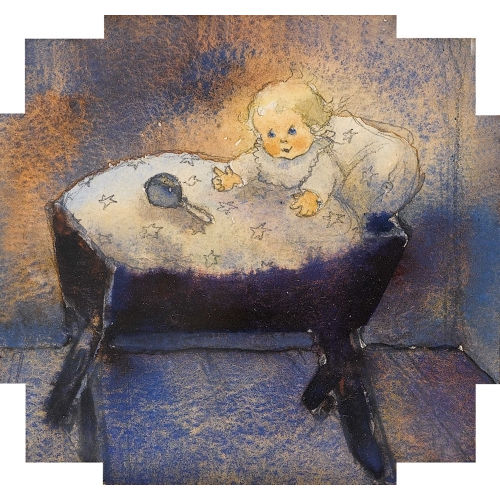
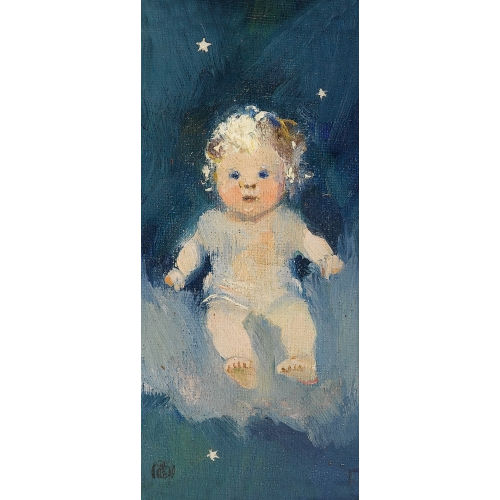
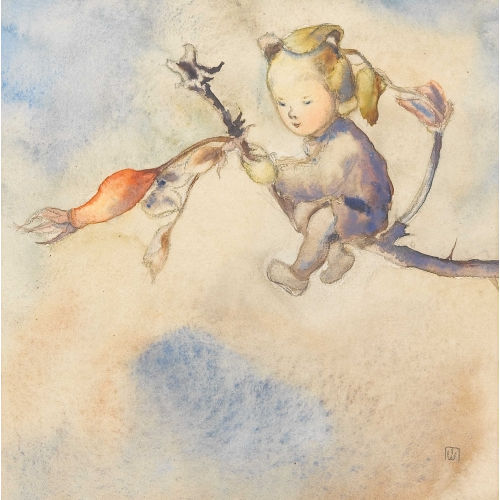
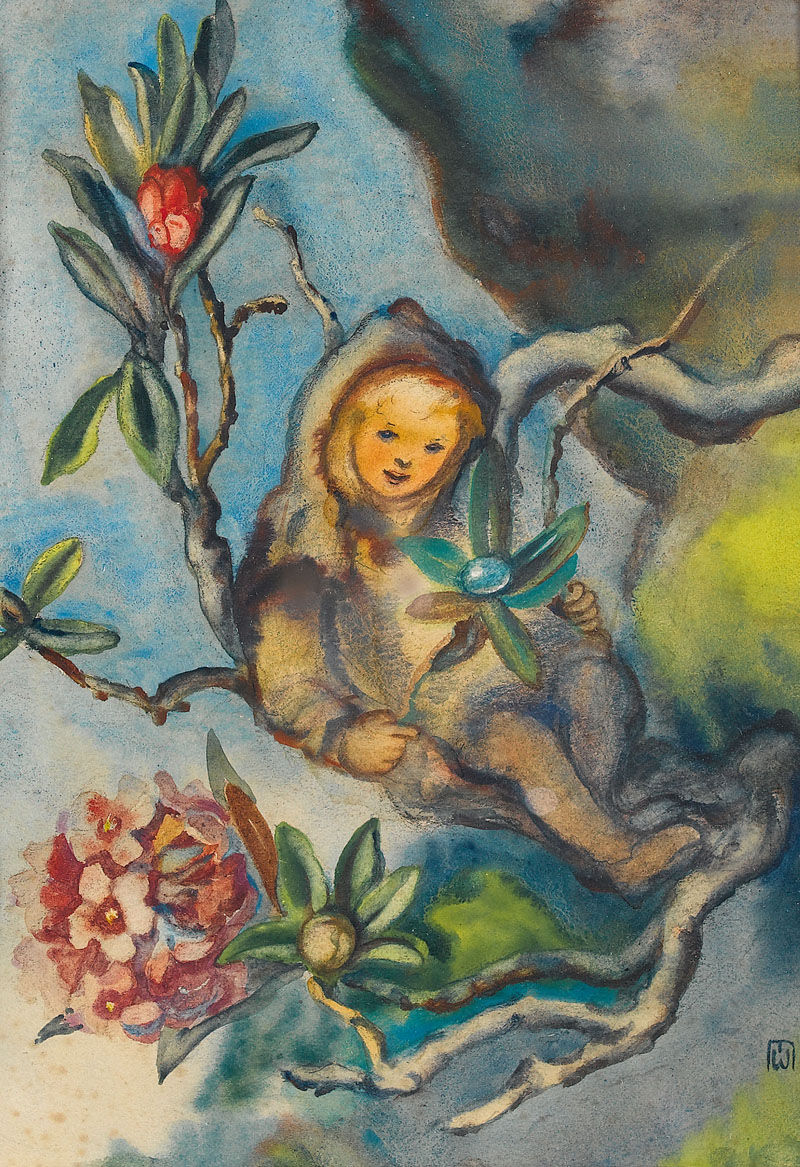
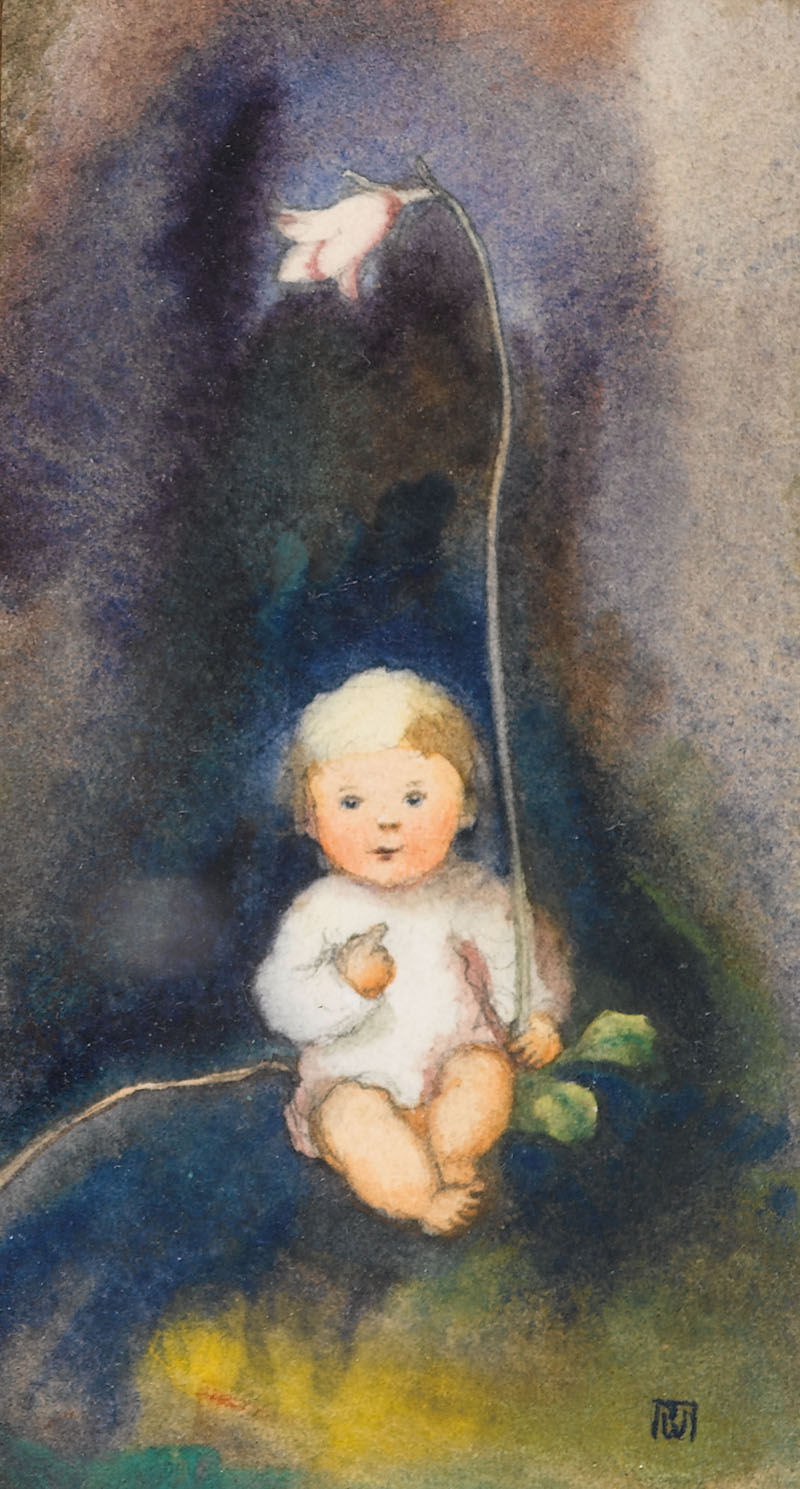
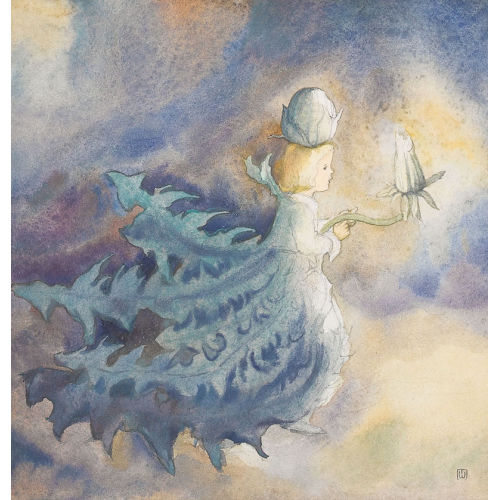
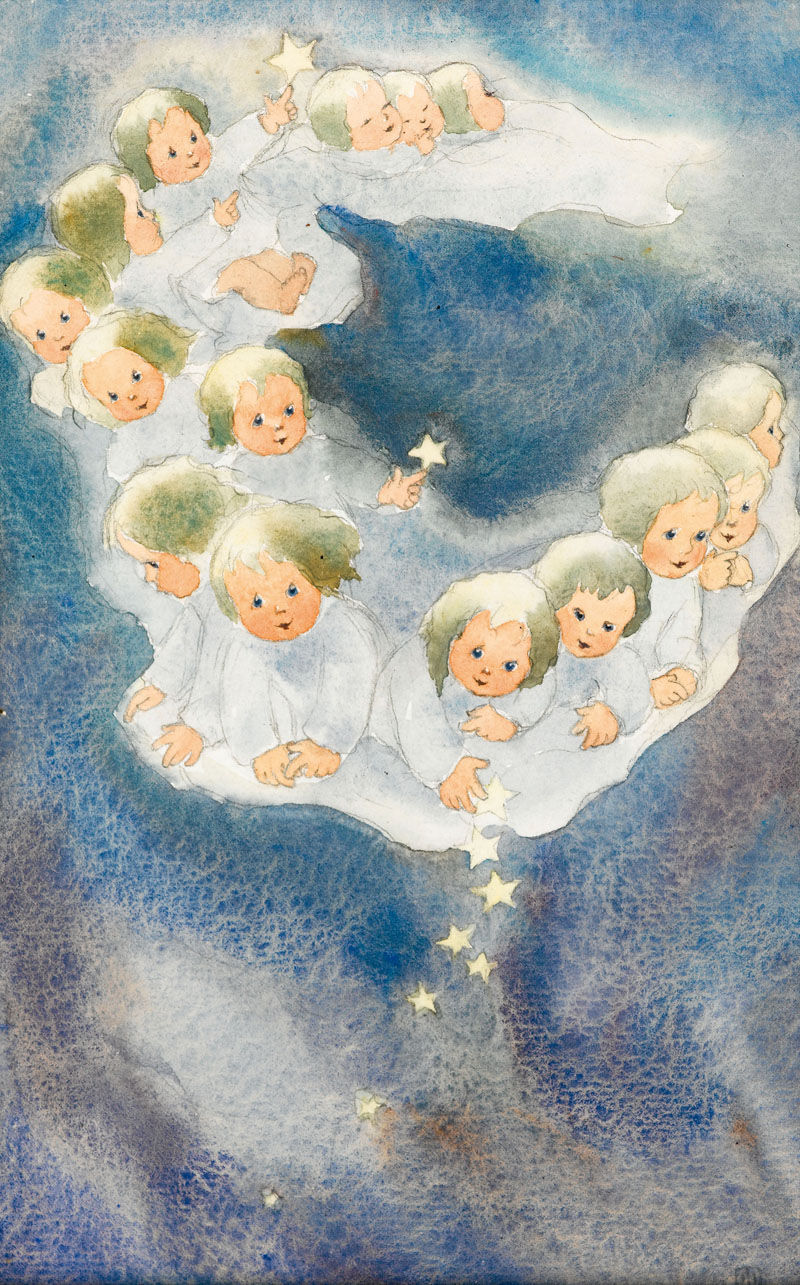
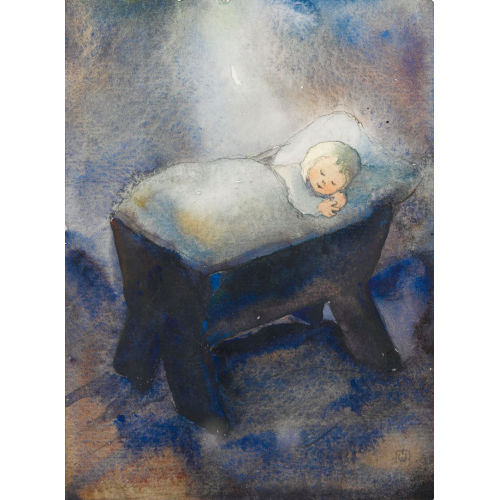
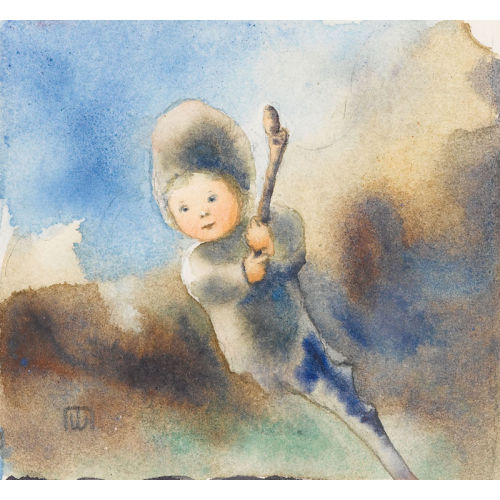
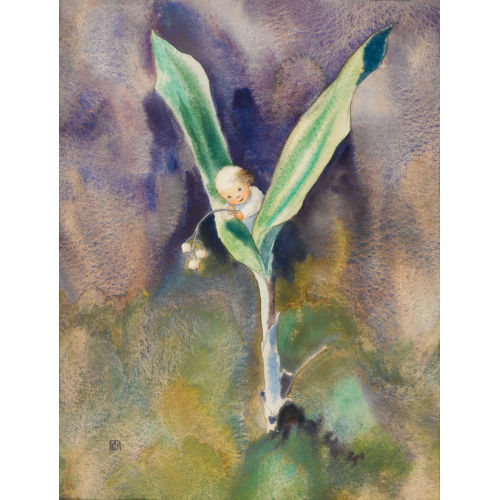
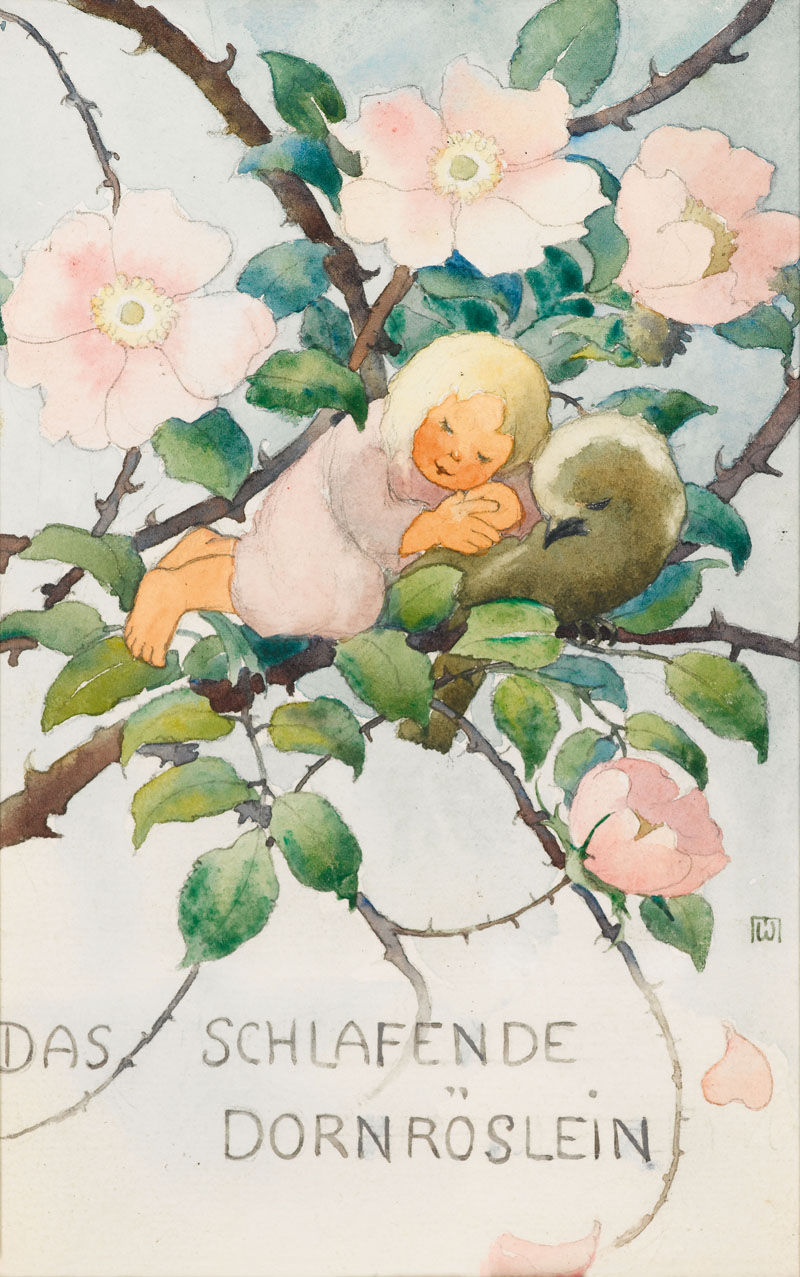
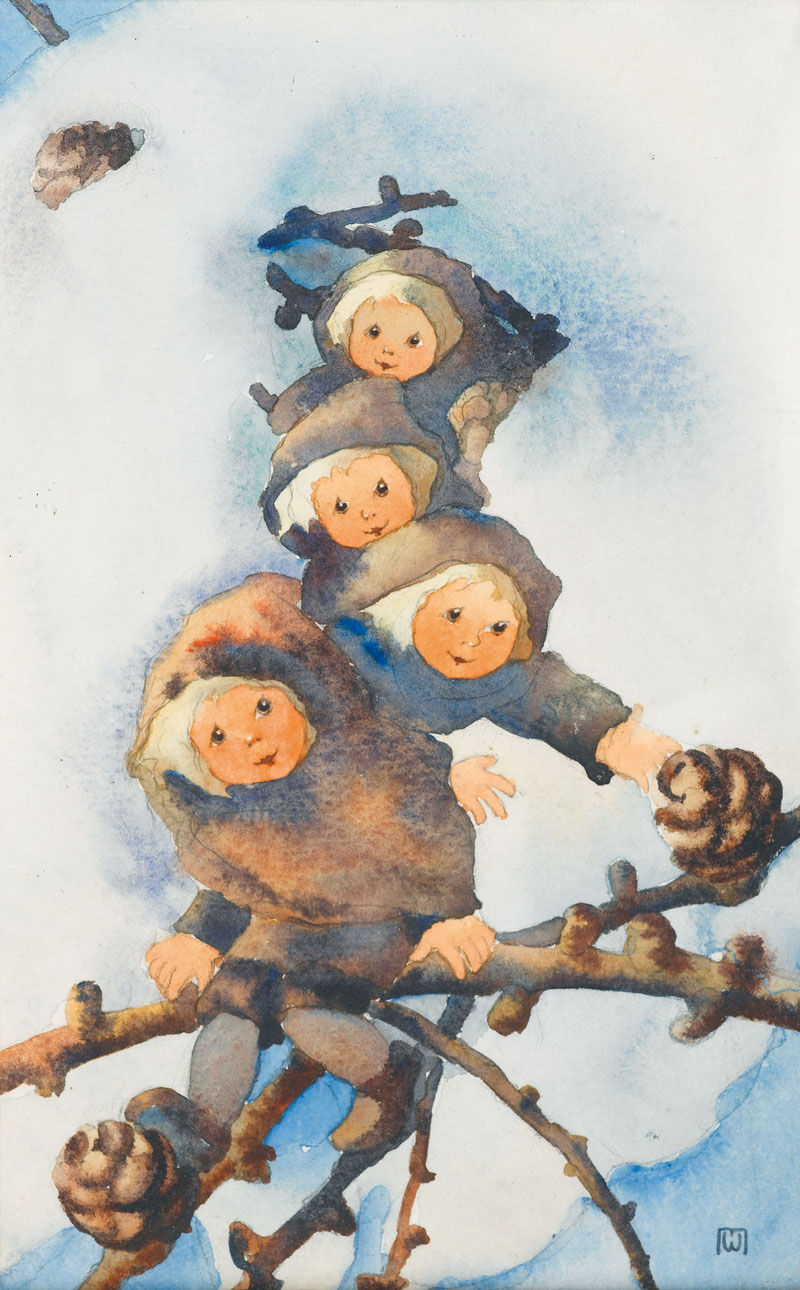
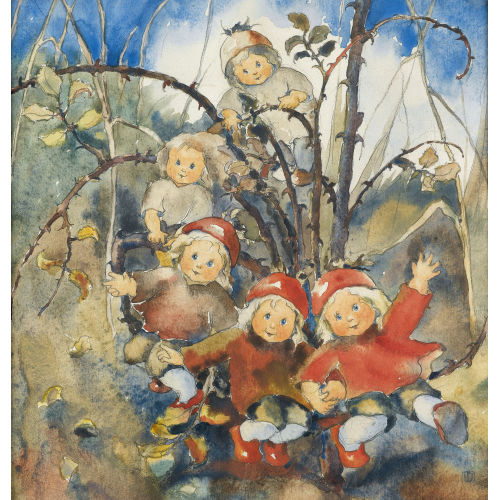
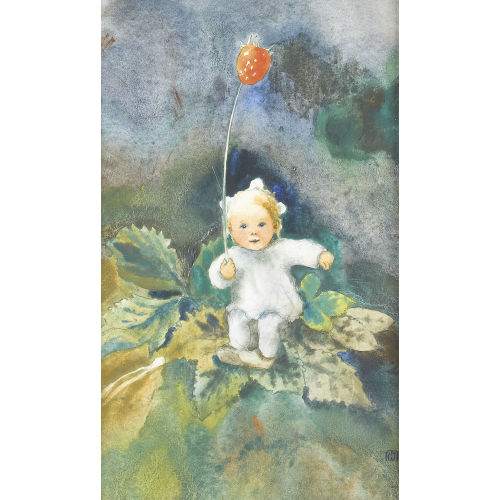
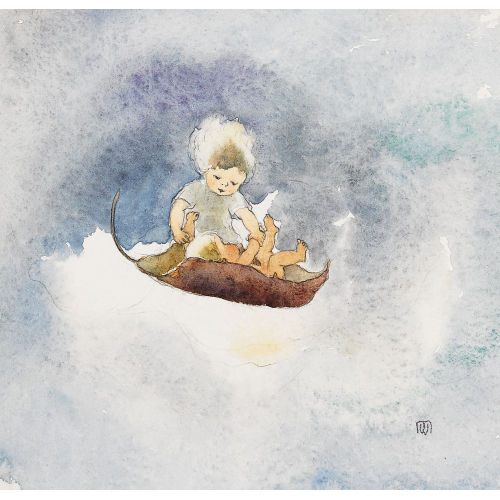
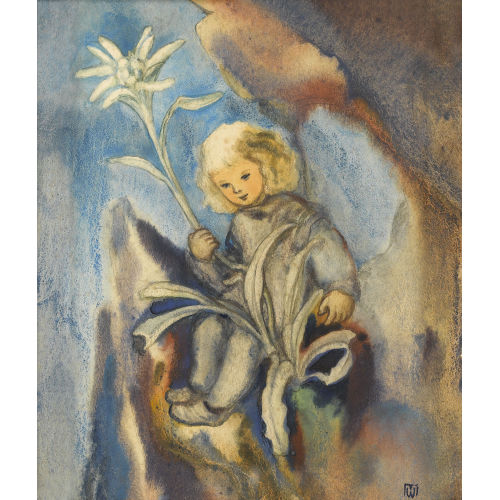
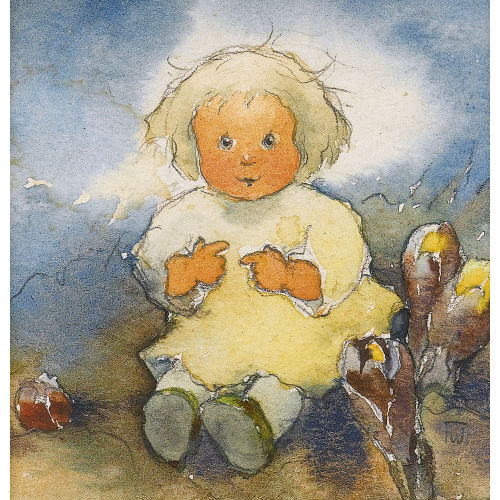
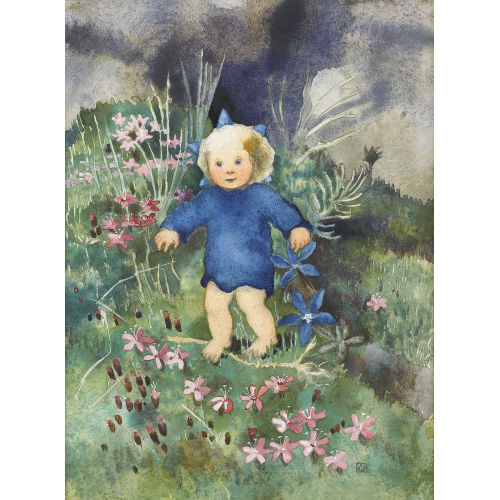
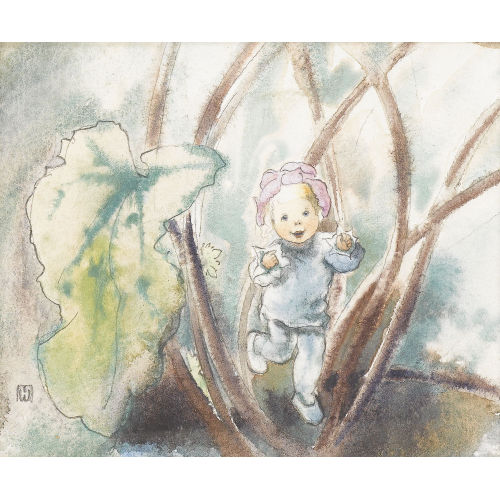
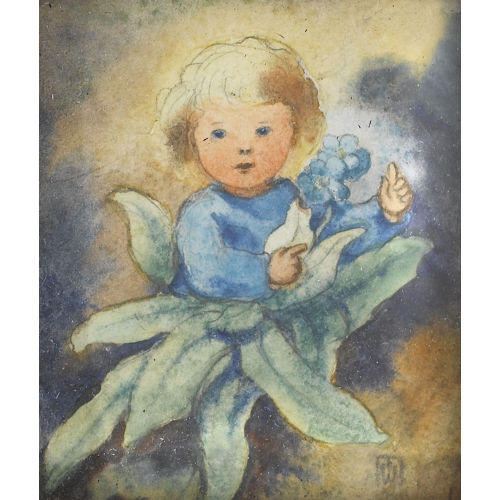
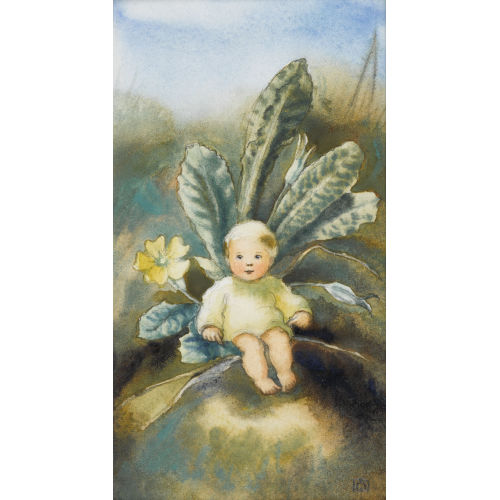
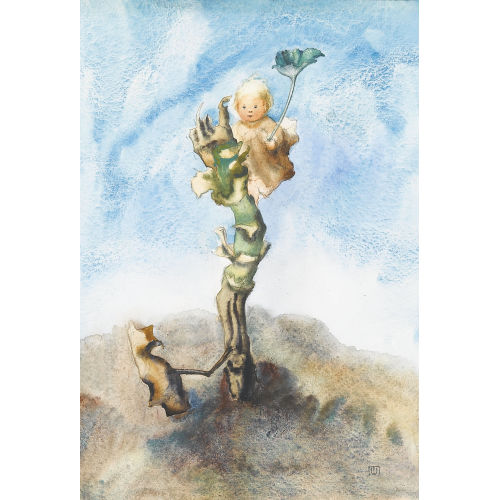
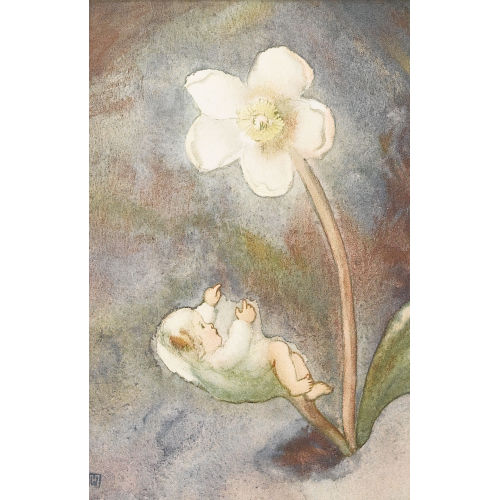
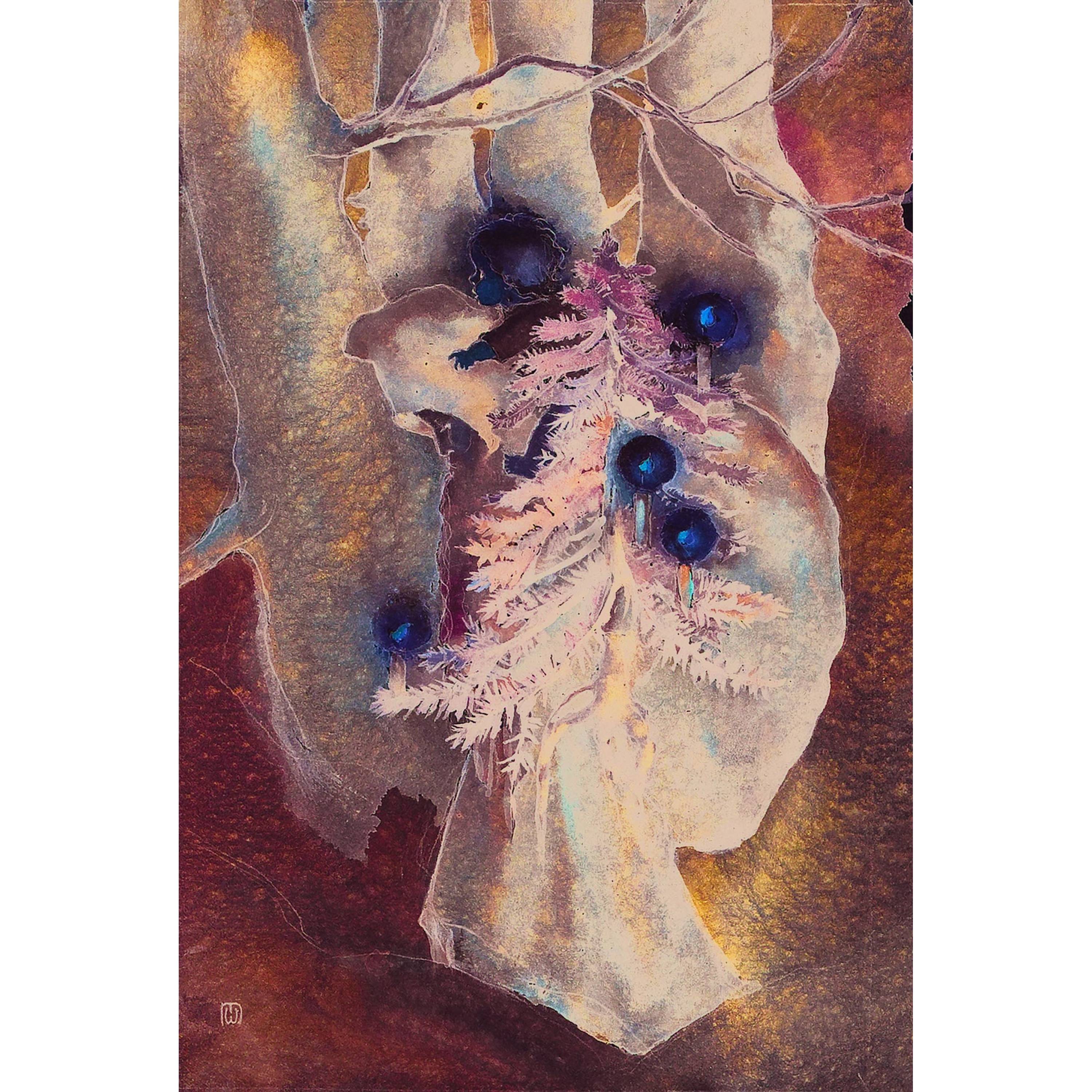
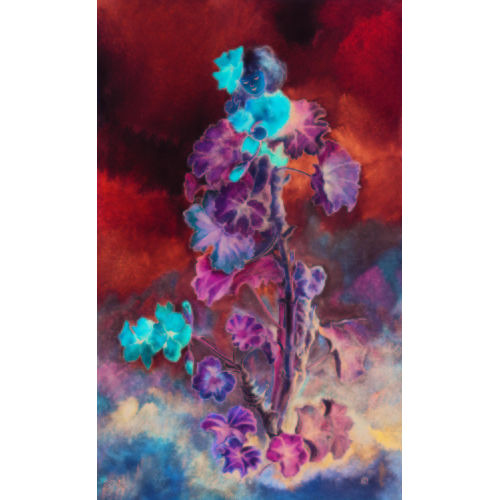
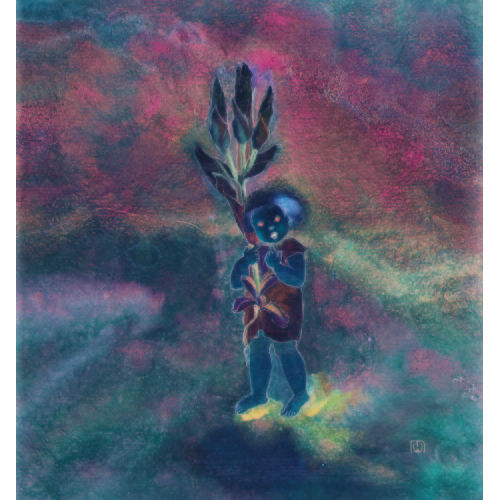
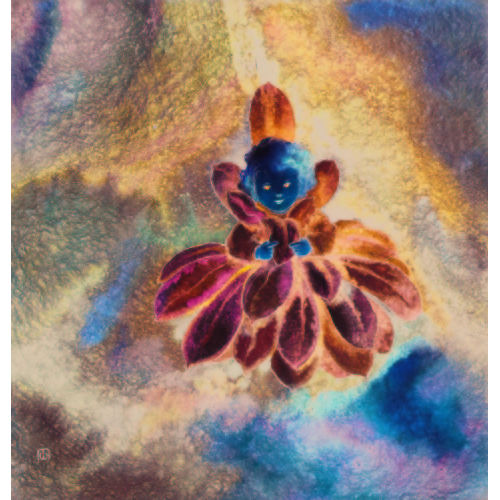
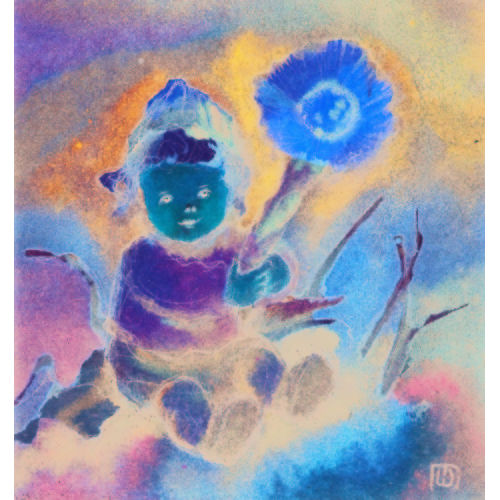
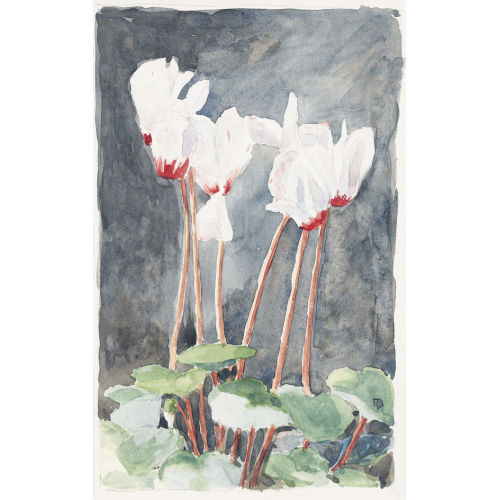
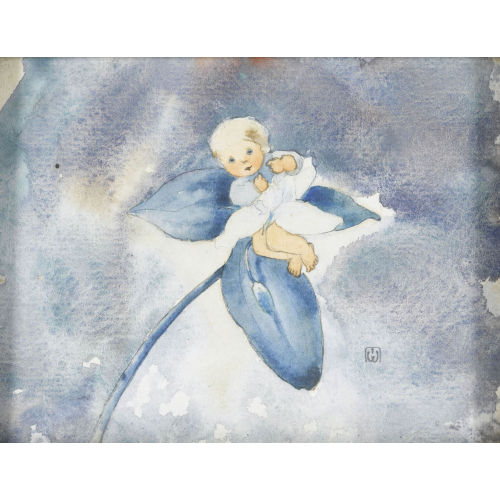
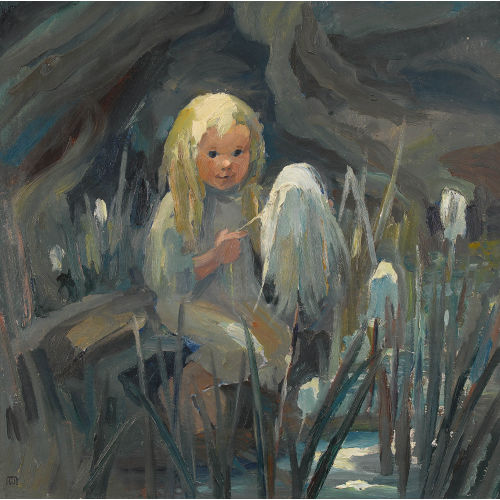
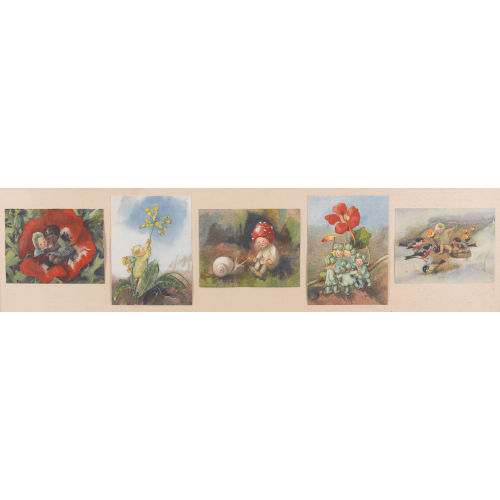
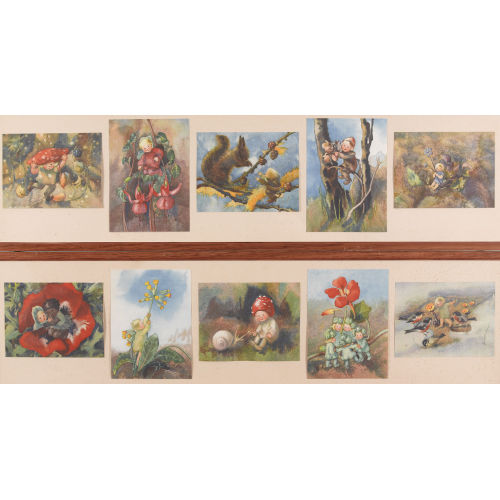
In Mili Weber’s work, a flower can become a child and a petal can be transformed into a swan. This imagination is born of an attentive gaze at nature: behind the creatures of fairy tales lies a knowledge of plants, their forms and their metamorphoses. Watercolour, at the heart of her oeuvre, lends its lightness to this world, where human beings and the plant world participate in a shared cycle of life.
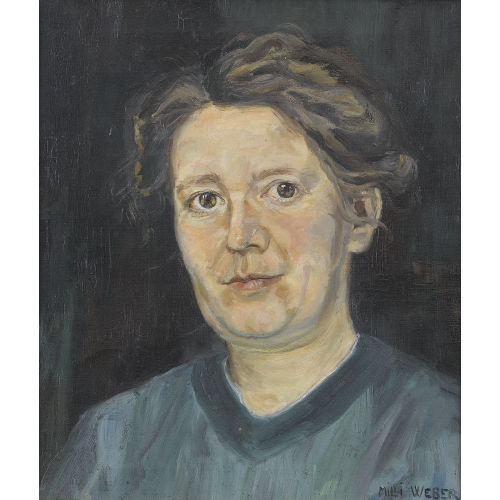
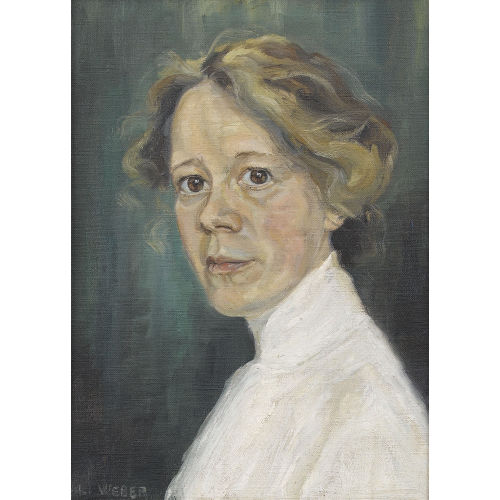
Her half-sister Anna Haller, an artist and teacher, played an essential role in her development. After training as an early-childhood educator in Bern, she took private classes with Julius Vögtli, then studied in Munich at Heinrich Knirr’s school, which was open to women. On returning to Switzerland in 1914, she received commissions for illustrated cards and images intended for children.
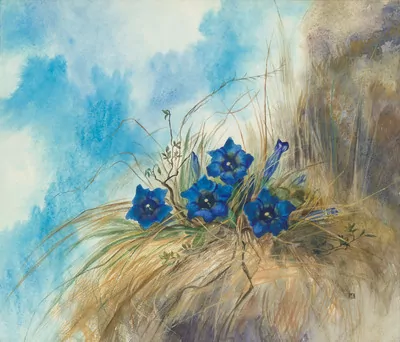
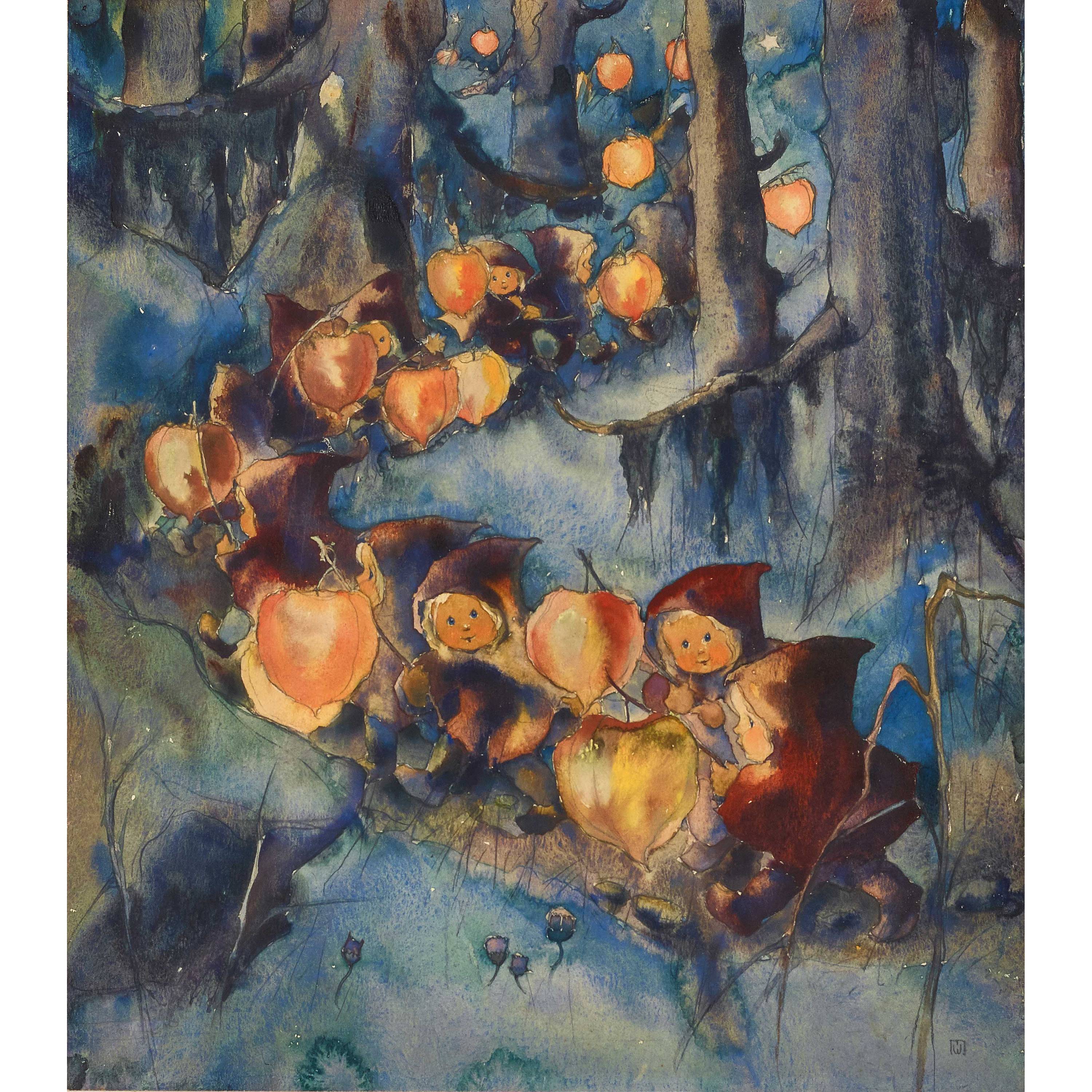
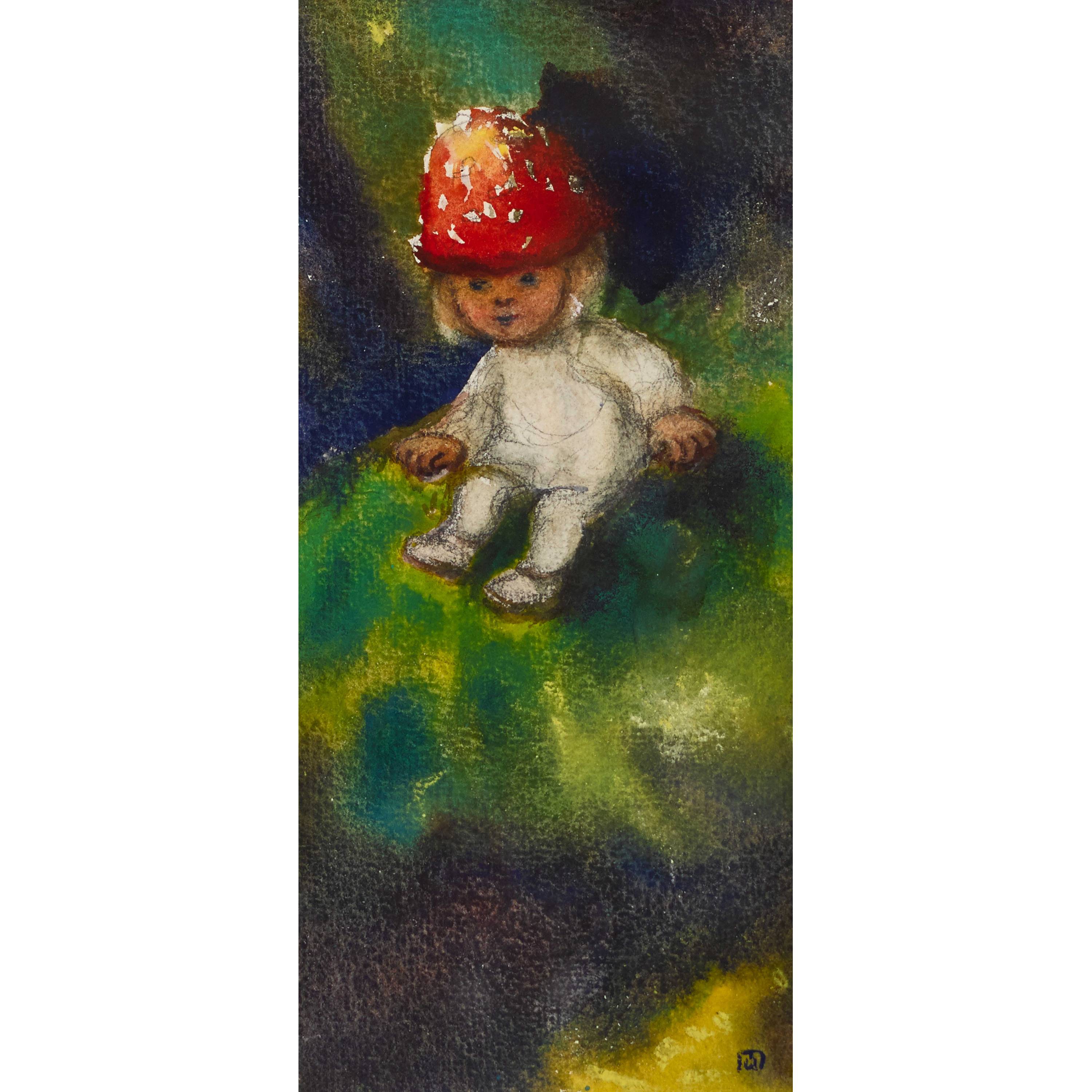
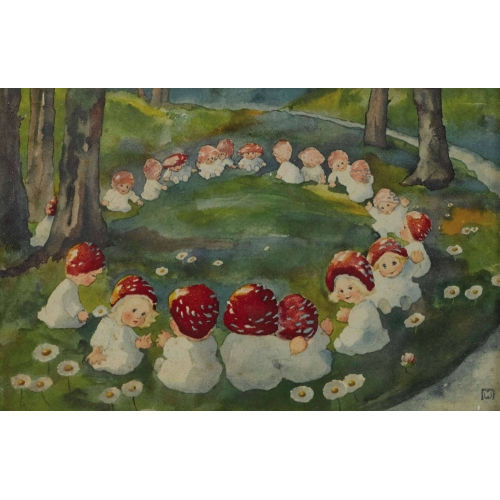
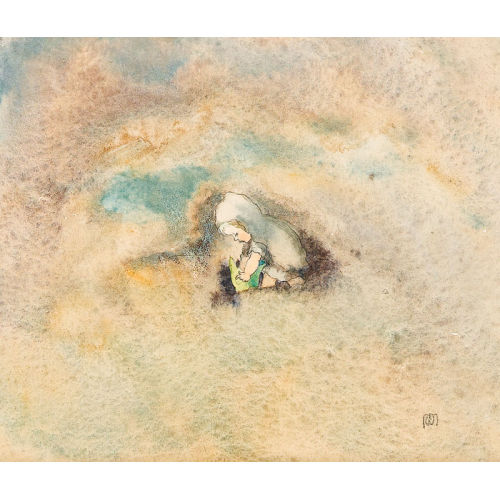
From 1917 onwards, she lived and worked in St. Moritz, where she remained until her death in 1978. Together with Anna Haller, she observed the flora of the Engadine in particular. In her personal compositions, buds, flowers and mushrooms come to life; birth, blossoming and decline echo one another beneath a fairy-tale appearance.
She also wrote stories and composed music.
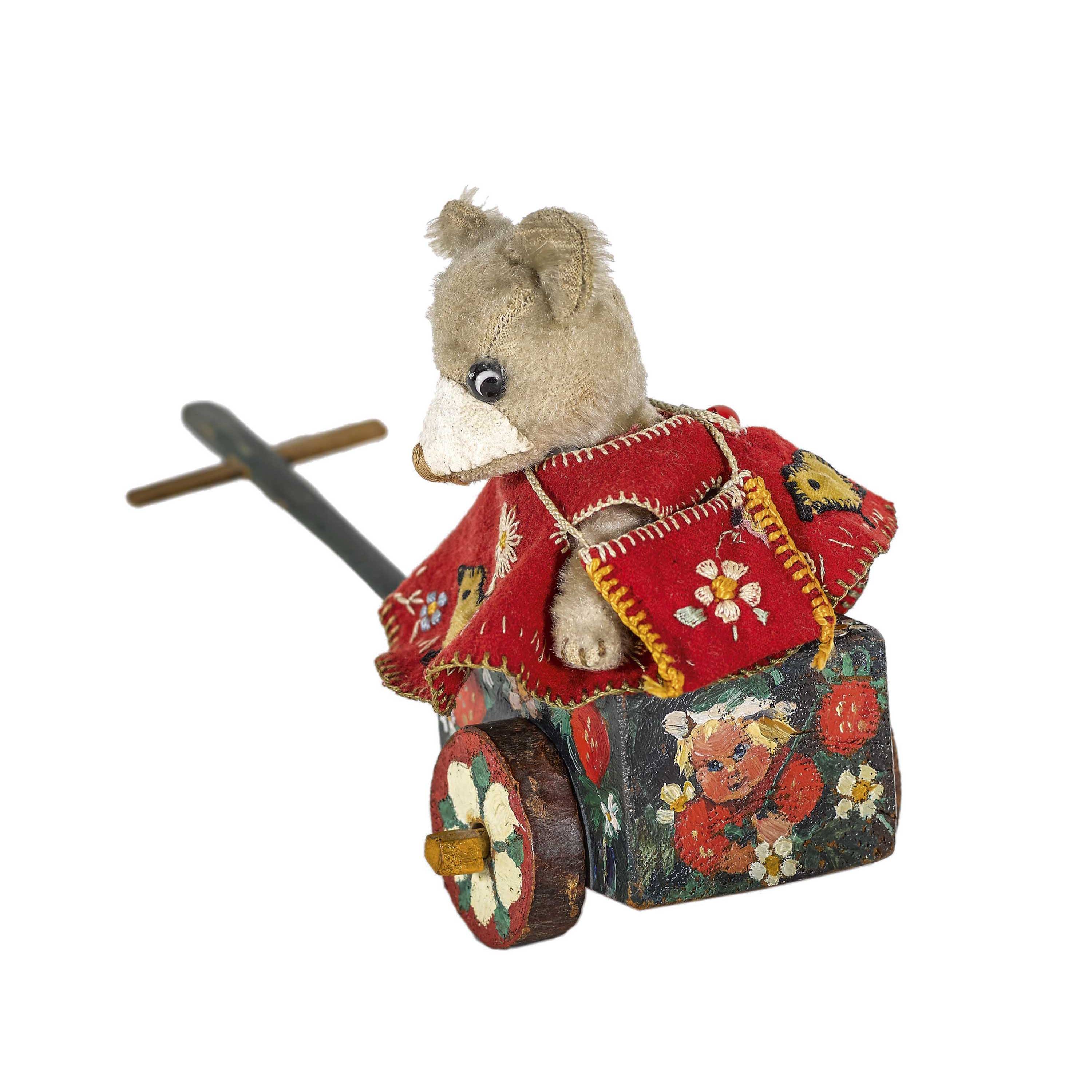
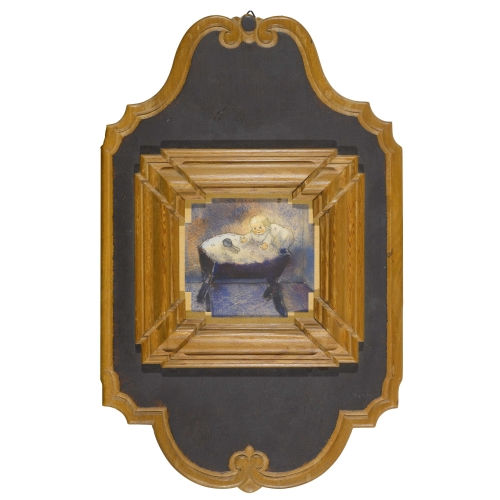
Her house, built by her brother Emil, extended this creative impulse into the everyday space. Furniture, walls and ceilings are covered with plants, birds and small figures. A vast doll’s castle, to which she devoted decades and a chronicle in several volumes, bears witness to the continuity between image, narrative and décor.
This ensemble is preserved by the Mili Weber Museum.
To discover her painting, one can look for the detail in which the plant becomes a character. This transition reveals an oeuvre that transforms precise observation into poetic narrative, inviting us to rediscover in the familiar a capacity for wonder.