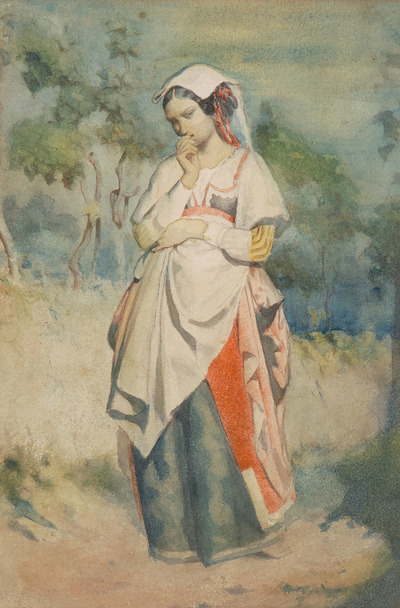
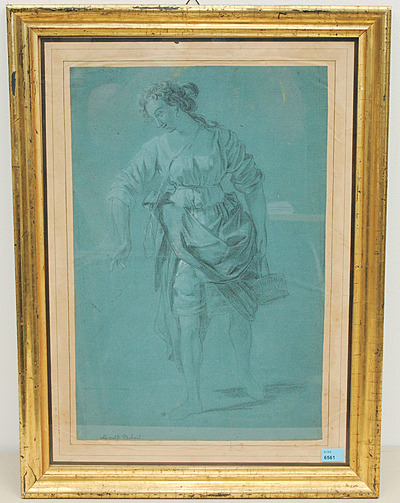
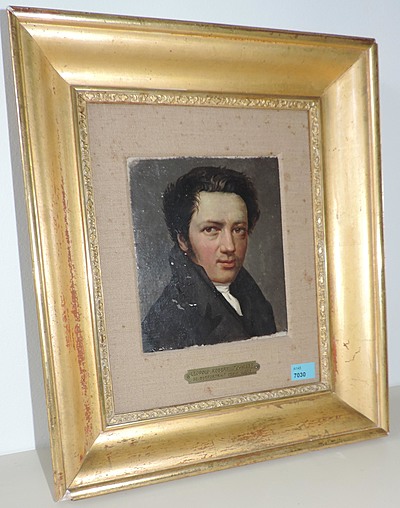
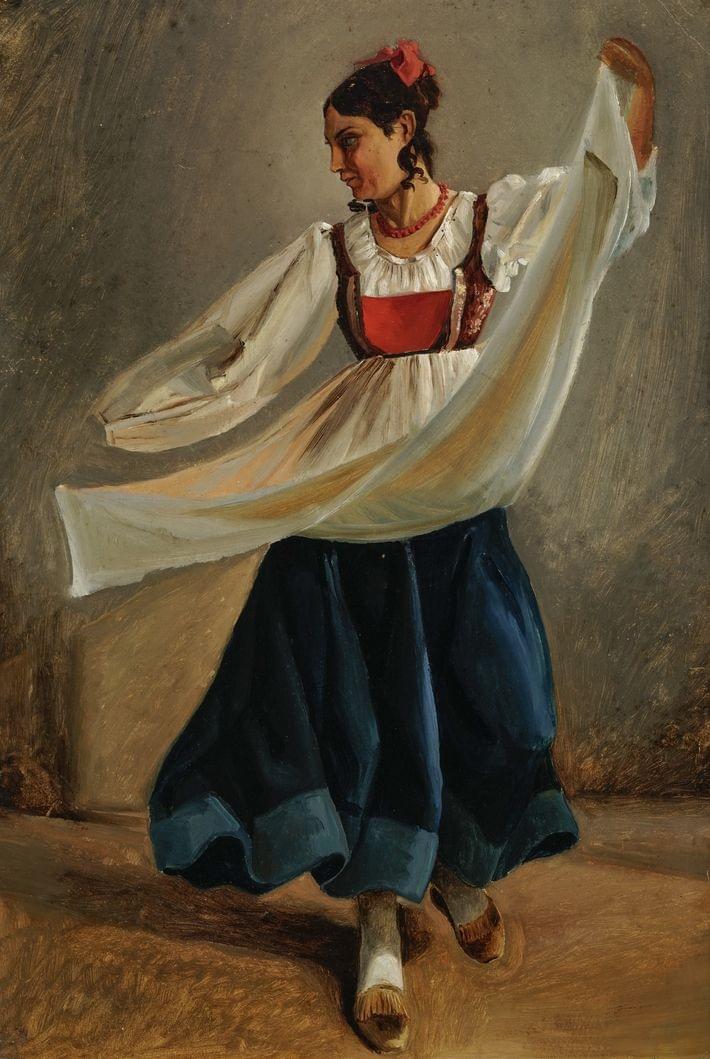
Louis-Léopold Robert
Born in 1794.
Died in 1835.
He came from a French-speaking Protestant family of artisans.
He began his training in Paris in 1810, where he studied engraving in the studio of Charles Girardet. In 1812, he attended classes at the École des beaux-arts while also frequenting the studio of Jacques-Louis David.
Having returned to Italy in 1829, he worked notably in the Pontine Marshes, where he met Prince Napoléon and Charlotte Bonaparte, towards whom he is reported to have harboured romantic feelings. Following the unrest that shook the Papal States in 1832, he left Rome.
His painting L'Arrivée des moissonneurs dans les marais Pontins, completed in 1830, was shown at the Salon of 1831 and is mentioned as being in the Musée du Louvre. This success at the Paris Salon earned him the cross of the Légion d'honneur, which the source states was personally bestowed upon him by the King of the French.
Other surviving and recorded works include Marinier napolitain avec une jeune fille à l'île d'Ischia (1825), mentioned at the Musée des beaux-arts in La Chaux-de-Fonds. La Tombe du brigand is indicated as being held by the Musée des beaux-arts de Bordeaux. The source associates Le Départ des Pêcheurs de l'Adriatique (saison d'hiver) with the Musée des beaux-arts de Neuchâtel.
He was buried in the San Michele cemetery in Venice.
The presence of several works in French and Swiss museums, as recorded in the documentation provided, attests to the museum preservation and dissemination of works from his corpus.