Jean Crotti
Born in Bulle on 24 April 1878.
Died in Neuilly-sur-Seine on 30 January 1958.
Cubism, Orphism and Dada · painting, drawing and gemmail.
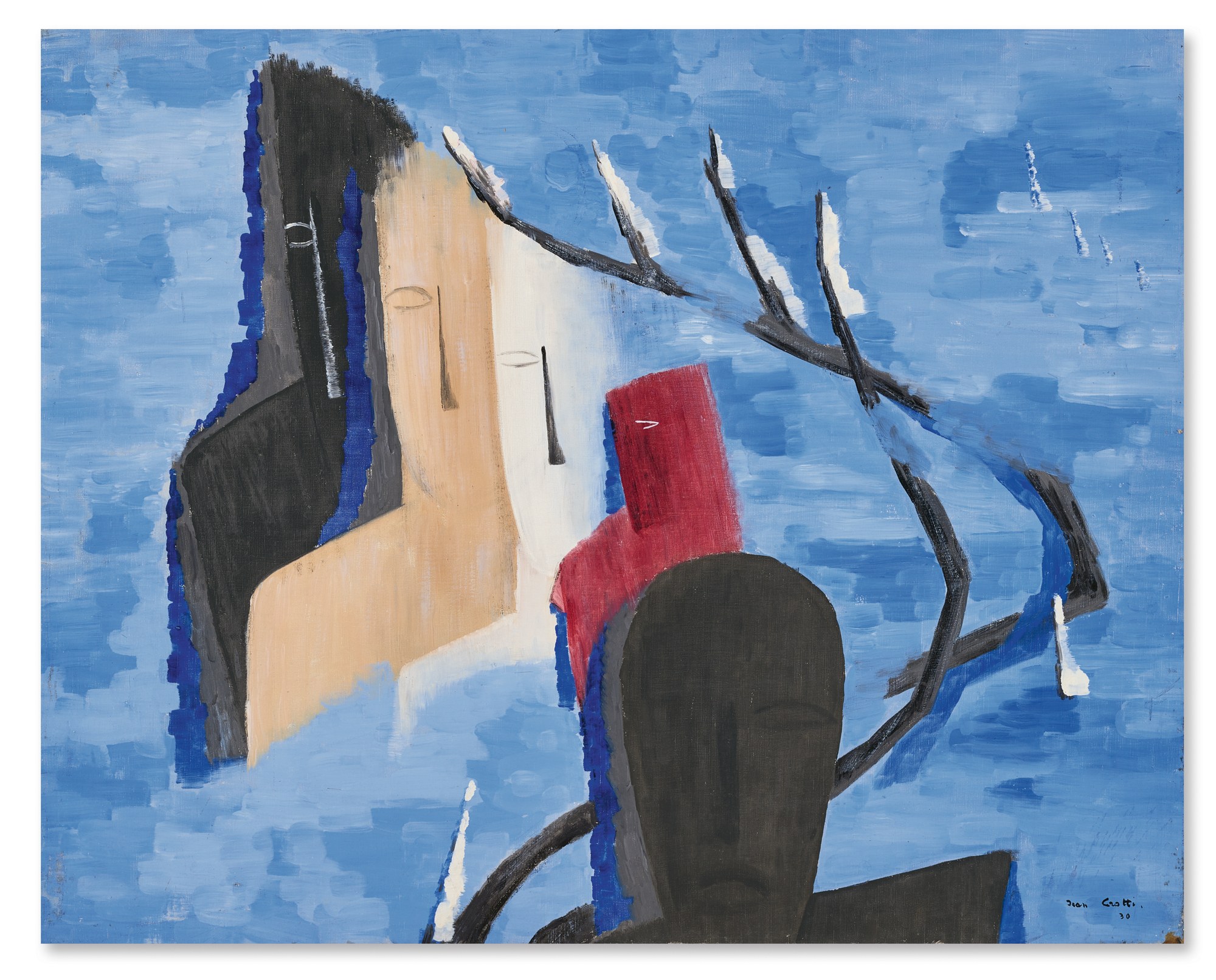
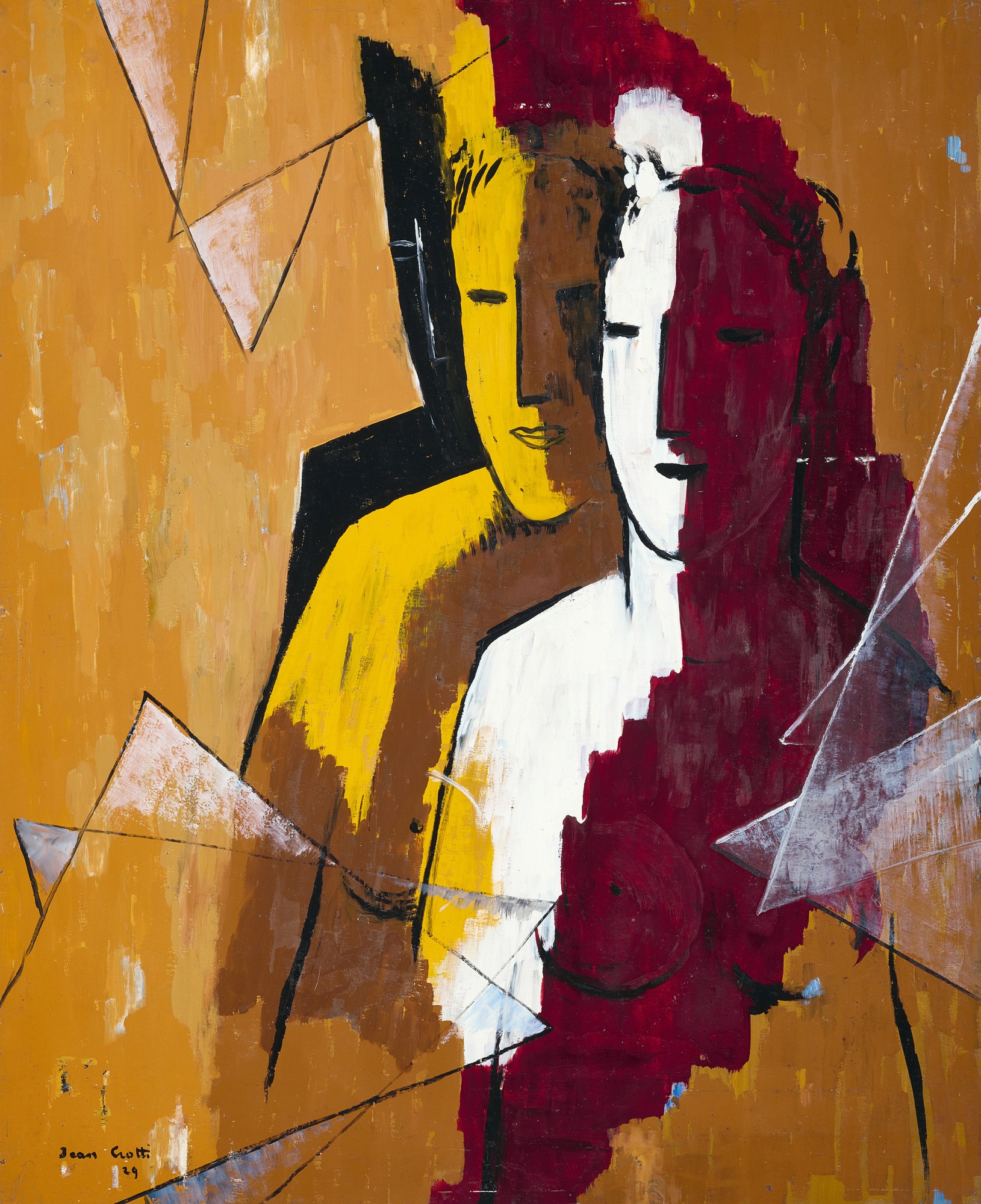
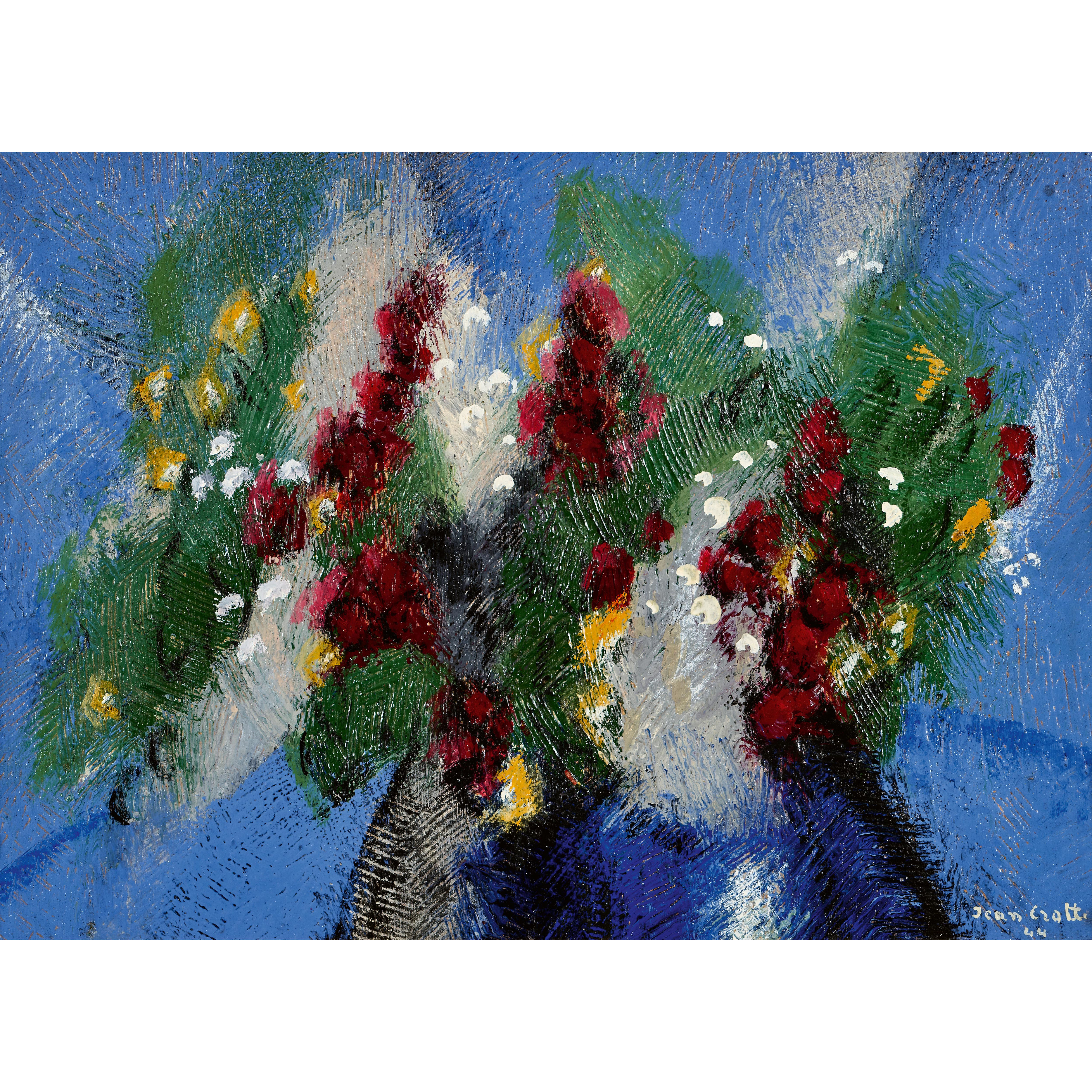
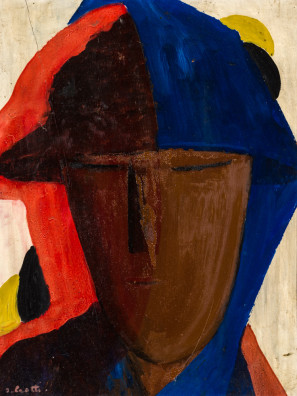
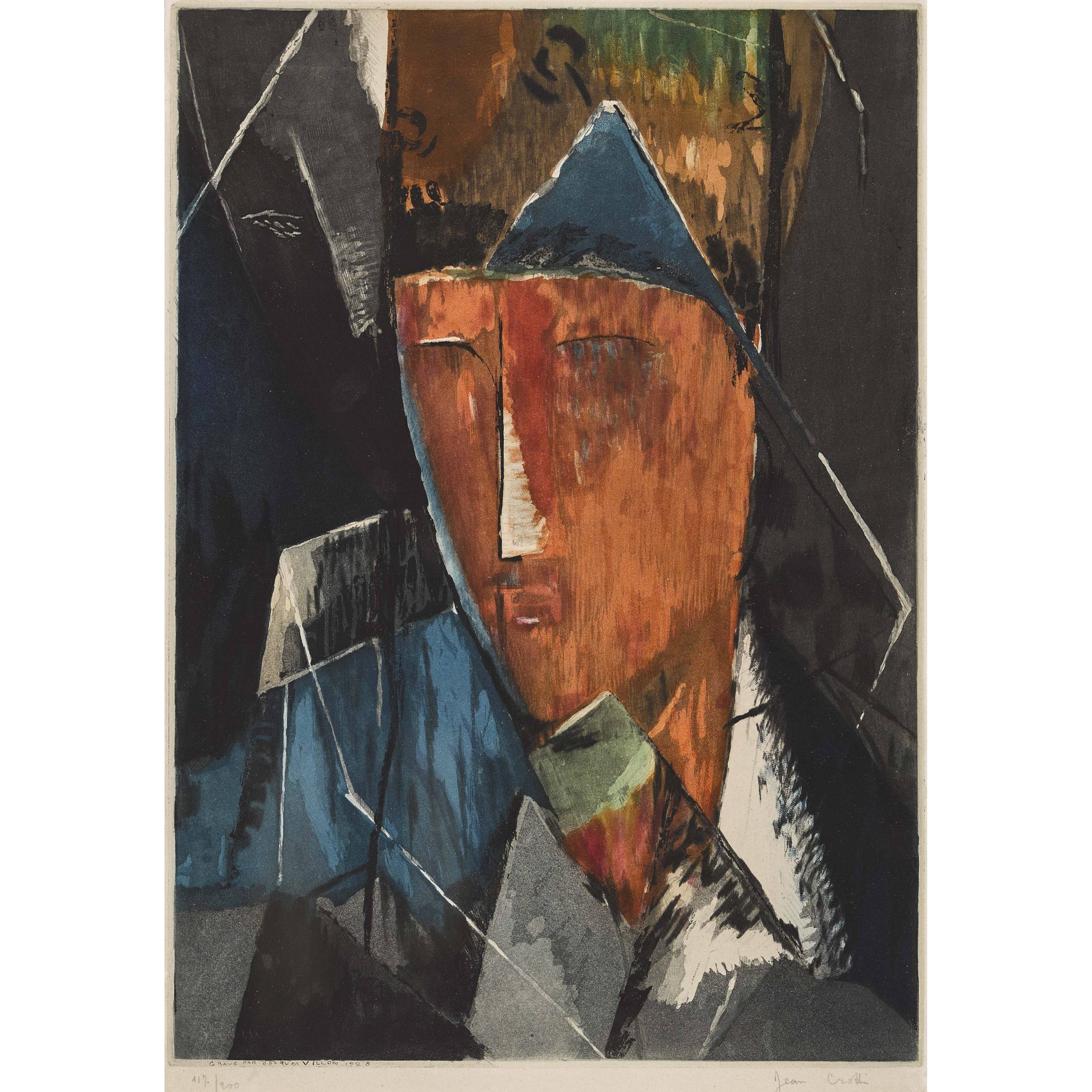
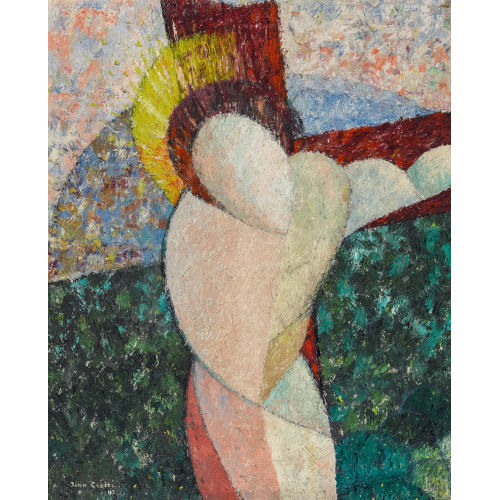
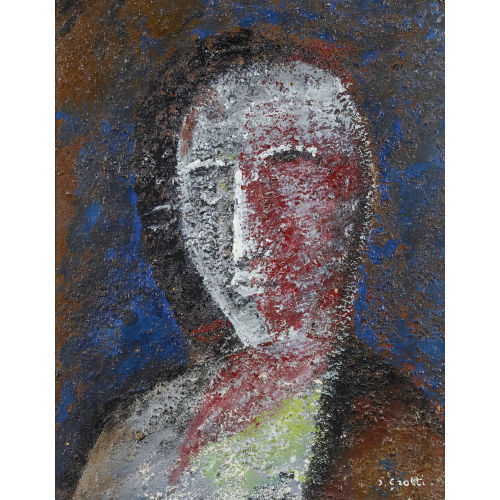
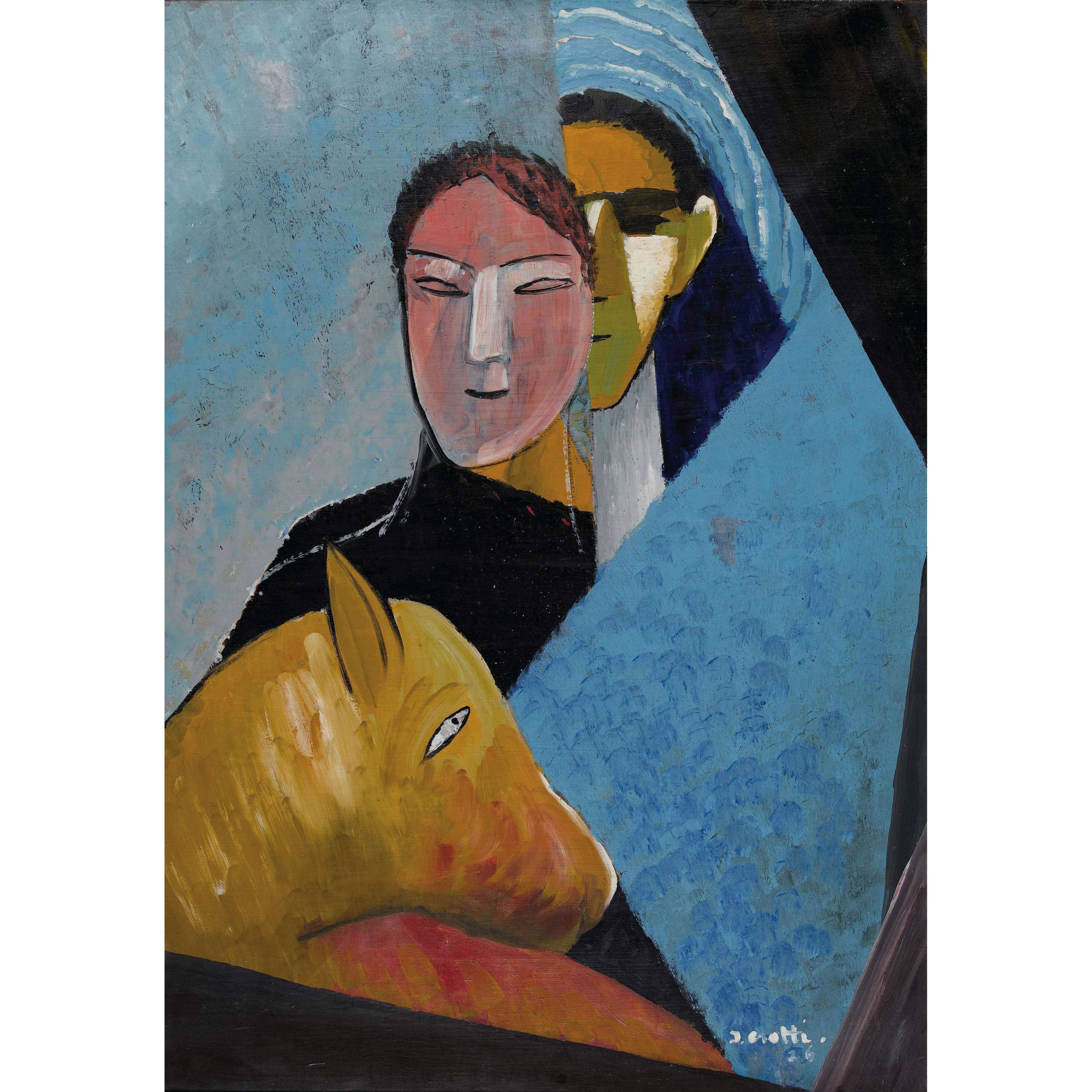
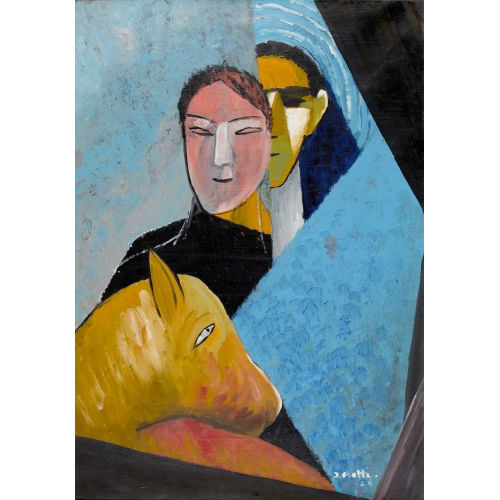
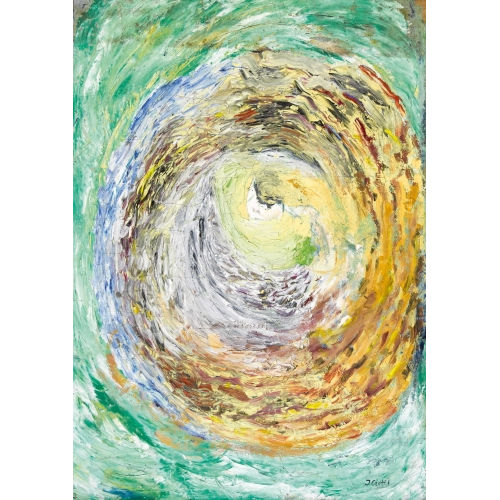
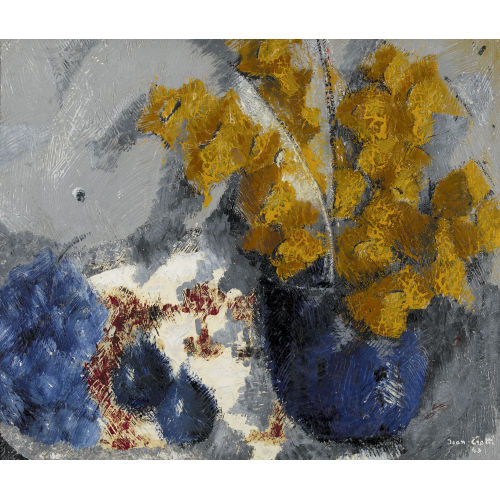
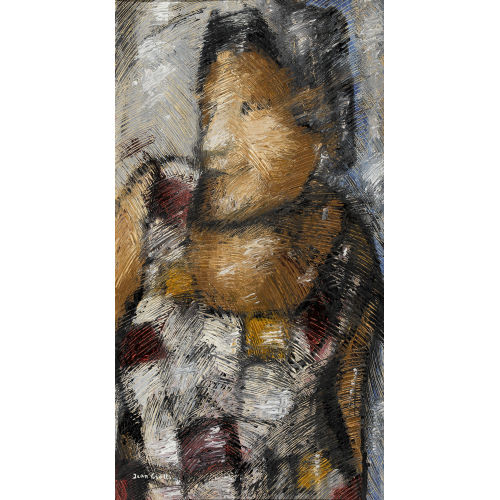
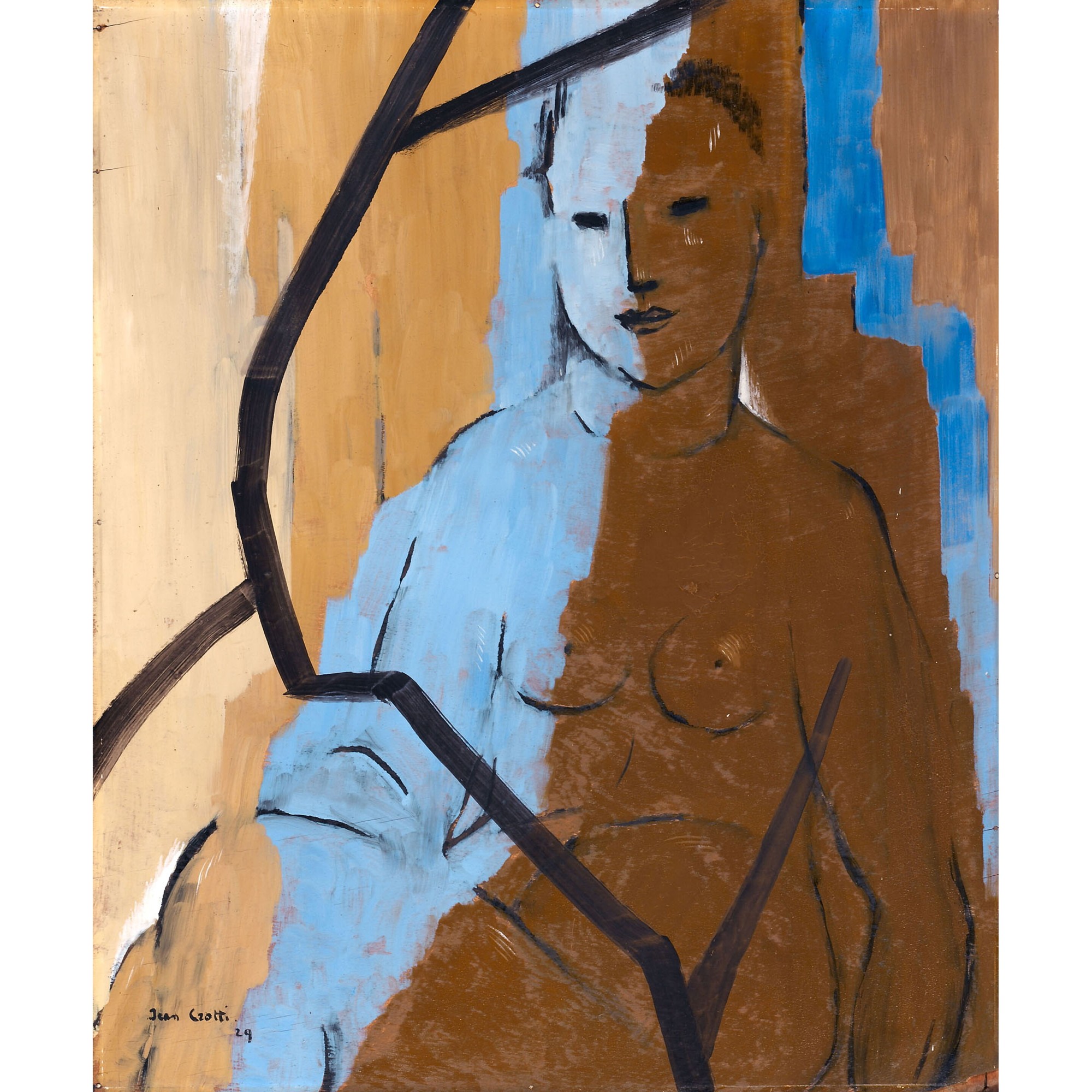
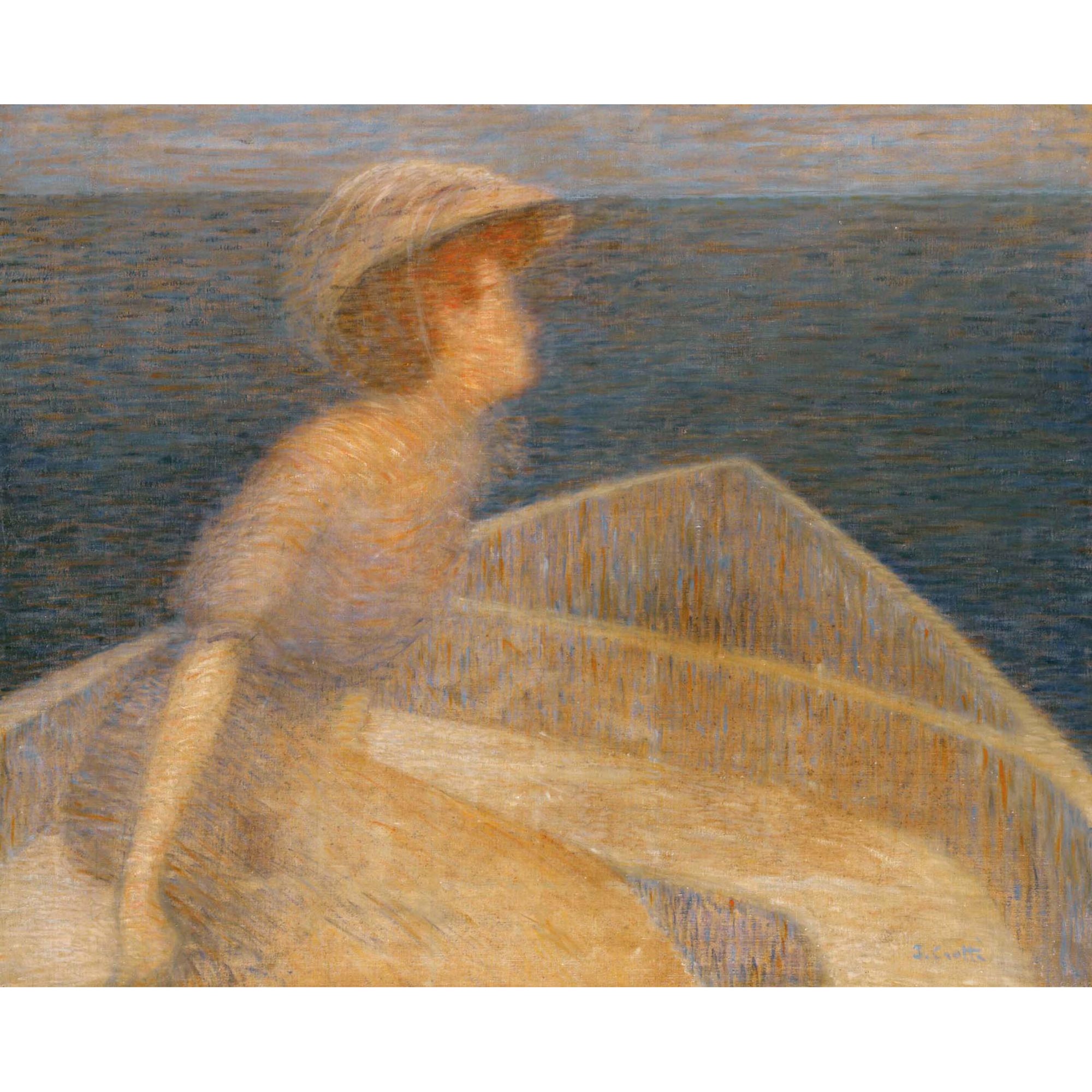
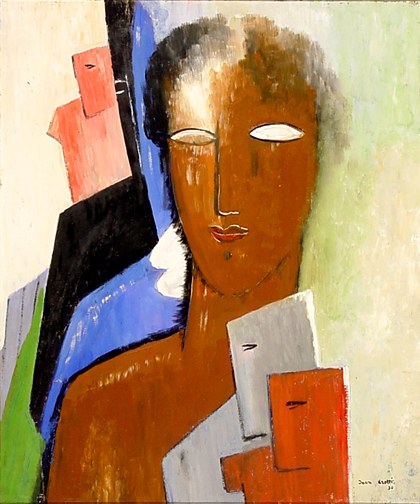
Jean Crotti’s career connects the European and American avant-gardes. After training in Munich, he moved to Paris and entered the Académie Julian in 1901. His painting subsequently turned towards Cubism and Orphism, within an artistic environment exploring colour, fragmented forms and abstraction.
He acquired French nationality in 1927, while his origins also place him within the history of Swiss art.
During the First World War, his time in New York brought him close to Marcel Duchamp. A sculptural portrait of Duchamp, assembled from materials including metal, wire and glass eyes, marked his Dada experiments. The object has disappeared, but a photograph and drawings preserve a record of it.
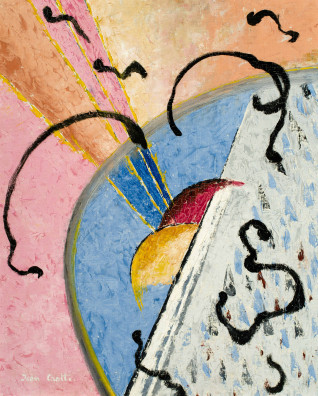
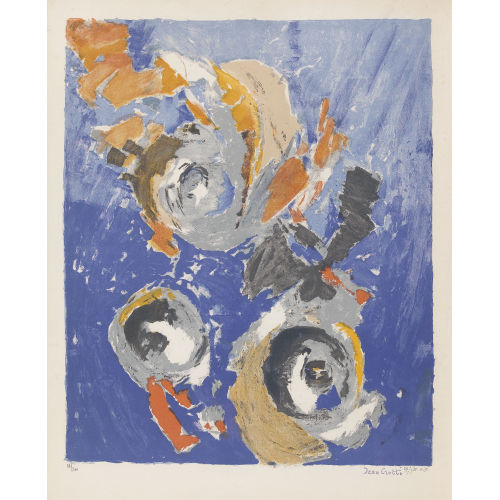
With Suzanne Duchamp, whom he married in 1919, Crotti developed Tabu, a direction within Dada concerned with mystery and art’s spiritual dimension. The Centre Pompidou describes the resulting compositions as cosmic visions organised through coloured planes, discs and arcs.
His investigations extended to materials. In the 1930s he experimented with gemmail, combining overlapping pieces of coloured glass with light. Transparency opened up chromatic combinations different from those available in painting on canvas, giving illumination a direct role in the work.
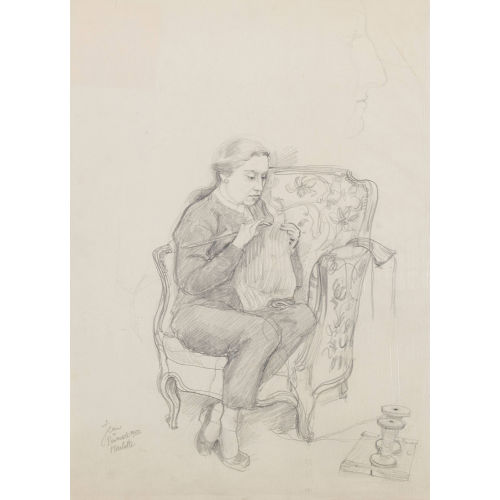
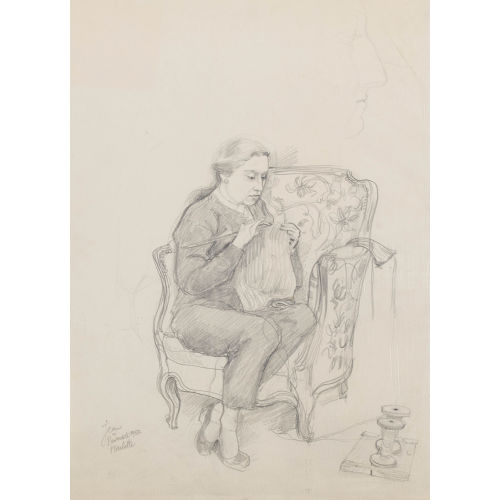
The Centre Pompidou holds his 1916 Portrait de Suzanne Duchamp, a graphite drawing donated by Marcel Duchamp in 1966. This sheet recalls the importance of drawing and artistic exchange in his practice, beyond a classification solely in terms of Cubism or Dada.