Jakob Edwin Bachmann
Born in 1873.
Died in 1957.
Swiss · Swiss figurative landscape painting · Alpine and lake views, portraiture and decorative painting.
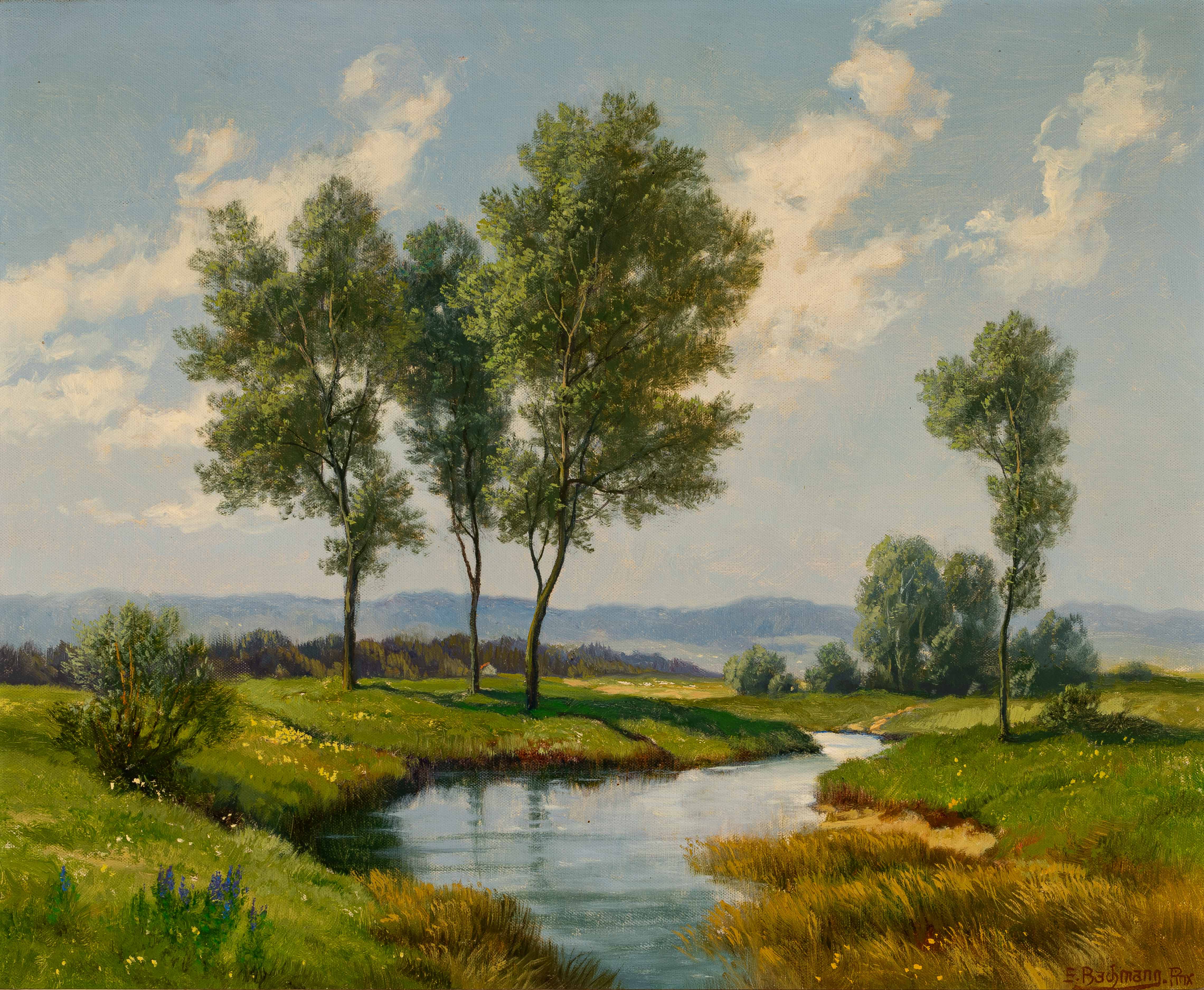
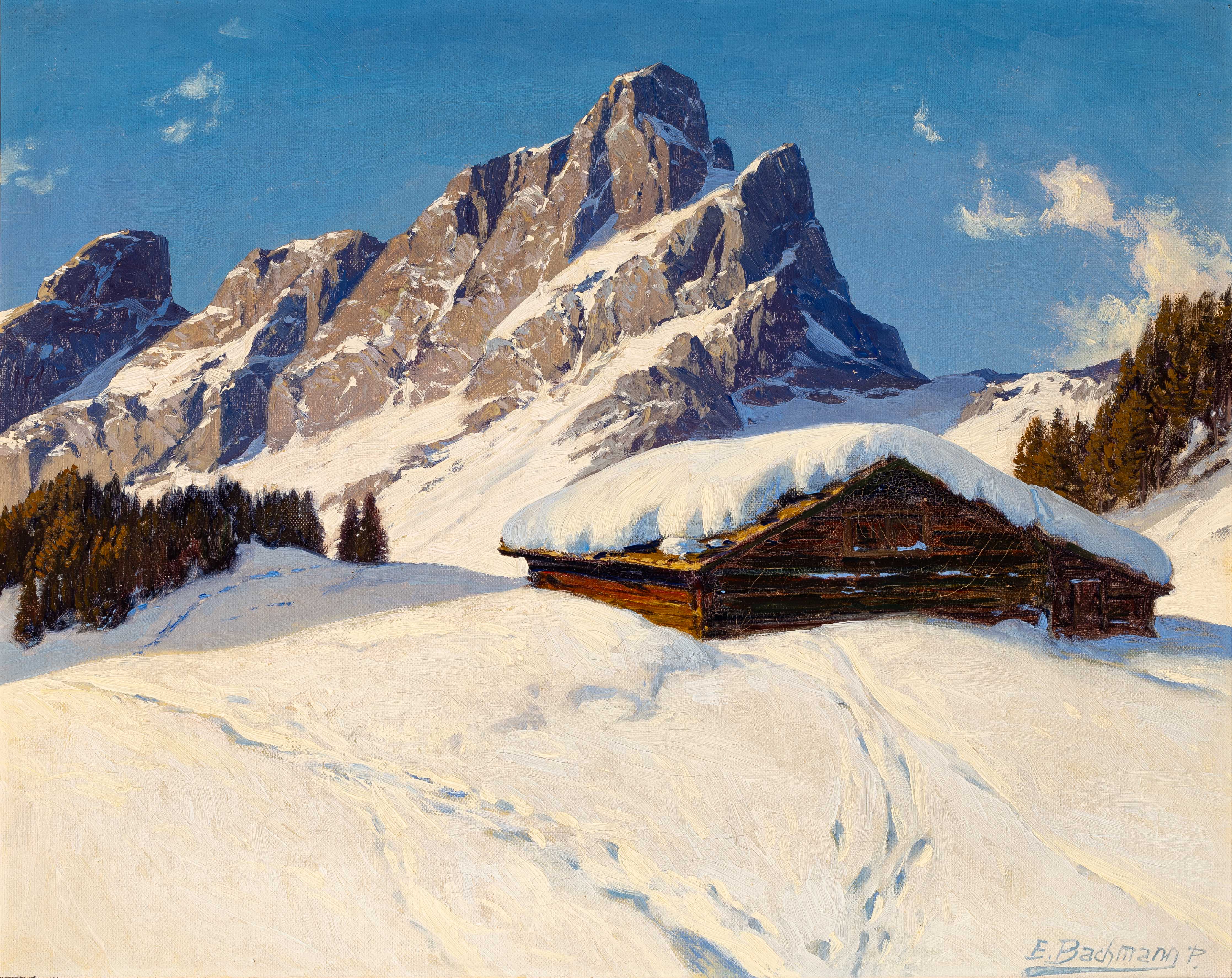
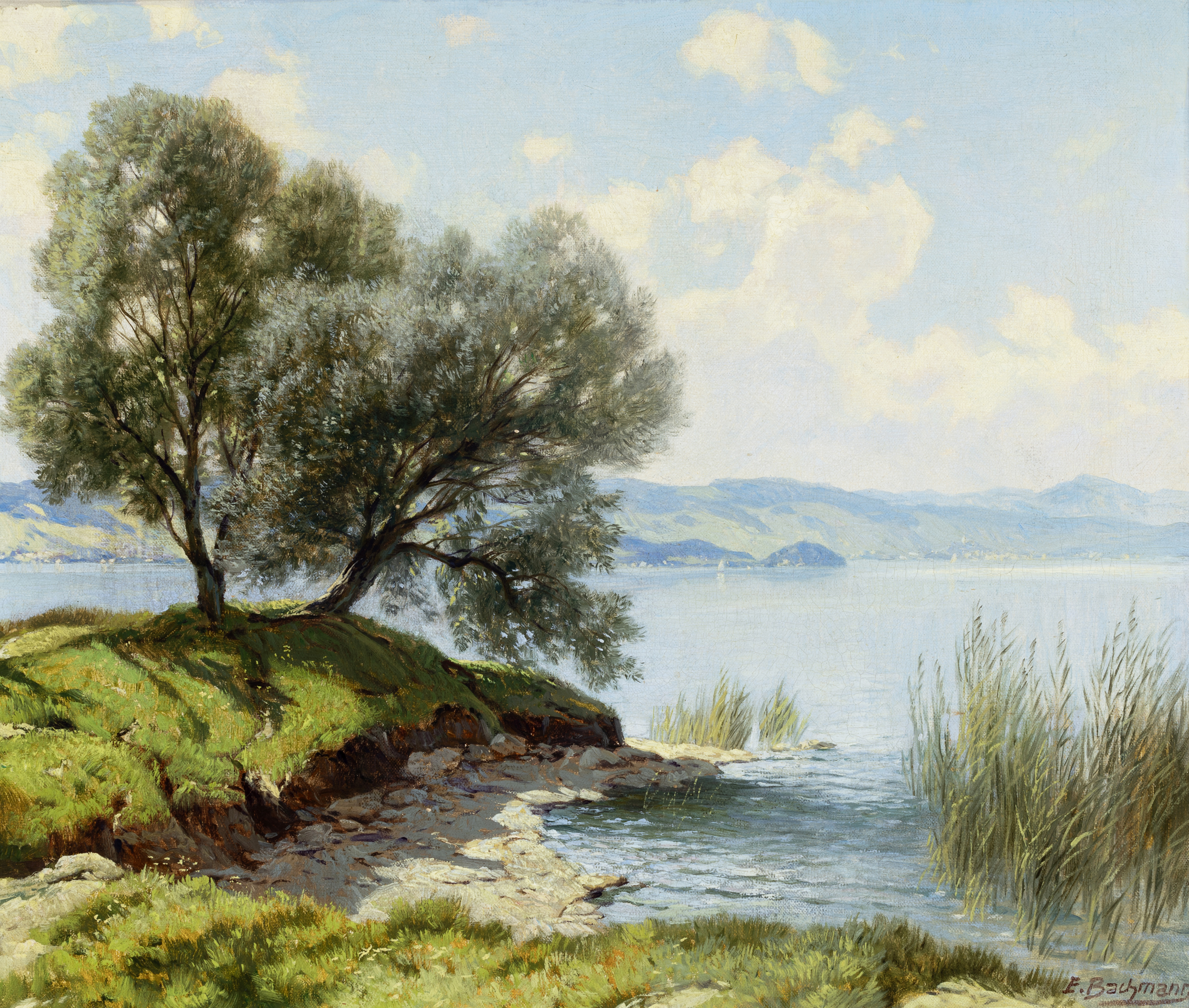
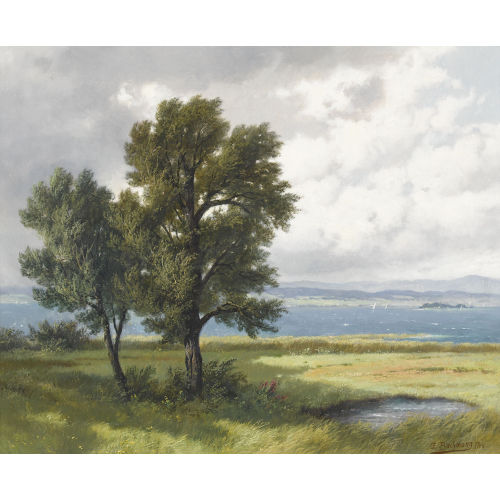
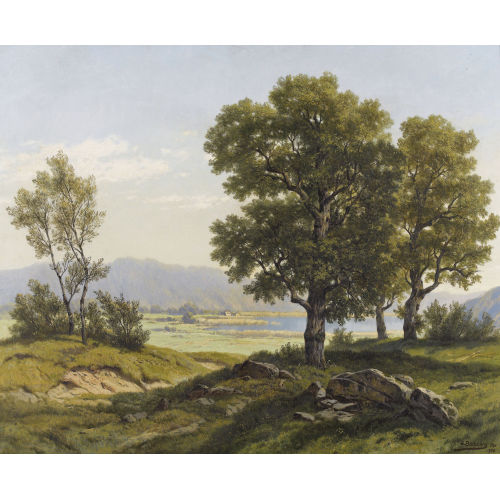
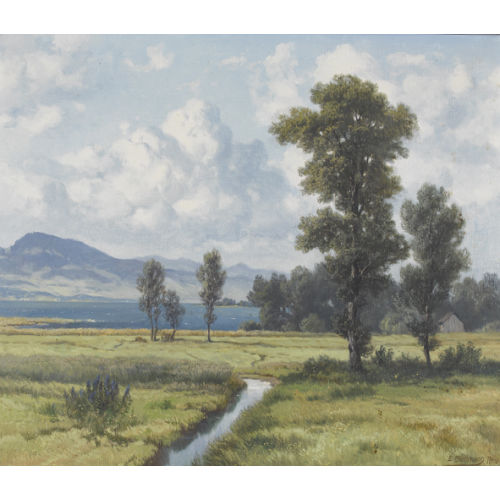
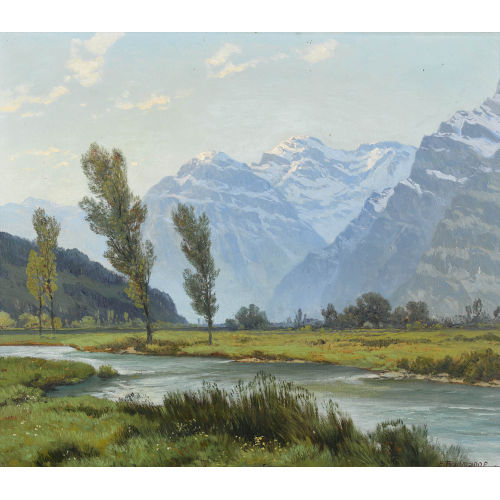
Swiss painter, draughtsman and lithographer Jakob Edwin Bachmann (Zurich, 1873 – Freienbach, 1957), commonly known as Edwin Bachmann, developed an oeuvre centred on Alpine and lakeside landscapes, portraiture and the figure. The Musée d’Orsay confirms his civil name, Jakob Edwin Bachmann, together with his places of birth and death. He first trained as a lithographer, acquiring a firm grounding in drawing before progressively concentrating on painting.
After his apprenticeship he spent periods in Leipzig, Munich and Paris. Documentation preserved by the artist’s family records that he attended art academies in Leipzig and Munich in his free time and pursued further studies in painting and drawing at the École des Beaux-Arts in Paris while working as a graphic artist. Returning to Switzerland around the mid-1890s, he worked first as a lithographer and later in Richterswil for Pfister+Meier, a firm specialising in decorative and theatrical painting.
Alongside this employment he produced portraits, landscapes, still lifes and religious subjects.
In 1913 the Catholic parish of Richterswil commissioned him to create the sacred paintings for its new church. His approximately four-metre-high choir painting of the Trinity was painted directly onto the curved wall, and his Stations of the Cross are also documented there. The ensemble links his easel painting with a substantial monumental and decorative practice that later accounts of his career have often understated.
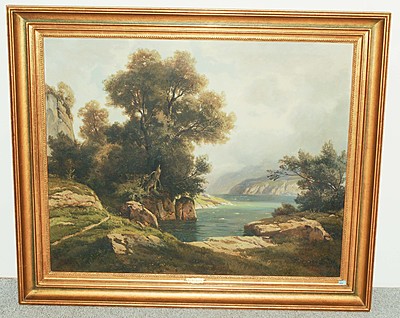
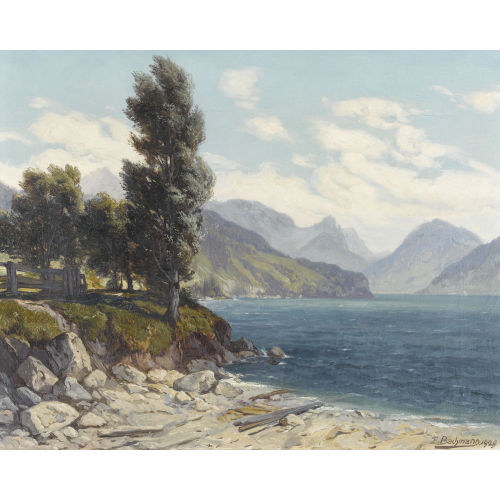
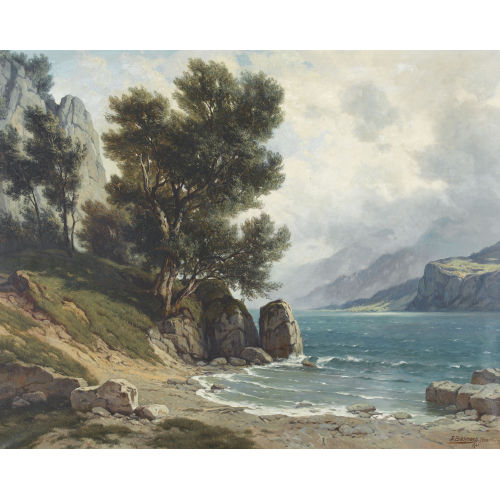
After the First World War Bachmann settled in Weesen. Lake Walen, the Glarus region and the surrounding mountains became central subjects in his sketchbooks and paintings. In 1923 he joined the theatrical-painting firm Alois Eberhard in Weesen, with responsibility for the artistic execution of its commissions.
In 1929 he moved to his own house in Pfäffikon on Lake Zurich; sketching excursions took him from the Zürichsee towards the Uri Alps. He moved to Freienbach in 1947 and continued painting intensively into the early 1950s.
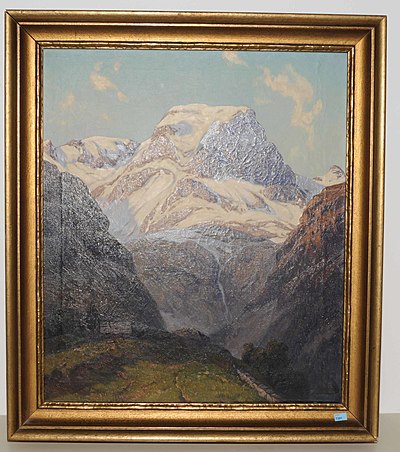
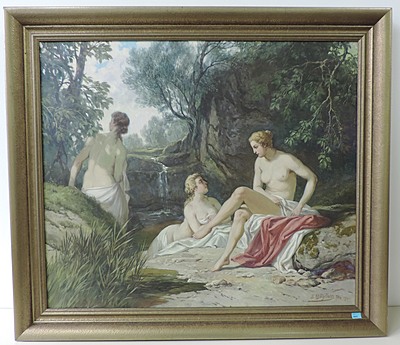
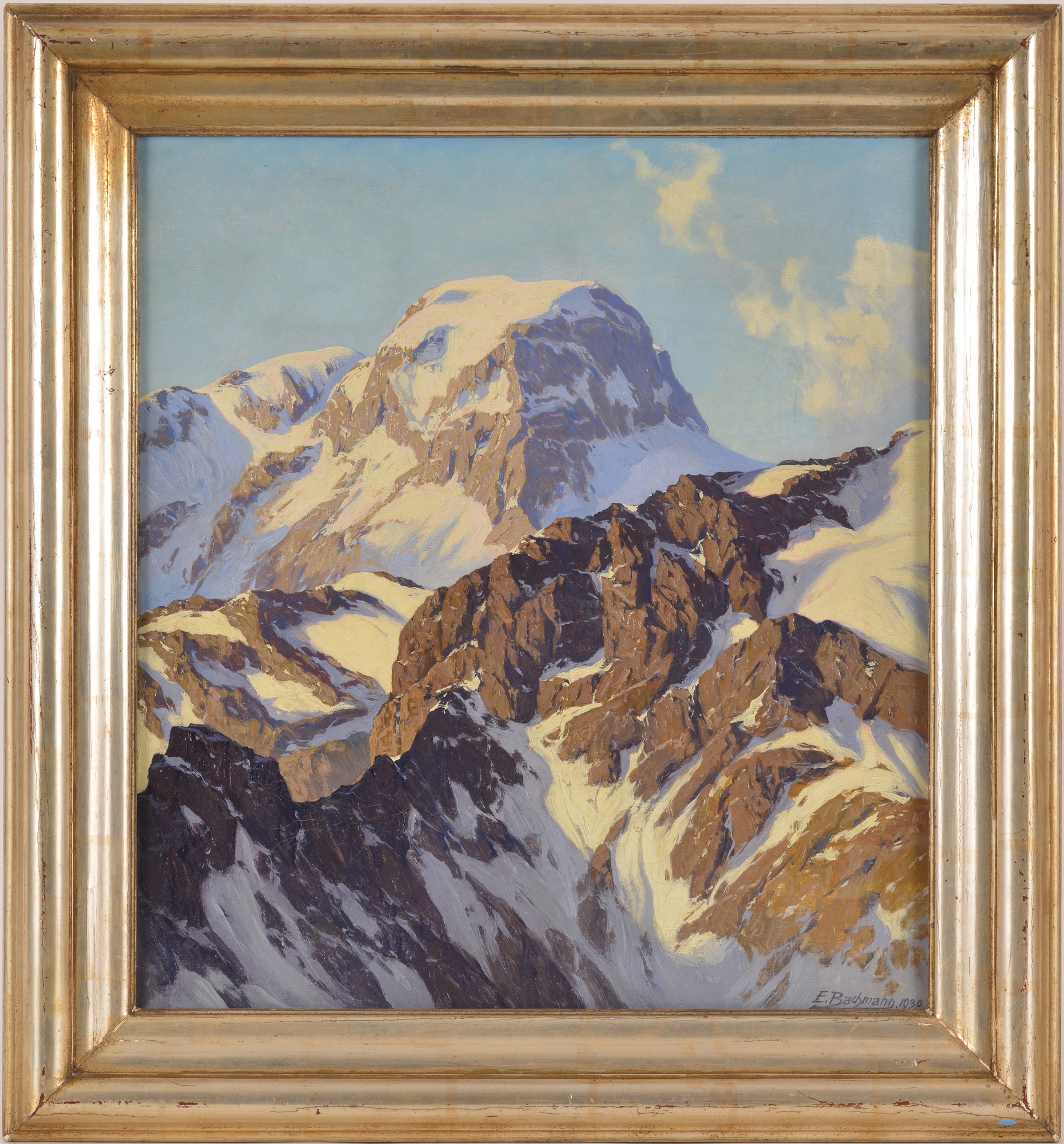
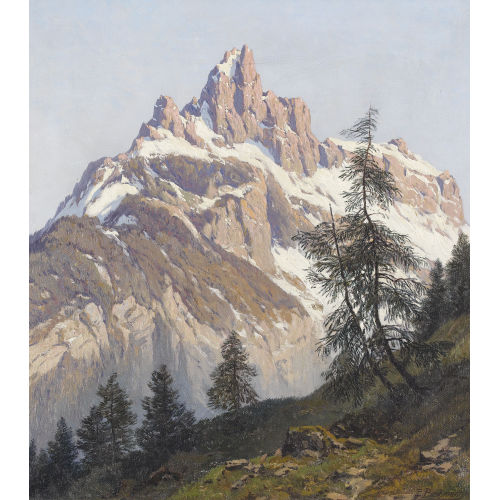
The auction record now gives a clearer picture of his production. Mountain and lake landscapes predominate, including Le Breithorn, Zermatt, dated 1930, Aufkommender Sturm am Walensee and In den Dolomiten, dated 1920. Badende, 1940, nevertheless confirms that figure painting remained part of his practice.
His lithographic training can still be sensed in the construction of mountain masses, the definition of silhouettes and the organisation of spatial planes, while colour conveys the changing atmospheric character of Swiss landscapes.
Attribution requires particular care. Jakob Edwin Bachmann generally signed with his second given name, «Edwin», and sometimes later added «Pinx». More importantly, his son Edwin Karl Bachmann (1900–1960), also a painter, likewise used the signature «E.
Bachmann», and the two hands can be confused. Works by the Edwin Bachmann born in 1900 that are held or documented by Kunsthaus Zürich belong to the son, not the father. Signature, date, subject and provenance therefore need to be assessed together whenever an attribution is made.
His market is regularly documented in Switzerland by Auktionshaus Zofingen, Schuler Auktionen and Piguet. At Piguet, Le Breithorn, Zermatt, an oil on canvas dated 1930 and measuring 55.5 × 50 cm, realised CHF 1,600 in December 2014. At Dorotheum in Vienna, In den Dolomiten, a 1920 oil on canvas measuring 45 × 50 cm, realised EUR 800 on 4 February 2025.
These records show a functioning market in which subject, scale, pictorial quality, condition and, above all, secure identification within the Bachmann family materially affect comparisons.