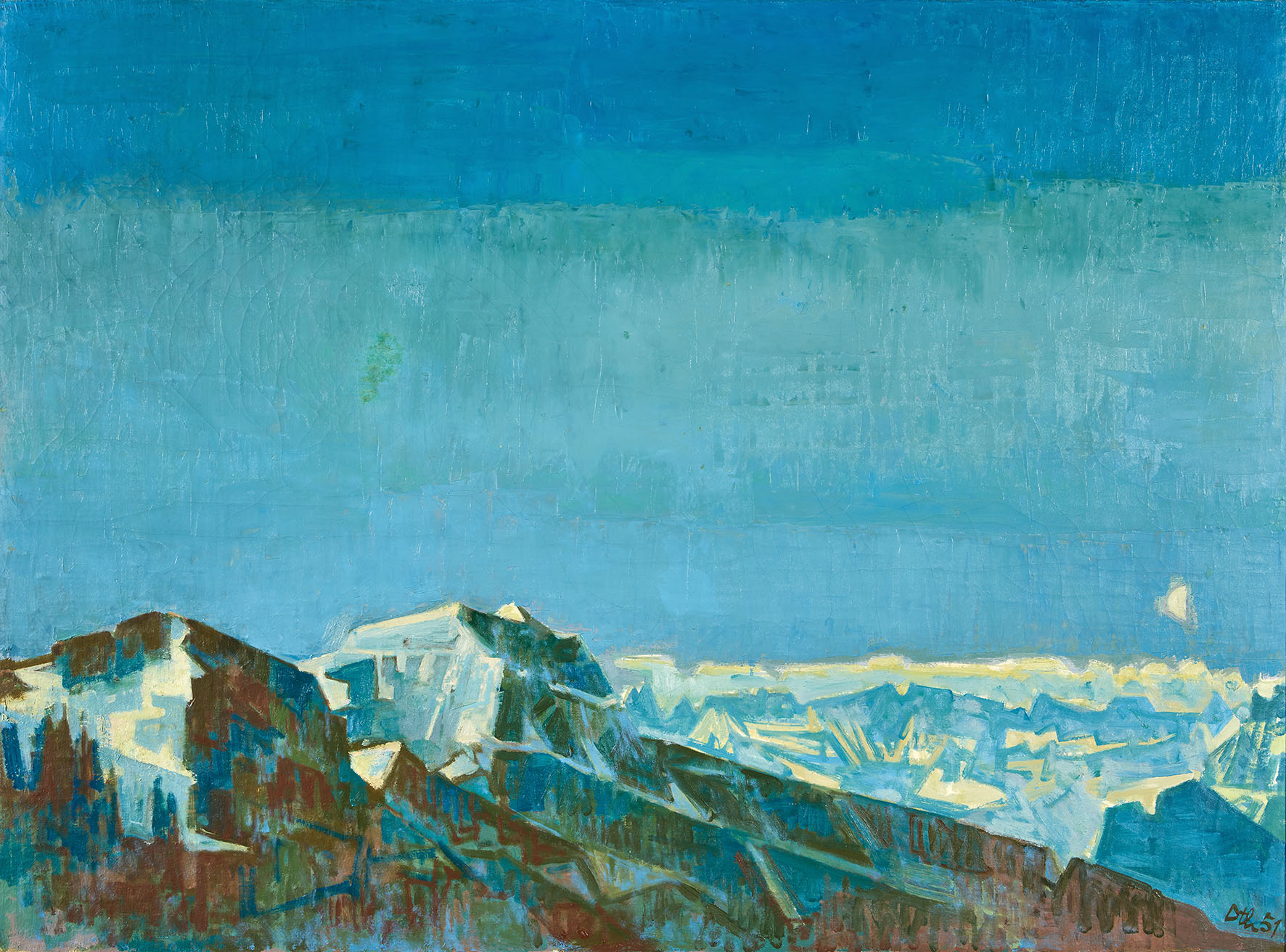
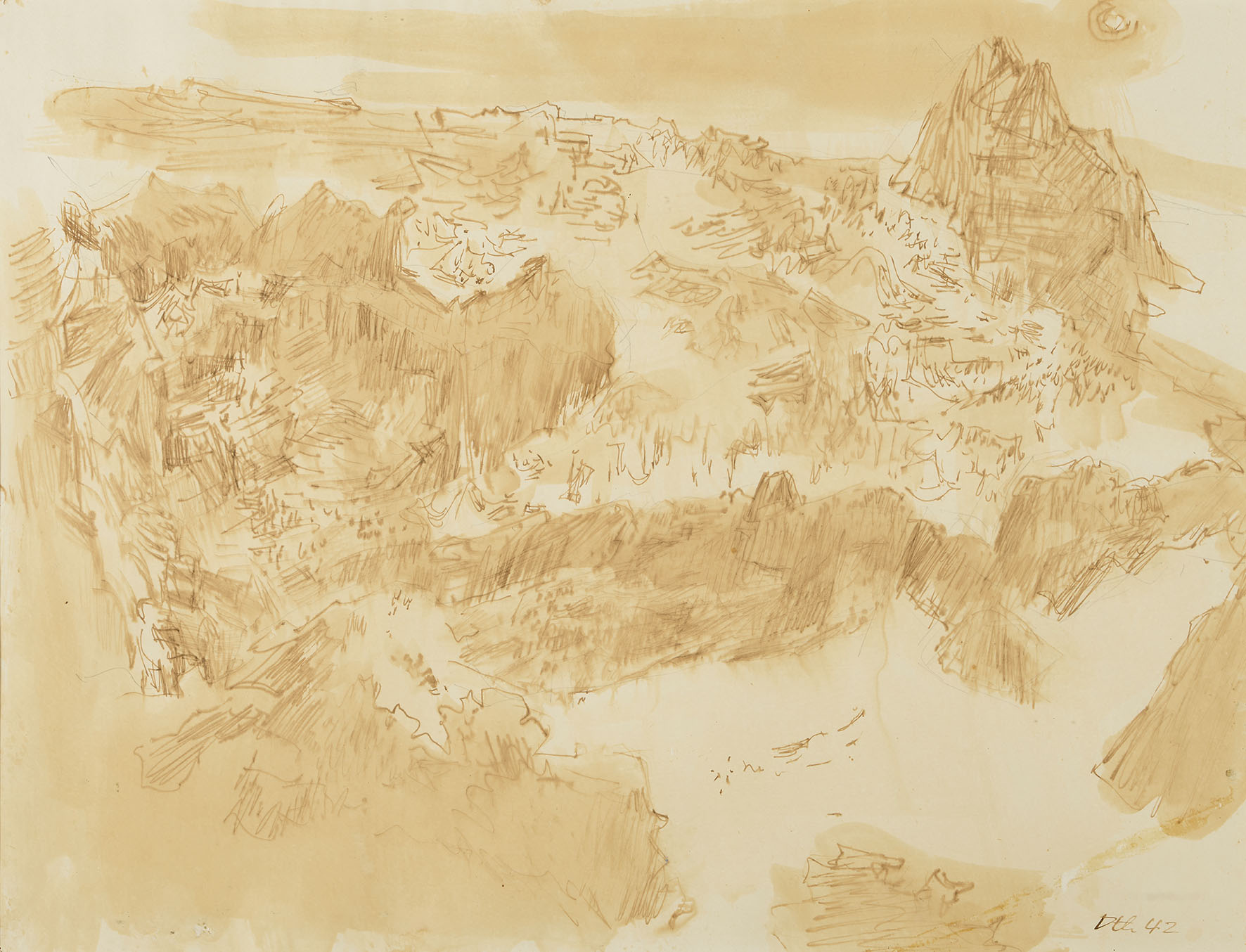
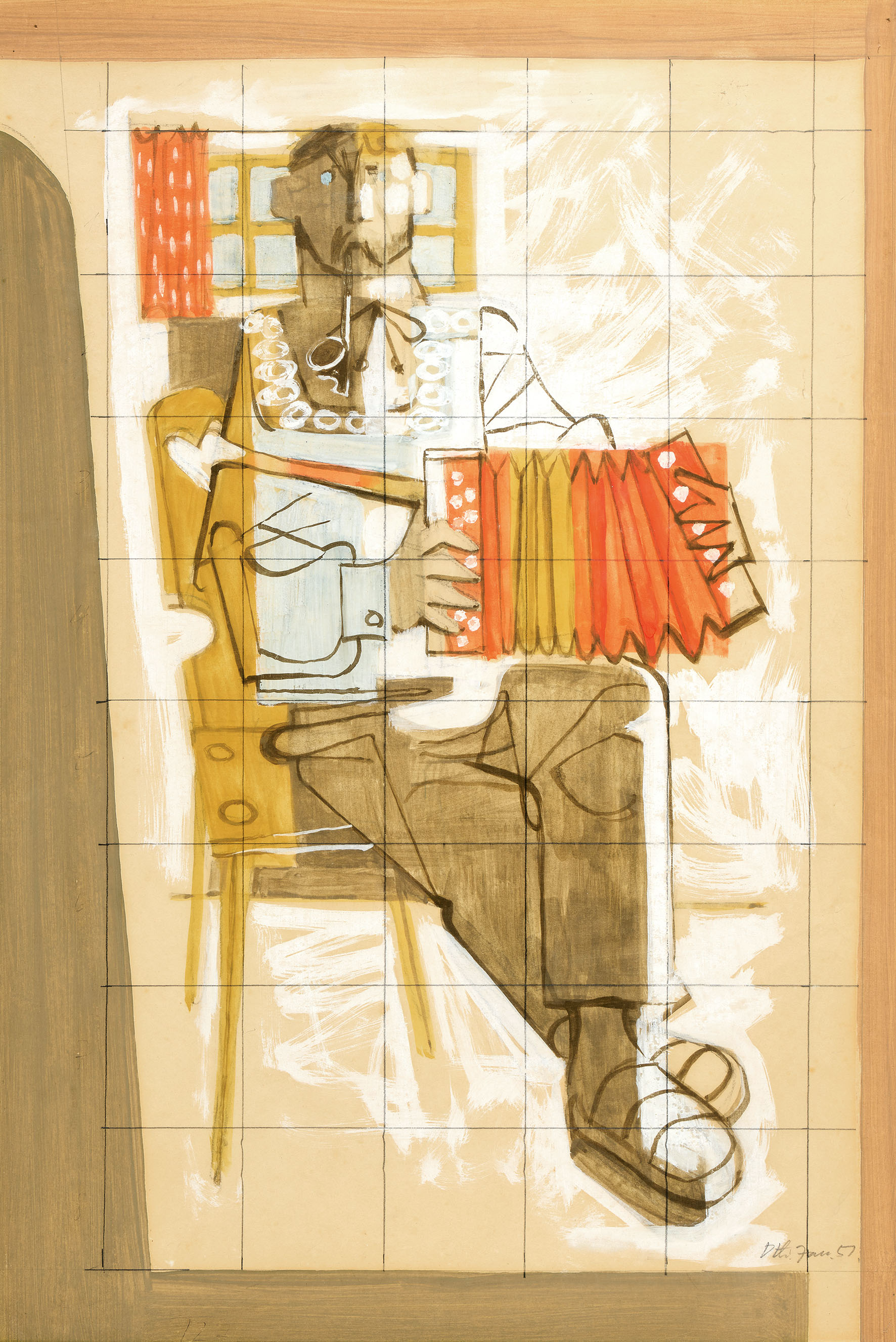
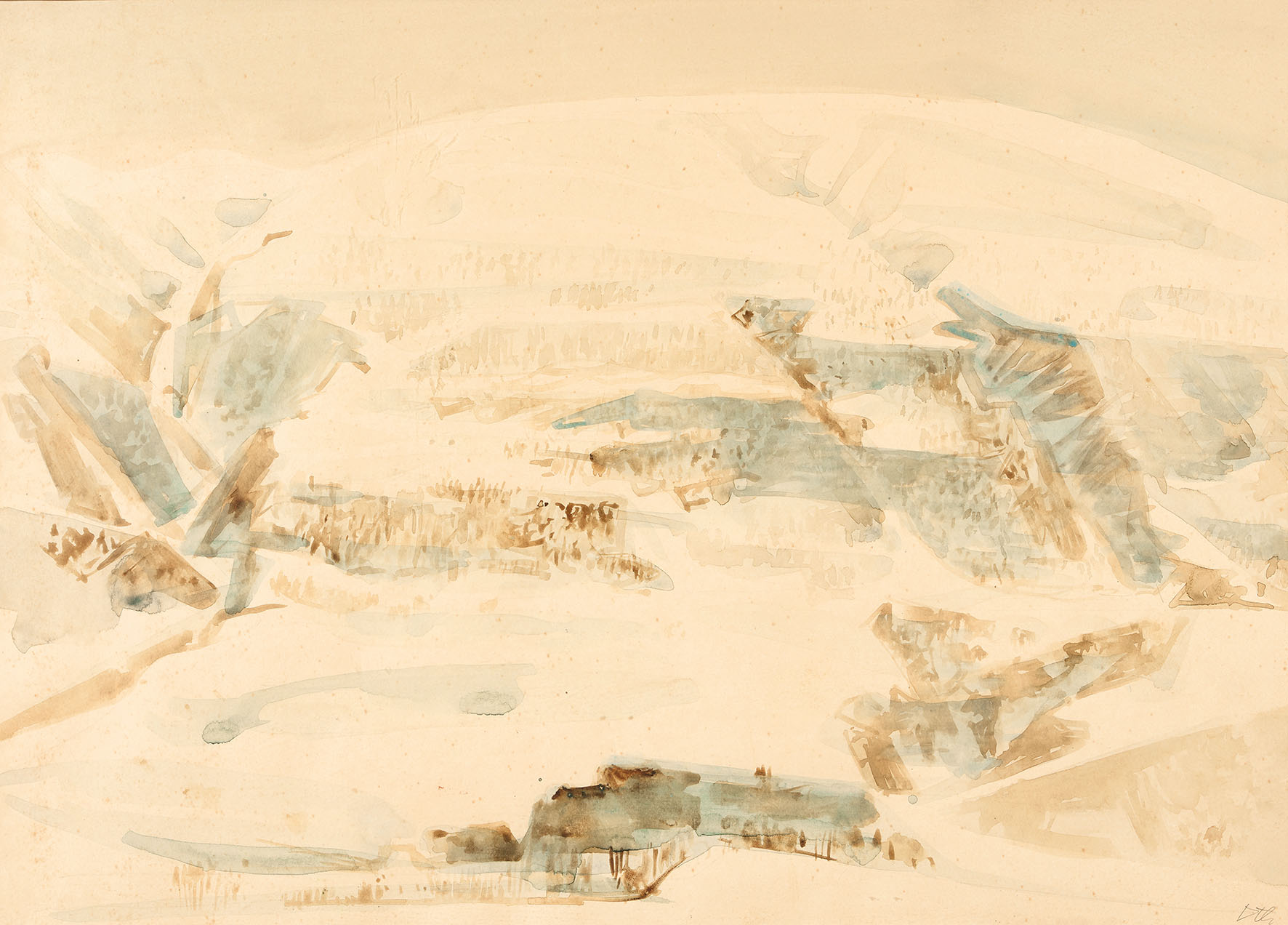
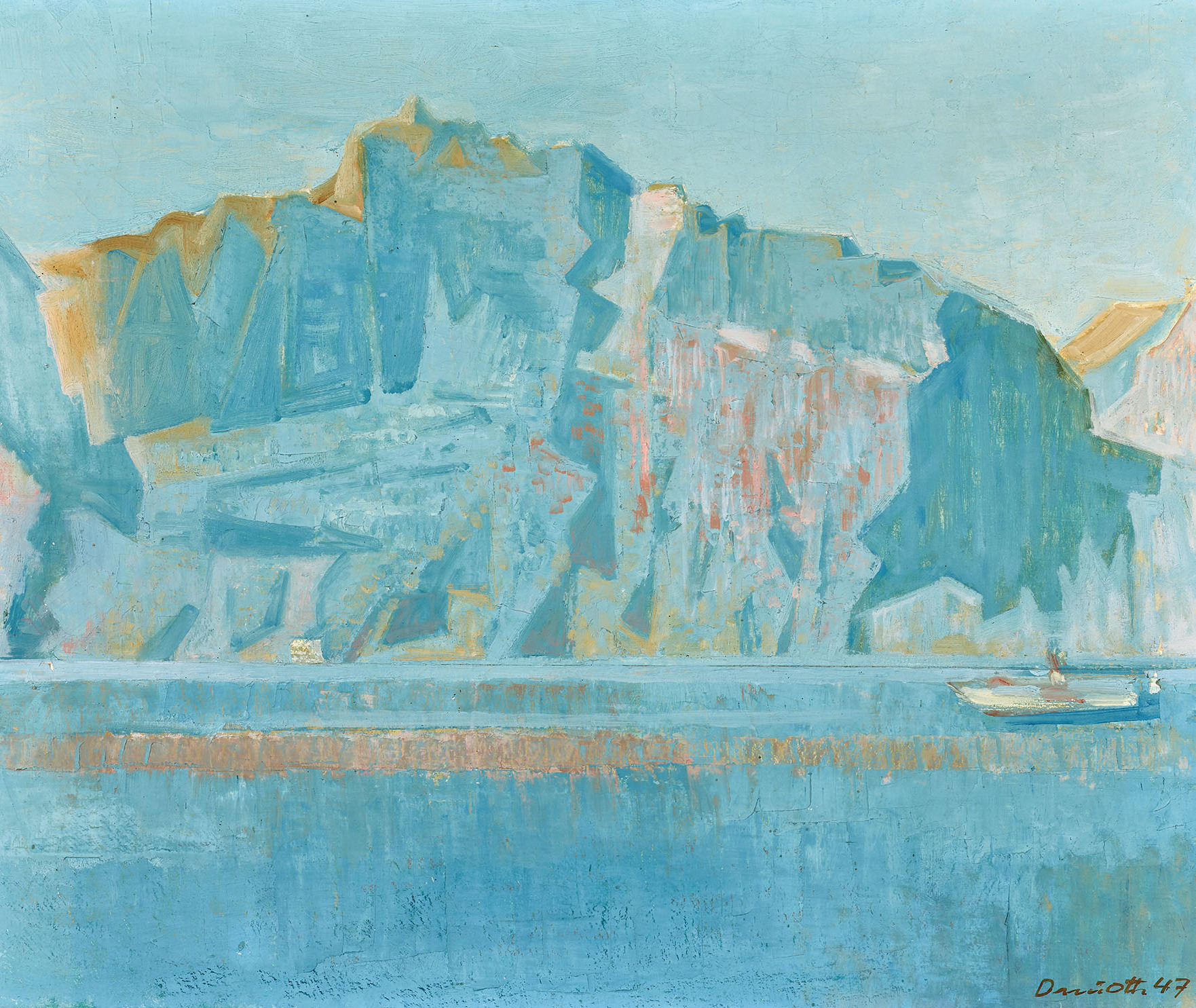
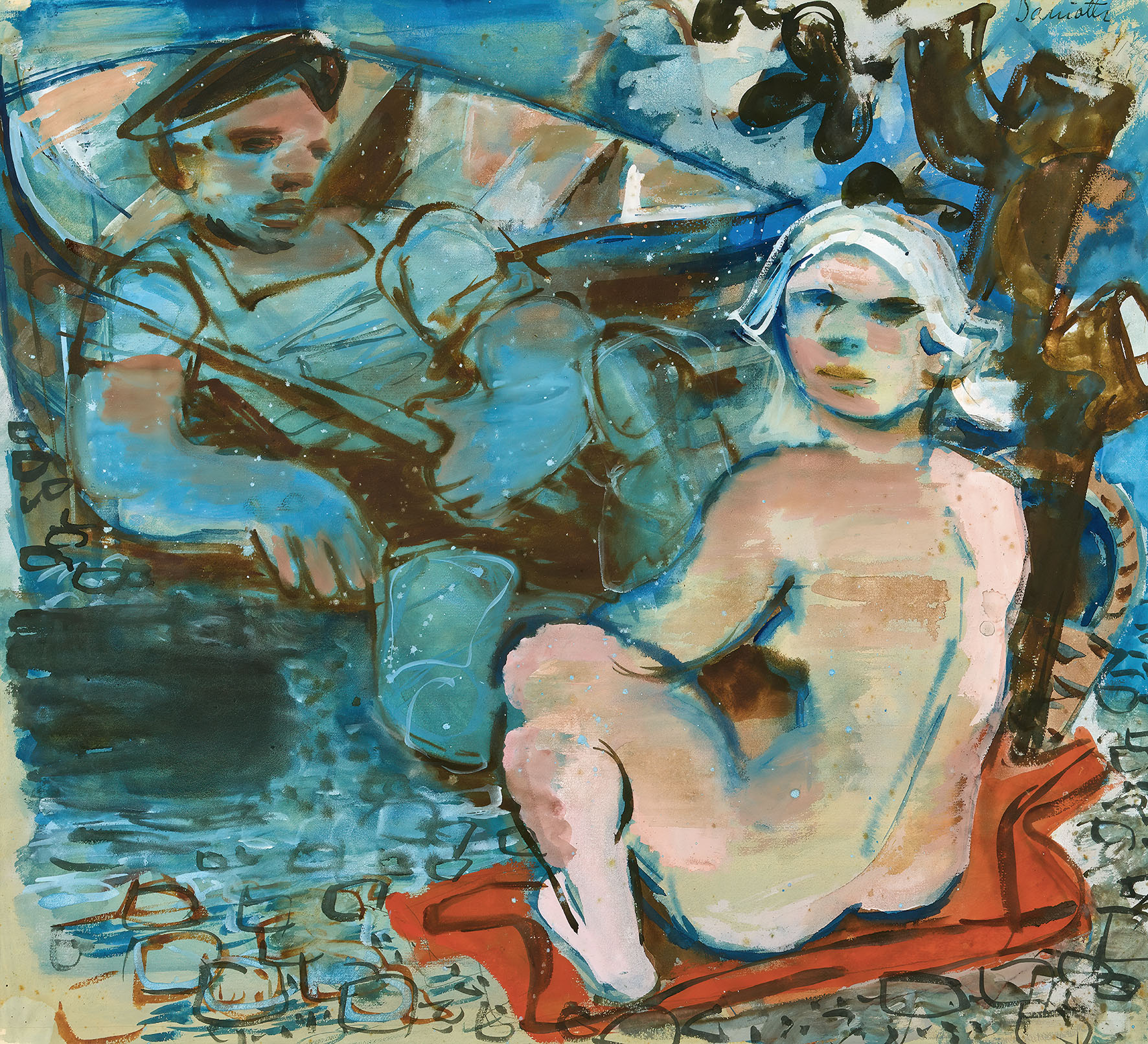
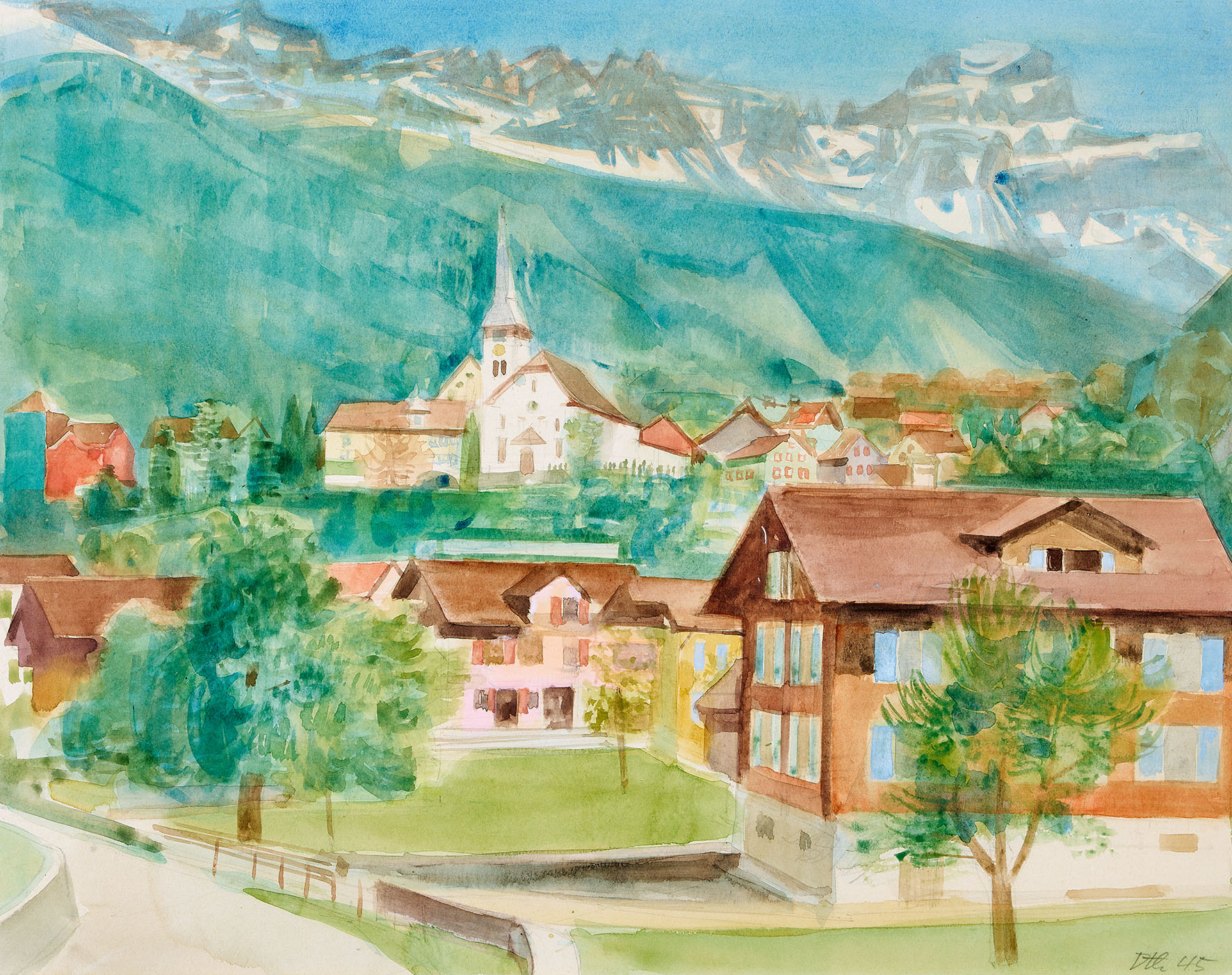
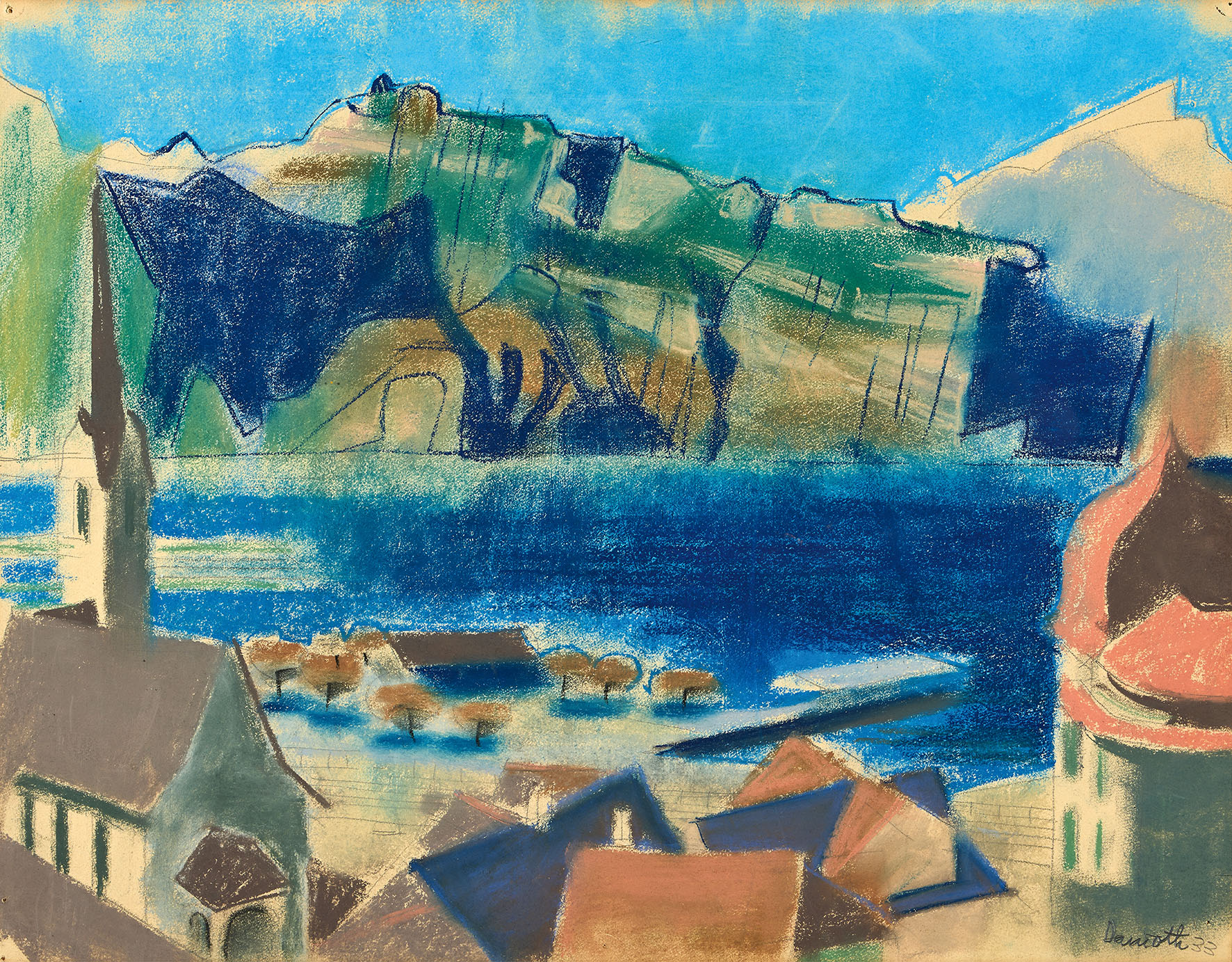
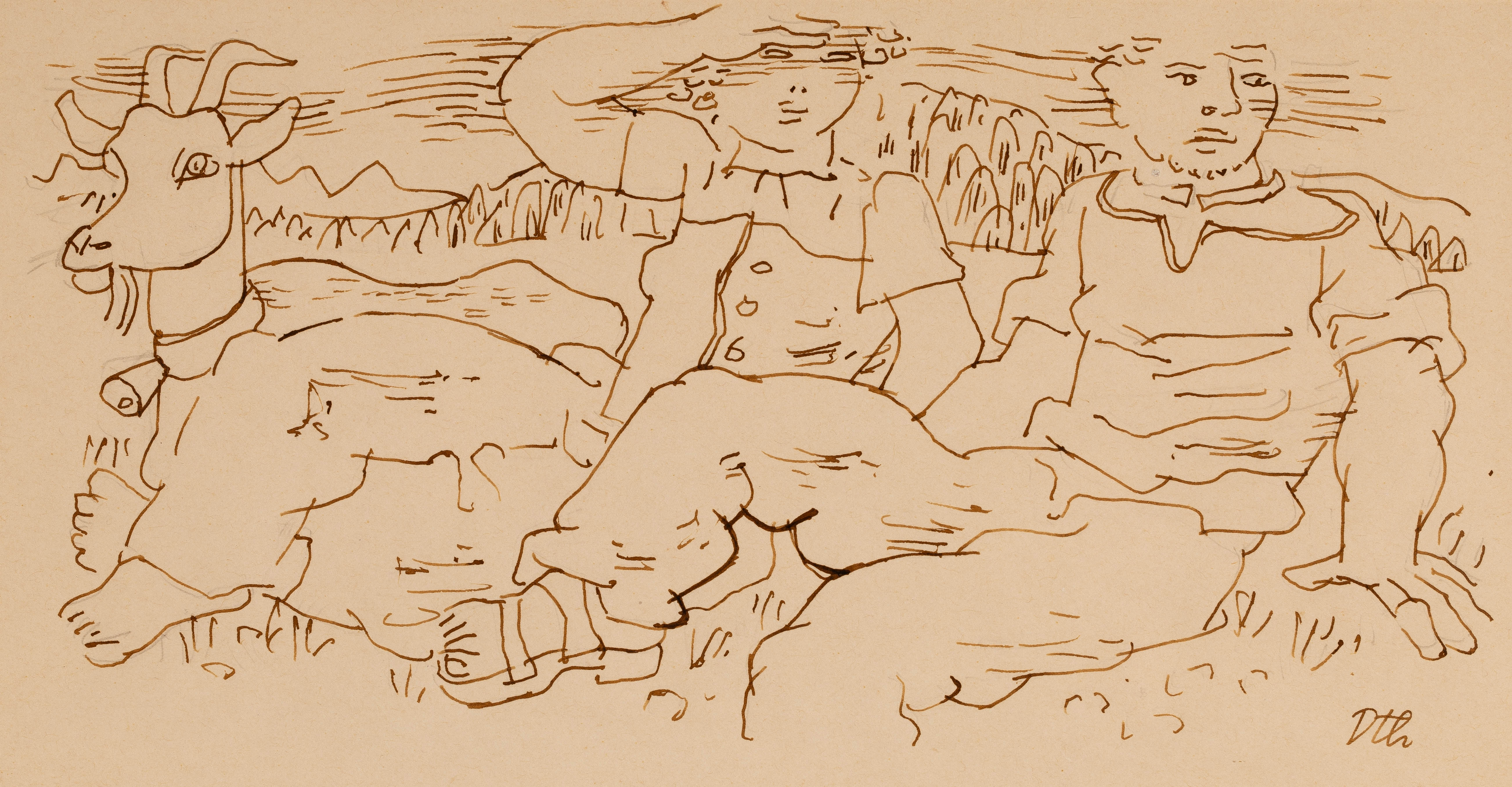
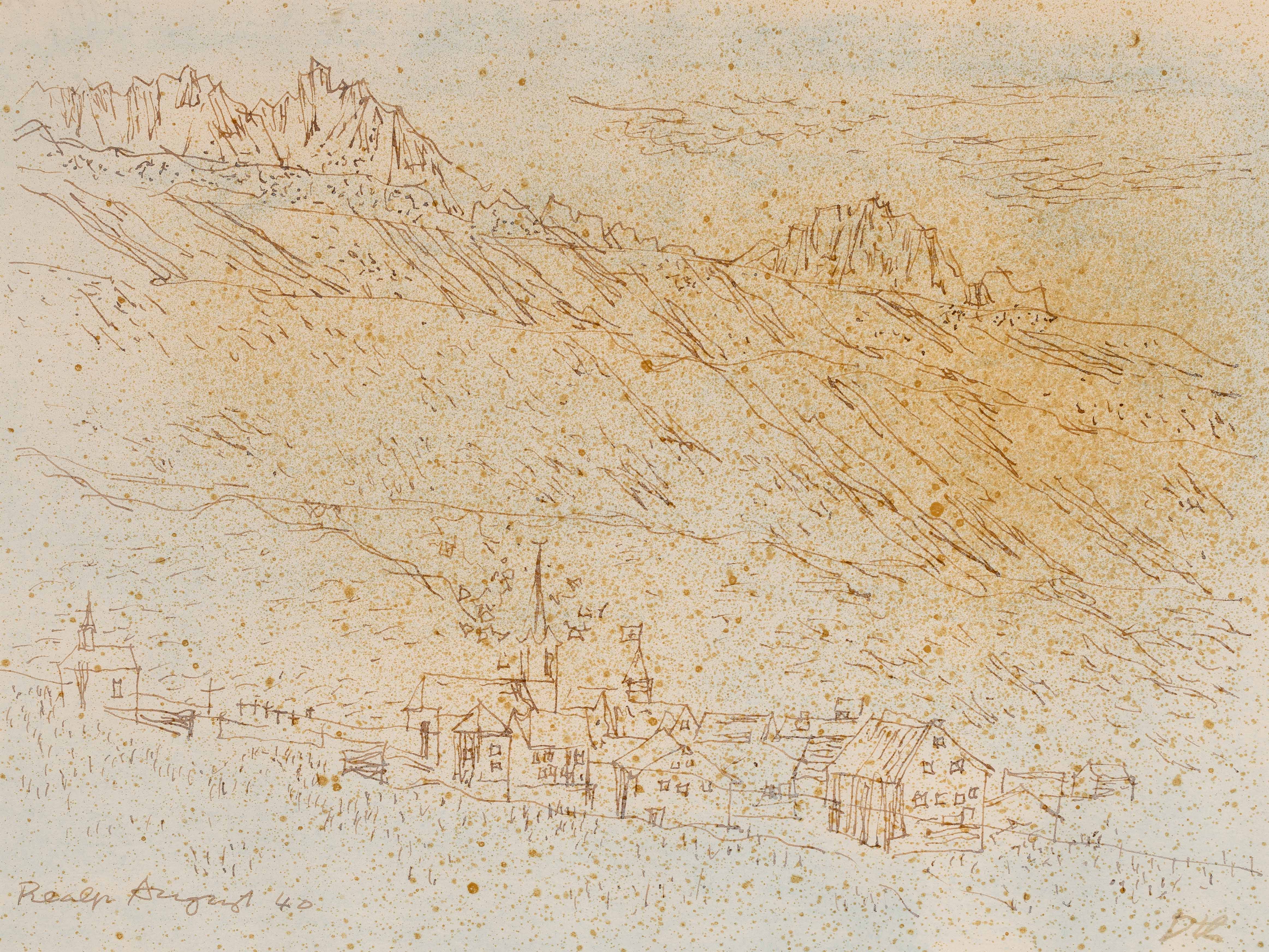
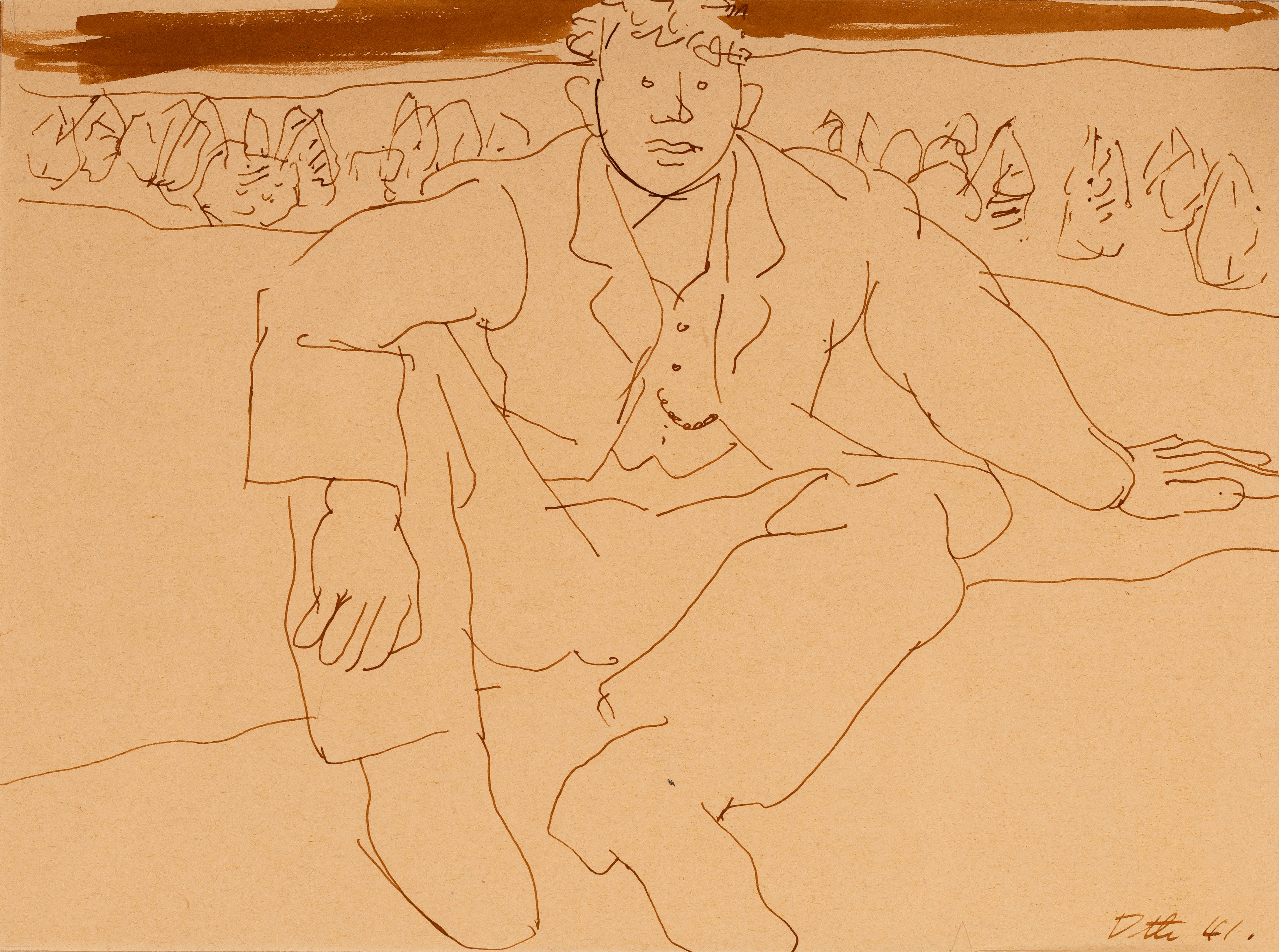
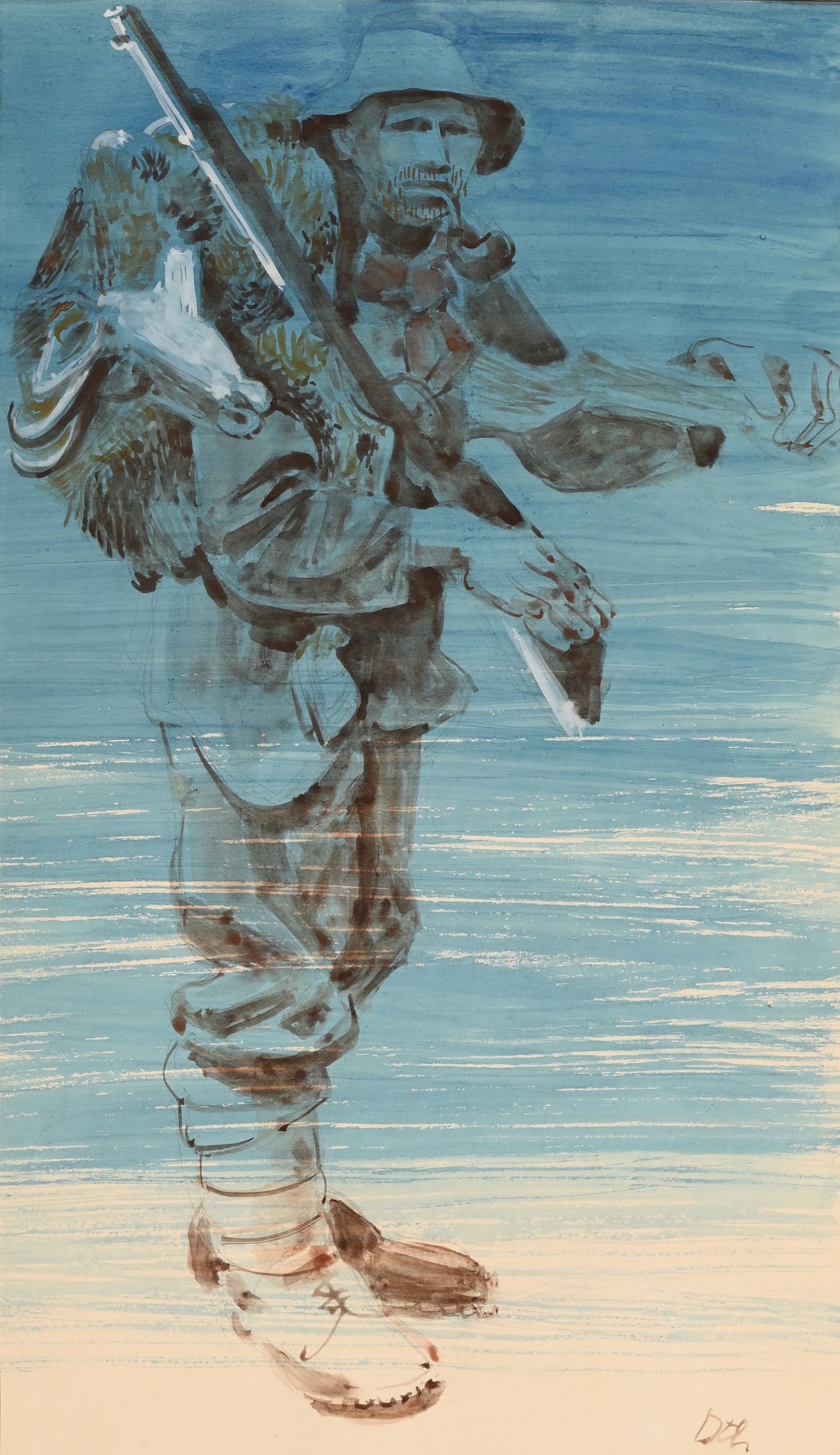
Heinrich Danioth
Born in 1896.
Died in 1953.
Trained from 1912 onwards, he received part of his instruction in Rudolf Löw’s studio in Basel and attended evening classes at the local commercial school. He began his career in 1916, working at the Vaterhaus in Altdorf as an independent artist in his own studio. Following a period of military service, he declined a position as a church painter in Upper Valais in 1919, «for artistic reasons of conscience», according to the source.
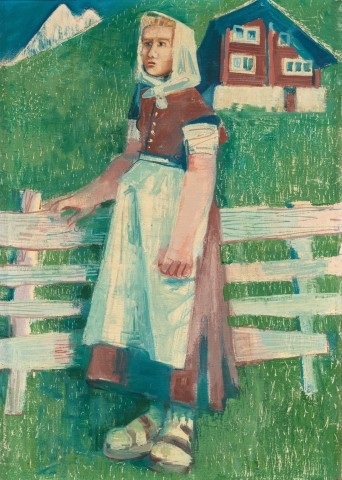
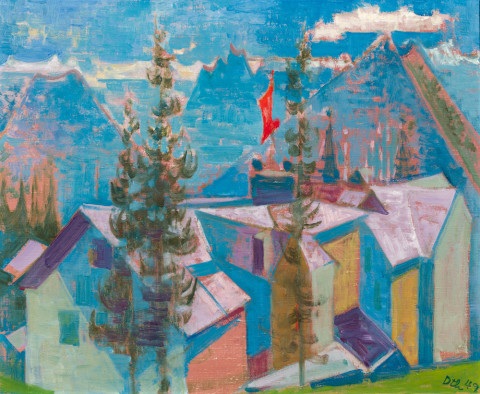
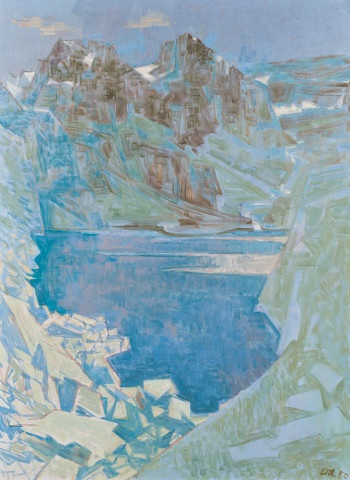
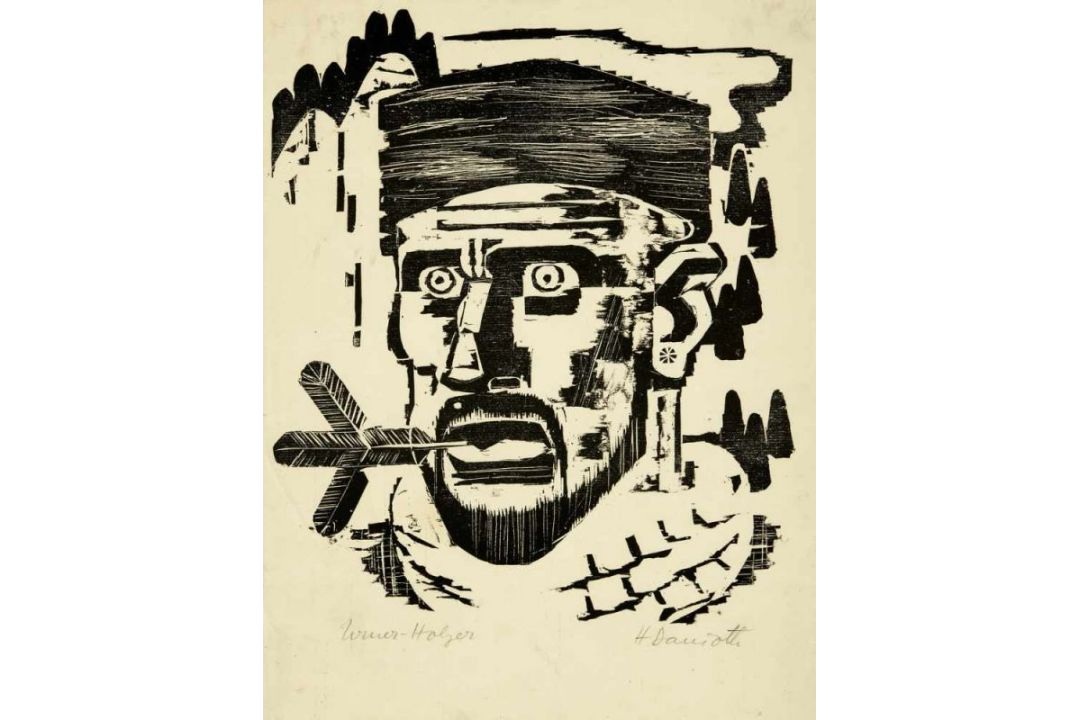
Upon returning to Switzerland in 1927, he set out, according to the source, to introduce Expressionism to the canton of Uri. That same year, he created the wall frescoes Tellsprung and Rütlischwur for the Tellspielhaus in Altdorf. He settled in Flüelen in 1929 and, in 1931, built a residence with a studio on the heights above Lake Uri.
In 1936, he painted the fresco «Fundamentum», which is now located, according to the source, at the Federal Charter Museum in Schwyz.
Alongside his painterly work, Danioth kept detailed diaries and published collections of short verses, often infused with humour. His best-known poetic text is the Urner Krippenspiel (1945). In 1951, he wrote the radio play The Sixth of the Seven Days, a work for which he was posthumously awarded the Central Swiss radio prize, according to the source.
In his private life, he married Hedi Weber in 1932; the couple had two daughters, Madeleine and Cilly.
Heinrich Danioth died on 3 November 1953 following an unsuccessful operation to remove a brain tumour, and his works were exhibited at the Kunstmuseum Luzern from 17 October to 24 November 1954.