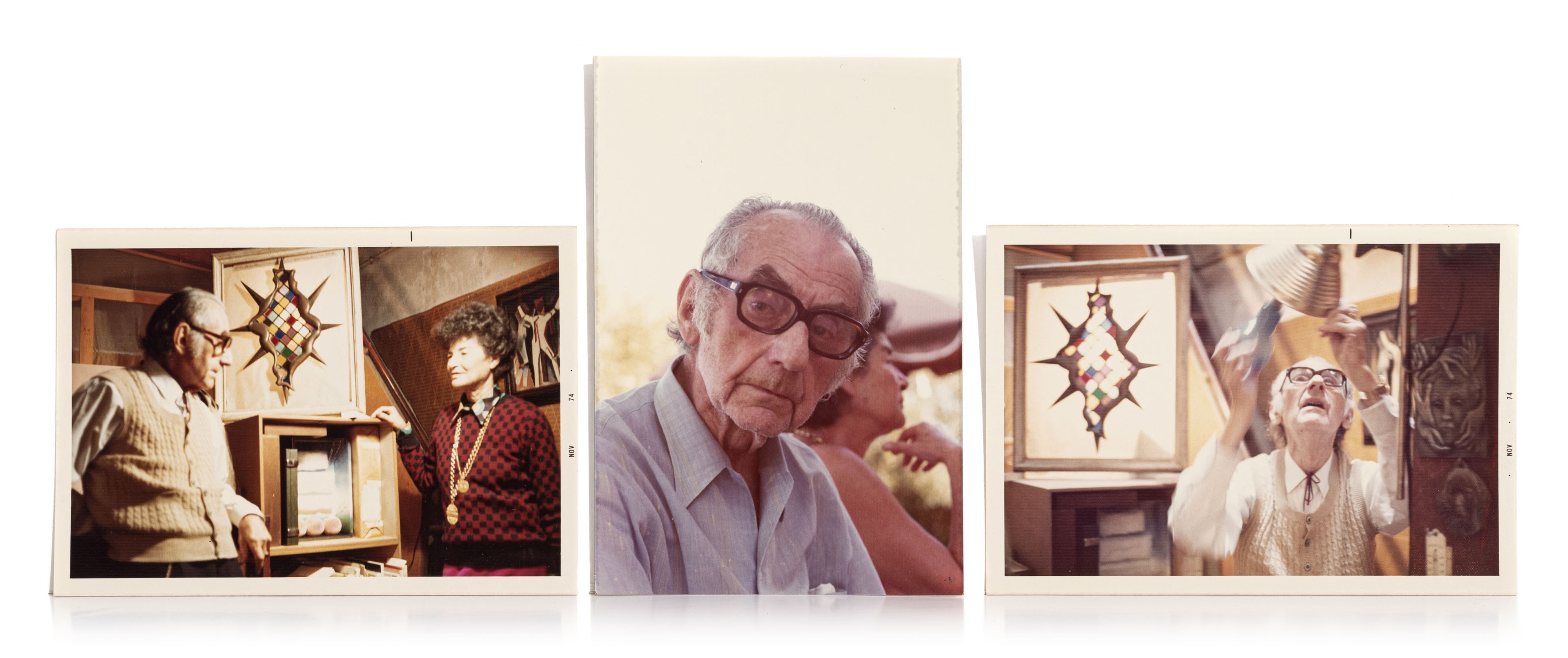
Gérald Minkoff
Born in 1937.
Died in 2009.
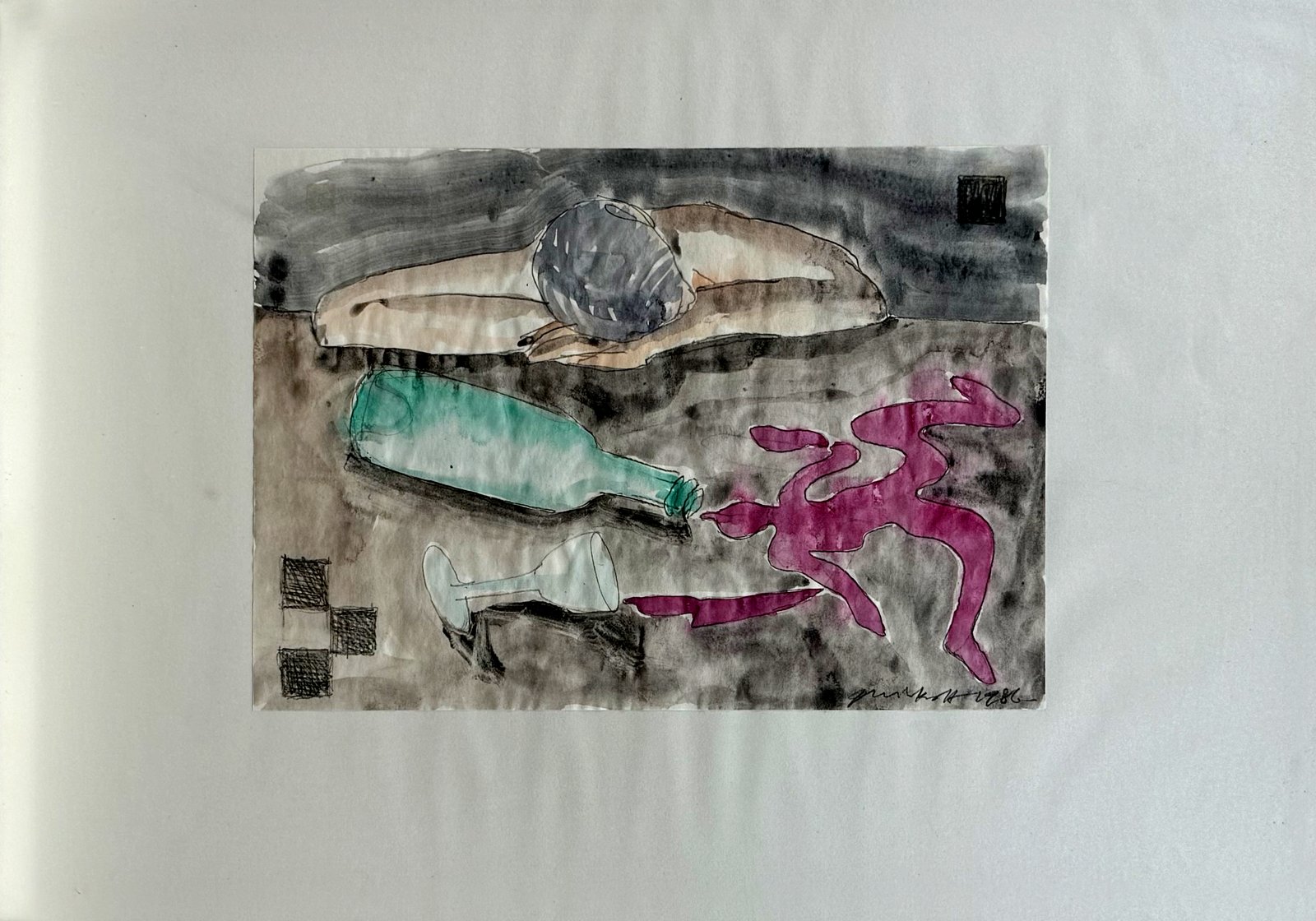
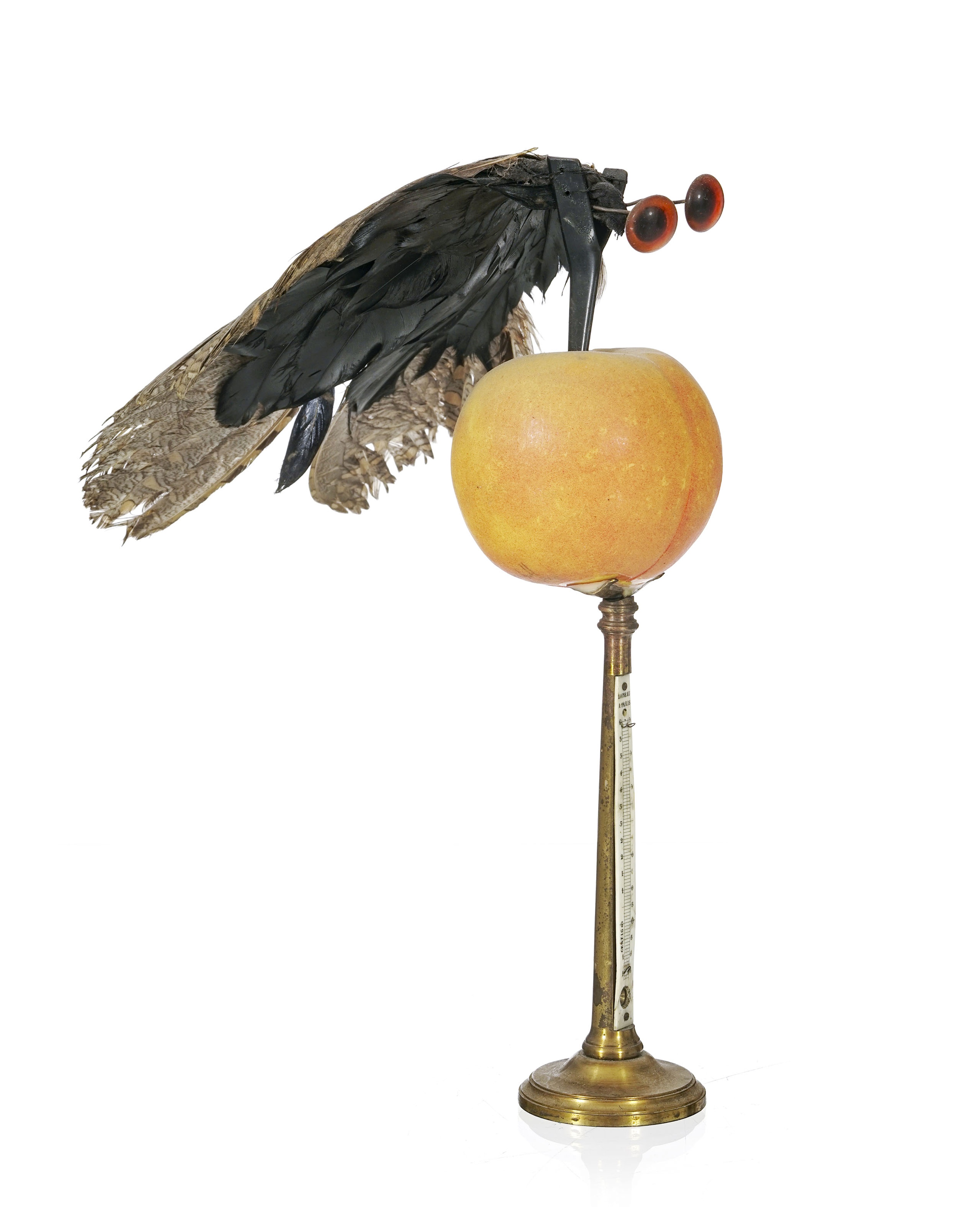
Gérald Minkoff (1937, Geneva — 2009, Arbocet, Spain) is presented as an artist whose practice, informed by erudition and multidisciplinary curiosity, frequently brought scientific knowledge into dialogue with visual forms. After studying biology, geology and anthropology, he embarked, in his early twenties, on a cargo ship voyage between the Americas, an experience described as formative.
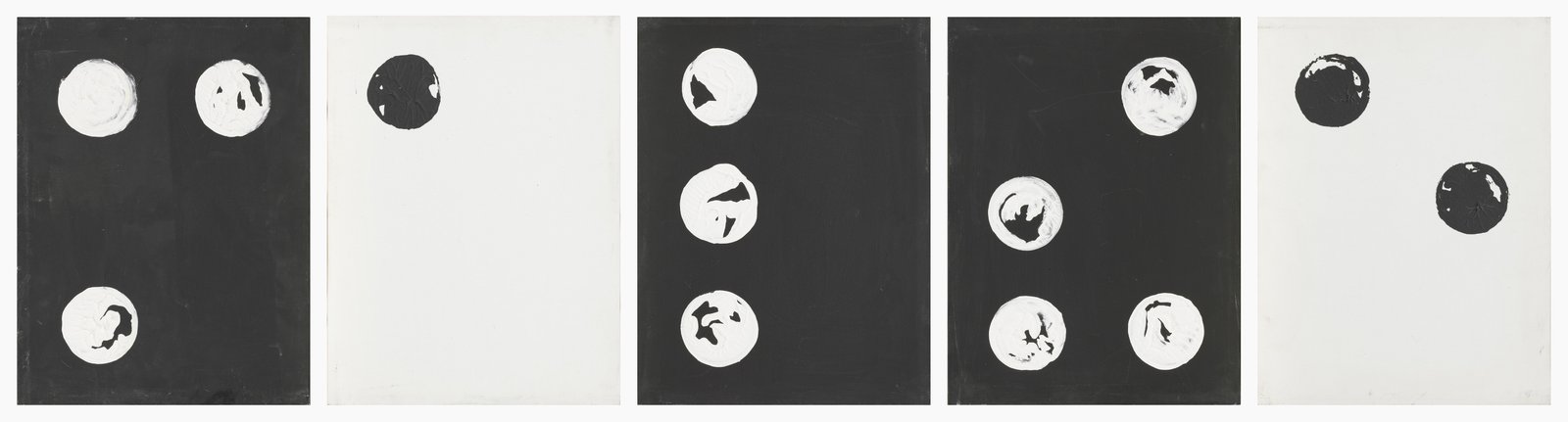
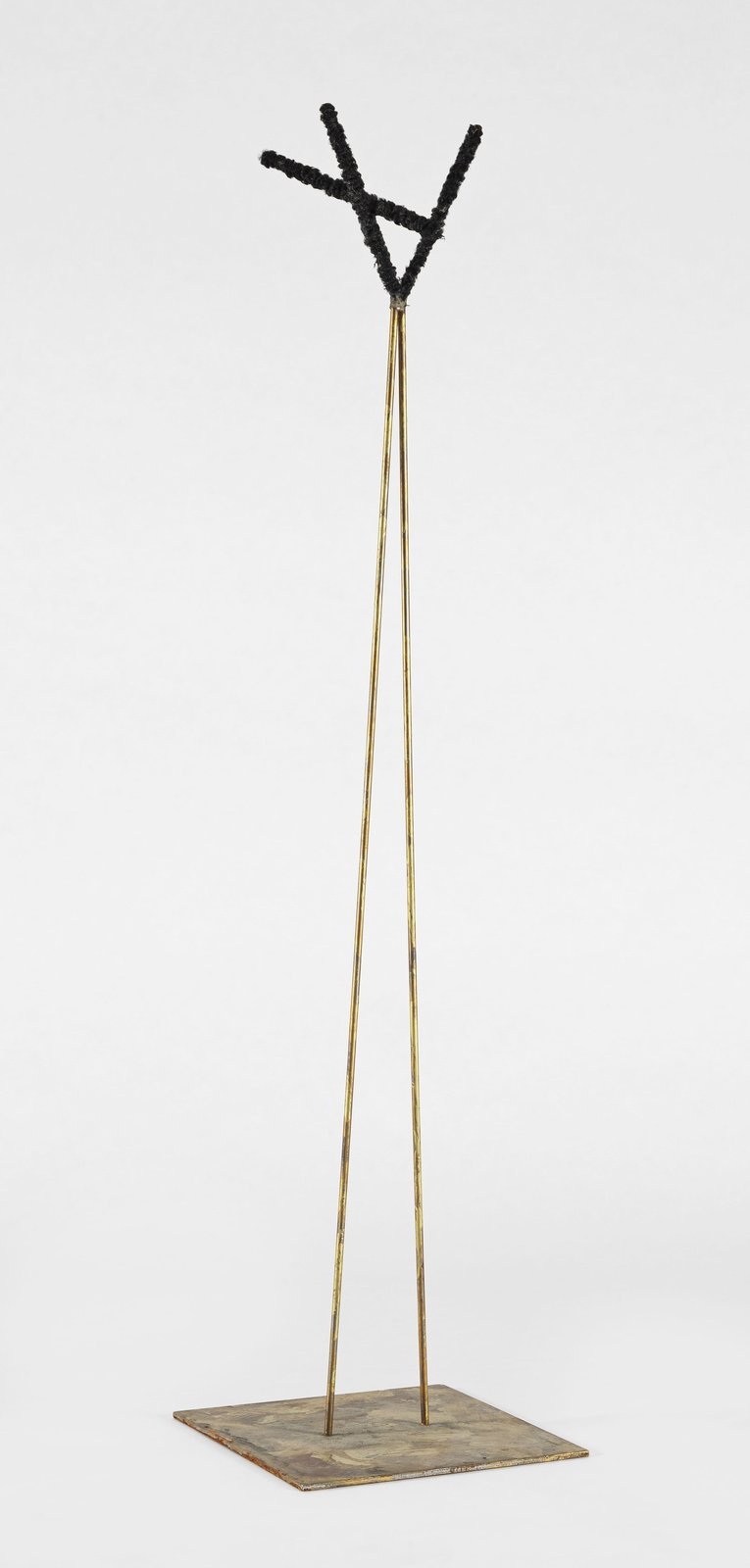
From the very end of the 1960s onwards, he presented videotapes and closed-circuit images, and introduced the laser into his installations. Braille recurs as both motif and metaphor — “a metaphor for the internalisation of the gaze, yet one that de facto entails touch” —; from 1970 onwards, he removed its relief and developed the dots in screen collages, light projections, drawings made with branches, and concrete modules. In parallel, he devised and published palindromes, gathered in Tir cet écrit (éd.
Mamco, 1997), and adapted them to varied supports: banners, neon letters, ceramics, plates and embroideries.
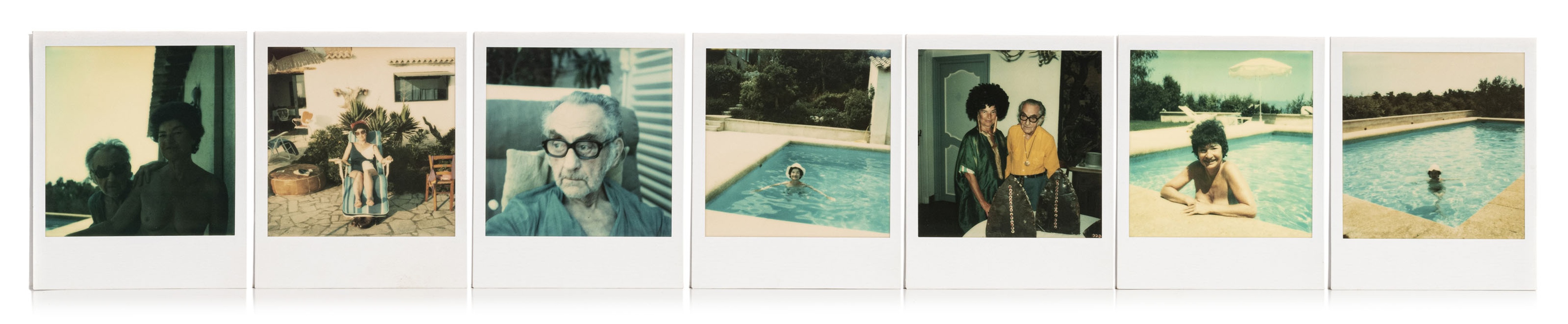
According to the notice consulted, his work is described as being in affinity with the Duchampian spirit and the company of Fluxus. He formed an artistic duo and had a personal relationship with Muriel Minkoff-Olesen; their collaboration is documented in particular by the series Météorites de l'amour, which juxtaposes photographs of beds and nocturnal sculptures.
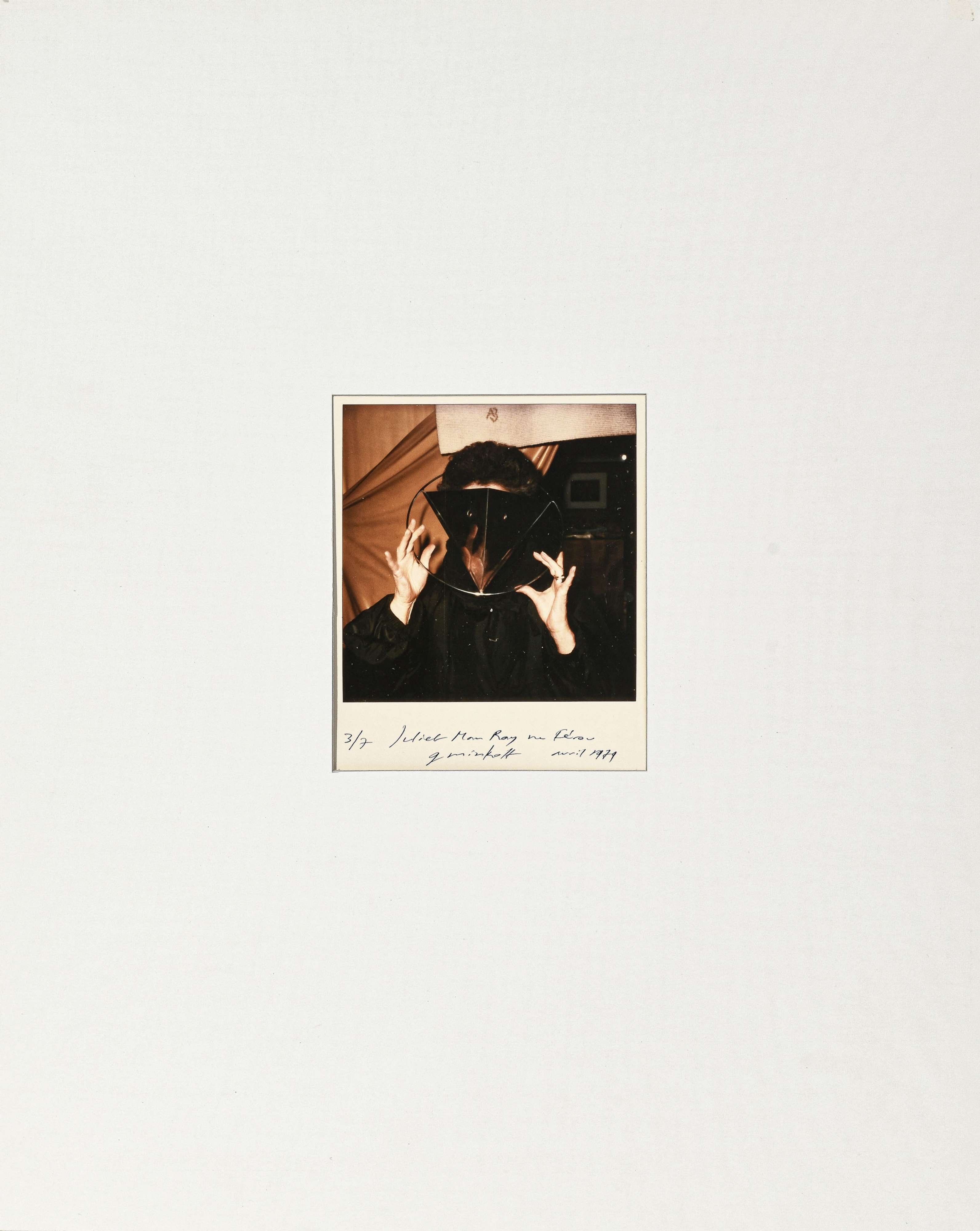
Among the documented works are a poster project for the Ciné-Club Universitaire of the University of Geneva (1964, felt-tip pen and collage) and Ars Gratia Artis (1982), two diptychs painted on polaroid and anti-glare. Certain works from his corpus are held under the collection designation “GM-MO”. Taken together, they outline a practice attentive to the gaps between reading and perception, between language and material, discernible in his choice of media (video, neon, ceramics, concrete) and in his recourse to scientific disciplines.