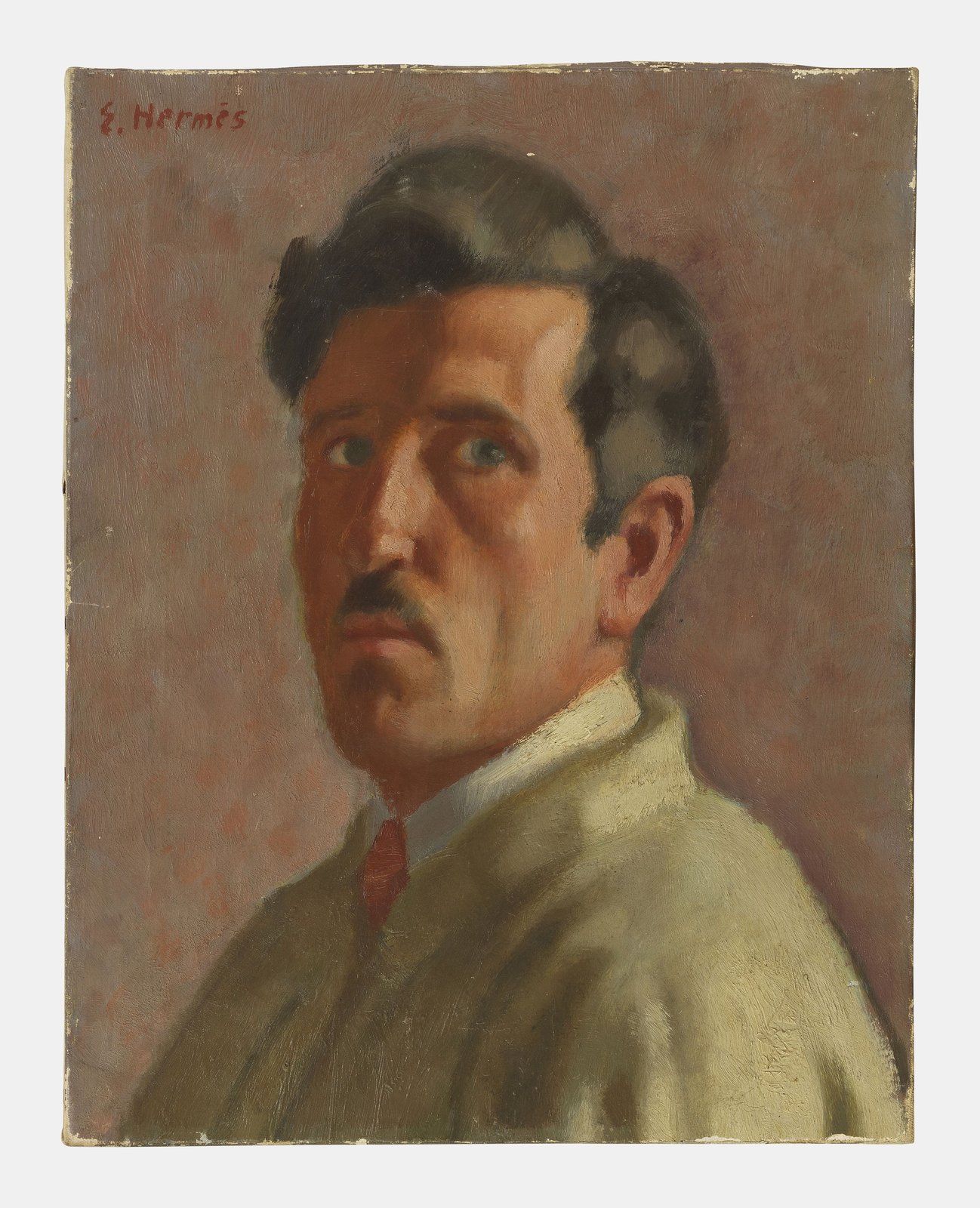
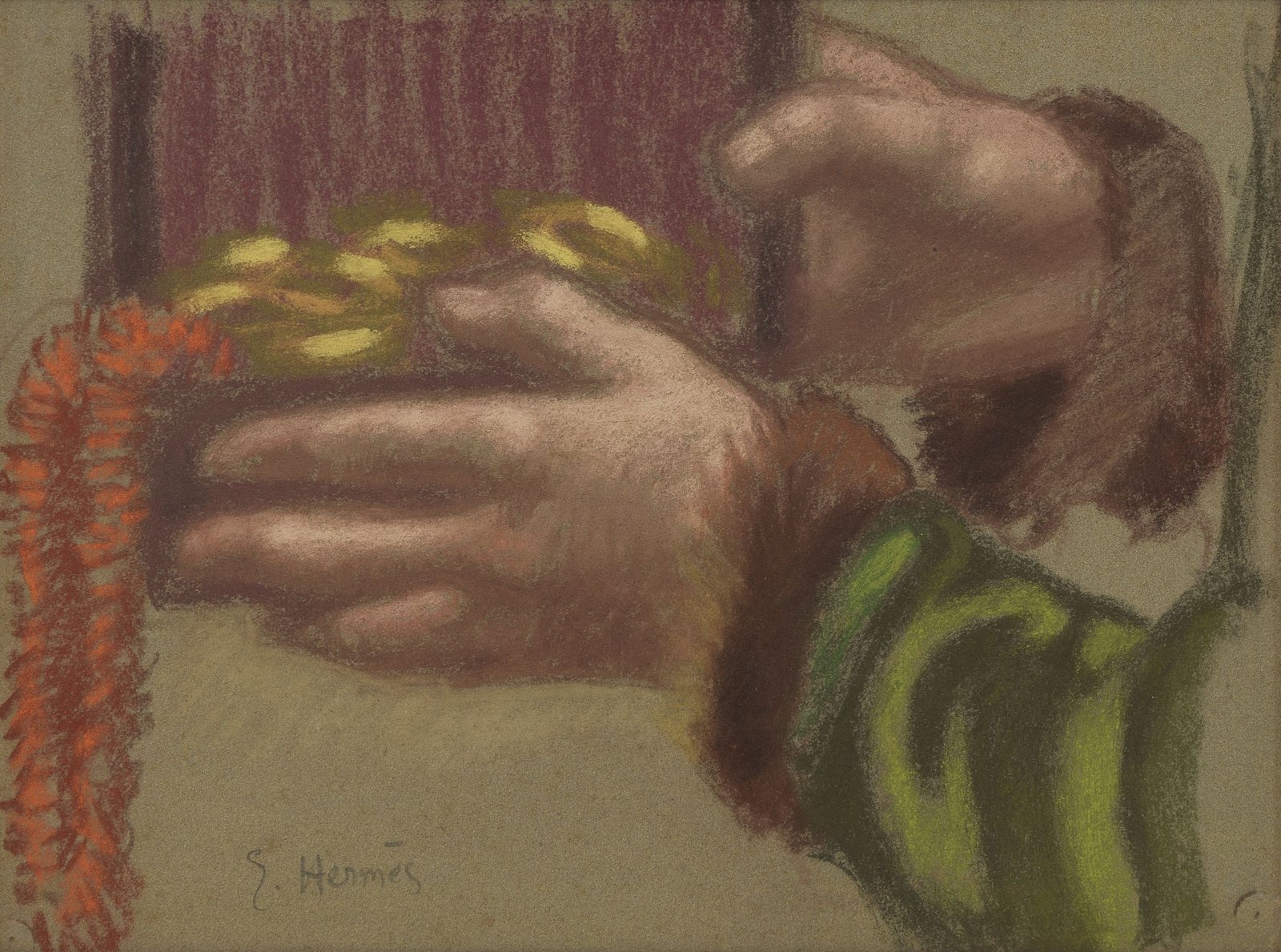
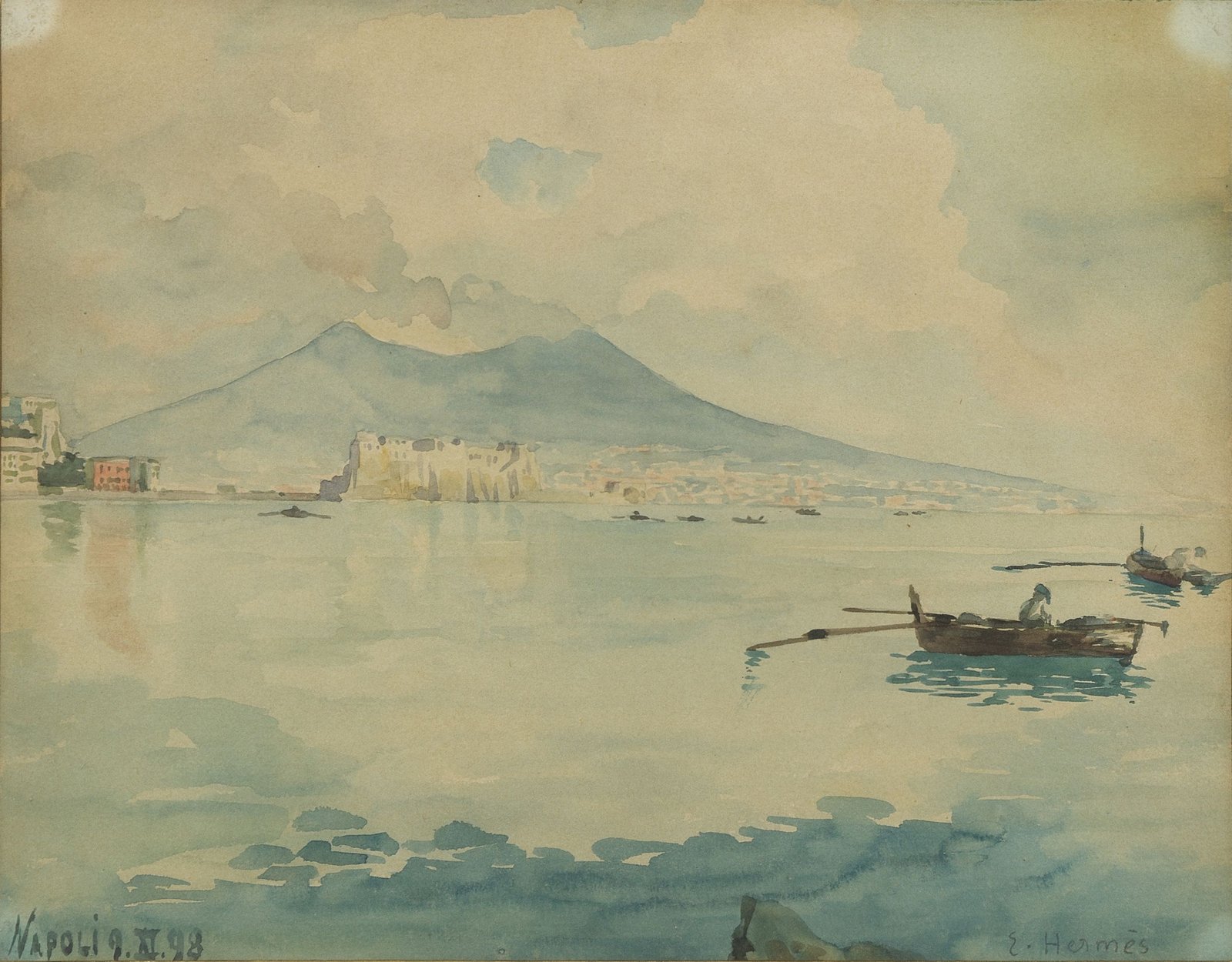
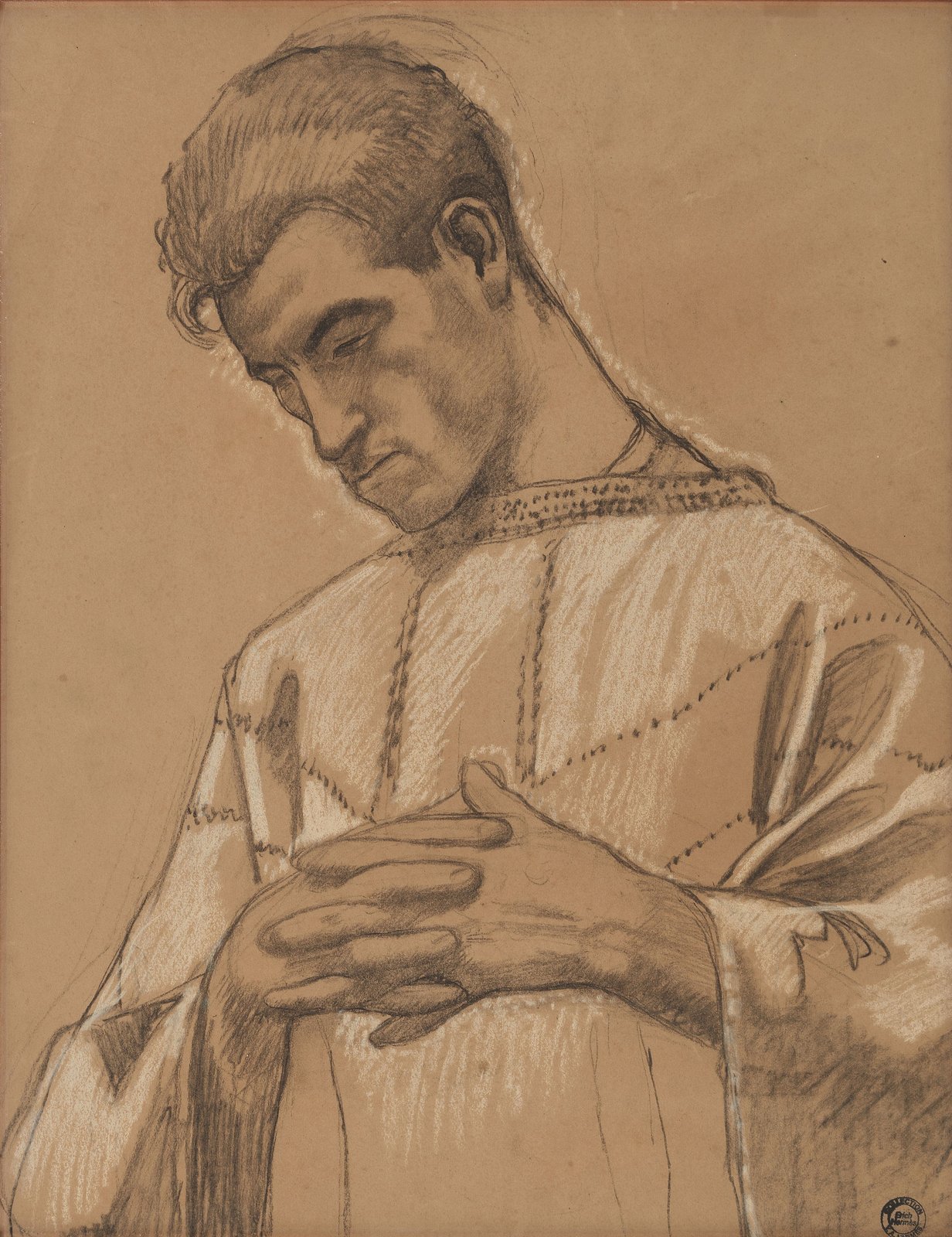
Erich Hermès
Born in 1881.
Died in 1971.
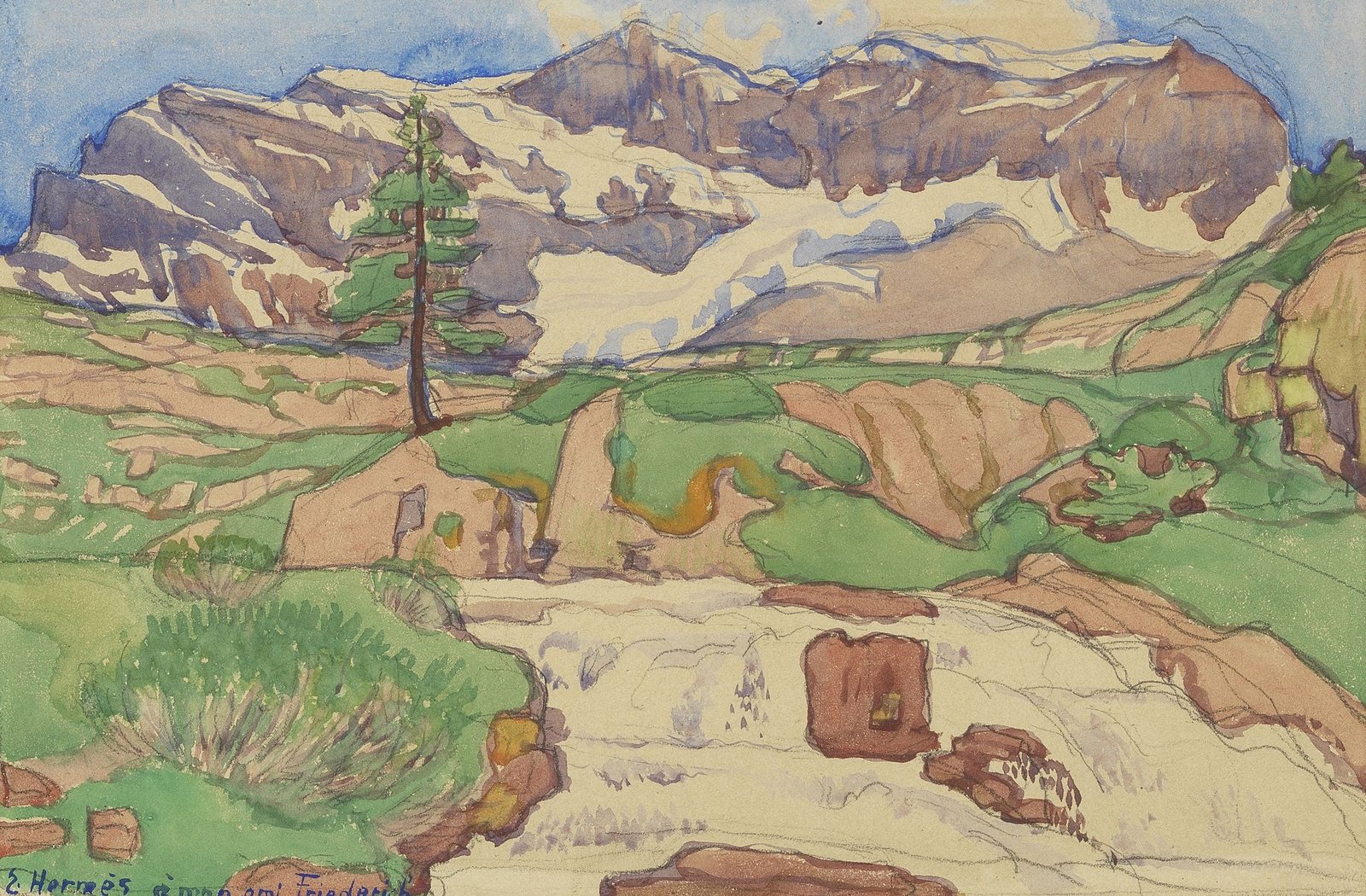
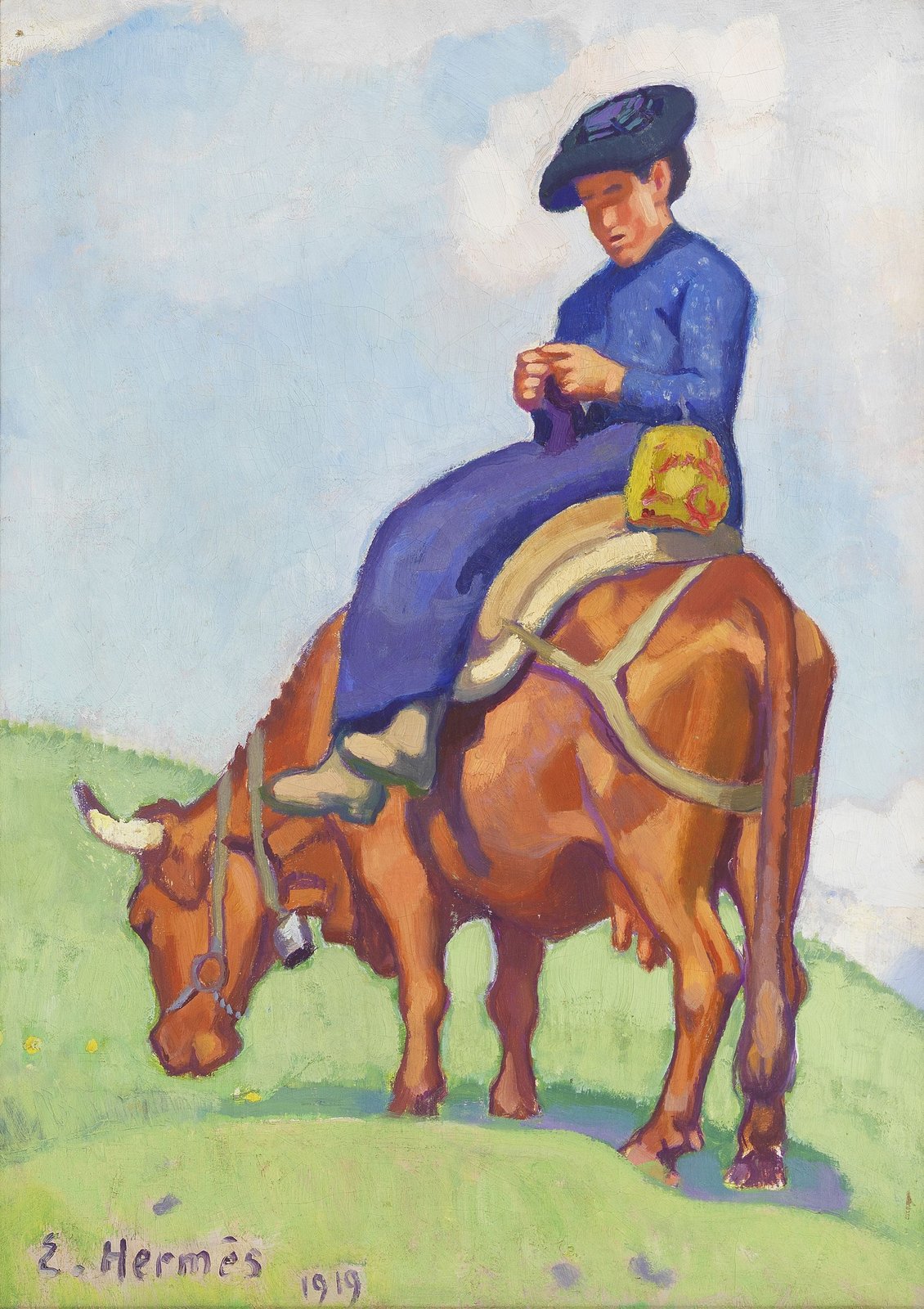
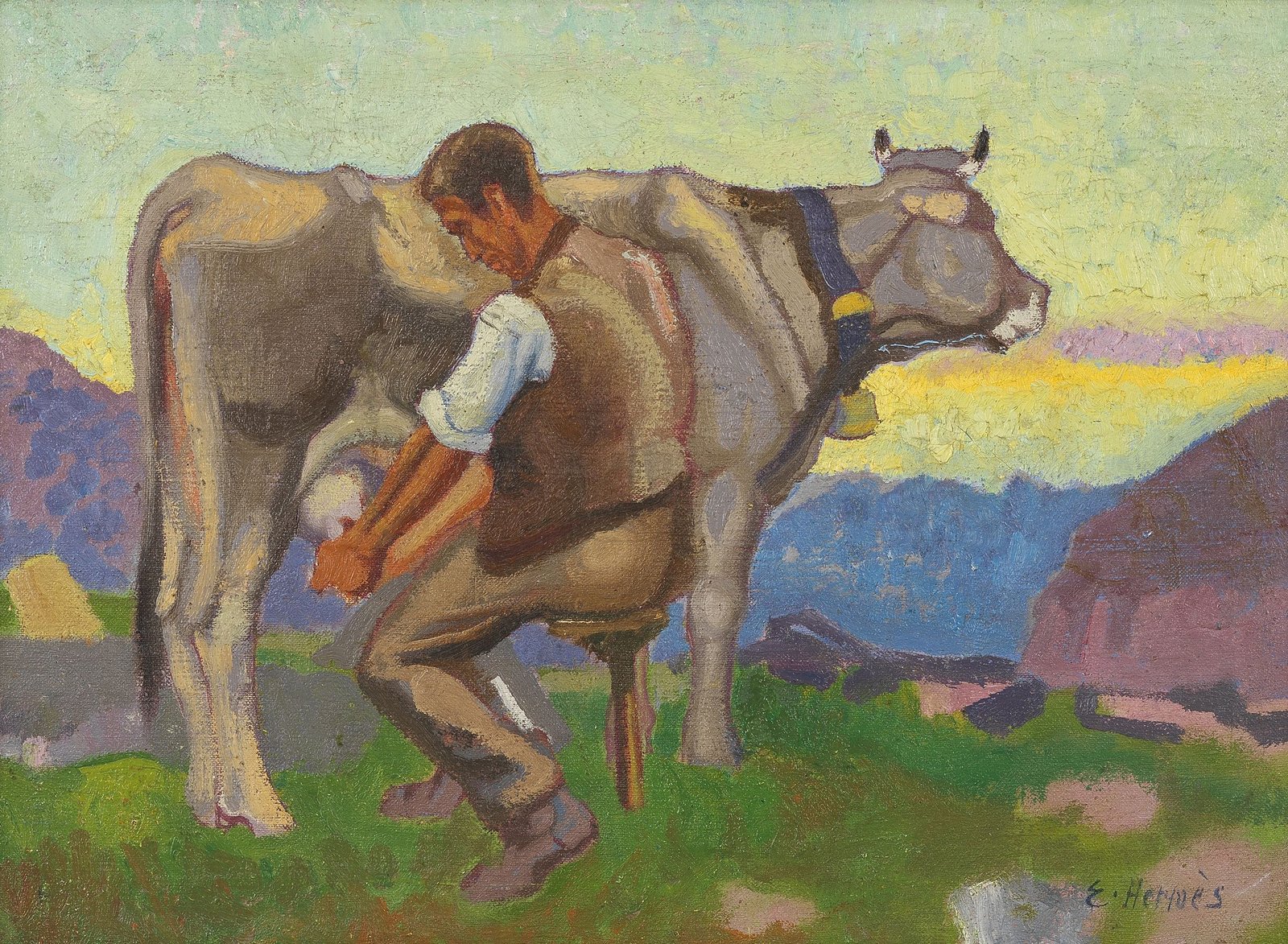
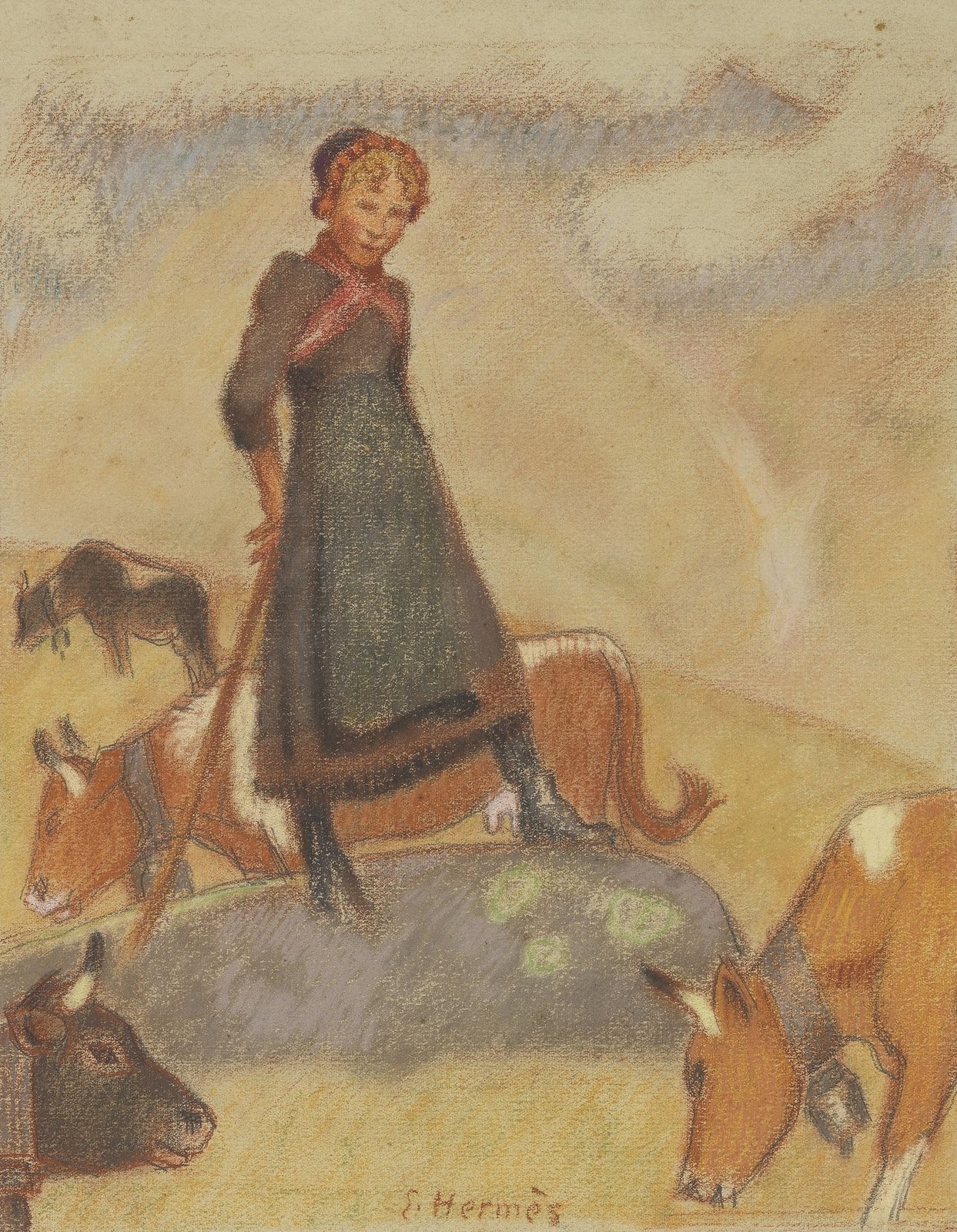
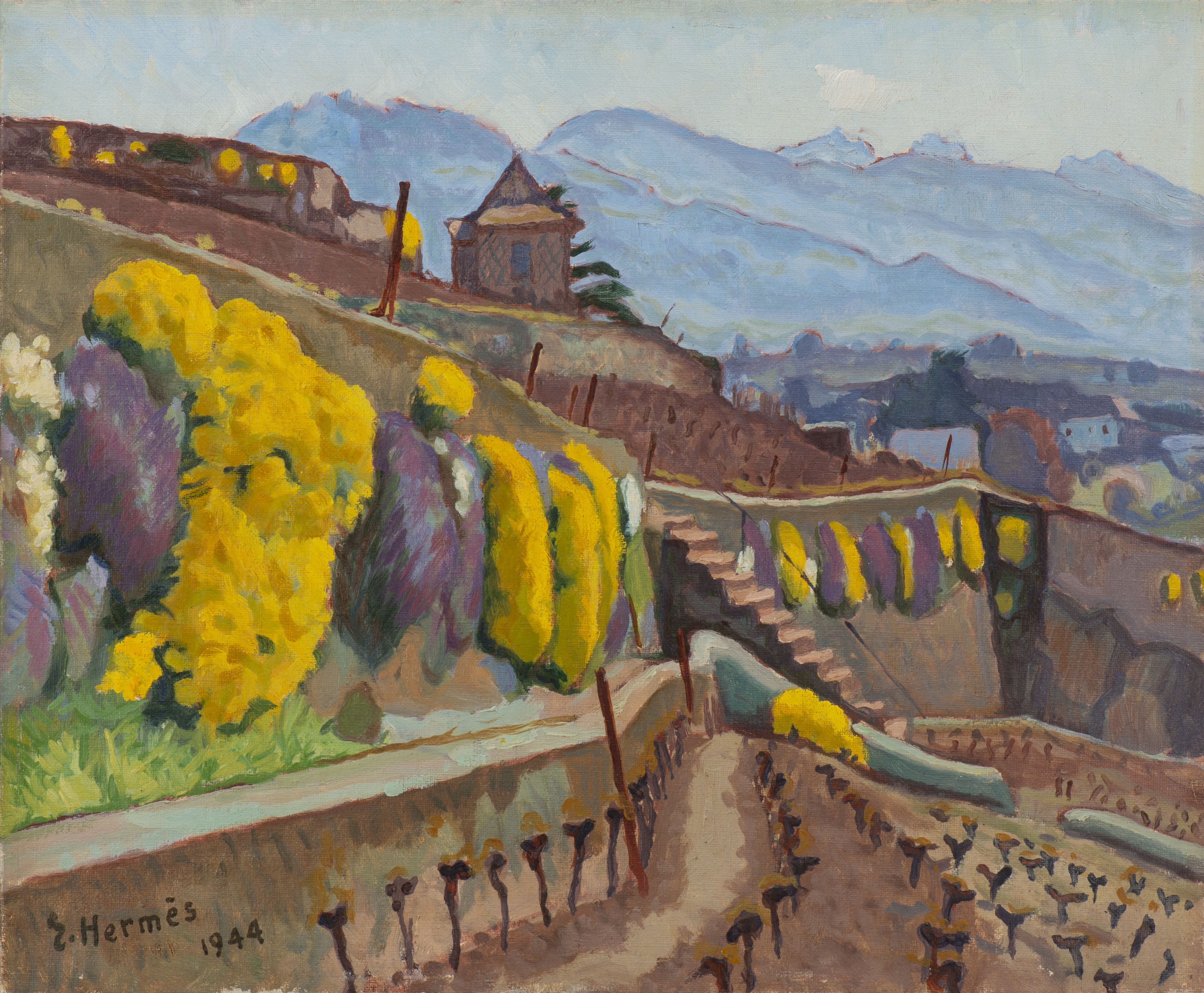
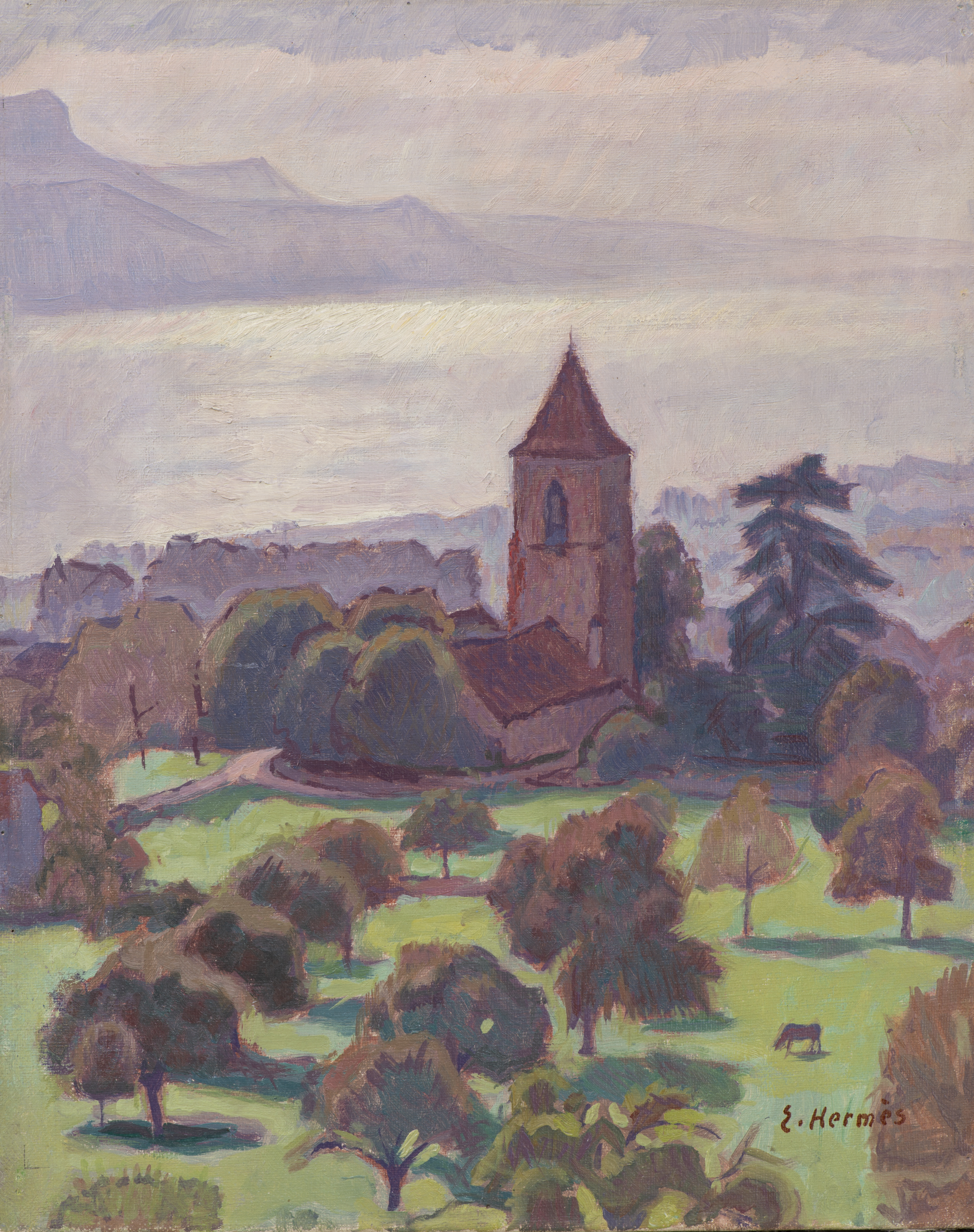
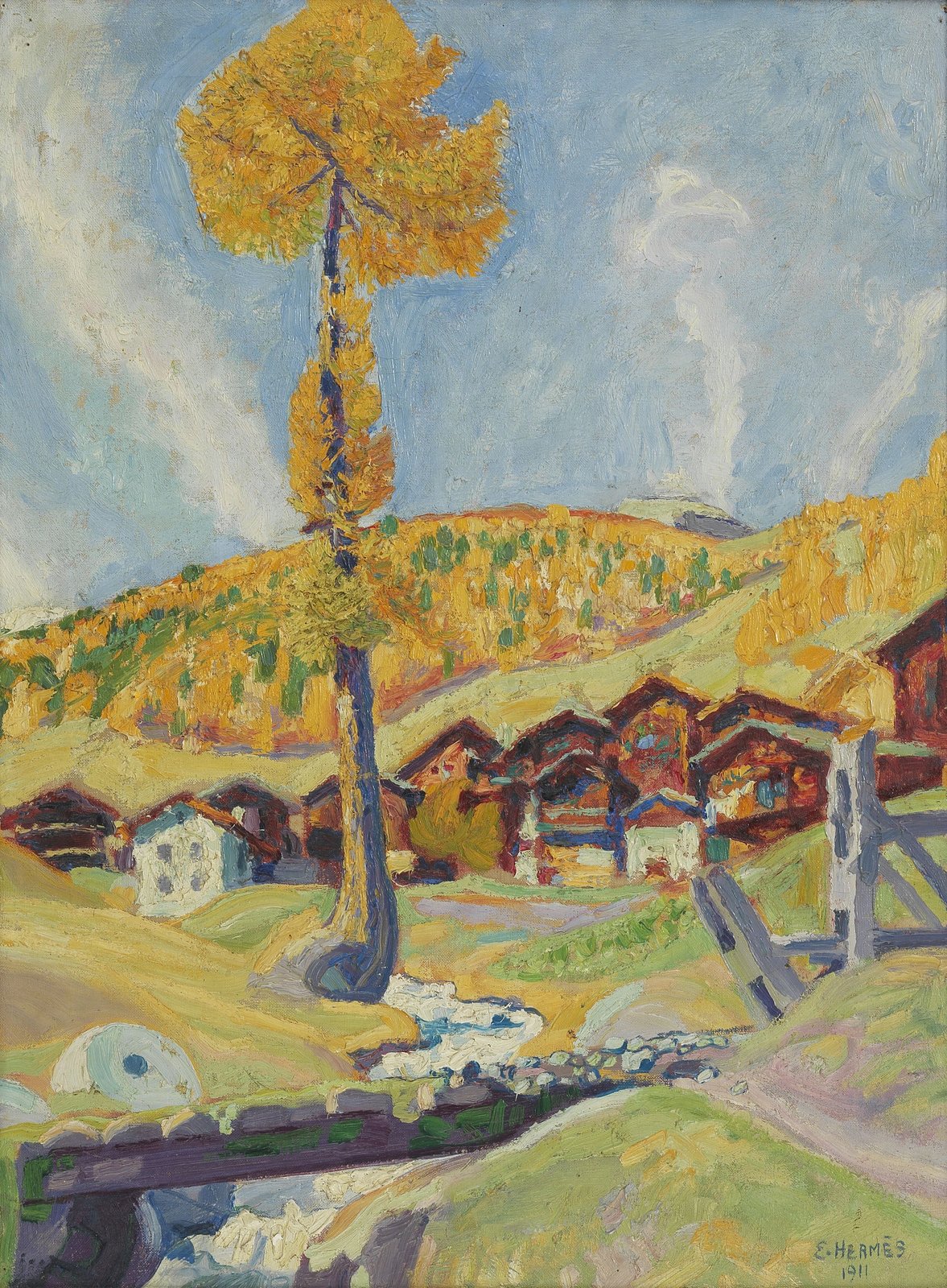
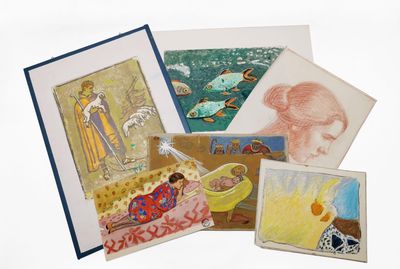
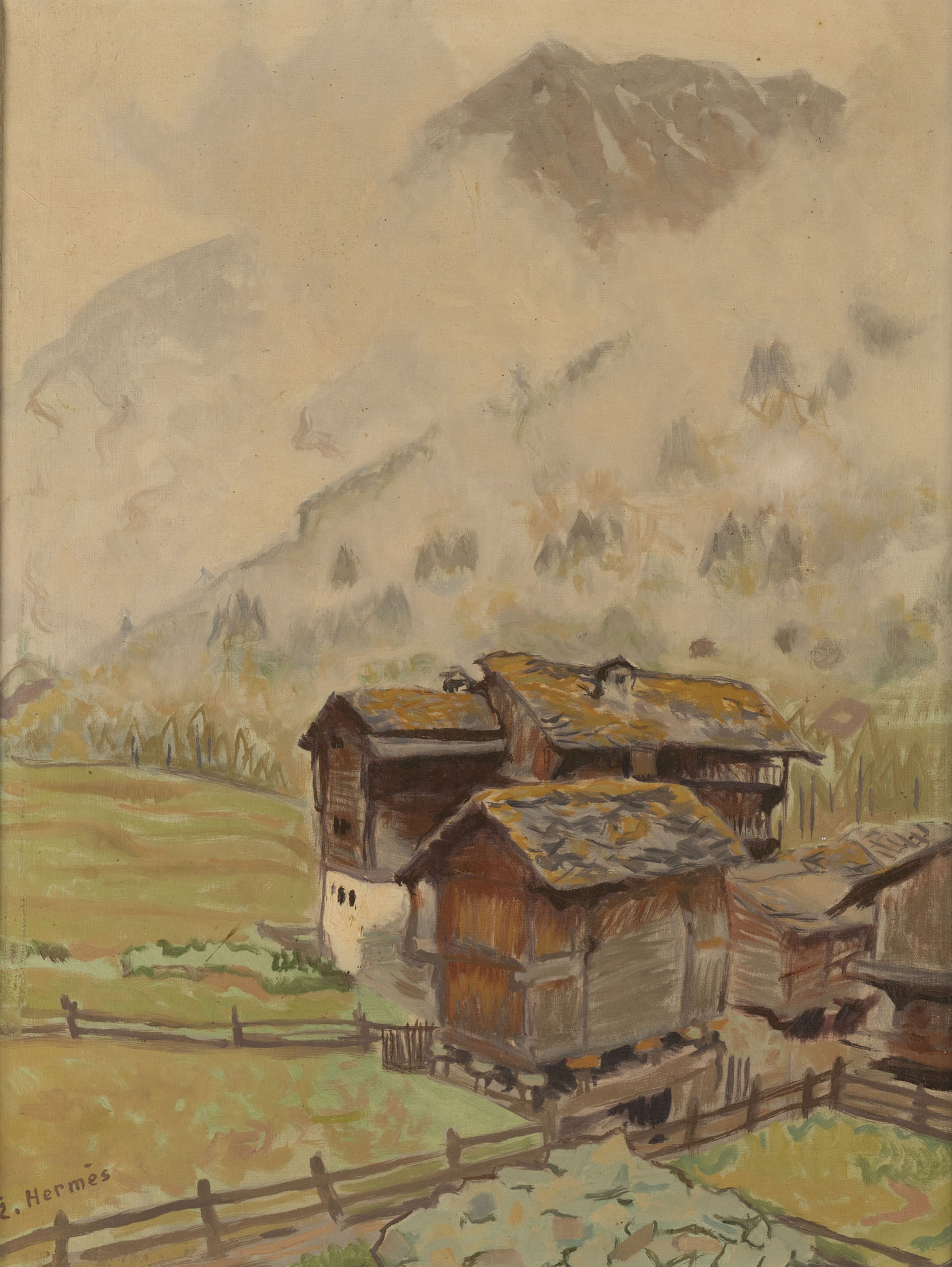
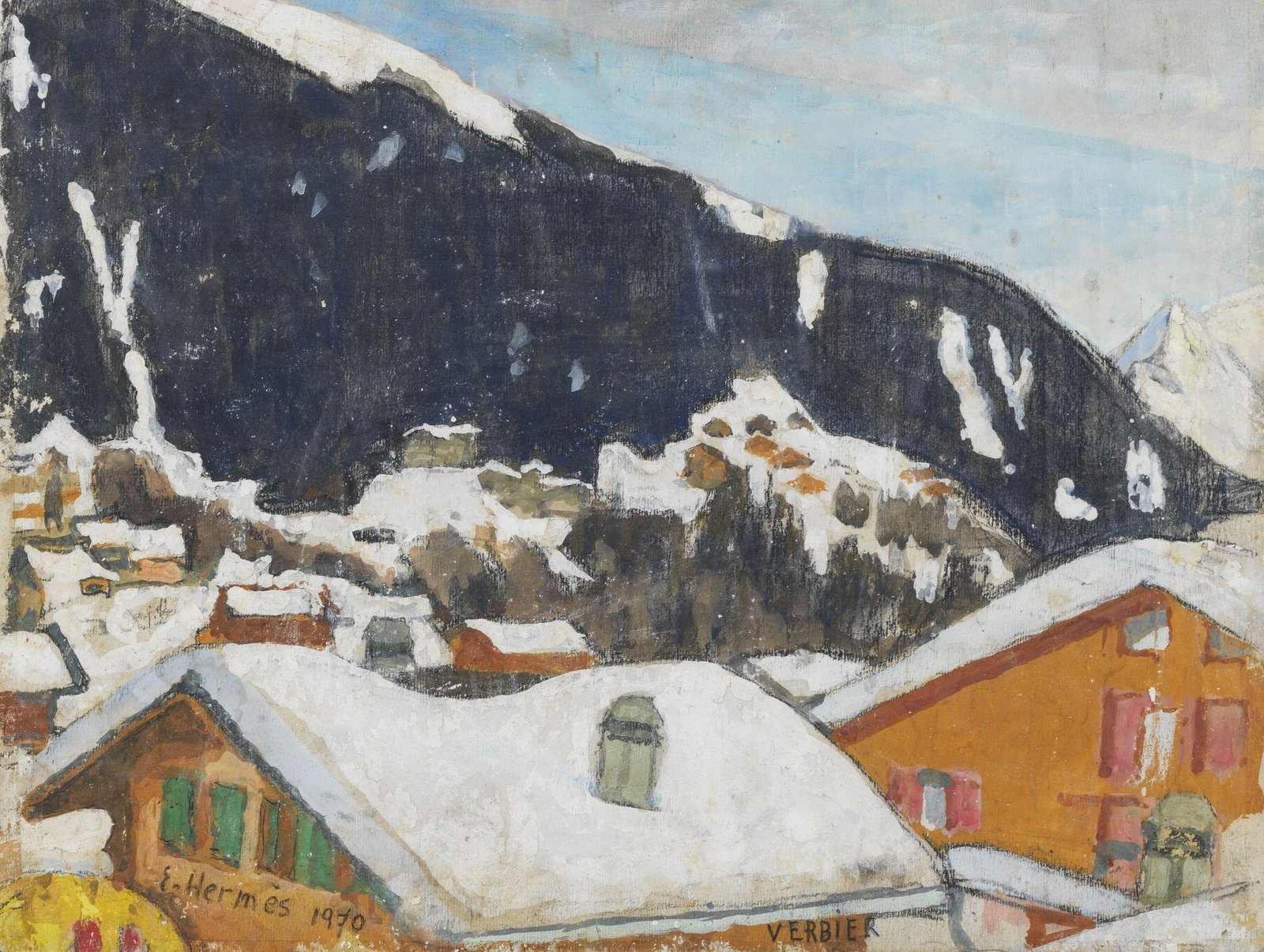
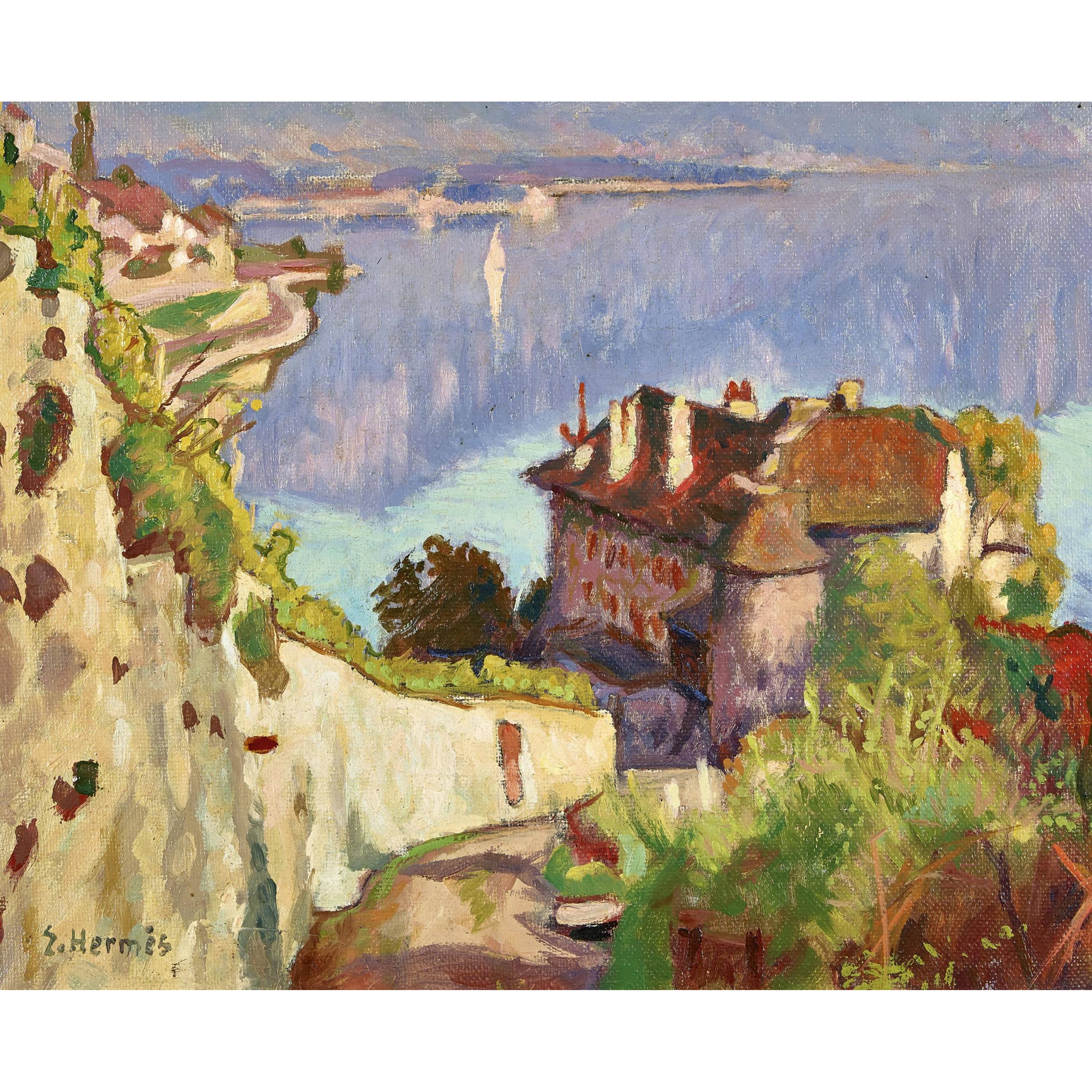
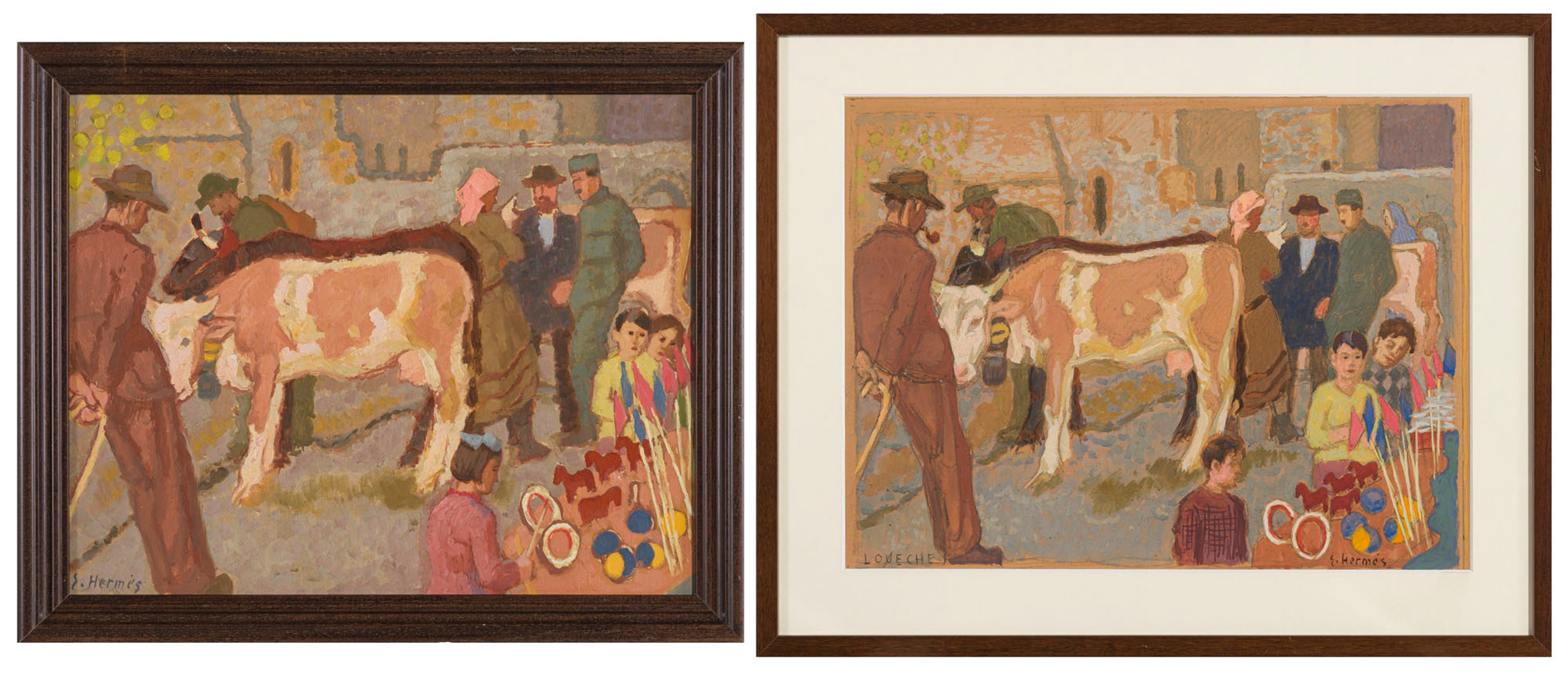
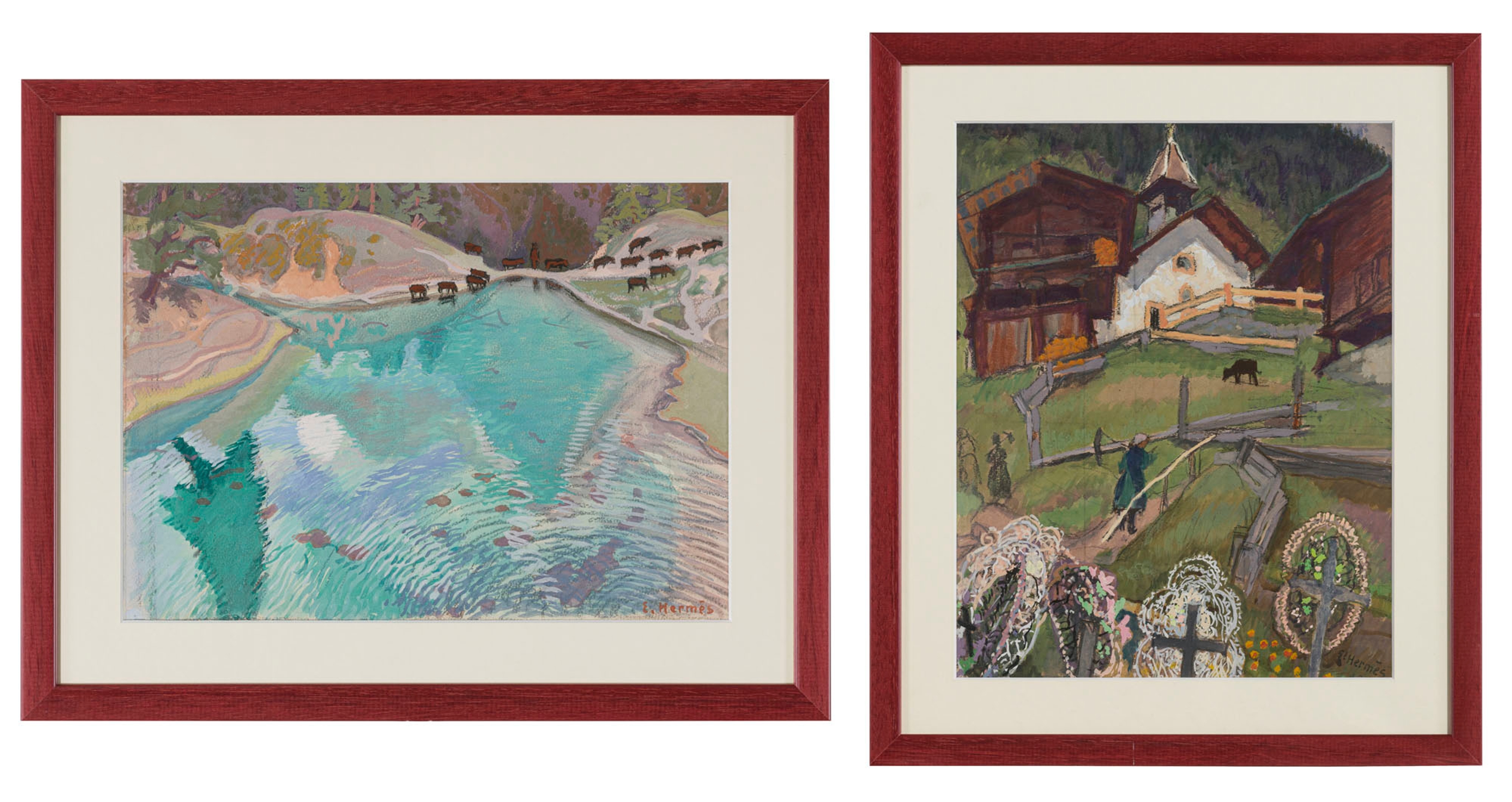
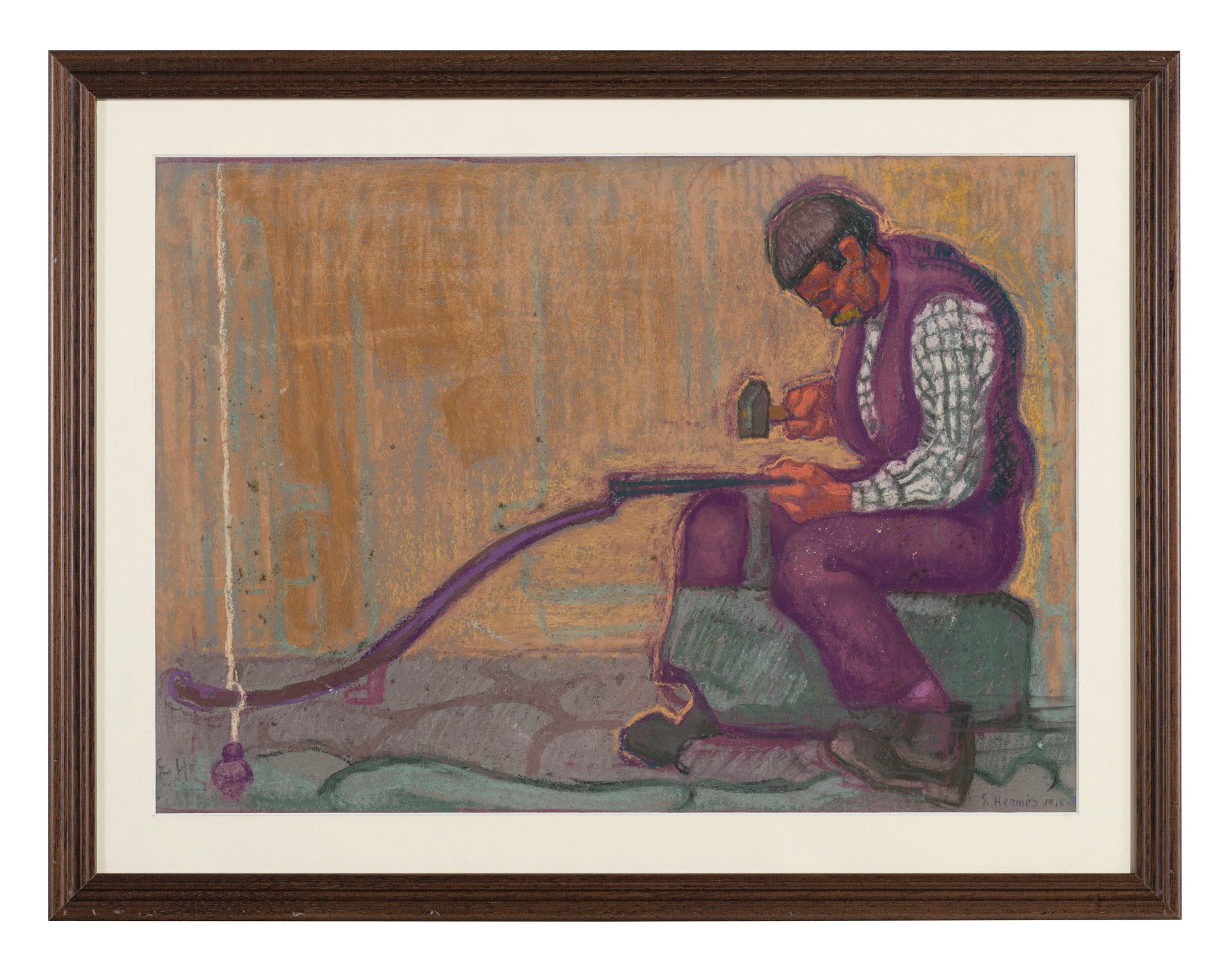
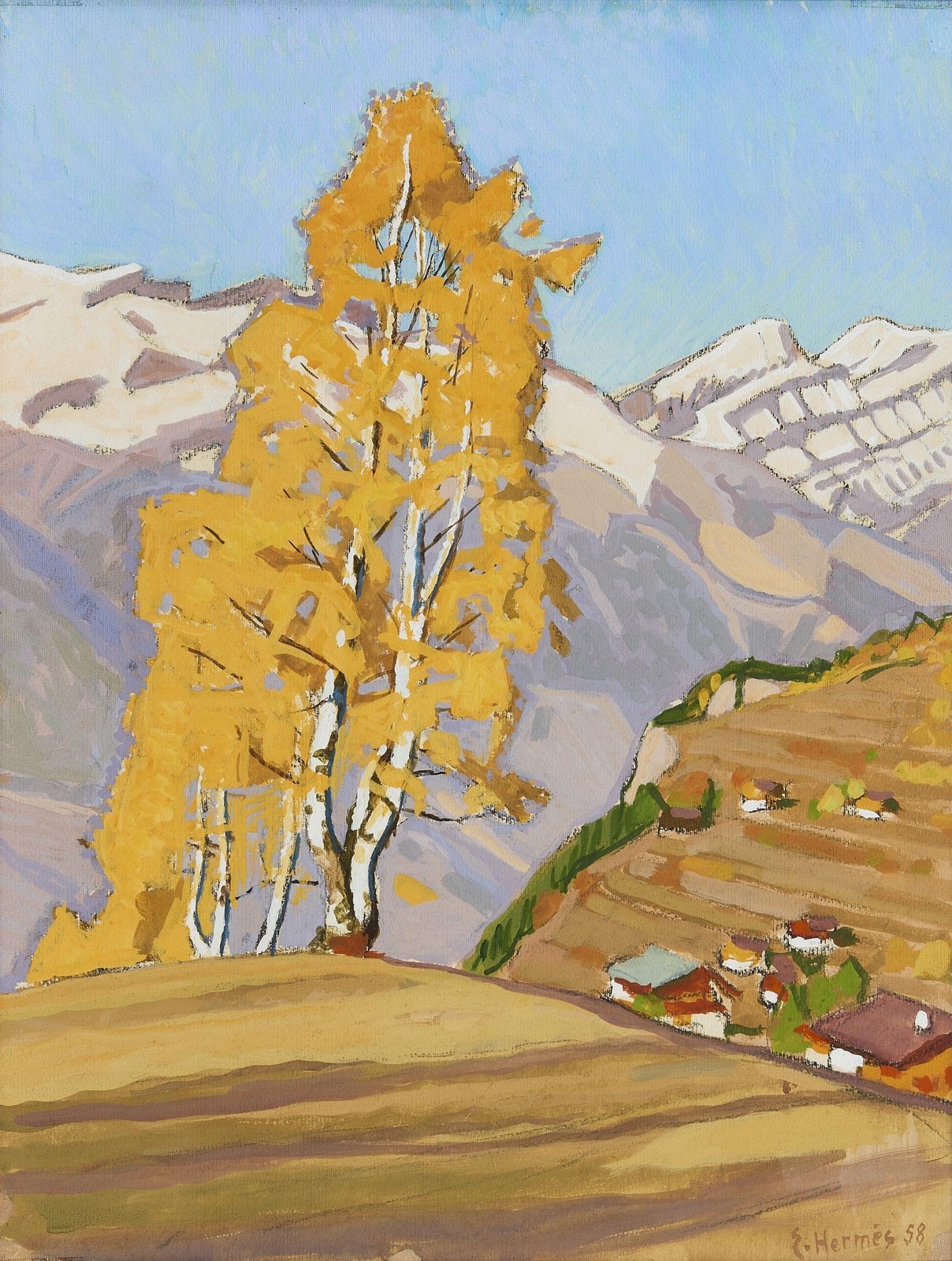
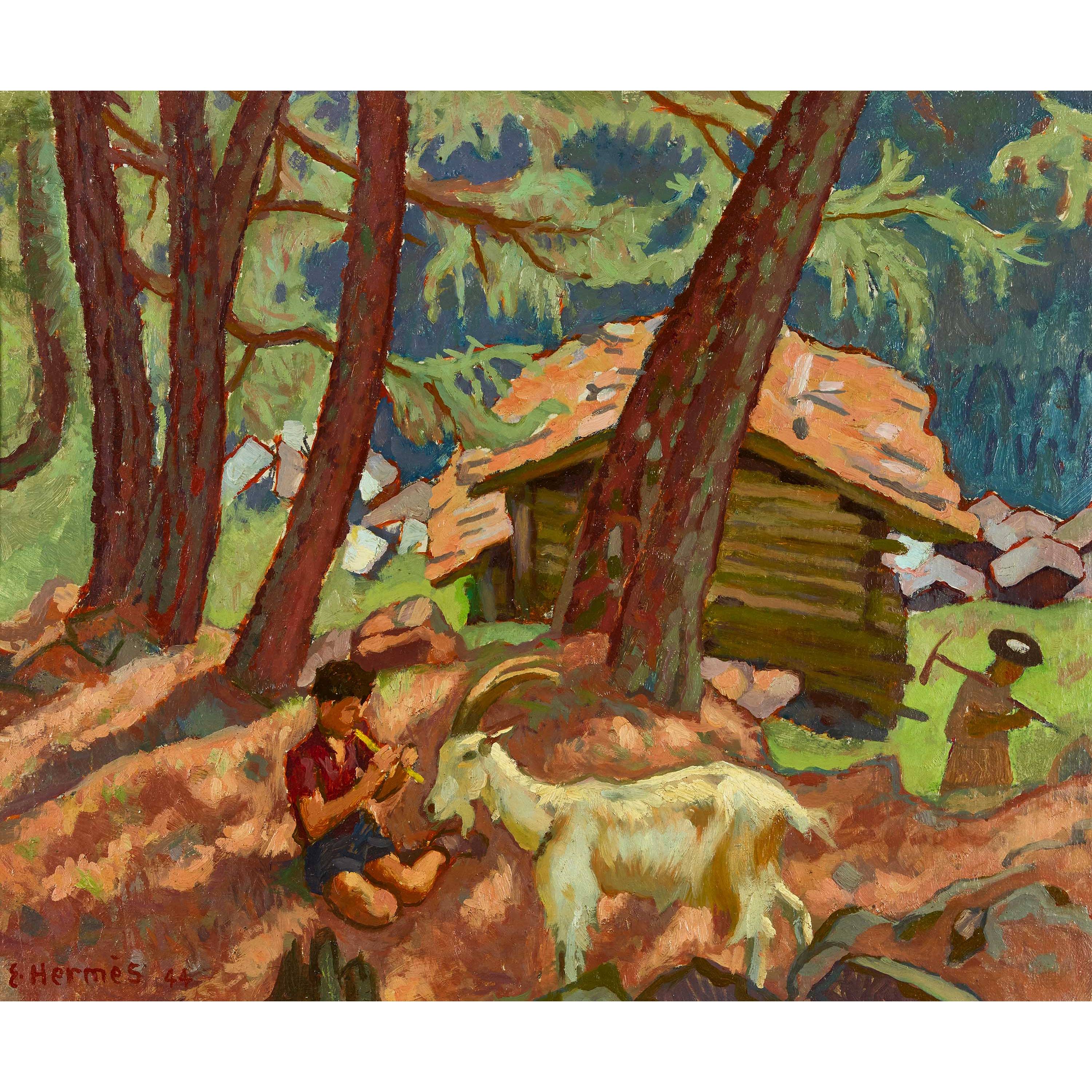
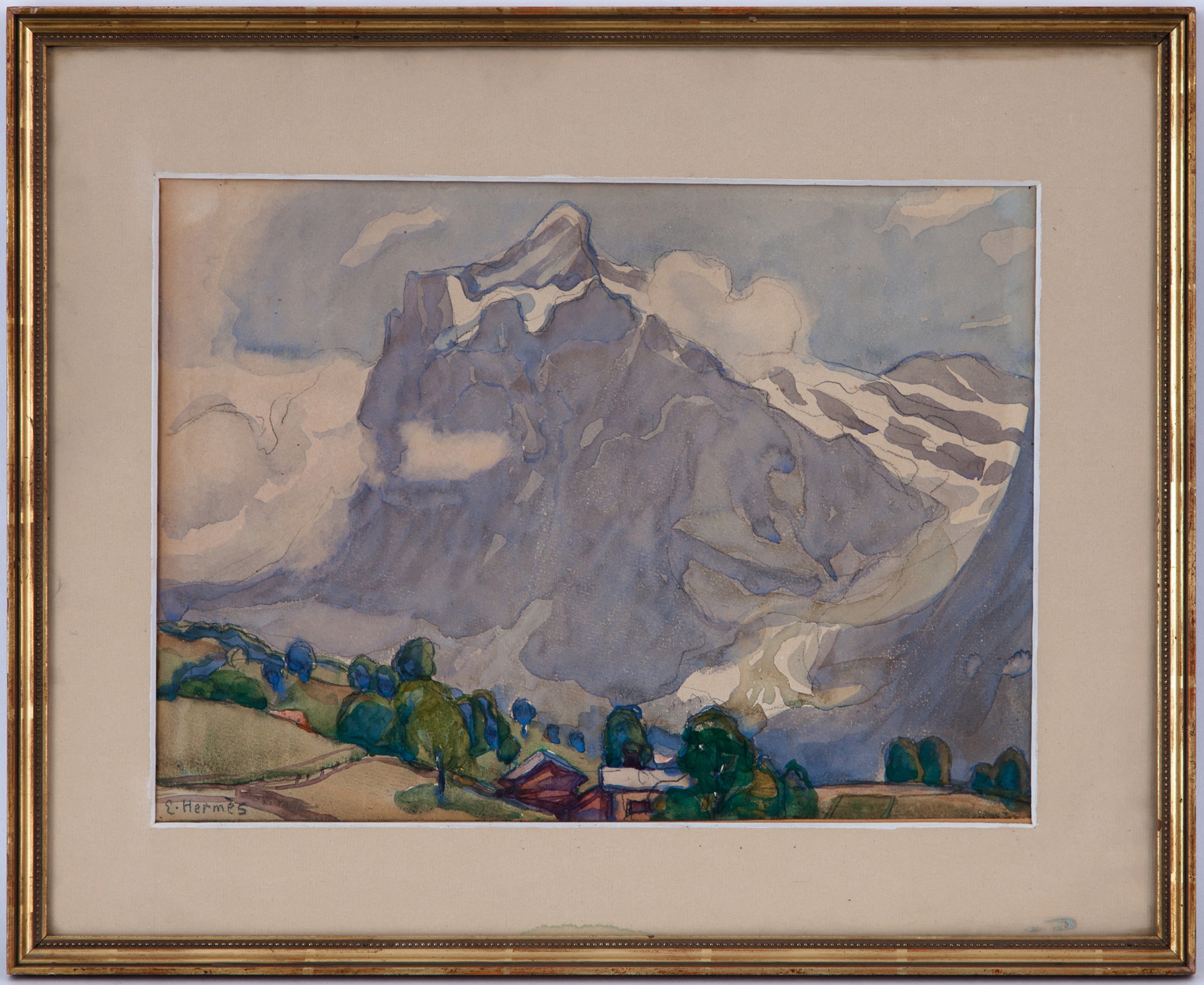
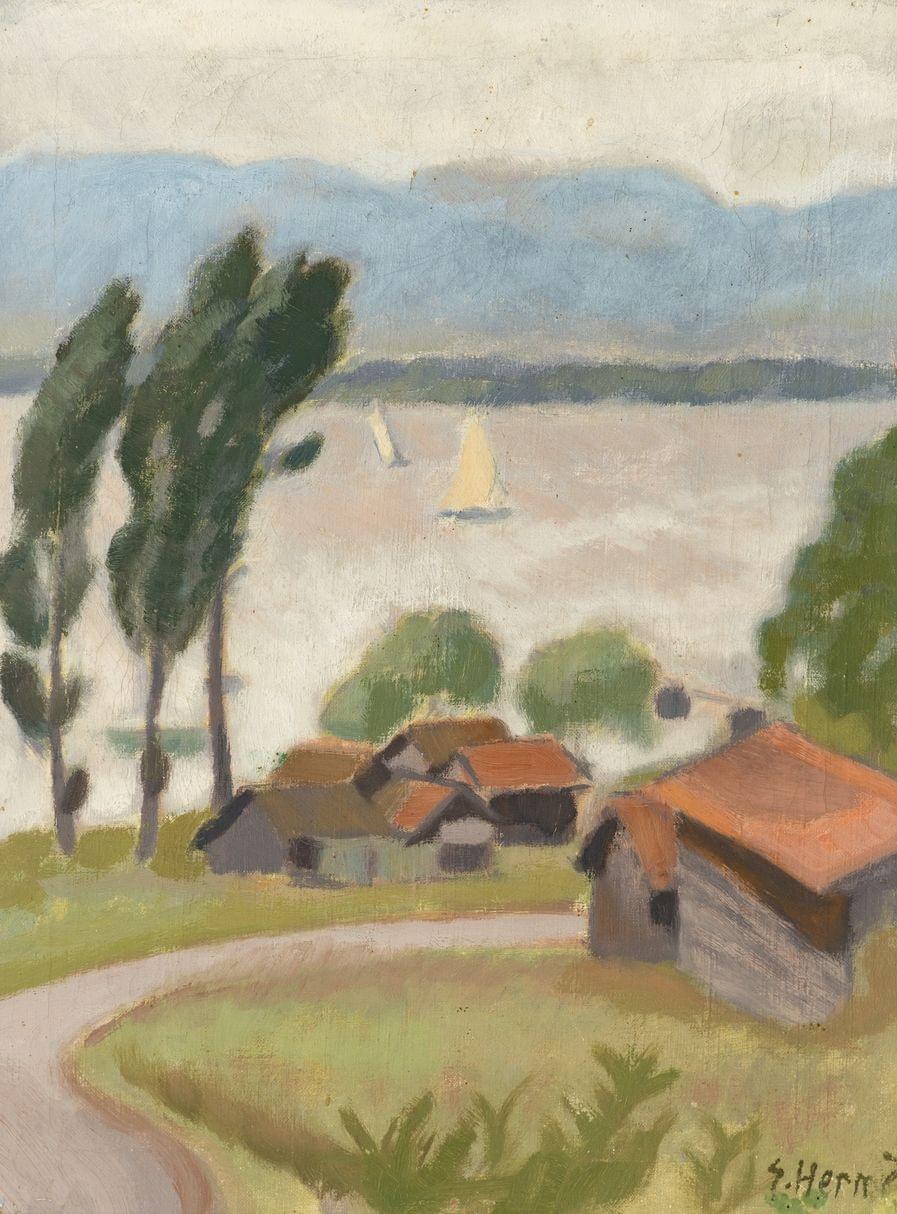
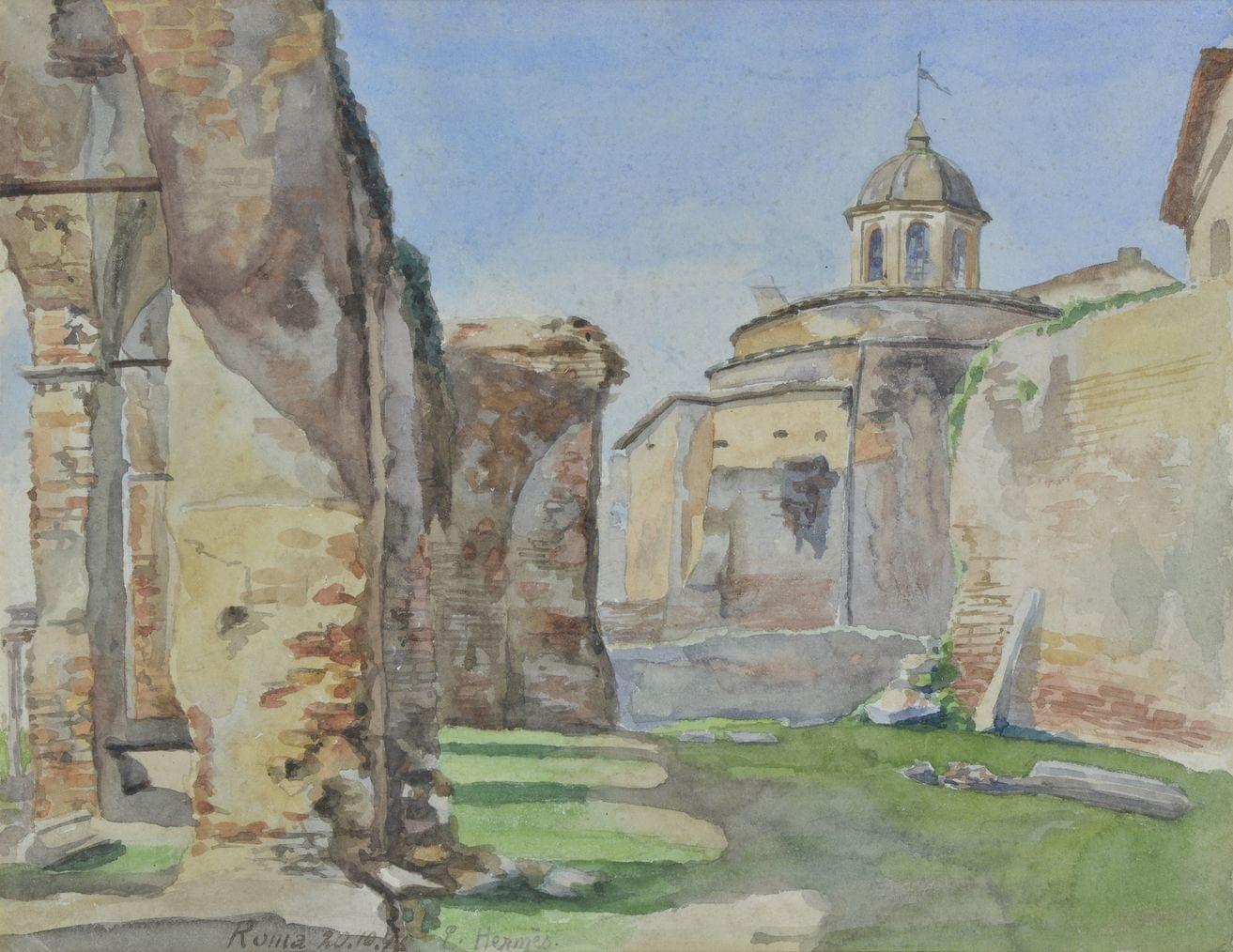
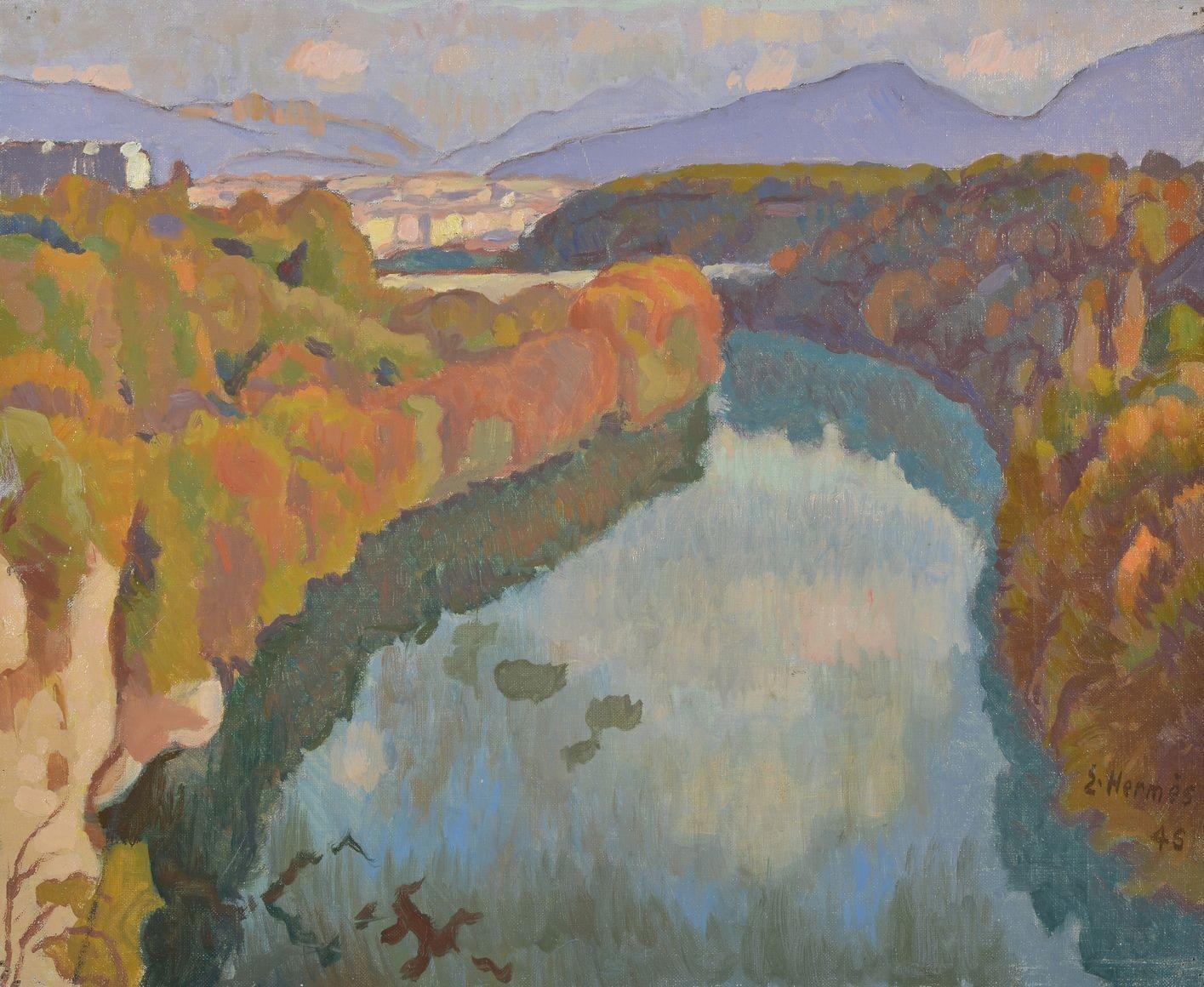
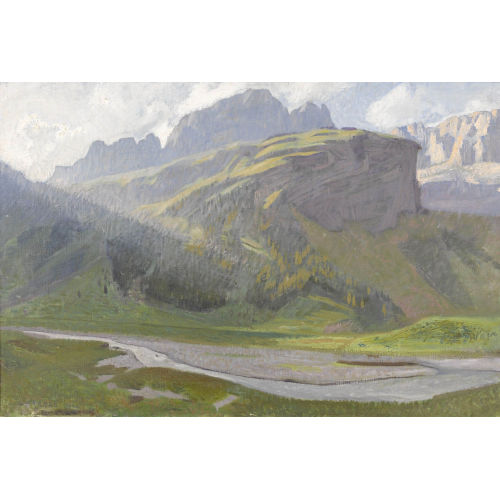
An apprenticeship as a decorative painter in Lausanne preceded his studies at the Geneva School of Fine Arts, followed by periods of training in Paris, Munich and Italy. This trajectory explains the ease with which he moved from canvas to wall, from stained glass to poster. Geneva and its surroundings became a lasting centre of his work, without diminishing his attachment to the landscapes of Valais.
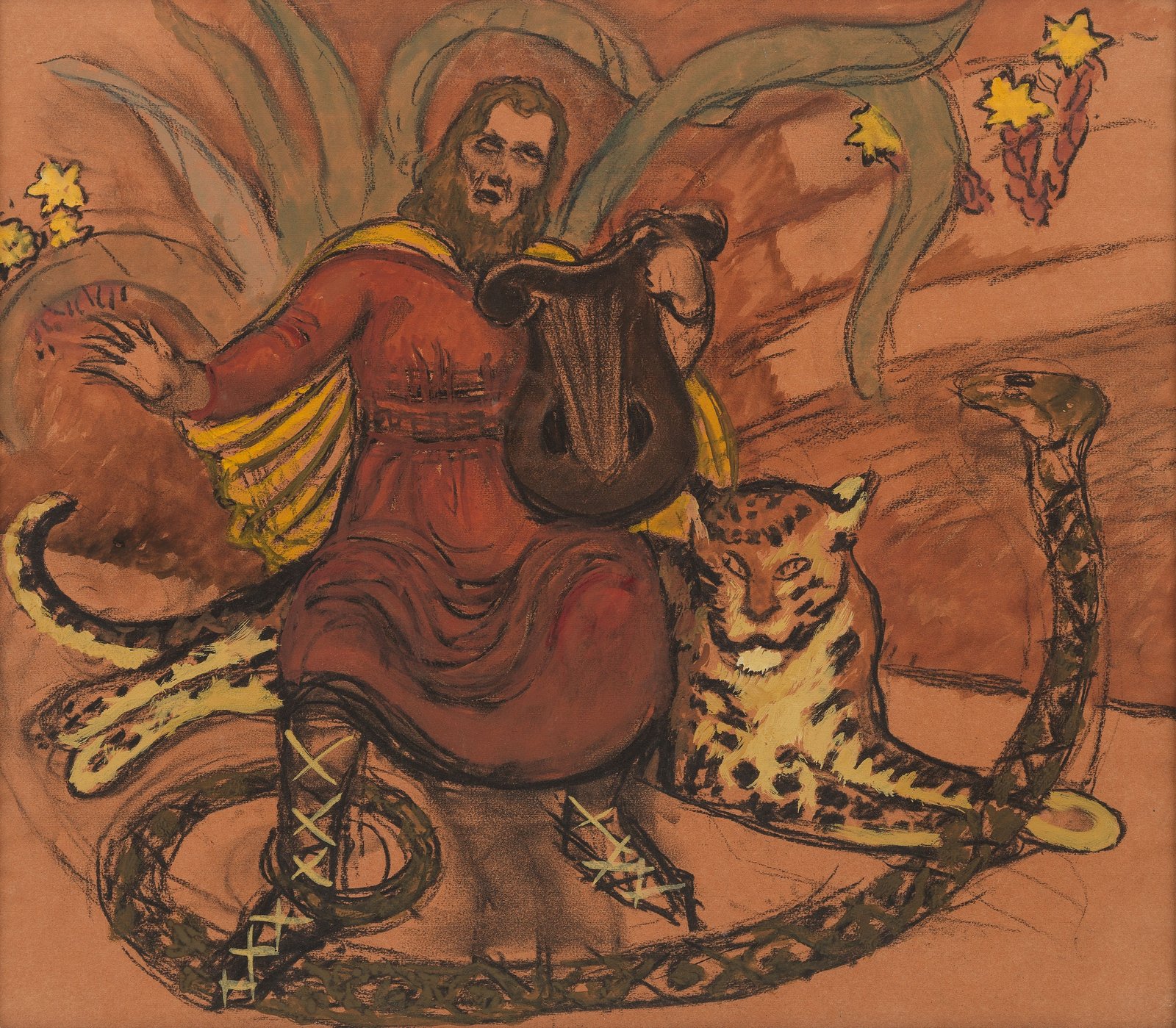
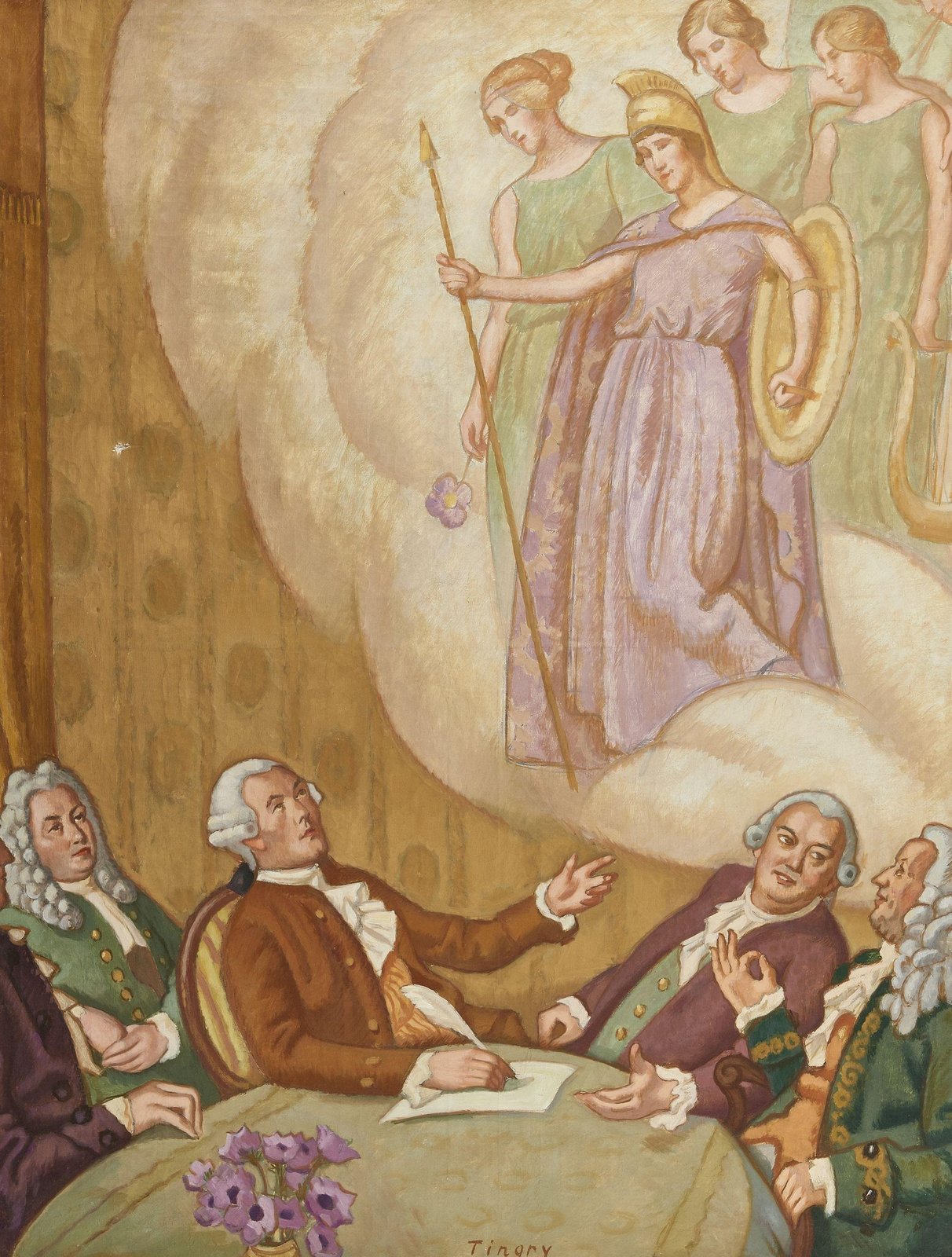
His first major period was devoted to works integrated into architecture. During the First World War, he worked in Vérossaz; the Sainte-Marguerite Chapel brings together murals, reliefs and stained-glass windows. On his return to Geneva, he took part in the renewal of Protestant sacred art.
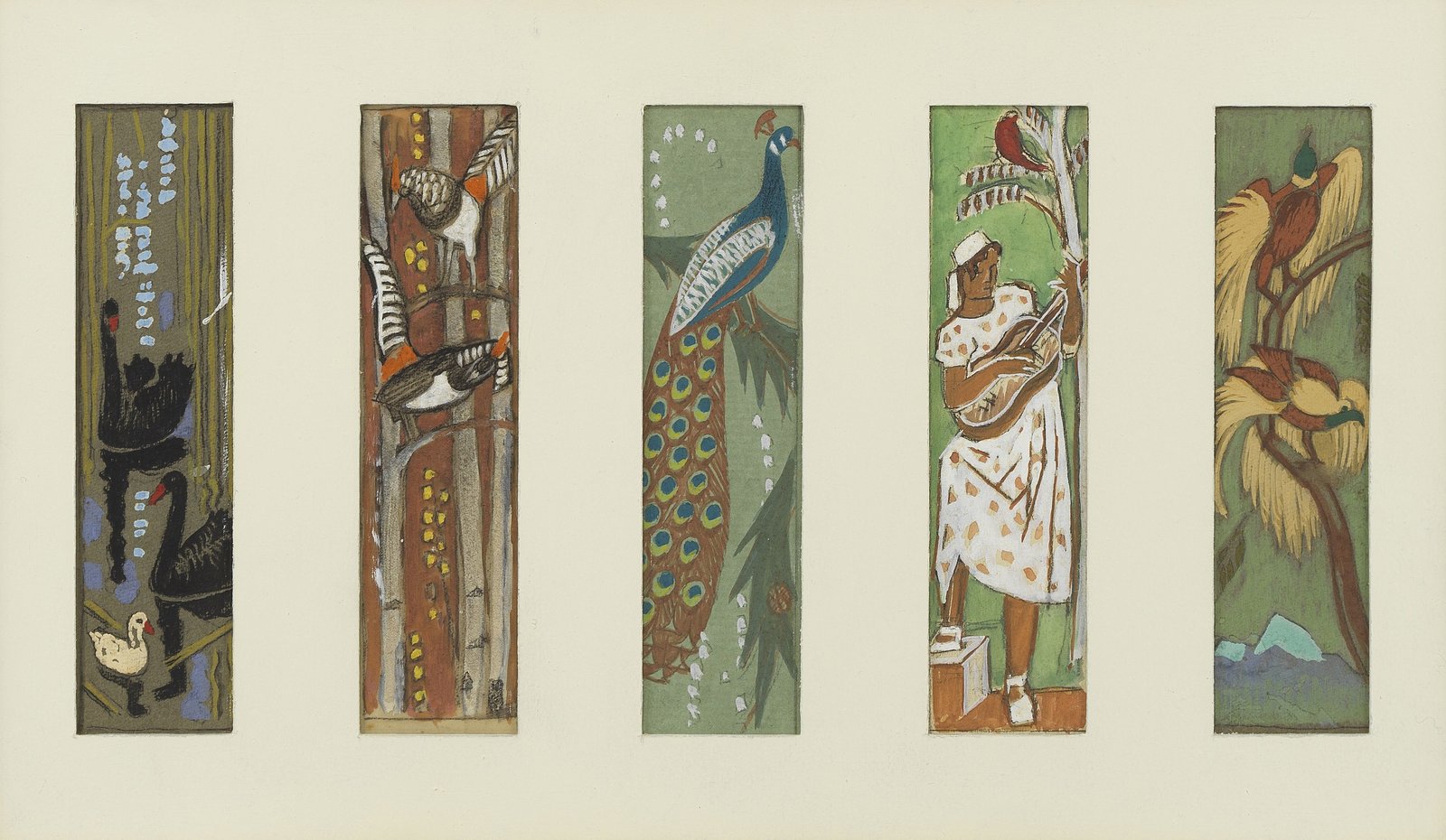
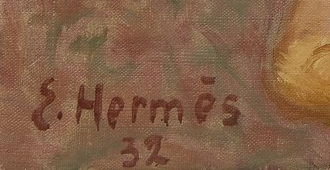
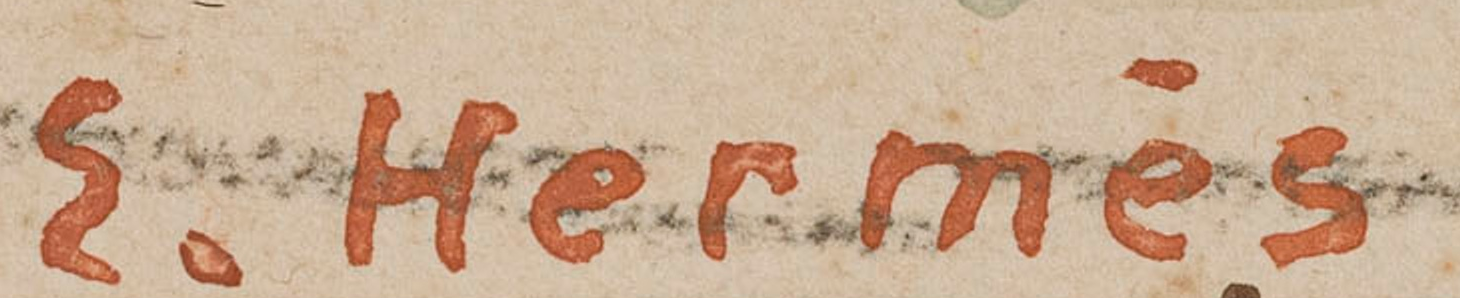
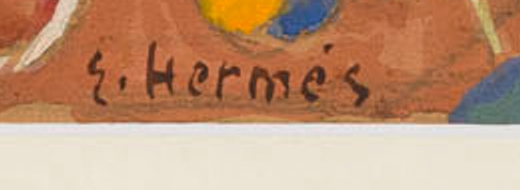
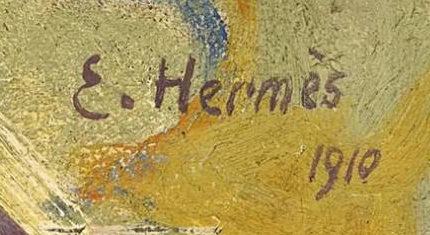
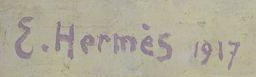
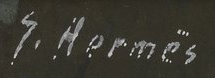
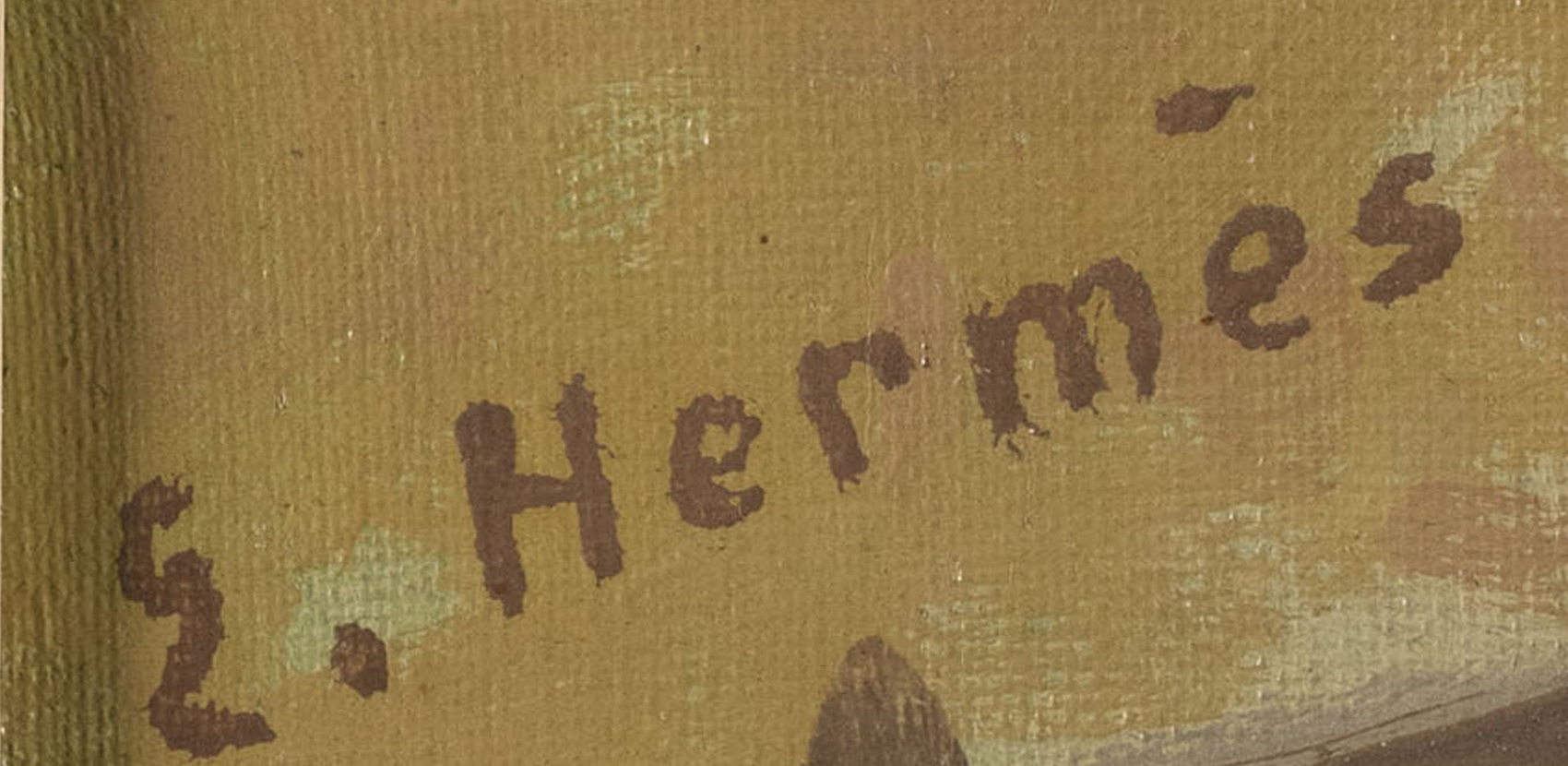
The Carouge Temple constitutes his major ensemble: between 1921 and 1930, he conceived paintings and decorative schemes there, as well as stained-glass windows executed with the Charles Wasem studio. One of them, Quatre scènes des Évangiles (1924), brings together parables and biblical scenes in superimposed registers. His signature distinguishes Hermès’s composition from the execution by Wasem; the designs preserved at the Vitromusée Romont also shed light on his exploration of colour.
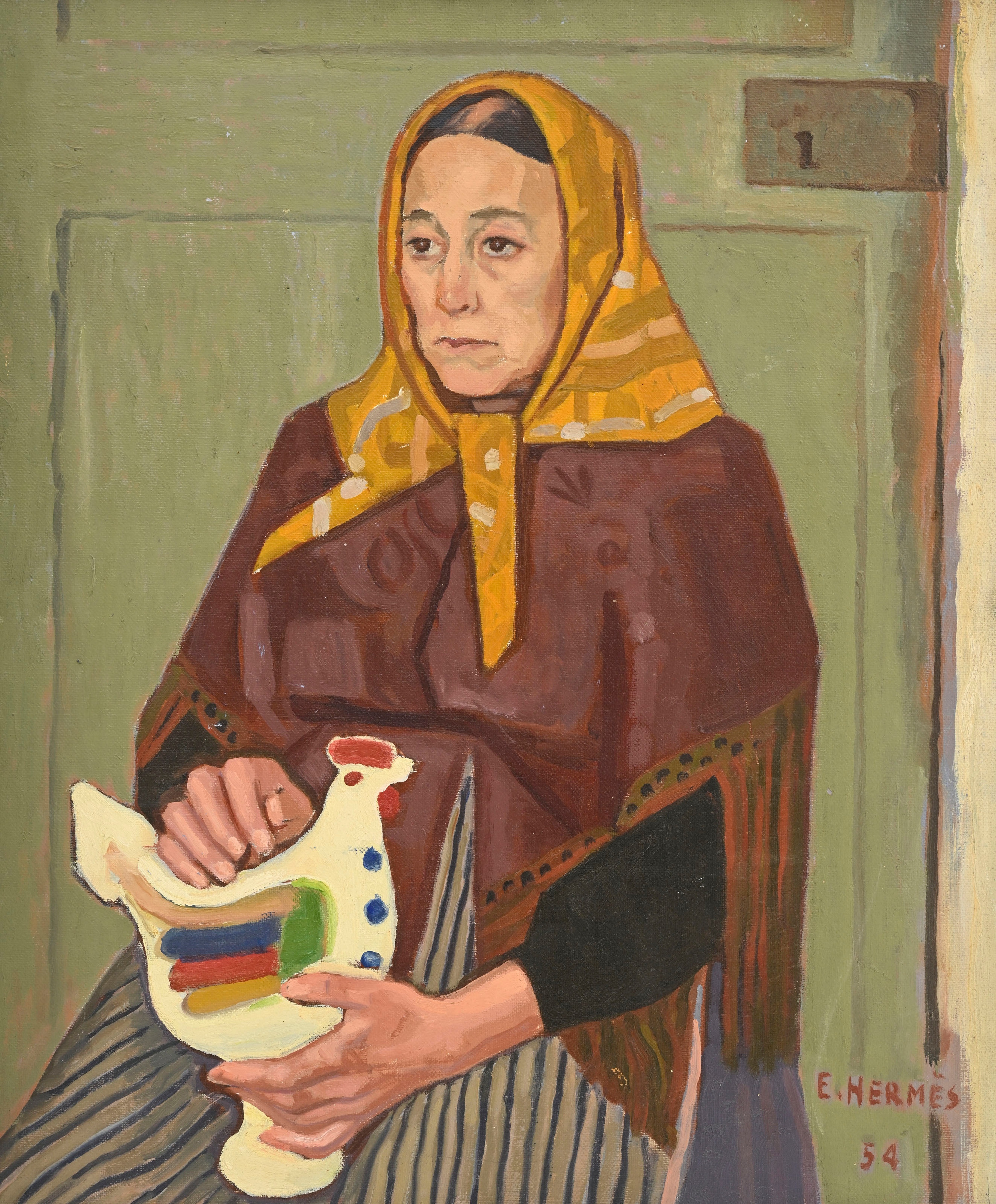
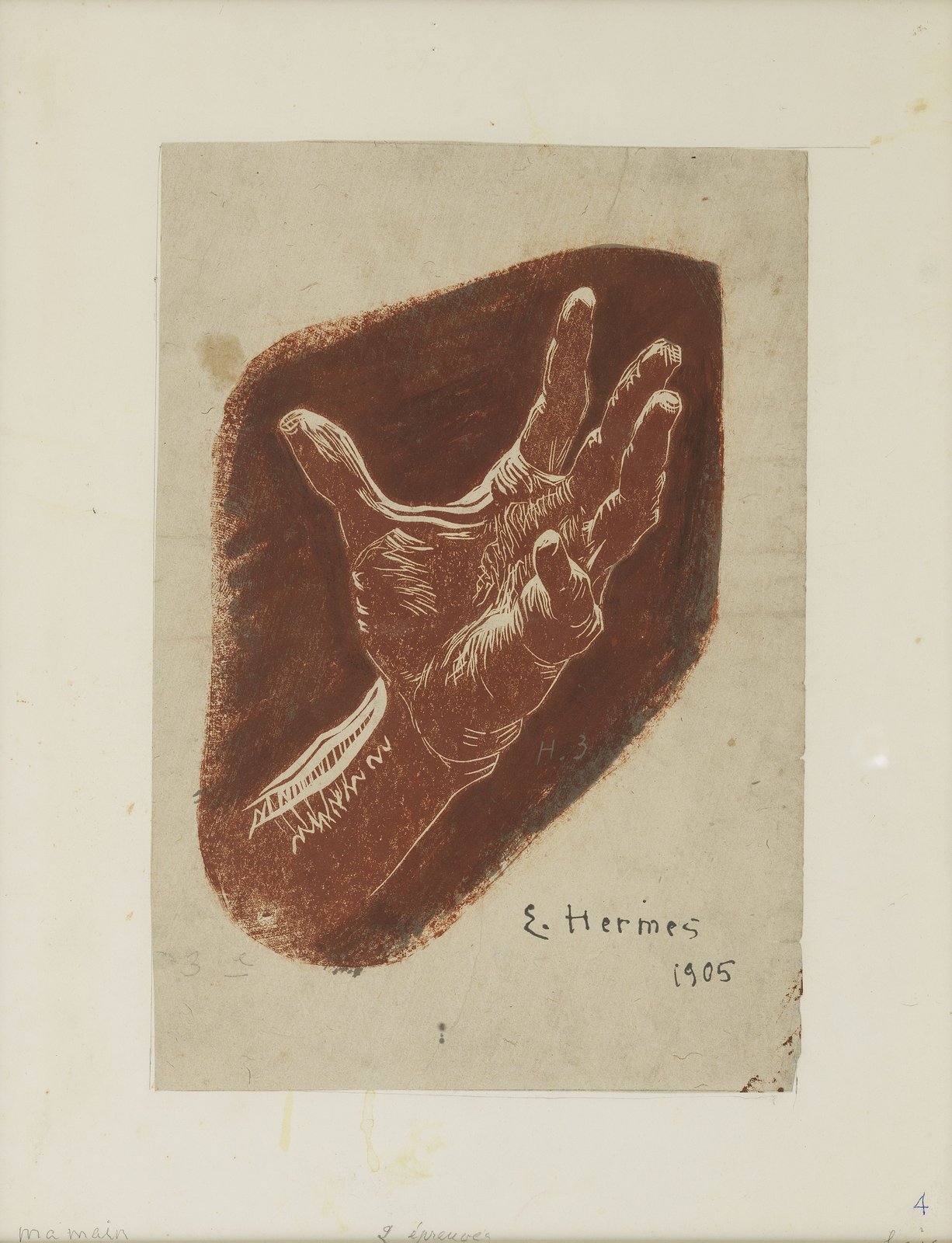
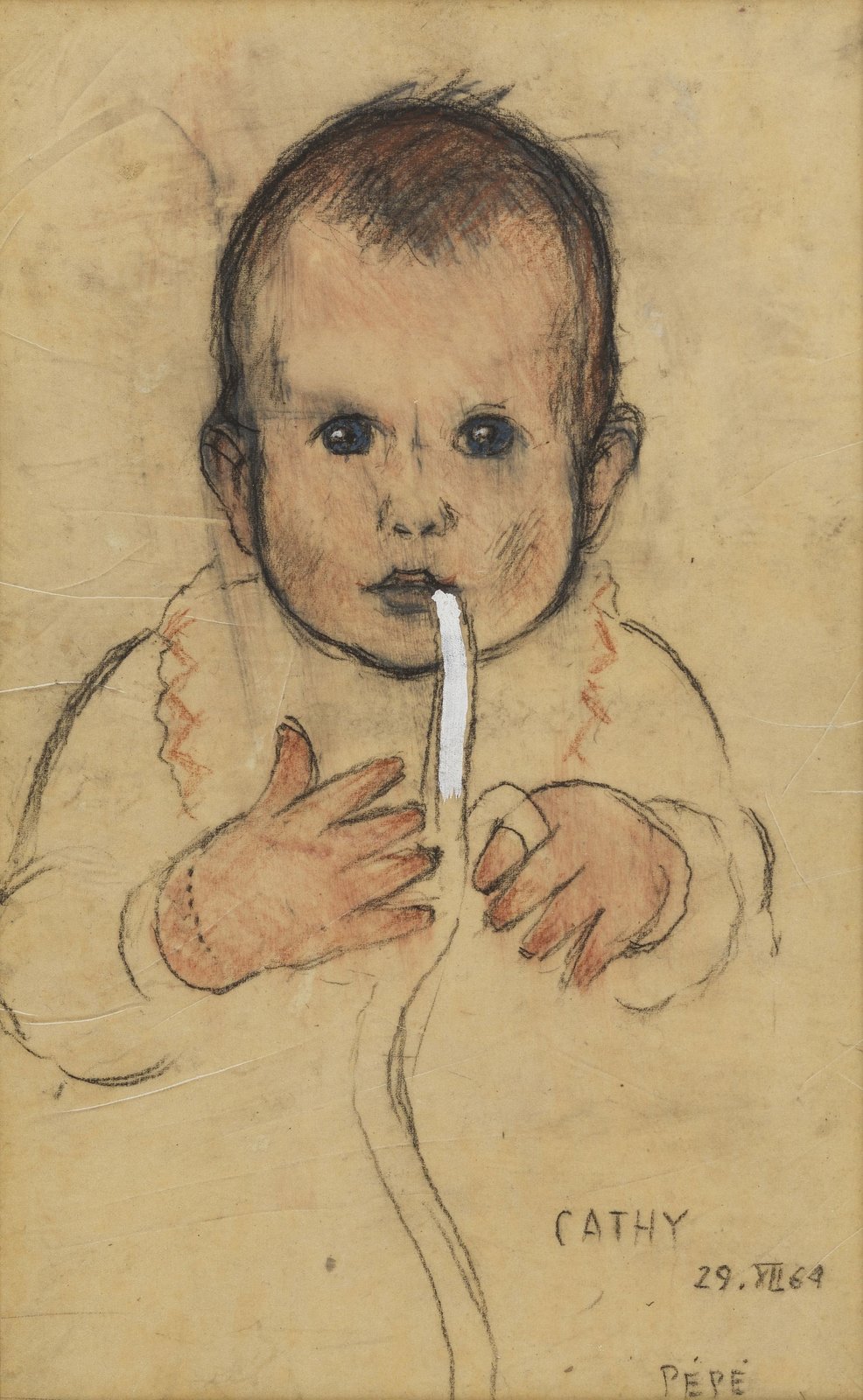
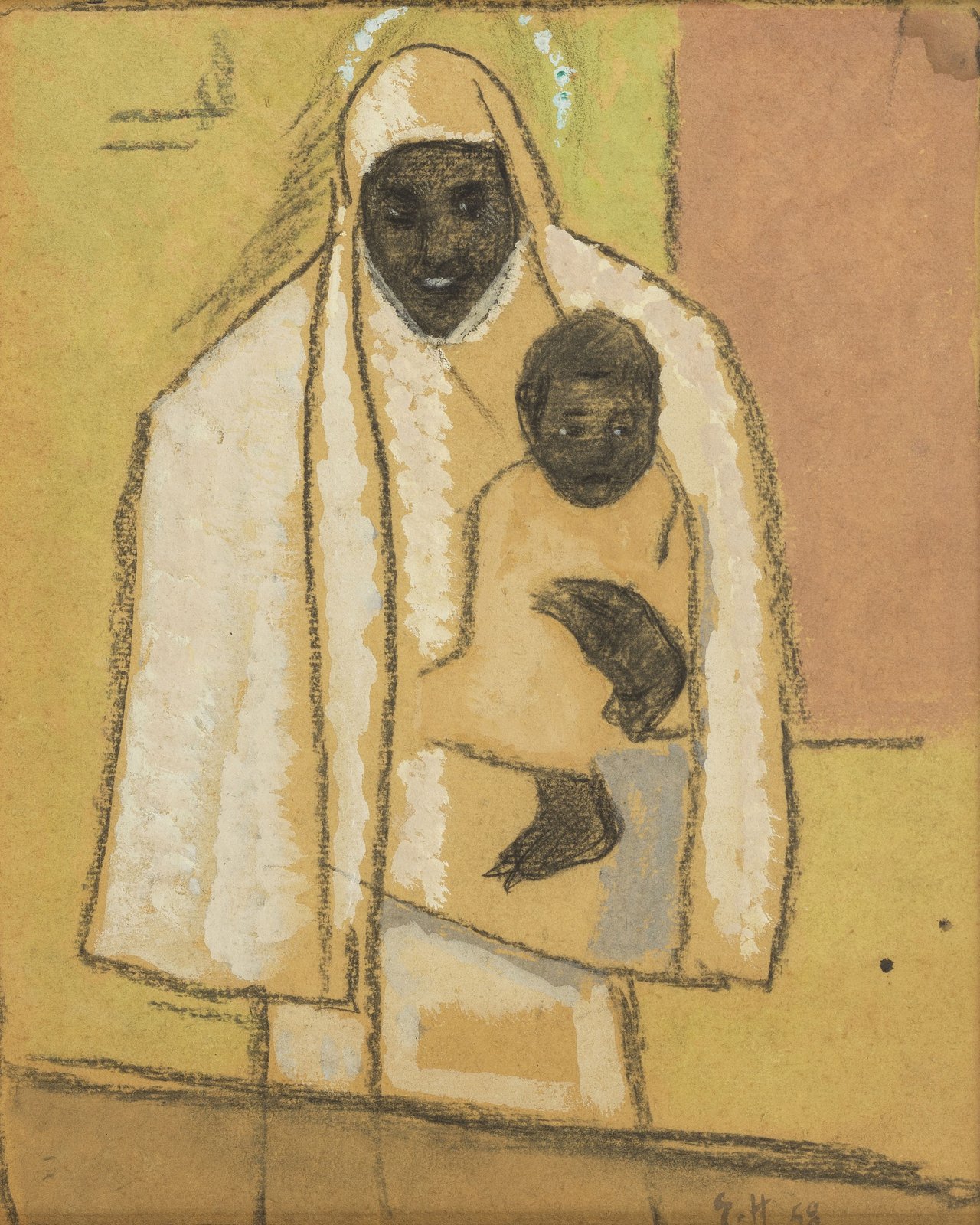
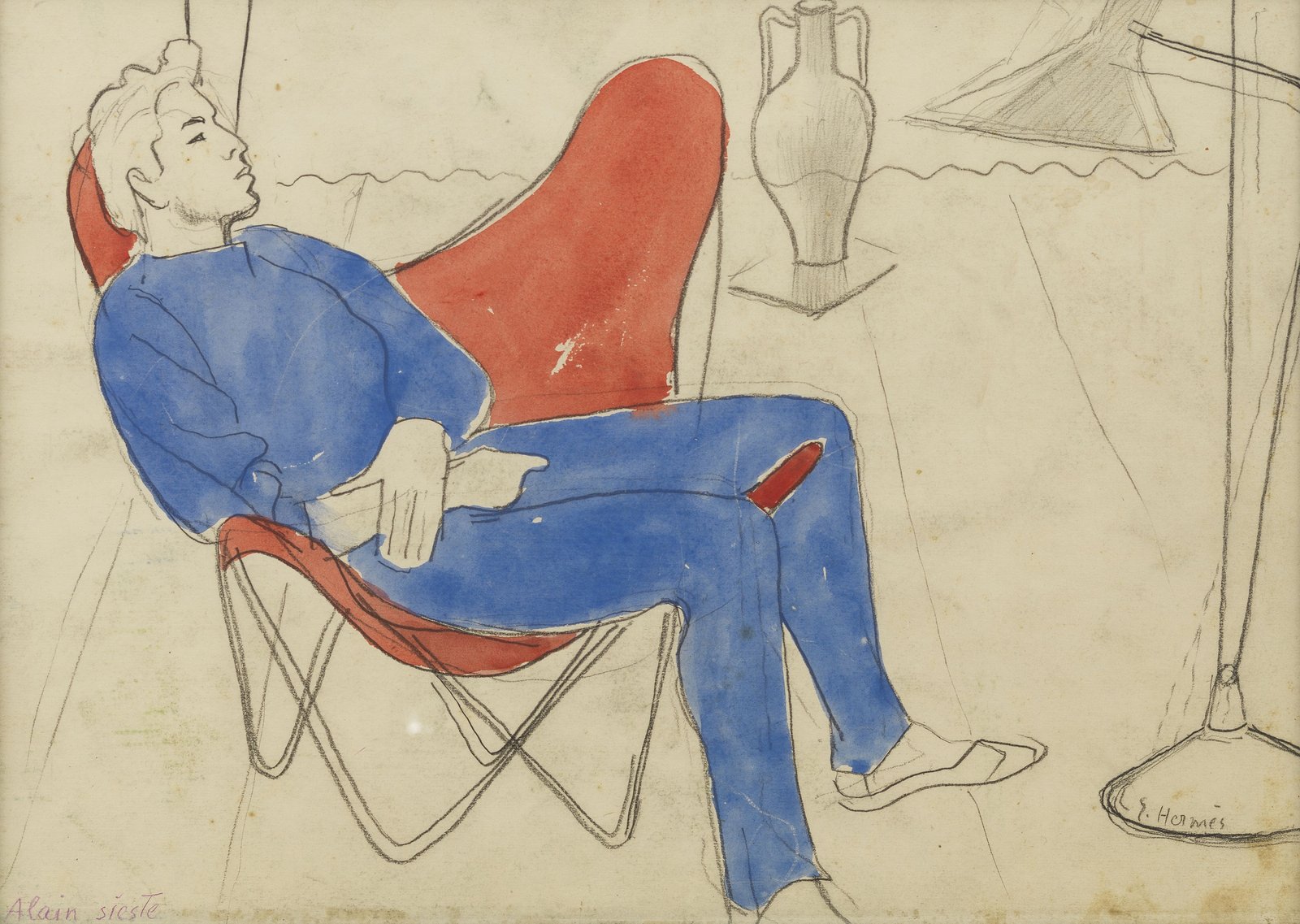
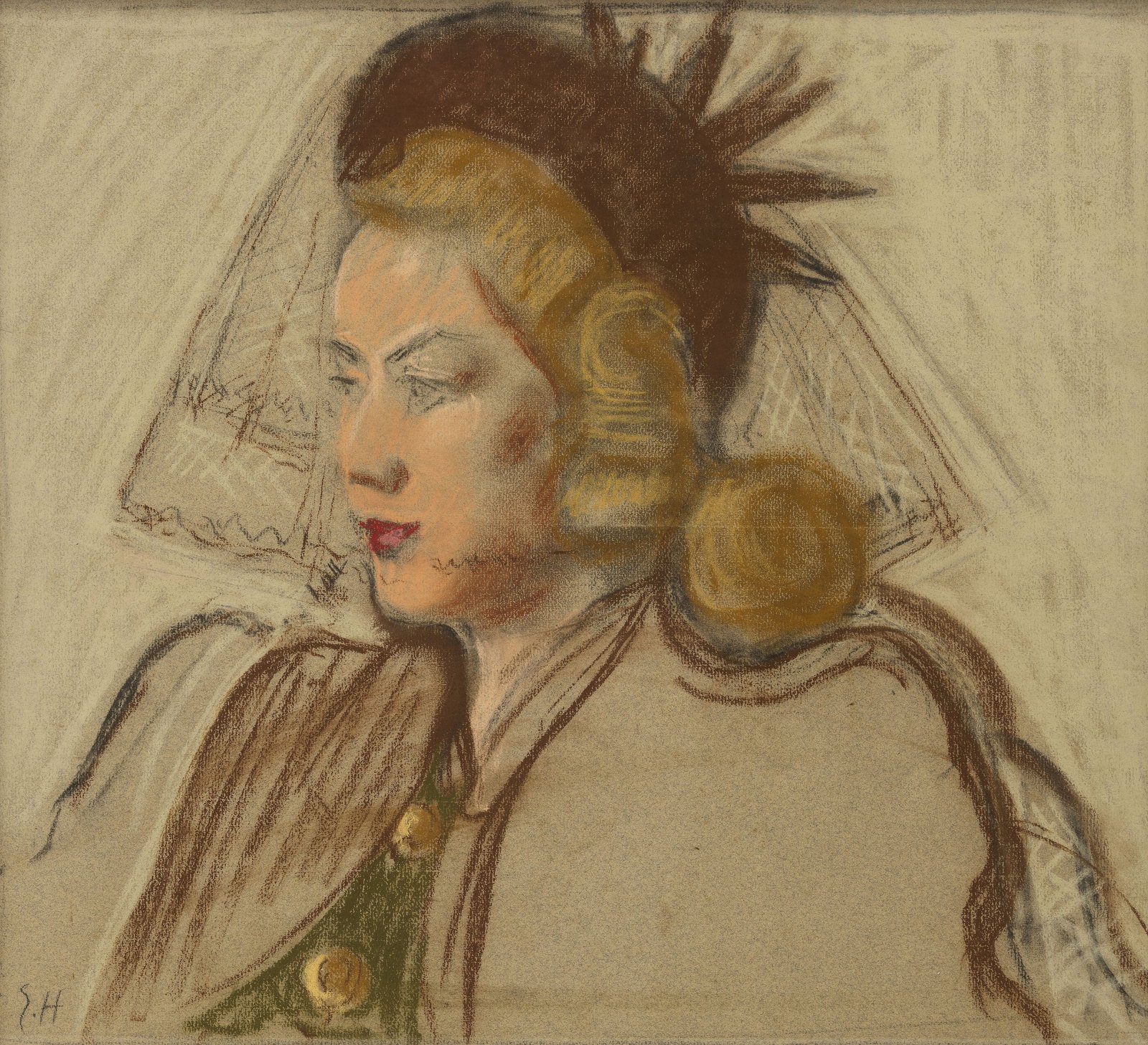
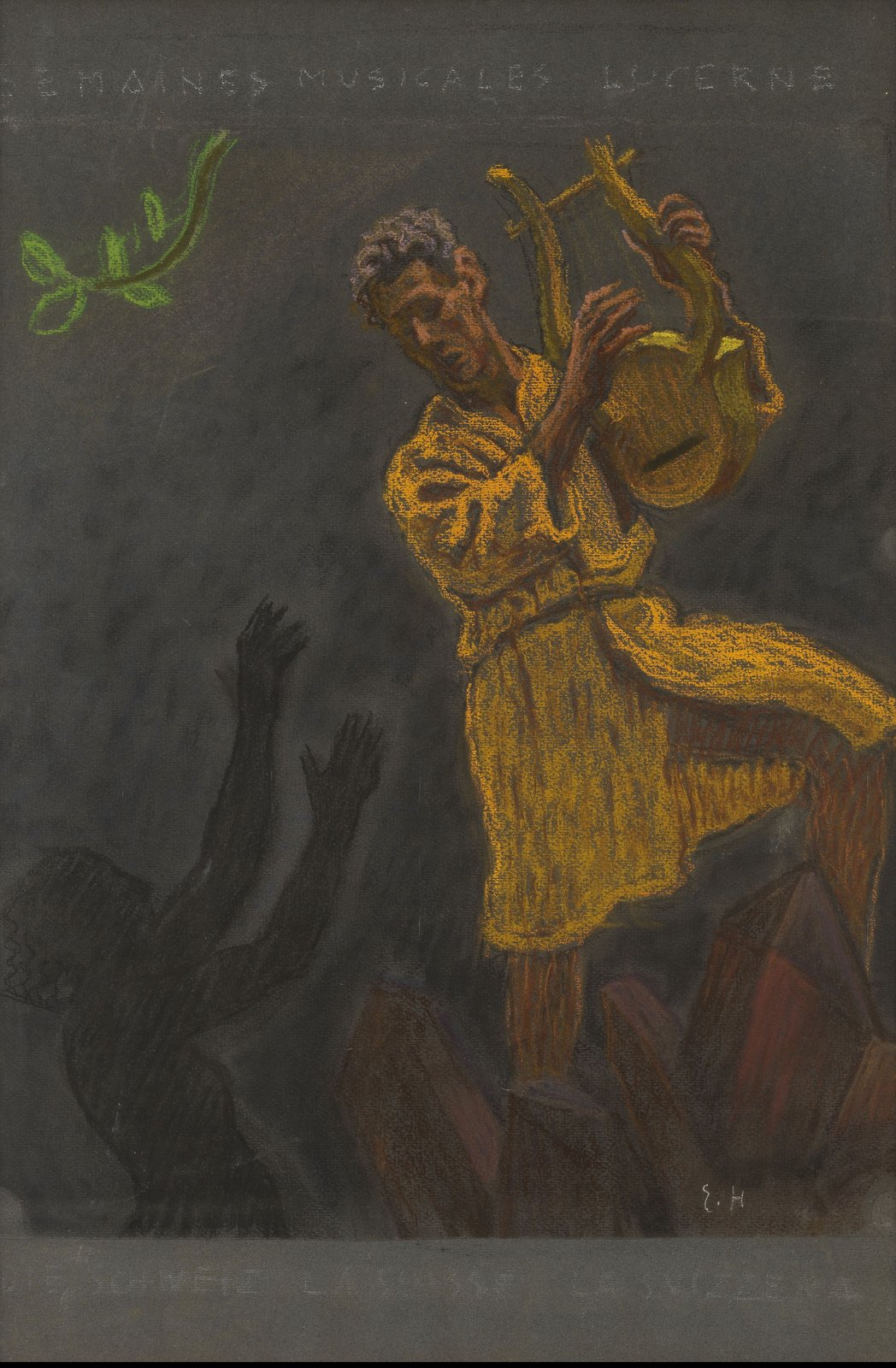
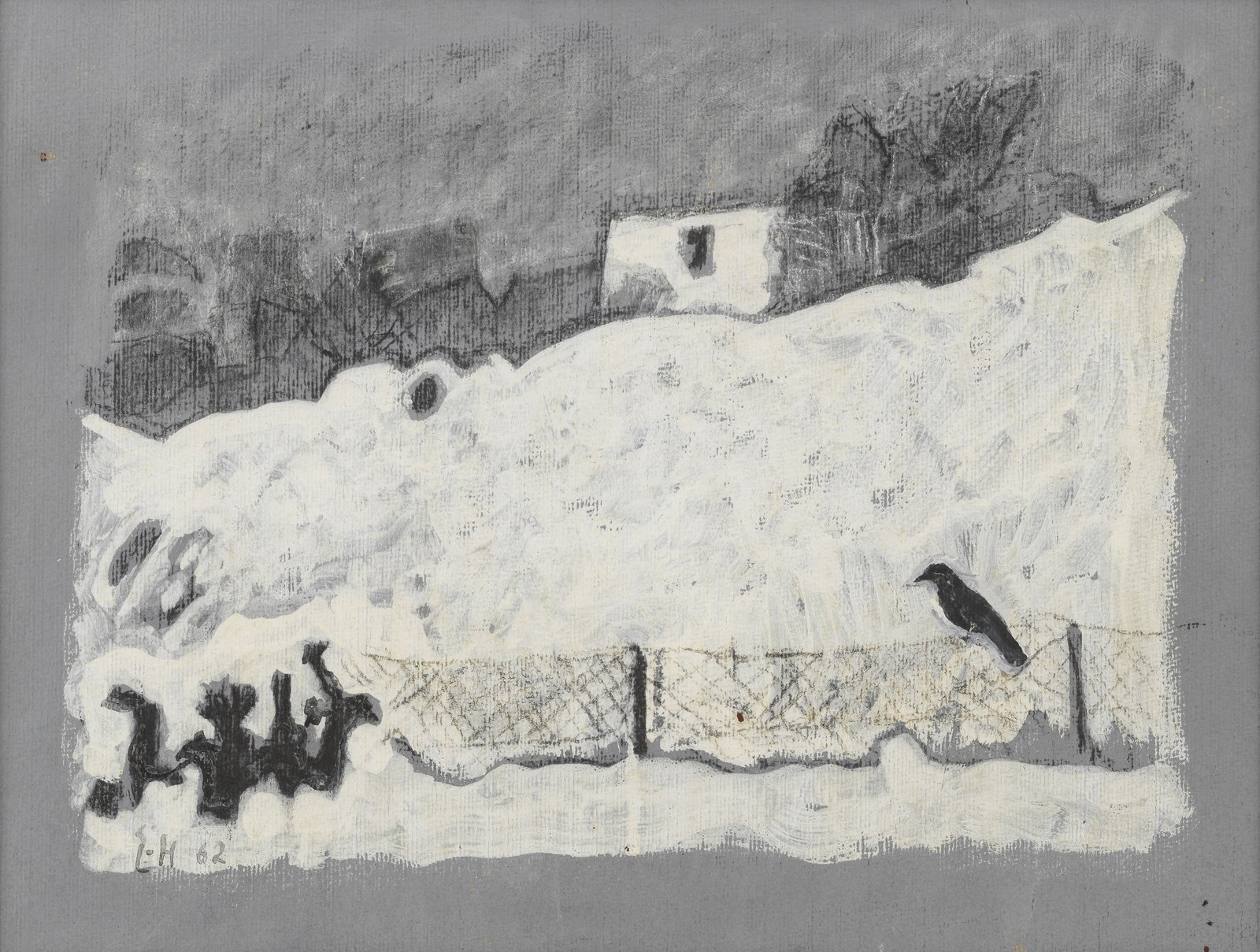
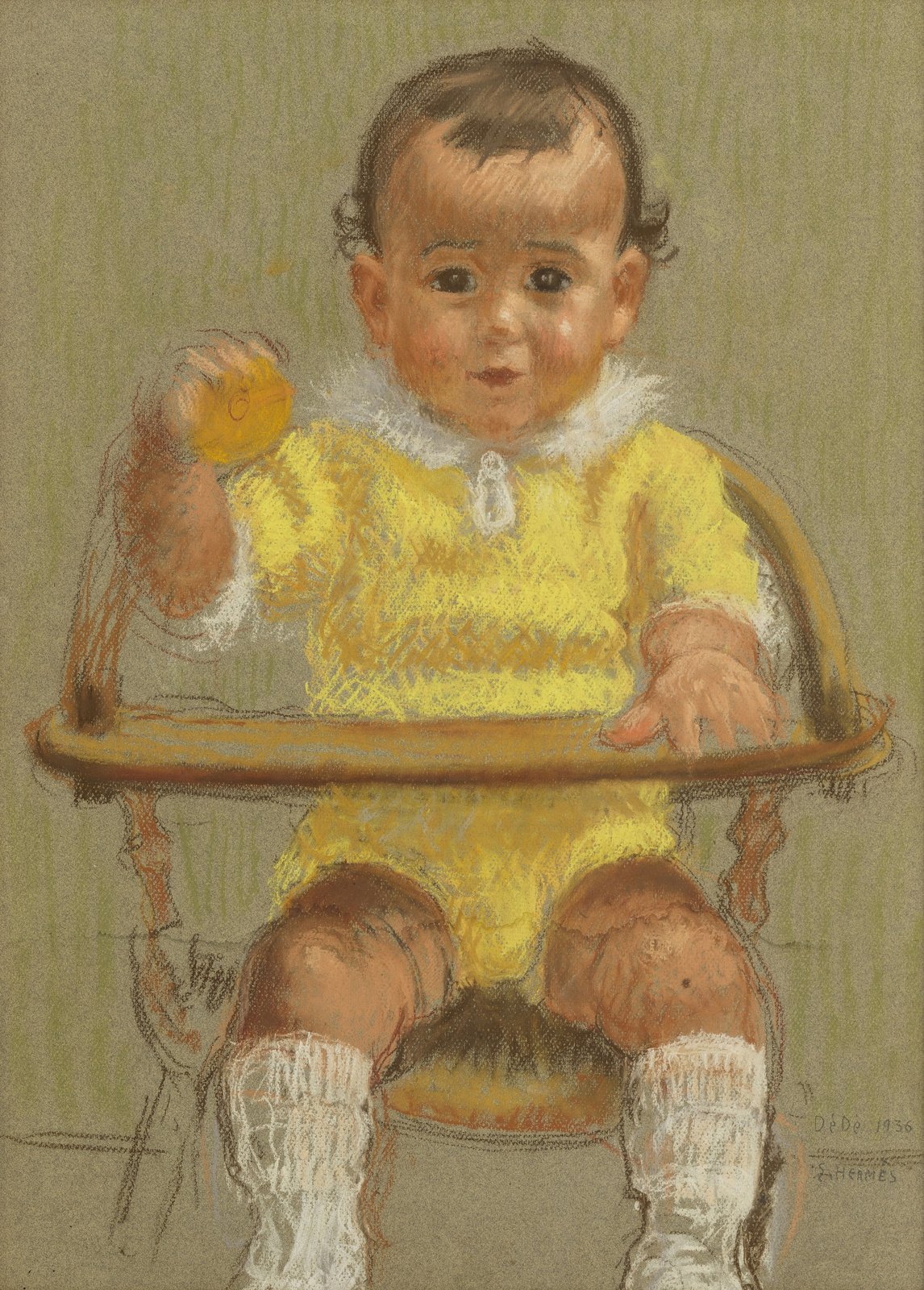
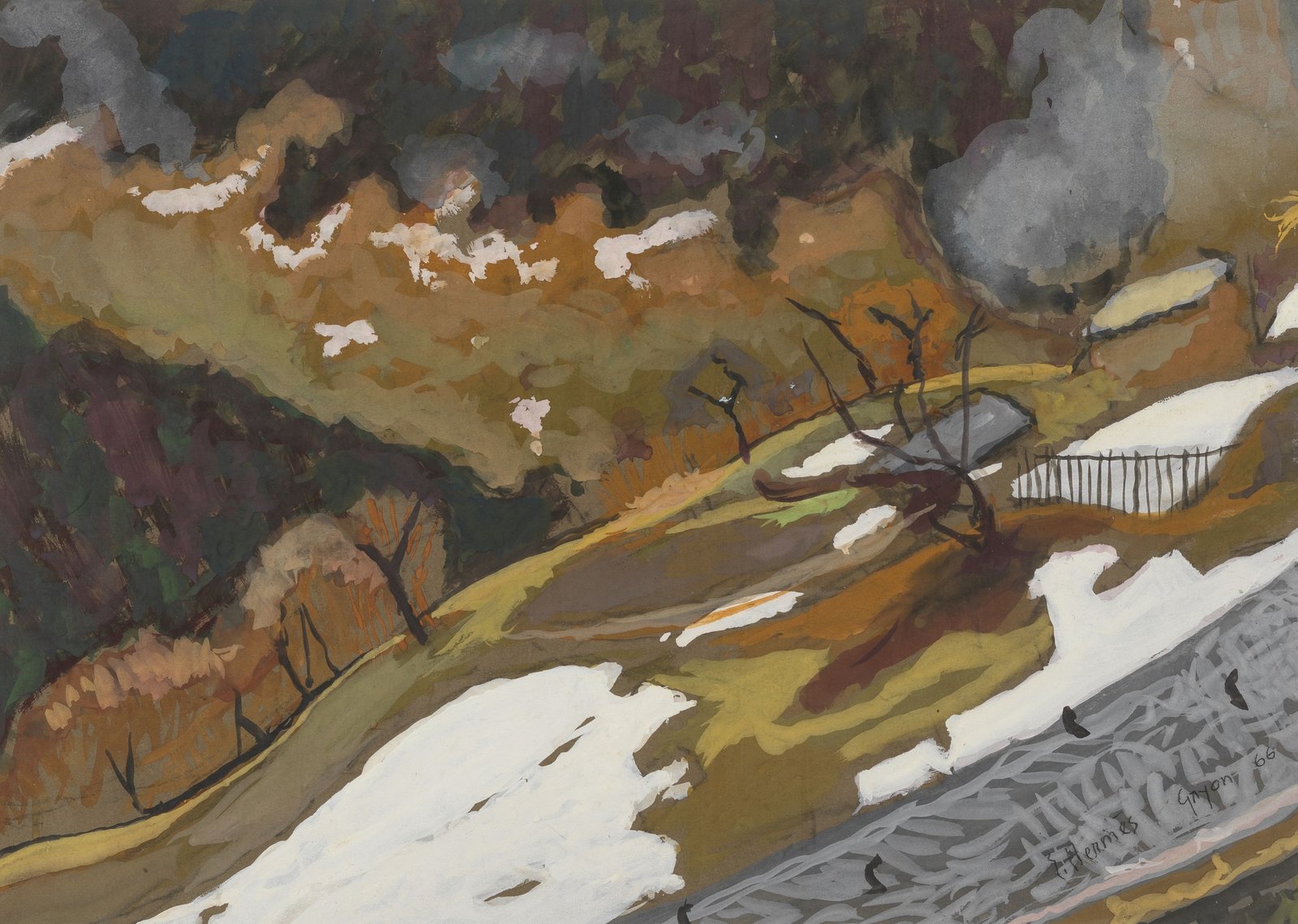
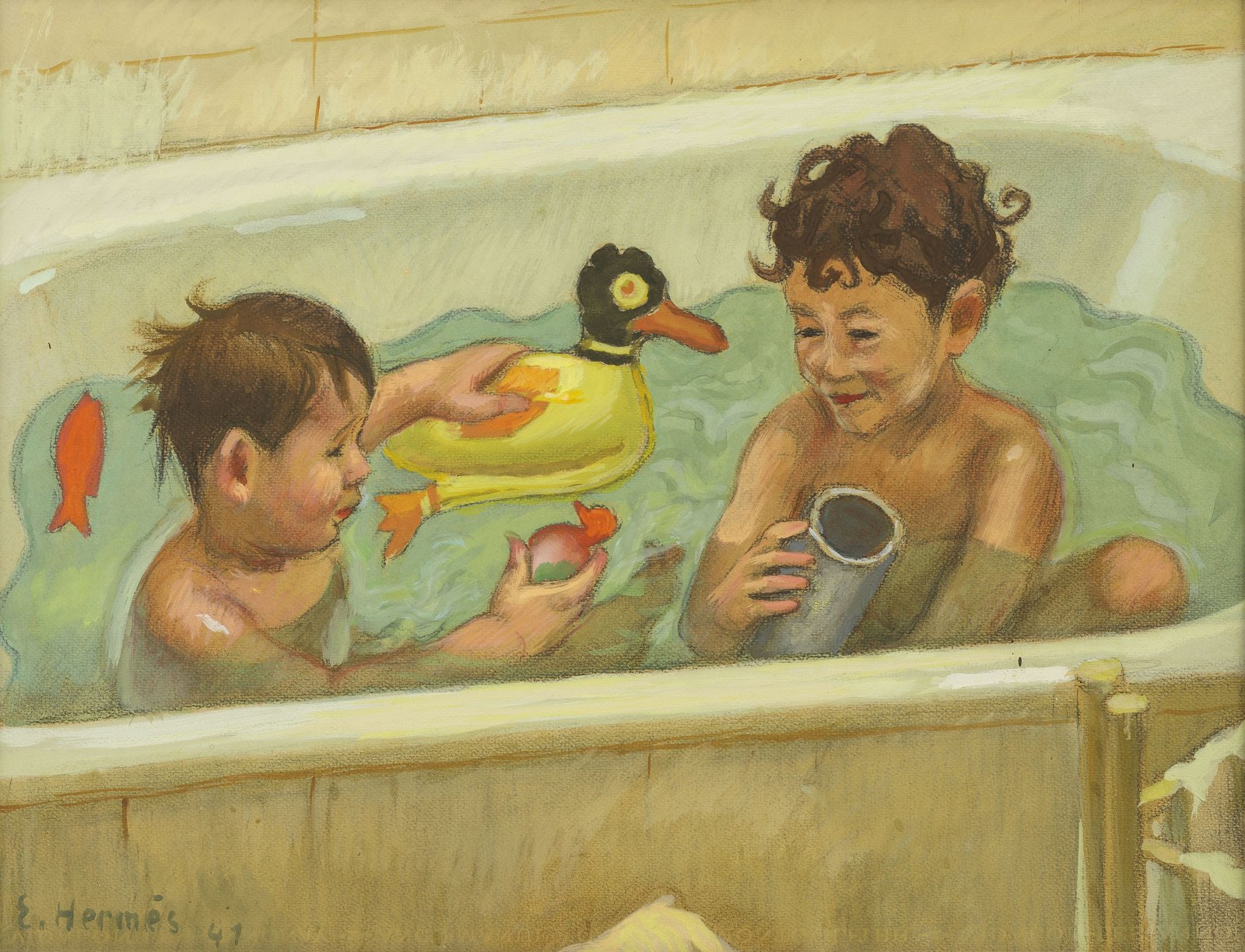
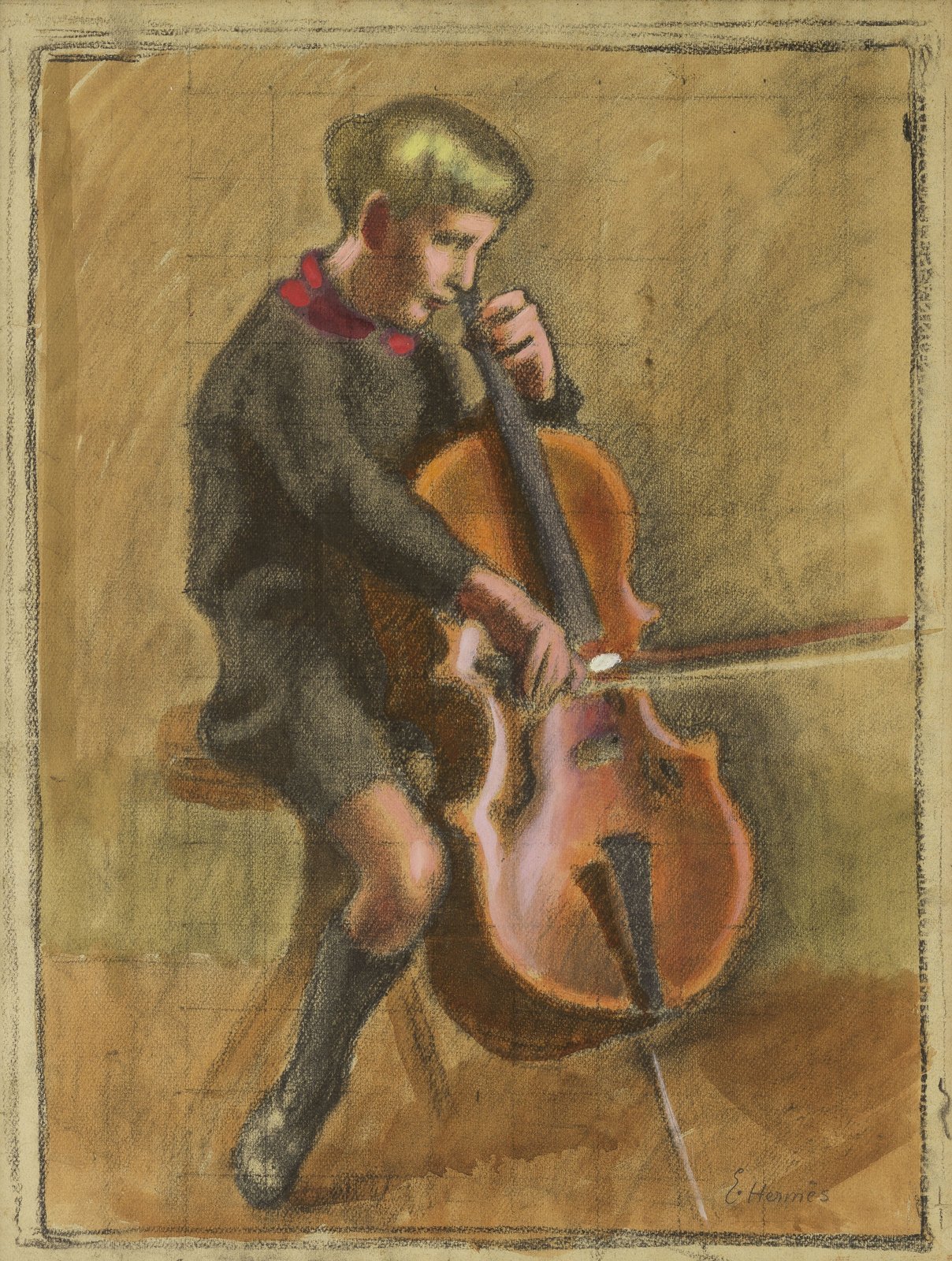
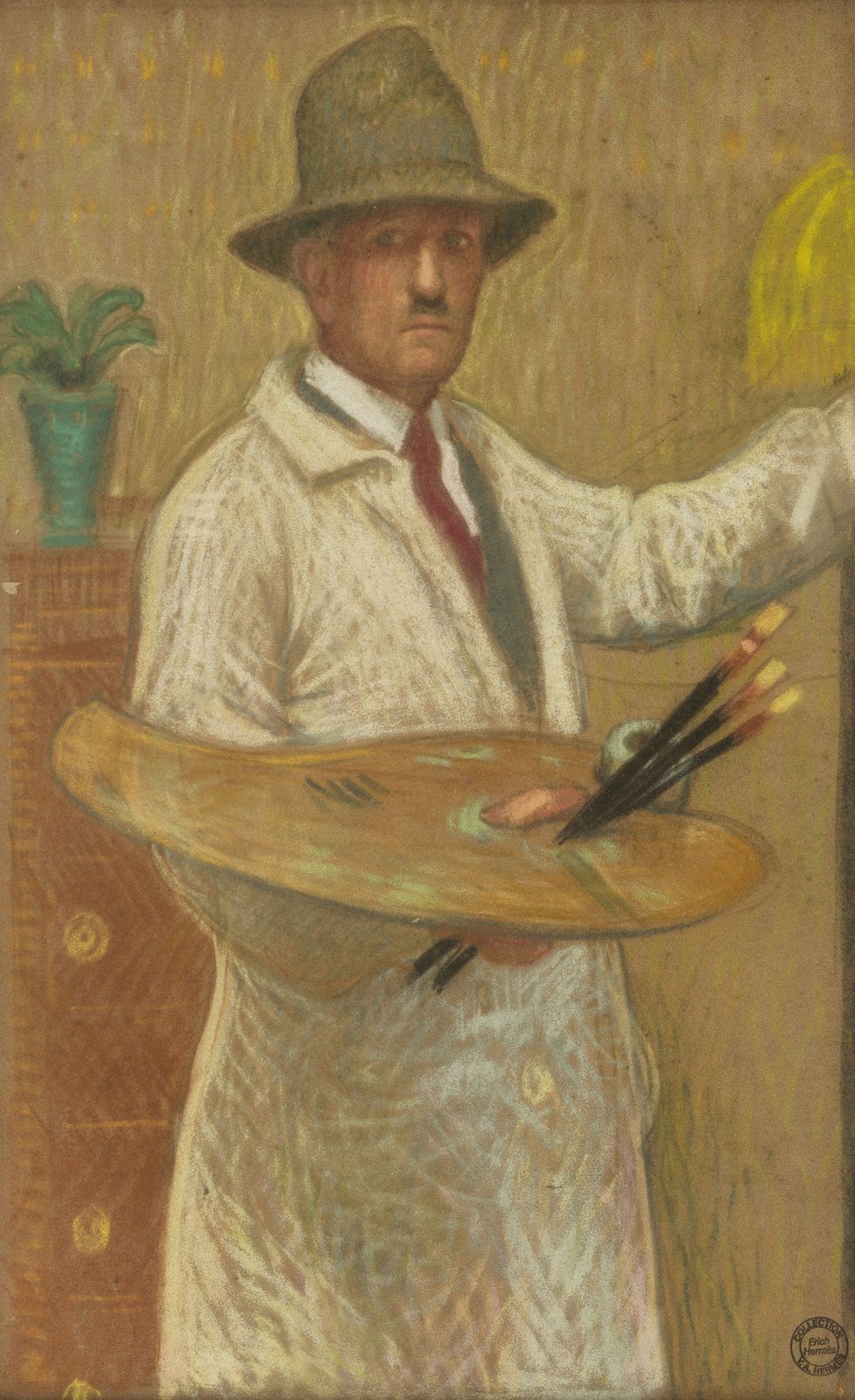
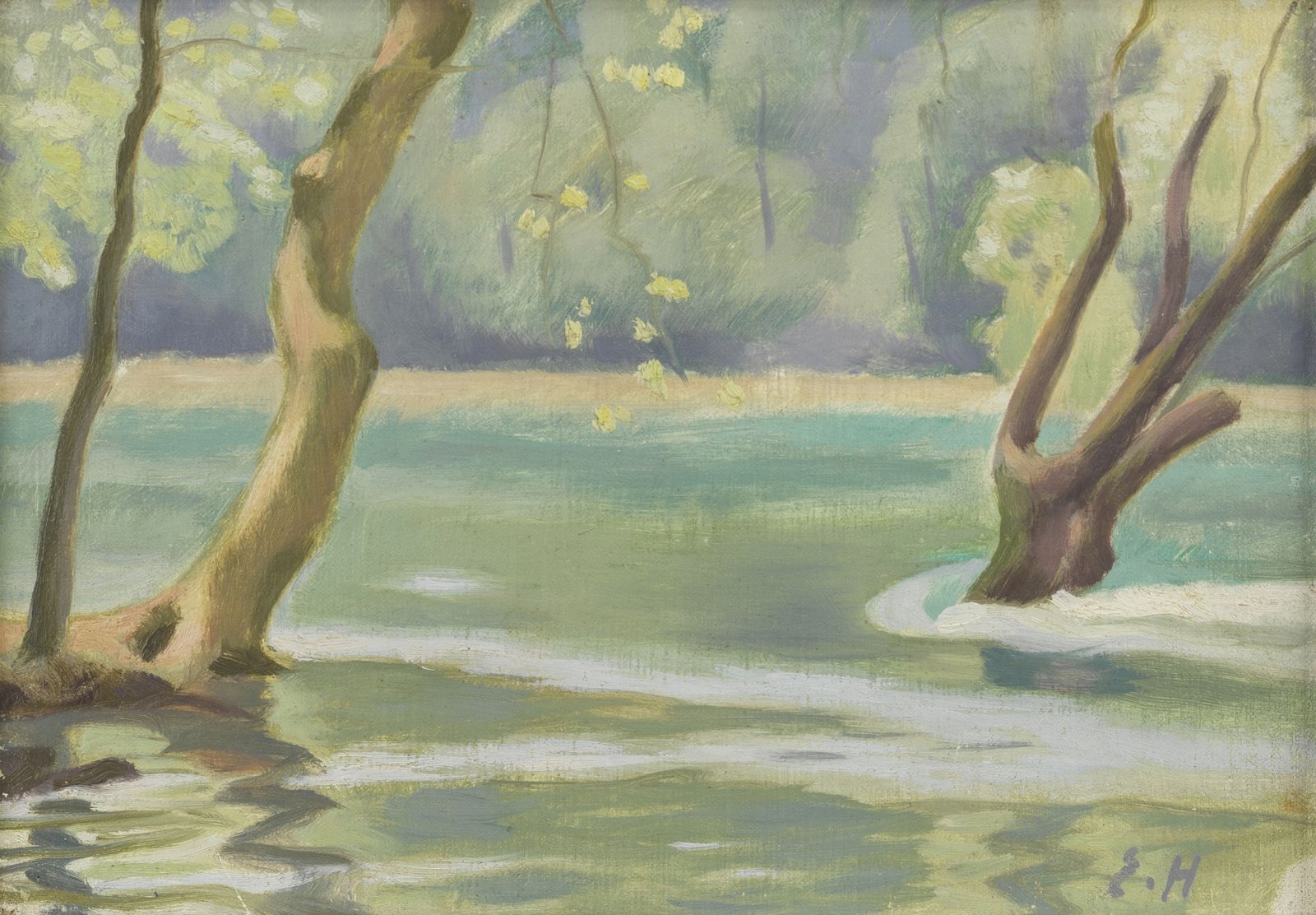
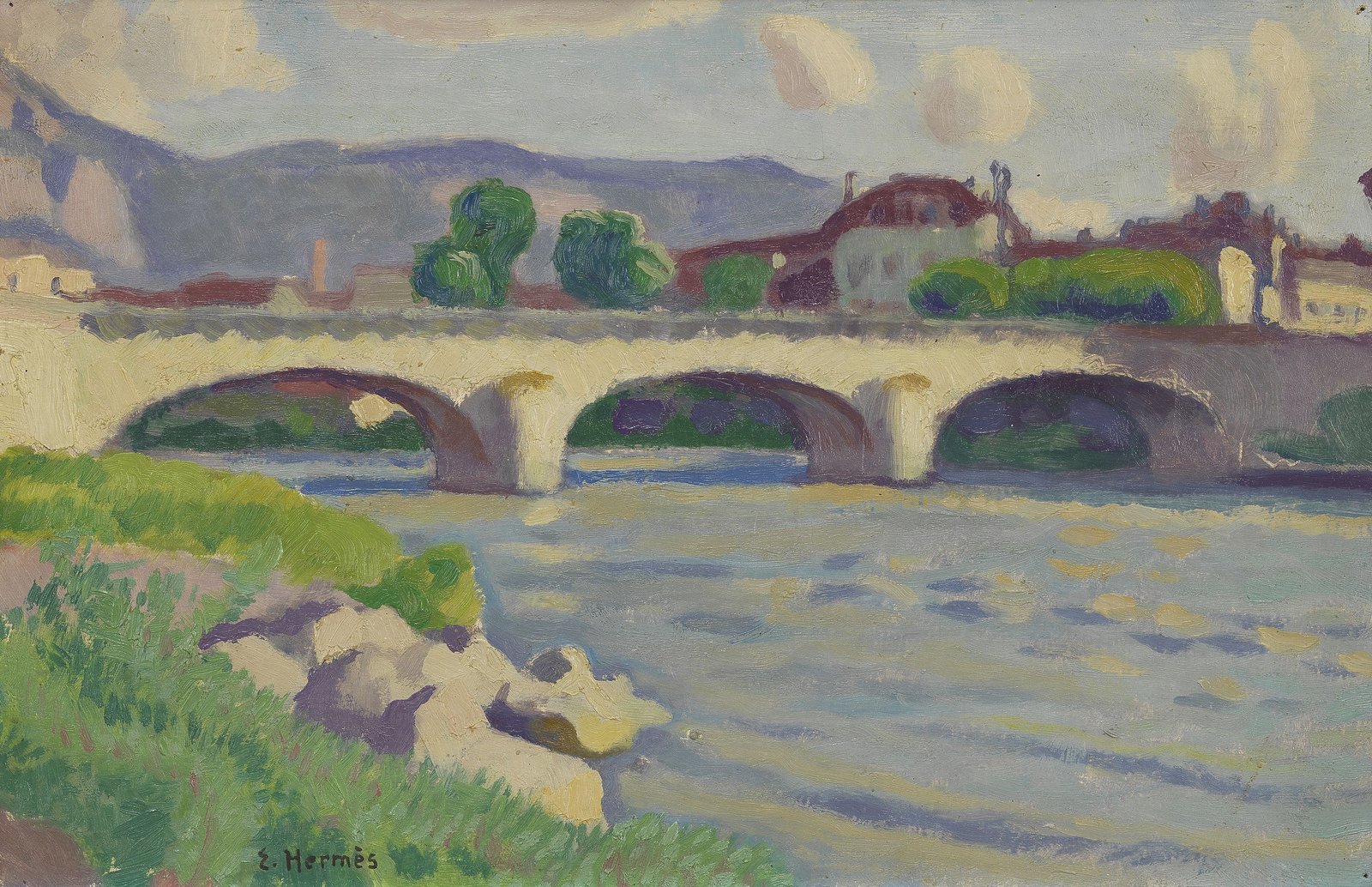
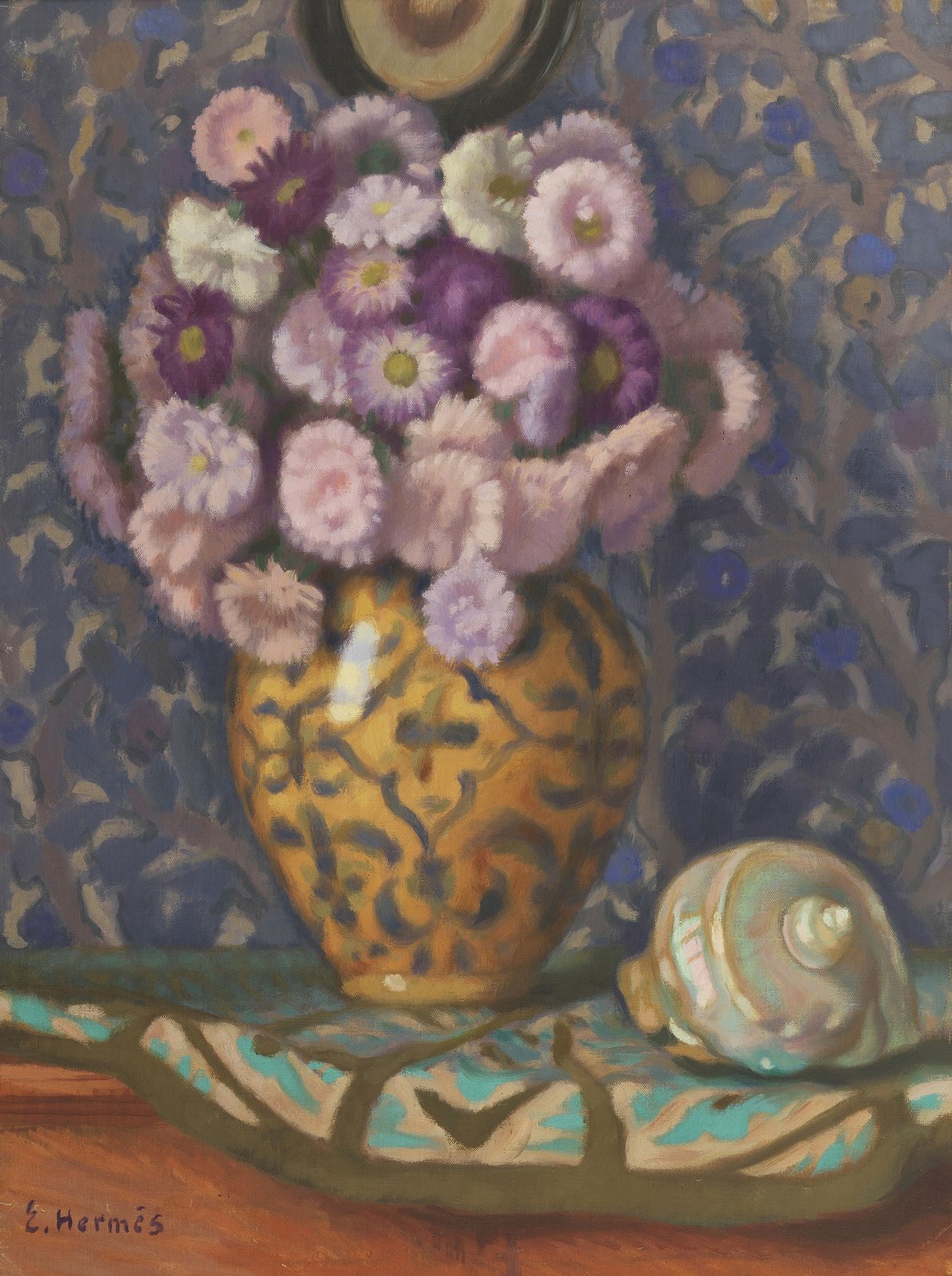
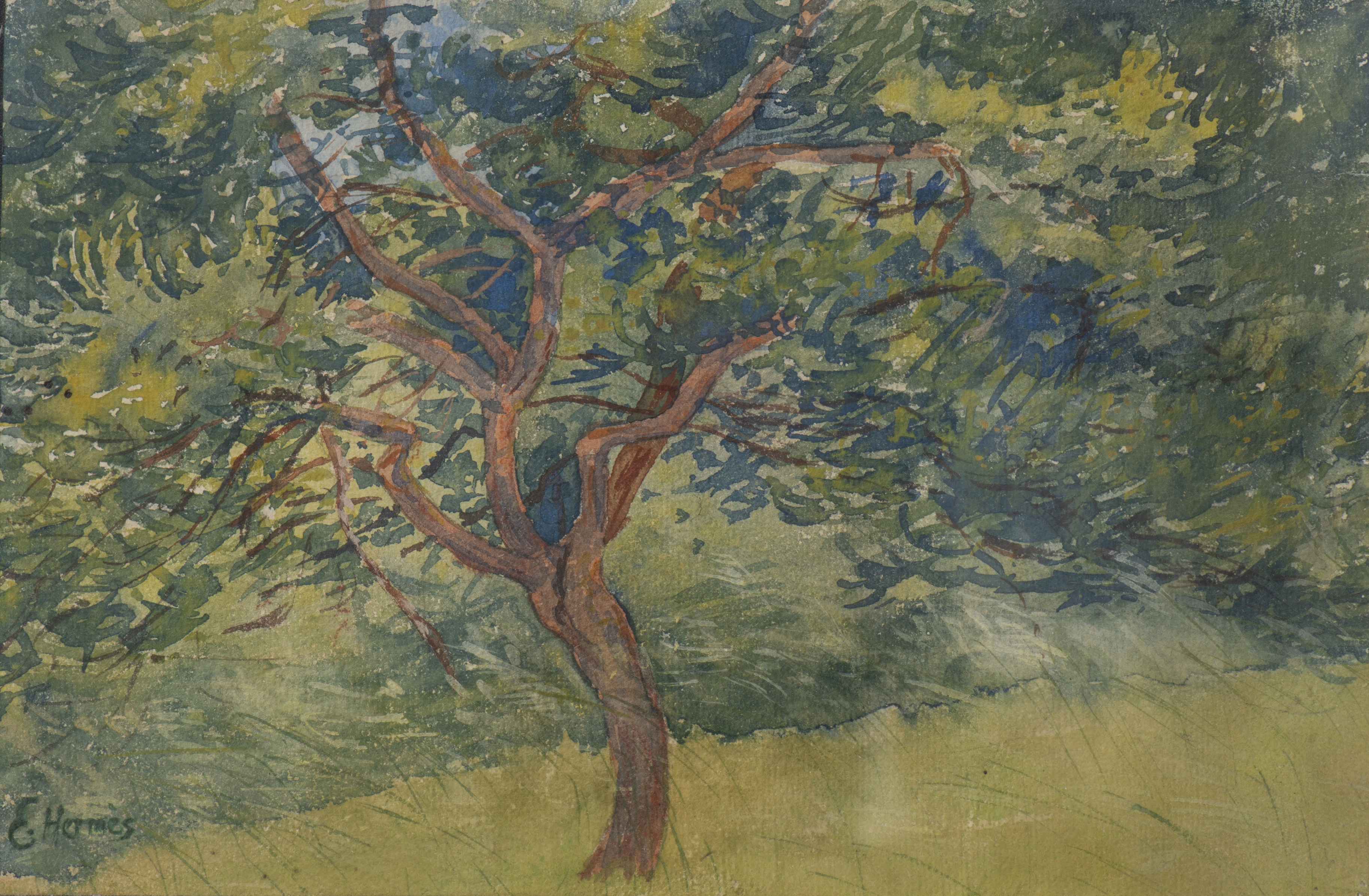
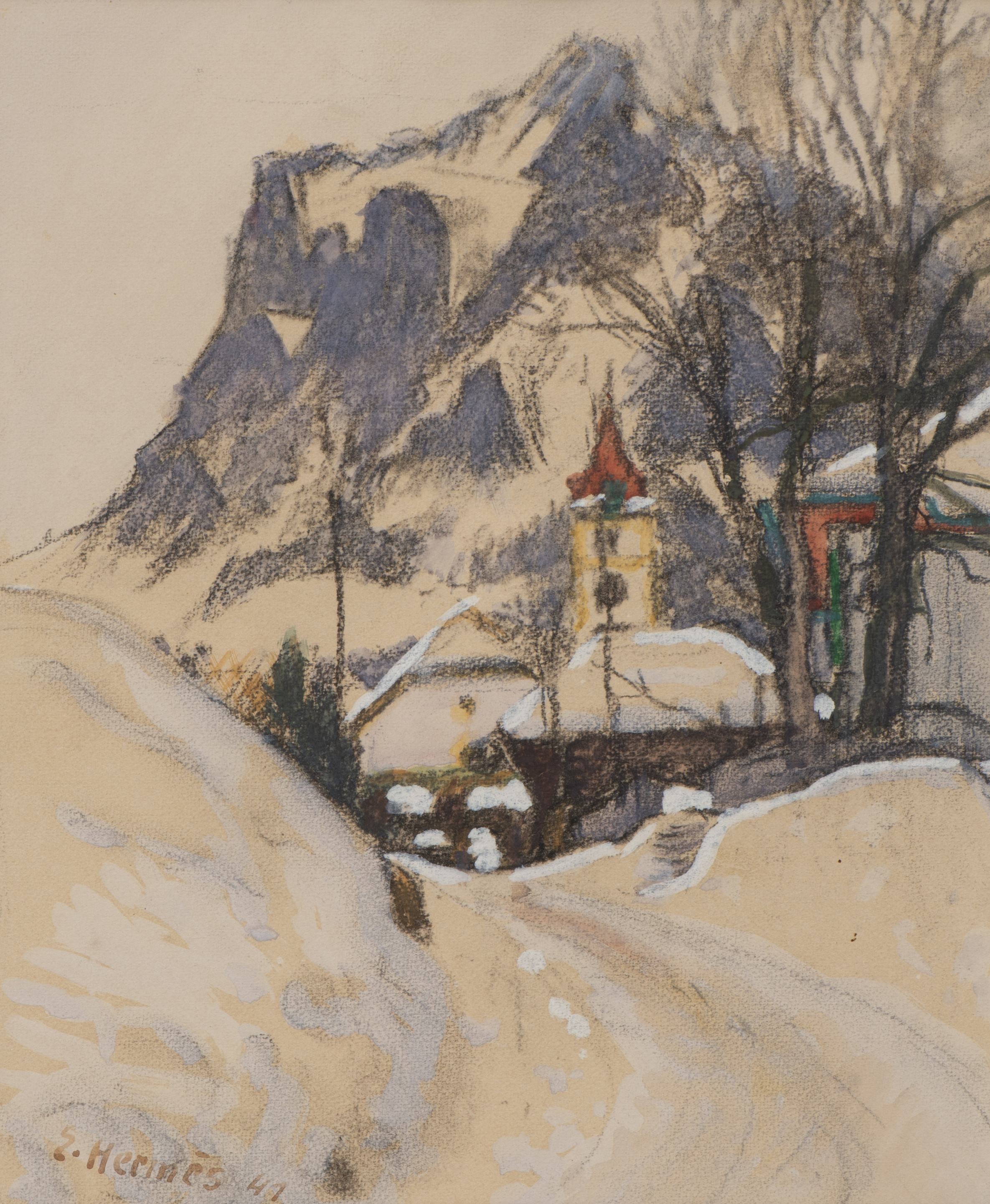
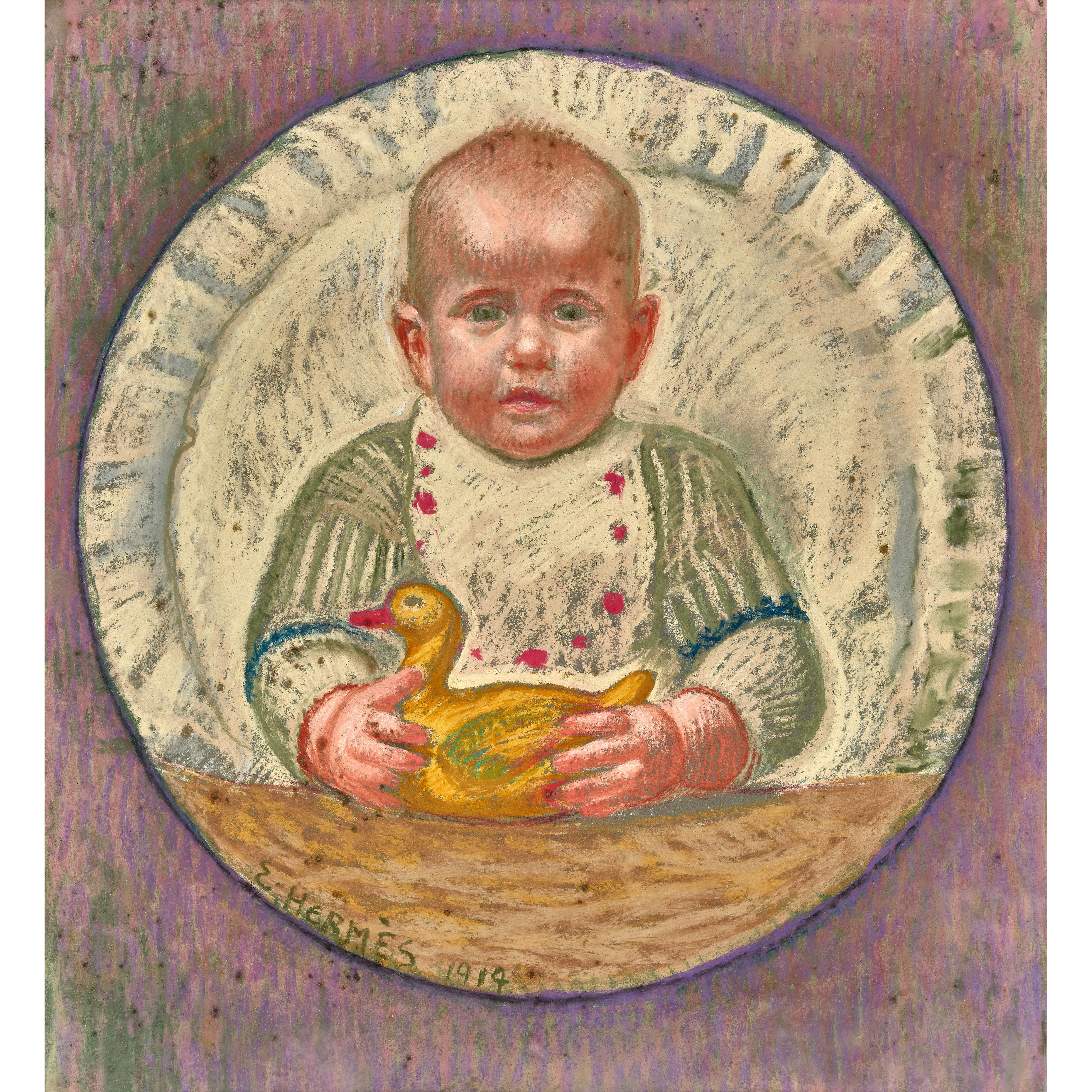
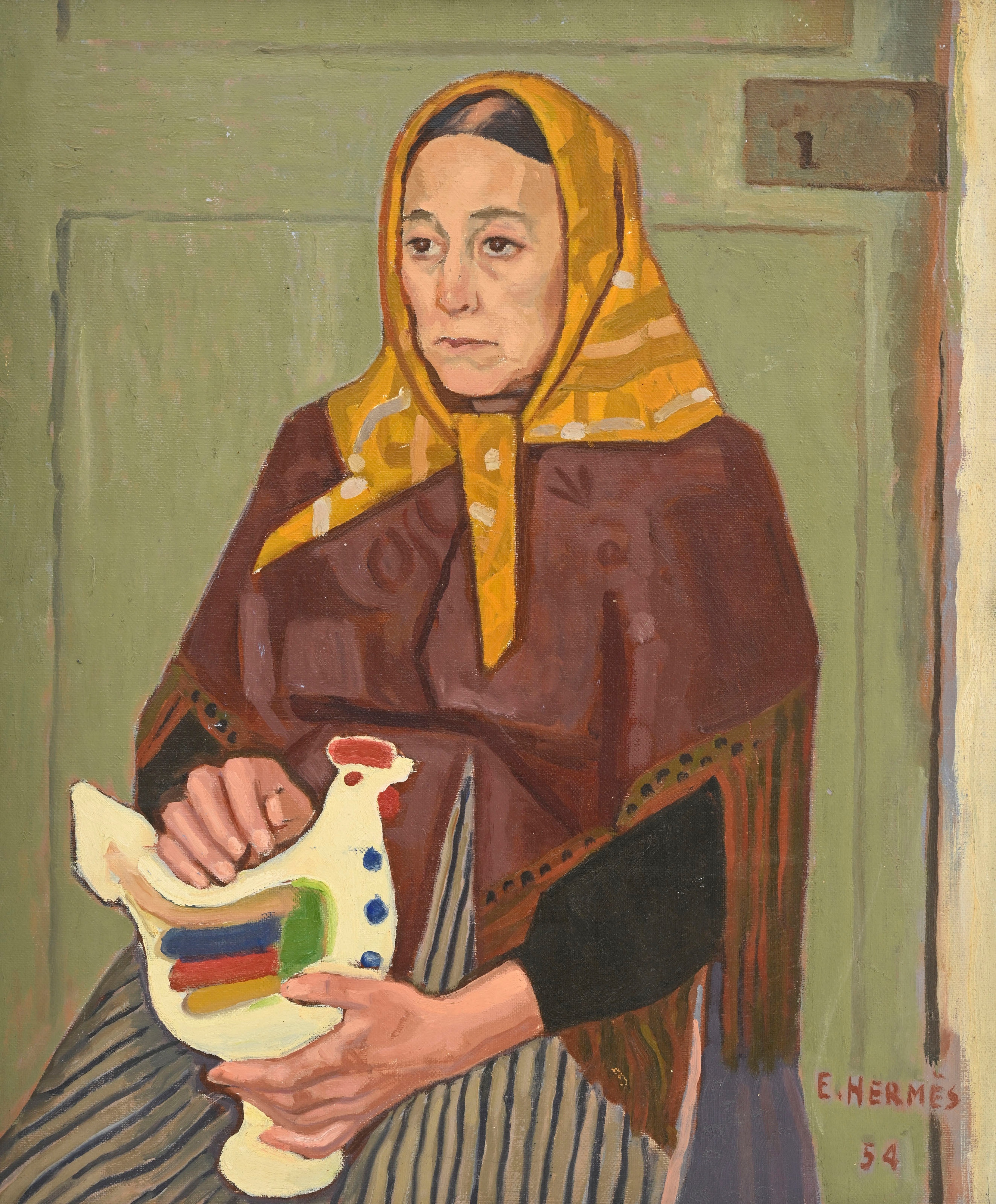
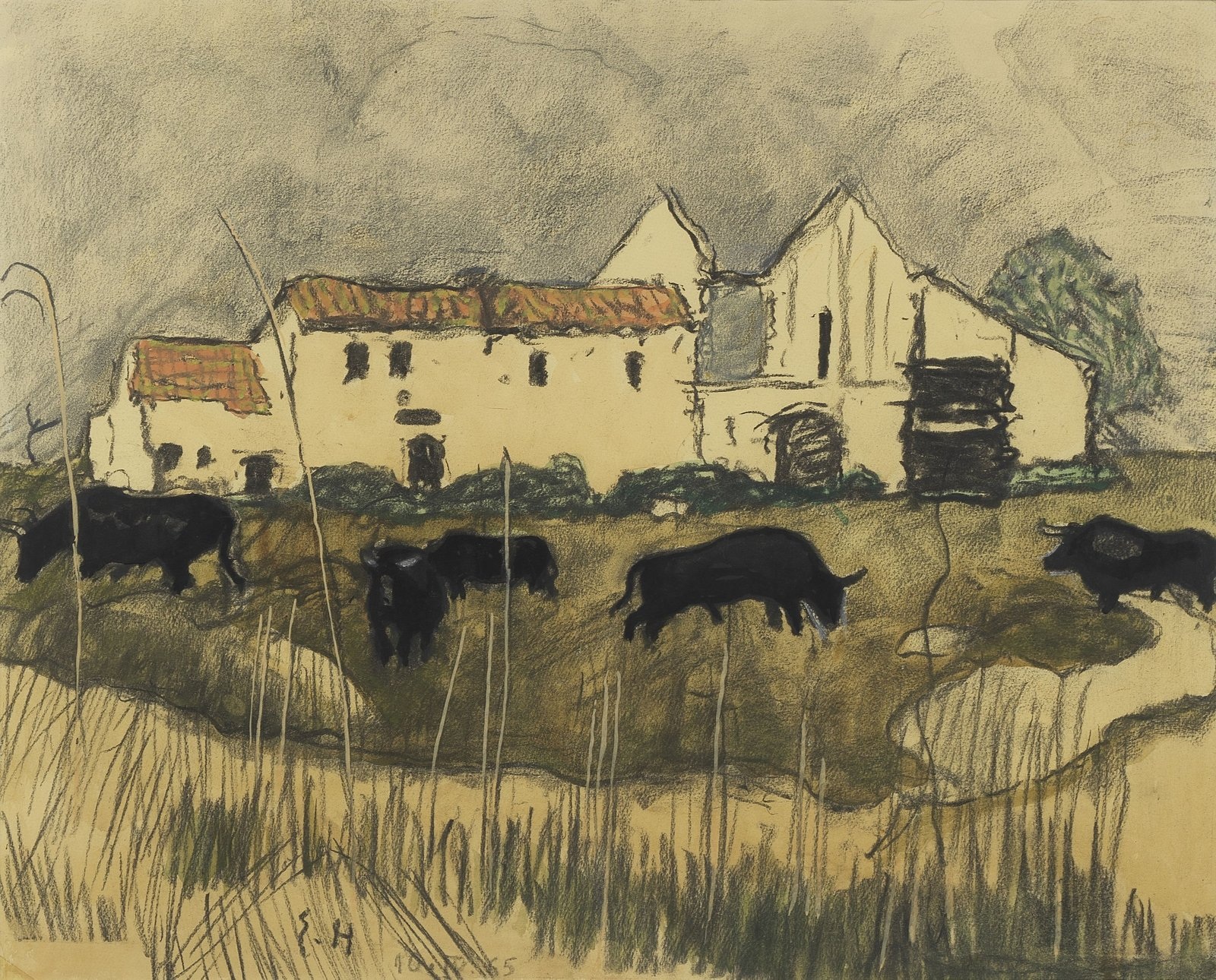
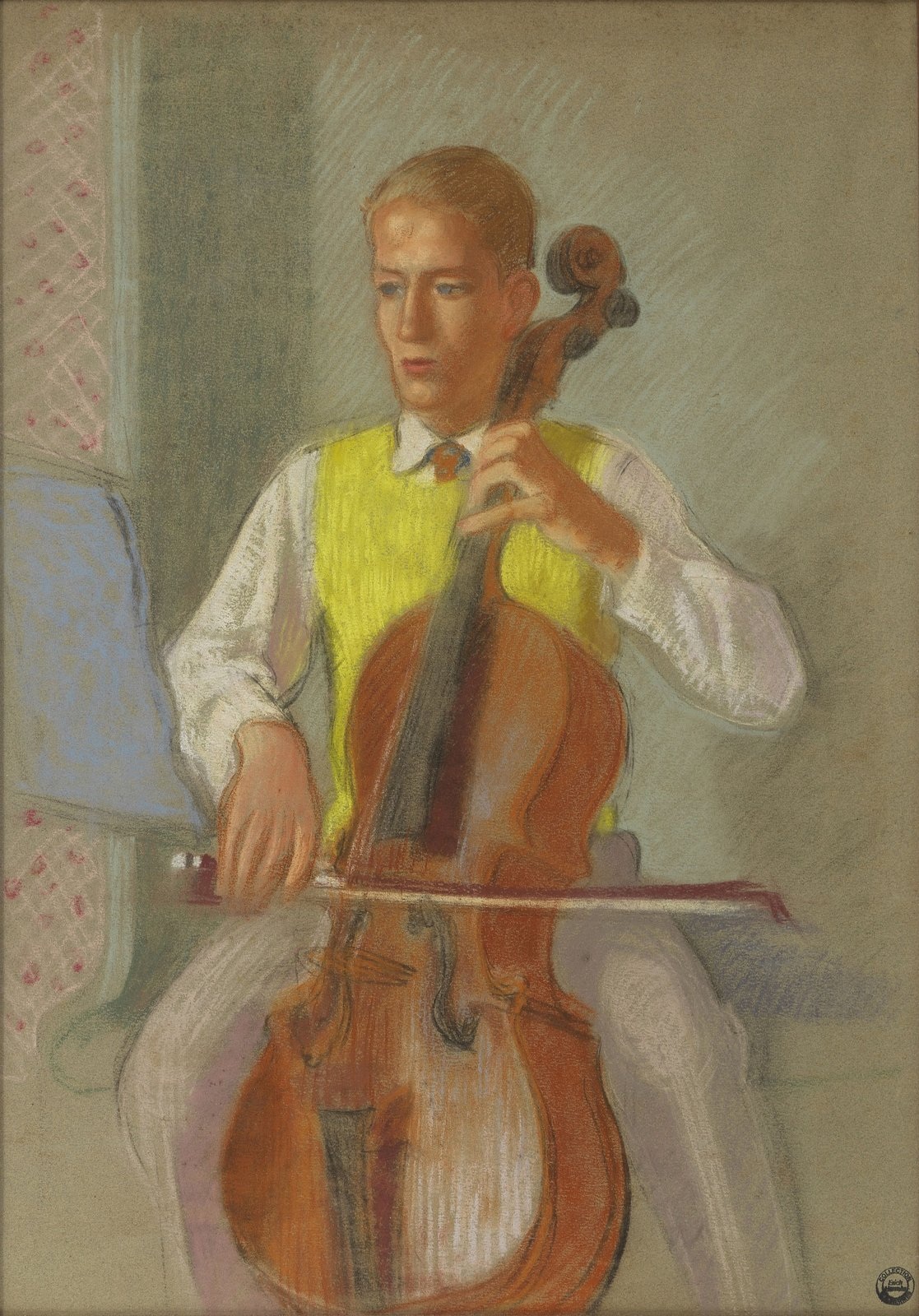
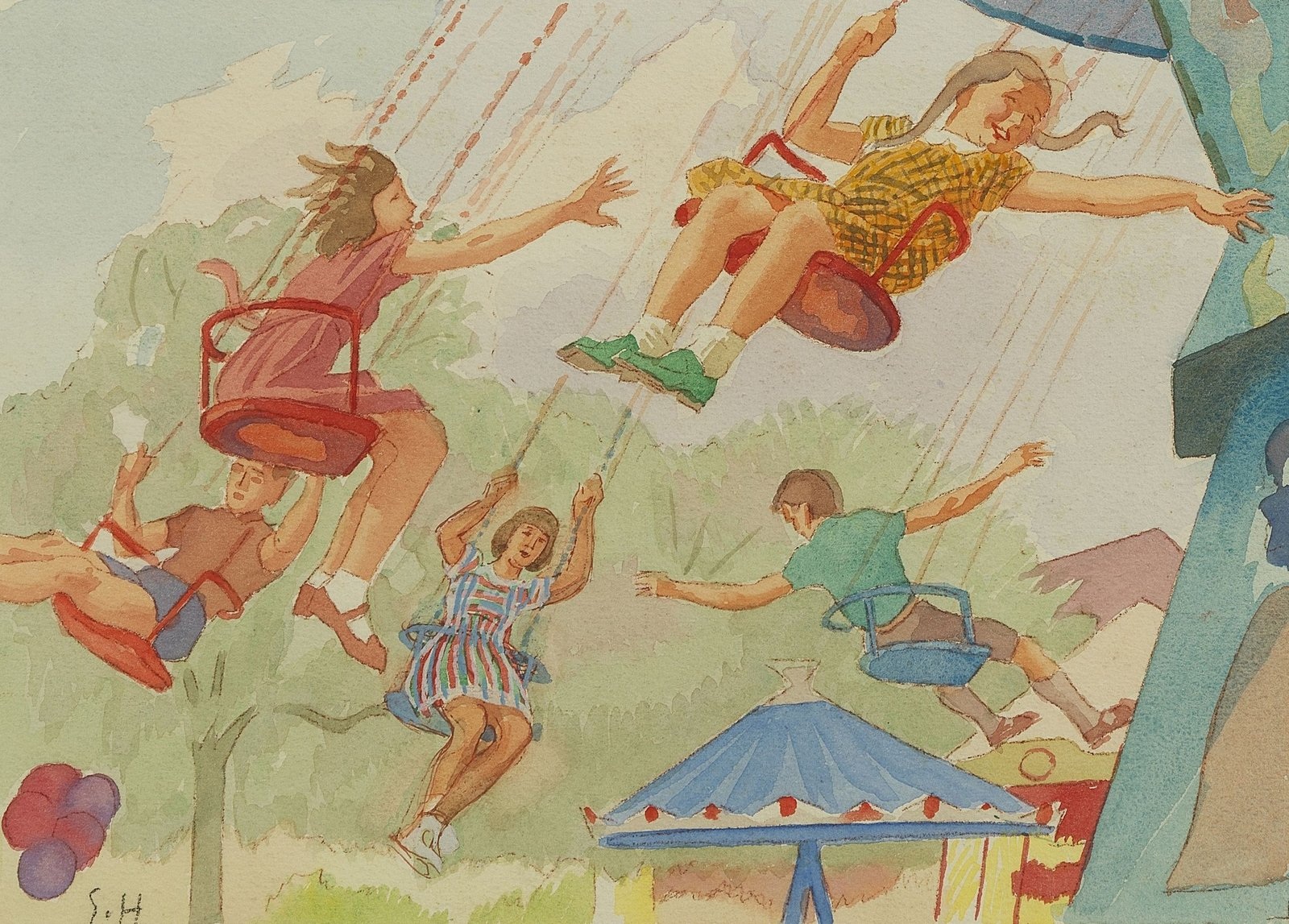
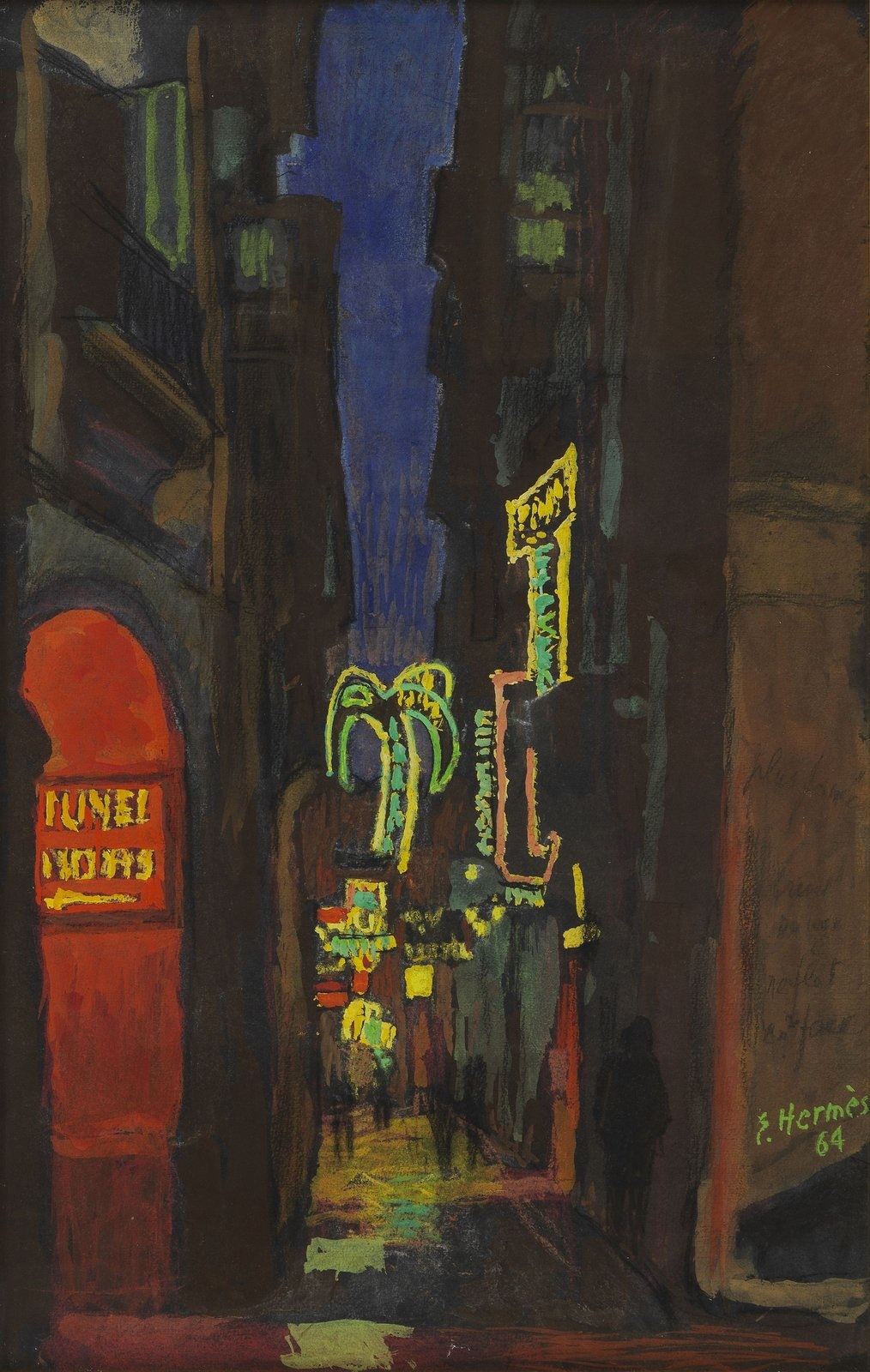
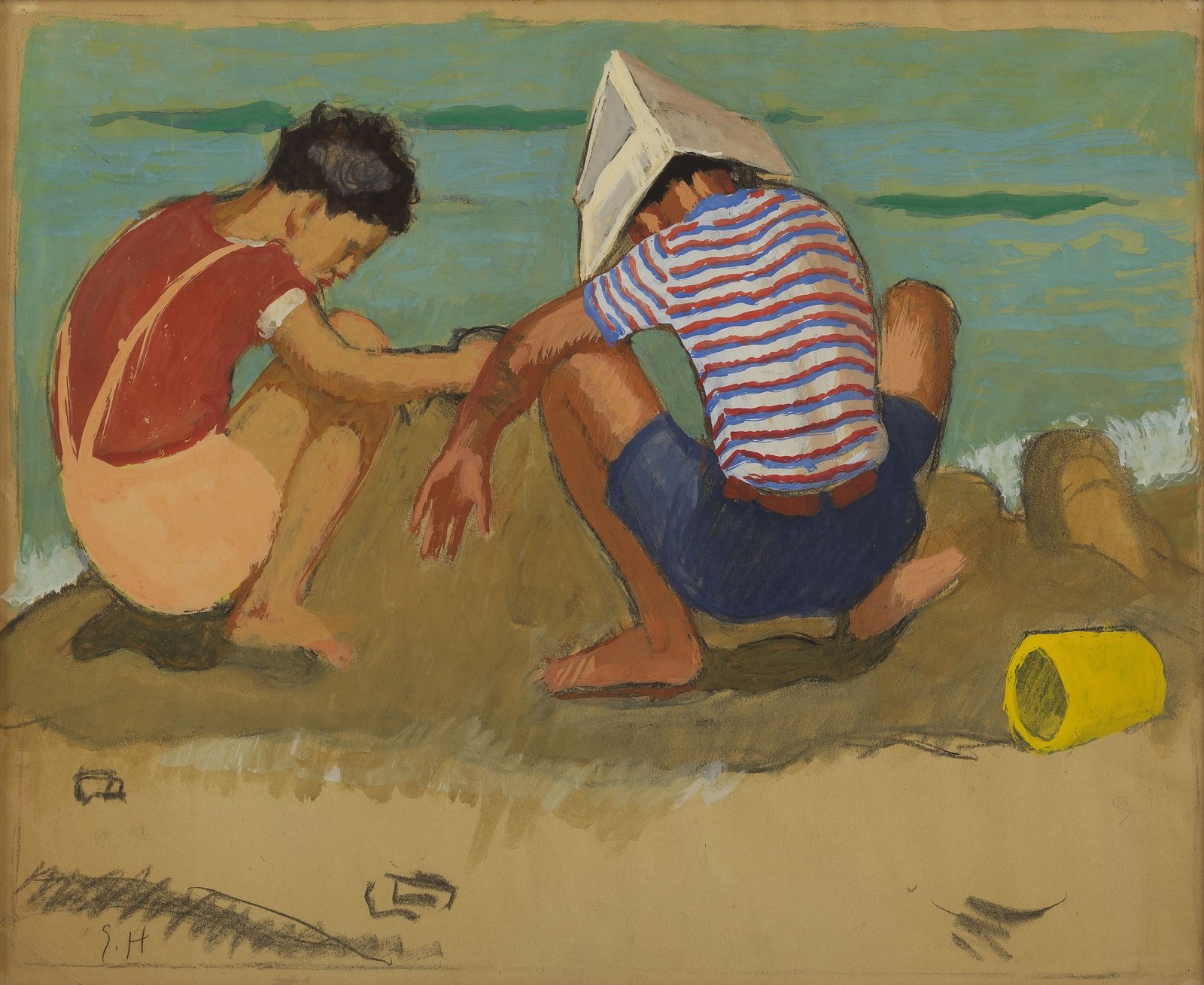
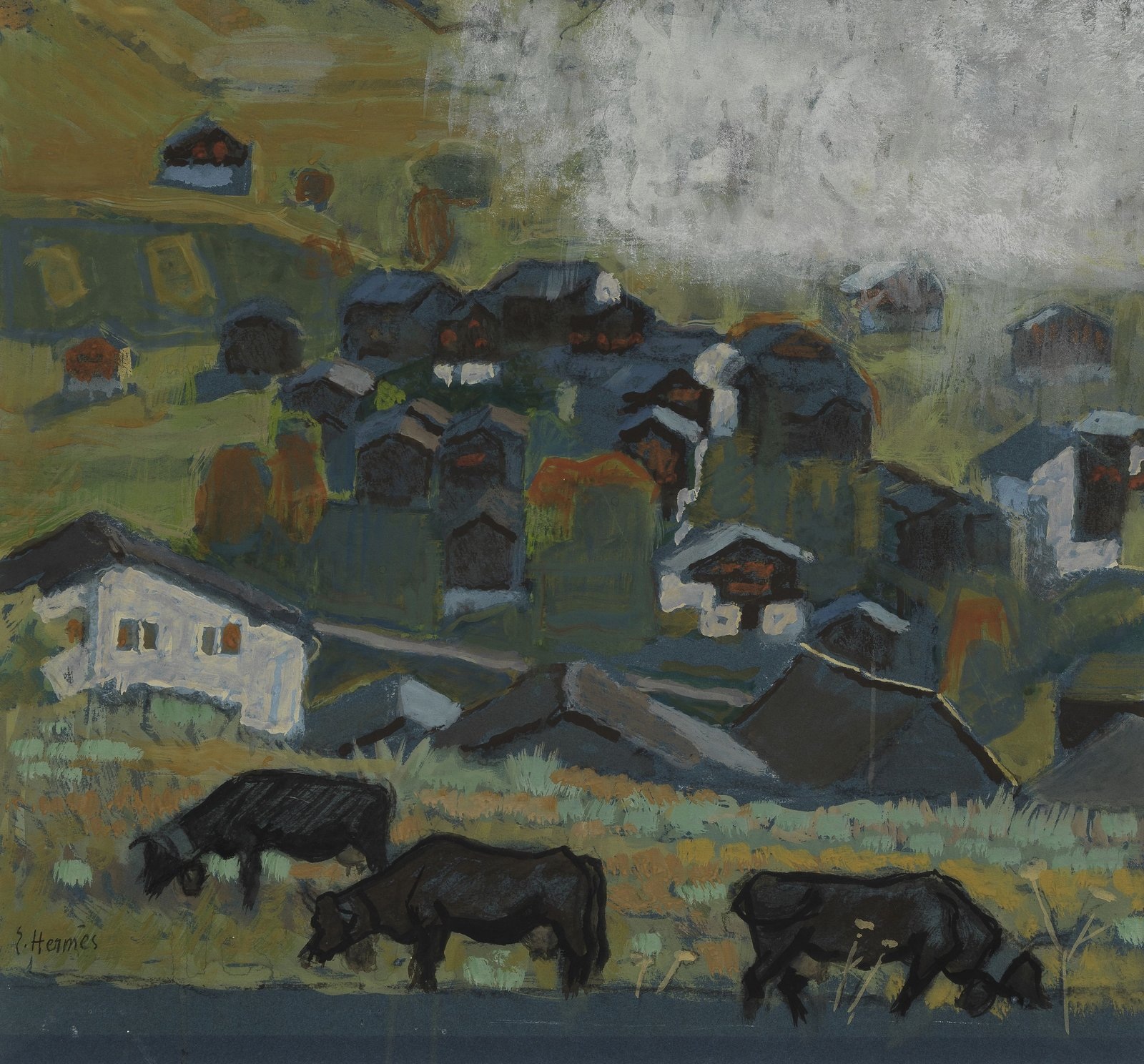
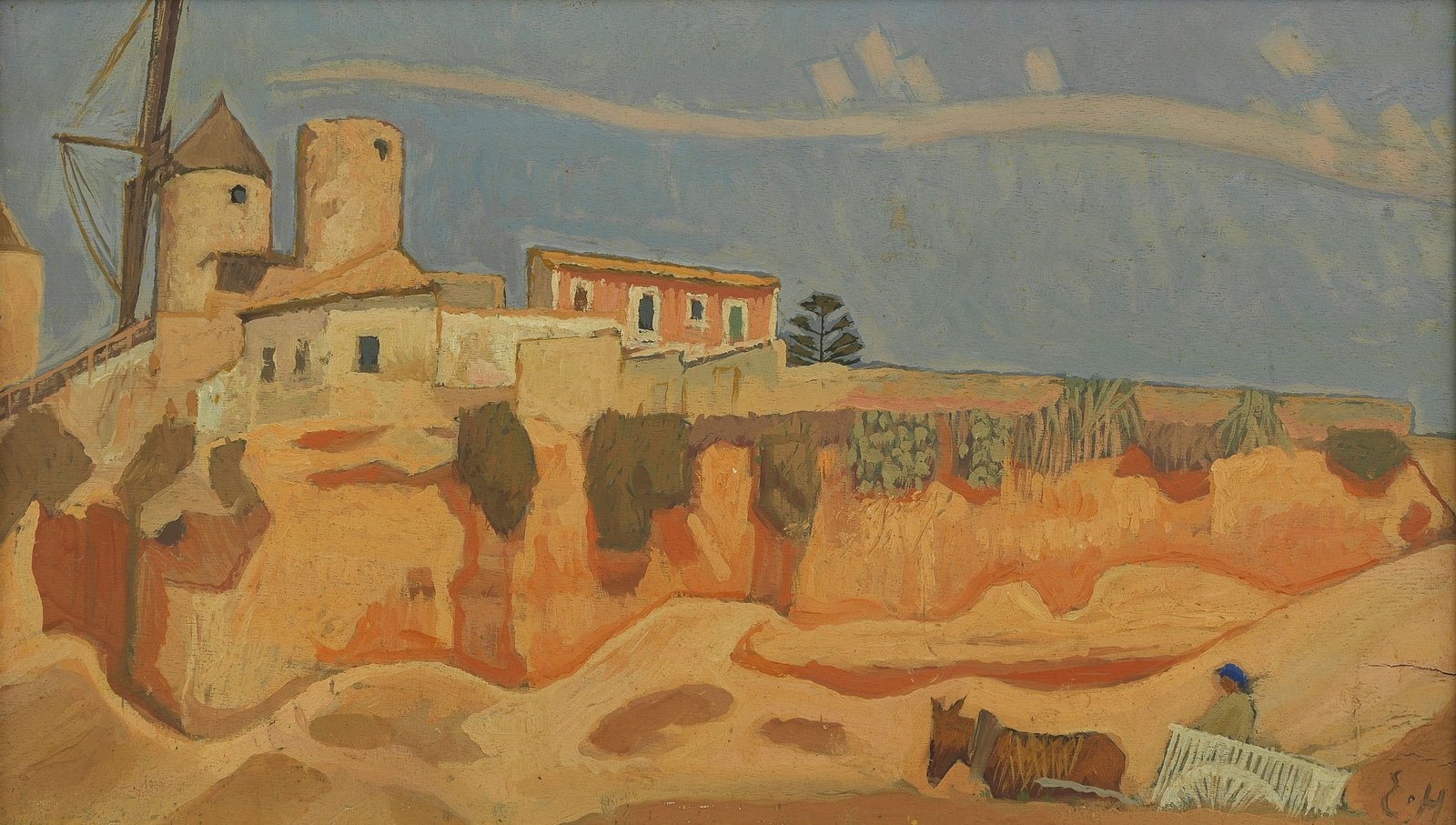
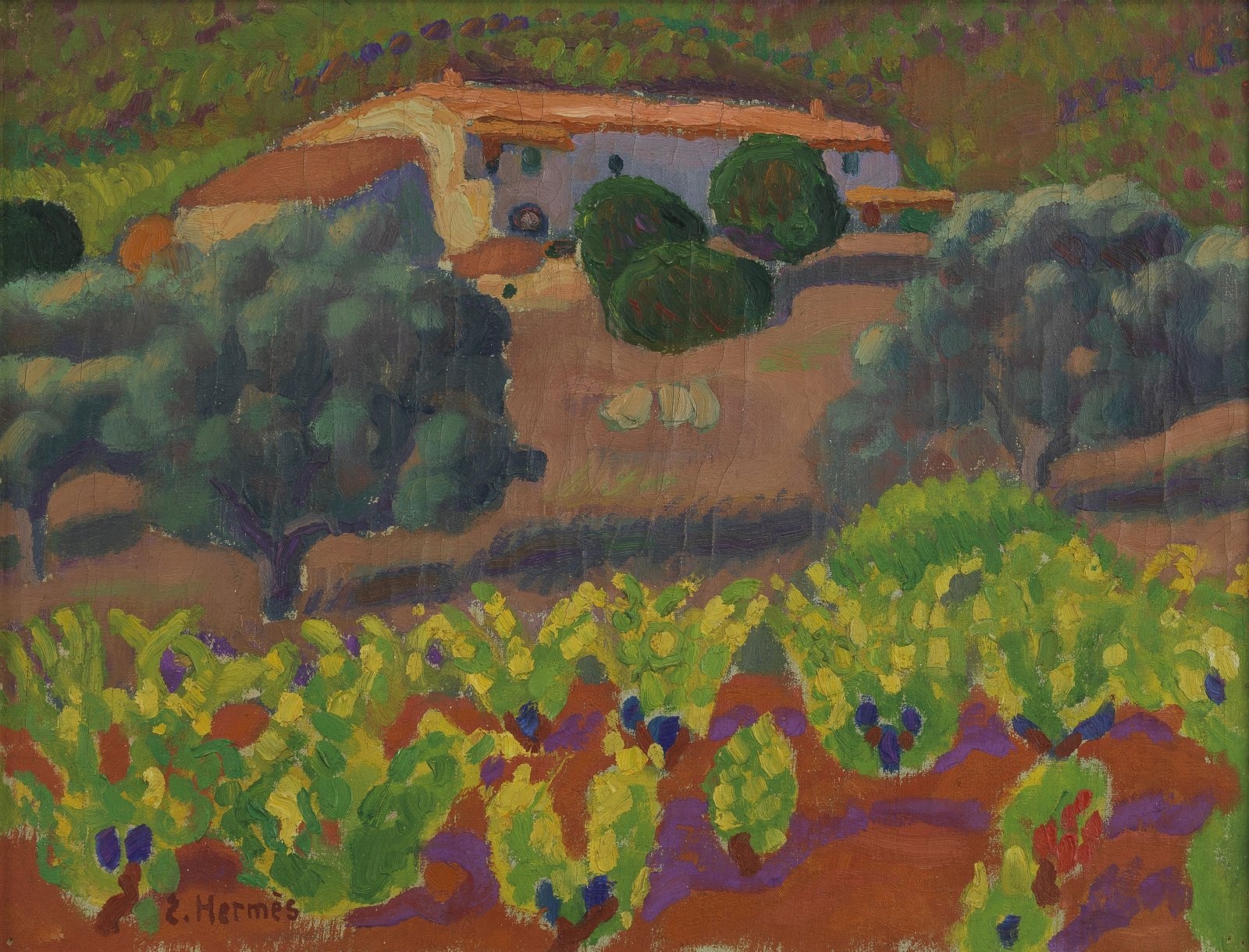
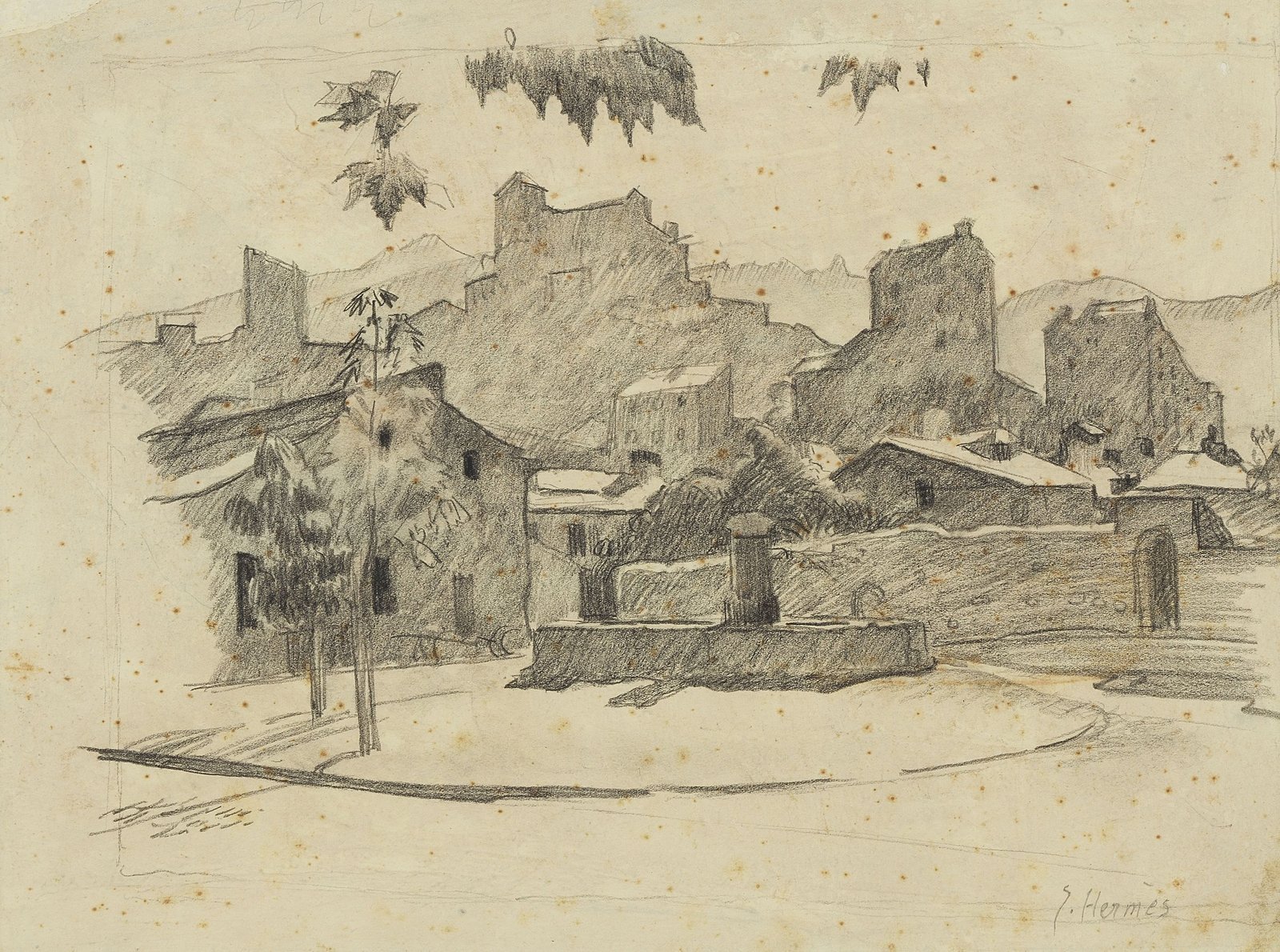
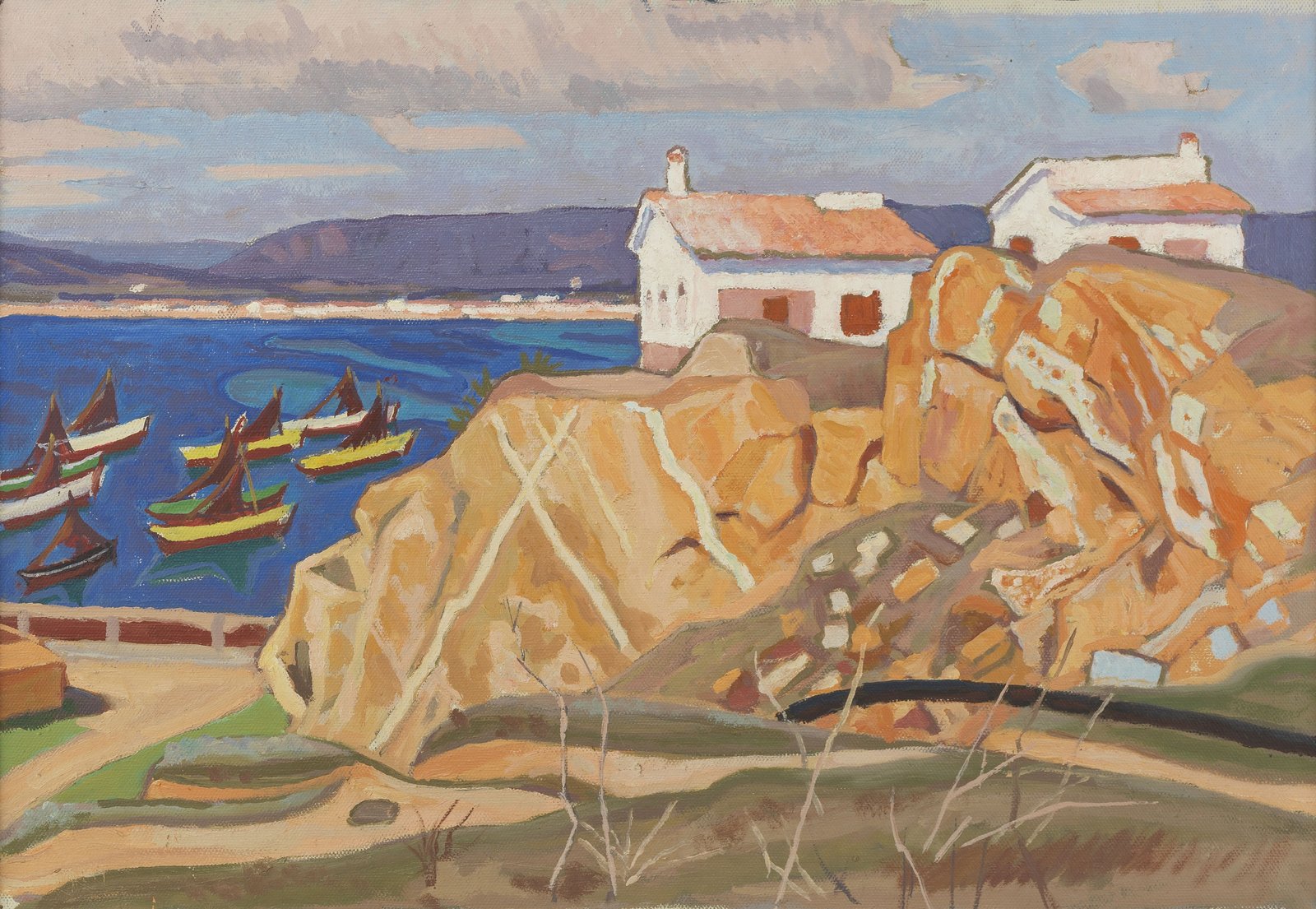
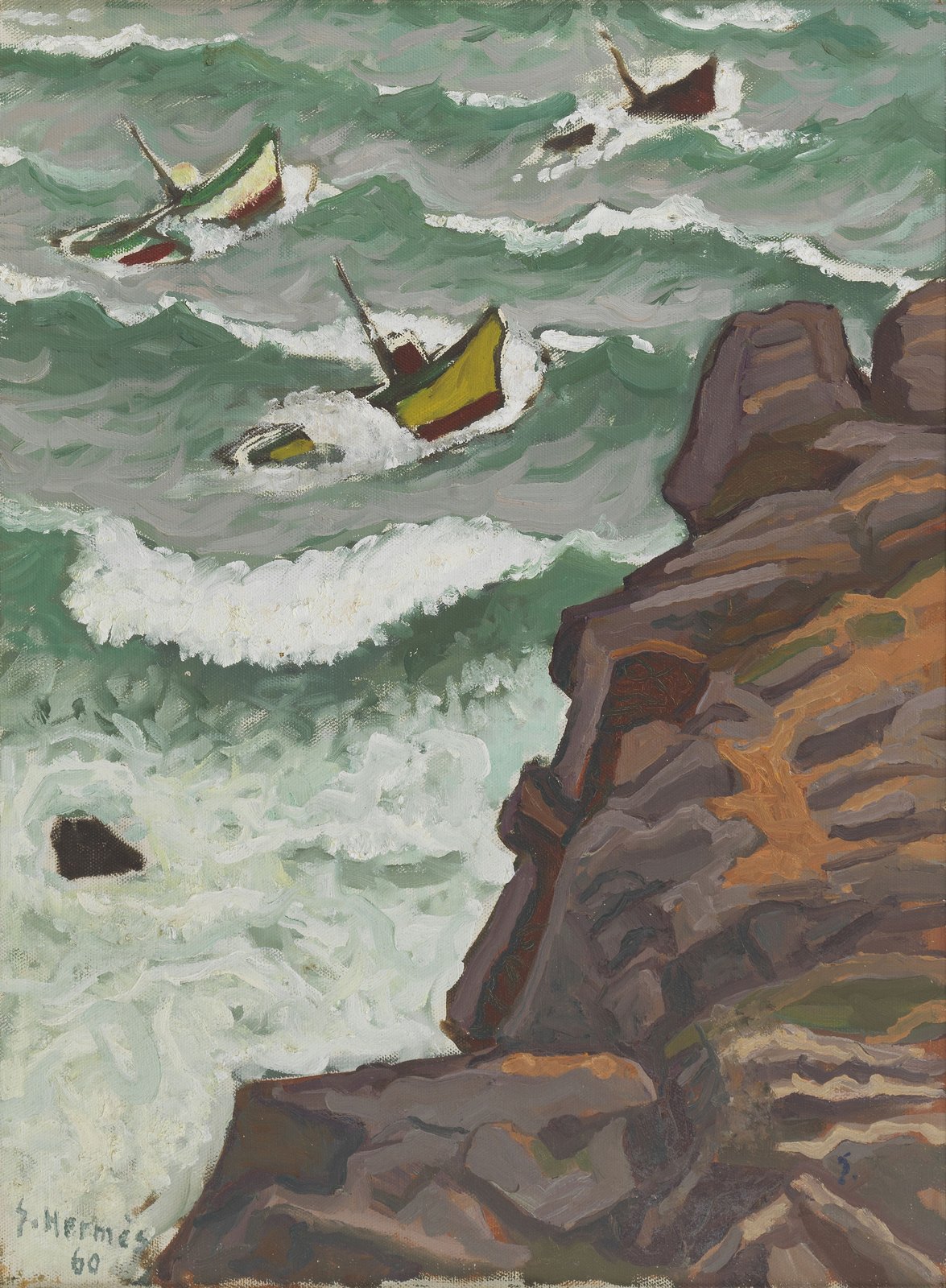
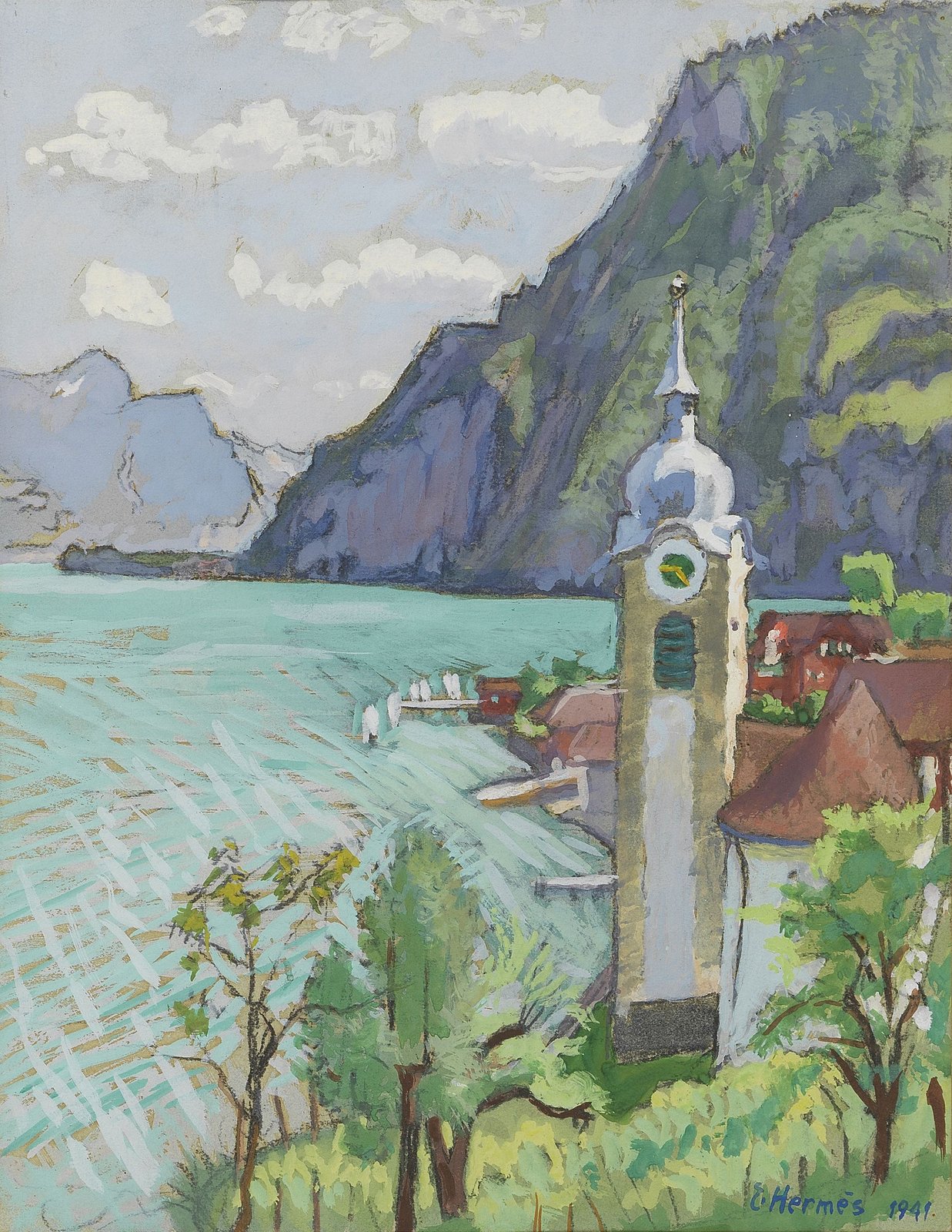
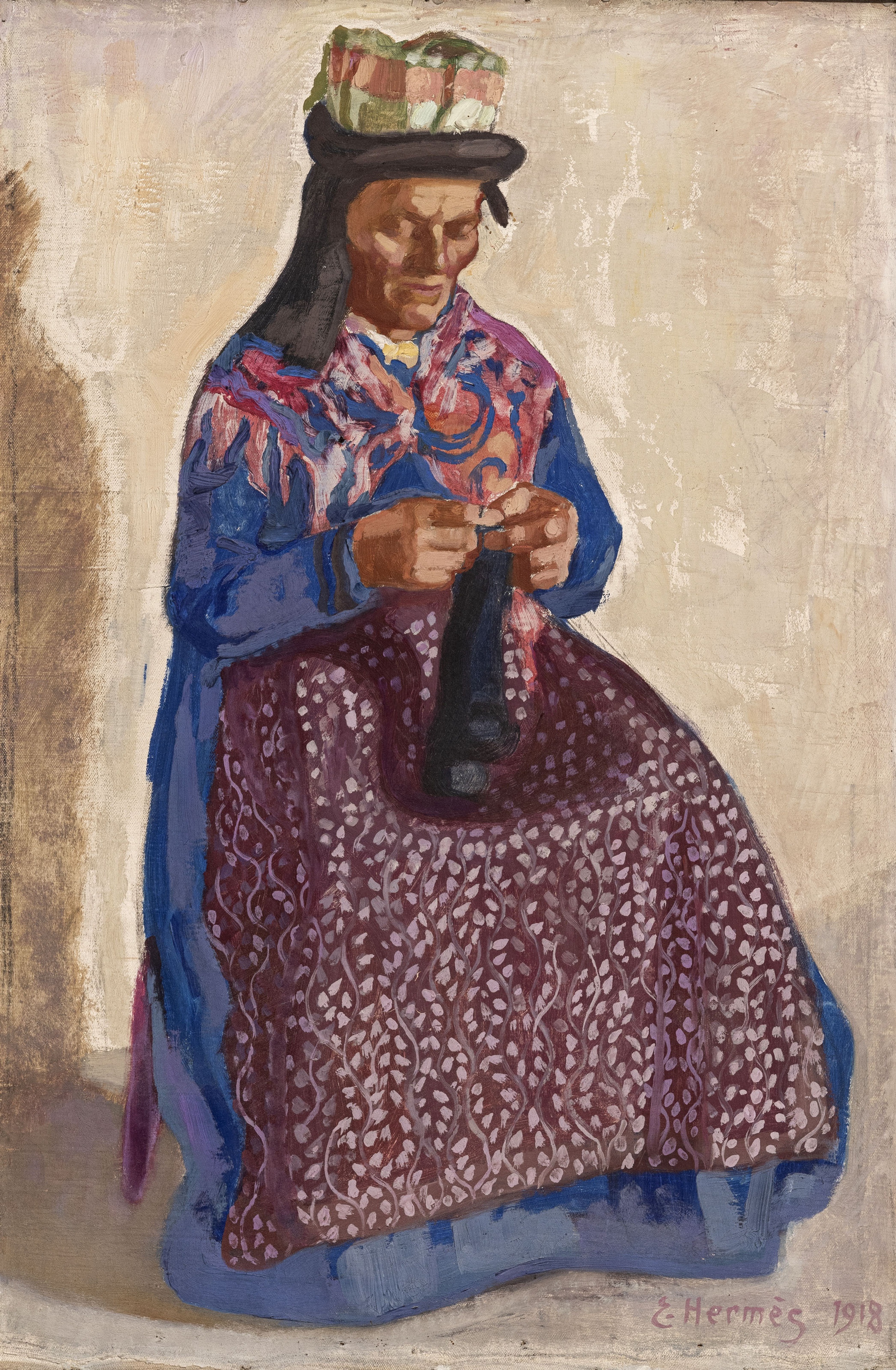
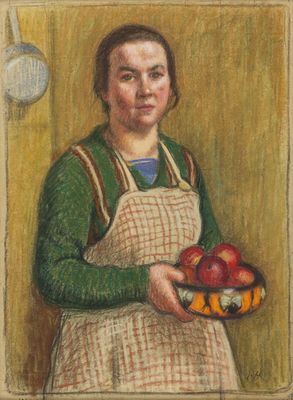
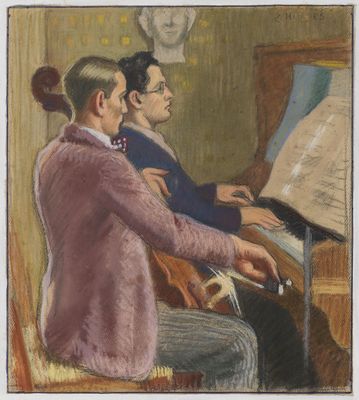
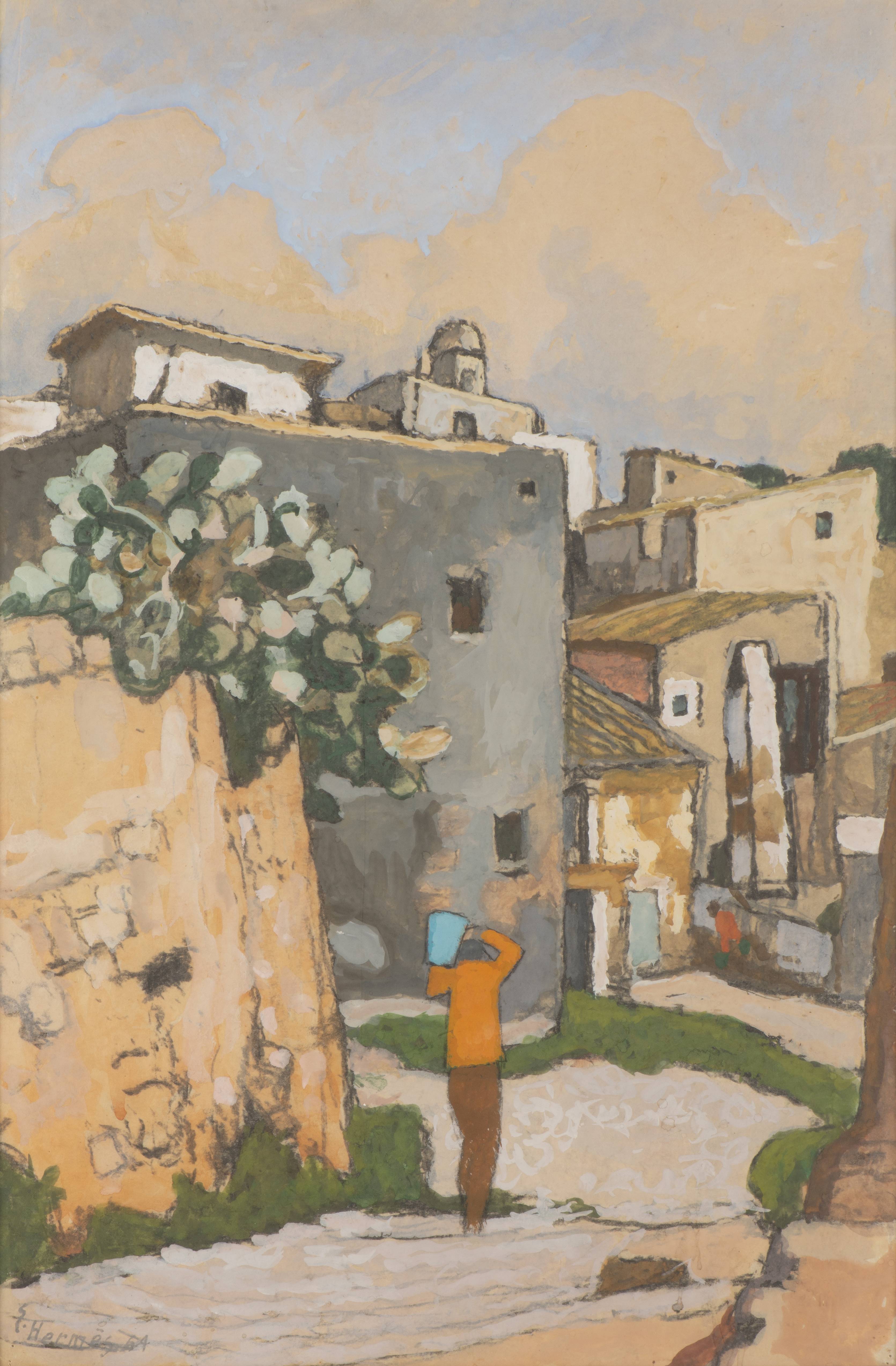
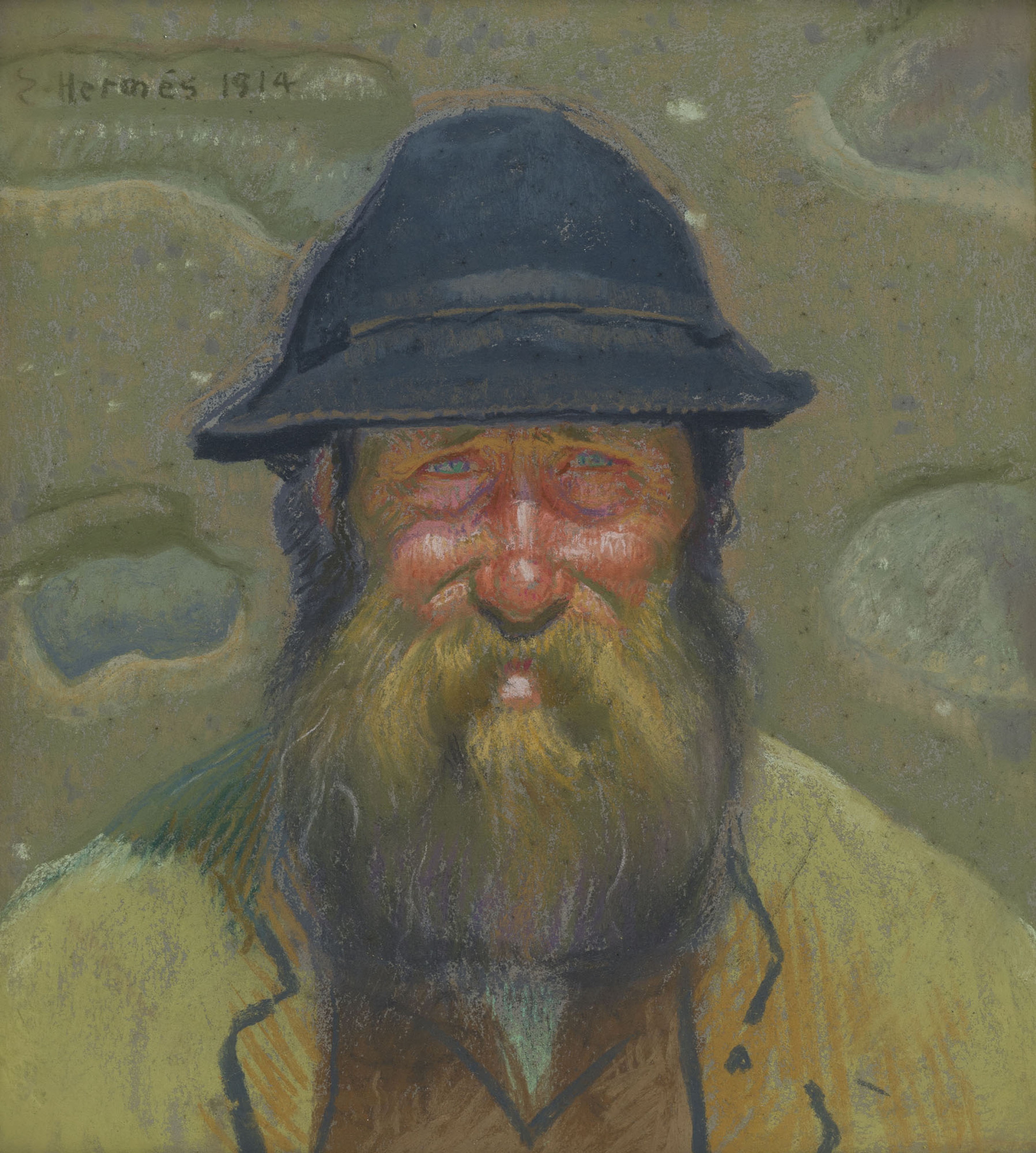
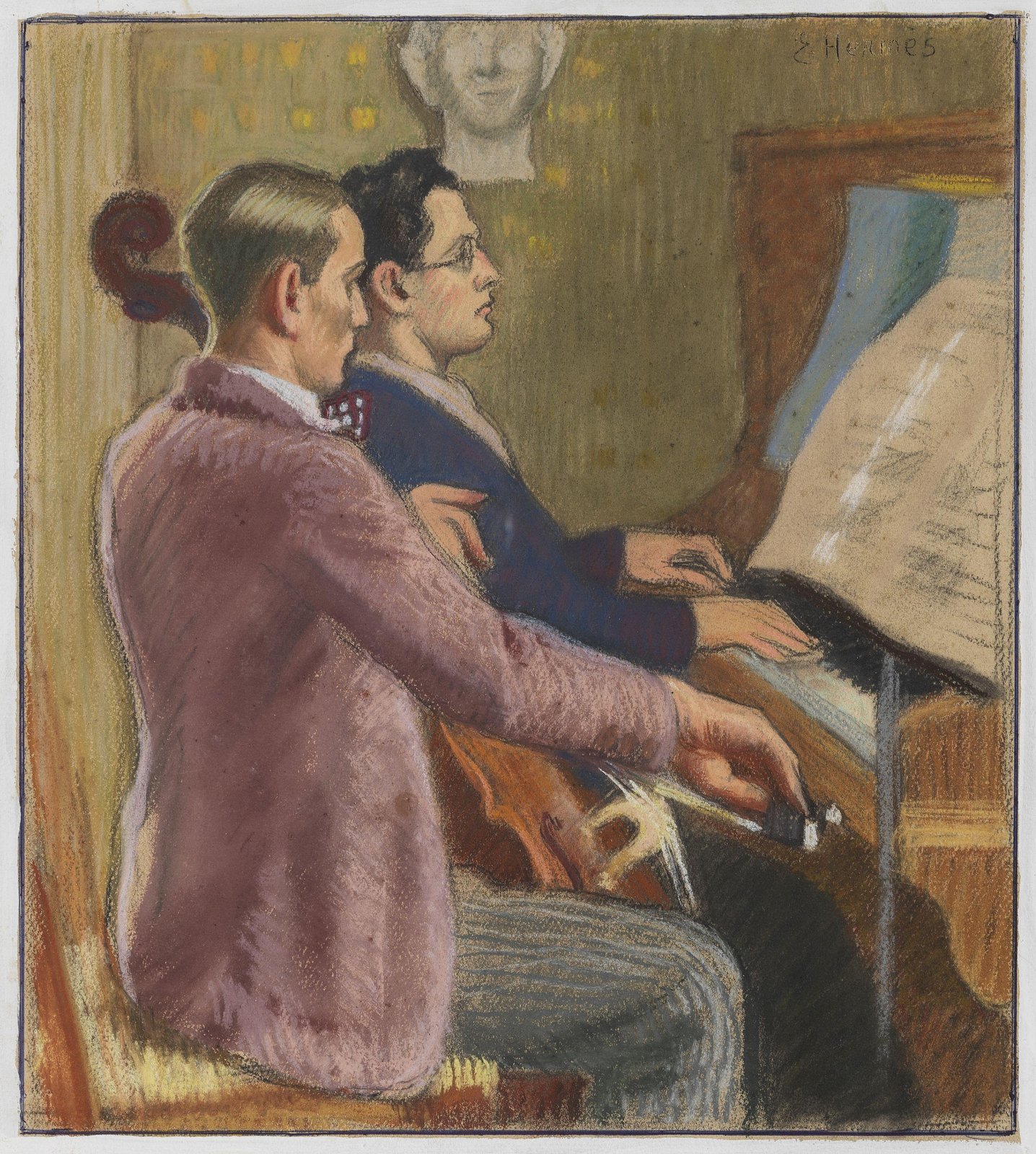
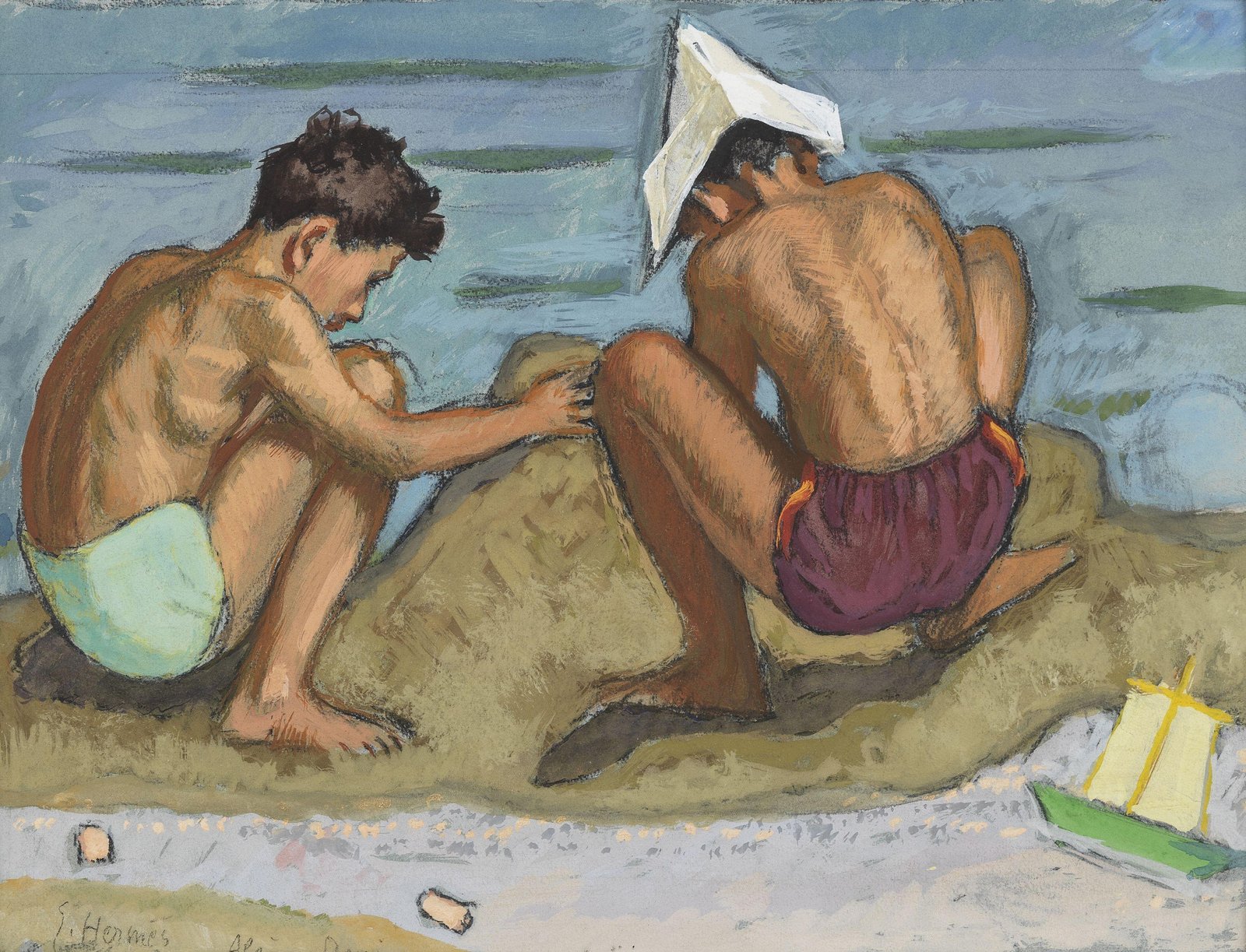
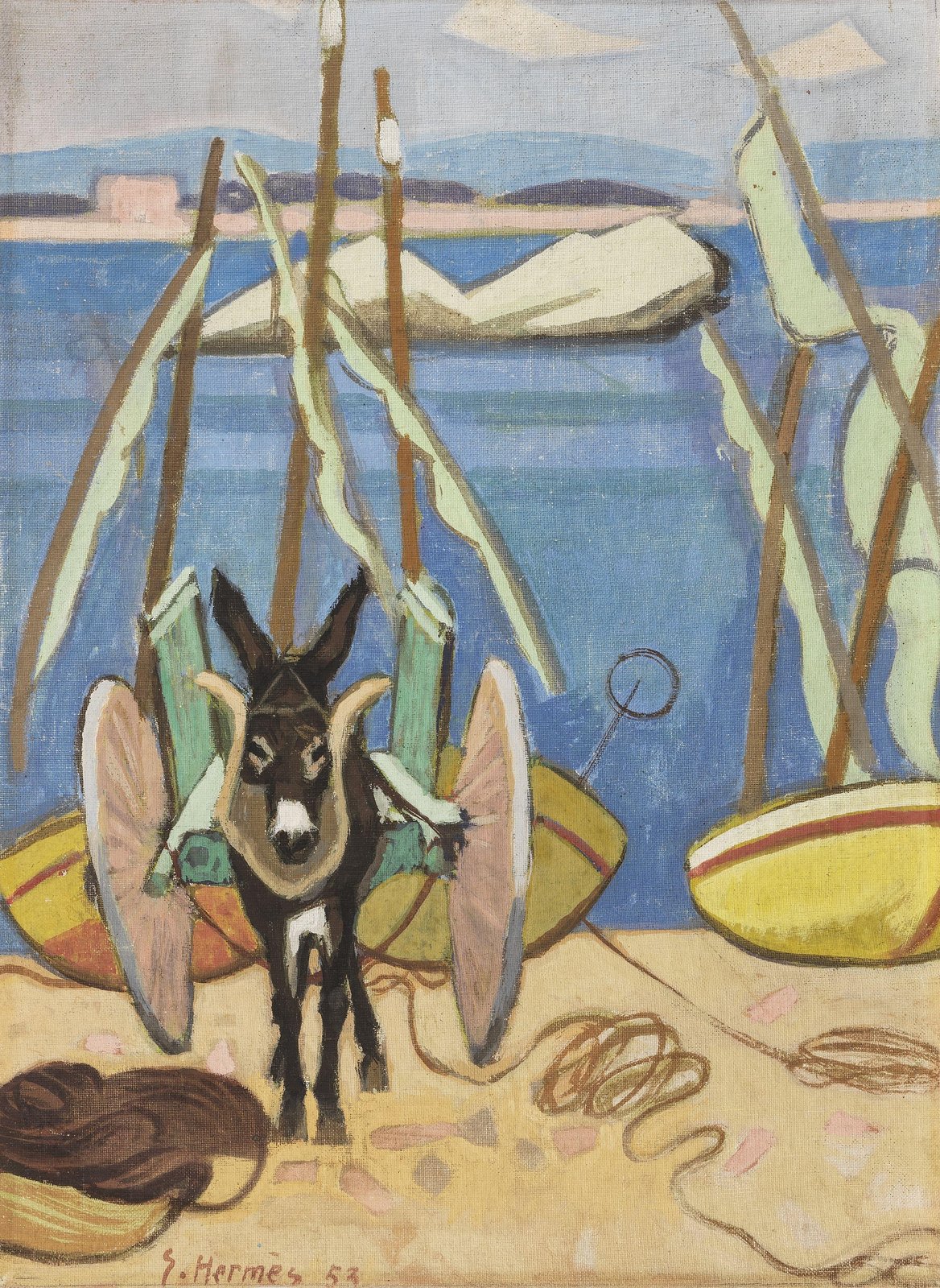
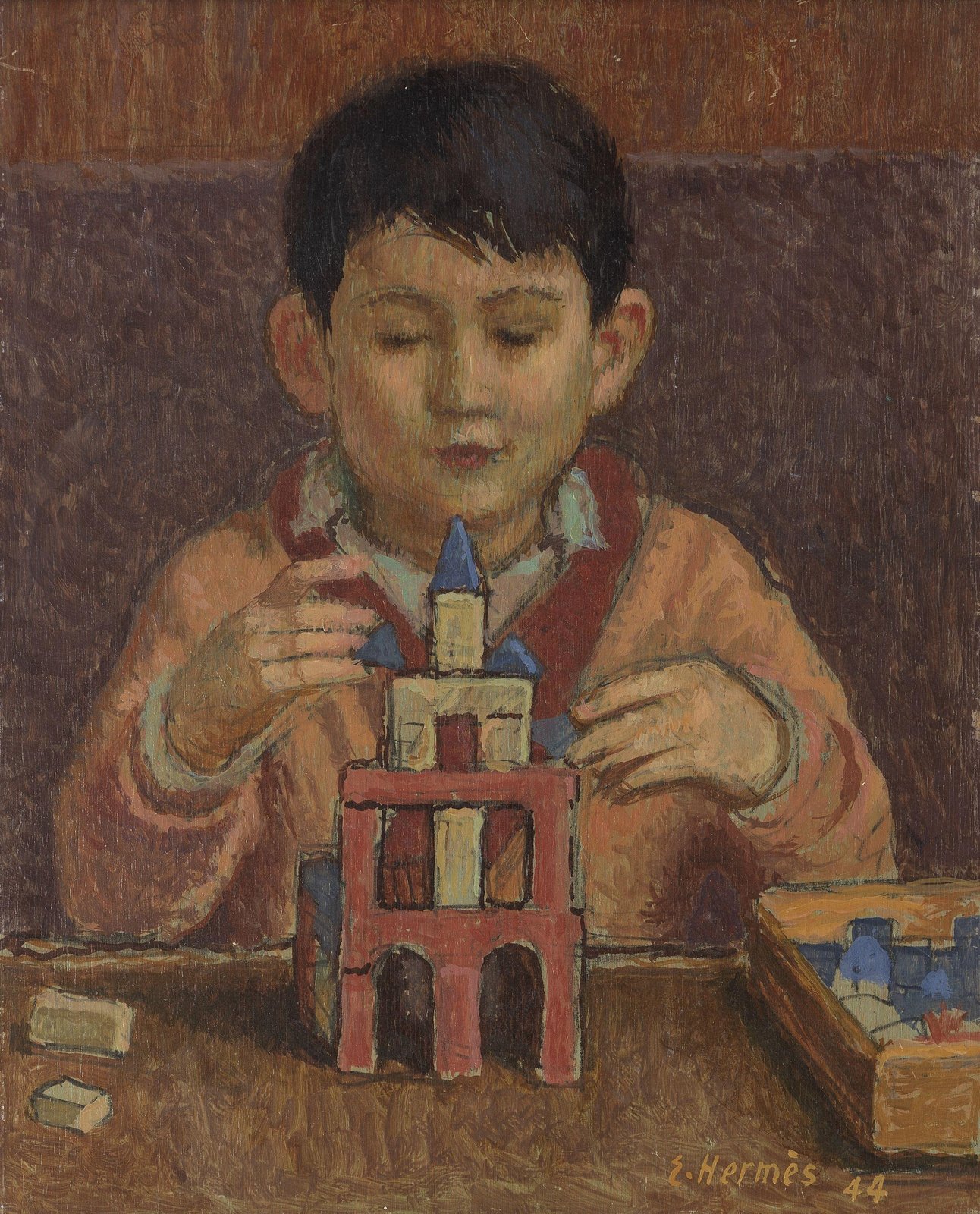
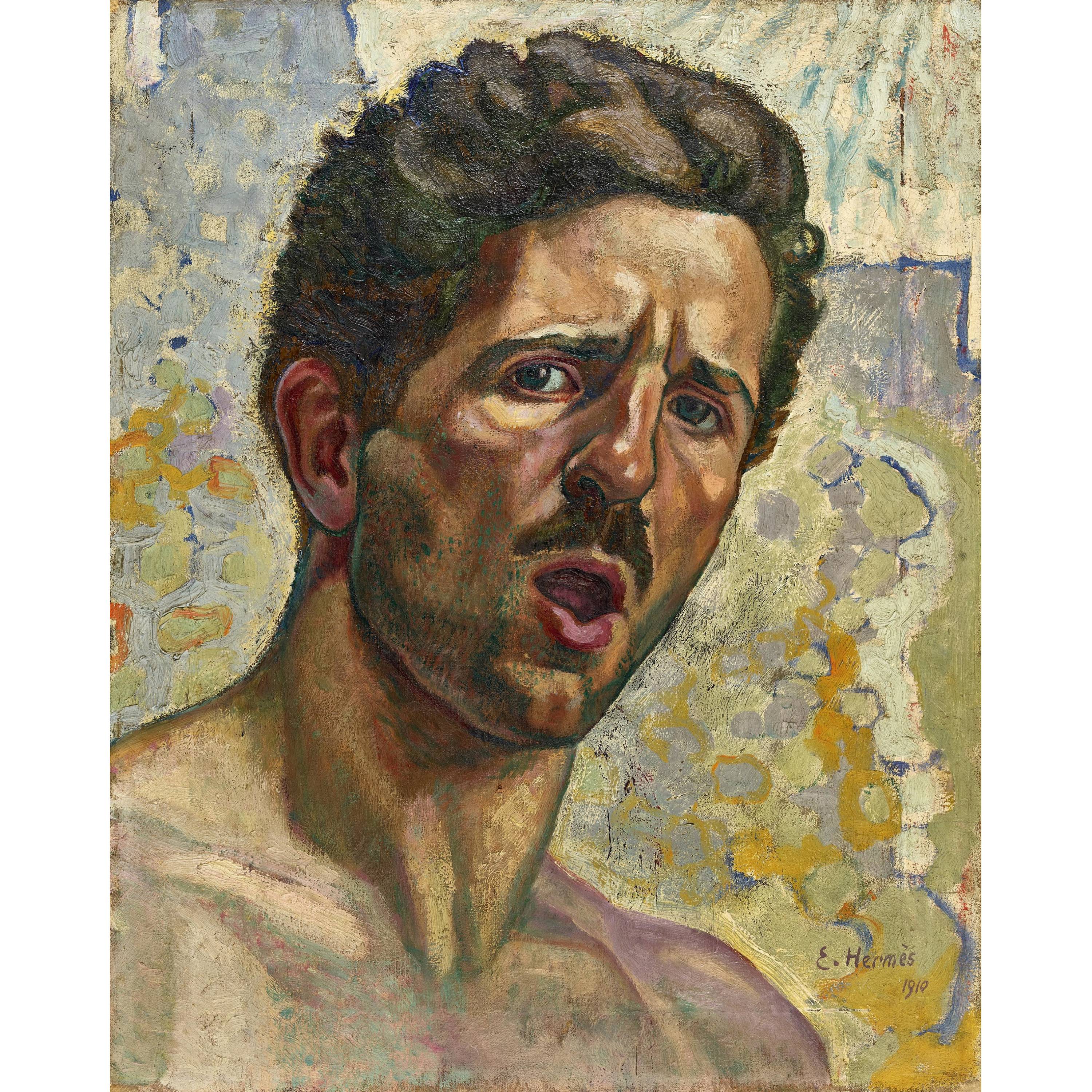
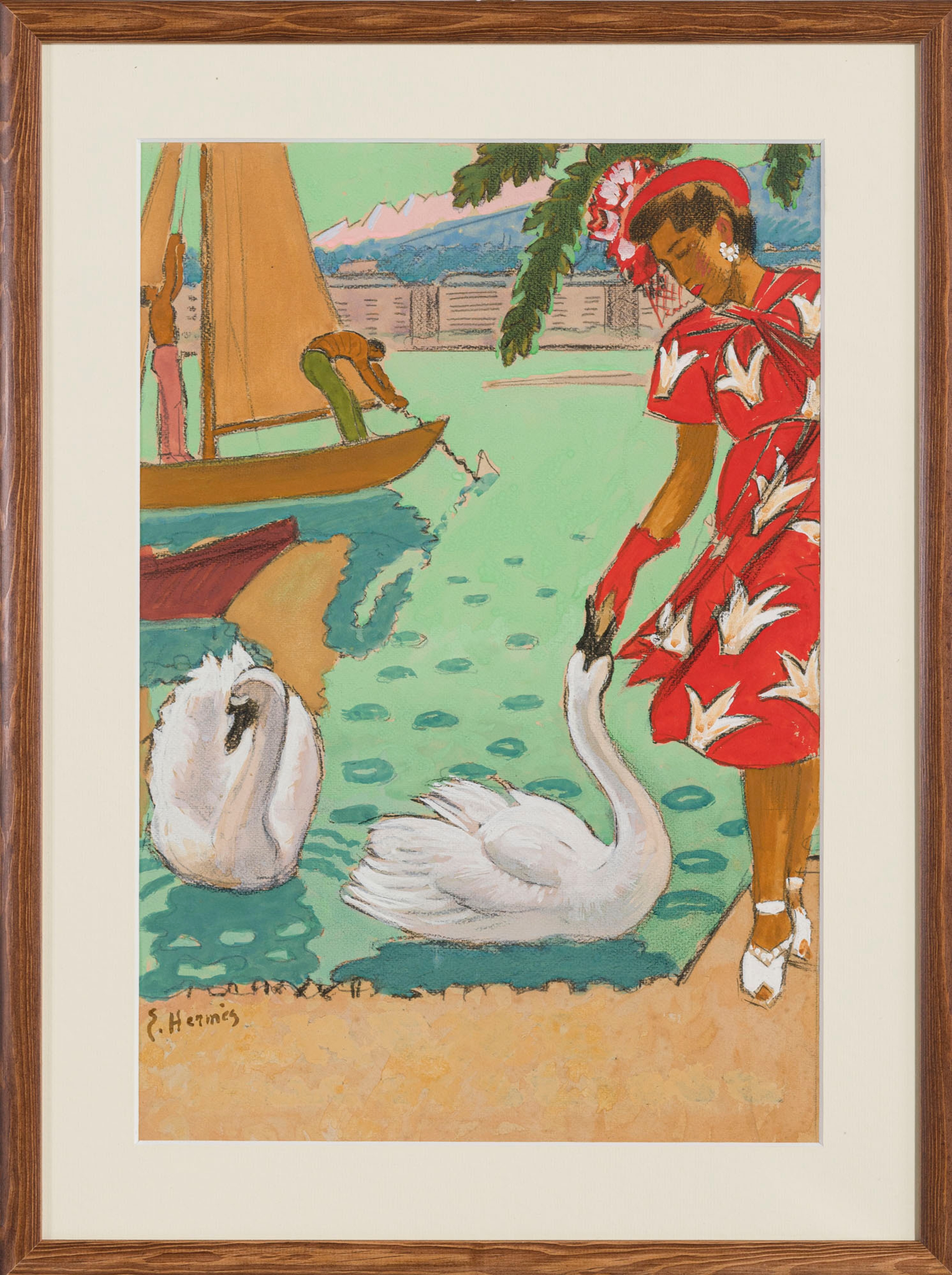
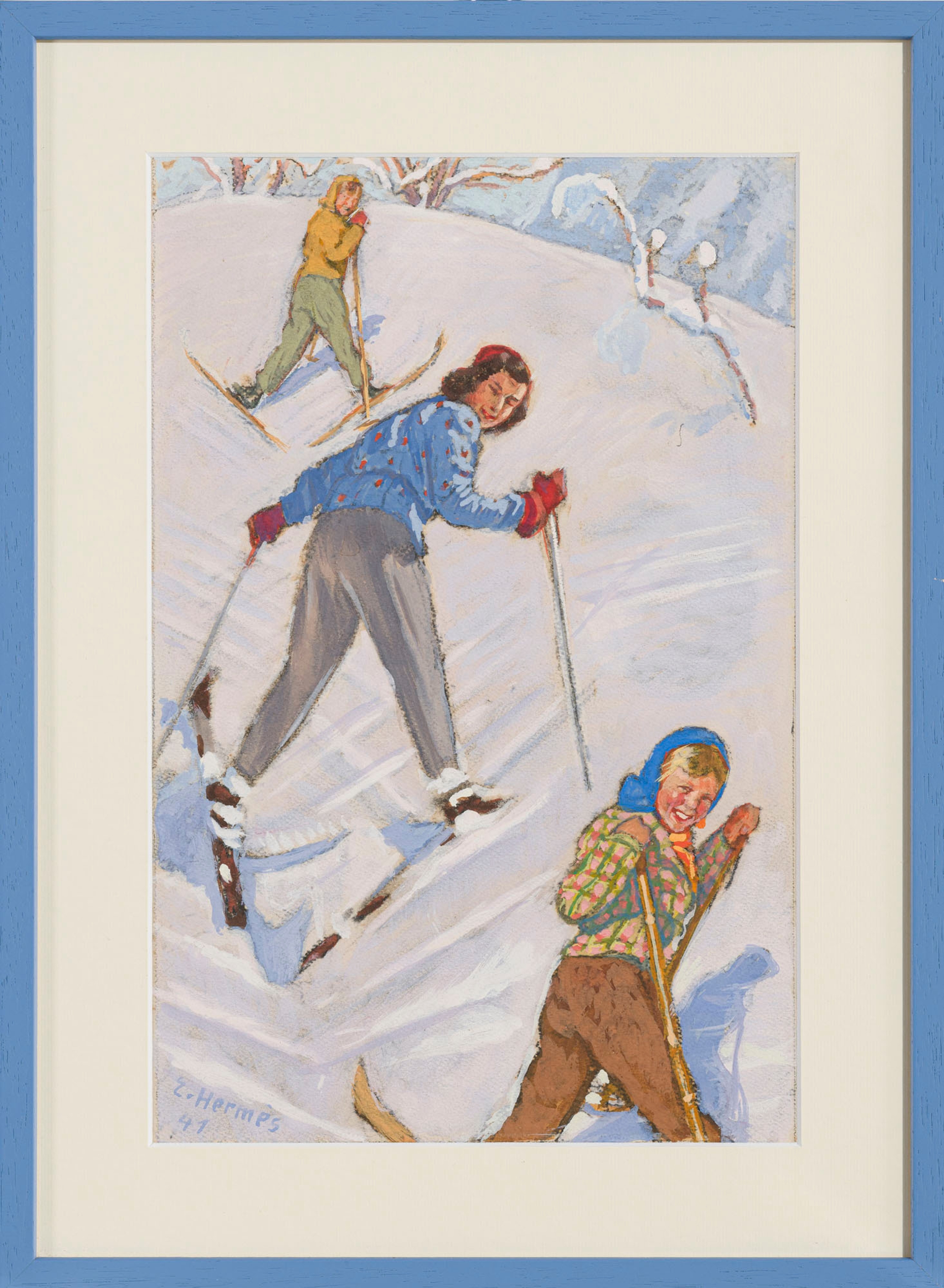
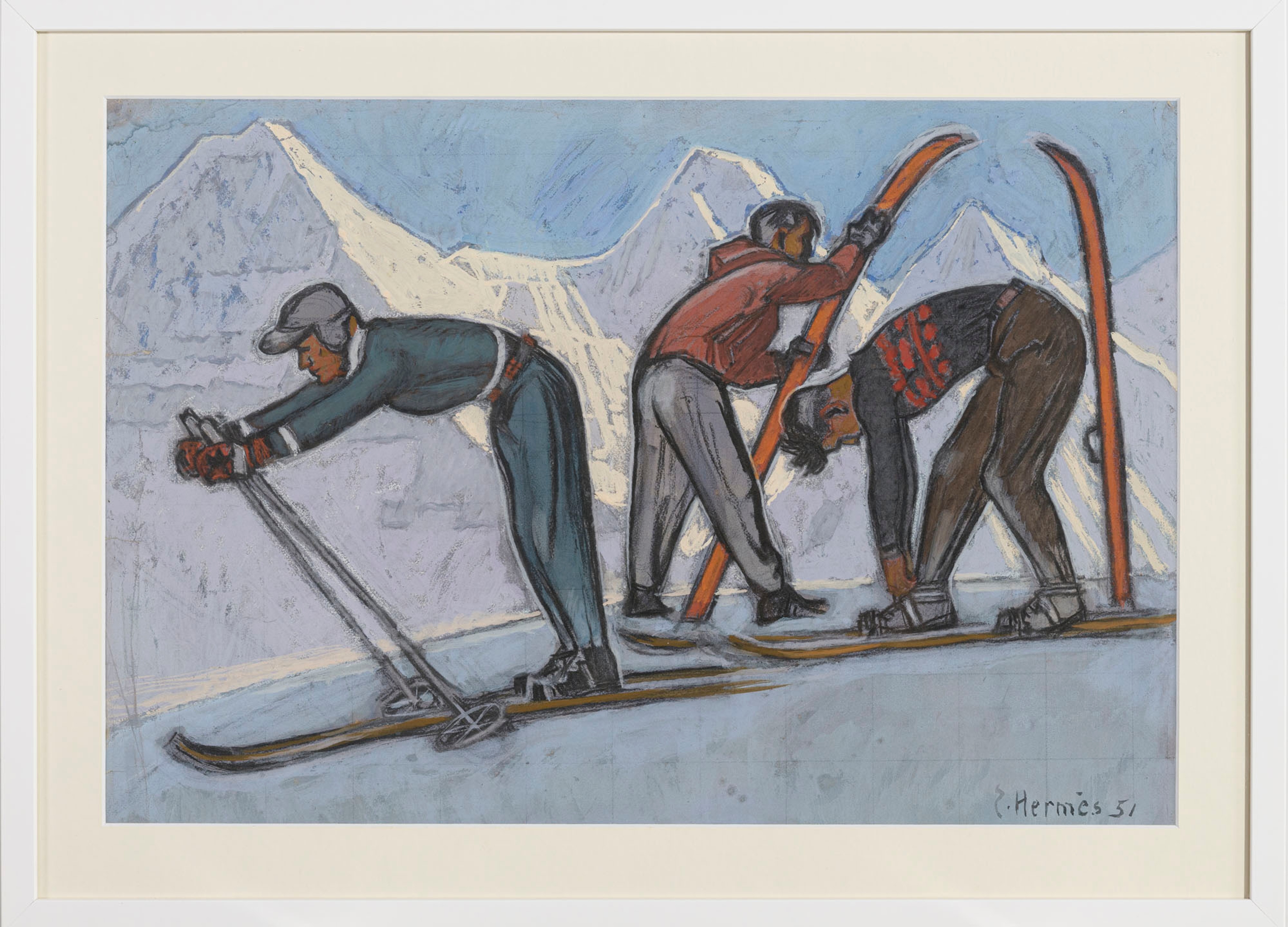
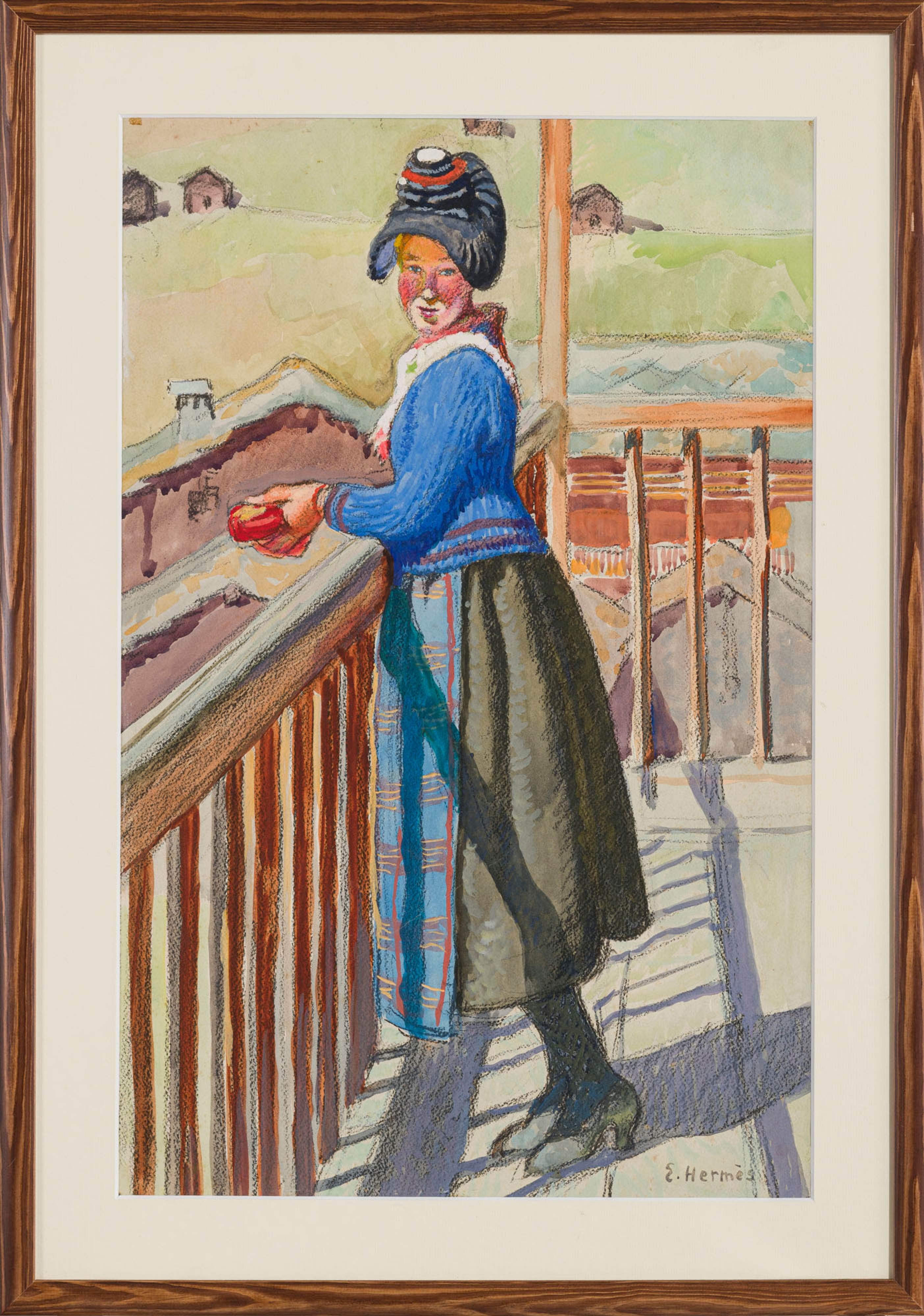
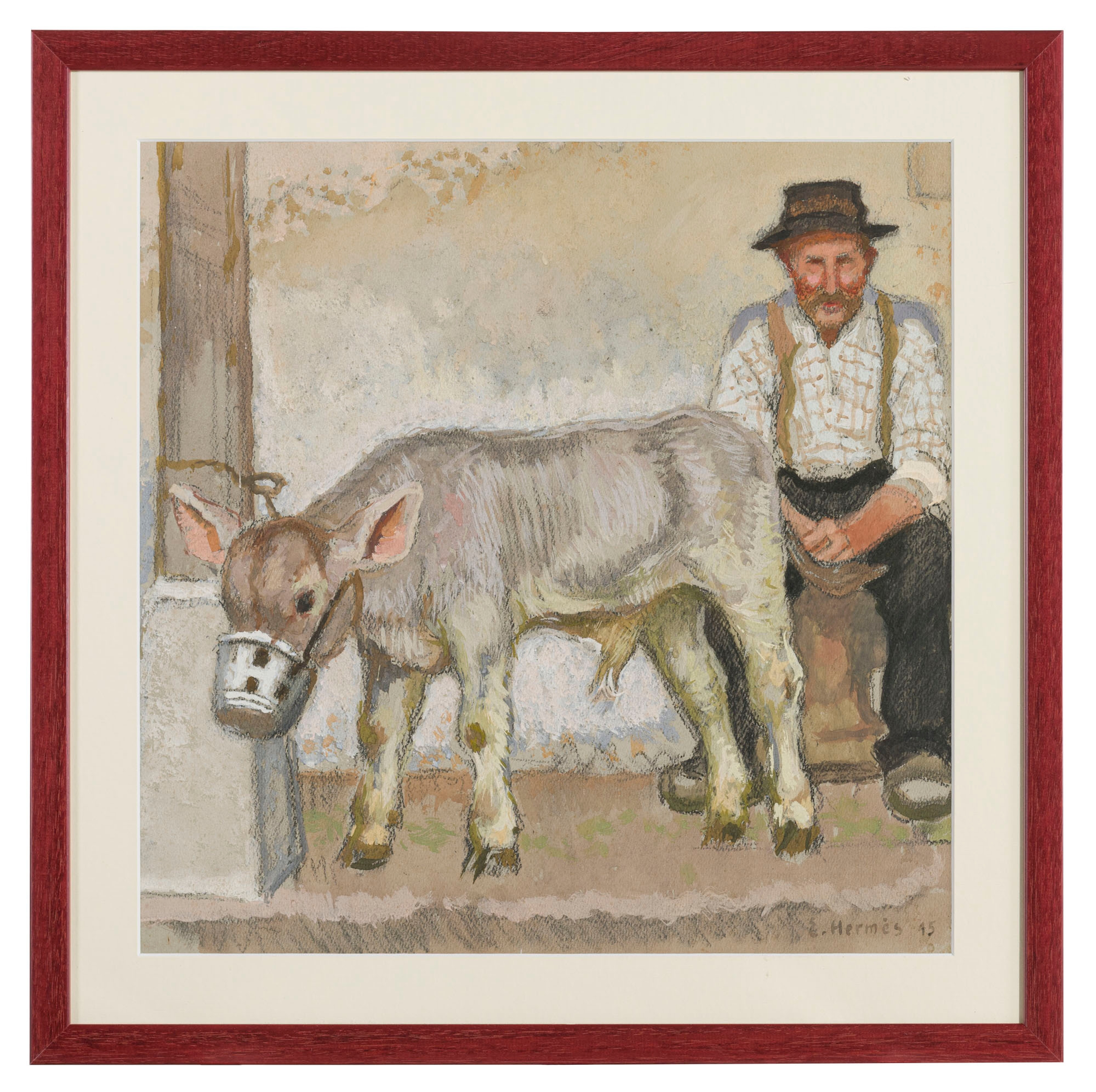
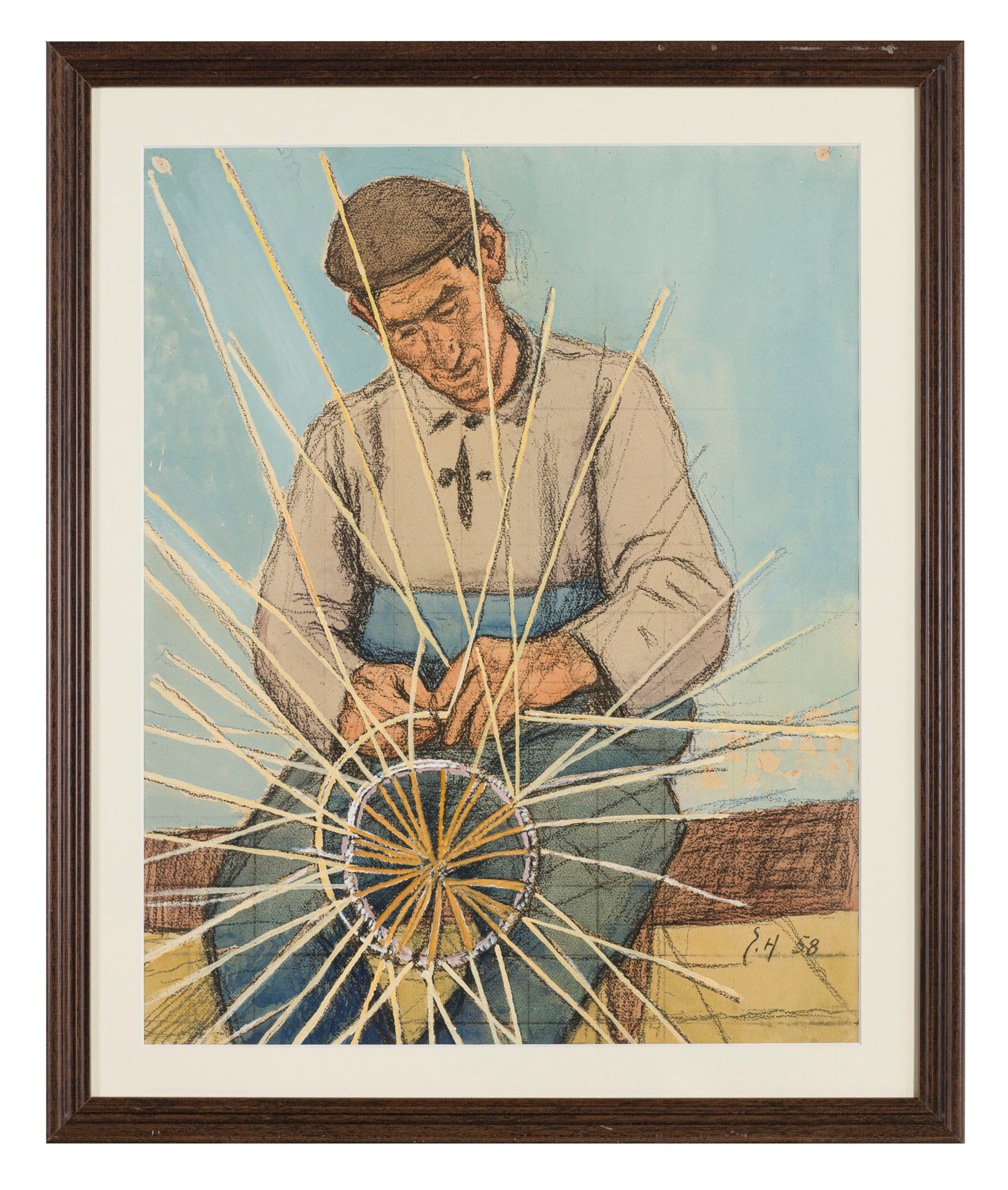
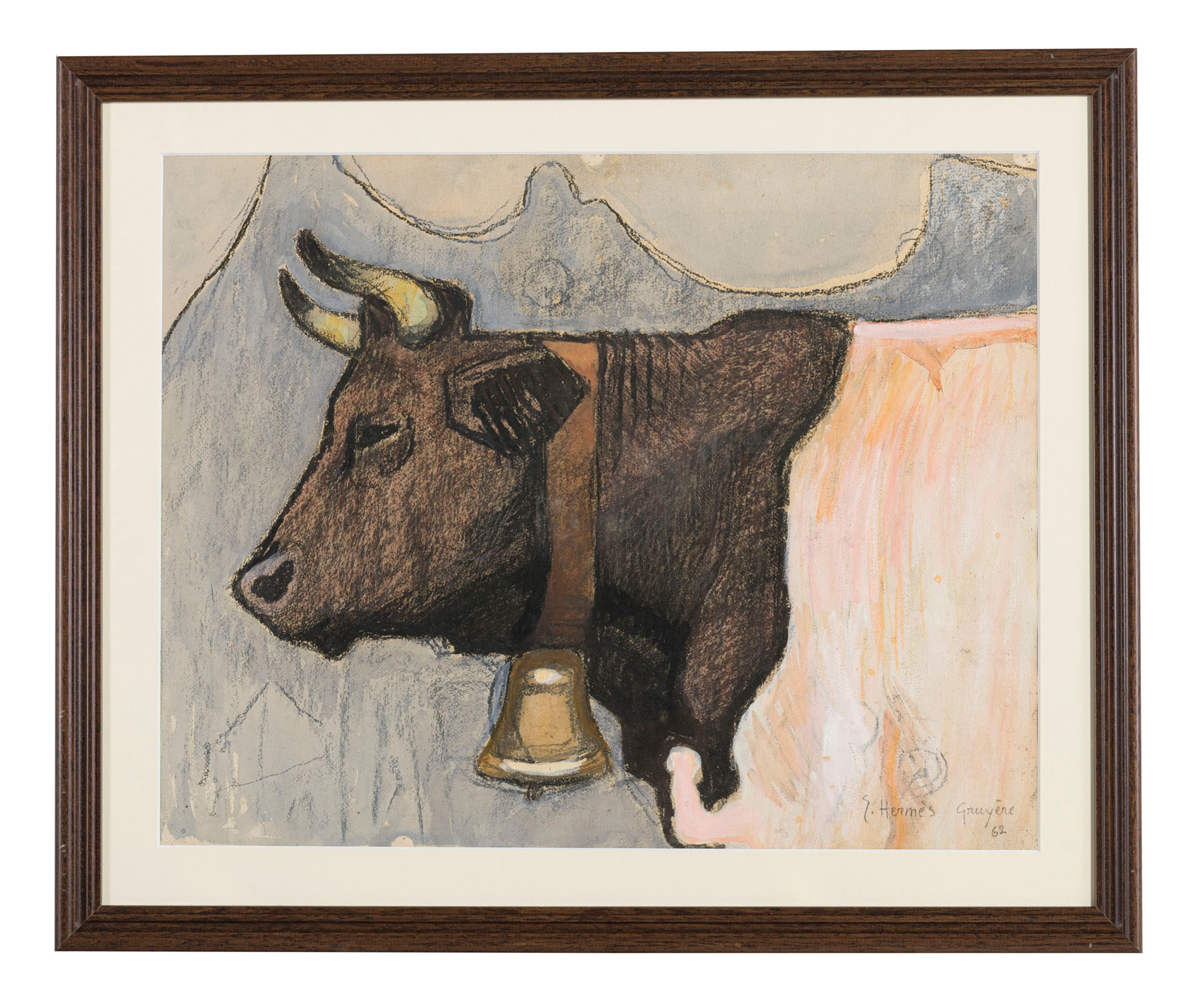
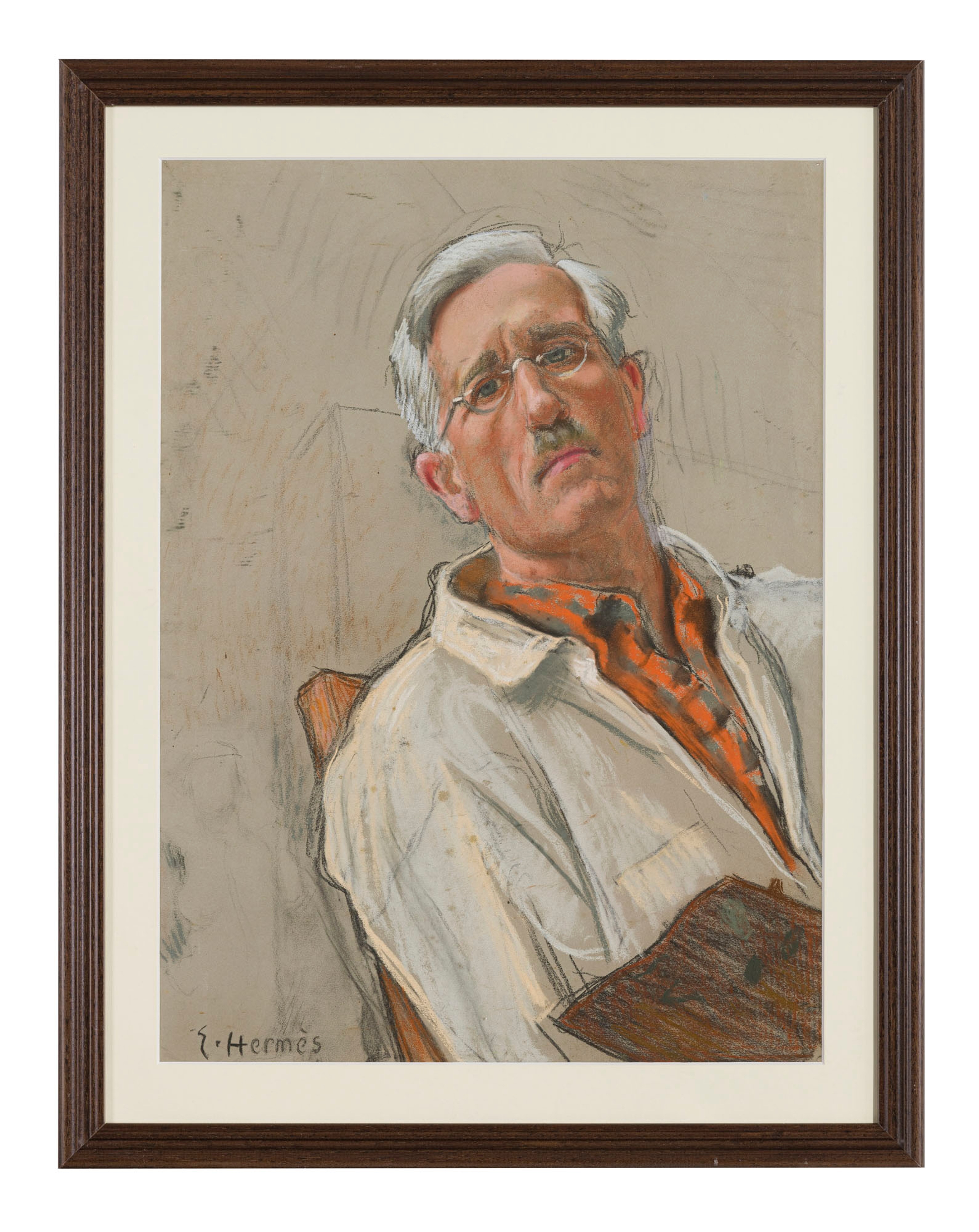
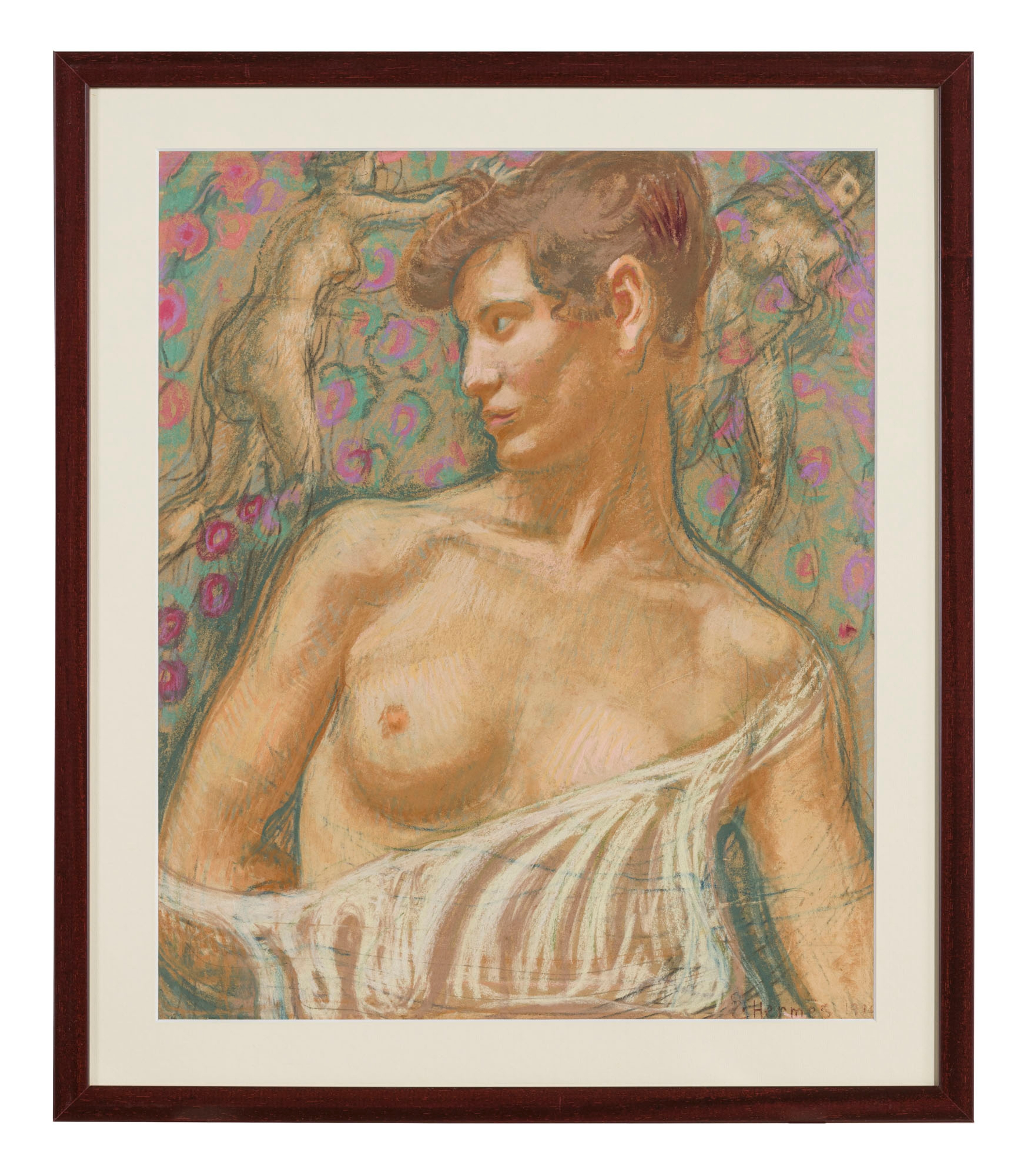
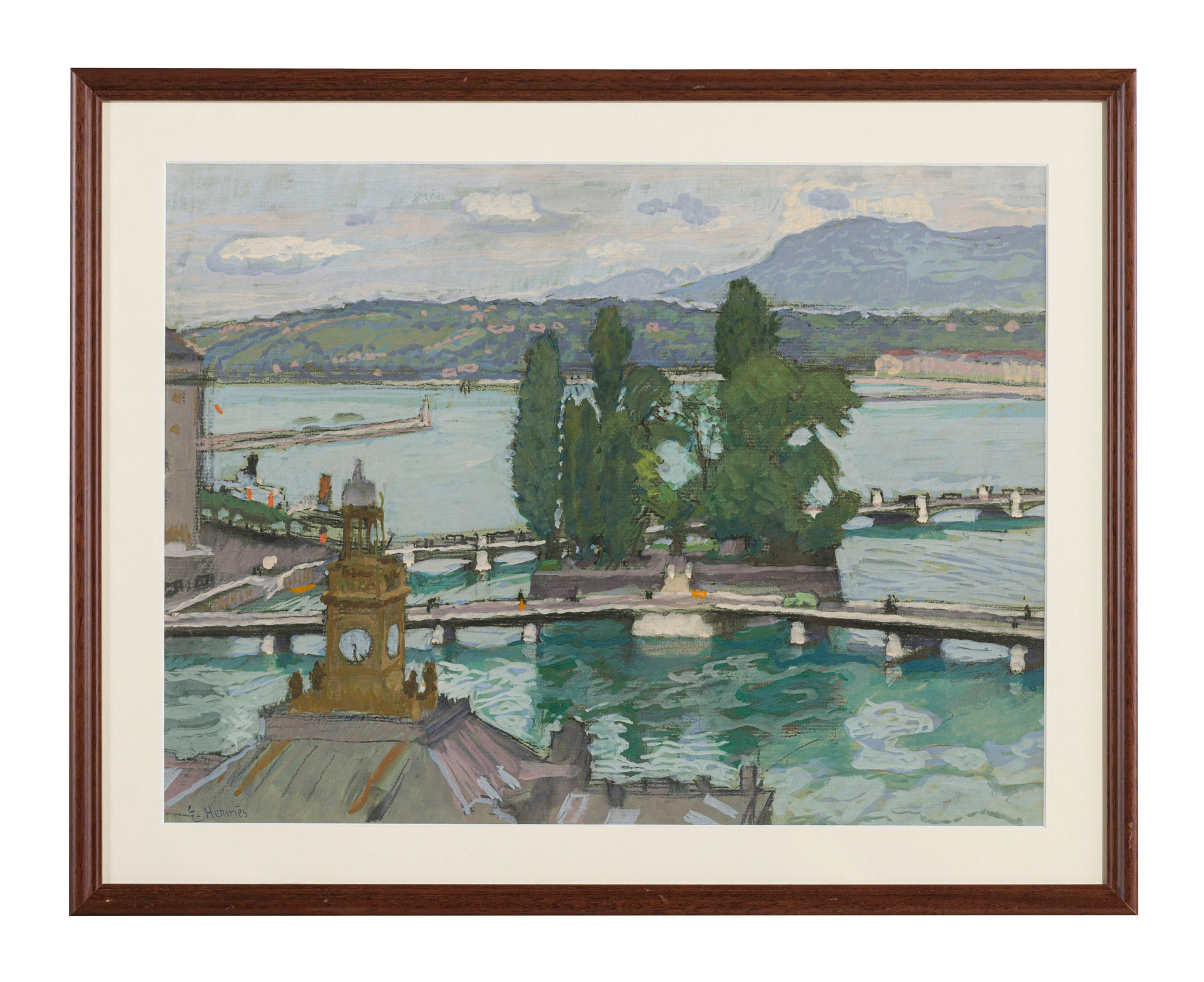
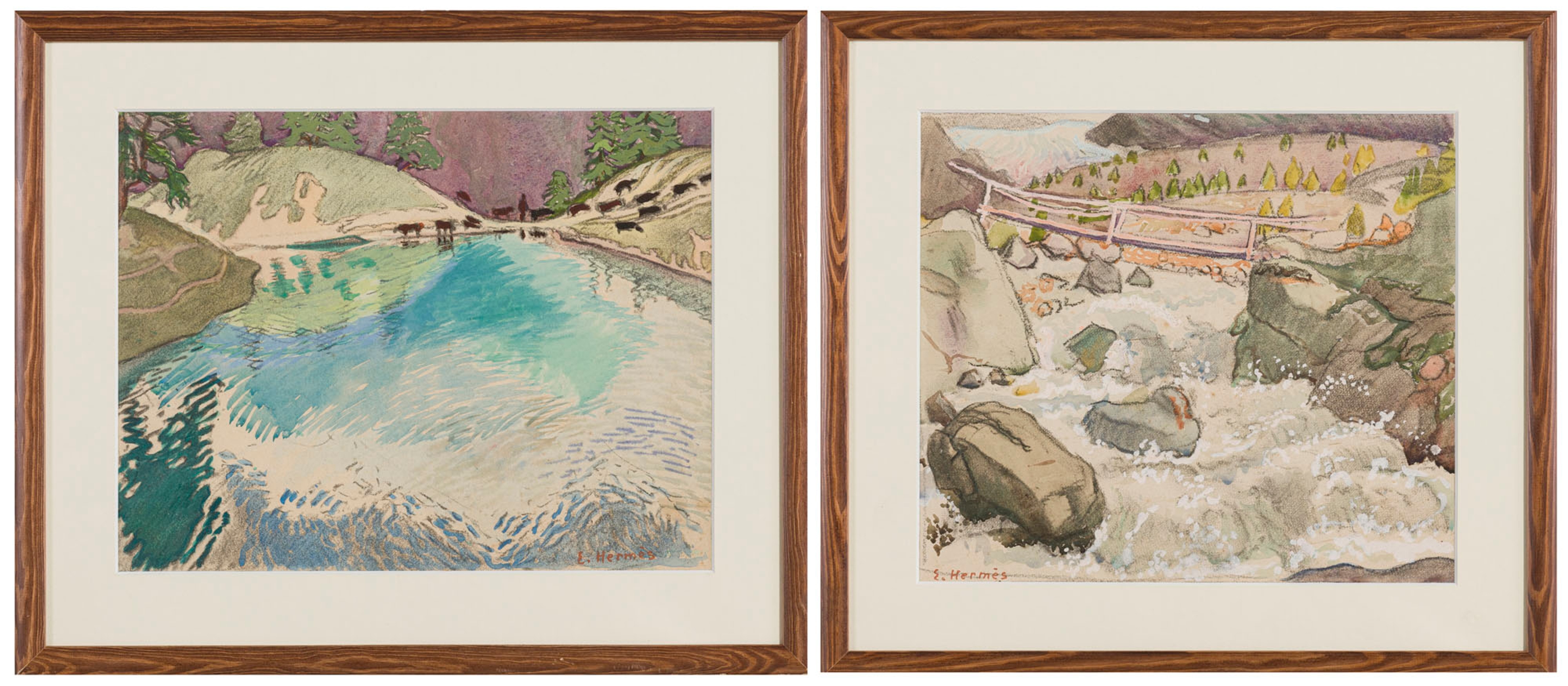
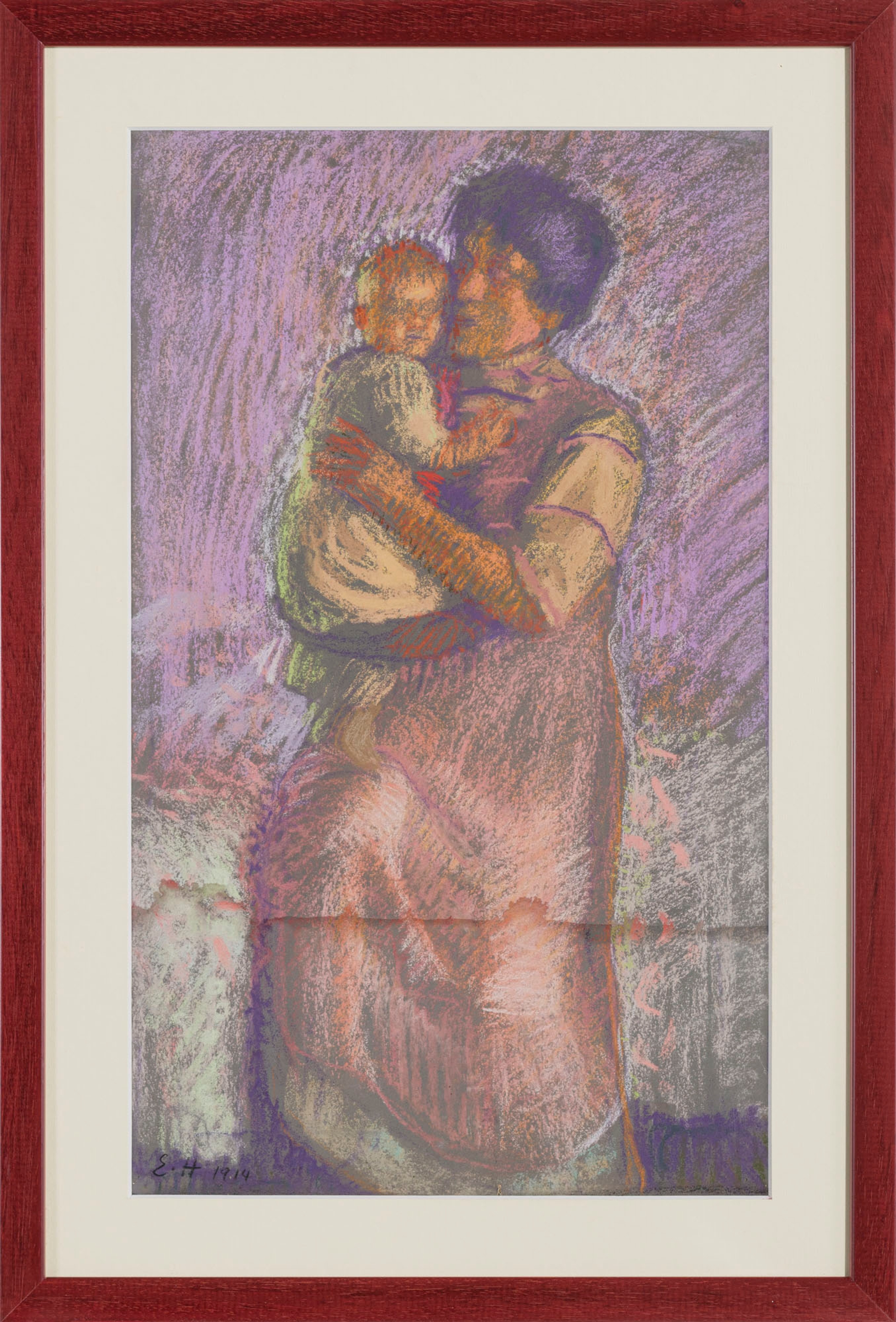
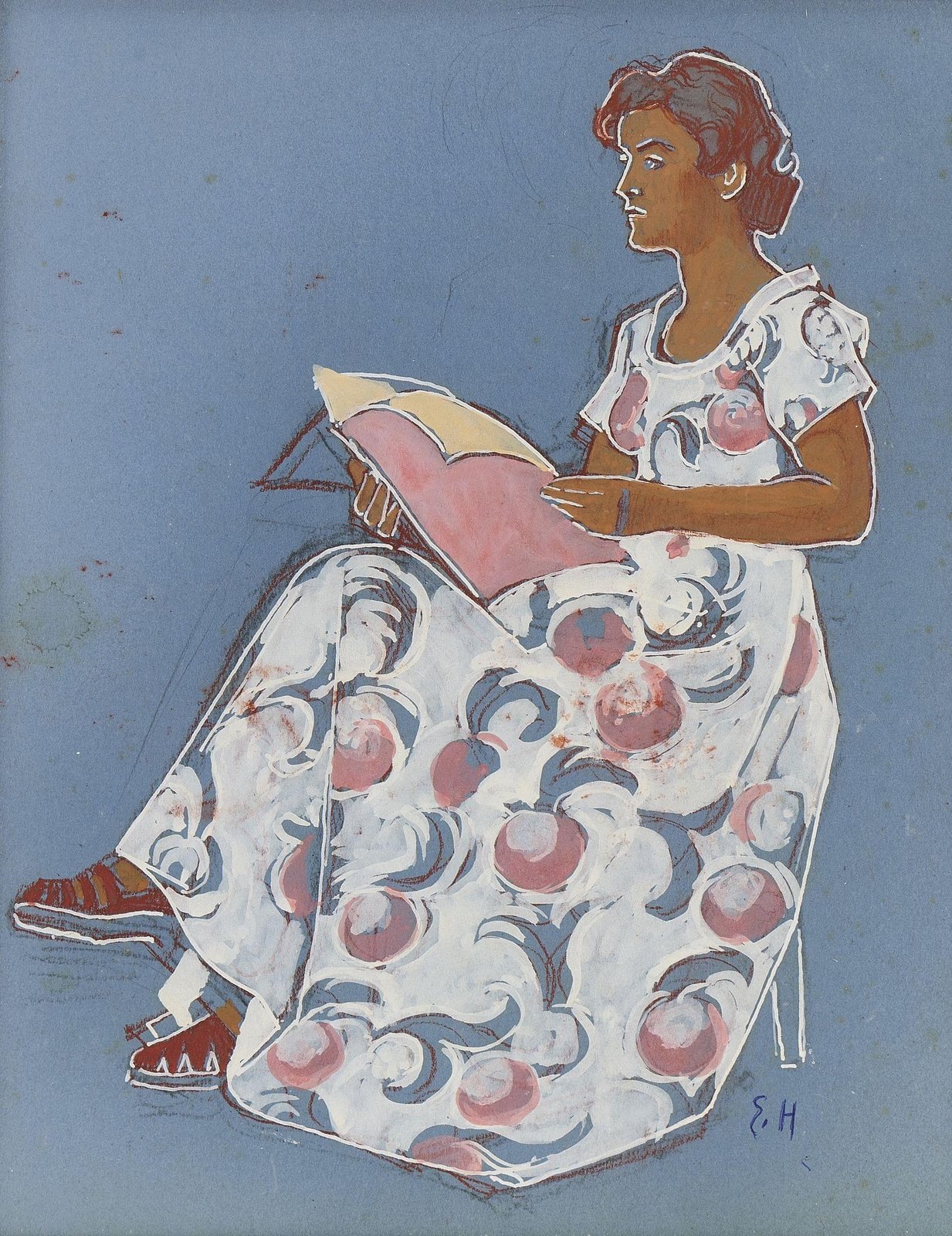
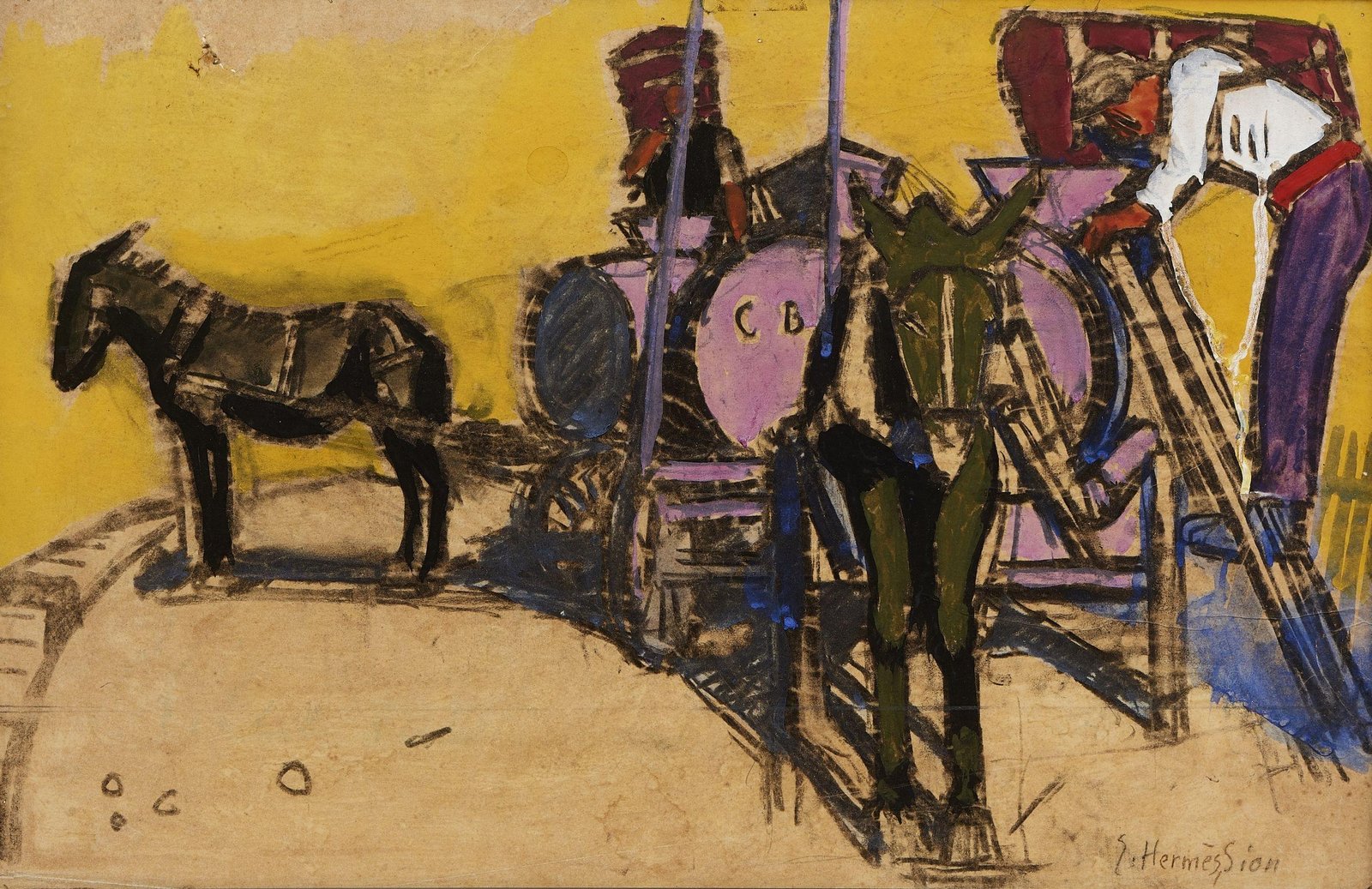
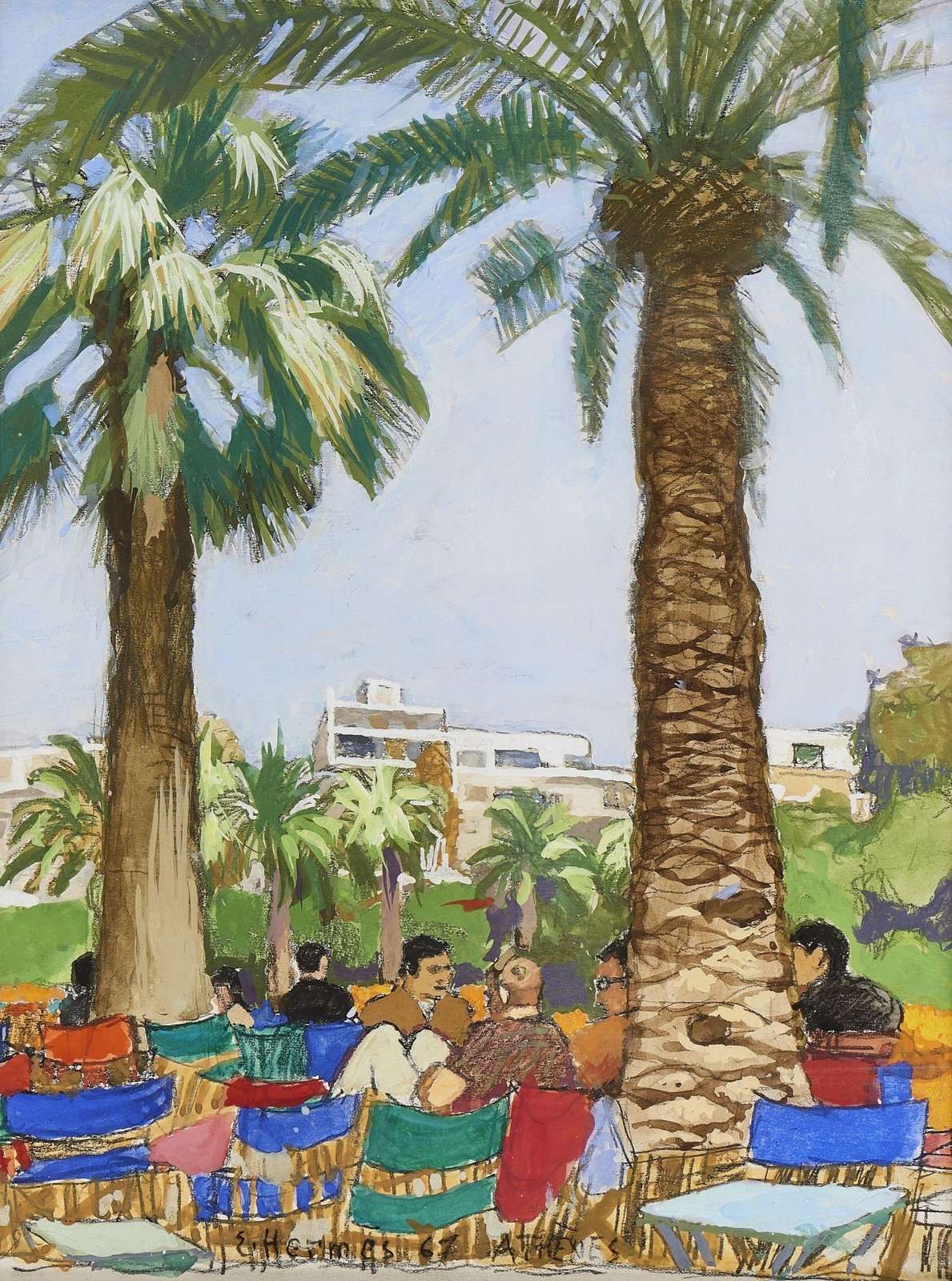
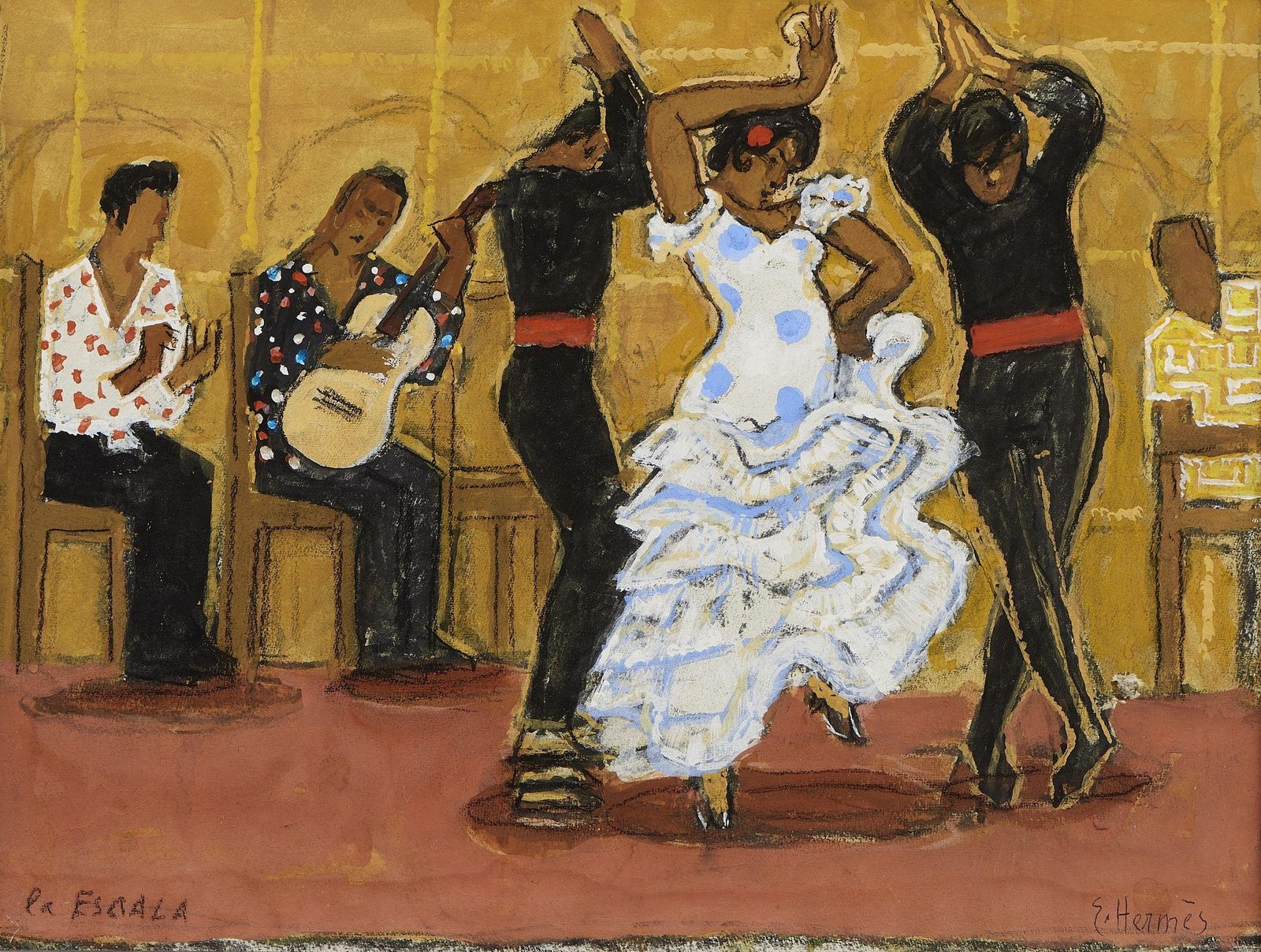
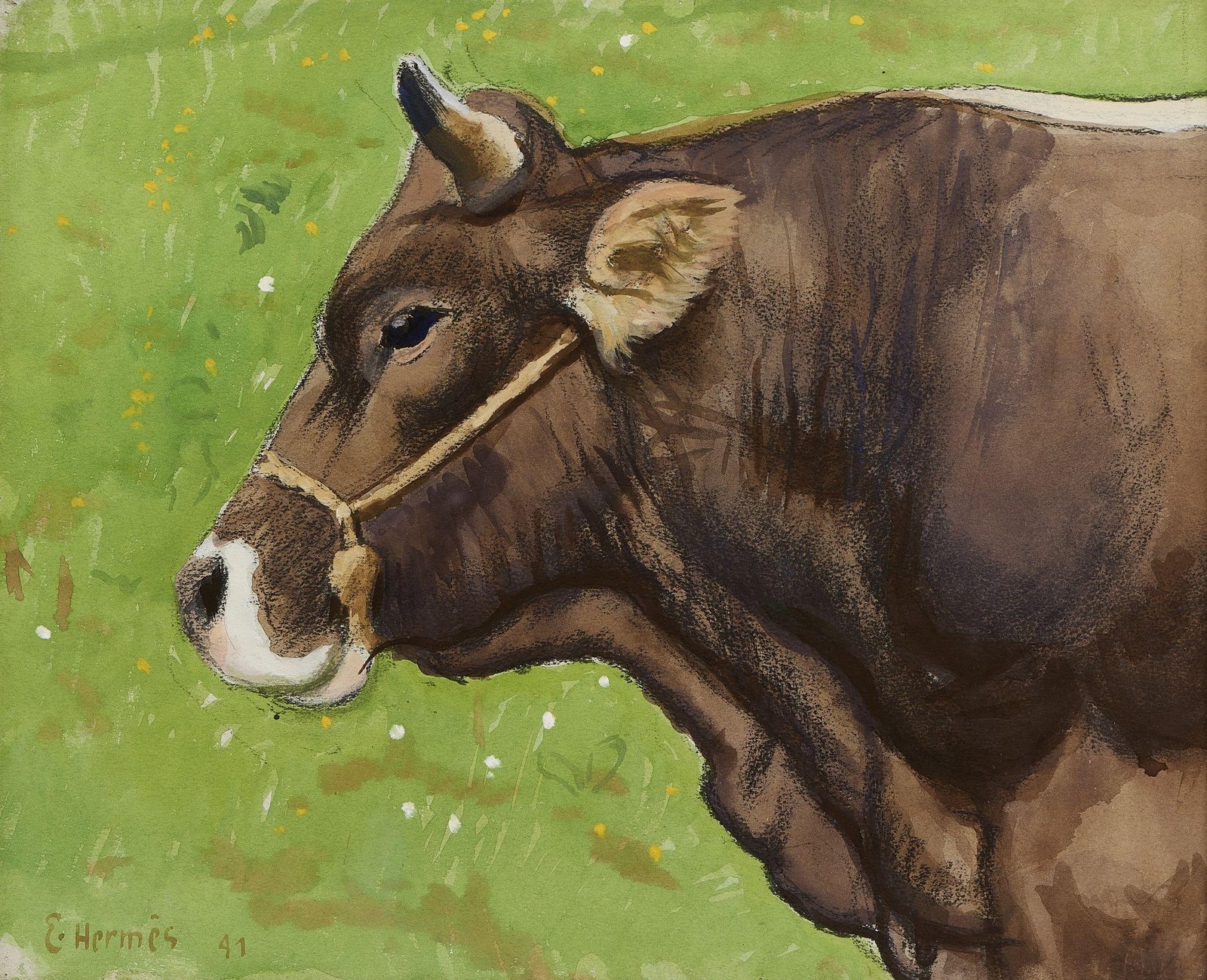
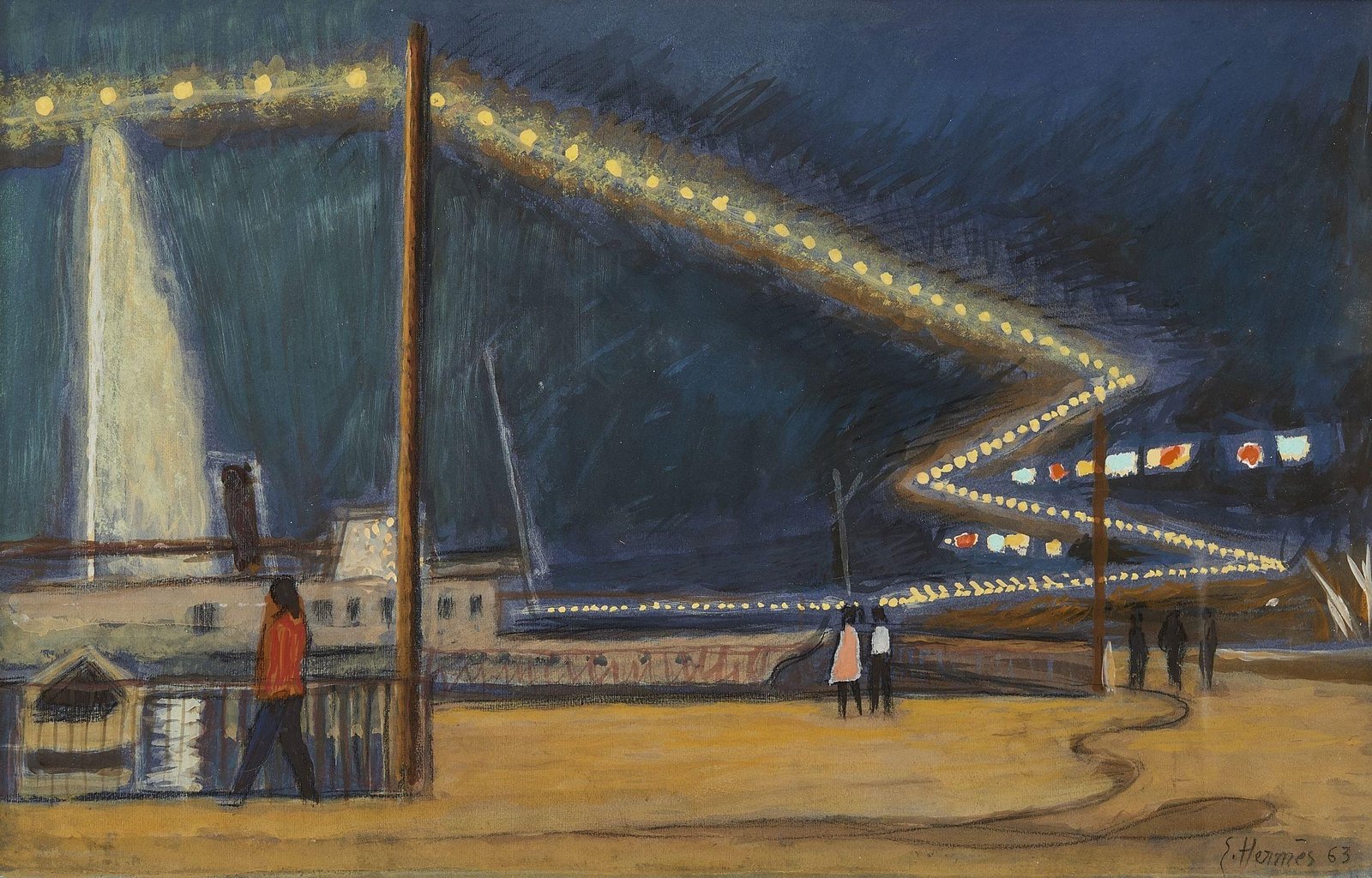
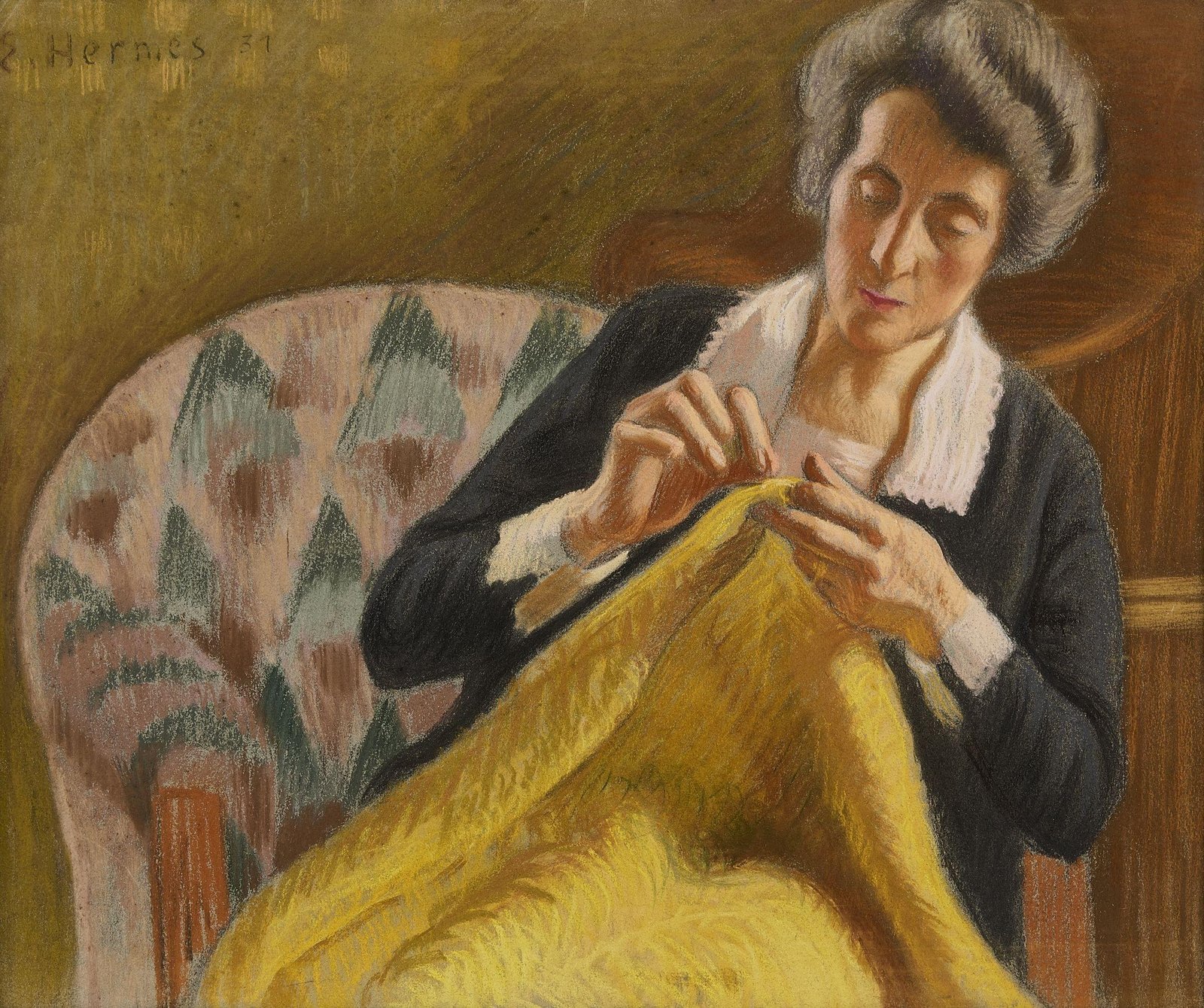
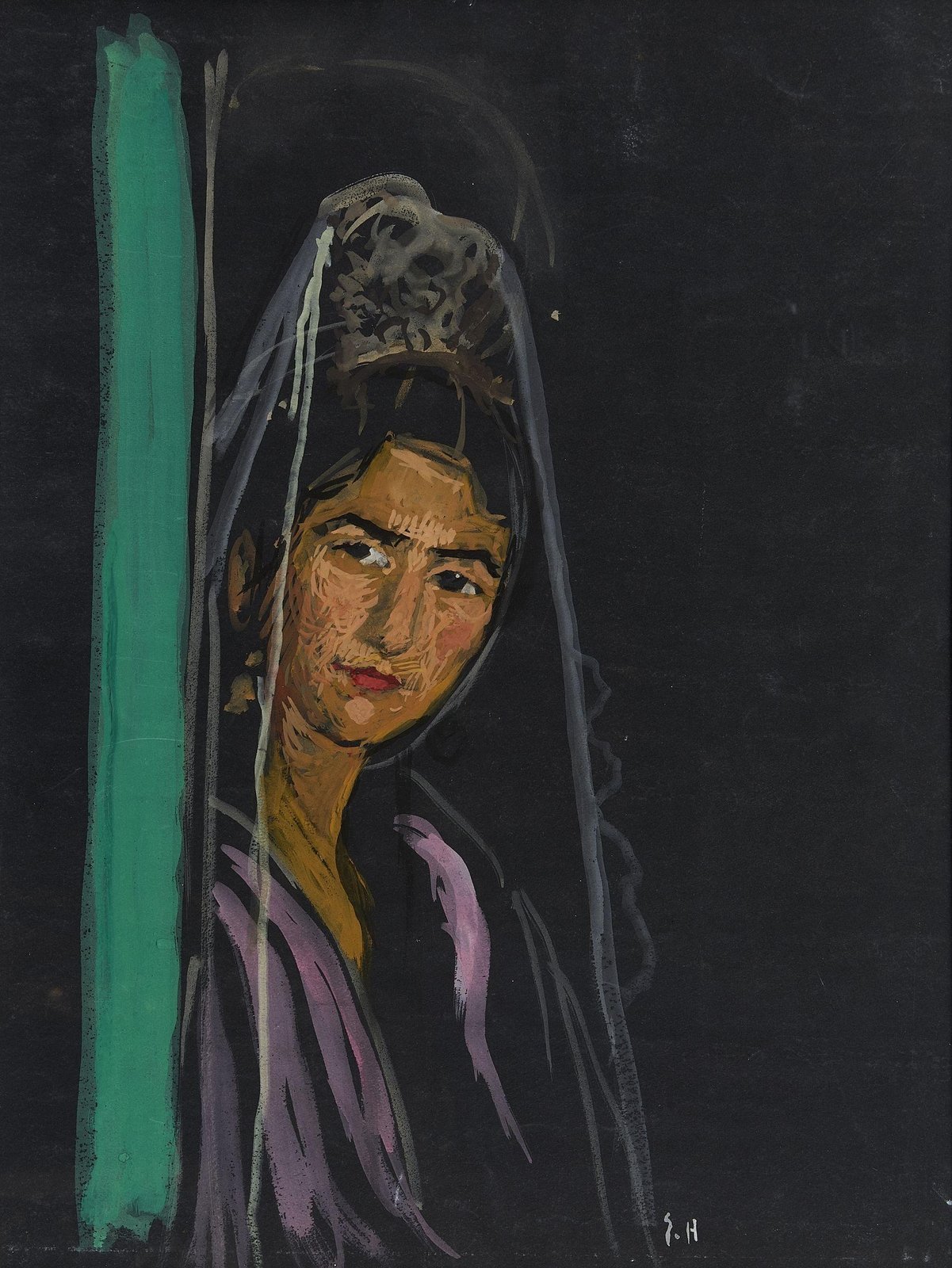
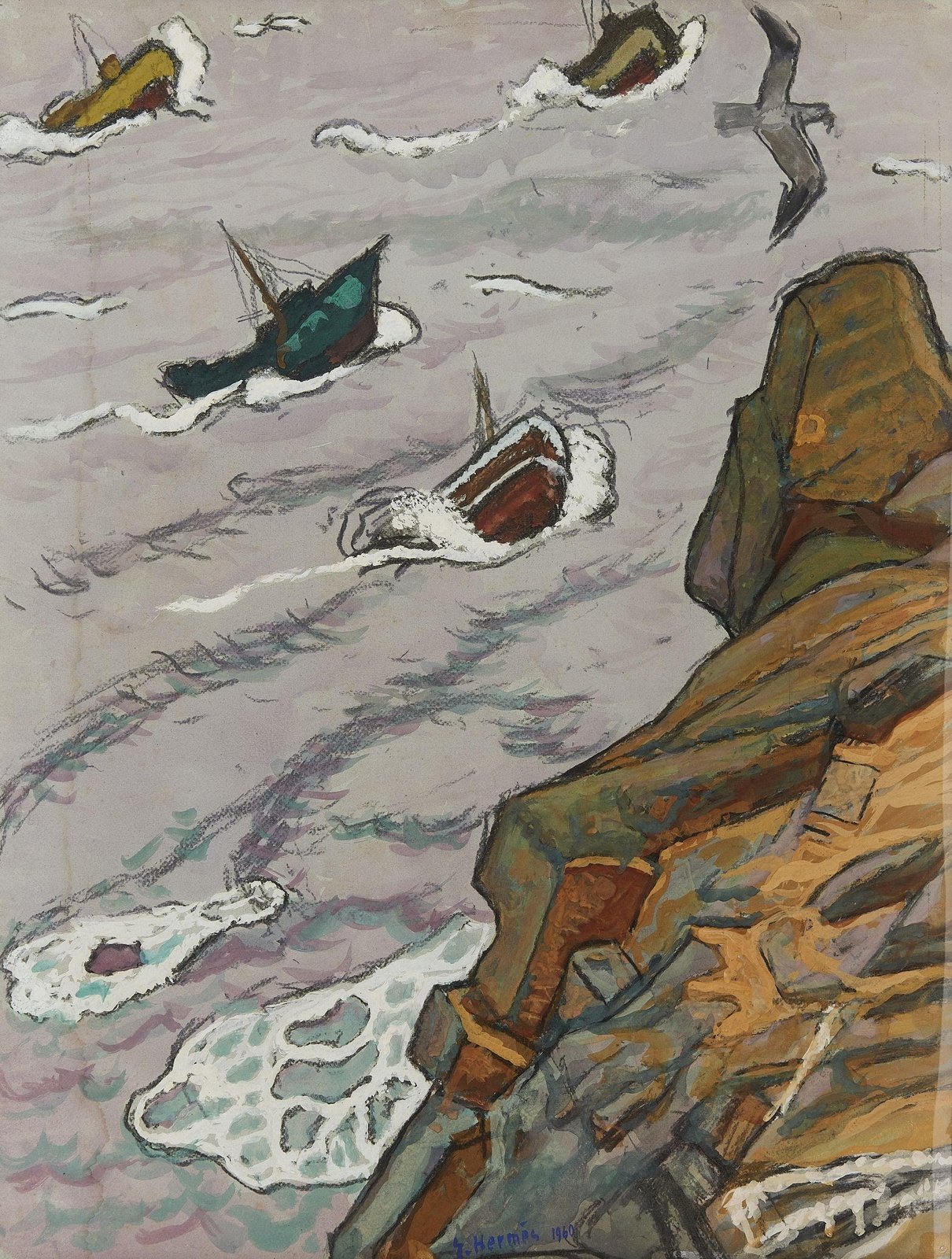
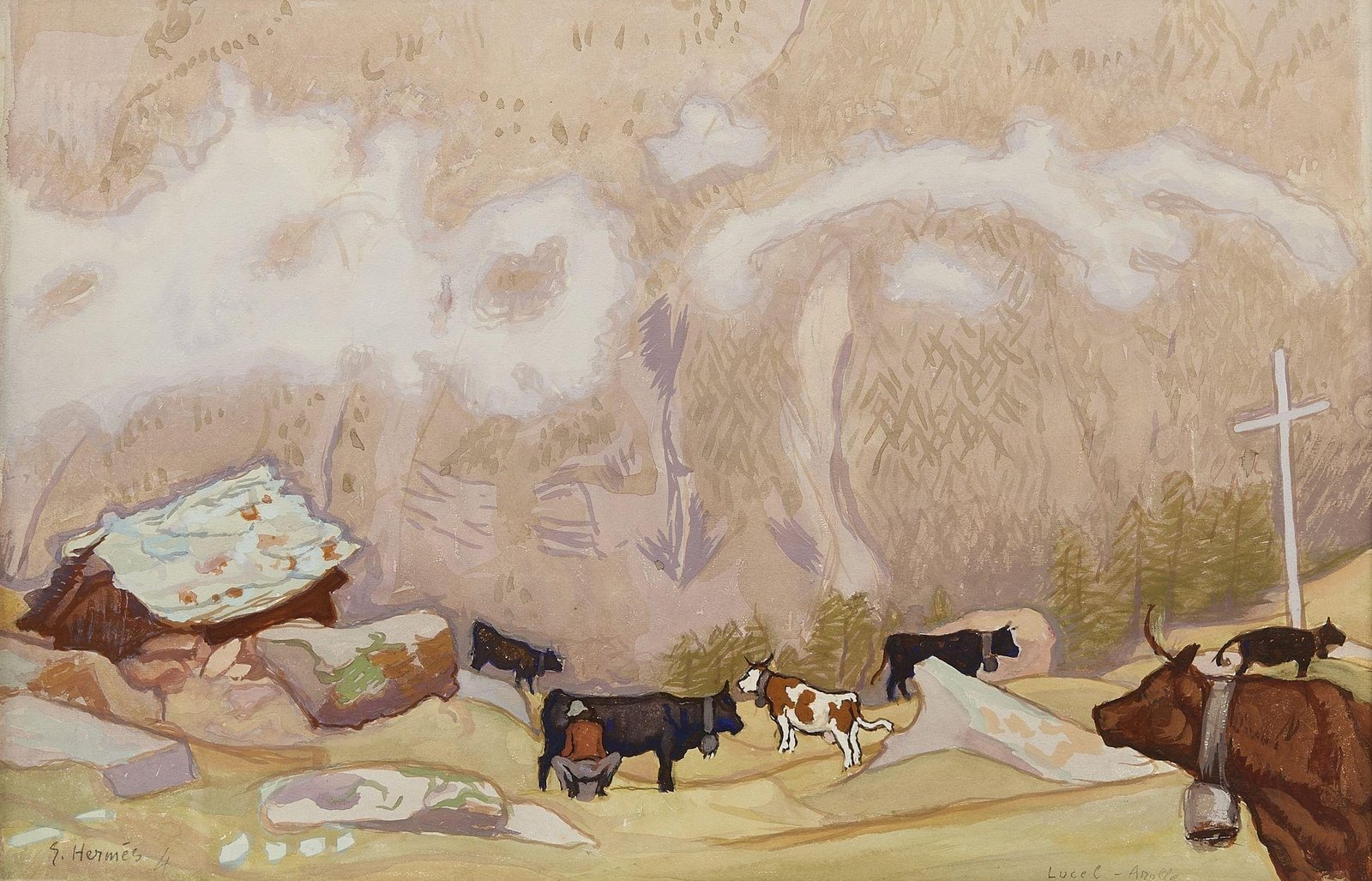
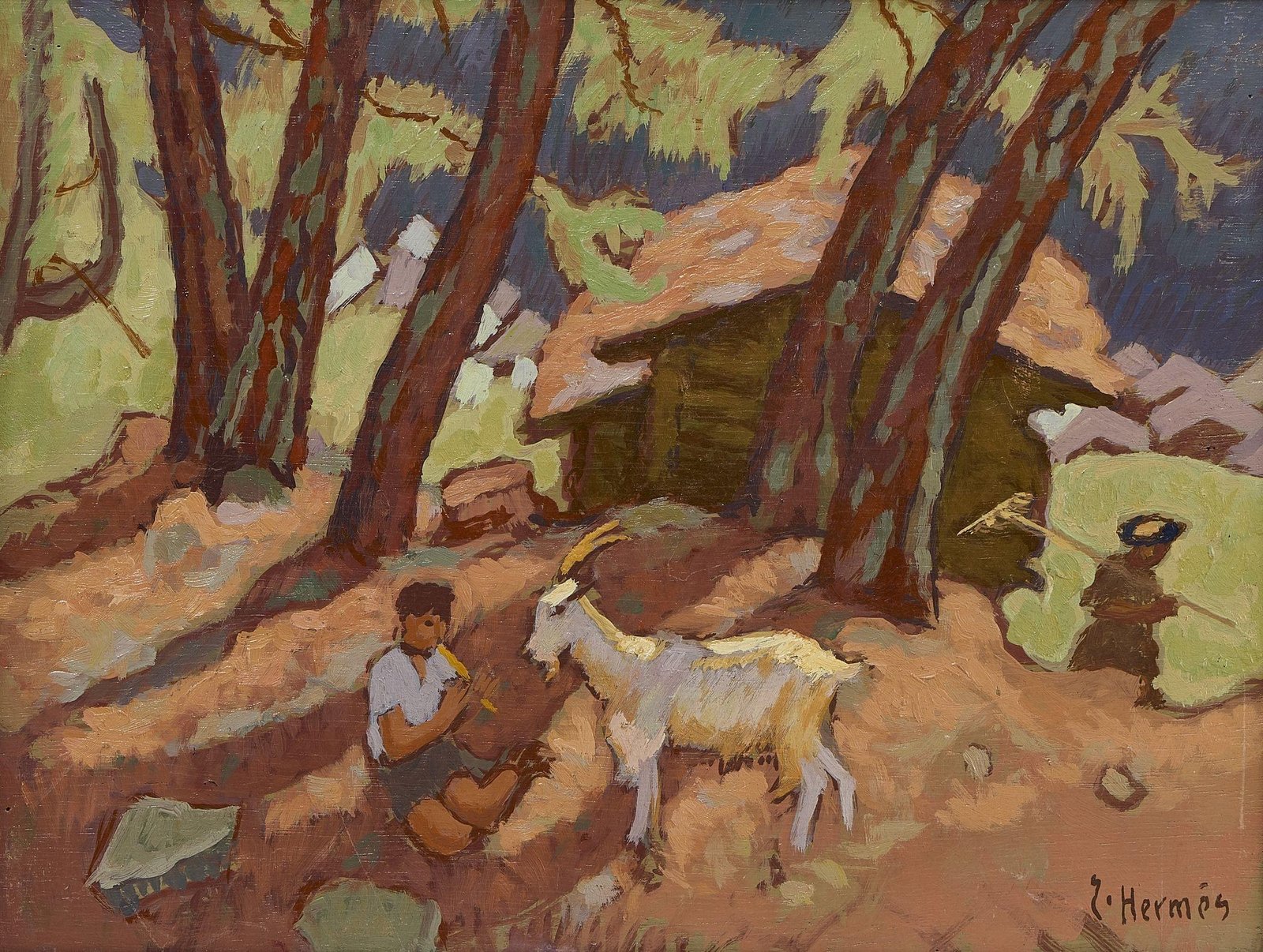
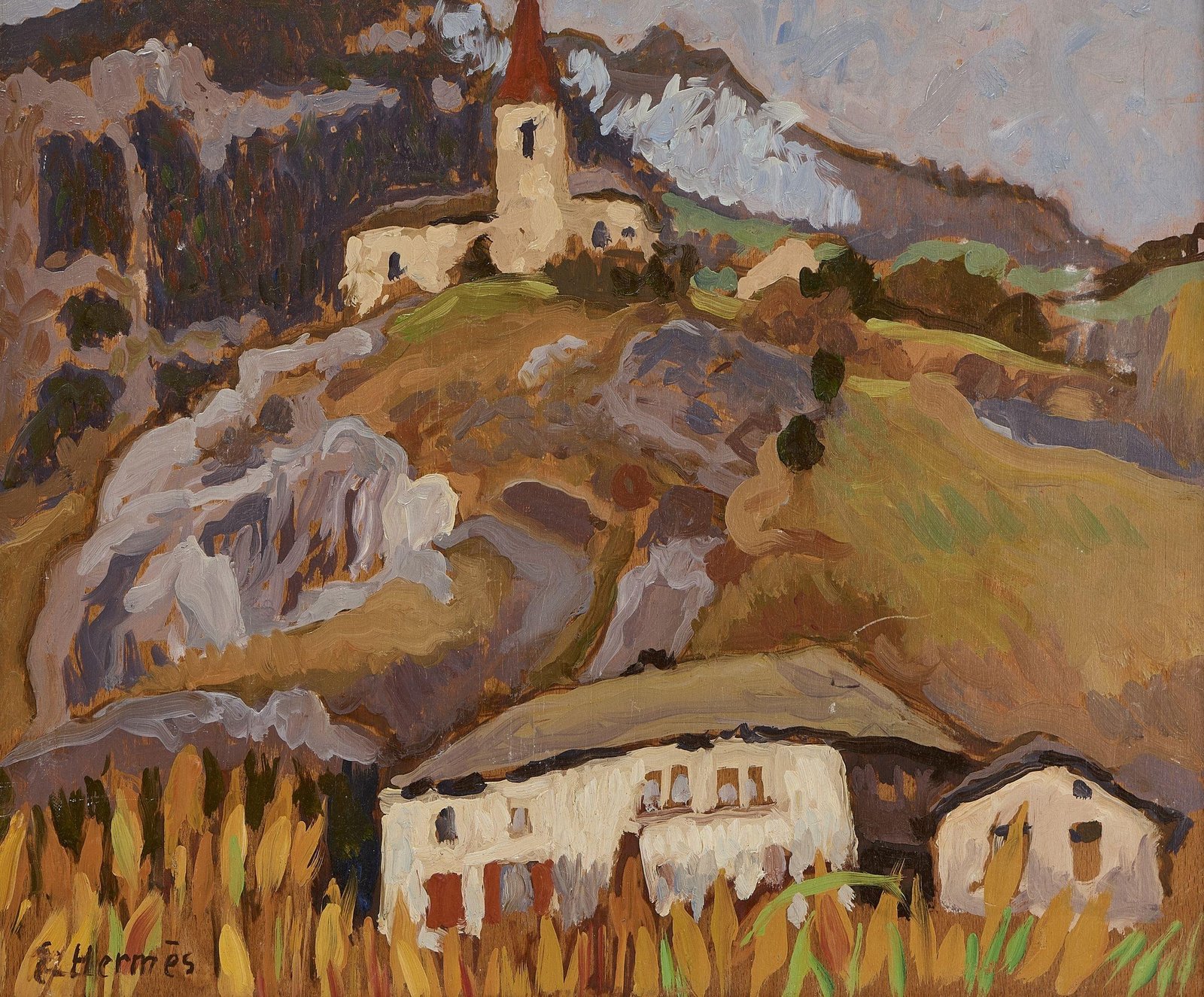
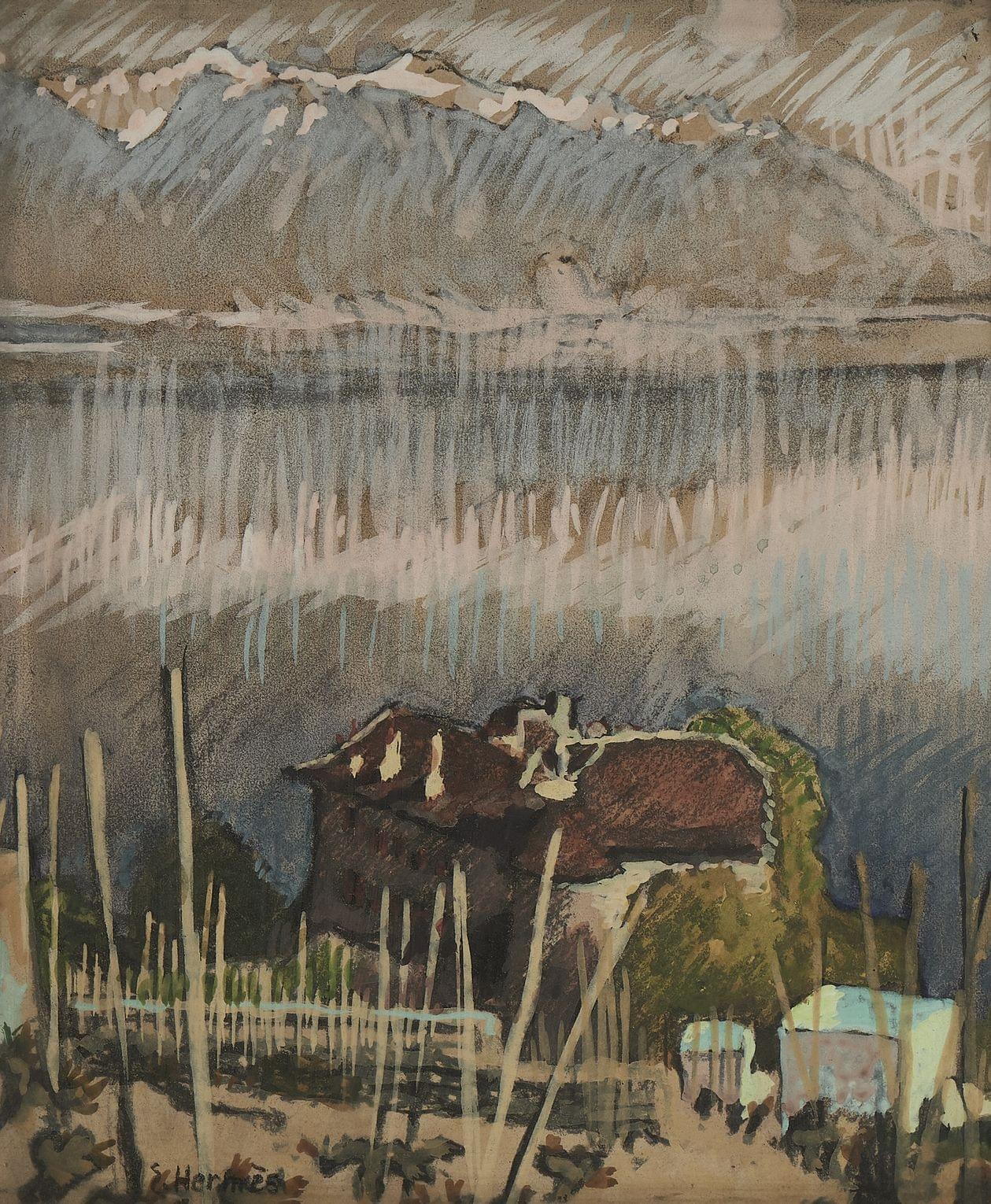
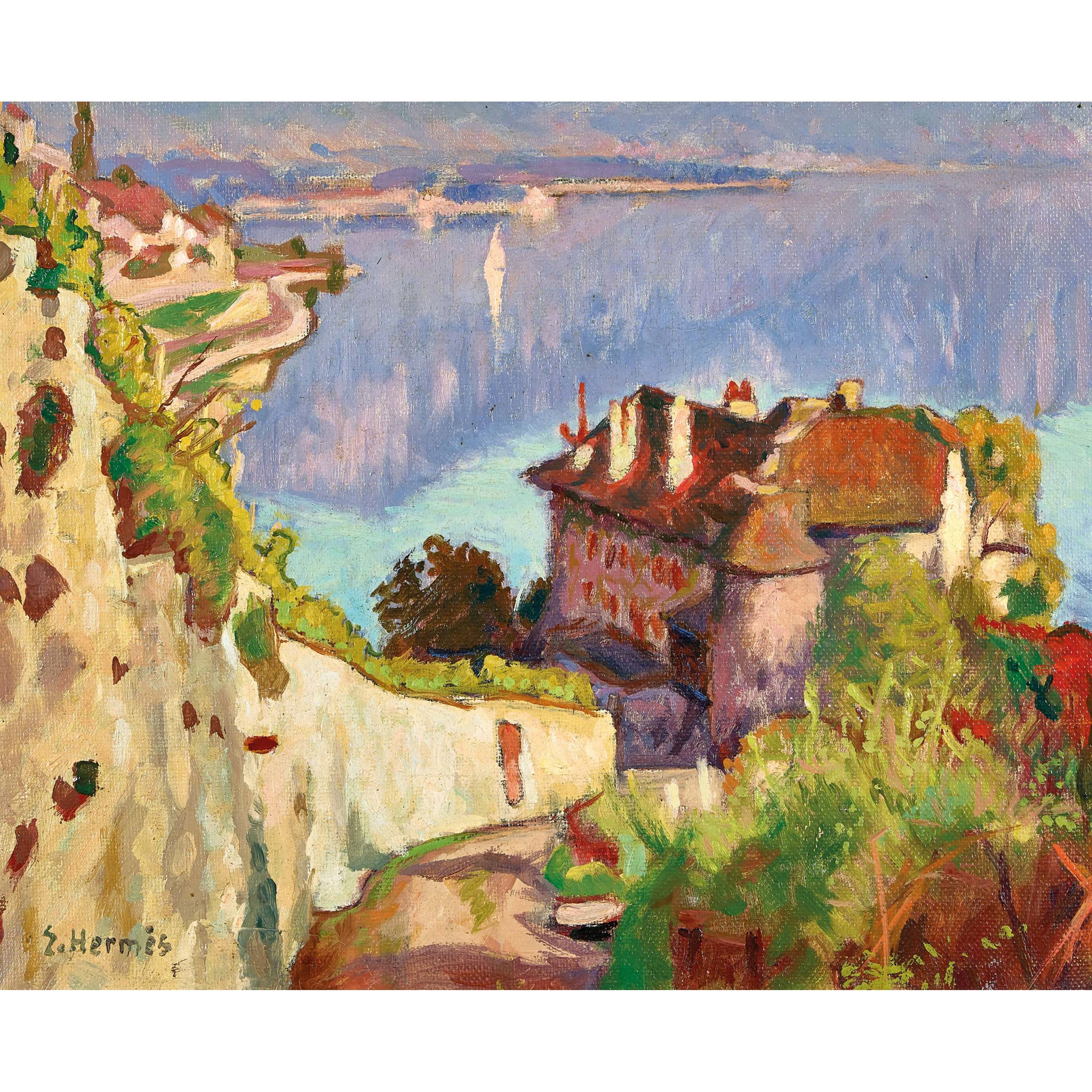
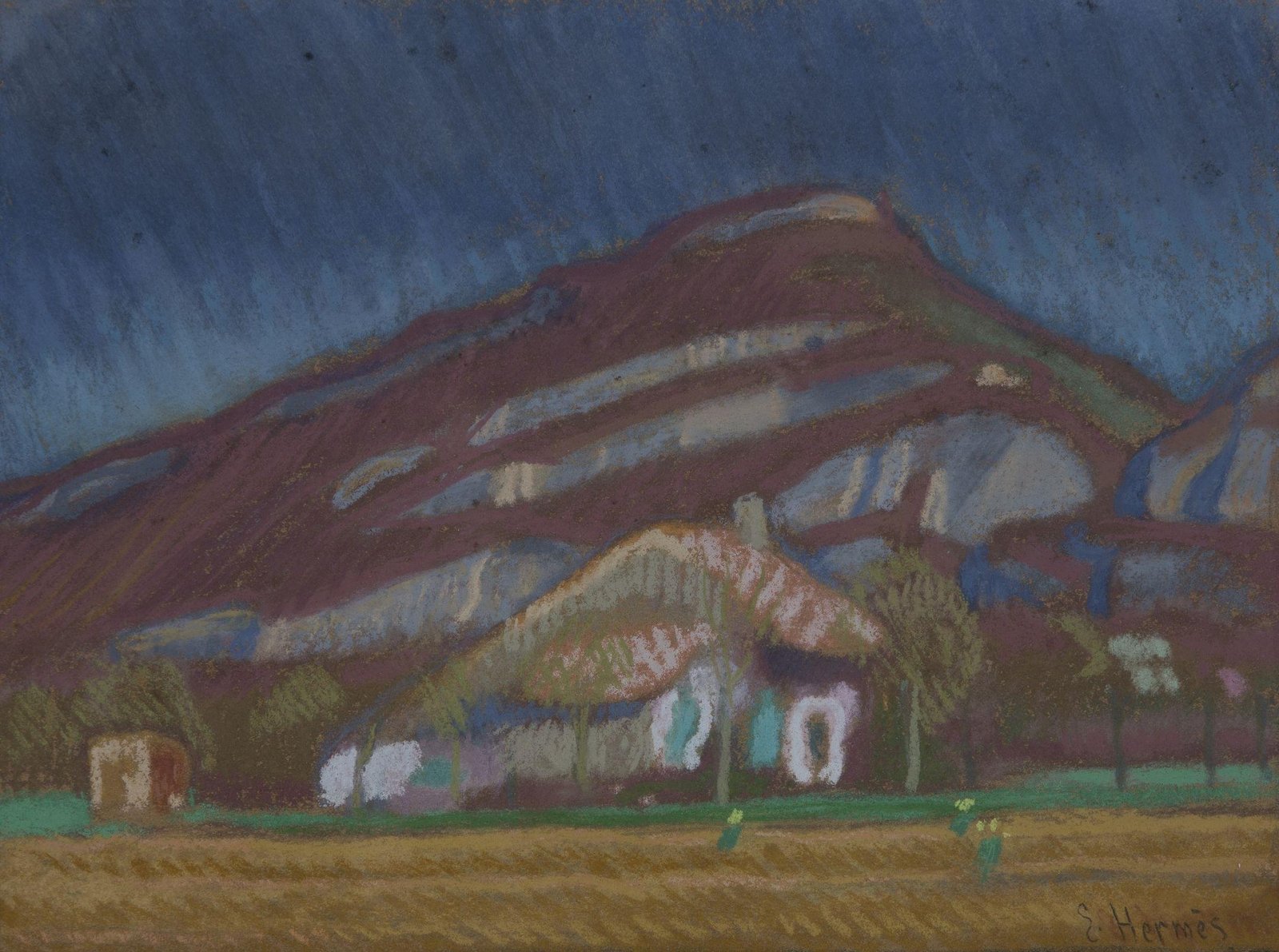
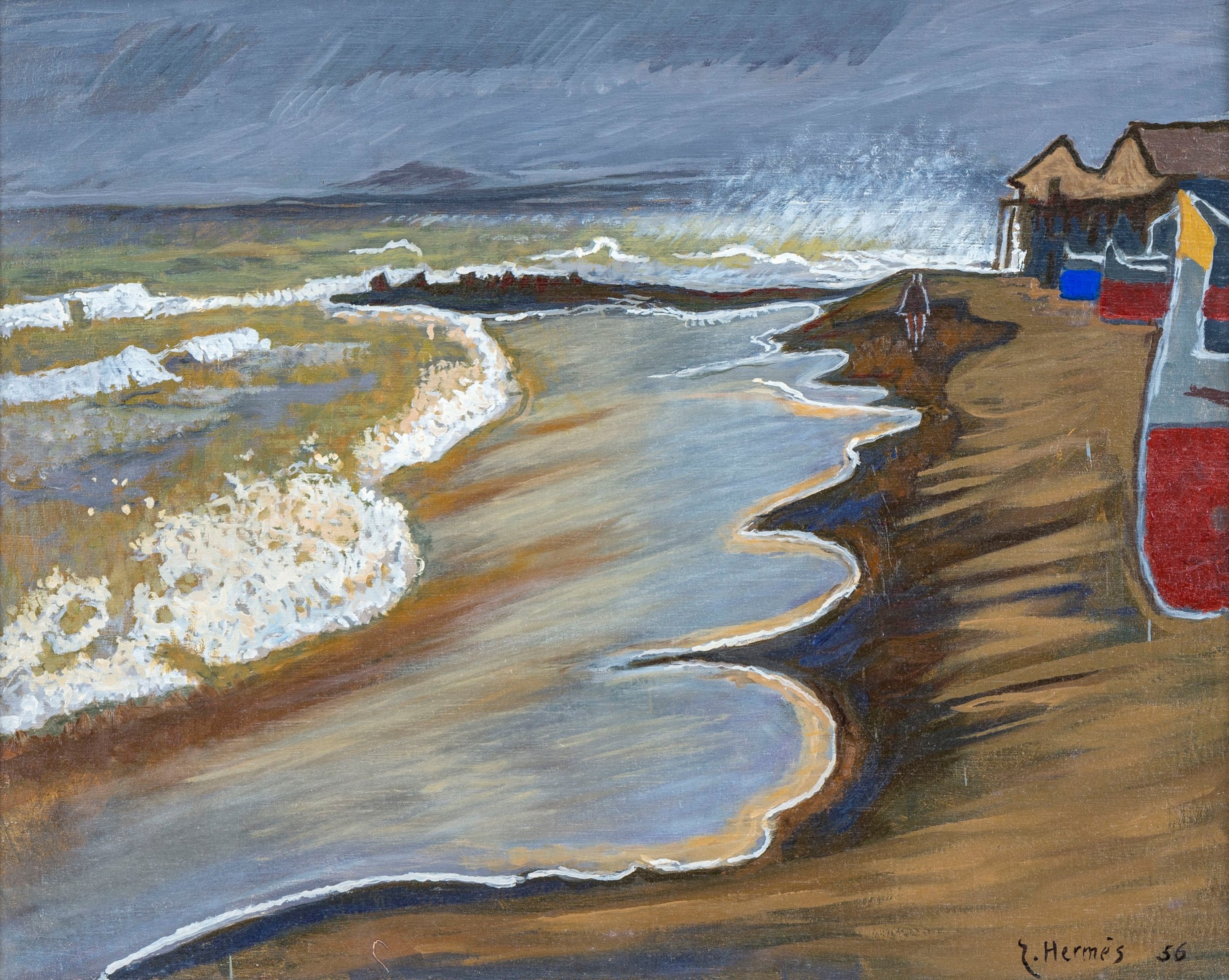
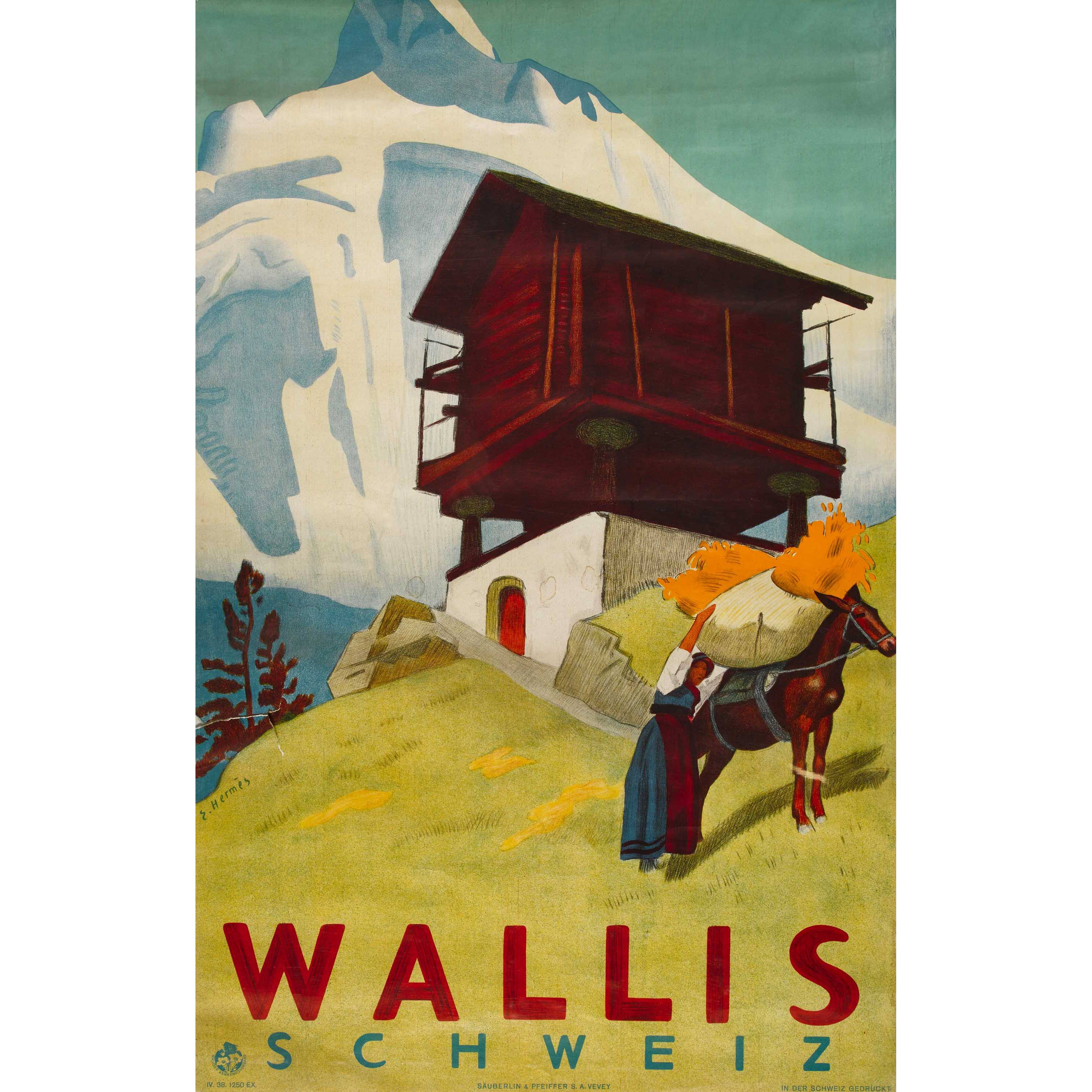
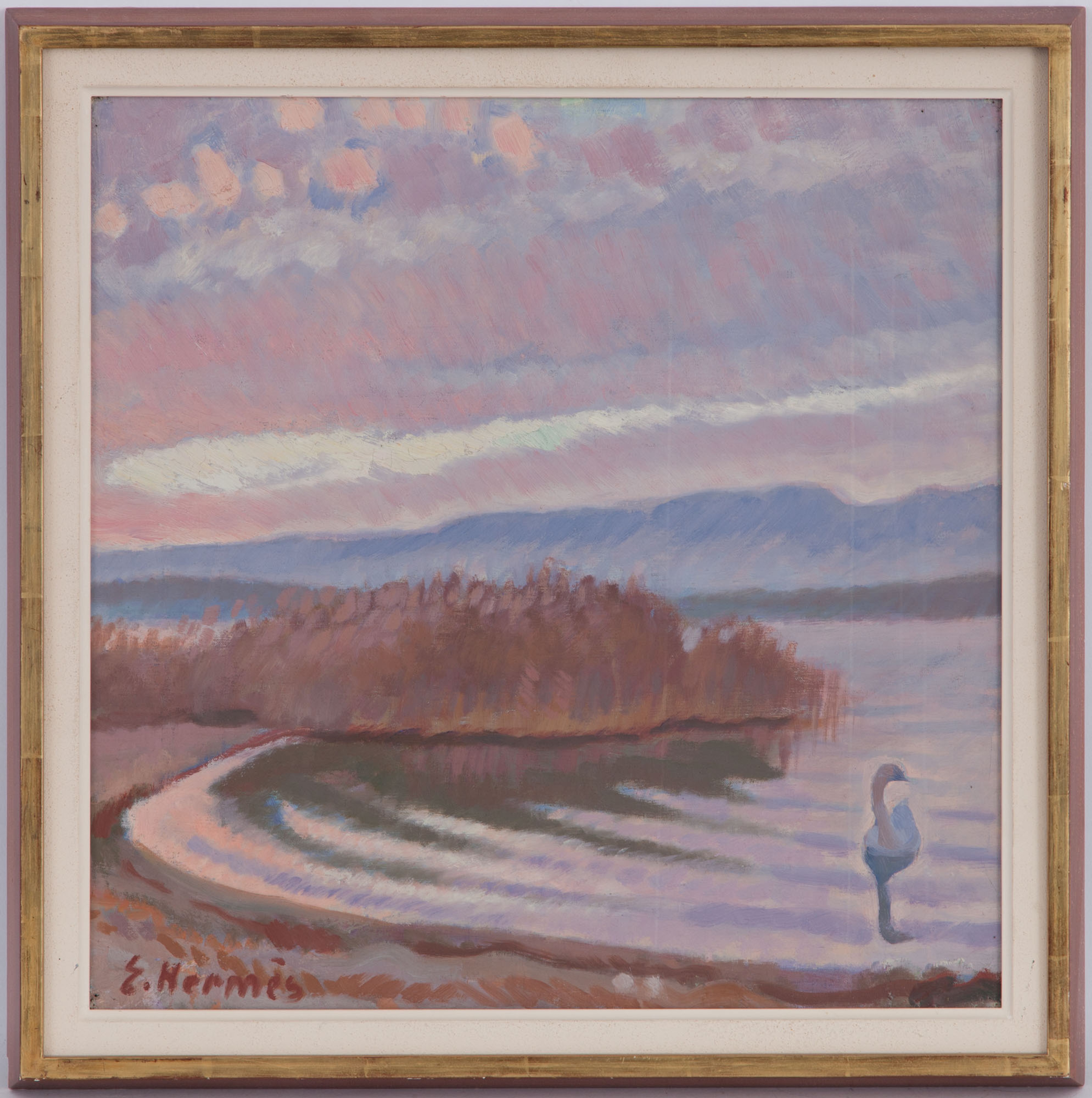
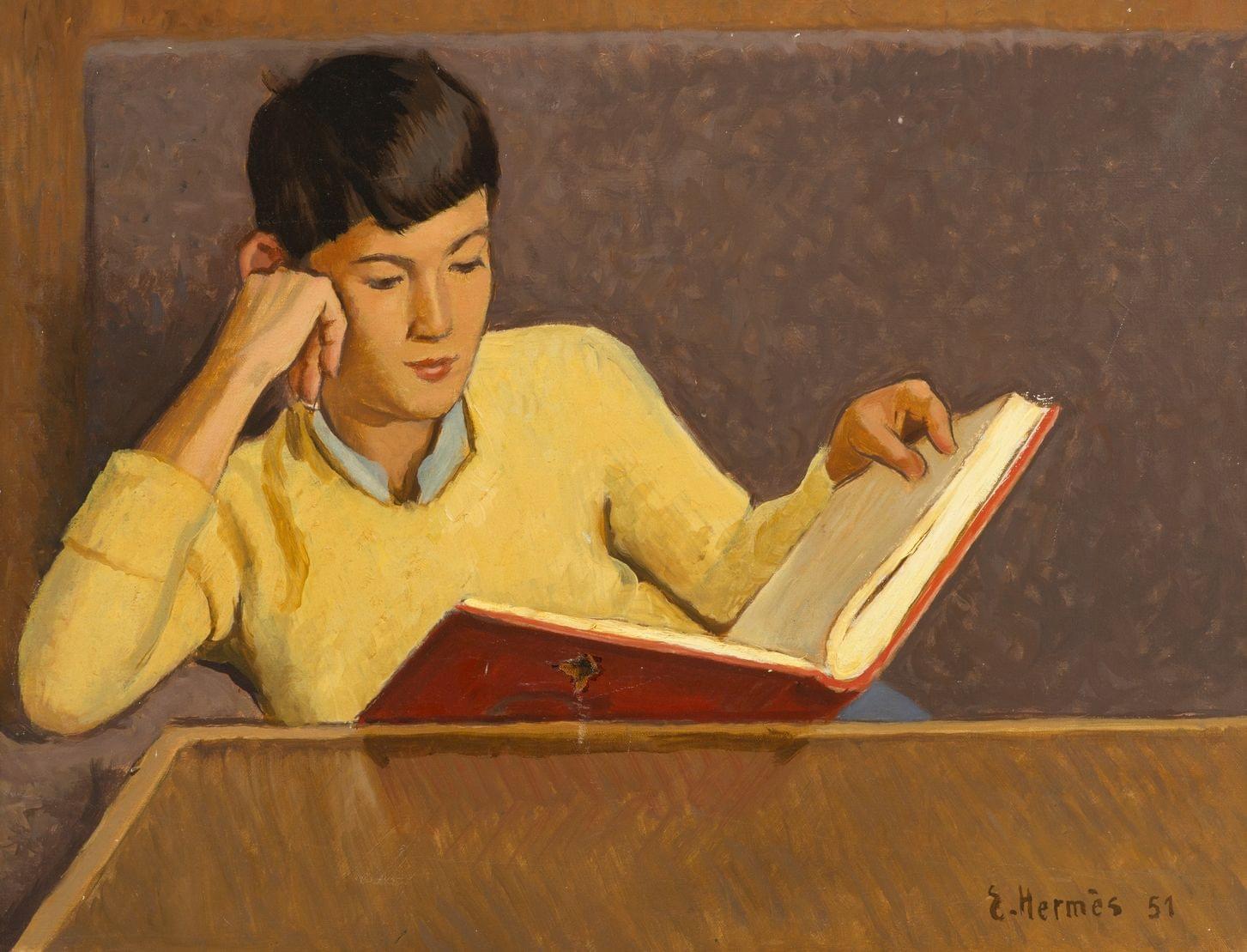
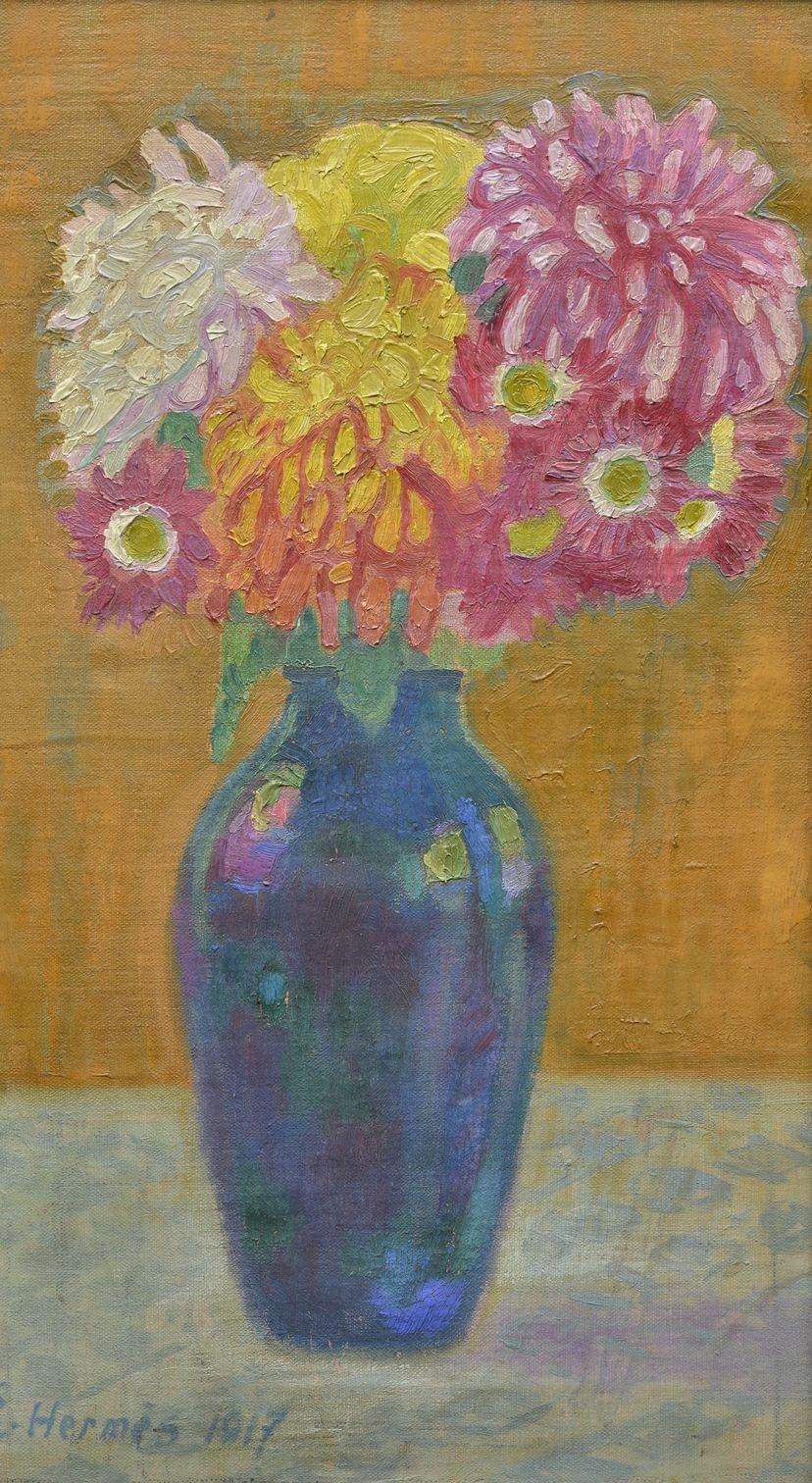
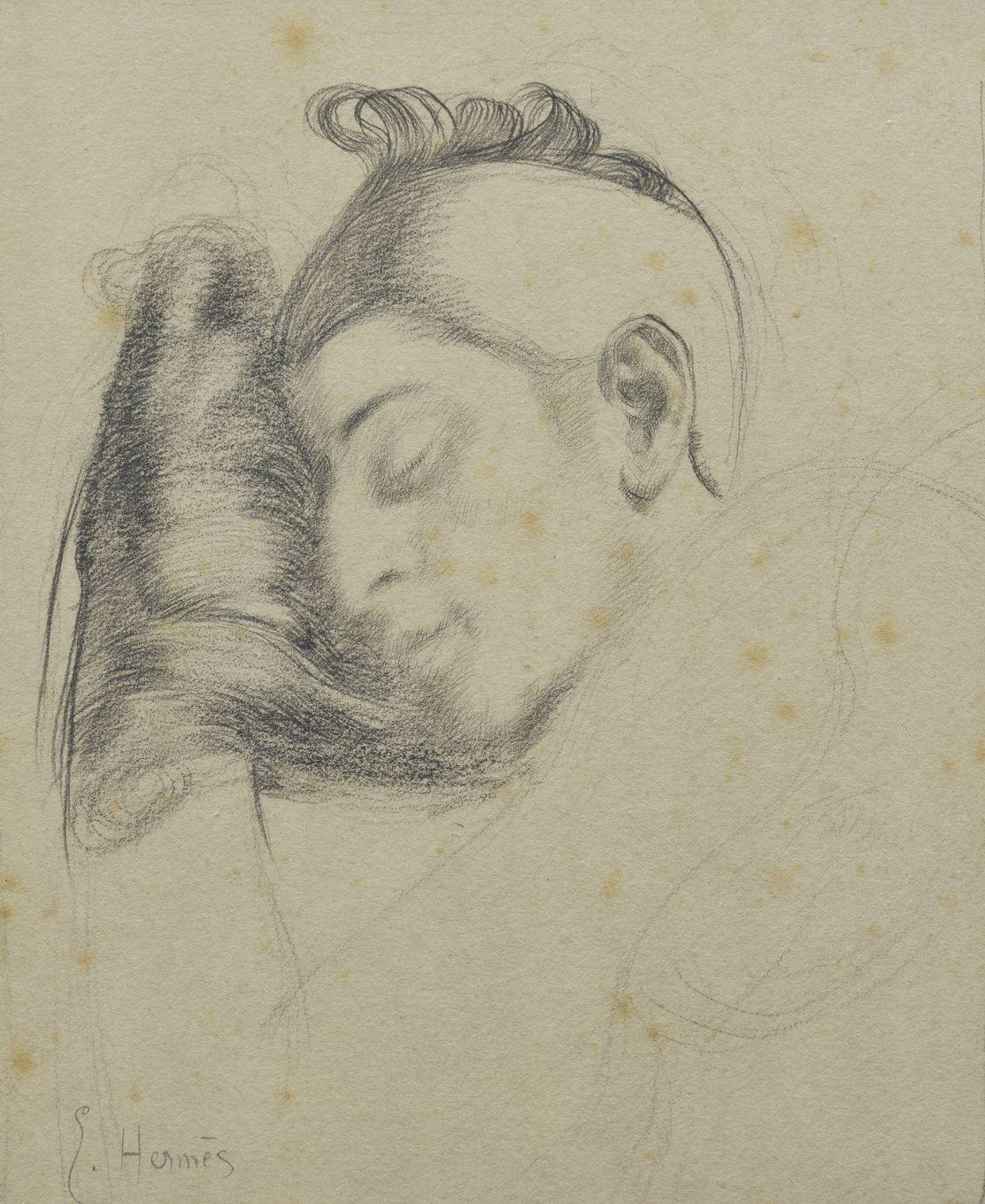
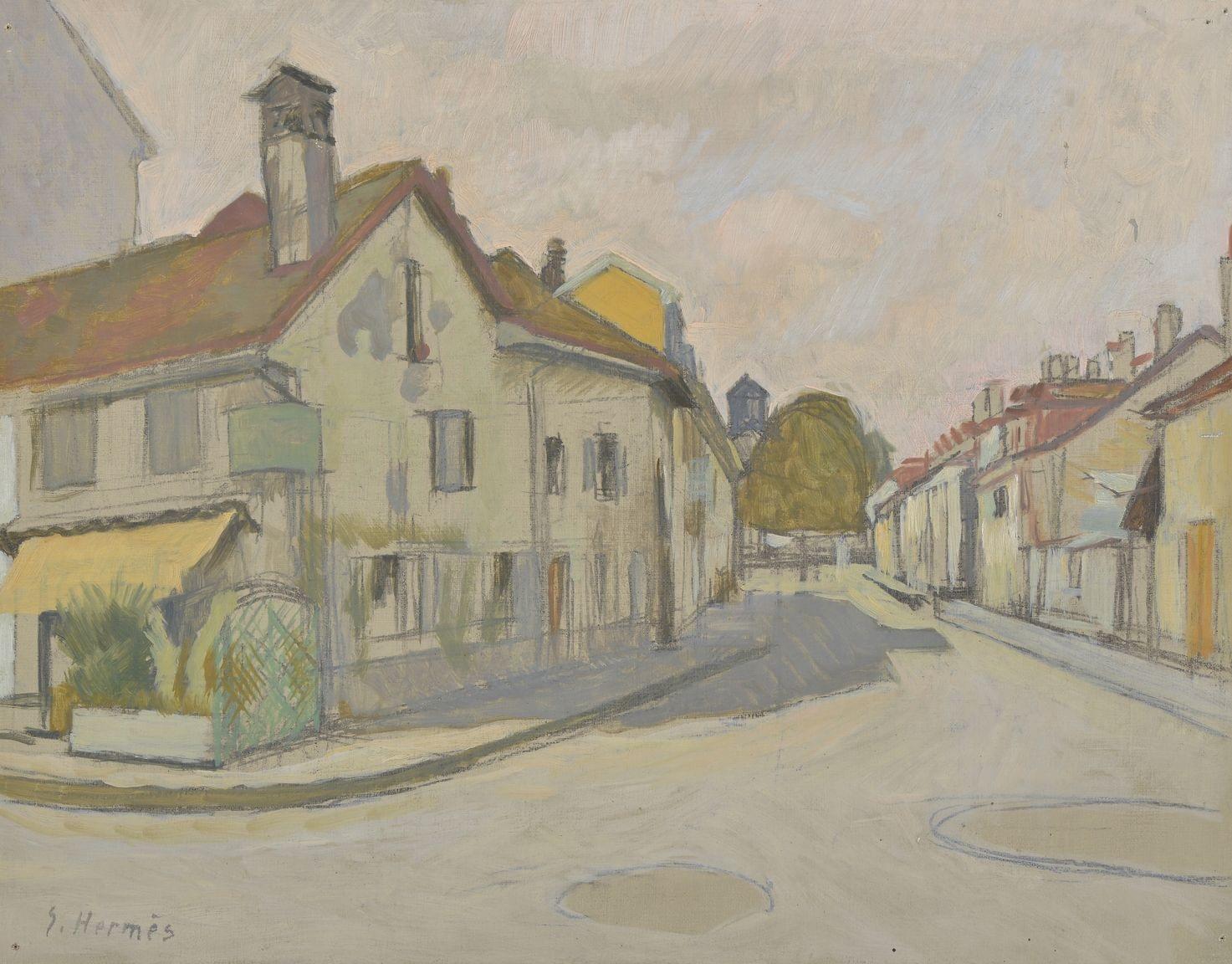
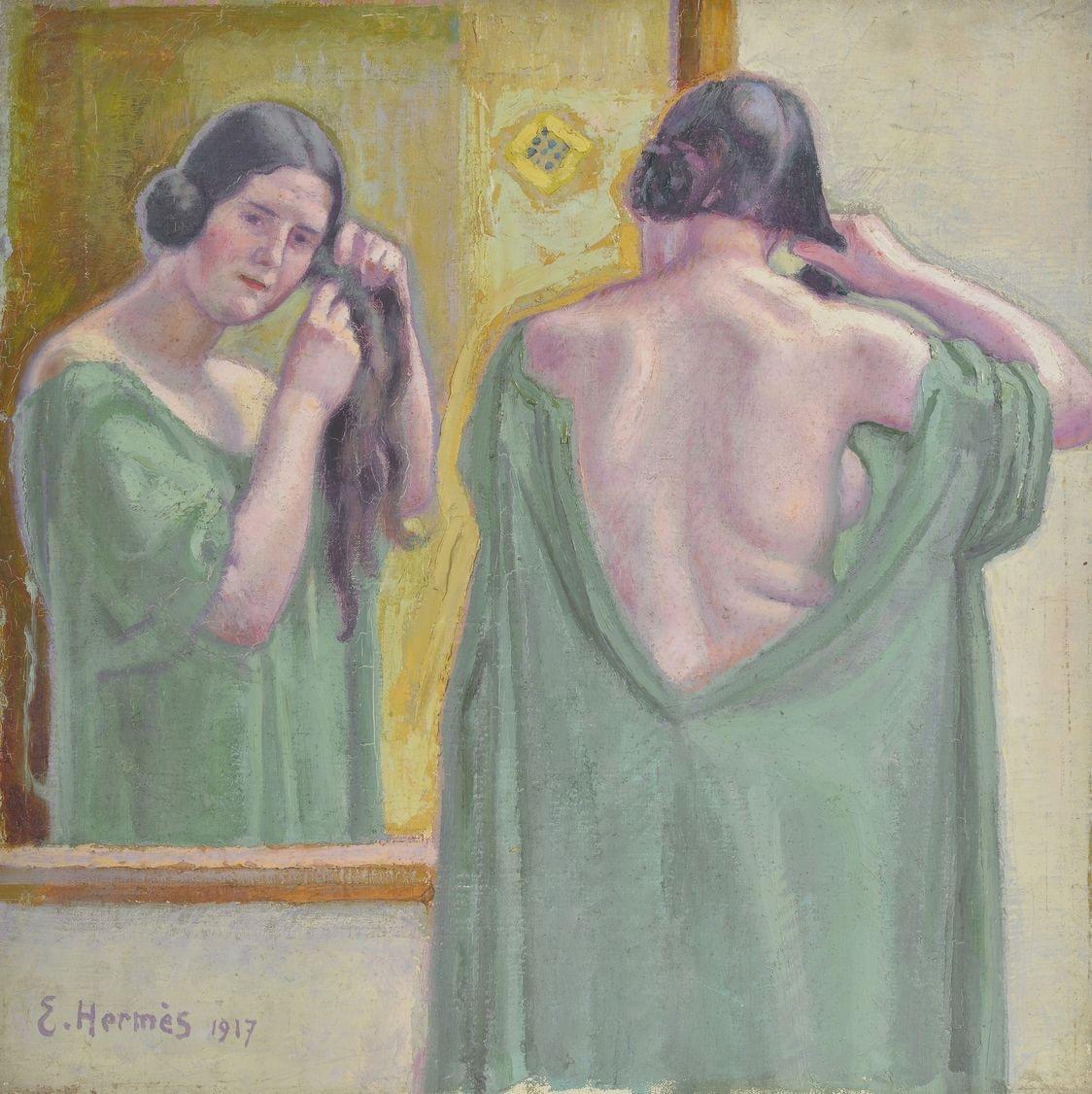
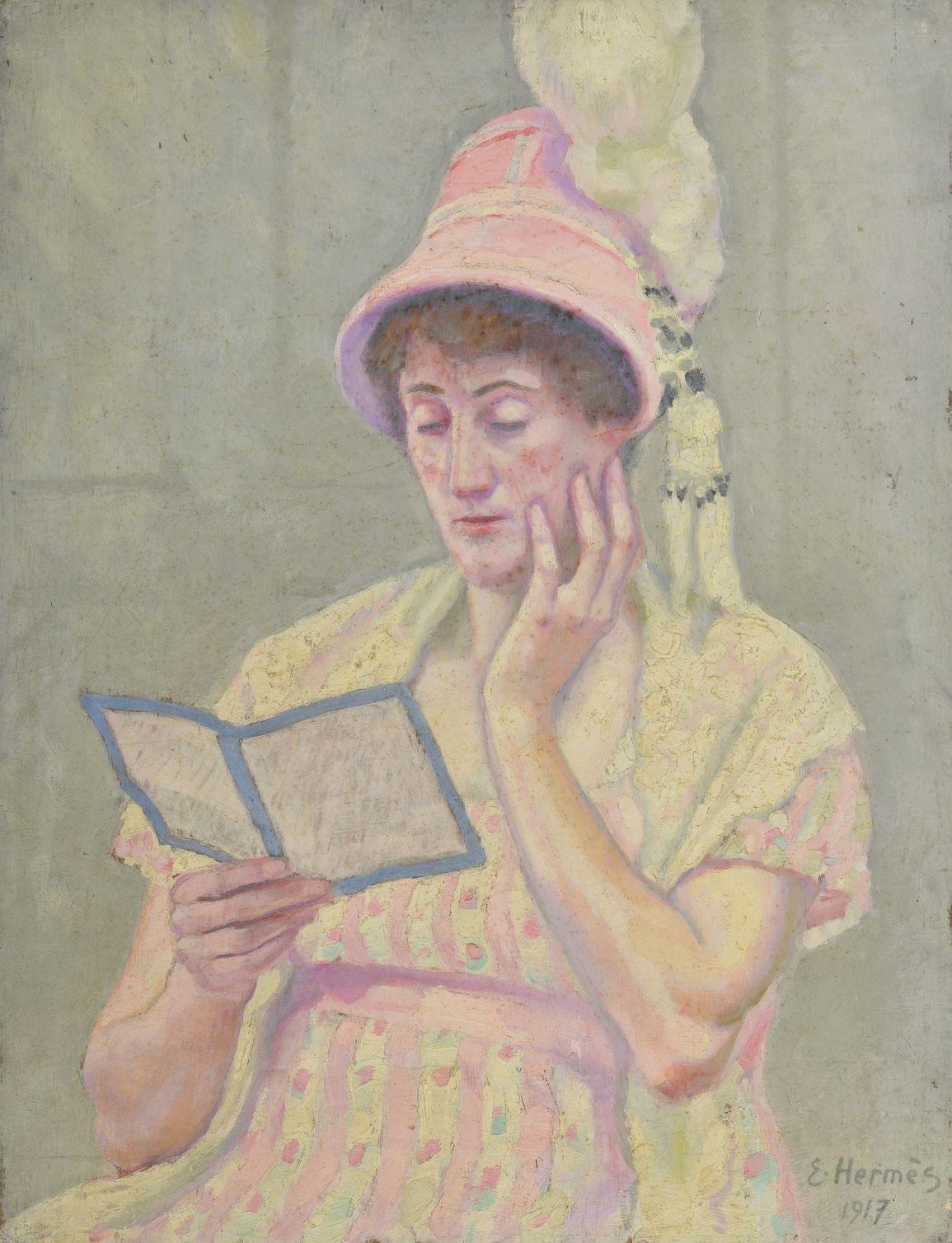
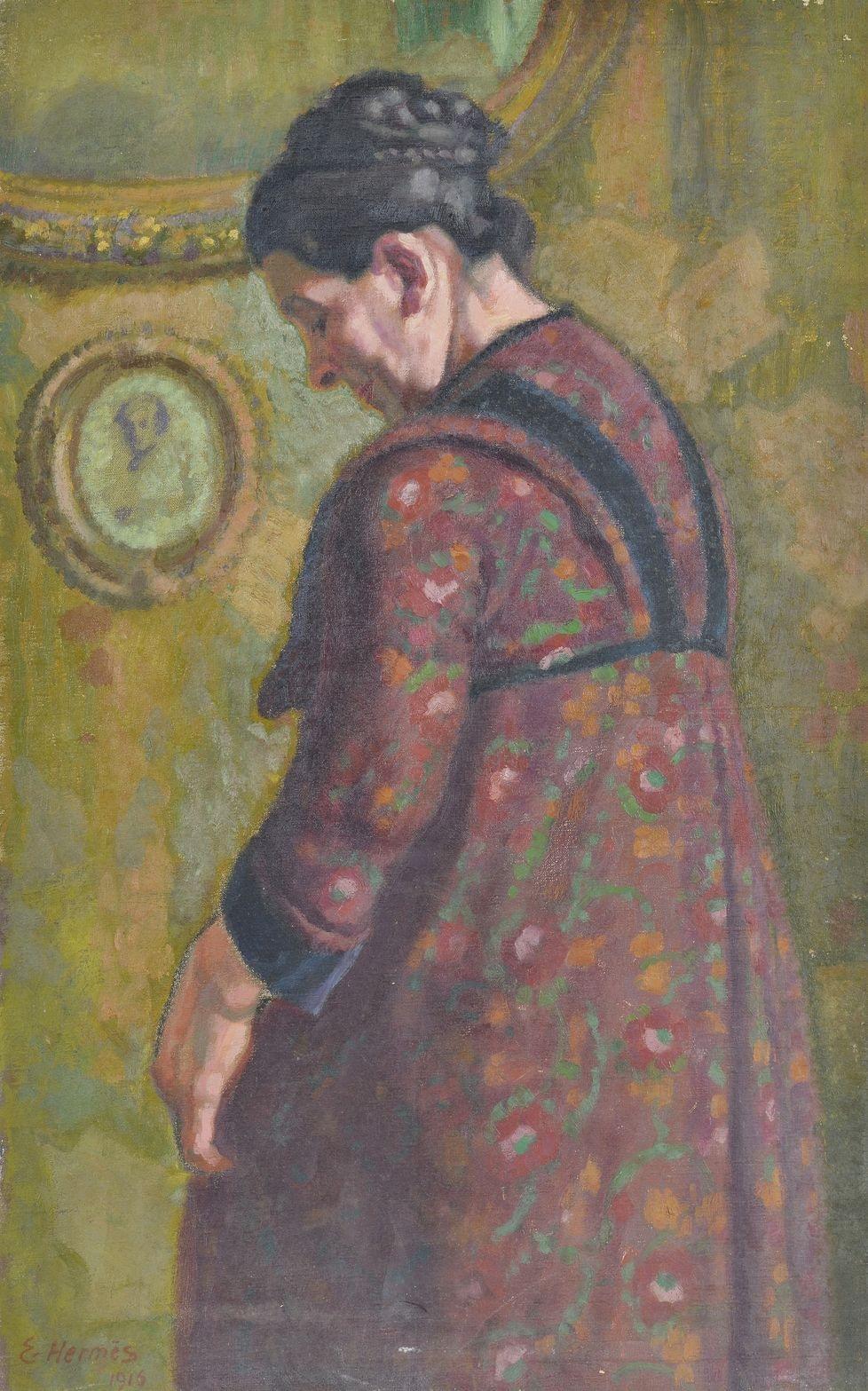
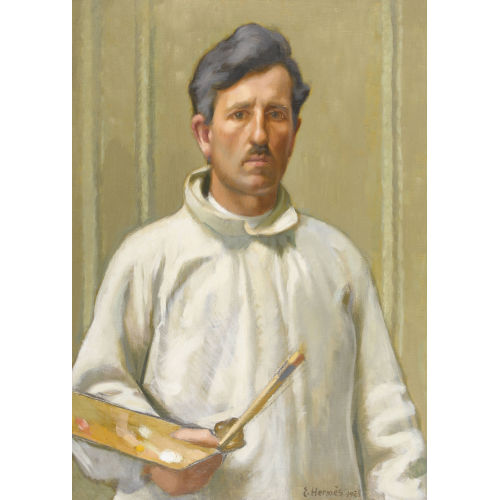
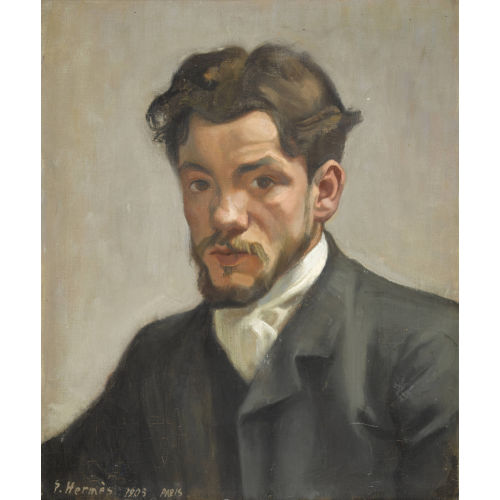
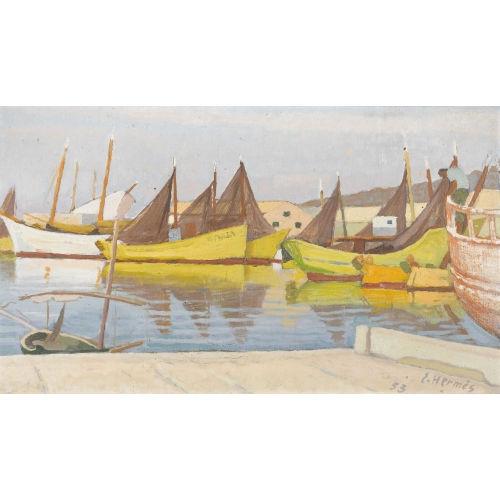
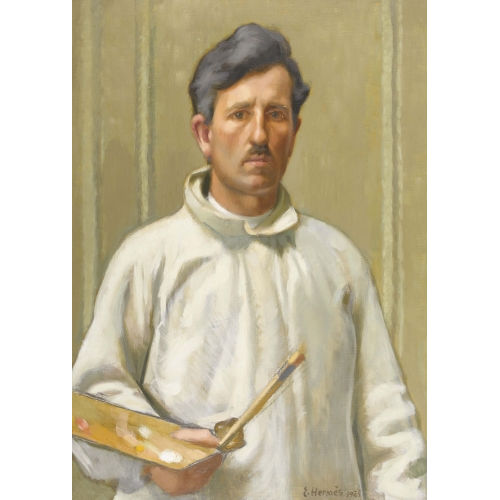
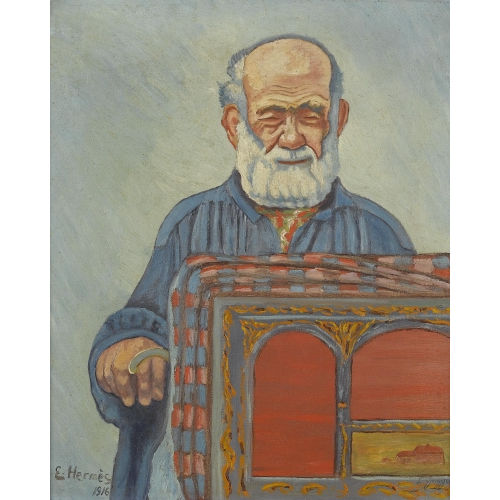
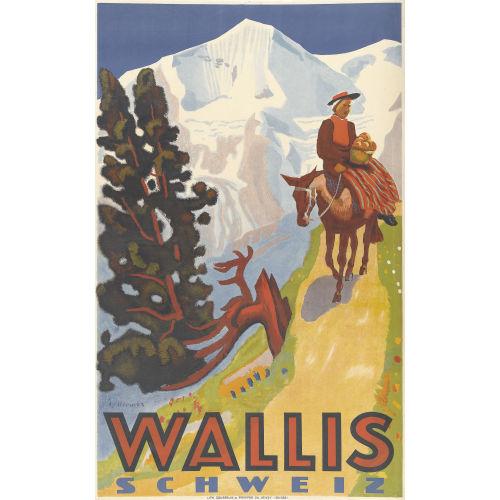
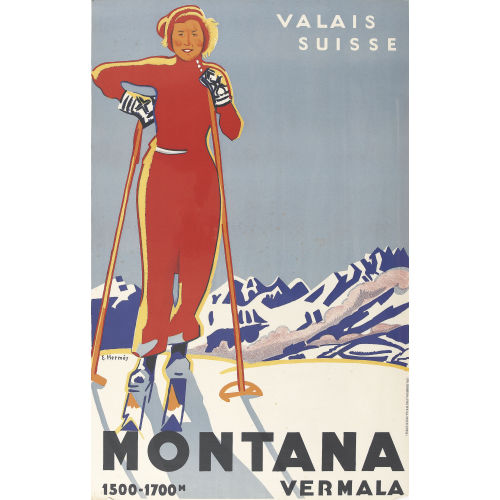
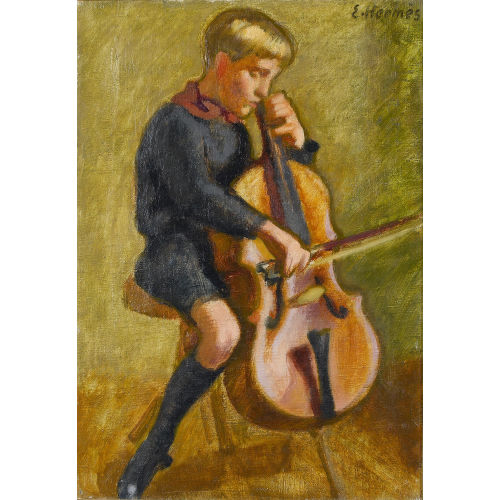
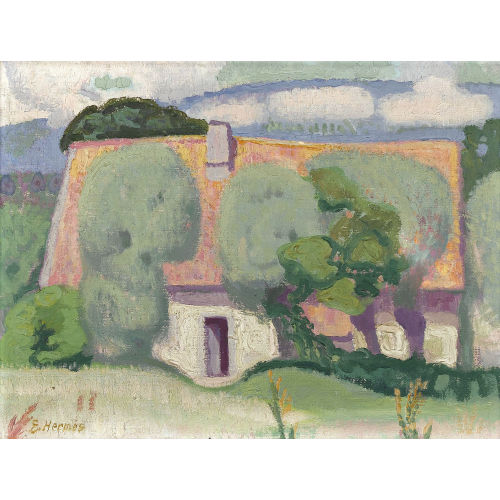
In the 1930s and 1940s, the tourist poster assumed an increasingly important place in his practice. The same gift for clear, legible composition now served to make Swiss landscapes visible and desirable. From the 1950s onwards, he returned chiefly to easel painting, producing portraits and landscapes.
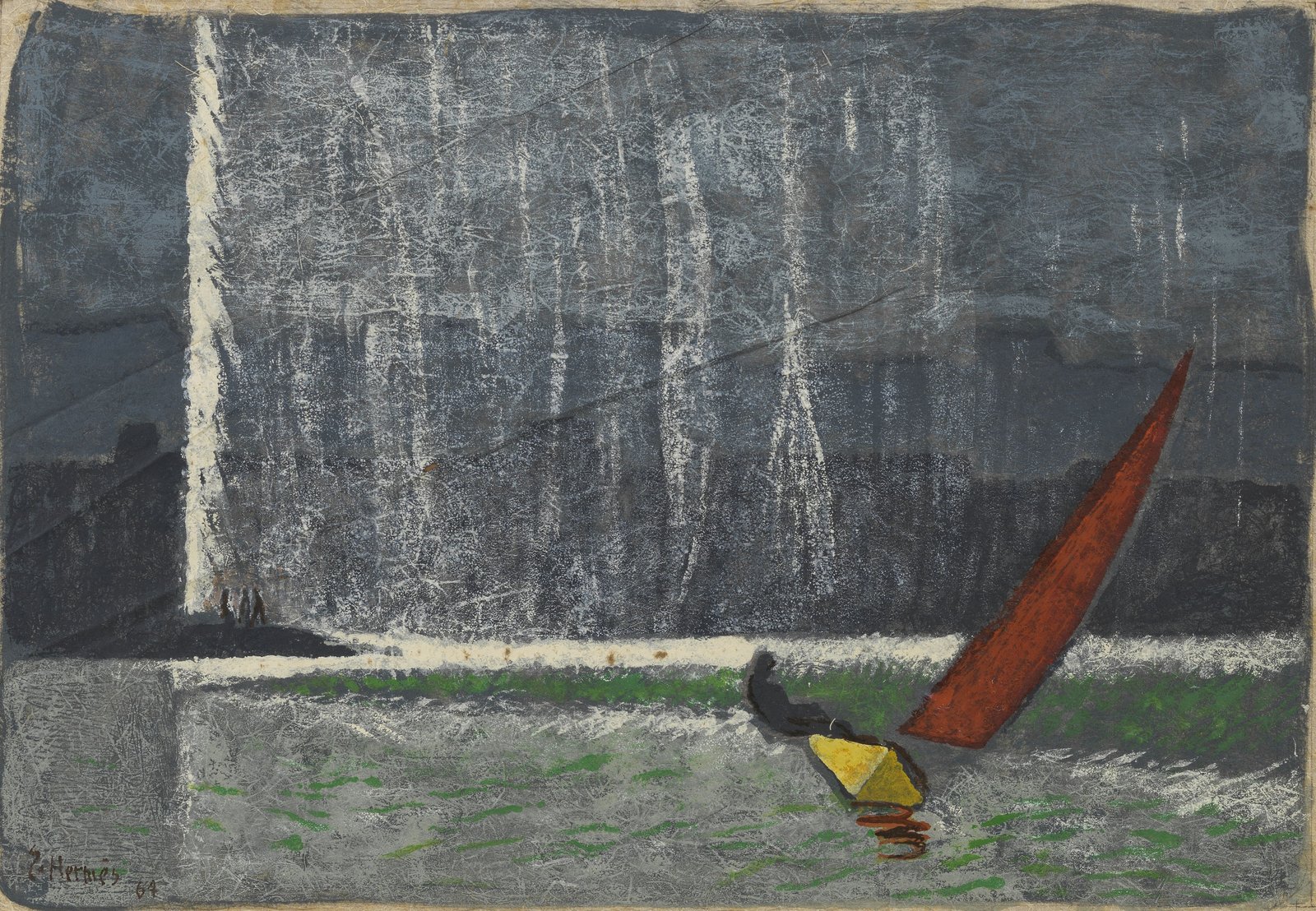
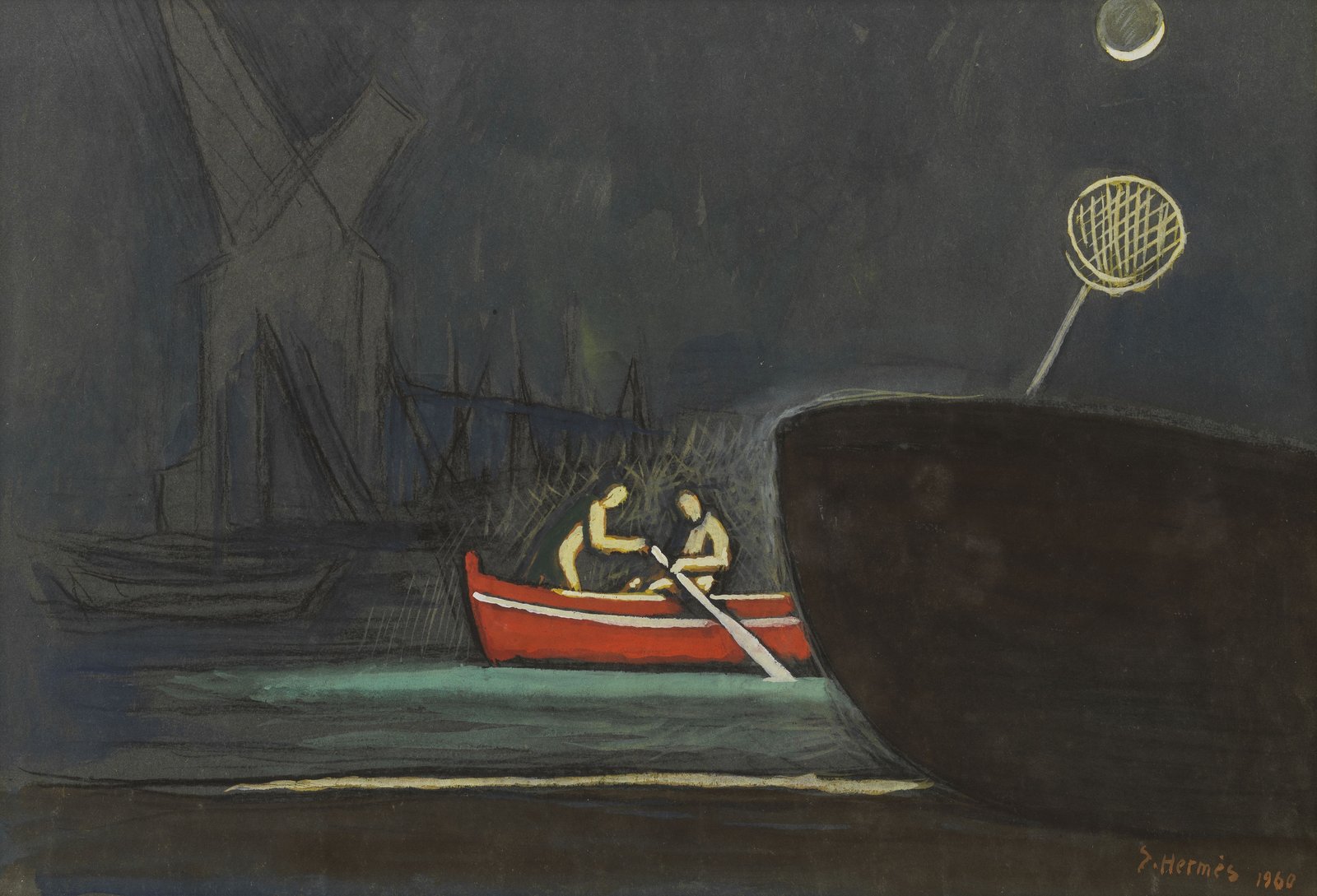
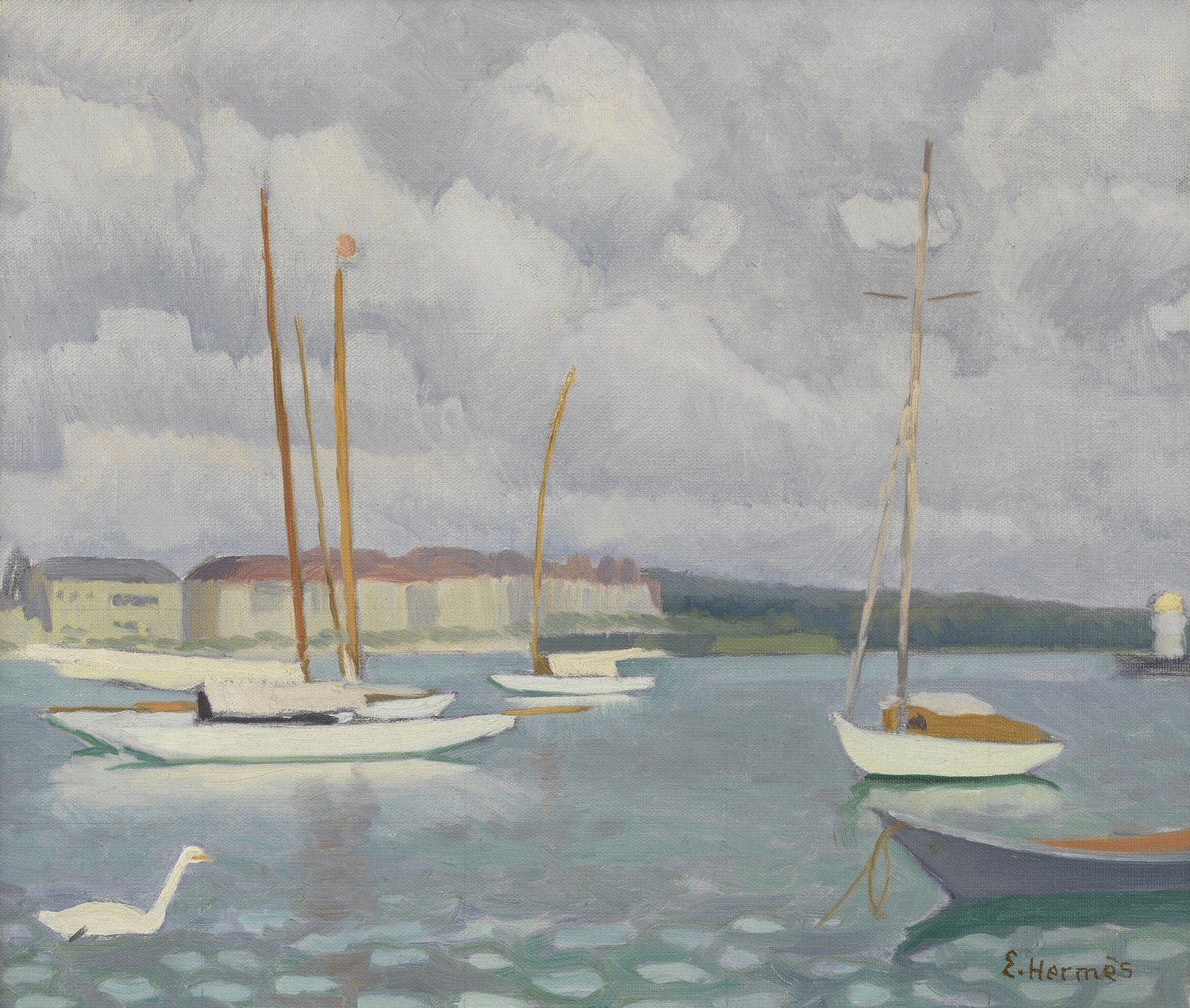
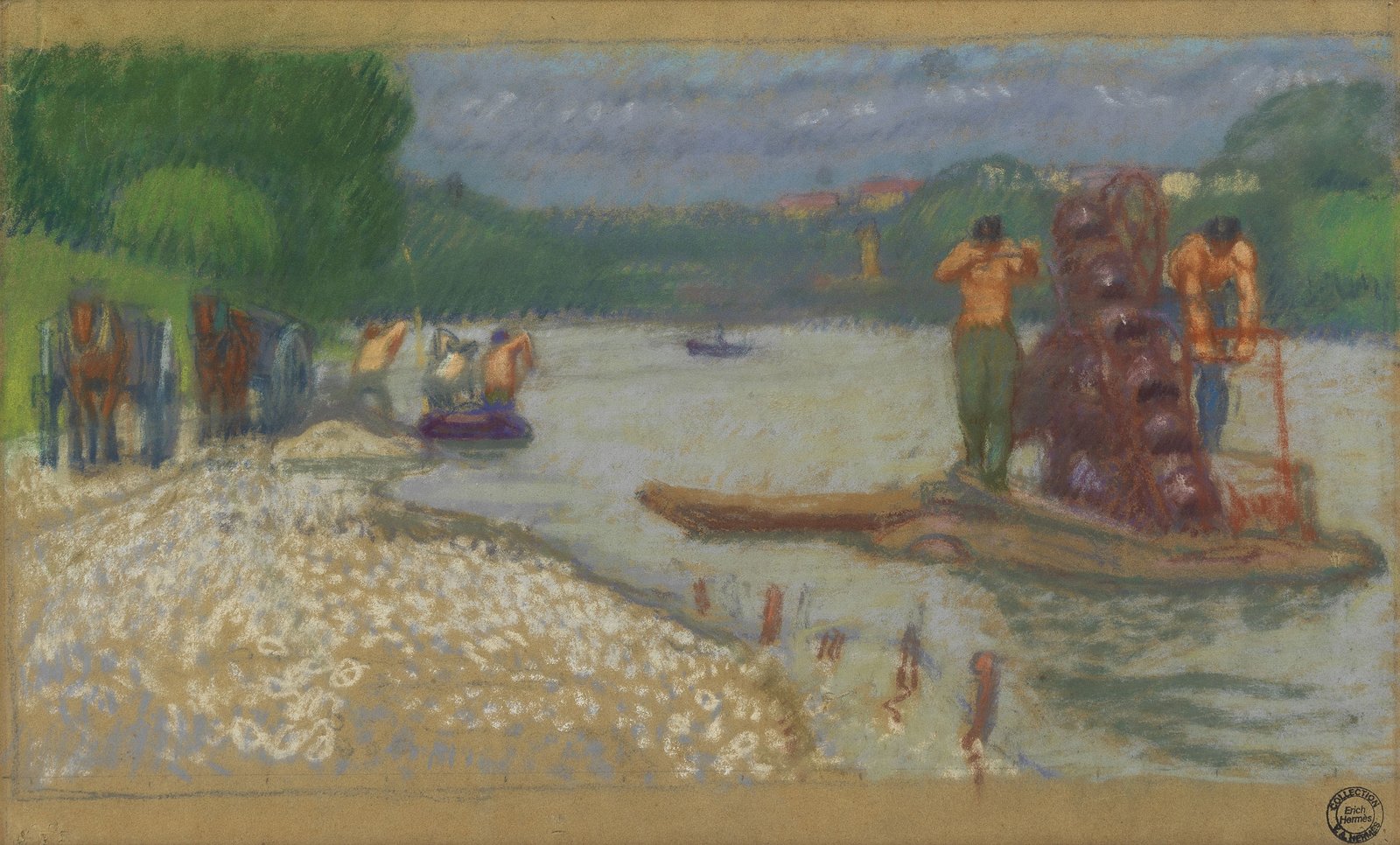
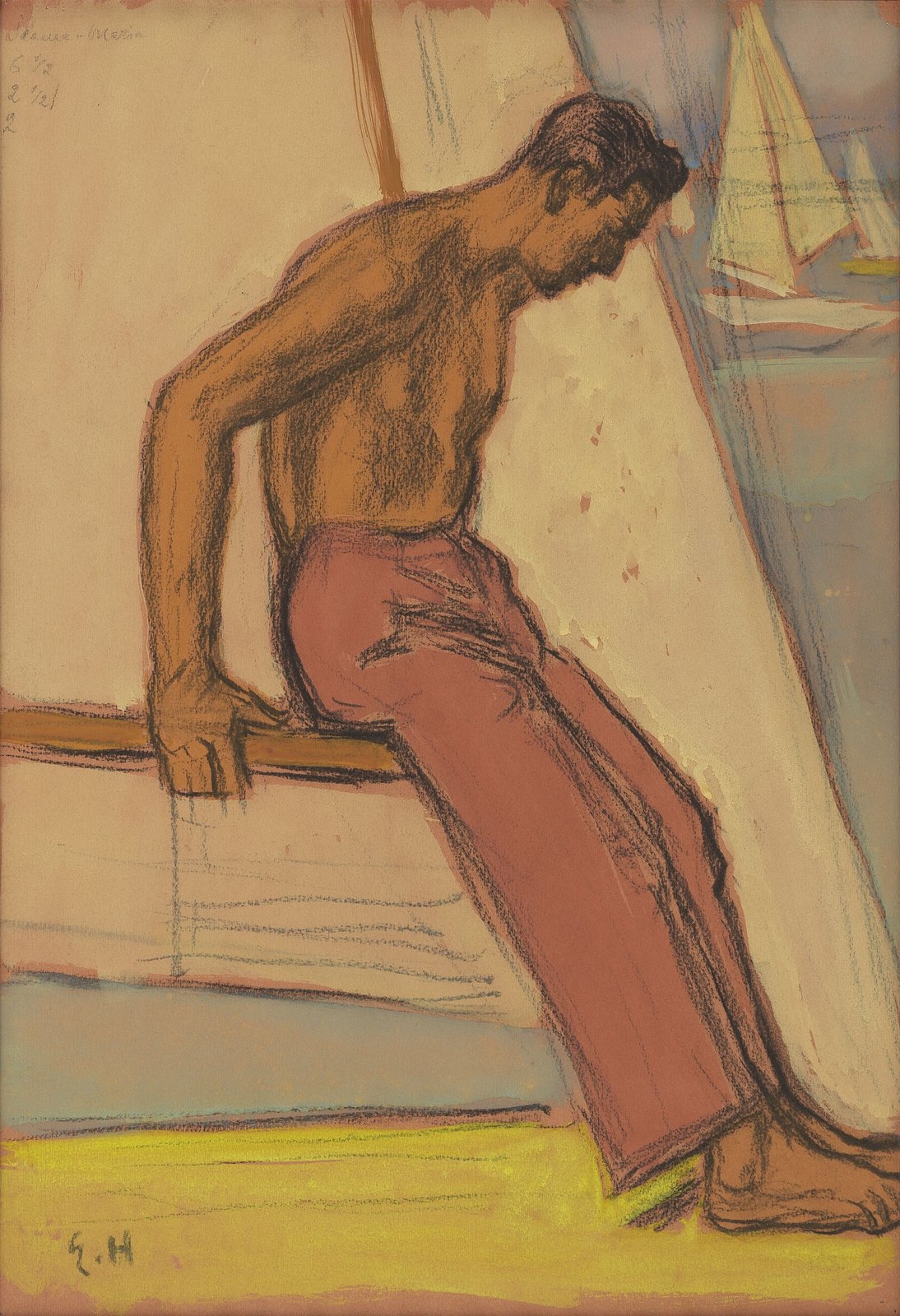
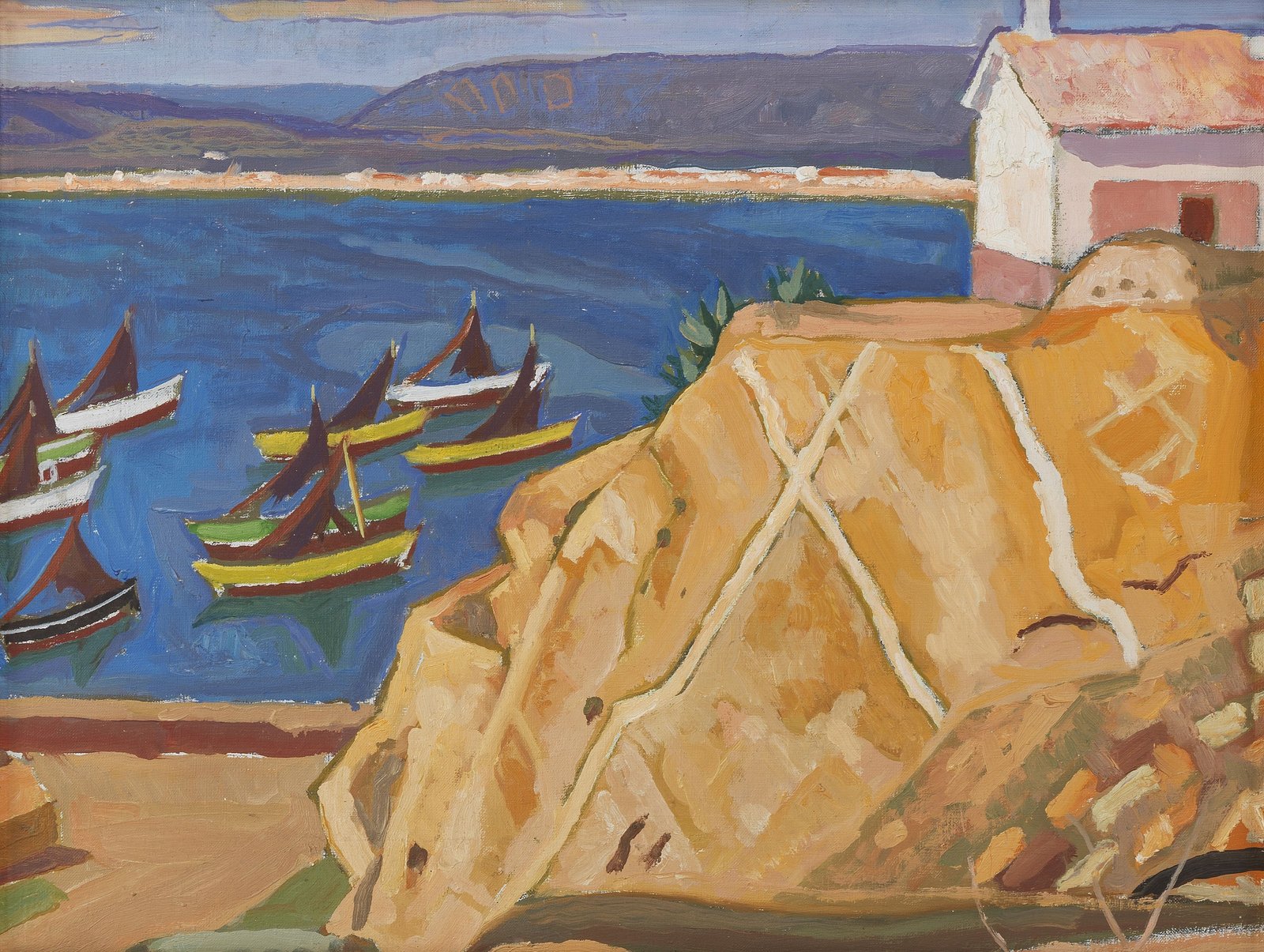
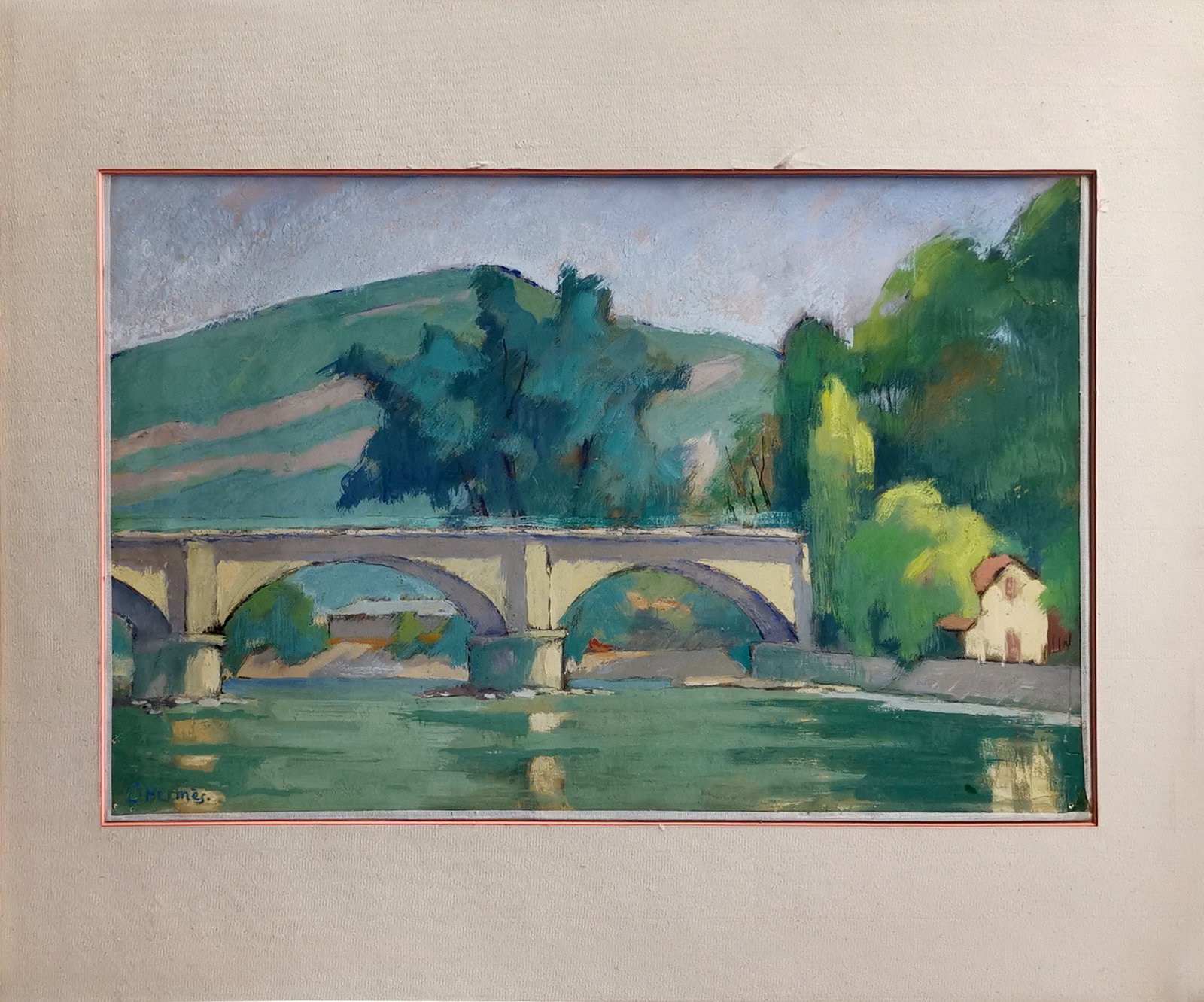
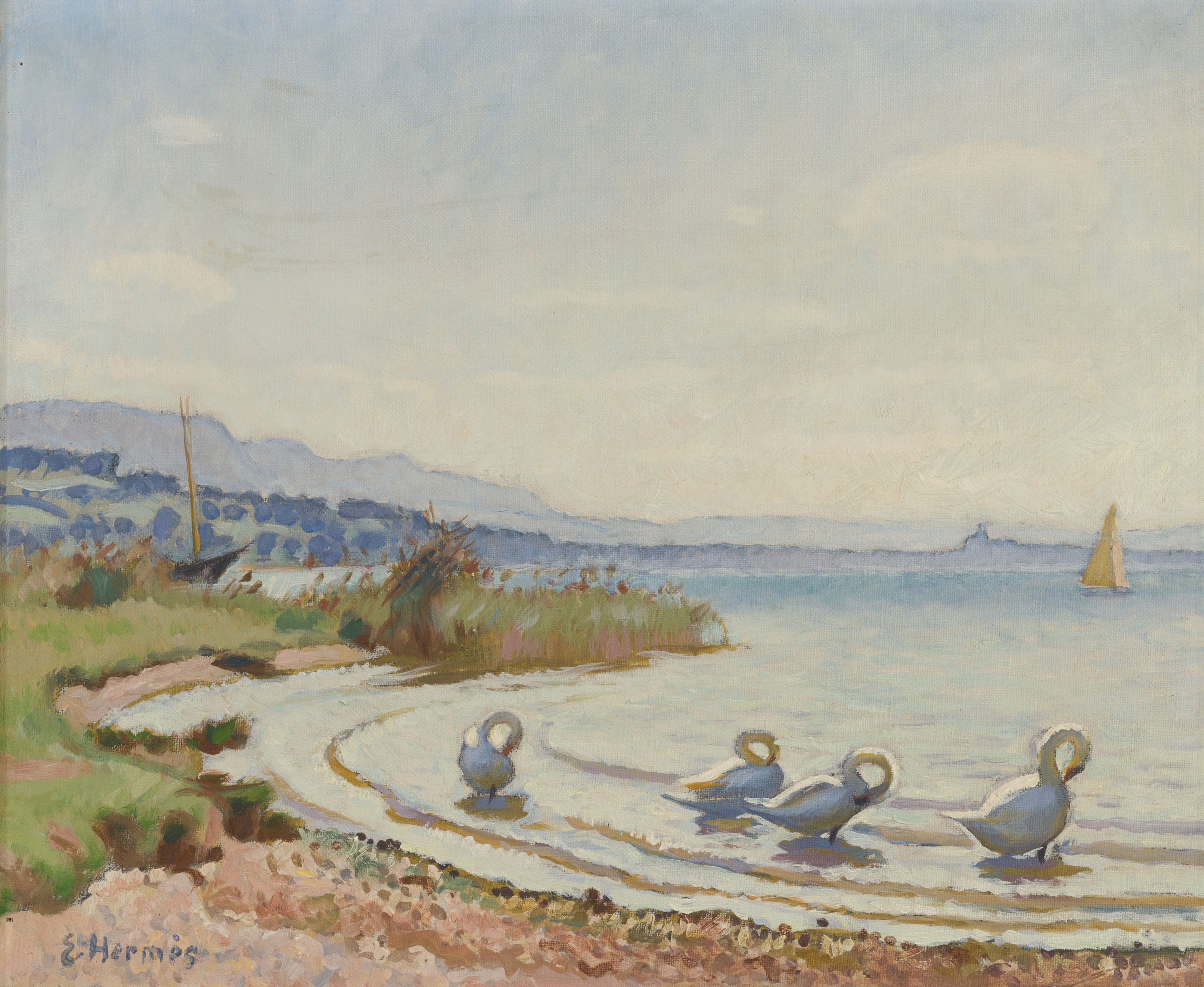
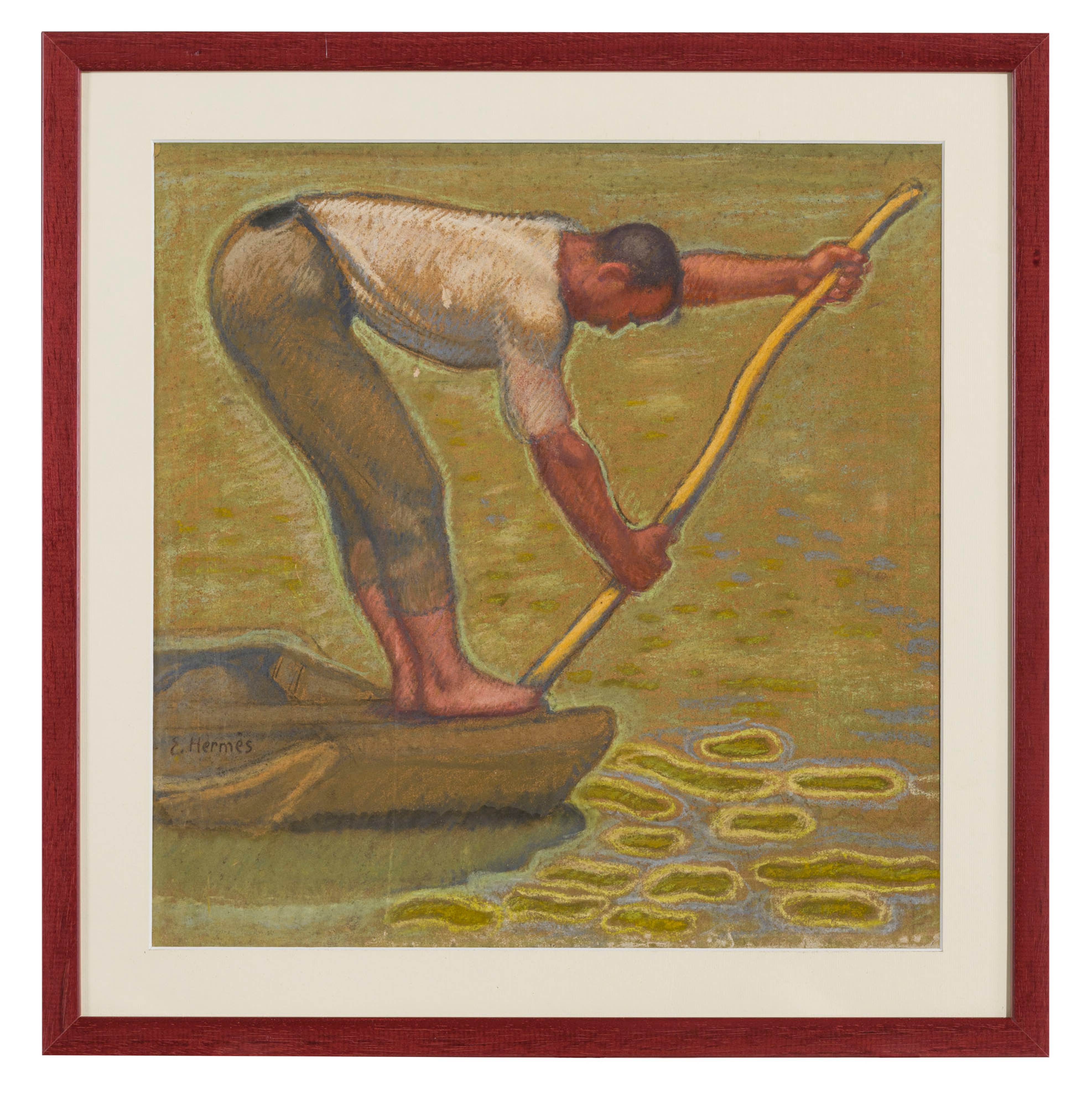
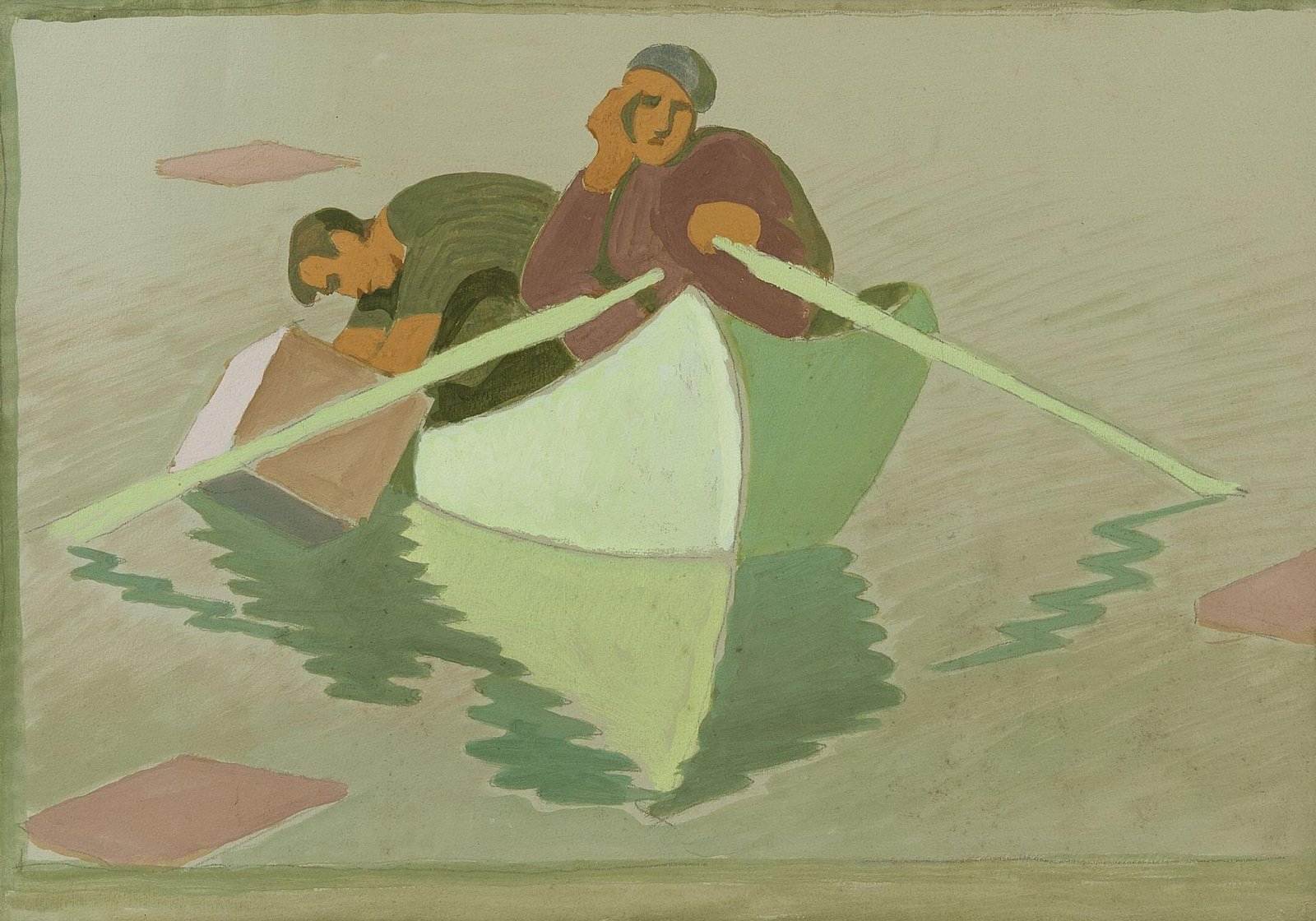
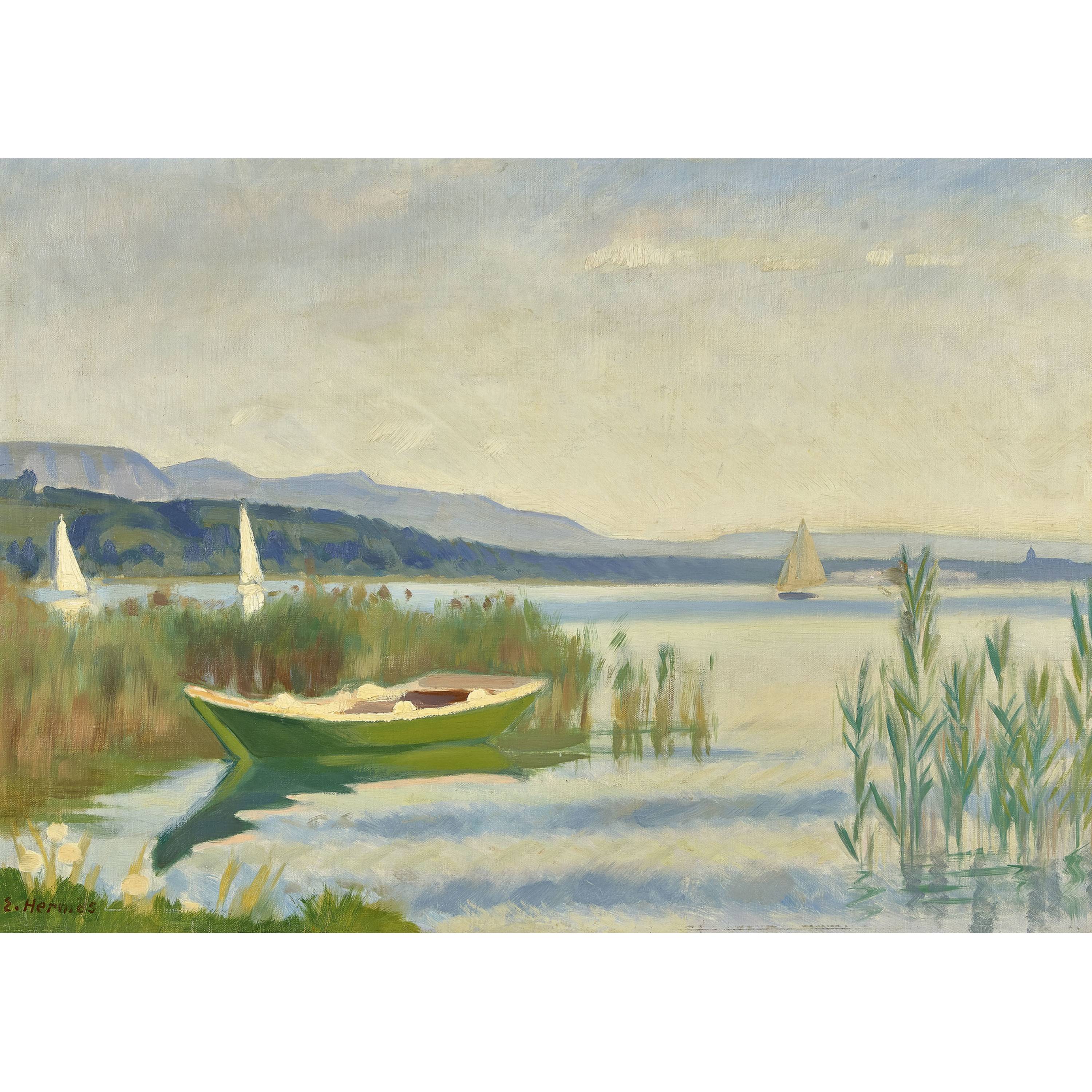
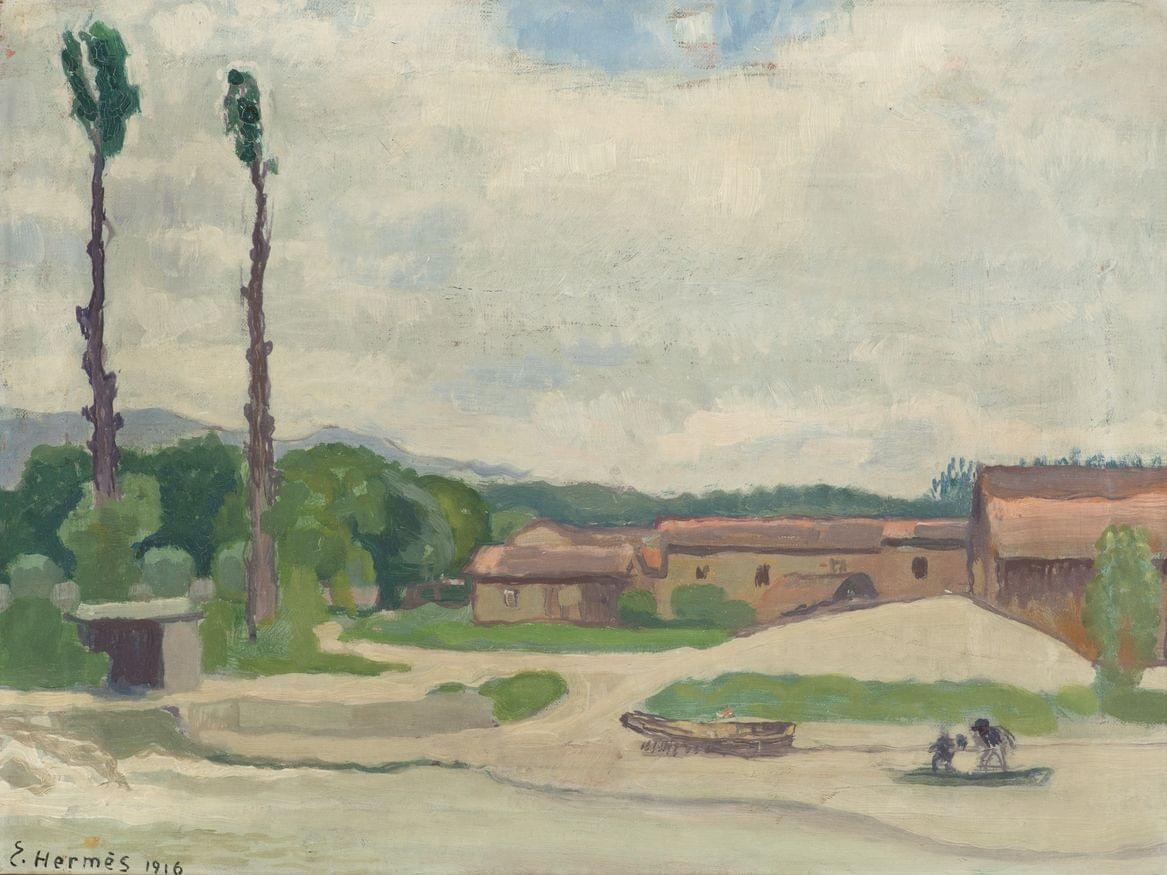
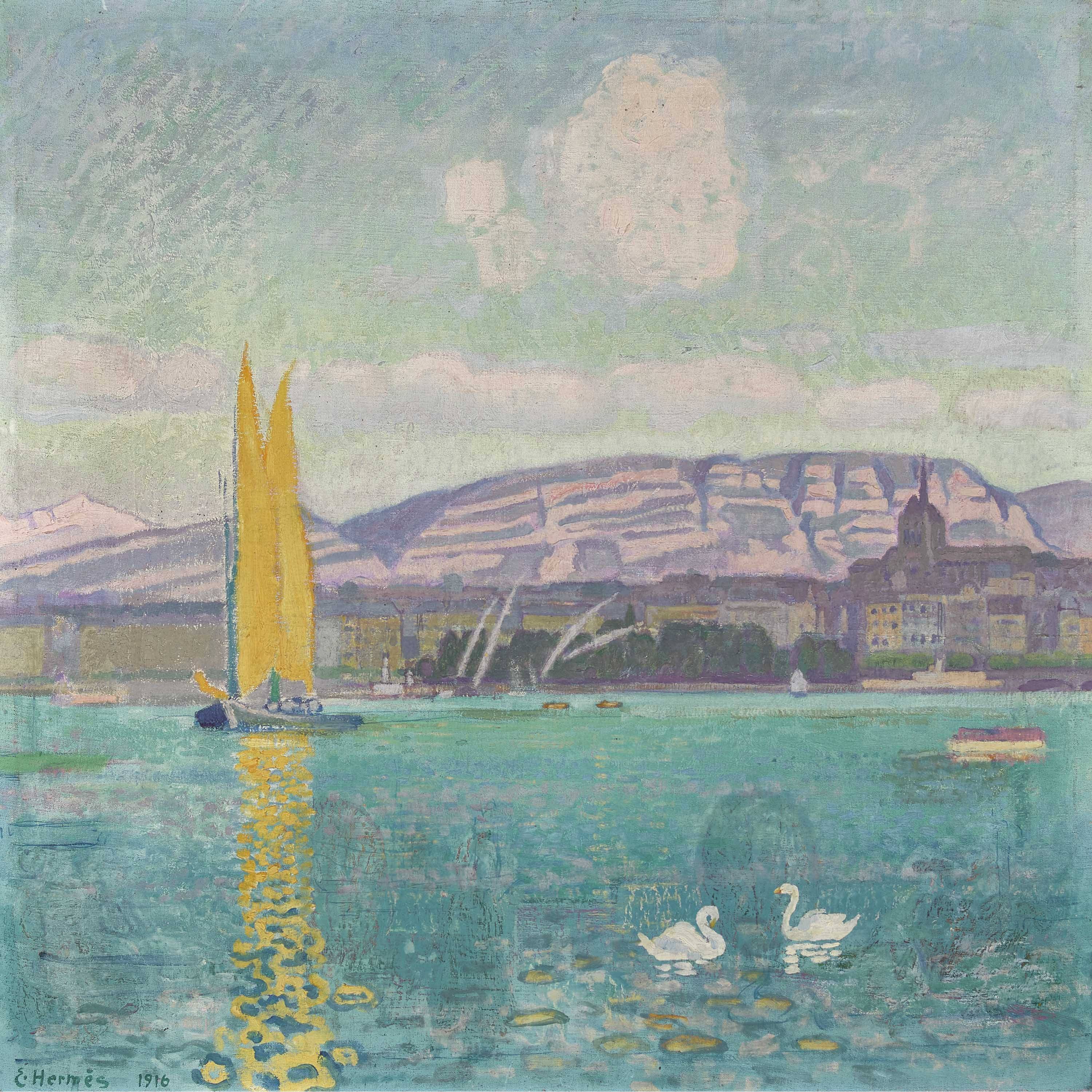
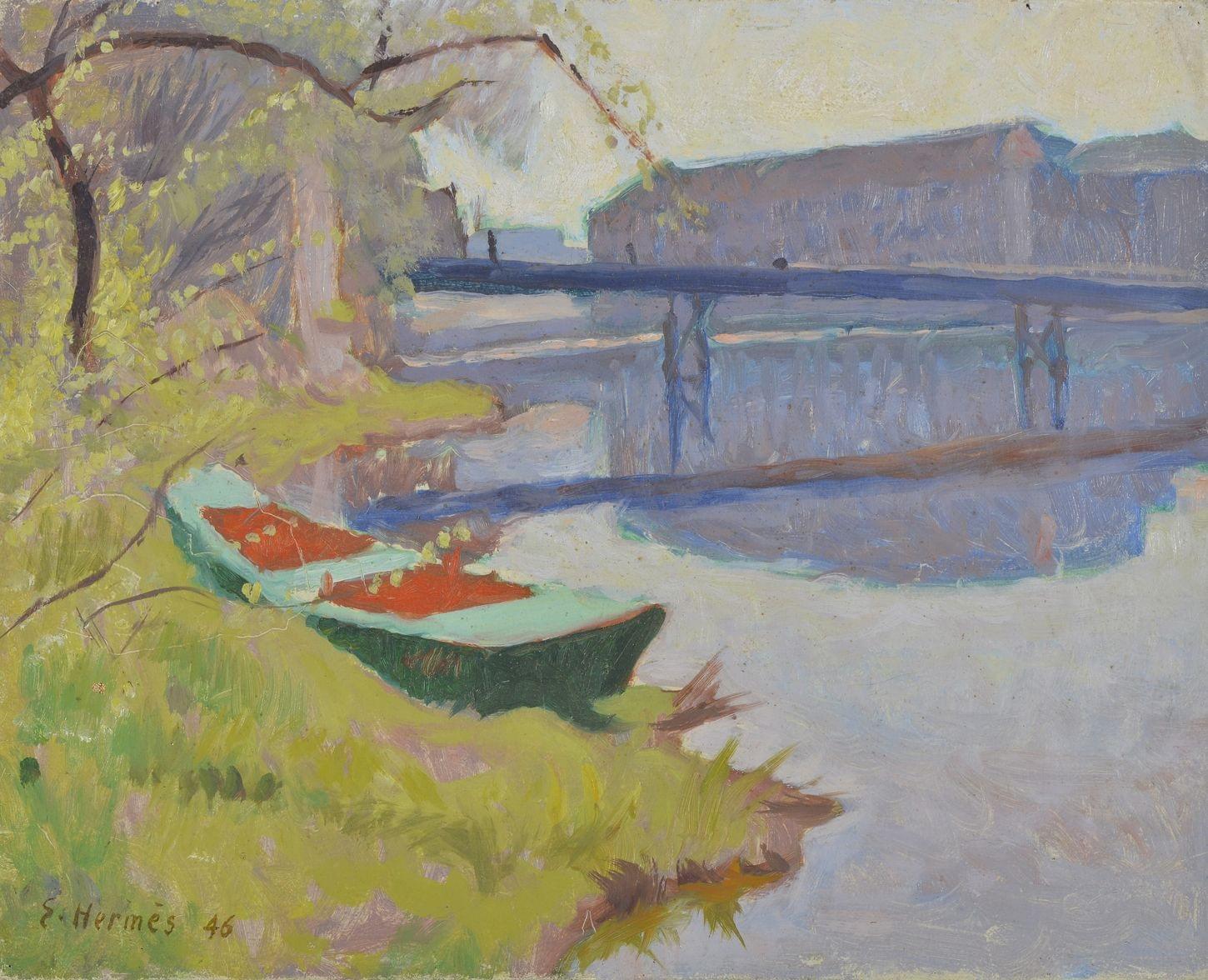
The Collection du Crest thus preserves Barque au bord du Rhône à la Jonction, evidence of his repeated attention to the banks of the Rhône in Geneva. From the shared space of a temple to the image intended for passers-by, Hermès sought to inscribe art in the places of everyday life.