Claudio Baccalà
Born in Incella – Brissago (Switzerland) on 4 September 1923.
Died in Locarno (Switzerland) on 9 December 2007.
Swiss · Visionary figuration · nature, mythology and symbols.
Claudio Baccalà was a self-taught painter and draughtsman from Ticino. His experience as a farmer and shepherd in the mountains above Brissago remained central to his imagery. He began painting in the mid-1940s while working in German-speaking Switzerland.
Returning to Ticino in 1950, he established his studio in Brissago.
His encounter with Jean Dubuffet in 1949 opened contacts with artistic circles in Paris and Brussels. Galerie Hutter in Basel held his first solo exhibition in 1951. Close to the concerns of Art Brut, he nevertheless developed a personal visual language independent of schools.
In 1973 he received the painting prize at the first Biennale of Swiss Art in Zurich.
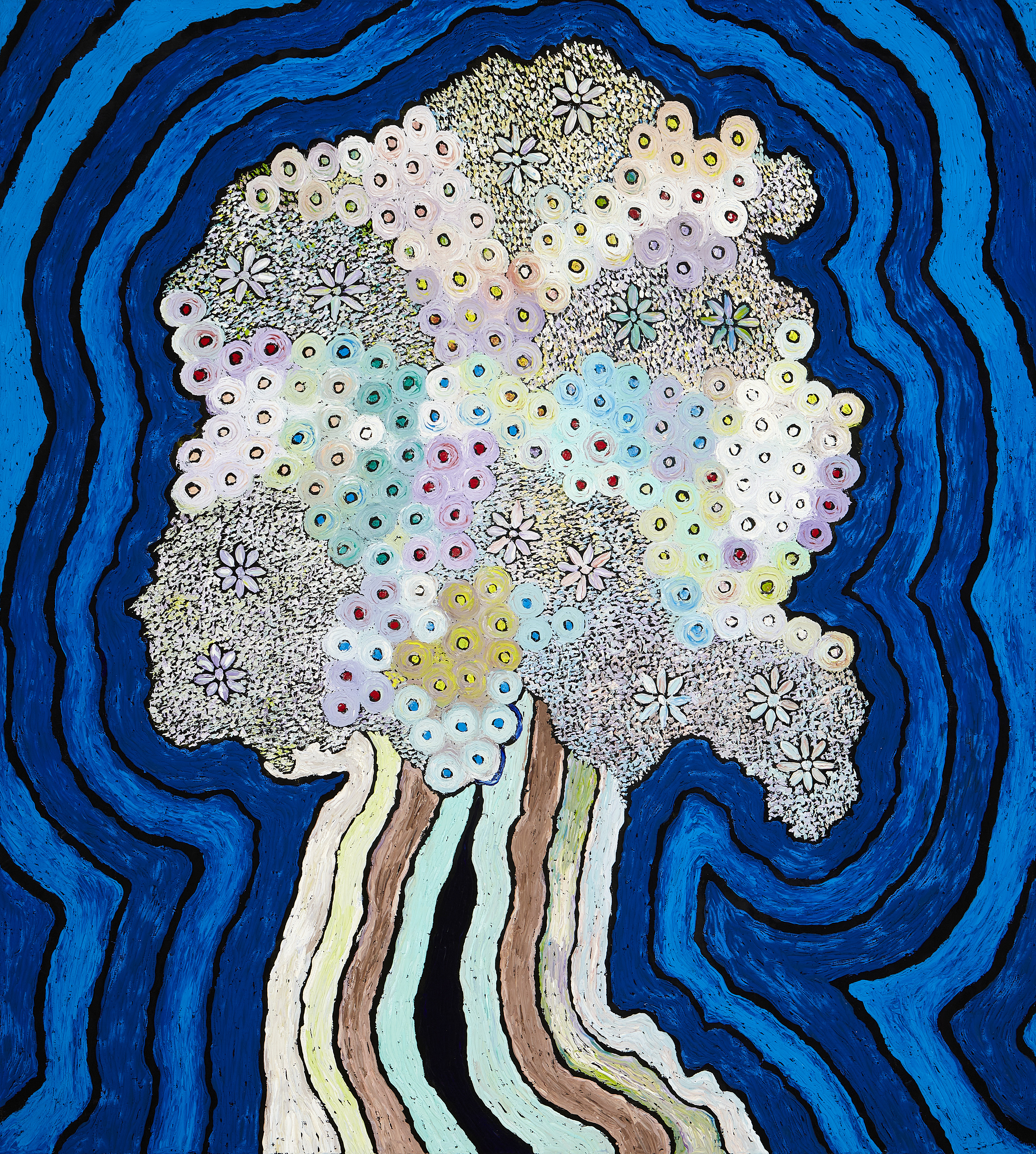
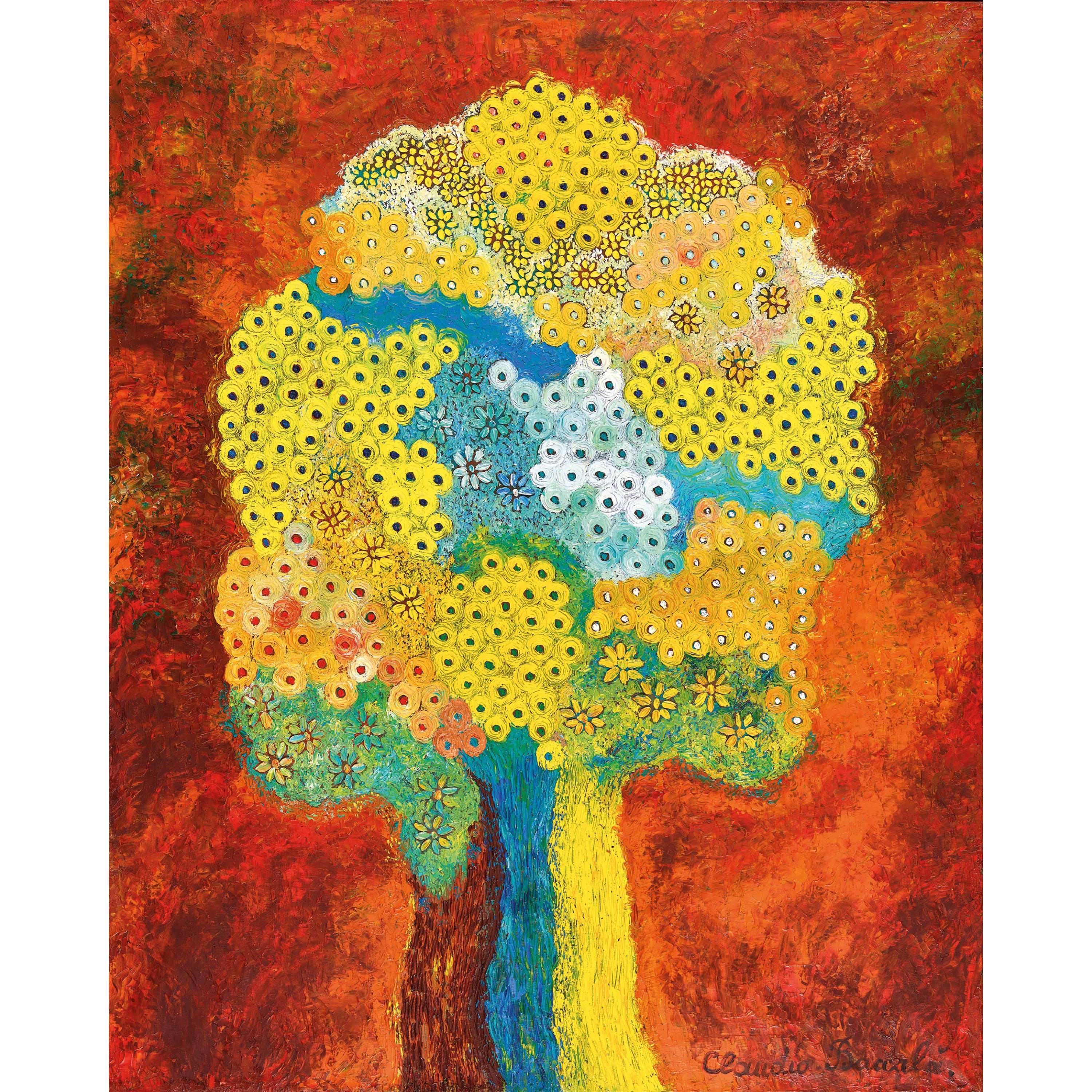
His compositions bring together human figures, animals, trees, lakes and mountains in a symbolic world where nature meets mythology. Early temperas on paper and cardboard were followed by large oils on canvas. Small adjoining touches of paint create a dense, mosaic-like rhythm across the surface while keeping the figures legible.
The exhibition at Bellelay Abbey in 1977 and the retrospective at the Pinacoteca comunale Casa Rusca in Locarno in 1997 marked important stages in the reception of his work. The latter was accompanied by a catalogue edited by Dalmazio Ambrosioni. Fondazione Matasci presented Pittore poeta e contadino in Cugnasco-Gerra from 28 May to 27 August 2023, followed by his inclusion in the group exhibition Promemoria in 2023–2024.
SIK-ISEA records works in Brissago’s municipal hall and the Pinacoteca comunale Casa Rusca. Another group is held at Fondazione Matasci’s Deposito, following Barbara Baccalà’s entrusting works to the foundation in 2018. This publicly accessible private foundation is distinct from the municipal collections; the entrusted works should not be described as a public acquisition.
Already documented auction appearances include Vergine Bianca at Auktionshaus Zofingen in 2022 and L’albero at Dobiaschofsky in 2019. These records identify particular works and extend the documentation of his oeuvre; they do not, by themselves, establish a general value for all his paintings.