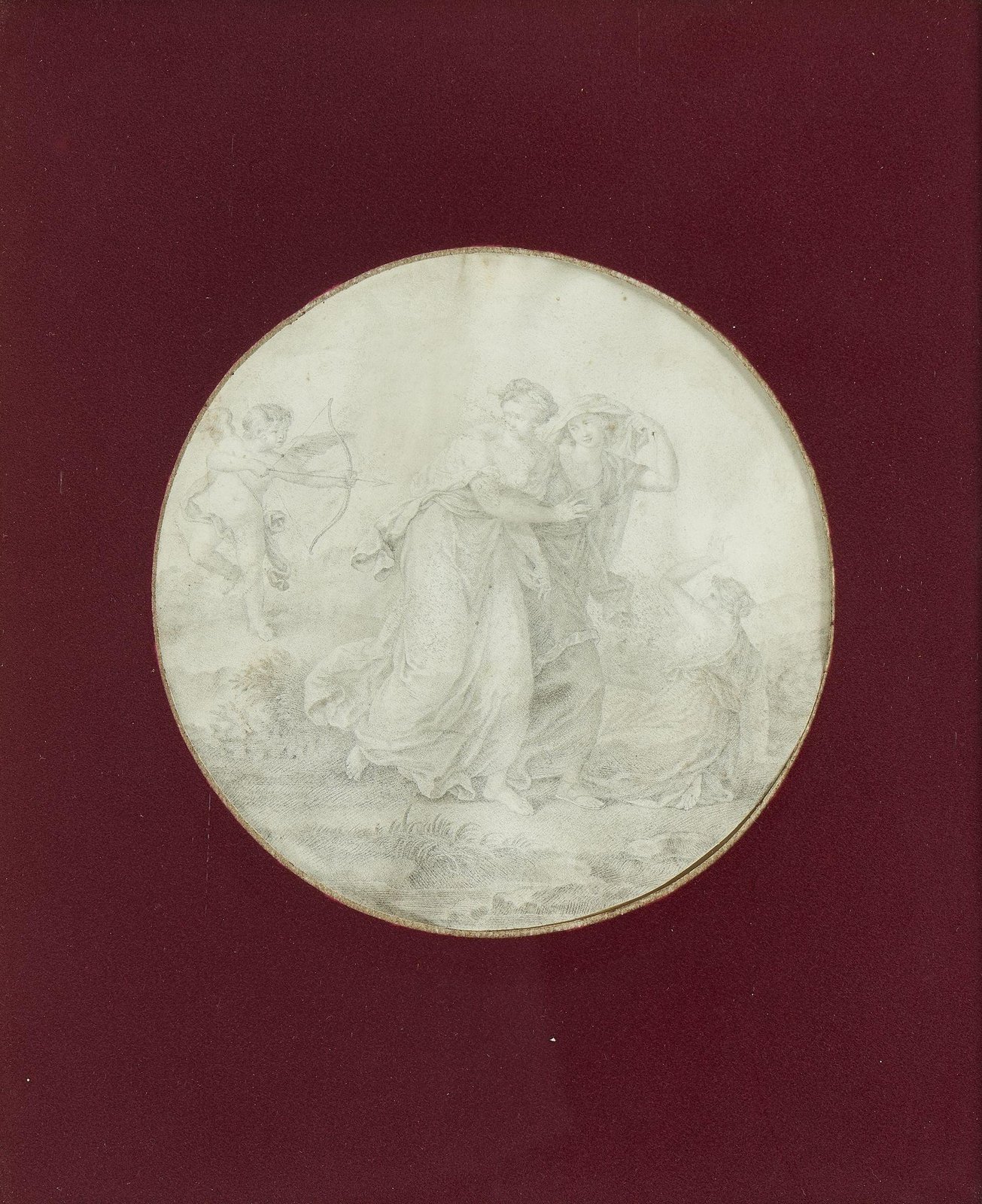
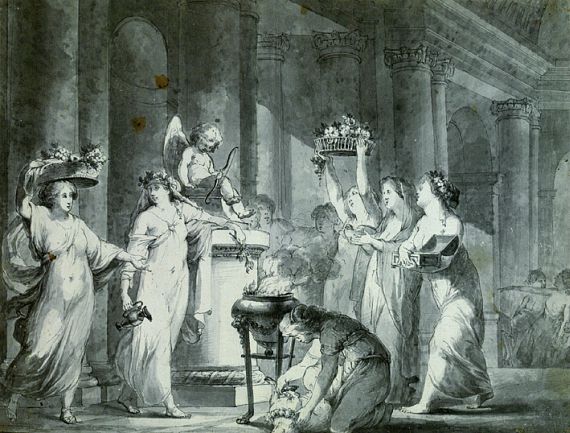
Angelica Kauffmann
Born in Coire on 30 October 1741.
Died in Rome on 5 November 1807.
Neoclassicism · history painting, portraiture and drawing.
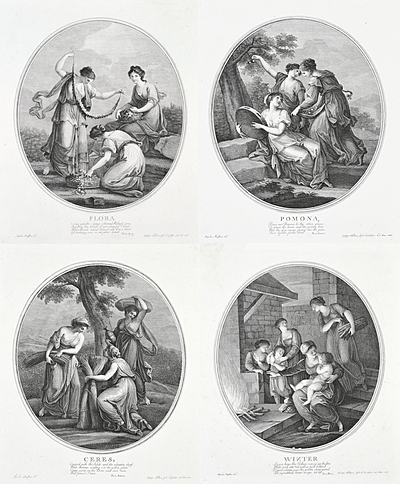
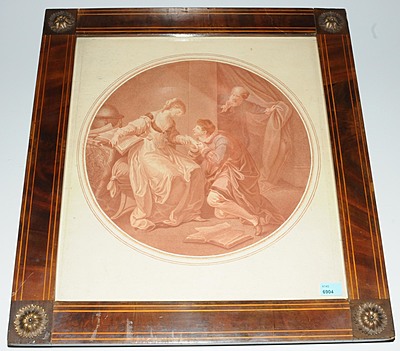
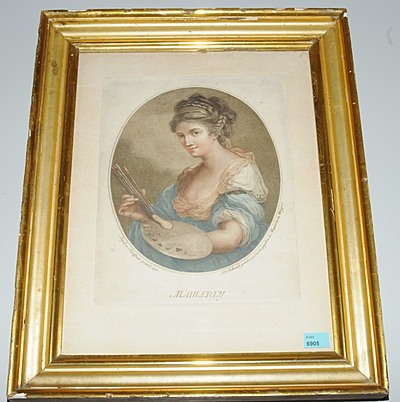
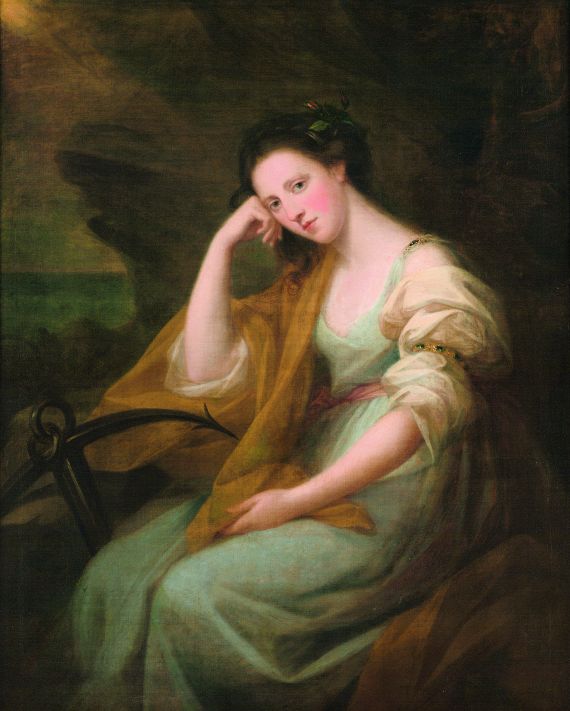
Angelica Kauffmann holds a significant place in eighteenth-century European painting. Trained by her father, she developed a career in portraiture and history painting between Italy and England. She was among the founding members of the Royal Academy, combining these artistic activities throughout her career.
In her self-portrait painted in Rome in 1794, now at Nostell, she presents herself between Music and Painting. The National Trust interprets this composition as an affirmation of her professional choice within an artistic field then largely dominated by men.
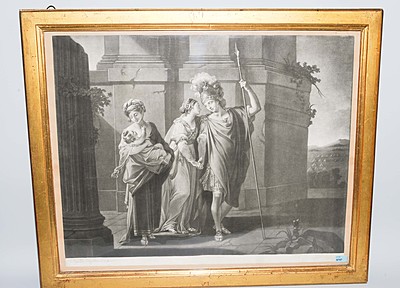
Her subjects draw on ancient texts. Penelope and Euriclea, acquired by Henry Hoare II in 1773 for Stourhead, shows the servant announcing Odysseus’ return. Kauffmann thus gives female characters a central role in her visual treatment of the Homeric narrative.
At the Bündner Kunstmuseum, her works form an important part of the collection. Her self-portrait conveys artistic confidence, while The Three Singers recalls her affinity with music. The Sorrow of Telemachus also demonstrates her attention to the emotions of literary characters.
The Metropolitan Museum’s Study of a Standing Woman illuminates her preparatory work. Made around 1792–1796 for a mother in a religious painting, the drawing combines black chalk and white highlights on blue-grey paper to shape the light falling across the clothing.