Albert Manser
Born in 1937.
Died in 2011.
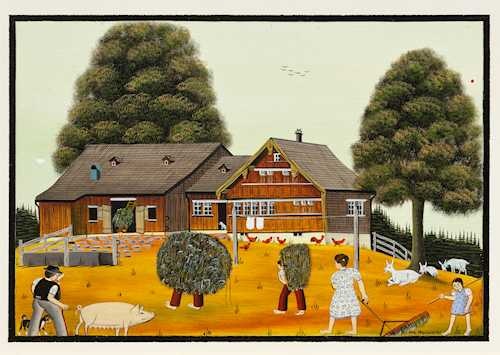
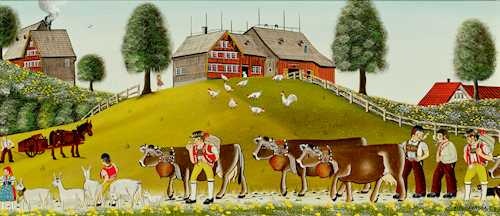
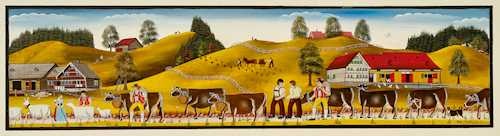
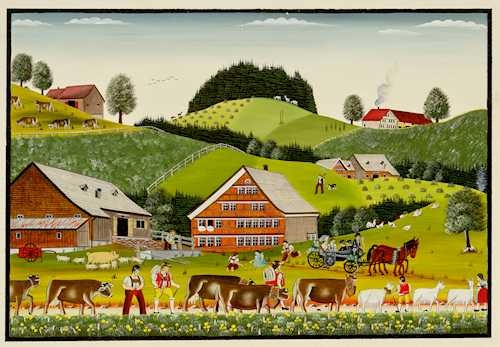
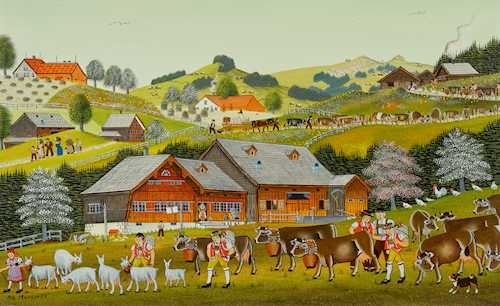
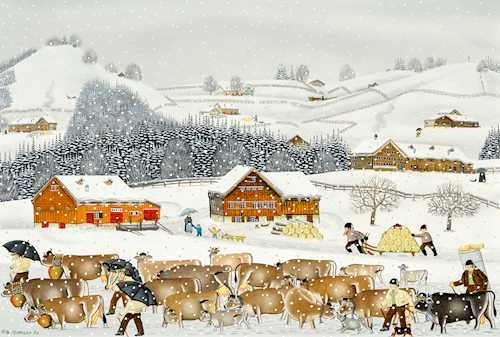
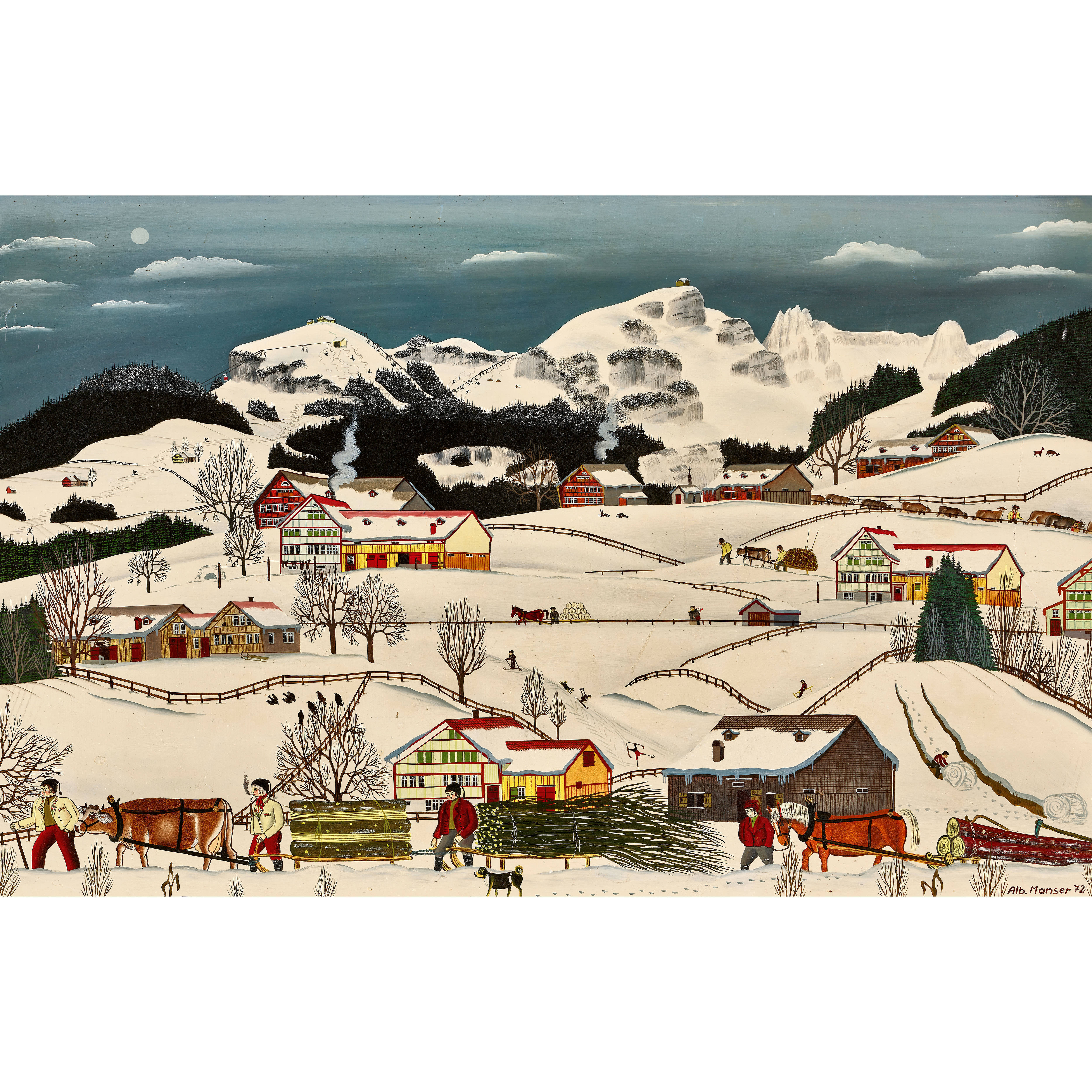
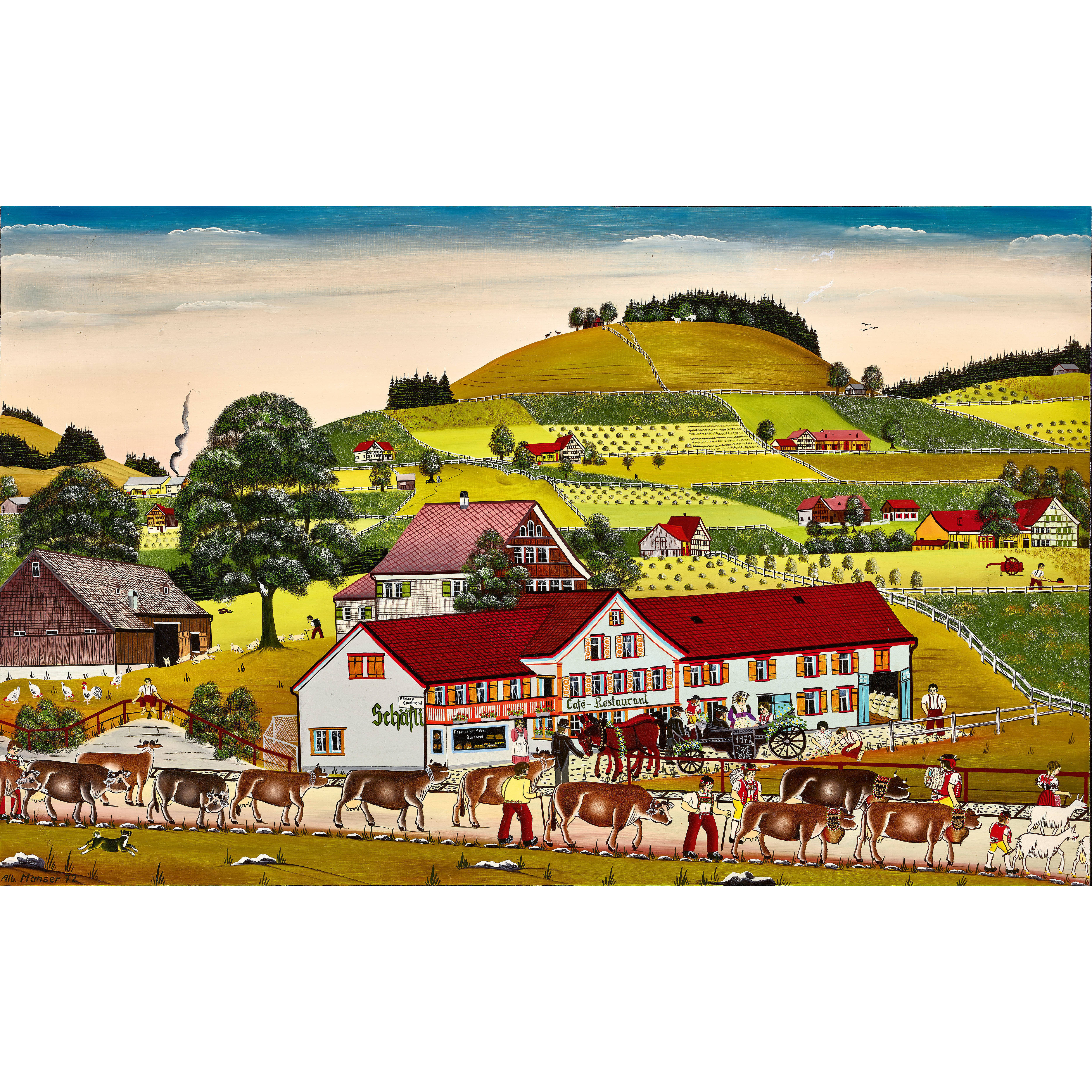
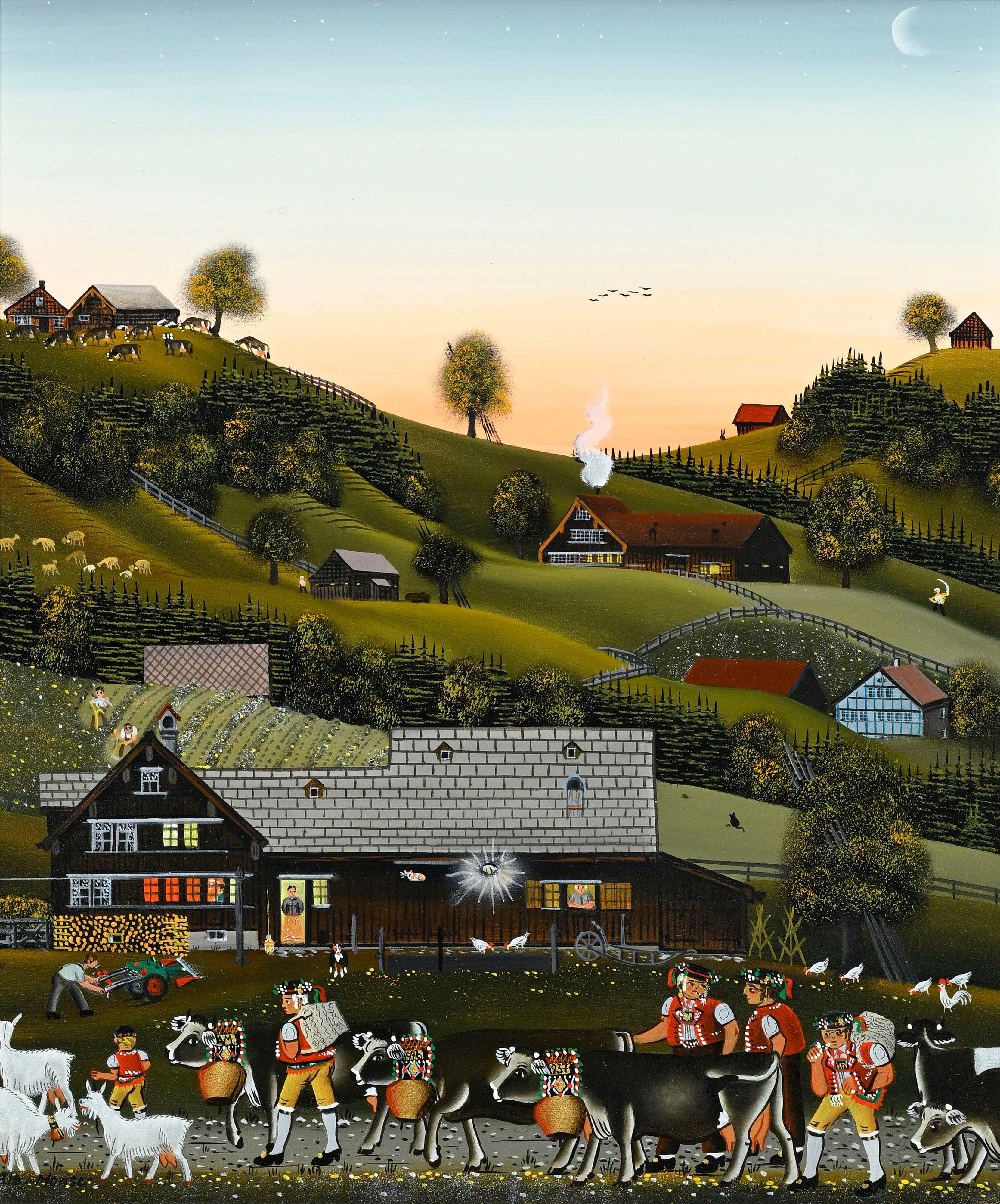
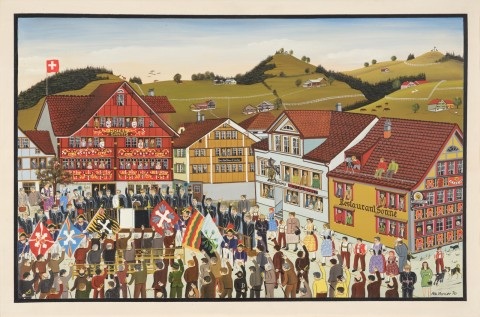
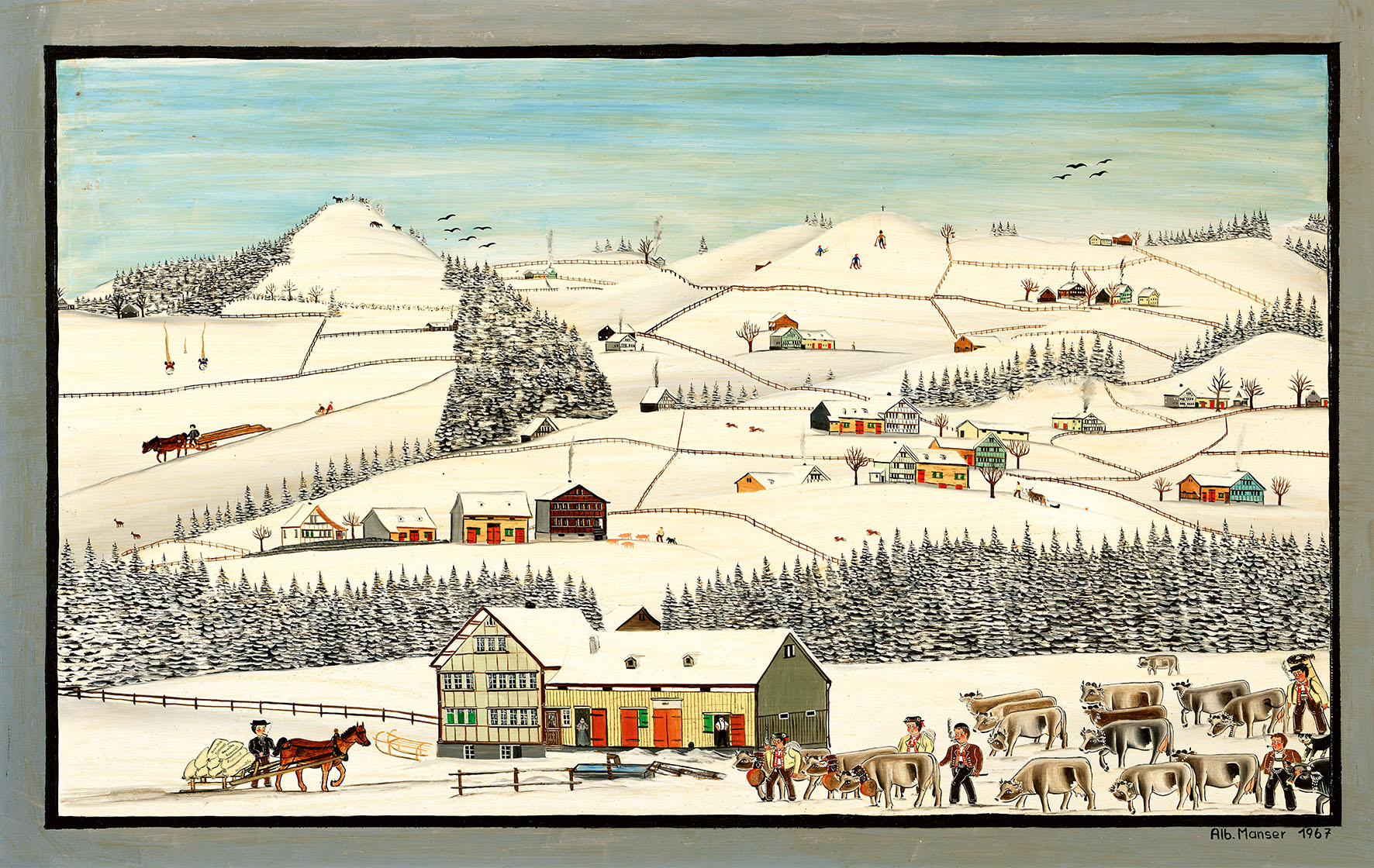
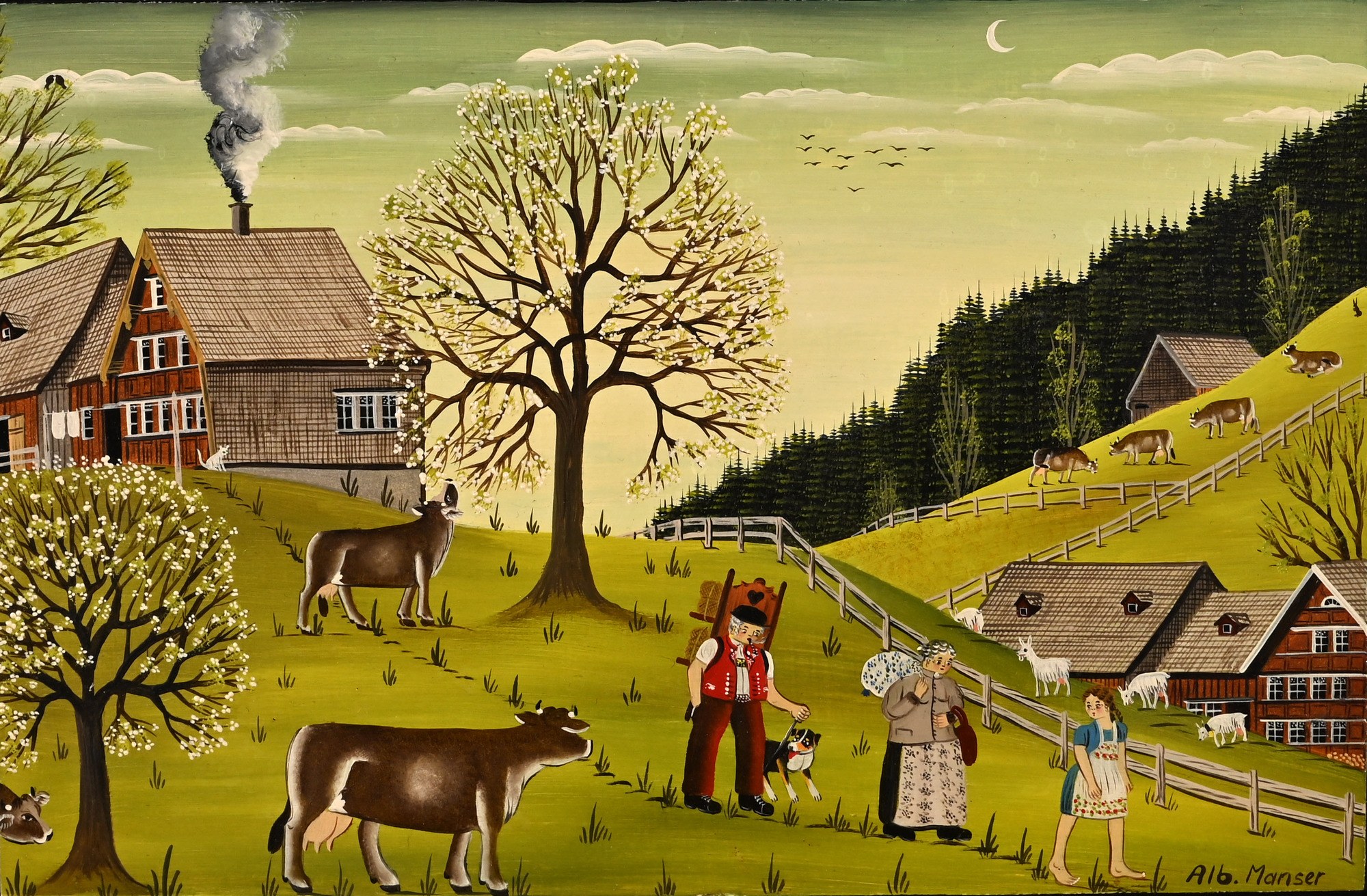
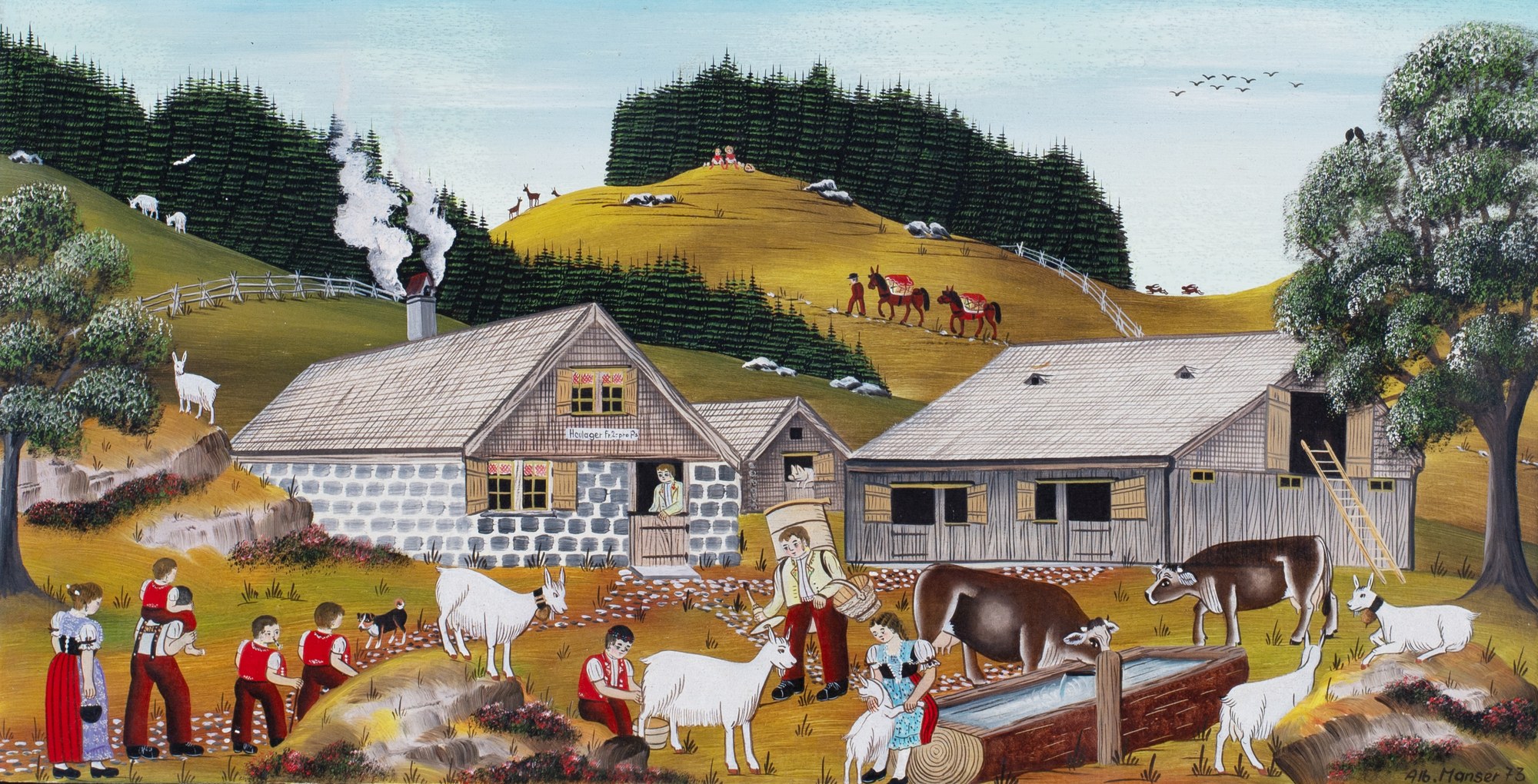
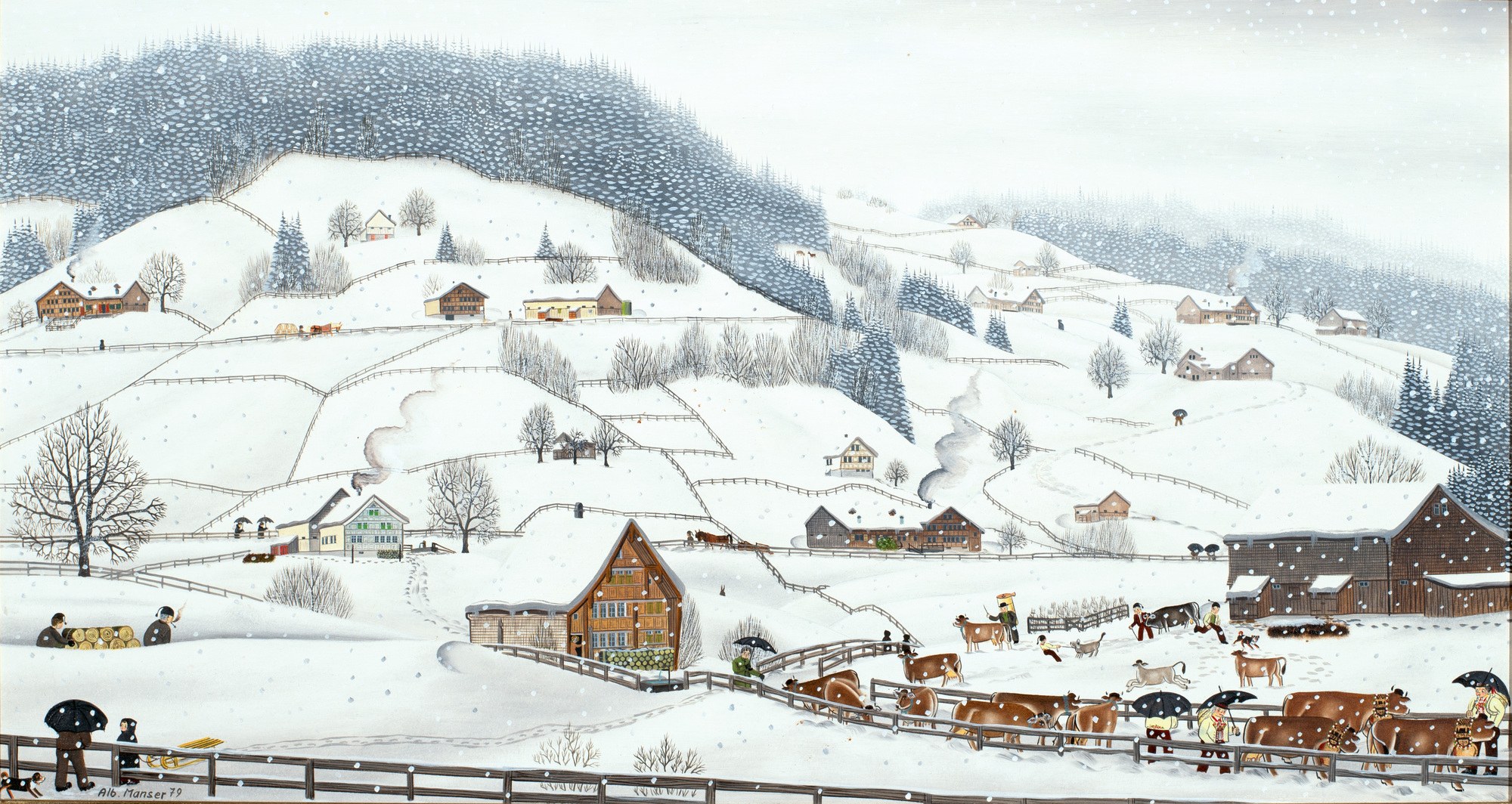
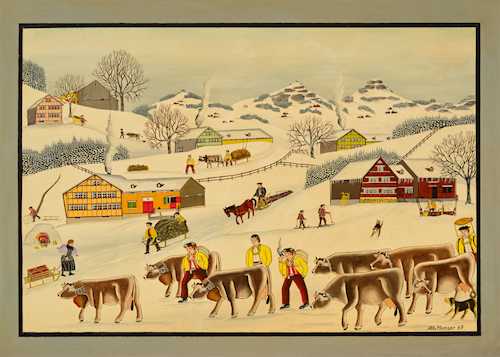
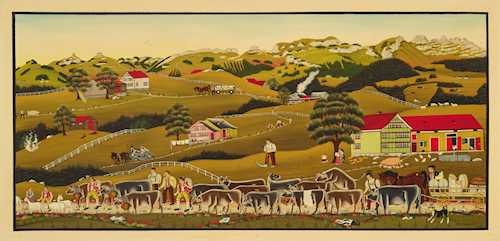
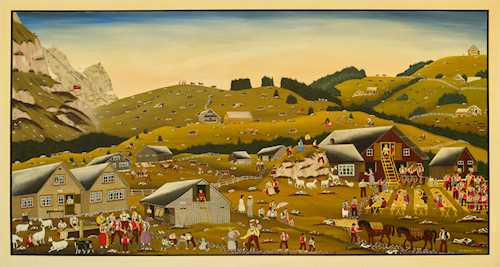
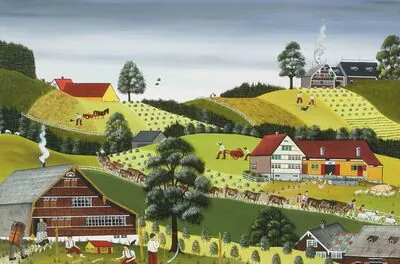
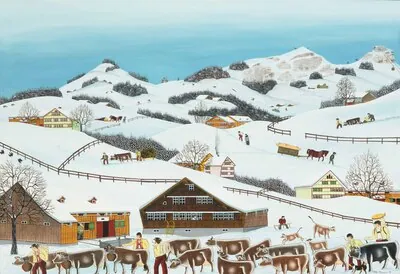
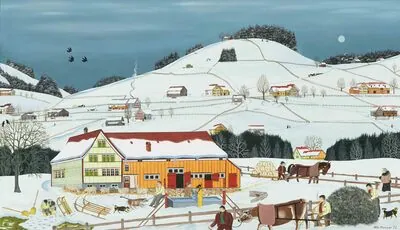
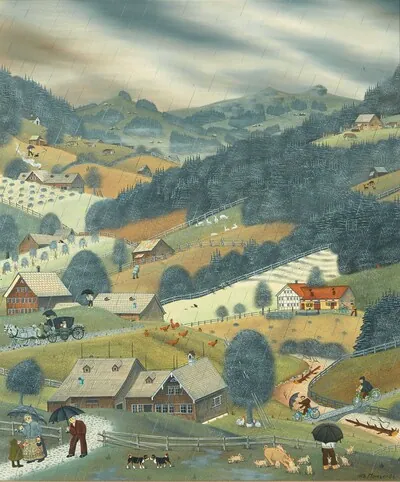
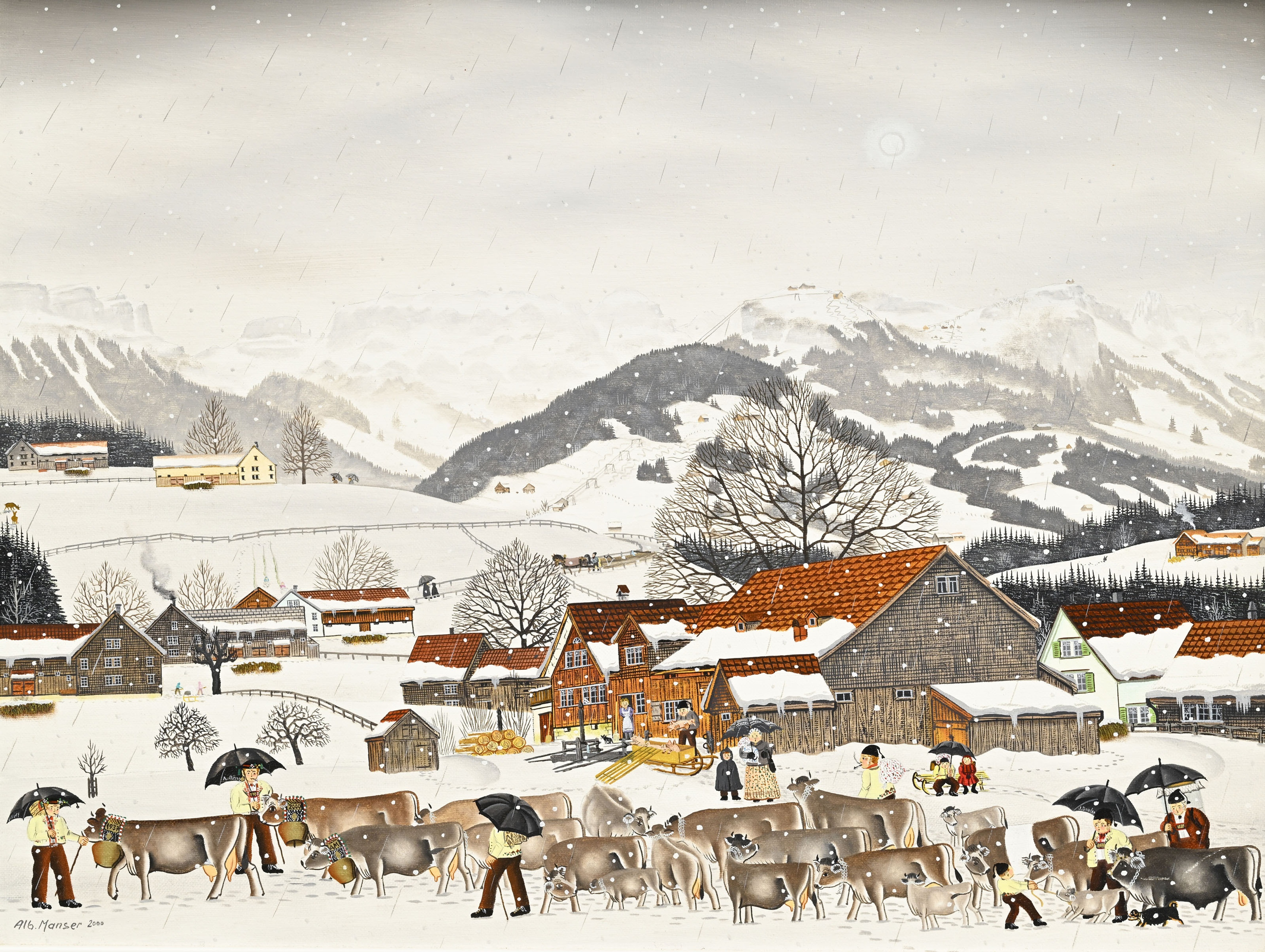
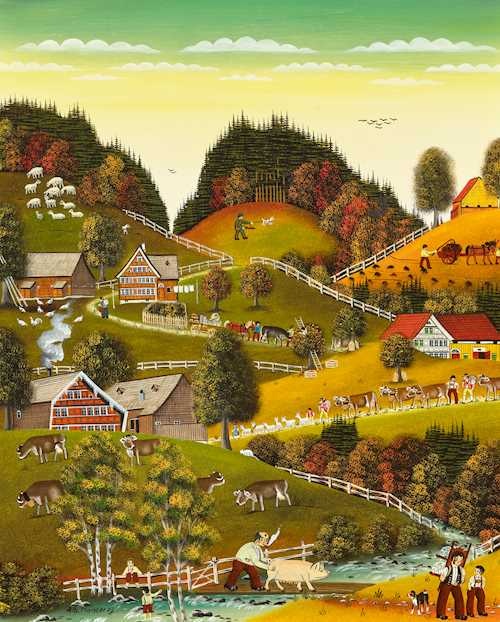
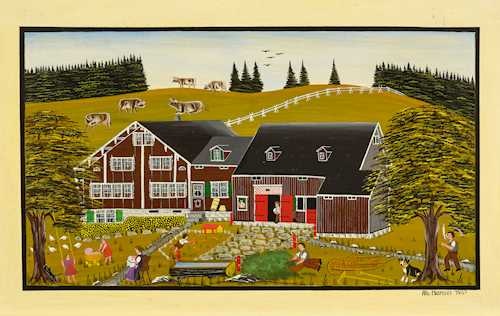
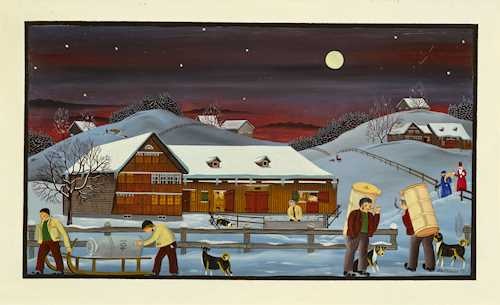
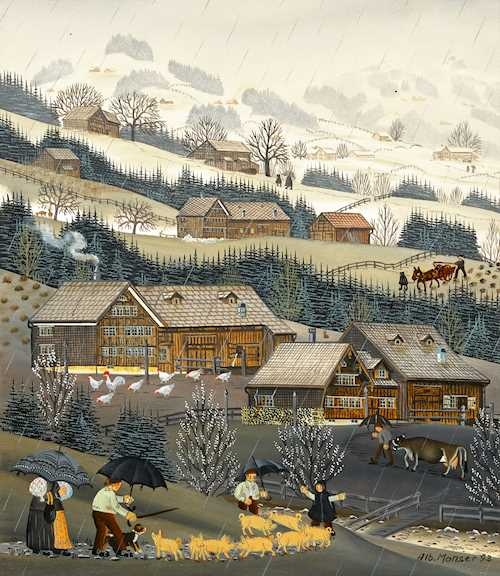
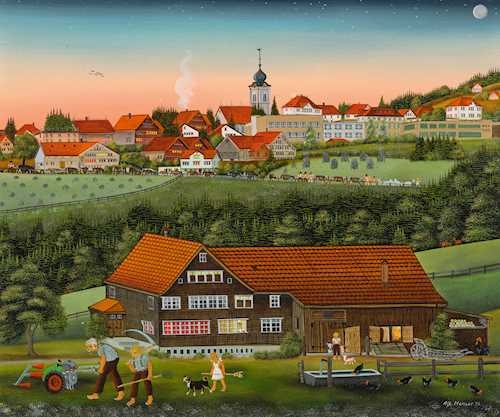
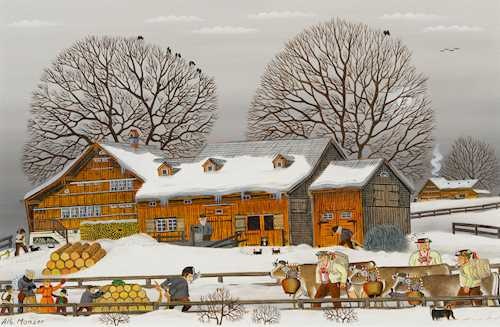
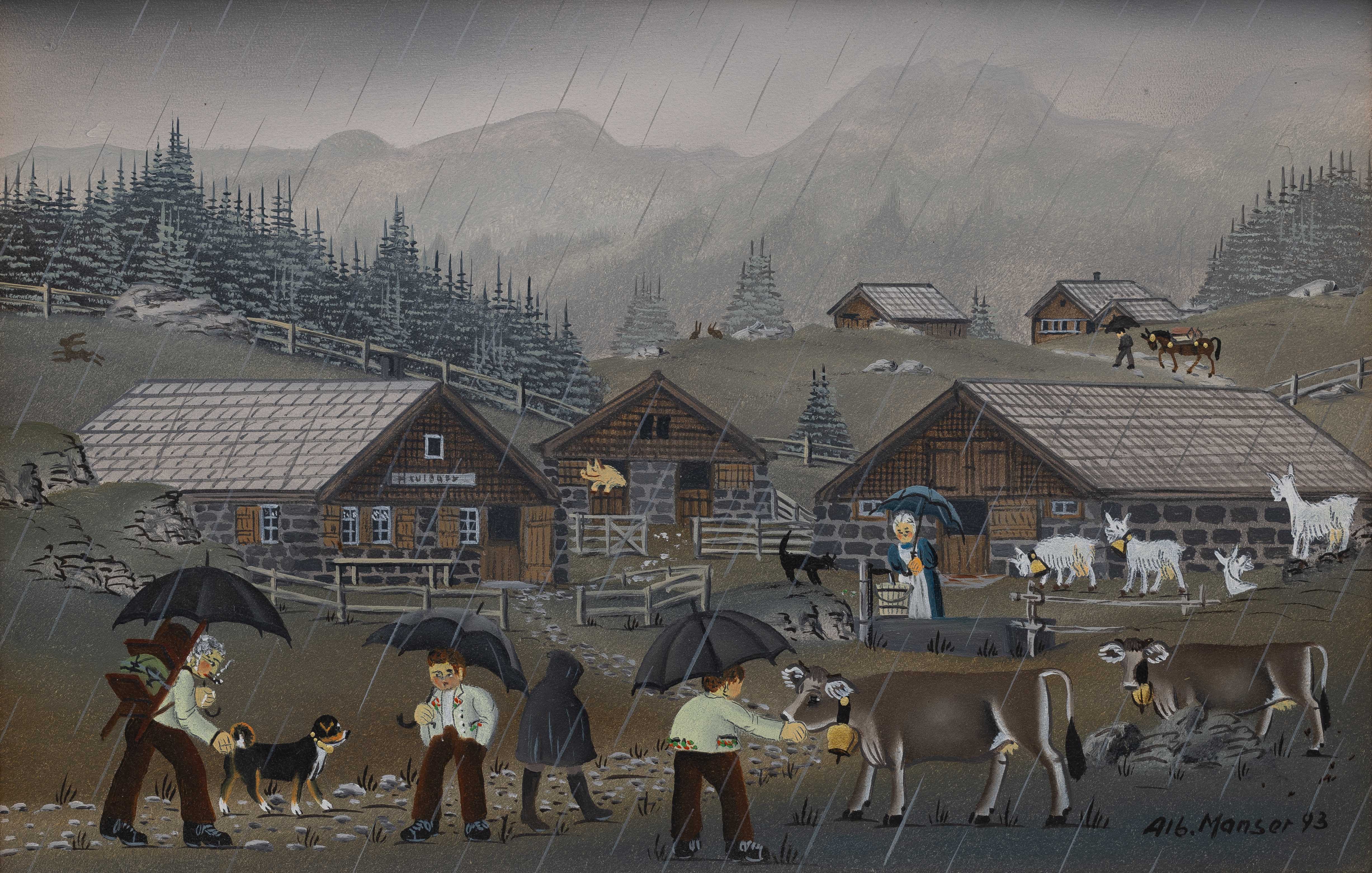
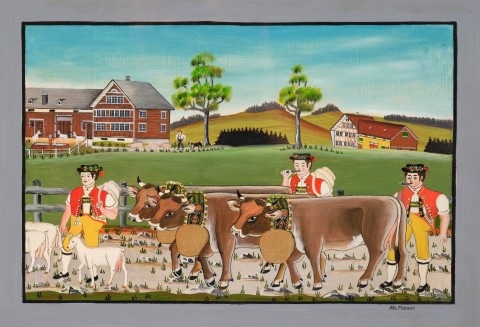
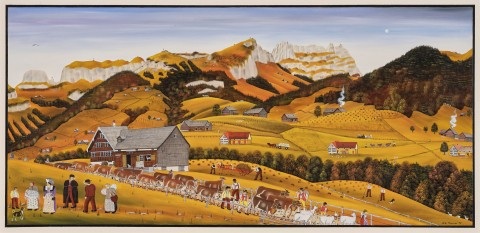
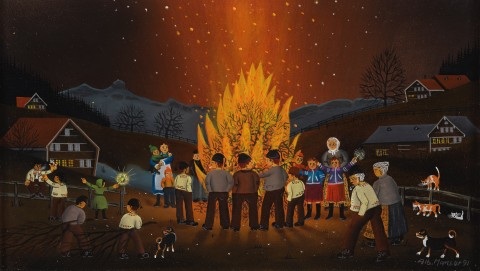
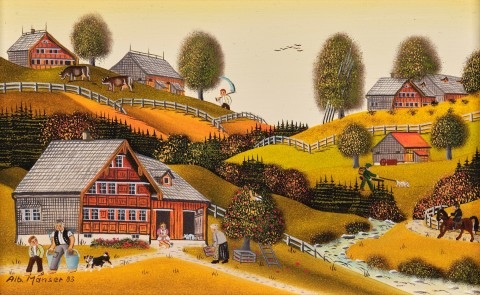
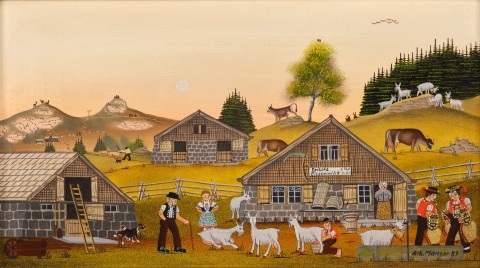
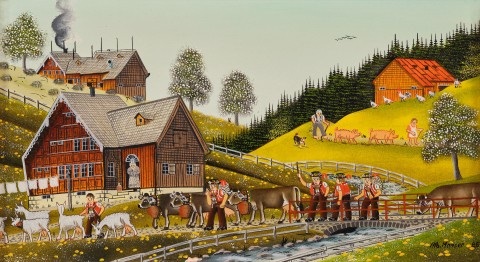
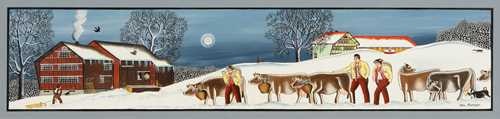
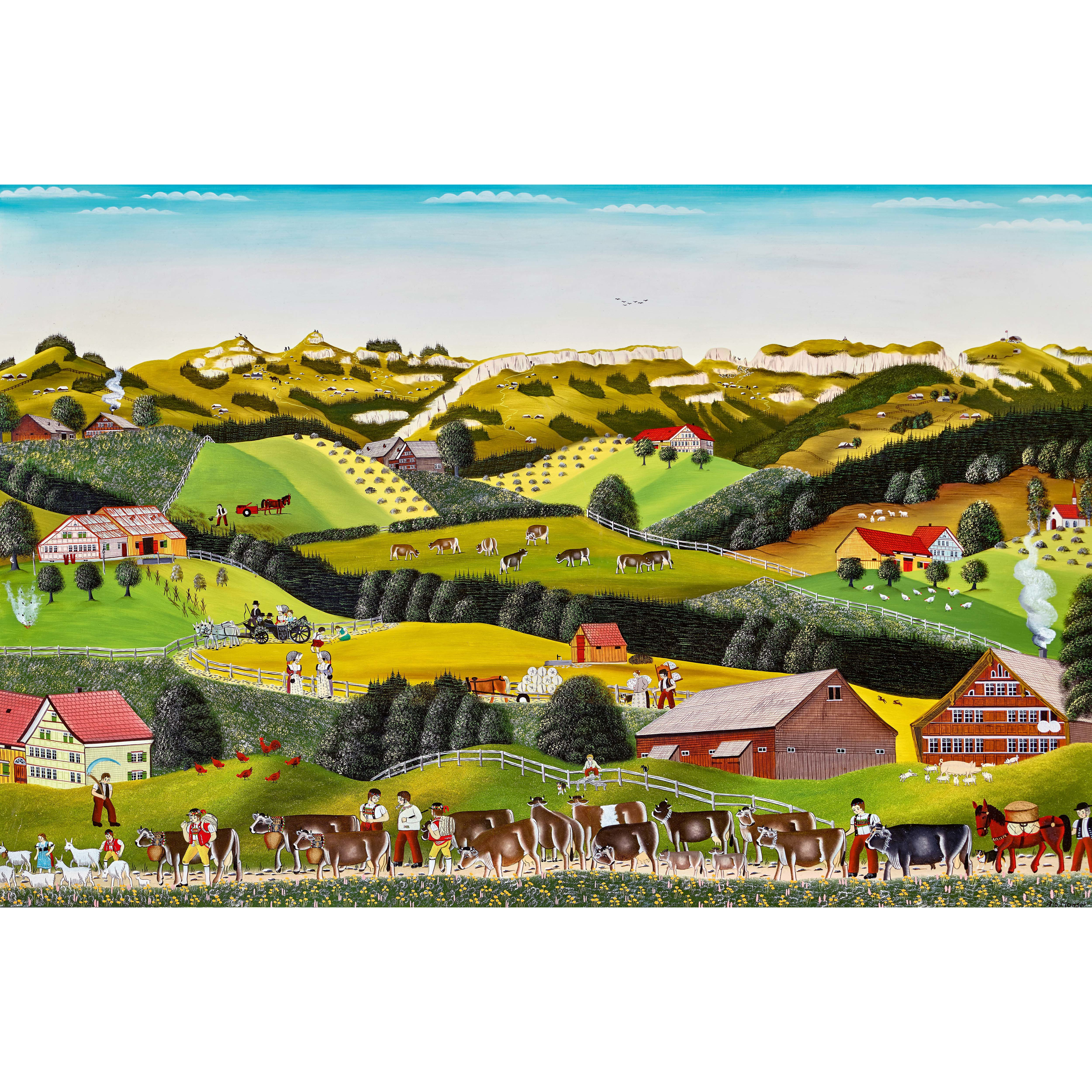
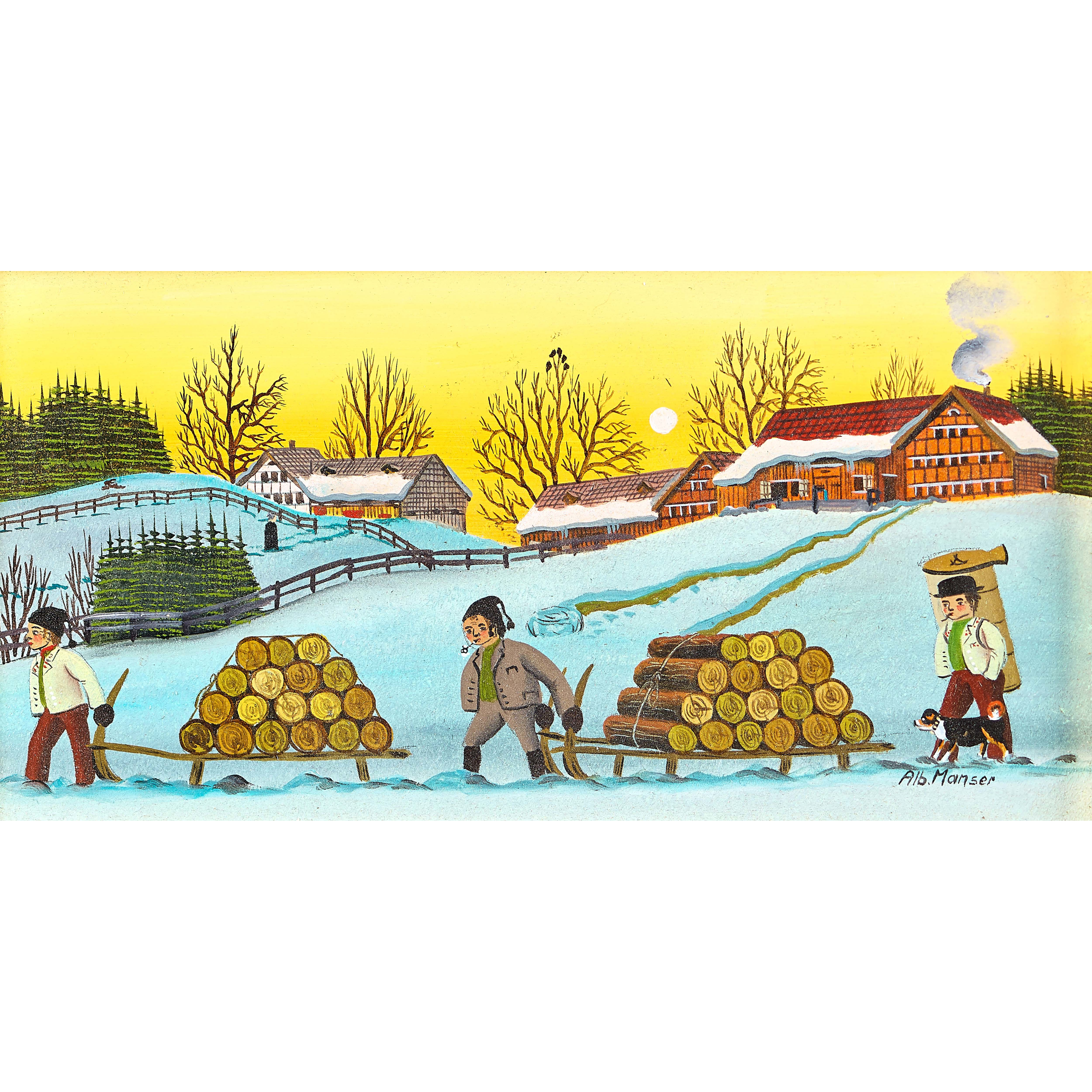
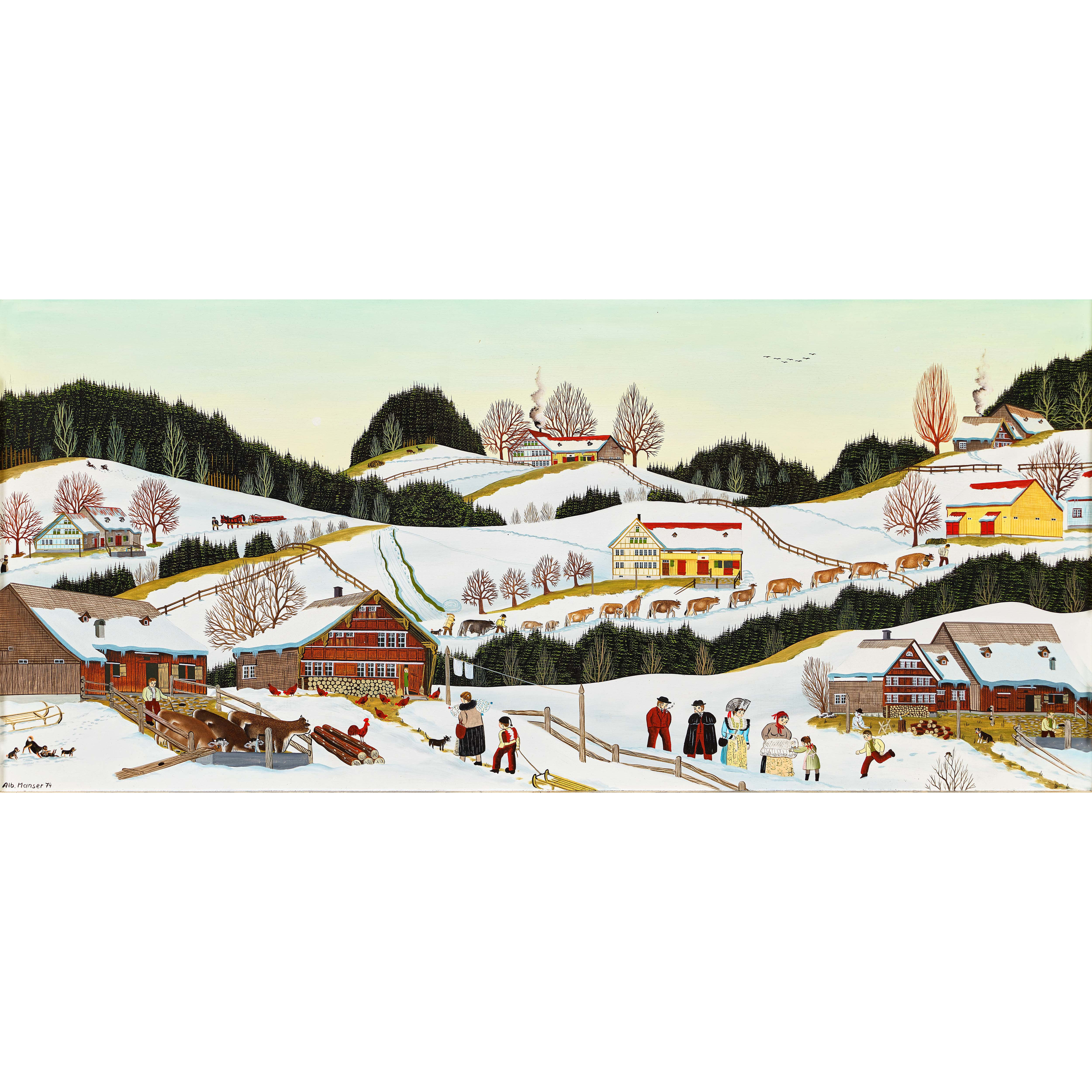
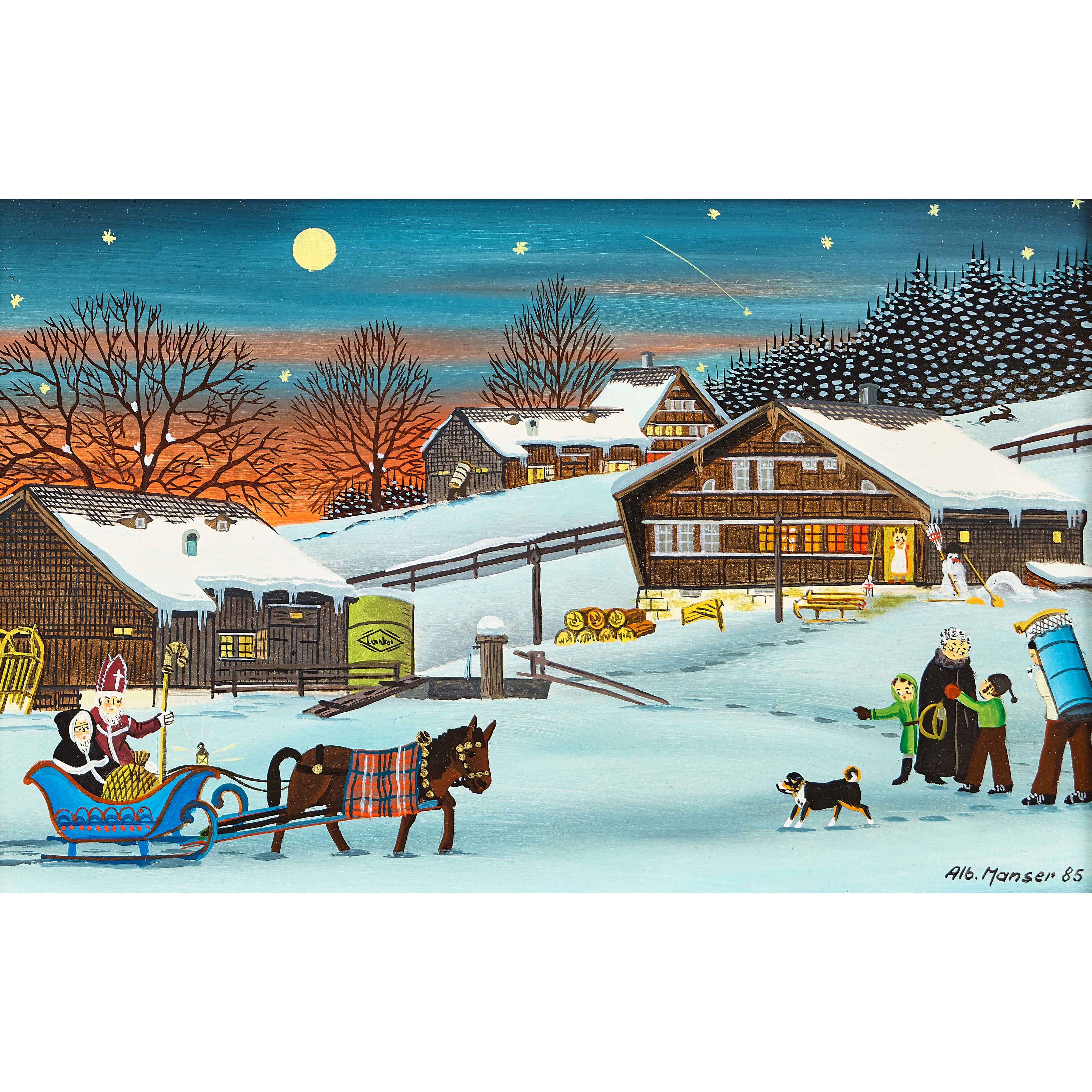
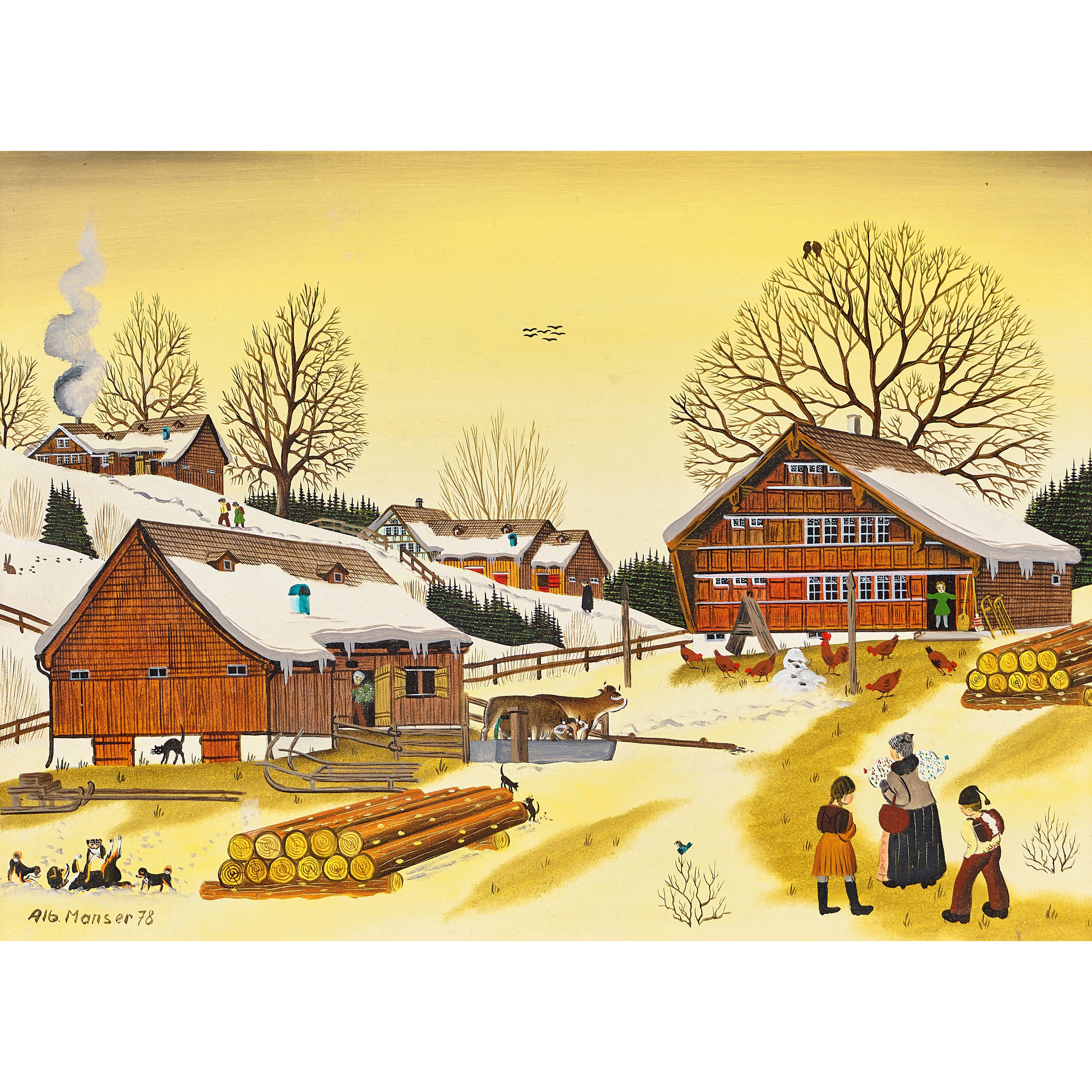
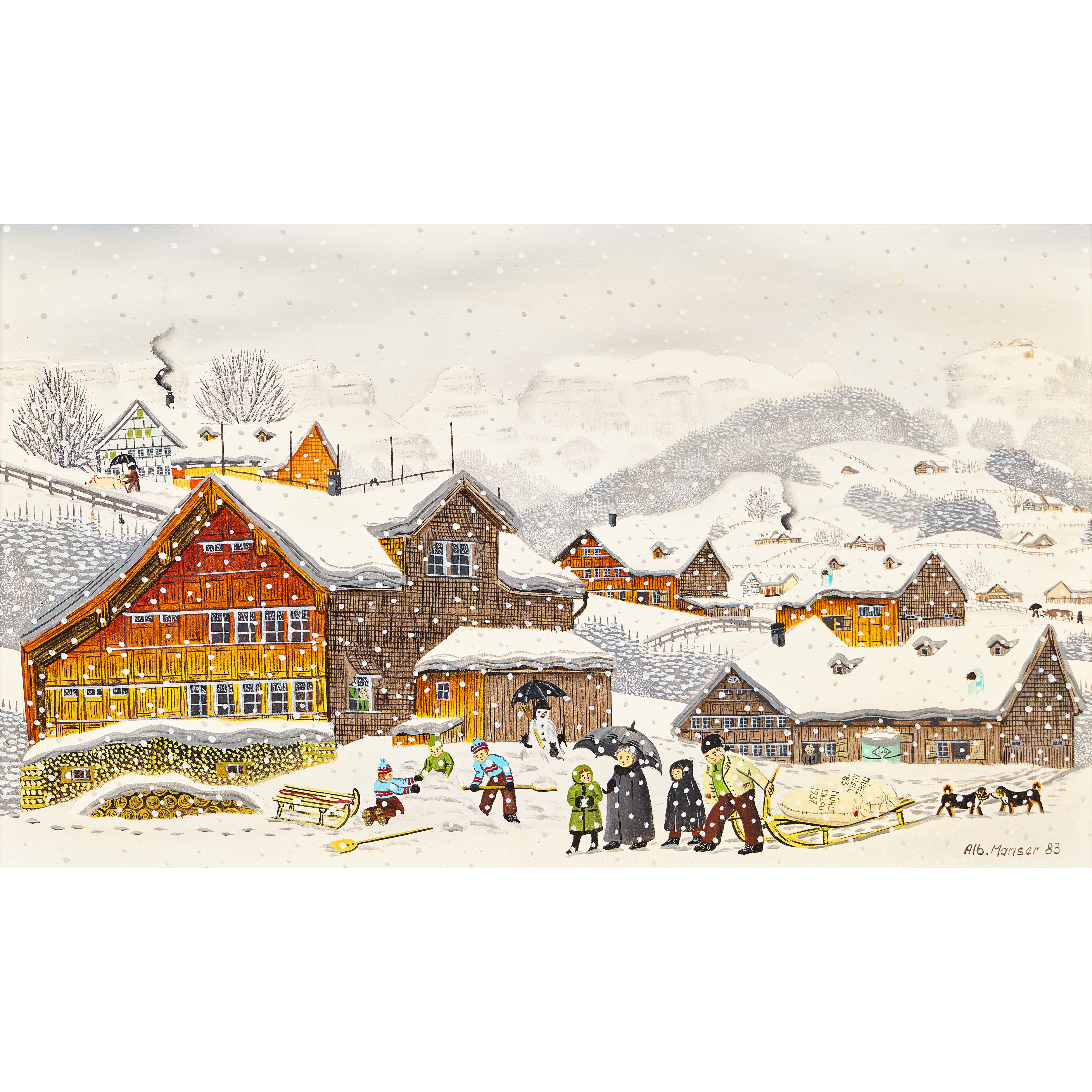
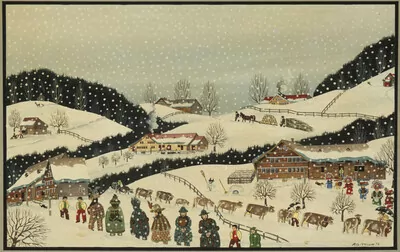
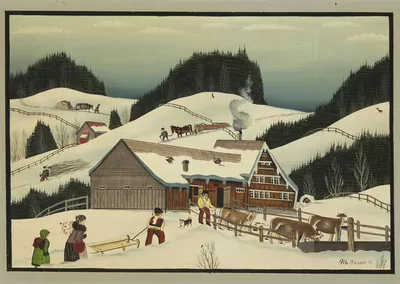
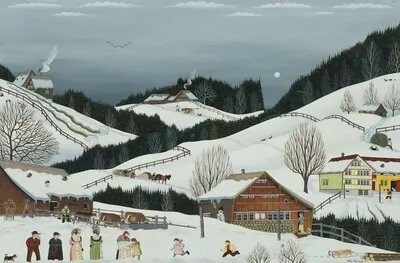
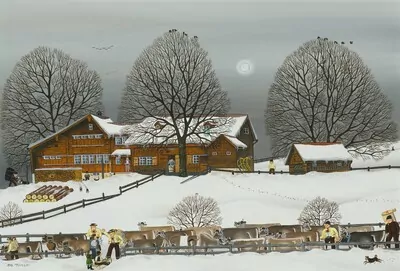
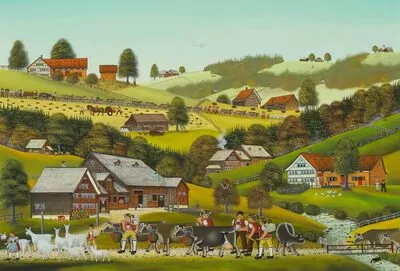
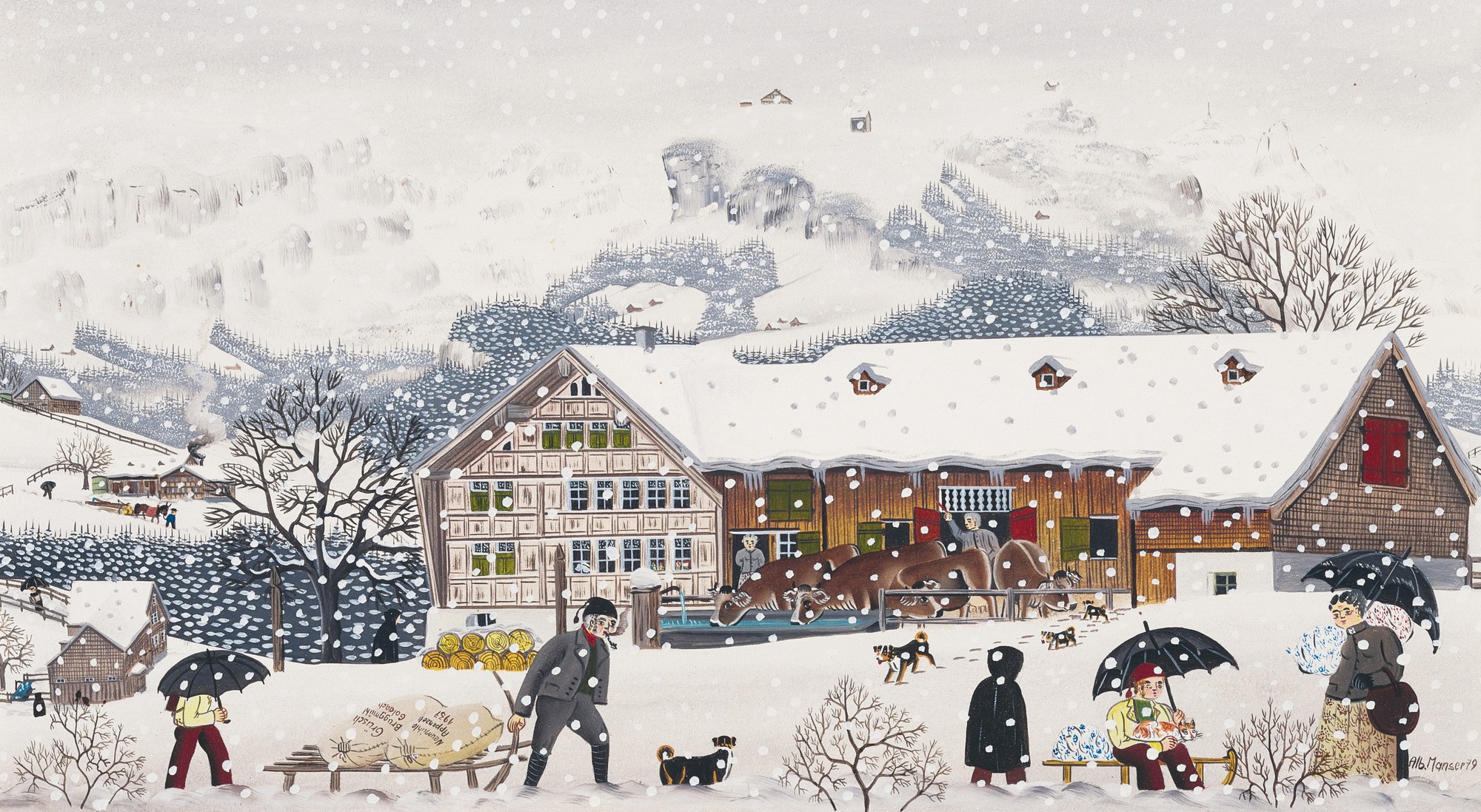
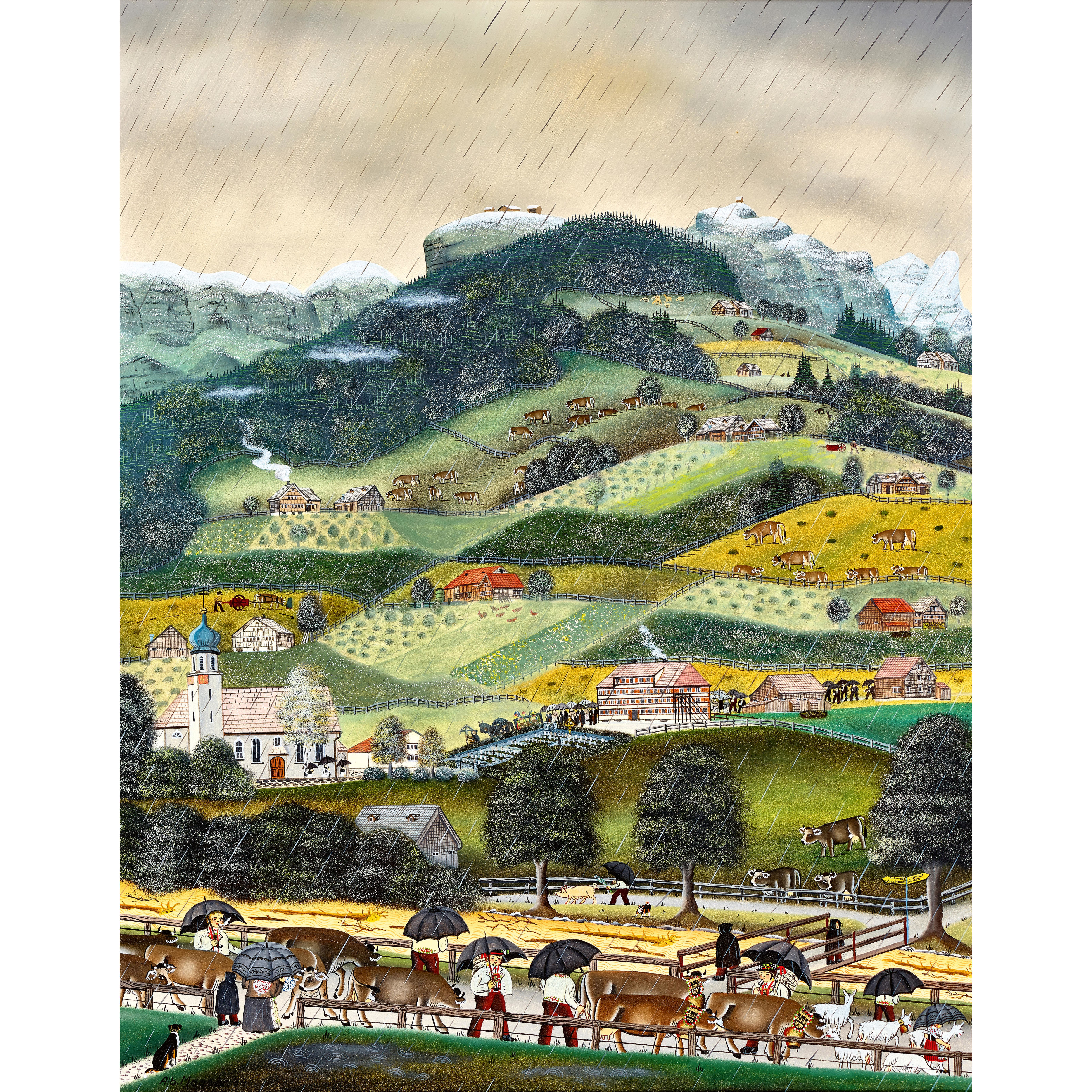
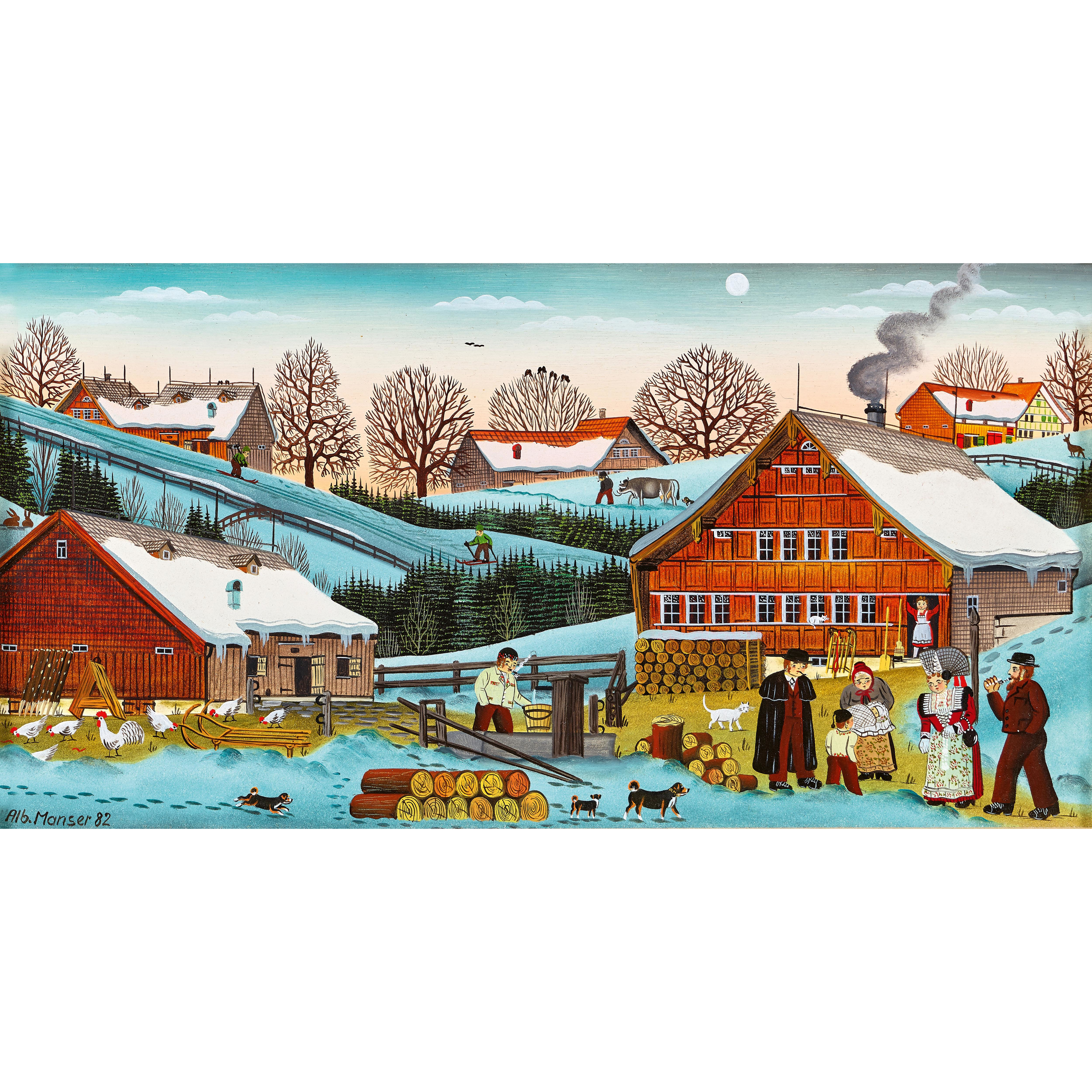
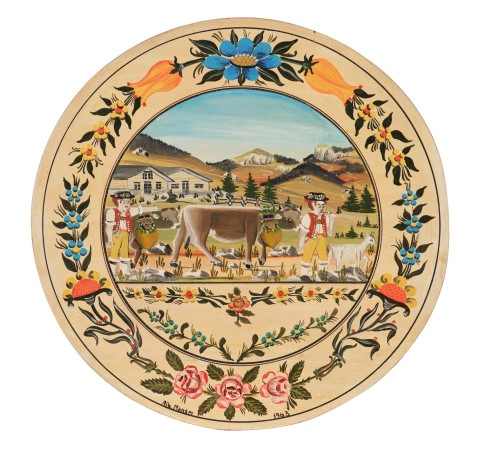
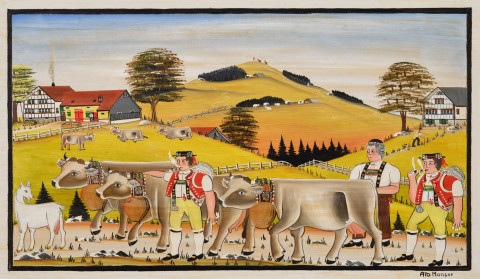
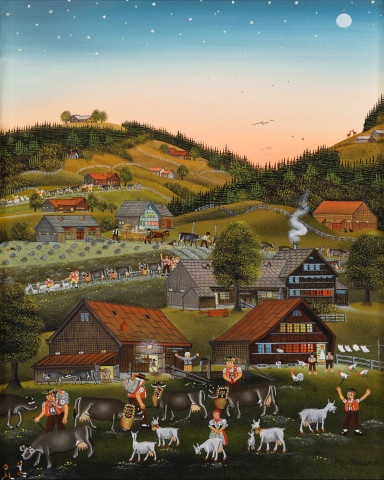
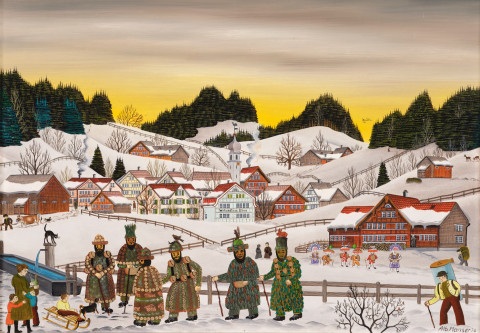
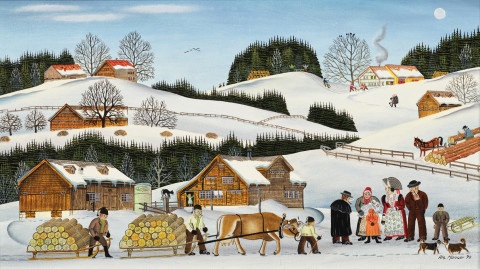
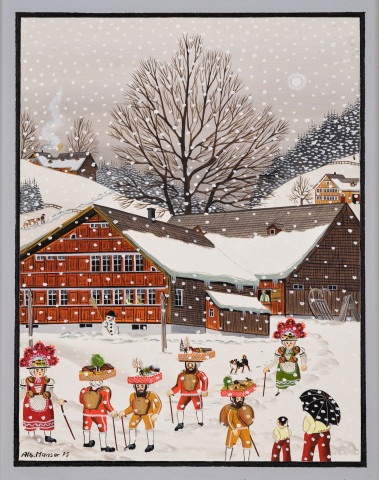
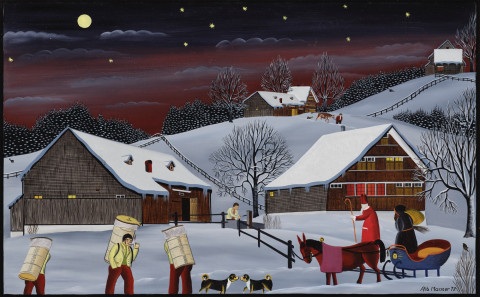
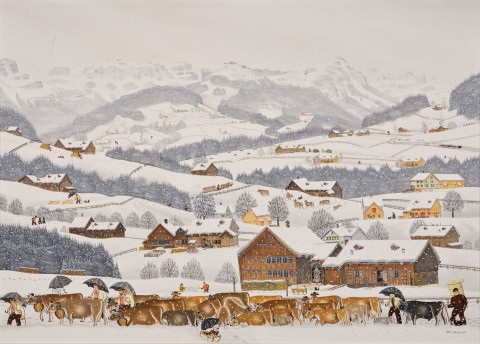
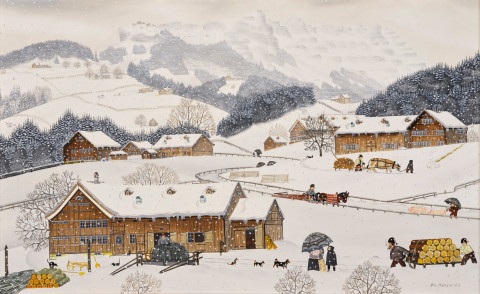
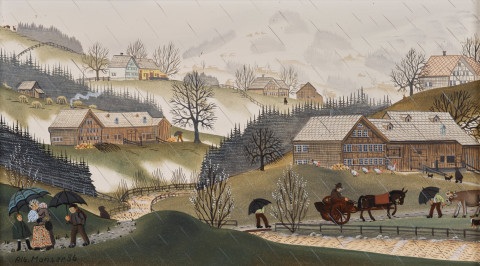
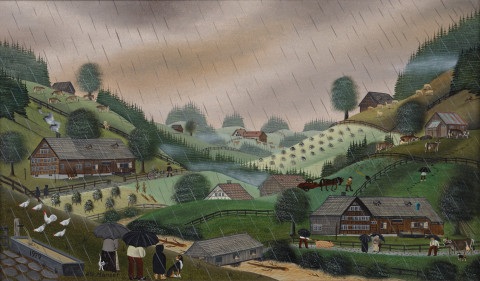
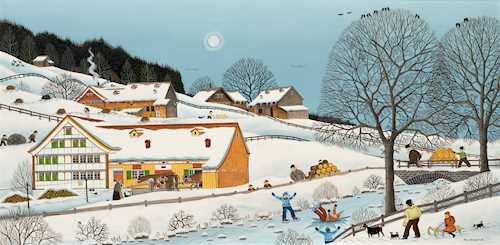
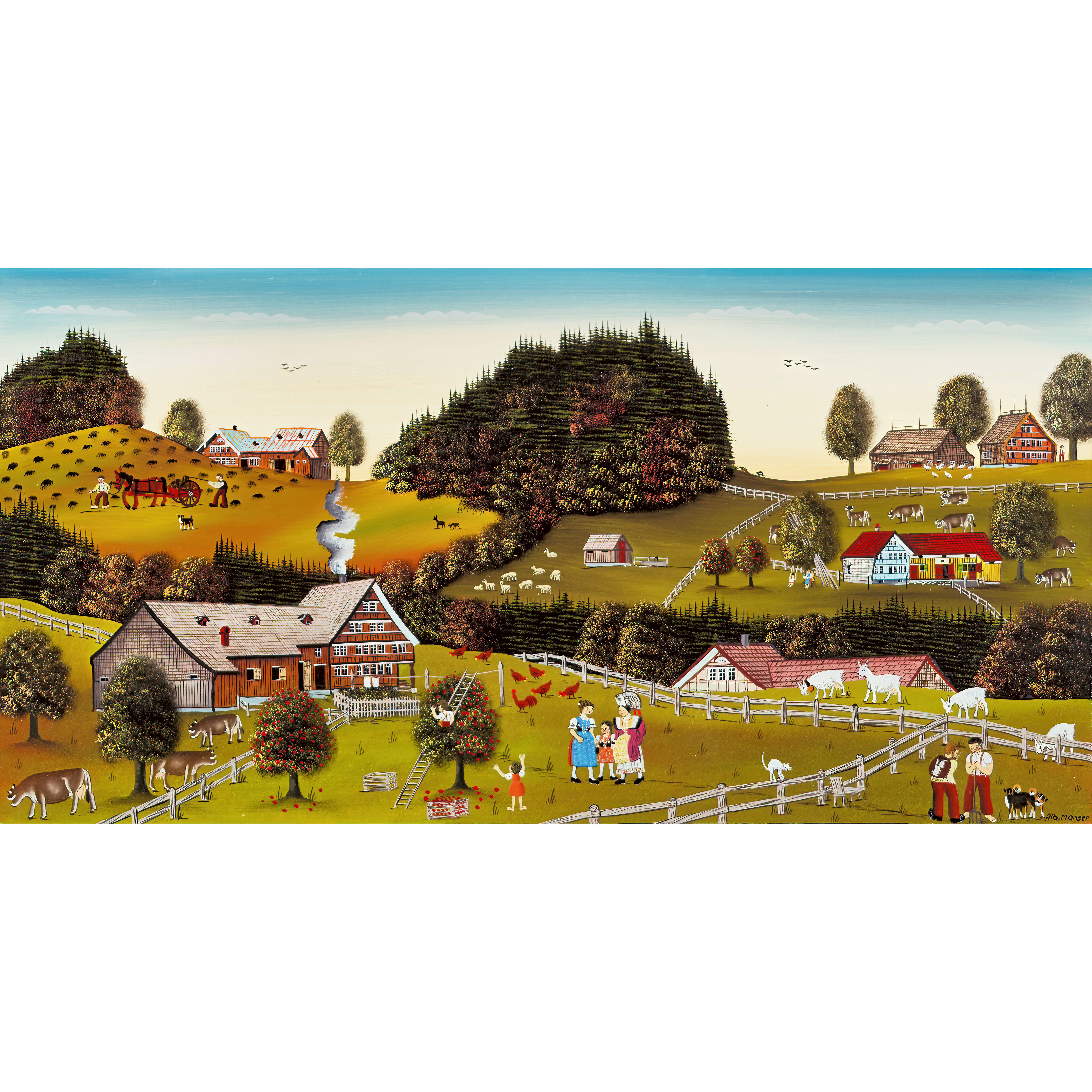
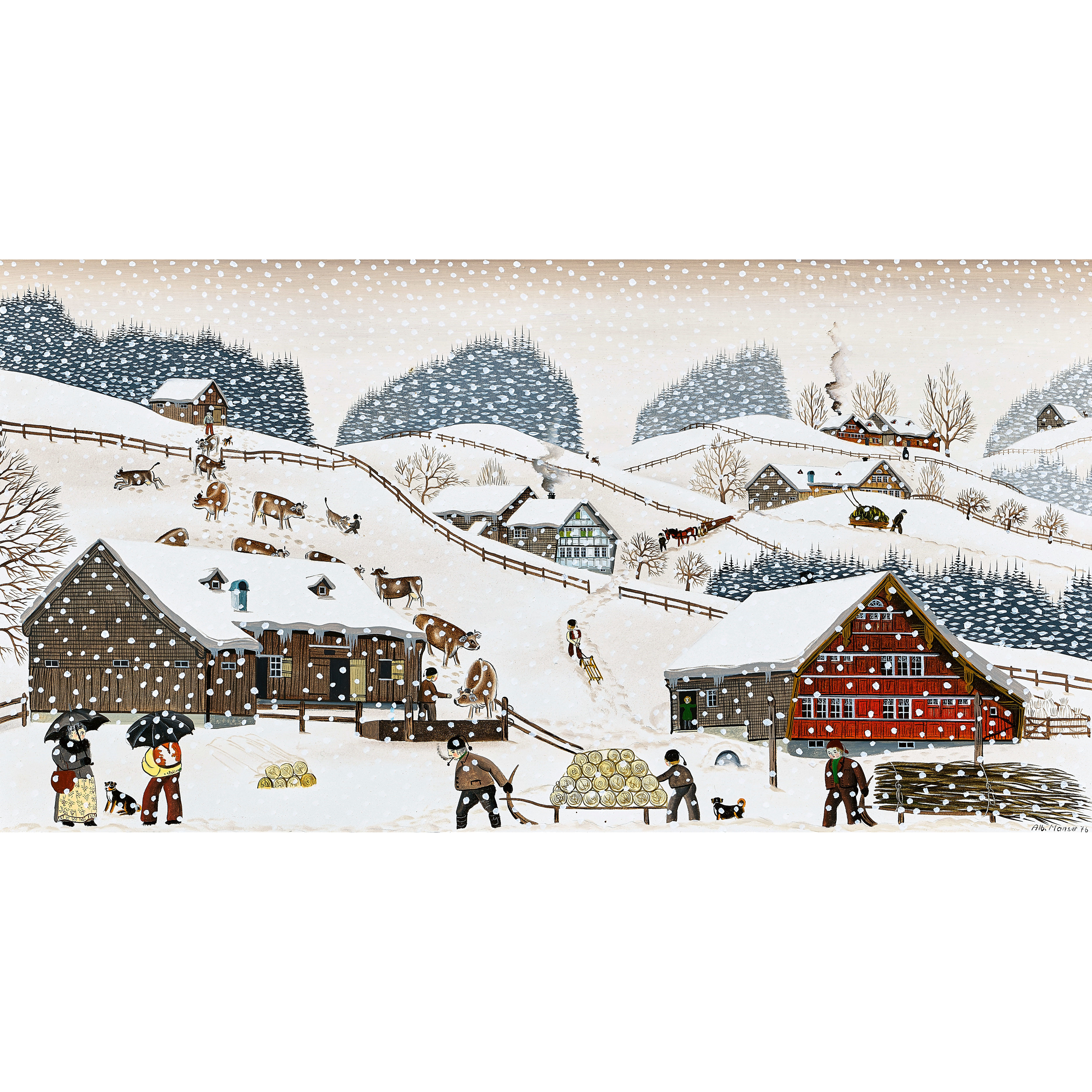
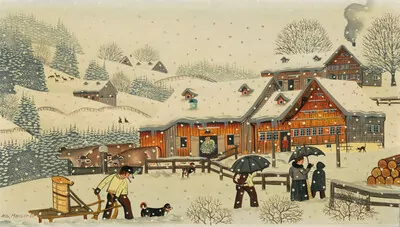
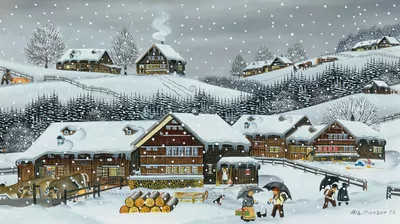
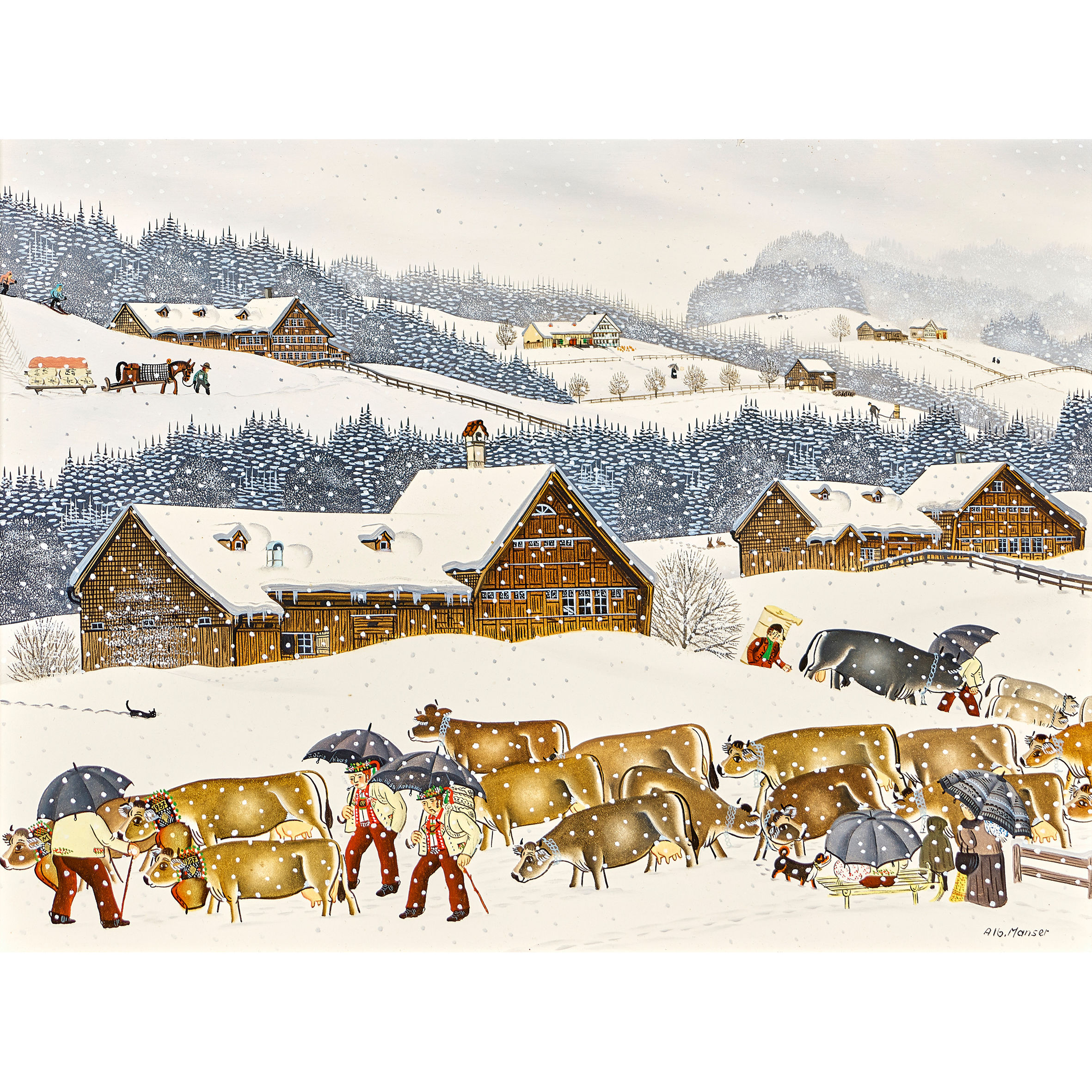
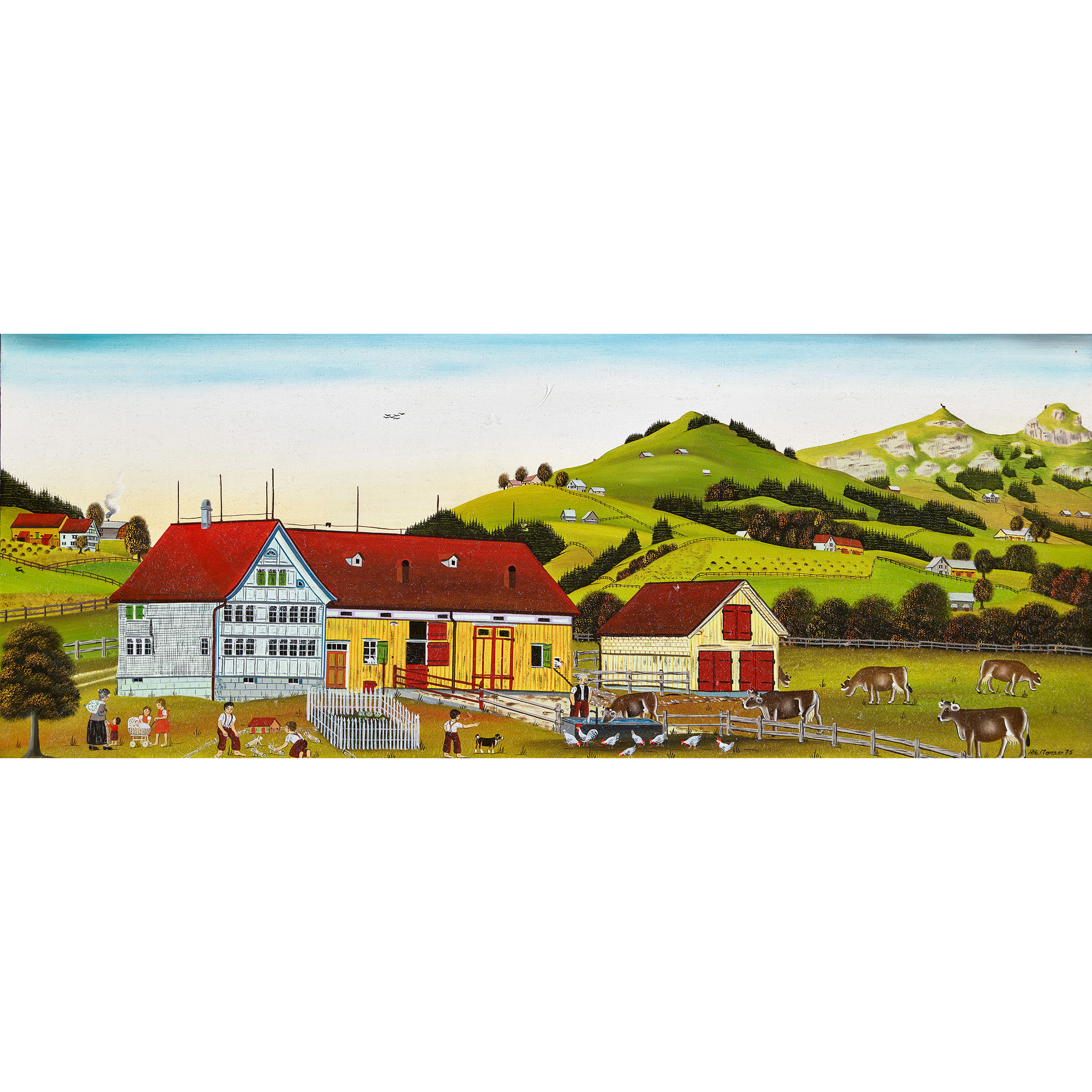
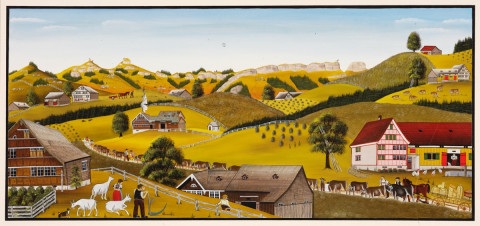
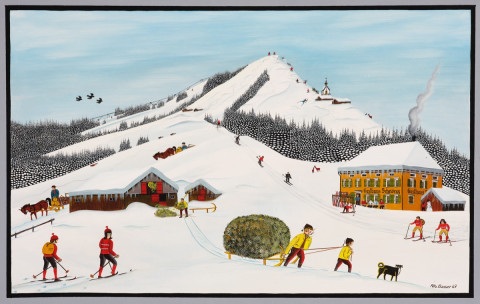
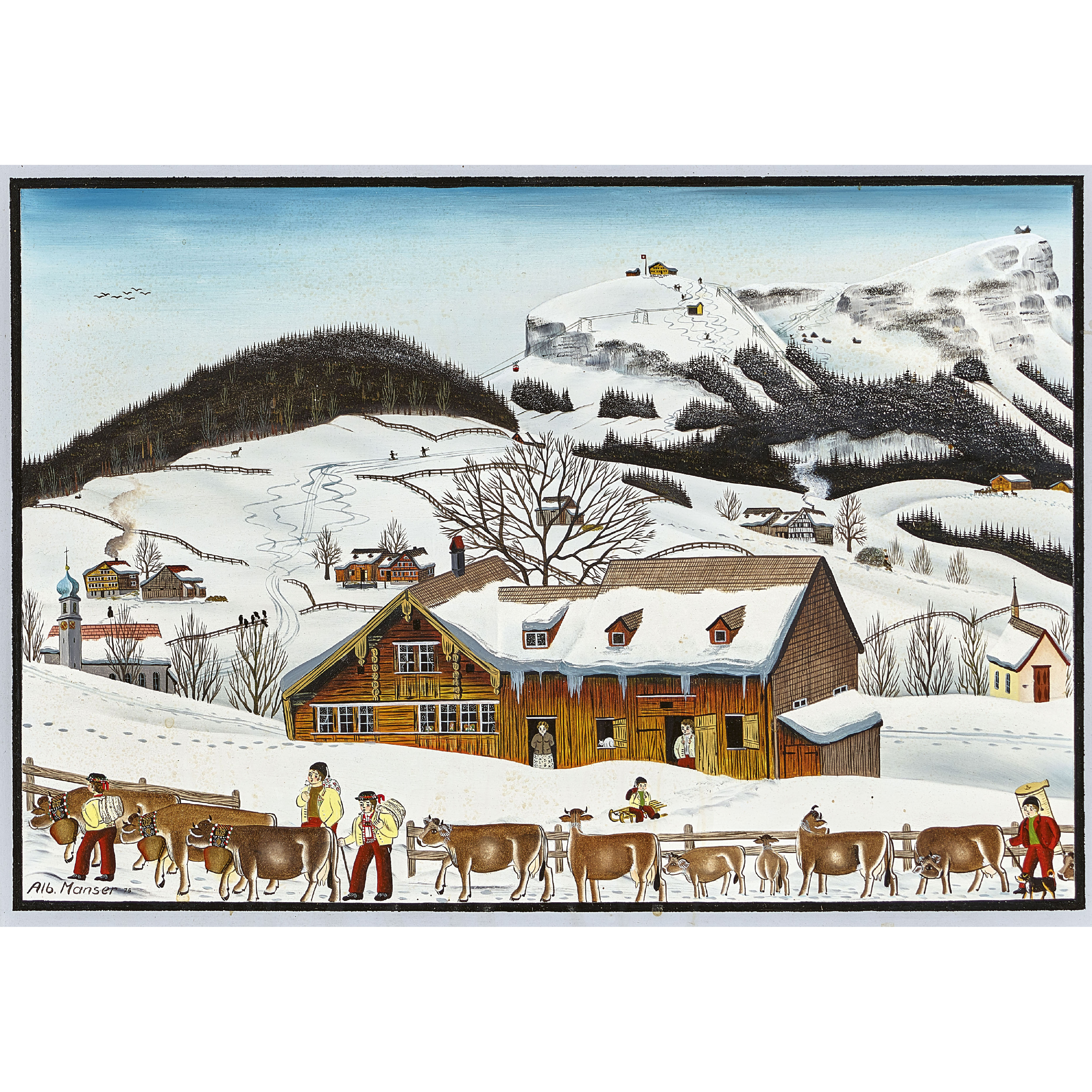
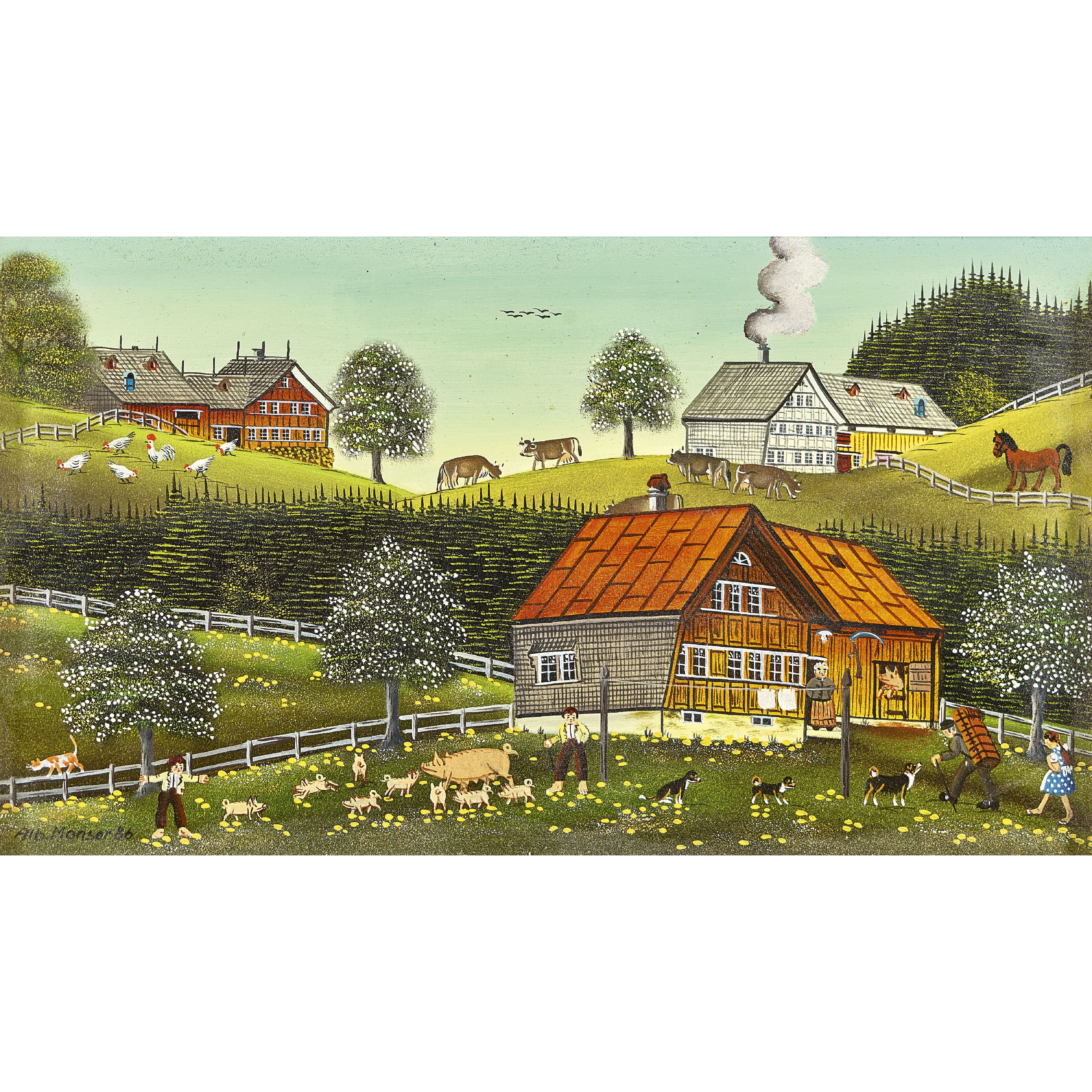
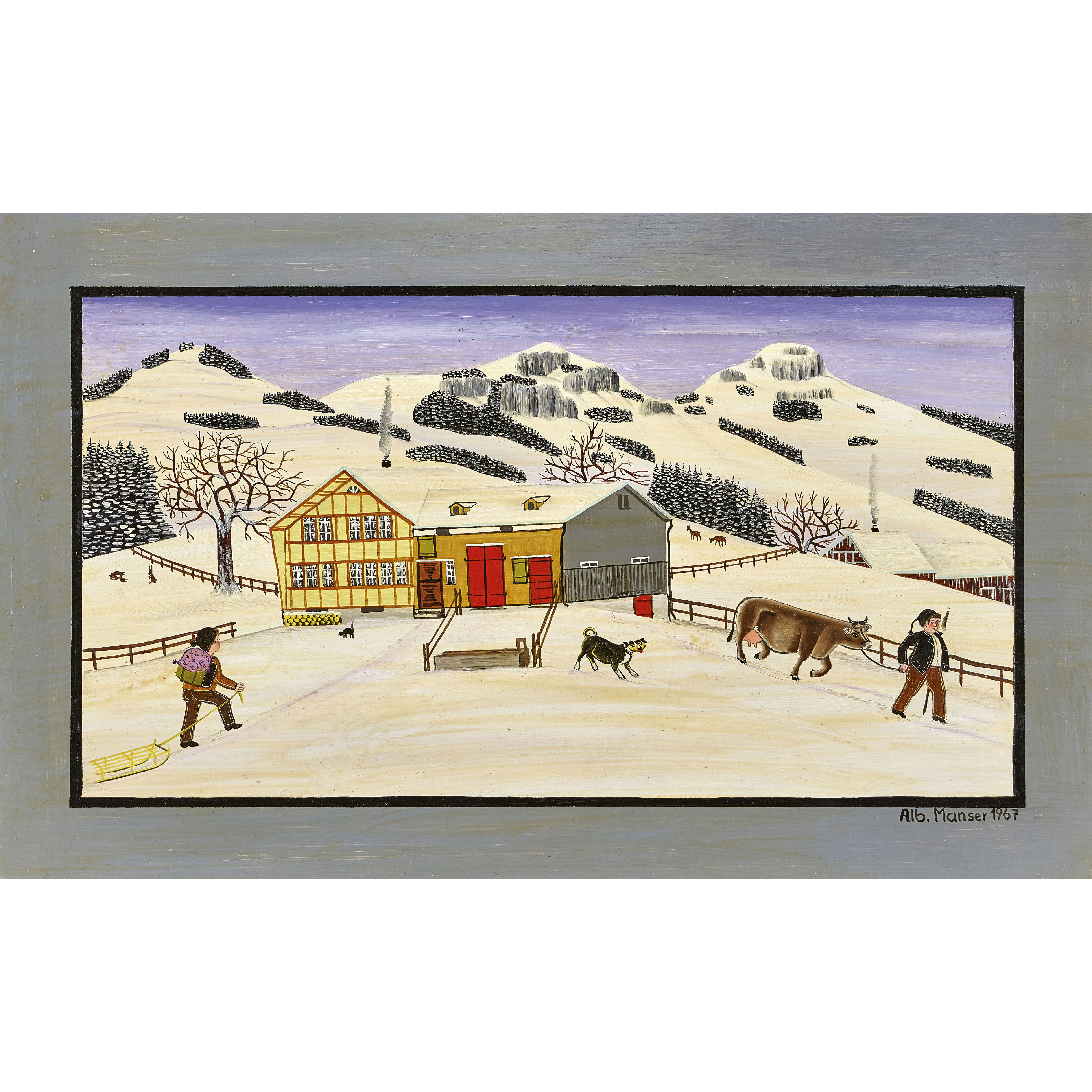
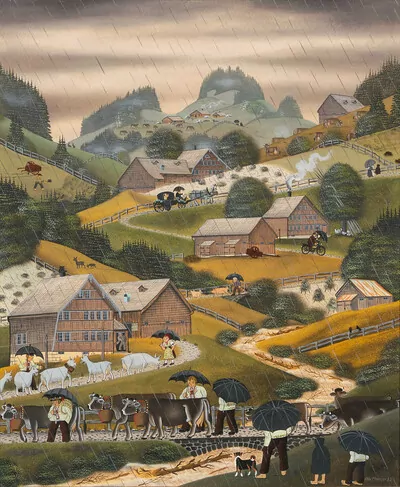
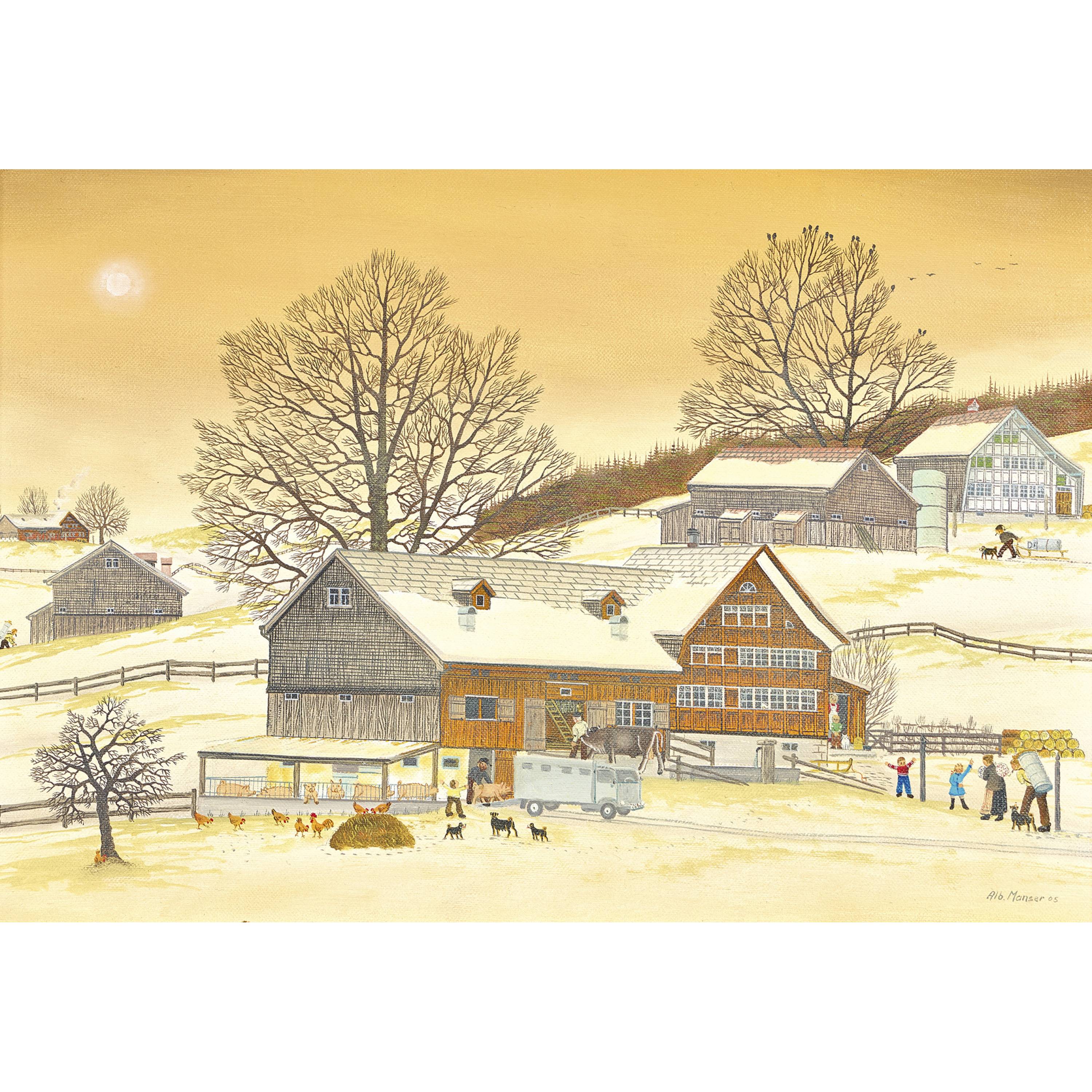
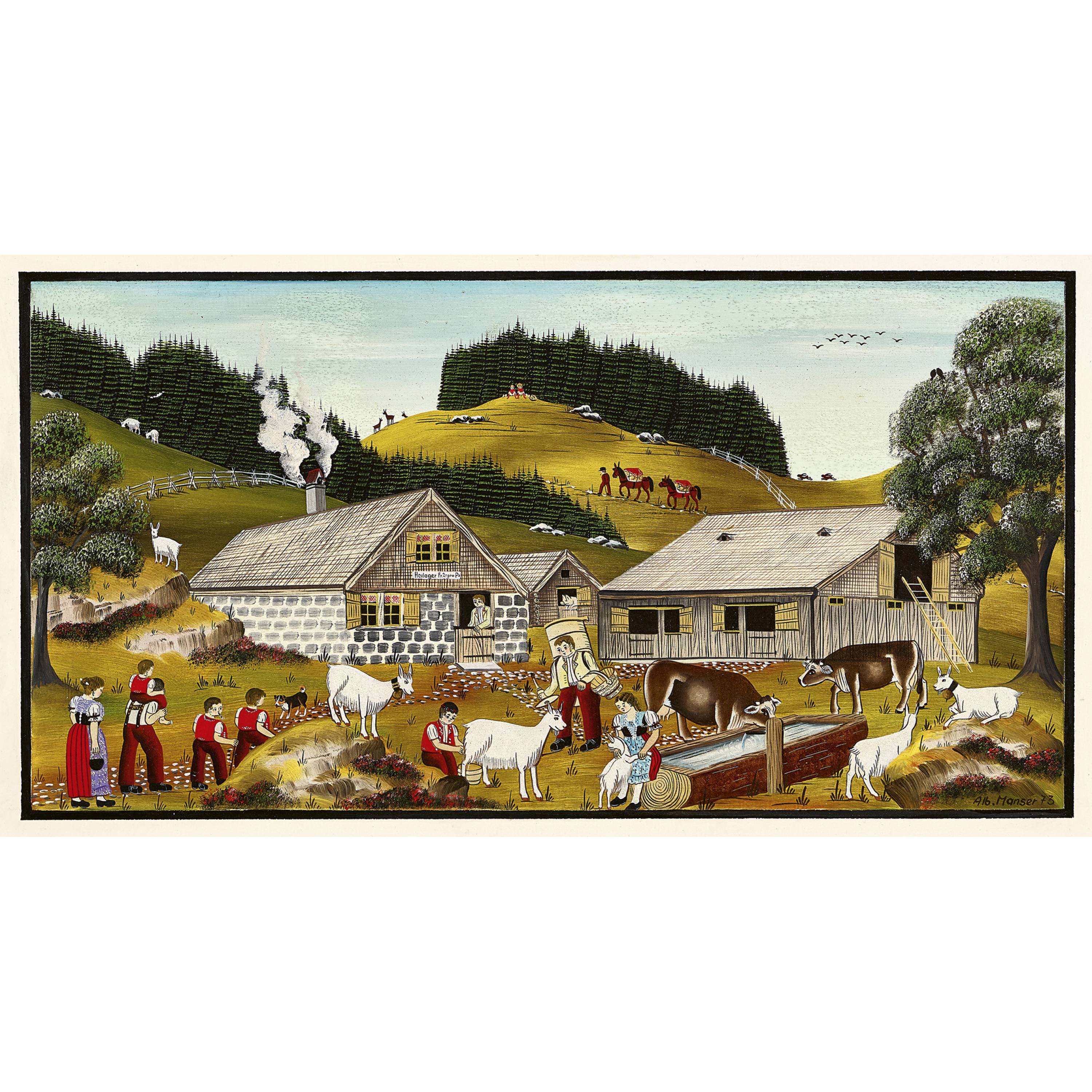
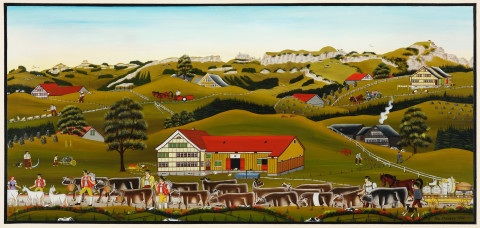
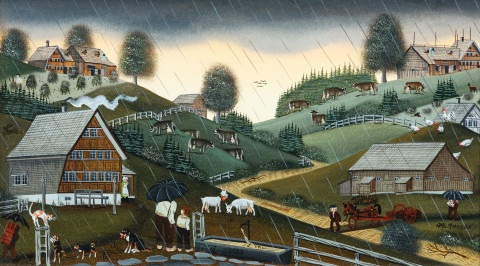
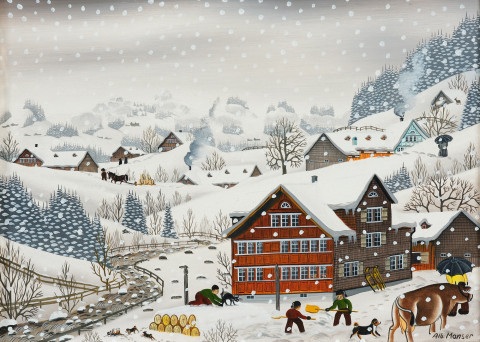
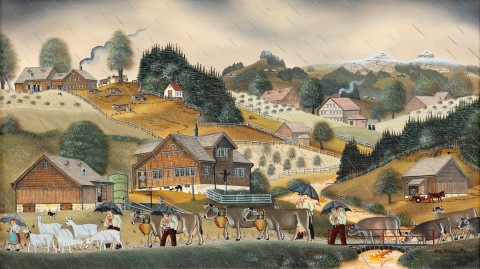
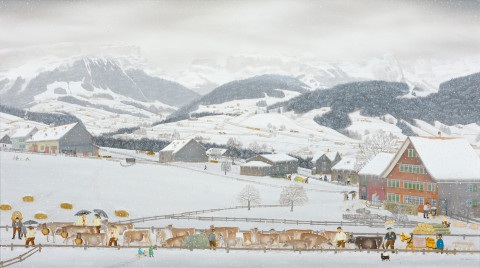
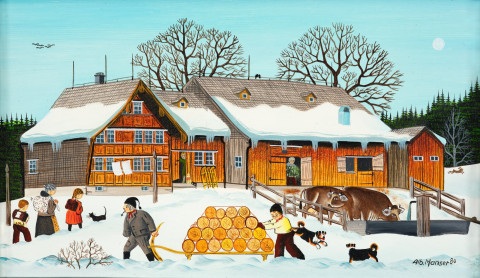
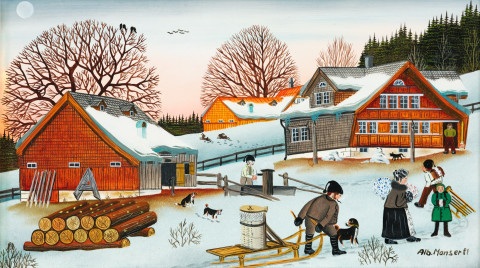
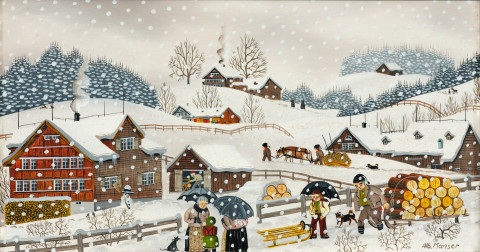
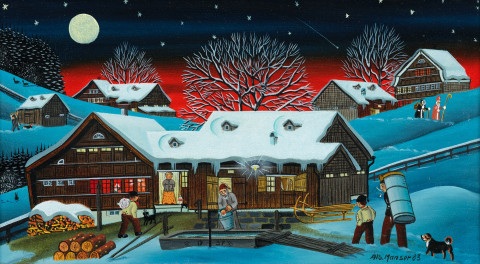
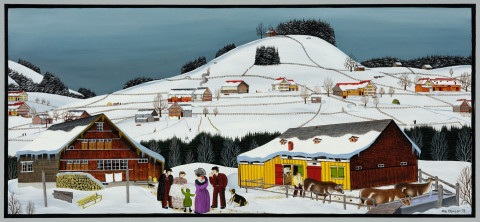
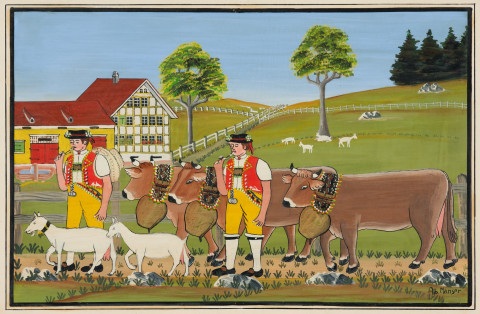
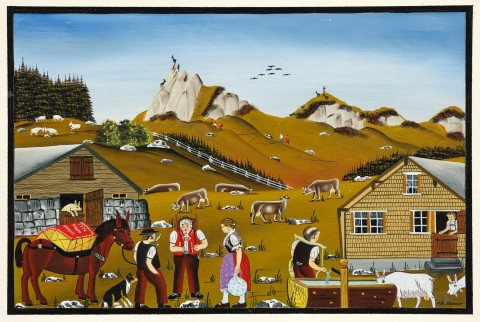
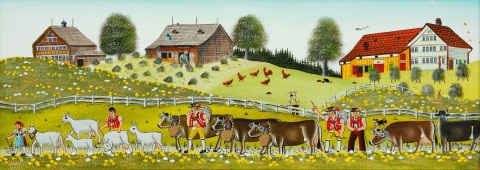
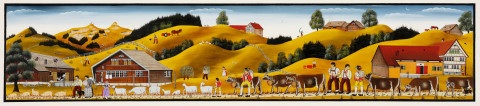
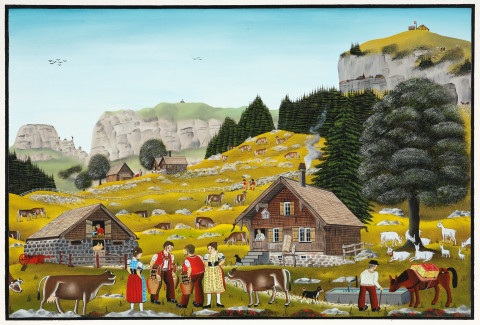
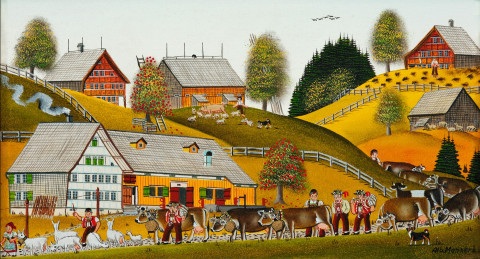
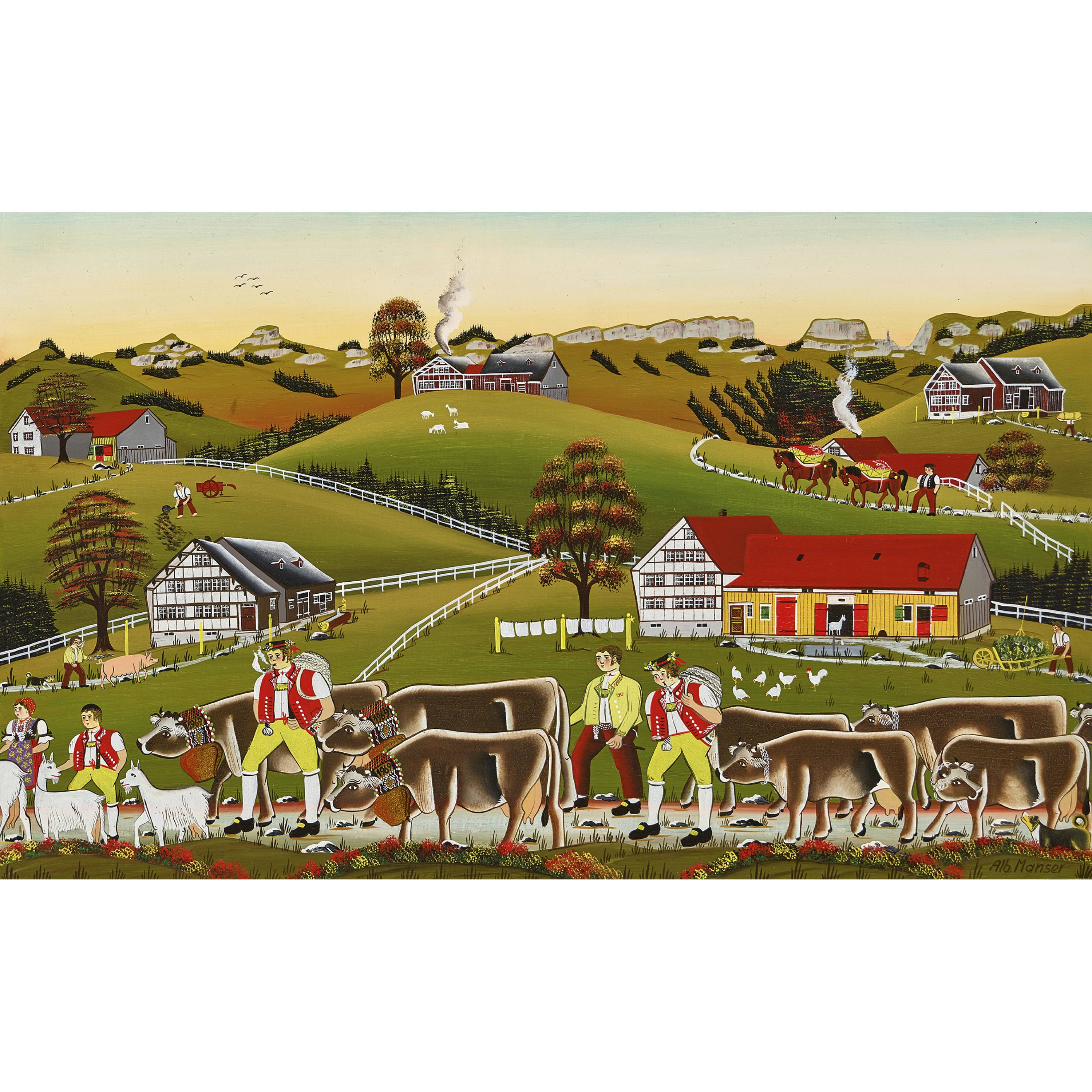
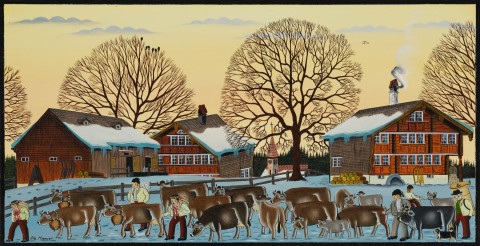
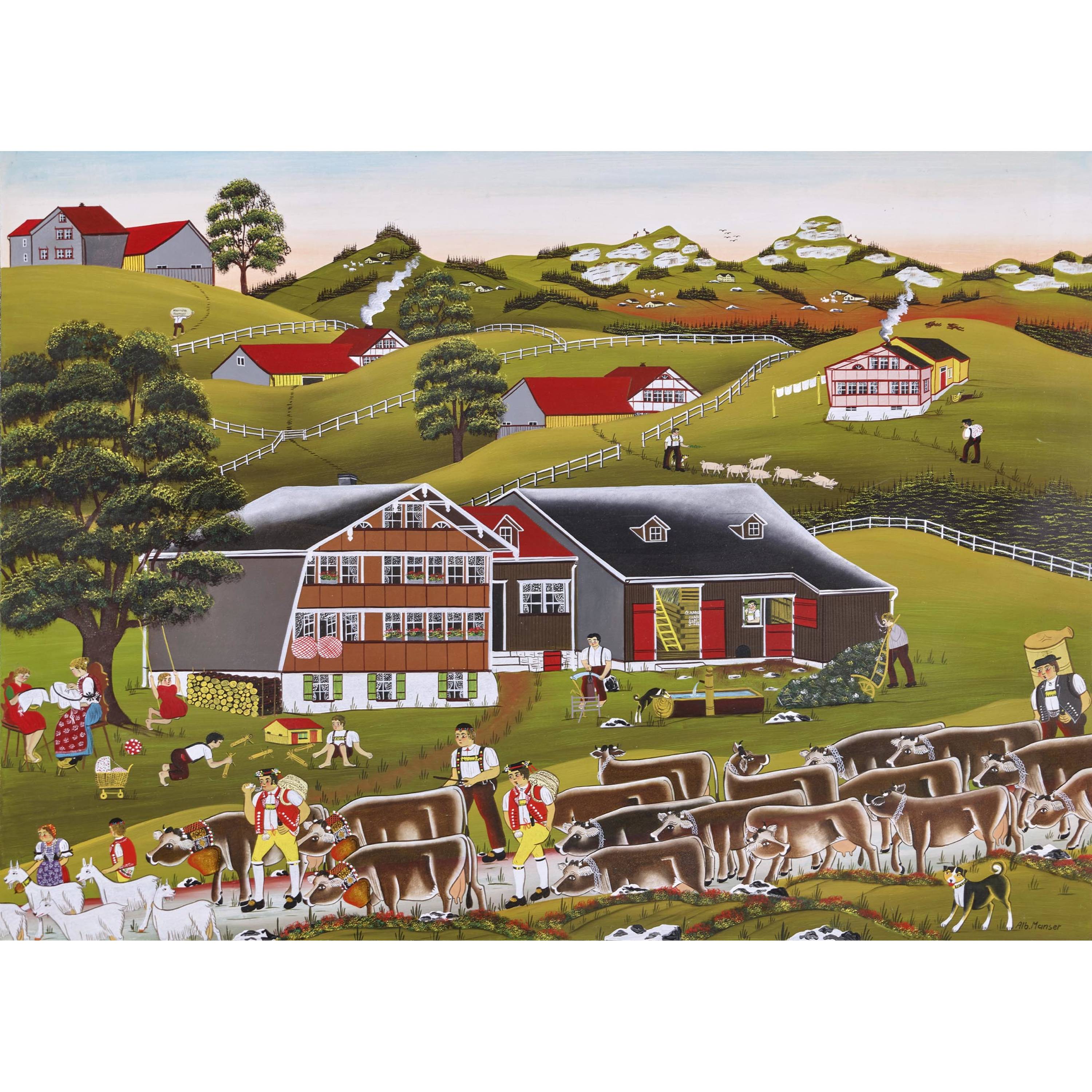
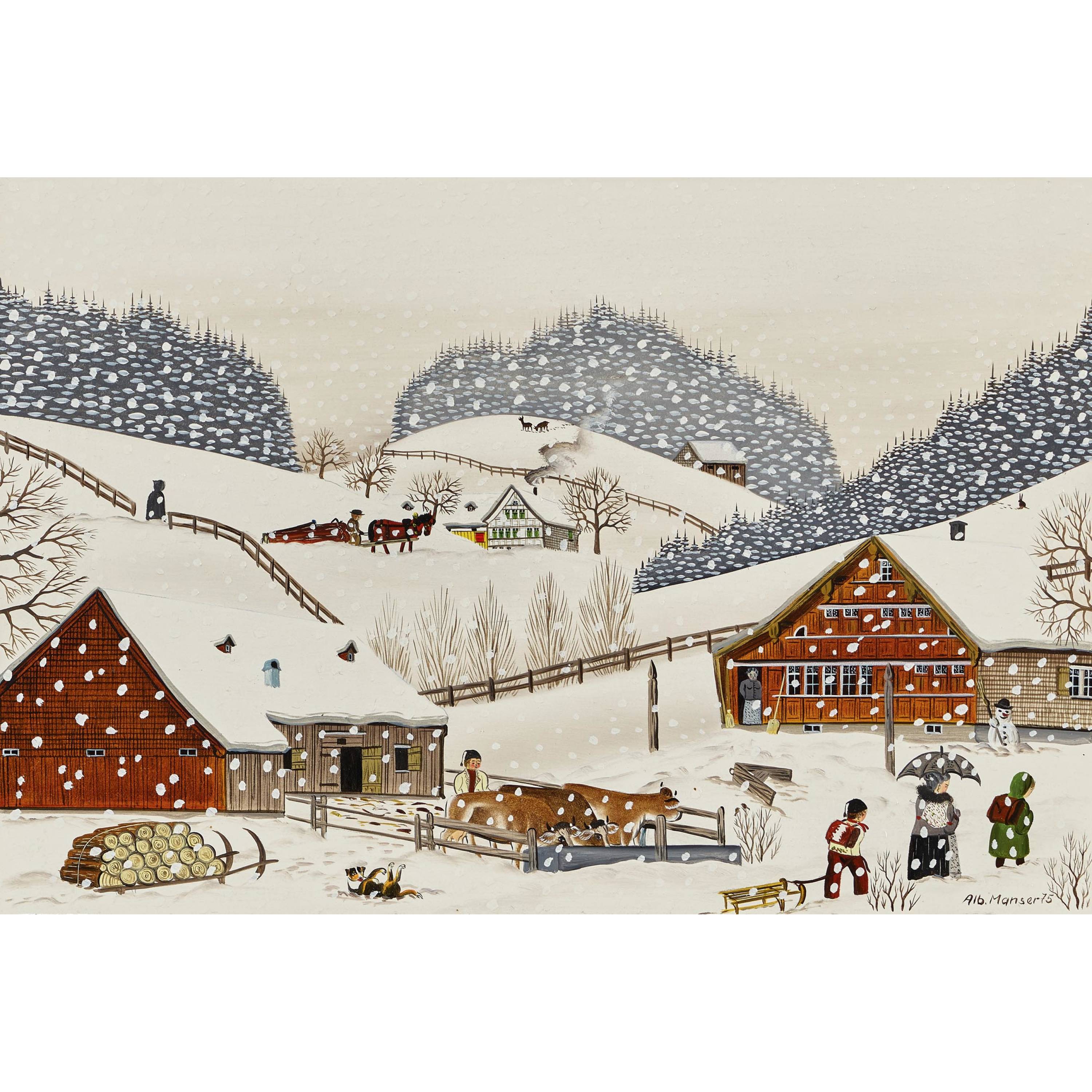
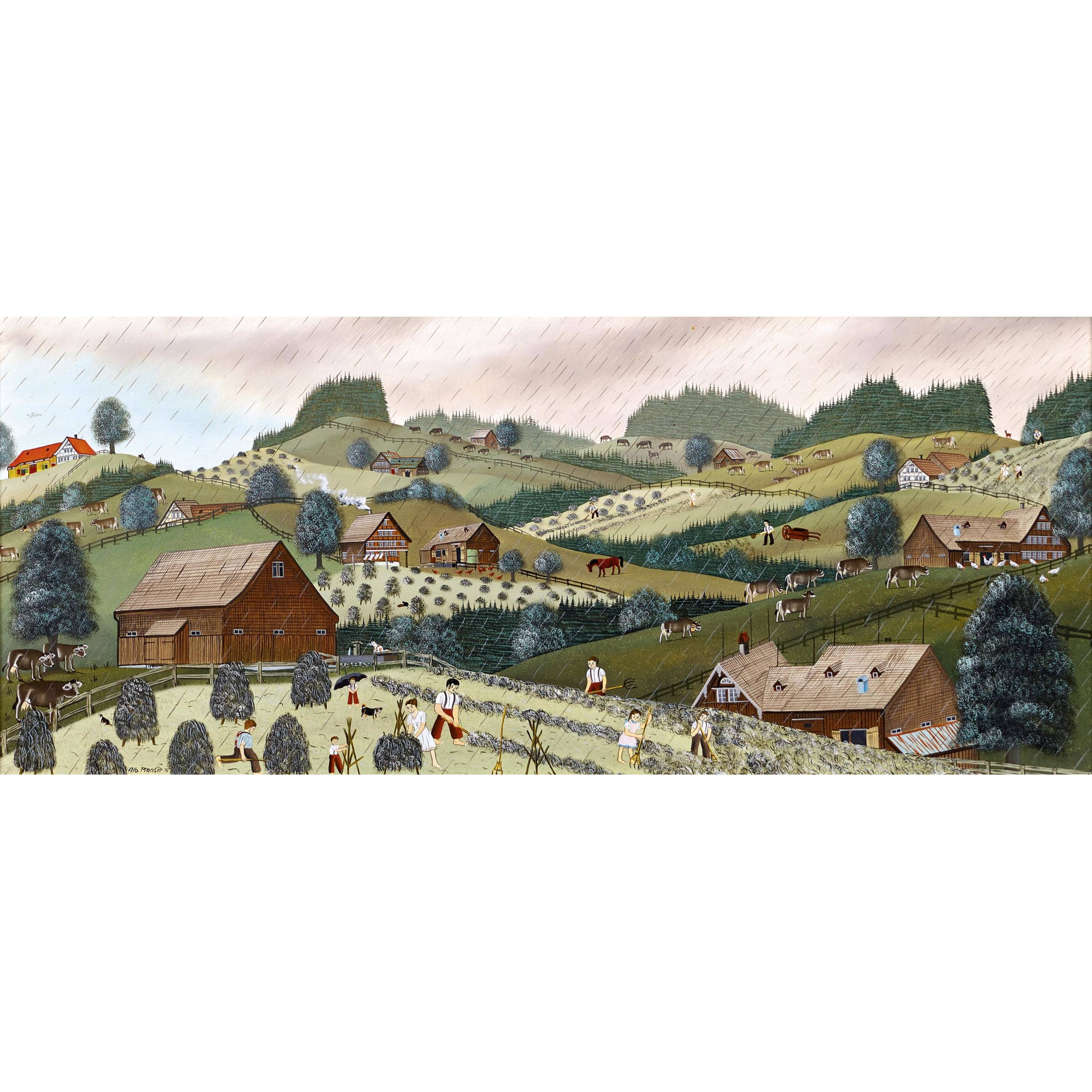
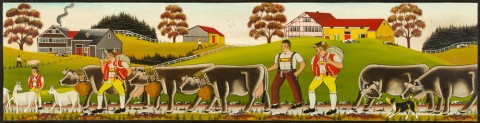
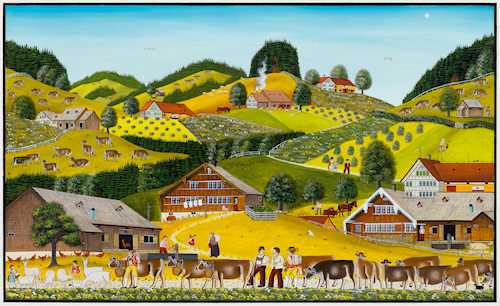
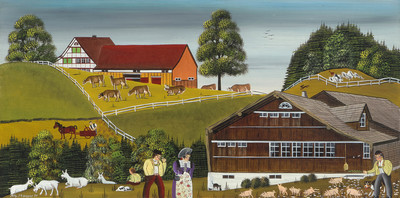
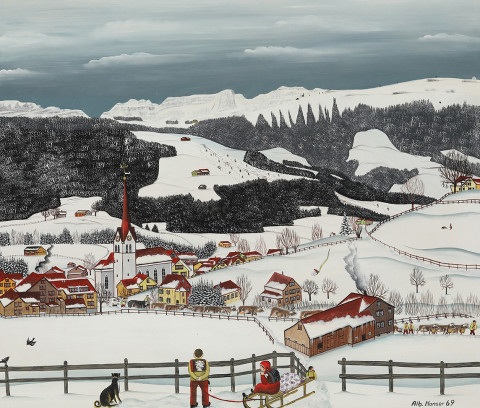
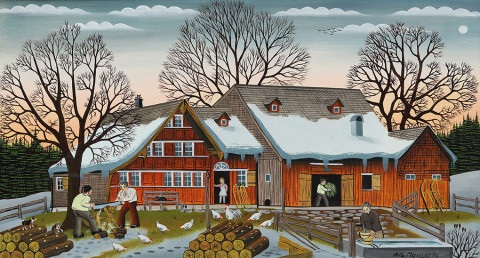
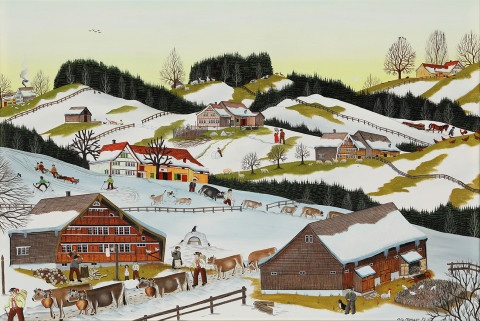
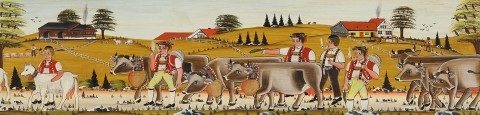
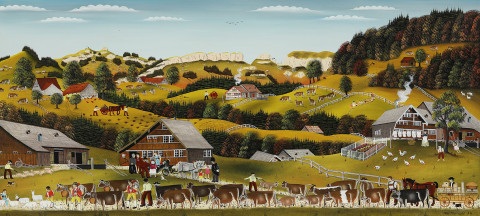
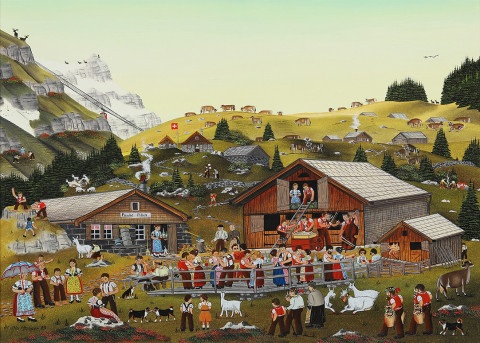
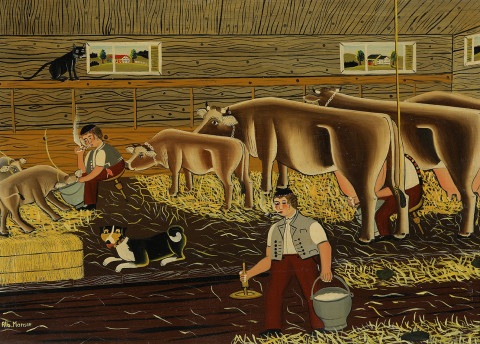
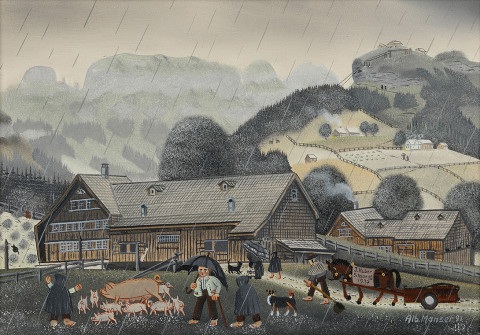
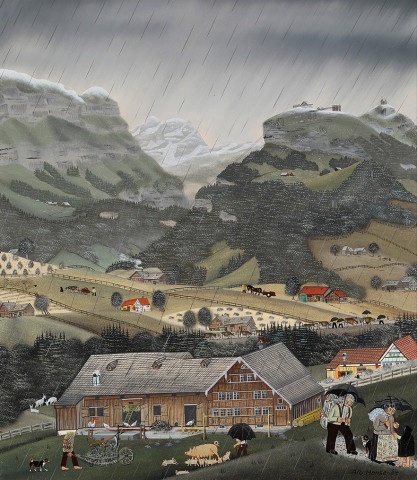
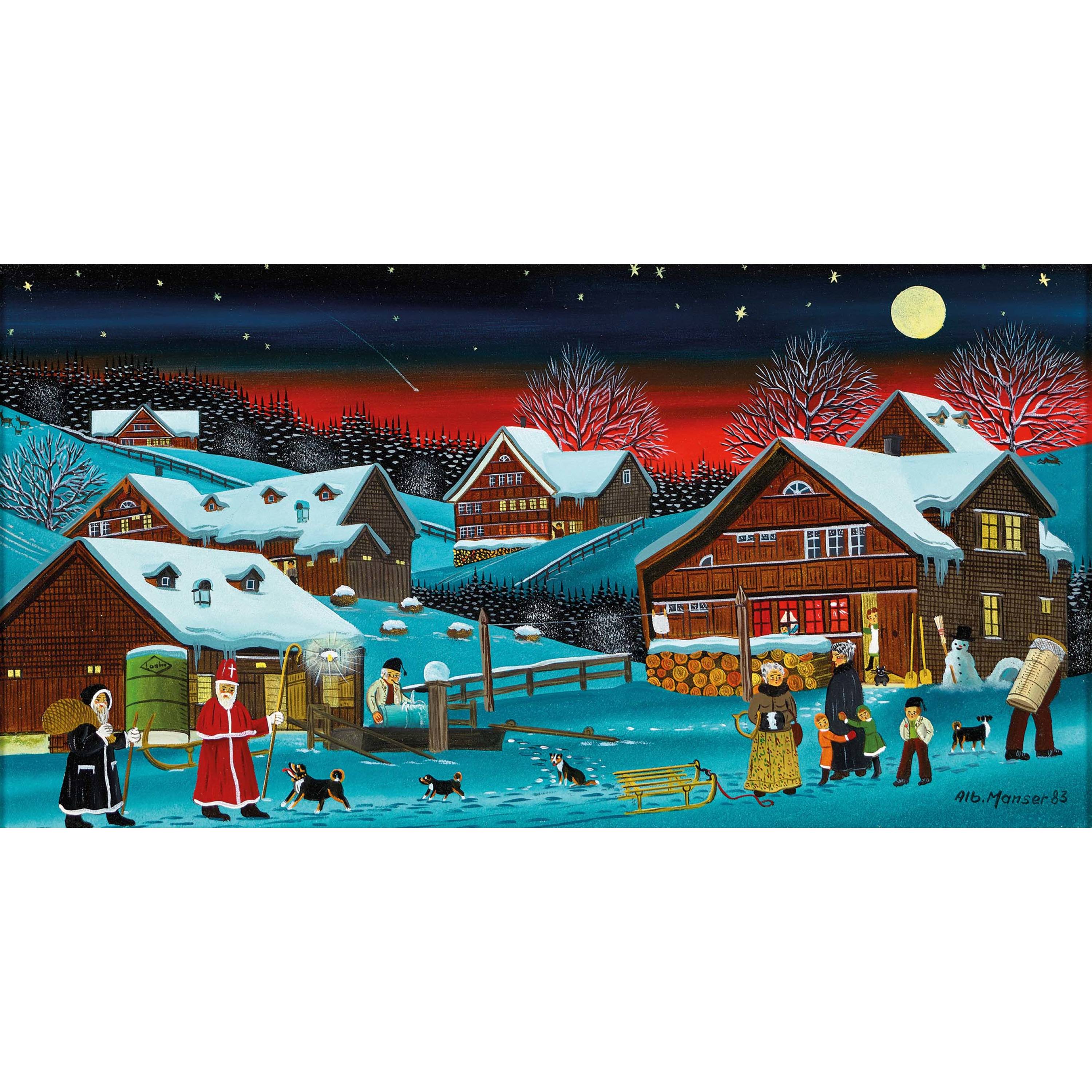
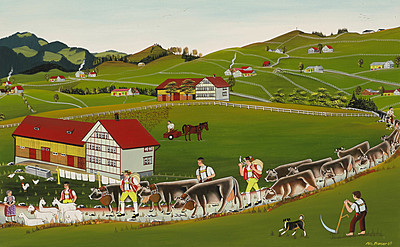
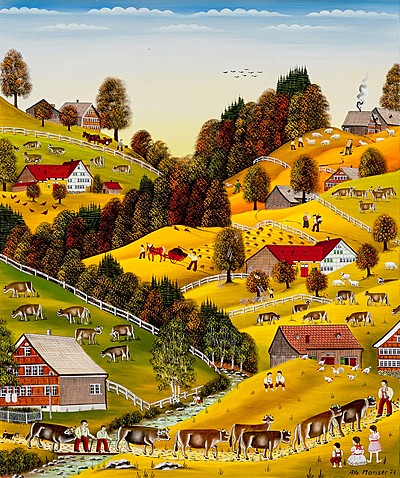
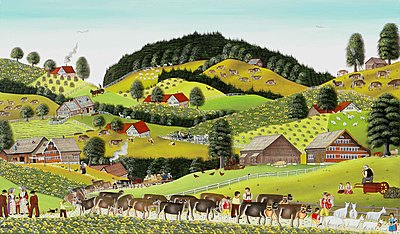
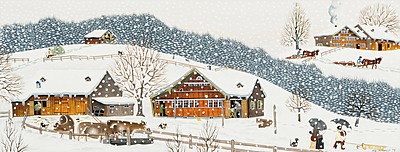
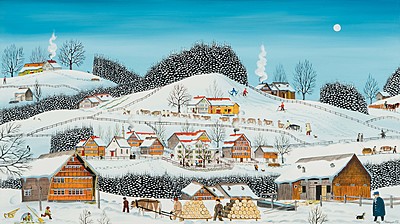
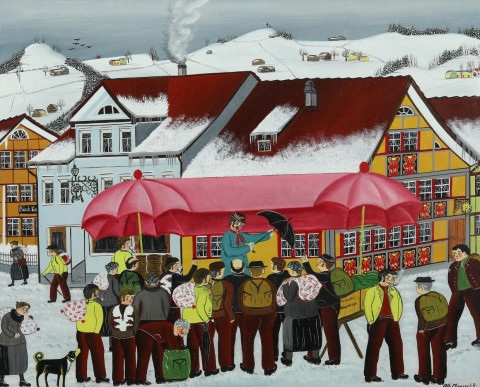
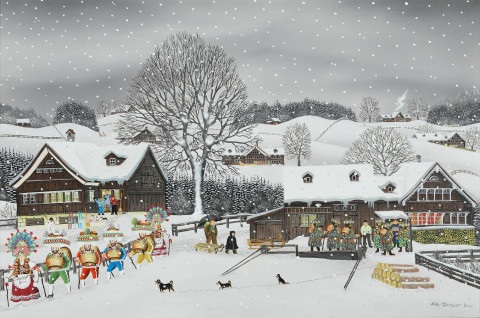
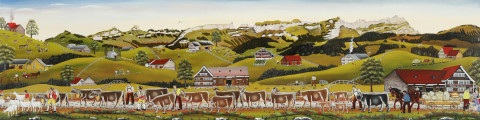
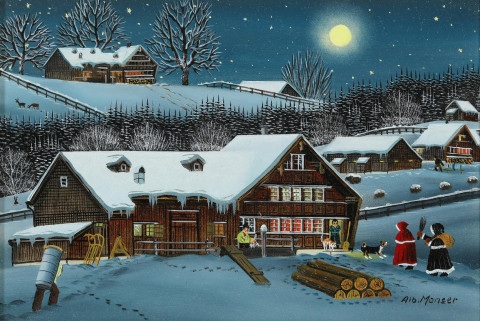
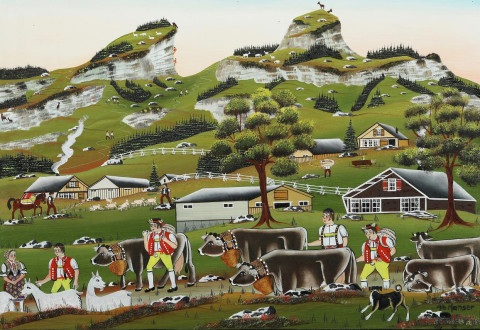
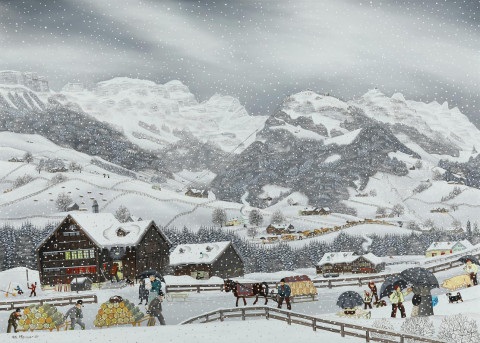
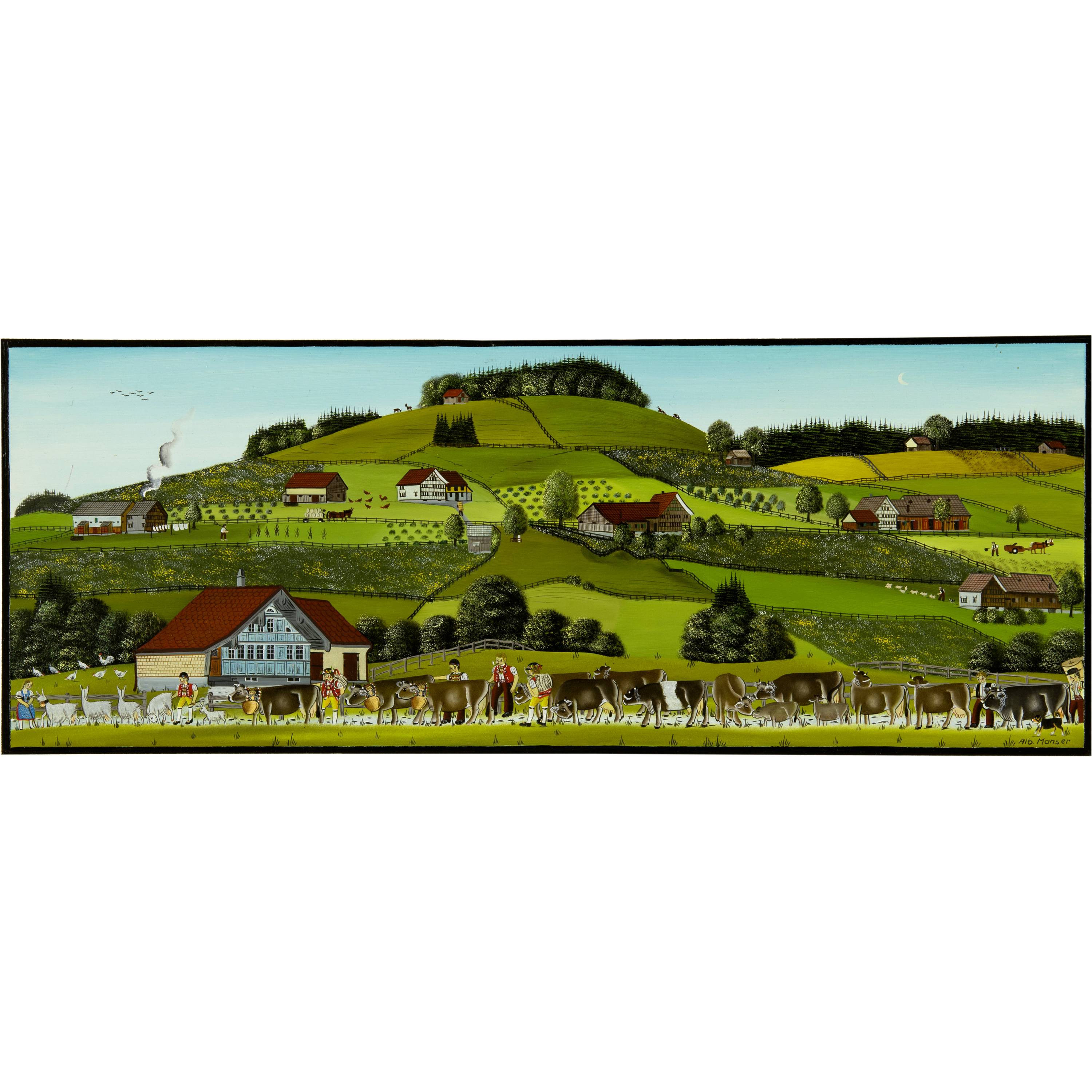
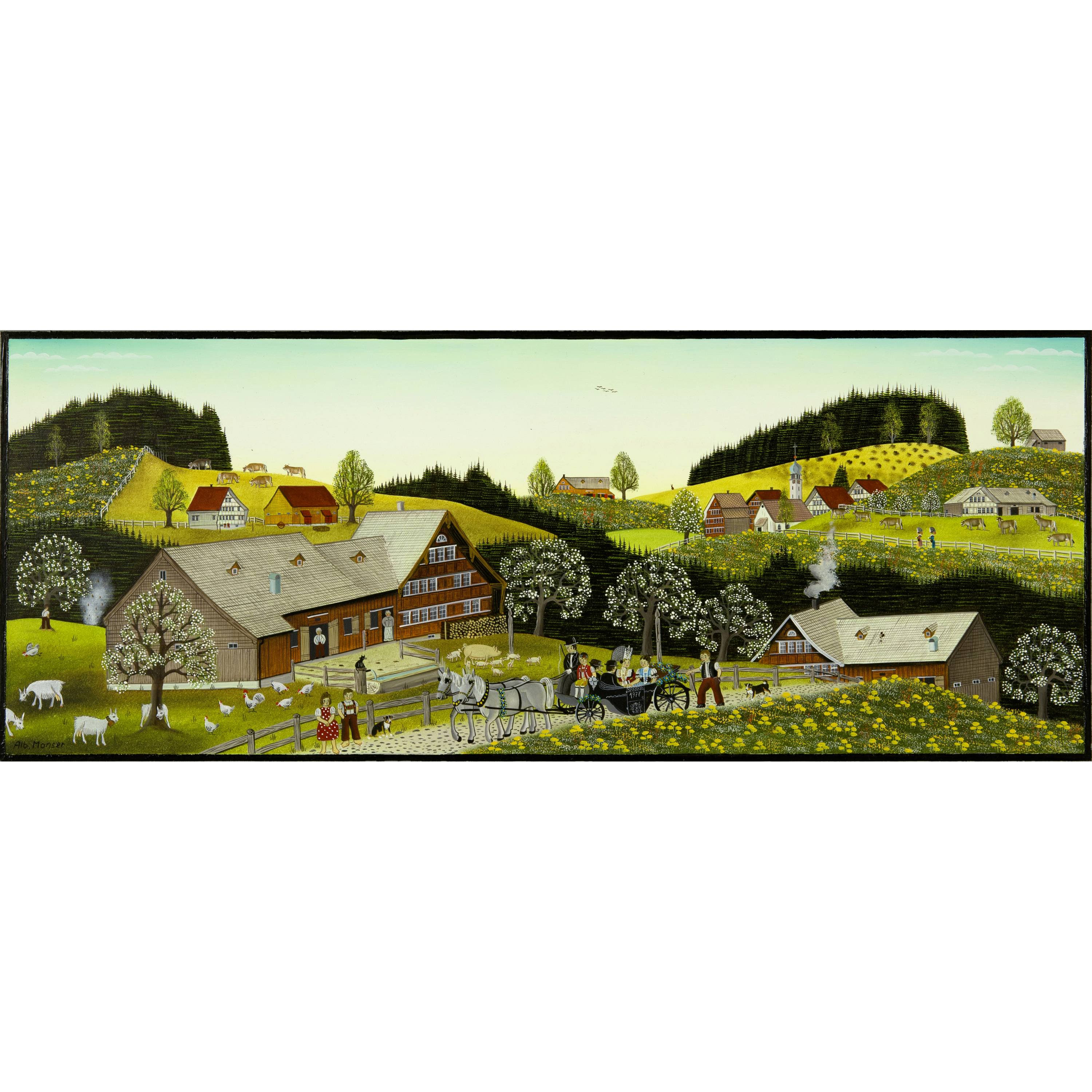
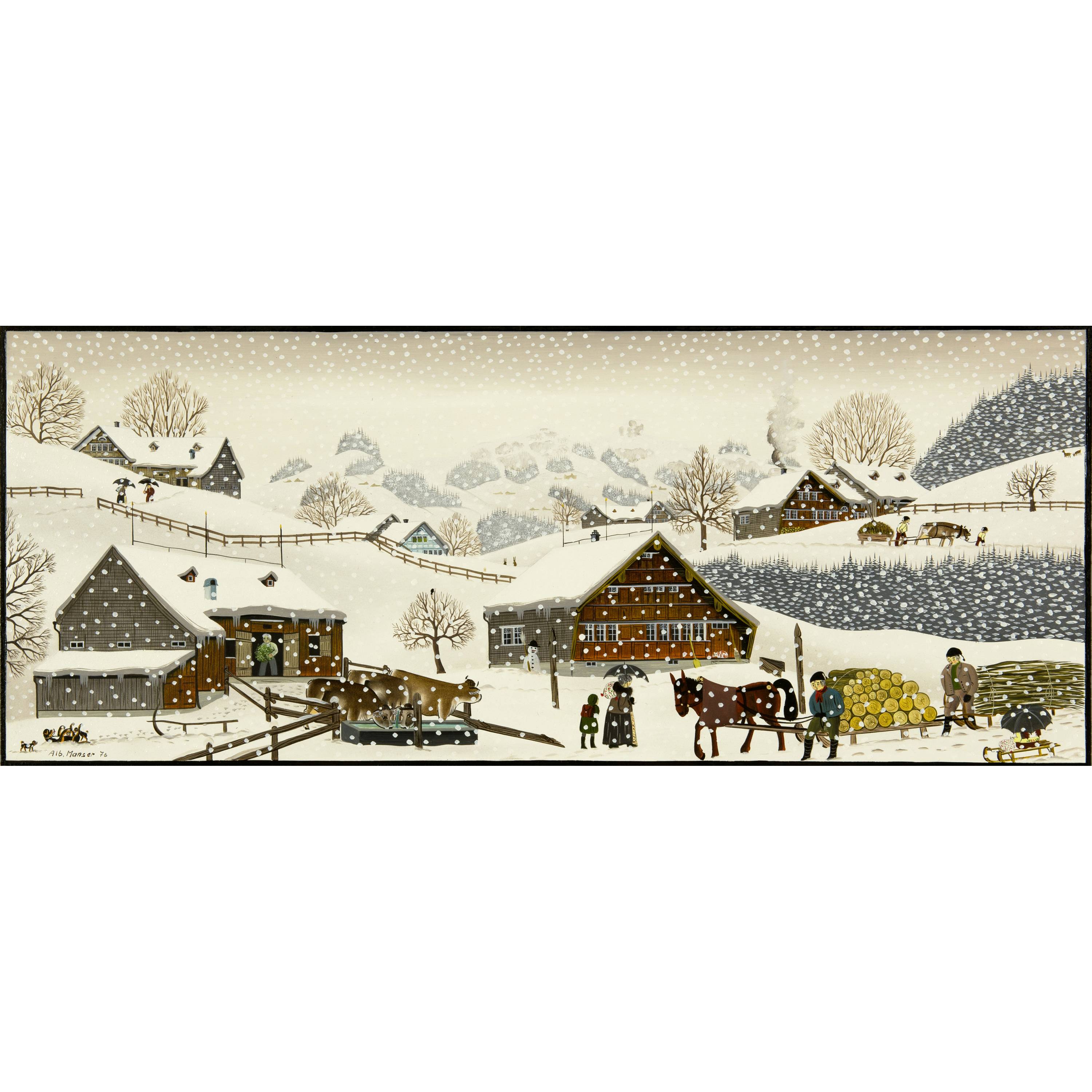
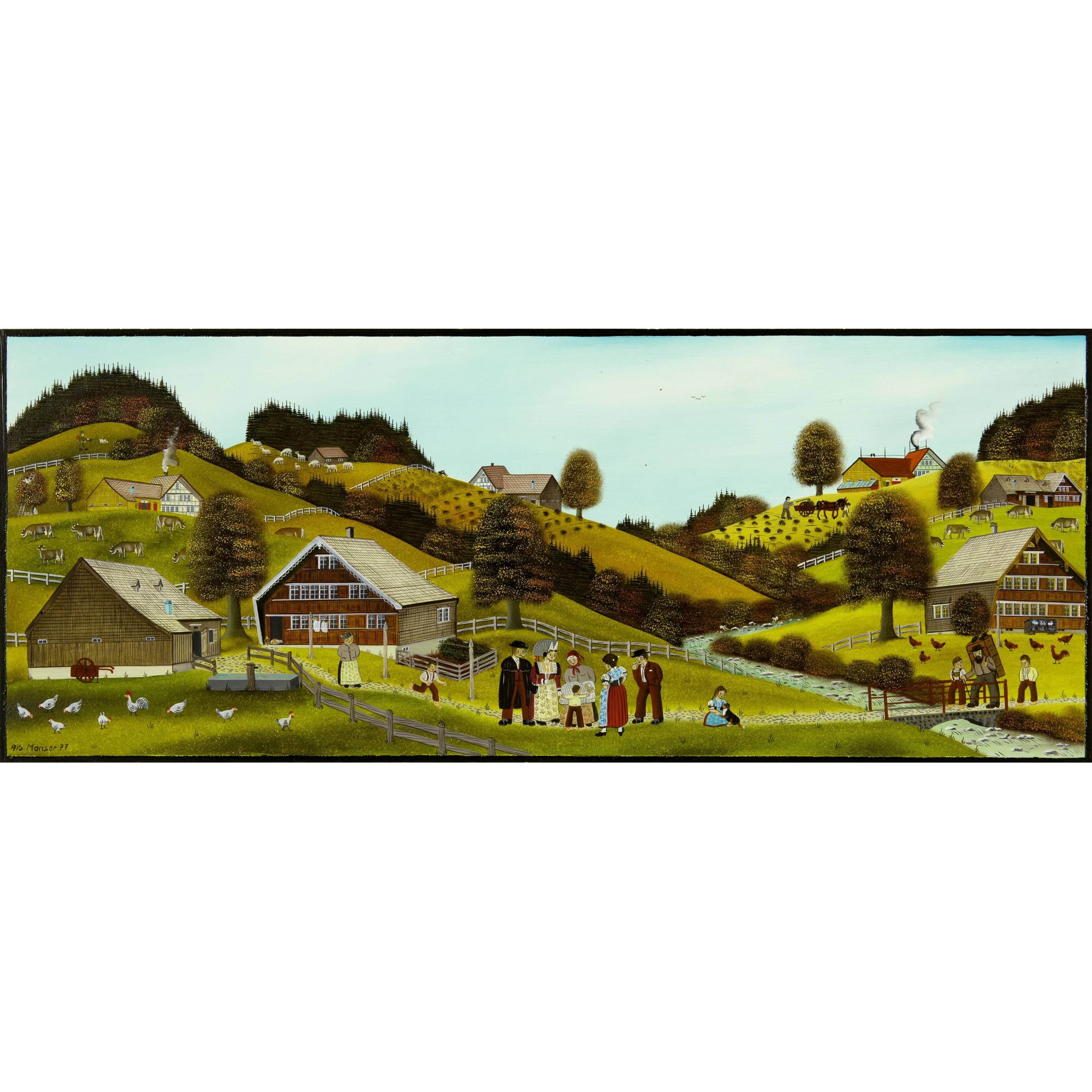
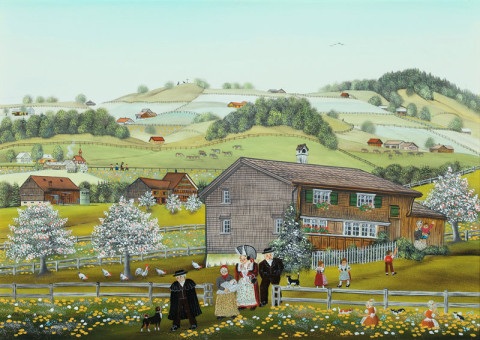
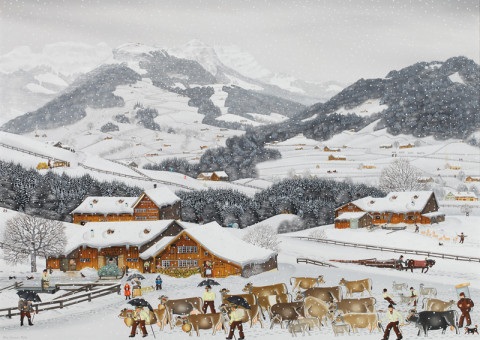
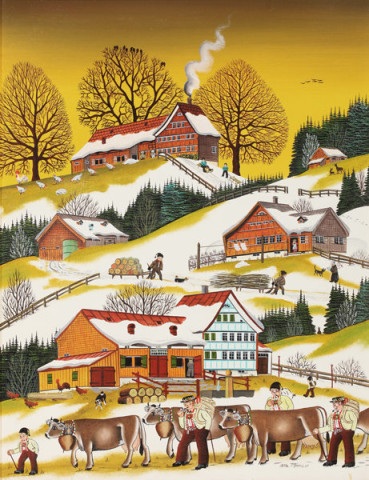
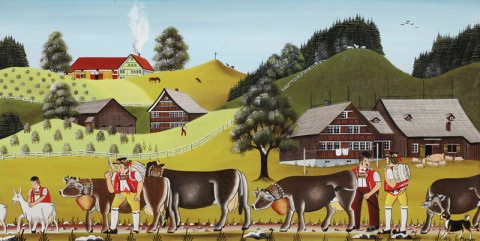
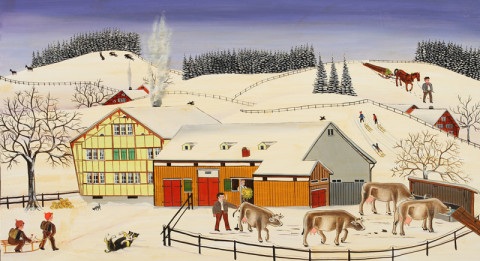
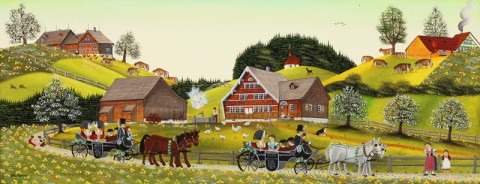
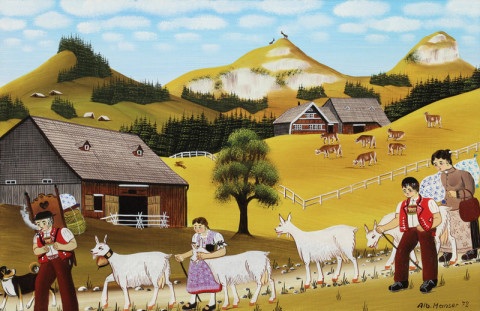
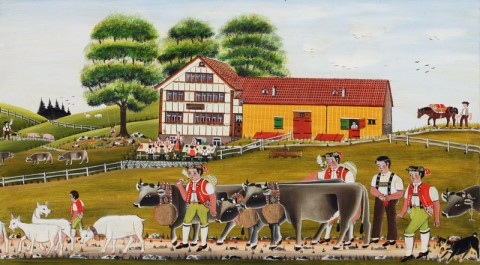
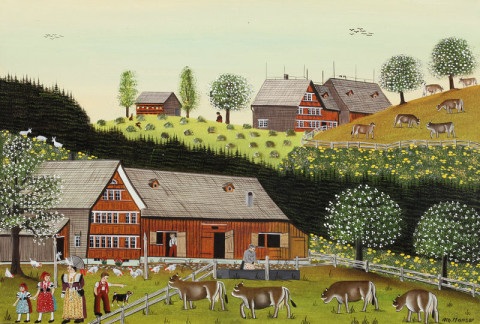
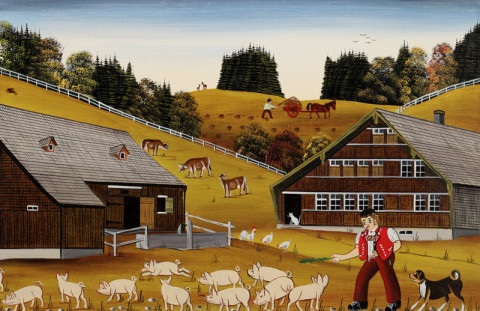
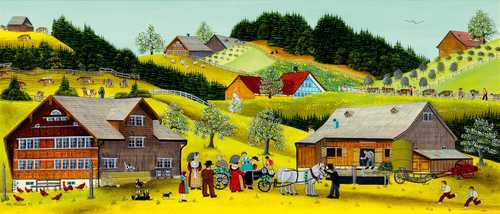
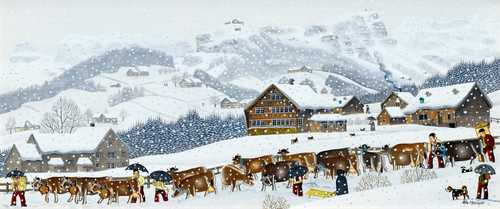
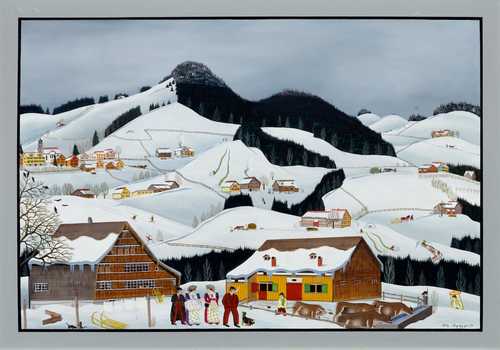
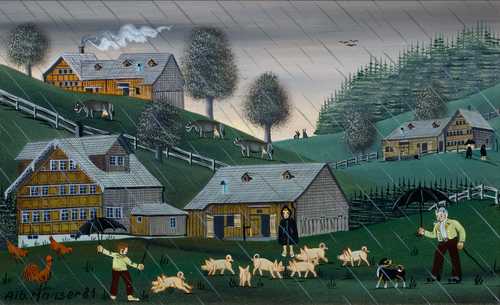
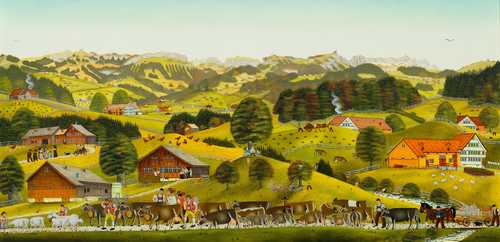
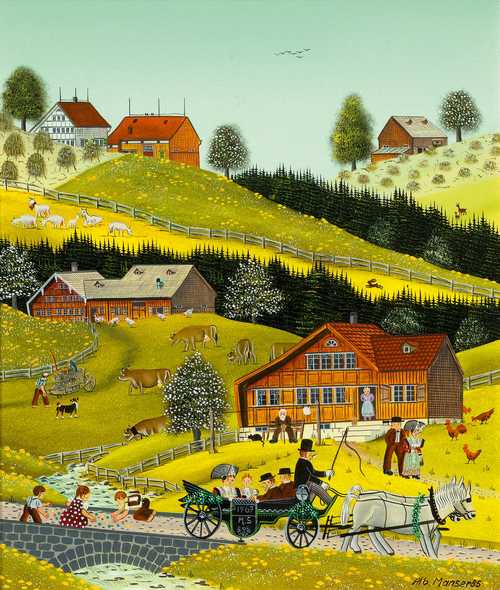
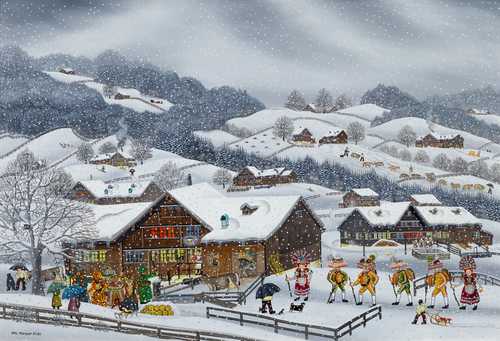
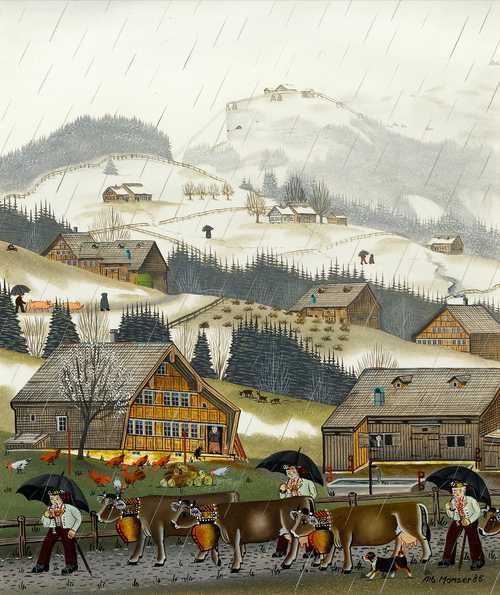
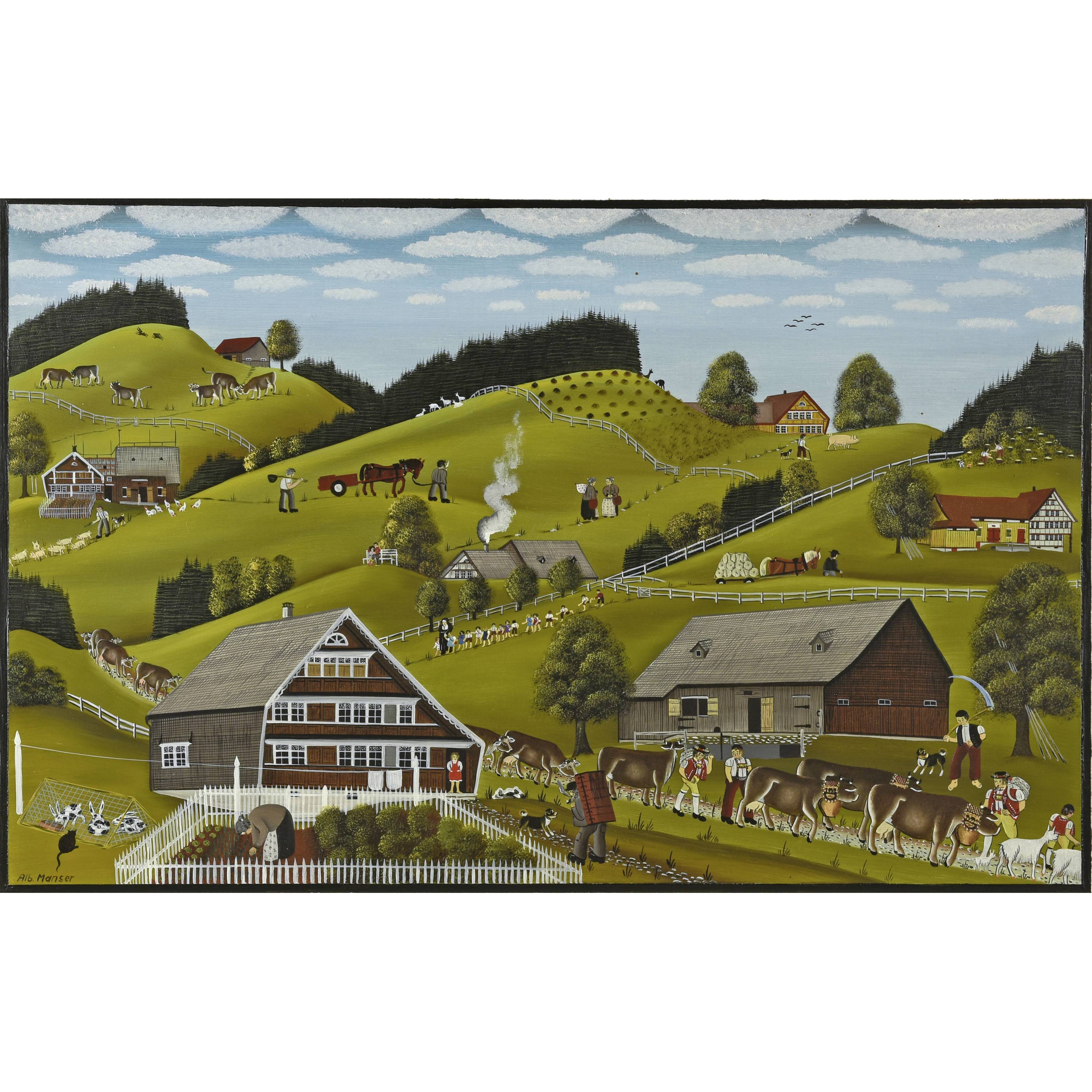
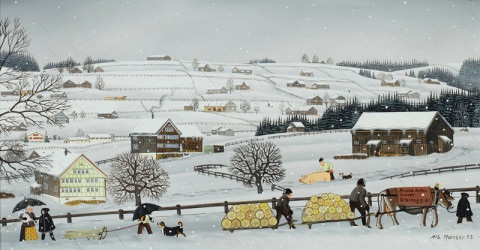
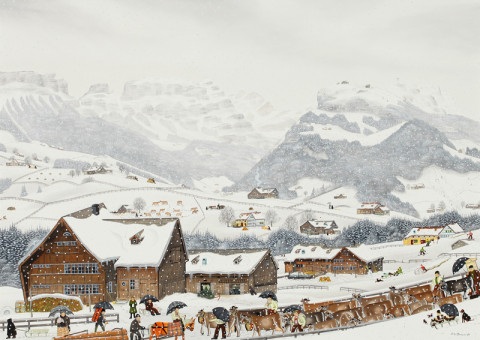
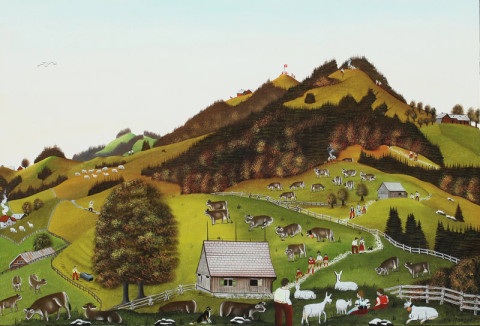
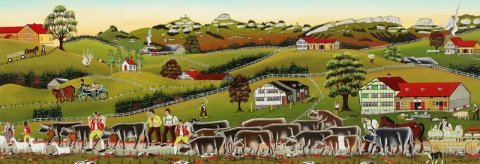
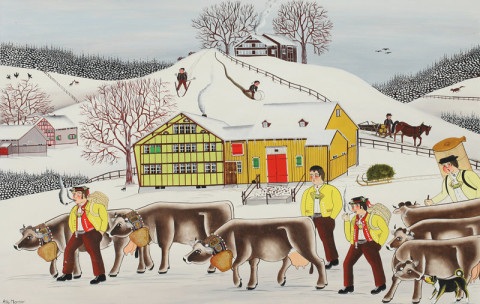
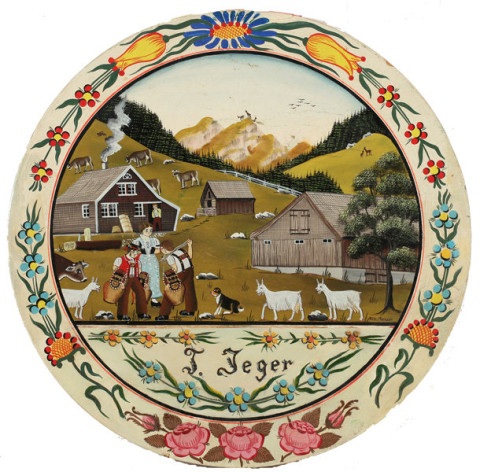
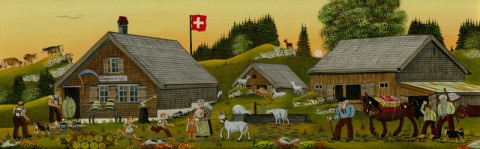
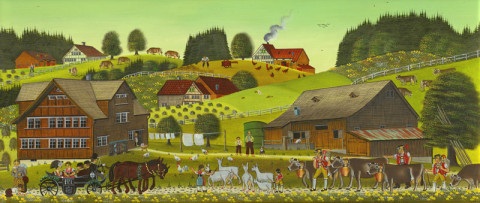
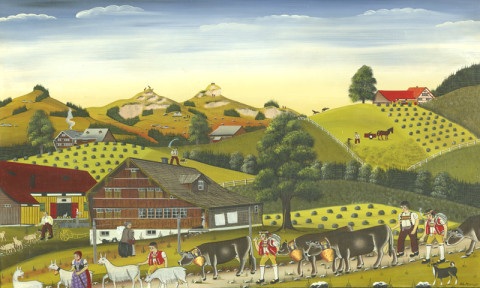
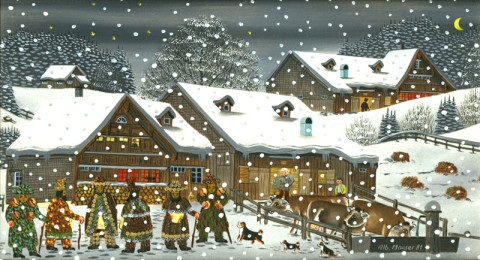
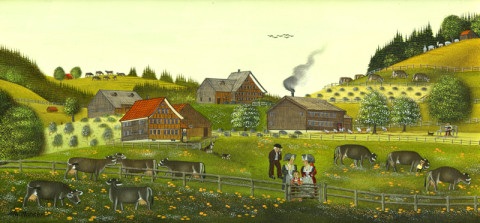
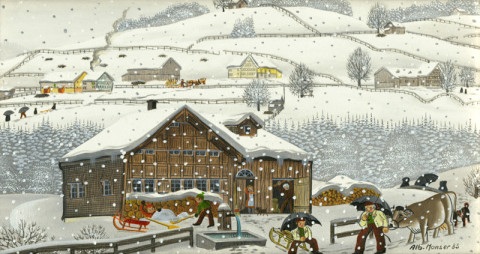
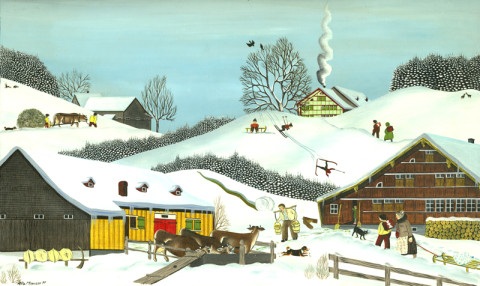
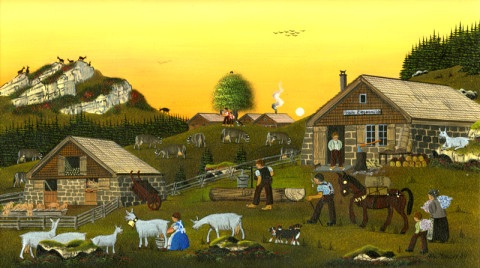
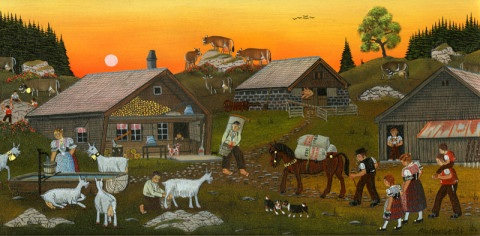
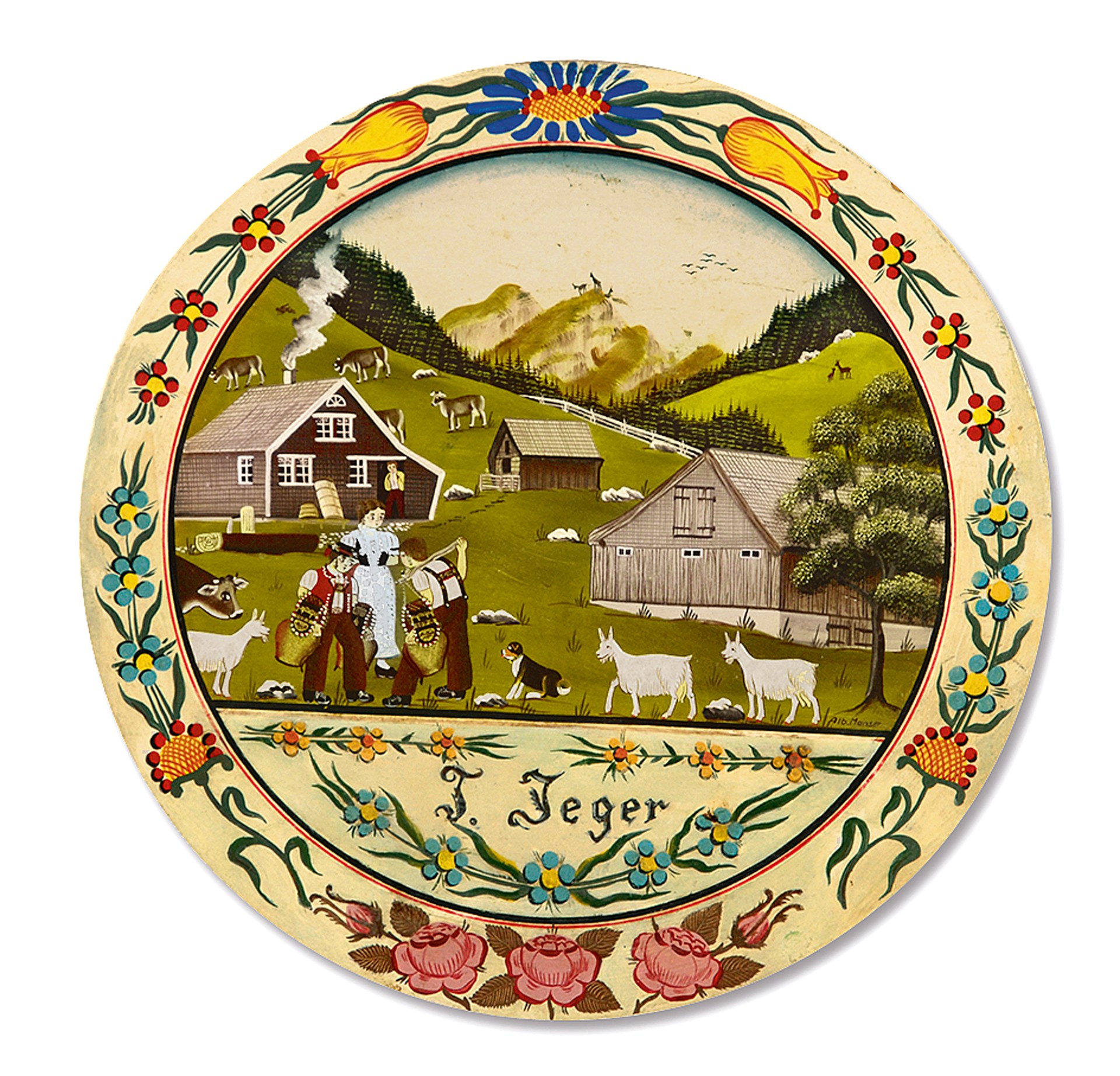
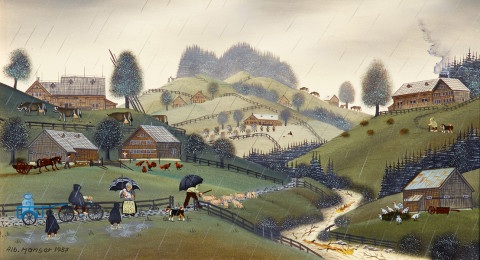
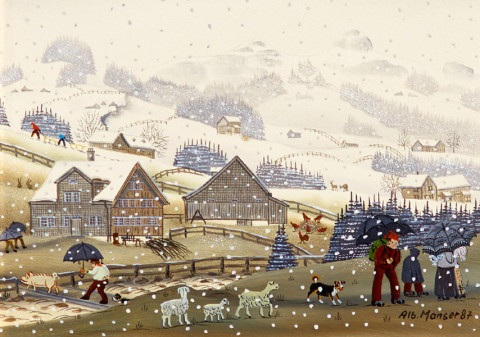
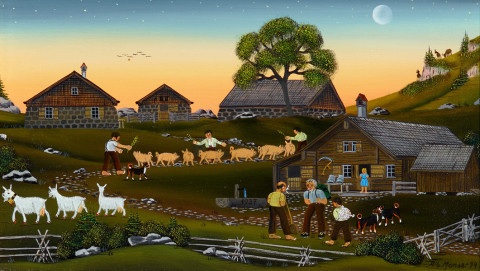
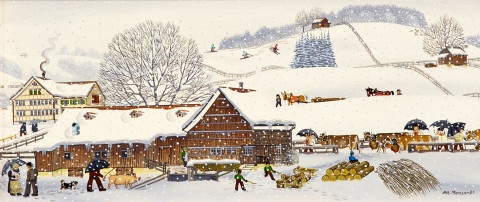
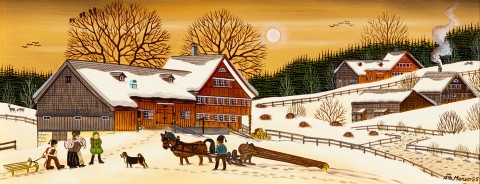
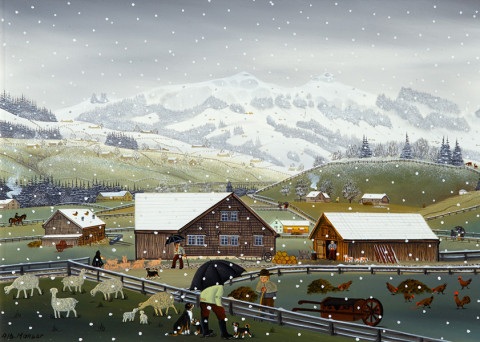
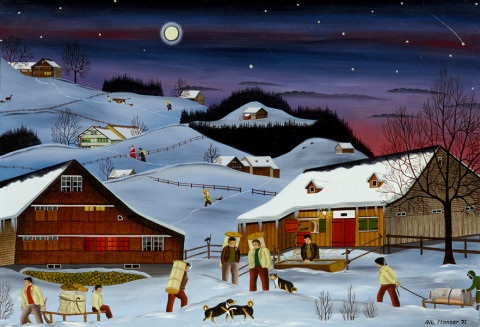
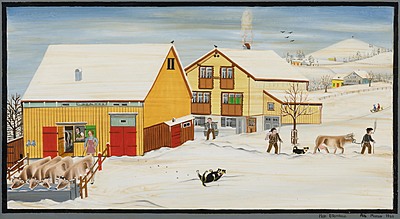
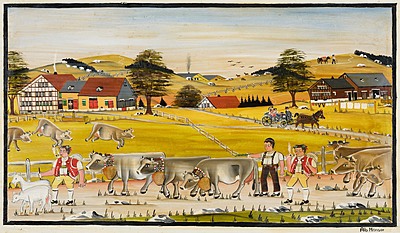
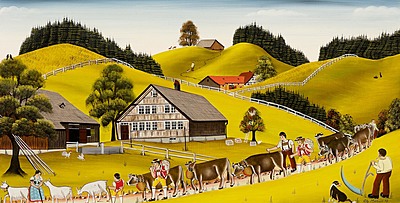
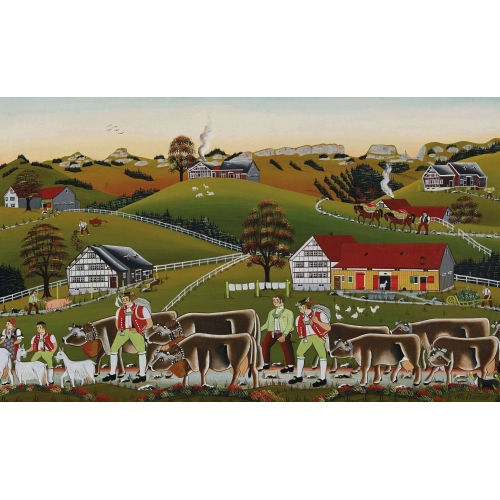
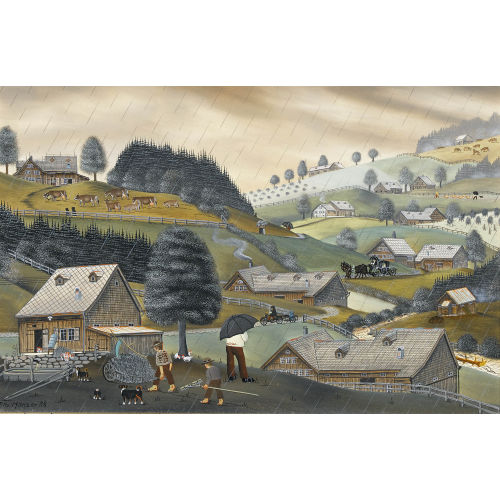
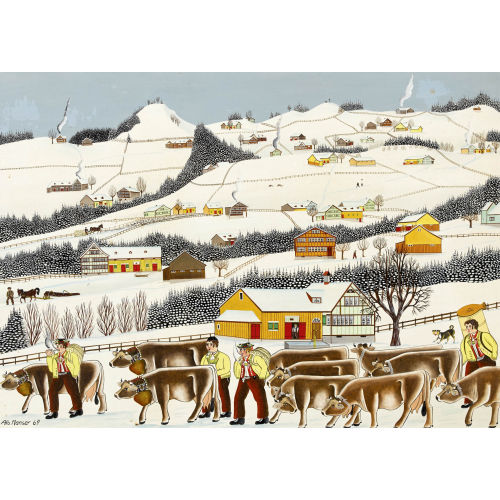
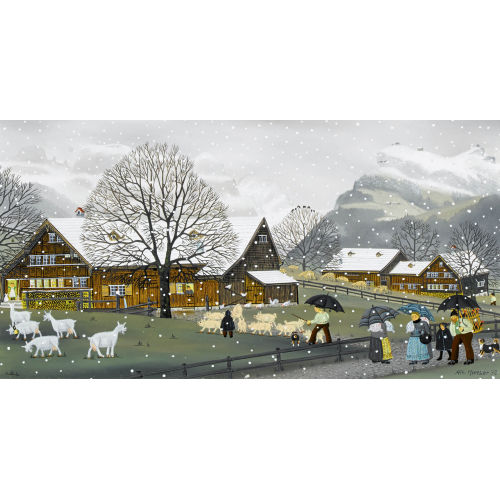
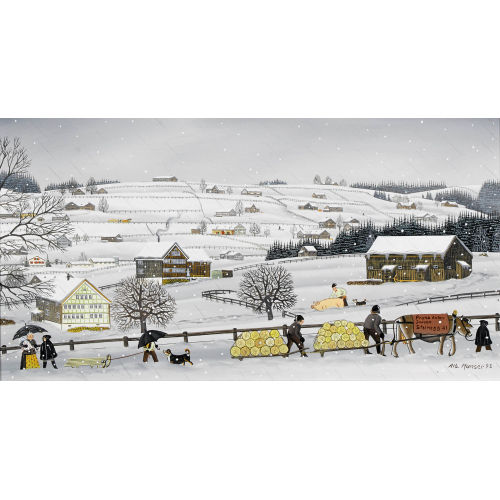
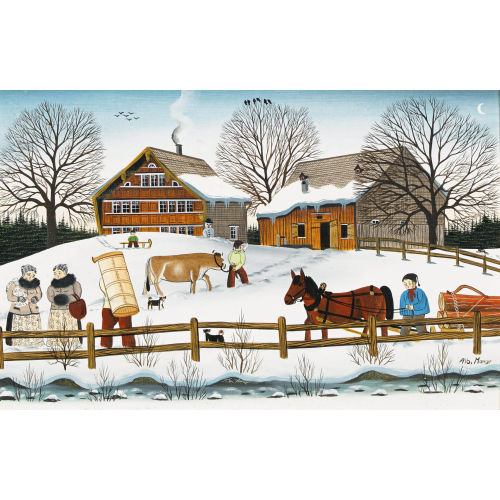
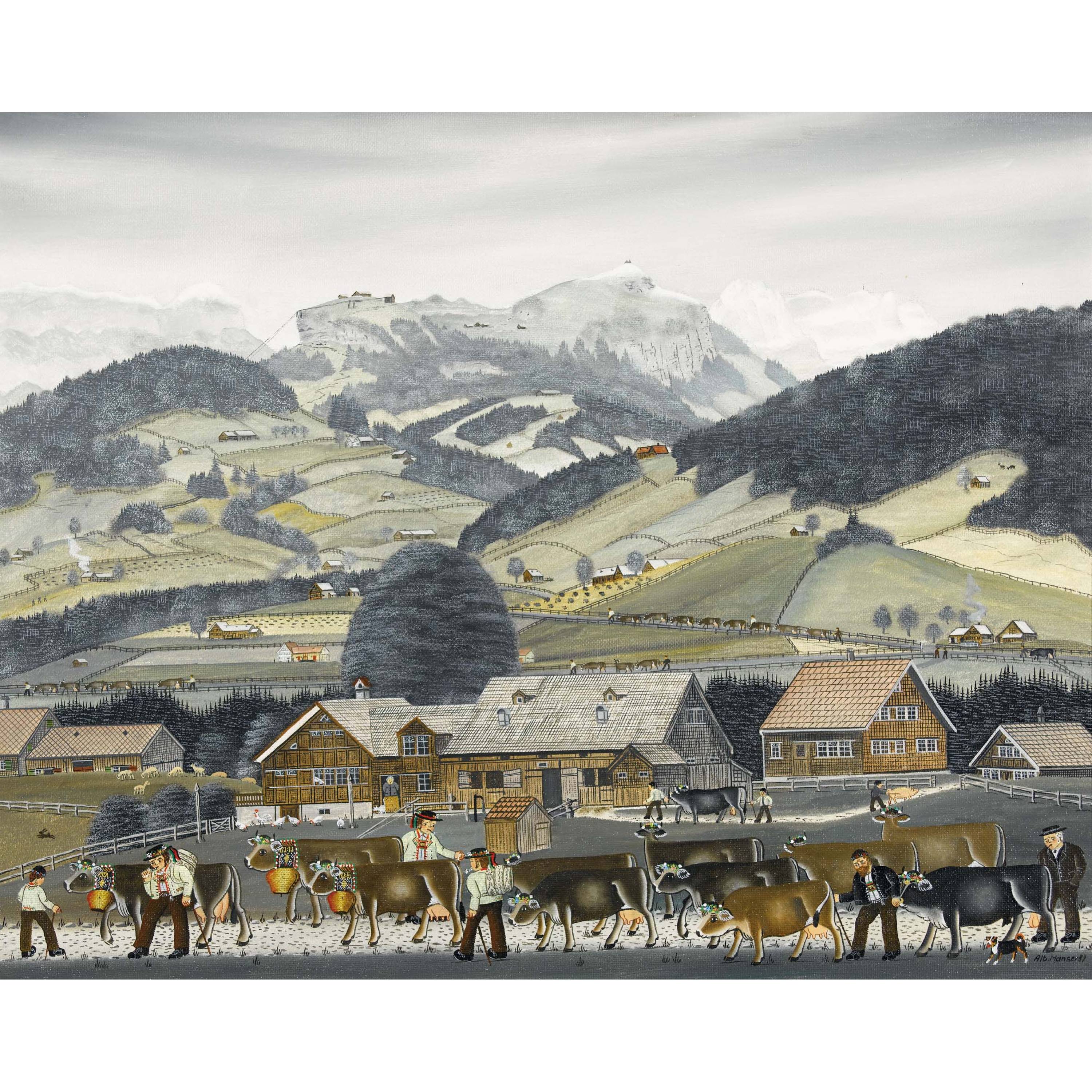
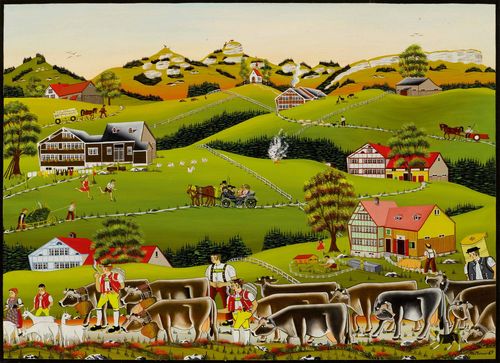
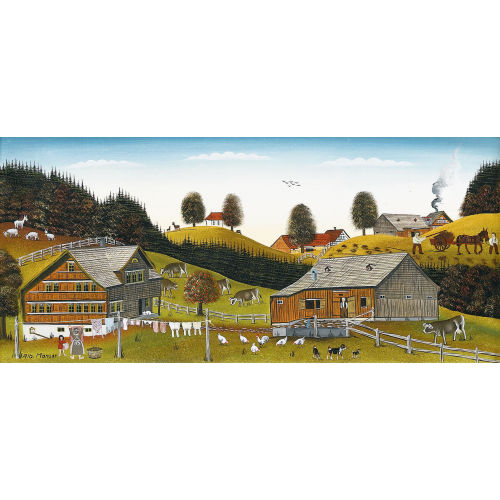
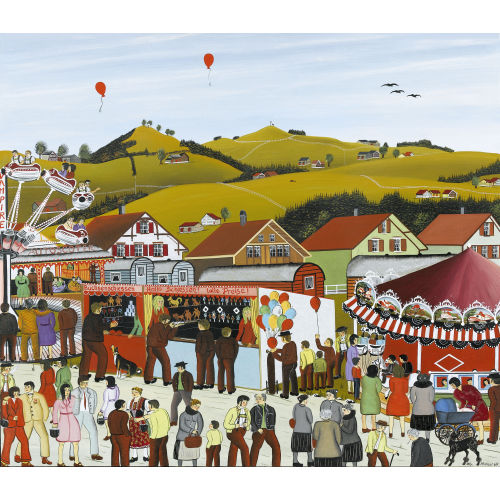
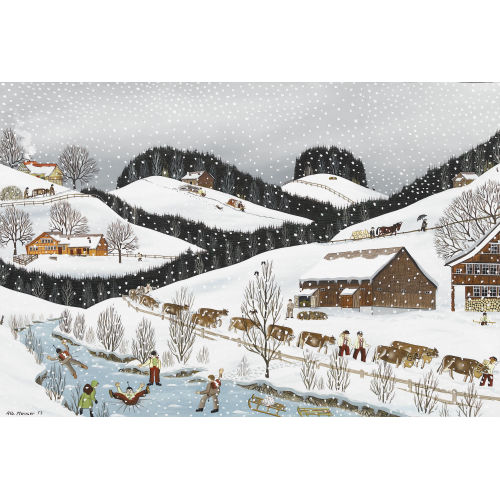
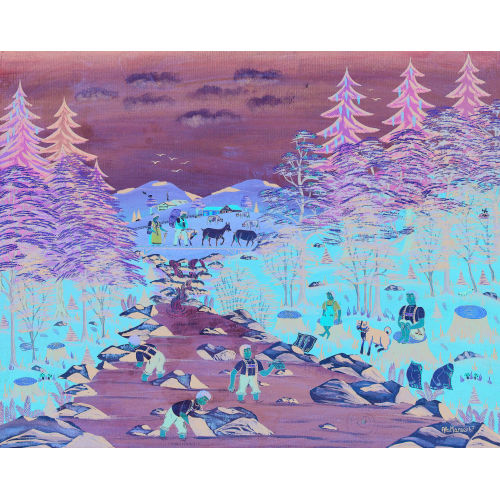
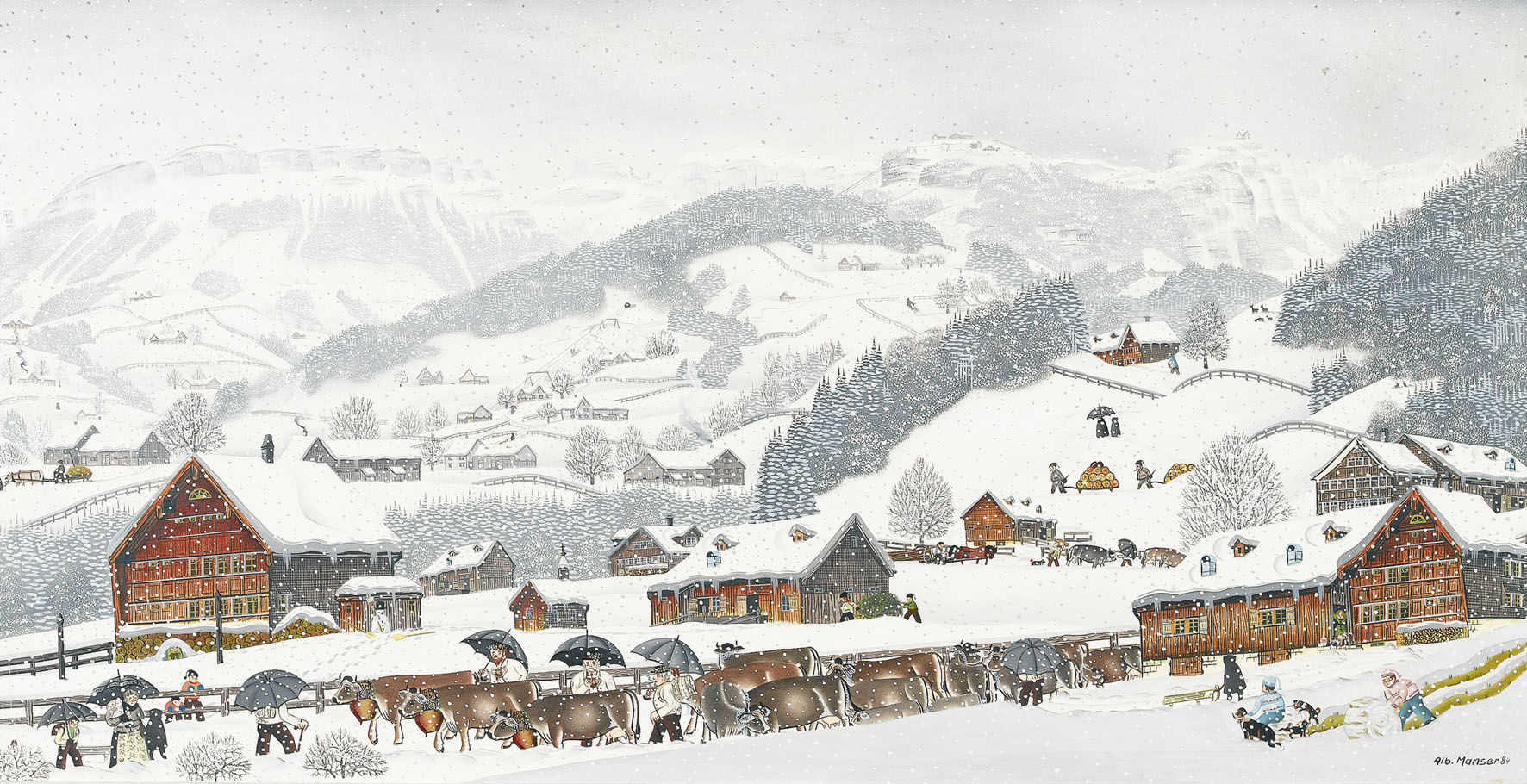
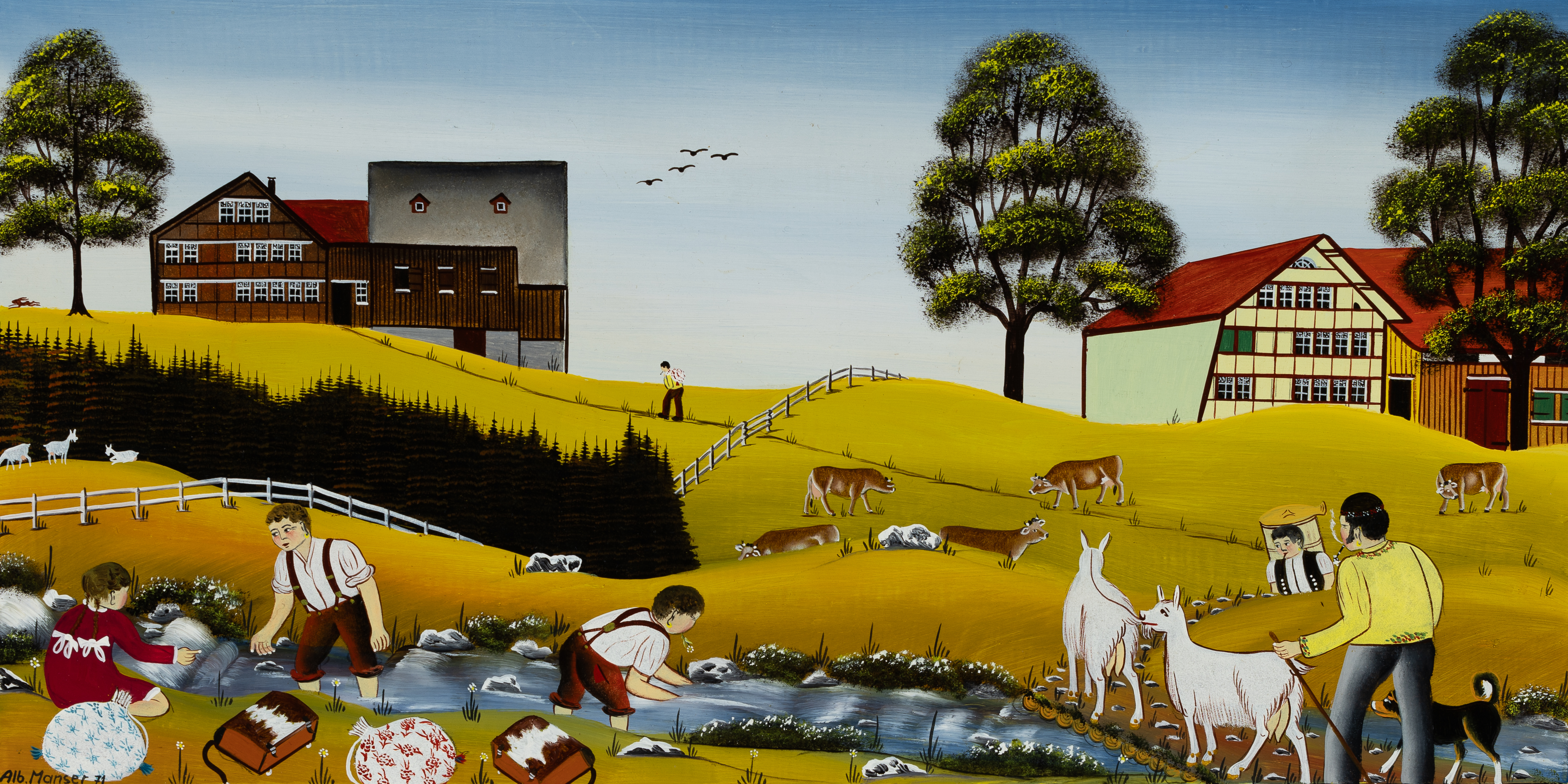
Albert Manser’s (1937–2011) landscapes unfold like narratives. Daily life, festivities and the passing of the seasons come together in them to form a portrait of the Appenzell region, shaped by memory and observation. In this painting rooted in particular places, human activities give the landscape its rhythm and warmth.
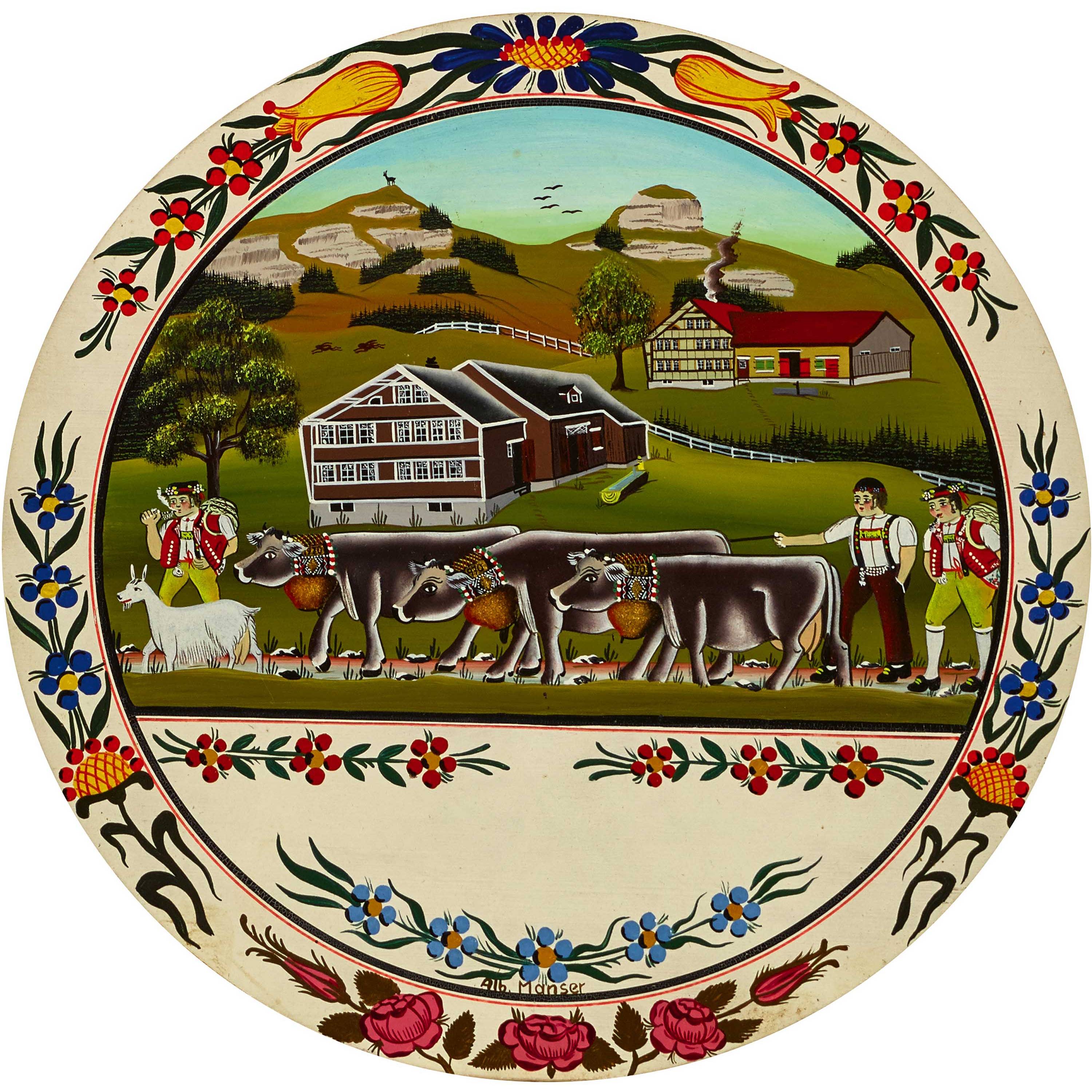
The son of a farming family, Manser grew up on the Hirschberg near Appenzell. He initially trained as a pastry and confectionery chef. Decorating Chlausebickli, traditional gingerbread biscuits, contributed to his development towards Appenzell peasant painting.
In 1967, he decided to devote himself entirely to his work as a painter.
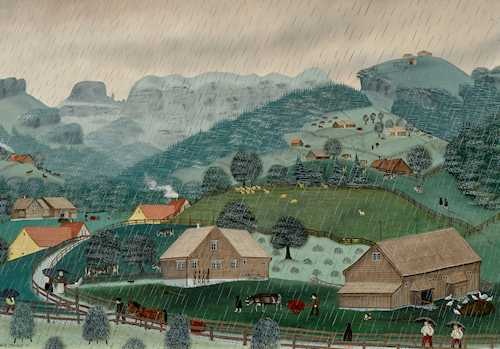
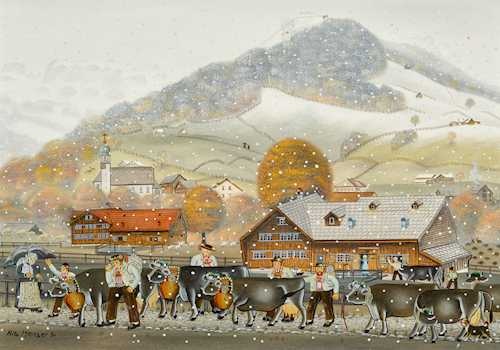
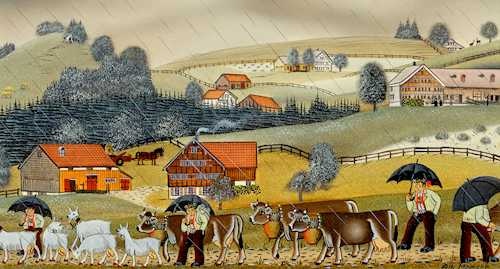
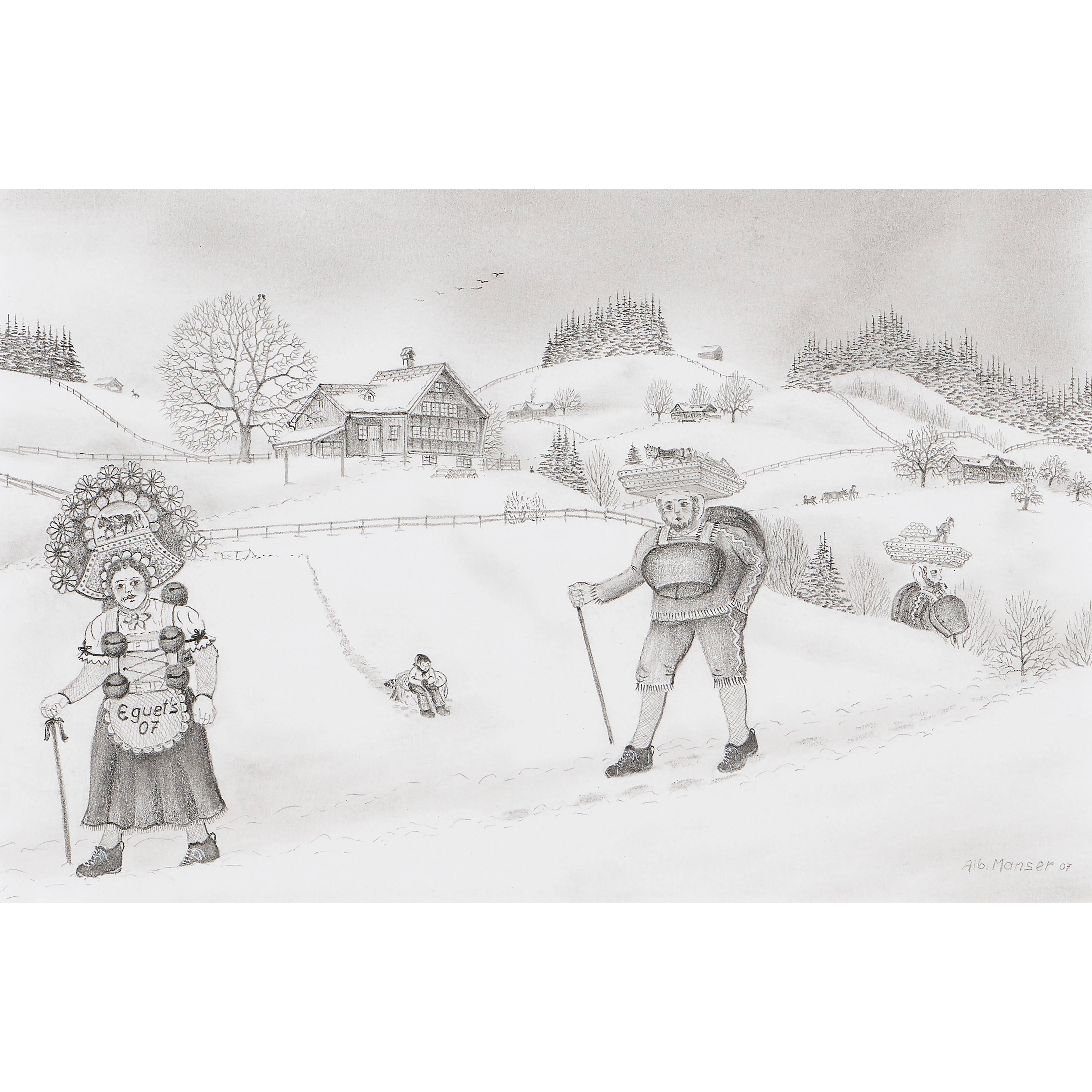
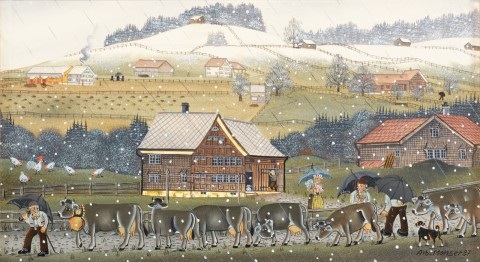
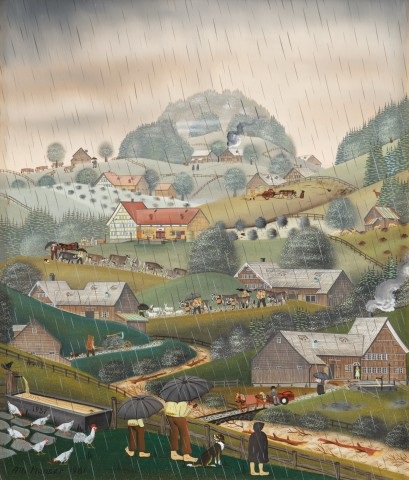
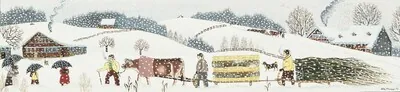
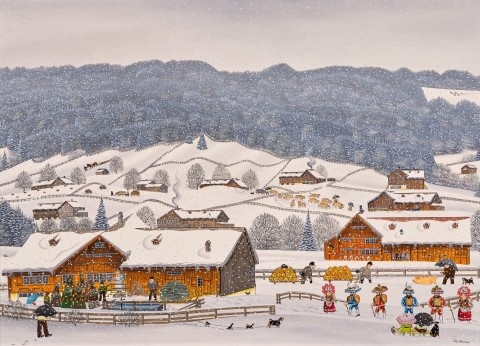
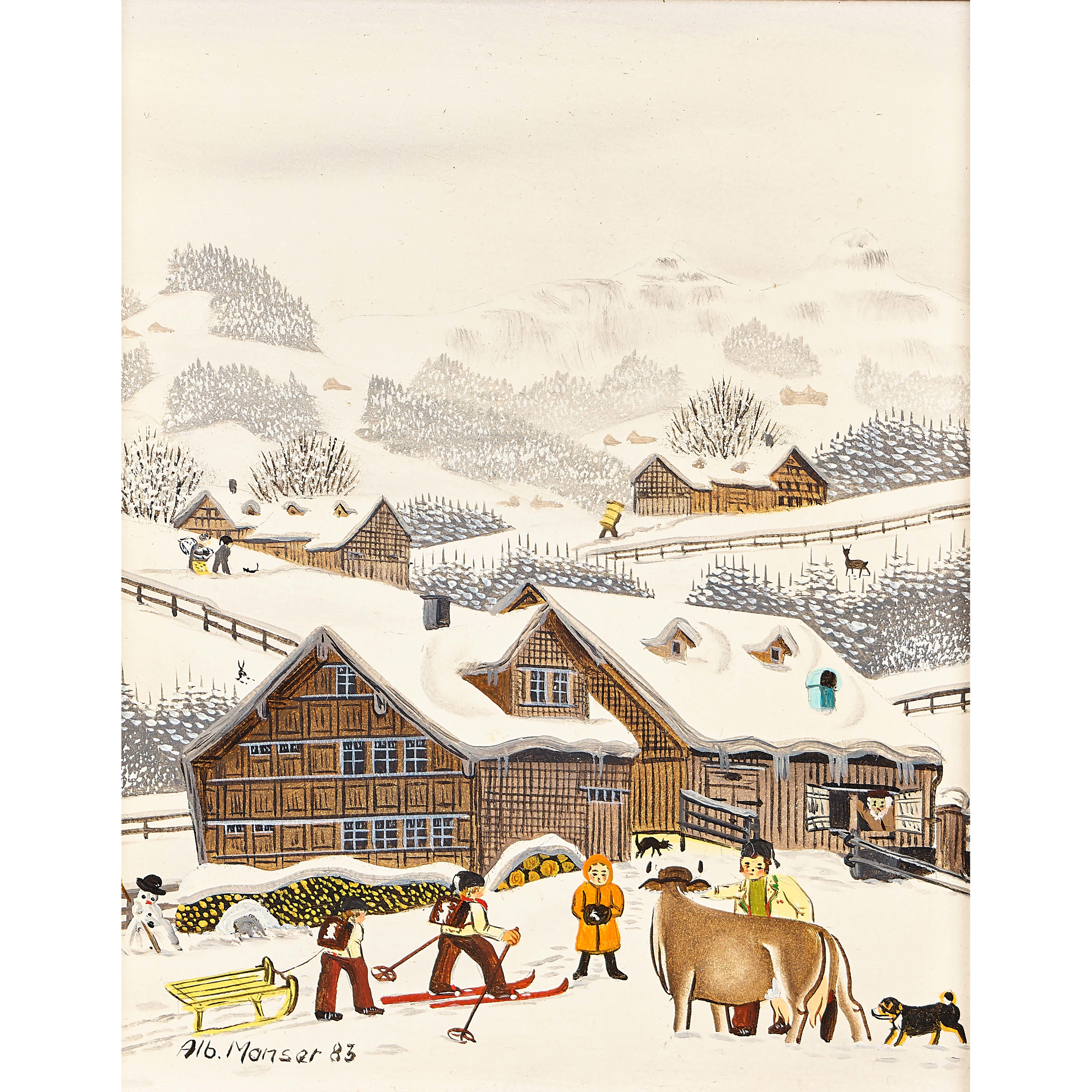
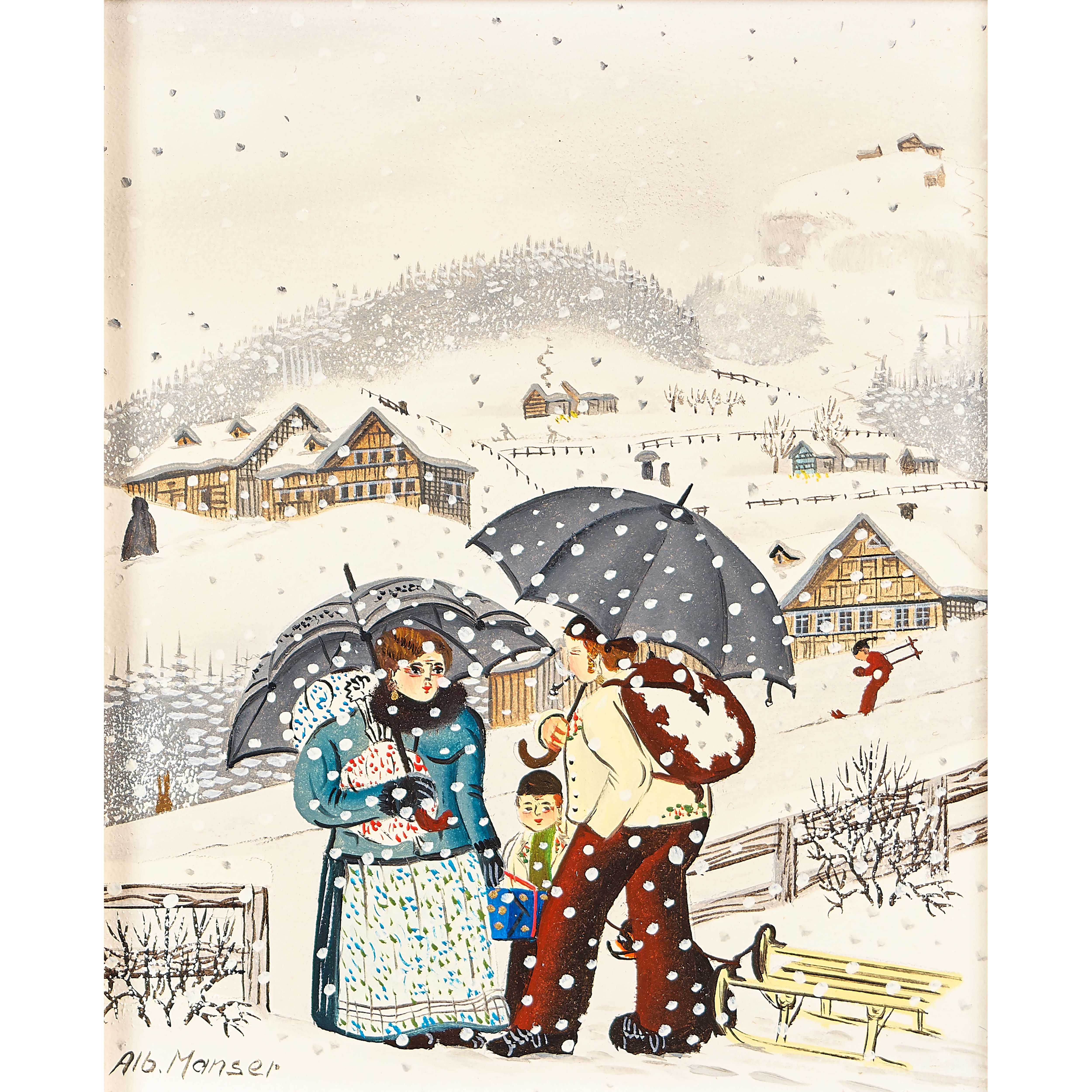
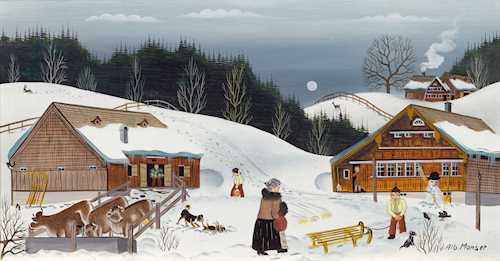
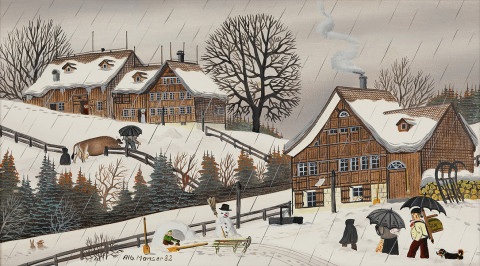
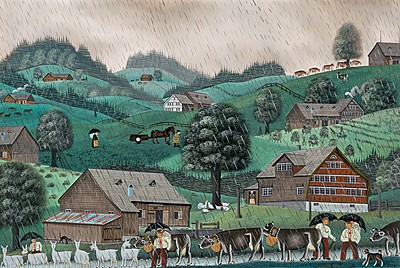
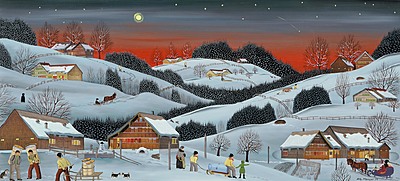
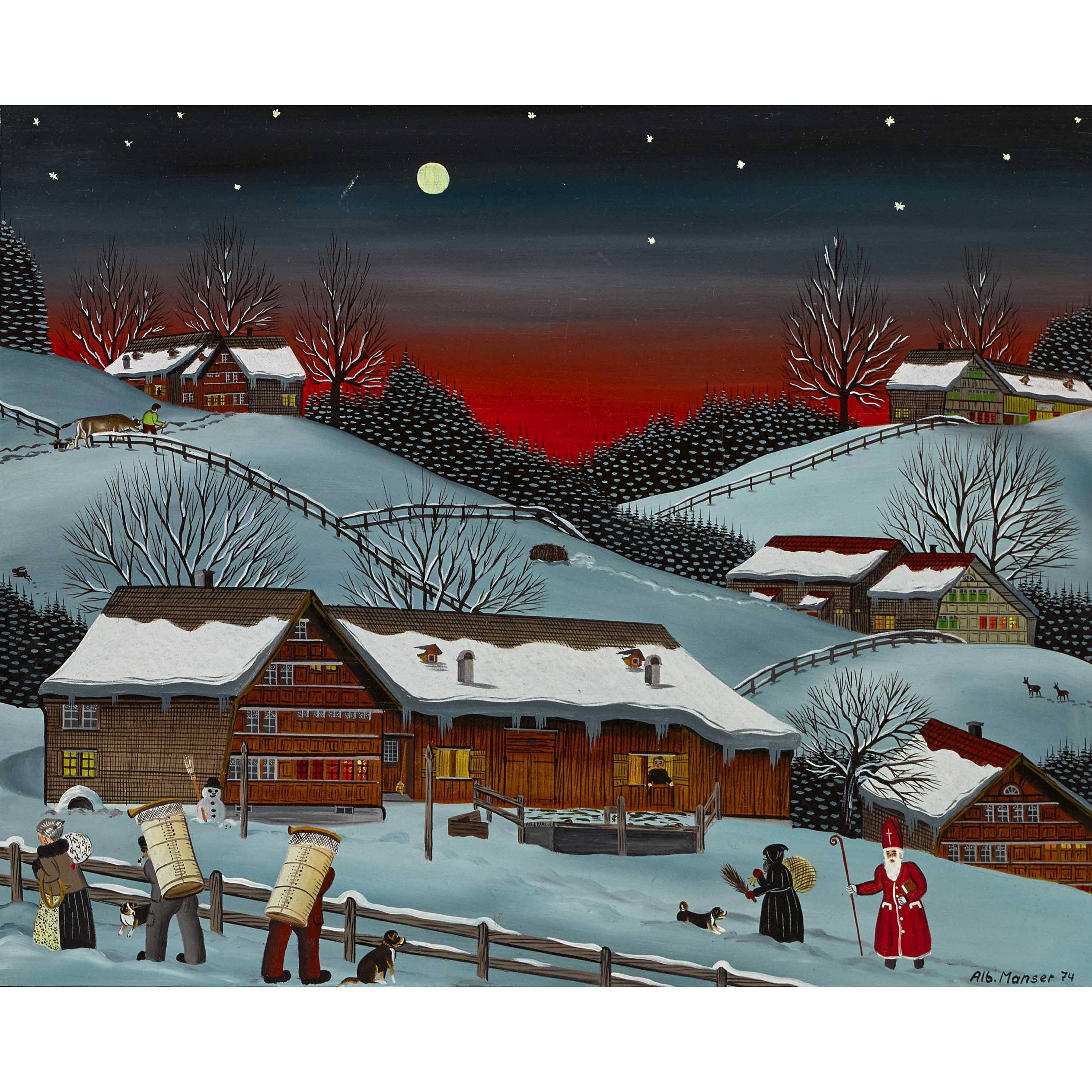
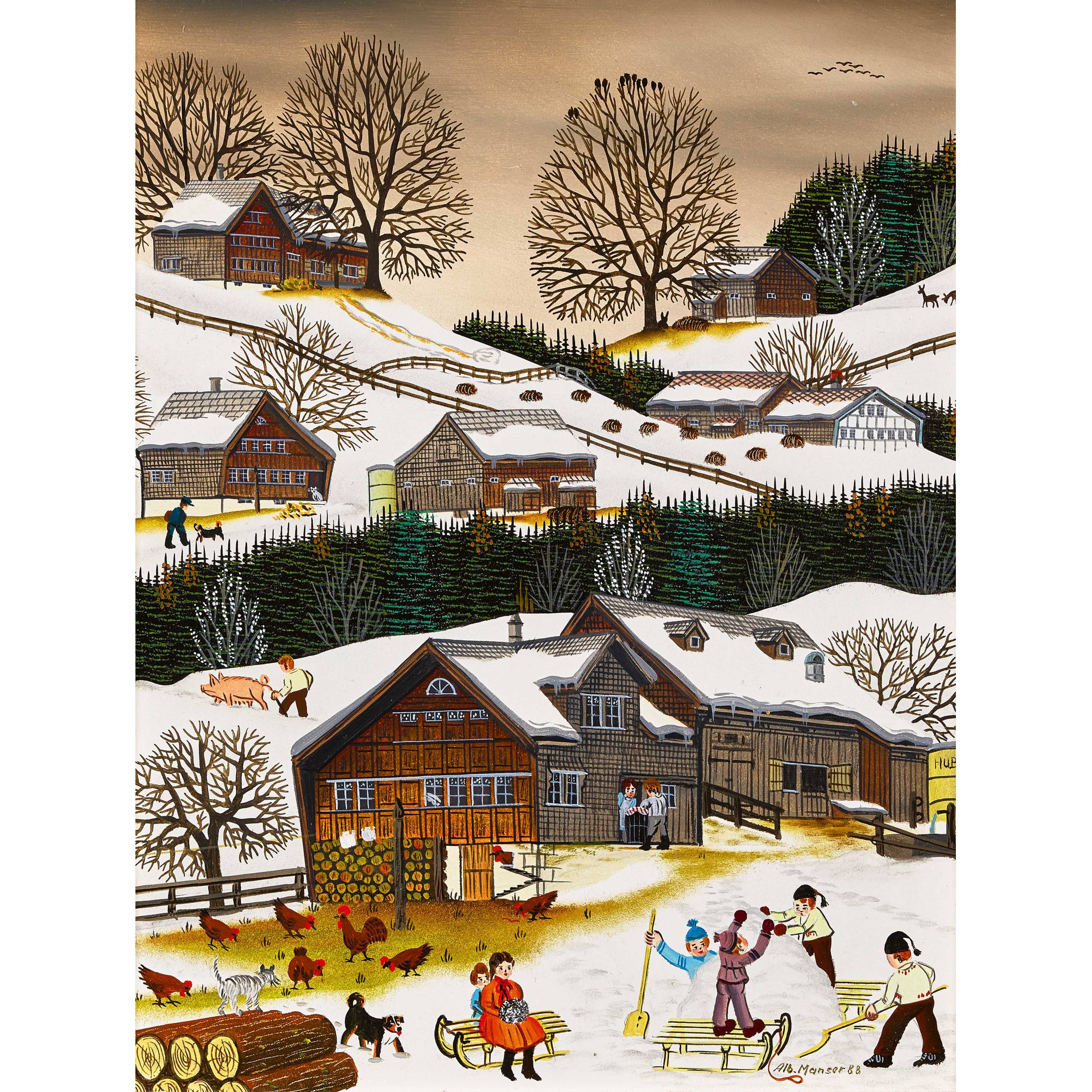
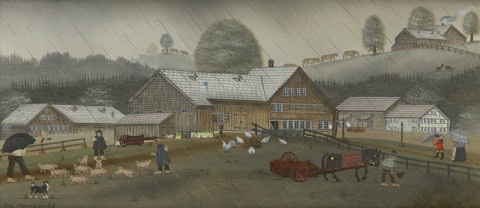
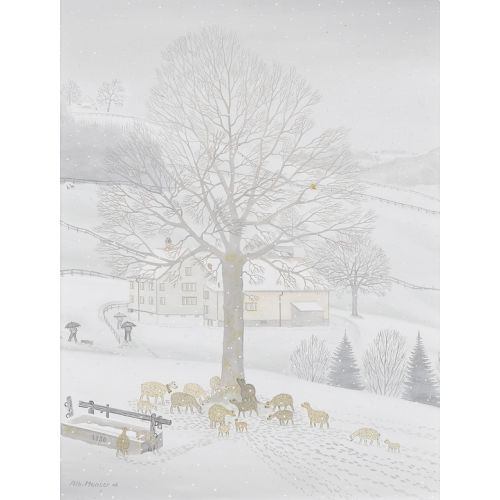
His oeuvre embraces the countryside in the diversity of its conditions. Rain, snow, fog and storms occupy an important place in his paintings. These atmospheric conditions transform familiar scenes while preserving a welcoming tone.
His attentiveness to changes in the weather is one of the distinctive features of his artistic world.
His illustrated books Albertli and Barbara, translated into several languages, brought his images to a wider audience. The first evokes the story of a child from the Appenzell countryside. Its visual narrative conveys a world of gestures, relationships and everyday experiences through the eyes of childhood.
Manser’s attachment to his region was accompanied by a sensitivity to changes in the landscape. Depicting an earlier state of these places also enabled him to preserve the memory of what is disappearing. In 2010, he received the Innerrhoden cultural prize, which had been intended for the following year and was awarded early because of his health.
Before his works, the eye can move among the small scenes and then return to the whole. This alternation between detail and landscape reveals the construction of the narrative: each activity finds its place in a shared world, where personal memory meets collective life.