Born : 1892Died : 1982Documented citizenships : Germany
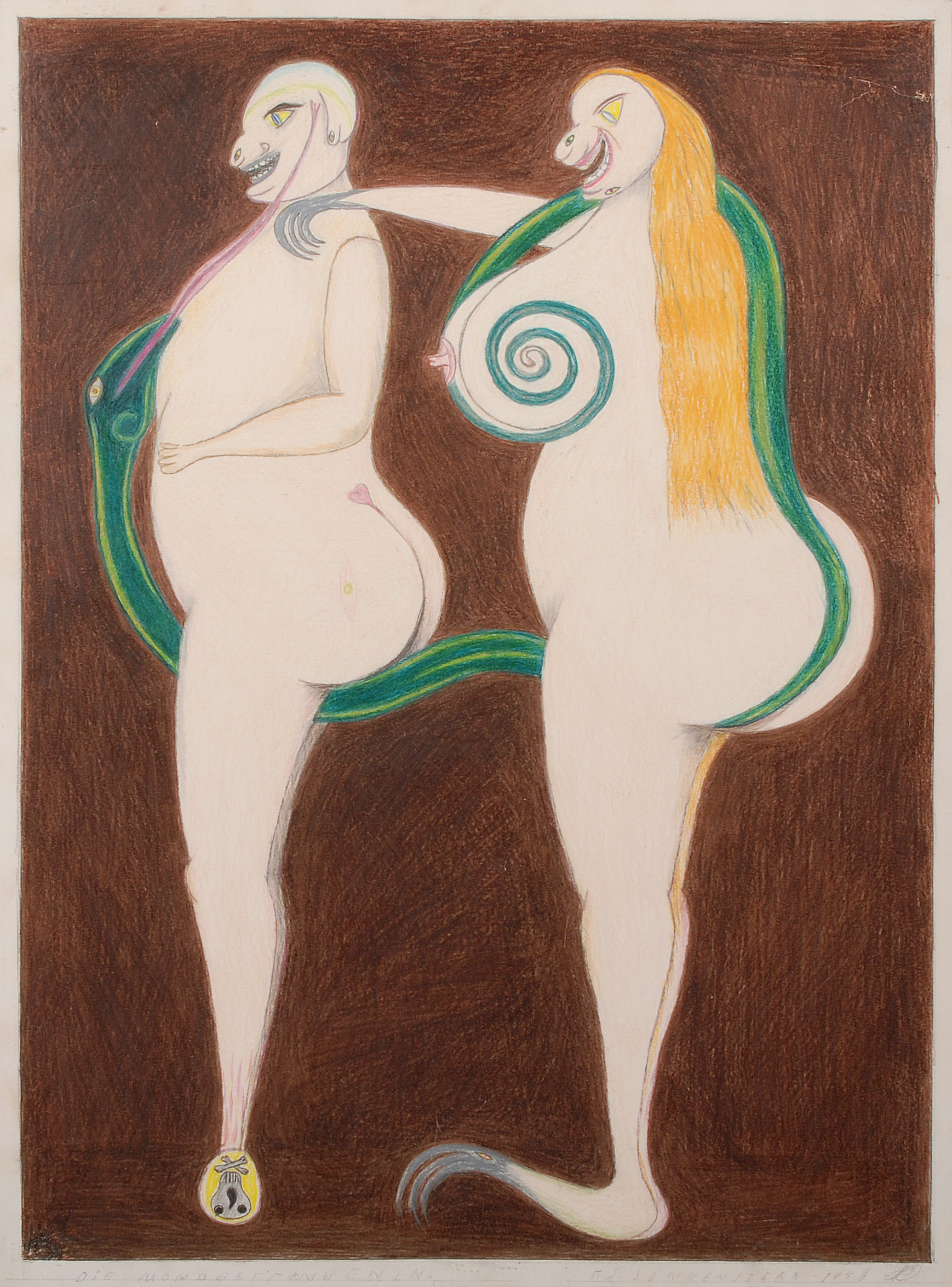
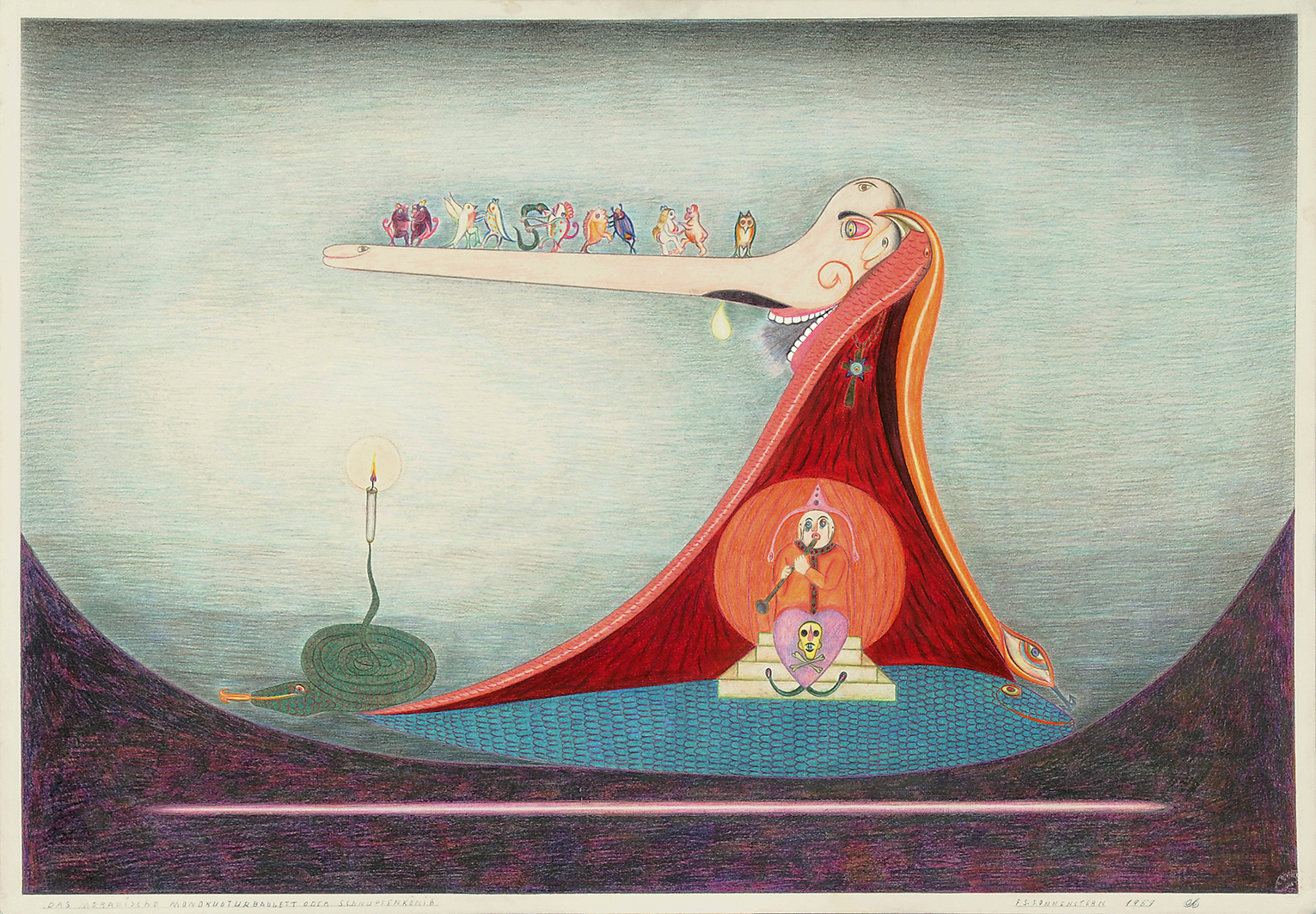
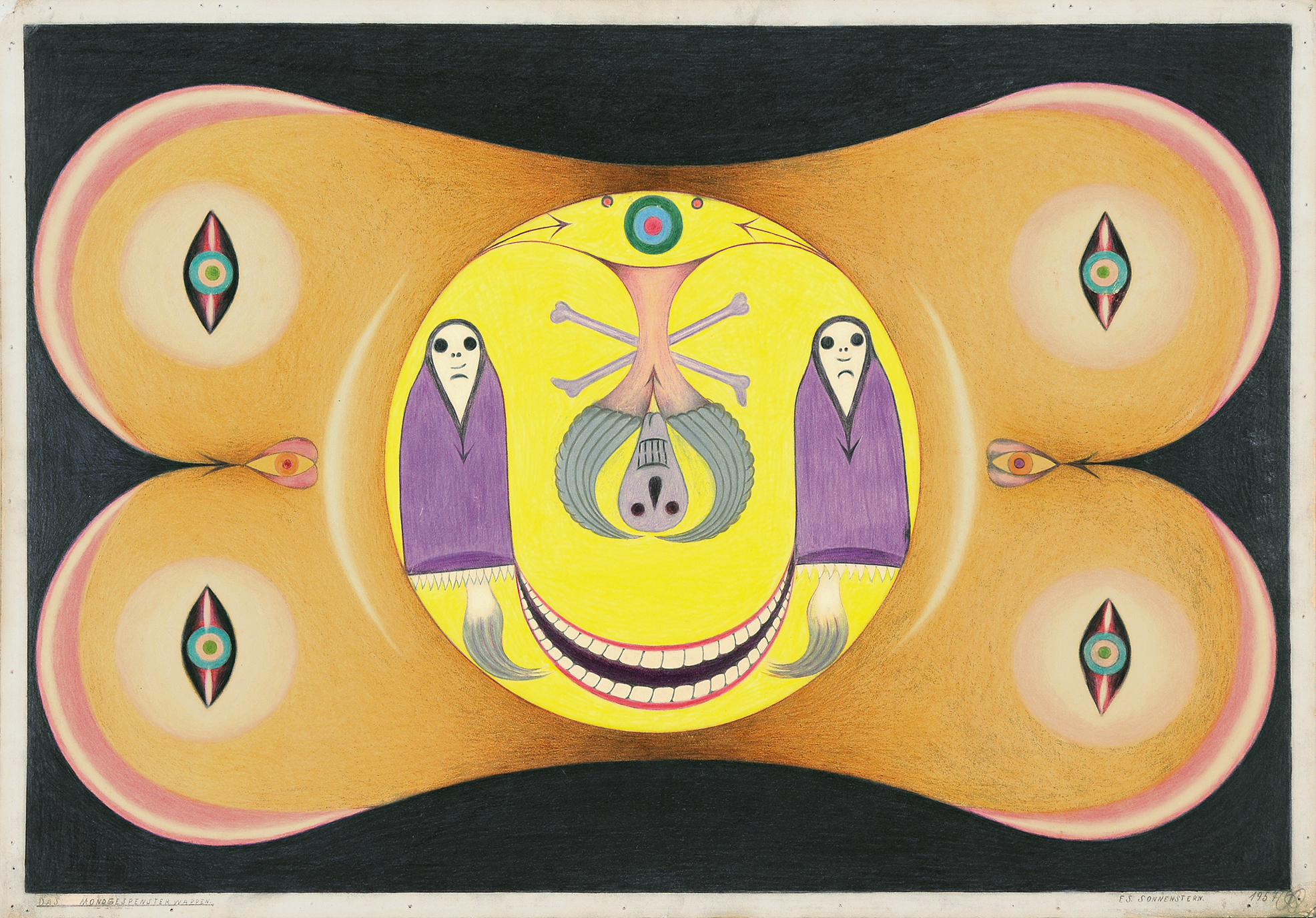
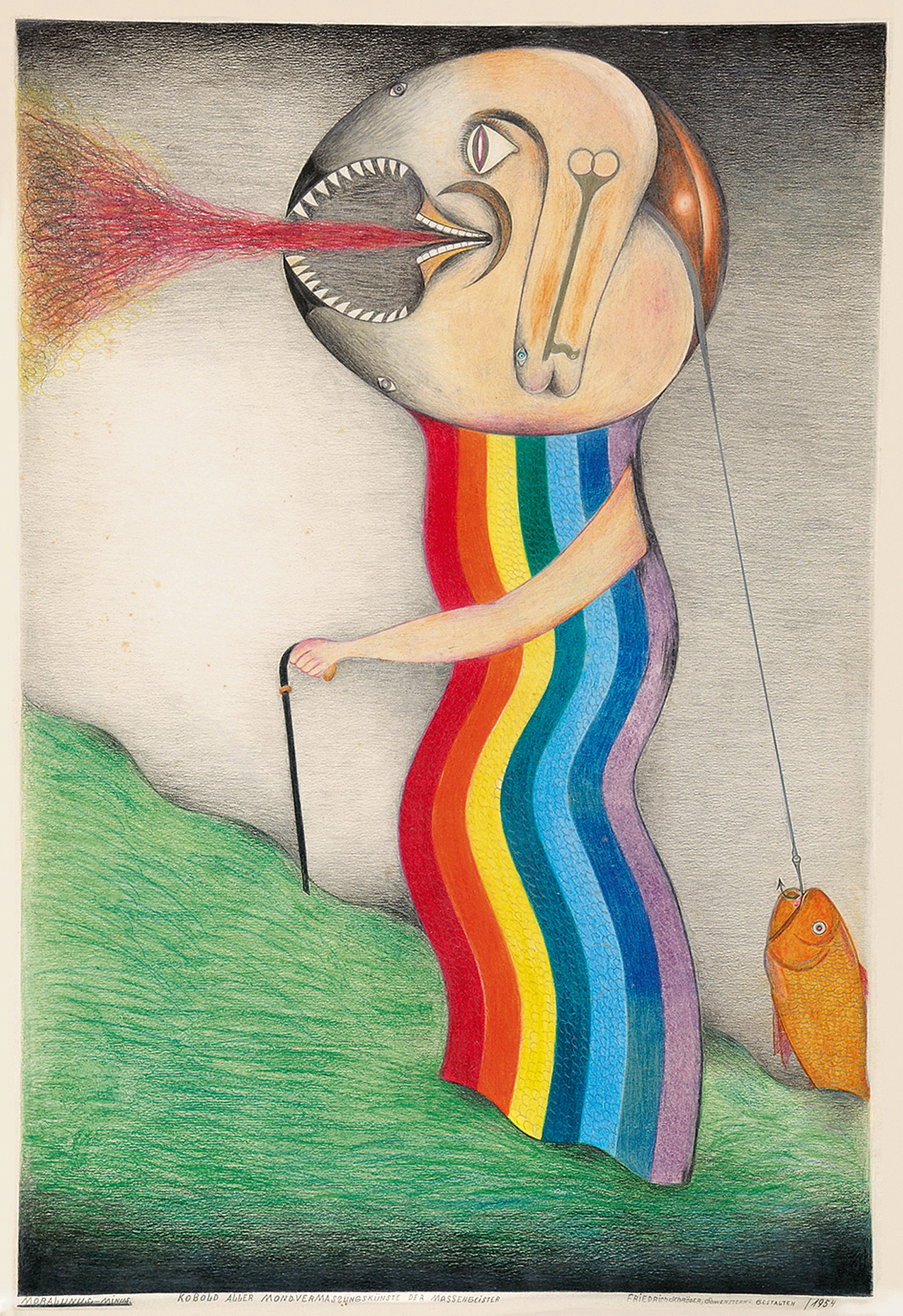
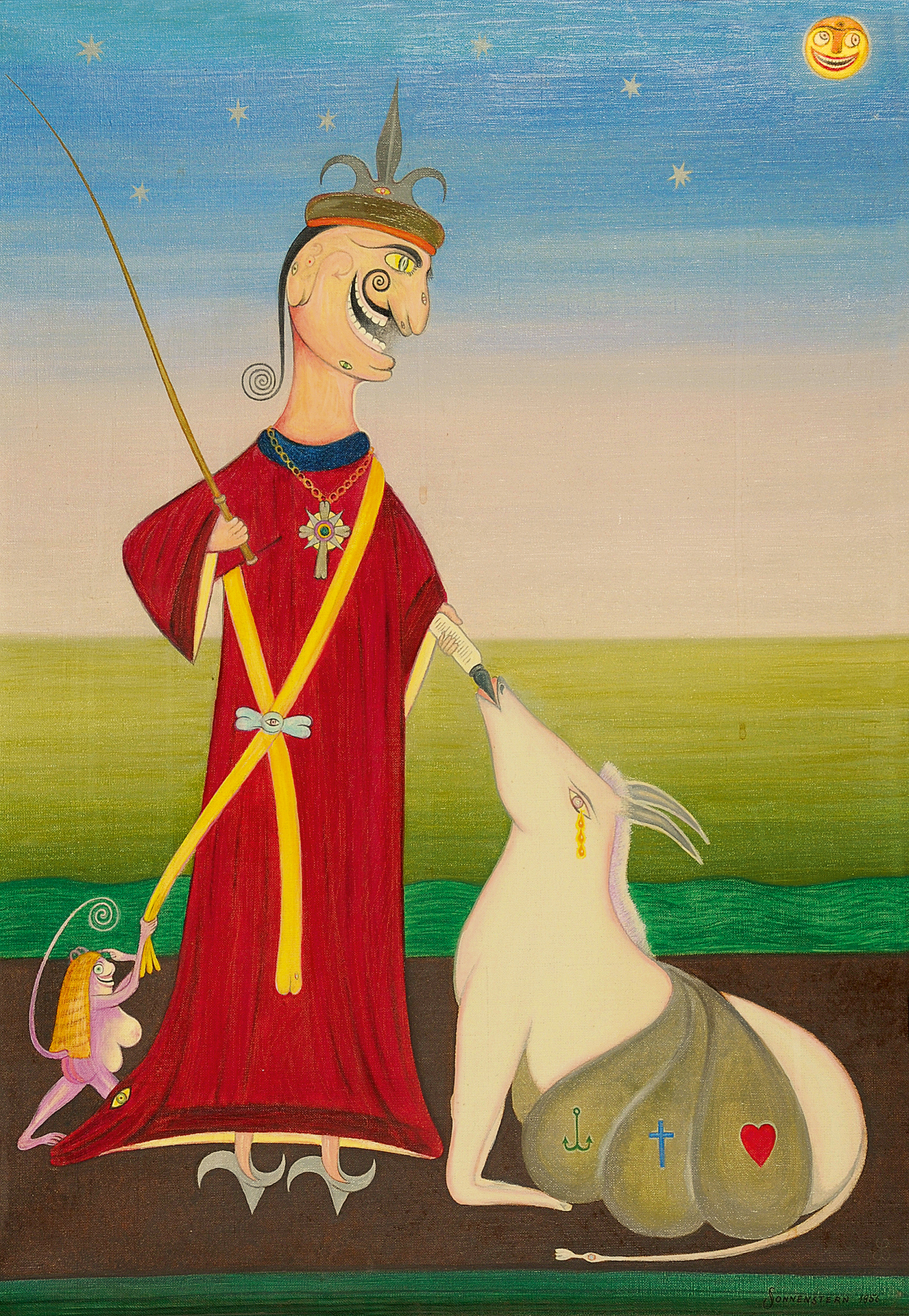
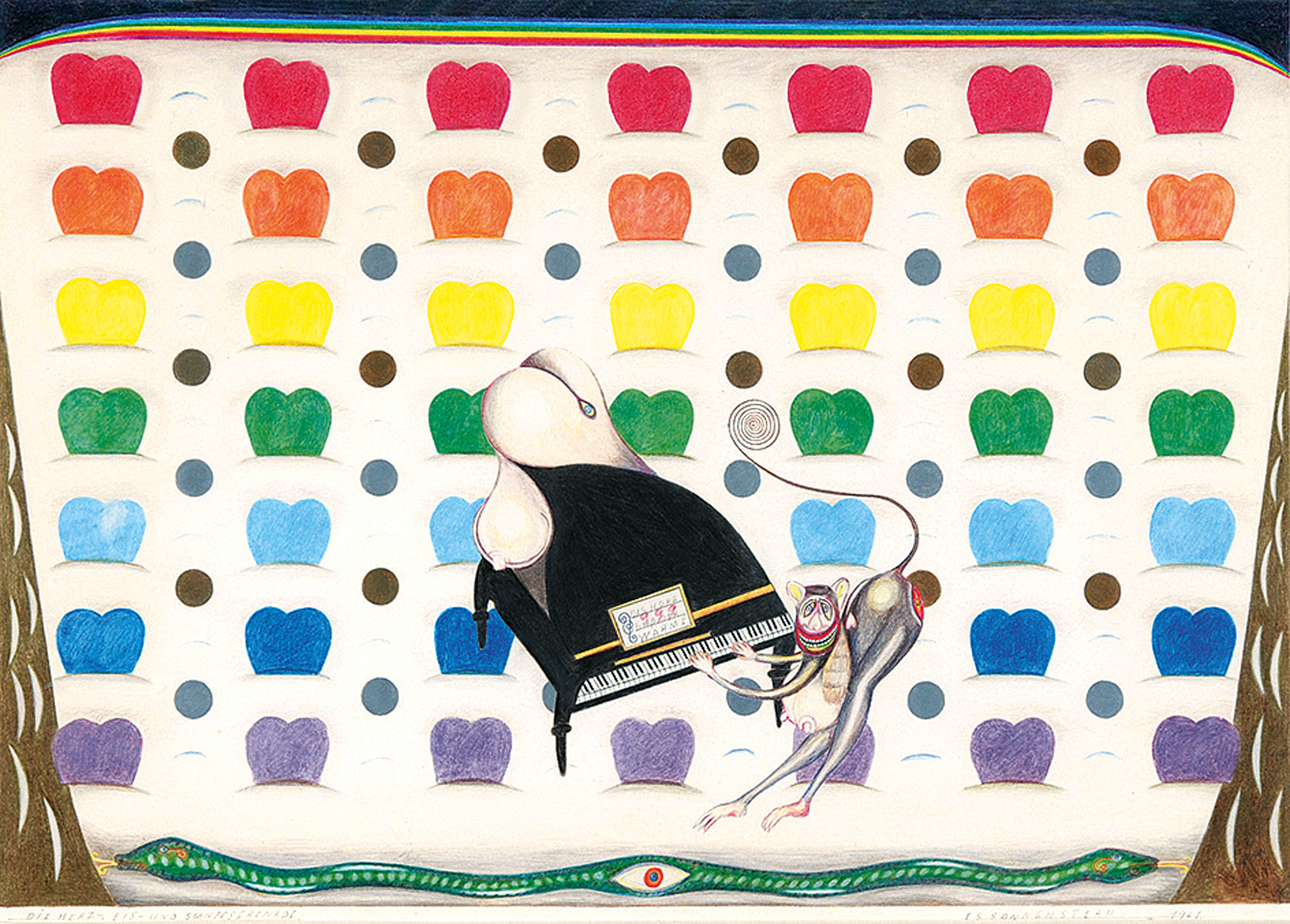
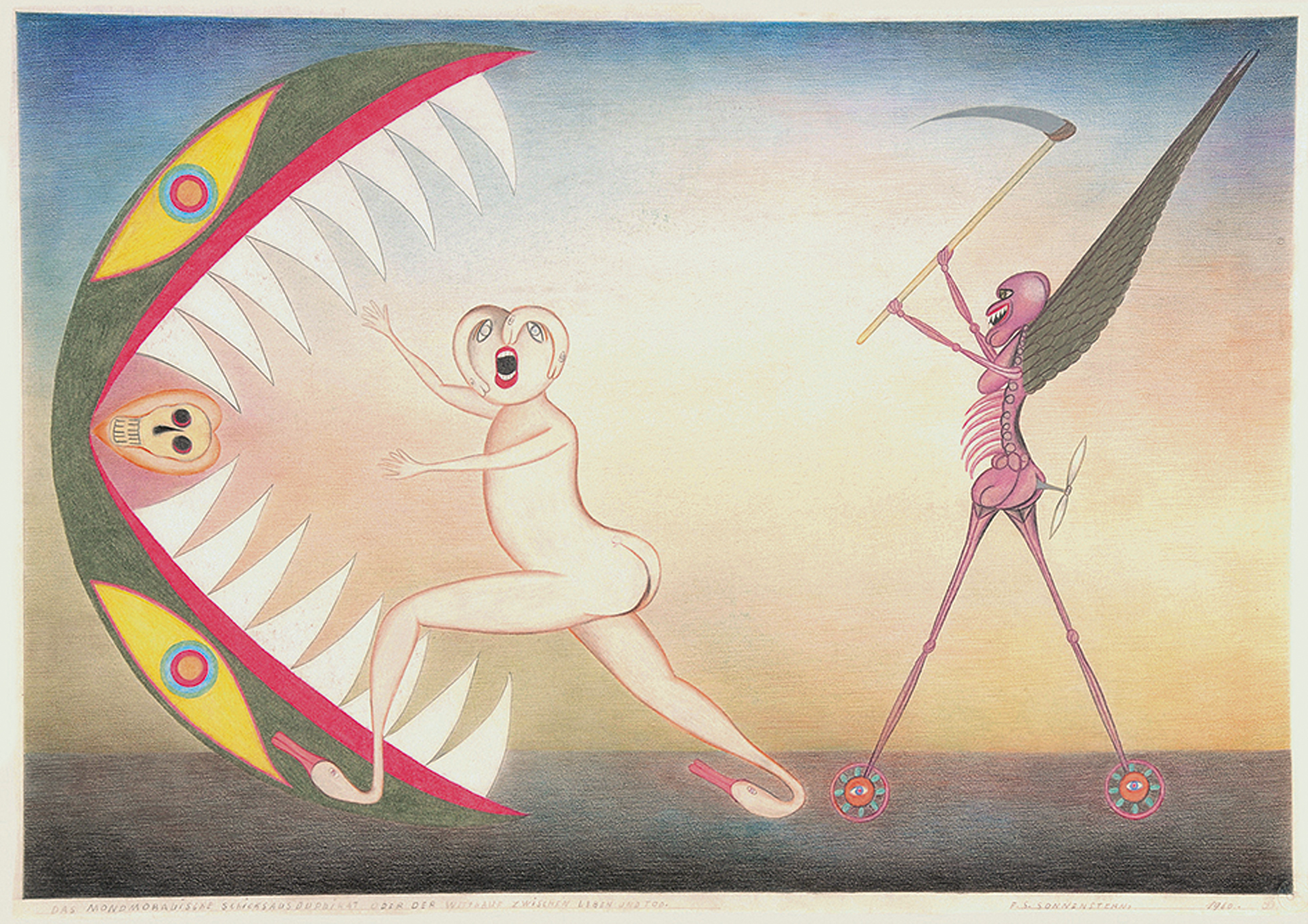
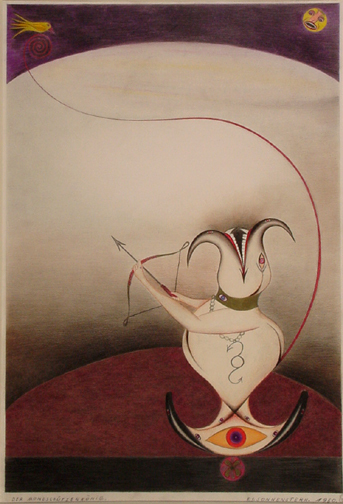
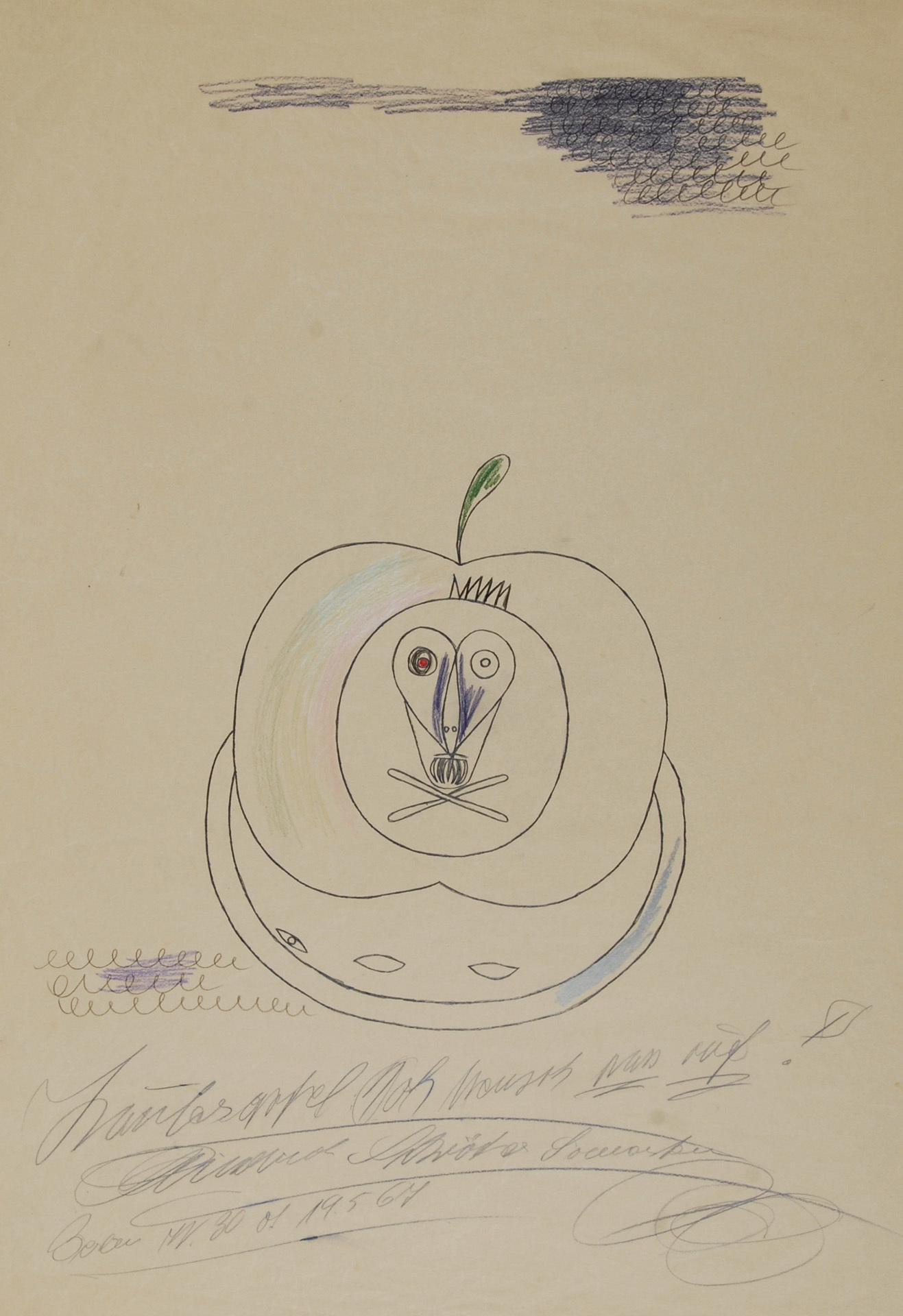
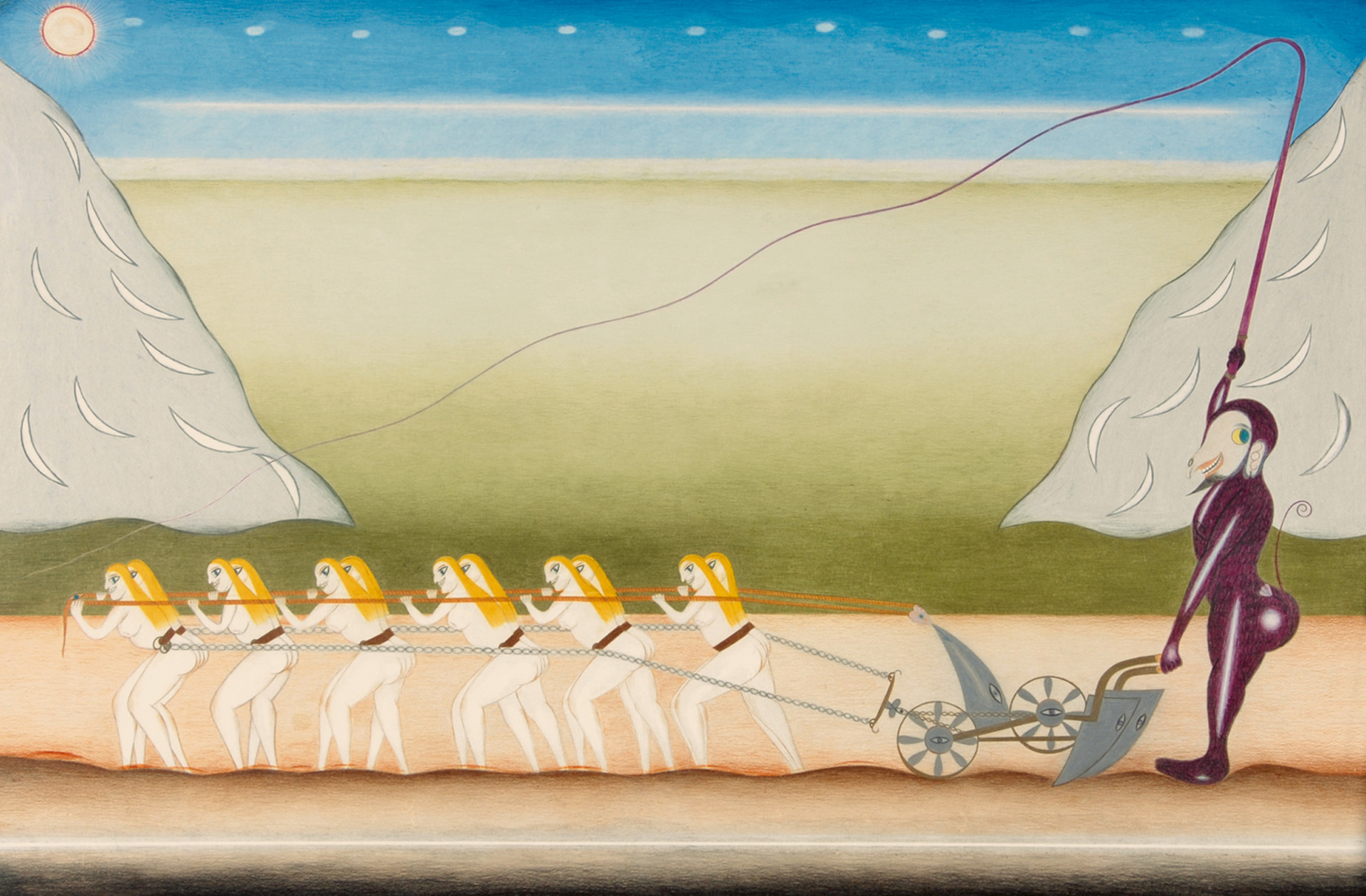
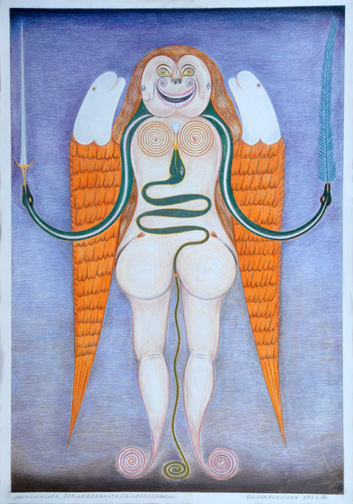
Friedrich Schröder-Sonnenstern (1892–1982) developed a fantastical imagery in which monstrous female figures, male characters, demons, skeletons and extravagant creatures appear side by side. Social parody and the blasphemous subversion of religious symbols are among the features identified in his work.
His youth was marked by several stays in reformatories and psychiatric confinement in 1912; conscripted in 1915 and subsequently declared unfit for service, he was interned from 1916 to 1919 in institutions in Tilsit and Tapiau. Settling in Berlin in October 1919, he presented himself as a naturopath, magnetist and astrologer, first under the name Gustav Gnass and later as Dr Eliot Gnass von Sonnenstern. There he founded a religious movement under the name “Eliot the Sun King” and established, with the clairvoyant Martha Möller, whom he had met in 1924, an institute devoted to the cultivation of body, mind and soul. During the Second World War, he worked in an arms depot, was imprisoned in an internment camp for insulting the National Socialist movement, and then escaped in 1942 to join Martha Möller in Berlin.
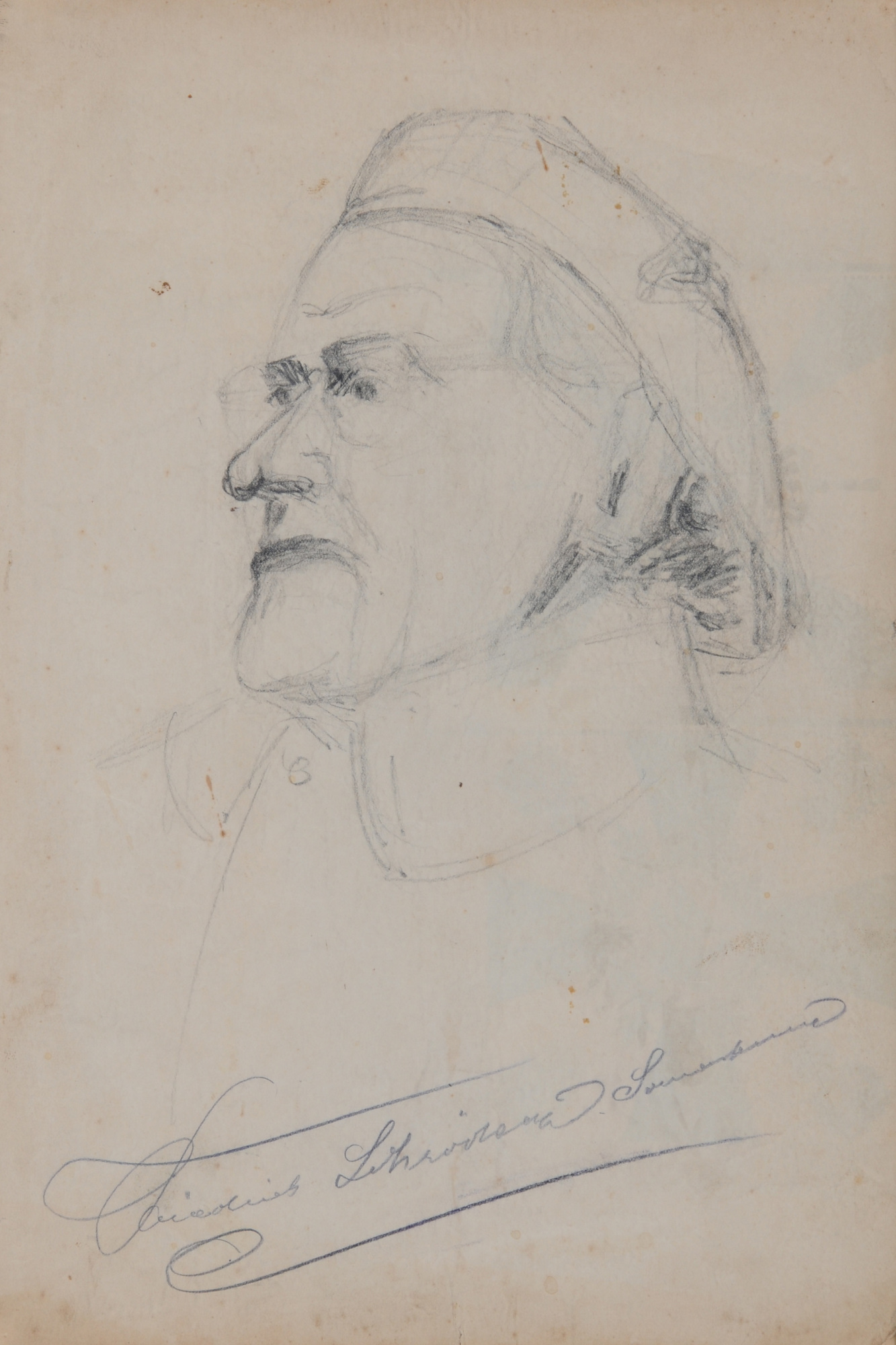
From 1948 to 1952, he made small coloured drawings to accompany his texts: stories, poems, songs and aphorisms. He began by drawing in graphite, before working in coloured pencil on cardboard. Populated by singular figures and creatures, his compositions combine the fantastical with a dimension of social parody. According to the Outsider Art Fair source, religious symbols are frequently used in them with an explicitly blasphemous intent.
In 1950, the painter Juro Kubicek took an interest in his drawings, and the gallerist Rudolf Springer later encouraged him to produce larger formats. Springer Gallery began selling his works in 1955. In 1959, his works were shown in Paris in the Art brut exhibition associated with Jean Dubuffet, and then at Galerie Daniel Cordier in the Exposition inteRnatiOnale du Surréalisme. His exhibition history also includes the Mostra Internazionale del Surrealismo in Milan in 1961 and a presentation at the Städtische Kunsthalle in Düsseldorf in 1967. Two solo retrospectives are recorded in 1973, at the Kestner-Gesellschaft in Hanover and the Haus am Waldsee in Berlin.
From 1961 onwards, commissions increased and he hired female assistants; according to the biographical source, they eventually executed entire paintings based on his instructions, which he signed. Readmitted to a psychiatric hospital in 1974, he painted there, according to the same source, his last work, entitled The Eternal Feminine Draws Us Upward. Works are noted in the collections of the Milwaukee Art Museum, the Collection de l’Art Brut in Lausanne and the Halle Saint Pierre in Paris. Publications devoted to his work include Mondgeistfahrt – Moon ghost trip – L’esprit lunaire en croisière, published by Bruckmann in 1974, and the monograph by Eberhard Simons and Wolf-Dieter Enkelmann published by Hirmer Verlag in 1987.
This profile brings together identity references for Friedrich Schröder-Sonnenstern and paintings, drawings and works on paper documented in auction catalogues.
14 references are documented at Dobiaschofsky, Germann, Schuler. Each record links to its source; the amounts are not a general valuation of the artist’s work.
Works recorded at auction
Photograph : Dobiaschofsky · Enlarge image ↗
Dobiaschofsky · Lot 388
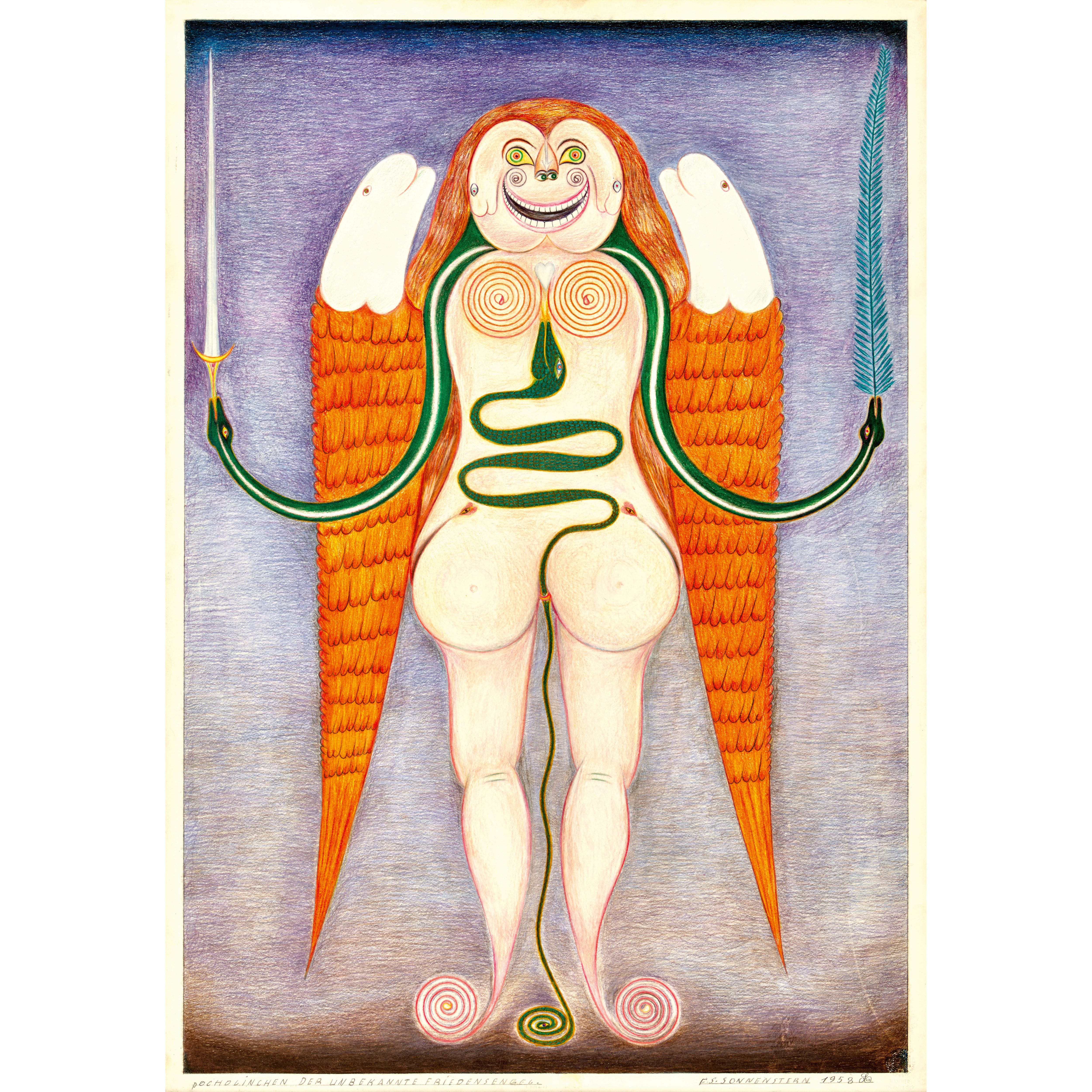
Docholinchen. The unknown angel of peace
Coloured chalk and pencil on painting board
Original catalogue wording
"Docholinchen. Der unbekannte Friedensengel". Farbkreide und Bleistift auf Mkt
SwissArtGallery documentary note based on the cited sources. Titles, media and qualifications are provided in the profile language; the original catalogue wording remains available in each record. Documentation updated : 2026-10-19