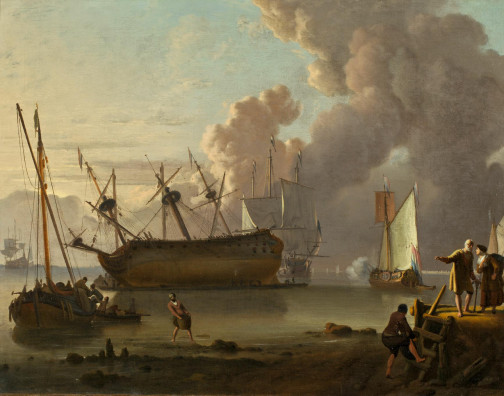
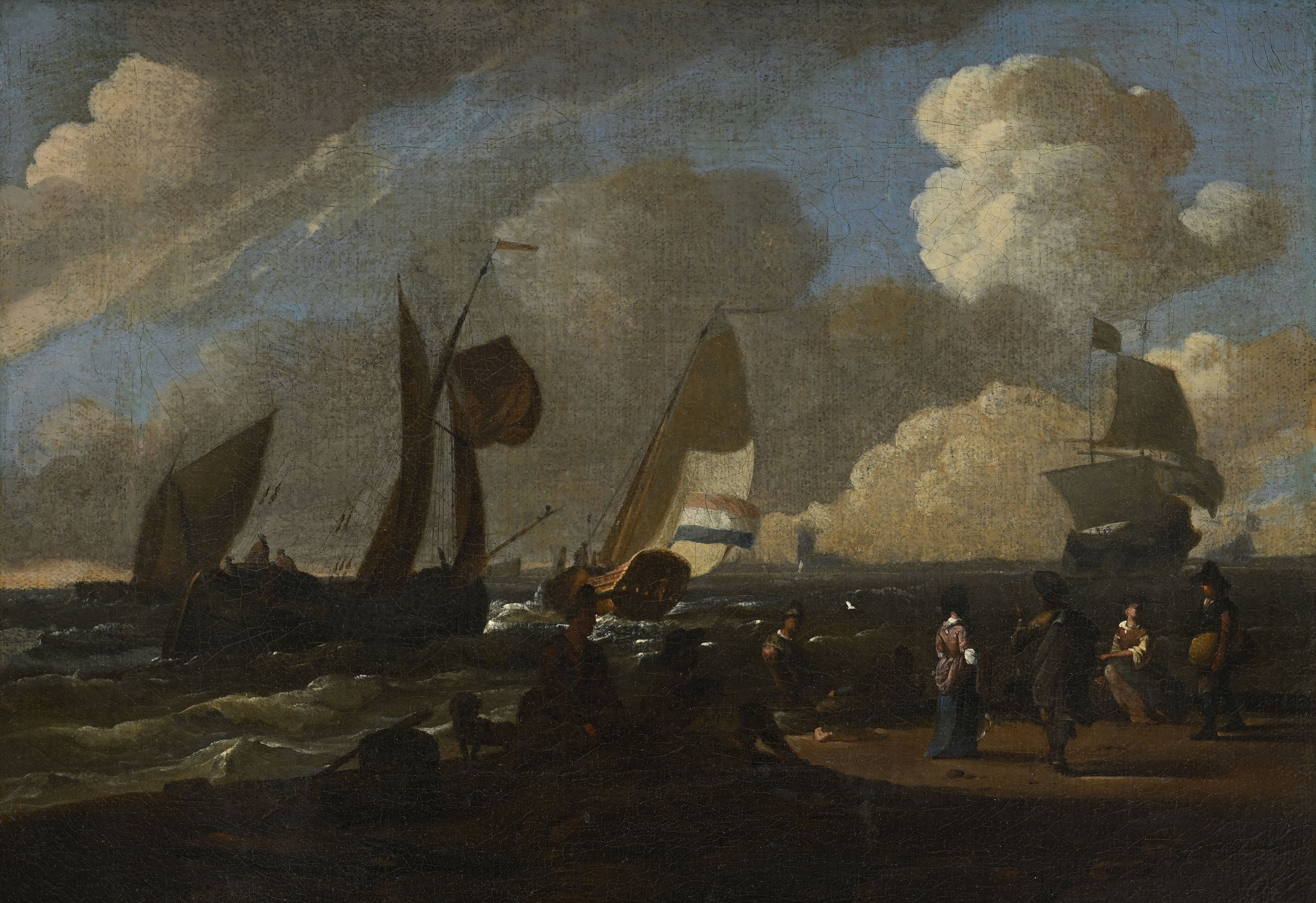
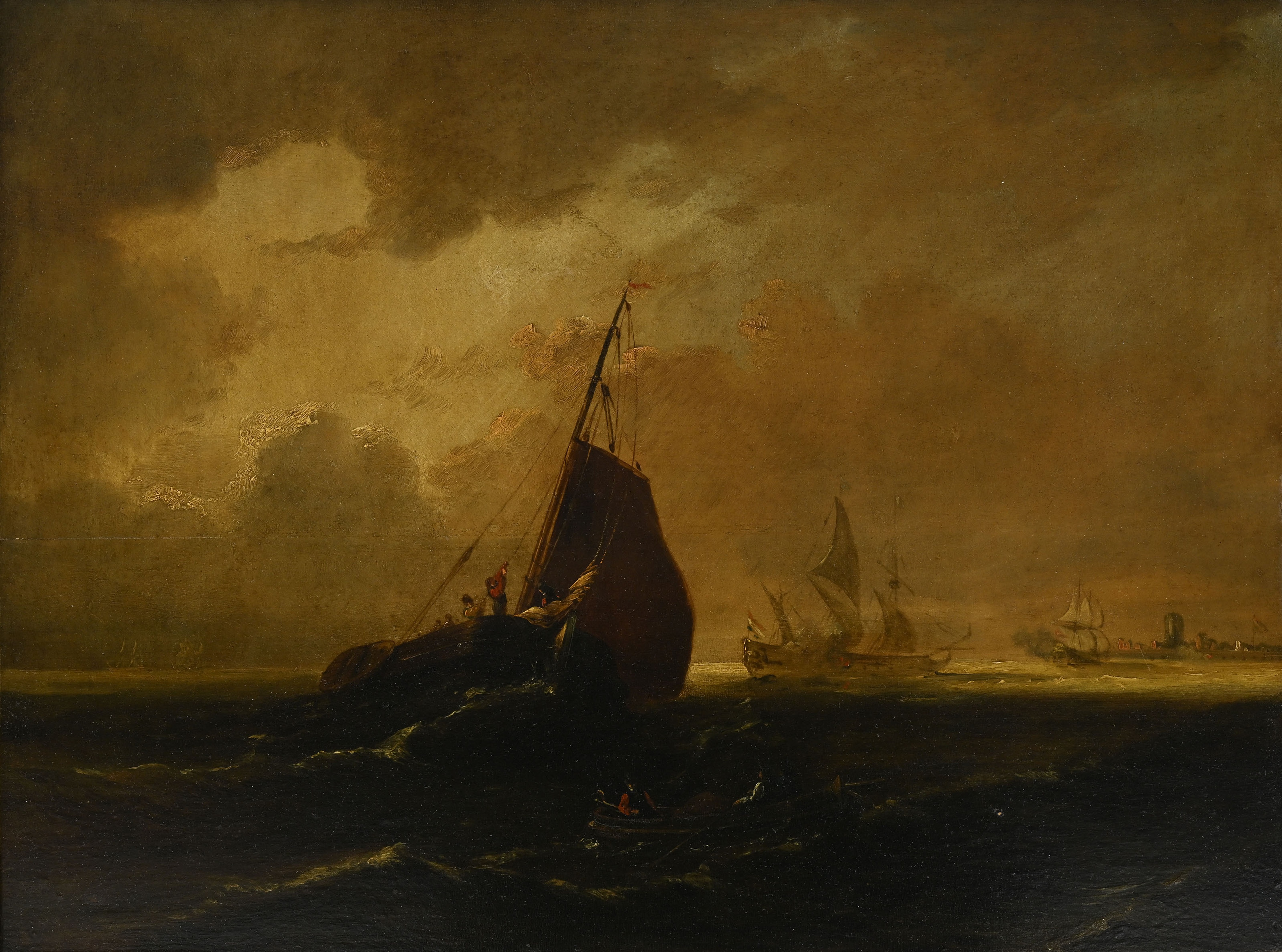
Ludolf Bakhuizen came from Emden and settled in Amsterdam around 1650, specialising in marine painting. Rough water, the movement of ships and changes in the sky occupy a central place in his pictures. He became one of the leading practitioners of the genre in the late seventeenth-century Netherlands.
In the London painting of an English vessel and a warship on a rough sea, taut sails and nearby cliffs make the dangers of navigation tangible. Other compositions describe varied maritime activities. Ships on Rough Seas, presented by the Maritime Museum Rotterdam, brings together merchant vessels, a warship and a fishing boat. Differences in the setting of the sails and in the ships’ manoeuvres give each vessel a distinct role within the space of the picture.
This profile brings together identity references for Ludolf Bakhuizen and paintings, drawings and works on paper documented in auction catalogues.
References include catalogue entries and available results; they do not all represent completed sales. Attributed works and special lots are excluded from the priced results.
SwissArtGallery documentary note based on the cited sources. Titles, media and qualifications are provided in the profile language; the original catalogue wording remains available in each record. Profile updated :
George Ricard-Cordingley (1873–1939), also known as Georges Ricard-Cordingley, was born in Lyon to a French father and an English mother. He trained in Lyon and at the Académie Julia…
Arcangelo Salvarani (1882–1953) was born in Quartirolo di Carpi and died in Modena. He worked mainly in watercolour, alongside mural decoration and teaching at the Fermo Corni instit…
Jac Martin-Ferrières (1893–1972), born Jacques-Auguste Martin, was the son of painter Henri Martin. Abandoning scientific studies, he developed an initially pointillist practice befo…