Born : 1920Died : 2014Documented citizenships : United Kingdom
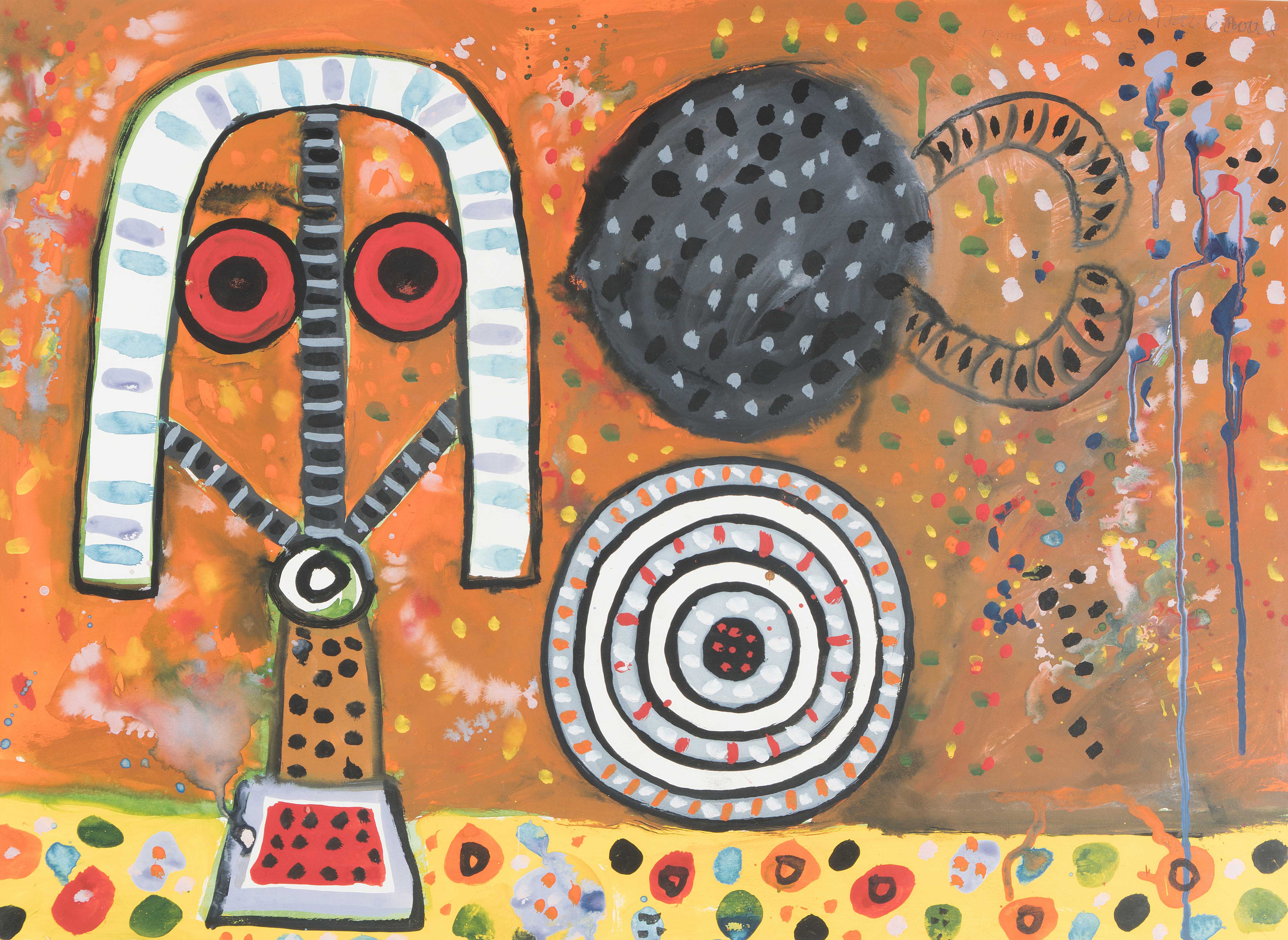
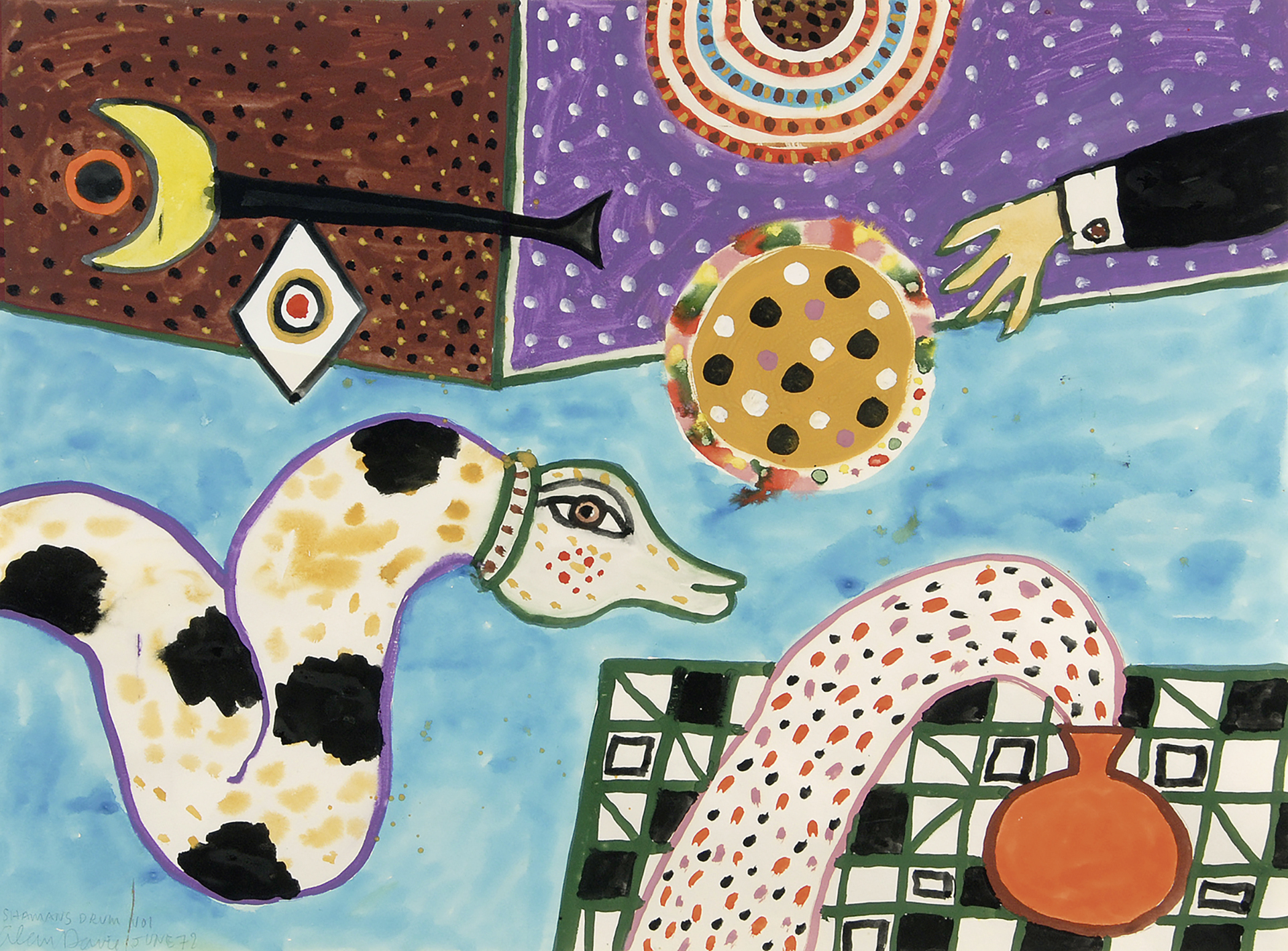
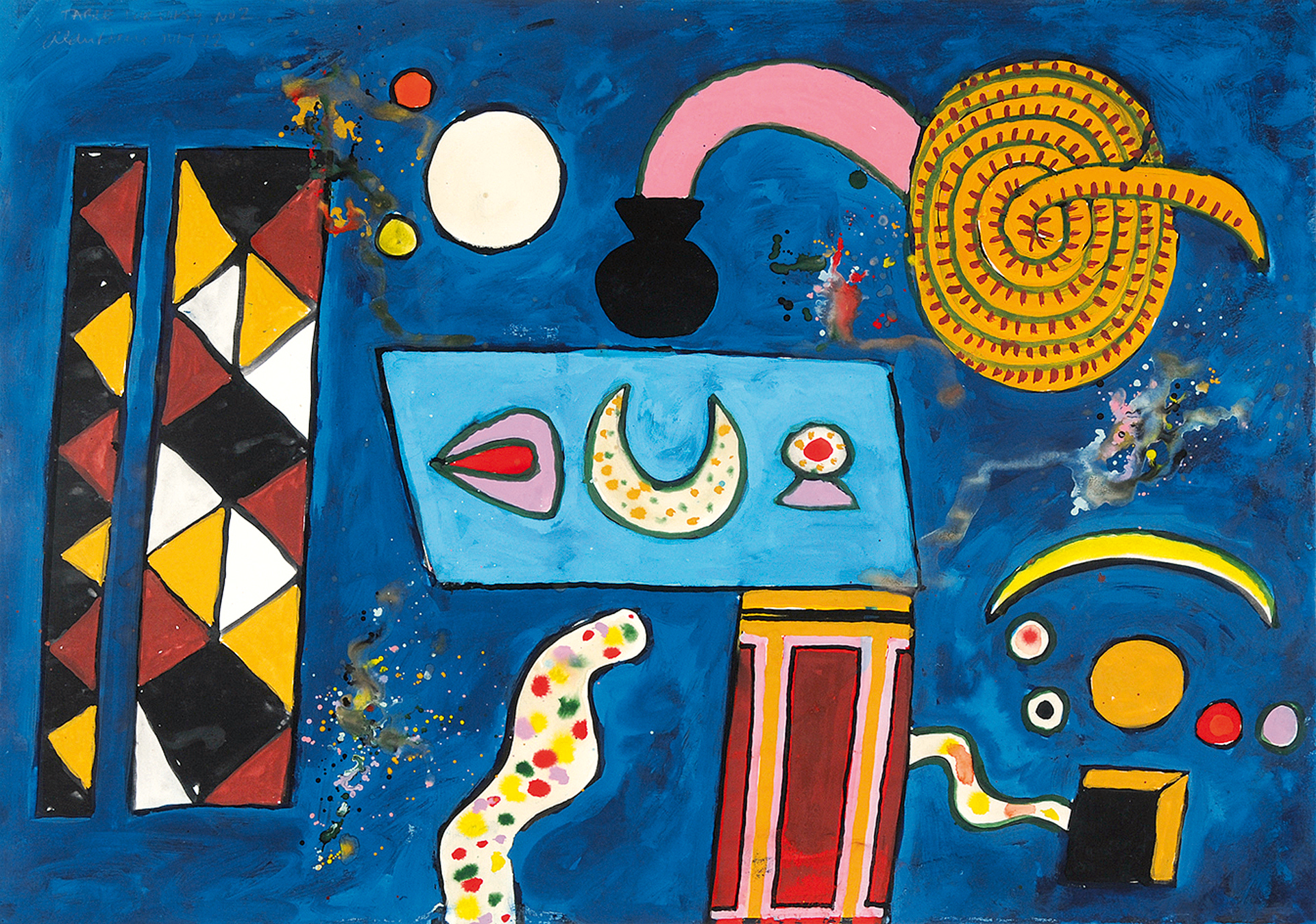
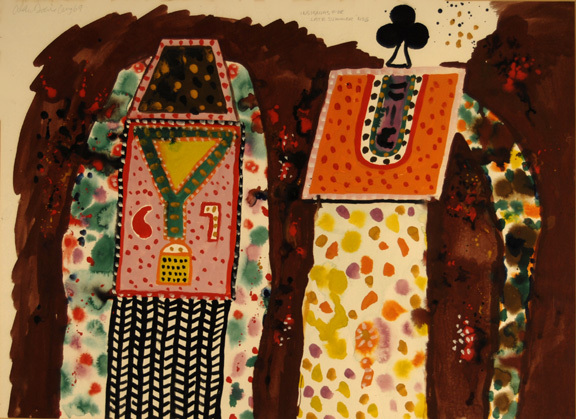
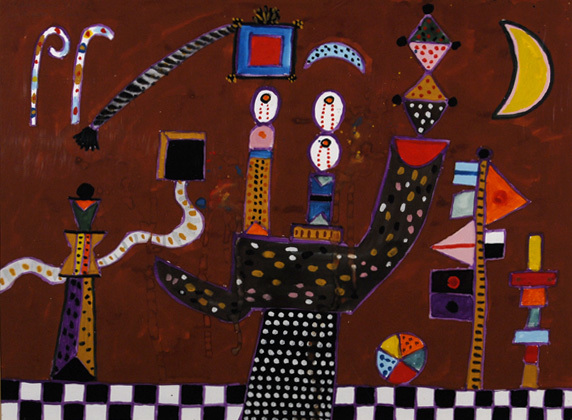
British painter, lithographer and jazz musician Alan Davie (James Alan Davie, 1920–2014) attended the Edinburgh College of Art in the late 1930s and began exhibiting with the Society of Scottish Artists. After the war, he played tenor saxophone in Tommy Sampson’s orchestra, with which he toured Europe, and also performed with Ronnie Scott and Johnny Dankworth. In 1948, Peggy Guggenheim noticed his work at an exhibition in Venice and bought canvases from him; from 1950, he devoted himself primarily to painting.
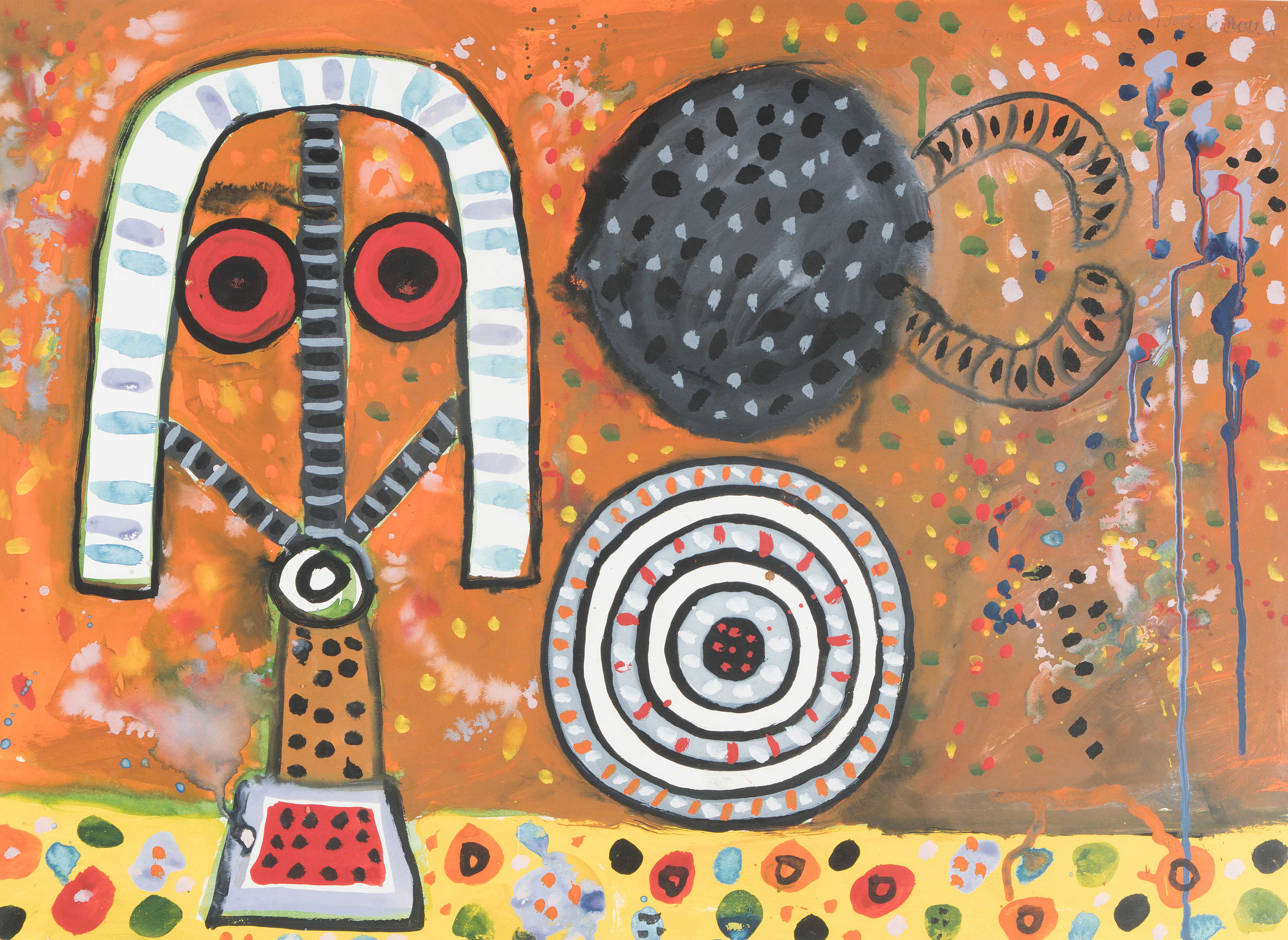
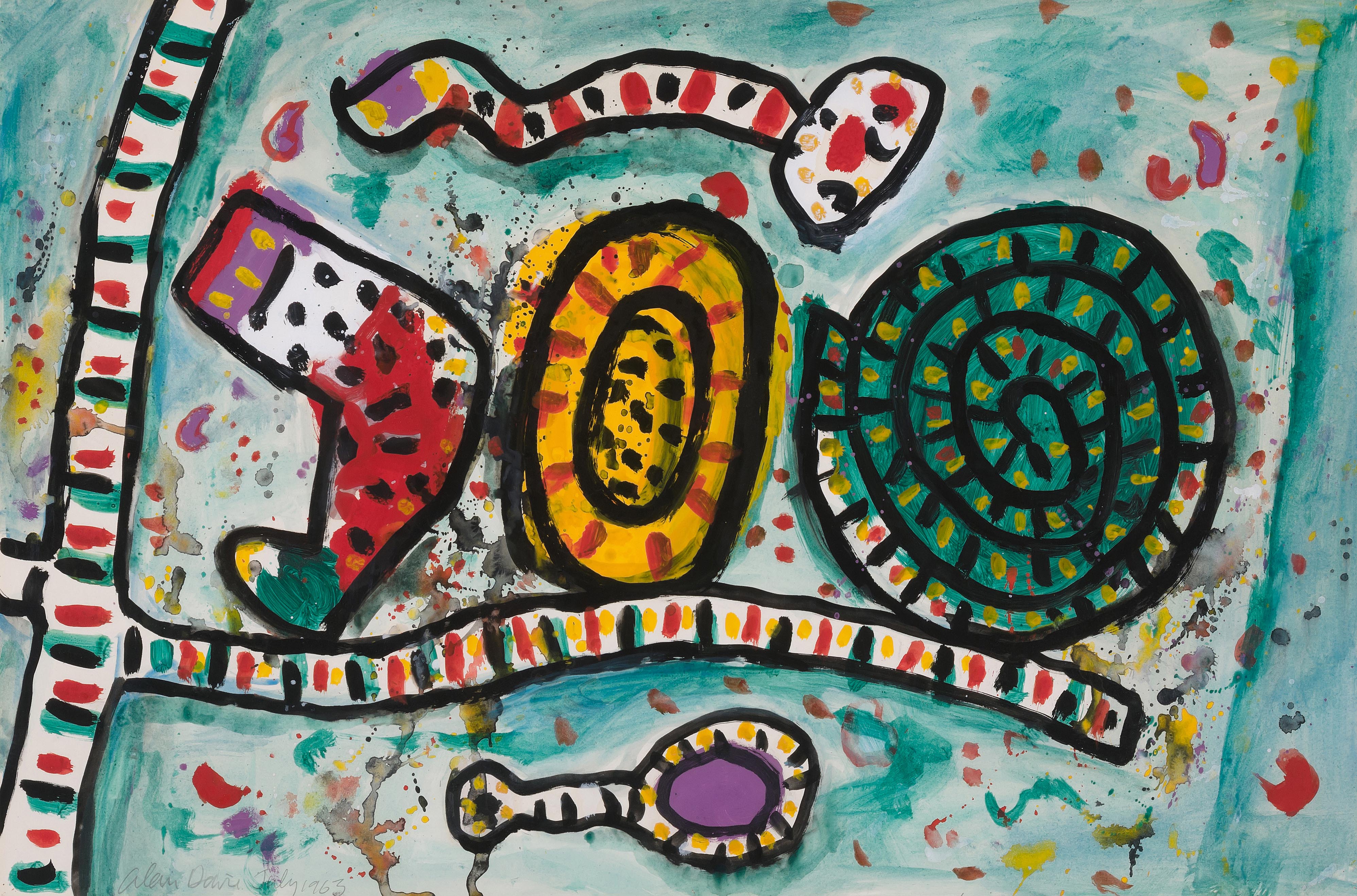
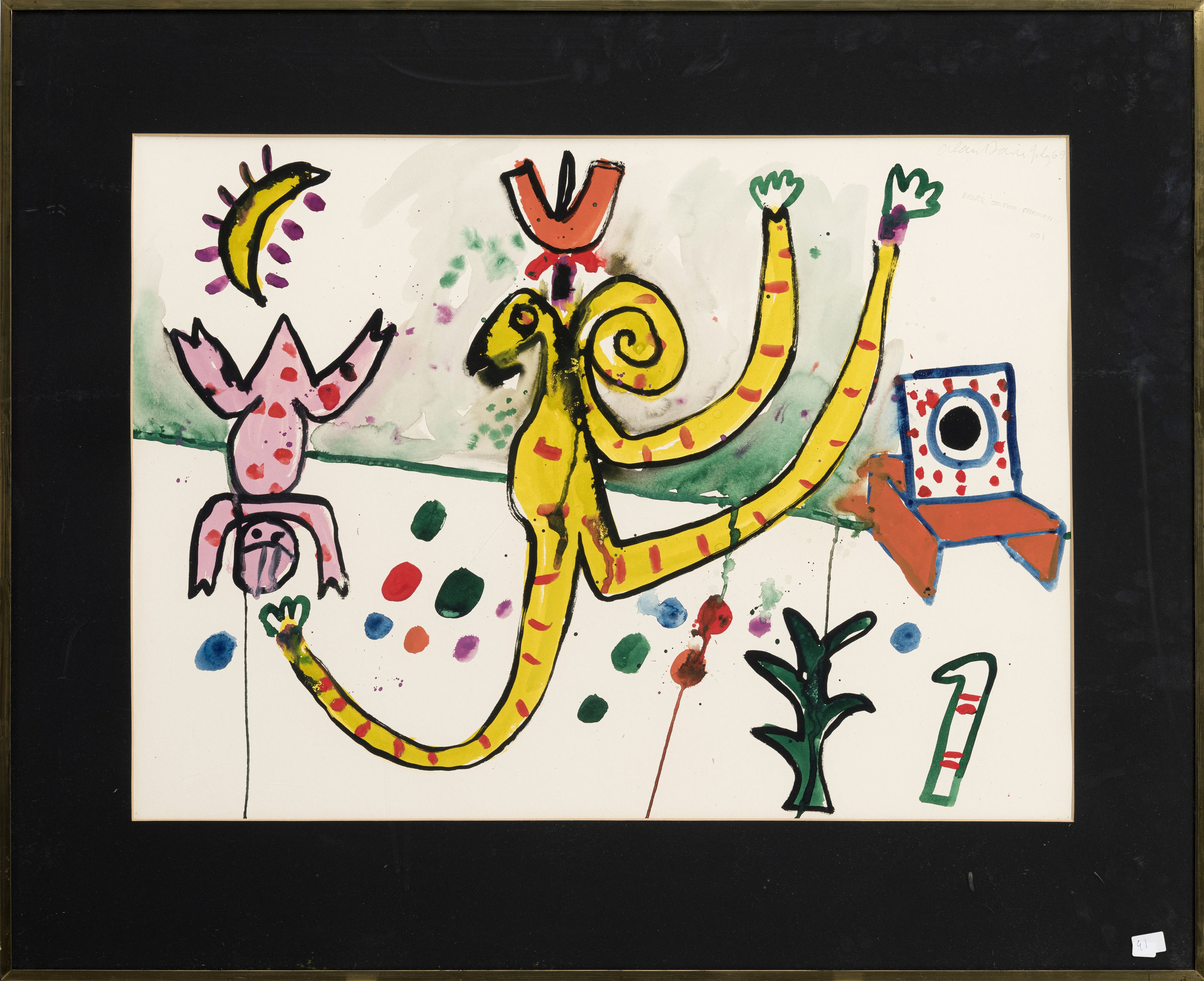
His reading, in 1953, of Eugen Herrigel’s book on Zen and archery informed his conception of the painterly gesture: Davie brought together spontaneity and Zen practice. He sought to paint without planning, as automatically as possible, in an approach that aimed in particular to bring the unconscious to the surface. Often making several paintings simultaneously, he described his images as sets of signs and symbols rather than pure abstractions. According to the biographical entry consulted, his visual language is based on the idea that different cultures share symbols.
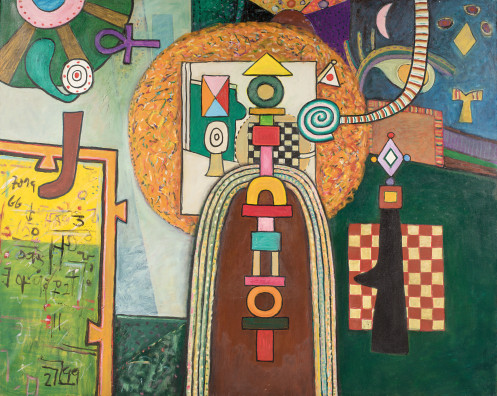
He worked on canvas and paper, made lithographs from the 1960s onwards and also produced tapestries. The Stedelijk Museum in Amsterdam presented his work in 1962. The Art Institute of Chicago lists, among others, The Three Look the Other Way (1957), For the Incantation to the Entrance (1964) and XIV, from Zurich Improvisation (1965). A sales catalogue also describes The Studio No 37 (1975) as an oil on canvas measuring 122 × 152.5 cm, signed and dated on the reverse.
This profile brings together identity references for Alan Davie and paintings, drawings and works on paper documented in auction catalogues.
10 references are documented at Artcurial Beurret Bailly Widmer, Kornfeld, Schuler, Germann, Piguet. Each record links to its source; the amounts are not a general valuation of the artist’s work.
SwissArtGallery documentary note based on the cited sources. Titles, media and qualifications are provided in the profile language; the original catalogue wording remains available in each record. Documentation updated : 2026-10-19