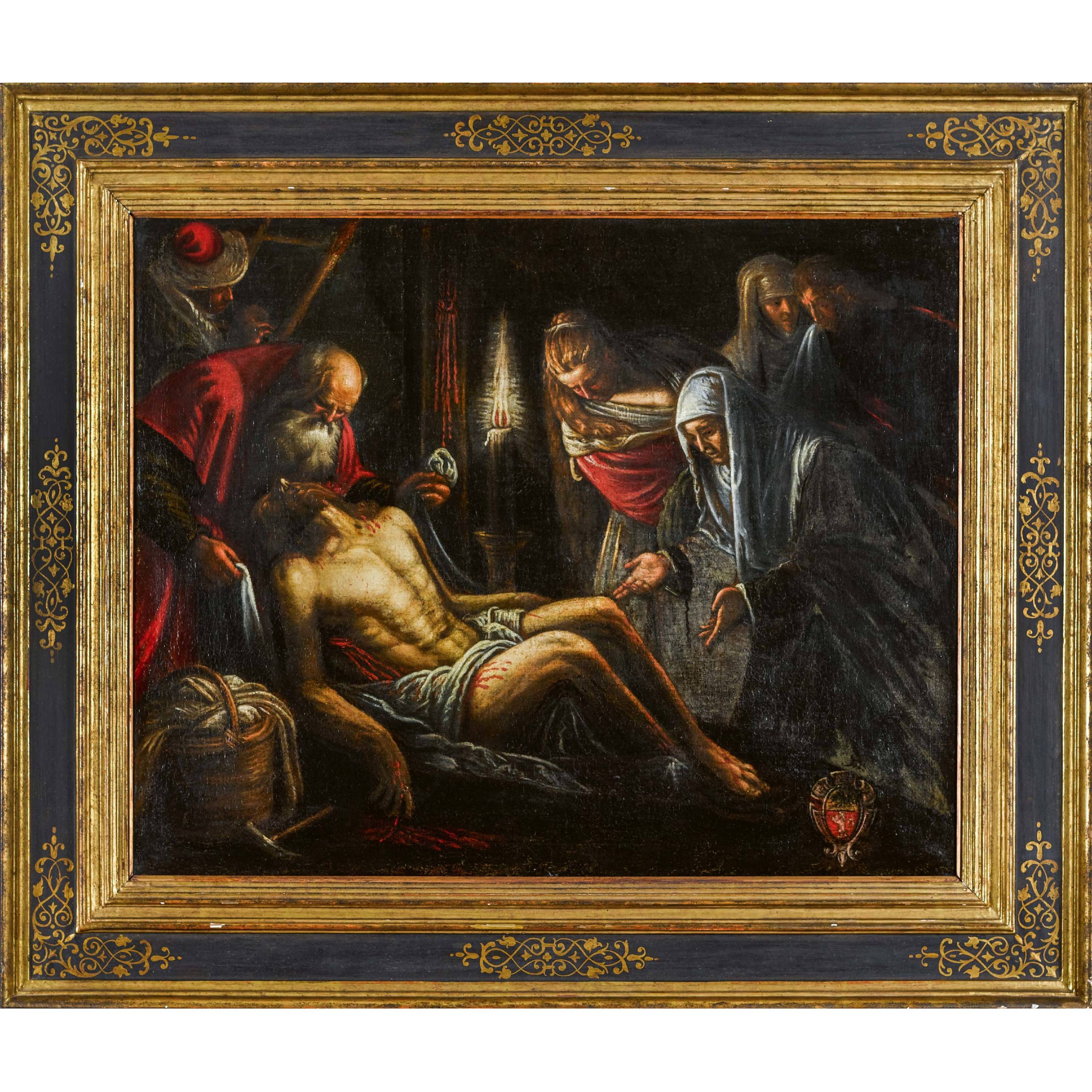
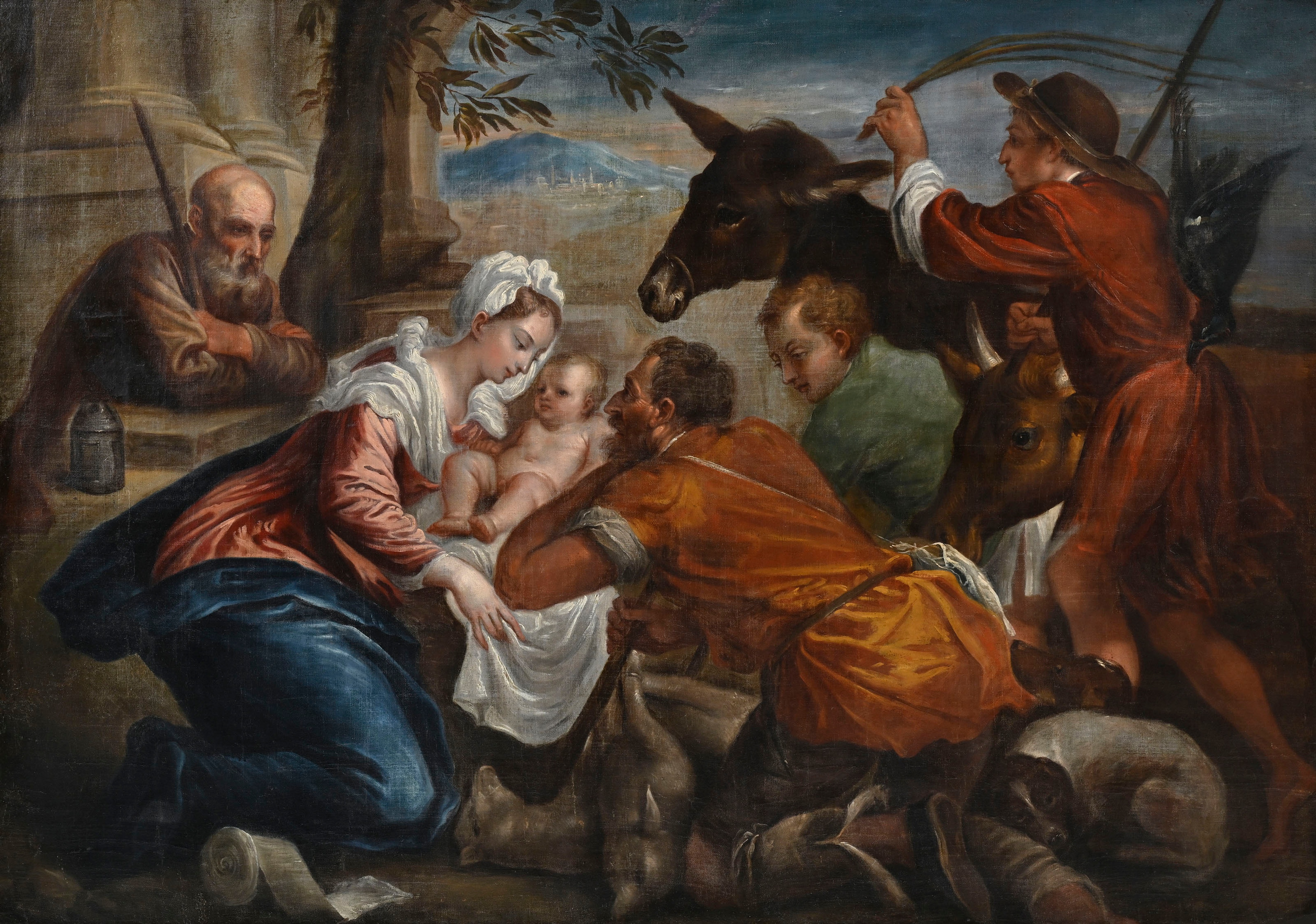
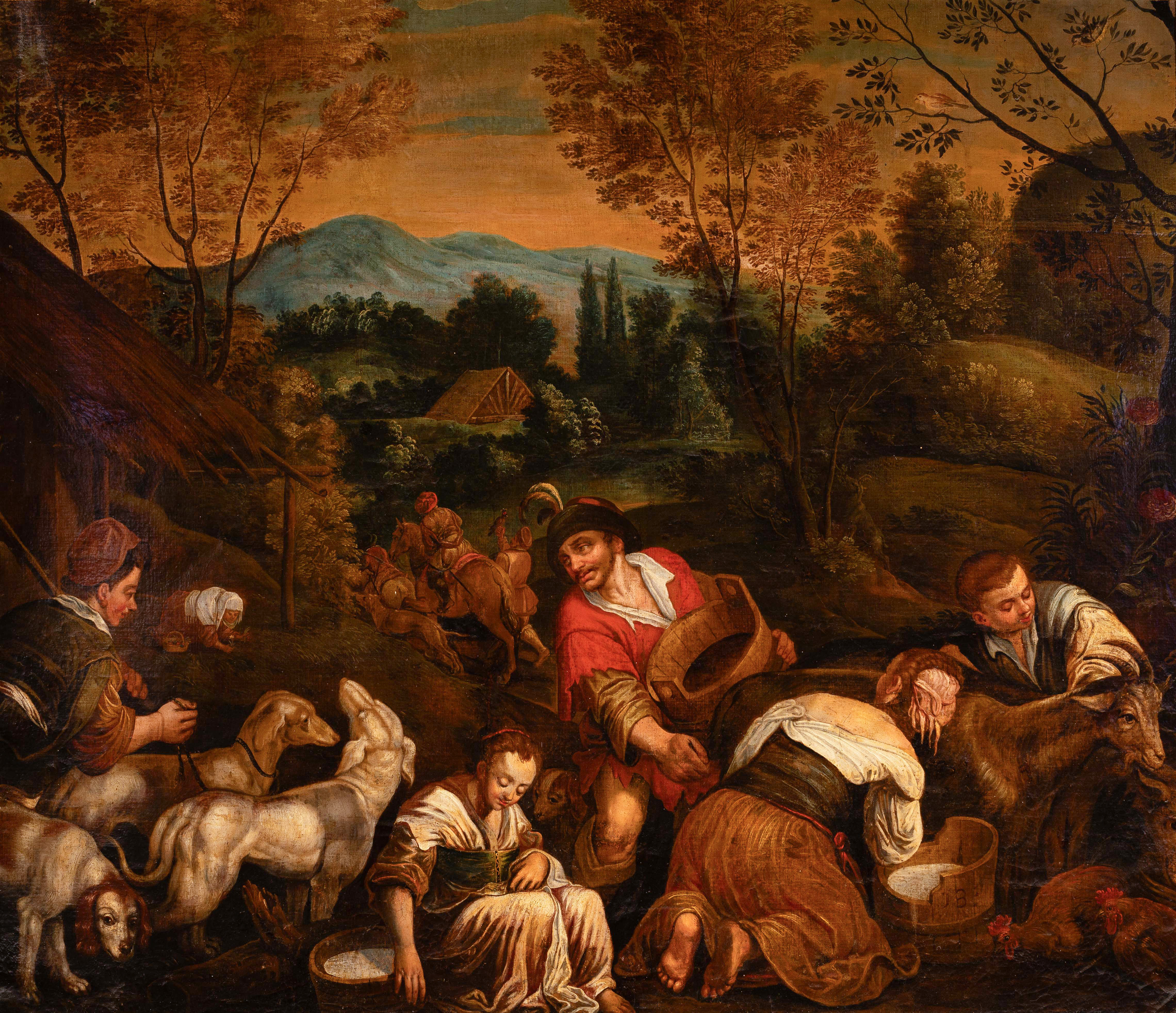
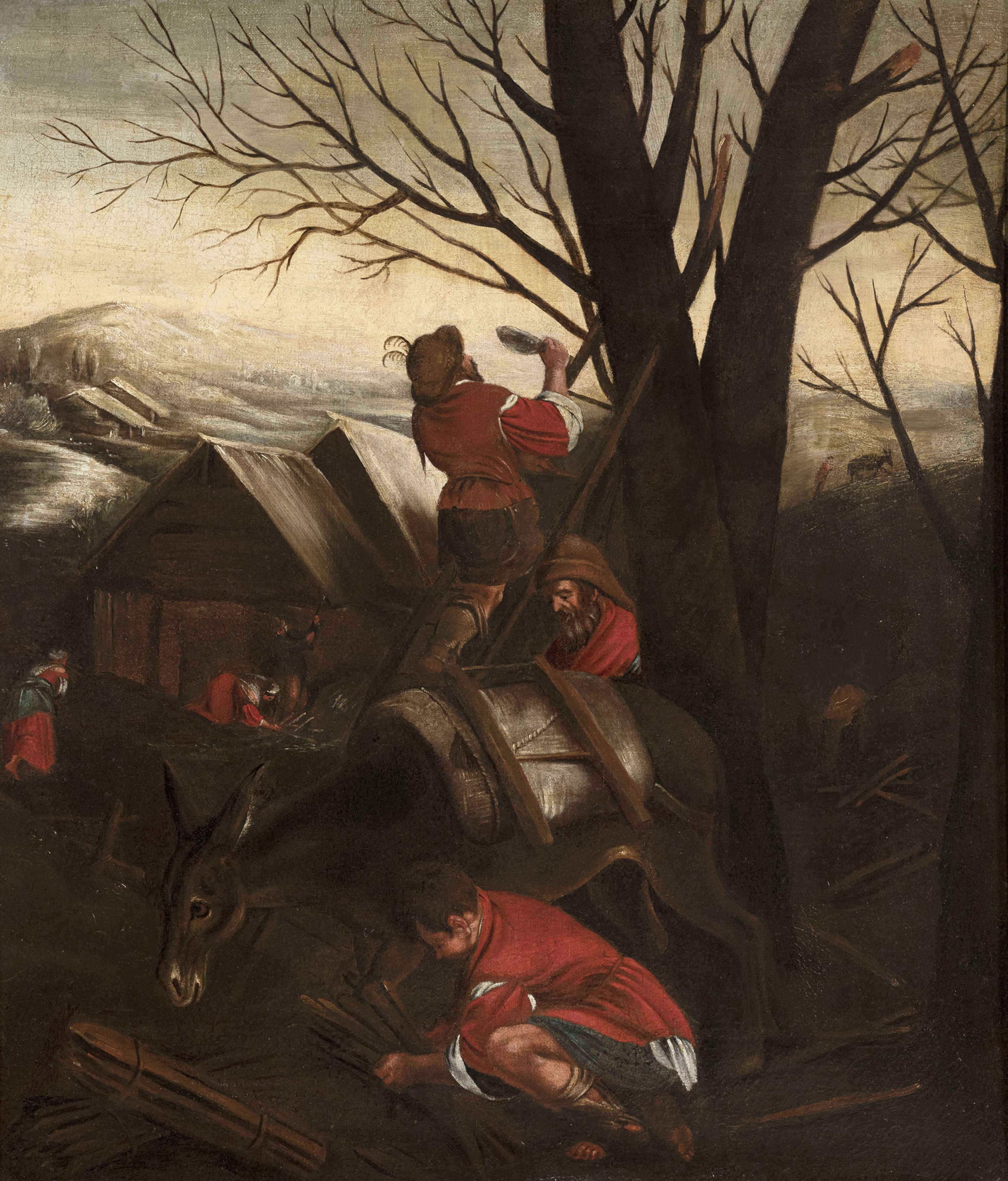
Jacopo Bassano, also known as Jacopo dal Ponte or Giacomo da Ponte, developed a style of painting that the National Gallery describes as rustic, realistic and expressive. According to the institution, he was probably first trained by his father, Francesco, and then in Venice by Bonifazio Veronese. His pictorial culture is rooted in Venetian painting, particularly that of Titian and Lotto; from around 1540, his expressive style also owes something to the works of Raphael and Parmigianino.
The National Gallery also notes his debt to Dürer’s prints and presents him as a pioneer of nocturnal scenes in Italy: realism, expressiveness and the exploration of night are thus documented features of his approach.
The painting Il povero Lazzaro e il ricco Epulone, recorded under his name and dated 1580–1590, provides a concrete example. This oil painting on canvas measures 61.5 × 56 cm; it is held at the Galleria Nazionale di Palazzo Spinola in Genoa and belongs to the State.
This profile brings together identity references for Jacopo Bassano and paintings, drawings and works on paper documented in auction catalogues.
6 references are documented at Zofingen, Dobiaschofsky, Piguet. Each record links to its source; the amounts are not a general valuation of the artist’s work.
SwissArtGallery documentary note based on the cited sources. Titles, media and qualifications are provided in the profile language; the original catalogue wording remains available in each record. Documentation updated : 2026-10-19